
KBomb Multi-Strain White Kratom Blend Ingredients & Drug Interactions
by KBomb
What is this page for?
First and foremost: checking KBomb Multi-Strain White Kratom Blend against your medications. The heart of this page is the interaction checker and the full interaction report — how this product’s ingredients may interact with prescription and over-the-counter medicines you may be taking.
Around that, we add a pharmacist’s high-level view of the product as a whole — what’s inside, the evidence for its stated use, how transparent the label is, and what safety data exists — so you can see the full picture in one place. It’s educational information from our licensed clinical databases and the clinical staff at HelloPharmacist — not medical advice — and we don’t sell or endorse products. Our editorial policy
KBomb Multi-Strain White Kratom Blend is a dietary supplement by KBomb with 1 active ingredient. Its ingredients are commonly taken for pain relief, opioid withdrawal symptoms, anxiety and stress.Based on those ingredients, 995 medications have a known interaction with it, the most serious rated moderate. The ingredients most likely to interact are Mitragyna speciosa. Use the checker below to test your specific medication, or read the full HelloPharmacist Interaction Report.
Check Your Meds Against KBomb Multi-Strain White Kratom Blend by KBomb
Ask about any prescription or over-the-counter medication and we check it for interactions with KBomb Multi-Strain White Kratom Blend by KBomb — and tell you which ingredient is responsible.
AI summaries are generated from our interaction database for education only — always confirm with your pharmacist. How we use AI
Ask the Pharmacist
A licensed pharmacist will answer your question by email — free, usually within 24 hours.
Got it — thank you!
A licensed pharmacist will answer within 24 hours. Keep an eye on your email (worth checking spam, just in case).
HelloPharmacist Scorecard of KBomb Multi-Strain White Kratom Blend by KBomb
Our pharmacy team’s full take, with four database checks built into the cards below — a summary of what is known, not a grade of the product itself.
What’s inside
Low disclosure
This product contains one active ingredient: mitragyna speciosa, commonly called kratom, a plant from Southeast Asia. The capsules also contain a vegetable capsule as an inactive ingredient.
Does it work?
Couldn't assess
The evidence for kratom's effectiveness for its marketed uses — sexual dysfunction, anxiety, athletic performance, cough, depression, and diabetes — is not established. We hold insufficient reliable evidence to rate it for any of these purposes.
How safe is it?
Well-documented data
Kratom is rated as possibly unsafe for oral use and carries real risks you should know about. Dependence can develop with chronic use.
The most common side effects include constipation, dry mouth, nausea, vomiting, tongue numbness, and frequent urination. Rare but serious adverse effects have been reported, including respiratory depression (especially when kratom is mixed with opioids or other depressants), seizures, hallucinations, liver damage, and heart problems.
One poison control report analyzed over 3,400 kratom exposures; 75% involved neurologic effects like confusion, drowsiness, agitation, and seizures. Kratom is considered unsafe in pregnancy because it has been linked to newborn withdrawal symptoms.
It should not be used while breastfeeding, as kratom compounds may pass into breast milk. Additionally, kratom products are not regulated by the FDA as safe supplements, and contaminated products have been a documented concern.
Meds to double-check
Moderate interaction found
Before taking this product, check with your pharmacist if you use central nervous system depressants (sedatives, sleep aids, opioids), drugs metabolized by liver enzymes CYP2D6, CYP1A2, or CYP3A4 (a large group), or these specific medications: quetiapine, modafinil, naltrexone, or venlafaxine. All carry documented Moderate-severity interaction risks with kratom.
The bottom line
Scorecard at a glanceFormula with limited ingredient disclosure with no assessable stated purpose. Moderate medication interactions have been identified, and safety information is well characterized.
Kratom is not established to work for the conditions it's marketed for, and the safety data raises significant concerns — especially dependence, respiratory depression, and seizure risk. If you take any medications, particularly those for mood, seizures, alertness, or pain, you need to check them against this product before starting.
Talk to your pharmacist or doctor about whether kratom is right for you.
Educational only — not medical advice; always confirm with your pharmacist. Our editorial policy · How we use AI
Assessment coverage: 1 of 1 active ingredient matched to our full ingredient reviews (monographs). Based on the product label dated Apr 24, 2025.
This Scorecard evaluates available label information, ingredient evidence, and known medication-safety considerations. It does not independently verify product identity, purity, potency, contamination, or manufacturing quality. How these ratings are computed
General information
Key facts about KBomb Multi-Strain White Kratom Blend, straight from the product label.
| Brand | KBomb |
|---|---|
| Barcode (UPC) | 850017128927 |
| Net contents | 60 Botanical Specimen Capsule(s) |
| Market status | On market |
| Date entered into DSLD | Apr 24, 2025 |
| DSLD ID | 329514 |
| Product type | Botanical |
| Supplement form | Capsule |
| Dietary claims / uses | All Other, Structure/Function |
| Intended target group(s) | Adult (18 - 50 Years) |
Everything in this section is reproduced from the manufacturer’s own product label — it’s the label speaking, not HelloPharmacist. We show it so you can see exactly what the maker states; we don’t verify or endorse those statements.
Supplement Facts
The label details for KBomb Multi-Strain White Kratom Blend by KBomb, sourced from the NIH Dietary Supplement Label Database.
Supplement Facts
| Ingredient | Amount | % DV |
|---|---|---|
| Mitragyna speciosa | 0 NP | -- |
| Premium Multi-Strain White Kratom Blend | 500 mg | -- |
Other ingredients: Vegetable capsule
Tap any ingredient to jump to its full detail below.
These statements are the manufacturer’s wording, reproduced from the product label — the label is saying it, not HelloPharmacist. We don’t verify or endorse them.
Suggested/Recommended/Usage/Directions
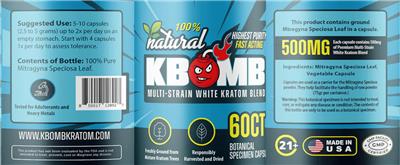
Suggested Use: 5-10 capsules (2.5 to 5 grams) up to 2x per day on an empty stomach. Start with 4 capsules 1x per day to assess tolerance.
Formulation
Tested for adulterants and heavy metals
100% natural Highest purity Fast acting Freshly ground from mature kratom trees Responsibly harvested and dried
FDA Disclaimer Statement
This product has not been evaluated by the FDA and is not intended to treat, prevent, cure or diagnose any disease.
Warning: This botanical specimen is not intended to treat, cure, or mitigate any disease or condition. The contents of this bottle are only to be used as a botanical specimen.
Formula
This product contains ground Mtragyna Speciosa Leaf in a capsule Each capsule contains 500 mg of premium multi-strain green kratom blend Capsules are used as a carrier for the Mitragyna Speciosa powder. They help facilitate the handling of raw powder (75gr per container.)
Precautions
21+
Seals/Symbols
Made in USA GMP GMP Facility Certified
Is this label outdated? Report a formula or label change and our pharmacy team will review it.
KBomb Multi-Strain White Kratom Blend by KBomb label
The label scan from the NIH Dietary Supplement Label Database. Tap to enlarge.
Label images are published by the NIH Dietary Supplement Label Database for the version of this product on file. Always read your actual product label.
View the full label (PDF)The Ingredients in KBomb Multi-Strain White Kratom Blend by KBomb
This is the 1 active ingredient this product is made of. Select it to open its full monograph.
Serving size4 Capsule(s) Dosage formCapsule Amounts shown are per serving.
Premium Multi-Strain White Kratom Blend
Other (inactive) ingredients: Vegetable capsule. These complete the product’s ingredient list but are not active constituents.
KBomb Multi-Strain White Kratom Blend by KBomb Drug Interactions
HelloPharmacist Interaction Report
KBomb Multi-Strain White Kratom Blend contains mitragyna speciosa (kratom), which has documented interactions with a substantial number of medications.
The most serious interaction is with central nervous system depressants (drugs that slow brain activity), where kratom may increase the risk of serious CNS effects including respiratory depression — the ability to breathe adequately. Although kratom causes less respiratory depression than some opioids, fatalities have been reported.
Read the full breakdown — every affected drug type, severity by severity
Kratom also interacts with several drug-metabolizing enzyme systems in your liver. It may increase levels of drugs processed by CYP2D6, CYP1A2, and CYP3A4 enzymes, potentially raising their effects in your body.
Additionally, specific medications carry documented risks: quetiapine (a psychiatric medication), modafinil (a wakefulness drug), naltrexone (an opioid blocker), and venlafaxine (an antidepressant) have all been involved in serious cases when combined with kratom, including seizures, neuroleptic malignant-like symptoms, and serotonin syndrome.
Altogether, these interactions span 983 individual medications. Because kratom affects multiple enzyme systems, many common drugs may be affected.
Use the medication checker below to look up any prescription or over-the-counter drug you take before starting this product.
Check your own medications below · Editorial policy · How we use AI
Want to check YOUR meds against KBomb Multi-Strain White Kratom Blend?
Ask about interactions with your drugs in plain English — “Can I take it with lisinopril?” — and we find you the answer in seconds, ingredient by ingredient.
Go to the checkerIngredients driving the most interactions
Individual Drug Interactions
The ingredients in KBomb Multi-Strain White Kratom Blend interact with 995 drugs. Click any drug to see the details.
1 of the 1 ingredient in KBomb Multi-Strain White Kratom Blend interact with drugs. Each result below shows which ingredient is responsible. Mitragyna speciosa
Ado-trastuzumab EmtansineKadcyla
How Ado-trastuzumab Emtansine interacts with KBomb Multi-Strain White Kratom Blend — through 1 ingredient. Tap an ingredient for the detail:
Mitragyna SpeciosaCytochrome P450 3a4 (cyp3a4) Substrates Moderate
Interaction Summary
Kratom might increase the levels and clinical effects of drugs metabolized by CYP3A4.
Read the full Mitragyna Speciosa + Ado-trastuzumab Emtansine interactionAbametapirXeglyze
How Abametapir interacts with KBomb Multi-Strain White Kratom Blend — through 1 ingredient. Tap an ingredient for the detail:
Mitragyna SpeciosaCytochrome P450 3a4 (cyp3a4) Inhibitors Moderate
Interaction Summary
CYP3A4 inhibitors might increase the concentrations and clinical effects of kratom's primary active alkaloid mitragynine.
Read the full Mitragyna Speciosa + Abametapir interactionAbemaciclibVerzenio
How Abemaciclib interacts with KBomb Multi-Strain White Kratom Blend — through 1 ingredient. Tap an ingredient for the detail:
Mitragyna SpeciosaCytochrome P450 3a4 (cyp3a4) Substrates Moderate
Interaction Summary
Kratom might increase the levels and clinical effects of drugs metabolized by CYP3A4.
Read the full Mitragyna Speciosa + Abemaciclib interactionAbiraterone
How Abiraterone interacts with KBomb Multi-Strain White Kratom Blend — through 1 ingredient. Tap an ingredient for the detail:
Mitragyna SpeciosaCytochrome P450 3a4 (cyp3a4) Substrates, Cytochrome P450 3a4 (cyp3a4) Inhibitors Moderate
Interaction Summary
Kratom might increase the levels and clinical effects of drugs metabolized by CYP3A4.
Read the full Mitragyna Speciosa + Abiraterone interactionAbiraterone AcetateYonsa, Zytiga
How Abiraterone Acetate interacts with KBomb Multi-Strain White Kratom Blend — through 1 ingredient. Tap an ingredient for the detail:
Mitragyna SpeciosaCytochrome P450 3a4 (cyp3a4) Substrates Moderate
Interaction Summary
Kratom might increase the levels and clinical effects of drugs metabolized by CYP3A4.
Read the full Mitragyna Speciosa + Abiraterone Acetate interactionAcalabrutinibCalquence
How Acalabrutinib interacts with KBomb Multi-Strain White Kratom Blend — through 1 ingredient. Tap an ingredient for the detail:
Mitragyna SpeciosaCytochrome P450 3a4 (cyp3a4) Substrates Moderate
Interaction Summary
Kratom might increase the levels and clinical effects of drugs metabolized by CYP3A4.
Read the full Mitragyna Speciosa + Acalabrutinib interactionAcepromazineAtravet
How Acepromazine interacts with KBomb Multi-Strain White Kratom Blend — through 1 ingredient. Tap an ingredient for the detail:
Mitragyna SpeciosaCns Depressants Moderate
Interaction Summary
Theoretically, concomitant use might increase the risk for adverse CNS depressant effects.
Read the full Mitragyna Speciosa + Acepromazine interactionAcetaminophenChildren's Tylenol, Children's Tylenol Meltaways, Tylenol, Tylenol Ex Strength
How Acetaminophen interacts with KBomb Multi-Strain White Kratom Blend — through 1 ingredient. Tap an ingredient for the detail:
Mitragyna SpeciosaCytochrome P450 1a2 (cyp1a2) Substrates Moderate
Interaction Summary
Theoretically, kratom might increase the levels and clinical effects of drugs metabolized by CYP1A2.
Read the full Mitragyna Speciosa + Acetaminophen interactionAcetaminophen, AspirinGemnisyn
How Acetaminophen, Aspirin interacts with KBomb Multi-Strain White Kratom Blend — through 1 ingredient. Tap an ingredient for the detail:
Mitragyna SpeciosaCytochrome P450 1a2 (cyp1a2) Substrates Moderate
Interaction Summary
Theoretically, kratom might increase the levels and clinical effects of drugs metabolized by CYP1A2.
Read the full Mitragyna Speciosa + Acetaminophen, Aspirin interactionAcetaminophen, Aspirin, CaffeineExcedrin, Excedrin Extra Strength, Excedrin Migraine
How Acetaminophen, Aspirin, Caffeine interacts with KBomb Multi-Strain White Kratom Blend — through 1 ingredient. Tap an ingredient for the detail:
Mitragyna SpeciosaCytochrome P450 1a2 (cyp1a2) Substrates, Cytochrome P450 3a4 (cyp3a4) Substrates Moderate
Interaction Summary
Theoretically, kratom might increase the levels and clinical effects of drugs metabolized by CYP1A2.
Read the full Mitragyna Speciosa + Acetaminophen, Aspirin, Caffeine interactionAcetaminophen, Brompheniramine, PhenylpropanolamineDimetapp Cold and Flu
How Acetaminophen, Brompheniramine, Phenylpropanolamine interacts with KBomb Multi-Strain White Kratom Blend — through 1 ingredient. Tap an ingredient for the detail:
Mitragyna SpeciosaCytochrome P450 1a2 (cyp1a2) Substrates Moderate
Interaction Summary
Theoretically, kratom might increase the levels and clinical effects of drugs metabolized by CYP1A2.
Read the full Mitragyna Speciosa + Acetaminophen, Brompheniramine, Phenylpropanolamine interactionAcetaminophen, ButalbitalAxocet, Bancap, Bucet, Butex Forte, Esgic CF, Orbivan CF +5 more
How Acetaminophen, Butalbital interacts with KBomb Multi-Strain White Kratom Blend — through 1 ingredient. Tap an ingredient for the detail:
Mitragyna SpeciosaCytochrome P450 1a2 (cyp1a2) Substrates Moderate
Interaction Summary
Theoretically, kratom might increase the levels and clinical effects of drugs metabolized by CYP1A2.
Read the full Mitragyna Speciosa + Acetaminophen, Butalbital interactionAcetaminophen, Butalbital, CaffeineEsgic, Esgic Plus, Fiogesic, Fioricet, Repan, Tecnal +1 more
How Acetaminophen, Butalbital, Caffeine interacts with KBomb Multi-Strain White Kratom Blend — through 1 ingredient. Tap an ingredient for the detail:
Mitragyna SpeciosaCytochrome P450 1a2 (cyp1a2) Substrates, Cytochrome P450 3a4 (cyp3a4) Substrates Moderate
Interaction Summary
Theoretically, kratom might increase the levels and clinical effects of drugs metabolized by CYP1A2.
Read the full Mitragyna Speciosa + Acetaminophen, Butalbital, Caffeine interactionAcetaminophen, Butalbital, Caffeine, CodeineEsgic with Codeine, Fioricet w/ Codeine
How Acetaminophen, Butalbital, Caffeine, Codeine interacts with KBomb Multi-Strain White Kratom Blend — through 1 ingredient. Tap an ingredient for the detail:
Mitragyna SpeciosaCytochrome P450 3a4 (cyp3a4) Substrates, Cns Depressants +2 Moderate
Interaction Summary
Kratom might increase the levels and clinical effects of drugs metabolized by CYP3A4.
Read the full Mitragyna Speciosa + Acetaminophen, Butalbital, Caffeine, Codeine interactionAcetaminophen, Butalbital, CodeineBancap w/ Codeine
How Acetaminophen, Butalbital, Codeine interacts with KBomb Multi-Strain White Kratom Blend — through 1 ingredient. Tap an ingredient for the detail:
Mitragyna SpeciosaCytochrome P450 2d6 (cyp2d6) Substrates, Cytochrome P450 1a2 (cyp1a2) Substrates +1 Moderate
Interaction Summary
Theoretically, kratom might increase the levels and clinical effects of drugs metabolized by CYP2D6.
Read the full Mitragyna Speciosa + Acetaminophen, Butalbital, Codeine interactionAcetaminophen, Butalbital, Codeine PhosphatePhrenilin #3
How Acetaminophen, Butalbital, Codeine Phosphate interacts with KBomb Multi-Strain White Kratom Blend — through 1 ingredient. Tap an ingredient for the detail:
Mitragyna SpeciosaCns Depressants, Cytochrome P450 1a2 (cyp1a2) Substrates +1 Moderate
Interaction Summary
Theoretically, concomitant use might increase the risk for adverse CNS depressant effects.
Read the full Mitragyna Speciosa + Acetaminophen, Butalbital, Codeine Phosphate interactionAcetaminophen, Caffeine, Chlorpheniramine, Hydrocodone, PhenylephrineHycomine Compound
How Acetaminophen, Caffeine, Chlorpheniramine, Hydrocodone, Phenylephrine interacts with KBomb Multi-Strain White Kratom Blend — through 1 ingredient. Tap an ingredient for the detail:
Mitragyna SpeciosaCytochrome P450 2d6 (cyp2d6) Substrates, Cytochrome P450 1a2 (cyp1a2) Substrates +2 Moderate
Interaction Summary
Theoretically, kratom might increase the levels and clinical effects of drugs metabolized by CYP2D6.
Read the full Mitragyna Speciosa + Acetaminophen, Caffeine, Chlorpheniramine, Hydrocodone, Phenylephrine interactionAcetaminophen, Caffeine, CodeineGesic C15, Gesic C30, Gesic C8, Lenoltec 1, Lenoltec 2, Lenoltec 3 +1 more
How Acetaminophen, Caffeine, Codeine interacts with KBomb Multi-Strain White Kratom Blend — through 1 ingredient. Tap an ingredient for the detail:
Mitragyna SpeciosaCns Depressants, Cytochrome P450 2d6 (cyp2d6) Substrates +2 Moderate
Interaction Summary
Theoretically, concomitant use might increase the risk for adverse CNS depressant effects.
Read the full Mitragyna Speciosa + Acetaminophen, Caffeine, Codeine interactionAcetaminophen, Caffeine, Codeine, SalicylamideCodalan No.1, Codalan No.2, Codalan No.3
How Acetaminophen, Caffeine, Codeine, Salicylamide interacts with KBomb Multi-Strain White Kratom Blend — through 1 ingredient. Tap an ingredient for the detail:
Mitragyna SpeciosaCytochrome P450 3a4 (cyp3a4) Substrates, Cns Depressants +2 Moderate
Interaction Summary
Kratom might increase the levels and clinical effects of drugs metabolized by CYP3A4.
Read the full Mitragyna Speciosa + Acetaminophen, Caffeine, Codeine, Salicylamide interactionAcetaminophen, Caffeine, DihydrocodeineDHC Plus, Panlor DC, Panlor SS
How Acetaminophen, Caffeine, Dihydrocodeine interacts with KBomb Multi-Strain White Kratom Blend — through 1 ingredient. Tap an ingredient for the detail:
Mitragyna SpeciosaCytochrome P450 1a2 (cyp1a2) Substrates, Cytochrome P450 3a4 (cyp3a4) Substrates +2 Moderate
Interaction Summary
Theoretically, kratom might increase the levels and clinical effects of drugs metabolized by CYP1A2.
Read the full Mitragyna Speciosa + Acetaminophen, Caffeine, Dihydrocodeine interactionAcetaminophen, Caffeine, IsomethepteneMigralam
How Acetaminophen, Caffeine, Isometheptene interacts with KBomb Multi-Strain White Kratom Blend — through 1 ingredient. Tap an ingredient for the detail:
Mitragyna SpeciosaCytochrome P450 1a2 (cyp1a2) Substrates, Cytochrome P450 3a4 (cyp3a4) Substrates Moderate
Interaction Summary
Theoretically, kratom might increase the levels and clinical effects of drugs metabolized by CYP1A2.
Read the full Mitragyna Speciosa + Acetaminophen, Caffeine, Isometheptene interactionAcetaminophen, Caffeine, PyrilamineMidol Max Strength Menstrual
How Acetaminophen, Caffeine, Pyrilamine interacts with KBomb Multi-Strain White Kratom Blend — through 1 ingredient. Tap an ingredient for the detail:
Mitragyna SpeciosaCytochrome P450 3a4 (cyp3a4) Substrates, Cytochrome P450 1a2 (cyp1a2) Substrates Moderate
Interaction Summary
Kratom might increase the levels and clinical effects of drugs metabolized by CYP3A4.
Read the full Mitragyna Speciosa + Acetaminophen, Caffeine, Pyrilamine interactionAcetaminophen, Chlorpheniramine Maleate, Dextromethorphan HbrVicks Formula 44M Cough, Cold & Flu Relief
How Acetaminophen, Chlorpheniramine Maleate, Dextromethorphan Hbr interacts with KBomb Multi-Strain White Kratom Blend — through 1 ingredient. Tap an ingredient for the detail:
Mitragyna SpeciosaCytochrome P450 1a2 (cyp1a2) Substrates, Cytochrome P450 3a4 (cyp3a4) Substrates +2 Moderate
Interaction Summary
Theoretically, kratom might increase the levels and clinical effects of drugs metabolized by CYP1A2.
Read the full Mitragyna Speciosa + Acetaminophen, Chlorpheniramine Maleate, Dextromethorphan Hbr interactionAcetaminophen, Chlorpheniramine, Codeine, PhenylephrineColrex
How Acetaminophen, Chlorpheniramine, Codeine, Phenylephrine interacts with KBomb Multi-Strain White Kratom Blend — through 1 ingredient. Tap an ingredient for the detail:
Mitragyna SpeciosaCytochrome P450 1a2 (cyp1a2) Substrates, Serotonergic Drugs +3 Moderate
Interaction Summary
Theoretically, kratom might increase the levels and clinical effects of drugs metabolized by CYP1A2.
Read the full Mitragyna Speciosa + Acetaminophen, Chlorpheniramine, Codeine, Phenylephrine interactionAcetaminophen, Chlorpheniramine, DextromethorphanCoricidin II Extra Strength Cold and Flu
How Acetaminophen, Chlorpheniramine, Dextromethorphan interacts with KBomb Multi-Strain White Kratom Blend — through 1 ingredient. Tap an ingredient for the detail:
Mitragyna SpeciosaSerotonergic Drugs, Cytochrome P450 1a2 (cyp1a2) Substrates +2 Moderate
Interaction Summary
Theoretically, taking kratom in combination with serotonergic drugs may increase levels of serotonin, increasing the risk of serotonin syndrome.
Read the full Mitragyna Speciosa + Acetaminophen, Chlorpheniramine, Dextromethorphan interactionAcetaminophen, Chlorpheniramine, Dextromethorphan HydrobromideCoricidin HBP Maximum Strength Flu
How Acetaminophen, Chlorpheniramine, Dextromethorphan Hydrobromide interacts with KBomb Multi-Strain White Kratom Blend — through 1 ingredient. Tap an ingredient for the detail:
Mitragyna SpeciosaCytochrome P450 3a4 (cyp3a4) Substrates, Serotonergic Drugs +2 Moderate
Interaction Summary
Kratom might increase the levels and clinical effects of drugs metabolized by CYP3A4.
Read the full Mitragyna Speciosa + Acetaminophen, Chlorpheniramine, Dextromethorphan Hydrobromide interactionAcetaminophen, Chlorpheniramine, Dextromethorphan, PhenylpropanolamineMulti Symptom Cold Relief
How Acetaminophen, Chlorpheniramine, Dextromethorphan, Phenylpropanolamine interacts with KBomb Multi-Strain White Kratom Blend — through 1 ingredient. Tap an ingredient for the detail:
Mitragyna SpeciosaCytochrome P450 1a2 (cyp1a2) Substrates, Serotonergic Drugs +2 Moderate
Interaction Summary
Theoretically, kratom might increase the levels and clinical effects of drugs metabolized by CYP1A2.
Read the full Mitragyna Speciosa + Acetaminophen, Chlorpheniramine, Dextromethorphan, Phenylpropanolamine interactionAcetaminophen, Chlorpheniramine, Dextromethorphan, PseudoephedrineChildren's Tylenol Cold Plus Cough, Tylenol Cold Ex Strength
How Acetaminophen, Chlorpheniramine, Dextromethorphan, Pseudoephedrine interacts with KBomb Multi-Strain White Kratom Blend — through 1 ingredient. Tap an ingredient for the detail:
Mitragyna SpeciosaCytochrome P450 2d6 (cyp2d6) Substrates, Serotonergic Drugs +2 Moderate
Interaction Summary
Theoretically, kratom might increase the levels and clinical effects of drugs metabolized by CYP2D6.
Read the full Mitragyna Speciosa + Acetaminophen, Chlorpheniramine, Dextromethorphan, Pseudoephedrine interactionAcetaminophen, Chlorpheniramine, Guaifenesin, Phenylephrine, SalicylamideRhinogesic GG
How Acetaminophen, Chlorpheniramine, Guaifenesin, Phenylephrine, Salicylamide interacts with KBomb Multi-Strain White Kratom Blend — through 1 ingredient. Tap an ingredient for the detail:
Mitragyna SpeciosaCytochrome P450 3a4 (cyp3a4) Substrates, Cytochrome P450 1a2 (cyp1a2) Substrates +1 Moderate
Interaction Summary
Kratom might increase the levels and clinical effects of drugs metabolized by CYP3A4.
Read the full Mitragyna Speciosa + Acetaminophen, Chlorpheniramine, Guaifenesin, Phenylephrine, Salicylamide interactionAcetaminophen, Chlorpheniramine, PhenylephrineAlka-Seltzer PLUS, Histex SR, Protid
How Acetaminophen, Chlorpheniramine, Phenylephrine interacts with KBomb Multi-Strain White Kratom Blend — through 1 ingredient. Tap an ingredient for the detail:
Mitragyna SpeciosaSerotonergic Drugs, Cytochrome P450 1a2 (cyp1a2) Substrates +1 Moderate
Interaction Summary
Theoretically, taking kratom in combination with serotonergic drugs may increase levels of serotonin, increasing the risk of serotonin syndrome.
Read the full Mitragyna Speciosa + Acetaminophen, Chlorpheniramine, Phenylephrine interactionEach ingredient & the kinds of drugs it affects
For each ingredient in KBomb Multi-Strain White Kratom Blend with known interactions, here are the types of medications it can affect. Open any type for the detail — or search your exact drug in the checker above.
Mitragyna speciosa
Cns Depressants
Theoretically, concomitant use might increase the risk for adverse CNS depressant effects.
Kratom contains mitragynine, a mu-receptor agonist that may cause respiratory depression. Although results from animal research suggest that mitragynine causes less respiratory depression than the CNS depressant codeine, fatalities have been reported for patients who ingested a combination of kratom and O-desmethyltramadol, another mu-receptor agonist. Additionally, observational research suggests that adverse effects such as drowsiness and coma are more likely to occur in individuals taking kratom in combination with agents such as opioids and sedatives. Theoretically, ingesting kratom along with other CNS depressants can increase the risk of adverse effects, including drowsiness, coma, and/or severe or fatal respiratory depression.
Cytochrome P450 1A2 (Cyp1A2) Substrates
Theoretically, kratom might increase the levels and clinical effects of drugs metabolized by CYP1A2.
In vitro research suggests that kratom extract inhibits the activity of CYP1A2. In one case report, a 63-year-old male presented with possible serotonin syndrome after taking an unknown dose of kratom for up to 3 months along with serotonergic prescription medications bupropion, buspirone, desvenlafaxine, trazodone, and ziprasidone. It was hypothesized that kratom inhibited CYP1A2-mediaed metabolism of ziprasidone which consequently increased systemic exposure to serotonin.
Cytochrome P450 2D6 (Cyp2D6) Substrates
Theoretically, kratom might increase the levels and clinical effects of drugs metabolized by CYP2D6.
In vitro research suggests that kratom extract inhibits CYP2D6 enzyme activity. However, human research shows that a single low dose of kratom tea 2 grams does not inhibit CYP2D6 activity. However, this kratom dose is lower than what is normally taken for psychoactive effects. In one case report, a 63-year-old male presented with possible serotonin syndrome after taking an unknown dose of kratom for up to 3 months along with serotonergic prescription medications bupropion, buspirone, desvenlafaxine, trazodone, and ziprasidone. It was hypothesized that kratom inhibited CYP2D6-mediated metabolism of buspirone and consequently increased systemic exposure to serotonin. In another case, a 37-year-old male stable for 15 years on amitriptyline presented with anticholinergic symptoms including xerostomia, dry eyes, and constipation, along with mildly elevated bilirubin and liver enzymes after taking progressively higher doses of up to 14 grams of kratom daily for 12 weeks. It was hypothesized that the adverse effects of amitriptyline were precipitated by CYP2D6 inhibition by kratom.
Cytochrome P450 3A4 (Cyp3A4) Inhibitors
CYP3A4 inhibitors might increase the concentrations and clinical effects of kratom's primary active alkaloid mitragynine.
A pharmacokinetic study in healthy adults suggests that CYP3A4 inhibition with itraconazole increases the peak plasma concentration (Cmax) of mitragynine by about 1.5-fold. However, CYP3A4 inhibition reduces the Cmax and area under the plasma concentration time curve (AUC) over 72 hours of 7-hydroxymitragynine, one of kratom's active constituents, by about 3-fold, possibly by decreasing the metabolism of mitragynine to 7-hydroxymitragynin.
Animal research suggests that CYP3A4 inhibition with ketoconazole reduces the metabolism and clearance of kratom, increasing the Cmax of the active metabolite mitragynine by 130%, time to reach maximum plasma concentration (Tmax) from 1 to 2.6 hours, and AUC by 120%. Additionally, CYP3A4-mediated conversion of mitragynine into 7-hydroxymitragynine increases systematic exposure by 130%. However, other CYP isoforms are likely involved in this conversion. CYP3A4 inhibition could lead to increased adverse effects and mu-opioid-receptor-mediated behavioral effects associated with kratom and its metabolites.
Cytochrome P450 3A4 (Cyp3A4) Substrates
Kratom might increase the levels and clinical effects of drugs metabolized by CYP3A4.
In vitro research shows that kratom extract inhibits CYP3A4 enzyme activity. A pharmacokinetic study in adults shows that taking kratom tea 2 grams modestly increases the plasma concentration time-curve (AUC) and maximum concentration (Cmax) of CYP3A4 probe midazolam by 40-50% and its CYP3A4-mediated metabolites 18-27%. However, a lack of change in the half-life of midazolam and a simulation of the kratom-midazolam interaction suggest that kratom inhibits CYP3A4 enzymes in the small intestine but not the liver. Additionally, there is one case report of a 27-year-old male who died from neuroleptic malignant-like symptoms after concomitant use of kratom and quetiapine, a CYP3A4 substrate. Although it did not appear that the patient had consumed large quantities of quetiapine, postmortem plasma levels were in the lethal range, indicating possible inhibition of CYP3A4 by kratom. In another case report, a 63-year-old male presented with possible serotonin syndrome after taking an unknown dose of kratom for up to 3 months along with serotonergic prescription medications bupropion, buspirone, desvenlafaxine, trazodone, and ziprasidone. It is hypothesized that CYP3A4 inhibition by kratom reduced metabolism of desvenlafaxine, trazodone, and ziprasidone and consequently increased systemic exposure to serotonin.
Modafinil (Provigil)
Theoretically, taking kratom in combination with modafinil may increase the risk of seizures.
A 43-year-old male patient experienced generalized tonic-clonic seizures after adding modafinil 100 mg to his chronic ingestion of kratom tea four times daily to further improve alertness and as a self-treatment for opioid withdrawal. The exact mechanism by which this interaction may occur is unknown.
Naltrexone (Vivitrol)
Taking kratom in combination with naltrexone might precipitate withdrawal.
Animal research shows that, while naltrexone does not antagonize the primary kratom alkaloid mitragynine, it does inhibit the behavioral effects of the metabolite 7-hyroxymitragynine by antagonizing its binding at the mu-opioid receptor. In humans, taking naltrexone has precipitated withdrawal from kratom. In one case, a patient chronically consuming kratom developed agitation, hallucinations, and delirium within about 2 hours of beginning oral naltrexone therapy. In another case, a 38-year-old male who was admitted to a residential rehabilitation treatment program for polysubstance abuse experienced opioid withdrawal after administration of intramuscular naltrexone. Although the patient reported discontinuing kratom, continued use was confirmed through positive urine mitragynine tests. Manufacturer guidance states that patients should be opioid-free for a minimum of 7-10 days prior to initiating treatment with naltrexone; this case report suggests that kratom use should be given similar consideration.
Quetiapine (Seroquel)
Theoretically, taking kratom in combination with quetiapine may increase levels and adverse effects of quetiapine.
A 27-year-old male was found deceased due to neuroleptic malignant-like symptoms after concomitant consumption of quetiapine and kratom. Although it did not appear that he had consumed large quantities of the medication, he was found to have a lethal plasma level of quetiapine. It is hypothesized that kratom inhibited cytochrome P450 (CYP) 3A4, the primary metabolic pathway for quetiapine. Also, a 36-year-old male presented to the emergency department with serotonin syndrome and QT interval prolongation after concomitant use of quetiapine, venlafaxine, and kratom. It is hypothesized that kratom may have inhibited the metabolism of both venlafaxine and quetiapine.
Serotonergic Drugs
Theoretically, taking kratom in combination with serotonergic drugs may increase levels of serotonin, increasing the risk of serotonin syndrome.
A 63-year-old male presented with possible serotonin syndrome after taking an unknown dose of kratom for up to 3 months along with serotonergic prescription medications bupropion, buspirone, desvenlafaxine, trazodone, and ziprasidone. It was hypothesized that kratom inhibited the cytochrome P450 3A4-, 2C9-, 2D6-, and 1A2-mediated metabolism of several of these serotonergic medications, consequently increasing systemic exposure to serotonin.
Venlafaxine (Effexor)
Theoretically, taking kratom in combination with venlafaxine may increase levels and clinical effects of venlafaxine.
A 36-year-old male presented to the emergency department with serotonin syndrome and QT interval prolongation after concomitant use of venlafaxine, quetiapine, and kratom. It is hypothesized that kratom may have inhibited the cytochrome P450 (CYP) metabolism of both venlafaxine and quetiapine.
Cytochrome P450 2C19 (Cyp2C19) Substrates
Theoretically, kratom might increase the levels of drugs metabolized by CYP2C19.
In vitro research shows that kratom extract weakly inhibits CYP2C19 enzyme activity.
Brand information
Manufacturer and brand details for KBomb Multi-Strain White Kratom Blend, from the product label.
KBomb Multi-Strain White Kratom Blend by KBomb: Common Questions
Does KBomb Multi-Strain White Kratom Blend by KBomb interact with any medications?
How can one product interact with so many drugs?
Where does this information come from?
Is kratom safe to take while pregnant or nursing?
What are the most common side effects of kratom?
Can I become dependent on kratom?
Does kratom actually work for anxiety, depression, or pain?
Why is kratom not regulated by the FDA?
What should I do if I'm thinking about taking kratom?
Written and reviewed by the HelloPharmacist editorial staff. Our editorial policy
Not sure if KBomb Multi-Strain White Kratom Blend is safe with your meds?
Our pharmacists answer your medication & supplement questions — free.
Label information is sourced from the NIH Dietary Supplement Label Database and reflects the product version on file; always read your actual product label. This page is for education only and is not a substitute for professional medical advice. Confirm with your pharmacist or doctor before combining supplements and medications.
The Full Monographs Behind KBomb Multi-Strain White Kratom Blend’s Ingredients
Every ingredient we hold a full HelloPharmacist monograph for — uses, evidence, safety, and the complete interaction list.
Sources & How We Checked
KBomb Multi-Strain White Kratom Blend's label data comes from the NIH Dietary Supplement Label Database; the ingredient interaction data is from the Natural Medicines database, reviewed by our pharmacists.
- NIH Dietary Supplement Label Database (DSLD) — The official product label on file for this supplement.
- Natural Medicines (Therapeutic Research Center) — Evidence-graded clinical reference behind the ingredient interaction data.
Content is written and reviewed by licensed HelloPharmacist pharmacists. See our data sources and editorial standards for how this information is built and checked.
The 77 references behind this product’s interaction data
Every citation that drives the interaction findings for this product’s ingredients, from the evidence-graded Natural Medicines (TRC Healthcare) database. Open an ingredient to browse its citations — links open the study on PubMed or the publisher’s site.
Kratom 77 references
- Singh D, Müller CP, Vicknasingam BK. Kratom (Mitragyna speciosa) dependence, withdrawal symptoms and craving in regular users. Drug Alcohol Depend 2014 Jun 1;139:132-7. PubMed
- Backstrom BG, Classon G, Lowenhielm P, Thelander G. [Krypton--new, deadly Internet drug. Since October 2009 have nine young persons died in Sweden]. Lakartidningen 2010;107(50):3196-3197.
- Kronstrand R, Roman M, Thelander G, Eriksson A. Unintentional fatal intoxications with mitragynine and O-desmethyltramadol from the herbal blend Krypton. J Anal Toxicol 2011;35(4):242-247. PubMed
- Boyer EW, Babu KM, Adkins JE, McCurdy CR, Halpern JH. Self-treatment of opioid withdrawal using kratom (Mitragynia speciosa korth). Addiction 2008;103(6):1048-1050.
- Jansen KL, Prast CJ. Ethnopharmacology of kratom and the Mitragyna alkaloids. J Ethnopharmacol 1988;23(1):115-119. PubMed
- Nelsen JL, Lapoint J, Hodgman MJ, Aldous KM. Seizure and coma following Kratom (Mitragynina speciosa Korth) exposure. J Med Toxicol 2010;6(4):424-426. PubMed
- Sheleg SV, Collins GB. A coincidence of addiction to "Kratom" and severe primary hypothyroidism. J Addict Med 2011;5(4):300-301. PubMed
- Kapp FG, Maurer HH, Auwarter V, Winkelmann M, Hermanns-Clausen M. Intrahepatic cholestasis following abuse of powdered kratom (Mitragyna speciosa). J Med Toxicol 2011;7(3):227-231. PubMed
- Kong WM, Chik Z, Ramachandra M, et al. Evaluation of the effects of Mitragyna speciosa alkaloid extract on cytochrome P450 enzymes using a high throughput assay. Molecules. 2011;16(9):7344-7356. PubMed
- US Food and Drug Administration (2014). SNI National is Voluntarily recalling Kratom XL 4 Pack, Maeng Da Kratom 10 Pack, Max Kratom 20 Pack, and Bali Kratom 40 pack Due to Undeclared Drug Ingredients [Press Release].
- Castillo A, Payne JD, Nugent K. Posterior reversible leukoencephalopathy syndrome after kratom ingestion. Proc (Bayl Univ Med Cent). 2017;30(3):355-357. PubMed
- Cumpston KL, Carter M, Wills BK. Clinical outcomes after Kratom exposures: A poison center case series. Am J Emerg Med. 2018;36(1):166-168. PubMed
- FDA Adverse Event Reporting System: Kratom Deaths. February 6, 2018. https://www.fda.gov/downloads/Drugs/GuidanceComplianceRegulatoryInformation/CDERFOIAElectronicReadingRoom/UCM595575.pdf. Accessed March 6, 2018.
- Trakulsrichai S, Sathirakul K, Auparakkitanon S, et al. Pharmacokinetics of mitragynine in man. Drug Des Devel Ther. 2015;9:2421-9. PubMed
- Kruegel AC, Grundmann O. The medicinal chemistry and neuropharmacology of kratom: A preliminary discussion of a promising medicinal plant and analysis of its potential for abuse.Neuropharmacology. 2017. pii: S0028-3908(17)30393-3. PubMed
- Singh D, Murugaiyah V, Hamid SBS, et al. Assessment of gonadotropins and testosterone hormone levels in regular Mitragyna speciosa (Korth.) users. J Ethnopharmacol 2018;221:30-6. doi: 10.1016/j.jep.2018.04.005. PubMed
- Singh D, Müller CP, Murugaiyah V, et al. Evaluating the hematological and clinical-chemistry parameters of kratom (Mitragyna speciosa) users in Malaysia. J Ethnopharmacol 2018;214:197-206. doi: 10.1016/j.jep.2017.12.017. PubMed
- Olsen EO, O'Donnell J, Mattson CL, Schier JG, Wilson N. Notes from the field: Unintentional drug overdose deaths with kratom detected - 27 States, July 2016-December 2017. MMWR Morb Mortal Wkly Rep. 2019;68(14):326-327.
- Hughes RL. Fatal combination of mitragynine and quetiapine - a case report with discussion of a potential herb-drug interaction. Forensic Sci Med Pathol. 2019 Mar;15(1):110-113. PubMed
- Gershman K, Timm K, Frank M, et al. Deaths in Colorado Attributed to Kratom. N Engl J Med. 2019 Jan 3;380(1):97-98. PubMed
- Mackay L, Abrahams R. Novel case of maternal and neonatal kratom dependence and withdrawal. Can Fam Physician. 2018 Feb;64(2):121-122.
- Davidson L, Rawat M, Stojanovski S, Chandrasekharan P. Natural drugs, not so natural effects: Neonatal abstinence syndrome secondary to 'kratom'. J Neonatal Perinatal Med. 2019;12(1):109-112. PubMed
- Smid MC, Charles JE, Gordon AJ, Wright TE. Use of Kratom, an Opioid-like Traditional Herb, in Pregnancy. Obstet Gynecol. 2018 Oct;132(4):926-928. PubMed
- Muhammad BY, Abdullahi AD, Kadir, SS, Abdul Razak TB, Ahmed QU. In-utero effects of the crude ethanolic extract of the leaves of Mitragyna speciose on neural tube formation in rats. Asian J Exp Biol Sci. 2010;1(2):404-408.
- Aldyab M, Ells PF, Bui R, Chapman TD, Lee H. Kratom-Induced Cholestatic Liver Injury Mimicking Anti-Mitochondrial Antibody-Negative Primary Biliary Cholangitis: A Case Report and Review of Literature. Gastroenterology Res. 2019 Aug;12(4):211-215. PubMed
- Nacca N, Schult RF, Li L, Spink DC, Ginsberg G, Navarette K, Marraffa J. Kratom Adulterated with Phenylethylamine and Associated Intracerebral Hemorrhage: Linking Toxicologists and Public Health Officials to Identify Dangerous Adulterants. J Med Toxicol. PubMed
- Abdullah HMA, Haq I, Lamfers R. Cardiac arrest in a young healthy male patient secondary to kratom ingestion: is this 'legal high' substance more dangerous than initially thought ? BMJ Case Rep. 2019 Jul 19;12(7). pii: e229778. PubMed
- Eggleston W, Stoppacher R, Suen K, Marraffa JM, Nelson LS. Kratom Use and Toxicities in the United States. Pharmacotherapy. 2019 Jul;39(7):775-777. doi: 10.1002/phar.2280. Epub 2019 Jun 13. PubMed
- Afzal H, Esang M, Rahman S. A case of kratom-induced seizures. Cureus. 2020;12(1):e6588. PubMed
- ELJack A, Beasley M, Ibrahim H, Taha M, Werns S. Kratom-associated ventricular fibrillation. Am J Ther. 2020. Online ahead of print. PubMed
- Schimmel J, Dart RC. Kratom (Mitragyna speciosa) liver injury: a comprehensive review. Drugs. 2020;80(3):263-83. PubMed
- Matson M, Schenk N. Fatality of 33-year-old man involving kratom toxicity. J Forensic Sci. 2019;64(6):1933-5. PubMed
- Ahmad J, Odin JA, Hayashi PH, et al. Liver injury associated with kratom, a popular opioid-like product: Experience from the U.S. drug induced liver injury network and a review of the literature. Drug Alcohol Depend. 2021;218:108426. PubMed
- Leong Abdullah MFI, Tan KL, Narayanan S, et al. Is kratom (Mitragyna speciosa Korth.) use associated with ECG abnormalities? Electrocardiogram comparisons between regular kratom users and controls. Clin Toxicol (Phila). 2020:1-9.
- Davidson C, Cao D, King T, et al. A comparative analysis of kratom exposure cases in Thailand and the United States from 2010-2017. Am J Drug Alcohol Abuse. 2020:1-10. PubMed
- Graves JM, Dilley JA, Terpak L, et al. Kratom exposures among older adults reported to U.S. poison centers, 2014-2019. J Am Geriatr Soc 2021;69(8):2176-2184. PubMed
- Leong Bin Abdullah MFI, Singh D. Assessment of Cardiovascular Functioning Among Regular Kratom (Mitragyna speciosa Korth) Users: A Case Series. Front Pharmacol 2021;12:723567. PubMed
- Lei J, Butz A, Valentino N. Management of kratom dependence with buprenorphine/naloxone in a veteran population. Subst Abus 2021;42(4):497-502. PubMed
- Burke DJ, Mahonski SG, Van Cott AC. Breakthrough Seizure Associated With Kratom Use in Patients With Epilepsy. Neurol Clin Pract 2021;11(1):78-84. PubMed
- Regan GA, Papadakos PJ. Intracerebral hemorrhage after kratom ingestion. JAAPA 2021;34(4):33-36. PubMed
- Halim SA, Low JH, Chee YC, Alias MR. Seizures among young adults consuming kratom beverages in Malaysia: A case series. Epilepsy Behav 2021;121(Pt A):108057. PubMed
- Jensen AN, Truong QN, Jameson M, Nadal CN. Kratom-induced transaminitis with subsequent precipitated opioid withdrawal following naltrexone. Ment Health Clin 2021;11(3):220-224. PubMed
- Torres-Ortiz A, Al Zein S, Alqudsi M. A Case of Hyperkalemia Induced by Kratom (Mitragyna speciosa). Cureus 2022;14(4):e24036. PubMed
- Sangani V, Sunnoqrot N, Gargis K, Ranabhotu A, Mubasher A, Pokal M. Unusual Presentation of Kratom Overdose With Rhabdomyolysis, Transient Hearing Loss, and Heart Failure. J Investig Med High Impact Case Rep 2021;9:23247096211005069. PubMed
- Botejue M, Walia G, Shahin O, Sharma J, Zackria R. Kratom-Induced Liver Injury: A Case Series and Clinical Implications. Cureus 2021;13(4):e14679. PubMed
- Patel P, Aknouk M, Keating S, et al. Cheating Death: A Rare Case Presentation of Kratom Toxicity. Cureus 2021;13(7):e16582. PubMed
- Brogdon HD, McPhee MM, Paine MF, Cox EJ, Burns AG. A Case of Potential Pharmacokinetic Kratom-drug Interactions Resulting in Toxicity and Subsequent Treatment of Kratom Use Disorder With Buprenorphine/Naloxone. J Addict Med 2022. PubMed
- Matos-Casano HA, Nanduri S. Transient Paralysis: A Novel Expression of Kratom Toxicity in Humans. Neurol Clin Pract 2021;11(1):e28-e29.
- Chinnappan J, Navari Y, Casini D, Palanisamy N, Parikh N, Seedahmed E. Kratom-Induced Acute Respiratory Distress Syndrome (ARDS). Eur J Case Rep Intern Med 2023;10(4):003835. PubMed
- Eudaley ST, Brooks SP, Hamilton LA. Case Report: Possible Serotonin Syndrome in a Patient Taking Kratom and Multiple Serotonergic Agents. J Pharm Pract 2022. PubMed
- Hong S, Zimmerman PE, Rao V, Markwalter DW. Buprenorphine-Naloxone in the Setting of Kratom Withdrawal, Opioid Use Disorder, and Stage IV Lung Adenocarcinoma. J Palliat Med 2023;26(5):734-736. PubMed
- Hughs M, Kish-Trier E, O'Brien A, McMillin GA. Analysis of Mitragynine and Speciociliatine in Umbilical Cord by LC-MS-MS for Detecting Prenatal Exposure to Kratom. J Anal Toxicol 2023;46(9):957-964. PubMed
- Kamble SH, Obeng S, León F, et al. Pharmacokinetic and Pharmacodynamic Consequences of Cytochrome P450 3A Inhibition on Mitragynine Metabolism in Rats. J Pharmacol Exp Ther 2023;385(3):180-192. PubMed
- LeSaint KT, Yin S, Sharma A, Avery BA, McCurdy CR, Waksman JC. Acute Renal Insufficiency Associated With Consumption of Hydrocodone- and Morphine-Adulterated Kratom (Mitragyna Speciosa). J Emerg Med 2022;63(1):e28-e30. PubMed
- Li X, Ndungu P, Taneja SB, et al. An evaluation of adverse drug reactions and outcomes attributed to kratom in the US Food and Drug Administration Adverse Event Reporting System from January 2004 through September 2021. Clin Transl Sci 2023.
- Martin G, Collins DP, Valenzuela H. Life-Threatening Hyponatremia Secondary to Chronic Kratom Use: A Case Presentation. Cureus 2022;14(9):e29073. PubMed
- Mata DC, Chang HH. Postmortem Mitragynine Distribution in a Single Drug Fatality Case. Acad Forensic Pathol 2023;13(1):34-40. PubMed
- Obeng S, Leon F, Patel A, et al. Interactive Effects of µ-Opioid and Adrenergic-a (2) Receptor Agonists in Rats: Pharmacological Investigation of the Primary Kratom Alkaloid Mitragynine and Its Metabolite 7-Hydroxymitragynine. J Pharmacol Exp Ther 2022;38
- Peran D, Stern M, Cernohorsky P, Sykora R, Popela S, Duska F. Mitragyna speciosa (Kratom) poisoning: Findings from ten cases. Toxicon 2023;225:107054. PubMed
- Prozialeck W, Fowler A, Edwards J. Public Health Implications and Possible Sources of Lead (Pb) as a Contaminant of Poorly Regulated Kratom Products in the United States. Toxics 2022;10(7):398. PubMed
- Reich N, Salvo G, Leong D, Wan V, Kosatsky T. Kratom exposures managed by the British Columbia poison centre, 2012-2019: a descriptive analysis. CMAJ Open 2022;10(3):E755-E761. PubMed
- Roma K, Mohammed S, Sieck B, Naik K, Wahid S. Kratom-induced acute liver injury: A case study and the importance of herbal supplement regulation. J Hepatol 2023. PubMed
- Settle AG, Yang C. A Case of Severe Kratom Addiction Contributing to a Suicide Attempt. Cureus 2022;14(9):e29698. PubMed
- Smith KE, Feldman JD, Dunn KE, et al. Examining the paradoxical effects of kratom: a narrative inquiry. Front Pharmacol 2023;14:1174139. PubMed
- Tanna RS, Nguyen JT, Hadi DL, et al. Clinical Assessment of the Drug Interaction Potential of the Psychotropic Natural Product Kratom. Clin Pharmacol Ther 2023;113(6):1315-1325. PubMed
- Thewjitcharoen Y, Krittiyawong S, Nakasatien S, Himathongkam T. Kratom-Associated Mixed Cholestatic-Hepatocellular Liver Injury in a Patient With Long COVID: A case Report. Clin Med Insights Case Rep 2022;15:11795476221132824. PubMed
- Vanani NB, Stevanovic SG, Stevanovic N. Adverse Drug Interaction Between Kratom and Amitriptyline With Gastrointestinal and Mild Hepatic Effects. Cureus 2023;15(1):e33809. PubMed
- Dasgupta A, Ye Z. Severe jaundice with life-threatening liver failure after Kratom use: Reversed by plasma exchange. Transfus Apher Sci 2024. PubMed
- Krantz MJ, Rudo TJ, Haigney MCP, et al. Ventricular Arrhythmias Associated With Over-the-Counter and Recreational Opioids. J Am Coll Cardiol 2023;81(23):2258-2268. PubMed
- Jarka C, Gregoire K. Precipitated withdrawal with kratom use following naltrexone administration. Ment Health Clin 2023;13(3):155-158. PubMed
- Ahmed S, Tran QV, McLean M. The Great Imitator: A Case of Accidental Kratom Overdose. Cureus 2023;15(8):e43144. PubMed
- Awad M, Burke HH, Oakman SA. Kratom-Induced Psychiatric Decompensation and Paranoid Delusions. Cureus 2024;16(2):e54626. PubMed
- Rogers JM, Weiss ST, Epstein DH, Grundmann O, Hill K, Smith KE. Kratom addiction per DSM-5 SUD criteria, and kratom physical dependence: Insights from dosing amount versus frequency. Drug Alcohol Depend 2024;260:111329. PubMed
- Swart BB, Reznikoff C, Steen K. Isolated Kratom Use Disorder Treated with Extended-Release Buprenorphine Taper. J Addict Med 2024. PubMed
- Mongar P, Jaisi A, Inkviya T, Wungsintaweekul J, Wiwattanawongsa K. Effects of Itraconazole on Pharmacokinetics of Mitragynine and 7-Hydroxymitragynine in Healthy Volunteers. ACS Pharmacol Transl Sci 2024;7(3):823-833. PubMed
- Dodulík J, Plášek J, Handlos P, Gřegořová A, Václavík J Jr. Ventricular fibrillation during football training as a consequence of kratom and caffeine use in an adolescent: case report. Eur Heart J Case Rep 2024;8(8):ytae364. PubMed
- Abidali M, St Victor G, Mashaly S, Dahal P. Red kratom and red corvette: A case of mania induced by kratom withdrawal. Int J Psychiatry Med 2025;60(2):221-225. PubMed
Parts of this content are provided by the Therapeutic Research Center, LLC.
DISCLAIMER: Currently this does not check for drug-drug interactions. This is not an all-inclusive comprehensive list of potential interactions and is for informational purposes only. Not all interactions are known or well-reported in the scientific literature, and new interactions are continually being reported. Input is needed from a qualified healthcare provider including a pharmacist before starting any therapy. Application of clinical judgment is necessary.
© 2021 Therapeutic Research Center, LLC