
Organic Relaxing Oil Blend Ingredients & Drug Interactions
by SuperSmart
What is this page for?
First and foremost: checking Organic Relaxing Oil Blend against your medications. The heart of this page is the interaction checker and the full interaction report — how this product’s ingredients may interact with prescription and over-the-counter medicines you may be taking.
Around that, we add a pharmacist’s high-level view of the product as a whole — what’s inside, the evidence for its stated use, how transparent the label is, and what safety data exists — so you can see the full picture in one place. It’s educational information from our licensed clinical databases and the clinical staff at HelloPharmacist — not medical advice — and we don’t sell or endorse products. Our editorial policy
Organic Relaxing Oil Blend is a dietary supplement by SuperSmart with 5 active ingredients. Its ingredients are commonly taken for source of vitamin c, digestive support, aromatherapy and relaxation.Based on those ingredients, 1,095 medications have a known interaction with it, the most serious rated moderate. The ingredients most likely to interact are Mandarin Essential Oil, Caraway Essential Oil, Rosemary Essential Oil. Use the checker below to test your specific medication, or read the full HelloPharmacist Interaction Report.
Check Your Meds Against Organic Relaxing Oil Blend by SuperSmart
Ask about any prescription or over-the-counter medication and we check it for interactions with Organic Relaxing Oil Blend by SuperSmart — and tell you which ingredient is responsible.
AI summaries are generated from our interaction database for education only — always confirm with your pharmacist. How we use AI
Ask the Pharmacist
A licensed pharmacist will answer your question by email — free, usually within 24 hours.
Got it — thank you!
A licensed pharmacist will answer within 24 hours. Keep an eye on your email (worth checking spam, just in case).
HelloPharmacist Scorecard of Organic Relaxing Oil Blend by SuperSmart
Our pharmacy team’s full take, with four database checks built into the cards below — a summary of what is known, not a grade of the product itself.
What’s inside
Low disclosure
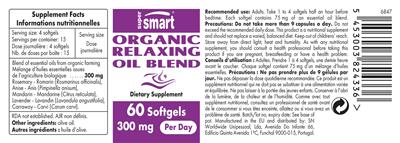
This product contains five active essential oils: mandarin, lavender, caraway, rosemary, and anise. Together they're intended to support relaxation.
The product also includes olive oil as an inactive ingredient to deliver the oils in softgel form. Essential oils are concentrated plant extracts that differ from whole plants or culinary amounts — they're much stronger and carry different safety profiles.
Because this blend combines five separate oils, each with its own effects and interactions, it's important to review how it fits with any medications you take.
Does it work?
Not established
The evidence for these oils' relaxation benefits is mixed. Lavender has been rated possibly effective for dysmenorrhea (menstrual pain) and has been studied in clinical trials for anxiety, though the data don't strongly support it for general relaxation.
Rosemary is rated possibly effective for memory. Caraway is rated possibly effective for indigestion (dyspepsia).
The other oils and most other proposed uses — including the blend's relaxation purpose — lack sufficient reliable evidence in the data we hold, so we can't confirm whether they work for that goal.
How safe is it?
Well-documented data
These are essential oils, not whole plant material, and that matters for safety. Mandarin essential oil is generally well tolerated, but concentrated essential oil should be used with caution and medical advice — topical contact can cause skin irritation.
Lavender is well tolerated in food and approved supplement forms, but the essential oil is toxic if swallowed, and skin contact can trigger allergic dermatitis in some people. Rare cases of breast enlargement in young males have been reported with lavender oil use.
Caraway safety data are limited for concentrated supplements and oil; the safety data advise against medicinal amounts during pregnancy. Rosemary essential oil (especially undiluted) is not recommended during pregnancy and carries a theoretical seizure risk if swallowed undiluted due to its camphor content.
Anise essential oil should be avoided during pregnancy due to limited safety data. Topically, anise can cause contact dermatitis, and orally, allergic reactions including anaphylaxis are rare but possible in sensitive people.
None of these oils have adequate safety data while breastfeeding — talk with your doctor or pharmacist before using.
Meds to double-check
Moderate interaction found
Check your medications if you take CNS depressants (sedatives, anti-anxiety drugs, sleep aids), diabetes medications, blood thinners or antiplatelet drugs, estrogen-based hormone therapy or contraceptives, aspirin or aspirin-like salicylates, lithium, or tuberculosis drugs — these have documented Moderate-severity interactions with one or more oils in this blend. Also check if you take fluoxetine, imipramine, diazepam, codeine, or caffeine, as anise oil has Moderate-level theoretical interactions with these.
The bottom line
Scorecard at a glanceFormula with limited ingredient disclosure with no established evidence rating for its marketed use. Moderate medication interactions have been identified, and safety information is well characterized.
If you take a CNS depressant (like a sedative, anti-anxiety, or sleep medication), diabetes drug, blood thinner, or estrogen-based therapy, you should check your exact medications with the tool on this page before using this blend. The essential oils in it are potent and not well studied in combination.
If you're pregnant or breastfeeding, there isn't enough safety data — discuss it with your pharmacist or doctor first.
Educational only — not medical advice; always confirm with your pharmacist. Our editorial policy · How we use AI
Assessment coverage: 5 of 5 active ingredients matched to our full ingredient reviews (monographs). Based on the product label dated Aug 22, 2024.
This Scorecard evaluates available label information, ingredient evidence, and known medication-safety considerations. It does not independently verify product identity, purity, potency, contamination, or manufacturing quality. How these ratings are computed
General information
Key facts about Organic Relaxing Oil Blend, straight from the product label.
| Brand | SuperSmart |
|---|---|
| Barcode (UPC) | 5453003824336 |
| Net contents | 60 Softgel(s) |
| Market status | On market |
| Date entered into DSLD | Aug 22, 2024 |
| DSLD ID | 315611 |
| Product type | Botanical |
| Supplement form | Softgel Capsule |
| Dietary claims / uses | All Other |
| Intended target group(s) | Adult (18 - 50 Years), Organic |
Everything in this section is reproduced from the manufacturer’s own product label — it’s the label speaking, not HelloPharmacist. We show it so you can see exactly what the maker states; we don’t verify or endorse those statements.
Supplement Facts
The label details for Organic Relaxing Oil Blend by SuperSmart, sourced from the NIH Dietary Supplement Label Database.
Supplement Facts
| Ingredient | Amount | % DV |
|---|---|---|
| Blend | 300 mg | -- |
| Mandarin Essential Oil | 0 NP | -- |
| Lavender Essential Oil | 0 NP | -- |
| Caraway Essential Oil | 0 NP | -- |
| Rosemary Essential Oil | 0 NP | -- |
| Anise Essential Oil | 0 NP | -- |
Other ingredients: Olive Oil
Tap any ingredient to jump to its full detail below.
These statements are the manufacturer’s wording, reproduced from the product label — the label is saying it, not HelloPharmacist. We don’t verify or endorse them.
FDA Statement of Identity
Dietary Supplement
Suggested/Recommended/Usage/Directions
Recommended Use: Adults. Take 1 to 4 softgels half an hour before bedtime.
Formula
Each softgel contains 75 mg of an essential oil blend.
Organic Relaxing Oil Blend 300 mg per day
Precautions
Precautions: Do not take more than 9 capsules a day. Do not exceed the recommended daily dose. This product is a nutritional supplement and should not replace a varied, balanced diet.
Keep out of childrens' reach.
As with any nutritional supplement, you should consult a health professional before taking this product if you are pregnant, breastfeeding or have a health problem.
Storage
Store away from direct light, heat and humidity.
Is this label outdated? Report a formula or label change and our pharmacy team will review it.
Organic Relaxing Oil Blend by SuperSmart label
The label scan from the NIH Dietary Supplement Label Database. Tap to enlarge.
Label images are published by the NIH Dietary Supplement Label Database for the version of this product on file. Always read your actual product label.
View the full label (PDF)The Ingredients in Organic Relaxing Oil Blend by SuperSmart
These are the 5 active ingredients this product is made of. Select any to open its full monograph.
Serving size1 Softgel(s) Dosage formSoftgel Capsule Servings per container15 Amounts shown are per serving.
Most supplement products combine several ingredients, and a medication can interact with the product through any one of them. Each ingredient below shows whether it has known drug interactions.
Other (inactive) ingredients: Olive Oil. These complete the product’s ingredient list but are not active constituents.
Organic Relaxing Oil Blend by SuperSmart Drug Interactions
HelloPharmacist Interaction Report
SuperSmart's Organic Relaxing Oil Blend contains five essential oils, and several of them interact with medications.
The most serious interaction is with caraway essential oil and CNS depressants (drugs that slow brain activity, like sedatives or anti-anxiety medications) — caraway may strengthen their effects and side effects, which is rated Moderate severity.
Read the full breakdown — every affected drug type, severity by severity
Lavender essential oil also interacts with CNS depressants at Moderate severity, potentially enhancing both their therapeutic and unwanted effects. Anise essential oil carries multiple Moderate-severity interactions: it may interfere with estrogen-based hormone therapy and contraceptives, increase the risk of low blood sugar (hypoglycemia) with diabetes medications, and theoretically affect how your body processes certain antidepressants (fluoxetine, imipramine), caffeine, codeine, and diazepam — though most of these are based on animal research and haven't been confirmed in humans.
Rosemary essential oil has Moderate interactions with blood thinners (anticoagulants) and antiplatelet drugs (it may increase bleeding risk), diabetes medications (risk of low blood sugar), and aspirin-like salicylate drugs. Caraway also interacts with diabetes drugs, water pills (diuretics), lithium, and tuberculosis medications (isoniazid, rifampin, pyrazinamide) — all Moderate or Minor severity.
Mandarin essential oil has only a Minor interaction with midazolam, and the human evidence suggests even that effect is unlikely.
Additionally, anise essential oil may also have limited documented data for some ingredients we could not fully check. Altogether, these interactions span 1,082 individual medications.
Use the medication checker on this page to look up your exact prescriptions before starting.
Check your own medications below · Editorial policy · How we use AI
Want to check YOUR meds against Organic Relaxing Oil Blend?
Ask about interactions with your drugs in plain English — “Can I take it with lisinopril?” — and we find you the answer in seconds, ingredient by ingredient.
Go to the checkerIngredients driving the most interactions
Individual Drug Interactions
The ingredients in Organic Relaxing Oil Blend interact with 1,095 drugs. Click any drug to see the details.
5 of the 5 ingredients in Organic Relaxing Oil Blend interact with drugs. Each result below shows which ingredient is responsible. Mandarin Essential Oil Caraway Essential Oil Rosemary Essential Oil Lavender Essential Oil Anise Essential Oil
AbciximabReoPro
How Abciximab interacts with Organic Relaxing Oil Blend — through 1 ingredient. Tap an ingredient for the detail:
Rosemary Essential OilAnticoagulant/antiplatelet Drugs Moderate
Interaction Summary
Theoretically, rosemary may increase the risk of bleeding if used with anticoagulant or antiplatelet drugs.
Read the full Rosemary Essential Oil + Abciximab interactionAbrocitinibCibinqo
How Abrocitinib interacts with Organic Relaxing Oil Blend — through 1 ingredient. Tap an ingredient for the detail:
Rosemary Essential OilAnticoagulant/antiplatelet Drugs Moderate
Interaction Summary
Theoretically, rosemary may increase the risk of bleeding if used with anticoagulant or antiplatelet drugs.
Read the full Rosemary Essential Oil + Abrocitinib interactionAcarboseGlucobay, Prandase, Precose
How Acarbose interacts with Organic Relaxing Oil Blend — through 3 ingredients. Tap an ingredient for the detail:
Rosemary Essential OilAntidiabetes Drugs Moderate
Interaction Summary
Theoretically, taking rosemary with antidiabetes drugs might increase the risk of hypoglycemia.
Read the full Rosemary Essential Oil + Acarbose interactionAnise Essential OilAntidiabetes Drugs Moderate
Interaction Summary
Theoretically, anise seed might increase the risk of hypoglycemia when taken with antidiabetes drugs.
Read the full Anise Essential Oil + Acarbose interactionCaraway Essential OilAntidiabetes Drugs Moderate
Interaction Summary
Theoretically, caraway might increase the risk of hypoglycemia when used with antidiabetes drugs.
Read the full Caraway Essential Oil + Acarbose interactionAcenocoumarolSintrom
How Acenocoumarol interacts with Organic Relaxing Oil Blend — through 1 ingredient. Tap an ingredient for the detail:
Rosemary Essential OilAnticoagulant/antiplatelet Drugs Moderate
Interaction Summary
Theoretically, rosemary may increase the risk of bleeding if used with anticoagulant or antiplatelet drugs.
Read the full Rosemary Essential Oil + Acenocoumarol interactionAcepromazineAtravet
How Acepromazine interacts with Organic Relaxing Oil Blend — through 2 ingredients. Tap an ingredient for the detail:
Lavender Essential OilCns Depressants Moderate
Interaction Summary
Theoretically, lavender might potentiate the therapeutic effects and adverse effects of CNS depressants.
Read the full Lavender Essential Oil + Acepromazine interactionCaraway Essential OilCns Depressants Moderate
Interaction Summary
Theoretically, caraway might increase the effects and adverse effects of CNS depressants.
Read the full Caraway Essential Oil + Acepromazine interactionAcetaminophen, AspirinGemnisyn
How Acetaminophen, Aspirin interacts with Organic Relaxing Oil Blend — through 2 ingredients. Tap an ingredient for the detail:
Rosemary Essential OilCytochrome P450 1a2 (cyp1a2) Substrates, Anticoagulant/antiplatelet Drugs +1 Moderate
Interaction Summary
Theoretically, rosemary might decrease the levels and clinical effects of CYP1A2 substrates.
Read the full Rosemary Essential Oil + Acetaminophen, Aspirin interactionAnise Essential OilAcetaminophen (tylenol, Others) Minor
Interaction Summary
Theoretically, anise oil might decrease the levels and clinical effects of acetaminophen.
Read the full Anise Essential Oil + Acetaminophen, Aspirin interactionAcetaminophen, Aspirin, CaffeineExcedrin, Excedrin Extra Strength, Excedrin Migraine
How Acetaminophen, Aspirin, Caffeine interacts with Organic Relaxing Oil Blend — through 3 ingredients. Tap an ingredient for the detail:
Rosemary Essential OilAspirin, Cytochrome P450 1a2 (cyp1a2) Substrates +1 Moderate
Interaction Summary
Theoretically, rosemary might have additive effects with salicylate-containing drugs such as aspirin.
Read the full Rosemary Essential Oil + Acetaminophen, Aspirin, Caffeine interactionAnise Essential OilAcetaminophen (tylenol, Others), Caffeine Moderate
Interaction Summary
Theoretically, anise oil might decrease the levels and clinical effects of acetaminophen.
Read the full Anise Essential Oil + Acetaminophen, Aspirin, Caffeine interactionMandarin Essential OilCytochrome P450 3a4 (cyp3a4) Substrates Minor
Interaction Summary
In vitro, tangeretin, a constituent of tangerine, induces a 52% increase in the metabolism of midazolam by cytochrome P450 3A4 (CYP3A4).
Read the full Mandarin Essential Oil + Acetaminophen, Aspirin, Caffeine interactionAcetaminophen, Butalbital, CaffeineEsgic, Esgic Plus, Fiogesic, Fioricet, Repan, Tecnal +1 more
How Acetaminophen, Butalbital, Caffeine interacts with Organic Relaxing Oil Blend — through 3 ingredients. Tap an ingredient for the detail:
Anise Essential OilAcetaminophen (tylenol, Others), Caffeine Moderate
Interaction Summary
Theoretically, anise oil might decrease the levels and clinical effects of acetaminophen.
Read the full Anise Essential Oil + Acetaminophen, Butalbital, Caffeine interactionRosemary Essential OilCytochrome P450 1a2 (cyp1a2) Substrates Minor
Interaction Summary
Theoretically, rosemary might decrease the levels and clinical effects of CYP1A2 substrates.
Read the full Rosemary Essential Oil + Acetaminophen, Butalbital, Caffeine interactionMandarin Essential OilCytochrome P450 3a4 (cyp3a4) Substrates Minor
Interaction Summary
In vitro, tangeretin, a constituent of tangerine, induces a 52% increase in the metabolism of midazolam by cytochrome P450 3A4 (CYP3A4).
Read the full Mandarin Essential Oil + Acetaminophen, Butalbital, Caffeine interactionAcetaminophen, Butalbital, Caffeine, CodeineEsgic with Codeine, Fioricet w/ Codeine
How Acetaminophen, Butalbital, Caffeine, Codeine interacts with Organic Relaxing Oil Blend — through 5 ingredients. Tap an ingredient for the detail:
Caraway Essential OilCns Depressants Moderate
Interaction Summary
Theoretically, caraway might increase the effects and adverse effects of CNS depressants.
Read the full Caraway Essential Oil + Acetaminophen, Butalbital, Caffeine, Codeine interactionAnise Essential OilAcetaminophen (tylenol, Others), Caffeine +1 Moderate
Interaction Summary
Theoretically, anise oil might decrease the levels and clinical effects of acetaminophen.
Read the full Anise Essential Oil + Acetaminophen, Butalbital, Caffeine, Codeine interactionLavender Essential OilCns Depressants Moderate
Interaction Summary
Theoretically, lavender might potentiate the therapeutic effects and adverse effects of CNS depressants.
Read the full Lavender Essential Oil + Acetaminophen, Butalbital, Caffeine, Codeine interactionMandarin Essential OilCytochrome P450 3a4 (cyp3a4) Substrates Minor
Interaction Summary
In vitro, tangeretin, a constituent of tangerine, induces a 52% increase in the metabolism of midazolam by cytochrome P450 3A4 (CYP3A4).
Read the full Mandarin Essential Oil + Acetaminophen, Butalbital, Caffeine, Codeine interactionRosemary Essential OilCytochrome P450 1a2 (cyp1a2) Substrates Minor
Interaction Summary
Theoretically, rosemary might decrease the levels and clinical effects of CYP1A2 substrates.
Read the full Rosemary Essential Oil + Acetaminophen, Butalbital, Caffeine, Codeine interactionAcetaminophen, Butalbital, CodeineBancap w/ Codeine
How Acetaminophen, Butalbital, Codeine interacts with Organic Relaxing Oil Blend — through 4 ingredients. Tap an ingredient for the detail:
Lavender Essential OilCns Depressants Moderate
Interaction Summary
Theoretically, lavender might potentiate the therapeutic effects and adverse effects of CNS depressants.
Read the full Lavender Essential Oil + Acetaminophen, Butalbital, Codeine interactionCaraway Essential OilCns Depressants Moderate
Interaction Summary
Theoretically, caraway might increase the effects and adverse effects of CNS depressants.
Read the full Caraway Essential Oil + Acetaminophen, Butalbital, Codeine interactionAnise Essential OilAcetaminophen (tylenol, Others), Codeine Moderate
Interaction Summary
Theoretically, anise oil might decrease the levels and clinical effects of acetaminophen.
Read the full Anise Essential Oil + Acetaminophen, Butalbital, Codeine interactionRosemary Essential OilCytochrome P450 1a2 (cyp1a2) Substrates Minor
Interaction Summary
Theoretically, rosemary might decrease the levels and clinical effects of CYP1A2 substrates.
Read the full Rosemary Essential Oil + Acetaminophen, Butalbital, Codeine interactionAcetaminophen, Butalbital, Codeine PhosphatePhrenilin #3
How Acetaminophen, Butalbital, Codeine Phosphate interacts with Organic Relaxing Oil Blend — through 4 ingredients. Tap an ingredient for the detail:
Anise Essential OilAcetaminophen (tylenol, Others), Codeine Moderate
Interaction Summary
Theoretically, anise oil might decrease the levels and clinical effects of acetaminophen.
Read the full Anise Essential Oil + Acetaminophen, Butalbital, Codeine Phosphate interactionCaraway Essential OilCns Depressants Moderate
Interaction Summary
Theoretically, caraway might increase the effects and adverse effects of CNS depressants.
Read the full Caraway Essential Oil + Acetaminophen, Butalbital, Codeine Phosphate interactionLavender Essential OilCns Depressants Moderate
Interaction Summary
Theoretically, lavender might potentiate the therapeutic effects and adverse effects of CNS depressants.
Read the full Lavender Essential Oil + Acetaminophen, Butalbital, Codeine Phosphate interactionRosemary Essential OilCytochrome P450 1a2 (cyp1a2) Substrates Minor
Interaction Summary
Theoretically, rosemary might decrease the levels and clinical effects of CYP1A2 substrates.
Read the full Rosemary Essential Oil + Acetaminophen, Butalbital, Codeine Phosphate interactionAcetaminophen, Caffeine, Chlorpheniramine, Hydrocodone, PhenylephrineHycomine Compound
How Acetaminophen, Caffeine, Chlorpheniramine, Hydrocodone, Phenylephrine interacts with Organic Relaxing Oil Blend — through 5 ingredients. Tap an ingredient for the detail:
Lavender Essential OilCns Depressants Moderate
Interaction Summary
Theoretically, lavender might potentiate the therapeutic effects and adverse effects of CNS depressants.
Read the full Lavender Essential Oil + Acetaminophen, Caffeine, Chlorpheniramine, Hydrocodone, Phenylephrine interactionAnise Essential OilAcetaminophen (tylenol, Others), Caffeine Moderate
Interaction Summary
Theoretically, anise oil might decrease the levels and clinical effects of acetaminophen.
Read the full Anise Essential Oil + Acetaminophen, Caffeine, Chlorpheniramine, Hydrocodone, Phenylephrine interactionCaraway Essential OilCns Depressants Moderate
Interaction Summary
Theoretically, caraway might increase the effects and adverse effects of CNS depressants.
Read the full Caraway Essential Oil + Acetaminophen, Caffeine, Chlorpheniramine, Hydrocodone, Phenylephrine interactionMandarin Essential OilCytochrome P450 3a4 (cyp3a4) Substrates Minor
Interaction Summary
In vitro, tangeretin, a constituent of tangerine, induces a 52% increase in the metabolism of midazolam by cytochrome P450 3A4 (CYP3A4).
Read the full Mandarin Essential Oil + Acetaminophen, Caffeine, Chlorpheniramine, Hydrocodone, Phenylephrine interactionRosemary Essential OilCytochrome P450 1a2 (cyp1a2) Substrates Minor
Interaction Summary
Theoretically, rosemary might decrease the levels and clinical effects of CYP1A2 substrates.
Read the full Rosemary Essential Oil + Acetaminophen, Caffeine, Chlorpheniramine, Hydrocodone, Phenylephrine interactionAcetaminophen, Caffeine, CodeineGesic C15, Gesic C30, Gesic C8, Lenoltec 1, Lenoltec 2, Lenoltec 3 +1 more
How Acetaminophen, Caffeine, Codeine interacts with Organic Relaxing Oil Blend — through 5 ingredients. Tap an ingredient for the detail:
Caraway Essential OilCns Depressants Moderate
Interaction Summary
Theoretically, caraway might increase the effects and adverse effects of CNS depressants.
Read the full Caraway Essential Oil + Acetaminophen, Caffeine, Codeine interactionLavender Essential OilCns Depressants Moderate
Interaction Summary
Theoretically, lavender might potentiate the therapeutic effects and adverse effects of CNS depressants.
Read the full Lavender Essential Oil + Acetaminophen, Caffeine, Codeine interactionAnise Essential OilAcetaminophen (tylenol, Others), Caffeine +1 Moderate
Interaction Summary
Theoretically, anise oil might decrease the levels and clinical effects of acetaminophen.
Read the full Anise Essential Oil + Acetaminophen, Caffeine, Codeine interactionMandarin Essential OilCytochrome P450 3a4 (cyp3a4) Substrates Minor
Interaction Summary
In vitro, tangeretin, a constituent of tangerine, induces a 52% increase in the metabolism of midazolam by cytochrome P450 3A4 (CYP3A4).
Read the full Mandarin Essential Oil + Acetaminophen, Caffeine, Codeine interactionRosemary Essential OilCytochrome P450 1a2 (cyp1a2) Substrates Minor
Interaction Summary
Theoretically, rosemary might decrease the levels and clinical effects of CYP1A2 substrates.
Read the full Rosemary Essential Oil + Acetaminophen, Caffeine, Codeine interactionAcetaminophen, Caffeine, Codeine, SalicylamideCodalan No.1, Codalan No.2, Codalan No.3
How Acetaminophen, Caffeine, Codeine, Salicylamide interacts with Organic Relaxing Oil Blend — through 5 ingredients. Tap an ingredient for the detail:
Caraway Essential OilCns Depressants Moderate
Interaction Summary
Theoretically, caraway might increase the effects and adverse effects of CNS depressants.
Read the full Caraway Essential Oil + Acetaminophen, Caffeine, Codeine, Salicylamide interactionLavender Essential OilCns Depressants Moderate
Interaction Summary
Theoretically, lavender might potentiate the therapeutic effects and adverse effects of CNS depressants.
Read the full Lavender Essential Oil + Acetaminophen, Caffeine, Codeine, Salicylamide interactionAnise Essential OilAcetaminophen (tylenol, Others), Caffeine +1 Moderate
Interaction Summary
Theoretically, anise oil might decrease the levels and clinical effects of acetaminophen.
Read the full Anise Essential Oil + Acetaminophen, Caffeine, Codeine, Salicylamide interactionRosemary Essential OilCytochrome P450 1a2 (cyp1a2) Substrates Minor
Interaction Summary
Theoretically, rosemary might decrease the levels and clinical effects of CYP1A2 substrates.
Read the full Rosemary Essential Oil + Acetaminophen, Caffeine, Codeine, Salicylamide interactionMandarin Essential OilCytochrome P450 3a4 (cyp3a4) Substrates Minor
Interaction Summary
In vitro, tangeretin, a constituent of tangerine, induces a 52% increase in the metabolism of midazolam by cytochrome P450 3A4 (CYP3A4).
Read the full Mandarin Essential Oil + Acetaminophen, Caffeine, Codeine, Salicylamide interactionAcetaminophen, Caffeine, DihydrocodeineDHC Plus, Panlor DC, Panlor SS
How Acetaminophen, Caffeine, Dihydrocodeine interacts with Organic Relaxing Oil Blend — through 5 ingredients. Tap an ingredient for the detail:
Anise Essential OilAcetaminophen (tylenol, Others), Caffeine Moderate
Interaction Summary
Theoretically, anise oil might decrease the levels and clinical effects of acetaminophen.
Read the full Anise Essential Oil + Acetaminophen, Caffeine, Dihydrocodeine interactionLavender Essential OilCns Depressants Moderate
Interaction Summary
Theoretically, lavender might potentiate the therapeutic effects and adverse effects of CNS depressants.
Read the full Lavender Essential Oil + Acetaminophen, Caffeine, Dihydrocodeine interactionCaraway Essential OilCns Depressants Moderate
Interaction Summary
Theoretically, caraway might increase the effects and adverse effects of CNS depressants.
Read the full Caraway Essential Oil + Acetaminophen, Caffeine, Dihydrocodeine interactionRosemary Essential OilCytochrome P450 1a2 (cyp1a2) Substrates Minor
Interaction Summary
Theoretically, rosemary might decrease the levels and clinical effects of CYP1A2 substrates.
Read the full Rosemary Essential Oil + Acetaminophen, Caffeine, Dihydrocodeine interactionMandarin Essential OilCytochrome P450 3a4 (cyp3a4) Substrates Minor
Interaction Summary
In vitro, tangeretin, a constituent of tangerine, induces a 52% increase in the metabolism of midazolam by cytochrome P450 3A4 (CYP3A4).
Read the full Mandarin Essential Oil + Acetaminophen, Caffeine, Dihydrocodeine interactionAcetaminophen, Caffeine, IsomethepteneMigralam
How Acetaminophen, Caffeine, Isometheptene interacts with Organic Relaxing Oil Blend — through 3 ingredients. Tap an ingredient for the detail:
Anise Essential OilAcetaminophen (tylenol, Others), Caffeine Moderate
Interaction Summary
Theoretically, anise oil might decrease the levels and clinical effects of acetaminophen.
Read the full Anise Essential Oil + Acetaminophen, Caffeine, Isometheptene interactionMandarin Essential OilCytochrome P450 3a4 (cyp3a4) Substrates Minor
Interaction Summary
In vitro, tangeretin, a constituent of tangerine, induces a 52% increase in the metabolism of midazolam by cytochrome P450 3A4 (CYP3A4).
Read the full Mandarin Essential Oil + Acetaminophen, Caffeine, Isometheptene interactionRosemary Essential OilCytochrome P450 1a2 (cyp1a2) Substrates Minor
Interaction Summary
Theoretically, rosemary might decrease the levels and clinical effects of CYP1A2 substrates.
Read the full Rosemary Essential Oil + Acetaminophen, Caffeine, Isometheptene interactionAcetaminophen, Caffeine, PyrilamineMidol Max Strength Menstrual
How Acetaminophen, Caffeine, Pyrilamine interacts with Organic Relaxing Oil Blend — through 4 ingredients. Tap an ingredient for the detail:
Caraway Essential OilDiuretic Drugs Moderate
Interaction Summary
Theoretically, caraway might increase the risk of hypokalemia when used with diuretics that deplete potassium.
Read the full Caraway Essential Oil + Acetaminophen, Caffeine, Pyrilamine interactionAnise Essential OilAcetaminophen (tylenol, Others), Caffeine Moderate
Interaction Summary
Theoretically, anise oil might decrease the levels and clinical effects of acetaminophen.
Read the full Anise Essential Oil + Acetaminophen, Caffeine, Pyrilamine interactionRosemary Essential OilCytochrome P450 1a2 (cyp1a2) Substrates Minor
Interaction Summary
Theoretically, rosemary might decrease the levels and clinical effects of CYP1A2 substrates.
Read the full Rosemary Essential Oil + Acetaminophen, Caffeine, Pyrilamine interactionMandarin Essential OilCytochrome P450 3a4 (cyp3a4) Substrates Minor
Interaction Summary
In vitro, tangeretin, a constituent of tangerine, induces a 52% increase in the metabolism of midazolam by cytochrome P450 3A4 (CYP3A4).
Read the full Mandarin Essential Oil + Acetaminophen, Caffeine, Pyrilamine interactionAcetaminophen, Chlorpheniramine, Codeine, PhenylephrineColrex
How Acetaminophen, Chlorpheniramine, Codeine, Phenylephrine interacts with Organic Relaxing Oil Blend — through 5 ingredients. Tap an ingredient for the detail:
Anise Essential OilAcetaminophen (tylenol, Others), Codeine Moderate
Interaction Summary
Theoretically, anise oil might decrease the levels and clinical effects of acetaminophen.
Read the full Anise Essential Oil + Acetaminophen, Chlorpheniramine, Codeine, Phenylephrine interactionCaraway Essential OilCns Depressants Moderate
Interaction Summary
Theoretically, caraway might increase the effects and adverse effects of CNS depressants.
Read the full Caraway Essential Oil + Acetaminophen, Chlorpheniramine, Codeine, Phenylephrine interactionLavender Essential OilCns Depressants Moderate
Interaction Summary
Theoretically, lavender might potentiate the therapeutic effects and adverse effects of CNS depressants.
Read the full Lavender Essential Oil + Acetaminophen, Chlorpheniramine, Codeine, Phenylephrine interactionRosemary Essential OilCytochrome P450 1a2 (cyp1a2) Substrates Minor
Interaction Summary
Theoretically, rosemary might decrease the levels and clinical effects of CYP1A2 substrates.
Read the full Rosemary Essential Oil + Acetaminophen, Chlorpheniramine, Codeine, Phenylephrine interactionMandarin Essential OilCytochrome P450 3a4 (cyp3a4) Substrates Minor
Interaction Summary
In vitro, tangeretin, a constituent of tangerine, induces a 52% increase in the metabolism of midazolam by cytochrome P450 3A4 (CYP3A4).
Read the full Mandarin Essential Oil + Acetaminophen, Chlorpheniramine, Codeine, Phenylephrine interactionAcetaminophen, Chlorpheniramine, Phenylpropanolamine, OpiumHista-Derfule
How Acetaminophen, Chlorpheniramine, Phenylpropanolamine, Opium interacts with Organic Relaxing Oil Blend — through 5 ingredients. Tap an ingredient for the detail:
Lavender Essential OilCns Depressants Moderate
Interaction Summary
Theoretically, lavender might potentiate the therapeutic effects and adverse effects of CNS depressants.
Read the full Lavender Essential Oil + Acetaminophen, Chlorpheniramine, Phenylpropanolamine, Opium interactionCaraway Essential OilCns Depressants Moderate
Interaction Summary
Theoretically, caraway might increase the effects and adverse effects of CNS depressants.
Read the full Caraway Essential Oil + Acetaminophen, Chlorpheniramine, Phenylpropanolamine, Opium interactionAnise Essential OilAcetaminophen (tylenol, Others) Minor
Interaction Summary
Theoretically, anise oil might decrease the levels and clinical effects of acetaminophen.
Read the full Anise Essential Oil + Acetaminophen, Chlorpheniramine, Phenylpropanolamine, Opium interactionRosemary Essential OilCytochrome P450 1a2 (cyp1a2) Substrates Minor
Interaction Summary
Theoretically, rosemary might decrease the levels and clinical effects of CYP1A2 substrates.
Read the full Rosemary Essential Oil + Acetaminophen, Chlorpheniramine, Phenylpropanolamine, Opium interactionMandarin Essential OilCytochrome P450 3a4 (cyp3a4) Substrates Minor
Interaction Summary
In vitro, tangeretin, a constituent of tangerine, induces a 52% increase in the metabolism of midazolam by cytochrome P450 3A4 (CYP3A4).
Read the full Mandarin Essential Oil + Acetaminophen, Chlorpheniramine, Phenylpropanolamine, Opium interactionAcetaminophen, Chlorzoxazone, CodeineAcetazone Forte C8, Parafon Forte C8
How Acetaminophen, Chlorzoxazone, Codeine interacts with Organic Relaxing Oil Blend — through 4 ingredients. Tap an ingredient for the detail:
Caraway Essential OilCns Depressants Moderate
Interaction Summary
Theoretically, caraway might increase the effects and adverse effects of CNS depressants.
Read the full Caraway Essential Oil + Acetaminophen, Chlorzoxazone, Codeine interactionAnise Essential OilAcetaminophen (tylenol, Others), Codeine Moderate
Interaction Summary
Theoretically, anise oil might decrease the levels and clinical effects of acetaminophen.
Read the full Anise Essential Oil + Acetaminophen, Chlorzoxazone, Codeine interactionLavender Essential OilCns Depressants Moderate
Interaction Summary
Theoretically, lavender might potentiate the therapeutic effects and adverse effects of CNS depressants.
Read the full Lavender Essential Oil + Acetaminophen, Chlorzoxazone, Codeine interactionRosemary Essential OilCytochrome P450 1a2 (cyp1a2) Substrates Minor
Interaction Summary
Theoretically, rosemary might decrease the levels and clinical effects of CYP1A2 substrates.
Read the full Rosemary Essential Oil + Acetaminophen, Chlorzoxazone, Codeine interactionAcetaminophen, CodeineTylenol No.3, Tylenol w/ Codeine
How Acetaminophen, Codeine interacts with Organic Relaxing Oil Blend — through 4 ingredients. Tap an ingredient for the detail:
Lavender Essential OilCns Depressants Moderate
Interaction Summary
Theoretically, lavender might potentiate the therapeutic effects and adverse effects of CNS depressants.
Read the full Lavender Essential Oil + Acetaminophen, Codeine interactionAnise Essential OilAcetaminophen (tylenol, Others), Codeine Moderate
Interaction Summary
Theoretically, anise oil might decrease the levels and clinical effects of acetaminophen.
Read the full Anise Essential Oil + Acetaminophen, Codeine interactionCaraway Essential OilCns Depressants Moderate
Interaction Summary
Theoretically, caraway might increase the effects and adverse effects of CNS depressants.
Read the full Caraway Essential Oil + Acetaminophen, Codeine interactionRosemary Essential OilCytochrome P450 1a2 (cyp1a2) Substrates Minor
Interaction Summary
Theoretically, rosemary might decrease the levels and clinical effects of CYP1A2 substrates.
Read the full Rosemary Essential Oil + Acetaminophen, Codeine interactionAcetaminophen, Codeine, DoxylamineMersyndol
How Acetaminophen, Codeine, Doxylamine interacts with Organic Relaxing Oil Blend — through 4 ingredients. Tap an ingredient for the detail:
Caraway Essential OilCns Depressants Moderate
Interaction Summary
Theoretically, caraway might increase the effects and adverse effects of CNS depressants.
Read the full Caraway Essential Oil + Acetaminophen, Codeine, Doxylamine interactionLavender Essential OilCns Depressants Moderate
Interaction Summary
Theoretically, lavender might potentiate the therapeutic effects and adverse effects of CNS depressants.
Read the full Lavender Essential Oil + Acetaminophen, Codeine, Doxylamine interactionAnise Essential OilAcetaminophen (tylenol, Others), Codeine Moderate
Interaction Summary
Theoretically, anise oil might decrease the levels and clinical effects of acetaminophen.
Read the full Anise Essential Oil + Acetaminophen, Codeine, Doxylamine interactionRosemary Essential OilCytochrome P450 1a2 (cyp1a2) Substrates Minor
Interaction Summary
Theoretically, rosemary might decrease the levels and clinical effects of CYP1A2 substrates.
Read the full Rosemary Essential Oil + Acetaminophen, Codeine, Doxylamine interactionAcetaminophen, Codeine, MethocarbamolAcetaminophen, Codeine, Methocarbamol, Robaxacet 8
How Acetaminophen, Codeine, Methocarbamol interacts with Organic Relaxing Oil Blend — through 4 ingredients. Tap an ingredient for the detail:
Caraway Essential OilCns Depressants Moderate
Interaction Summary
Theoretically, caraway might increase the effects and adverse effects of CNS depressants.
Read the full Caraway Essential Oil + Acetaminophen, Codeine, Methocarbamol interactionAnise Essential OilAcetaminophen (tylenol, Others), Codeine Moderate
Interaction Summary
Theoretically, anise oil might decrease the levels and clinical effects of acetaminophen.
Read the full Anise Essential Oil + Acetaminophen, Codeine, Methocarbamol interactionLavender Essential OilCns Depressants Moderate
Interaction Summary
Theoretically, lavender might potentiate the therapeutic effects and adverse effects of CNS depressants.
Read the full Lavender Essential Oil + Acetaminophen, Codeine, Methocarbamol interactionRosemary Essential OilCytochrome P450 1a2 (cyp1a2) Substrates Minor
Interaction Summary
Theoretically, rosemary might decrease the levels and clinical effects of CYP1A2 substrates.
Read the full Rosemary Essential Oil + Acetaminophen, Codeine, Methocarbamol interactionAcetaminophen, Dichloralantipyrine, IsomethepteneAmidrine, Midchlor, Migquin, Migratine
How Acetaminophen, Dichloralantipyrine, Isometheptene interacts with Organic Relaxing Oil Blend — through 4 ingredients. Tap an ingredient for the detail:
Lavender Essential OilCns Depressants Moderate
Interaction Summary
Theoretically, lavender might potentiate the therapeutic effects and adverse effects of CNS depressants.
Read the full Lavender Essential Oil + Acetaminophen, Dichloralantipyrine, Isometheptene interactionCaraway Essential OilCns Depressants Moderate
Interaction Summary
Theoretically, caraway might increase the effects and adverse effects of CNS depressants.
Read the full Caraway Essential Oil + Acetaminophen, Dichloralantipyrine, Isometheptene interactionAnise Essential OilAcetaminophen (tylenol, Others) Minor
Interaction Summary
Theoretically, anise oil might decrease the levels and clinical effects of acetaminophen.
Read the full Anise Essential Oil + Acetaminophen, Dichloralantipyrine, Isometheptene interactionRosemary Essential OilCytochrome P450 1a2 (cyp1a2) Substrates Minor
Interaction Summary
Theoretically, rosemary might decrease the levels and clinical effects of CYP1A2 substrates.
Read the full Rosemary Essential Oil + Acetaminophen, Dichloralantipyrine, Isometheptene interactionAcetaminophen, Dichloralphenazone, IsomethepteneMidrin
How Acetaminophen, Dichloralphenazone, Isometheptene interacts with Organic Relaxing Oil Blend — through 4 ingredients. Tap an ingredient for the detail:
Caraway Essential OilCns Depressants Moderate
Interaction Summary
Theoretically, caraway might increase the effects and adverse effects of CNS depressants.
Read the full Caraway Essential Oil + Acetaminophen, Dichloralphenazone, Isometheptene interactionLavender Essential OilCns Depressants Moderate
Interaction Summary
Theoretically, lavender might potentiate the therapeutic effects and adverse effects of CNS depressants.
Read the full Lavender Essential Oil + Acetaminophen, Dichloralphenazone, Isometheptene interactionAnise Essential OilAcetaminophen (tylenol, Others) Minor
Interaction Summary
Theoretically, anise oil might decrease the levels and clinical effects of acetaminophen.
Read the full Anise Essential Oil + Acetaminophen, Dichloralphenazone, Isometheptene interactionRosemary Essential OilCytochrome P450 1a2 (cyp1a2) Substrates Minor
Interaction Summary
Theoretically, rosemary might decrease the levels and clinical effects of CYP1A2 substrates.
Read the full Rosemary Essential Oil + Acetaminophen, Dichloralphenazone, Isometheptene interactionAcetaminophen, Dichlorophenazone, IsometheptaneIsocom
How Acetaminophen, Dichlorophenazone, Isometheptane interacts with Organic Relaxing Oil Blend — through 4 ingredients. Tap an ingredient for the detail:
Lavender Essential OilCns Depressants Moderate
Interaction Summary
Theoretically, lavender might potentiate the therapeutic effects and adverse effects of CNS depressants.
Read the full Lavender Essential Oil + Acetaminophen, Dichlorophenazone, Isometheptane interactionCaraway Essential OilCns Depressants Moderate
Interaction Summary
Theoretically, caraway might increase the effects and adverse effects of CNS depressants.
Read the full Caraway Essential Oil + Acetaminophen, Dichlorophenazone, Isometheptane interactionRosemary Essential OilCytochrome P450 1a2 (cyp1a2) Substrates Minor
Interaction Summary
Theoretically, rosemary might decrease the levels and clinical effects of CYP1A2 substrates.
Read the full Rosemary Essential Oil + Acetaminophen, Dichlorophenazone, Isometheptane interactionAnise Essential OilAcetaminophen (tylenol, Others) Minor
Interaction Summary
Theoretically, anise oil might decrease the levels and clinical effects of acetaminophen.
Read the full Anise Essential Oil + Acetaminophen, Dichlorophenazone, Isometheptane interactionAcetaminophen, DiphenhydramineTylenol PM, Tylenol PM Ex Strength
How Acetaminophen, Diphenhydramine interacts with Organic Relaxing Oil Blend — through 4 ingredients. Tap an ingredient for the detail:
Lavender Essential OilCns Depressants Moderate
Interaction Summary
Theoretically, lavender might potentiate the therapeutic effects and adverse effects of CNS depressants.
Read the full Lavender Essential Oil + Acetaminophen, Diphenhydramine interactionCaraway Essential OilCns Depressants Moderate
Interaction Summary
Theoretically, caraway might increase the effects and adverse effects of CNS depressants.
Read the full Caraway Essential Oil + Acetaminophen, Diphenhydramine interactionAnise Essential OilAcetaminophen (tylenol, Others) Minor
Interaction Summary
Theoretically, anise oil might decrease the levels and clinical effects of acetaminophen.
Read the full Anise Essential Oil + Acetaminophen, Diphenhydramine interactionRosemary Essential OilCytochrome P450 1a2 (cyp1a2) Substrates Minor
Interaction Summary
Theoretically, rosemary might decrease the levels and clinical effects of CYP1A2 substrates.
Read the full Rosemary Essential Oil + Acetaminophen, Diphenhydramine interactionAcetaminophen, Diphenhydramine, PseudoephedrineChildren's Tylenol Allergy, Cold Control, Contac Night Allergy Relief
How Acetaminophen, Diphenhydramine, Pseudoephedrine interacts with Organic Relaxing Oil Blend — through 4 ingredients. Tap an ingredient for the detail:
Lavender Essential OilCns Depressants Moderate
Interaction Summary
Theoretically, lavender might potentiate the therapeutic effects and adverse effects of CNS depressants.
Read the full Lavender Essential Oil + Acetaminophen, Diphenhydramine, Pseudoephedrine interactionCaraway Essential OilCns Depressants Moderate
Interaction Summary
Theoretically, caraway might increase the effects and adverse effects of CNS depressants.
Read the full Caraway Essential Oil + Acetaminophen, Diphenhydramine, Pseudoephedrine interactionRosemary Essential OilCytochrome P450 1a2 (cyp1a2) Substrates Minor
Interaction Summary
Theoretically, rosemary might decrease the levels and clinical effects of CYP1A2 substrates.
Read the full Rosemary Essential Oil + Acetaminophen, Diphenhydramine, Pseudoephedrine interactionAnise Essential OilAcetaminophen (tylenol, Others) Minor
Interaction Summary
Theoretically, anise oil might decrease the levels and clinical effects of acetaminophen.
Read the full Anise Essential Oil + Acetaminophen, Diphenhydramine, Pseudoephedrine interactionAcetaminophen, HydrocodoneAnexsia, Anodynos DHC, Azdone, Co-Gesic, Doucet, Lorcet +9 more
How Acetaminophen, Hydrocodone interacts with Organic Relaxing Oil Blend — through 5 ingredients. Tap an ingredient for the detail:
Lavender Essential OilCns Depressants Moderate
Interaction Summary
Theoretically, lavender might potentiate the therapeutic effects and adverse effects of CNS depressants.
Read the full Lavender Essential Oil + Acetaminophen, Hydrocodone interactionCaraway Essential OilCns Depressants Moderate
Interaction Summary
Theoretically, caraway might increase the effects and adverse effects of CNS depressants.
Read the full Caraway Essential Oil + Acetaminophen, Hydrocodone interactionAnise Essential OilAcetaminophen (tylenol, Others) Minor
Interaction Summary
Theoretically, anise oil might decrease the levels and clinical effects of acetaminophen.
Read the full Anise Essential Oil + Acetaminophen, Hydrocodone interactionRosemary Essential OilCytochrome P450 1a2 (cyp1a2) Substrates Minor
Interaction Summary
Theoretically, rosemary might decrease the levels and clinical effects of CYP1A2 substrates.
Read the full Rosemary Essential Oil + Acetaminophen, Hydrocodone interactionMandarin Essential OilCytochrome P450 3a4 (cyp3a4) Substrates Minor
Interaction Summary
In vitro, tangeretin, a constituent of tangerine, induces a 52% increase in the metabolism of midazolam by cytochrome P450 3A4 (CYP3A4).
Read the full Mandarin Essential Oil + Acetaminophen, Hydrocodone interactionAcetaminophen, IbuprofenCombogesic
How Acetaminophen, Ibuprofen interacts with Organic Relaxing Oil Blend — through 2 ingredients. Tap an ingredient for the detail:
Rosemary Essential OilAnticoagulant/antiplatelet Drugs, Cytochrome P450 1a2 (cyp1a2) Substrates Moderate
Interaction Summary
Theoretically, rosemary may increase the risk of bleeding if used with anticoagulant or antiplatelet drugs.
Read the full Rosemary Essential Oil + Acetaminophen, Ibuprofen interactionAnise Essential OilAcetaminophen (tylenol, Others) Minor
Interaction Summary
Theoretically, anise oil might decrease the levels and clinical effects of acetaminophen.
Read the full Anise Essential Oil + Acetaminophen, Ibuprofen interactionEach ingredient & the kinds of drugs it affects
For each ingredient in Organic Relaxing Oil Blend with known interactions, here are the types of medications they can affect. Open any type for the detail — or search your exact drug in the checker above.
Mandarin Essential Oil
Cytochrome P450 3A4 (Cyp3A4) Substrates
In vitro, tangeretin, a constituent of tangerine, induces a 52% increase in the metabolism of midazolam by cytochrome P450 3A4 (CYP3A4). This suggests that tangeretin may stimulate CYP3A4 activity. However, in humans, drinking tangerine juice 200 mL slightly delayed the absorption, but did not affect the metabolism, of midazolam, a CYP3A4 substrate. Theoretically, tangerine juice might increase CYP3A4 activity and decrease levels of drugs metabolized by this enzyme. However, this effect is unlikely.
Some drugs metabolized by CYP3A4 include amitriptyline (Elavil), amiodarone (Cordarone), citalopram (Celexa), felodipine (Plendil), lansoprazole (Prevacid), ondansetron (Zofran), prednisone (Deltasone, Orasone), sertraline (Zoloft), sibutramine (Meridia), and many others.
Midazolam (Versed)
In vitro, tangeretin, a constituent of tangerine, appears to increase the metabolism of midazolam in human liver microsomes by up to 52%. However, in humans, drinking tangerine juice 200 mL slightly delayed the absorption, but did not affect the metabolism, of midazolam. Theoretically, tangerine juice might increase the metabolism and reduce the effects of midazolam. However, this effect is unlikely.
Caraway Essential Oil
Antidiabetes Drugs
Theoretically, caraway might increase the risk of hypoglycemia when used with antidiabetes drugs.
Animal research suggests that caraway can reduce blood glucose levels. Monitor blood glucose levels closely. Medication dose adjustments may be necessary.
Cns Depressants
Theoretically, caraway might increase the effects and adverse effects of CNS depressants.
Animal research suggests that (S)-(+)-carvone, a major constituent of caraway seed extract, has sedative effects.
Diuretic Drugs
Theoretically, caraway might increase the risk of hypokalemia when used with diuretics that deplete potassium.
Animal research suggests that a single dose of caraway fruit extract can promote diuresis and increase the urinary excretion of sodium and potassium. However, sub-chronic use of caraway fruit extract does not seem to significantly increase potassium excretion, although urine output continues to be increased for up to 6 days.
Lithium
Theoretically, caraway might reduce excretion and increase levels of lithium due to diuretic effects.
Animal research suggests that caraway fruit extract has diuretic properties.
Isoniazid
Theoretically, caraway might increase the effects and adverse effects of isoniazid.
Animal research suggests that a specific fraction of caraway seed extract (CC-1a) can increase plasma levels of isoniazid when administered concomitantly. This interaction has not been reported in humans.
Pyrazinamide
Theoretically, caraway might increase the effects and adverse effects of pyrazinamide.
Animal research suggests that a specific fraction of caraway seed extract (CC-1a) can increase plasma levels of pyrazinamide when administered concomitantly. This interaction has not been reported in humans.
Rifampin (Rifadin)
Theoretically, caraway might increase the effects and adverse effects of rifampin.
Animal research suggests that a specific fraction of caraway seed extract (CC-1a) can increase plasma levels of rifampin when administered concomitantly. This interaction has not been reported in humans.
Rosemary Essential Oil
Anticoagulant/Antiplatelet Drugs
Theoretically, rosemary may increase the risk of bleeding if used with anticoagulant or antiplatelet drugs.
In vitro and animal research suggests that rosemary inhibits platelet aggregation.
Antidiabetes Drugs
Theoretically, taking rosemary with antidiabetes drugs might increase the risk of hypoglycemia.
Animal research shows that rosemary extract can decrease blood glucose levels in diabetic models. However, research in humans is conflicting. Although rosemary powder decreased blood glucose levels in healthy adults, no change in blood glucose levels was seen in adults with type 2 diabetes, most of whom were taking antidiabetes drugs.
Aspirin
Theoretically, rosemary might have additive effects with salicylate-containing drugs such as aspirin.
Rosemary is reported to contain salicylates.
Choline Magnesium Trisalicylate (Trilisate)
Theoretically, rosemary might have additive effects with salicylate-containing drugs such as choline magnesium trisalicylate.
Rosemary is reported to contain salicylate.
Salsalate (Disalcid)
Theoretically, rosemary might have additive effects with salicylate-containing drugs such as salsalate.
Rosemary is reported to contain salicylate.
Cytochrome P450 1A2 (Cyp1A2) Substrates
Theoretically, rosemary might decrease the levels and clinical effects of CYP1A2 substrates.
In vitro research shows that rosemary induces CYP1A2 enzymes. This effect has not been reported in humans.
Lavender Essential Oil
Cns Depressants
Theoretically, lavender might potentiate the therapeutic effects and adverse effects of CNS depressants.
Laboratory research suggests that lavender has sedative effects. However, clinical studies in patients taking oral lavender oil (Silexan) 160 mg for 10 weeks or taking lavender flower powder 1 gram daily for 2 months have not reported side effects of drowsiness, sedation, or sleepiness. There is still some concern that higher doses or different preparations of lavender might have additive effects with CNS depressant medications.
Anise Essential Oil
Antidiabetes Drugs
Theoretically, anise seed might increase the risk of hypoglycemia when taken with antidiabetes drugs.
A small clinical study shows that anise seed powder decreases fasting blood glucose levels by 36% when compared to baseline.
Caffeine
Theoretically, anise oil might decrease the efficacy of caffeine.
Animal research shows that taking anise oil with caffeine decreases the bioavailability of caffeine. Whether this interaction will occur in humans is unclear.
Codeine
Theoretically, anise oil might increase the effects and adverse effects of codeine.
Animal research shows that anise oil increases the analgesic effects of codeine, possibly by inducing its phase I metabolism and increasing conversion to morphine. Whether this interaction occurs in humans is unclear.
Contraceptive Drugs
Theoretically, anise might interfere with contraceptive drug therapy.
Some in vitro research suggests that anise has estrogenic effects, while other in vitro research suggests that anise has antiestrogenic effects.
Diazepam (Valium)
Theoretically, anise oil might increase the effects and adverse effects of diazepam.
Animal research shows that taking anise oil with diazepam increases the motor impairment associated with diazepam, possibly by inhibiting its breakdown by cytochrome P450 3A4. Whether this interaction occurs in humans is unclear.
Estrogens
Theoretically, anise might interfere with estrogen-based hormone replacement therapy.
Some in vitro research suggests that anise has estrogenic effects, while other in vitro research suggests that anise has antiestrogenic effects.
Fluoxetine (Prozac)
Theoretically, anise oil might decrease the efficacy of fluoxetine.
Animal research shows that taking anise oil with fluoxetine reduces the antidepressant effects of fluoxetine, possibly by promoting its breakdown by cytochrome P450 2D6. Whether this interaction occurs in humans is unclear.
Imipramine (Tofranil)
Theoretically, anise oil might decrease the efficacy of imipramine.
Animal research shows that taking anise oil with imipramine reduces the antidepressant effects of imipramine, possibly by promoting its breakdown by cytochrome P450 2D6. Whether this interaction occurs in humans is unclear.
Midazolam (Versed)
Theoretically, anise oil might increase the effects and adverse effects of midazolam.
Animal research shows that taking anise oil with midazolam increases the motor impairment associated with midazolam, possibly by inhibiting its breakdown by cytochrome P450 3A4. Whether this interaction occurs in humans is unclear.
Tamoxifen (Nolvadex)
Theoretically, anise might interfere with tamoxifen therapy.
Some in vitro research suggests that anise has estrogenic effects, while other in vitro research suggests that anise has antiestrogenic effects.
Acetaminophen (Tylenol, Others)
Theoretically, anise oil might decrease the levels and clinical effects of acetaminophen.
Animal research shows that taking anise oil with acetaminophen decreases peak plasma levels of acetaminophen but does not reduce overall bioavailability. Whether this interaction will occur in humans is unclear.
Brand information
Manufacturer and brand details for Organic Relaxing Oil Blend, from the product label.
SuperSmart
See all SuperSmart products- Name
- SN Worldwide Unipessoal, LDA
- Street Address
- Avenida Do Infante 66 Edificio Quinta Avenida 1 C
- City
- Funchal
- ZipCode
- 9000-015
Organic Relaxing Oil Blend by SuperSmart: Common Questions
Does Organic Relaxing Oil Blend by SuperSmart interact with any medications?
How can one product interact with so many drugs?
Where does this information come from?
Is this safe to use if I'm pregnant or breastfeeding?
Will this oil blend actually help me relax?
Can I take this if I'm on a blood thinner like warfarin?
What side effects might I experience from these oils?
Is this different from using essential oil drops or a diffuser?
What does 'essential oil' mean, and why does it matter?
Written and reviewed by the HelloPharmacist editorial staff. Our editorial policy
Not sure if Organic Relaxing Oil Blend is safe with your meds?
Our pharmacists answer your medication & supplement questions — free.
Label information is sourced from the NIH Dietary Supplement Label Database and reflects the product version on file; always read your actual product label. This page is for education only and is not a substitute for professional medical advice. Confirm with your pharmacist or doctor before combining supplements and medications.
The Full Monographs Behind Organic Relaxing Oil Blend’s Ingredients
Every ingredient we hold a full HelloPharmacist monograph for — uses, evidence, safety, and the complete interaction list.
Tangerine
Interacts with 645 drugsTangerine is a sweet citrus fruit that is a good source of vitamin C and other nutrients, and is widely enjoyed as food. While the peel and essential oil are used in traditional medicine and...
Read the full Tangerine monograph → Herb & supplement monographLavender
Interacts with 248 drugsLavender is a fragrant herb most popular for promoting relaxation, easing anxiety, and supporting sleep, with some encouraging evidence for a standardized oral lavender oil product for anxie...
Read the full Lavender monograph → Herb & supplement monographCaraway
Interacts with 413 drugsCaraway is a common cooking spice that has long been used to ease gas, bloating, and indigestion. Some evidence suggests caraway oil—often combined with peppermint oil—may help with indigest...
Read the full Caraway monograph → Herb & supplement monographRosemary
Interacts with 372 drugsRosemary is a fragrant Mediterranean herb that is safe and flavorful in normal food amounts. Some early research suggests possible benefits for memory, mood, and hair growth, but the evidenc...
Read the full Rosemary monograph → Herb & supplement monographAnise
Interacts with 245 drugsAnise is a fragrant, licorice-flavored seed used for centuries to ease digestion and soothe coughs. Most of its health claims are based on tradition and small or laboratory studies rather th...
Read the full Anise monograph →Sources & How We Checked
Organic Relaxing Oil Blend's label data comes from the NIH Dietary Supplement Label Database; the ingredient interaction data is from the Natural Medicines database, reviewed by our pharmacists.
- NIH Dietary Supplement Label Database (DSLD) — The official product label on file for this supplement.
- Natural Medicines (Therapeutic Research Center) — Evidence-graded clinical reference behind the ingredient interaction data.
Content is written and reviewed by licensed HelloPharmacist pharmacists. See our data sources and editorial standards for how this information is built and checked.
The 66 references behind this product’s interaction data
Every citation that drives the interaction findings for this product’s ingredients, from the evidence-graded Natural Medicines (TRC Healthcare) database. Open an ingredient to browse its citations — links open the study on PubMed or the publisher’s site.
Tangerine 3 references
- Yuan, J. M., Wang, X. L., Xiang, Y. B., Gao, Y. T., Ross, R. K., and Yu, M. C. Preserved foods in relation to risk of nasopharyngeal carcinoma in Shanghai, China. Int J Cancer 2000;85(3):358-363. DOI
- Backman, J. T., Maenpaa, J., Belle, D. J., Wrighton, S. A., Kivisto, K. T., and Neuvonen, P. J. Lack of correlation between in vitro and in vivo studies on the effects of tangeretin and tangerine juice on midazolam hydroxylation. Clin Pharmacol Ther 2000; PubMed
- Vilaplana, J. and Romaguera, C. Contact dermatitis from the essential oil of tangerine in fragrance. Contact Dermatitis 2002;46(2):108. PubMed
Lavender 20 references
- The Review of Natural Products by Facts and Comparisons. St. Louis, MO: Wolters Kluwer Co., 1999.
- Schulz V, Hansel R, Tyler VE. Rational Phytotherapy: A Physician's Guide to Herbal Medicine. Terry C. Telger, transl. 3rd ed. Berlin, GER: Springer, 1998.
- Akhondzadeh S, Kashani L, Fotouhi A, et al. Comparison of Lavandula angustifolia Mill. tincture and imipramine in the treatment of mild to moderate depression: a double-blind, randomized trial. Prog Neuropsychopharmacol Biol Psychiatry 2003;27:123-7. PubMed
- Varma S, Blackford S, Statham BN, Blackwell A. Combined contact allergy to tea tree oil and lavender oil complicating chronic vulvovaginitis. Contact Dermatitis 2000;42:309-10.
- Coulson IH and Khan AS. Facial 'pillow' dermatitis due to lavender oil allergy. Contact Dermatitis 1999;41(2):111. PubMed
- Woelk, H. and Schlafke, S. A multi-center, double-blind, randomised study of the Lavender oil preparation Silexan in comparison to Lorazepam for generalized anxiety disorder. Phytomedicine. 2010;17(2):94-99. PubMed
- Kasper, S., Gastpar, M., Muller, W. E., Volz, H. P., Moller, H. J., Dienel, A., and Schlafke, S. Silexan, an orally administered Lavandula oil preparation, is effective in the treatment of 'subsyndromal' anxiety disorder: a randomized, double-blind, plac
- Uehleke, B., Schaper, S., Dienel, A., Schlaefke, S., and Stange, R. Phase II trial on the effects of Silexan in patients with neurasthenia, post-traumatic stress disorder or somatization disorder. Phytomedicine. 6-15-2012;19(8-9):665-671. PubMed
- Brandao FM. Occupational allergy to lavender oil. Contact Dermatitis 1986;15(4):249-250. PubMed
- Rademaker M. Allergic contact dermatitis from lavender fragrance in Difflam gel. Contact Dermatitis 1994;31(1):58-59. PubMed
- Kasper S, Gastpar M, Müller WE, et al. Lavender oil preparation Silexan is effective in generalized anxiety disorder--a randomized, double-blind comparison to placebo and paroxetine. Int J Neuropsychopharmacol. 2014 Jun;17(6):859-69. PubMed
- Farshbaf-Khalili A, Kamalifard M, Namadian M. Comparison of the effect of lavender and bitter orange on anxiety in postmenopausal women: A triple-blind, randomized, controlled clinical trial. Complement Ther Clin Pract 2018;31:132-8. PubMed
- Bingham LJ, Tam MM, Palmer AM, Cahill JL, Nixon RL. Contact allergy and allergic contact dermatitis caused by lavender: A retrospective study from an Australian clinic. Contact Dermatitis. 2019;81(1):37-42. PubMed
- Donelli D, Antonelli M, Bellinazzi C, Gensini GF, Firenzuoli F. Effects of lavender on anxiety: A systematic review and meta-analysis. Phytomedicine. 2019;65:153099. PubMed
- Firoozeei TS, Feizi A, Rezaeizadeh H, Zargaran A, Roohafza HR, Karimi M. The antidepressant effects of lavender (Lavandula angustifolia Mill.): A systematic review and meta-analysis of randomized controlled clinical trials. Complement Ther Med 2021;59:102 PubMed
- Kodama T, Watanabe T, Mataki N, Kanoh S, Kichikawa Y. Acute eosinophilic pneumonia following aromatherapy with essential oil. Respir Med Case Rep 2022;37:101657. PubMed
- Barbaud A, Kurihara F, Raison-Peyron N, et al. Allergic contact dermatitis from essential oil in consumer products: Mode of uses and value of patch-tests with an essential oil series. Results of a French study of the DAG (dermato-allergy group of the Fren
- Ozer H, Sayan ZA, Baloglu I, Ozturk Y, Yonet F, Turkmen K. Unknown criminals for kidney: Acute interstitial nephritis due to lavender tea. Explore (NY) 2023. PubMed
- Kasper S, Volz HP, Möller HJ, et al. Lavender oil preparation Silexan is effective in mild-to-moderate major depression: a randomized, placebo- and reference-controlled trial. Eur Arch Psychiatry Clin Neurosci 2024. PubMed
- Simaei SR, Askari VR, Rostami M, et al. Lavender and metformin effectively propagate progesterone levels in patients with polycystic ovary syndrome: A randomized, double-blind clinical trial. Fitoterapia 2023;172:105720. PubMed
Caraway 11 references
- Electronic Code of Federal Regulations. Title 21. Part 182 -- Substances Generally Recognized As Safe. Available at: https://www.accessdata.fda.gov/scripts/cdrh/cfdocs/cfcfr/CFRSearch.cfm?CFRPart=182
- May B, Kuntz HD, Kieser M, Kohler S. Efficacy of a fixed peppermint oil/caraway oil combination in non-ulcer dyspepsia. Arzneimittelforschung 1996;46:1149-53.
- Micklefield GH, Greving I, May B. Effects of peppermint oil and caraway oil on gastroduodenal motility. Phytother Res 2000;14:20-3. DOI
- Herb Info Canada. Caraway website. www.herb.plant.org/caraway.htm (Accessed 11 September 2000).
- May B, Kohler S, Schneider B. Efficacy and tolerability of a fixed combination of peppermint oil and caraway oil in patients suffering from functional dyspepsia. Aliment Pharmacol Ther 2000;14:1671-7. PubMed
- Eddouks M, Lemhardri A, Michel JB. Caraway and caper: potential anti-hyperglycaemic plants in diabetic rats. J Ethnopharmacol 2004;94:143-8. PubMed
- Sachin BS, Monica P, Sharma SC, et al. Pharmacokinetic interaction of some antitubercular drugs with caraway: implications in the enhancement of drug bioavailability. Hum Exp Toxicol. 2009;28(4):175-84. PubMed
- Lahlou, S., Tahraoui, A., Israili, Z., and Lyoussi, B. Diuretic activity of the aqueous extracts of Carum carvi and Tanacetum vulgare in normal rats. J Ethnopharmacol. 4-4-2007;110(3):458-463. PubMed
- de Sousa, D. P., Farias Nobrega, F. F., and de Almeida, R. N. Influence of the chirality of (R)-(-)- and (S)-(+)-carvone in the central nervous system: a comparative study. Chirality 5-5-2007;19(4):264-268.
- Modu S, Gohla K Umar IA. The hypoglycaemic and hypocholrsterolaemic properties of black caraway (Carum carvi L.) oil in alloxan diabetic rats. Biokemistri (Nigeria) 1997;7:91-97.
- Rich G, Shah A, Koloski N, et al. A randomized placebo-controlled trial on the effects of Menthacarin, a proprietary peppermint- and caraway-oil-preparation, on symptoms and quality of life in patients with functional dyspepsia. Neurogastroenterol Motil 2 PubMed
Rosemary 20 references
- Newall CA, Anderson LA, Philpson JD. Herbal Medicine: A Guide for Healthcare Professionals. London, UK: The Pharmaceutical Press, 1996.
- Foster S, Tyler VE. Tyler's Honest Herbal: A Sensible Guide to the Use of Herbs and Related Remedies. 3rd ed., Binghamton, NY: Haworth Herbal Press, 1993.
- The Review of Natural Products by Facts and Comparisons. St. Louis, MO: Wolters Kluwer Co., 1999.
- McGuffin M, Hobbs C, Upton R, Goldberg A, eds. American Herbal Products Association's Botanical Safety Handbook. Boca Raton, FL: CRC Press, LLC 1997.
- Gruenwald J, Brendler T, Jaenicke C. PDR for Herbal Medicines. 1st ed. Montvale, NJ: Medical Economics Company, Inc., 1998.
- Cartier LC, Lehrer A, Malo JL. Occupational asthma caused by aromatic herbs. Allergy 1996;51:647-9. DOI
- Burkhard PR, Burkhardt K, Haenggeli CA, Landis T. Plant-induced seizures: reappearance of an old problem. J Neurol 1999;246:667-70. PubMed
- Swain AR, Dutton SP, Truswell AS. Salicylates in foods. J Am Diet.Assoc 1985;85(8):950-60. DOI
- Zhu BT, Loder DP, Cai MX, et al. Dietary administration of an extract from rosemary leaves enhances the liver microsomal metabolism of endogenous estrogens and decreases their uterotropic action in CD-1 mice. Carcinogenesis 1998;19(10):1821-7. PubMed
- Debersac P, Heydel JM, Amiot MJ, et al. Induction of cytochrome P450 and/or detoxication enzymes by various extracts of rosemary: description of specific patterns. Food Chem Toxicol 2001;39(9):907-18. PubMed
- Debersac P, Vernevaut MF, Amiot MJ, et al. Effects of a water-soluble extract of rosemary and its purified component rosmarinic acid on xenobiotic-metabolizing enzymes in rat liver. Food Chem Toxicol 2001;39(2):109-17. PubMed
- Lee JJ, Jin YR, Lee JH, et al. Antiplatelet activity of carnosic acid, a phenolic diterpene from Rosmarinus officinalis. Planta Med 2007;73(2):121-7.
- Yamamoto J, Yamada K, Naemura A, et al. Testing various herbs for antithrombotic effect. Nutrition 2005;21(5):580-7. PubMed
- Naemura A, Ura M, Yamashita T, et al. Long-term intake of rosemary and common thyme herbs inhibits experimental thrombosis without prolongation of bleeding time. Thromb Res 2008;122(4):517-22. PubMed
- Lee JJ, Jin YR, Lim Y, et al. Antiplatelet activity of carnosol is mediated by the inhibition of TXA2 receptor and cytosolic calcium mobilization. Vascul Pharmacol 2006;45:148-53. PubMed
- Bakirel, T., Bakirel, U., Keles, O. U., Ulgen, S. G., and Yardibi, H. In vivo assessment of antidiabetic and antioxidant activities of rosemary (Rosmarinus officinalis) in alloxan-diabetic rabbits. J Ethnopharmacol 2-28-2008;116(1):64-73. PubMed
- Erenmemisoglu, A., Saraymen, R., and Ustun, S. Effect of a Rosmarinus officinalis leave extract on plasma glucose levels in normoglycaemic and diabetic mice. Pharmazie 1997;52(8):645-646.
- Valones MAA, Silva ICG, Gueiros LAM, Leão JC, Caldas AF Jr, Carvalho AAT. Clinical assessment of rosemary-based toothpaste (Rosmarinus officinalis Linn.): A randomized controlled double-blind study. Braz Dent J. 2019;30(2):146-151. PubMed
- Quirarte-Báez SM, Zamora-Perez AL, Reyes-Estrada CA, et al. A shortened treatment with rosemary tea (rosmarinus officinalis) instead of glucose in patients with diabetes mellitus type 2 (TSD). J Popul Ther Clin Pharmacol. 2019;26(4):e18-e28.
- Al Jamal A. Effect of rosemary (Rosmarinus officinalis) on lipid profiles and blood glucose in human diabetic patients (type-2). African J. Biochem. Res. 2014;8(8):147-50. DOI
Anise 12 references
- Electronic Code of Federal Regulations. Title 21. Part 182 -- Substances Generally Recognized As Safe. Available at: https://www.accessdata.fda.gov/scripts/cdrh/cfdocs/cfcfr/CFRSearch.cfm?CFRPart=182
- Kassi E, Papoutsi Z, Fokialakis N, et al. Greek plant extracts exhibit selective estrogen receptor modulator (SERM)-like properties. J Agric Food Chem 2004;52:6956-61. PubMed
- Mumcuoglu KY, Miller J, Zamir C, et al. The in vivo pediculicidal efficacy of a natural remedy. Isr Med Assoc J 2002;4:790-3.
- Garcia-Gonzalez JJ, Bartolome-Zavala B, Fernandez-Melendez S, et al. Occupational rhinoconjunctivitis and food allergy because of aniseed sensitization. Ann Allergy Asthma Immunol 2002;88:518-22. . PubMed
- Tabanca N, Khan SI, Bedir E, et al. Estrogenic activity of isolated compounds and essential oils of Pimpinella species from Turkey, evaluated using a recombinant yeast screen. Planta Med 2004;70:728-35.
- Gonzalez-Gutierrez, M. L., Sanchez-Fernandez, C., Esteban-Lopez, M. I., Sempere-Ortells, J. M., and Diaz-Alperi, P. Allergy to anis. Allergy 2000;55(2):195-196.
- Anliker, M. D., Borelli, S., and Wuthrich, B. Occupational protein contact dermatitis from spices in a butcher: a new presentation of the mugwort-spice syndrome. Contact Dermatitis 2002;46(2):72-74. PubMed
- Poon, T. S. and Freeman, S. Cheilitis caused by contact allergy to anethole in spearmint flavoured toothpaste. Australas.J Dermatol. 2006;47(4):300-301. PubMed
- Andersen, K. E. Contact allergy to toothpaste flavors. Contact Dermatitis 1978;4(4):195-198. PubMed
- Samojlik I, Mijatovic V, Petkovic S, et al. The influence of essential oil of aniseed (Pimpinella anisum, L.) on drug effects on the central nervous system. Fitoterapia 2012;83:1466-73. PubMed
- Samojlik I, Petkovic S, Stilinovic N, et al. Pharmacokinetic herb-drug interaction between essential oil of aniseed (Pimpinella anisum L., Apiaceae) and acetaminophen and caffeine: A potential risk for clinical practice. Phytother Res 2016;30:253-9.
- Rajeshwari U, Shobha I, Andallu B. Comparison of aniseeds and coriander seeds for antidiabetic, hypolipidemic and antioxidant activities. Spatula DD-Peer Reviewed Journal on Complementary Medicine and Drug Discovery 2011;1:9-16. DOI
Parts of this content are provided by the Therapeutic Research Center, LLC.
DISCLAIMER: Currently this does not check for drug-drug interactions. This is not an all-inclusive comprehensive list of potential interactions and is for informational purposes only. Not all interactions are known or well-reported in the scientific literature, and new interactions are continually being reported. Input is needed from a qualified healthcare provider including a pharmacist before starting any therapy. Application of clinical judgment is necessary.
© 2021 Therapeutic Research Center, LLC