
Power HGH Ingredients & Drug Interactions
by Dr. Seth's Vitamin Vibrations
What is this page for?
First and foremost: checking Power HGH against your medications. The heart of this page is the interaction checker and the full interaction report — how this product’s ingredients may interact with prescription and over-the-counter medicines you may be taking.
Around that, we add a pharmacist’s high-level view of the product as a whole — what’s inside, the evidence for its stated use, how transparent the label is, and what safety data exists — so you can see the full picture in one place. It’s educational information from our licensed clinical databases and the clinical staff at HelloPharmacist — not medical advice — and we don’t sell or endorse products. Our editorial policy
Power HGH is a dietary supplement by Dr. Seth's Vitamin Vibrations with 10 active ingredients. Its ingredients are commonly taken for muscle recovery and sports performance, gut health and 'leaky gut', recovery from severe illness or injury.Based on those ingredients, 2,122 medications have a known interaction with it, the most serious rated moderate. The ingredients most likely to interact are Dietary Fiber, Cocoa, Powder, L-Arginine. Use the checker below to test your specific medication, or read the full HelloPharmacist Interaction Report.
Check Your Meds Against Power HGH by Dr. Seth's Vitamin Vibrations
Ask about any prescription or over-the-counter medication and we check it for interactions with Power HGH by Dr. Seth's Vitamin Vibrations — and tell you which ingredient is responsible.
AI summaries are generated from our interaction database for education only — always confirm with your pharmacist. How we use AI
Ask the Pharmacist
A licensed pharmacist will answer your question by email — free, usually within 24 hours.
Got it — thank you!
A licensed pharmacist will answer within 24 hours. Keep an eye on your email (worth checking spam, just in case).
HelloPharmacist Scorecard of Power HGH by Dr. Seth's Vitamin Vibrations
Our pharmacy team’s full take, with four database checks built into the cards below — a summary of what is known, not a grade of the product itself.
What’s inside
Full disclosure
Power HGH contains eight active ingredients. L-glutamine and L-arginine are amino acids your body uses to build protein and regulate other functions.
L-ornithine is another amino acid. Potassium is a mineral that helps your heart, muscles, and nerves work.
Iron is essential for carrying oxygen in your blood. Glycine is an amino acid with a calming role in the nervous system.
Stevia leaf extract is a natural sweetener. Cocoa powder adds flavor and contains compounds with potential cardiovascular benefits.
The product has no inactive ingredients listed.
Does it work?
Moderate evidence
The evidence for effectiveness varies widely by ingredient and condition. L-glutamine is effective for sickle cell disease and possibly effective for HIV/AIDS-related wasting, postoperative recovery, and critical illness.
Iron is effective for iron deficiency anemia and anemia of chronic disease, and possibly effective for heart failure. Glycine is possibly effective for schizophrenia but has insufficient evidence for ADHD, benign prostatic hyperplasia, 3-phosphoglycerate dehydrogenase deficiency, and cystic fibrosis.
L-ornithine is possibly effective for athletic performance but has insufficient evidence for dry skin, insomnia, and periodontitis. L-arginine, potassium, stevia, and cocoa have no effectiveness ratings on file for this product's purposes, though cocoa is possibly effective for cardiovascular disease and possibly ineffective for stretch marks.
How safe is it?
Well-documented data
L-glutamine and potassium are likely safe in pregnancy and lactation, though potassium supplements during pregnancy should be guided by your prenatal care provider. Iron is likely safe in pregnancy, though dosing should be supervised; it is likely unsafe while breastfeeding—the facts advise caution despite the lactation rating.
L-arginine is possibly safe in pregnancy but safety during lactation is not on file. Glycine, L-ornithine, stevia, and cocoa lack sufficient safety data for pregnancy and lactation, and the facts advise avoiding L-ornithine and stevia supplements during both periods.
Cocoa in small dietary amounts is likely acceptable while breastfeeding, though its caffeine passes into breast milk and you should watch your baby for fussiness. Common side effects across ingredients include gastrointestinal upset (nausea, diarrhea, bloating), headache, and in some cases dizziness.
L-glutamine has rarely caused dizziness and mania in patients with bipolar disorder. High potassium levels can cause heart rhythm problems, low blood pressure, and confusion.
Iron at high doses is generally well tolerated but can cause constipation and, rarely, ulceration.
Meds to double-check
Moderate interaction found
Before taking this product, have your doctor or pharmacist check your medications against these drug types: potassium-sparing diuretics, ACE inhibitors, and angiotensin receptor blockers (due to potassium); levodopa, quinolone and tetracycline antibiotics, bisphosphonates, methyldopa, levothyroxine, mycophenolate mofetil, and penicillamine (due to iron); antihypertensive drugs, blood thinners and antiplatelet drugs, diabetes medications, sildenafil, and isoproterenol (due to L-arginine); lithium (due to stevia); anticonvulsants (due to L-glutamine); and ephedrine, dipyridamole, pentobarbital, beta-agonists, flutamide, and disulfiram (due to cocoa). No interactions are documented for L-ornithine in our data.
The bottom line
Scorecard at a glanceFully disclosed formula with some supporting evidence for its stated purpose. Moderate medication interactions have been identified, and safety information is well characterized.
Power HGH is a multi-ingredient product designed to support muscle and recovery, with some ingredients proven effective for specific conditions (like glutamine for sickle cell disease and iron for anemia) and others with limited evidence. Because it contains potassium, iron, L-arginine, and cocoa—all with documented interactions—you should check every medication and supplement you take against the tool on this page before starting.
Talk with your own doctor or pharmacist about whether this product is right for you, especially if you take blood pressure, heart, kidney, diabetes, or antibiotic medications.
Educational only — not medical advice; always confirm with your pharmacist. Our editorial policy · How we use AI
Assessment coverage: 9 of 9 active ingredients matched to our full ingredient reviews (monographs). Based on the product label dated Sep 25, 2024.
This Scorecard evaluates available label information, ingredient evidence, and known medication-safety considerations. It does not independently verify product identity, purity, potency, contamination, or manufacturing quality. How these ratings are computed
General information
Key facts about Power HGH, straight from the product label.
| Brand | Dr. Seth's Vitamin Vibrations |
|---|---|
| Barcode (UPC) | 855524004566 |
| Net contents | 465.2 Gram(s); 16.4 Ounce(s) |
| Market status | On market |
| Date entered into DSLD | Sep 25, 2024 |
| DSLD ID | 315824 |
| Product type | Other Combinations |
| Supplement form | Powder |
| Dietary claims / uses | All Other, Structure/Function |
| Intended target group(s) | Vegetarian, Adult (18 - 50 Years), Gluten Free |
Everything in this section is reproduced from the manufacturer’s own product label — it’s the label speaking, not HelloPharmacist. We show it so you can see exactly what the maker states; we don’t verify or endorse those statements.
Supplement Facts
The label details for Power HGH by Dr. Seth's Vitamin Vibrations, sourced from the NIH Dietary Supplement Label Database.
Supplement Facts
| Ingredient | Amount | % DV |
|---|---|---|
| Calories | 60 Calorie(s) | -- |
| L-Glutamine | 6000 mg | -- |
| Potassium | 260 mg | 6% |
| Iron | 1.2 mg | 7% |
| Glycine | 1000 mg | -- |
| L-Arginine | 1000 mg | -- |
| L-Ornithine | 1000 mg | -- |
| Total Fat | 0.5 Gram(s) | 1% |
| Dietary Fiber | 1 Gram(s) | 4% |
| Protein | 14 Gram(s) | 28% |
| Stevia Leaf Extract | 57 mg | -- |
| Cocoa, Powder | 4500 mg | -- |
Tap any ingredient to jump to its full detail below.
These statements are the manufacturer’s wording, reproduced from the product label — the label is saying it, not HelloPharmacist. We don’t verify or endorse them.
Formula
Power HIGH is a free-form amino acid supplement containing only the highest quality amino acids.
Formulation
Power HIGH Supports: Growth Hormone Levels within normal ranges Improvement in workout recovery Cardiovascular health Reduce in sugar cravings Reduction in body fat Power HIGH represents a safe, cost-effective approach to supporting both the storage and release of the body's own human growth hormone. Color, flavor and sweetness of this product may vary due to variations of natural ingredients.
A Dietary Supplement to support cardiovascular and growth hormone functions and fat metabolism
Gluten free
Vegetarian
Precautions
Warning: Persons with kidney disorders should consult with their healthcare practitioner prior to using this product. Caution: Jar contains desiccant to reduce moisture and clumping. Do not eat desiccant. If inner seal is broken, do not use.
If pregnant or nursing, consult your healthcare practitioner before taking this product.
Keep out of reach of children.
Storage
Store in a cool, dry place at 59 - 86 Degrees F.
FDA Disclaimer Statement
These statements have not been evaluated by the Food and Drug Administration. This product is not intended to diagnose, treat, cure or prevent any disease.
Brand IP Statement(s)
Dr. Seth's Vitamin Vibrations Energetic Infusion
FDA Statement of Identity
A Dietary Supplement to support cardiovascular and growth hormone functions and fat metabolism
Seals/Symbols
Vegetarian
Suggested/Recommended/Usage/Directions
Suggested Use: As a dietary supplement, mix 1 scoop (15.5g) per day in 8 oz. of water and take on an empty stomach at bedtime or right after strenuous exercise or as directed by your healthcare practitioner.
Is this label outdated? Report a formula or label change and our pharmacy team will review it.
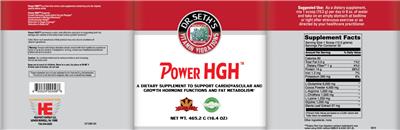
Power HGH by Dr. Seth's Vitamin Vibrations label
The label scan from the NIH Dietary Supplement Label Database. Tap to enlarge.
Label images are published by the NIH Dietary Supplement Label Database for the version of this product on file. Always read your actual product label.
View the full label (PDF)The Ingredients in Power HGH by Dr. Seth's Vitamin Vibrations
These are the 10 active ingredients this product is made of. Select any to open its full monograph.
Serving size15.5 Gram(s) Dosage formPowder Servings per container30 Amounts shown are per serving.
Most supplement products combine several ingredients, and a medication can interact with the product through any one of them. Each ingredient below shows whether it has known drug interactions.
L-Glutamine
Interacts with50 drugs
Glutamine is the most abundant amino acid in the body and is usually made in your muscles. A prescription form is FDA-approved to help reduce sickle c...
L-Glutamine monograph & interactionsPotassium
Interacts with62 drugs
Potassium is an essential mineral your body needs for nerve signals, muscle function, and a steady heartbeat, and most people get enough from a balanc...
Potassium monograph & interactionsIron
Interacts with80 drugs
Iron is an essential mineral your body needs to make hemoglobin and carry oxygen in the blood. Supplements are mainly useful for treating or preventin...
Iron monograph & interactionsGlycine
Interacts with1 drug
Glycine is a non-essential amino acid your body makes on its own and that also appears in protein-rich foods. It is most studied for improving sleep q...
Glycine monograph & interactionsL-Arginine
Interacts with403 drugs
L-arginine is an amino acid that the body uses to make nitric oxide, a substance that helps blood vessels relax and widen. It is popularly used for bl...
L-Arginine monograph & interactionsL-Ornithine
No knowninteractions
Ornithine is a non-essential amino acid your body makes naturally as part of the urea cycle, which helps remove ammonia. It is sold as a supplement fo...
L-Ornithine monograph & interactionsDietary Fiber
Interacts with2,025 drugs
Black psyllium is a soluble-fiber supplement made from the seeds of a Plantago plant, used mostly to ease constipation and support digestive health. I...
Dietary Fiber monograph & interactionsProtein
Stevia Leaf Extract
Interacts with259 drugs
Stevia is a plant-based, calorie-free sweetener that is widely used as a sugar alternative and is considered safe in normal food amounts by major regu...
Stevia Leaf Extract monograph & interactionsCocoa, Powder
Interacts with661 drugs
Cocoa is rich in plant compounds called flavanols that may modestly support blood vessel function and blood pressure, but most chocolate products are...
Cocoa, Powder monograph & interactionsPower HGH by Dr. Seth's Vitamin Vibrations Drug Interactions
HelloPharmacist Interaction Report
Power HGH by Dr.
Seth's Vitamin Vibrations contains eight active ingredients, and several of them interact with medications. Through its potassium, iron, L-arginine, and cocoa content, this product carries Moderate-severity interactions with multiple drug types.
The most serious single interaction involves potassium with blood pressure and heart medications: potassium-sparing diuretics (water pills that preserve potassium), ACE inhibitors, and angiotensin receptor blockers all increase the risk of dangerously high potassium levels (hyperkalemia) when combined with potassium supplements.
Read the full breakdown — every affected drug type, severity by severity
Iron in this product interacts Moderately with levodopa (a Parkinson's drug), quinolone and tetracycline antibiotics, bisphosphonates (bone medications), methyldopa (a blood pressure drug), levothyroxine (thyroid hormone), mycophenolate mofetil (an immunosuppressant), and penicillamine (a copper-binding drug)—all by reducing how much of the medication your body absorbs. L-arginine carries Moderate interactions with antihypertensive drugs, potassium-sparing diuretics, blood thinners and antiplatelet drugs, diabetes medications, ACE inhibitors, ARBs, isoproterenol, and sildenafil, mainly by lowering blood pressure or potassium further or thinning blood.
Cocoa, which contains caffeine, interacts Moderately with ephedrine, dipyridamole (used in stress tests), pentobarbital (a sedative), quinolone antibiotics, beta-agonists, flutamide, disulfiram, and antihypertensive drugs. Stevia leaf extract has Moderate interactions with lithium and Minor ones with antihypertensive and diabetes drugs.
L-glutamine carries a Moderate interaction with anticonvulsants.
L-ornithine was not checked—we hold no interaction data for it. Altogether, these interactions span 848 individual medications.
Check your exact prescriptions with the search tool on this page before starting this product.
Check your own medications below · Editorial policy · How we use AI
Want to check YOUR meds against Power HGH?
Ask about interactions with your drugs in plain English — “Can I take it with lisinopril?” — and we find you the answer in seconds, ingredient by ingredient.
Go to the checkerIngredients driving the most interactions
Individual Drug Interactions
The ingredients in Power HGH interact with 2,122 drugs. Click any drug to see the details.
8 of the 10 ingredients in Power HGH interact with drugs. Each result below shows which ingredient is responsible. Dietary Fiber Cocoa, Powder L-Arginine Stevia Leaf Extract Iron Potassium L-Glutamine Glycine
AbametapirXeglyze
How Abametapir interacts with Power HGH — through 1 ingredient. Tap an ingredient for the detail:
Cocoa, PowderCytochrome P450 1a2 (cyp1a2) Inhibitors Moderate
Interaction Summary
Theoretically, concomitant use might increase the levels and adverse effects of caffeine.
Read the full Cocoa, Powder + Abametapir interactionAbciximabReoPro
How Abciximab interacts with Power HGH — through 3 ingredients. Tap an ingredient for the detail:
Cocoa, PowderAnticoagulant/antiplatelet Drugs Moderate
Interaction Summary
Theoretically, cocoa may increase the risk of bleeding if used with anticoagulant or antiplatelet drugs.
Read the full Cocoa, Powder + Abciximab interactionL-arginineAnticoagulant/antiplatelet Drugs Moderate
Interaction Summary
Theoretically, concomitant use of L-arginine with anticoagulant and antiplatelet drugs might have additive effects and increase the risk of bleeding.
Read the full L-arginine + Abciximab interactionDietary FiberOral Drugs Minor
Interaction Summary
Theoretically, psyllium might increase, decrease, or have no effect on the absorption of oral drugs.
Read the full Dietary Fiber + Abciximab interactionAbiraterone
How Abiraterone interacts with Power HGH — through 2 ingredients. Tap an ingredient for the detail:
Cocoa, PowderCytochrome P450 1a2 (cyp1a2) Inhibitors Moderate
Interaction Summary
Theoretically, concomitant use might increase the levels and adverse effects of caffeine.
Read the full Cocoa, Powder + Abiraterone interactionDietary FiberOral Drugs Minor
Interaction Summary
Theoretically, psyllium might increase, decrease, or have no effect on the absorption of oral drugs.
Read the full Dietary Fiber + Abiraterone interactionAbrocitinibCibinqo
How Abrocitinib interacts with Power HGH — through 3 ingredients. Tap an ingredient for the detail:
Cocoa, PowderAnticoagulant/antiplatelet Drugs Moderate
Interaction Summary
Theoretically, cocoa may increase the risk of bleeding if used with anticoagulant or antiplatelet drugs.
Read the full Cocoa, Powder + Abrocitinib interactionL-arginineAnticoagulant/antiplatelet Drugs Moderate
Interaction Summary
Theoretically, concomitant use of L-arginine with anticoagulant and antiplatelet drugs might have additive effects and increase the risk of bleeding.
Read the full L-arginine + Abrocitinib interactionDietary FiberOral Drugs Minor
Interaction Summary
Theoretically, psyllium might increase, decrease, or have no effect on the absorption of oral drugs.
Read the full Dietary Fiber + Abrocitinib interactionAcarboseGlucobay, Prandase, Precose
How Acarbose interacts with Power HGH — through 3 ingredients. Tap an ingredient for the detail:
L-arginineAntidiabetes Drugs Moderate
Interaction Summary
Theoretically, concomitant use of L-arginine might have additive effects with antidiabetes drugs.
Read the full L-arginine + Acarbose interactionDietary FiberOral Drugs Minor
Interaction Summary
Theoretically, psyllium might increase, decrease, or have no effect on the absorption of oral drugs.
Read the full Dietary Fiber + Acarbose interactionStevia Leaf ExtractAntidiabetes Drugs Minor
Interaction Summary
Theoretically, stevia might increase the risk for hypoglycemia when combined with antidiabetes drugs.
Read the full Stevia Leaf Extract + Acarbose interactionAcebutololRhotral, Sectral
How Acebutolol interacts with Power HGH — through 4 ingredients. Tap an ingredient for the detail:
Cocoa, PowderAntihypertensive Drugs Moderate
Interaction Summary
Theoretically, taking cocoa with antihypertensive drugs might increase the risk of hypotension.
Read the full Cocoa, Powder + Acebutolol interactionL-arginineAntihypertensive Drugs Moderate
Interaction Summary
Theoretically, concomitant use of L-arginine and antihypertensive drugs may increase the risk of hypotension.
Read the full L-arginine + Acebutolol interactionStevia Leaf ExtractAntihypertensive Drugs Minor
Interaction Summary
Theoretically, combining stevia or stevia constituents with antihypertensive agents might increase the risk of hypotension.
Read the full Stevia Leaf Extract + Acebutolol interactionDietary FiberOral Drugs Minor
Interaction Summary
Theoretically, psyllium might increase, decrease, or have no effect on the absorption of oral drugs.
Read the full Dietary Fiber + Acebutolol interactionAcenocoumarolSintrom
How Acenocoumarol interacts with Power HGH — through 3 ingredients. Tap an ingredient for the detail:
L-arginineAnticoagulant/antiplatelet Drugs Moderate
Interaction Summary
Theoretically, concomitant use of L-arginine with anticoagulant and antiplatelet drugs might have additive effects and increase the risk of bleeding.
Read the full L-arginine + Acenocoumarol interactionCocoa, PowderAnticoagulant/antiplatelet Drugs Moderate
Interaction Summary
Theoretically, cocoa may increase the risk of bleeding if used with anticoagulant or antiplatelet drugs.
Read the full Cocoa, Powder + Acenocoumarol interactionDietary FiberOral Drugs Minor
Interaction Summary
Theoretically, psyllium might increase, decrease, or have no effect on the absorption of oral drugs.
Read the full Dietary Fiber + Acenocoumarol interactionAcetaminophen, AspirinGemnisyn
How Acetaminophen, Aspirin interacts with Power HGH — through 3 ingredients. Tap an ingredient for the detail:
L-arginineAnticoagulant/antiplatelet Drugs Moderate
Interaction Summary
Theoretically, concomitant use of L-arginine with anticoagulant and antiplatelet drugs might have additive effects and increase the risk of bleeding.
Read the full L-arginine + Acetaminophen, Aspirin interactionCocoa, PowderAnticoagulant/antiplatelet Drugs Moderate
Interaction Summary
Theoretically, cocoa may increase the risk of bleeding if used with anticoagulant or antiplatelet drugs.
Read the full Cocoa, Powder + Acetaminophen, Aspirin interactionDietary FiberOral Drugs Minor
Interaction Summary
Theoretically, psyllium might increase, decrease, or have no effect on the absorption of oral drugs.
Read the full Dietary Fiber + Acetaminophen, Aspirin interactionAcetaminophen, Aspirin, CaffeineExcedrin, Excedrin Extra Strength, Excedrin Migraine
How Acetaminophen, Aspirin, Caffeine interacts with Power HGH — through 3 ingredients. Tap an ingredient for the detail:
Cocoa, PowderAnticoagulant/antiplatelet Drugs, Stimulant Drugs Moderate
Interaction Summary
Theoretically, cocoa may increase the risk of bleeding if used with anticoagulant or antiplatelet drugs.
Read the full Cocoa, Powder + Acetaminophen, Aspirin, Caffeine interactionL-arginineAnticoagulant/antiplatelet Drugs Moderate
Interaction Summary
Theoretically, concomitant use of L-arginine with anticoagulant and antiplatelet drugs might have additive effects and increase the risk of bleeding.
Read the full L-arginine + Acetaminophen, Aspirin, Caffeine interactionDietary FiberOral Drugs Minor
Interaction Summary
Theoretically, psyllium might increase, decrease, or have no effect on the absorption of oral drugs.
Read the full Dietary Fiber + Acetaminophen, Aspirin, Caffeine interactionAcetaminophen, Brompheniramine, PhenylpropanolamineDimetapp Cold and Flu
How Acetaminophen, Brompheniramine, Phenylpropanolamine interacts with Power HGH — through 2 ingredients. Tap an ingredient for the detail:
Cocoa, PowderStimulant Drugs, Phenylpropanolamine Moderate
Interaction Summary
Theoretically, concomitant use might increase stimulant adverse effects.
Read the full Cocoa, Powder + Acetaminophen, Brompheniramine, Phenylpropanolamine interactionDietary FiberOral Drugs Minor
Interaction Summary
Theoretically, psyllium might increase, decrease, or have no effect on the absorption of oral drugs.
Read the full Dietary Fiber + Acetaminophen, Brompheniramine, Phenylpropanolamine interactionAcetaminophen, Butalbital, CaffeineEsgic, Esgic Plus, Fiogesic, Fioricet, Repan, Tecnal +1 more
How Acetaminophen, Butalbital, Caffeine interacts with Power HGH — through 2 ingredients. Tap an ingredient for the detail:
Cocoa, PowderStimulant Drugs Moderate
Interaction Summary
Theoretically, concomitant use might increase stimulant adverse effects.
Read the full Cocoa, Powder + Acetaminophen, Butalbital, Caffeine interactionDietary FiberOral Drugs Minor
Interaction Summary
Theoretically, psyllium might increase, decrease, or have no effect on the absorption of oral drugs.
Read the full Dietary Fiber + Acetaminophen, Butalbital, Caffeine interactionAcetaminophen, Butalbital, Caffeine, CodeineEsgic with Codeine, Fioricet w/ Codeine
How Acetaminophen, Butalbital, Caffeine, Codeine interacts with Power HGH — through 2 ingredients. Tap an ingredient for the detail:
Cocoa, PowderStimulant Drugs Moderate
Interaction Summary
Theoretically, concomitant use might increase stimulant adverse effects.
Read the full Cocoa, Powder + Acetaminophen, Butalbital, Caffeine, Codeine interactionDietary FiberOral Drugs Minor
Interaction Summary
Theoretically, psyllium might increase, decrease, or have no effect on the absorption of oral drugs.
Read the full Dietary Fiber + Acetaminophen, Butalbital, Caffeine, Codeine interactionAcetaminophen, Caffeine, Chlorpheniramine, Hydrocodone, PhenylephrineHycomine Compound
How Acetaminophen, Caffeine, Chlorpheniramine, Hydrocodone, Phenylephrine interacts with Power HGH — through 2 ingredients. Tap an ingredient for the detail:
Cocoa, PowderStimulant Drugs Moderate
Interaction Summary
Theoretically, concomitant use might increase stimulant adverse effects.
Read the full Cocoa, Powder + Acetaminophen, Caffeine, Chlorpheniramine, Hydrocodone, Phenylephrine interactionDietary FiberOral Drugs Minor
Interaction Summary
Theoretically, psyllium might increase, decrease, or have no effect on the absorption of oral drugs.
Read the full Dietary Fiber + Acetaminophen, Caffeine, Chlorpheniramine, Hydrocodone, Phenylephrine interactionAcetaminophen, Caffeine, CodeineGesic C15, Gesic C30, Gesic C8, Lenoltec 1, Lenoltec 2, Lenoltec 3 +1 more
How Acetaminophen, Caffeine, Codeine interacts with Power HGH — through 2 ingredients. Tap an ingredient for the detail:
Cocoa, PowderStimulant Drugs Moderate
Interaction Summary
Theoretically, concomitant use might increase stimulant adverse effects.
Read the full Cocoa, Powder + Acetaminophen, Caffeine, Codeine interactionDietary FiberOral Drugs Minor
Interaction Summary
Theoretically, psyllium might increase, decrease, or have no effect on the absorption of oral drugs.
Read the full Dietary Fiber + Acetaminophen, Caffeine, Codeine interactionAcetaminophen, Caffeine, Codeine, SalicylamideCodalan No.1, Codalan No.2, Codalan No.3
How Acetaminophen, Caffeine, Codeine, Salicylamide interacts with Power HGH — through 2 ingredients. Tap an ingredient for the detail:
Cocoa, PowderStimulant Drugs Moderate
Interaction Summary
Theoretically, concomitant use might increase stimulant adverse effects.
Read the full Cocoa, Powder + Acetaminophen, Caffeine, Codeine, Salicylamide interactionDietary FiberOral Drugs Minor
Interaction Summary
Theoretically, psyllium might increase, decrease, or have no effect on the absorption of oral drugs.
Read the full Dietary Fiber + Acetaminophen, Caffeine, Codeine, Salicylamide interactionAcetaminophen, Caffeine, DihydrocodeineDHC Plus, Panlor DC, Panlor SS
How Acetaminophen, Caffeine, Dihydrocodeine interacts with Power HGH — through 2 ingredients. Tap an ingredient for the detail:
Cocoa, PowderStimulant Drugs Moderate
Interaction Summary
Theoretically, concomitant use might increase stimulant adverse effects.
Read the full Cocoa, Powder + Acetaminophen, Caffeine, Dihydrocodeine interactionDietary FiberOral Drugs Minor
Interaction Summary
Theoretically, psyllium might increase, decrease, or have no effect on the absorption of oral drugs.
Read the full Dietary Fiber + Acetaminophen, Caffeine, Dihydrocodeine interactionAcetaminophen, Caffeine, IsomethepteneMigralam
How Acetaminophen, Caffeine, Isometheptene interacts with Power HGH — through 2 ingredients. Tap an ingredient for the detail:
Cocoa, PowderStimulant Drugs Moderate
Interaction Summary
Theoretically, concomitant use might increase stimulant adverse effects.
Read the full Cocoa, Powder + Acetaminophen, Caffeine, Isometheptene interactionDietary FiberOral Drugs Minor
Interaction Summary
Theoretically, psyllium might increase, decrease, or have no effect on the absorption of oral drugs.
Read the full Dietary Fiber + Acetaminophen, Caffeine, Isometheptene interactionAcetaminophen, Caffeine, PyrilamineMidol Max Strength Menstrual
How Acetaminophen, Caffeine, Pyrilamine interacts with Power HGH — through 2 ingredients. Tap an ingredient for the detail:
Cocoa, PowderDiuretic Drugs, Stimulant Drugs Moderate
Interaction Summary
Theoretically, using cocoa with diuretic drugs might increase the risk of hypokalemia.
Read the full Cocoa, Powder + Acetaminophen, Caffeine, Pyrilamine interactionDietary FiberOral Drugs Minor
Interaction Summary
Theoretically, psyllium might increase, decrease, or have no effect on the absorption of oral drugs.
Read the full Dietary Fiber + Acetaminophen, Caffeine, Pyrilamine interactionAcetaminophen, Chlorpheniramine, Codeine, PhenylephrineColrex
How Acetaminophen, Chlorpheniramine, Codeine, Phenylephrine interacts with Power HGH — through 2 ingredients. Tap an ingredient for the detail:
Cocoa, PowderStimulant Drugs Moderate
Interaction Summary
Theoretically, concomitant use might increase stimulant adverse effects.
Read the full Cocoa, Powder + Acetaminophen, Chlorpheniramine, Codeine, Phenylephrine interactionDietary FiberOral Drugs Minor
Interaction Summary
Theoretically, psyllium might increase, decrease, or have no effect on the absorption of oral drugs.
Read the full Dietary Fiber + Acetaminophen, Chlorpheniramine, Codeine, Phenylephrine interactionAcetaminophen, Chlorpheniramine, Dextromethorphan, PhenylpropanolamineMulti Symptom Cold Relief
How Acetaminophen, Chlorpheniramine, Dextromethorphan, Phenylpropanolamine interacts with Power HGH — through 2 ingredients. Tap an ingredient for the detail:
Cocoa, PowderStimulant Drugs, Phenylpropanolamine Moderate
Interaction Summary
Theoretically, concomitant use might increase stimulant adverse effects.
Read the full Cocoa, Powder + Acetaminophen, Chlorpheniramine, Dextromethorphan, Phenylpropanolamine interactionDietary FiberOral Drugs Minor
Interaction Summary
Theoretically, psyllium might increase, decrease, or have no effect on the absorption of oral drugs.
Read the full Dietary Fiber + Acetaminophen, Chlorpheniramine, Dextromethorphan, Phenylpropanolamine interactionAcetaminophen, Chlorpheniramine, Dextromethorphan, PseudoephedrineChildren's Tylenol Cold Plus Cough, Tylenol Cold Ex Strength
How Acetaminophen, Chlorpheniramine, Dextromethorphan, Pseudoephedrine interacts with Power HGH — through 2 ingredients. Tap an ingredient for the detail:
Cocoa, PowderStimulant Drugs Moderate
Interaction Summary
Theoretically, concomitant use might increase stimulant adverse effects.
Read the full Cocoa, Powder + Acetaminophen, Chlorpheniramine, Dextromethorphan, Pseudoephedrine interactionDietary FiberOral Drugs Minor
Interaction Summary
Theoretically, psyllium might increase, decrease, or have no effect on the absorption of oral drugs.
Read the full Dietary Fiber + Acetaminophen, Chlorpheniramine, Dextromethorphan, Pseudoephedrine interactionAcetaminophen, Chlorpheniramine, Guaifenesin, Phenylephrine, SalicylamideRhinogesic GG
How Acetaminophen, Chlorpheniramine, Guaifenesin, Phenylephrine, Salicylamide interacts with Power HGH — through 2 ingredients. Tap an ingredient for the detail:
Cocoa, PowderStimulant Drugs Moderate
Interaction Summary
Theoretically, concomitant use might increase stimulant adverse effects.
Read the full Cocoa, Powder + Acetaminophen, Chlorpheniramine, Guaifenesin, Phenylephrine, Salicylamide interactionDietary FiberOral Drugs Minor
Interaction Summary
Theoretically, psyllium might increase, decrease, or have no effect on the absorption of oral drugs.
Read the full Dietary Fiber + Acetaminophen, Chlorpheniramine, Guaifenesin, Phenylephrine, Salicylamide interactionAcetaminophen, Chlorpheniramine, PhenylephrineAlka-Seltzer PLUS, Histex SR, Protid
How Acetaminophen, Chlorpheniramine, Phenylephrine interacts with Power HGH — through 2 ingredients. Tap an ingredient for the detail:
Cocoa, PowderStimulant Drugs Moderate
Interaction Summary
Theoretically, concomitant use might increase stimulant adverse effects.
Read the full Cocoa, Powder + Acetaminophen, Chlorpheniramine, Phenylephrine interactionDietary FiberOral Drugs Minor
Interaction Summary
Theoretically, psyllium might increase, decrease, or have no effect on the absorption of oral drugs.
Read the full Dietary Fiber + Acetaminophen, Chlorpheniramine, Phenylephrine interactionAcetaminophen, Chlorpheniramine, Phenylephrine, SalicylamideRhinogesic, Rhinogesic JR
How Acetaminophen, Chlorpheniramine, Phenylephrine, Salicylamide interacts with Power HGH — through 2 ingredients. Tap an ingredient for the detail:
Cocoa, PowderStimulant Drugs Moderate
Interaction Summary
Theoretically, concomitant use might increase stimulant adverse effects.
Read the full Cocoa, Powder + Acetaminophen, Chlorpheniramine, Phenylephrine, Salicylamide interactionDietary FiberOral Drugs Minor
Interaction Summary
Theoretically, psyllium might increase, decrease, or have no effect on the absorption of oral drugs.
Read the full Dietary Fiber + Acetaminophen, Chlorpheniramine, Phenylephrine, Salicylamide interactionAcetaminophen, Chlorpheniramine, PhenylpropanolamineAlumadrine, Conex, Sinadrin Max Strength, Sinulin
How Acetaminophen, Chlorpheniramine, Phenylpropanolamine interacts with Power HGH — through 2 ingredients. Tap an ingredient for the detail:
Cocoa, PowderPhenylpropanolamine, Stimulant Drugs Moderate
Interaction Summary
Theoretically, phenylpropanolamine might increase the risk of hypertension, as well as the levels and adverse effects of caffeine.
Read the full Cocoa, Powder + Acetaminophen, Chlorpheniramine, Phenylpropanolamine interactionDietary FiberOral Drugs Minor
Interaction Summary
Theoretically, psyllium might increase, decrease, or have no effect on the absorption of oral drugs.
Read the full Dietary Fiber + Acetaminophen, Chlorpheniramine, Phenylpropanolamine interactionAcetaminophen, Chlorpheniramine, Phenylpropanolamine, OpiumHista-Derfule
How Acetaminophen, Chlorpheniramine, Phenylpropanolamine, Opium interacts with Power HGH — through 2 ingredients. Tap an ingredient for the detail:
Cocoa, PowderStimulant Drugs, Phenylpropanolamine Moderate
Interaction Summary
Theoretically, concomitant use might increase stimulant adverse effects.
Read the full Cocoa, Powder + Acetaminophen, Chlorpheniramine, Phenylpropanolamine, Opium interactionDietary FiberOral Drugs Minor
Interaction Summary
Theoretically, psyllium might increase, decrease, or have no effect on the absorption of oral drugs.
Read the full Dietary Fiber + Acetaminophen, Chlorpheniramine, Phenylpropanolamine, Opium interactionAcetaminophen, Chlorpheniramine, Phenylpropanolamine, PhenyltoloxamineNorel Plus
How Acetaminophen, Chlorpheniramine, Phenylpropanolamine, Phenyltoloxamine interacts with Power HGH — through 2 ingredients. Tap an ingredient for the detail:
Cocoa, PowderPhenylpropanolamine, Stimulant Drugs Moderate
Interaction Summary
Theoretically, phenylpropanolamine might increase the risk of hypertension, as well as the levels and adverse effects of caffeine.
Read the full Cocoa, Powder + Acetaminophen, Chlorpheniramine, Phenylpropanolamine, Phenyltoloxamine interactionDietary FiberOral Drugs Minor
Interaction Summary
Theoretically, psyllium might increase, decrease, or have no effect on the absorption of oral drugs.
Read the full Dietary Fiber + Acetaminophen, Chlorpheniramine, Phenylpropanolamine, Phenyltoloxamine interactionAcetaminophen, Chlorpheniramine, PseudoephedrineAlka-Seltzer PLUS Liquid Gels, Children's Tylenol Cold, Codimal, Comtrex, Extra Strength Tylenol Allergy Sinus, Lorsin +3 more
How Acetaminophen, Chlorpheniramine, Pseudoephedrine interacts with Power HGH — through 2 ingredients. Tap an ingredient for the detail:
Cocoa, PowderStimulant Drugs Moderate
Interaction Summary
Theoretically, concomitant use might increase stimulant adverse effects.
Read the full Cocoa, Powder + Acetaminophen, Chlorpheniramine, Pseudoephedrine interactionDietary FiberOral Drugs Minor
Interaction Summary
Theoretically, psyllium might increase, decrease, or have no effect on the absorption of oral drugs.
Read the full Dietary Fiber + Acetaminophen, Chlorpheniramine, Pseudoephedrine interactionAcetaminophen, Dexbrompheniramine, PseudoephedrineSinadrin Plus
How Acetaminophen, Dexbrompheniramine, Pseudoephedrine interacts with Power HGH — through 2 ingredients. Tap an ingredient for the detail:
Cocoa, PowderStimulant Drugs Moderate
Interaction Summary
Theoretically, concomitant use might increase stimulant adverse effects.
Read the full Cocoa, Powder + Acetaminophen, Dexbrompheniramine, Pseudoephedrine interactionDietary FiberOral Drugs Minor
Interaction Summary
Theoretically, psyllium might increase, decrease, or have no effect on the absorption of oral drugs.
Read the full Dietary Fiber + Acetaminophen, Dexbrompheniramine, Pseudoephedrine interactionAcetaminophen, Dextromethorphan, Doxylamine, PseudoephedrineVicks NyQuil
How Acetaminophen, Dextromethorphan, Doxylamine, Pseudoephedrine interacts with Power HGH — through 2 ingredients. Tap an ingredient for the detail:
Cocoa, PowderStimulant Drugs Moderate
Interaction Summary
Theoretically, concomitant use might increase stimulant adverse effects.
Read the full Cocoa, Powder + Acetaminophen, Dextromethorphan, Doxylamine, Pseudoephedrine interactionDietary FiberOral Drugs Minor
Interaction Summary
Theoretically, psyllium might increase, decrease, or have no effect on the absorption of oral drugs.
Read the full Dietary Fiber + Acetaminophen, Dextromethorphan, Doxylamine, Pseudoephedrine interactionEach ingredient & the kinds of drugs it affects
For each ingredient in Power HGH with known interactions, here are the types of medications they can affect. Open any type for the detail — or search your exact drug in the checker above.
Dietary Fiber
Carbamazepine (Tegretol)
Theoretically, black psyllium might reduce the effects of carbamazepine and increase the risk for convulsions.
Theoretically, black psyllium might reduce carbamazepine absorption. A preliminary study using blond psyllium reported decreased carbamazepine bioavailability due to binding of the drug to psyllium, as well as reduction of available fluid in the gut for dissolution of the drug. This interaction may also occur with black psyllium.
Lithium
Theoretically, taking black psyllium at the same time as lithium might reduce lithium absorption.
The fiber in black psyllium might reduce lithium absorption and plasma levels. Some case reports describe a reduction in plasma lithium levels with concomitant administration of blond psyllium. This was reversed when psyllium was stopped. This interaction may also occur with black psyllium.
Metformin (Glucophage)
Theoretically, black psyllium might increase the therapeutic and adverse effects of metformin.
Animal research shows that concurrent consumption of blond psyllium with metformin slows and increases the absorption of metformin. This interaction may also occur with black psyllium. To avoid changes in absorption, take psyllium 30-60 minutes after metformin.
Olanzapine (Zyprexa)
Theoretically, taking black psyllium at the same time as olanzapine might reduce olanzapine absorption.
The fiber in black psyllium might decrease the absorption of olanzapine. A single case report describes a reduction in the effectiveness of olanzapine when it was concomitantly administered with an unspecified type of psyllium 3 grams orally twice daily. This effect was reversed when psyllium was stopped.
Digoxin (Lanoxin)
Theoretically, taking black psyllium at the same time as digoxin might reduce digoxin absorption and decrease digoxin levels.
Psyllium might bind digoxin in the gut. However, some clinical evidence suggests that psyllium does not impact digoxin absorption.
Ethinyl Estradiol
Theoretically, taking black psyllium at the same time as ethinyl estradiol might alter levels of estradiol.
Concurrent use of blond psyllium with ethinyl estradiol results in a slight increase in the extent of ethinyl estradiol absorption and a slower rate of absorption. This is unlikely to be clinically significant.
Oral Drugs
Theoretically, psyllium might increase, decrease, or have no effect on the absorption of oral drugs.
Psyllium seems to have variable effects on drug absorption. To avoid changes in absorption, take psyllium 30-60 minutes after oral medications. Animal research shows that blond psyllium delays and increases the absorption of metformin and ethinyl estradiol. Case reports and animal research suggest that blond psyllium might reduce absorption of lithium, digoxin, olanzapine, and carbamazepine. Finally, some pharmacokinetic studies show that psyllium does not affect the absorption of levothyroxine or warfarin. Although many of these studies evaluated blond psyllium, the fiber content in black psyllium may have similar effects.
Cocoa, Powder
Ace Inhibitors (Aceis)
Theoretically, taking cocoa with ACEIs might increase the risk of adverse effects.
Human research shows that dark chocolate can inhibit ACE. Additionally, prolonged angioedema in an elderly patient on an ACE inhibitor was precipitated with intake of diabetic chocolate.
Adenosine (Adenocard)
Theoretically, cocoa might decrease the vasodilatory effects of adenosine and interfere with its use prior to stress testing.
Cocoa contains caffeine. Caffeine is a competitive inhibitor of adenosine at the cellular level. However, caffeine does not seem to affect supplemental adenosine because high interstitial levels of adenosine overcome the antagonistic effects of caffeine. It is recommended that methylxanthines and methylxanthine-containing products be stopped 24 hours prior to pharmacological stress tests. However, methylxanthines appear more likely to interfere with dipyridamole than adenosine-induced stress testing.
Alcohol (Ethanol)
Theoretically, concomitant use might increase levels and adverse effects of caffeine.
Cocoa contains caffeine. Alcohol reduces caffeine metabolism. Concomitant use of alcohol can increase caffeine serum concentrations and the risk of caffeine adverse effects.
Anticoagulant/Antiplatelet Drugs
Theoretically, cocoa may increase the risk of bleeding if used with anticoagulant or antiplatelet drugs.
Clinical research shows that intake of cocoa can inhibit platelet adhesion, aggregation, and activity and increase aspirin-induced bleeding time. For patients on dual antiplatelet therapy, cocoa may enhance the inhibitory effect of clopidogrel, but not aspirin, on platelet aggregation.
Antihypertensive Drugs
Theoretically, taking cocoa with antihypertensive drugs might increase the risk of hypotension.
Clinical research shows that cocoa can modestly decrease blood pressure in hypertensive and normotensive patients.
Beta-Adrenergic Agonists
Theoretically, large amounts of cocoa might increase the cardiac inotropic effects of beta-agonists.
Cocoa contains caffeine. Theoretically, large amounts of caffeine might increase cardiac inotropic effects of beta-agonists. A case of atrial fibrillation associated with consumption of large quantities of chocolate in a patient with chronic albuterol inhalation abuse has also been reported.
Cytochrome P450 1A2 (Cyp1A2) Inhibitors
Theoretically, concomitant use might increase the levels and adverse effects of caffeine.
Cocoa contains caffeine. Caffeine is metabolized by cytochrome P450 1A2 (CYP1A2),. Theoretically, drugs that inhibit CYP1A2 may decrease the clearance rate of caffeine from cocoa and increase caffeine levels.
Dipyridamole (Persantine)
Theoretically, cocoa might decrease the vasodilatory effects of dipyridamole and interfere with its use prior to stress testing.
Cocoa contains caffeine. Caffeine may inhibit dipyridamole-induced vasodilation. It is recommended that methylxanthines and methylxanthine-containing products be stopped 24 hours prior to pharmacological stress tests. Methylxanthines appear more likely to interfere with dipyridamole than adenosine-induced stress testing.
Disulfiram (Antabuse)
Theoretically, disulfiram might increase the risk of adverse effects from caffeine.
Cocoa contains caffeine. In human research, disulfiram decreases the rate of caffeine clearance.
Diuretic Drugs
Theoretically, using cocoa with diuretic drugs might increase the risk of hypokalemia.
Cocoa contains caffeine. In excessive amounts, caffeine can reduce potassium levels due to stimulation of the sodium-potassium pump. Diuretics can also cause lower potassium levels.
Ephedrine
Theoretically, concomitant use might increase the risk for stimulant adverse effects.
Cocoa contains caffeine. There is evidence that using ephedrine with caffeine might increase the risk of serious life-threatening or debilitating adverse effects such as hypertension, myocardial infarction, stroke, seizures, and death.
Estrogens
Theoretically, estrogens might increase the levels and adverse effects of caffeine.
Cocoa contains caffeine. Estrogen inhibits caffeine metabolism.
Flutamide (Eulexin)
Theoretically, cocoa might increase the levels and adverse effects of flutamide.
Cocoa contains caffeine. In vitro evidence suggests that caffeine can inhibit the metabolism of flutamide.
Fluvoxamine (Luvox)
Theoretically, fluvoxamine might increase the levels and adverse effects of caffeine.
Cocoa contains caffeine. Fluvoxamine reduces caffeine metabolism.
Lithium
Theoretically, abrupt cocoa withdrawal might increase the levels and adverse effects of lithium.
Cocoa contains caffeine. There are two case reports of lithium tremor that worsened upon abrupt coffee withdrawal.
Monoamine Oxidase Inhibitors (Maois)
Theoretically, concomitant use might increase the risk of a hypertensive crisis.
Cocoa contains caffeine. Large amounts of caffeine with MAOIs might precipitate a hypertensive crisis.
Nicotine
Theoretically, concomitant use might increase the risk of hypertension.
Cocoa contains caffeine. Concomitant use of caffeine and nicotine has been shown to have additive cardiovascular effects, including increased heart rate and blood pressure. Blood pressure was increased by 10.8/12.4 mmHg when the agents were used concomitantly.
Pentobarbital (Nembutal)
Theoretically, cocoa might decrease the effects of pentobarbital.
Cocoa contains caffeine. Caffeine might negate the hypnotic effects of pentobarbital.
Phenobarbital (Luminal)
Theoretically, cocoa might reduce the effects of phenobarbital and increase the risk for convulsions.
Cocoa contains caffeine. Animal research suggests that caffeine can decrease the anticonvulsant activity of phenobarbital. The exact mechanism of this interaction is unclear.
Phenylpropanolamine
Theoretically, phenylpropanolamine might increase the risk of hypertension, as well as the levels and adverse effects of caffeine.
Cocoa contains caffeine. Concomitant use of phenylpropanolamine and caffeine might cause an additive increase in blood pressure. Phenylpropanolamine also seems to increase caffeine serum levels.
Phenytoin (Dilantin)
Theoretically, cocoa might reduce the effects of phenytoin and increase the risk for convulsions.
Cocoa contains caffeine. Animal research suggests that caffeine can decrease the anticonvulsant activity of phenytoin. The effect does not seem to be related to the seizure threshold-lowering effects of caffeine. However, the exact mechanism of this interaction is unclear.
Quinolone Antibiotics
Theoretically, quinolone antibiotics might increase the levels and adverse effects of caffeine.
Cocoa contains caffeine. Quinolones (also referred to as fluoroquinolones) decrease caffeine clearance.
Riluzole (Rilutek)
Theoretically, concomitant use might increase the levels and adverse effects of both caffeine and riluzole.
Cocoa contains caffeine. Caffeine and riluzole are both metabolized by cytochrome P450 1A2, and concomitant use might reduce metabolism of one or both agents.
Stimulant Drugs
Theoretically, concomitant use might increase stimulant adverse effects.
Cocoa contains caffeine. Concomitant use might increase the risk of stimulant adverse effects.
Theophylline
Theoretically, cocoa might increase the levels and adverse effects of theophylline.
Cocoa contains caffeine. Large amounts of caffeine might inhibit theophylline metabolism. Caffeine decreases theophylline clearance 23% to 29%.
L-Arginine
Ace Inhibitors (Aceis)
Theoretically, concomitant use of L-arginine and ACE inhibitors may increase the risk for hypotension and hyperkalemia.
Combining L-arginine with some antihypertensive drugs, especially ACE inhibitors, seems to have additive vasodilating and blood pressure-lowering effects. Furthermore, ACE inhibitors can increase potassium levels. Use of L-arginine has been associated with hyperkalemia in some patients. Theoretically, concomitant use of ACE inhibitors with L-arginine may increases the risk of hyperkalemia.
Angiotensin Receptor Blockers (Arbs)
Theoretically, concomitant use of L-arginine and ARBs may increase the risk of hypotension and hyperkalemia.
L-arginine increases nitric oxide, which causes vasodilation. Combining L-arginine with ARBs seems to increase L-arginine-induced vasodilation. Furthermore, ARBs can increase potassium levels. Use of L-arginine has been associated with hyperkalemia in some patients. Theoretically, concomitant use of ARBs with L-arginine may increases the risk of hyperkalemia.
Anticoagulant/Antiplatelet Drugs
Theoretically, concomitant use of L-arginine with anticoagulant and antiplatelet drugs might have additive effects and increase the risk of bleeding.
Preliminary research suggests that L-arginine infusions reduce platelet aggregation in humans. The clinical significance of this effect is unclear.
Antidiabetes Drugs
Theoretically, concomitant use of L-arginine might have additive effects with antidiabetes drugs.
Preliminary clinical research shows that L-arginine decreases blood glucose levels in patients with type 2 diabetes.
Antihypertensive Drugs
Theoretically, concomitant use of L-arginine and antihypertensive drugs may increase the risk of hypotension.
L-arginine increases nitric oxide, which causes vasodilation. Clinical evidence shows that L-arginine can reduce blood pressure in some individuals with hypertension. Furthermore, combining L-arginine with some antihypertensive drugs seems to have additive vasodilating and blood pressure-lowering effects.
Isoproterenol (Isuprel)
Theoretically, concurrent use of isoproterenol and L-arginine might result in additive effects and hypotension.
Preliminary clinical evidence suggests that L-arginine enhances isoproterenol-induced vasodilation in patients with essential hypertension or a family history of essential hypertension.
Potassium-Sparing Diuretics
Theoretically concomitant use of potassium-sparing diuretics with L-arginine may increases the risk of hyperkalemia.
Potassium-sparing diuretics can increase potassium levels. Use of L-arginine has been associated with hyperkalemia in some patients.
Sildenafil (Viagra)
Theoretically, concurrent use of sildenafil and L-arginine might increase the risk for hypotension.
In vivo, concurrent use of L-arginine and sildenafil has resulted in increased vasodilation. Theoretically, concurrent use might have additive vasodilatory and hypotensive effects. However, in studies evaluating the combined use of L-arginine and sildenafil for erectile dysfunction, hypotension was not reported.
Testosterone
Theoretically, concomitant use of L-arginine and testosterone might have additive effects.
In clinical research, L-arginine increases the level of testosterone in male patients with erectile dysfunction. The clinical significance of this finding is unclear.
Stevia Leaf Extract
Lithium
Theoretically, stevia might decrease clearance and increase levels of lithium.
Animal research suggests that stevia extracts might have diuretic activity. Theoretically, increased reabsorption of lithium along with sodium might reduce excretion and increase levels of lithium.
Antidiabetes Drugs
Theoretically, stevia might increase the risk for hypoglycemia when combined with antidiabetes drugs.
Preliminary clinical research in patients with type 2 diabetes suggests that taking a single dose of stevia extract 1000 mg reduces postprandial blood glucose levels when taken with a meal. However, other clinical research in patients with type 1 or type 2 diabetes suggests that taking stevioside 250 mg three times daily does not significantly affect blood glucose levels or glycated hemoglobin (HbA1C) after three months of treatment.
Antihypertensive Drugs
Theoretically, combining stevia or stevia constituents with antihypertensive agents might increase the risk of hypotension.
Stevia extract and stevioside might lower blood pressure in patients with hypertension. However, other clinical research suggests that stevioside does not significantly lower blood pressure in patients with hypertension.
Iron
Bictegravir/Emtricitabine/Tenofovir Alafenamide (Biktarvy)
Iron might decrease levels of bictegravir/emtricitabine/tenofovir alafenamide by reducing its absorption when taken in a fasting state.
Advise patients that bictegravir/emtricitabine/tenofovir alafenamide and iron can be taken together if taken with food. However, if taken on an empty stomach, bictegravir/emtricitabine/tenofovir alafenamide should not be taken with, or 2 hours after, iron containing products.
Bisphosphonates
Iron reduces the absorption of bisphosphonates.
Advise patients that doses of bisphosphonates should be separated by at least two hours from doses of all other medications, including supplements such as iron. Divalent cations, including iron, can decrease absorption of bisphosphonates by forming insoluble complexes in the gastrointestinal tract.
Denosumab (Prolia, Others)
Administration of intravenous iron within one month of denosumab administration might increase the risk of severe hypophosphatemia and hypocalcemia.
A case of severe hypocalcemia (albumin corrected calcium 6.88 mg/dL, ionized calcium 3.68 mg/dL) and hypophosphatemia (<0.5 mg/dL) with respiratory acidosis, QT interval prolongation, and nonsustained ventricular tachycardia was reported in a 76-year-old male who had received an iron polymaltose infusion within 2 weeks of a subcutaneous injection of denosumab. Serum parathyroid hormone was also elevated (348 pg/mL). Subsequent iron infusions with iron polymaltose and ferric carboxymaltose were followed by transient hypophosphatemia, but without hypocalcemia. Additionally, a literature review describes 6 additional cases of hypophosphatemia and hypocalcemia in patients 52-92 years of age who had been administered intravenous iron as either ferric carboxymaltose or iron polymaltose and subcutaneous denosumab within 1-4 weeks of each other.
Dolutegravir (Tivicay)
Iron might decrease dolutegravir levels by reducing its absorption.
Advise patients to take dolutegravir at least 2 hours before or 6 hours after taking iron. Pharmacokinetic research shows that iron can decrease the absorption of dolutegravir from the gastrointestinal tract through chelation. When taken under fasting conditions, a single dose of ferrous fumarate 324 mg orally along with dolutegravir 50 mg reduces overall exposure to dolutegravir by 54%.
Integrase Inhibitors
Theoretically, taking iron along with integrase inhibitors might decrease the levels and clinical effects of these drugs.
Iron is a divalent cation. There is concern that iron may decrease the absorption of integrase inhibitors from the gastrointestinal tract through chelation. One pharmacokinetic study shows that iron can decrease blood levels of the specific integrase inhibitor dolutegravir through chelation. Also, other pharmacokinetic research shows that other divalent cations such as calcium can decrease the absorption and levels of some integrase inhibitors through chelation.
Levodopa
Iron might decrease levodopa levels by reducing its absorption.
Advise patients to separate doses of levodopa and iron as much as possible. There is some evidence in healthy people that iron forms chelates with levodopa, reducing the amount of levodopa absorbed by around 50%. The clinical significance of this hasn't been determined.
Levothyroxine (Synthroid, Others)
Iron might decrease levothyroxine levels by reducing its absorption.
Advise patients to separate levothyroxine and iron doses by at least 2 hours. Iron can decrease the absorption and efficacy of levothyroxine by forming insoluble complexes in the gastrointestinal tract.
Methyldopa (Aldomet)
Iron might decrease methyldopa levels by reducing its absorption.
Advise patients to separate methyldopa and iron doses by at least 2 hours. Iron can decrease the absorption of methyldopa from the gastrointestinal tract through chelation, resulting in increases in blood pressure.
Mycophenolate Mofetil (Cellcept)
Theoretically, iron might decrease mycophenolate mofetil levels by reducing its absorption.
Advise patients to take iron 4-6 hours before, or 2 hours after, mycophenolate mofetil. It has been suggested that a decrease of absorption is possible, probably by forming nonabsorbable chelates. However, mycophenolate pharmacokinetics are not affected by iron supplementation in available clinical research.
Penicillamine (Cuprimine, Depen)
Iron might decrease penicillamine levels by reducing its absorption.
Advise patients to separate penicillamine and iron doses by at least 2 hours. Oral iron supplements can reduce absorption of penicillamine by 30% to 70%, probably due to chelate formation. In people with Wilson's disease, this interaction has led to reduced efficacy of penicillamine.
Quinolone Antibiotics
Iron might decrease levels of quinolone antibiotics by reducing their absorption.
Advise patients to separate quinolone antibiotics and iron doses by at least 2 hours. Iron decreases the absorption of quinolones due to formation of insoluble complexes in the gastrointestinal tract.
Tetracycline Antibiotics
Iron might decrease levels of tetracycline antibiotics by reducing their absorption.
Advise patients to take iron at least 2 hours before or 4 hours after tetracycline antibiotics. Concomitant use can decrease absorption of tetracycline antibiotics from the gastrointestinal tract by 50% to 90%.
Chloramphenicol
Theoretically, taking chloramphenicol with iron might reduce the response to iron therapy in iron deficiency anemia.
Chloramphenicol interferes with erythrocyte maturation. However, since chloramphenicol isn't usually taken for prolonged periods, this isn't likely to be clinically significant.
Potassium
Ace Inhibitors (Aceis)
Using ACEIs with high doses of potassium increases the risk of hyperkalemia.
ACEIs block the actions of the renin-angiotensin-aldosterone system and reduce potassium excretion. Concomitant use of these drugs with potassium supplements increases the risk of hyperkalemia. However, concomitant use of these drugs with moderate dietary potassium intake (about 3775-5200 mg daily) does not increase serum potassium levels.
Angiotensin Receptor Blockers (Arbs)
Using ARBs with high doses of potassium increases the risk of hyperkalemia.
ARBs block the actions of the renin-angiotensin-aldosterone system and reduce potassium excretion. Concomitant use of these drugs with potassium supplements increases the risk of hyperkalemia. However, concomitant use of these drugs with moderate dietary potassium intake (about 3775-5200 mg daily) does not increase serum potassium levels.
Potassium-Sparing Diuretics
Concomitant use increases the risk of hyperkalemia.
Using potassium-sparing diuretics with potassium supplements increases the risk of hyperkalemia.
L-Glutamine
Anticonvulsants
Theoretically, glutamine might antagonize the effects of anticonvulsant medications.
Glutamine is metabolized to the excitatory neurotransmitter glutamate. Glutamate might have antagonistic effects with anticonvulsant drugs. However, this interaction has not yet been reported in humans.
Glycine
Clozapine (Clozaril)
Theoretically, glycine might decrease the effectiveness of clozapine.
One small clinical study in patients with schizophrenia shows that adding glycine to clozapine therapy worsens symptoms of schizophrenia when compared with clozapine alone. The mechanism of this interaction is unclear.
Brand information
Manufacturer and brand details for Power HGH, from the product label.
Dr. Seth's Vitamin Vibrations
See all Dr. Seth's Vitamin Vibrations products- Name
- HE Heaven's Energy LLC.
- City
- Lower Burrell
- State
- PA
- ZipCode
- 15068
- Phone Number
- 724-334-2225
Power HGH by Dr. Seth's Vitamin Vibrations: Common Questions
Does Power HGH by Dr. Seth's Vitamin Vibrations interact with any medications?
How can one product interact with so many drugs?
Where does this information come from?
Is this safe to take while pregnant?
Will this work for athletic performance?
What are the most common side effects?
Is there caffeine in this product?
Can I take this if I have kidney disease?
Should I take this with food?
Written and reviewed by the HelloPharmacist editorial staff. Our editorial policy
Not sure if Power HGH is safe with your meds?
Our pharmacists answer your medication & supplement questions — free.
Label information is sourced from the NIH Dietary Supplement Label Database and reflects the product version on file; always read your actual product label. This page is for education only and is not a substitute for professional medical advice. Confirm with your pharmacist or doctor before combining supplements and medications.
The Full Monographs Behind Power HGH’s Ingredients
Every ingredient we hold a full HelloPharmacist monograph for — uses, evidence, safety, and the complete interaction list.
Glutamine
Interacts with 50 drugsGlutamine is the most abundant amino acid in the body and is usually made in your muscles. A prescription form is FDA-approved to help reduce sickle cell disease complications, but for most...
Read the full Glutamine monograph → Herb & supplement monographPotassium
Interacts with 62 drugsPotassium is an essential mineral your body needs for nerve signals, muscle function, and a steady heartbeat, and most people get enough from a balanced diet rich in fruits and vegetables. P...
Read the full Potassium monograph → Herb & supplement monographIron
Interacts with 80 drugsIron is an essential mineral your body needs to make hemoglobin and carry oxygen in the blood. Supplements are mainly useful for treating or preventing iron deficiency and iron-deficiency an...
Read the full Iron monograph → Herb & supplement monographGlycine
Interacts with 1 drugGlycine is a non-essential amino acid your body makes on its own and that also appears in protein-rich foods. It is most studied for improving sleep quality, where early research is promisin...
Read the full Glycine monograph → Herb & supplement monographL-arginine
Interacts with 403 drugsL-arginine is an amino acid that the body uses to make nitric oxide, a substance that helps blood vessels relax and widen. It is popularly used for blood pressure, erectile dysfunction, and...
Read the full L-arginine monograph → Herb & supplement monographOrnithine
Ornithine is a non-essential amino acid your body makes naturally as part of the urea cycle, which helps remove ammonia. It is sold as a supplement for fatigue, exercise recovery, and sleep,...
Read the full Ornithine monograph → Herb & supplement monographBlack Psyllium
Interacts with 2,025 drugsBlack psyllium is a soluble-fiber supplement made from the seeds of a Plantago plant, used mostly to ease constipation and support digestive health. It is best known and most studied for rel...
Read the full Black Psyllium monograph → Herb & supplement monographStevia
Interacts with 259 drugsStevia is a plant-based, calorie-free sweetener that is widely used as a sugar alternative and is considered safe in normal food amounts by major regulators. Purified stevia extracts have a...
Read the full Stevia monograph → Herb & supplement monographCocoa
Interacts with 661 drugsCocoa is rich in plant compounds called flavanols that may modestly support blood vessel function and blood pressure, but most chocolate products are high in sugar, fat, and calories, which...
Read the full Cocoa monograph →Sources & How We Checked
Power HGH's label data comes from the NIH Dietary Supplement Label Database; the ingredient interaction data is from the Natural Medicines database, reviewed by our pharmacists.
- NIH Dietary Supplement Label Database (DSLD) — The official product label on file for this supplement.
- Natural Medicines (Therapeutic Research Center) — Evidence-graded clinical reference behind the ingredient interaction data.
Content is written and reviewed by licensed HelloPharmacist pharmacists. See our data sources and editorial standards for how this information is built and checked.
The 314 references behind this product’s interaction data
Every citation that drives the interaction findings for this product’s ingredients, from the evidence-graded Natural Medicines (TRC Healthcare) database. Open an ingredient to browse its citations — links open the study on PubMed or the publisher’s site.
Glutamine 11 references
- Miller AL. Therapeutic considerations of L-glutamine: a review of the literature. Altern Med Rev 1999;4:239-48..
- Bozzetti F, Biganzoli L, Gavazzi C, et al. Glutamine supplementation in cancer patients receiving chemotherapy: a double-blind randomized study. Nutrition 1997;13:748-51.. PubMed
- Mebane AH. L-Glutamine and mania. Am J Psychiatry 984;141:1302-3.
- Meldrum BS. Glutamate as a neurotransmitter in the brain: review of physiology and pathology. J Nutr 2000;130:1007S-15S.. PubMed
- Garlick PJ. Assessment of the safety of glutamine and other amino acids. J Nutr 2001;131:2556S-61S.. PubMed
- Chapman AG. Glutamate and epilepsy. J Nutr 2000;130:1043S-5S.. PubMed
- Ziegler TR. Glutamine supplementation in cancer patients receiving bone marrow transplantation and high dose chemotherapy. J Nutr 2001;131:2578S-84S.. PubMed
- Laviano A, Molfino A, Lacaria MT, Canelli A, De Leo S, Preziosa I, Rossi Fanelli F. Glutamine supplementation favors weight loss in nondieting obese female patients. A pilot study. Eur J Clin Nutr. 2014 Nov;68(11):1264-6. PubMed
- Endari (l-glutamine) [package insert]. Torrance, CA: Emmaus Medical,Inc; 2017.
- Niihara Y, Miller ST, Kanter J, et al. A Phase 3 Trial of l-Glutamine in Sickle Cell Disease. N Engl J Med 2018;379(3):226-35. doi: 10.1056/NEJMoa1715971.
- Ogden HB, Child RB, Fallowfield JL, et al. Gastrointestinal Tolerance of Low, Medium and High Dose Acute Oral l-Glutamine Supplementation in Healthy Adults: A Pilot Study. Nutrients. 2020;12(10):2953. PubMed
Potassium 12 references
- McEvoy GK, ed. AHFS Drug Information. Bethesda, MD: American Society of Health-System Pharmacists, 1998.
- Gennaro A. Remington: The Science and Practice of Pharmacy. 19th ed. Lippincott: Williams & Wilkins, 1996.
- Whelton PK, He J, Cutler JA, et al. Effects of oral potassium on blood pressure. Meta-analysis of randomized controlled clinical trials. JAMA 1997;277:1624-32. PubMed
- Phillips, C. O., Kashani, A., Ko, D. K., Francis, G., and Krumholz, H. M. Adverse effects of combination angiotensin II receptor blockers plus angiotensin-converting enzyme inhibitors for left ventricular dysfunction: a quantitative review of data from ra DOI
- Altieri, P. I., Herrero, C., Suero, R., and Ortiz, A. Bleeding duodenal ulcer in a patient taking slow-releasing potassium tablets. Bol.Asoc.Med P.R. 1977;69(8):276.
- Raf, L. E. Enteric-coated potassium chloride tablets and ulcer of the small intestine. Acta Chir Scand Suppl 1967;(374):1-87.
- Potassium chloride oral solution [package insert]. Allentown, PA: Lehigh Valley Technologies, Inc.; 2014.
- Potassium chloride injection [package insert]. Lake Forest, IL: Hospira Inc.; 2009.
- Patel RB, Tannenbaum S, Viana-Tejedor A, et al. Serum potassium levels, cardiac arrhythmias, and mortality following non-ST-elevation myocardial infarction or unstable angina: insights from MERLIN-TIMI 36. Eur Heart J Acute Cardiovasc Care 2017 Feb;6(1):1 PubMed
- Malta D, Arcand J, Ravindran A, Floras V, Allard JP, Newton GE. Adequate intake of potassium does not cause hyperkalemia in hypertensive individuals taking medications that antagonize the renin angiotensin aldosterone system. Am J Clin Nutr 2016 Oct;104(4 PubMed
- Keskin M, Kaya A, Tatlisu MA, et al. The effect of serum potassium level on in-hospital and long-term mortality in ST elevation myocardial infarction. Int J cardiol. 2016 Oct 15;221:505-10.
- Stallings VA, Harrison M, Oria M; Committee to Review the Dietary Reference Intakes for Sodium and Potassium, Food and Nutrition Board, Health and Medicine Division, National Academies of Sciences, Engineering, and Medicine. Washington (DC): National Acad
Iron 72 references
- McEvoy GK, ed. AHFS Drug Information. Bethesda, MD: American Society of Health-System Pharmacists, 1998.
- Bruner AB, Joffe A, Duggan AK, et al. Randomized study of cognitive effects of iron supplementation in non- anaemic iron-deficient adolescent girls. Lancet 1996;348:992-6.
- Ullen H, Augustsson K, Gustavsson C, Steineck G. Supplementary iron intake and risk of cancer: reversed causality? Cancer Lett 1997;114:215-6.
- Reunanen A, Takkunen H, Knekt P, et al. Body iron stores, dietary iron intake and coronary heart disease mortality. J Intern Med 1995;238:223-30. PubMed
- Lund EK, Wharf SG, Fairweather-Tait SJ, Johnson IT. Oral ferrous sulfate supplements increase the free radical-generating capacity of feces from healthy volunteers. Am J Clin Nutr 1999;69:250-5.
- Rehman A, Collis CS, Yang M, et al. The effects of iron and vitamin C co-supplementation on oxidative damage to DNA in healthy volunteers. Biochem Biophys Res Comm 1998;246:293-8. PubMed
- Klipstein-Grobusch K, Grobbee DE, den Breeijen JH, et al. Dietary iron and risk of myocardial infarction in the Rotterdam Study. Am J Epidemiol 1999;149:421-8. PubMed
- Hansten PD, Horn JR. Drug Interactions Analysis and Management. Vancouver, WA: Applied Therapeutics Inc., 1997 and updates.
- Tatro DS, ed. Drug Interactions Facts. Facts and Comparisons Inc., St. Louis, MO. 1999.
- Food and Nutrition Board, Institute of Medicine. Dietary Reference Intakes for Vitamin A, Vitamin K, Arsenic, Boron, Chromium, Copper, Iodine, Iron, Manganese, Molybdenum, Nickel, Silicon, Vanadium, and Zinc. Washington, DC: National Academy Press, 2002.
- Campbell N, Paddock V, Sundaram R. Alteration of methyldopa absorption, metabolism, and blood pressure control by ferrous sulfate and ferrous gluconate. Clin Pharmacol Ther 1988;43:381-6..
- Schumann K, Borch-Iohnsen B, Hentze MW, Marx JJ. Tolerable upper intakes for dietary iron set by the US Food and Nutrition Board (commentary). Am J Clin Nutr 2002;76:499-500. PubMed
- Tuomainen TP, Punnonen K, Nyyssonen K, Salonen JT. Association between body iron stores and the risk of acute myocardial infarction in men. Circulation 1998;97:1461-6.. PubMed
- Salonen JT, Nyyssonen K, Korpela H, et al. High stored iron levels are associated with excess risk of myocardial infarction in Eastern Finnish men. Circulation 1992;86:803-11.. PubMed
- Campbell NRC, Hasinoff B. Ferrous sulfate reduces levodopa bioavailability: Chelation as a possible mechanism. Clin Pharmacol Ther 1989;45:220-5.. PubMed
- Campbell NRC, Hasinoff BB, Stalts H, et al. Ferrous sulfate reduces thyroxine efficacy in patients with hypothyroidism. Ann Int Med 1992;117:1010-3.. PubMed
- Kiechl S, Willeit J, Egger G, et al. Body iron stores and the risk of carotid atherosclerosis: prospective results from the Bruneck study. Circulation 1997;96:3300-07. PubMed
- Comparison of oral iron supplements. Pharmacist's Letter / Prescriber's Letter 2008;24(8):240811.
- Tran T., Wax J. R., Philput C., Steinfeld J. D., Ingardia C. J. Intentional iron overdose in pregnancy--management and outcome. J Emerg Med 2000;18(2):225-228. PubMed
- Toblli J. E., Brignoli, R. Iron(III)-hydroxide polymaltose complex in iron deficiency anemia / review and meta-analysis. Arzneimittelforschung 2007;57(6A):431-438. PubMed
- Köpcke W., Sauerland M. C. Meta-analysis of efficacy and tolerability data on iron proteinsuccinylate in patients with iron deficiency anemia of different severity. Arzneimittelforschung 1995;45(11):1211-1216.
- Campbell N. R., Campbell R. R., Hasinoff B. B. Ferrous sulfate reduces methyldopa absorption: methyldopa: iron complex formation as a likely mechanism. Clin Invest Med 1990;13(6):329-332.
- Morii M., Ueno K., Ogawa A., Kato R., Yoshimura H., Wada K., Hashimoto H., Takada M., Tanaka K., Nakatani T., Shibakawa M. Impairment of mycophenolate mofetil absorption by iron ion. Clin Pharmacol Ther 2000;68(6):613-616. PubMed
- Gelone D. K., Park J. M., Lake K. D. Lack of an effect of oral iron administration on mycophenolic acid pharmacokinetics in stable renal transplant recipients. Pharmacotherapy 2007;27(9):1272-1278. PubMed
- Ducray P. S., Banken L., Gerber M., Boutouyrie B., Zandt H. Absence of an interaction between iron and mycophenolate mofetil absorption. Br J Clin Pharmacol 2006;62(4):492-495. PubMed
- Lorenz M., Wolzt M., Weigel G., Puttinger H., Hörl W. H., Födinger M., Speiser W., Sunder-Plassmann G. Ferrous sulfate does not affect mycophenolic acid pharmacokinetics in kidney transplant patients. Am J Kidney Dis 2004;43(6):1098-1103. PubMed
- Osman M. A., Patel R. B., Schuna A., Sundstrom W. R., Welling P. G. Reduction in oral penicillamine absorption by food, antacid, and ferrous sulfate. Clin Pharmacol Ther 1983;33(4):465-470. PubMed
- Michael, B., Coyne, D. W., Fishbane, S., Folkert, V., Lynn, R., Nissenson, A. R., Agarwal, R., Eschbach, J. W., Fadem, S. Z., Trout, J. R., Strobos, J., and Warnock, D. G. Sodium ferric gluconate complex in hemodialysis patients: adverse reactions compar
- Zhang, X., Ouyang, J., Wieczorek, R., and DeSoto, F. Iron medication-induced gastric mucosal injury. Pathol.Res Pract 2009;205(8):579-581. PubMed
- Barbieri, P. G. [To-day exposure to occupational carcinogens and their effects. The experience of the rubber industry, iron metallurgy, asphalt work and aviculture]. Epidemiol.Prev 2009;33(4-5 Suppl 2):94-105.
- Macedo, A. and Cardoso, S. [Routine iron supplementation in pregnancy]. Acta Med Port. 2010;23(5):785-792.
- Bastide, N. M., Pierre, F. H., and Corpet, D. E. Heme iron from meat and risk of colorectal cancer: a meta-analysis and a review of the mechanisms involved. Cancer Prev Res (Phila) 2011;4(2):177-184. PubMed
- Stevens, R. G. Iron and the risk of cancer. Med Oncol Tumor Pharmacother. 1990;7(2-3):177-181. PubMed
- van den, Hombergh J., Dalderop, E., and Smit, Y. Does iron therapy benefit children with severe malaria-associated anaemia? A clinical trial with 12 weeks supplementation of oral iron in young children from the Turiani Division, Tanzania. J.Trop.Pediatr. PubMed
- Liabeuf S, Gras V, Moragny J, et al. Ulceration of the oral mucosa following direct contact with ferrous sulfate in elderly patients: a case report and a review of the French National Pharmacovigilance Database. Clin Interv Aging. 2014 Apr 25;9:737-40. PubMed
- Qiao L, Feng Y. Intakes of heme iron and zinc and colorectal cancer incidence: a meta-analysis of prospective studies. Cancer Causes Control. 2013 Jun;24(6):1175-83. PubMed
- Jalloh MA, Gregory PJ, Hein D, et al. Dietary supplement interactions with antiretrovirals: a systematic review. Int J STD AIDS. 2017 Jan;28(1):4-15. PubMed
- Guidelines for the Use of Antiretroviral Agents in HIV-1-Infected Adults and Adolescents: Drug Interactions between Integrase Inhibitors and Other Drugs. AIDSinfo. July 14, 2016. Available at: https://aidsinfo.nih.gov/guidelines/html/1/adult-and-adolescen
- Song I, Borland J, Arya N, Wynne B, Piscitelli S. Pharmacokinetics of dolutegravir when administered with mineral supplements in healthy adult subjects. J Clin Pharmacol. 2015;55(5):490-6. PubMed
- Esan MO, Boele van Hensbroek M, Nkhoma E, et al. Iron supplementation in HIV infected Malawian children with anemia: a double-blind, randomized, controlled trial. Clin Inf Dis 2013;57(11):1626-34.doi:10.1093/cid/cit528. PubMed
- Zlotkin S, Newton S, Aimone AM, et al. Effect of iron fortification on malaria incidence in infants and young children in Ghana: a randomized trial. JAMA 2013;310(9):938-47. PubMed
- Khambalia AZ, Aimone A, Nagubandi P, et al. High maternal iron status, dietary iron intake and iron supplement use in pregnancy and risk of gestational diabetes mellitus: a prospective study and systematic review. Diabet Med. 2016;33(9):1211-21. PubMed
- Kinnunen TI, Luoto R, Helin A, Hemminki E. Supplemental iron intake and the risk of glucose intolerance in pregnancy: re-analysis of a randomised controlled trial in Finland. Matern Child Nutr. 2016;12(1):74-84.
- Low MS, Speedy J, Styles CE, De-Regil LM, Pasricha SR. Daily iron supplementation for improving anaemia, iron status and health in menstruating women. Cochrane Database Syst Rev. 2016;4:CD009747. PubMed
- Melit LE, Marginean CO, Mocanu S, Marginean MO. A rare case of iron-pill induced gastritis in a female teenager: A case report and a review of the literature. Medicine (Baltimore). 2017;96(30):e7550. PubMed
- Neuberger A, Okebe J, Yahav D, Paul M. Oral iron supplements for children in malaria-endemic areas. Cochrane Database Syst Rev. 2016;2:CD006589. PubMed
- Peña-Rosas JP, De-Regil LM, Gomez Malave H, Flores-Urrutia MC, Dowswell T. Intermittent oral iron supplementation during pregnancy. Cochrane Database Syst Rev. 2015;(10):CD009997. PubMed
- Brabin B, Gies S, Roberts SA, et al. Excess risk of preterm birth with periconceptional iron supplementation in a malaria endemic area: analysis of secondary data on birth outcomes in a double blind randomized controlled safety trial in Burkina Faso. Mala PubMed
- Kaundal R, Bhatia P, Jain A, et al. Randomized controlled trial of twice-daily versus alternate-day oral iron therapy in the treatment of iron-deficiency anemia. Ann Hematol 2020;99(1):57-63. PubMed
- Li N, Zhao G, Wu W, et al. The efficacy and safety of vitamin C for iron supplementation in adult patients with iron deficiency anemia: A randomized clinical trial. JAMA Netw Open. 2020;3(11):e2023644.<br> PubMed
- Houston BL, Hurrie D, Graham J, et al. Efficacy of iron supplementation on fatigue and physical capacity in non-anaemic iron-deficient adults: a systematic review of randomised controlled trials. BMJ Open. 2018;8(4):e019240. PubMed
- Koch RM, Tchernodrinski S, Principe DR. Case report: Rapid onset, ischemic-type gastritis after initiating oral iron supplementation. Front Med (Lausanne) 2022;9:1010897. PubMed
- Milman NT. Iron supplementation in pregnant Danish women revisited: Effects on prepartum and postpartum iron deficiency, anemia, serum erythropoietin; including iron status, erythropoietin and anthropometrics in newborns. A randomized, placebo-controlled
- Rogozinska E, Daru J, Nicolaides M, et al. Iron preparations for women of reproductive age with iron deficiency anaemia in pregnancy (FRIDA): a systematic review and network meta-analysis. Lancet Haematol 2021;8(7):e503-e512. PubMed
- Shah AA, Donovan K, Seeley C, et al. Risk of infection associated with administration of intravenous iron: A systematic review and meta-analysis. JAMA Netw Open 2021;4(11):e2133935. PubMed
- Gamad N, Saha PK, Sharma P, Suri V, Chakrabarti A, Saha L. A randomized controlled trial comparing the efficacy, tolerability, and cost of oral iron preparations in iron-deficiency anemia in pregnancy. J Obstet Gynaecol Res 2021;47(11):3828-3841. PubMed
- El-Hawy MA, Abd Al-Salam SA, Bahbah WA. Comparing oral iron bisglycinate chelate, lactoferrin, lactoferrin with iron and iron polymaltose complex in the treatment of children with iron deficiency anemia. Clin Nutr ESPEN 2021;46:367-371. PubMed
- Adams A, Scheckel B, Habsaoui A, et al. Intravenous iron versus oral iron versus no iron with or without erythropoiesis- stimulating agents (ESA) for cancer patients with anaemia: a systematic review and network meta-analysis. Cochrane Database Syst Rev 2 PubMed
- Kancherla K, Constantin H, Kanawati A, Graham E. Iron-induced Hypophosphatemic Osteomalacia-An Atypical Case of Bilateral Femoral Stress Fractures. J Am Acad Orthop Surg Glob Res Rev 2023;7(5):e22. PubMed
- Shi R, Marin JG, Beaulieu M. Skin staining following intravenous iron extravasation in a patient with chronic kidney disease: A case report. Can J Kidney Health Dis 2023;10:20543581231165705. PubMed
- Varandas C, Vieira J, Correia CJ, et al. Hypersensitivity reactions to iron products: 10-year experience in a Portuguese tertiary Centre. Eur Ann Allergy Clin Immunol 2023.
- Jara Vidal M, López García MC, Quílez Toboso RP. Kounis syndrome after intravenous iron administration. Med Clin (Barc) 2023. DOI
- Jara Vidal M, Ruiz de Assín Valverde A, Aznar Rodríguez S. Severe hypophospathemia secondary to intravenous iron. Med Clin (Barc) 2023. DOI
- Samões B, Silva B, Martins A, et al. Hypophosphatemic osteomalacia induced by intravenous iron therapy: a case report. Joint Bone Spine 2023;90(5):105586. PubMed
- Seng NW, Barco JB, Wong MH, et al. Hypophosphatemia related to intravenous iron therapy with ferric carboxymaltose: A case series. Transfus Med 2023. PubMed
- Fernandez-Flores A, Fernandez-Parrado M, Alzoghby-Abi Chaker J, Angulo AG. Axillary cutaneous hemosiderosis in a patient with hyperhidrosis, after intravenous iron infusion. Am J Dermatopathol 2023;45(7):463-465. PubMed
- Ye S, Grill V, Luo J, Nguyen HH. Concurrent Denosumab and Parenteral Iron Therapy Precipitating Severe Hypocalcemia and Hypophosphatemia. JCEM Case Rep 2024;2(2):luae005. PubMed
- Yerigeri K. Hemochromatosis in an Adult Female With Previous Iron Deficiency Anemia on Iron Supplementation. Cureus 2023;15(12):e50166. PubMed
- Meyers M, Salmon M, Libert I, Klášterský J. A meta-analysis on the risk of infection associated with intravenous iron therapy in cancer-associated anaemia: a double-edged sword?. Curr Opin Oncol 2024;36(4):223-232. PubMed
- Short V, Allen R, Earley CJ, et al. A randomized double-blind pilot study to evaluate the efficacy, safety, and tolerability of intravenous iron versus oral iron for the treatment of restless legs syndrome in patients with iron deficiency anemia. Am J Hem PubMed
- Bellos I, Frountzas M, Pergialiotis V. Comparative Risk of Hypophosphatemia Following the Administration of Intravenous Iron Formulations: A Network Meta-Analysis. Transfus Med Rev 2020;34(3):188-194. PubMed
- US Food and Drug Administration (FDA). Biktarvy Prescribing Information. October 2024. Available at: https://www.accessdata.fda.gov/drugsatfda_docs/label/2024/210251Orig1s020lbl.pdf. Accessed July 16, 2025.
Glycine 5 references
- Heresco-Levy U, Javitt DC, Ermilov M, et al. Efficacy of high-dose glycine in the treatment of enduring negative symptoms of schizophrenia. Arch Gen Psychiatry 1999;56:29-36.. PubMed
- Potkin SG, Jin Y, Bunney BG, Costa J, Gulasekaram B. Effect of clozapine and adjunctive high-dose glycine in treatment-resistant schizophrenia. Am J Psychiatry 1999;156:145-7.. PubMed
- Gusev EI, Skvortsova VI, Dambinova SA, et al. Neuroprotective effects of glycine for therapy of acute ischaemic stroke. Cerebrovasc Dis 2000;10:49-60. PubMed
- Inagawa K, Kawai N, Ono K, Sukegawa E, Tsubuku S, Takahashi M. Assessment of acute adverse effects of glycine ingestion at a high dose in human volunteers. Seikatsu Eisei. 2006; 50:27-32.
- Woods SW, Walsh BC, Hawkins KA, Miller TJ, Saksa JR, D'Souza DC, Pearlson GD, Javitt DC, McGlashan TH, Krystal JH. Glycine treatment of the risk syndrome for psychosis: report of two pilot studies. Eur Neuropsychopharmacol. 2013 Aug;23(8):931-40. PubMed
L-arginine 66 references
- Sapienza MA, Kharitonov SA, Horvath I, et al. Effect of inhaled L-arginine on exhaled nitric oxide in normal and asthmatic subjects. Thorax 1998;53:172-5.
- Clarkson P, Adams MR, Powe AJ, et al. Oral L-arginine improves endothelium-dependent dilation in hypercholesterolemic young adults. J Clin Invest 1996;97:1989-94. PubMed
- Tenenbaum A, Fisman EZ, Motro M. L-arginine: Rediscovery in progress. Cardiology 1998;90:153-9.
- Brittenden J, Park KGM, Heys SD, et al. L-Arginine stimulates host defenses in patients with breast cancer. Surgery 1994;115:205-12.
- Korting GE, Smith SD, Wheeler MA, et al. A randomized double-blind trial of oral L-arginine for treatment of interstitial cystitis. J Urol 1999;161:558-65. DOI
- Rector TS, Bank AJ, Mullen KA, et al. Randomized, double-blind, placebo-controlled study of supplemental oral L-arginine in patients with heart failure. Circulation 1996;93:2135-41.
- Siani A, Pagano E, Iacone R, et al. Blood pressure and metabolic changes during dietary L-arginine supplementation in humans. Am J Hypertens 2000;13:547-51. PubMed
- Cheng JW, Balwin SN. L-arginine in the management of cardiovascular diseases. Ann Pharmacother 2001;35:755-64. PubMed
- Wallace AW, Tom WL. Interaction of L-arginine and phosphodiesterase inhibitors in vasodilation of the porcine internal mammary artery. Anesth Analg 2000;90:840-6. DOI
- Huynh NT, Tayek JA. Oral arginine reduces systemic blood pressure in type 2 diabetes: its potential role in nitric oxide generation. J Am Coll Nutr 2002;21:422-7.. PubMed
- Staff AC, Berge L, Haugen G, et al. Dietary supplementation with L-arginine or placebo in women with pre-eclampsia. Acta Obstet Gynecol Scand 2004;83:103-7.
- Resnick DJ, Softness B, Murphy AR, et al. Case report of an anaphylactoid reaction to arginine. Ann Allergy Asthma Immunol 2002;88:67-8. PubMed
- Anon. Arginine hydrochloride injection (marketed as R-Gene 10). FDA Drug Safety Newsletter 2009;2(2):16-18. Available at: www.fda.gov/Drugs/DrugSafety/DrugSafetyNewsletter/default.htm.
- Higashi Y, Oshima T, Sasaki S, et. al. Angiotensin-converting enzyme inhibition, but not calcium antagonism, improves a response of the renal vasculature to L-arginine in patients with essential hypertension. Hypertension. 1998 Jul;32(1):16-24.
- Facchinetti, F., Longo, M., Piccinini, F., Neri, I., and Volpe, A. L-arginine infusion reduces blood pressure in preeclamptic women through nitric oxide release. J Soc Gynecol.Investig. 1999;6(4):202-207. DOI
- de Gouw, H. W., Verbruggen, M. B., Twiss, I. M., and Sterk, P. J. Effect of oral L-arginine on airway hyperresponsiveness to histamine in asthma. Thorax 1999;54(11):1033-1035. PubMed
- Komers, R., Komersova, K., Kazdova, L., Ruzickova, J., and Pelikanova, T. Effect of ACE inhibition and angiotensin AT1 receptor blockade on renal and blood pressure response to L-arginine in humans. J Hypertens. 2000;18(1):51-59. PubMed
- Cartledge, J. J., Davies, A. M., and Eardley, I. A randomized double-blind placebo-controlled crossover trial of the efficacy of L-arginine in the treatment of interstitial cystitis. BJU.Int. 2000;85(4):421-426.
- Sozykin, A. V., Noeva, E. A., Balakhonova, T. V., Pogorelova, O. A., and Men'shikov, M. I. [Effect of L-arginine on platelet aggregation, endothelial function adn exercise tolerance in patients with stable angina pectoris]. Ter.Arkh. 2000;72(8):24-27.
- Nagaya, N., Uematsu, M., Oya, H., Sato, N., Sakamaki, F., Kyotani, S., Ueno, K., Nakanishi, N., Yamagishi, M., and Miyatake, K. Short-term oral administration of L-arginine improves hemodynamics and exercise capacity in patients with precapillary pulmona
- Stokes, G. S., Barin, E. S., Gilfillan, K. L., and Kaesemeyer, W. H. Interactions of L-arginine, isosorbide mononitrate, and angiotensin II inhibitors on arterial pulse wave. Am J Hypertens. 2003;16(9 Pt 1):719-724.
- Park, K. G., Heys, S. D., Blessing, K., Kelly, P., McNurlan, M. A., Eremin, O., and Garlick, P. J. Stimulation of human breast cancers by dietary L-arginine. Clin.Sci.(Lond) 1992;82(4):413-417.
- Palloshi, A., Fragasso, G., Piatti, P., Monti, L. D., Setola, E., Valsecchi, G., Galluccio, E., Chierchia, S. L., and Margonato, A. Effect of oral L-arginine on blood pressure and symptoms and endothelial function in patients with systemic hypertension,
- Schlaich, M. P., Ahlers, B. A., Parnell, M. M., and Kaye, D. M. beta-Adrenoceptor-mediated, nitric-oxide-dependent vasodilatation is abnormal in early hypertension: restoration by L-arginine. J Hypertens. 2004;22(10):1917-1925. PubMed
- Neri, I., Blasi, I., and Facchinetti, F. Effects of acute L-arginine infusion on non-stress test in hypertensive pregnant women. J Matern.Fetal Neonatal Med. 2004;16(1):23-26. PubMed
- Rytlewski, K., Olszanecki, R., Korbut, R., and Zdebski, Z. Effects of prolonged oral supplementation with l-arginine on blood pressure and nitric oxide synthesis in preeclampsia. Eur.J Clin.Invest 2005;35(1):32-37.
- Mansoor, J. K., Morrissey, B. M., Walby, W. F., Yoneda, K. Y., Juarez, M., Kajekar, R., Severinghaus, J. W., Eldridge, M. W., and Schelegle, E. S. L-arginine supplementation enhances exhaled NO, breath condensate VEGF, and headache at 4,342 m. High Alt.M
- Neri, I., Jasonni, V. M., Gori, G. F., Blasi, I., and Facchinetti, F. Effect of L-arginine on blood pressure in pregnancy-induced hypertension: a randomized placebo-controlled trial. J Matern.Fetal Neonatal Med. 2006;19(5):277-281.
- Lucotti, P., Setola, E., Monti, L. D., Galluccio, E., Costa, S., Sandoli, E. P., Fermo, I., Rabaiotti, G., Gatti, R., and Piatti, P. Beneficial effects of a long-term oral L-arginine treatment added to a hypocaloric diet and exercise training program in
- Savoye, G., Jemaa, Y., Mosni, G., Savoye-Collet, C., Morcamp, P., Dechelotte, P., Bouin, M., Denis, P., and Ducrotte, P. Effects of intragastric L-arginine administration on proximal stomach tone under basal conditions and after an intragastric diet. Dig PubMed
- Facchinetti, F., Saade, G. R., Neri, I., Pizzi, C., Longo, M., and Volpe, A. L-arginine supplementation in patients with gestational hypertension: a pilot study. Hypertens.Pregnancy. 2007;26(1):121-130. PubMed
- Jovanovic, A., Gerrard, J., and Taylor, R. The second-meal phenomenon in type 2 diabetes. Diabetes Care 2009;32(7):1199-1201. PubMed
- Fontanive P, Saponati G, Iurato A, et al. Effects of L-arginine on the Minnesota Living with Heart Failure Questionnaire quality-of-life score in patients with chronic systolic heart failure. Med.Sci.Monit. 2009;15:CR606-11.
- Doutreleau, S., Rouyer, O., Di, Marco P., Lonsdorfer, E., Richard, R., Piquard, F., and Geny, B. L-arginine supplementation improves exercise capacity after a heart transplant. Am J Clin.Nutr. 2010;91(5):1261-1267. PubMed
- Ast, J., Jablecka, A., Bogdanski, P., Smolarek, I., Krauss, H., and Chmara, E. Evaluation of the antihypertensive effect of L-arginine supplementation in patients with mild hypertension assessed with ambulatory blood pressure monitoring. Med.Sci.Monit. 2
- Saleh, A. I., Abdel Maksoud, S. M., El-Maraghy, S. A., and Gad, M. Z. Protective effect of L-arginine in experimentally induced myocardial ischemia: comparison with aspirin. J Cardiovasc.Pharmacol.Ther 2011;16(1):53-62. PubMed
- Dong, J. Y., Qin, L. Q., Zhang, Z., Zhao, Y., Wang, J., Arigoni, F., and Zhang, W. Effect of oral L-arginine supplementation on blood pressure: a meta-analysis of randomized, double-blind, placebo-controlled trials. Am.Heart J 2011;162(6):959-965. PubMed
- Hertz, P. and Richardson, J. A. Arginine-induced hyperkalemia in renal failure patients. Arch.Intern.Med. 1972;130(5):778-780. DOI
- Bushinsky, D. A. and Gennari, F. J. Life-threatening hyperkalemia induced by arginine. Ann.Intern.Med. 1978;89(5 Pt 1):632-634. PubMed
- Adams, M. R., Forsyth, C. J., Jessup, W., Robinson, J., and Celermajer, D. S. Oral L-arginine inhibits platelet aggregation but does not enhance endothelium-dependent dilation in healthy young men. J Am Coll.Cardiol 1995;26(4):1054-1061. PubMed
- Dell'Omo, G., Catapano, G., Ebel, M., Gazzano, A., Ducci, M., Del, Chicca M., Clerico, A., and Pedrinelli, R. [Pressor, renal and endocrine effects of systemic infusion of L-arginine in hypertensive patients]. Ann.Ital Med.Int. 1995;10(2):107-112.
- Higashi, Y., Oshima, T., Ozono, R., Watanabe, M., Matsuura, H., and Kajiyama, G. Effects of L-arginine infusion on renal hemodynamics in patients with mild essential hypertension. Hypertension 1995;25(4 Pt 2):898-902.
- Bode-Boger, S. M., Boger, R. H., Creutzig, A., Tsikas, D., Gutzki, F. M., Alexander, K., and Frolich, J. C. L-arginine infusion decreases peripheral arterial resistance and inhibits platelet aggregation in healthy subjects. Clin.Sci.(Lond) 1994;87(3):303
- Marfella, R., Acampora, R., Verrazzo, G., Ziccardi, P., De, Rosa N., Giunta, R., and Giugliano, D. Metformin improves hemodynamic and rheological responses to L-arginine in NIDDM patients. Diabetes Care 1996;19(9):934-939. PubMed
- Giugliano, D., Marfella, R., Verrazzo, G., Acampora, R., Coppola, L., Cozzolino, D., and D'Onofrio, F. The vascular effects of L-Arginine in humans. The role of endogenous insulin. J Clin.Invest 2-1-1997;99(3):433-438. PubMed
- Khan, F., Litchfield, S. J., McLaren, M., Veale, D. J., Littleford, R. C., and Belch, J. J. Oral L-arginine supplementation and cutaneous vascular responses in patients with primary Raynaud's phenomenon. Arthritis Rheum. 1997;40(2):352-357.
- Wolf, A., Zalpour, C., Theilmeier, G., Wang, B. Y., Ma, A., Anderson, B., Tsao, P. S., and Cooke, J. P. Dietary L-arginine supplementation normalizes platelet aggregation in hypercholesterolemic humans. J Am Coll.Cardiol 3-1-1997;29(3):479-485. PubMed
- Schellong, S. M., Boger, R. H., Burchert, W., Bode-Boger, S. M., Galland, A., Frolich, J. C., Hundeshagen, H., and Alexander, K. Dose-related effect of intravenous L-arginine on muscular blood flow of the calf in patients with peripheral vascular disease
- Marietta, M., Facchinetti, F., Neri, I., Piccinini, F., Volpe, A., and Torelli, G. L-arginine infusion decreases platelet aggregation through an intraplatelet nitric oxide release. Thromb.Res 10-15-1997;88(2):229-235. PubMed
- Bauer JD, Isenring E, Waterhouse M. The effectiveness of a specialised oral nutrition supplement on outcomes in patients with chronic wounds: a pragmatic randomised study. J Hum Nutr Diet. 2013 Oct;26(5):452-8. PubMed
- Vadillo-Ortega F, Perichart-Perera O, Espino S, et al. Effect of supplementation during pregnancy with L-arginine and antioxidant vitamins in medical food on pre-eclampsia in high risk population: randomised controlled trial. BMJ. 2011 May 19;342:d2901. PubMed
- Camarena Pulido EE, García Benavides L, Panduro Barón JG, et al. Efficacy of L-arginine for preventing preeclampsia in high-risk pregnancies: A double-blind, randomized, clinical trial. Hypertens Pregnancy. 2016;35(2):217-25. PubMed
- Yokota T, Hamauchi S, Yoshida Y, et al. A phase II study of HMB/Arg/Gln against oral mucositis induced by chemoradiotherapy for patients with head and neck cancer. Support Care Cancer. 2018;26(9):3241-3248. PubMed
- Binet Q, Dufour I, Agneessens E, et al. The second case of a young man with L-arginine-induced acute pancreatitis. Clin J Gastroenterol. 2018;11(5):424-427. PubMed
- El Taieb M, Hegazy E, Ibrahim A. Daily oral l-arginine plus tadalafil in diabetic patients with erectile dysfunction: A double-blinded, randomized, controlled clinical trial. J Sex Med. 2019;16(9):1390-1397.
- Gallo L, Pecoraro S, Sarnacchiaro P, Silvani M, Antonini G. The daily therapy with L-arginine 2,500 mg and tadalafil 5 mg in combination and in monotherapy for the treatment of erectile dysfunction: A prospective, randomized multicentre study. Sex Med. 20 PubMed
- de la Parra PR, González-Cruz MÁ, Ferreiro-Marin A, Casaubón-Garcín PR. L-arginine-induced esophagitis, report of six cases. Bol Med Hosp Infant Mex. 2020;77(1):38-41. PubMed
- El-Wakeel LM, Fouad FA, Saleem MD, Saber-Khalaf M. Efficacy and tolerability of sildenafil/l-arginine combination relative to sildenafil alone in patients with organic erectile dysfunction. Andrology. 2020;8(1):143-147.
- Abu El-Hamd M, Hegazy EM. Comparison of the clinical efficacy of daily use of L-arginine, tadalafil and combined L-arginine with tadalafil in the treatment of elderly patients with erectile dysfunction. Andrologia. 2020;52(7):e13640. PubMed
- Liao SY, Showalter MR, Linderholm AL, et al. l-Arginine supplementation in severe asthma. JCI Insight. 2020;5(13):e137777. PubMed
- Yousefi Rad E, Nazarian B, Saboori S, Falahi E, Hekmatdoost A. Effects of l-arginine supplementation on glycemic profile: Evidence from a systematic review and meta-analysis of clinical trials. J Integr Med. 2020;18(4):284-291. PubMed
- Xu Z, Liu C, Liu S, Zhou Z. Comparison of efficacy and safety of daily oral L-arginine and PDE5Is alone or combination in treating erectile dysfunction: A systematic review and meta-analysis of randomised controlled trials. Andrologia. 2021:e14007. PubMed
- Goto E. Effects of prenatal oral L-arginine on birth outcomes: a meta-analysis. Sci Rep 2021;11(1):22748. PubMed
- Monari F, Menichini D, Pignatti L, Basile L, Facchinetti F, Neri I. Effect of L-arginine supplementation in pregnant women with chronic hypertension and previous placenta vascular disorders receiving Aspirin prophylaxis: a randomized control trial. Minerv PubMed
- Li H, Liu Q, Zou Z, et al. L-arginine supplementation to mitigate cardiovascular effects of walking outside in the context of traffic-related air pollution in participants with elevated blood pressure: A randomized, double-blind, placebo-controlled trial. PubMed
- Shiraseb F, Asbaghi O, Bagheri R, Wong A, Figueroa A, Mirzaei K. The Effect of L-arginine Supplementation On Blood Pressure in Adults: A Systematic Review and Dose-response Meta-analysis of Randomized Clinical Trials. Adv Nutr 2021. PubMed
Ornithine 1 reference
- Dietary Supplements: What You Need to Know — NIH Office of Dietary Supplements Source
Black Psyllium 18 references
- McGuffin M, Hobbs C, Upton R, Goldberg A, eds. American Herbal Products Association's Botanical Safety Handbook. Boca Raton, FL: CRC Press, LLC 1997.
- Gruenwald J, Brendler T, Jaenicke C. PDR for Herbal Medicines. 1st ed. Montvale, NJ: Medical Economics Company, Inc., 1998.
- Covington TR, et al. Handbook of Nonprescription Drugs. 11th ed. Washington, DC: American Pharmaceutical Association, 1996.
- Etman M. Effect of a bulk forming laxative on the bioavailablility of carbamazepine in man. Drug Dev Ind Pharm 1995;21:1901-6.
- Perlman BB. Interaction between lithium salts and ispaghula husk. Lancet 1990;335:416.
- Vaswani SK, Hamilton RG, Valentine MD, Adkinson NF. Psyllium laxative-induced anaphylaxis, asthma, and rhinitis. Allergy 1996;51:266-8. PubMed
- Lantner RR, Espiritu BR, Zumerchik P, Tobin MC. Anaphylaxis following ingestion of a psyllium-containing cereal. JAMA 1990;264:2534-6. DOI
- Kaplan MJ. Anaphylactic reaction to "Heartwise." N Engl J Med 1990;323:1072-3. DOI
- Nordstrom M, Melander A, Robertsson E, Steen B. Influence of wheat bran and of a bulk-forming ispaghula cathartic on the bioavailability of digoxin in geriatric in-patients. Drug Nutr Interact 1987;5:67-9..
- Robinson DS, Benjamin DM, McCormack JJ. Interaction of warfarin and nonsystemic gastrointestinal drugs. Clin Pharmacol Ther 1971;12:491-5. PubMed
- Garcia JJ, Fernandez N, Diez MJ, et al. Influence of two dietary fibers in the oral bioavailability and other pharmacokinetic parameters of ethinyloestradiol. Contraception 2000;62:253-7. PubMed
- Fernandez N, Lopez C, Díez R, et al. Drug interactions with the dietary fiber Plantago ovata husk. Expert Opin Drug Metab Toxicol 2012;8(11):1377-86.
- Semen plantaginis in: WHO Monographs on Selected Medicinal Plants, volume 1. World Health Organization, Geneva, 1999. Available at http://apps.who.int/medicinedocs/en/d/Js2200e/. Accessed November 26, 1026.
- Code of Federal Regulations, Title 21 (21CFR 101.17). Food labeling warning, notice, and safe handling statements. Available at www.ecfr.gov/cgi-bin/text-idx?SID=20f647d3b74161501f46564b915b4048&mc=true&node=se21.2.101_117&rgn=div8. Accessed December 3, 2
- Code of Federal Regulations, Title 21 (21CFR 201.319). Specific labeling requirements - water-soluble gums, hydrophilic gums, and hydrophilic mucilloids. Available at www.accessdata.fda.gov/scripts/cdrh/cfdocs/cfcfr/CFRSearch.cfm?fr=201.319. Accessed Dece
- Diez R, Garcia JJ, Diez MJ, Sierra M, Sahagun AM, Fernandez N. Influence of Plantago ovata husk (dietary fiber) on the bioavailability and other pharmacokinetic parameters of metformin in diabetic rabbits. BMC Complement Altern Med. 2017 Jun 7;17(1):298. PubMed
- Chiu AC, Sherman SI. Effects of pharmacological fiber supplements on levothyroxine absorption. Thyroid. 1998;8(8):667-71. PubMed
- Merrick C, Madden CA, Capurso NA. A Case of Blunted Orally Disintegrating Olanzapine Effect Due to Coadministered Psyllium. J Clin Psychiatry 2021;82(2):20cr13633. PubMed
Stevia 10 references
- Chan P, Xu DY, Liu JC, et al. The effect of stevioside on blood pressure and plasma catecholamines in spontaneously hypertensive rats. Life Sci 1998;63:1679-84. PubMed
- Melis MS. A crude extract of Stevia rebaudiana increases the renal plasma flow of normal and hypertensive rats. Braz J Med Biol Res 1996;29:669-75.
- Melis MS. Chronic administration of aqueous extract of Stevia rebaudiana in rats: renal effects. J Ethnopharmacol 1995;47:129-34. PubMed
- Melis MS, Sainati AR. Effect of calcium and verapamil on renal function of rats during treatment with stevioside. J Ethnopharmacol 1991;33:257-622. PubMed
- Hsieh MH, Chan P, Sue YM, et al. Efficacy and tolerability of oral stevioside in patients with mild essential hypertension: a two-year, randomized, placebo-controlled study. Clin Ther 2003;25:2797-808. PubMed
- Chan P, Tomlinson B, Chen YJ, et al. A double-blind placebo-controlled study of the effectiveness and tolerability of oral stevioside in human hypertension. Br J Clin Pharmacol 2000;50:215-20. PubMed
- Gregersen S, Jeppesen PB, Holst JJ, Hermansen K. Antihyperglycemic effects of stevioside in type 2 diabetic subjects. Metabolism 2004;53:73-6. PubMed
- Barriocanal LA, Palacios M, Benitez G, et al. Apparent lack of pharmacological effect of steviol glycosides used as sweeteners in humans. A pilot study of repeated exposures in some normotensive and hypotensive individuals and in Type 1 and Type 2 diabeti
- Ferri LA, Alves-Do-Prado W, Yamada SS, et al. Investigation of the antihypertensive effect of oral crude stevioside in patients with mild essential hypertension. Phytother Res 2006;20:732-6. PubMed
- Almiron-Roig E, Navas-Carretero S, Castelnuovo G, et al. Impact of acute consumption of beverages containing plant-based or alternative sweetener blends on postprandial appetite, food intake, metabolism, and gastro-intestinal symptoms: Results of the SWEE
Cocoa 119 references
- The Review of Natural Products by Facts and Comparisons. St. Louis, MO: Wolters Kluwer Co., 1999.
- Leung AY, Foster S. Encyclopedia of Common Natural Ingredients Used in Food, Drugs and Cosmetics. 2nd ed. New York, NY: John Wiley & Sons, 1996.
- McEvoy GK, ed. AHFS Drug Information. Bethesda, MD: American Society of Health-System Pharmacists, 1998.
- Burnham TH, ed. Drug Facts and Comparisons, Updated Monthly. Facts and Comparisons, St. Louis, MO.
- Harder S, Fuhr U, Staib AH, Wolff T. Ciprofloxacin-caffeine: a drug interaction established using in vivo and in vitro investigations. Am J Med 1989;87:89S-91S. PubMed
- Carbo M, Segura J, De la Torre R, et al. Effect of quinolones on caffeine disposition. Clin Pharmacol Ther 1989;45:234-40. PubMed
- Healy DP, Polk RE, Kanawati L, et al. Interaction between oral ciprofloxacin and caffeine in normal volunteers. Antimicrob Agents Chemother 1989;33:474-8. PubMed
- Mester R, Toren P, Mizrachi I, et al. Caffeine withdrawal increases lithium blood levels. Biol Psychiatry 1995;37:348-50. PubMed
- Jefferson JW. Lithium tremor and caffeine intake: two cases of drinking less and shaking more. J Clin Psychiatry 1988;49:72-3.
- Joeres R, Klinker H, Heusler H, et al. Influence of mexiletine on caffeine elimination. Pharmacol Ther 1987;33:163-9. PubMed
- Vahedi K, Domingo V, Amarenco P, Bousser MG. Ischemic stroke in a sportsman who consumed MaHuang extract and creatine monohydrate for bodybuilding. J Neurol Neurosurg Psychiatr 2000;68:112-3.
- Baron AM, Donnerstein RL, Samson RA, et al. Hemodynamic and electrophysiologic effects of acute chocolate ingestion in young adults. Am J Cardiol 1999;84:370-3. PubMed
- Friedman G. Diet and the irritable bowel syndrome. Gastroenterol Clin North Am 1991;20:313-24. DOI
- The National Toxicology Program (NTP). Caffeine. Center for the Evaluation of Risks to Human Reproduction (CERHR). Available at: http://cerhr.niehs.nih.gov/common/caffeine.html.
- Pollock BG, Wylie M, Stack JA, et al. Inhibition of caffeine metabolism by estrogen replacement therapy in postmenopausal women. J Clin Pharmacol 1999;39:936-40. PubMed
- Peirce A. The American Pharmaceutical Association Practical Guide to Natural Medicines. New York, NY: William Morrow and Co., 1999.
- Weisburger JH. Tea and health: the underlying mechanisms. Proc Soc Exp Biol Med 1999;220:271-5. PubMed
- Briggs GB, Freeman RK, Yaffe SJ. Drugs in Pregnancy and Lactation. 5th ed. Philadelphia, PA: Lippincott Williams & Wilkins; 1998.
- Hagg S, Spigset O, Mjorndal T, Dahlqvist R. Effect of caffeine on clozapine pharmacokinetics in healthy volunteers. Br J Clin Pharmacol 2000;49:59-63. PubMed
- American Academy of Pediatrics. The transfer of drugs and other chemicals into human milk. Pediatrics 2001;108:776-89. PubMed
- Dietrich R, Paglieroni TG, Wun T, et al. Cocoa inhibits platelet activation and function. Am J Clin Nutr 2000;72:30-5. PubMed
- Sinclair CJ, Geiger JD. Caffeine use in sports. A pharmacological review. J Sports Med Phys Fitness 2000;40:71-9.
- Haller CA, Benowitz NL. Adverse cardiovascular and central nervous system events associated with dietary supplements containing ephedra alkaloids. N Engl J Med 2000;343:1833-8. PubMed
- Kockler DR, McCarthy MW, Lawson CL. Seizure activity and unresponsiveness after hydroxycut ingestion. Pharmacotherapy 2001;21:647-51.. PubMed
- Nix D, Zelenitsky S, Symonds W, et al. The effect of fluconazole on the pharmacokinetics of caffeine in young and elderly subjects. Clin Pharmacol Ther 1992;51:183. DOI
- Nawrot P, Jordan S, Eastwood J, et al. Effects of caffeine on human health. Food Addit Contam 2003;20:1-30. PubMed
- Abernethy DR, Todd EL. Impairment of caffeine clearance by chronic use of low-dose oestrogen-containing oral contraceptives. Eur J Clin Pharmacol 1985;28:425-8. PubMed
- Brown NJ, Ryder D, Branch RA. A pharmacodynamic interaction between caffeine and phenylpropanolamine. Clin Pharmacol Ther 1991;50:363-71. PubMed
- Sanderink GJ, Bournique B, Stevens J, et al. Involvement of human CYP1A isoenzymes in the metabolism and drug interactions of riluzole in vitro. Pharmacol Exp Ther 1997;282:1465-72. DOI
- Wahllander A, Paumgartner G. Effect of ketoconazole and terbinafine on the pharmacokinetics of caffeine in healthy volunteers. Eur J Clin Pharmacol 1989;37:279-83. PubMed
- Carrillo JA, Benitez J. Clinically significant pharmacokinetic interactions between dietary caffeine and medications. Clin Pharmacokinet 2000;39:127-53. PubMed
- Underwood DA. Which medications should be held before a pharmacologic or exercise stress test? Cleve Clin J Med 2002;69:449-50. PubMed
- Aqel RA, Zoghbi GJ, Trimm JR, et al. Effect of caffeine administered intravenously on intracoronary-administered adenosine-induced coronary hemodynamics in patients with coronary artery disease. Am J Cardiol 2004;93:343-6. PubMed
- Zheng XM, Williams RC. Serum caffeine levels after 24-hour abstention: clinical implications on dipyridamole (201)Tl myocardial perfusion imaging. J Nucl Med Technol 2002;30:123-7.
- Institute of Medicine. Caffeine for the Sustainment of Mental Task Performance: Formulations for Military Operations. Washington, DC: National Academy Press, 2001. Available at: http://books.nap.edu/books/0309082587/html/index.html. DOI
- Beach CA, Mays DC, Guiler RC, et al. Inhibition of elimination of caffeine by disulfiram in normal subjects and recovering alcoholics. Clin Pharmacol Ther 1986;39:265-70. PubMed
- Vlachopoulos C, Aznaouridis K, Alexopoulos N, et al. Effect of dark chocolate on arterial function in healthy individuals. Am J Hypertens 2005;18:785-91.. PubMed
- Taubert D, Berkels R, Roesen R, Klaus W. Chocolate and blood pressure in elderly individuals with isolated systolic hypertension. JAMA 2003;290:1029-30.. PubMed
- Forrest WH Jr, Bellville JW, Brown BW Jr. The interaction of caffeine with pentobarbital as a nighttime hypnotic. Anesthesiology 1972;36:37-41. PubMed
- Lake CR, Rosenberg DB, Gallant S, et al. Phenylpropanolamine increases plasma caffeine levels. Clin Pharmacol Ther 1990;47:675-85. PubMed
- Grassi D, Necozione S, Lippi C, et al. Cocoa reduces blood pressure and insulin resistance and improves endothelium-dependent vasodilation in hypertensives. Hypertension 2005;46:398-405. PubMed
- Taubert D, Roesen R, Schomig E. Effect of cocoa and tea intake on blood pressure: a meta-analysis. Arch Intern Med 2007;167:626-34. PubMed
- Taubert D, Roesen R, Lehmann C, et al. Effects of low habitual cocoa intake on blood pressure and bioactive nitric oxide: a randomized controlled trial. JAMA 2007;298:49-60. PubMed
- Weng X, Odouli R, Li DK. Maternal caffeine consumption during pregnancy and the risk of miscarriage: a prospective cohort study. Am J Obstet Gynecol 2008;198:279.e1-8. PubMed
- Flammer AJ, Hermann F, Sudano I, et al. Dark chocolate improves coronary vasomotion and reduces platelet reactivity. Circulation 2007;116:2376-82. PubMed
- Hooper L, Kay C, Abdelhamid A, et al. Effects of chocolate, cocoa, and flavan-3-ols on cardiovascular health: a systematic review and meta-analysis of randomized trials. Am J Clin Nutr 2012;95:740-51. PubMed
- Desideri G, Kwik-Uribe C, Grassi D, et al. Benefits in cognitive function, blood pressure, and insulin resistance through cocoa flavanol consumption in elderly subjects with mild cognitive impairment: the Cocoa, Cognition, and Aging (CoCoA) study. Hyperte PubMed
- Shet, M. S., McPhaul, M., Fisher, C. W., Stallings, N. R., and Estabrook, R. W. Metabolism of the antiandrogenic drug (Flutamide) by human CYP1A2. Drug Metab Dispos. 1997;25(11):1298-1303.
- Kot, M. and Daniel, W. A. Effect of diethyldithiocarbamate (DDC) and ticlopidine on CYP1A2 activity and caffeine metabolism: an in vitro comparative study with human cDNA-expressed CYP1A2 and liver microsomes. Pharmacol Rep. 2009;61(6):1216-1220. PubMed
- Gasior, M., Borowicz, K., Buszewicz, G., Kleinrok, Z., and Czuczwar, S. J. Anticonvulsant activity of phenobarbital and valproate against maximal electroshock in mice during chronic treatment with caffeine and caffeine discontinuation. Epilepsia 1996;37(3 PubMed
- Jankiewicz, K., Chroscinska-Krawczyk, M., Blaszczyk, B., and Czuczwar, S. J. [Caffeine and antiepileptic drugs: experimental and clinical data]. Przegl.Lek. 2007;64(11):965-967.
- Chroscinska-Krawczyk, M., Jargiello-Baszak, M., Walek, M., Tylus, B., and Czuczwar, S. J. Caffeine and the anticonvulsant potency of antiepileptic drugs: experimental and clinical data. Pharmacol.Rep. 2011;63(1):12-18. PubMed
- Mohiuddin, M., Azam, A. T., Amran, M. S., and Hossain, M. A. In vive effects of gliclazide and metformin on the plasma concentration of caffeine in healthy rats. Pak.J Biol Sci 5-1-2009;12(9):734-737.
- Mays, D. C., Camisa, C., Cheney, P., Pacula, C. M., Nawoot, S., and Gerber, N. Methoxsalen is a potent inhibitor of the metabolism of caffeine in humans. Clin.Pharmacol.Ther. 1987;42(6):621-626. PubMed
- Wojcikowski, J. and Daniel, W. A. Perazine at therapeutic drug concentrations inhibits human cytochrome P450 isoenzyme 1A2 (CYP1A2) and caffeine metabolism--an in vitro study. Pharmacol Rep. 2009;61(5):851-858. PubMed
- Daniel, W. A., Syrek, M., Rylko, Z., and Kot, M. Effects of phenothiazine neuroleptics on the rate of caffeine demethylation and hydroxylation in the rat liver. Pol.J Pharmacol 2001;53(6):615-621.
- Norager, C. B., Jensen, M. B., Weimann, A., and Madsen, M. R. Metabolic effects of caffeine ingestion and physical work in 75-year old citizens. A randomized, double-blind, placebo-controlled, cross-over study. Clin Endocrinol (Oxf) 2006;65(2):223-228. PubMed
- Wang, X. and Yeung, J. H. Effects of the aqueous extract from Salvia miltiorrhiza Bunge on caffeine pharmacokinetics and liver microsomal CYP1A2 activity in humans and rats. J Pharm Pharmacol 2010;62(8):1077-1083.
- Zubair, M. H., Zubair, M. H., Zubair, M. N., Zubair, M. M., Aftab, T., and Asad, F. Augmentation of anti-platelet effects of aspirin. J Pak Med.Assoc. 2011;61(3):304-307.
- Kot M, Daniel WA. Caffeine as a marker substrate for testing cytochrome P450 activity in human and rat. Pharmacol Rep 2008;60:789-97.
- Kjaerstad MB, Nielsen F, Nohr-Jensen L, et al. Systemic uptake of miconazole during vaginal suppository use and effect on CYP1A2 and CYP3A4 associated enzyme activities in women. Eur J Clin Pharmacol 2010;66:1189-97. PubMed
- Goh BC, Reddy NJ, Dandamudi UB, et al. An evaluation of the drug interaction potential of pazopanib, an oral vascular endothelial growth factor receptor tyrosine kinase inhibitor, using a modified Cooperstown 5+1 cocktail in patients with advanced solid t
- Chen Y, Kang Z, Yan J, et al. Liu wei di huang wan, a well-known traditional Chinese medicine induces CYP1A2 while suppressing CYP2A6 and N-acetyltransferase 2 acivities in man. J Ethnopharmacol 2010;132:213-8.
- Suzuki S, Murayama Y, Sugiyama E, et al. Estimating pediatric doses of drugs metabolized by cytochrome P450 (CYP) isozymes, based on physiological liver development and serum protein levels. Yakugaku Zasshi 2010;130:613-20. PubMed
- Chien CF, Wu YT, Lee WC, et al. Herb-drug interaction of Andrographis paniculata extract and andrographolide on the pharmacokinetics of theophylline in rats. Chem Biol Interact 2010;184:458-65. PubMed
- Mills BM, Zaya MJ, Walters RR, et al. Current cytochrome P450 phenotyping methods applied to metabolic drug -drug interaction prediction in dogs. Drug Metab Dispos 2010;38:396-404. PubMed
- Turpault S, Brian W, Van Horn R, et al. Pharmacokinetic assessment of a five-probe cocktail for CYPs 1A2, 2C9, 2C19, 2D6, and 3A. Br J Clin Pharmacol 2009;68:928-35. PubMed
- Filimonova AA, Ziganshina LE, Ziganshin AU, Chichirov AA. On the possibility of patient phenotyping on the basis of cytochrome p-450 1A2 isoenzyme activity using caffeine as the test substrate. Eksp Klin Farmakol 2009;72:61-5.
- Jenkins J, Williams D, Deng Y, et al. Eltrombopag, an oral thrombopoietin receptor agonist, has no impact on the pharmacokinetic profile of probe drugs for cytochrome P450 isoenzymes CYP3A4, CYP1A2, CYP2C9 and CYP2C19 in healthy men: a cocktail analysis.
- Smits, P., Temme, L., and Thien, T. The cardiovascular interaction between caffeine and nicotine in humans. Clin Pharmacol Ther 1993;54(2):194-204. PubMed
- Chroscinska-Krawczyk, M., Ratnaraj, N., Patsalos, P. N., and Czuczwar, S. J. Effect of caffeine on the anticonvulsant effects of oxcarbazepine, lamotrigine and tiagabine in a mouse model of generalized tonic-clonic seizures. Pharmacol Rep. 2009;61(5):819 PubMed
- Simmonds, M. J., Minahan, C. L., and Sabapathy, S. Caffeine improves supramaximal cycling but not the rate of anaerobic energy release. Eur.J Appl Physiol 2010;109(2):287-295. PubMed
- Rigato, I., Blarasin, L., and Kette, F. Severe hypokalemia in 2 young bicycle riders due to massive caffeine intake. Clin J Sport Med. 2010;20(2):128-130. PubMed
- Ernest, D., Chia, M., and Corallo, C. E. Profound hypokalaemia due to Nurofen Plus and Red Bull misuse. Crit Care Resusc. 2010;12(2):109-110. DOI
- Clausen, T. Hormonal and pharmacological modification of plasma potassium homeostasis. Fundam.Clin Pharmacol 2010;24(5):595-605. PubMed
- Perera, V., Gross, A. S., and McLachlan, A. J. Caffeine and paraxanthine HPLC assay for CYP1A2 phenotype assessment using saliva and plasma. Biomed.Chromatogr. 2010;24(10):1136-1144. PubMed
- Lee, A. and Storey, D. M. Comparative gastrointestinal tolerance of sucrose, lactitol, or D-tagatose in chocolate. Regul.Toxicol.Pharmacol. 1999;29(2 Pt 2):S78-S82.
- Rein, D., Paglieroni, T. G., Wun, T., Pearson, D. A., Schmitz, H. H., Gosselin, R., and Keen, C. L. Cocoa inhibits platelet activation and function. Am J Clin Nutr 2000;72(1):30-35. PubMed
- Todd, S., Corsnitz, D., Ray, S., and Nassar, J. Outpatient laparoscopic Nissen fundoplication. AORN J 2002;75(5):956, 959-4. PubMed
- Pearson, D. A., Paglieroni, T. G., Rein, D., Wun, T., Schramm, D. D., Wang, J. F., Holt, R. R., Gosselin, R., Schmitz, H. H., and Keen, C. L. The effects of flavanol-rich cocoa and aspirin on ex vivo platelet function. Thromb.Res 5-15-2002;106(4-5):191-1 PubMed
- Murphy, K. J., Chronopoulos, A. K., Singh, I., Francis, M. A., Moriarty, H., Pike, M. J., Turner, A. H., Mann, N. J., and Sinclair, A. J. Dietary flavanols and procyanidin oligomers from cocoa (Theobroma cacao) inhibit platelet function. Am J Clin Nutr 2 PubMed
- Innes, A. J., Kennedy, G., McLaren, M., Bancroft, A. J., and Belch, J. J. Dark chocolate inhibits platelet aggregation in healthy volunteers. Platelets. 2003;14(5):325-327. PubMed
- Castell, D. O., Murray, J. A., Tutuian, R., Orlando, R. C., and Arnold, R. Review article: the pathophysiology of gastro-oesophageal reflux disease - oesophageal manifestations. Aliment.Pharmacol.Ther. 2004;20 Suppl 9:14-25. PubMed
- Zumbe, A. and Brinkworth, R. A. Comparative studies of gastrointestinal tolerance and acceptability of milk chocolate containing either sucrose, isomalt or sorbitol in healthy consumers and type II diabetics. Z.Ernahrungswiss. 1992;31(1):40-48. PubMed
- Hermann, F., Spieker, L. E., Ruschitzka, F., Sudano, I., Hermann, M., Binggeli, C., Luscher, T. F., Riesen, W., Noll, G., and Corti, R. Dark chocolate improves endothelial and platelet function. Heart 2006;92(1):119-120.
- Kaltenbach, T., Crockett, S., and Gerson, L. B. Are lifestyle measures effective in patients with gastroesophageal reflux disease? An evidence-based approach. Arch.Intern.Med 5-8-2006;166(9):965-971. PubMed
- Heptinstall, S., May, J., Fox, S., Kwik-Uribe, C., and Zhao, L. Cocoa flavanols and platelet and leukocyte function: recent in vitro and ex vivo studies in healthy adults. J Cardiovasc.Pharmacol. 2006;47 Suppl 2:S197-S205. PubMed
- Feldens, C. A., Vitolo, M. R., and Drachler, Mde L. A randomized trial of the effectiveness of home visits in preventing early childhood caries. Community Dent Oral Epidemiol 2007;35(3):215-223. PubMed
- Kannayiram, A., Rezaie, A., and Hadi, S. Chocolate-induced prolonged angiooedema in an elderly patient. Age Ageing 2008;37(4):479-480. PubMed
- Hooper, L., Kroon, P. A., Rimm, E. B., Cohn, J. S., Harvey, I., Le Cornu, K. A., Ryder, J. J., Hall, W. L., and Cassidy, A. Flavonoids, flavonoid-rich foods, and cardiovascular risk: a meta-analysis of randomized controlled trials. Am J Clin Nutr 2008;88 PubMed
- Hamed, M. S., Gambert, S., Bliden, K. P., Bailon, O., Singla, A., Antonino, M. J., Hamed, F., Tantry, U. S., and Gurbel, P. A. Dark chocolate effect on platelet activity, C-reactive protein and lipid profile: a pilot study. South.Med J 2008;101(12):1203- PubMed
- Patane, S., Marte, F., La Rosa, F. C., and Rocca, R. L. Atrial fibrillation associated with chocolate intake abuse and chronic salbutamol inhalation abuse. Int J Cardiol. 1-24-2009; PubMed
- Ried, K., Frank, O. R., and Stocks, N. P. Dark chocolate or tomato extract for prehypertension: a randomised controlled trial. BMC.Complement Altern.Med. 2009;9:22. PubMed
- Desch, S., Schmidt, J., Kobler, D., Sonnabend, M., Eitel, I., Sareban, M., Rahimi, K., Schuler, G., and Thiele, H. Effect of cocoa products on blood pressure: systematic review and meta-analysis. Am J Hypertens. 2010;23(1):97-103. PubMed
- Davison, K., Berry, N. M., Misan, G., Coates, A. M., Buckley, J. D., and Howe, P. R. Dose-related effects of flavanol-rich cocoa on blood pressure. J Hum Hypertens. 2010;24(9):568-576. PubMed
- Desch, S., Kobler, D., Schmidt, J., Sonnabend, M., Adams, V., Sareban, M., Eitel, I., Bluher, M., Schuler, G., and Thiele, H. Low vs. higher-dose dark chocolate and blood pressure in cardiovascular high-risk patients. Am J Hypertens. 2010;23(6):694-700. PubMed
- Ried, K., Sullivan, T., Fakler, P., Frank, O. R., and Stocks, N. P. Does chocolate reduce blood pressure? A meta-analysis. BMC.Med 2010;8:39. PubMed
- van den Bogaard, B., Draijer, R., Westerhof, B. E., van den Meiracker, A. H., van Montfrans, G. A., and van den Born, B. J. Effects on Peripheral and Central Blood Pressure of Cocoa With Natural or High-Dose Theobromine. A Randomized, Double-Blind Crosso DOI
- Persson, I. A., Persson, K., Hagg, S., and Andersson, R. G. Effects of cocoa extract and dark chocolate on angiotensin-converting enzyme and nitric oxide in human endothelial cells and healthy volunteers--a nutrigenomics perspective. J Cardiovasc.Pharmac PubMed
- Khan, N., Monagas, M., Andres-Lacueva, C., Casas, R., Urpi-Sarda, M., Lamuela-Raventos, R. M., and Estruch, R. Regular consumption of cocoa powder with milk increases HDL cholesterol and reduces oxidized LDL levels in subjects at high-risk of cardiovascu
- Listl, S. Family composition and children's dental health behavior: evidence from Germany. J Public Health Dent. 2011;71(2):91-101. PubMed
- Shrime, M. G., Bauer, S. R., McDonald, A. C., Chowdhury, N. H., Coltart, C. E., and Ding, E. L. Flavonoid-rich cocoa consumption affects multiple cardiovascular risk factors in a meta-analysis of short-term studies. J Nutr 2011;141(11):1982-1988. PubMed
- Sudarma, V., Sukmaniah, S., and Siregar, P. Effect of dark chocolate on nitric oxide serum levels and blood pressure in prehypertension subjects. Acta Med.Indones. 2011;43(4):224-228.
- Flammer, A. J., Sudano, I., Wolfrum, M., Thomas, R., Enseleit, F., Periat, D., Kaiser, P., Hirt, A., Hermann, M., Serafini, M., Leveques, A., Luscher, T. F., Ruschitzka, F., Noll, G., and Corti, R. Cardiovascular effects of flavanol-rich chocolate in pat
- Wolz, M., Schleiffer, C., Klingelhofer, L., Schneider, C., Proft, F., Schwanebeck, U., Reichmann, H., Riederer, P., and Storch, A. Comparison of chocolate to cacao-free white chocolate in Parkinson's disease: a single-dose, investigator-blinded, placebo-
- Ried, K., Sullivan, T. R., Fakler, P., Frank, O. R., and Stocks, N. P. Effect of cocoa on blood pressure. Cochrane.Database.Syst.Rev. 2012;8:CD008893. PubMed
- Rossner, S. Chocolate--divine food, fattening junk or nutritious supplementation? Eur.J Clin.Nutr. 1997;51(6):341-345. PubMed
- Storey, D. M., Koutsou, G. A., Lee, A., Zumbe, A., Olivier, P., Le Bot, Y., and Flourie, B. Tolerance and breath hydrogen excretion following ingestion of maltitol incorporated at two levels into milk chocolate consumed by healthy young adults with and w
- Izzo, A. A. and Ernst, E. Interactions between herbal medicines and prescribed drugs: an updated systematic review. Drugs 2009;69(13):1777-1798. PubMed
- Ottaviani JI, Balz M, Kimball J, et al. Safety and efficacy of cocoa fl avanol intake in healthy adults: a randomized, controlled, double-masked trial. Am J Clin Nutr 2015;102(6):1425-35.
- Wikoff D, Welsh BT, Henderson R, et al. Systematic review of the potential adverse effects of caffeine consumption in healthy adults, pregnant women, adolescents, and children. Food Chem Toxicol 2017;109:585-648. PubMed
- United States Department of Agriculture Research Service. National Nutrient Database for Standard Reference. Basic Report: 19165, Cocoa, dry powder, unsweetened. https://ndb.nal.usda.gov/ndb/foods/show/19165. Updated April 2018. Accessed September 16, 20
- Jafarnejad S, Salek M, Clark CCT. Cocoa consumption and blood pressure in middle-aged and elderly subjects: a meta-analysis. Curr Hypertens Rep. 2020;22(1):1. PubMed
- Balayssac-Siransy E, Ouattara S, Boka KJM, et al. Dose-effect relation between regular consumption of 100% cocoa powder and blood pressure in young, healthy black Africans. Physiol Rep 2021;9(20):e15070. PubMed
- Gleason JL, Sundaram R, Mitro SD, et al. Association of maternal caffeine consumption during pregnancy with child growth. JAMA Netw Open. 2022;5(10):e2239609. PubMed
- Devi P, Bajala V, Garg VK, Mor S, Ravindra K. Heavy metal content in various types of candies and their daily dietary intake by children. Environ Monit Assess. 2016;188(2):86. PubMed
- Abt E, Robin LP. Perspective on cadmium and lead in cocoa and chocolate. J Agric Food Chem. 2020;68(46):13008-13015. PubMed
- Consumer Reports. Lead and cadmium could be in your dark chocolate. December 2022. Available at: https://www.consumerreports.org/health/food-safety/lead-and-cadmium-in-dark-chocolate-a8480295550/. Accessed February 1, 2023.
- Seecheran NA, Sukha D, Grimaldos K, et al. Effect of cocoa (Theobroma cacao L.) on platelet function testing profiles in patients with coronary artery disease: ECLAIR pilot study. Open Heart 2022;9(2):e002066.
Parts of this content are provided by the Therapeutic Research Center, LLC.
DISCLAIMER: Currently this does not check for drug-drug interactions. This is not an all-inclusive comprehensive list of potential interactions and is for informational purposes only. Not all interactions are known or well-reported in the scientific literature, and new interactions are continually being reported. Input is needed from a qualified healthcare provider including a pharmacist before starting any therapy. Application of clinical judgment is necessary.
© 2021 Therapeutic Research Center, LLC