
Triple Ginseng 600 mg Ingredients & Drug Interactions
What is this page for?
First and foremost: checking Triple Ginseng 600 mg against your medications. The heart of this page is the interaction checker and the full interaction report — how this product’s ingredients may interact with prescription and over-the-counter medicines you may be taking.
Around that, we add a pharmacist’s high-level view of the product as a whole — what’s inside, the evidence for its stated use, how transparent the label is, and what safety data exists — so you can see the full picture in one place. It’s educational information from our licensed clinical databases and the clinical staff at HelloPharmacist — not medical advice — and we don’t sell or endorse products. Our editorial policy
Triple Ginseng 600 mg is a dietary supplement by Wonder Laboratories with 4 active ingredients. Its ingredients are commonly taken for treating or preventing b12 deficiency, pernicious anemia, low energy and fatigue.Based on those ingredients, 1,147 medications have a known interaction with it, the most serious rated major. The ingredients most likely to interact are Eleuthero Ginseng, American White Ginseng, Vitamin B12. Use the checker below to test your specific medication, or read the full HelloPharmacist Interaction Report.
Check Your Meds Against Triple Ginseng 600 mg by Wonder Laboratories
Ask about any prescription or over-the-counter medication and we check it for interactions with Triple Ginseng 600 mg by Wonder Laboratories — and tell you which ingredient is responsible.
AI summaries are generated from our interaction database for education only — always confirm with your pharmacist. How we use AI
Ask the Pharmacist
A licensed pharmacist will answer your question by email — free, usually within 24 hours.
Got it — thank you!
A licensed pharmacist will answer within 24 hours. Keep an eye on your email (worth checking spam, just in case).
HelloPharmacist Scorecard of Triple Ginseng 600 mg by Wonder Laboratories
Our pharmacy team’s full take, with four database checks built into the cards below — a summary of what is known, not a grade of the product itself.
What’s inside
Full disclosure
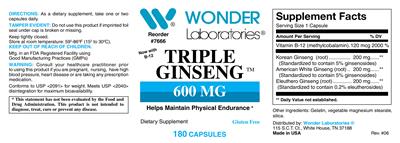
Triple Ginseng 600 mg contains four active ingredients: vitamin B12, Korean Ginseng, American White Ginseng, and Eleuthero Ginseng. The three ginseng roots are traditional botanical ingredients used to support energy and immune function, while vitamin B12 is an essential nutrient involved in nerve function and red blood cell formation.
The product also contains inactive ingredients — gelatin (capsule), magnesium stearate (a lubricant), and silica — to hold the capsule together.
Does it work?
Strong evidence
The evidence for this product's ingredients varies. Vitamin B12 is effective for treating B12 deficiency and Imerslund-Grasbeck disease (a rare condition affecting B12 absorption), and it's likely effective for cyanide poisoning.
For American White Ginseng, the only possibly effective use in our data is for upper respiratory tract infection (the common cold and similar illnesses), though the evidence is limited. Eleuthero has possibly effective evidence for genital herpes.
For the other claimed uses (anemia, breast cancer, chronic fatigue, bipolar disorder, osteoporosis), the evidence we hold is either insufficient or absent entirely.
How safe is it?
Well-documented data
Vitamin B12 is generally well tolerated; excess is removed in the urine, so there's no established upper limit. Oral B12 is considered safe during pregnancy and breastfeeding at normal recommended amounts, though you should follow your provider's guidance.
American White Ginseng and Eleuthero Ginseng are generally well tolerated for short-term use in healthy adults, but long-term safety hasn't been well studied. Both should be avoided during pregnancy — the safety data is not reassuring enough.
Eleuthero should also be avoided while breastfeeding due to insufficient safety information. Common side effects with Eleuthero include headache, nausea, diarrhea, and stomach upset; some people report nervousness, anxiety, or irritability, especially at higher doses.
Meds to double-check
Major interaction found
Before taking Triple Ginseng 600 mg, double-check with your pharmacist if you take warfarin or other blood thinners (the Major interaction with American White Ginseng is the biggest concern). Also confirm use if you're on diabetes medications, digoxin, immunosuppressants, MAOIs (older antidepressants), or drugs metabolized by the liver enzyme CYP2C9 or CYP1A2 — all carry moderate interaction risk from the ginseng ingredients.
If you take metformin for diabetes, the interaction with B12 is minor but worth noting.
The bottom line
Scorecard at a glanceFully disclosed formula with strong clinical evidence behind its ingredients' uses. Major medication interactions have been identified, and safety information is well characterized.
This product might be considered by someone looking for immune and energy support, but the three ginseng ingredients carry significant interaction risks — particularly with blood thinners, diabetes medications, heart drugs, and immunosuppressants. If you take any prescription medication, especially warfarin, diabetes drugs, digoxin, or immunosuppressants, you'll want to check with your doctor or pharmacist before adding this product.
Avoid it during pregnancy or while breastfeeding.
Educational only — not medical advice; always confirm with your pharmacist. Our editorial policy · How we use AI
Assessment coverage: 3 of 4 active ingredients matched to our full ingredient reviews (monographs). Based on the product label dated Dec 18, 2021.
This Scorecard evaluates available label information, ingredient evidence, and known medication-safety considerations. It does not independently verify product identity, purity, potency, contamination, or manufacturing quality. How these ratings are computed
General information
Key facts about Triple Ginseng 600 mg, straight from the product label.
| Brand | Wonder Laboratories |
|---|---|
| Net contents | 180 Capsule(s) |
| Market status | On market |
| Date entered into DSLD | Dec 18, 2021 |
| DSLD ID | 262444 |
| Product type | Botanical With Nutrients |
| Supplement form | Capsule |
| Dietary claims / uses | Nutrient, All Other, Structure/Function |
| Intended target group(s) | Adult (18 - 50 Years), Gluten Free |
Everything in this section is reproduced from the manufacturer’s own product label — it’s the label speaking, not HelloPharmacist. We show it so you can see exactly what the maker states; we don’t verify or endorse those statements.
Supplement Facts
The label details for Triple Ginseng 600 mg by Wonder Laboratories, sourced from the NIH Dietary Supplement Label Database.
Supplement Facts
| Ingredient | Amount | % DV |
|---|---|---|
| Vitamin B12 | 120 mcg | 2000% |
| Korean Ginseng | 200 mg | -- |
| American White Ginseng | 200 mg | -- |
| Eleuthero Ginseng | 200 mg | -- |
Other ingredients: Gelatin, Magnesium Stearate, Silica
Tap any ingredient to jump to its full detail below.
These statements are the manufacturer’s wording, reproduced from the product label — the label is saying it, not HelloPharmacist. We don’t verify or endorse them.
Suggested/Recommended/Usage/Directions
Directions: As a dietary supplement, take one or two capsules daily.
Precautions
Tamper Evident: Do not use this product if imprinted foil seal under cap is broken or missing.
Keep out of reach of children.
Warning: Consult your healthcare practitioner prior to using this product if you are pregnant, nursing, have high blood pressure, heart disease or are taking any prescription medication.
Storage
Keep tightly closed. Store at room temperature: 59 degrees-86 degrees F (15 degrees to 30 degrees C).
Formulation
Mfg. in an FDA Registered Facility using Good Manufacturing Practices (GMPs)
Conforms to USP <2091> for weight. Meets USP <2040> disintegration for maximum bioavailability.
Helps Maintain Physical Endurance
Gluten Free
Made in USA
FDA Disclaimer Statement
This statement has not been evaluated by the Food and Drug Administration. This product is not intended to diagnose, treat, cure or prevent any disease.
General Statements
Reorder #7666
Formula
Now with B-12
FDA Statement of Identity
Dietary Supplement
Is this label outdated? Report a formula or label change and our pharmacy team will review it.
Triple Ginseng 600 mg by Wonder Laboratories label
The label scan from the NIH Dietary Supplement Label Database. Tap to enlarge.
Label images are published by the NIH Dietary Supplement Label Database for the version of this product on file. Always read your actual product label.
View the full label (PDF)The Ingredients in Triple Ginseng 600 mg by Wonder Laboratories
These are the 4 active ingredients this product is made of. Select any to open its full monograph.
Serving size1 Capsule(s) Dosage formCapsule Amounts shown are per serving.
Most supplement products combine several ingredients, and a medication can interact with the product through any one of them. Each ingredient below shows whether it has known drug interactions.
Vitamin B12
Interacts with20 drugs
Vitamin B12 (cobalamin) is an essential nutrient your body needs to make red blood cells, keep nerves healthy, and support DNA. Supplements are very h...
Vitamin B12 monograph & interactionsKorean Ginseng
American White Ginseng
Interacts with217 drugs
American ginseng is an herbal root used as an 'adaptogen' to support energy, stress, immune function, and blood sugar. Some uses—such as reducing the...
American White Ginseng monograph & interactionsEleuthero Ginseng
Interacts with1,141 drugs
Eleuthero is an herb traditionally used as an 'adaptogen' to fight fatigue, boost energy, and help the body handle stress. The scientific evidence beh...
Eleuthero Ginseng monograph & interactionsOther (inactive) ingredients: Gelatin, Magnesium Stearate, Silica. These complete the product’s ingredient list but are not active constituents.
Triple Ginseng 600 mg by Wonder Laboratories Drug Interactions
HelloPharmacist Interaction Report
Triple Ginseng 600 mg by Wonder Laboratories contains three ginseng ingredients plus vitamin B12, and the product does interact with a number of medications.
The most serious interaction is through American White Ginseng with blood thinners (anticoagulants) like warfarin — it appears to reduce how well warfarin works, which could affect your clotting. Vitamin B12 also has a documented interaction with metformin, a diabetes medication, though this one is minor.
Read the full breakdown — every affected drug type, severity by severity
American White Ginseng carries several moderate-level interactions you should know about. It may lower blood sugar (glucose) if you're taking diabetes medications, raising the risk of low blood sugar (hypoglycemia).
It can also interfere with immunosuppressants (drugs that calm your immune system) and with MAOIs (a class of older antidepressants like phenelzine). Eleuthero Ginseng, another active ingredient here, has multiple moderate interactions: it may affect how your body processes certain medications through the liver (CYP2C9 and CYP1A2 substrates), raise levels of digoxin (a heart medication), interact with blood thinners and antiplatelet drugs, interfere with immunosuppressants, and potentially lower blood sugar if you're on diabetes drugs.
There's also a minor interaction between Eleuthero and some other liver-processed medications (CYP2D6 substrates).
We could not check Korean Ginseng — we hold no interaction data for that ingredient. Altogether, these interactions span 1,147 individual medications.
Use the medication checker on this page to look up your exact drugs before starting this product.
Check your own medications below · Editorial policy · How we use AI
Want to check YOUR meds against Triple Ginseng 600 mg?
Ask about interactions with your drugs in plain English — “Can I take it with lisinopril?” — and we find you the answer in seconds, ingredient by ingredient.
Go to the checkerIngredients driving the most interactions
Individual Drug Interactions
The ingredients in Triple Ginseng 600 mg interact with 1,147 drugs. Click any drug to see the details.
3 of the 4 ingredients in Triple Ginseng 600 mg interact with drugs. Each result below shows which ingredient is responsible. Eleuthero Ginseng American White Ginseng Vitamin B12
WarfarinWarfarin
How Warfarin interacts with Triple Ginseng 600 mg — through 2 ingredients. Tap an ingredient for the detail:
American White GinsengWarfarin (coumadin) Major
Interaction Summary
American ginseng seems to decrease the effectiveness of warfarin therapy.
Read the full American White Ginseng + Warfarin interactionEleuthero GinsengCytochrome P450 2c9 (cyp2c9) Substrates, Cytochrome P450 3a4 (cyp3a4) Substrates +2 Moderate
Interaction Summary
Theoretically, eleuthero might increase levels of drugs metabolized by CYP2C9.
Read the full Eleuthero Ginseng + Warfarin interactionWarfarin SodiumCoumadin, Panwarfin, Sofarin
How Warfarin Sodium interacts with Triple Ginseng 600 mg — through 2 ingredients. Tap an ingredient for the detail:
American White GinsengWarfarin (coumadin) Major
Interaction Summary
American ginseng seems to decrease the effectiveness of warfarin therapy.
Read the full American White Ginseng + Warfarin Sodium interactionEleuthero GinsengCytochrome P450 1a2 (cyp1a2) Substrates, Cytochrome P450 2c9 (cyp2c9) Substrates +2 Moderate
Interaction Summary
Theoretically, eleuthero might increase levels of drugs metabolized by CYP1A2.
Read the full Eleuthero Ginseng + Warfarin Sodium interaction6-mercaptopurinePurinethol
How 6-mercaptopurine interacts with Triple Ginseng 600 mg — through 2 ingredients. Tap an ingredient for the detail:
Eleuthero GinsengImmunosuppressants Moderate
Interaction Summary
Theoretically, eleuthero might interfere with immunosuppressive drugs because of its immunostimulant activity.
Read the full Eleuthero Ginseng + 6-mercaptopurine interactionAmerican White GinsengImmunosuppressants Moderate
Interaction Summary
Theoretically, American ginseng use might interfere with immunosuppressive therapy.
Read the full American White Ginseng + 6-mercaptopurine interactionAbciximabReoPro
How Abciximab interacts with Triple Ginseng 600 mg — through 1 ingredient. Tap an ingredient for the detail:
Eleuthero GinsengAnticoagulant/antiplatelet Drugs Moderate
Interaction Summary
Theoretically, eleuthero may have antiplatelet effects and may increase the risk of bleeding if used with anticoagulant or antiplatelet drugs.
Read the full Eleuthero Ginseng + Abciximab interactionAbrocitinibCibinqo
How Abrocitinib interacts with Triple Ginseng 600 mg — through 2 ingredients. Tap an ingredient for the detail:
American White GinsengImmunosuppressants Moderate
Interaction Summary
Theoretically, American ginseng use might interfere with immunosuppressive therapy.
Read the full American White Ginseng + Abrocitinib interactionEleuthero GinsengImmunosuppressants, Cytochrome P450 2c9 (cyp2c9) Substrates +1 Moderate
Interaction Summary
Theoretically, eleuthero might interfere with immunosuppressive drugs because of its immunostimulant activity.
Read the full Eleuthero Ginseng + Abrocitinib interactionAcalabrutinibCalquence
How Acalabrutinib interacts with Triple Ginseng 600 mg — through 1 ingredient. Tap an ingredient for the detail:
Eleuthero GinsengCytochrome P450 3a4 (cyp3a4) Substrates, P-glycoprotein Substrates Moderate
Interaction Summary
Theoretically, eleuthero might increase levels of drugs metabolized by CYP3A4.
Read the full Eleuthero Ginseng + Acalabrutinib interactionAcarboseGlucobay, Prandase, Precose
How Acarbose interacts with Triple Ginseng 600 mg — through 2 ingredients. Tap an ingredient for the detail:
Eleuthero GinsengAntidiabetes Drugs Moderate
Interaction Summary
Theoretically, eleuthero might have additive effects when used with antidiabetes drugs.
Read the full Eleuthero Ginseng + Acarbose interactionAmerican White GinsengAntidiabetes Drugs Moderate
Interaction Summary
Theoretically, taking American ginseng with antidiabetes drugs might increase the risk of hypoglycemia.
Read the full American White Ginseng + Acarbose interactionAcenocoumarolSintrom
How Acenocoumarol interacts with Triple Ginseng 600 mg — through 1 ingredient. Tap an ingredient for the detail:
Eleuthero GinsengAnticoagulant/antiplatelet Drugs Moderate
Interaction Summary
Theoretically, eleuthero may have antiplatelet effects and may increase the risk of bleeding if used with anticoagulant or antiplatelet drugs.
Read the full Eleuthero Ginseng + Acenocoumarol interactionAcetaminophenChildren's Tylenol, Children's Tylenol Meltaways, Tylenol, Tylenol Ex Strength
How Acetaminophen interacts with Triple Ginseng 600 mg — through 1 ingredient. Tap an ingredient for the detail:
Eleuthero GinsengCytochrome P450 1a2 (cyp1a2) Substrates Moderate
Interaction Summary
Theoretically, eleuthero might increase levels of drugs metabolized by CYP1A2.
Read the full Eleuthero Ginseng + Acetaminophen interactionAcetaminophen, AspirinGemnisyn
How Acetaminophen, Aspirin interacts with Triple Ginseng 600 mg — through 1 ingredient. Tap an ingredient for the detail:
Eleuthero GinsengCytochrome P450 1a2 (cyp1a2) Substrates, Anticoagulant/antiplatelet Drugs Moderate
Interaction Summary
Theoretically, eleuthero might increase levels of drugs metabolized by CYP1A2.
Read the full Eleuthero Ginseng + Acetaminophen, Aspirin interactionAcetaminophen, Aspirin, CaffeineExcedrin, Excedrin Extra Strength, Excedrin Migraine
How Acetaminophen, Aspirin, Caffeine interacts with Triple Ginseng 600 mg — through 1 ingredient. Tap an ingredient for the detail:
Eleuthero GinsengAnticoagulant/antiplatelet Drugs, Cytochrome P450 1a2 (cyp1a2) Substrates +1 Moderate
Interaction Summary
Theoretically, eleuthero may have antiplatelet effects and may increase the risk of bleeding if used with anticoagulant or antiplatelet drugs.
Read the full Eleuthero Ginseng + Acetaminophen, Aspirin, Caffeine interactionAcetaminophen, Brompheniramine, PhenylpropanolamineDimetapp Cold and Flu
How Acetaminophen, Brompheniramine, Phenylpropanolamine interacts with Triple Ginseng 600 mg — through 1 ingredient. Tap an ingredient for the detail:
Eleuthero GinsengCytochrome P450 1a2 (cyp1a2) Substrates Moderate
Interaction Summary
Theoretically, eleuthero might increase levels of drugs metabolized by CYP1A2.
Read the full Eleuthero Ginseng + Acetaminophen, Brompheniramine, Phenylpropanolamine interactionAcetaminophen, ButalbitalAxocet, Bancap, Bucet, Butex Forte, Esgic CF, Orbivan CF +5 more
How Acetaminophen, Butalbital interacts with Triple Ginseng 600 mg — through 1 ingredient. Tap an ingredient for the detail:
Eleuthero GinsengCytochrome P450 1a2 (cyp1a2) Substrates Moderate
Interaction Summary
Theoretically, eleuthero might increase levels of drugs metabolized by CYP1A2.
Read the full Eleuthero Ginseng + Acetaminophen, Butalbital interactionAcetaminophen, Butalbital, CaffeineEsgic, Esgic Plus, Fiogesic, Fioricet, Repan, Tecnal +1 more
How Acetaminophen, Butalbital, Caffeine interacts with Triple Ginseng 600 mg — through 1 ingredient. Tap an ingredient for the detail:
Eleuthero GinsengCytochrome P450 1a2 (cyp1a2) Substrates, Cytochrome P450 3a4 (cyp3a4) Substrates Moderate
Interaction Summary
Theoretically, eleuthero might increase levels of drugs metabolized by CYP1A2.
Read the full Eleuthero Ginseng + Acetaminophen, Butalbital, Caffeine interactionAcetaminophen, Butalbital, Caffeine, CodeineEsgic with Codeine, Fioricet w/ Codeine
How Acetaminophen, Butalbital, Caffeine, Codeine interacts with Triple Ginseng 600 mg — through 1 ingredient. Tap an ingredient for the detail:
Eleuthero GinsengCytochrome P450 3a4 (cyp3a4) Substrates, Cytochrome P450 1a2 (cyp1a2) Substrates +1 Moderate
Interaction Summary
Theoretically, eleuthero might increase levels of drugs metabolized by CYP3A4.
Read the full Eleuthero Ginseng + Acetaminophen, Butalbital, Caffeine, Codeine interactionAcetaminophen, Butalbital, CodeineBancap w/ Codeine
How Acetaminophen, Butalbital, Codeine interacts with Triple Ginseng 600 mg — through 1 ingredient. Tap an ingredient for the detail:
Eleuthero GinsengCytochrome P450 2d6 (cyp2d6) Substrates, Cytochrome P450 1a2 (cyp1a2) Substrates Moderate
Interaction Summary
Theoretically, eleuthero might increase levels of drugs metabolized by CYP2D6.
Read the full Eleuthero Ginseng + Acetaminophen, Butalbital, Codeine interactionAcetaminophen, Butalbital, Codeine PhosphatePhrenilin #3
How Acetaminophen, Butalbital, Codeine Phosphate interacts with Triple Ginseng 600 mg — through 1 ingredient. Tap an ingredient for the detail:
Eleuthero GinsengCytochrome P450 1a2 (cyp1a2) Substrates, Cytochrome P450 2d6 (cyp2d6) Substrates Moderate
Interaction Summary
Theoretically, eleuthero might increase levels of drugs metabolized by CYP1A2.
Read the full Eleuthero Ginseng + Acetaminophen, Butalbital, Codeine Phosphate interactionAcetaminophen, Caffeine, Chlorpheniramine, Hydrocodone, PhenylephrineHycomine Compound
How Acetaminophen, Caffeine, Chlorpheniramine, Hydrocodone, Phenylephrine interacts with Triple Ginseng 600 mg — through 1 ingredient. Tap an ingredient for the detail:
Eleuthero GinsengCytochrome P450 3a4 (cyp3a4) Substrates, Cytochrome P450 1a2 (cyp1a2) Substrates +1 Moderate
Interaction Summary
Theoretically, eleuthero might increase levels of drugs metabolized by CYP3A4.
Read the full Eleuthero Ginseng + Acetaminophen, Caffeine, Chlorpheniramine, Hydrocodone, Phenylephrine interactionAcetaminophen, Caffeine, CodeineGesic C15, Gesic C30, Gesic C8, Lenoltec 1, Lenoltec 2, Lenoltec 3 +1 more
How Acetaminophen, Caffeine, Codeine interacts with Triple Ginseng 600 mg — through 1 ingredient. Tap an ingredient for the detail:
Eleuthero GinsengCytochrome P450 1a2 (cyp1a2) Substrates, Cytochrome P450 2d6 (cyp2d6) Substrates +1 Moderate
Interaction Summary
Theoretically, eleuthero might increase levels of drugs metabolized by CYP1A2.
Read the full Eleuthero Ginseng + Acetaminophen, Caffeine, Codeine interactionAcetaminophen, Caffeine, Codeine, SalicylamideCodalan No.1, Codalan No.2, Codalan No.3
How Acetaminophen, Caffeine, Codeine, Salicylamide interacts with Triple Ginseng 600 mg — through 1 ingredient. Tap an ingredient for the detail:
Eleuthero GinsengCytochrome P450 3a4 (cyp3a4) Substrates, Cytochrome P450 2d6 (cyp2d6) Substrates +1 Moderate
Interaction Summary
Theoretically, eleuthero might increase levels of drugs metabolized by CYP3A4.
Read the full Eleuthero Ginseng + Acetaminophen, Caffeine, Codeine, Salicylamide interactionAcetaminophen, Caffeine, DihydrocodeineDHC Plus, Panlor DC, Panlor SS
How Acetaminophen, Caffeine, Dihydrocodeine interacts with Triple Ginseng 600 mg — through 1 ingredient. Tap an ingredient for the detail:
Eleuthero GinsengCytochrome P450 1a2 (cyp1a2) Substrates, Cytochrome P450 3a4 (cyp3a4) Substrates +1 Moderate
Interaction Summary
Theoretically, eleuthero might increase levels of drugs metabolized by CYP1A2.
Read the full Eleuthero Ginseng + Acetaminophen, Caffeine, Dihydrocodeine interactionAcetaminophen, Caffeine, IsomethepteneMigralam
How Acetaminophen, Caffeine, Isometheptene interacts with Triple Ginseng 600 mg — through 1 ingredient. Tap an ingredient for the detail:
Eleuthero GinsengCytochrome P450 1a2 (cyp1a2) Substrates, Cytochrome P450 3a4 (cyp3a4) Substrates Moderate
Interaction Summary
Theoretically, eleuthero might increase levels of drugs metabolized by CYP1A2.
Read the full Eleuthero Ginseng + Acetaminophen, Caffeine, Isometheptene interactionAcetaminophen, Caffeine, PyrilamineMidol Max Strength Menstrual
How Acetaminophen, Caffeine, Pyrilamine interacts with Triple Ginseng 600 mg — through 1 ingredient. Tap an ingredient for the detail:
Eleuthero GinsengCytochrome P450 3a4 (cyp3a4) Substrates, Cytochrome P450 1a2 (cyp1a2) Substrates Moderate
Interaction Summary
Theoretically, eleuthero might increase levels of drugs metabolized by CYP3A4.
Read the full Eleuthero Ginseng + Acetaminophen, Caffeine, Pyrilamine interactionAcetaminophen, Chlorpheniramine Maleate, Dextromethorphan HbrVicks Formula 44M Cough, Cold & Flu Relief
How Acetaminophen, Chlorpheniramine Maleate, Dextromethorphan Hbr interacts with Triple Ginseng 600 mg — through 1 ingredient. Tap an ingredient for the detail:
Eleuthero GinsengCytochrome P450 1a2 (cyp1a2) Substrates, Cytochrome P450 2d6 (cyp2d6) Substrates +1 Moderate
Interaction Summary
Theoretically, eleuthero might increase levels of drugs metabolized by CYP1A2.
Read the full Eleuthero Ginseng + Acetaminophen, Chlorpheniramine Maleate, Dextromethorphan Hbr interactionAcetaminophen, Chlorpheniramine, Codeine, PhenylephrineColrex
How Acetaminophen, Chlorpheniramine, Codeine, Phenylephrine interacts with Triple Ginseng 600 mg — through 1 ingredient. Tap an ingredient for the detail:
Eleuthero GinsengCytochrome P450 1a2 (cyp1a2) Substrates, Cytochrome P450 2d6 (cyp2d6) Substrates +1 Moderate
Interaction Summary
Theoretically, eleuthero might increase levels of drugs metabolized by CYP1A2.
Read the full Eleuthero Ginseng + Acetaminophen, Chlorpheniramine, Codeine, Phenylephrine interactionAcetaminophen, Chlorpheniramine, DextromethorphanCoricidin II Extra Strength Cold and Flu
How Acetaminophen, Chlorpheniramine, Dextromethorphan interacts with Triple Ginseng 600 mg — through 1 ingredient. Tap an ingredient for the detail:
Eleuthero GinsengCytochrome P450 3a4 (cyp3a4) Substrates, Cytochrome P450 1a2 (cyp1a2) Substrates +1 Moderate
Interaction Summary
Theoretically, eleuthero might increase levels of drugs metabolized by CYP3A4.
Read the full Eleuthero Ginseng + Acetaminophen, Chlorpheniramine, Dextromethorphan interactionAcetaminophen, Chlorpheniramine, Dextromethorphan HydrobromideCoricidin HBP Maximum Strength Flu
How Acetaminophen, Chlorpheniramine, Dextromethorphan Hydrobromide interacts with Triple Ginseng 600 mg — through 1 ingredient. Tap an ingredient for the detail:
Eleuthero GinsengCytochrome P450 2d6 (cyp2d6) Substrates, Cytochrome P450 1a2 (cyp1a2) Substrates +1 Moderate
Interaction Summary
Theoretically, eleuthero might increase levels of drugs metabolized by CYP2D6.
Read the full Eleuthero Ginseng + Acetaminophen, Chlorpheniramine, Dextromethorphan Hydrobromide interactionAcetaminophen, Chlorpheniramine, Dextromethorphan, PhenylpropanolamineMulti Symptom Cold Relief
How Acetaminophen, Chlorpheniramine, Dextromethorphan, Phenylpropanolamine interacts with Triple Ginseng 600 mg — through 1 ingredient. Tap an ingredient for the detail:
Eleuthero GinsengCytochrome P450 3a4 (cyp3a4) Substrates, Cytochrome P450 1a2 (cyp1a2) Substrates +1 Moderate
Interaction Summary
Theoretically, eleuthero might increase levels of drugs metabolized by CYP3A4.
Read the full Eleuthero Ginseng + Acetaminophen, Chlorpheniramine, Dextromethorphan, Phenylpropanolamine interactionAcetaminophen, Chlorpheniramine, Dextromethorphan, PseudoephedrineChildren's Tylenol Cold Plus Cough, Tylenol Cold Ex Strength
How Acetaminophen, Chlorpheniramine, Dextromethorphan, Pseudoephedrine interacts with Triple Ginseng 600 mg — through 1 ingredient. Tap an ingredient for the detail:
Eleuthero GinsengCytochrome P450 2d6 (cyp2d6) Substrates, Cytochrome P450 1a2 (cyp1a2) Substrates +1 Moderate
Interaction Summary
Theoretically, eleuthero might increase levels of drugs metabolized by CYP2D6.
Read the full Eleuthero Ginseng + Acetaminophen, Chlorpheniramine, Dextromethorphan, Pseudoephedrine interactionAcetaminophen, Chlorpheniramine, Guaifenesin, Phenylephrine, SalicylamideRhinogesic GG
How Acetaminophen, Chlorpheniramine, Guaifenesin, Phenylephrine, Salicylamide interacts with Triple Ginseng 600 mg — through 1 ingredient. Tap an ingredient for the detail:
Eleuthero GinsengCytochrome P450 3a4 (cyp3a4) Substrates, Cytochrome P450 1a2 (cyp1a2) Substrates Moderate
Interaction Summary
Theoretically, eleuthero might increase levels of drugs metabolized by CYP3A4.
Read the full Eleuthero Ginseng + Acetaminophen, Chlorpheniramine, Guaifenesin, Phenylephrine, Salicylamide interactionEach ingredient & the kinds of drugs it affects
For each ingredient in Triple Ginseng 600 mg with known interactions, here are the types of medications they can affect. Open any type for the detail — or search your exact drug in the checker above.
Eleuthero Ginseng
Anticoagulant/Antiplatelet Drugs
Theoretically, eleuthero may have antiplatelet effects and may increase the risk of bleeding if used with anticoagulant or antiplatelet drugs.
In vitro and animal research shows that a constituent of eleuthero, dihydroxybenzoic acid, appears to inhibit platelet aggregation. Concomitant use with anticoagulant or antiplatelet drugs might increase the risk of bleeding. This effect has not been reported in humans.
Antidiabetes Drugs
Theoretically, eleuthero might have additive effects when used with antidiabetes drugs.
Animal research suggests that certain constituents of eleuthero have hypoglycemic activity in both healthy and diabetic animals. A small study in adults with type 2 diabetes also shows that taking eleuthero for 3 months can lower blood glucose levels. However, one very small study in healthy individuals shows that taking powdered eleuthero 3 grams, 40 minutes prior to a 75-gram oral glucose tolerance test, significantly increases postprandial blood glucose levels when compared with placebo. These contradictory findings might be due to patient-specific variability and variability in active ingredient ratios.
Cytochrome P450 1A2 (Cyp1A2) Substrates
Theoretically, eleuthero might increase levels of drugs metabolized by CYP1A2.
In vitro and animal research suggest that standardized extracts of eleuthero inhibit CYP1A2. This effect has not been reported in humans.
Cytochrome P450 2C9 (Cyp2C9) Substrates
Theoretically, eleuthero might increase levels of drugs metabolized by CYP2C9.
In vitro and animal research suggest that standardized extracts of eleuthero might inhibit CYP2C9. This effect has not been reported in humans.
Digoxin (Lanoxin)
Eleuthero might increase serum digoxin levels and increase the risk of side effects.
In one case report, a 74-year-old male who was stabilized on digoxin presented with an elevated serum digoxin level after starting an eleuthero supplement, without symptoms of toxicity. After stopping the supplement, serum digoxin levels returned to normal. It is not clear whether this was due to a pharmacokinetic interaction or to interference with the digoxin assay. Although the product was found to be free of digoxin and digitoxin, it was not tested for other contaminants.
Immunosuppressants
Theoretically, eleuthero might interfere with immunosuppressive drugs because of its immunostimulant activity.
Animal and in vitro research shows that eleuthero extracts have immunomodulatory effects, including increasing cellular and humoral activity.
P-Glycoprotein Substrates
Theoretically, eleuthero might increase levels of P-glycoprotein substrates.
In vitro research suggests that eleuthero can inhibit the multi-drug transporter protein, P-glycoprotein. However, it is too soon to tell if this is clinically important. This interaction has not been reported in humans.
Cytochrome P450 2D6 (Cyp2D6) Substrates
Theoretically, eleuthero might increase levels of drugs metabolized by CYP2D6.
In vitro and animal research suggest that standardized extracts of eleuthero might inhibit CYP2D6. However, research in healthy human volunteers has found that taking eleuthero 485 mg twice daily for 14 days does not inhibit CYP2D6 drug metabolism.
Cytochrome P450 3A4 (Cyp3A4) Substrates
Theoretically, eleuthero might increase levels of drugs metabolized by CYP3A4.
In vitro and animal research suggest that standardized extracts of eleuthero might inhibit CYP3A4. However, research in healthy human volunteers has found that taking eleuthero 485 mg twice daily for 14 days does not inhibit CYP3A4 drug metabolism.
Organic Anion-Transporting Polypeptide Substrates (Oatp)
Theoretically, eleuthero might decrease levels of drugs metabolized by OATP.
In vitro research suggests that eleuthero inhibits OATP2B1, which might reduce the bioavailability of oral drugs that are substrates of OATP2B1. Due to the weak inhibitory effect identified in this study, this interaction is not likely to be clinically significant.
American White Ginseng
Warfarin (Coumadin)
American ginseng seems to decrease the effectiveness of warfarin therapy.
Healthy patients receiving warfarin 5 mg daily, who also take American ginseng 1 gram twice daily, seem to have a significantly reduced international normalized ratio (INR).
Antidiabetes Drugs
Theoretically, taking American ginseng with antidiabetes drugs might increase the risk of hypoglycemia.
American ginseng seems to lower postprandial blood glucose. Theoretically, concomitant use with antidiabetes drugs might enhance blood glucose lowering effects and possibly cause hypoglycemia.
Immunosuppressants
Theoretically, American ginseng use might interfere with immunosuppressive therapy.
American ginseng seems to stimulate immune function. Theoretically, American ginseng might decrease the effectiveness of immunosuppressant drugs.
Monoamine Oxidase Inhibitors (Maois)
Theoretically, American ginseng can interfere with MAOI therapy.
There is one case report of insomnia, headache, and tremors when an unspecified ginseng product was used with phenelzine (Nardil), an MAOI. There is also one case report of hypomania when an unspecified ginseng product was used with phenelzine. Theoretically, American ginseng may interfere with MAOI therapy.
Vitamin B12
Metformin (Glucophage)
Metformin, a common medication used to manage type 2 diabetes, has been associated with lower vitamin B12 levels in some individuals. Prolonged use of metformin can interfere with the absorption of B12 in the digestive system, potentially leading to a deficiency in this essential vitamin.
Brand information
Manufacturer and brand details for Triple Ginseng 600 mg, from the product label.
Wonder Laboratories
See all Wonder Laboratories products- Name
- Wonder Laboratories
- Street Address
- 115 S.C.T. Ct.
- City
- White House
- State
- TN
- ZipCode
- 37188
Triple Ginseng 600 mg by Wonder Laboratories: Common Questions
Does Triple Ginseng 600 mg by Wonder Laboratories interact with any medications?
How can one product interact with so many drugs?
Where does this information come from?
Can I take this if I'm on warfarin or another blood thinner?
Is this safe during pregnancy?
Can I use this while breastfeeding?
Will this help my cold?
What common side effects might I see?
Is this product safe to take long-term?
Written and reviewed by the HelloPharmacist editorial staff. Our editorial policy
Not sure if Triple Ginseng 600 mg is safe with your meds?
Our pharmacists answer your medication & supplement questions — free.
Label information is sourced from the NIH Dietary Supplement Label Database and reflects the product version on file; always read your actual product label. This page is for education only and is not a substitute for professional medical advice. Confirm with your pharmacist or doctor before combining supplements and medications.
The Full Monographs Behind Triple Ginseng 600 mg’s Ingredients
Every ingredient we hold a full HelloPharmacist monograph for — uses, evidence, safety, and the complete interaction list.
Vitamin B12
Interacts with 20 drugsVitamin B12 (cobalamin) is an essential nutrient your body needs to make red blood cells, keep nerves healthy, and support DNA. Supplements are very helpful for people who are deficient — su...
Read the full Vitamin B12 monograph → Herb & supplement monographAmerican Ginseng
Interacts with 217 drugsAmerican ginseng is an herbal root used as an 'adaptogen' to support energy, stress, immune function, and blood sugar. Some uses—such as reducing the chance or length of colds and modestly l...
Read the full American Ginseng monograph → Herb & supplement monographEleuthero
Interacts with 1,141 drugsEleuthero is an herb traditionally used as an 'adaptogen' to fight fatigue, boost energy, and help the body handle stress. The scientific evidence behind these uses is limited and mixed, so...
Read the full Eleuthero monograph →Sources & How We Checked
Triple Ginseng 600 mg's label data comes from the NIH Dietary Supplement Label Database; the ingredient interaction data is from the Natural Medicines database, reviewed by our pharmacists.
- NIH Dietary Supplement Label Database (DSLD) — The official product label on file for this supplement.
- Natural Medicines (Therapeutic Research Center) — Evidence-graded clinical reference behind the ingredient interaction data.
Content is written and reviewed by licensed HelloPharmacist pharmacists. See our data sources and editorial standards for how this information is built and checked.
The 66 references behind this product’s interaction data
Every citation that drives the interaction findings for this product’s ingredients, from the evidence-graded Natural Medicines (TRC Healthcare) database. Open an ingredient to browse its citations — links open the study on PubMed or the publisher’s site.
Vitamin B12 30 references
- Food and Nutrition Board, Institute of Medicine. Dietary Reference Intakes for Thiamin, Riboflavin, Niacin, Vitamin B6, Folate, Vitamin B12, Pantothenic Acid, Biotin, and Choline (2000). Washington, DC: National Academy Press, 2000. Available at: http://b
- Hartman TJ, Woodson K, Stolzenberg-Solomon R, et al. Association of the B-vitamins pyridoxal 5'-phosphate (B6), B12, and folate with lung cancer risk in older men. Am J Epidemiol 2001;153:688-94.. DOI
- Jansen T, Romiti R, Kreuter A, Altmeyer P. Rosacea fulminans triggered by high-dose vitamins B6 and B12. J Eur Acad Dermatol Venereol 2001;15:484-5..
- Lange H, Suryapranata H, De Luca G, et al. Folate therapy and in-stent restenosis after coronary stenting. N Engl J Med 2004;350:2673-81. PubMed
- Collin, S. M., Metcalfe, C., Refsum, H., Lewis, S. J., Zuccolo, L., Smith, G. D., Chen, L., Harris, R., Davis, M., Marsden, G., Johnston, C., Lane, J. A., Ebbing, M., Bonaa, K. H., Nygard, O., Ueland, P. M., Grau, M. V., Baron, J. A., Donovan, J. L., Nea
- Geissbuhler, P., Mermillod, B., and Rapin, C. H. Elevated serum vitamin B12 levels associated with CRP as a predictive factor of mortality in palliative care cancer patients: a prospective study over five years. J.Pain Symptom.Manage. 2000;20(2):93-103. PubMed
- Salles, N., Herrmann, F., Sakbani, K., Rapin, C. H., and Sieber, C. High vitamin B12 level: a strong predictor of mortality in elderly inpatients. J Am Geriatr.Soc 2005;53(5):917-918.
- Looker, H. C., Fagot-Campagna, A., Gunter, E. W., Pfeiffer, C. M., Sievers, M. L., Bennett, P. H., Nelson, R. G., Hanson, R. L., and Knowler, W. C. Homocysteine and vitamin B(12) concentrations and mortality rates in type 2 diabetes. Diabetes Metab Res R
- Uhl, W., Nolting, A., Golor, G., Rost, K. L., and Kovar, A. Safety of hydroxocobalamin in healthy volunteers in a randomized, placebo-controlled study. Clin Toxicol (Phila) 2006;44 Suppl 1:17-28. PubMed
- Borron, S. W., Baud, F. J., Barriot, P., Imbert, M., and Bismuth, C. Prospective study of hydroxocobalamin for acute cyanide poisoning in smoke inhalation. Ann Emerg.Med 2007;49(6):794-801, 801. PubMed
- Borron, S. W., Baud, F. J., Megarbane, B., and Bismuth, C. Hydroxocobalamin for severe acute cyanide poisoning by ingestion or inhalation. Am J Emerg.Med 2007;25(5):551-558. PubMed
- Lewis, J. G. Gout, Steatorrhoea, and Megaloblastic Anaemia. Ann Rheum.Dis 1962;21(3):284-286. PubMed
- Tal, S., Shavit, Y., Stern, F., and Malnick, S. Association between vitamin B12 levels and mortality in hospitalized older adults. J Am Geriatr.Soc 2010;58(3):523-526. PubMed
- Baztan, J. J., Gavidia, J. J., Gomez-Pavon, J., Esteve, A., and Ruiperez, I. High vitamin B12 levels and in-hospital mortality. J Am Geriatr.Soc 2010;58(11):2237-2238. PubMed
- Omboni, E., Checchini, M., and Longoni, F. [Hypopotassemia and megaloblastic anemia. Presentation of a case]. Minerva Med 8-31-1987;78(16):1255-1257.
- Aalfs As, Scholvinck LH, Horvath B. Acneiform eruption in a 5-year old due to vitamin B12 supplementation. Eur J Dermatol 2013;23(5):726-7. PubMed
- Balta I, Ozuguz P. Vitamin B12-induced acneiform eruption. Cutan Ocul Toxicol 2014;33(2):94-5. PubMed
- Carman KB, Belgemen T, Yis U. Involuntary movements misdiagnosed as seizure during vitamin B12 treatment. Pediatr Emerg Care 2013;29(11):1223-4. PubMed
- Djuric V, Bogic M, Popadic AP, et al. Anaphylactic reaction to hydroxycobalamin with tolerance to cyanocobalamin. Ann Allergy Asthma Immunol 2012;108(3):207-8. PubMed
- Kartel O, Gulec M, Demirel F, et al. Vitamin B12 allergy and successful desensitization with cyanocobalamin: A case report. Allergol Immunopath (Madr) 2012;40(5):324-5.
- Patiroglu T, Unal E, Yildirim S. Infantile tremor syndrome associated with cobalamin therapy: A case report. Clin Neurol Neurosurg 2013;115(9):1903-5. PubMed
- Schulte S, Barkema LW, Kardaun SH. Long-lasting atypical acneiform eruption with prominent comedones induced by hydroxocobalamin (vitamin B12). J Dtsch Dermatol Ges 2014;12(6):502-3.
- Zanus C, Alberini E, Costa P, et al. Involuntary movements after correction of vitamin B12 deficiency: A video-case report. Epileptic Disord 2012;14(2):174-80. PubMed
- Fanidi A, Carreras-Torres R, Larose TL, et al. Is high vitamin B12 status a cause of lung cancer? Int J Cancer. 2019 Sep 15;145(6):1499-1503. PubMed
- Fujita Y, Mizukami T, Maya Y, et al. Vitamin B12 allergy manifesting as lymphomatoid contact dermatitis. Eur J Dermatol. 2020;30(3):304-305. PubMed
- Dépret F, Hoffmann C, Daoud L, et al. Association between hydroxocobalamin administration and acute kidney injury after smoke inhalation: a multicenter retrospective study. Crit Care. 2019;23(1):421. PubMed
- Khairan P, Sobue T, Eshak ES, et al. Association of dietary intakes of vitamin B12, vitamin B6, folate, and methionine with the risk of esophageal cancer: the Japan Public Health Center-based (JPHC) prospective study. BMC Cancer 2021;21(1):982. PubMed
- Evans J, Pandya A, Ding Y, Qunibi WY. Hydroxocobalamin-Induced Oxalate Nephropathy in a Patient With Smoke Inhalation. Kidney Int Rep 2021;6(8):2228-2231. PubMed
- Lacombe V, Chabrun F, Lacout C, et al. Persistent elevation of plasma vitamin B12 is strongly associated with solid cancer. Sci Rep 2021;11(1):13361. PubMed
- Pegalajar-García MD, Cebolla-Verdugo M, Prados-Carmona Á, Llamas-Segura C, Navarro-Triviño FJ. Systemic allergic dermatitis to cobalt present in cyanocobalamin supplementation. Contact Dermatitis 2023;89(3):203-205. PubMed
American Ginseng 12 references
- Shader RI, Greenblatt DJ. Phenelzine and the dream machine-ramblings and reflections. J Clin Psychopharmacol 1985;5:65. PubMed
- Jones BD, Runikis AM. Interaction of ginseng with phenelzine. J Clin Psychopharmacol 1987;7:201-2. PubMed
- Janetzky K, Morreale AP. Probable interaction between warfarin and ginseng. Am J Health Syst Pharm 1997;54:692-3. PubMed
- Vuksan V, Sievenpiper JL, Koo VY, et al. American ginseng (Panax quinquefolius L) reduces postprandial glycemia in nondiabetic subjects and subjects with type 2 diabetes mellitus. Arch Intern Med 2000;160:1009-13. PubMed
- Vuksan V, Stavro MP, Sievenpiper JL, et al. Similar postprandial glycemic reductions with escalation of dose and administration time of American ginseng in type 2 diabetes. Diabetes Care 2000;23:1221-6. PubMed
- Chan LY, Chiu PY, Lau TK. An in-vitro study of ginsenoside Rb(1)-induced teratogenicity using a whole rat embryo culture model. Hum Reprod 2003;18:2166-8..
- McElhaney JE, Gravenstein S, Cole SK, et al. A Placebo-Controlled Trial of a Proprietary Extract of North American Ginseng (CVT-E002) to Prevent Acute Respiratory Illness in Institutionalized Older Adults. J Am Geriatr Soc 2004;52:13-9. PubMed
- Yuan CS, Wei G, Dey L, et al. American ginseng reduces warfarin's effect in healthy patients: a randomized, controlled trial. Ann Intern Med 2004;141:23-7.
- Predy GN, Goel V, Lovlin R, et al. Efficacy of an extract of North American ginseng containing poly-furanosyl-pyranosyl-saccharides for preventing upper respiratory tract infections: a randomized controlled trial. CMAJ 2005;173:1043-8.. PubMed
- McElhaney JE, Goel V, Toane B, et al. Efficacy of COLD-fX in the prevention of respiratory symptoms in community-dwelling adults: a randomized, double-blinded, placebo controlled trial. J Altern Complement Med 2006;12:153-7. PubMed
- Predy GN, Goel V, Lovlin RE, et al. Immune modulating effects of daily supplementation of COLD-fX (a proprietary extract of North American ginseng) in healthy adults. J Clin Biochem Nutr 2006;39:162-167. DOI
- Stavro PM, Woo M, Leiter LA, et al. Long-term intake of North American ginseng has no effect on 24-hour blood pressure and renal function. Hypertension 2006;47(4):791-6. PubMed
Eleuthero 24 references
- McGuffin M, Hobbs C, Upton R, Goldberg A, eds. American Herbal Products Association's Botanical Safety Handbook. Boca Raton, FL: CRC Press, LLC 1997.
- McRae S. Elevated serum digoxin levels in a patient taking digoxin and Siberian ginseng. CMAJ 1996;155:293-5.
- Awang DVC. Siberian ginseng toxicity may be case of mistaken identity (letter). CMAJ 1996;155:1237.
- Mills S, Bone K. Principles and Practice of Phytotherapy. London: Churchill Livingstone, 2000.
- Harkey MR, Henderson GL, Zhou L, et al. Effects of Siberian ginseng (Eleutherococcus senticosus) on c-DNA-expressed P450 drug metabolizing enzymes. Alt Ther 2001;7:S14.
- Hikino H, Takahashi M, Otake K, Konno C. Isolation and hypoglycemic activity of eleutherans A, B, C, D, E, F, and G: glycans of Eleutherococcus senticosus roots. J Nat Prod 1986;49:293-7. PubMed
- Yun-Choi HS, Kim JH, Lee JR. Potential inhibitors of platelet aggregation from plant sources, III. J Nat Prod 1987;50:1059-64. PubMed
- Donovan JL, DeVane CL, Chavin KD, et al. Siberian Ginseng (Eleutheroccus senticosus) Effects on CYP2D6 and CYP3A4 Activity in Normal Volunteers. Drug Metab Dispos 2003;31:519-22.. PubMed
- Hartz AJ, Bentler S, Noyes R et al. Randomized controlled trial of Siberian ginseng for chronic fatigue. Psychol Med 2004;34:51-61. PubMed
- Sievenpiper JL, Arnason JT, Leiter LA, Vuksan V. Decreasing, null and increasing effects of eight popular types of ginseng on acute postprandial glycemic indices in healthy humans: the role of ginsenosides. J Am Coll Nutr 2004;23:248-58. PubMed
- Dasgupta A, Wu S, Actor J, et al. Effect of Asian and Siberian ginseng on serum digoxin measurement by five digoxin immunoassays. Significant variation in digoxin-like immunoreactivity among commercial ginsengs. Am J Clin Pathol 2003;119:298-303. DOI
- Takahashi T, Kaku T, Sato T, et al. Effects of Acanthopanax senticosus HARMS extract on drug transport in human intestinal cell line Caco-2. J Nat Med. 2010;64(1):55-62. PubMed
- Fuchikami H, Satoh H, Tsujimoto M, Ohdo S, Ohtani H, Sawada Y. Effects of herbal extracts on the function of human organic anion-transporting polypeptide OATP-B. Drug Metab Dispos 2006;34:577-82. PubMed
- Friedman, J. A., Taylor, S. A., McDermott, W., and Alikhani, P. Multifocal and recurrent subarachnoid hemorrhage due to an herbal supplement containing natural coumarins. Neurocrit.Care 2007;7(1):76-80. PubMed
- Molokovskii, D. S., Davydov, V. V., and Tiulenev, V. V. [The action of adaptogenic plant preparations in experimental alloxan diabetes]. Probl.Endokrinol.(Mosk) 1989;35(6):82-87.
- Schmolz, M. W., Sacher, F., and Aicher, B. The synthesis of Rantes, G-CSF, IL-4, IL-5, IL-6, IL-12 and IL-13 in human whole-blood cultures is modulated by an extract from Eleutherococcus senticosus L. roots. Phytother.Res 2001;15(3):268-270.
- Huang, D. B., Ran, R. Z., and Yu, Z. F. [Effect of Acanthopanax senticosus injection on the activities of human tumor necrosis factor and natural killer cell in blood in the patients with lung cancer]. Zhongguo Zhong.Yao Za Zhi. 2005;30(8):621-624.
- Niu, H. S., Hsu, F. L., Liu, I. M., and Cheng, J. T. Increase of beta-endorphin secretion by syringin, an active principle of Eleutherococcus senticosus, to produce antihyperglycemic action in type 1-like diabetic rats. Horm.Metab Res 2007;39(12):894-898
- Watanabe, K., Kamata, K., Sato, J., and Takahashi, T. Fundamental studies on the inhibitory action of Acanthopanax senticosus Harms on glucose absorption. J Ethnopharmacol. 10-28-2010;132(1):193-199. PubMed
- Bazaz'ian, G. G., Liapina, L. A., Pastorova, V. E., and Zvereva, E. G. [Effect of Eleutherococcus on the functional status of the anticoagulation system in older animals]. Fiziol.Zh.SSSR Im I.M.Sechenova 1987;73(10):1390-1395.
- Kaloeva, Z. D. [Effect of the glycosides of Eleutherococcus senticosus on the hemodynamic indices of children with hypotensive states]. Farmakol.Toksikol. 1986;49(5):73.
- Martinez, B. and Staba, E. J. The physiological effects of Aralia, Panax and Eleutherococcus on exercised rats. Jpn J Pharmacol 1984;35(2):79-85. DOI
- Medon, P. J., Thompson, E. B., and Farnsworth, N. R. Hypoglycemic effect and toxicity of Eleutherococcus senticosus following acute and chronic administration in mice. Zhongguo Yao Li Xue.Bao. 1981;2(4):281-285.
- Freye E, GLeske J. Siberian ginseng results in beneficial effects on glucose metabolism in diabetes type 2 patients: a double blind placebo-controlled study in comparison to panax ginseng. Int J Clin Nutr. 2013;1(1):11-17.
Parts of this content are provided by the Therapeutic Research Center, LLC.
DISCLAIMER: Currently this does not check for drug-drug interactions. This is not an all-inclusive comprehensive list of potential interactions and is for informational purposes only. Not all interactions are known or well-reported in the scientific literature, and new interactions are continually being reported. Input is needed from a qualified healthcare provider including a pharmacist before starting any therapy. Application of clinical judgment is necessary.
© 2021 Therapeutic Research Center, LLC