
Vital Eyes Ingredients & Drug Interactions
What is this page for?
First and foremost: checking Vital Eyes against your medications. The heart of this page is the interaction checker and the full interaction report — how this product’s ingredients may interact with prescription and over-the-counter medicines you may be taking.
Around that, we add a pharmacist’s high-level view of the product as a whole — what’s inside, the evidence for its stated use, how transparent the label is, and what safety data exists — so you can see the full picture in one place. It’s educational information from our licensed clinical databases and the clinical staff at HelloPharmacist — not medical advice — and we don’t sell or endorse products. Our editorial policy
Vital Eyes is a dietary supplement by Woodstock Vitamins with 8 active ingredients. Its ingredients are commonly taken for exercise performance and endurance, heart health, energy support.Based on those ingredients, 1,290 medications have a known interaction with it, the most serious rated major. The ingredients most likely to interact are Quercetin, N-Acetyl-L-Cysteine, Bilberry Fruit Extract. Use the checker below to test your specific medication, or read the full HelloPharmacist Interaction Report.
Check Your Meds Against Vital Eyes by Woodstock Vitamins
Ask about any prescription or over-the-counter medication and we check it for interactions with Vital Eyes by Woodstock Vitamins — and tell you which ingredient is responsible.
AI summaries are generated from our interaction database for education only — always confirm with your pharmacist. How we use AI
Ask the Pharmacist
A licensed pharmacist will answer your question by email — free, usually within 24 hours.
Got it — thank you!
A licensed pharmacist will answer within 24 hours. Keep an eye on your email (worth checking spam, just in case).
HelloPharmacist Scorecard of Vital Eyes by Woodstock Vitamins
Our pharmacy team’s full take, with four database checks built into the cards below — a summary of what is known, not a grade of the product itself.
What’s inside
Full disclosure
Vital Eyes contains eight active ingredients targeting eye health and related functions. Taurine is an amino acid; zinc is a mineral; lutein and lycopene are carotenoids (plant pigments with antioxidant effects); alpha-lipoic acid is an antioxidant compound; N-acetyl cysteine (NAC) is an amino acid derivative; quercetin is a flavonoid (a plant compound); and bilberry fruit extract contains anthocyanins (natural pigments).
These ingredients work together as a formula intended to support vision and eye function. The product also contains inactive ingredients—fillers and binders like microcrystalline cellulose, stearic acid, and magnesium stearate—that help form and stabilize the capsule.
Does it work?
Moderate evidence
The evidence for Vital Eyes is mixed and ingredient-specific. Lutein is possibly effective for age-related macular degeneration and cataracts—the two eye conditions most directly linked to this product's purpose.
Zinc is effective for zinc deficiency and possibly effective for age-related macular degeneration. N-acetyl cysteine is effective for acetaminophen poisoning and possibly effective for bronchitis, but has no established role in eye health based on the data we hold.
Taurine, alpha-lipoic acid, lycopene, quercetin, and bilberry all have either insufficient evidence or no eye-related effectiveness ratings in our records. For most of the other conditions these ingredients address—such as diabetic neuropathy, hepatitis, or prostate cancer—the evidence is 'possibly effective' or 'insufficient,' meaning the data doesn't firmly establish benefit.
How safe is it?
Well-documented data
Most ingredients in Vital Eyes are generally well tolerated at typical doses. Taurine and NAC are well tolerated short-term, though long-term safety data is less certain.
Zinc is safe within recommended daily limits (40 mg maximum for adults), but high doses carry a risk of copper deficiency. Lutein, lycopene, and bilberry are generally well tolerated at supplement doses.
Alpha-lipoic acid can lower blood sugar and is best used under medical guidance. Quercetin safety at high or long-term doses is not well studied.
Rare adverse effects reported include constipation, diarrhea, metallic taste, nausea (zinc); headache, nausea, heartburn (alpha-lipoic acid); diarrhea, flatulence, abdominal discomfort (lycopene, bilberry); and skin reactions (bilberry, alpha-lipoic acid). Pregnancy and breastfeeding data are limited: taurine and lutein and bilberry are rated likely safe, but alpha-lipoic acid and quercetin should be avoided in pregnancy and breastfeeding due to insufficient safety information, and safety data on zinc and NAC during pregnancy and breastfeeding are not on file—discuss with your doctor.
Meds to double-check
Major interaction found
Check your medications if you take nitroglycerin (blood pressure drop risk, Major severity); blood thinners or anticoagulants (increased bleeding risk); blood pressure medications; diabetes drugs; quinolone, tetracycline, or other antibiotics; HIV protease inhibitors or integrase inhibitors; cancer chemotherapy (particularly cisplatin or erlotinib); antimalarial drugs; or cholesterol drugs like pravastatin. No interactions are documented for lutein among the ingredients we could fully check.
The bottom line
Scorecard at a glanceFully disclosed formula with some supporting evidence for its stated purpose. Major medication interactions have been identified, and safety information is well characterized.
Vital Eyes is a multingredient eye-health formula that may help with macular degeneration and cataracts if the lutein and zinc dosing is adequate, but the evidence for most other ingredients is limited or mixed. If you take heart medications (especially nitroglycerin), blood thinners, diabetes drugs, certain antibiotics, HIV drugs, cancer therapy, or cholesterol medications, you'll need to check your exact medications against the interaction tool below before starting this product.
Talk to your pharmacist or doctor before use, especially if you're pregnant, breastfeeding, or managing a chronic condition.
Educational only — not medical advice; always confirm with your pharmacist. Our editorial policy · How we use AI
Assessment coverage: 8 of 8 active ingredients matched to our full ingredient reviews (monographs). Based on the product label dated May 23, 2024.
This Scorecard evaluates available label information, ingredient evidence, and known medication-safety considerations. It does not independently verify product identity, purity, potency, contamination, or manufacturing quality. How these ratings are computed
General information
Key facts about Vital Eyes, straight from the product label.
| Brand | Woodstock Vitamins |
|---|---|
| Net contents | 60 Vegetarian Capsule(s) |
| Market status | On market |
| Date entered into DSLD | May 23, 2024 |
| DSLD ID | 310335 |
| Product type | Other Combinations |
| Supplement form | Capsule |
| Dietary claims / uses | All Other, Structure/Function |
| Intended target group(s) | Vegan, Vegetarian, Adult (18 - 50 Years), Gluten Free, Dairy Free |
Everything in this section is reproduced from the manufacturer’s own product label — it’s the label speaking, not HelloPharmacist. We show it so you can see exactly what the maker states; we don’t verify or endorse those statements.
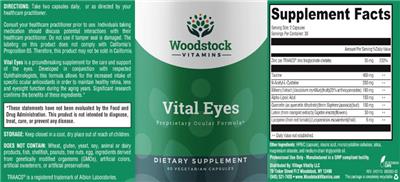
Supplement Facts
The label details for Vital Eyes by Woodstock Vitamins, sourced from the NIH Dietary Supplement Label Database.
Supplement Facts
| Ingredient | Amount | % DV |
|---|---|---|
| Taurine | 400 mg | -- |
| Zinc | 35 mg | 233% |
| Alpha-Lipoic Acid | 150 mg | -- |
| Lutein | 30 mg | -- |
| N-Acetyl-L-Cysteine | 200 mg | -- |
| Lycopene | 6 mg | -- |
| Quercetin | 100 mg | -- |
| Bilberry Fruit Extract | 180 mg | -- |
Other ingredients: Hydroxypropyl Methylcellulose, Stearic Acid, Microcrystalline Cellulose, Silica, Magnesium Stearate, Medium Chain Triglyceride Oil
Tap any ingredient to jump to its full detail below.
These statements are the manufacturer’s wording, reproduced from the product label — the label is saying it, not HelloPharmacist. We don’t verify or endorse them.
Suggested/Recommended/Usage/Directions
Directions: Take two capsules daily, or as directed by your healthcare practitioner.
Precautions
Consult your healthcare practitioner prior to use.
Individuals taking medication should discuss potential interactions with their healthcare practitioner.
Do not use if tamper seal is damaged. The labeling on this product does not comply with California's Proposition 65. Therefore, this product may not be sold in California.
Storage: Keep closed in a cool, dry place out of reach of children.
Professional use only
Formulation
Vital Eyes is a groundbreaking supplement for the care and support of the eyes. Developed in the conjunction with respected Ophthalmologists, this formula allows for the increased intake of specific ocular antioxidants in order to maintain healthy retina, lens and eyesight function during the aging years. Significant research confirms the benefits of these ingredients.
Does not contain: Wheat, gluten, yeast, soy, animal or dairy products, fish, shellfish, peanuts, tree nuts, egg, ingredients derived from genetically modified organisms (GMOs), artificial colors, artificial sweeteners, or artificial preservatives.
Proprietary Ocular formula
Manufactured in a GMP compliant facility.
Vegetarian Caps
FDA Disclaimer Statement
These statements have not been evaluated by the Food and Drug Administration. This product is not intended to diagnose, treat, cure, or prevent any disease.
Storage
Storage: Keep closed in a cool, dry place out of reach of children.
Brand IP Statement(s)
TRAACS is a registered trademark of Albion Laboratories.
FDA Statement of Identity
Dietary Supplement
General Statements
This package is completely recyclable
Is this label outdated? Report a formula or label change and our pharmacy team will review it.
Vital Eyes by Woodstock Vitamins label
The label scan from the NIH Dietary Supplement Label Database. Tap to enlarge.
Label images are published by the NIH Dietary Supplement Label Database for the version of this product on file. Always read your actual product label.
View the full label (PDF)The Ingredients in Vital Eyes by Woodstock Vitamins
These are the 8 active ingredients this product is made of. Select any to open its full monograph.
Serving size2 Capsule(s) Dosage formCapsule Servings per container30 Amounts shown are per serving.
Most supplement products combine several ingredients, and a medication can interact with the product through any one of them. Each ingredient below shows whether it has known drug interactions.
Taurine
Interacts with173 drugs
Taurine is an amino acid your body makes naturally and that you also get from animal foods. It is widely used in energy drinks and sports supplements,...
Taurine monograph & interactionsZinc
Interacts with67 drugs
Zinc is an essential mineral that your body needs for immune function, wound healing, taste, and smell. Most people get enough from food, but suppleme...
Zinc monograph & interactionsAlpha-Lipoic Acid
Interacts with263 drugs
Alpha-lipoic acid (ALA) is an antioxidant made naturally by the body and found in small amounts in foods. It is most studied for diabetic nerve pain,...
Alpha-Lipoic Acid monograph & interactionsLutein
No knowninteractions
Lutein is a plant-based antioxidant pigment that concentrates in the eye, and the best evidence suggests it (often combined with zeaxanthin) may help...
Lutein monograph & interactionsN-Acetyl-L-Cysteine
Interacts with294 drugs
N-acetyl cysteine (NAC) is a supplement form of the amino acid cysteine and a building block for the antioxidant glutathione. It has well-established...
N-Acetyl-L-Cysteine monograph & interactionsLycopene
Interacts with122 drugs
Lycopene is a red plant pigment and antioxidant found mainly in tomatoes and other red fruits. Eating lycopene-rich foods is linked with possible hear...
Lycopene monograph & interactionsQuercetin
Interacts with1,169 drugs
Quercetin is a plant flavonoid with antioxidant and anti-inflammatory properties found in many common foods and sold as a supplement. While early rese...
Quercetin monograph & interactionsBilberry Fruit Extract
Interacts with275 drugs
Bilberry is a blueberry-like fruit rich in antioxidant plant compounds called anthocyanins, and it has a long history of traditional use for eye healt...
Bilberry Fruit Extract monograph & interactionsOther (inactive) ingredients: Hydroxypropyl Methylcellulose, Stearic Acid, Microcrystalline Cellulose, Silica, Magnesium Stearate, Medium Chain Triglyceride Oil. These complete the product’s ingredient list but are not active constituents.
Vital Eyes by Woodstock Vitamins Drug Interactions
HelloPharmacist Interaction Report
Vital Eyes by Woodstock Vitamins contains eight active ingredients, several of which interact with medications.
The most serious interaction is N-acetyl cysteine with nitroglycerin (a heart medication for chest pain relief), which carries Major severity and can cause dangerous drops in blood pressure and severe headaches. Do not combine these without your doctor's explicit approval.
Read the full breakdown — every affected drug type, severity by severity
Moderate interactions affect blood pressure medications (taurine, N-acetyl cysteine, alpha-lipoic acid), blood thinners (alpha-lipoic acid, lycopene, bilberry), diabetes drugs (alpha-lipoic acid, bilberry), and several antibiotic classes (zinc with quinolones, cephalexin, and tetracyclines). Quercetin interacts with blood thinners (warfarin), certain cholesterol drugs (pravastatin, involving an OATP transporter), and losartan (a blood pressure drug).
N-acetyl cysteine also affects antimalarial drugs and has interactions with other anticoagulants and antitumor chemotherapy drugs (through its antioxidant effects). Zinc reduces levels of HIV protease inhibitors (ritonavir) and integrase inhibitors, and may interfere with cisplatin cancer therapy.
Bilberry theoretically affects diabetes control and one cancer drug (erlotinib). Altogether, these interactions span 1,271 individual medications.
Lutein has no known interactions documented in our data. Before you start Vital Eyes, use the medication checker on this page to confirm your exact prescriptions.
Check your own medications below · Editorial policy · How we use AI
Want to check YOUR meds against Vital Eyes?
Ask about interactions with your drugs in plain English — “Can I take it with lisinopril?” — and we find you the answer in seconds, ingredient by ingredient.
Go to the checkerIngredients driving the most interactions
Individual Drug Interactions
The ingredients in Vital Eyes interact with 1,290 drugs. Click any drug to see the details.
7 of the 8 ingredients in Vital Eyes interact with drugs. Each result below shows which ingredient is responsible. Quercetin N-Acetyl-L-Cysteine Bilberry Fruit Extract Alpha-Lipoic Acid Taurine Lycopene Zinc
NitroglycerinGonitro, Nitro Time, Nitro-Bid, Nitrocine Timecaps, Nitrogard, Nitrogard SR +7 more
How Nitroglycerin interacts with Vital Eyes — through 1 ingredient. Tap an ingredient for the detail:
N-acetyl-l-cysteineNitroglycerin Major
Interaction Summary
N-acetyl cysteine can increase the risk for hypotension and headaches when taken with intravenous or transdermal nitroglycerin.
Read the full N-acetyl-l-cysteine + Nitroglycerin interactionAdo-trastuzumab EmtansineKadcyla
How Ado-trastuzumab Emtansine interacts with Vital Eyes — through 1 ingredient. Tap an ingredient for the detail:
QuercetinCytochrome P450 3a4 (cyp3a4) Substrates Moderate
Interaction Summary
Theoretically, concomitant use might alter the effects and adverse effects of CYP3A4 substrates.
Read the full Quercetin + Ado-trastuzumab Emtansine interactionAbciximabReoPro
How Abciximab interacts with Vital Eyes — through 4 ingredients. Tap an ingredient for the detail:
N-acetyl-l-cysteineAnticoagulant/antiplatelet Drugs Moderate
Interaction Summary
Theoretically, N-acetyl cysteine might increase the risk of bleeding when taken with anticoagulant or antiplatelet drugs.
Read the full N-acetyl-l-cysteine + Abciximab interactionLycopeneAnticoagulant/antiplatelet Drugs Moderate
Interaction Summary
Theoretically, taking lycopene with anticoagulant or antiplatelet drugs might increase the risk of bleeding.
Read the full Lycopene + Abciximab interactionBilberry Fruit ExtractAnticoagulant/antiplatelet Drugs Moderate
Interaction Summary
Theoretically, bilberry fruit extract might increase the risk of bleeding when taken with anticoagulant or antiplatelet drugs.
Read the full Bilberry Fruit Extract + Abciximab interactionAlpha-lipoic AcidAnticoagulant/antiplatelet Drugs Moderate
Interaction Summary
Theoretically, alpha-lipoic acid may have antiplatelet effects and may increase the risk of bleeding if used with anticoagulant or antiplatelet drugs.
Read the full Alpha-lipoic Acid + Abciximab interactionAbemaciclibVerzenio
How Abemaciclib interacts with Vital Eyes — through 1 ingredient. Tap an ingredient for the detail:
QuercetinCytochrome P450 3a4 (cyp3a4) Substrates Moderate
Interaction Summary
Theoretically, concomitant use might alter the effects and adverse effects of CYP3A4 substrates.
Read the full Quercetin + Abemaciclib interactionAbiraterone
How Abiraterone interacts with Vital Eyes — through 1 ingredient. Tap an ingredient for the detail:
QuercetinCytochrome P450 3a4 (cyp3a4) Substrates Moderate
Interaction Summary
Theoretically, concomitant use might alter the effects and adverse effects of CYP3A4 substrates.
Read the full Quercetin + Abiraterone interactionAbiraterone AcetateYonsa, Zytiga
How Abiraterone Acetate interacts with Vital Eyes — through 1 ingredient. Tap an ingredient for the detail:
QuercetinCytochrome P450 3a4 (cyp3a4) Substrates Moderate
Interaction Summary
Theoretically, concomitant use might alter the effects and adverse effects of CYP3A4 substrates.
Read the full Quercetin + Abiraterone Acetate interactionAbrocitinibCibinqo
How Abrocitinib interacts with Vital Eyes — through 5 ingredients. Tap an ingredient for the detail:
LycopeneAnticoagulant/antiplatelet Drugs Moderate
Interaction Summary
Theoretically, taking lycopene with anticoagulant or antiplatelet drugs might increase the risk of bleeding.
Read the full Lycopene + Abrocitinib interactionAlpha-lipoic AcidAnticoagulant/antiplatelet Drugs Moderate
Interaction Summary
Theoretically, alpha-lipoic acid may have antiplatelet effects and may increase the risk of bleeding if used with anticoagulant or antiplatelet drugs.
Read the full Alpha-lipoic Acid + Abrocitinib interactionQuercetinCytochrome P450 2c9 (cyp2c9) Substrates Moderate
Interaction Summary
Theoretically, concomitant use might increase the levels and adverse effects of CYP2C9 substrates.
Read the full Quercetin + Abrocitinib interactionN-acetyl-l-cysteineAnticoagulant/antiplatelet Drugs Moderate
Interaction Summary
Theoretically, N-acetyl cysteine might increase the risk of bleeding when taken with anticoagulant or antiplatelet drugs.
Read the full N-acetyl-l-cysteine + Abrocitinib interactionBilberry Fruit ExtractAnticoagulant/antiplatelet Drugs Moderate
Interaction Summary
Theoretically, bilberry fruit extract might increase the risk of bleeding when taken with anticoagulant or antiplatelet drugs.
Read the full Bilberry Fruit Extract + Abrocitinib interactionAcalabrutinibCalquence
How Acalabrutinib interacts with Vital Eyes — through 1 ingredient. Tap an ingredient for the detail:
QuercetinCytochrome P450 3a4 (cyp3a4) Substrates, P-glycoprotein Substrates Moderate
Interaction Summary
Theoretically, concomitant use might alter the effects and adverse effects of CYP3A4 substrates.
Read the full Quercetin + Acalabrutinib interactionAcarboseGlucobay, Prandase, Precose
How Acarbose interacts with Vital Eyes — through 3 ingredients. Tap an ingredient for the detail:
Bilberry Fruit ExtractAntidiabetes Drugs Moderate
Interaction Summary
Theoretically, bilberry leaf or fruit extract may increase the risk of hypoglycemia when taken with antidiabetes drugs.
Read the full Bilberry Fruit Extract + Acarbose interactionQuercetinAntidiabetes Drugs Moderate
Interaction Summary
Theoretically, concomitant use of quercetin and antidiabetes drugs might increase the risk of hypoglycemia.
Read the full Quercetin + Acarbose interactionAlpha-lipoic AcidAntidiabetes Drugs Minor
Interaction Summary
Theoretically, taking alpha-lipoic acid with antidiabetes drugs might increase the risk of hypoglycemia.
Read the full Alpha-lipoic Acid + Acarbose interactionAcebutololRhotral, Sectral
How Acebutolol interacts with Vital Eyes — through 3 ingredients. Tap an ingredient for the detail:
QuercetinAntihypertensive Drugs Moderate
Interaction Summary
Theoretically, taking quercetin with antihypertensive drugs might increase the risk of hypotension.
Read the full Quercetin + Acebutolol interactionTaurineAntihypertensive Drugs Moderate
Interaction Summary
Theoretically, taurine might increase the risk of hypotension when taken with antihypertensive drugs.
Read the full Taurine + Acebutolol interactionN-acetyl-l-cysteineAntihypertensive Drugs Moderate
Interaction Summary
Theoretically, N-acetyl cysteine might increase the risk of hypotension when taken with antihypertensive drugs.
Read the full N-acetyl-l-cysteine + Acebutolol interactionAcenocoumarolSintrom
How Acenocoumarol interacts with Vital Eyes — through 4 ingredients. Tap an ingredient for the detail:
Alpha-lipoic AcidAnticoagulant/antiplatelet Drugs Moderate
Interaction Summary
Theoretically, alpha-lipoic acid may have antiplatelet effects and may increase the risk of bleeding if used with anticoagulant or antiplatelet drugs.
Read the full Alpha-lipoic Acid + Acenocoumarol interactionBilberry Fruit ExtractAnticoagulant/antiplatelet Drugs Moderate
Interaction Summary
Theoretically, bilberry fruit extract might increase the risk of bleeding when taken with anticoagulant or antiplatelet drugs.
Read the full Bilberry Fruit Extract + Acenocoumarol interactionLycopeneAnticoagulant/antiplatelet Drugs Moderate
Interaction Summary
Theoretically, taking lycopene with anticoagulant or antiplatelet drugs might increase the risk of bleeding.
Read the full Lycopene + Acenocoumarol interactionN-acetyl-l-cysteineAnticoagulant/antiplatelet Drugs Moderate
Interaction Summary
Theoretically, N-acetyl cysteine might increase the risk of bleeding when taken with anticoagulant or antiplatelet drugs.
Read the full N-acetyl-l-cysteine + Acenocoumarol interactionAcetaminophenChildren's Tylenol, Children's Tylenol Meltaways, Tylenol, Tylenol Ex Strength
How Acetaminophen interacts with Vital Eyes — through 1 ingredient. Tap an ingredient for the detail:
Bilberry Fruit ExtractCytochrome P450 2e1 (cyp2e1) Substrates Moderate
Interaction Summary
Theoretically, bilberry fruit extract might decrease levels of drugs metabolized by CYP2E1.
Read the full Bilberry Fruit Extract + Acetaminophen interactionAcetaminophen, AspirinGemnisyn
How Acetaminophen, Aspirin interacts with Vital Eyes — through 5 ingredients. Tap an ingredient for the detail:
Bilberry Fruit ExtractAnticoagulant/antiplatelet Drugs, Cytochrome P450 2e1 (cyp2e1) Substrates Moderate
Interaction Summary
Theoretically, bilberry fruit extract might increase the risk of bleeding when taken with anticoagulant or antiplatelet drugs.
Read the full Bilberry Fruit Extract + Acetaminophen, Aspirin interactionN-acetyl-l-cysteineAnticoagulant/antiplatelet Drugs Moderate
Interaction Summary
Theoretically, N-acetyl cysteine might increase the risk of bleeding when taken with anticoagulant or antiplatelet drugs.
Read the full N-acetyl-l-cysteine + Acetaminophen, Aspirin interactionAlpha-lipoic AcidAnticoagulant/antiplatelet Drugs Moderate
Interaction Summary
Theoretically, alpha-lipoic acid may have antiplatelet effects and may increase the risk of bleeding if used with anticoagulant or antiplatelet drugs.
Read the full Alpha-lipoic Acid + Acetaminophen, Aspirin interactionLycopeneAnticoagulant/antiplatelet Drugs Moderate
Interaction Summary
Theoretically, taking lycopene with anticoagulant or antiplatelet drugs might increase the risk of bleeding.
Read the full Lycopene + Acetaminophen, Aspirin interactionQuercetinOrganic Anion Transporter 3 (oat3) Substrates, Organic Anion Transporter 1 (oat1) Substrates Moderate
Interaction Summary
Theoretically, concomitant use might increase the effects and adverse effects of OAT3 substrates.
Read the full Quercetin + Acetaminophen, Aspirin interactionAcetaminophen, Aspirin, CaffeineExcedrin, Excedrin Extra Strength, Excedrin Migraine
How Acetaminophen, Aspirin, Caffeine interacts with Vital Eyes — through 5 ingredients. Tap an ingredient for the detail:
QuercetinOrganic Anion Transporter 3 (oat3) Substrates, Organic Anion Transporter 1 (oat1) Substrates +1 Moderate
Interaction Summary
Theoretically, concomitant use might increase the effects and adverse effects of OAT3 substrates.
Read the full Quercetin + Acetaminophen, Aspirin, Caffeine interactionN-acetyl-l-cysteineAnticoagulant/antiplatelet Drugs Moderate
Interaction Summary
Theoretically, N-acetyl cysteine might increase the risk of bleeding when taken with anticoagulant or antiplatelet drugs.
Read the full N-acetyl-l-cysteine + Acetaminophen, Aspirin, Caffeine interactionBilberry Fruit ExtractAnticoagulant/antiplatelet Drugs, Cytochrome P450 2e1 (cyp2e1) Substrates Moderate
Interaction Summary
Theoretically, bilberry fruit extract might increase the risk of bleeding when taken with anticoagulant or antiplatelet drugs.
Read the full Bilberry Fruit Extract + Acetaminophen, Aspirin, Caffeine interactionLycopeneAnticoagulant/antiplatelet Drugs Moderate
Interaction Summary
Theoretically, taking lycopene with anticoagulant or antiplatelet drugs might increase the risk of bleeding.
Read the full Lycopene + Acetaminophen, Aspirin, Caffeine interactionAlpha-lipoic AcidAnticoagulant/antiplatelet Drugs Moderate
Interaction Summary
Theoretically, alpha-lipoic acid may have antiplatelet effects and may increase the risk of bleeding if used with anticoagulant or antiplatelet drugs.
Read the full Alpha-lipoic Acid + Acetaminophen, Aspirin, Caffeine interactionAcetaminophen, Brompheniramine, PhenylpropanolamineDimetapp Cold and Flu
How Acetaminophen, Brompheniramine, Phenylpropanolamine interacts with Vital Eyes — through 1 ingredient. Tap an ingredient for the detail:
Bilberry Fruit ExtractCytochrome P450 2e1 (cyp2e1) Substrates Moderate
Interaction Summary
Theoretically, bilberry fruit extract might decrease levels of drugs metabolized by CYP2E1.
Read the full Bilberry Fruit Extract + Acetaminophen, Brompheniramine, Phenylpropanolamine interactionAcetaminophen, ButalbitalAxocet, Bancap, Bucet, Butex Forte, Esgic CF, Orbivan CF +5 more
How Acetaminophen, Butalbital interacts with Vital Eyes — through 1 ingredient. Tap an ingredient for the detail:
Bilberry Fruit ExtractCytochrome P450 2e1 (cyp2e1) Substrates Moderate
Interaction Summary
Theoretically, bilberry fruit extract might decrease levels of drugs metabolized by CYP2E1.
Read the full Bilberry Fruit Extract + Acetaminophen, Butalbital interactionAcetaminophen, Butalbital, CaffeineEsgic, Esgic Plus, Fiogesic, Fioricet, Repan, Tecnal +1 more
How Acetaminophen, Butalbital, Caffeine interacts with Vital Eyes — through 2 ingredients. Tap an ingredient for the detail:
QuercetinCytochrome P450 3a4 (cyp3a4) Substrates Moderate
Interaction Summary
Theoretically, concomitant use might alter the effects and adverse effects of CYP3A4 substrates.
Read the full Quercetin + Acetaminophen, Butalbital, Caffeine interactionBilberry Fruit ExtractCytochrome P450 2e1 (cyp2e1) Substrates Moderate
Interaction Summary
Theoretically, bilberry fruit extract might decrease levels of drugs metabolized by CYP2E1.
Read the full Bilberry Fruit Extract + Acetaminophen, Butalbital, Caffeine interactionAcetaminophen, Butalbital, Caffeine, CodeineEsgic with Codeine, Fioricet w/ Codeine
How Acetaminophen, Butalbital, Caffeine, Codeine interacts with Vital Eyes — through 2 ingredients. Tap an ingredient for the detail:
Bilberry Fruit ExtractCytochrome P450 2e1 (cyp2e1) Substrates Moderate
Interaction Summary
Theoretically, bilberry fruit extract might decrease levels of drugs metabolized by CYP2E1.
Read the full Bilberry Fruit Extract + Acetaminophen, Butalbital, Caffeine, Codeine interactionQuercetinCytochrome P450 2d6 (cyp2d6) Substrates, Cytochrome P450 3a4 (cyp3a4) Substrates Moderate
Interaction Summary
Theoretically, concomitant use might increase the levels and adverse effects of CYP2D6 substrates.
Read the full Quercetin + Acetaminophen, Butalbital, Caffeine, Codeine interactionAcetaminophen, Butalbital, CodeineBancap w/ Codeine
How Acetaminophen, Butalbital, Codeine interacts with Vital Eyes — through 2 ingredients. Tap an ingredient for the detail:
Bilberry Fruit ExtractCytochrome P450 2e1 (cyp2e1) Substrates Moderate
Interaction Summary
Theoretically, bilberry fruit extract might decrease levels of drugs metabolized by CYP2E1.
Read the full Bilberry Fruit Extract + Acetaminophen, Butalbital, Codeine interactionQuercetinCytochrome P450 2d6 (cyp2d6) Substrates Moderate
Interaction Summary
Theoretically, concomitant use might increase the levels and adverse effects of CYP2D6 substrates.
Read the full Quercetin + Acetaminophen, Butalbital, Codeine interactionAcetaminophen, Butalbital, Codeine PhosphatePhrenilin #3
How Acetaminophen, Butalbital, Codeine Phosphate interacts with Vital Eyes — through 2 ingredients. Tap an ingredient for the detail:
QuercetinCytochrome P450 2d6 (cyp2d6) Substrates Moderate
Interaction Summary
Theoretically, concomitant use might increase the levels and adverse effects of CYP2D6 substrates.
Read the full Quercetin + Acetaminophen, Butalbital, Codeine Phosphate interactionBilberry Fruit ExtractCytochrome P450 2e1 (cyp2e1) Substrates Moderate
Interaction Summary
Theoretically, bilberry fruit extract might decrease levels of drugs metabolized by CYP2E1.
Read the full Bilberry Fruit Extract + Acetaminophen, Butalbital, Codeine Phosphate interactionAcetaminophen, Caffeine, Chlorpheniramine, Hydrocodone, PhenylephrineHycomine Compound
How Acetaminophen, Caffeine, Chlorpheniramine, Hydrocodone, Phenylephrine interacts with Vital Eyes — through 2 ingredients. Tap an ingredient for the detail:
Bilberry Fruit ExtractCytochrome P450 2e1 (cyp2e1) Substrates Moderate
Interaction Summary
Theoretically, bilberry fruit extract might decrease levels of drugs metabolized by CYP2E1.
Read the full Bilberry Fruit Extract + Acetaminophen, Caffeine, Chlorpheniramine, Hydrocodone, Phenylephrine interactionQuercetinCytochrome P450 2d6 (cyp2d6) Substrates, Cytochrome P450 3a4 (cyp3a4) Substrates Moderate
Interaction Summary
Theoretically, concomitant use might increase the levels and adverse effects of CYP2D6 substrates.
Read the full Quercetin + Acetaminophen, Caffeine, Chlorpheniramine, Hydrocodone, Phenylephrine interactionAcetaminophen, Caffeine, CodeineGesic C15, Gesic C30, Gesic C8, Lenoltec 1, Lenoltec 2, Lenoltec 3 +1 more
How Acetaminophen, Caffeine, Codeine interacts with Vital Eyes — through 2 ingredients. Tap an ingredient for the detail:
QuercetinCytochrome P450 3a4 (cyp3a4) Substrates, Cytochrome P450 2d6 (cyp2d6) Substrates Moderate
Interaction Summary
Theoretically, concomitant use might alter the effects and adverse effects of CYP3A4 substrates.
Read the full Quercetin + Acetaminophen, Caffeine, Codeine interactionBilberry Fruit ExtractCytochrome P450 2e1 (cyp2e1) Substrates Moderate
Interaction Summary
Theoretically, bilberry fruit extract might decrease levels of drugs metabolized by CYP2E1.
Read the full Bilberry Fruit Extract + Acetaminophen, Caffeine, Codeine interactionAcetaminophen, Caffeine, Codeine, SalicylamideCodalan No.1, Codalan No.2, Codalan No.3
How Acetaminophen, Caffeine, Codeine, Salicylamide interacts with Vital Eyes — through 2 ingredients. Tap an ingredient for the detail:
Bilberry Fruit ExtractCytochrome P450 2e1 (cyp2e1) Substrates Moderate
Interaction Summary
Theoretically, bilberry fruit extract might decrease levels of drugs metabolized by CYP2E1.
Read the full Bilberry Fruit Extract + Acetaminophen, Caffeine, Codeine, Salicylamide interactionQuercetinCytochrome P450 3a4 (cyp3a4) Substrates, Cytochrome P450 2d6 (cyp2d6) Substrates Moderate
Interaction Summary
Theoretically, concomitant use might alter the effects and adverse effects of CYP3A4 substrates.
Read the full Quercetin + Acetaminophen, Caffeine, Codeine, Salicylamide interactionAcetaminophen, Caffeine, DihydrocodeineDHC Plus, Panlor DC, Panlor SS
How Acetaminophen, Caffeine, Dihydrocodeine interacts with Vital Eyes — through 2 ingredients. Tap an ingredient for the detail:
QuercetinCytochrome P450 2d6 (cyp2d6) Substrates, Cytochrome P450 3a4 (cyp3a4) Substrates Moderate
Interaction Summary
Theoretically, concomitant use might increase the levels and adverse effects of CYP2D6 substrates.
Read the full Quercetin + Acetaminophen, Caffeine, Dihydrocodeine interactionBilberry Fruit ExtractCytochrome P450 2e1 (cyp2e1) Substrates Moderate
Interaction Summary
Theoretically, bilberry fruit extract might decrease levels of drugs metabolized by CYP2E1.
Read the full Bilberry Fruit Extract + Acetaminophen, Caffeine, Dihydrocodeine interactionAcetaminophen, Caffeine, IsomethepteneMigralam
How Acetaminophen, Caffeine, Isometheptene interacts with Vital Eyes — through 2 ingredients. Tap an ingredient for the detail:
QuercetinCytochrome P450 3a4 (cyp3a4) Substrates Moderate
Interaction Summary
Theoretically, concomitant use might alter the effects and adverse effects of CYP3A4 substrates.
Read the full Quercetin + Acetaminophen, Caffeine, Isometheptene interactionBilberry Fruit ExtractCytochrome P450 2e1 (cyp2e1) Substrates Moderate
Interaction Summary
Theoretically, bilberry fruit extract might decrease levels of drugs metabolized by CYP2E1.
Read the full Bilberry Fruit Extract + Acetaminophen, Caffeine, Isometheptene interactionAcetaminophen, Caffeine, PyrilamineMidol Max Strength Menstrual
How Acetaminophen, Caffeine, Pyrilamine interacts with Vital Eyes — through 2 ingredients. Tap an ingredient for the detail:
Bilberry Fruit ExtractCytochrome P450 2e1 (cyp2e1) Substrates Moderate
Interaction Summary
Theoretically, bilberry fruit extract might decrease levels of drugs metabolized by CYP2E1.
Read the full Bilberry Fruit Extract + Acetaminophen, Caffeine, Pyrilamine interactionQuercetinCytochrome P450 3a4 (cyp3a4) Substrates Moderate
Interaction Summary
Theoretically, concomitant use might alter the effects and adverse effects of CYP3A4 substrates.
Read the full Quercetin + Acetaminophen, Caffeine, Pyrilamine interactionAcetaminophen, Chlorpheniramine Maleate, Dextromethorphan HbrVicks Formula 44M Cough, Cold & Flu Relief
How Acetaminophen, Chlorpheniramine Maleate, Dextromethorphan Hbr interacts with Vital Eyes — through 2 ingredients. Tap an ingredient for the detail:
QuercetinCytochrome P450 2d6 (cyp2d6) Substrates, Cytochrome P450 3a4 (cyp3a4) Substrates Moderate
Interaction Summary
Theoretically, concomitant use might increase the levels and adverse effects of CYP2D6 substrates.
Read the full Quercetin + Acetaminophen, Chlorpheniramine Maleate, Dextromethorphan Hbr interactionBilberry Fruit ExtractCytochrome P450 2e1 (cyp2e1) Substrates Moderate
Interaction Summary
Theoretically, bilberry fruit extract might decrease levels of drugs metabolized by CYP2E1.
Read the full Bilberry Fruit Extract + Acetaminophen, Chlorpheniramine Maleate, Dextromethorphan Hbr interactionAcetaminophen, Chlorpheniramine, Codeine, PhenylephrineColrex
How Acetaminophen, Chlorpheniramine, Codeine, Phenylephrine interacts with Vital Eyes — through 2 ingredients. Tap an ingredient for the detail:
QuercetinCytochrome P450 3a4 (cyp3a4) Substrates, Cytochrome P450 2d6 (cyp2d6) Substrates Moderate
Interaction Summary
Theoretically, concomitant use might alter the effects and adverse effects of CYP3A4 substrates.
Read the full Quercetin + Acetaminophen, Chlorpheniramine, Codeine, Phenylephrine interactionBilberry Fruit ExtractCytochrome P450 2e1 (cyp2e1) Substrates Moderate
Interaction Summary
Theoretically, bilberry fruit extract might decrease levels of drugs metabolized by CYP2E1.
Read the full Bilberry Fruit Extract + Acetaminophen, Chlorpheniramine, Codeine, Phenylephrine interactionAcetaminophen, Chlorpheniramine, DextromethorphanCoricidin II Extra Strength Cold and Flu
How Acetaminophen, Chlorpheniramine, Dextromethorphan interacts with Vital Eyes — through 2 ingredients. Tap an ingredient for the detail:
QuercetinCytochrome P450 3a4 (cyp3a4) Substrates, Cytochrome P450 2d6 (cyp2d6) Substrates Moderate
Interaction Summary
Theoretically, concomitant use might alter the effects and adverse effects of CYP3A4 substrates.
Read the full Quercetin + Acetaminophen, Chlorpheniramine, Dextromethorphan interactionBilberry Fruit ExtractCytochrome P450 2e1 (cyp2e1) Substrates Moderate
Interaction Summary
Theoretically, bilberry fruit extract might decrease levels of drugs metabolized by CYP2E1.
Read the full Bilberry Fruit Extract + Acetaminophen, Chlorpheniramine, Dextromethorphan interactionAcetaminophen, Chlorpheniramine, Dextromethorphan HydrobromideCoricidin HBP Maximum Strength Flu
How Acetaminophen, Chlorpheniramine, Dextromethorphan Hydrobromide interacts with Vital Eyes — through 2 ingredients. Tap an ingredient for the detail:
QuercetinCytochrome P450 2d6 (cyp2d6) Substrates, Cytochrome P450 3a4 (cyp3a4) Substrates Moderate
Interaction Summary
Theoretically, concomitant use might increase the levels and adverse effects of CYP2D6 substrates.
Read the full Quercetin + Acetaminophen, Chlorpheniramine, Dextromethorphan Hydrobromide interactionBilberry Fruit ExtractCytochrome P450 2e1 (cyp2e1) Substrates Moderate
Interaction Summary
Theoretically, bilberry fruit extract might decrease levels of drugs metabolized by CYP2E1.
Read the full Bilberry Fruit Extract + Acetaminophen, Chlorpheniramine, Dextromethorphan Hydrobromide interactionEach ingredient & the kinds of drugs it affects
For each ingredient in Vital Eyes with known interactions, here are the types of medications they can affect. Open any type for the detail — or search your exact drug in the checker above.
Quercetin
Antidiabetes Drugs
Theoretically, concomitant use of quercetin and antidiabetes drugs might increase the risk of hypoglycemia.
Clinical research suggests that a combination of quercetin, myricetin, and chlorogenic acid reduce levels of fasting glucose in patients with type 2 diabetes, including those already taking antidiabetes agents. The effect of quercetin alone is unknown.
Antihypertensive Drugs
Theoretically, taking quercetin with antihypertensive drugs might increase the risk of hypotension.
Quercetin can modestly decrease blood pressure in people with mild hypertension. Theoretically, it might have additive blood pressure lowering effects when used with antihypertensive drugs.
Cyclosporine (Neoral, Sandimmune)
Theoretically, concomitant use might increase the levels and adverse effects of cyclosporine.
A small study in healthy volunteers shows that pretreatment with quercetin increases plasma levels and prolongs the half-life of a single dose of cyclosporine, possibly due to inhibition of p-glycoprotein or cytochrome P450 3A4 (CYP3A4), which metabolizes cyclosporin.
Cytochrome P450 2C8 (Cyp2C8) Substrates
Theoretically, concomitant use might increase the levels and adverse effects of CYP2C8 substrates.
In vitro research shows that quercetin inhibits CYP2C8. Inhibition of paclitaxel (Taxol) metabolism via CYP2C8 has been reported in vitro. However, a small study in humans found no effect of quercetin on rosiglitazone (Avandia), which is also a CYP2C8 substrate.
Cytochrome P450 2C9 (Cyp2C9) Substrates
Theoretically, concomitant use might increase the levels and adverse effects of CYP2C9 substrates.
A small clinical study in healthy volunteers shows that taking quercetin 500 mg twice daily for 10 days prior to taking diclofenac, a CYP2C9 substrate, increases diclofenac plasma levels by 75% and prolongs the half-life by 32.5%. Animal research also shows that pretreatment with quercetin increases plasma levels and prolongs the half-life of losartan (Cozaar), a substrate of CYP2C9. Furthermore, laboratory research shows that quercetin inhibits CYP2C9.
Cytochrome P450 2D6 (Cyp2D6) Substrates
Theoretically, concomitant use might increase the levels and adverse effects of CYP2D6 substrates.
In vitro research show that quercetin inhibits CYP2D6. This effect has not been reported in humans.
Cytochrome P450 3A4 (Cyp3A4) Substrates
Theoretically, concomitant use might alter the effects and adverse effects of CYP3A4 substrates.
A small clinical study in healthy volunteers shows that pretreatment with quercetin increases plasma levels and prolongs the half-life of a single dose of cyclosporine (Neoral, Sandimmune), a substrate of CYP3A4. Animal research also shows that pretreatment with quercetin increases plasma levels and prolongs the half-life of losartan (Cozaar) and quetiapine (Seroquel), substrates of CYP3A4. Other laboratory research also shows that quercetin inhibits CYP3A4. However, one clinical study shows that quercetin can increase the metabolism of midazolam, a substrate of CYP3A4, and decrease serum concentrations of midazolam by about 24% in some healthy individuals, suggesting possible induction of CYP3A4.
Diclofenac (Voltaren, Others)
Theoretically, concomitant use might increase the levels and adverse effects of diclofenac.
A small clinical study in healthy volunteers shows that taking quercetin 500 mg twice daily for 10 days prior to taking diclofenac increases diclofenac plasma levels by 75% and prolongs the half-life by 32.5%. This is thought to be due to inhibition of CYP2C9 by quercetin.
Losartan (Cozaar)
Theoretically, concomitant use might increase the effects and adverse effects of losartan and decrease the effects of its active metabolite.
Animal research shows that pretreatment with quercetin increases plasma levels and prolongs the half-life of losartan (Cozaar) while decreasing plasma levels of losartan's active metabolite. This metabolite, which is around 10-fold more potent than losartan, is the result of cytochrome P450 (CYP) 2C9- and CYP3A4-mediated transformation of losartan. Additionally, in vitro research shows that quercetin may inhibit P-glycoprotein-mediated efflux of losartan from the intestines, resulting in increased absorption of losartan. These results suggest that concomitant use of quercetin and losartan might increase systemic exposure to losartan while also decreasing plasma concentrations of losartan's active and more potent metabolite.
Midazolam (Versed)
Theoretically, concomitant use might decrease the levels and effects of midazolam.
A small clinical study in healthy volunteers shows that quercetin can increase the metabolism of midazolam, with a decrease in AUC of about 24%.
Mitoxantrone
Theoretically, quercetin might increase the effects and adverse effects of mitoxantrone.
In vitro research shows that quercetin increases the intracellular accumulation and cytotoxicity of mitoxantrone, possibly through inhibition of breast cancer resistance protein (BCRP), of which mitoxantrone is a substrate. So far, this interaction has not been reported in humans.
Organic Anion Transporter 1 (Oat1) Substrates
Theoretically, concomitant use might increase the effects and adverse effects of OAT1 substrates.
In vitro research shows that quercetin is a strong non-competitive inhibitor of OAT1, with half-maximal inhibitory concentration (IC50) values less than 10 mcM. So far, this interaction has not been reported in humans.
Organic Anion Transporter 3 (Oat3) Substrates
Theoretically, concomitant use might increase the effects and adverse effects of OAT3 substrates.
In vitro research shows that quercetin is a strong non-competitive inhibitor of OAT3, with half-maximal inhibitory concentration (IC50) values as low as 0.75 mcM. So far, this interaction has not been reported in humans.
Organic Anion-Transporting Polypeptide Substrates (Oatp)
Theoretically, concomitant use might increase the effects and adverse effects of OATP substrates.
In vitro evidence shows that quercetin can inhibit organic anion-transporting peptide (OATP) 1B1-mediated uptake of estrone-3-sulfate and pravastatin. Furthermore, clinical research in healthy males shows that intake of quercetin along with pravastatin increases the AUC of pravastatin by 24%, prolongs its half-life by 14%, and decreases its apparent clearance by 18%, suggesting that quercetin modestly inhibits the uptake of pravastatin in hepatic cells.
P-Glycoprotein Substrates
Theoretically, concomitant use might alter the effects and adverse effects of P-glycoprotein substrates.
There is preliminary evidence that quercetin inhibits the gastrointestinal P-glycoprotein efflux pump, which might increase the bioavailability and serum levels of drugs transported by the pump. A small study in healthy volunteers reported that pretreatment with quercetin increased bioavailability and plasma levels after a single dose of cyclosporine (Neoral, Sandimmune). Also, two small studies have shown that quercetin might decrease the absorption of talinolol, a substrate transported by the gastrointestinal P-glycoprotein efflux pump. However, in another small study, several days of quercetin treatment did not significantly affect the pharmacokinetics of saquinavir (Invirase). The reason for these discrepancies is not entirely clear. Until more is known, use quercetin cautiously in combination with P-glycoprotein substrates.
Pravastatin (Pravachol)
Theoretically, concomitant use might increase the effects and adverse effects of pravastatin.
In vitro evidence shows that quercetin can inhibit OATP 1B1-mediated uptake of pravastatin. Also, preliminary clinical research in healthy males shows that intake of quercetin along with pravastatin increases the maximum concentration of pravastatin by 24%, prolongs its half-life by 14%, and decreases its apparent clearance by 18%, suggesting that quercetin modestly inhibits the uptake of pravastatin in hepatic cells.
Prazosin (Minipress)
Theoretically, quercetin might increase the effects and adverse effects of prazosin.
In vitro research shows that quercetin inhibits the transcellular efflux of prazosin, possibly through inhibition of breast cancer resistance protein (BCRP), of which prazosin is a substrate. BCRP is an ATP-binding cassette efflux transporter in the intestines, kidneys, and liver. So far, this interaction has not been reported in humans.
Quetiapine (Seroquel)
Theoretically, concomitant use might increase the effects and adverse effects of quetiapine.
Animal research shows that pretreatment with quercetin can increase plasma levels of quetiapine and prolong its clearance, possibly due to inhibition of cytochrome P450 3A4 (CYP3A4) by quercetin. Additionally, the brain-to-plasma ratio of quetiapine concentrations increased, possibly due to inhibition of P-glycoprotein at the blood-brain barrier. This interaction has not been reported in humans.
Quinolone Antibiotics
Theoretically, concomitant use might inhibit the effects of quinolone antibiotics.
In vitro, quercetin binds to the DNA gyrase site on bacteria, which may interfere with the activity of quinolone antibiotics.
Sulfasalazine (Azulfidine)
Theoretically, quercetin might increase the effects and adverse effects of sulfasalazine.
Animal research shows that quercetin increases the maximum serum concentration (Cmax) and area under the curve (AUC) of sulfasalazine, possibly through inhibition of breast cancer resistance protein (BCRP), of which sulfasalazine is a substrate. So far, this interaction has not been reported in humans.
Warfarin (Coumadin)
Theoretically, quercetin may increase the risk of bleeding if used with warfarin.
Animal and in vitro studies show that quercetin might increase serum levels of warfarin. Quercetin and warfarin have the same human serum albumin (HSA) binding site, and in vitro research shows that quercetin has stronger affinity for the HSA binding site and can theoretically displace warfarin, causing higher serum levels of warfarin. Animal research shows that taking quercetin for 2 weeks before initiating warfarin increases the maximum serum level of warfarin by 30%, the half-life by 10%, and the overall exposure by 63% when compared with control. Concomitant administration of quercetin and warfarin, without quercetin pre-treatment, also increased these measures, but to a lesser degree. Researchers theorize that inhibition of CYP3A4 by quercetin may explain these effects. So far, this interaction has not been reported in humans.
N-Acetyl-L-Cysteine
Nitroglycerin
N-acetyl cysteine can increase the risk for hypotension and headaches when taken with intravenous or transdermal nitroglycerin.
Clinical research shows that concomitant administration of N-acetyl cysteine and intravenous or transdermal nitroglycerin can cause severe hypotension and intolerable headaches. Furthermore, in vitro research suggests that N-acetyl cysteine increases the anticoagulant activity of nitroglycerin.
Activated Charcoal
N-acetyl cysteine might reduce the effects of activated charcoal, while activated charcoal might reduce the absorption of N-acetyl cysteine.
N-acetyl cysteine appears to reduce the capacity of activated charcoal to adsorb acetaminophen and salicylic acid. Conversely, although clinical research suggests that although activated charcoal can reduce the absorption of N-acetyl cysteine by up to 40%, it does not seem to reduce its clinical effects. Other clinical evidence suggests that activated charcoal does not affect the absorption of N-acetyl cysteine.
Anticoagulant/Antiplatelet Drugs
Theoretically, N-acetyl cysteine might increase the risk of bleeding when taken with anticoagulant or antiplatelet drugs.
Clinical research suggests that intravenous N-acetyl cysteine decreases prothrombin time, prolongs coagulation time, decreases platelet aggregation, and increases blood loss in surgical patients. Furthermore, in vitro research suggests that N-acetyl cysteine increases the anticoagulant activity of nitroglycerin.
Antihypertensive Drugs
Theoretically, N-acetyl cysteine might increase the risk of hypotension when taken with antihypertensive drugs.
Animal research suggests that N-acetyl cysteine potentiates the hypotensive effects of the angiotensin-converting enzyme inhibitors (ACEIs) captopril and enalaprilat. Theoretically, combining N-acetyl cysteine with other antihypertensive drugs might increase the risk of hypotension.
Chloroquine (Aralen)
Theoretically, N-acetyl cysteine might interfere with the antimalarial effects of chloroquine.
Animal research suggests that N-acetyl cysteine might reduce the antimalarial effects of chloroquine by increasing cellular levels of glutathione.
Bilberry Fruit Extract
Anticoagulant/Antiplatelet Drugs
Theoretically, bilberry fruit extract might increase the risk of bleeding when taken with anticoagulant or antiplatelet drugs.
In vitro, animal, and clinical research suggest that anthocyanidin extracts from bilberry can inhibit platelet aggregation.
Antidiabetes Drugs
Theoretically, bilberry leaf or fruit extract may increase the risk of hypoglycemia when taken with antidiabetes drugs.
Animal research suggests that bilberry leaf extract might have blood glucose-lowering activity. Also, one small clinical trial in patients with type 2 diabetes shows that taking bilberry fruit extract 470 mg as a single dose prior to an oral glucose tolerance test lowers plasma glucose levels when compared with placebo.
Cytochrome P450 2E1 (Cyp2E1) Substrates
Theoretically, bilberry fruit extract might decrease levels of drugs metabolized by CYP2E1.
Animal research shows that exposure to small concentrations of bilberry extract in drinking water for around one month increased CYP2E1 activity by 31%. However, exposure over a 2-month period did not increase CYP2E1 activity. This effect has not been reported in humans.
Erlotinib (Tarceva)
Theoretically, bilberry fruit extract might reduce the efficacy of erlotinib.
In vitro research suggests that bilberry fruit extract and its constituents, delphinidin and delphinidin-3-O-glucoside, inhibit the activity of erlotinib. This interaction has not been reported in humans.
Alpha-Lipoic Acid
Alkylating Agents
Theoretically, the antioxidant effects of alpha-lipoic acid might alter the effectiveness of alkylating agents.
The use of antioxidants like alpha-lipoic acid during chemotherapy is controversial. There are concerns that antioxidants could reduce the activity of chemotherapy drugs that generate free radicals. However, some researchers theorize that antioxidants might make chemotherapy more effective by reducing oxidative stress that might interfere with apoptosis (cell death) of cancer cells. More evidence is needed to determine what effect, if any, antioxidants such as alpha-lipoic acid have on chemotherapy. Advise patients to consult their oncologist before using alpha-lipoic acid.
Anticoagulant/Antiplatelet Drugs
Theoretically, alpha-lipoic acid may have antiplatelet effects and may increase the risk of bleeding if used with anticoagulant or antiplatelet drugs.
In vitro, alpha-lipoic acid inhibits platelet aggregation.
Antitumor Antibiotics
Theoretically, the antioxidant effects of alpha-lipoic acid might alter the effectiveness of antitumor antibiotics.
The use of antioxidants like alpha-lipoic acid during chemotherapy is controversial. There are concerns that antioxidants could reduce the activity of antitumor antibiotic drugs, which work by generating free radicals. However, some researchers theorize that antioxidants might make chemotherapy more effective by reducing oxidative stress that might interfere with apoptosis (cell death) of cancer cells. More evidence is needed to determine what effect, if any, antioxidants such as alpha-lipoic acid have on chemotherapy involving antitumor antibiotics. Advise patients to consult their oncologist before using alpha-lipoic acid.
Thyroid Hormone
Theoretically, alpha-lipoic acid might decrease the effects of thyroid hormone drugs.
Animal research suggests that co-administration of thyroxine with alpha-lipoic acid reduces conversion into the active T3 form.
Antidiabetes Drugs
Theoretically, taking alpha-lipoic acid with antidiabetes drugs might increase the risk of hypoglycemia.
Although some small clinical studies have suggested that alpha-lipoic acid can lower blood glucose levels, larger clinical studies in patients with diabetes have shown no clinically meaningful effect. Additionally, co-administration of single doses of alpha-lipoic acid and glyburide or acarbose did not cause detectable drug interactions in healthy volunteers.
Taurine
Antihypertensive Drugs
Theoretically, taurine might increase the risk of hypotension when taken with antihypertensive drugs.
Some clinical evidence suggests that taurine can reduce both systolic and diastolic blood pressure.
Lithium
Theoretically, taurine might reduce excretion and increase plasma levels of lithium.
Taurine is thought to have diuretic properties, which might reduce the excretion of lithium.
Lycopene
Anticoagulant/Antiplatelet Drugs
Theoretically, taking lycopene with anticoagulant or antiplatelet drugs might increase the risk of bleeding.
In vitro research shows that lycopene has antiplatelet effects.
Zinc
Bictegravir/Emtricitabine/Tenofovir Alafenamide (Biktarvy)
Theoretically, zinc might decrease levels of bictegravir/emtricitabine/tenofovir alafenamide by reducing its absorption.
Advise patients that bictegravir/emtricitabine/tenofovir alafenamide should be taken at least 2 hours before or 6 hours after zinc containing products.
Cephalexin (Keflex)
Zinc might decrease cephalexin levels by chelating with cephalexin in the gut and preventing its absorption.
A pharmacokinetic study shows that zinc sulfate 250 mg taken concomitantly with cephalexin 500 mg decreases peak levels of cephalexin by 31% and reduces the exposure to cephalexin by 27%. Also, taking zinc sulfate 3 hours before cephalexin decreases peak levels of cephalexin by 11% and reduces the exposure to cephalexin by 18%. By decreasing cephalexin levels, zinc might increase the risk of treatment failure. This effect does not occur when zinc is taken 3 hours after the cephalexin dose. To avoid an interaction, advise patients take zinc sulfate 3 hours after taking cephalexin.
Cisplatin (Platinol-Aq)
Theoretically, zinc might interfere with the therapeutic effects of cisplatin.
Animal research suggests that zinc stimulates tumor cell production of the protein metallothionein, which binds and inactivates cisplatin. It is not known whether zinc supplements or high dietary zinc intake can cause clinically significant interference with cisplatin therapy. Cisplatin might also increase zinc excretion.
Integrase Inhibitors
Theoretically, taking zinc along with integrase inhibitors might decrease the levels and clinical effects of these drugs.
Zinc is a divalent cation. Pharmacokinetic studies have shown that other divalent cations such as calcium and iron can decrease blood levels of the integrase inhibitor dolutegravir through chelation.
Penicillamine (Cuprimine, Depen)
Zinc might reduce the levels and clinical effects of penicillamine.
By forming an insoluble complex with penicillamine, zinc interferes with penicillamine absorption and activity. Zinc supplements reduce the efficacy of low-dose penicillamine (0.5-1 gram/day), but do not seem to affect higher doses (1-2.75 gram/day), provided dosing times are separated. Advise patients to take zinc and penicillamine at least 2 hours apart.
Quinolone Antibiotics
Zinc can decrease the levels and clinical effects of quinolones antibiotics.
Quinolones form complexes with zinc in the gastrointestinal tract, reducing absorption of both the quinolone and zinc if taken at the same time. Advise patients to take these drugs at least 2 hours before, or 4-6 hours after, zinc supplements.
Ritonavir (Norvir)
Zinc modestly reduces levels of ritonavir.
Clinical research shows that zinc might reduce serum ritonavir levels by chelating with ritonavir in the gut and preventing its absorption. In patients with HIV, ritonavir is taken with atazanavir to prevent the metabolism and increase the effects of atazanavir. A pharmacokinetic study shows that, in patients being treated with atazanavir/ritonavir, co-administration of zinc sulfate (Solvazinc tablets) 125 mg as a single dose or as multiple daily doses for 2 weeks reduces plasma levels of ritonavir by about 16%. However, atazanavir levels still remains high enough to prevent HIV virus replication. Therefore, the decrease in ritonavir levels is not likely to be clinically significant.
Tetracycline Antibiotics
Zinc might reduce levels of tetracycline antibiotics.
Tetracyclines form complexes with zinc in the gastrointestinal tract, which can reduce absorption of both the tetracycline and zinc when taken at the same time. Taking zinc sulfate 200 mg with tetracycline reduces absorption of the antibiotic by 30% to 40%. Demeclocycline and minocycline cause a similar interaction. However, doxycycline does not seem to interact significantly with zinc. Advise patients to take tetracyclines at least 2 hours before, or 4-6 hours after, zinc supplements to avoid any interactions.
Amiloride (Midamor)
Amiloride can modestly reduce zinc excretion and increase zinc levels.
Clinical research shows that amiloride can reduce urinary zinc excretion, especially at doses of 10 mg per day or more. This zinc-sparing effect can help to counteract zinc losses caused by thiazide diuretics, but it is unlikely to cause zinc toxicity at usual amiloride doses. The other potassium-sparing diuretics, spironolactone (Aldactone) and triamterene (Dyrenium), do not seem to have a zinc-sparing effect.
Atazanavir (Reyataz)
Zinc modestly reduces levels of atazanavir, although this effect does not seem to be clinically significant.
Clinical research shows that zinc might decrease serum atazanavir levels by chelating with atazanavir in the gut and preventing its absorption. Although a single dose of zinc sulfate (Solvazinc tablets) 125 mg orally does not affect atazanavir concentrations in patients being treated with atazanavir/ritonavir, co-administration of zinc sulfate 125 mg daily for 2 weeks reduces plasma levels of atazanavir by about 22% in these patients. However, despite this decrease, atazanavir levels still remain at high enough concentrations for the prevention of HIV virus replication.
Brand information
Manufacturer and brand details for Vital Eyes, from the product label.
Woodstock Vitamins
See all Woodstock Vitamins products- Name
- Village Vitality LLC
- Street Address
- 79 Tinker Street Fl 2
- City
- Woodstock
- State
- NY
- ZipCode
- 12498
- Phone Number
- (845) 521-7455
- Web Address
- www.WoodstockVitamins.com
Vital Eyes by Woodstock Vitamins: Common Questions
Does Vital Eyes by Woodstock Vitamins interact with any medications?
How can one product interact with so many drugs?
Where does this information come from?
Is Vital Eyes safe to take while pregnant or breastfeeding?
Will Vital Eyes help my cataracts or macular degeneration?
What are the most common side effects?
Can I take this if I'm on a blood thinner like warfarin?
Does Vital Eyes interact with my blood pressure medication?
Is this supplement high in zinc, and could it cause problems?
Written and reviewed by the HelloPharmacist editorial staff. Our editorial policy
Not sure if Vital Eyes is safe with your meds?
Our pharmacists answer your medication & supplement questions — free.
Label information is sourced from the NIH Dietary Supplement Label Database and reflects the product version on file; always read your actual product label. This page is for education only and is not a substitute for professional medical advice. Confirm with your pharmacist or doctor before combining supplements and medications.
The Full Monographs Behind Vital Eyes’s Ingredients
Every ingredient we hold a full HelloPharmacist monograph for — uses, evidence, safety, and the complete interaction list.
Taurine
Interacts with 173 drugsTaurine is an amino acid your body makes naturally and that you also get from animal foods. It is widely used in energy drinks and sports supplements, and short-term use appears generally sa...
Read the full Taurine monograph → Herb & supplement monographZinc
Interacts with 67 drugsZinc is an essential mineral that your body needs for immune function, wound healing, taste, and smell. Most people get enough from food, but supplements can help correct or prevent a defici...
Read the full Zinc monograph → Herb & supplement monographAlpha-lipoic Acid
Interacts with 263 drugsAlpha-lipoic acid (ALA) is an antioxidant made naturally by the body and found in small amounts in foods. It is most studied for diabetic nerve pain, where some evidence suggests it may help...
Read the full Alpha-lipoic Acid monograph → Herb & supplement monographLutein
Lutein is a plant-based antioxidant pigment that concentrates in the eye, and the best evidence suggests it (often combined with zeaxanthin) may help slow progression of age-related macular...
Read the full Lutein monograph → Herb & supplement monographN-acetyl Cysteine (nac)
Interacts with 294 drugsN-acetyl cysteine (NAC) is a supplement form of the amino acid cysteine and a building block for the antioxidant glutathione. It has well-established prescription uses for acetaminophen over...
Read the full N-acetyl Cysteine (nac) monograph → Herb & supplement monographLycopene
Interacts with 122 drugsLycopene is a red plant pigment and antioxidant found mainly in tomatoes and other red fruits. Eating lycopene-rich foods is linked with possible heart and prostate benefits, but evidence fr...
Read the full Lycopene monograph → Herb & supplement monographQuercetin
Interacts with 1,169 drugsQuercetin is a plant flavonoid with antioxidant and anti-inflammatory properties found in many common foods and sold as a supplement. While early research is interesting for allergies, blood...
Read the full Quercetin monograph → Herb & supplement monographBilberry
Interacts with 275 drugsBilberry is a blueberry-like fruit rich in antioxidant plant compounds called anthocyanins, and it has a long history of traditional use for eye health, circulation, and mild diarrhea. While...
Read the full Bilberry monograph →Sources & How We Checked
Vital Eyes's label data comes from the NIH Dietary Supplement Label Database; the ingredient interaction data is from the Natural Medicines database, reviewed by our pharmacists.
- NIH Dietary Supplement Label Database (DSLD) — The official product label on file for this supplement.
- Natural Medicines (Therapeutic Research Center) — Evidence-graded clinical reference behind the ingredient interaction data.
Content is written and reviewed by licensed HelloPharmacist pharmacists. See our data sources and editorial standards for how this information is built and checked.
The 295 references behind this product’s interaction data
Every citation that drives the interaction findings for this product’s ingredients, from the evidence-graded Natural Medicines (TRC Healthcare) database. Open an ingredient to browse its citations — links open the study on PubMed or the publisher’s site.
Taurine 21 references
- Ahmad S, Robertson HT, Golper TA, et al. Multicenter trial of L-carnitine in maintenance hemodialysis patients. II. Clinical and biochemical effects. Kidney Int 1990;38:912-8. PubMed
- Machado-Vieira R, Viale CI, Kapczinski F. Mania associated with an energy drink: the possible role of caffeine, taurine, and inositol. Can J Psychiatry 2001;46:454-5. PubMed
- Obermann M, Schorn CF, Mummel P, et al. Taurine induced toxic encephalopathy? Clin Neurol Neurosurg 2006;108:812-3. PubMed
- Bichler, A., Swenson, A., and Harris, M. A. A combination of caffeine and taurine has no effect on short term memory but induces changes in heart rate and mean arterial blood pressure. Amino Acids 2006;31(4):471-476. PubMed
- Iyadurai, S. J. and Chung, S. S. New-onset seizures in adults: possible association with consumption of popular energy drinks. Epilepsy Behav 2007;10(3):504-508. PubMed
- Berger, A. J. and Alford, K. Cardiac arrest in a young man following excess consumption of caffeinated "energy drinks". Med J Aust. 1-5-2009;190(1):41-43. PubMed
- Worthley, M. I., Prabhu, A., De, Sciscio P., Schultz, C., Sanders, P., and Willoughby, S. R. Detrimental effects of energy drink consumption on platelet and endothelial function. Am J Med 2010;123(2):184-187. PubMed
- Morchon, Simon D. and Perez Castrillon, J. L. [Hypoglycemia by intake of taurine]. Rev.Clin Esp. 2010;210(1):49.
- Livshits, Z., Hoffman, R. S., Hymes, K. B., and Nelson, L. S. If vitamins could kill: massive hemolysis following naturopathic vitamin infusion. J Med Toxicol. 2011;7(3):224-226. PubMed
- Schoffl, I., Kothmann, J. F., Schoffl, V., Rupprecht, H. D., and Rupprecht, T. "Vodka energy": too much for the adolescent nephron? Pediatrics 2011;128(1):e227-e231. PubMed
- Calabro, R. S., Italiano, D., Gervasi, G., and Bramanti, P. Single tonic-clonic seizure after energy drink abuse. Epilepsy Behav 2012;23(3):384-385. PubMed
- Fujita, T., Ando, K., Noda, H., Ito, Y., and Sato, Y. Effects of increased adrenomedullary activity and taurine in young patients with borderline hypertension. Circulation 1987;75(3):525-532. PubMed
- Darling, P. B., Lepage, G., Leroy, C., Masson, P., and Roy, C. C. Effect of taurine supplements on fat absorption in cystic fibrosis. Pediatr Res 1985;19(6):578-582. PubMed
- Fukuyama, Y. and Ochiai, Y. Therapeutic trial by taurine for intractable childhood epilepsies. Brain Dev. 1982;4(1):63-69. PubMed
- Franconi, F., Bennardini, F., Mattana, A., Miceli, M., Ciuti, M., Mian, M., Gironi, A., Anichini, R., and Seghieri, G. Plasma and platelet taurine are reduced in subjects with insulin-dependent diabetes mellitus: effects of taurine supplementation. Am.J. DOI
- Stohs SJ, Miller M. A case study involving allergic reactions to sulfur-containing compounds including, sulfite, taurine, acesulfame potassium and sulfonamides. Food Chem Toxicol. 2014 Jan;63:240-3. PubMed
- Sun Q, Wang B, Li Y, Sun F, et al. Taurine supplementation lowers blood pressure and improves vascular function in prehypertension: randomized, double-blind, placebo-controlled study. Hypertension 2016 Mar;67(3):541-9. PubMed
- Jang ES, Hwang SH, Kim JW, Jeong SH. Effectiveness of 4-week oral taurine treatment for muscle cramps in patients with liver cirrhosis: a single-arm pilot study. Yonsei Med J 2021;62(1):21-8. PubMed
- Guan L, Miao P. The effects of taurine supplementation on obesity, blood pressure and lipid profile: A meta-analysis of randomized controlled trials. Eur J Pharmacol 2020;885:173533. PubMed
- Higgins JP, Liras GN, Liras IN, et al. Energy Drink Effects on Hemodynamics and Endothelial Function in Young Adults. Cardiology. 2021;146(2):258-262. PubMed
- Pallangyo P, Bhalia SV, Komba M, et al. Acute Myocardial Infarction Following the Consumption of Energy Drink in a 28-Year-Old Male: A Case Report. J Investig Med High Impact Case Rep. 2023 Jan-Dec;11:23247096231168811. PubMed
Zinc 88 references
- Barceloux DG. Zinc. J Toxicol Clin Toxicol 1999;37:279-92.
- Eby GA, Davis DR, Halcomb WW. Reduction in duration of common colds by zinc gluconate lozenges in a double-blind study. Antimicrob Agents Chemother 1984;25:20-4. DOI
- Smith DS, Helzner EC, Nuttall CE Jr, et al. Failure of zinc gluconate in treatment of acute upper respiratory tract infections. Antimicrob Agents Chemother 1989;33:646-8. PubMed
- Blondeau JM. Expanded activity and utility of the new fluoroquinolones: a review. Clin Ther 1999;21:3-40. PubMed
- Reyes AJ, Olhaberry JV, Leary WP, et al. Urinary zinc excretion, diuretics, zinc deficiency and some side-effects of diuretics. S Afr Med J 1983;64:936-41.
- Kugelmas M. Preliminary observation: oral zinc sulfate replacement is effective in treating muscle cramps in cirrhotic patients. J Am Coll Nutr 2000;19:13-5. PubMed
- Hebel SK, ed. Drug Facts and Comparisons. 52nd ed. St. Louis: Facts and Comparisons, 1998.
- Chan S, Gerson B, Subramaniam S. The role of copper, molybdenum, selenium, and zinc in nutrition and health. Clin Lab Med 1998;18:673-85. DOI
- Brewer GJ, Yuzbasiyan-Gurkan V, Johnson V, et al. Treatment of Wilson's disease with zinc: XI. Interaction with other anticopper agents. J Am Coll Nutr 1993;12:26-30. PubMed
- Fosmire GJ. Zinc toxicity. Am J Clin Nutr 1990;51:225-7.
- Lomaestro BM, Bailie GR. Absorption interactions with fluoroquinolones. 1995 update. Drug Saf 1995;12:314-33. PubMed
- Hansten PD, Horn JR. Drug Interactions Analysis and Management. Vancouver, WA: Applied Therapeutics Inc., 1997 and updates.
- Seelig MS. Auto-immune complications of D-penicillamine - A possible result of zinc and magnesium depletion and of pyridoxine inactivation. J Am Coll Nutr 1982;1:207-14. PubMed
- Neuvonen PJ. Interactions with the absorption of tetracyclines. Drugs 1976;11:45-54.. PubMed
- Hirt M, Nobel S, Barron E. Zinc nasal gel for the treatment of common cold symptoms: A double-blind, placebo-controlled trial. Ear Nose Throat J 2000;79:778-82.. DOI
- Simkin PA. Oral zinc sulphate in rheumatoid arthritis. Lancet 1976;2:539-42. PubMed
- Wray D. A double-blind trial of systemic zinc sulfate in recurrent aphthous stomatitis. Oral Surg Oral Med Oral Pathol 1982;53:469-72. PubMed
- Douglas RM, Miles HB, Moore BW, et al. Failure of effervescent zinc acetate lozenges to alter the course of upper respiratory tract infections in Australian adults. Antimicrob Agents Chemother 1987;31:1263-5. PubMed
- Lagiou P, Wuu J, Trichopoulou A, et al. Diet and benign prostatic hyperplasia: a study in Greece. Urology 1999;54:284-90. PubMed
- Ewing CI, Gibbs AC, Ashcroft C, David TJ. Failure of oral zinc supplementation in atopic eczema. Eur J Clin Nutr 1991;45:507-10.
- Food and Nutrition Board, Institute of Medicine. Dietary Reference Intakes for Vitamin A, Vitamin K, Arsenic, Boron, Chromium, Copper, Iodine, Iron, Manganese, Molybdenum, Nickel, Silicon, Vanadium, and Zinc. Washington, DC: National Academy Press, 2002.
- Age-Related Eye Disease Study Research Group. A randomized, placebo-controlled, clinical trial of high-dose supplementation with vitamins C and E, beta carotene, and zinc for age-related macular degeneration and vision loss. AREDS report no. 8. Arch Oph
- Greenberg JE, Lynn M, Kirsner RS, et al. Mucocutaneous pigmented macule as a result of zinc deposition. J Cutan Pathol 2002;29:613-5. PubMed
- Godfrey HR, Godfrey NJ, Godfrey JC, Riley D. A randomized clinical trial on the treatment of oral herpes with topical zinc oxide/glycine. Altern Ther Health Med 2001;7:49-56.
- Turner RB. Ineffectiveness of intranasal zinc gluconate for prevention of experimental rhinovirus colds. Clin Infect Dis 2001;33:1865-70. PubMed
- Belongia EA, Berg R, Liu K. A randomized trial of zinc nasal spray for the treatment of upper respiratory illness in adults. Am J Med 2001;111:103-8. PubMed
- Mossad SB. Effect of zincum gluconicum nasal gel on the duration and symptom severity of the common cold in otherwise healthy adults. QJM 2003;96:35-43. DOI
- Leitzmann MF, Stampfer MJ, Wu K, et al. Zinc supplement use and risk of prostate cancer. J Natl Cancer Inst 2003;95:1004-7.. PubMed
- Jafek BW, Linschoten M, Murrow BW. Zicam Induced Anosmia. American Rhinologic Society 49th Annual Fall Scientific Meeting abstract. Orlando, Florida. September 20, 2003. http://app.american-rhinologic.org/programs/2003ARSFallProgram071503.pdf (Accessed 24
- Uebayashi H, Hatanaka T, Kanemura F, Tonosaki K. Acute anosmia in the mouse: behavioral discrimination among the four basic taste substances. Physiol Behav 2001;72:291-6.. PubMed
- Barrett S. Zicam Marketers Sued. United States District Court Western District of Michigan Southern Division, Filed October 14, 2003, Case No. 4:03CV0146.
- Bilici M, Yildirim F, Kandil S, et al. Double-blind, placebo-controlled study of zinc sulfate in the treatment of attention deficit hyperactivity disorder. Prog Neuropsychopharmacol Biol Psychiatry 2004;28:181-90.. PubMed
- Polk RE, Healy DP, Sahai J, et al. Effect of ferrous sulfate and multivitamins with zinc on absorption of ciprofloxacin in normal volunteers. Antimicrob Agents Chemother 1989;33:1841-4. PubMed
- Mery C, Delrieu F, Ghozlan R, et al. Controlled trial of D-penicillamine in rheumatoid arthritis. Dose effect and the role of zinc. Scand J Rheumatol 1976;5:241-7. PubMed
- Penttila O, Hurme H, Neuvonen PJ. Effect of zinc sulfate on the absorption of tetracycline and doxycycline in man. Eur J Clin Pharmacol 1975;9:131-4.
- Kondo Y, Yamagata K, Satoh M, et al. Optimal administration schedule of cisplatin for bladder tumor with minimal induction of metallothionein. J Urol 2003;170:2467-70. PubMed
- Doz F, Berens ME, Deschepper CF, et al. Experimental basis for increasing the therapeutic index of cis-diamminedicarboxylatocyclobutaneplatinum(II) in brain tumor therapy by a high-zinc diet. Cancer Chemother Pharmacol 1992;29:219-26.
- Wester PO. Urinary zinc excretion during treatment with different diuretics. Acta Med Scand 1980;208:209-12. PubMed
- Golik A, Modai D, Weissgarten J, et al. Hydrochlorothiazide-amiloride causes excessive urinary zinc excretion. Clin Pharmacol Ther 1987;42:42-4. PubMed
- Leary WP, Reyes AJ, Van der Byl K. Urinary magnesium and zinc excretion after two different single doses of amiloride in healthy adults. Curr Ther Res 1983;34:205-16.
- McBride K, Slotnick B, Margolis FL. Does intranasal application of zinc sulfate produce anosmia in the mouse? An olfactometric and anatomical study. Chem Senses 2003;28:659-70. PubMed
- Burd GD. Morphological study of the effects of intranasal zinc sulfate irrigation on the mouse olfactory epithelium and olfactory bulb. Microsc Res Tech 1993;24:195-213. PubMed
- Ducray A, Bondier JR, Michel G, et al. Recovery following peripheral destruction of olfactory neurons in young and adult mice. Eur J Neurosci 2002;15:1907-17. PubMed
- Mayer AD, Rosenblatt JS. Peripheral olfactory deafferentation of the primary olfactory system in rats using ZnSO4 nasal spray with special reference to maternal behavior. Physiol Behav 1993;53:587-92. PubMed
- DeCook CA, Hirsch AR. Anosmia due to inhalational zinc: a case report (abstract). Chem Senses 2000;25:659.
- Tisdall FF, Brown A, Defries RD. Persistent anosmia following zinc sulfate nasal spraying. JPed 1938;18:60-2. DOI
- Lawson KA, Wright ME, Subar A, et al. Multivitamin use and risk of prostate cancer in the National Institutes of Health-AARP Diet and Health Study. J Natl Cancer Inst 2007;99:754-64. PubMed
- Public Health Advisory. Loss of sense of smell with intranasal cold remedies containing zinc. U.S. Food and Drug Administration, June 16, 2009. Available at: http://www.fda.gov/Drugs/DrugSafety/PublicHealthAdvisories/ucm166059.htm (Accessed 16 June 2009)
- Dooren JC. FDA warns against use of Zicam. The Wall Street Journal, June 16, 2009. Available at: http://online.wsj.com/article/SB124516778692319231.html#mod=djemHL?mg=com-wsj (Accessed 16 June 2009).
- Alexander TH, Davidson TM. Intranasal zinc and anosmia: the zinc-induced anosmia syndrome. Laryngoscope 2006;116:217-20.
- Health Canada / GlaxoSmithKline Consumer Healthcare. Association of long-term, excessive use of zinc-containing Poli-Grip products with myeloneuropathy and blood dyscrasias. February 18, 2010. Available at: http://hc-sc.gc.ca/dhp-mps/alt_formats/pdf/medef
- GlaxoSmithKline Consumer Advisory. GlaxoSmithKline (GSK) warns about a potential health risk associated with long-term, excessive use of GSK's zinc-containing denture adhesives Super Polygrip Original, Ultra Fresh and Extra Care. February 18, 2010. Availa
- Science M, Johnstone J, Roth DE, et al. Zinc for the treatment of the common cold: a systematic review and meta-analysis of randomized controlled trials. CMAJ 2012;184:E551-61. PubMed
- Castilla-Higuero, L., Romero-Gomez, M., Suarez, E., and Castro, M. Acute hepatitis after starting zinc therapy in a patient with presymptomatic Wilson's disease. Hepatology 2000;32(4 Pt 1):877. PubMed
- Sharquie, K. E., Najim, R. A., Farjou, I. B., and Al Timimi, D. J. Oral zinc sulphate in the treatment of acute cutaneous leishmaniasis. Clin.Exp.Dermatol. 2001;26(1):21-26. PubMed
- Dreno, B., Moyse, D., Alirezai, M., Amblard, P., Auffret, N., Beylot, C., Bodokh, I., Chivot, M., Daniel, F., Humbert, P., Meynadier, J., and Poli, F. Multicenter randomized comparative double-blind controlled clinical trial of the safety and efficacy of
- Moore, R. Bleeding gastric erosion after oral zinc sulphate. Br.Med J 3-25-1978;1(6115):754. PubMed
- Jafek, B. W., Linschoten, M. R., and Murrow, B. W. Anosmia after intranasal zinc gluconate use. Am J Rhinol. 2004;18(3):137-141. DOI
- Simonart, T. and de, Maertelaer, V. Systemic treatments for cutaneous warts: a systematic review. J Dermatolog.Treat. 2012;23(1):72-77. PubMed
- Cochran, R. J., Tucker, S. B., and Flannigan, S. A. Topical zinc therapy for acne vulgaris. Int.J Dermatol. 1985;24(3):188-190. DOI
- Morgan, A. A. Bleeding gastric erosion after oral zinc sulphate. Br.Med.J. 5-13-1978;1(6122):1283-1284. PubMed
- Murphy, J. V. Intoxication following ingestion of elemental zinc. JAMA 6-22-1970;212(12):2119-2120.
- Lang, C. J., Rabas-Kolominsky, P., Engelhardt, A., Kobras, G., and Konig, H. J. Fatal deterioration of Wilson's disease after institution of oral zinc therapy. Arch Neurol. 1993;50(10):1007-1008. PubMed
- Fjellner, B. Drug-induced lupus erythematosus aggravated by oral zinc therapy. Acta Derm.Venereol. 1979;59(4):368-370. DOI
- Varas Lorenzo, M. J. Zinc acexamate and ranitidine in the short- and mid-term management of gastroduodenal ulcers. Curr Ther Res 21986;39:19-29.
- Bosch, F. and Jimenez, E. Post-marketing surveillance of zinc acexamate in peptic ulcer treatment. Clin Trials J 1990;27:301-312.
- DeCook, C. A. and Hirsch, A. R. Anosmia due to inhalational zinc: a case report (abstract). Chem Senses 2000;25:659.
- Crown LA, May JA. Zinc toxicity: denture adhesives, bone marrow failure and polyneuropathy. Tenn Med. 2012 Feb;105(2):39-40, 42.
- Dadamio J, Van Tournout M, Teughels W, Dekeyser C, Coucke W, Quirynen M. Efficacy of different mouthrinse formulations in reducing oral malodour: a randomized clinical trial. J Clin Periodontol. 2013 May;40(5):505-13. PubMed
- Moyle G, Else L, Jackson A, Back D, Yapa MH, Seymour N, Ringner-Nackter L, Karolia Z, Gazzard B, Boffito M. Coadministration of atazanavir-ritonavir and zinc sulfate: impact on hyperbilirubinemia and pharmacokinetics. Antimicrob Agents Chemother. 2013 Aug PubMed
- Zittel S, Ufer F, Gerloff C, Münchau A, Rosenkranz M. Severe myelopathy after denture cream use--is copper deficiency or excess zinc the cause? Clin Neurol Neurosurg. 2014 Jun;121:17-8. PubMed
- Jalloh MA, Gregory PJ, Hein D, et al. Dietary supplement interactions with antiretrovirals: a systematic review. Int J STD AIDS. 2017 Jan;28(1):4-15. PubMed
- Guidelines for the Use of Antiretroviral Agents in HIV-1-Infected Adults and Adolescents: Drug Interactions between Integrase Inhibitors and Other Drugs. AIDSinfo. July 14, 2016. Available at: https://aidsinfo.nih.gov/guidelines/html/1/adult-and-adolescen
- Ding Y, Jia YY, Li F, et al. The effect of staggered administration of zinc sulfate on the pharmacokinetics of oral cephalexin. Br J Clin Pharmacol. 2012 Mar;73(3):422-7. PubMed
- Fallah R, Sabbaghzadegan S, Karbasi SA, Binesh F. Efficacy of zinc sulfate supplement on febrile seizure recurrence prevention in children with normal serum zinc level: A randomised clinical trial. Nutrition. 2015;31(11-12):1358-61. PubMed
- Lazzerini M, Wanzira H. Oral zinc for treating diarrhoea in children. Cochrane Database Syst Rev. 2016;12:CD005436. PubMed
- Mahmoud AM, Al-Alem U, Dabbous F, et al. Zinc intake and risk of prostate cancer: Case-control study and meta-analysis. PLoS One. 2016;11(11):e0165956. PubMed
- Nagraj SK, George RP, Shetty N, Levenson D, Ferraiolo DM, Shrestha A. Interventions for managing taste disturbances. Cochrane Database Syst Rev. 2017 Dec 20;12(12):CD010470. PubMed
- Yee BE, Richards P, Sui JY, Marsch AF. Serum zinc levels and efficacy of zinc treatment in acne vulgaris: A systematic review and meta-analysis. Dermatol Ther. 2020:e14252. PubMed
- Janyajirawong R, Vilaichone RK, Sethasine S. Efficacy of zinc supplement in minimal hepatic encephalopathy: A prospective, randomized controlled study (Zinc-MHE Trial). Asian Pac J Cancer Prev 2021;22(9):2879-2887. PubMed
- Nakano M, Nakamura Y, Miyazaki A, Takahashi J. Zinc pharmacotherapy for elderly osteoporotic patients with zinc deficiency in a clinical setting. Nutrients 2021;13(6):1814. PubMed
- Tolino E, Skroza N, Mambrin A, et al. An open-label study comparing oral zinc to lymecycline in the treatment of acne vulgaris. J Clin Aesthet Dermatol 2021;14(5):56-58.
- Hunter J, Arentz S, Goldenberg J, et al. Zinc for the prevention or treatment of acute viral respiratory tract infections in adults: a rapid systematic review and meta-analysis of randomised controlled trials. BMJ Open. 2021;11(11):e047474. PubMed
- Yamazaki K, Kageyama H, Fujiyama T, Ito T, Urano S, Honda T. A case of systemic contact dermatitis due to zinc supplements. Int J Dermatol 2022. PubMed
- Magham K, Han J, Eilbert W, Bunney EB. Severe copper deficiency anemia caused by zinc supplement use. Am J Emerg Med 2023;72:222. PubMed
- Sivakumar RR, Chinnaiah Govindareddy D, Sahoo J, Bobby Z, Chinnakali P. Effect of daily zinc supplementation for 12 weeks on serum thyroid auto-antibody levels in children and adolescents with autoimmune thyroiditis - a randomized controlled trial. J Pedi PubMed
- AlDhasee O, AlMalki H, AlKharashi N, AlJeraisy N, Al Deeb M. Acute zinc sulfate overdose: clinical presentation and management. BMJ Case Rep 2025;18(1):e263899. PubMed
- US Food and Drug Administration (FDA). Biktarvy Prescribing Information. October 2024. Available at: https://www.accessdata.fda.gov/drugsatfda_docs/label/2024/210251Orig1s020lbl.pdf. Accessed July 16, 2025.
Alpha-lipoic Acid 48 references
- Labriola D, Livingston R. Possible interactions between dietary antioxidants and chemotherapy. Oncology 1999;13:1003-8.
- Anon. Alpha-lipoic acid. Altern Med Rev 1998;3:308-10.
- Konrad T, Vicini P, Kusterer K, et al. Alpha-lipoic acid treatment decreases serum lactate and pyruvate concentrations and improves glucose effectiveness in lean and obese patients with Type 2 diabetes. Diabetes Care 1999;22:280-7. PubMed
- Ziegler D, Hanefeld M, Ruhnau KJ, et al. Treatment of symptomatic diabetic peripheral neuropathy with the antioxidant alpha-lipoic acid: A 3-week, multicentre randomized controlled trial (ALADIN Study). Diabetologia 1995;38:1425-33.
- Gleiter CH, Schreeb KH, Freudenthaler S, et al. Lack of interaction between thioctic acid, glibenclamide and acarbose. Br J Clin Pharmacol 1999;48:819-25. PubMed
- Jacob S, Henriksen EJ, Tritschler HJ, et al. Improvement of insulin-stimulated glucose-disposal in type 2 diabetes after repeated parenteral administration of thioctic acid. Exp Clin Endocrinol Diabet 1996;104:284-8. PubMed
- Jacob S, Henriksen EJ, Schiemann AL, et al. Enhancement of glucose disposal in patients with type 2 diabetes by alpha-lipoic acid. Arzneimittelforschung 1995;45:872-4.
- Jacob S, Ruus P, Hermann R, et al. Oral administration of RAC-alpha-lipoic acid modulates insulin sensitivity in patients with type-2 diabetes mellitus: a placebo-controlled, pilot trial. Free Rad Biol Med 1999;27:309-14.
- Segermann J, Hotze A, Ulrich H, Rao GS. Effect of alpha-lipoic acid on the peripheral conversion of thyroxine to triiodothyronine and on serum lipid-, protein- and glucose levels. Arzneimittelforschung 1991;41:1294-8.
- Beitner H. Randomized, placebo controlled, double-blind study on the clinical efficacy of a cream containing 5% alpha-lipoic acid related to photoaging of facial skin. Br J Dermatol 2003;149:841-9.
- Ziegler D, Nowak H, Kempler P, et al. Treatment of symptomatic diabetic polyneuropathy with the antioxidant alpha-lipoic acid: A meta-analysis. Diabet Med 2004;21:114-21.
- Prasad KN. Rationale for using high-dose multiple dietary antioxidants as an adjunct to radiation therapy and chemotherapy. J Nutr 2004;134:3182S-3S. PubMed
- Conklin KA. Cancer chemotherapy and antioxidants. J Nutr 2004;134:3201S-3204S. PubMed
- Vincent HK, Bourguignon CM, Vincent KR, Taylor AG. Effects of alpha-lipoic acid supplementation in peripheral arterial disease: a pilot study. J Alt Complement Med 2007;13:577-84. PubMed
- Furukawa N, Miyamura N, Nishida K, et al. Possible relevance of alpha lipoic acid contained in a health supplement in a case of insulin autoimmune syndrome. Diabetes Res Clin Pract 2007;75:366-7. PubMed
- Ziegler D., Ametov A., Barinov A., Dyck P. J., Gurieva I., Low P. A., Munzel U., Yakhno N., Raz I., Novosadova M., Maus J., Samigullin, R. Oral treatment with alpha-lipoic acid improves symptomatic diabetic polyneuropathy: the SYDNEY 2 trial. Diabetes Car
- Gu X. M., Zhang S. S., Wu J. C., Tang Z. Y., Lu Z. Q., Li H., Liu C., Chen L., Ning, G. [Efficacy and safety of high-dose a-lipoic acid in the treatment of diabetic polyneuropathy]. Zhonghua Yi Xue Za Zhi 2010;90(35):2473-2476.
- Porasuphatana S., Suddee S., Nartnampong A., Konsil J., Harnwong B., Santaweesuk A. Glycemic and oxidative status of patients with type 2 diabetes mellitus following oral administration of alpha-lipoic acid: a randomized double-blinded placebo-controlled
- Ansar H., Mazloom Z., Kazemi F., Hejazi N. Effect of alpha-lipoic acid on blood glucose, insulin resistance and glutathione peroxidase of type 2 diabetic patients. Saudi Med J 2011;32(6):584-588. DOI
- de Oliveira A. M., Rondó P. H., Luzia L. A., D'Abronzo F. H., Illison V. K. The effects of lipoic acid and a-tocopherol supplementation on the lipid profile and insulin sensitivity of patients with type 2 diabetes mellitus: a randomized, double-blind, pla
- Mazloom Z., Ansar H. The Effect of Alpha-Lipoic Acid on Blood Pressure in Type 2 Diabetics. Iranian Journal of Endocrinology and Metabolism 2009;11(3):245-250.
- Volchegorskii I. A., Rassokhina L. M., Koliadich M. I., Alekseev M. I. [Comparative study of alpha-lipoic acid and mexidol effects on affective status, cognitive functions and quality of life in diabetes mellitus patients]. Eksp Klin Farmakol 2011;74(11):
- Cavalcanti D. R., da Silveira F. R. Alpha lipoic acid in burning mouth syndrome--a randomized double-blind placebo-controlled trial. J Oral Pathol Med 2009;38(3):254-261. PubMed
- Koh E. H., Lee W. J., Lee S. A., Kim E. H., Cho E. H., Jeong E., Kim D. W., Kim M. S., Park J. Y., Park K. G., Lee H. J., Lee I. K., Lim S., Jang H. C., Lee K. H., Lee K. U. Effects of alpha-lipoic Acid on body weight in obese subjects. Am J Med 2011;124( PubMed
- Bergqvist-Karlsson, A., Thelin, I., and Bergendorff, O. Contact dermatitis to alpha-lipoic acid in an anti-wrinkle cream. Contact Dermatitis 2006;55(1):56-57.
- Tang, J., Wingerchuk, D. M., Crum, B. A., Rubin, D. I., and Demaerschalk, B. M. Alpha-lipoic acid may improve symptomatic diabetic polyneuropathy. Neurologist. 2007;13(3):164-167. PubMed
- Hegazy SK, Tolba OA, Mostafa TM, Eid MA, El-Afify DR. Alpha-lipoic acid improves subclinical left ventricular dysfunction in asymptomatic patients with type 1 diabetes. Rev Diabet Stud 2013;10(1):58-67. PubMed
- Huang Z, Wan X, Liu J, et al. Short-term continuous subcutaneous insulin infusion combined with insulin sensitizers rosiglitazone, metformin, or antioxidant a-lipoic acid in patients with newly diagnosed type 2 diabetes mellitus. Diabetes Technol Ther 201
- Sarezky D, Raquib AR, Dunaief JL, Kim BJ. Tolerability in the elderly population of high-dose alpha lipoic acid: a potential antioxidant therapy for the eye. Clin Ophthalmol. 2016 Sep 29;10:1899-1903. PubMed
- Boriani F, Granchi D, Roatti G, Merlini L, Sabattini T, Baldini N. Alpha-lipoic acid after median nerve decompression at the carpal tunnel: a randomized controlled trial. J Hand Surg Am. 2017 Apr;42(4):236-42. PubMed
- Karkabounas S, Papadopoulos N, Anastasiadou C, et al. Effects of a-lipoic Acid, carnosine, and thiamine supplementation in obese patients with type 2 diabetes mellitus: A randomized, double-blind study. J Med Food. 2018;21(12):1197-1203.
- Murray GL, Colombo J. (r)Alpha lipoic acid is a safe, effective pharmacologic therapy of chronic orthostatic hypotension associated with low sympathetic tone. Int J Angiol. 2019;28(3):188-193. PubMed
- Bobe G, Michels AJ, Zhang WJ, et al. A randomized controlled trial of long-term (R)-α-lipoic acid supplementation promotes weight loss in overweight or obese adults without altering baseline elevated plasma triglyceride concentrations. J Nutr. 2020:
- Passiatore M, Perna A, De-Vitis R, Taccardo G. The use of alfa-lipoic acid-R (ALA-R) in patients with mild-moderate carpal tunnel syndrome: A randomised controlled open label prospective study. Malays Orthop J. 2020;14(1):1-6. PubMed
- El-Nahas MR, Elkannishy G, Abdelhafez H, Elkhamisy ET, El-Sehrawy AA. Oral alpha lipoic acid treatment for symptomatic diabetic peripheral neuropathy: A randomized double-blinded placebo-controlled study. Endocr Metab Immune Disord Drug Targets. 2020. PubMed
- Kim BJ, Hunter A, Brucker AJ, et al. Orally administered alpha lipoic acid as a treatment for geographic atrophy: A randomized clinical trial. Ophthalmol Retina. 2020;4(9):889-898. PubMed
- Derosa G, D'Angelo A, Preti P, Maffioli P. Safety and efficacy of alpha lipoic acid during 4 years of observation: A retrospective, clinical trial in healthy subjects in primary prevention. Drug Des Devel Ther. 2020;14:5367-5374.
- Sun Y, Guan X, Wang H, et al. Randomized clinical trial of combined therapy with oral a-lipoic acid and NB-UVB for nonsegmental stable vitiligo. Dermatol Ther. 2021;34(1):e14610.
- Gilron I, Robb S, Tu D, et al. Double-blind, randomized, placebo-controlled crossover trial of alpha-lipoic acid for the treatment of fibromyalgia pain: the IMPALA trial. Pain. 2021;162(2):561-568. PubMed
- Gullo D, Evans JL, Sortino G, Goldfine ID, Vigneri R. Insulin autoimmune syndrome (Hirata Disease) in European Caucasians taking a-lipoic acid. Clin Endocrinol (Oxf). 2014;81(2):204-9.
- Yukina M, Nuralieva N, Solovyev M, Troshina E, Vasilyev E. Insulin autoimmune syndrome. Endocrinol Diabetes Metab Case Rep. 2020;2020:19-0159. PubMed
- Moffa S, Improta I, Rocchetti S, Mezza T, Giaccari A. Potential cause-effect relationship between insulin autoimmune syndrome and alpha lipoic acid: Two case reports. Nutrition. 2019;57:1-4. PubMed
- Izzo V, Greco C, Corradini D, et al. Insulin autoimmune syndrome in an Argentine woman taking a-lipoic acid: A case report and review of the literature. SAGE Open Med Case Rep. 2018;6:2050313X18819601.
- EFSA Panel on Nutrition, Novel Foods and Food Allergens (NDA), Turck D, et al. Scientific opinion on the relationship between intake of alpha-lipoic acid (thioctic acid) and the risk of insulin autoimmune syndrome. EFSA J 2021;19(6):e06577. PubMed
- Jibril AT, Jayedi A, Shab-Bidar S. Efficacy and safety of oral alpha-lipoic acid supplementation for type 2 diabetes management: a systematic review and dose-response meta-analysis of randomized trials. Endocr Connect 2022;11(10):e220322. PubMed
- Corazza M, Arlotti E, Schettini N, Pacetti L, Bianchi A, Borghi A. Allergic contact dermatitis due to a-lipoic acid in a topical over-the-counter product: A case report. Contact Dermatitis 2023.
- Velasco-Amador JP, Prados-Carmona Á, Navarro-Triviño FJ. Contact urticaria syndrome caused by alpha-lipoic acid in a master formula for vulvar lichen sclerosus. Contact Dermatitis 2023;89(2):136-137. PubMed
- Sehgal T, Ohri U, Mittal N, Attri P, Dishant F. A Case of Insulin Autoimmune Syndrome in an Indian Male Taking Alpha-Lipoic Acid. Cureus 2023;15(8):e43743. PubMed
Lutein 2 references
- Brown L, Rimm EB, Seddon JM, et al. A prospective study of carotenoid intake and risk of cataract extraction in US men. Am J Clin Nutr 1999;70:517-24. PubMed
- Chasan-Taber L, Willett WC, Seddon JM, et al. A prospective study of carotenoid and vitamin A intakes and risk of cataract extraction in US women. Am J Clin Nutr 1999;70:509-16. PubMed
N-acetyl Cysteine (nac) 86 references
- Ellenhorn MJ, et al. Ellenhorn's Medical Toxicology: Diagnoses and Treatment of Human Poisoning. 2nd ed. Baltimore, MD: Williams & Wilkins, 1997.
- Jepsen S, Hansen AB. The influence of N-acetylcysteine on the measurement of prothrombin time and activated partial thromboplastin time in healthy subjects. Scand J Clin Lab Invest 1994;54:543-7. PubMed
- van Zandwijk N, Dalesio O, Pastorino U, et al. EUROSCAN, a randomized trial of vitamin A and N-acetylcysteine in patients with head and neck cancer or lung cancer. For the European Organization for Research and Treatment of Cancer Head and Neck and Lung C DOI
- Horowitz RS, Dart RC, Jarvie DR, et al. Placental transfer of N-acetylcysteine following human maternal acetaminophen toxicity. J Toxicol Clin Toxicol 1997;35:447-51.
- Bailey B, McGuigan MA. Management of anaphylactoid reactions to intravenous N-acetylcysteine. Ann Emerg Med 1998;31:710-5. PubMed
- Spiller HA, Krenzelok EP, Grande GA, et al. A prospective evaluation of the effect of activated charcoal before oral N-acetylcysteine in acetaminophen overdose. Ann Emerg Med 1994;23:519-23. PubMed
- Ardissino D, Merlini PA, Savonitto S, et al. Effect of transdermal nitroglycerin or N-acetylcysteine, or both, in the long-term treatment of unstable angina pectoris. J Am Coll Cardiol 1997;29:941-7. PubMed
- Horowitz JD, Henry CA, Syrjanen ML, et al. Nitroglycerine/N-acetylcysteine in the management of unstable angina pectoris. Eur Heart J 1988;9:95-100. PubMed
- Louwerse ES, Weverling GJ, Bossuyt PM, et al. Randomized, double-blind, controlled trial of acetylcysteine in amyotrophic lateral sclerosis. Arch Neurol 1995;52:559-64. PubMed
- Wiklund O, Fager G, Andersson A, et al. N-acetylcysteine treatment lowers plasma homocysteine but not serum lipoprotein(a) levels. Atherosclerosis 1996;119:99-106. PubMed
- De Flora S, Grassi C, Carati L. Attenuation of influenza-like symptomatology and improvement of cell-mediated immunity with long-term N-acetylcysteine treatment. Eur Respir J 1997;10:1535-41. PubMed
- Iversen HK. N-acetylcysteine enhances nitroglycerin-induced headache and cranial arterial responses. Clin Pharmacol Ther 1992;52:125-33. PubMed
- Behr J, Maier K, Degenkolb B, et al. Antioxidative and clinical effects of high-dose N-acetylcysteine in fibrosing alveolitis. Adjunctive therapy to maintenance immunosuppression. Am J Respir Crit Care Med 1997;156:1897-901.
- Tenenbein PK, Sitar DS, Tenenbein M. Interaction between N-acetylcysteine and activated charcoal: implications for the treatment of acetaminophen poisoning. Pharmacotherapy 2001;21:1331-6.
- Arstall MA, Yang J, Stafford I, et al. N-acetylcysteine in combination with nitroglycerin and streptokinase for the treatment of evolving acute myocardial infarction. Safety and biochemical effects. Circulation 1995;92:2855-62.
- Estensen RD, Levy M, Klopp SJ, et al. N-acetylcysteine suppression of the proliferative index in the colon of patients with previous adenomatous colonic polyps. Cancer Lett 1999;147:109-14. PubMed
- Pela R, Calcagni AM, Subiaco S, et al. N-acetylcysteine reduces the exacerbation rate in patients with moderate to severe COPD. Respiration 1999;66:495-500.. PubMed
- Oldemeyer JB, Biddle WP, Wurdeman RL, et al. Acetylcysteine in the prevention of contrast-induced nephropathy after coronary angiography. Am Heart J 2003;146:E23. . PubMed
- Ekins BR, Ford DC, Thompson MI, et al. The effect of activated charcoal on N-acetylcysteine absorption in normal subjects. Am J Emerg Med. 1987;5(6):483-7. PubMed
- Chamberlain JM, Gorman RL, Oderda GM, Klein-Schwartz W, Klein BL. Use of activated charcoal in a simulated poisoning with acetaminophen: a new loading dose for N-acetylcysteine? Ann Emerg Med. 1993;22(9):1398-402. PubMed
- Renzi FP, Donovan JW, Martin TG, Morgan L, Harrison EF. Concomitant use of activated charcoal and N-acetylcysteine. Ann Emerg Med. 1985;14(6):568-72. DOI
- North DS, Peterson RG, Krenzelok EP. Effect of activated charcoal administration on acetylcysteine serum levels in humans. Am J Hosp Pharm. 1981;38(7):1022-4. DOI
- Loscalzo J. N-Acetylcysteine potentiates inhibition of platelet aggregation by nitroglycerin. J Clin Invest. 1985;76(2):703-8. PubMed
- Ruiz FJ, Salom MG, Inglés AC, et al. N-acetyl-L-cysteine potentiates depressor response to captopril and enalaprilat in SHRs. Am J Physiol. 1994;267(3 Pt 2):R767-72. PubMed
- Deharo E, Barkan D, Krugliak M, Golenser J, Ginsburg H. Potentiation of the antimalarial action of chloroquine in rodent malaria by drugs known to reduce cellular glutathione levels. Biochem Pharmacol. 2003;66(5):809-17. PubMed
- Buckley, N. A., Whyte, I. M., O'Connell, D. L., and Dawson, A. H. Oral or intravenous N-acetylcysteine: which is the treatment of choice for acetaminophen (paracetamol) poisoning? J Toxicol.Clin Toxicol. 1999;37(6):759-767.
- Sunman, W., Hughes, A. D., and Sever, P. S. Anaphylactoid response to intravenous acetylcysteine. Lancet 5-16-1992;339(8803):1231-1232. PubMed
- Reynard, K., Riley, A., and Walker, B. E. Respiratory arrest after N-acetylcysteine for paracetamol overdose. Lancet 9-12-1992;340(8820):675. PubMed
- BERNSTEIN, I. L. and AUSDENMOORE, R. W. IATROGENIC BRONCHOSPASM OCCURRING DURING CLINICAL TRIALS OF A NEW MUCOLYTIC AGENT, ACETYLCYSTEINE. Dis.Chest 1964;46:469-473. PubMed
- REAS, H. W. THE USE OF N-ACETYLCYSTEINE IN THE TREATMENT OF CYSTIC FIBROSIS. J Pediatr 1964;65:542-557. PubMed
- Bibi, H., Seifert, B., Oullette, M., and Belik, J. Intratracheal N-acetylcysteine use in infants with chronic lung disease. Acta Paediatr. 1992;81(4):335-339. PubMed
- Jepsen, S., Herlevsen, P., Knudsen, P., Bud, M. I., and Klausen, N. O. Antioxidant treatment with N-acetylcysteine during adult respiratory distress syndrome: a prospective, randomized, placebo-controlled study. Crit Care Med 1992;20(7):918-923. PubMed
- Roes, E. M., Raijmakers, M. T., Boo, T. M., Zusterzeel, P. L., Merkus, H. M., Peters, W. H., and Steegers, E. A. Oral N-acetylcysteine administration does not stabilise the process of established severe preeclampsia. Eur.J Obstet.Gynecol.Reprod.Biol 2006
- Spiller, H. A., Winter, M. L., Klein-Schwartz, W., and Bangh, S. A. Efficacy of activated charcoal administered more than four hours after acetaminophen overdose. J Emerg.Med 2006;30(1):1-5. PubMed
- Tirouvanziam, R., Conrad, C. K., Bottiglieri, T., Herzenberg, L. A., Moss, R. B., and Herzenberg, L. A. High-dose oral N-acetylcysteine, a glutathione prodrug, modulates inflammation in cystic fibrosis. Proc Natl.Acad.Sci U.S.A 3-21-2006;103(12):4628-463
- Niemi, T. T., Munsterhjelm, E., Poyhia, R., Hynninen, M. S., and Salmenpera, M. T. The effect of N-acetylcysteine on blood coagulation and platelet function in patients undergoing open repair of abdominal aortic aneurysm. Blood Coagul.Fibrinolysis 2006;1 PubMed
- Komisarof, J. A., Gilkey, G. M., Peters, D. M., Koudelka, C. W., Meyer, M. M., and Smith, S. M. N-acetylcysteine for patients with prolonged hypotension as prophylaxis for acute renal failure (NEPHRON). Crit Care Med 2007;35(2):435-441. PubMed
- Grimble, G. K. Adverse gastrointestinal effects of arginine and related amino acids. J Nutr 2007;137(6 Suppl 2):1693S-1701S. PubMed
- Berk, M., Copolov, D. L., Dean, O., Lu, K., Jeavons, S., Schapkaitz, I., Anderson-Hunt, M., and Bush, A. I. N-acetyl cysteine for depressive symptoms in bipolar disorder--a double-blind randomized placebo-controlled trial. Biol Psychiatry 9-15-2008;64(6) PubMed
- Shahin, A. Y., Hassanin, I. M., Ismail, A. M., Kruessel, J. S., and Hirchenhain, J. Effect of oral N-acetyl cysteine on recurrent preterm labor following treatment for bacterial vaginosis. Int J Gynaecol.Obstet. 2009;104(1):44-48. PubMed
- Nigwekar, S. U. and Kandula, P. N-acetylcysteine in cardiovascular-surgery-associated renal failure: a meta-analysis. Ann Thorac.Surg 2009;87(1):139-147. PubMed
- Sandilands, E. A. and Bateman, D. N. Adverse reactions associated with acetylcysteine. Clin Toxicol.(Phila) 2009;47(2):81-88. PubMed
- Wijeysundera, D. N., Karkouti, K., Rao, V., Granton, J. T., Chan, C. T., Raban, R., Carroll, J., Poonawala, H., and Beattie, W. S. N-acetylcysteine is associated with increased blood loss and blood product utilization during cardiac surgery. Crit Care Me PubMed
- Holdiness, M. R. Clinical pharmacokinetics of N-acetylcysteine. Clin Pharmacokinet. 1991;20(2):123-134. PubMed
- Dawson, A. H., Henry, D. A., and McEwen, J. Adverse reactions to N-acetylcysteine during treatment for paracetamol poisoning. Med J Aust. 3-20-1989;150(6):329-331.
- Rasmussen, J. B. and Glennow, C. Reduction in days of illness after long-term treatment with N-acetylcysteine controlled-release tablets in patients with chronic bronchitis. Eur.Respir.J 1988;1(4):351-355. DOI
- Walters, M. T., Rubin, C. E., Keightley, S. J., Ward, C. D., and Cawley, M. I. A double-blind, cross-over, study of oral N-acetylcysteine in Sjogren's syndrome. Scand J Rheumatol.Suppl 1986;61:253-258.
- Cato, A., Goldstein, I., and Millman, M. A double-blind parallel study of acetylcysteine-isoproterenol and saline-isoproterenol in patients with chronic obstructive lung disease. J Int Med Res 1977;5(3):175-183. PubMed
- Parr, G. D. and Huitson, A. Oral Fabrol (oral N-acetyl-cysteine) in chronic bronchitis. Br.J.Dis.Chest 1987;81(4):341-348.
- Dano, G. Bronchospasm caused by acetylcysteine in children with bronchial asthma. Acta Allergol. 1971;26(3):181-190. DOI
- Howatt, W. F. and DeMuth, G. R. A double-blind study of the use of acetylcysteine in patients with cystic fibrosis. Univ Mich.Med Cent.J 1966;32(2):82-85.
- Millman, M. and Grundon, W. Use of acetylcysteine in bronchial asthma and emphysema. J Asthma Res 1969;6(4):199-209. PubMed
- Vale, J. A. and Wheeler, D. C. Anaphylactoid reaction to acetylcysteine. Lancet 10-30-1982;2(8305):988.
- Mant, T. G., Tempowski, J. H., Volans, G. N., and Talbot, J. C. Adverse reactions to acetylcysteine and effects of overdose. Br Med J (Clin Res Ed) 7-28-1984;289(6439):217-219. PubMed
- Myers, C., Bonow, R., Palmeri, S., Jenkins, J., Corden, B., Locker, G., Doroshow, J., and Epstein, S. A randomized controlled trial assessing the prevention of doxorubicin cardiomyopathy by N-acetylcysteine. Semin.Oncol 1983;10(1 Suppl 1):53-55.
- Miller, L. F. and Rumack, B. H. Clinical safety of high oral doses of acetylcysteine. Semin.Oncol 1983;10(1 Suppl 1):76-85.
- Boman, G., Backer, U., Larsson, S., Melander, B., and Wahlander, L. Oral acetylcysteine reduces exacerbation rate in chronic bronchitis: report of a trial organized by the Swedish Society for Pulmonary Diseases. Eur J Respir.Dis 1983;64(6):405-415.
- Tattersall, A. B., Bridgman, K. M., and Huitson, A. Irish general practice study of acetylcysteine (Fabrol) in chronic bronchitis. J Int Med Res 1984;12(2):96-101. PubMed
- Jackson, I. M., Barnes, J., and Cooksey, P. Efficacy and tolerability of oral acetylcysteine (Fabrol) in chronic bronchitis: a double-blind placebo controlled study. J Int Med Res 1984;12(3):198-206. PubMed
- Ho, S. W. and Beilin, L. J. Asthma associated with N-acetylcysteine infusion and paracetamol poisoning: report of two cases. Br Med J (Clin Res Ed) 9-24-1983;287(6396):876-877. PubMed
- Vale, J. A. and Buckley, B. M. Asthma associated with N-acetylcysteine infusion and paracetamol poisoning. Br Med J (Clin Res Ed) 10-22-1983;287(6400):1223. PubMed
- Bateman, D. N., Woodhouse, K. W., and Rawlins, M. D. Adverse reactions to N-acetylcysteine. Hum Toxicol. 1984;3(5):393-398. PubMed
- Gervais, S., Lussier-Labelle, F., and Beaudet, G. Anaphylactoid reaction to acetylcysteine. Clin Pharm 1984;3(6):586-587.
- Tattersall, A. B., Bridgman, K. M., and Huitson, A. Acetylcysteine (Fabrol) in chronic bronchitis--a study in general practice. J Int Med Res 1983;11(5):279-284. PubMed
- Casola, G. and vanSonnenberg, E. Skin damage from acetylcysteine leak during percutaneous abscess drainage. Radiology 1984;152(1):233. PubMed
- Aylward, M., Maddock, J., and Dewland, P. Clinical evaluation of acetylcysteine in the treatment of patients with chronic obstructive bronchitis: a balanced double-blind trial with placebo control. Eur.J Respir.Dis.Suppl 1980;111:81-89.
- Long-term oral acetylcysteine in chronic bronchitis. a double-blind controlled study. Eur.J Respir.Dis.Suppl 1980;111:93-108.
- Chan, T. Y. and Critchley, J. A. Adverse reactions to intravenous N-acetylcysteine in Chinese patients with paracetamol (acetaminophen) poisoning. Hum Exp.Toxicol. 1994;13(8):542-544. PubMed
- Hansen, N. C., Skriver, A., Brorsen-Riis, L., Balslov, S., Evald, T., Maltbaek, N., Gunnersen, G., Garsdal, P., Sander, P., Pedersen, J. Z., and . Orally administered N-acetylcysteine may improve general well-being in patients with mild chronic bronchiti
- Reid, M. B., Stokic, D. S., Koch, S. M., Khawli, F. A., and Leis, A. A. N-acetylcysteine inhibits muscle fatigue in humans. J Clin Invest 1994;94(6):2468-2474. PubMed
- Chirkov, Y. Y. and Horowitz, J. D. N-Acetylcysteine potentiates nitroglycerin-induced reversal of platelet aggregation. J Cardiovasc.Pharmacol 1996;28(3):375-380. PubMed
- Hershkovitz, E., Shorer, Z., Levitas, A., and Tal, A. Status epilepticus following intravenous N-acetylcysteine therapy. Isr.J Med Sci 1996;32(11):1102-1104.
- Stavem, K. [Anaphylactic reaction to N-acetylcysteine after poisoning with paracetamol]. Tidsskr.Nor Laegeforen. 5-30-1997;117(14):2038-2039.
- Walton, N. G., Mann, T. A., and Shaw, K. M. Anaphylactoid reaction to N-acetylcysteine. Lancet 12-15-1979;2(8155):1298. PubMed
- Perry, H. E. and Shannon, M. W. Efficacy of oral versus intravenous N-acetylcysteine in acetaminophen overdose: results of an open-label, clinical trial. J Pediatr 1998;132(1):149-152. PubMed
- Kory, R. C., Hirsch, S. R., and Giraldo, J. Nebulization of N-acetylcysteine combined with a bronchodilator in patients with chronic bronchitis. A controlled study. Chest 1968;54(6):504-509. PubMed
- Nahir, A. M., Scharf, J. M., and Szargel, R. Effects of oral N-acetylcysteine on both ocular and oral manifestations of Sjogren's Syndrome. Curr Ther Res 1989;46:187-192.
- Charley, G., Dean, B. S., and Krenzelok, E. P. Oral N-acetylcysteine-induced urticaria: a case report. Vet.Hum Toxicol. 1987;29:477.
- Jenkins DD, Wiest DB, Mulvihill DM, et al. Fetal and neonatal effects of N-acetylcysteine when used for neuroprotection in maternal chorioamnionitis. J Pediatr. 2016 Jan;168:67-76.e6. PubMed
- Costa DLC, Diniz JB, Requena G, et al. Randomized double-blind, placebo-controlled trial of N-acetylcysteine augmentation for treatment-resistant obsessive-compulsive disorder. J Clin Psychiatry. 2017 Jul;78(7):e799-e773.
- Kranzer K, Elamin WF, Cox H, Seddon JA, Ford N, Drobniewski F. A systematic review and meta-analysis of the efficacy and safety of N-acetylcysteine in preventing aminoglycoside-induced ototoxicity: implications for the treatment of multidrug-resistant TB.
- Wang W, Zhang Y, Liu Y, Xu L, Shi D. Severe chest pain due to N-acetylcysteine-induced esophagitis. Case Rep Med. 2019;2019:8057259.
- Li F, Welling MC, Johnson JA, et al. N-acetylcysteine for pediatric obsessive-compulsive disorder: A small pilot study. J Child Adolesc Psychopharmacol. 2020;30(1):32-37. PubMed
- Monti DA, Zabrecky G, Leist TP, et al. N-acetyl cysteine administration is associated with increased cerebral glucose metabolism in patients with multiple sclerosis: An exploratory study. Front Neurol. 2020;11:88. PubMed
- Gray KM, Carpenter MJ, Baker NL, et al. A double-blind randomized controlled trial of N-acetylcysteine in cannabis-dependent adolescents. Am J Psychiatry. 2012;169(8):805-12.
- Sarris J, Byrne G, Castle D, et al. N-acetyl cysteine (NAC) augmentation in the treatment of obsessive-compulsive disorder: A phase III, 20-week, double-blind, randomized, placebo-controlled trial. Prog Neuropsychopharmacol Biol Psychiatry 2022;117:110550 PubMed
See these in context on the N-acetyl Cysteine (nac) monograph →
Lycopene 10 references
- Sharma, J. B., Kumar, A., Kumar, A., Malhotra, M., Arora, R., Prasad, S., and Batra, S. Effect of lycopene on pre-eclampsia and intra-uterine growth retardation in primigravidas. Int J Gynaecol.Obstet. 2003;81(3):257-262. PubMed
- Hsiao, G., Wang, Y., Tzu, N. H., Fong, T. H., Shen, M. Y., Lin, K. H., Chou, D. S., and Sheu, J. R. Inhibitory effects of lycopene on in vitro platelet activation and in vivo prevention of thrombus formation. J Lab Clin Med 2005;146(4):216-226. PubMed
- Clark, P. E., Hall, M. C., Borden, L. S., Jr., Miller, A. A., Hu, J. J., Lee, W. R., Stindt, D., D'Agostino, R., Jr., Lovato, J., Harmon, M., and Torti, F. M. Phase I-II prospective dose-escalating trial of lycopene in patients with biochemical relapse o
- O'Kennedy, N., Crosbie, L., Whelan, S., Luther, V., Horgan, G., Broom, J. I., Webb, D. J., and Duttaroy, A. K. Effects of tomato extract on platelet function: a double-blinded crossover study in healthy humans. Am.J.Clin.Nutr. 2006;84(3):561-569. PubMed
- Jatoi, A., Burch, P., Hillman, D., Vanyo, J. M., Dakhil, S., Nikcevich, D., Rowland, K., Morton, R., Flynn, P. J., Young, C., and Tan, W. A tomato-based, lycopene-containing intervention for androgen-independent prostate cancer: results of a Phase II stu
- Schwenke, C., Ubrig, B., Thurmann, P., Eggersmann, C., and Roth, S. Lycopene for advanced hormone refractory prostate cancer: a prospective, open phase II pilot study. J.Urol. 2009;181(3):1098-1103. PubMed
- Banerjee, S., Jeyaseelan, S., and Guleria, R. Trial of lycopene to prevent pre-eclampsia in healthy primigravidas: results show some adverse effects. J.Obstet.Gynaecol.Res. 2009;35(3):477-482. PubMed
- Haseen, F., Cantwell, M. M., O'Sullivan, J. M., and Murray, L. J. Is there a benefit from lycopene supplementation in men with prostate cancer? A systematic review. Prostate Cancer Prostatic.Dis. 2009;12(4):325-332. PubMed
- Ilic, D., Forbes, K. M., and Hassed, C. Lycopene for the prevention of prostate cancer. Cochrane.Database.Syst.Rev. 2011;(11):CD008007. PubMed
- Sawardekar SB, Patel TC, Uchil D. Comparative evaluation of antiplatelet effect of lycopene with aspirin and the effect of their combination on platelet aggregation: an in vitro study. Indian J Pharmacol 2016;48:26-31. PubMed
Quercetin 26 references
- Shoskes DA, Zeitlin SI, Shahed A, Rajfer J. Quercetin in men with category III chronic prostatitis: A preliminary prospective, double-blind, placebo-controlled trial. Urol 1999;54:960-3. PubMed
- Starvic B. Quercetin in our diet: from potent mutagen to probable anticarcinogen. Clin Biochem 1994;27:245-8. PubMed
- Ferry DR, Smith A, Malkhandi J, et al. Phase I clinical trial of the flavonoid quercetin: Pharmacokinetics and evidence for in vivo tyrosine kinase inhibition. Clin Cancer Res 1996;2:659-67..
- Obach RS. Inhibition of human cytochrome P450 enzymes by constituents of St. John's wort, an herbal preparation used in the treatment of depression. J Pharmacol Exp Ther 2000;294:88-95. DOI
- Edwards RL, Lyon T, Litwin SE, et al. Quercetin reduces blood pressure in hypertensive subjects. J Nutr 2007;137:2405-11.
- Kim KA, Park PW, Kim HK, et al. Effect of quercetin on the pharmacokinetics of rosiglitazone, a CYP2C8 substrate, in healthy subjects. J Clin Pharmacol 2005;45:941-6. PubMed
- DiCenzo R, Frerichs V, Larppanichpoonphol P, et al. Effect of quercetin on the plasma and intracellular concentrations of saquinavir in healthy adults. Pharmacotherapy 2006;26:1255-61. PubMed
- Choi JS, Choi BC, Choi KE. Effect of quercetin on the pharmacokinetics of oral cyclosporine. Am J Health Syst Pharm 2004;61:2406-9. PubMed
- Choi JS, Jo BW, Kim YC. Enhanced paclitaxel bioavailability after oral administration of paclitaxel or prodrug to rats pretreated with quercetin. Eur J Pharm Biopharm 2004;57:313-8. PubMed
- Vaclavikova R, Horsky S, Simek P, Gut I. Paclitaxel metabolism in rat and human liver microsomes is inhibited by phenolic antioxidants. Naunyn Schmiedebergs Arch Pharmacol 2003;368:200-9. PubMed
- Di Bari L, Ripoli S, Pradhan S, Salvadori P. Interactions between quercetin and warfarin for albumin binding: A new eye on food/drug interference. Chirality 2010;22:593-6. PubMed
- Lamson, D. W. and Brignall, M. S. Antioxidants and cancer, part 3: quercetin. Altern.Med.Rev. 2000;5(3):196-208.
- Duan KM, Wang SY, Ouyang W, Mao YM, Yang LJ. Effect of quercetin on CYP3A activity in Chinese healthy participants. J Clin Pharmacol 2012;52(6):940-6. PubMed
- Wang SY, Duan KM, Li Y, et al. Effect of quercetin on P-glycoprotein transport ability in Chinese healthy subjects. Eur J Clin Nutr 2013;67(4):390-4. PubMed
- Nguyen MA, Staubach P, Wolffram S, Langguth P. Effect of single-dose and short-term administration of quercetin on the pharmacokinetics of talinolol in humans - Implications for the evaluation of transporter-mediated flavonoid-drug interactions. Eur J Pha PubMed
- Wu LX, Guo CX, Chen WQ, et al. Inhibition of the organic anion-transporting polypeptide 1B1 by quercetin: an in vitro and in vivo assessment. Br J Clin Pharmacol 2012;73(5):750-7.
- Ahrens MJ, Thompson DL. Effect of emulin on blood glucose in type 2 diabetics. J Med Food. 2013;16(3):211-5. PubMed
- Larson A, Witman MA, Guo Y, et al. Acute, quercetin-induced reductions in blood pressure in hypertensive individuals are not secondary to lower plasma angiotensin-converting enzyme activity or endothelin-1: nitric oxide. Nutr Res. 2012;32(8):557-64. PubMed
- Bedada SK, Neerati P. Evaluation of the effect of quercetin treatment on CYP2C9 enzyme activity of diclofenac in healthy human volunteers. Phytother Res. 2018 Feb;32(2):305-311. doi: 10.1002/ptr.5978. PubMed
- Zhao Q, Wei J, Zhang H. Effects of quercetin on the pharmacokinetics of losartan and its metabolite EXP3174 in rats. Xenobiotica 2019;49(5):563-8. PubMed
- Bhutani P, Rajanna PK, Paul AT. Impact of quercetin on pharmacokinetics of quetiapine: insights from in-vivo studies in wistar rats. Xenobiotica. 2020:1-7.
- Li C, Wang X, Bi Y, et al. Potent Inhibitors of Organic Anion Transporters 1 and 3 From Natural Compounds and Their Protective Effect on Aristolochic Acid Nephropathy. Toxicol Sci. 2020;175(2):279-291. PubMed
- Ni Y, Duan Z, Zhou D, et al. Identification of Structural Features for the Inhibition of OAT3-Mediated Uptake of Enalaprilat by Selected Drugs and Flavonoids. Front Pharmacol. 2020;11:802. PubMed
- Song YK, Yoon JH, Woo JK, et al. Quercetin is a flavonoid breast cancer resistance protein inhibitor with an impact on the oral pharmacokinetics of sulfasalazine in rats. Pharmaceutics 2020;12(5):397. PubMed
- Ahmad E, Jahangir M, Ismail MA, et al. Influence of quercetin pretreatment on pharmacokinetics of warfarin in rats. Curr Drug Saf 2022. PubMed
- Nambiar A, Kellogg D 3rd, Justice J, et al. Senolytics dasatinib and quercetin in idiopathic pulmonary fibrosis: results of a phase I, single-blind, single-center, randomized, placebo-controlled pilot trial on feasibility and tolerability. EBioMedicine 20 PubMed
Bilberry 14 references
- Cignarella A, Nastasi M, Cavalli E, Puglisi L. Novel lipid-lowering properties of Vaccinium myrtillus L. leaves, a traditional antidiabetic treatment, in several models of rat dyslipidaemia: a comparison with ciprofibrate. Thromb Res 1996;84:311-22. PubMed
- Morazzoni P, Magistretti MJ. Activity of Myrtocyan, an anthosyanoside complex from Vaccinium myrtillus (VMA), on platelet aggregation and adhesiveness. Fitoterapia 1990;61:13-21.
- Erlund, I., Koli, R., Alfthan, G., Marniemi, J., Puukka, P., Mustonen, P., Mattila, P., and Jula, A. Favorable effects of berry consumption on platelet function, blood pressure, and HDL cholesterol. Am J Clin Nutr 2008;87(2):323-331. PubMed
- Hawrelak, J. A. and Myers, S. P. Effects of two natural medicine formulations on irritable bowel syndrome symptoms: a pilot study. J Altern Complement Med 2010;16(10):1065-1071. PubMed
- Morazzoni P and Magistretti MJ. Effects of Vaccinium myrtillus anthocyanosides on prostacyclin-like activity in rat arterial issue. Fitoterapia 1986;57:11-14.
- Pulliero G, Montin S, Bettini V, and et al. Ex vivo study of the inhibitory effects of Vaccinium myrtillus anthocyanosides on human platelet aggregation. Fitoterapia 1989;60:69-75.
- Bottecchia D. Preliminary report on the inhibitory effect of vaccinium myrtillus anthocyanosides on platelet aggregation and clot retraction. Fitoterapia 1987;48:3-8.
- Fdez, M., Zaragoza, F., and Alvarez, P. In vitro platelet aggregation effects of anthocyanosides of vaccinium myrtilus L. Anales de la Real Academia de Farmacia 1983;49:79-90.
- Biedermann L, Mwinyi J, Scharl M, Frei P, Zeitz J, Kullak-Ublick GA, et al. Bilberry ingestion improves disease activity in mild to moderate ulcerative colitis-an open pilot study. 2013 May;7(4):271-9. PubMed
- Hoggard N, Cruickshank M, Moar KM, Bestwick C, Holst J, Russell W, et al. A single supplement of a standardized bilberry (Vaccinium myrtillus L.) extract (36% wet weight anthocyanins) modifies glycaemic response in individuals with type 2 diabetes control
- Aichinger G, Pahlke G, Nagel LJ, Berger W, Marko D. Bilberry extract, its major phenolic compounds, and soy isoflavone genistein antagonize the cytostatic drug erlotinib in human epithelial cells. Food Funct 2016;7(8):3628-36.
- Prokop J, Lněničková K, Cibicek N, et al. Effect of bilberry extract (Vaccinium myrtillus L.) on drug-metabolizing enzymes in rats. Food Chem Toxicol 2019;129:382-90. PubMed
- Chan SW, Chu TTW, Choi SW, Benzie IFF, Tomlinson B. Impact of short-term bilberry supplementation on glycemic control, cardiovascular disease risk factors, and antioxidant status in Chinese patients with type 2 diabetes. Phytother Res 2021. Online ahead o PubMed
- Bøhn SK, Myhrstad MCW, Thoresen M, et al. Bilberry/red grape juice decreases plasma biomarkers of inflammation and tissue damage in aged men with subjective memory impairment -a randomized clinical trial. BMC Nutr 2021;7(1):75. PubMed
Parts of this content are provided by the Therapeutic Research Center, LLC.
DISCLAIMER: Currently this does not check for drug-drug interactions. This is not an all-inclusive comprehensive list of potential interactions and is for informational purposes only. Not all interactions are known or well-reported in the scientific literature, and new interactions are continually being reported. Input is needed from a qualified healthcare provider including a pharmacist before starting any therapy. Application of clinical judgment is necessary.
© 2021 Therapeutic Research Center, LLC