
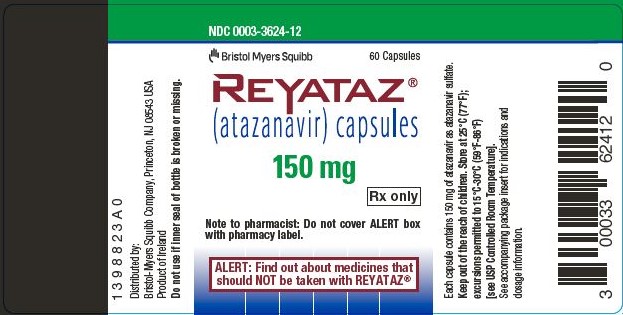
Reyataz Atazanavir 150 mg Capsule, Gelatin Coated, 60-count — NDC 0003-3624-12 (Billing 00003-3624-12)
This is a package of 60 capsules of Reyataz Atazanavir 150 mg Capsule, Gelatin Coated from E.R. Squibb & Sons, L.L.C., no longer marketed, no longer in the FDA NDC Directory. It is this product's only package size.
Identity & classification
Regulatory identifiers FDA, NLM and CMS codes for this package
Drug-database identifiers Medi-Span GPI and First Databank GCN / HICL / AHFS classification
- GSN (GCN sequence number): 052747
- GCN: 19952
- HICL (First Databank): 025390
- AHFS class code: 08:18.08.08
Where does this data come from?
- FDA openFDA NDC Directory · synced Oct 1, 2026
- FDA label on DailyMed · label index refreshed Oct 1, 2026
- RxNorm (NLM RxNav) · catalog refreshed Oct 1, 2026
- Medi-Span GPI (licensed)
- First Databank (licensed) · refreshed Oct 1, 2026
Clinical
- Food makes a real difference with atazanavir — it can increase how much of the drug your body actually absorbs by up to 70%. Taking it without food means lower and less predictable...
- Why do I have to take this with food every time?
- This is one of the most common things people notice on atazanavir, and in most cases it's not dangerous. The drug causes an increase in indirect bilirubin — a natural pigment — whi...
- My skin and eyes look a little yellow. Should I be worried?
Patient education
Supplement & herbal interactions
Some supplements/herbs that may interact with Atazanavir — tap one for details:
Where does this data come from?
- MedlinePlus (NLM) · refreshed Oct 1, 2026
- FDA label on DailyMed · label index refreshed Oct 1, 2026
Ask a licensed pharmacist directly — free, answered by our team.
Pricing
A drug doesn't have one price. Each row is a different public payment system, and none is what you'd pay at the counter — that depends on your insurance. The ⓘ on each row explains what it measures.
| Price system | Per each | Per package |
|---|---|---|
| Retail pharmacies payNADAC · weekly | Not in the retail survey — common for institutional, discontinued, or low-volume packs. | |
| Medicaid paysCMS SDUD · 12 mo | No recent Medicaid claims on file for this NDC — rare and low-volume NDCs are suppressed in the public data. | |
| Medicare drug plans payPart D · quarterly | No Part D plan price is available for this NDC in our data. | |
Where does this data come from?
- CMS NADAC weekly file
- CMS ASP pricing files · refreshed Sep 20, 2026
- CMS Medicaid State Drug Utilization Data · refreshed Oct 3, 2026
- CMS Part D plan pricing files · refreshed Sep 24, 2026
- VA National Acquisition Center price file
Packaging — all sizes for this product
| Package NDC | Description | Marketing start | Marketing end | Status |
|---|---|---|---|---|
| 00003-3624-12 You're viewing this Main listing | 60 CAPSULE, GELATIN COATED in 1 BOTTLE, PLASTIC | 2003-06-24 | — | Discontinued by firm |
Therapeutic equivalents
| Product | Labeler | Pack | NADAC/unit | TE | Status | Price vs. this |
|---|---|---|---|---|---|---|
| Reyataz 150 mgthis 00003-3624-12 | E.R. | 60 capsules | — | AB | Discontinued | — |
Where does this data come from?
- FDA openFDA NDC Directory · synced Oct 1, 2026
- FDA Orange Book · refreshed Sep 3, 2026
- CMS NADAC weekly file
Availability & generic status
FDA-approved generic versions are listed, and recent pricing/market data suggests they may be available — see Therapeutic equivalents.
Where does this data come from?
- FDA Orange Book · refreshed Sep 3, 2026
What it looks like
Where does this data come from?
- FDA label on DailyMed · label index refreshed Oct 1, 2026
Inactive Ingredients / Excipients
Inactive ingredients, also called excipients, are components of the drug product other than the active ingredient. They may include fillers, dyes, coatings, preservatives, flavors, or other formulation ingredients.
💡 Tap an ingredient (hover on desktop) to see what it is and why it’s used.
-
UNII 3K9958V90M
A liquid solvent derived from fermentation or chemical synthesis. In medicines, alcohol dissolves active ingredients, helps preserve the product, and improves how the body absorbs certain drugs.
-
UNII 5138Q19F1X
Ammonia is a colorless gas made from nitrogen and hydrogen. It's used in medicines as a pH buffer to maintain the correct acidity level and help keep the product stable.
-
UNII 8PJ61P6TS3
Butyl alcohol is a clear liquid organic solvent derived from petroleum or natural sources. In medicines, it helps dissolve active ingredients and serves as a solvent in liquid formulations and some topical products.
-
UNII 68401960MK
Crospovidone is a synthetic polymer made from polyvinylpyrrolidone. It acts as a disintegrant, helping tablets break apart quickly in the stomach so the medicine dissolves and absorbs into the body.
-
UNII L06K8R7DQK
A synthetic blue dye approved by the FDA for use in medications and foods. It serves as a colorant to make pills and liquids visually distinct and easier to identify.
-
UNII 1K09F3G675
Ferric oxide red is an inorganic iron compound used as a colorant in medicines. It gives tablets, capsules, or other dosage forms a red or reddish tint for identification and appearance.
-
UNII EX438O2MRT
Ferric oxide yellow is a naturally occurring iron compound used as a colorant in medications. It gives tablets, capsules, and other forms a yellow or golden hue for identification and appearance.
-
UNII XM0M87F357
A dark iron oxide compound that gives medicines their black or dark color. It's used as a colorant in tablets and capsules to help identify the product and make it visually distinctive.
-
UNII 2G86QN327L
Gelatin is a protein derived from animal collagen, commonly used in medicines as a gelling agent and capsule material. It helps create soft or hard capsule shells that hold and release medication, and can also thicken liquid formulations.
-
UNII ND2M416302
Isopropyl alcohol is a clear liquid solvent derived from petroleum. In medicines, it dissolves active ingredients and other components, helps the product flow smoothly, and aids in sterilization during manufacturing.
-
UNII EWQ57Q8I5X
Lactose monohydrate is a natural sugar derived from milk. It serves as a filler and binder in tablets and capsules, helping create the proper size, texture, and consistency of the medicine.
-
UNII 70097M6I30
Magnesium stearate is a salt made from magnesium and stearic acid, a fatty substance. It's used in tablets and capsules as a lubricant and glidant to help ingredients flow smoothly during manufacturing and prevent sticking.
-
UNII 6DC9Q167V3
Propylene glycol is a clear liquid derived from petroleum or vegetable sources. It acts as a solvent, humectant, and preservative in medicines, helping dissolve active ingredients and maintain product stability.
-
UNII 46N107B71O
Shellac is a natural resin secreted by the lac beetle. It's used as a coating on tablets and capsules to control how quickly the medicine dissolves and to improve appearance and stability.
-
UNII 15FIX9V2JP
Titanium dioxide is a bright white mineral powder commonly used as a colorant and opacifying agent. It makes pills and tablets white or lighter in color and helps make coatings non-transparent.
15 inactive ingredients listed in the exact product block matched to this NDC.
Where does this data come from?
ingredient classCode="IACT" elements from the exact product block matched by this NDC. Label-section narrative from DailyMed / the openFDA label index is shown separately when available.- FDA label on DailyMed · label index refreshed Oct 1, 2026
- FDA openFDA NDC Directory · synced Oct 1, 2026
Inactive ingredient FAQ
Are inactive ingredients the same for every manufacturer?
Why might an inactive ingredient be missing?
Can inactive ingredients matter?
Manufacturer & labeler
Where does this data come from?
- FDA openFDA NDC Directory · synced Oct 1, 2026
- Drugs@FDA
Full prescribing information FDA SPL
🎯 Indications and Usage ▾
1 INDICATIONS AND USAGE REYATAZ ® is indicated in combination with other antiretroviral agents for the treatment of HIV-1 infection in adults and in pediatric patients 3 months and older weighing at least 5 kg. Limitations of Use: • REYATAZ is not recommended for use in pediatric patients below the age of 3 months due to the risk of kernicterus [see Use in Specific Populations (8.4) ] . • Use of REYATAZ with ritonavir in treatment-experienced patients should be guided by the number of baseline primary protease inhibitor resistance substitutions [see Microbiology (12.4) ] .
REYATAZ is a protease inhibitor indicated for use in combination with other antiretroviral agents for the treatment of HIV-1 infection in adults and in pediatric patients 3 months and older weighing at least 5 kg. (1)
⏱️ Dosage and Administration ▾
2 DOSAGE AND ADMINISTRATION • Pretreatment testing: Renal laboratory testing should be performed in all patients prior to initiation of REYATAZ and continued during treatment with REYATAZ. Hepatic testing should be performed in patients with underlying liver disease prior to initiation of REYATAZ and continued during treatment with REYATAZ. (2.2) • Treatment-naive adults: REYATAZ 300 mg with ritonavir 100 mg once daily with food or REYATAZ 400 mg once daily with food.
(2.3) • Treatment-experienced adults: REYATAZ 300 mg with ritonavir 100 mg once daily with food. (2.3) • Pediatric patients: REYATAZ capsule dosage is based on body weight not to exceed the adult dose and must be taken with food. (2.4) • REYATAZ oral powder: Must be taken with ritonavir and food and should not be used in pediatric patients who weigh less than 5 kg.
(2.5) • Pregnancy: REYATAZ 300 mg with ritonavir 100 mg once daily with food, with dosing modifications for some concomitant medications. (2.6) • Dosing modifications: may be required for concomitant therapy ( 2.3 , 2.4 , 2.5 , 2.6) , renal impairment (2.7) , and hepatic impairment. (2.8)
2.1Overview • REYATAZ capsules and oral powder must be taken with food. • Do not open the capsules. • The recommended oral dosage of REYATAZ depends on the treatment history of the patient and the use of other coadministered drugs. When coadministered with H 2 -receptor antagonists or proton-pump inhibitors, dose separation may be required [see Dosage and Administration (2.3 , 2.4 , 2.5 , and 2.6 ) and Drug Interactions (7) ] . • REYATAZ capsules without ritonavir are not recommended for treatment-experienced adult or pediatric patients with prior virologic failure [see Clinical Studies (14) ] . • REYATAZ oral powder must be taken with ritonavir and is not recommended for use in children who weigh less than 5 kg [see Dosage and Administration (2.5) ] . • Efficacy and safety of REYATAZ with ritonavir when ritonavir is administered in doses greater than 100 mg once daily have not been established.
The use of higher ritonavir doses may alter the safety profile of atazanavir (cardiac effects, hyperbilirubinemia) and, therefore, is not recommended. Prescribers should consult the complete prescribing information for ritonavir when using ritonavir.
2.2Testing Prior to Initiation and During Treatment with REYATAZ Renal laboratory testing should be performed in all patients prior to initiation of REYATAZ and continued during treatment with REYATAZ. Renal laboratory testing should include serum creatinine, estimated creatinine clearance, and urinalysis with microscopic examination [see Warnings and Precautions (5.5 , 5.6) ] . Hepatic laboratory testing should be performed in patients with underlying liver disease prior to initiation of REYATAZ and continued during treatment with REYATAZ [see Warnings and Precautions (5.4) ] .
2.3Dosage of REYATAZ in Adult Patients Table 1 displays the recommended dosage of REYATAZ capsules in treatment-naive and treatment-experienced adults. Table 1 also displays recommended dosage of REYATAZ and ritonavir when given concomitantly with other antiretroviral drugs and H 2 -receptor antagonists (H2RA). Ritonavir is required with several REYATAZ dosage regimens (see the ritonavir complete prescribing information about the safe and effective use of ritonavir).
The use of REYATAZ in treatment-experienced adult patients without ritonavir is not recommended. Table 1: Recommended REYATAZ and Ritonavir Dosage in Adults a,b a See Drug Interactions (7) for instructions concerning coadministration of acid-reducing medications (eg, H2RA or proton pump inhibitors [PPIs]), and other antiretroviral drugs (eg, efavirenz, tenofovir DF, and didanosine). b For adult patients who cannot swallow the capsules, REYATAZ oral powder is taken once daily with food at the same recommended adult dosage as the capsules along with ritonavir.
REYATAZ Once Daily Dosage Ritonavir Once Daily Dosage Treatment-Naive Adult Patient… [Excerpted — this section continues on DailyMed.]
💊 Dosage Forms and Strengths ▾
3 DOSAGE FORMS AND STRENGTHS REYATAZ Capsules: • 200 mg capsule with blue cap and blue body, printed with white ink “BMS 200 mg” on the cap and with white ink “3631” on the body. • 300 mg capsule with red cap and blue body, printed with white ink “BMS 300 mg” on the cap and with white ink “3622” on the body. REYATAZ Oral Powder: • 50 mg of atazanavir as an oral powder in a packet. • Capsules: 200 mg, 300 mg. (3 , 16) • Oral powder: 50 mg packet. (3 , 16)
⛔ Contraindications ▾
4 CONTRAINDICATIONS REYATAZ is contraindicated: • in patients with previously demonstrated clinically significant hypersensitivity (eg, Stevens-Johnson syndrome, erythema multiforme, or toxic skin eruptions) to any of the components of REYATAZ capsules or REYATAZ oral powder [see Warnings and Precautions (5.2) ] . • when coadministered with drugs that are highly dependent on CYP3A or UGT1A1 for clearance, and for which elevated plasma concentrations of the interacting drugs are associated with serious and/or life-threatening events (see Table 6). • when coadministered with drugs that are strong inducers of CYP3A due to the potential for loss of therapeutic effect and development of resistance.
Coadministration is contraindicated with, but not limited to, the following drugs listed in Table 6: Table 6: Drugs Contraindicated with REYATAZ (Information in the table applies to REYATAZ with or without ritonavir, unless otherwise indicated) a See Drug Interactions, Table 16 (7) for parenterally administered midazolam. b See Drug Interactions, Table 16 (7) for sildenafil when dosed as VIAGRA ® for erectile dysfunction. Drug Class Drugs within class that are contraindicated with REYATAZ Alpha 1-adrenoreceptor antagonist Alfuzosin Anticonvulsants Carbamazepine, phenobarbital, phenytoin Antiarrhythmics Amiodarone (with ritonavir), quinidine (with ritonavir) Antimycobacterials Rifampin Antineoplastics Apalutamide, encorafenib, irinotecan, ivosidenib Antipsychotics Lurasidone (with ritonavir), pimozide Benzodiazepines Orally administered midazolam a , triazolam Ergot Derivatives Dihydroergotamine, ergonovine, ergotamine, methylergonovine GI Motility Agent Cisapride Hepatitis C Direct-Acting Antivirals Elbasvir/grazoprevir; glecaprevir/pibrentasvir Herbal Products St.
John’s wort ( Hypericum perforatum ) Lipid-Modifying Agents: Lomitapide, lovastatin, simvastatin Phosphodiesterase-5 (PDE-5) Inhibitor Sildenafil b when dosed as REVATIO ® for the treatment of pulmonary arterial hypertension Protease Inhibitors Indinavir Non-nucleoside Reverse Transcriptase Inhibitors Nevirapine • In patients with previously demonstrated hypersensitivity (eg, Stevens-Johnson syndrome, erythema multiforme, or toxic skin eruptions) to any of the components of REYATAZ. (4) • Coadministration with drugs that are strong inducers of CYP3A, due to the potential for loss of therapeutic effect and development of resistance.
( 4 ) • Coadministration with drugs that are highly dependent on CYP3A or UGT1A1 for clearance, and for which elevated plasma concentrations of the interacting drugs are associated with serious and/or life-threatening events. ( 4 )
⚠️ Warnings and Cautions ▾
5 WARNINGS AND PRECAUTIONS • Cardiac conduction abnormalities: PR interval prolongation may occur in some patients. ECG monitoring should be considered in patients with preexisting conduction system disease or when administered with other drugs that may prolong the PR interval. (5.1 , 7.3 , 12.2 , 17) • Severe Skin Reactions: Discontinue if severe rash develops.
(5.2 , 17) • Hyperbilirubinemia: Most patients experience asymptomatic increases in indirect bilirubin, which is reversible upon discontinuation. Do not dose reduce. If a concomitant transaminase increase occurs, evaluate for alternative etiologies.
(5.8) • Phenylketonuria: REYATAZ oral powder contains phenylalanine which can be harmful to patients with phenylketonuria. (5.3) • Hepatotoxicity: Patients with hepatitis B or C virus are at risk of increased transaminases or hepatic decompensation. Monitor hepatic laboratory tests prior to therapy and during treatment.
(2.8 , 5.4 , 8.8) • Chronic kidney disease has been reported during postmarketing surveillance in patients with HIV-1 treated with atazanavir, with or without ritonavir. Consider alternatives in patients at high risk for renal disease or with preexisting renal disease. Monitor renal laboratory tests prior to therapy and during treatment.
Consider discontinuation of REYATAZ in patients with progressive renal disease. (5.5) • Nephrolithiasis and cholelithiasis have been reported. Consider temporary interruption or discontinuation.
(5.6) • The concomitant use of REYATAZ with ritonavir and certain other medications may result in known or potentially significant drug interactions. Consult the full prescribing information prior to and during treatment for potential drug interactions. (5.7 , 7.3) • Patients receiving REYATAZ may develop new onset or exacerbations of diabetes mellitus/hyperglycemia (5.9) , immune reconstitution syndrome (5.10) , and redistribution/accumulation of body fat.
(5.11) • Hemophilia: Spontaneous bleeding may occur, and additional factor VIII may be required. (5.12)
5.1Cardiac Conduction Abnormalities REYATAZ has been shown to prolong the PR interval of the electrocardiogram in some study participants. In healthy participants and in participants with HIV-1 treated with atazanavir, abnormalities in atrioventricular (AV) conduction were asymptomatic and generally limited to first-degree AV block. There have been reports of second-degree AV block and other conduction abnormalities [see Adverse Reactions (6.2) and Overdosage (10) ] .
In clinical trials that included electrocardiograms, asymptomatic first-degree AV block was observed in 5.9% of atazanavir-treated participants (n=920), 5.2% of lopinavir/ritonavir-treated participants (n=252), 10.4% of nelfinavir-treated participants (n=48), and 3.0% of efavirenz-treated participants (n=329). In Study AI424-045, asymptomatic first-degree AV block was observed in 5% (6/118) of atazanavir with ritonavir-treated participants and 5% (6/116) of lopinavir/ritonavir-treated participants who had on-study electrocardiogram measurements.
Because of limited clinical experience in those with preexisting conduction system disease (eg, marked first-degree AV block or second- or third-degree AV block), ECG monitoring should be considered in these patients [see Clinical Pharmacology (12.2) ] .
5.2Severe Skin Reactions In controlled clinical trials, rash (all grades, regardless of causality) occurred in approximately 20% of participants with HIV-1 treated with REYATAZ. The median time to onset of rash in clinical studies was 7.3 weeks and the median duration of rash was 1.4 weeks. Rashes were generally mild-to-moderate maculopapular skin eruptions.
Treatment-emergent adverse reactions of moderate or severe rash (occurring at a rate of ≥2%) are presented for the individual clinical studies [see Adverse Reactions (6.1) ] . Dosing with REYATAZ was often continued without interruption in patients who developed rash. The discontinuation rate for rash in clinical tria… [Excerpted — this section continues on DailyMed.]
🤒 Adverse Reactions ▾
6 ADVERSE REACTIONS The following adverse reactions are discussed in greater detail in other sections of the labeling: • cardiac conduction abnormalities [see Warnings and Precautions (5.1) ] • rash [see Warnings and Precautions (5.2) ] • hyperbilirubinemia [see Warnings and Precautions (5.8) ] • chronic kidney disease [see Warnings and Precautions (5.5) ] • nephrolithiasis and cholelithiasis [see Warnings and Precautions (5.6) ] Most common adverse reactions (≥2%) are nausea, jaundice/scleral icterus, rash, headache, abdominal pain, vomiting, insomnia, peripheral neurologic symptoms, dizziness, myalgia, diarrhea, depression, and fever.
(6.1) To report SUSPECTED ADVERSE REACTIONS, contact Bristol-Myers Squibb at 1-800-721-5072 or FDA at 1-800-FDA-1088 or www.fda.gov/medwatch.
6.1Clinical Trial Experience Because clinical trials are conducted under widely varying conditions, adverse reaction rates observed in the clinical trials of a drug cannot be directly compared to rates in the clinical trials of another drug and may not reflect the rates observed in practice. Adverse Reactions in Treatment-Naive Adult Participants The safety profile of REYATAZ in treatment-naive adults is based on 1625 participants with HIV-1 in clinical trials. 536 participants received REYATAZ 300 mg with ritonavir 100 mg and 1089 participants received REYATAZ 400 mg or higher (without ritonavir).
The most common adverse reactions were nausea, jaundice/scleral icterus, and rash. Selected clinical adverse reactions of moderate or severe intensity reported in ≥ 2% of treatment-naive participants receiving combination therapy including REYATAZ 300 mg with ritonavir 100 mg and REYATAZ 400 mg (without ritonavir) are presented in Tables 7 and 8, respectively. Table 7: Selected Adverse Reactions a of Moderate or Severe Intensity Reported in ≥2% of Adult Treatment-Naive Participants with HIV-1, b Study AI424-138 * None reported in this treatment arm. a Includes events of possible, probable, certain, or unknown relationship to treatment regimen. b Based on the regimen containing REYATAZ. c Median time on therapy. d Administered as a fixed-dose. e As a fixed-dose product: 300 mg tenofovir DF, 200 mg emtricitabine once daily.
96 weeks c REYATAZ 300 mg with ritonavir 100 mg (once daily) and tenofovir DF/emtricitabine d (n=441) 96 weeks c lopinavir/ritonavir d 400 mg / 100 mg (twice daily) and tenofovir DF/emtricitabine e (n=437) Digestive System Nausea 4% 8% Jaundice/scleral icterus 5% * Diarrhea 2% 12% Skin and Appendages Rash 3% 2% Table 8: Selected Adverse Reactions a of Moderate or Severe Intensity Reported in ≥2% of Adult Treatment-Naive Participants with HIV-1, b Studies AI424-034, AI424-007, and AI424-008 * None reported in this treatment arm. a Includes events of possible, probable, certain, or unknown relationship to treatment regimen. b Based on regimens containing REYATAZ. c Median time on therapy. d Includes long-term follow-up. e As a fixed-dose product: 150 mg lamivudine/300 mg zidovudine twice daily.
Study AI424-034 Studies AI424-007, -008 64 weeks c REYATAZ 400 mg (once daily) with lamivudine/ zidovudine e (n=404) 64 weeks c efavirenz 600 mg (once daily) with lamivudine/ zidovudine e (n=401) 120 weeks c,d REYATAZ 400 mg (once daily) with stavudine and lamivudine or didanosine (n=279) 73 weeks c,d nelfinavir 750 mg TID or 1250 mg BID with stavudine and lamivudine or didanosine (n=191) Body as a Whole Headache 6% 6% 1% 2% Digestive System Nausea 14% 12% 6% 4% Jaundice/scleral icterus 7% * 7% * Vomiting 4% 7% 3% 3% Abdominal pain 4% 4% 4% 2% Diarrhea 1% 2% 3% 16% Nervous System Insomnia 3% 3% <1% * Dizziness 2% 7% <1% * Peripheral neurologic symptoms <1% 1% 4% 3% Skin and Appendages Rash 7% 10% 5% 1% Adverse Reactions in Treatment-Experienced Adult Participants The safety profile of REYATAZ in treatment-experienced adults with HIV-1 is based on 119 participants with HIV-1 in clinical trials.
The most common adverse reactions are jaundice/scleral icteru… [Excerpted — this section continues on DailyMed.]
🔄 Drug Interactions ▾
7 DRUG INTERACTIONS Coadministration of REYATAZ can alter the concentration of other drugs and other drugs may alter the concentration of atazanavir. The potential drug-drug interactions must be considered prior to and during therapy. (4 , 7 , 12.3)
7.1Potential for REYATAZ to Affect Other Drugs Atazanavir is an inhibitor of CYP3A and UGT1A1. Coadministration of REYATAZ and drugs primarily metabolized by CYP3A or UGT1A1 may result in increased plasma concentrations of the other drug that could increase or prolong its therapeutic and adverse effects. Atazanavir is a weak inhibitor of CYP2C8.
Use of REYATAZ without ritonavir is not recommended when coadministered with drugs highly dependent on CYP2C8 with narrow therapeutic indices (eg, paclitaxel, repaglinide). When REYATAZ with ritonavir is coadministered with substrates of CYP2C8, clinically significant interactions are not expected [see Clinical Pharmacology, Table 22 (12.3) ] . The magnitude of CYP3A-mediated drug interactions on coadministered drug may change when REYATAZ is coadministered with ritonavir.
See the complete prescribing information for ritonavir for information on drug interactions with ritonavir.
7.2Potential for Other Drugs to Affect REYATAZ Atazanavir is a CYP3A4 substrate; therefore, drugs that induce CYP3A4 may decrease atazanavir plasma concentrations and reduce REYATAZ’s therapeutic effect ( see Table 16 ). Atazanavir solubility decreases as pH increases. Reduced plasma concentrations of atazanavir are expected if proton-pump inhibitors, antacids, buffered medications, or H 2 -receptor antagonists are administered with REYATAZ [see Dosage and Administration ( 2.3 , 2.4 , 2.5 and 2.6) ] .
7.3Established and Other Potentially Significant Drug Interactions Table 16 provides dosing recommendations in adults as a result of drug interactions with REYATAZ. These recommendations are based on either drug interaction studies or predicted interactions due to the expected magnitude of interaction and potential for serious events or loss of efficacy. Table 16: Established and Other Potentially Significant Drug Interactions: Alteration in Dose or Regimen May Be Recommended Based on Drug Interaction Studies a or Predicted Interactions (Information in the table applies to REYATAZ with or without ritonavir, unless otherwise indicated) Concomitant Drug Class: Specific Drugs Effect on Concentration of Atazanavir or Concomitant Drug Clinical Comment a For magnitude of interactions see Clinical Pharmacology, Tables 21 and 22 (12.3) . b See Contraindications (4), Table 6 for orally administered midazolam. c In combination with atazanavir 300 mg with ritonavir 100 mg once daily. d In combination with atazanavir 400 mg once daily.
HIV Antiviral Agents Nucleoside Reverse Transcriptase Inhibitors (NRTIs): didanosine buffered formulations enteric coated (EC) capsules ↓ atazanavir ↓ didanosine It is recommended that REYATAZ be given (with food) 2 h before or 1 h after didanosine buffered formulations. Simultaneous administration of didanosine EC and REYATAZ with food results in a decrease in didanosine exposure. Thus, REYATAZ and didanosine EC should be administered at different times.
Nucleotide Reverse Transcriptase Inhibitors: tenofovir disoproxil fumarate (DF) ↓ atazanavir ↑ tenofovir When coadministered with tenofovir DF in adults, it is recommended that REYATAZ 300 mg be given with ritonavir 100 mg and tenofovir DF 300 mg (all as a single daily dose with food). The mechanism of this interaction is unknown. Higher tenofovir concentrations could potentiate tenofovir-associated adverse reactions, including renal disorders.
Patients receiving REYATAZ and tenofovir DF should be monitored for tenofovir-associated adverse reactions. For pregnant patients taking REYATAZ with ritonavir and tenofovir DF, see Dosage and Administration (2.6) . Non-nucleoside Reverse Transcriptase Inhibitors (NNRTIs): efavirenz ↓ atazanavir In HIV-treatment-naive adult patients: If REYATAZ is combine… [Excerpted — this section continues on DailyMed.]
👥 Use in Specific Populations ▾
8 USE IN SPECIFIC POPULATIONS • Pregnancy: Available human and animal data suggest that atazanavir does not increase the risk of major birth defects overall compared to the background rate. (8.1) • Hepatitis B or C co-infection: Monitor liver enzymes. (5.4 , 6.1) • Renal impairment: REYATAZ is not recommended for use in treatment-experienced patients with end-stage renal disease managed with hemodialysis.
(2.7 , 8.7) • Hepatic impairment: REYATAZ is not recommended in patients with severe hepatic impairment. REYATAZ with ritonavir is not recommended in patients with any degree of hepatic impairment. (2.8 , 8.8)
8.1Pregnancy Pregnancy Exposure Registry There is a pregnancy exposure registry that monitors pregnancy outcomes in patients exposed to REYATAZ during pregnancy. Healthcare providers are encouraged to register patients by calling the Antiretroviral Pregnancy Registry (APR) at 1-800-258-4263. Risk Summary Atazanavir has been evaluated in a limited number of women during pregnancy.
Available human and animal data suggest that atazanavir does not increase the risk of major birth defects overall compared to the background rate [see Data ] . In the U.S. general population, the estimated background risk of major birth defects and miscarriage in clinically recognized pregnancies is 2-4% and 15-20%, respectively. No treatment-related malformations were observed in rats and rabbits, for which the atazanavir exposures were 0.7-1.2 times of those at the human clinical dose (300 mg/day atazanavir boosted with 100 mg/day ritonavir).
When atazanavir was administered to rats during pregnancy and throughout lactation, reversible neonatal growth retardation was observed [see Data ] . Clinical Considerations Dose Adjustments during Pregnancy and the Postpartum Period • REYATAZ must be administered with ritonavir in pregnant patients. • For pregnant patients, no dosage adjustment is required for REYATAZ with the following exceptions: • For treatment-experienced pregnant women during the second or third trimester, when REYATAZ is coadministered with either an H 2 -receptor antagonist or tenofovir DF, REYATAZ 400 mg with ritonavir 100 mg once daily is recommended.
There are insufficient data to recommend a REYATAZ dose for use with both an H 2 -receptor antagonist and tenofovir DF in treatment-experienced pregnant patients. • No dosage adjustment is required for postpartum patients. However, patients should be closely monitored for adverse events because atazanavir exposures could be higher during the first 2 months after delivery [see Dosage and Administration (2.6) and Clinical Pharmacology (12.3) ] . Maternal Adverse Reactions Cases of lactic acidosis syndrome, sometimes fatal, and symptomatic hyperlactatemia have occurred in pregnant women using REYATAZ in combination with nucleoside analogues, which are associated with an increased risk of lactic acidosis syndrome.
Hyperbilirubinemia occurs frequently in patients who take REYATAZ [see Warnings and Precautions (5.8) ] , including those who are pregnant [see Data ] . Advise pregnant women of the potential risks of lactic acidosis syndrome and hyperbilirubinemia. Fetal/Neonatal Adverse Reactions All infants, including neonates exposed to REYATAZ in utero , should be monitored for the development of severe hyperbilirubinemia during the first few days of life [see Data ] .
Data Human Data In Study AI424-182, REYATAZ with ritonavir (300/100 mg or 400/100 mg) coadministered with lamivudine/zidovudine (150 mg/ 300 mg, as fixed-dose product) was administered to 41 pregnant women with HIV-1, during the second or third trimester. Among the 39 women who completed the study, 38 women achieved an HIV-1 RNA less than 50 copies/mL at time of delivery. Six of 20 (30%) women on REYATAZ with ritonavir 300/100 mg and 13 of 21 (62%) women on REYATAZ with ritonavir 400/100 mg experienced hyperbilirubinemia (total bilirubin greater than or equal to 2.6 times ULN).
There were no cases of lactic acidosis obse… [Excerpted — this section continues on DailyMed.]
🤰 Pregnancy ▾
8.1Pregnancy Pregnancy Exposure Registry There is a pregnancy exposure registry that monitors pregnancy outcomes in patients exposed to REYATAZ during pregnancy. Healthcare providers are encouraged to register patients by calling the Antiretroviral Pregnancy Registry (APR) at 1-800-258-4263. Risk Summary Atazanavir has been evaluated in a limited number of women during pregnancy.
Available human and animal data suggest that atazanavir does not increase the risk of major birth defects overall compared to the background rate [see Data ] . In the U.S. general population, the estimated background risk of major birth defects and miscarriage in clinically recognized pregnancies is 2-4% and 15-20%, respectively. No treatment-related malformations were observed in rats and rabbits, for which the atazanavir exposures were 0.7-1.2 times of those at the human clinical dose (300 mg/day atazanavir boosted with 100 mg/day ritonavir).
When atazanavir was administered to rats during pregnancy and throughout lactation, reversible neonatal growth retardation was observed [see Data ] . Clinical Considerations Dose Adjustments during Pregnancy and the Postpartum Period • REYATAZ must be administered with ritonavir in pregnant patients. • For pregnant patients, no dosage adjustment is required for REYATAZ with the following exceptions: • For treatment-experienced pregnant women during the second or third trimester, when REYATAZ is coadministered with either an H 2 -receptor antagonist or tenofovir DF, REYATAZ 400 mg with ritonavir 100 mg once daily is recommended.
There are insufficient data to recommend a REYATAZ dose for use with both an H 2 -receptor antagonist and tenofovir DF in treatment-experienced pregnant patients. • No dosage adjustment is required for postpartum patients. However, patients should be closely monitored for adverse events because atazanavir exposures could be higher during the first 2 months after delivery [see Dosage and Administration (2.6) and Clinical Pharmacology (12.3) ] . Maternal Adverse Reactions Cases of lactic acidosis syndrome, sometimes fatal, and symptomatic hyperlactatemia have occurred in pregnant women using REYATAZ in combination with nucleoside analogues, which are associated with an increased risk of lactic acidosis syndrome.
Hyperbilirubinemia occurs frequently in patients who take REYATAZ [see Warnings and Precautions (5.8) ] , including those who are pregnant [see Data ] . Advise pregnant women of the potential risks of lactic acidosis syndrome and hyperbilirubinemia. Fetal/Neonatal Adverse Reactions All infants, including neonates exposed to REYATAZ in utero , should be monitored for the development of severe hyperbilirubinemia during the first few days of life [see Data ] .
Data Human Data In Study AI424-182, REYATAZ with ritonavir (300/100 mg or 400/100 mg) coadministered with lamivudine/zidovudine (150 mg/ 300 mg, as fixed-dose product) was administered to 41 pregnant women with HIV-1, during the second or third trimester. Among the 39 women who completed the study, 38 women achieved an HIV-1 RNA less than 50 copies/mL at time of delivery. Six of 20 (30%) women on REYATAZ with ritonavir 300/100 mg and 13 of 21 (62%) women on REYATAZ with ritonavir 400/100 mg experienced hyperbilirubinemia (total bilirubin greater than or equal to 2.6 times ULN).
There were no cases of lactic acidosis observed in clinical trial AI424-182. Atazanavir drug concentrations in fetal umbilical cord blood were approximately 12% to 19% of maternal concentrations. Among the 40 infants born to 40 pregnant women with HIV-1, all had test results that were negative for HIV-1 DNA at the time of delivery and/or during the first 6 months postpartum.
All 40 infants received antiretroviral prophylactic treatment containing zidovudine. No evidence of severe hyperbilirubinemia (total bilirubin levels greater than 20 mg/dL) or acute or chronic bilirubin encephalopathy was observed among neonates in this study. However, 10/36 (28%) in… [Excerpted — this section continues on DailyMed.]
🧒 Pediatric Use ▾
8.4Pediatric Use REYATAZ is indicated in combination with other antiretroviral agents for the treatment of pediatric patients with HIV-1, 3 months of age and older weighing at least 5 kg. REYATAZ is not recommended for use in pediatric patients below the age of 3 months due to the risk of kernicterus [see Indications and Usage (1) ] . All REYATAZ contraindications, warnings, and precautions apply to pediatric patients [see Contraindications (4) and Warnings and Precautions (5) ] .
The safety, pharmacokinetic profile, and virologic response of REYATAZ in pediatric patients at least 3 months of age and older weighing at least 5 kg were established in three open-label, multicenter clinical trials: PACTG 1020A, AI424-451, and AI424-397 [see Clinical Pharmacology (12.3) and Clinical Studies (14.3) ] . The safety profile in pediatric patients was generally similar to that observed in adults [see Adverse Reactions (6.1) ] . See Dosage and Administration (2.4 , 2.5) for dosing recommendations for the use of REYATAZ capsules and REYATAZ oral powder in pediatric patients.
🧓 Geriatric Use ▾
8.5Geriatric Use Clinical studies of REYATAZ did not include sufficient numbers of patients aged 65 and over to determine whether they respond differently from younger patients. Based on a comparison of mean single-dose pharmacokinetic values for C max and AUC, a dose adjustment based upon age is not recommended. In general, appropriate caution should be exercised in the administration and monitoring of REYATAZ in elderly patients reflecting the greater frequency of decreased hepatic, renal, or cardiac function, and of concomitant disease or other drug therapy.
🆘 Overdosage ▾
10 OVERDOSAGE Human experience of acute overdose with REYATAZ is limited. Single doses up to 1200 mg (three times the 400 mg maximum recommended dose) have been taken by healthy participants without symptomatic untoward effects. A single self-administered overdose of 29.2 g of REYATAZ in a patient with HIV-1 (73 times the 400-mg recommended dose) was associated with asymptomatic bifascicular block and PR interval prolongation.
These events resolved spontaneously. At REYATAZ doses resulting in high atazanavir exposures, jaundice due to indirect (unconjugated) hyperbilirubinemia (without associated liver function test changes) or PR interval prolongation may be observed [see Warnings and Precautions (5.1 , 5.8) and Clinical Pharmacology (12.2) ] . Treatment of overdosage with REYATAZ should consist of general supportive measures, including monitoring of vital signs and ECG, and observations of the patient’s clinical status.
If indicated, elimination of unabsorbed atazanavir should be achieved by emesis or gastric lavage. Administration of activated charcoal may also be used to aid removal of unabsorbed drug. There is no specific antidote for overdose with REYATAZ.
Since atazanavir is extensively metabolized by the liver and is highly protein bound, dialysis is unlikely to be beneficial in significant removal of this medicine.
🧬 Clinical Pharmacology ▾
12 CLINICAL PHARMACOLOGY
12.1Mechanism of Action Atazanavir is an HIV-1 antiretroviral drug [see Microbiology (12.4) ] .
12.2Pharmacodynamics Cardiac Electrophysiology Concentration- and dose-dependent prolongation of the PR interval in the electrocardiogram has been observed in healthy participants receiving atazanavir. In placebo-controlled Study AI424-076, the mean (±SD) maximum change in PR interval from the predose value was 24 (±15) msec following oral dosing with 400 mg of atazanavir (n=65) compared to 13 (±11) msec following dosing with placebo (n=67). The PR interval prolongations in this study were asymptomatic.
There is limited information on the potential for a pharmacodynamic interaction in humans between atazanavir and other drugs that prolong the PR interval of the electrocardiogram [see Warnings and Precautions (5.1) ] . Electrocardiographic effects of atazanavir were determined in a clinical pharmacology study of 72 healthy participants. Oral doses of 400 mg (maximum recommended dosage) and 800 mg (twice the maximum recommended dosage) were compared with placebo; there was no concentration-dependent effect of atazanavir on the QTc interval (using Fridericia’s correction).
In 1793 participants with HIV-1, receiving antiretroviral regimens, QTc prolongation was comparable in the atazanavir and comparator regimens. No atazanavir-treated healthy participant or participant with HIV-1 in clinical trials had a QTc interval >500 msec [see Warnings and Precautions (5.1) ] .
12.3Pharmacokinetics The pharmacokinetics of atazanavir were evaluated in adult participants who either were healthy, or with HIV-1, after administration of REYATAZ 400 mg once daily and after administration of REYATAZ 300 mg with ritonavir 100 mg once daily (see Table 17). Table 17: Steady-State Pharmacokinetics of Atazanavir in Healthy Participants or Participants with HIV-1 in the Fed State a n=26. b n=12. 400 mg once daily 300 mg with ritonavir 100 mg once daily Parameter Healthy Participants (n=14) Participants with HIV-1 (n=13) Healthy Participants (n=28) Participants with HIV-1 (n=10) C max (ng/mL) Geometric mean (CV%) 5199 (26) 2298 (71) 6129 (31) 4422 (58) Mean (SD) 5358 (1371) 3152 (2231) 6450 (2031) 5233 (3033) T max (h) Median 2.5 2.0 2.7
3.0AUC (ng•h/mL) Geometric mean (CV%) 28132 (28) 14874 (91) 57039 (37) 46073 (66) Mean (SD) 29303 (8263) 22262 (20159) 61435 (22911) 53761 (35294) T-half (h) Mean (SD) 7.9 (2.9) 6.5 (2.6) 18.1 (6.2) a 8.6 (2.3) C min (ng/mL) Geometric mean (CV%) 159 (88) 120 (109) 1227 (53) 636 (97) Mean (SD) 218 (191) 273 (298) b 1441 (757) 862 (838) Figure 1 displays the mean plasma concentrations of atazanavir at steady state after REYATAZ 400 mg once daily (as two 200-mg capsules) with a light meal and after REYATAZ 300 mg (as two 150-mg capsules) with ritonavir 100 mg once daily with a light meal in adult participants with HIV-1.
Figure 1: Mean (SD) Steady-State Plasma Concentrations of Atazanavir 400 mg (n=13) and 300 mg with Ritonavir (n=10) for Adult Participants with HIV-1 Absorption Atazanavir is rapidly absorbed with a T max of approximately 2.5 hours. Atazanavir demonstrates nonlinear pharmacokinetics with greater than dose-proportional increases in AUC and C max values over the dose range of 200 to 800 mg once daily. Steady state is achieved between Days 4 and 8, with an accumulation of approximately 2.3-fold.
Food Effect Administration of REYATAZ with food enhances bioavailability and reduces pharmacokinetic variability. Administration of a single 400-mg dose of REYATAZ with a light meal (357 kcal, 8.2 g fat, 10.6 g protein) resulted in a 70% increase in AUC and 57% increase in C max relative to the fasting state. Administration of a single 400-mg dose of REYATAZ with a high-fat meal (721 kcal, 37.3 g fat, 29.4 g protein) resulted in a mean increase in AUC of 35% with no change in C max relative to the fasting state.
Administration of REYATAZ with either a light meal or high-fat meal decreased the coef… [Excerpted — this section continues on DailyMed.]
🧬 Mechanism of Action ▾
12.1Mechanism of Action Atazanavir is an HIV-1 antiretroviral drug [see Microbiology (12.4) ] .
📦 How Supplied / Storage and Handling ▾
16 HOW SUPPLIED/STORAGE AND HANDLING REYATAZ Capsules REYATAZ ® (atazanavir) capsules are available in the following strengths and configurations of plastic bottles with child-resistant closures. * 200 mg atazanavir equivalent to 227.8 mg atazanavir sulfate. 300 mg atazanavir equivalent to 341.69 mg atazanavir sulfate. Product Strength* Capsule Shell Color (cap/body) Markings on Capsule (ink color) Capsules per Bottle NDC Number cap body 200 mg blue/blue BMS 200 mg (white) 3631 (white) 60 0003-3631-12 300 mg red/blue BMS 300 mg (white) 3622 (white) 30 0003-3622-12 Keep capsules in a tightly closed container.
Store REYATAZ capsules at 25°C (77°F); excursions permitted to 15°C to 30°C (59°F to 86°F) [see USP Controlled Room Temperature]. REYATAZ Oral Powder REYATAZ oral powder is an orange-vanilla flavored powder, packed in child-resistant packets. Each packet contains 50 mg of atazanavir equivalent to 56.9 mg of atazanavir sulfate in 1.5 g of powder.
REYATAZ oral powder is supplied in cartons (NDC 0003-3638-10) of 30 packets each. [See Dosage and Administration (2.5) ]. Store REYATAZ oral powder at a temperature of 68°F to 86°F (20°C to 30°C). Store REYATAZ oral powder in the original packet.
Do not open until ready to use. After REYATAZ oral powder is mixed with food or liquid, it may be kept at a temperature 68°F to 86°F (20°C to 30°C) for up to 1 hour. Take REYATAZ oral powder within 1 hour after mixing with food or liquid.
📋 Description ▾
11 DESCRIPTION The active ingredient in REYATAZ capsules and oral powder is atazanavir sulfate, which is an HIV-1 protease inhibitor. The chemical name for atazanavir sulfate is (3 S ,8 S ,9 S ,12 S )-3,12-Bis(1,1-dimethylethyl)-8-hydroxy-4,11-dioxo-9-(phenylmethyl)-6-[[4-(2-pyridinyl)phenyl]methyl]-2,5,6,10,13-pentaazatetradecanedioic acid dimethyl ester, sulfate (1:1). Its molecular formula is C 38 H 52 N 6 O 7 •H 2 SO 4 , which corresponds to a molecular weight of 802.9 (sulfuric acid salt).
The free base molecular weight is 704.9. Atazanavir sulfate has the following structural formula: Atazanavir sulfate is a white to pale-yellow crystalline powder. It is slightly soluble in water (4-5 mg/mL, free base equivalent) with the pH of a saturated solution in water being about 1.9 at 24 ± 3°C.
REYATAZ Capsules are available for oral administration in strengths of 200 mg or 300 mg of atazanavir, which are equivalent to 227.8 mg or 341.69 mg of atazanavir sulfate, respectively. The capsules also contain the following inactive ingredients: crospovidone, lactose monohydrate, and magnesium stearate. The capsule shells contain the following inactive ingredients: gelatin, FD&C Blue No.
2, titanium dioxide, black iron oxide, red iron oxide, and yellow iron oxide. The capsules are printed with ink containing shellac, titanium dioxide, FD&C Blue No. 2, isopropyl alcohol, ammonium hydroxide, propylene glycol, n-butyl alcohol, simethicone, and dehydrated alcohol.
REYATAZ oral powder comes in a packet containing 50 mg of atazanavir equivalent to 56.9 mg of atazanavir sulfate in 1.5 g of powder. The powder is off-white to pale yellow and contains the following inactive ingredients: aspartame, sucrose, and orange-vanilla flavor. Reyataz Chemic Structure
💬 Information for Patients ▾
17 PATIENT COUNSELING INFORMATION Advise the patient to read the FDA-approved patient labeling ( Patient Information and Instructions for Use ) . REYATAZ is not a cure for HIV-1 infection. Advise patients to remain under the care of a healthcare provider while using REYATAZ.
Cardiac Conduction Abnormalities Inform patients that atazanavir may produce changes in the electrocardiogram (eg, PR prolongation). Tell patients to consult their healthcare provider if they are experiencing symptoms such as dizziness or lightheadedness [see Warnings and Precautions (5.1) ] . Severe Skin Reaction Inform patients that there have been reports of severe skin reactions (eg, Stevens-Johnson syndrome, erythema multiforme, and toxic skin eruptions) with REYATAZ use.
Advise patients that if signs or symptoms of severe skin reactions or hypersensitivity reactions develop, they must discontinue REYATAZ and seek medical evaluation immediately [see Warnings and Precautions (5.2) and Adverse Reactions (6.1) ] . Hyperbilirubinemia Inform patients that asymptomatic elevations in indirect bilirubin have occurred in patients receiving REYATAZ. This may be accompanied by yellowing of the skin or whites of the eyes and alternative antiretroviral therapy may be considered if the patient has cosmetic concerns [see Warnings and Precautions (5.8) ] .
Patients with Phenylketonuria Advise caregivers of patients with phenylketonuria that REYATAZ oral powder contains phenylalanine [see Warnings and Precautions (5.3) ] . Chronic Kidney Disease Inform patients that treatment with REYATAZ may lead to the development of chronic kidney disease, and to maintain adequate hydration while taking REYATAZ [see Warnings and Precautions (5.5) ] . Nephrolithiasis and Cholelithiasis Inform patients that kidney stones and/or gallstones have been reported with REYATAZ use.
Some patients with kidney stones and/or gallstones required hospitalization for additional management, and some had complications. Discontinuation of REYATAZ may be necessary as part of the medical management of these adverse events [see Warnings and Precautions (5.6) ] . Drug Interactions REYATAZ may lead to significant interaction with some drugs; therefore, advise patients to report the use of any other prescription, nonprescription medication, or herbal products, particularly St.
John’s wort, to their healthcare provider prior to use [see Contraindications (4) , Warnings and Precautions (5.7) ] . Immune Reconstitution Syndrome Advise patients to inform their healthcare provider immediately of any symptoms of infection, as in some patients with advanced HIV-1, signs and symptoms of inflammation from previous infections may occur soon after anti-HIV-1 treatment is started [see Warnings and Precautions (5.10) ] . Fat Redistribution Inform patients that redistribution or accumulation of body fat may occur in patients receiving antiretroviral therapy including protease inhibitors and that the cause and long-term health effects of these conditions are not known at this time [see Warnings and Precautions (5.11) ] .
Dosing Instructions Advise patients to take REYATAZ with food every day and take other concomitant antiretroviral therapy as prescribed. REYATAZ must always be used in combination with other antiretroviral drugs. Advise patients that they should not alter the dose or discontinue therapy without consulting with their healthcare provider.
Tell patients if a dose of REYATAZ is missed, they should take the dose as soon as possible and then return to their normal schedule; however, if a dose is skipped the patient should not double the next dose. Pregnancy Inform pregnant patients that there is a pregnancy exposure registry that monitors pregnancy outcomes in pregnant patients exposed to REYATAZ during pregnancy. Healthcare providers are encouraged to register patients by calling the Antiretroviral Pregnancy Registry [see Use in Specific Populations (8.1) ] .
Lactation Instruct patients with HIV-1 that the pot… [Excerpted — this section continues on DailyMed.]
🧬 Pharmacokinetics ▾
12.3Pharmacokinetics The pharmacokinetics of atazanavir were evaluated in adult participants who either were healthy, or with HIV-1, after administration of REYATAZ 400 mg once daily and after administration of REYATAZ 300 mg with ritonavir 100 mg once daily (see Table 17). Table 17: Steady-State Pharmacokinetics of Atazanavir in Healthy Participants or Participants with HIV-1 in the Fed State a n=26. b n=12. 400 mg once daily 300 mg with ritonavir 100 mg once daily Parameter Healthy Participants (n=14) Participants with HIV-1 (n=13) Healthy Participants (n=28) Participants with HIV-1 (n=10) C max (ng/mL) Geometric mean (CV%) 5199 (26) 2298 (71) 6129 (31) 4422 (58) Mean (SD) 5358 (1371) 3152 (2231) 6450 (2031) 5233 (3033) T max (h) Median 2.5 2.0 2.7
3.0AUC (ng•h/mL) Geometric mean (CV%) 28132 (28) 14874 (91) 57039 (37) 46073 (66) Mean (SD) 29303 (8263) 22262 (20159) 61435 (22911) 53761 (35294) T-half (h) Mean (SD) 7.9 (2.9) 6.5 (2.6) 18.1 (6.2) a 8.6 (2.3) C min (ng/mL) Geometric mean (CV%) 159 (88) 120 (109) 1227 (53) 636 (97) Mean (SD) 218 (191) 273 (298) b 1441 (757) 862 (838) Figure 1 displays the mean plasma concentrations of atazanavir at steady state after REYATAZ 400 mg once daily (as two 200-mg capsules) with a light meal and after REYATAZ 300 mg (as two 150-mg capsules) with ritonavir 100 mg once daily with a light meal in adult participants with HIV-1.
Figure 1: Mean (SD) Steady-State Plasma Concentrations of Atazanavir 400 mg (n=13) and 300 mg with Ritonavir (n=10) for Adult Participants with HIV-1 Absorption Atazanavir is rapidly absorbed with a T max of approximately 2.5 hours. Atazanavir demonstrates nonlinear pharmacokinetics with greater than dose-proportional increases in AUC and C max values over the dose range of 200 to 800 mg once daily. Steady state is achieved between Days 4 and 8, with an accumulation of approximately 2.3-fold.
Food Effect Administration of REYATAZ with food enhances bioavailability and reduces pharmacokinetic variability. Administration of a single 400-mg dose of REYATAZ with a light meal (357 kcal, 8.2 g fat, 10.6 g protein) resulted in a 70% increase in AUC and 57% increase in C max relative to the fasting state. Administration of a single 400-mg dose of REYATAZ with a high-fat meal (721 kcal, 37.3 g fat, 29.4 g protein) resulted in a mean increase in AUC of 35% with no change in C max relative to the fasting state.
Administration of REYATAZ with either a light meal or high-fat meal decreased the coefficient of variation of AUC and C max by approximately one-half compared to the fasting state. Coadministration of a single 300-mg dose of REYATAZ and a 100-mg dose of ritonavir with a light meal (336 kcal, 5.1 g fat, 9.3 g protein) resulted in a 33% increase in the AUC and a 40% increase in both the C max and the 24-hour concentration of atazanavir relative to the fasting state. Coadministration with a high-fat meal (951 kcal, 54.7 g fat, 35.9 g protein) did not affect the AUC of atazanavir relative to fasting conditions and the C max was within 11% of fasting values.
The 24-hour concentration following a high-fat meal was increased by approximately 33% due to delayed absorption; the median T max increased from 2.0 to 5.0 hours. Coadministration of REYATAZ with ritonavir with either a light or a high-fat meal decreased the coefficient of variation of AUC and C max by approximately 25% compared to the fasting state. Distribution Atazanavir is 86% bound to human serum proteins and protein binding is independent of concentration.
Atazanavir binds to both alpha-1-acid glycoprotein (AAG) and albumin to a similar extent (89% and 86%, respectively). In a multiple-dose study in participants with HIV-1 dosed with REYATAZ 400 mg once daily with a light meal for 12 weeks, atazanavir was detected in the cerebrospinal fluid and semen. The cerebrospinal fluid/plasma ratio for atazanavir (n=4) ranged between 0.0021 and 0.0226 and seminal fluid/plasma ratio (n=5) ranged between 0.11 and 4.42.
Metabo… [Excerpted — this section continues on DailyMed.]
🧬 Pharmacodynamics ▾
12.2Pharmacodynamics Cardiac Electrophysiology Concentration- and dose-dependent prolongation of the PR interval in the electrocardiogram has been observed in healthy participants receiving atazanavir. In placebo-controlled Study AI424-076, the mean (±SD) maximum change in PR interval from the predose value was 24 (±15) msec following oral dosing with 400 mg of atazanavir (n=65) compared to 13 (±11) msec following dosing with placebo (n=67). The PR interval prolongations in this study were asymptomatic.
There is limited information on the potential for a pharmacodynamic interaction in humans between atazanavir and other drugs that prolong the PR interval of the electrocardiogram [see Warnings and Precautions (5.1) ] . Electrocardiographic effects of atazanavir were determined in a clinical pharmacology study of 72 healthy participants. Oral doses of 400 mg (maximum recommended dosage) and 800 mg (twice the maximum recommended dosage) were compared with placebo; there was no concentration-dependent effect of atazanavir on the QTc interval (using Fridericia’s correction).
In 1793 participants with HIV-1, receiving antiretroviral regimens, QTc prolongation was comparable in the atazanavir and comparator regimens. No atazanavir-treated healthy participant or participant with HIV-1 in clinical trials had a QTc interval >500 msec [see Warnings and Precautions (5.1) ] .
🔬 Clinical Studies ▾
14 CLINICAL STUDIES
14.1Adult Participants without Prior Antiretroviral Therapy Study AI424-138: a 96-week study comparing the antiviral efficacy and safety of either REYATAZ or lopinavir/ritonavir, each in combination with fixed-dose tenofovir DF-emtricitabine in treatment-naive participants with HIV-1 infection. Study AI424-138 (NCT00272779) was a 96-week, open-label, randomized, multicenter study, comparing REYATAZ (300 mg once daily) with ritonavir (100 mg once daily) to lopinavir/ritonavir (400/100 mg twice daily as fixed-dose product), each in combination with the fixed-dose product, tenofovir DF/emtricitabine (300/200 mg once daily), in 878 antiretroviral treatment-naive participants.
Participants had a mean age of 36 years (range: 19-72), 49% were Caucasian, 18% Black, 9% Asian, 23% Hispanic/Mestizo/mixed race, and 68% were male. The median baseline plasma CD4+ cell count was 204 cells/mm3 (range: 2 to 810 cells/mm3) and the mean baseline plasma HIV-1 RNA level was 4.94 log10 copies/mL (range: 2.60 to 5.88 log10 copies/mL). Treatment response and outcomes through Week 96 are presented in Table 26.
Table 26: Outcomes of Treatment Through Week 96 in Treatment-Naive Adults (Study AI424-138) a As a fixed-dose product: 300 mg tenofovir DF/200 mg emtricitabine once daily. b As a fixed-dose product: 400 mg lopinavir/100 mg ritonavir (twice daily). c Participants achieved HIV-1 RNA <50 copies/mL at Week 96. Roche Amplicor ® , v1.5 ultra-sensitive assay. d Pre-specified ITT analysis at Week 48 using as-randomized cohort: atazanavir with ritonavir 78% and lopinavir/ritonavir 76% (difference estimate: 1.7% [95% confidence interval: −3.8%, 7.1%]). e Pre-specified ITT analysis at Week 96 using as-randomized cohort: atazanavir with ritonavir 74% and lopinavir/ritonavir 68% (difference estimate: 6.1% [95% confidence interval: 0.3%, 12.0%]). f Includes viral rebound and failure to achieve confirmed HIV-1 RNA <50 copies/mL through Week 96. g Includes lost to follow-up, participant’s withdrawal, noncompliance, protocol violation, and other reasons.
REYATAZ 300 mg with ritonavir 100 mg (once daily) and tenofovir DF/emtricitabine (once daily) a (n=441) lopinavir/ritonavir b 400 mg/100 mg (twice daily) with tenofovir DF/emtricitabine (once daily) a (n=437) Outcome 96 Weeks 96 Weeks Responder c,d,e 75% 68% Virologic failure f 17% 19% Rebound 8% 10% Never suppressed through Week 96 9% 9% Death 1% 1% Discontinued due to adverse event 3% 5% Discontinued for other reasons g 4% 7% Through 96 weeks of therapy, the proportion of responders among participants with high viral loads (ie, baseline HIV-1 RNA ≥100,000 copies/mL) was comparable for the REYATAZ with ritonavir (165 of 223 participants, 74%) and lopinavir/ritonavir (148 of 222 participants, 67%) arms.
At 96 weeks, the median increase from baseline in CD4+ cell count was 261 cells/mm 3 for the REYATAZ with ritonavir arm and 273 cells/mm 3 for the lopinavir/ritonavir arm. Study AI424-034: REYATAZ once daily compared to efavirenz once daily, each in combination with fixed-dose lamivudine/zidovudine twice daily. Study AI424-034 (NCT00013897) was a randomized, double-blind, multicenter trial comparing REYATAZ (400 mg once daily) to efavirenz (600 mg once daily), each in combination with the fixed-dose product of lamivudine /zidovudine (150 mg/300 mg) given twice daily, in 810 antiretroviral treatment-naive participants.
Participants had a mean age of 34 years (range: 18 to 73), 36% were Hispanic, 33% were Caucasian, and 65% were male. The mean baseline CD4+ cell count was 321 cells/mm 3 (range: 64 to 1424 cells/mm 3 ) and the mean baseline plasma HIV-1 RNA level was 4.8 log 10 copies/mL (range: 2.2 to 5.9 log 10 copies/mL). Treatment response and outcomes through Week 48 are presented in Table 27.
Table 27: Outcomes of Randomized Treatment Through Week 48 in Treatment-Naive Adults (Study AI424-034) a Participants achieved and maintained confirmed HIV-1 RNA <400 copies/mL (<50 copies/mL) through… [Excerpted — this section continues on DailyMed.]
🧪 Nonclinical Toxicology ▾
13 NONCLINICAL TOXICOLOGY
13.1Carcinogenesis, Mutagenesis, Impairment of Fertility Carcinogenesis Long-term carcinogenicity studies in mice and rats were carried out with atazanavir for two years. In the mouse study, drug-related increases in hepatocellular adenomas were found in females at 360 mg/kg/day. The systemic drug exposure (AUC) at the NOAEL (no observable adverse effect level) in females, (120 mg/kg/day) was 2.8 times and in males (80 mg/kg/day) was 2.9 times higher than those in humans at the clinical dose (300 mg/day atazanavir boosted with 100 mg/day ritonavir, non-pregnant patients).
In the rat study, no drug-related increases in tumor incidence were observed at doses up to 1200 mg/kg/day, for which AUCs were 1.1 (males) or 3.9 (females) times those measured in humans at the clinical dose. Mutagenesis Atazanavir tested positive in an in vitro clastogenicity test using primary human lymphocytes, in the absence and presence of metabolic activation. Atazanavir tested negative in the in vitro Ames reverse-mutation assay, in vivo micronucleus and DNA repair tests in rats, and in vivo DNA damage test in rat duodenum (comet assay).
Impairment of Fertility At the systemic drug exposure levels (AUC) 0.9 (in male rats) or 2.3 (in female rats) times that of the human clinical dose, (300 mg/day atazanavir boosted with 100 mg/day ritonavir) significant effects on mating, fertility, or early embryonic development were not observed.
📄 Carcinogenesis, Mutagenesis, Impairment of Fertility ▾
13.1Carcinogenesis, Mutagenesis, Impairment of Fertility Carcinogenesis Long-term carcinogenicity studies in mice and rats were carried out with atazanavir for two years. In the mouse study, drug-related increases in hepatocellular adenomas were found in females at 360 mg/kg/day. The systemic drug exposure (AUC) at the NOAEL (no observable adverse effect level) in females, (120 mg/kg/day) was 2.8 times and in males (80 mg/kg/day) was 2.9 times higher than those in humans at the clinical dose (300 mg/day atazanavir boosted with 100 mg/day ritonavir, non-pregnant patients).
In the rat study, no drug-related increases in tumor incidence were observed at doses up to 1200 mg/kg/day, for which AUCs were 1.1 (males) or 3.9 (females) times those measured in humans at the clinical dose. Mutagenesis Atazanavir tested positive in an in vitro clastogenicity test using primary human lymphocytes, in the absence and presence of metabolic activation. Atazanavir tested negative in the in vitro Ames reverse-mutation assay, in vivo micronucleus and DNA repair tests in rats, and in vivo DNA damage test in rat duodenum (comet assay).
Impairment of Fertility At the systemic drug exposure levels (AUC) 0.9 (in male rats) or 2.3 (in female rats) times that of the human clinical dose, (300 mg/day atazanavir boosted with 100 mg/day ritonavir) significant effects on mating, fertility, or early embryonic development were not observed.
📄 Patient Package Insert ▾
Patient Package Insert PATIENT INFORMATION REYATAZ ® (RAY-ah-taz) (atazanavir) capsules REYATAZ ® (RAY-ah-taz) (atazanavir) oral powder Important: Ask your healthcare provider or pharmacist about medicines that should not be taken with REYATAZ. For more information, see “Do not take REYATAZ if you” and “Before taking REYATAZ”. What is REYATAZ?
REYATAZ is a prescription medicine that is used to treat human immunodeficiency virus-1 (HIV-1) infection, in combination with other HIV-1 medicines in adults and children 3 months of age and older and who weigh at least 11 pounds (5 kg). HIV-1 is the virus that causes AIDS (Acquired Immunodeficiency Syndrome). REYATAZ should not be used in children younger than 3 months of age.
Do not take REYATAZ if you: • are allergic to atazanavir or any of the ingredients in REYATAZ. See the end of this leaflet for a complete list of ingredients in REYATAZ. • are taking any of the following medicines. Taking REYATAZ with these medicines may affect how REYATAZ works.
REYATAZ may cause serious or life-threatening side effects, or death when used with these medicines: o alfuzosin o amiodarone (when REYATAZ is used with ritonavir) o apalutamide o carbamazepine o cisapride o elbasvir and grazoprevir o encorafenib o ergot medicines including: ▪ dihydroergotamine ▪ ergonovine ▪ ergonovine ergotamine ▪ methylergonovine o glecaprevir and pibrentasvir o indinavir o irinotecan o ivosidenib o lurasidone (when REYATAZ is used with ritonavir) o lomitapide o lovastatin o midazolam, when taken by mouth for sedation o nevirapine o phenobarbital o phenytoin o pimozide o quinidine (when REYATAZ is used with ritonavir) o rifampin o sildenafil, when used for the treatment of pulmonary arterial hypertension o simvastatin o St.
John’s wort o triazolam Before taking REYATAZ, tell your healthcare provider about all of your medical conditions, including if you: • have heart problems • have liver problems, including hepatitis B or C virus • have phenylketonuria (PKU). The artificial sweetener aspartame in REYATAZ oral powder contains phenylalanine, which can be harmful to people with PKU. • have kidney problems • are receiving dialysis treatment • have diabetes • have hemophilia • are pregnant or plan to become pregnant. o REYATAZ must be taken with ritonavir during pregnancy. o Hormonal forms of birth control, such as injections, vaginal rings or implants, contraceptive patch, and some birth control pills may not work during treatment with REYATAZ.
Talk to your healthcare provider about forms of birth control that may be used during treatment with REYATAZ. o Pregnancy Exposure Registry. There is a pregnancy exposure registry for people who take REYATAZ during pregnancy. The purpose of this registry is to collect information about the health of you and your baby.
Talk to your healthcare provider about how you can take part in this registry. o After your baby is born, tell your healthcare provider if your baby’s skin or the white part of their eyes turns yellow. • are breastfeeding or plan to breastfeed. REYATAZ can pass into your breast milk. o Talk to your healthcare provider about the following risks of breastfeeding during treatment with REYATAZ: • The HIV-1 virus may pass to your baby if your baby does not have the HIV-1 virus. • The HIV-1 virus may become harder to treat if your baby has the HIV-1 virus. • Your baby may get side effects from REYATAZ.
Tell your healthcare provider about all the medicines you take, including prescription and over-the-counter medicines, vitamins, and herbal supplements. Some medicines interact with REYATAZ. Keep a list of your medicines to show your healthcare provider and pharmacist. • You can ask your healthcare provider or pharmacist for a list of medicines that interact with REYATAZ. • Do not start taking a new medicine without telling your healthcare provider.
Your healthcare provider can tell you if it is safe to take REYATAZ with other medicines. How should I take REYATAZ? • Take REY… [Excerpted — this section continues on DailyMed.]
📖 Instructions for Use ▾
Instructions for Use Instructions for Use REYATAZ ® (RAY-ah-taz) (atazanavir) oral powder Read this Instructions for Use before you prepare your child’s first dose of REYATAZ oral powder, each time you get a refill, and as needed. There may be new information. This information does not take the place of talking to your child’s healthcare provider about their medical condition or treatment.
Ask your child’s healthcare provider or pharmacist if you have questions about how to mix or give a dose of REYATAZ oral powder. Important information: • For more information about REYATAZ oral powder, see the Patient Information leaflet. • REYATAZ oral powder must be mixed with food or liquid. If REYATAZ oral powder is mixed with water, your child must eat food right after taking REYATAZ oral powder. • REYATAZ oral powder must be taken with ritonavir. • Talk with your child’s healthcare provider to help decide the best schedule for giving your child REYATAZ oral powder.
Instructions for mixing REYATAZ oral powder: REYATAZ oral powder should be mixed with food such as applesauce or yogurt, instead of a liquid (milk, infant formula, or water) in young children and infants who can take food. • Infants less than 6 months old and who cannot eat solid food or drink from a cup should be given REYATAZ oral powder mixed with infant formula using an oral dosing syringe. • REYATAZ oral powder that is mixed in infant formula or liquid should not be given using a baby bottle. When preparing REYATAZ oral powder with either food or liquid, choose a clean, flat work surface.
Place a clean paper towel on the work surface. Place the supplies you will need on the paper towel. Wash and dry your hands before and after preparing REYATAZ oral powder.
Preparing a dose of REYATAZ oral powder mixed with food: Before you prepare a dose of REYATAZ oral powder mixed with food, gather the following supplies: • paper towel • tablespoon • small clean container (such as a small cup or bowl) • a food such as applesauce or yogurt • the correct number of packets of REYATAZ oral powder needed for the prescribed dose • a clean pair of scissors Step 1. Place at least 1 tablespoon of a food such as applesauce or yogurt in the small container (see Figure A). Figure A Step 2.
Tap the packet of REYATAZ oral powder to settle the contents to the bottom of the packet (see Figure B). Figure B Step 3. Using a clean pair of scissors, cut open the packet on the dotted line (see Figure C).
Figure C Step 4. Empty the contents of the packet into the small container onto the food (see Figure D). Figure D Repeat Steps 2 through 4 for each packet of REYATAZ oral powder needed for the total prescribed dose.
Step 5. Use a tablespoon to gently mix the powder and the food together (see Figure E). Figure E Steps 6 through 8 must be completed within 1 hour of mixing the medicine.
Step 6. Use the tablespoon or a small spoon to feed the REYATAZ oral powder and food mixture to your child. Look in your child’s mouth to make sure that all of the mixture is swallowed.
Step 7. Add 1 tablespoon more of food to the empty container and gently stir to mix with any contents that may still be in the container. Step 8.
Use the tablespoon or a small spoon to feed your child the mixture, making sure your child has swallowed all of the mixture. Step 9. Give your child ritonavir as prescribed right after taking REYATAZ oral powder.
Step 10. Wash the container and tablespoon. Allow the container and spoon to dry.
Throw away the paper towel and clean the work surface. Preparing a dose of REYATAZ oral powder mixed with liquid in a small drinking cup: Before you prepare a dose of REYATAZ oral powder mixed with liquid in a small drinking cup, gather the following supplies: • paper towel • spoon • 30 milliliter (mL) medicine cup (ask your pharmacist for this). See Figure F. • small drinking cup • liquid such as milk or water • the correct number of packets of REYATAZ oral powder needed for the prescribed dose • a clean pair… [Excerpted — this section continues on DailyMed.]
📄 Recent Major Changes ▾
Contraindications (4) 12/2024
📄 Package Label / Principal Display Panel ▾
REYATAZ 150 mg Capsules Representative Packaging See HOW SUPPLIED section for a complete list of available packages of REYATAZ. NDC 0003-3624-12 Bristol Myers Squibb 60 Capsules REYATAZ ® (atazanavir) capsules 150 mg Rx only Note to pharmacist: Do not cover ALERT box with pharmacy label. ALERT: Find out about medicines that should NOT be taken with REYATAZ ® reyataz-150mg-label
REYATAZ 200 mg Capsules Representative Packaging NDC 0003-3631-12 Bristol Myers Squibb 60 Capsules REYATAZ ® (atazanavir) capsules 200 mg Rx only Note to pharmacist: Do not cover ALERT box with pharmacy label. ALERT: Find out about medicines that should NOT be taken with REYATAZ ® Reyataz 200 mg bottle label
REYATAZ 300 mg Capsules Representative Packaging NDC 0003-3622-12 Bristol Myers Squibb 30 Capsules REYATAZ ® (atazanavir) capsules 300 mg Rx only Note to pharmacist: Do not cover ALERT box with pharmacy label. ALERT: Find out about medicines that should NOT be taken with REYATAZ ® Reyataz 300 mg bottle label
REYATAZ 50 mg Oral Powder Representative Packaging NDC 0003-3638-10 Bristol Myers Squibb One Packet REYATAZ ® (atazanavir) oral powder 50 mg Rx only For patients who are at least 3 months of age and weigh at least 5 kg. Mix with food or beverage before taking this medicine. See Instructions for Use.
Note to pharmacist: Do not cover ALERT box with pharmacy label. ALERT: Find out about medicines that should NOT be taken with REYATAZ ® Each packet contains 50 mg of atazanavir as atazanavir sulfate in 1.5 g of powder. Phenylketonurics: Contains phenylalanine 35 mg per 1.5 g of powder (per packet).
Keep out of the reach of children. Reyataz 50 mg packet
Medicare Part D spend CMS · PART D · 2026 (Q1)
Reported adverse events (FAERS)
Top reported reactions
Age at onset
Reporter sex
Serious outcomes
Where does this data come from?
About this NDC listing & data coverage
What data is (and isn’t) available for this NDC — tap to expand
| NDC identity (package / product / labeler codes) | ✓ Available |
| Labeler | ✓ Available |
| Product & package description | ✓ Available |
| Marketing category & status | ✓ Available |
| Active ingredient / dosage form / route | ✓ Available |
| FDA label (SPL via DailyMed) | ✓ Available |
| Package photos | ✓ Available |
| Inactive ingredients (structured) | ✓ Available |
| NADAC pharmacy acquisition price (CMS) | — Not published for this NDC CMS publishes NADAC only for NDCs reported in its retail-pharmacy survey. |
| Orange Book / therapeutic-equivalence data | ✓ Available |
| HCPCS J-code billing crosswalk | — Not published for this NDC Most self-administered / retail products have no J-code — that is normal. |
| Medicaid utilization (CMS SDUD) | — Not published for this NDC CMS reports utilization only for NDCs with Medicaid claims above its privacy threshold. |