
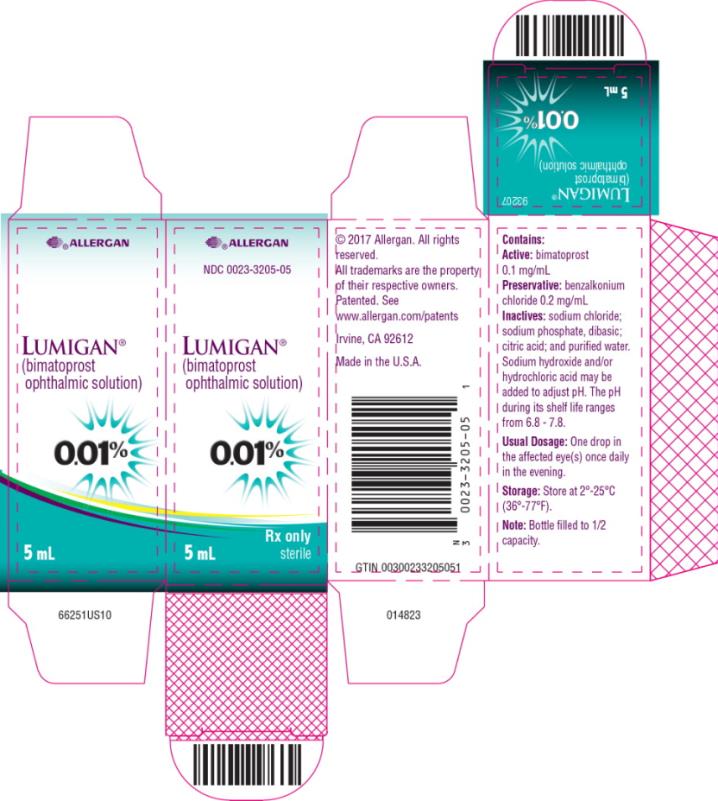
LUMIGAN bimatoprost .1 mg/mL Solution/ Drops, 1 bottle — NDC 0023-3205-02 (Billing 00023-3205-02)
This is a package of 1 bottle of LUMIGAN bimatoprost .1 mg/mL Solution/ Drops from Allergan, Inc., marketed since Sep 2010 and currently FDA-listed.
NDC database record
One package, one record: these facts belong to NDC 0023-3205-02 alone.
- Record
- FDA NDC Directory package listing · Human prescription drug
- Code segments
- 0023 labeler · 3205 product · 02 package
- Package marketed since
- Sep 10, 2010
- Sample package
- Yes — professional sample, not for sale
- Listing certified through
- Dec 31, 2027
- Barcode (UPC-A, from the NDC)
- 3 0023320502 0
- FDA record last changed
- Aug 6, 2026
Identity & classification
Regulatory identifiers FDA, NLM and CMS codes for this package
Drug-database identifiers Medi-Span GPI and First Databank GCN / HICL / AHFS classification
- GSN (GCN sequence number): 065392
- GCN: 27131
- HICL (First Databank): 022000
- AHFS class code: 52:40.28.00
- RxCUI (RxNorm): 1009339
Where does this data come from?
- FDA openFDA NDC Directory · synced Oct 1, 2026
- FDA label on DailyMed · label index refreshed Oct 3, 2026
- RxNorm (NLM RxNav) · catalog refreshed Oct 1, 2026
- Medi-Span GPI (licensed)
- First Databank (licensed) · refreshed Oct 1, 2026
RxNorm drug class
This medicine belongs to the Prostaglandin Analog class.
Where does this data come from?
- RxClass (NLM) · catalog refreshed Oct 1, 2026
Clinical
Bimatoprost ophthalmic is used to treat glaucoma (a condition in which increased pressure in the eye can lead to gradual loss of vision) and ocular hypertension (a condition which causes increased pressure in the eye). Bimatoprost is in a class of medications called prostaglandin analogs. It lowers pressure in the eye by increasing the flow of natural eye fluids out of the eye.
Read the full MedlinePlus article ↗- It depends on the product you have. Lumigan, Zolymbus and Durysta lower high eye pressure in open-angle glaucoma or ocular hypertension. Latisse and generic bimatoprost 0.03% are f...
- Lumigan and Zolymbus are one drop in the eye once daily in the evening. Latisse and generic bimatoprost 0.03% go on the upper eyelid margin once nightly with a fresh sterile applic...
- Red, itchy or dry eyes are common, and you may notice lash growth or darker skin around the eye. Most of these are mild. Call me or your doctor if you have eye pain, vision changes...
- Yes. It can make the iris more brown, and this is likely to be permanent. It may take months or years to notice. Your doctor can talk with you about this.
Patient education
Supplement & herbal interactions
Some supplements/herbs that may interact with Bimatoprost — tap one for details:
Where does this data come from?
- MedlinePlus (NLM) · refreshed Oct 1, 2026
- FDA label on DailyMed · label index refreshed Oct 3, 2026
Ask a licensed pharmacist directly — free, answered by our team.
Pricing
A drug doesn't have one price. Each row is a different public payment system, and none is what you'd pay at the counter — that depends on your insurance. The ⓘ on each row explains what it measures.
| Price system | Per mL | Per package |
|---|---|---|
| Retail pharmacies payNADAC · weekly | Not in the retail survey — common for institutional, discontinued, or low-volume packs. | |
| Medicaid paysCMS SDUD · 12 mo | No recent Medicaid claims on file for this NDC — rare and low-volume NDCs are suppressed in the public data. | |
| Medicare drug plans payPart D · Q2 2026 | $103.47 | $258.67 / 2.5 ml |
Where does this data come from?
- CMS NADAC weekly file
- CMS ASP pricing files · refreshed Sep 20, 2026
- CMS Medicaid State Drug Utilization Data · refreshed Oct 4, 2026
- CMS Part D plan pricing files · refreshed Sep 24, 2026
- VA National Acquisition Center price file
Packaging — all sizes for this product
| Package NDC | Description | Per unit | Per pack | Marketing start | Marketing end | Status |
|---|---|---|---|---|---|---|
| 00023-3205-02 You're viewing this | 1 BOTTLE, DROPPER in 1 CARTON / 2.5 mL in 1 BOTTLE, DROPPER Sample | — | — | 2010-09-10 | — | Active |
| 00023-3205-03 0023-3205-03 Main listing | 1 BOTTLE, DROPPER in 1 CARTON / 2.5 mL in 1 BOTTLE, DROPPER | $103.06 / mL | $257.66 | 2010-09-10 | — | Active |
| 00023-3205-05 0023-3205-05 | 1 BOTTLE, DROPPER in 1 CARTON / 5 mL in 1 BOTTLE, DROPPER | $102.99 / mL | $514.95 | 2010-09-10 | — | Active |
| 00023-3205-08 0023-3205-08 | 1 BOTTLE, DROPPER in 1 CARTON / 7.5 mL in 1 BOTTLE, DROPPER | $103.11 / mL | $773.32 | 2010-09-10 | — | Active |
This pack shows little to no recent Medicaid volume — a different pack size carries most fills. See all packs ↓
Pack size FAQ
What quantity is in this package?
How does this package differ from NDC 00023-3205-03?
What NDC number is used to bill for this package of LUMIGAN bimatoprost .1 mg/mL Solution/ Drops?
Prices are the latest CMS NADAC pharmacy acquisition cost per NDC; per-pack figures are per-unit × pack quantity, shown only when the pack is denominated in the same measure NADAC prices.
Therapeutic equivalents
| Product | Labeler | Pack | NADAC/unit | TE | Status | Price vs. this |
|---|---|---|---|---|---|---|
| Bimatoprost .1 mg/mL 60219-2149-01 | Amneal | 1 bottle | $42.516 | AB | Availability likely | — |
| Bimatoprost .1 mg/mL 70756-0626-30 | Lifestar | 1 bottle | $42.516 | AB | Availability likely | — |
| Bimatoprost .1 mg/mL 70756-0627-30 | Lifestar | 1 bottle | $42.752 | AB | Availability likely | — |
| Bimatoprost .1 mg/mL 70756-0628-30 | Lifestar | 1 bottle | $43.413 | AB | Availability likely | — |
| Lumigan .1 mg/mLthis 00023-3205-02 | Allergan, | 1 bottle | — | AB | FDA listed | — |
| Bimatoprost .1 mg/mL 81469-0291-05 | First | 1 bottle | — | AB | FDA listed | — |
Where does this data come from?
- FDA openFDA NDC Directory · synced Oct 1, 2026
- FDA Orange Book · refreshed Oct 3, 2026
- CMS NADAC weekly file
Availability & generic status
FDA-approved generic versions are listed, and recent pricing/market data suggests they may be available — see Therapeutic equivalents.
Why the date isn’t exact: Generic timing can change because patents may be challenged, settled, licensed, added, removed, or worked around with a narrower label — and FDA approval does not always mean a pharmacy can get the generic today.
🛈 What do these terms mean?
- Patent
- Legal protection listed in the Orange Book that may delay generic approval or launch. Issued by the U.S. Patent & Trademark Office.
- Substance patent
- Covers the active drug molecule itself — the hardest to design around. A generic generally can’t launch until it expires.
- Formulation (product) patent
- Covers a specific formulation or dosage form. A generic can sometimes work around it with a different formulation.
- Method-of-use patent
- A patent covering one specific approved use of the drug — not necessarily the whole molecule. A generic can sometimes launch with a “skinny label” that carves out the protected use and keeps the others.
- Skinny label
- A generic label that omits a still-patented use when the FDA allows it — letting a generic reach the market for the unprotected uses.
- Exclusivity
- FDA-granted marketing protection, separate from patents — e.g. 5-yr new chemical entity, 7-yr orphan drug, or a +6-month pediatric extension.
- Paragraph IV
- A generic applicant’s formal challenge to a listed patent. It can potentially lead to earlier generic entry, but often involves litigation or a settlement.
- RLD / RS
- Reference Listed Drug — the brand product the FDA uses as the reference for generic applications. Reference Standard — the product the FDA expects generics to compare against in bioequivalence testing.
- TE / AB rating
- FDA therapeutic-equivalence rating. An AB rating generally means the FDA considers a generic therapeutically equivalent to — and substitutable for — the brand.
- LOE (loss of exclusivity)
- The latest patent or exclusivity currently listed — the loss-of-exclusivity / latest-listed-protection date shown on this page. Paragraph-IV challenges and settlements can move the real date earlier; FDA approval and a manufacturer’s decision to market can move it later.
Built from the FDA Orange Book. The bars above are scaled to each protection’s expiry; the red LOE marker is the last one to lapse.
| Patent | Type | Use code | Expires |
|---|---|---|---|
| US 7851504 ↗ | Drug substance | — | Jun 13, 2027 |
Is there a generic version of LUMIGAN 0.01% EYE DROPS?
The FDA approved a generic — why can’t I get it at my pharmacy yet?
Why do different websites show different generic release dates?
What does “FDA listed” mean?
What does a patent or protection date mean here?
What does “current Orange Book estimate” mean?
Can a generic come out before the last patent expires?
Can a generic come out after the listed dates?
What is the difference between patents and exclusivity?
Why are there multiple patent dates?
Where does this data come from?
- FDA Orange Book · refreshed Oct 3, 2026
Inactive Ingredients / Excipients
Inactive ingredients, also called excipients, are components of the drug product other than the active ingredient. They may include fillers, dyes, coatings, preservatives, flavors, or other formulation ingredients.
💡 Tap an ingredient (hover on desktop) to see what it is and why it’s used.
-
0.2 mg / 1 mL
UNII F5UM2KM3W7
Benzalkonium chloride is a chemical compound that works as a preservative and antimicrobial agent in medications. It prevents bacterial and fungal growth in liquid formulations to keep the product safe during storage and use.
-
UNII 2968PHW8QP
A weak organic acid derived from citrus fruits or made through fermentation. It works as a buffer to control pH, a preservative to extend shelf life, and a flavoring agent in medications.
-
UNII 451W47IQ8X
Sodium chloride is common table salt. It's used in medicines as a buffer to maintain proper pH, as a filler to add bulk, or to adjust the osmotic balance in liquid formulations.
-
UNII GR686LBA74
Sodium phosphate, dibasic is a salt derived from phosphoric acid. It acts as a buffer to help maintain the medicine's pH balance and may serve as a binder or filler in tablets and capsules.
-
UNII 059QF0KO0R
Water is a liquid solvent that dissolves and mixes ingredients together in liquid medicines, syrups, and injections. It helps distribute the active drug evenly throughout the product.
5 inactive ingredients listed in the exact product block matched to this NDC.
Where does this data come from?
ingredient classCode="IACT" elements from the exact product block matched by this NDC. Label-section narrative from DailyMed / the openFDA label index is shown separately when available.- FDA label on DailyMed · label index refreshed Oct 3, 2026
- FDA openFDA NDC Directory · synced Oct 1, 2026
Inactive ingredient FAQ
Are inactive ingredients the same for every manufacturer?
Why might an inactive ingredient be missing?
Can inactive ingredients matter?
Manufacturer & labeler
More NDCs from Allergan, Inc. labeler code 00023
- REFRESH TEARS carboxymethylcellulose sodium 5 mg/mL Solution/ Drops NDC 0023-0798-01
- botulinum toxin type A 1 mg/mg Liquid NDC 0023-1111-10
- BOTOX onabotulinumtoxinA 100 [USP'U]/1 Injection, Powder, Lyophilized, For Solution NDC 0023-1145-01
- SkinMedica Acne Clarifying Treatment Salicylic Acid 20 mg/mL Lotion NDC 0023-1230-01
- Acular Ketorolac Tromethamine 5 mg/mL Solution/ Drops NDC 0023-2181-05
- REFRESH TEARS PF carboxymethylcellulose sodium, Glycerin 5 mg/mL; 9 mg/mL Solution/ Drops NDC 0023-3110-10
- REFRESH OPTIVE carboxymethylcellulose sodium and glycerin 5 mg/mL; 9 mg/mL Solution/ Drops NDC 0023-3240-01
- Ozurdex dexamethasone .7 mg Implant NDC 0023-3348-07
- Refresh Optive Carboxymethylcellulose Sodium, Glycerin 5 mg/mL; 9 mg/mL Solution/ Drops NDC 0023-3416-05
- ACUVAIL ketorolac tromethamine 4.5 mg/mL Solution/ Drops NDC 0023-3507-05
- ZYMAXID gatifloxacin 5 mg/mL Solution/ Drops NDC 0023-3615-01
- LATISSE bimatoprost .3 mg/mL Solution/ Drops NDC 0023-3616-05
Where does this data come from?
- FDA openFDA NDC Directory · synced Oct 1, 2026
- Drugs@FDA
Full prescribing information FDA SPL
🎯 Indications and Usage ▾
1 INDICATIONS AND USAGE LUMIGAN ® (bimatoprost ophthalmic solution) 0.01% is indicated for the reduction of elevated intraocular pressure in patients with open angle glaucoma or ocular hypertension. LUMIGAN ® 0.01% is a prostaglandin analog indicated for the reduction of elevated intraocular pressure in patients with open angle glaucoma or ocular hypertension. ( 1 )
⏱️ Dosage and Administration ▾
2 DOSAGE AND ADMINISTRATION The recommended dosage is one drop in the affected eye(s) once daily in the evening. LUMIGAN ® (bimatoprost ophthalmic solution) 0.01% should not be administered more than once daily since it has been shown that more frequent administration of prostaglandin analogs may decrease the intraocular pressure lowering effect. Reduction of the intraocular pressure starts approximately 4 hours after the first administration with maximum effect reached within approximately 8 to 12 hours.
LUMIGAN ® 0.01% may be used concomitantly with other topical ophthalmic drug products to lower intraocular pressure. If more than one topical ophthalmic drug is being used, the drugs should be administered at least five (5) minutes apart. One drop in the affected eye(s) once daily in the evening.
( 2 )
💊 Dosage Forms and Strengths ▾
3 DOSAGE FORMS AND STRENGTHS Ophthalmic solution containing bimatoprost 0.1 mg/mL. Ophthalmic solution containing 0.1 mg/mL of bimatoprost. ( 3 )
⛔ Contraindications ▾
4 CONTRAINDICATIONS LUMIGAN ® 0.01% is contraindicated in patients with hypersensitivity to bimatoprost or to any of the ingredients [see Adverse Reactions (6.2) ] . Hypersensitivity. ( 4 )
⚠️ Warnings and Cautions ▾
5 WARNINGS AND PRECAUTIONS Pigmentation : Pigmentation of the iris, periorbital tissue (eyelid) and eyelashes can occur. Iris pigmentation is likely to be permanent. ( 5.1 ) Eyelash Changes : Gradual change to eyelashes including increased length, thickness and number of lashes. Usually reversible. ( 5.2 )
5.1Pigmentation Bimatoprost ophthalmic solution has been reported to cause changes to pigmented tissues. The most frequently reported changes have been increased pigmentation of the iris, periorbital tissue (eyelid) and eyelashes. Pigmentation is expected to increase as long as bimatoprost is administered.
The pigmentation change is due to increased melanin content in the melanocytes rather than to an increase in the number of melanocytes. After discontinuation of bimatoprost, pigmentation of the iris is likely to be permanent, while pigmentation of the periorbital tissue and eyelash changes have been reported to be reversible in some patients. Patients who receive treatment should be informed of the possibility of increased pigmentation.
The long term effects of increased pigmentation are not known. Iris color change may not be noticeable for several months to years. Typically, the brown pigmentation around the pupil spreads concentrically towards the periphery of the iris and the entire iris or parts of the iris become more brownish.
Neither nevi nor freckles of the iris appear to be affected by treatment. While treatment with LUMIGAN ® (bimatoprost ophthalmic solution) 0.01% can be continued in patients who develop noticeably increased iris pigmentation, these patients should be examined regularly.
5.2Eyelash Changes LUMIGAN ® 0.01% may gradually change eyelashes and vellus hair in the treated eye. These changes include increased length, thickness, and number of lashes. Eyelash changes are usually reversible upon discontinuation of treatment.
5.3Intraocular Inflammation Prostaglandin analogs, including bimatoprost, have been reported to cause intraocular inflammation. In addition, because these products may exacerbate inflammation, caution should be used in patients with active intraocular inflammation (e.g., uveitis).
5.4Macular Edema Macular edema, including cystoid macular edema, has been reported during treatment with bimatoprost ophthalmic solution. LUMIGAN ® 0.01% should be used with caution in aphakic patients, in pseudophakic patients with a torn posterior lens capsule, or in patients with known risk factors for macular edema. 5.
5 Bacterial Keratitis There have been reports of bacterial keratitis associated with the use of multiple-dose containers of topical ophthalmic products. These containers had been inadvertently contaminated by patients who, in most cases, had a concurrent corneal disease or a disruption of the ocular epithelial surface. 5.
6 Contact Lens Use LUMIGAN ® 0.01% contains benzalkonium chloride, which may be absorbed by and cause discoloration of soft contact lenses. Contact lenses should be removed prior to instillation of LUMIGAN ® 0.01% and may be reinserted 15 minutes following its administration.
🤒 Adverse Reactions ▾
6 ADVERSE REACTIONS The following adverse reactions are described elsewhere in the labeling: Pigmentation including blepharal pigmentation and iris hyperpigmentation [see Warnings and Precautions (5.1) ] Eyelash Changes [see Warnings and Precautions (5.2) ] Intraocular Inflammation [see Warnings and Precautions (5.3) ] Macular Edema [see Warnings and Precautions (5.4) ] Hypersensitivity [see Contraindications (4) ] Most common adverse reaction (31%) is conjunctival hyperemia. ( 6.1 ) To report SUSPECTED ADVERSE REACTIONS, contact AbbVie at 1-800-678-1605 or FDA at 1-800-FDA-1088 or www.fda.gov/medwatch.
6.1Clinical Trial s Experience Because clinical trials are conducted under widely varying conditions, adverse reaction rates observed in the clinical trials of a drug cannot be directly compared to rates in the clinical trials of another drug and may not reflect the rates observed in practice. In a 12-month clinical study with bimatoprost ophthalmic solutions 0.01%, the most common adverse reaction was conjunctival hyperemia (31%). Approximately 1.6% of patients discontinued therapy due to conjunctival hyperemia.
Other adverse drug reactions (reported in 1 to 4% of patients) with LUMIGAN ® 0.01% in this study included conjunctival edema, conjunctival hemorrhage, eye irritation, eye pain, eye pruritus, erythema of eyelid, eyelids pruritus, growth of eyelashes, hypertrichosis, instillation site irritation, punctate keratitis, skin hyperpigmentation, vision blurred, and visual acuity reduced.
6.2Postmarketing Experience The following adverse reactions have been identified during postapproval use of LUMIGAN ® 0.01%. Because these reactions are reported voluntarily from a population of uncertain size, it is not always possible to reliably estimate their frequency or establish a causal relationship to drug exposure. These reactions, which have been chosen for inclusion due to either their seriousness, frequency of reporting, possible causal connection to LUMIGAN ® , or a combination of these factors include: asthma-like symptoms, dizziness, dry eye, dyspnea, eye discharge, eye edema, foreign body sensation, headache, hypersensitivity including signs and symptoms of eye allergy and allergic dermatitis, hypertension, lacrimation increased, periorbital and lid changes associated with periorbital fat atrophy leading to skin tightness, deepening of the eyelid sulcus, eyelid ptosis, enophthalmos, and eyelid retraction; and photophobia.
👥 Use in Specific Populations ▾
8 USE IN SPECIFIC POPULATIONS Use in pediatric patients below the age of 16 years is not recommended because of potential safety concerns related to increased pigmentation following long-term chronic use. ( 8.4 )
8.1Pregnancy Risk Summary There are no adequate and well-controlled studies of LUMIGAN ® (bimatoprost ophthalmic solution) 0.01% administration in pregnant women. There is no increase in the risk of major birth defects or miscarriages based on bimatoprost postmarketing experience. In embryofetal developmental studies, administration of bimatoprost to pregnant mice and rats during organogenesis, resulted in abortion and early delivery at oral doses at least 33 times (mice) or 94 times (rats) the human exposure to bimatoprost 0.03% dosed bilaterally once daily (based on blood area under the curve [AUC] levels).
These adverse effects were not observed at 2.6 times (mice) and 47 times (rats) the human exposure to bimatoprost 0.03% dosed bilaterally once daily (based on blood AUC levels). In pre/postnatal development studies, administration of bimatoprost to pregnant rats from organogenesis to the end of lactation resulted in reduced gestation length and fetal body weight, and increased fetal and pup mortality at oral doses at least 41 times the human systemic exposure to bimatoprost 0.03% dosed bilaterally once daily (based on blood AUC levels).
No adverse effects were observed in rat offspring at exposures estimated at 14 times the human exposure to bimatoprost 0.03% dosed bilaterally once daily (based on blood AUC levels). Because animal reproductive studies are not always predictive of human response LUMIGAN ® 0.01% should be administered during pregnancy only if the potential benefit justifies the potential risk to the fetus. Data Animal Data In an embryofetal development rat study, abortion was observed in pregnant rats administered bimatoprost orally during organogenesis at 0.6 mg/kg/day (94 times the human systemic exposure to bimatoprost 0.03% dosed bilaterally once daily, based on AUC).
The No Observed Adverse Effect Level (NOAEL) for abortion was 0.3 mg/kg/day (estimated at 47 times the human systemic exposure to bimatoprost 0.03% dosed bilaterally once daily, based on AUC). No abnormalities were observed in rat fetuses at doses up to 0.6 mg/kg/day. In an embryofetal development mouse study, abortion and early delivery were observed in pregnant mice administered bimatoprost orally during organogenesis at doses greater than or equal to 0.3 mg/kg/day (33 times the human systemic exposure to bimatoprost 0.03% dosed bilaterally once daily, based on AUC).
The NOAEL for abortion and early delivery was 0.1 mg/kg/day (2.6 times the human systemic exposure to bimatoprost 0.03% dosed bilaterally once daily, based on AUC). No abnormalities were observed in mouse fetuses at doses up to 0.6 mg/kg/day (72 times the human systemic exposure to bimatoprost 0.03% dosed bilaterally once daily, based on AUC). In a pre/postnatal development study, treatment of pregnant rats with bimatoprost orally from gestation day 7 to lactation day 20 resulted in reduced gestation length, increased late resorptions, fetal deaths, and postnatal pup mortality, and reduced pup body weight at doses greater than or equal to 0.3 mg/kg/day.
These effects were observed at exposures at least 41 times the human systemic exposure to bimatoprost 0.03% dosed bilaterally once daily, based on AUC. The NOAEL for postnatal development and mating performance of the offspring was 0.1 mg/kg/day (estimated at 14 times the human systemic exposure to bimatoprost 0.03% dosed bilaterally once daily, based on AUC). 8.
2 Lactation Risk Summary It is not known whether topical ocular treatment with LUMIGAN ® 0.01% could result in sufficient systemic absorption to produce detectable quantities in human milk. In animal studies, bimatoprost has been shown to be present in breast milk of lactating rats at an intravenous dose (i.e., 1 mg/kg) 970 times the RHOD (on a mg/rn 2 basi… [Excerpted — this section continues on DailyMed.]
🤰 Pregnancy ▾
8.1Pregnancy Risk Summary There are no adequate and well-controlled studies of LUMIGAN ® (bimatoprost ophthalmic solution) 0.01% administration in pregnant women. There is no increase in the risk of major birth defects or miscarriages based on bimatoprost postmarketing experience. In embryofetal developmental studies, administration of bimatoprost to pregnant mice and rats during organogenesis, resulted in abortion and early delivery at oral doses at least 33 times (mice) or 94 times (rats) the human exposure to bimatoprost 0.03% dosed bilaterally once daily (based on blood area under the curve [AUC] levels).
These adverse effects were not observed at 2.6 times (mice) and 47 times (rats) the human exposure to bimatoprost 0.03% dosed bilaterally once daily (based on blood AUC levels). In pre/postnatal development studies, administration of bimatoprost to pregnant rats from organogenesis to the end of lactation resulted in reduced gestation length and fetal body weight, and increased fetal and pup mortality at oral doses at least 41 times the human systemic exposure to bimatoprost 0.03% dosed bilaterally once daily (based on blood AUC levels).
No adverse effects were observed in rat offspring at exposures estimated at 14 times the human exposure to bimatoprost 0.03% dosed bilaterally once daily (based on blood AUC levels). Because animal reproductive studies are not always predictive of human response LUMIGAN ® 0.01% should be administered during pregnancy only if the potential benefit justifies the potential risk to the fetus. Data Animal Data In an embryofetal development rat study, abortion was observed in pregnant rats administered bimatoprost orally during organogenesis at 0.6 mg/kg/day (94 times the human systemic exposure to bimatoprost 0.03% dosed bilaterally once daily, based on AUC).
The No Observed Adverse Effect Level (NOAEL) for abortion was 0.3 mg/kg/day (estimated at 47 times the human systemic exposure to bimatoprost 0.03% dosed bilaterally once daily, based on AUC). No abnormalities were observed in rat fetuses at doses up to 0.6 mg/kg/day. In an embryofetal development mouse study, abortion and early delivery were observed in pregnant mice administered bimatoprost orally during organogenesis at doses greater than or equal to 0.3 mg/kg/day (33 times the human systemic exposure to bimatoprost 0.03% dosed bilaterally once daily, based on AUC).
The NOAEL for abortion and early delivery was 0.1 mg/kg/day (2.6 times the human systemic exposure to bimatoprost 0.03% dosed bilaterally once daily, based on AUC). No abnormalities were observed in mouse fetuses at doses up to 0.6 mg/kg/day (72 times the human systemic exposure to bimatoprost 0.03% dosed bilaterally once daily, based on AUC). In a pre/postnatal development study, treatment of pregnant rats with bimatoprost orally from gestation day 7 to lactation day 20 resulted in reduced gestation length, increased late resorptions, fetal deaths, and postnatal pup mortality, and reduced pup body weight at doses greater than or equal to 0.3 mg/kg/day.
These effects were observed at exposures at least 41 times the human systemic exposure to bimatoprost 0.03% dosed bilaterally once daily, based on AUC. The NOAEL for postnatal development and mating performance of the offspring was 0.1 mg/kg/day (estimated at 14 times the human systemic exposure to bimatoprost 0.03% dosed bilaterally once daily, based on AUC).
🧒 Pediatric Use ▾
8.4Pediatric Use Use in pediatric patients below the age of 16 years is not recommended because of potential safety concerns related to increased pigmentation following long-term chronic use.
🧓 Geriatric Use ▾
8.5Geriatric Use No overall clinical differences in safety or effectiveness have been observed between elderly and other adult patients.
🆘 Overdosage ▾
10 OVERDOSAGE No information is available on overdosage in humans. If overdose with LUMIGAN ® (bimatoprost ophthalmic solution) 0.01% occurs, treatment should be symptomatic. In oral (by gavage) mouse and rat studies, doses up to 100 mg/kg/day did not produce any toxicity. This dose expressed as mg/m 2 is at least 210 times higher than the accidental dose of one bottle of LUMIGAN ® 0.01% for a 10 kg child.
🧬 Clinical Pharmacology ▾
12 CLINICAL PHARMACOLOGY
12.1Mechanism of Action Bimatoprost, a prostaglandin analog, is a synthetic structural analog of prostaglandin with ocular hypotensive activity. It selectively mimics the effects of naturally occurring substances, prostamides. Bimatoprost is believed to lower intraocular pressure (IOP) in humans by increasing outflow of aqueous humor through both the trabecular meshwork and uveoscleral routes.
Elevated IOP presents a major risk factor for glaucomatous field loss. The higher the level of IOP, the greater the likelihood of optic nerve damage and visual field loss.
12.3Pharmacokinetics Absorption After one drop of bimatoprost ophthalmic solution 0.03% was administered once daily to both eyes of 15 healthy subjects for two weeks, blood concentrations peaked within 10 minutes after dosing and were below the lower limit of detection (0.025 ng/mL) in most subjects within 1.5 hours after dosing. Mean C max and AUC 0-24hr values were similar on days 7 and 14 at approximately 0.08 ng/mL and 0.09 ng•hr/mL, respectively, indicating that steady state was reached during the first week of ocular dosing.
There was no significant systemic drug accumulation over time. Distribution Bimatoprost is moderately distributed into body tissues with a steady-state volume of distribution of
0.67L/kg. In human blood, bimatoprost resides mainly in the plasma. Approximately 12% of bimatoprost remains unbound in human plasma.
Elimination Metabolism Bimatoprost is the major circulating species in the blood once it reaches the systemic circulation following ocular dosing. Bimatoprost then undergoes oxidation, N-deethylation and glucuronidation to form a diverse variety of metabolites. Excretion Following an intravenous dose of radiolabeled bimatoprost (3.12 mcg/kg) to six healthy subjects, the maximum blood concentration of unchanged drug was 12.2 ng/mL and decreased rapidly with an elimination half-life of approximately 45 minutes.
The total blood clearance of bimatoprost was
1.5L/hr/kg. Up to 67% of the administered dose was excreted in the urine while 25% of the dose was recovered in the feces.
🧬 Mechanism of Action ▾
12.1Mechanism of Action Bimatoprost, a prostaglandin analog, is a synthetic structural analog of prostaglandin with ocular hypotensive activity. It selectively mimics the effects of naturally occurring substances, prostamides. Bimatoprost is believed to lower intraocular pressure (IOP) in humans by increasing outflow of aqueous humor through both the trabecular meshwork and uveoscleral routes.
Elevated IOP presents a major risk factor for glaucomatous field loss. The higher the level of IOP, the greater the likelihood of optic nerve damage and visual field loss.
📦 How Supplied / Storage and Handling ▾
16 HOW SUPPLIED/STORAGE AND HANDLING LUMIGAN ® (bimatoprost ophthalmic solution) 0.01% is supplied sterile in opaque white low density polyethylene ophthalmic dispenser bottles and tips with turquoise polystyrene caps in the following sizes: 2.5 mL fill in a 5 mL container - NDC 0023-3205-03 5 mL fill in a 10 mL container - NDC 0023-3205-05 7.5 mL fill in a 10 mL container - NDC 0023-3205-08 Storage: Store at 2°C to 25°C (36°F to 77°F). After opening, LUMIGAN ® 0.01% can be used until the expiration date on the bottle.
📋 Description ▾
11 DESCRIPTION LUMIGAN ® (bimatoprost ophthalmic solution) 0.01% is a synthetic prostamide analog with ocular hypotensive activity. Its chemical name is ( Z )-7-[(1 R ,2 R ,3 R ,5 S )-3,5-Dihydroxy-2-[(1 E ,3 S )-3-hydroxy-5-phenyl-1-pentenyl]cyclopentyl]-5- N -ethylheptenamide, and its molecular weight is 415.58. Its molecular formula is C 25 H 37 NO 4 .
Its chemical structure is: Bimatoprost is a powder, which is very soluble in ethyl alcohol and methyl alcohol and slightly soluble in water. LUMIGAN ® 0.01% is a clear, isotonic, colorless, sterile ophthalmic solution with an osmolality of approximately 290 mOsmol/kg. LUMIGAN ® 0.01% contains Active: bimatoprost 0.1 mg/mL; Inactives: benzalkonium chloride 0.2 mg/mL; sodium chloride; sodium phosphate, dibasic; citric acid; and purified water.
Sodium hydroxide and/or hydrochloric acid may be added to adjust pH. The pH during its shelf life ranges from 6.8-7.8. chemical structure
💬 Information for Patients ▾
17 PATIENT COUNSELING INFORMATION Potential for Pigmentation Advise patients about the potential for increased brown pigmentation of the iris, which may be permanent. Also inform patients about the possibility of eyelid skin darkening, which may be reversible after discontinuation of LUMIGAN ® (bimatoprost ophthalmic solution) 0.01%. Potential for Eyelash Changes Inform patients of the possibility of eyelash and vellus hair changes in the treated eye during treatment with LUMIGAN ® 0.01%.
These changes may result in a disparity between eyes in length, thickness, pigmentation, number of eyelashes or vellus hairs, and/or direction of eyelash growth. Eyelash changes are usually reversible upon discontinuation of treatment. Handling the Container Instruct patients to avoid allowing the tip of the dispensing container to contact the eye, surrounding structures, fingers, or any other surface in order to avoid contamination of the solution by common bacteria known to cause ocular infections.
Serious damage to the eye and subsequent loss of vision may result from using contaminated solutions. When to Seek Physician Advice Advise patients that if they develop an intercurrent ocular condition (e.g., trauma or infection), have ocular surgery, or develop any ocular reactions, particularly conjunctivitis and eyelid reactions, they should immediately seek their physician’s advice concerning the continued use of LUMIGAN ® 0.01%. Contact Lens Use Advise patients that LUMIGAN ® 0.01% contains benzalkonium chloride, which may be absorbed by soft contact lenses.
Contact lenses should be removed prior to instillation of LUMIGAN ® 0.01% and may be reinserted 15 minutes following its administration. Use with Other Ophthalmic Drugs Advise patients that if more than one topical ophthalmic drug is being used, the drugs should be administered at least five (5) minutes between applications. Distributed by: AbbVie Inc.
North Chicago, IL 60064 © 2024 AbbVie. All rights reserved. LUMIGAN and its design are trademarks of Allergan, Inc., an AbbVie company. v2.0USPI3205 Shape Description automatically generated
🧬 Pharmacokinetics ▾
12.3Pharmacokinetics Absorption After one drop of bimatoprost ophthalmic solution 0.03% was administered once daily to both eyes of 15 healthy subjects for two weeks, blood concentrations peaked within 10 minutes after dosing and were below the lower limit of detection (0.025 ng/mL) in most subjects within 1.5 hours after dosing. Mean C max and AUC 0-24hr values were similar on days 7 and 14 at approximately 0.08 ng/mL and 0.09 ng•hr/mL, respectively, indicating that steady state was reached during the first week of ocular dosing.
There was no significant systemic drug accumulation over time. Distribution Bimatoprost is moderately distributed into body tissues with a steady-state volume of distribution of
0.67L/kg. In human blood, bimatoprost resides mainly in the plasma. Approximately 12% of bimatoprost remains unbound in human plasma.
Elimination Metabolism Bimatoprost is the major circulating species in the blood once it reaches the systemic circulation following ocular dosing. Bimatoprost then undergoes oxidation, N-deethylation and glucuronidation to form a diverse variety of metabolites. Excretion Following an intravenous dose of radiolabeled bimatoprost (3.12 mcg/kg) to six healthy subjects, the maximum blood concentration of unchanged drug was 12.2 ng/mL and decreased rapidly with an elimination half-life of approximately 45 minutes.
The total blood clearance of bimatoprost was
1.5L/hr/kg. Up to 67% of the administered dose was excreted in the urine while 25% of the dose was recovered in the feces.
🔬 Clinical Studies ▾
14 CLINICAL STUDIES In a 12-month clinical study of patients with open angle glaucoma or ocular hypertension with an average baseline IOP of 23.5 mmHg, the IOP-lowering effect of LUMIGAN ® 0.01% once daily (in the evening) was up to 7.5 mmHg.
🧪 Nonclinical Toxicology ▾
13 NONCLINICAL TOXICOLOGY
13.1Carcinogenesis, Mutagenesis, Impairment of Fertility Carcinogenesis Bimatoprost was not carcinogenic in either mice or rats when administered by oral gavage for 104 weeks at doses up to 2 mg/kg/day and 1 mg/kg/day, respectively (192 and 291 times the estimated human systemic exposure to bimatoprost 0.03% dosed bilaterally once daily, respectively, based on blood AUC levels) Mutagenesis Bimatoprost was not mutagenic or clastogenic in the Ames test, in the mouse lymphoma test, or in the in vivo mouse micronucleus tests.
Impairment of Fertility Bimatoprost did not impair fertility in male or female rats up to doses of 0.6 mg/kg/day (at least 103 times the recommended human exposure to bimatoprost 0.03% dosed bilaterally once daily based on blood AUC levels).
📄 Carcinogenesis, Mutagenesis, Impairment of Fertility ▾
13.1Carcinogenesis, Mutagenesis, Impairment of Fertility Carcinogenesis Bimatoprost was not carcinogenic in either mice or rats when administered by oral gavage for 104 weeks at doses up to 2 mg/kg/day and 1 mg/kg/day, respectively (192 and 291 times the estimated human systemic exposure to bimatoprost 0.03% dosed bilaterally once daily, respectively, based on blood AUC levels) Mutagenesis Bimatoprost was not mutagenic or clastogenic in the Ames test, in the mouse lymphoma test, or in the in vivo mouse micronucleus tests.
Impairment of Fertility Bimatoprost did not impair fertility in male or female rats up to doses of 0.6 mg/kg/day (at least 103 times the recommended human exposure to bimatoprost 0.03% dosed bilaterally once daily based on blood AUC levels).
📄 Package Label / Principal Display Panel ▾
PRINCIPAL DISPLAY PANEL NDC 0023-3205-05 abbvie LUMIGAN ® (bimatoprost ophthalmic solution) 0.01% Rx only 5 mL sterile NDC 0023-3205-05 abbvie LUMIGAN® (bimatoprost ophthalmic solution) 0.01% Rx only 5 mL sterile
Medicaid utilization by pack size
Medicare Part D spend CMS · PART D · 2026 (Q1)
Reported adverse events (FAERS)
Top reported reactions
Age at onset
Reporter sex
Where does this data come from?
About this NDC listing & data coverage
What data is (and isn’t) available for this NDC — tap to expand
| NDC identity (package / product / labeler codes) | ✓ Available |
| Labeler | ✓ Available |
| Product & package description | ✓ Available |
| Marketing category & status | ✓ Available |
| Active ingredient / dosage form / route | ✓ Available |
| FDA label (SPL via DailyMed) | ✓ Available |
| Package photos | ✓ Available |
| Inactive ingredients (structured) | ✓ Available |
| NADAC pharmacy acquisition price (CMS) | — Not published for this NDC CMS publishes NADAC only for NDCs reported in its retail-pharmacy survey. |
| Orange Book / therapeutic-equivalence data | ✓ Available |
| HCPCS J-code billing crosswalk | — Not published for this NDC Most self-administered / retail products have no J-code — that is normal. |
| Medicaid utilization (CMS SDUD) | — Not published for this NDC CMS reports utilization only for NDCs with Medicaid claims above its privacy threshold. |