
ELELYSO Taliglucerase alfa 200 U/5mL Injection, Powder, Lyophilized, For Solution — NDC 0069-0106-01 (Billing 00069-0106-01)
This is a package of ELELYSO Taliglucerase alfa 200 U/5mL Injection, Powder, Lyophilized, For Solution from Pfizer Laboratories Div Pfizer Inc, marketed since May 2012 and currently FDA-listed. It is this product's only package size.
NDC database record
One package, one record: these facts belong to NDC 0069-0106-01 alone.
- Record
- FDA NDC Directory package listing · Human prescription drug
- Code segments
- 0069 labeler · 0106 product · 01 package
- Package marketed since
- May 1, 2012
- Sample package
- No — commercial package
- Listing certified through
- Dec 31, 2026
- Barcode (UPC-A, from the NDC)
- 3 0069010601 4
- FDA record last changed
- Jul 24, 2026
Identity & classification
Regulatory identifiers FDA, NLM and CMS codes for this package
Drug-database identifiers Medi-Span GPI and First Databank GCN / HICL / AHFS classification
- GSN (GCN sequence number): 069127
- GCN: 32078
- GPI-14 (Medi-Span): 82700080102120
- HICL (First Databank): 038937
- AHFS class code: 44:00.00.00
- RxCUI (RxNorm): 1292879
Where does this data come from?
- FDA openFDA NDC Directory · synced Oct 8, 2026
- FDA label on DailyMed · label index refreshed Oct 6, 2026
- RxNorm (NLM RxNav) · catalog refreshed Oct 1, 2026
- Medi-Span GPI (licensed)
- First Databank (licensed) · refreshed Oct 8, 2026
RxNorm drug class
This medicine belongs to the Hydrolytic Lysosomal Glucocerebroside-specific Enzyme class.
Where does this data come from?
- RxClass (NLM) · catalog refreshed Oct 1, 2026
Clinical
Patient education
Supplement & herbal interactions
Where does this data come from?
- MedlinePlus (NLM) · refreshed Oct 1, 2026
- FDA label on DailyMed · label index refreshed Oct 6, 2026
Ask a licensed pharmacist directly — free, answered by our team.
Pricing
A drug doesn't have one price. Each row is a different public payment system, and none is what you'd pay at the counter — that depends on your insurance. The ⓘ on each row explains what it measures.
| Price system | Per mL | Per package |
|---|---|---|
| Retail pharmacies payNADAC · weekly | Not in the retail survey — common for institutional, discontinued, or low-volume packs. | |
| Medicaid paysCMS SDUD · 12 mo | No recent Medicaid claims on file for this NDC — rare and low-volume NDCs are suppressed in the public data. | |
| Medicare drug plans payPart D · quarterly | No Part D plan price is available for this NDC in our data. | |
| Medicare Part B allowsASP · J3060 | $42.675 / J3060 unit | — |
Where does this data come from?
- CMS NADAC weekly file
- CMS ASP pricing files · refreshed Sep 20, 2026
- CMS Medicaid State Drug Utilization Data · refreshed Oct 8, 2026
- CMS Part D plan pricing files · refreshed Sep 24, 2026
- VA National Acquisition Center price file
Billing & reimbursement
Where does this data come from?
- CMS ASP NDC-HCPCS crosswalk · refreshed Sep 22, 2026
- DMEPDAC NDC-HCPCS crosswalk
- openFDA NSDE billing units · refreshed Oct 7, 2026
Packaging — all sizes for this product
| Package NDC | Description | Marketing start | Marketing end | Status |
|---|---|---|---|---|
| 00069-0106-01 You're viewing this Main listing | 1 VIAL, GLASS in 1 CARTON / 5 mL in 1 VIAL, GLASS | 2012-05-01 | — | Active |
Therapeutic equivalents
| Product | Labeler | Pack | NADAC/unit | TE | Status | Price vs. this |
|---|---|---|---|---|---|---|
| Elelyso 200 U/5mLthis 00069-0106-01 | Pfizer | 1 vial | — | — | FDA listed | — |
Where does this data come from?
- FDA openFDA NDC Directory · synced Oct 8, 2026
- FDA Purple Book · refreshed Oct 5, 2026
- CMS NADAC weekly file
Availability & biosimilar status
Biologics have no small-molecule generics; biosimilar competition is tracked in the FDA Purple Book.
Why the date isn’t exact: Biosimilar timing can change because patents may be challenged, settled, licensed, added or removed, and litigation can move the real date earlier or later.
🛈 What do these terms mean?
- Biologic patent
- A patent the reference product’s maker has publicly listed. A biosimilar generally can’t launch until these expire — unless they’re invalidated or resolved in a settlement.
- Reference-product exclusivity
- A flat 12 years of FDA market protection from the biologic’s first licensure (the BPCIA). No biosimilar can be licensed before it ends, regardless of patents.
- Interchangeable exclusivity
- The first interchangeable biosimilar can earn a period as the only interchangeable version (pharmacists can substitute it without the prescriber).
- Earliest biosimilar (LOE)
- The latest of all the dates above — the soonest a biosimilar can realistically reach the market. Litigation and settlements can move it earlier.
Biologics have no small-molecule “generics” — competition comes from FDA-licensed biosimilars, tracked in the FDA Purple Book.
| Code | What it grants | Expires |
|---|---|---|
| RefProduct | Reference-product exclusivity (12-year, BPCIA) — no biosimilar can be licensed before this date | May 1, 2024 |
Is there a biosimilar for ELELYSO 200 UNITS VIAL?
Why do different websites show different biosimilar dates?
Can a biosimilar launch before the last patent expires?
What does “current Purple Book estimate” mean?
What does “FDA listed” mean?
What does a patent or protection date mean here?
Where does this data come from?
- FDA Purple Book · refreshed Oct 5, 2026
Inactive Ingredients / Excipients
Inactive ingredients, also called excipients, are components of the drug product other than the active ingredient. They may include fillers, dyes, coatings, preservatives, flavors, or other formulation ingredients.
💡 Tap an ingredient (hover on desktop) to see what it is and why it’s used.
-
206.7 mg / 5 mL
UNII 3OWL53L36A
A natural sugar alcohol derived from seaweed or synthesized in the lab. It's used as a filler to add bulk, a sweetener in sugar-free formulas, and a disintegrant to help tablets break apart in the stomach.
-
0.56 mg / 5 mL
UNII 6OZP39ZG8H
Polysorbate 80 is a synthetic emulsifier derived from sorbitol and oleic acid. It helps mix oil and water-based ingredients together in medications and improves how the product disperses in the body.
-
30.4 mg / 5 mL
UNII 1Q73Q2JULR
Sodium citrate is a salt derived from citric acid. It works as a buffer to maintain the medicine's pH level and may also help improve taste or act as a preservative in the formulation.
3 inactive ingredients listed in the exact product block matched to this NDC.
Where does this data come from?
ingredient classCode="IACT" elements from the exact product block matched by this NDC. Label-section narrative from DailyMed / the openFDA label index is shown separately when available.- FDA label on DailyMed · label index refreshed Oct 6, 2026
- FDA openFDA NDC Directory · synced Oct 8, 2026
Inactive ingredient FAQ
Are inactive ingredients the same for every manufacturer?
Why might an inactive ingredient be missing?
Can inactive ingredients matter?
Manufacturer & labeler
More NDCs from Pfizer Laboratories Div Pfizer Inc labeler code 00069
- Heparin Sodium 1000 [USP'U]/mL Injection NDC 0069-0043-01
- BOSULIF Bosutinib 100 mg Tablet, Film Coated NDC 0069-0135-01
- BOSULIF Bosutinib 500 mg Tablet, Film Coated NDC 0069-0136-01
- Inlyta axitinib 1 mg Tablet, Film Coated NDC 0069-0145-01
- Inlyta axitinib 5 mg Tablet, Film Coated NDC 0069-0151-11
- Ibrance palbociclib 75 mg Capsule NDC 0069-0187-21
- Ibrance palbociclib 100 mg Capsule NDC 0069-0188-21
Where does this data come from?
- FDA openFDA NDC Directory · synced Oct 8, 2026
- Drugs@FDA
Full prescribing information FDA SPL
🚨 Boxed Warning ▾
WARNING: HYPERSENSITIVITY REACTIONS INCLUDING ANAPHYLAXIS Patients treated with enzyme replacement therapies have experienced life‑threatening hypersensitivity reactions, including anaphylaxis. Anaphylaxis has occurred during the early course of enzyme replacement therapy and after extended duration of therapy. Initiate ELELYSO in a healthcare setting with appropriate medical monitoring and support measures, including access to cardiopulmonary resuscitation equipment.
If a severe hypersensitivity reaction (e.g., anaphylaxis) occurs, discontinue ELELYSO and immediately initiate appropriate medical treatment, including use of epinephrine. Inform patients of the symptoms of life‑threatening hypersensitivity reactions, including anaphylaxis and to seek immediate medical care should symptoms occur [see Warnings and Precautions (5.1) ] . WARNING: HYPERSENSITIVITY REACTIONS INCLUDING ANAPHYLAXIS See full prescribing information for complete boxed warning. • Anaphylaxis has occurred during the early course of enzyme replacement therapy and after extended duration of therapy.
( 5.1 ) • Initiate ELELYSO in a healthcare setting with appropriate medical monitoring and support measures, including access to cardiopulmonary resuscitation equipment. ( 5.1 ) • If a severe hypersensitivity reaction (e.g., anaphylaxis) occurs, discontinue ELELYSO and immediately initiate appropriate medical treatment, including use of epinephrine. ( 5.1 )
🎯 Indications and Usage ▾
1 INDICATIONS AND USAGE ELELYSO is indicated for the treatment of patients 4 years of age and older with a confirmed diagnosis of Type 1 Gaucher disease. ELELYSO is a hydrolytic lysosomal glucocerebroside-specific enzyme indicated for the treatment of patients 4 years and older with a confirmed diagnosis of Type 1 Gaucher disease ( 1 ).
⏱️ Dosage and Administration ▾
2 DOSAGE AND ADMINISTRATION Recommendations Prior to ELELYSO Treatment ( 2.1 ): • Administration of ELELYSO should be supervised by a healthcare provider knowledgeable in the management of hypersensitivity reactions including anaphylaxis. Recommended Dosage in Patients 4 Years and Older ( 2.2 ): • Treatment-naïve : 60 units/kg administered every other week as a 60- to 120-minute intravenous infusion. • Patients switching from imiglucerase : Initiate ELELYSO intravenous treatment (60- to 120-minute infusion) with the same units/kg imiglucerase dosage and subsequently administer ELELYSO every other week.
Dosage adjustments can be based on achievement and maintenance of each patient’s therapeutic goals. Preparation and Administration ( 2.3, 2.4, 2.5 ): • Reconstitute, dilute and administer under the supervision of a healthcare professional. • See Full Prescribing Information for complete instructions.
2.1Recommendations Prior to ELELYSO Treatment Administration of ELELYSO should be supervised by a healthcare provider knowledgeable in the management of hypersensitivity reactions including anaphylaxis [see Warnings and Precautions (5.1) ] . Initiate ELELYSO in a healthcare setting with appropriate medical monitoring and support measures, including access to cardiopulmonary resuscitation equipment [see Warnings and Precautions (5.1) ] . To reduce the risk of hypersensitivity reactions, consider pretreatment with antihistamines and/or corticosteroids [see Warnings and Precautions (5.1) ] .
2.2Recommended Dosage in Patients 4 Years and Older Treatment-Naïve Patients 4 Years of Age and Older The recommended dosage of ELELYSO is 60 units/kg (based on actual body weight) administered every other week as a 60- to 120-minute intravenous infusion. Patients 4 Years of Age and Older Switching from Imiglucerase If it is acceptable to switch from a stable imiglucerase dosage to ELELYSO, initiate ELELYSO intravenous treatment (60- to 120-minute infusion) with the same units/kg imiglucerase dosage and subsequently administer ELELYSO every other week.
Dosage adjustments can be made based on achievement and maintenance of each patient's therapeutic goals.
2.3Preparation Instructions ELELYSO should be reconstituted, diluted, and administered under the supervision of a healthcare professional. Prepare ELELYSO according to the following steps using aseptic technique: a. Determine the number of vials to be reconstituted based on the patient's weight in kg and the recommended dose [see Dosage and Administration (2.2) ] .
Round the number of vials up to the next whole number. b. Remove the required number of vials from the refrigerator. Do not leave these vials at room temperature longer than 24 hours prior to reconstitution.
Do not heat or microwave these vials. c. Reconstitute each vial of ELELYSO with 5.1 mL of Sterile Water for Injection, USP to yield a reconstituted product with a concentration of 40 units/mL and an extractable volume of 5 mL. (1) Upon reconstitution, mix vials gently.
DO NOT SHAKE. (2) Prior to further dilution, visually inspect the reconstituted solution in the vials for particulate matter and discoloration. The solution should be clear and colorless.
Discard if particulate matter is present or the solution is discolored. d. Withdraw the calculated dose of drug from the appropriate number of vials and dilute with 0.9% Sodium Chloride Injection, USP, to a final volume of 100 to 200 mL. Discard any unused reconstituted solution.
(1) For pediatric patients 4 years of age and older, use a final volume of 100 to 120 mL. (2) For adult patients, may use a final volume of 130 to 150 mL. However, if the volume of reconstituted product alone is equal to or greater than 130 to 150 mL, then the final volume should not exceed 200 mL. e.
Mix the diluted solution gently. DO NOT SHAKE. Since this is a protein solution, slight flocculation (described as translucent fibers) occurs occasionally after dilution. f.
Discard any unused diluted soluti… [Excerpted — this section continues on DailyMed.]
💊 Dosage Forms and Strengths ▾
3 DOSAGE FORMS AND STRENGTHS For injection: 200 units white to off-white lyophilized powder in a single-dose vial for reconstitution. For injection: 200 units lyophilized powder in a single-dose vial for reconstitution ( 3 )
⛔ Contraindications ▾
4 CONTRAINDICATIONS None. None ( 4 )
⚠️ Warnings and Cautions ▾
5 WARNINGS AND PRECAUTIONS See boxed warning ( 5.1 )
5.1Hypersensitivity Reactions Including Anaphylaxis Life‑threatening h ypersensitivity reactions, including anaphylaxis, have occurred in patients treated with enzyme replacement therapies, including ELELYSO . In clinical trials, (patients were not routinely pretreated with antihistamines and/or corticosteroids prior to ELELYSO infusions during the clinical trials): • 2 of 72 (3%) ELELYSO-treated patients experienced signs and symptoms consistent with anaphylaxis including urticaria, hypotension, flushing, wheezing, chest tightness, nausea, vomiting, and dizziness.
These reactions occurred during ELELYSO infusion. • 21 of 72 (29%) ELELYSO-treated patients experienced hypersensitivity reactions, including the 2 ELELYSO‑treated patients who experienced signs and symptoms consistent with anaphylaxis. Signs and symptoms of these hypersensitivity reactions included pruritus, angioedema, flushing, erythema, rash, nausea, vomiting, cough, chest tightness, and throat irritation. These reactions occurred during ELELYSO infusion and up to 3 hours after the start of infusion [see Adverse Reactions (6.1) ] .
Anaphylaxis has occurred during the early course of enzyme replacement therapy and after extended duration of therapy. Administration of ELELYSO should be supervised by a healthcare provider knowledgeable in the management of hypersensitivity reactions including anaphylaxis. Initiate ELELYSO in a healthcare setting with appropriate medical monitoring and support measures, including access to cardiopulmonary resuscitation equipment.
Observe patients closely during and after the infusion. ELELYSO-treated patients who developed anti-taliglucerase alfa antibodies (referred to as anti-drug antibodies (ADA)) generally had a greater frequency of hypersensitivity reactions compared to those who did not develop ADA [see Adverse Reactions (6.1) ] . Closely monitor for hypersensitivity reactions in patients who develop ADA.
Management of hypersensitivity reactions should be based on the severity of the reaction and includes slowing or temporary interruption of the infusion and/or administration of antihistamines, antipyretics, and/or corticosteroids for mild reactions. To reduce the risk of hypersensitivity reactions, consider pretreatment with antihistamines and/or corticosteroids. If a severe hypersensitivity reaction (e.g., anaphylaxis) occurs, discontinue ELELYSO and immediately initiate appropriate medical treatment, including use of epinephrine.
Inform patients of the symptoms of life‑threatening hypersensitivity reactions, including anaphylaxis and to seek immediate medical care should symptoms occur. Consider the risks and benefits of re-administering ELELYSO in patients who have experienced a severe hypersensitivity reaction associated with ELELYSO. Caution should be exercised upon rechallenge [see Adverse Reactions (6.2) ].
🤒 Adverse Reactions ▾
6 ADVERSE REACTIONS The most common adverse reactions are: • Treatment-Naïve Adults (≥5%): headache, arthralgia, fatigue, nausea, dizziness, abdominal pain, pruritus, flushing, vomiting, urticaria ( 6.1 ). • Patients who Switched from Imiglucerase, after 9 Months on Treatment (≥10%): arthralgia, headache, pain in extremity ( 6.1 ). To report SUSPECTED ADVERSE REACTIONS, contact Pfizer Inc. at 1-800-438-1985 or FDA at 1-800-FDA-1088 or www.fda.gov/medwatch .
6.1Clinical Trials Experience Because clinical trials are conducted under widely varying conditions, adverse reaction rates observed in the clinical trials of a drug cannot be directly compared to rates in the clinical trials of another drug and may not reflect the rates observed in practice. Adverse Reactions from Clinical Trials of ELELYSO as Initial Therapy • Clinical Trial in Adult Patients The safety of ELELYSO at dosages of either 30 units/kg (n=16) (50% of the recommended dosage) [see Dosage and Administration (2.1) ] or 60 units/kg (n=16) administered intravenously every other week was assessed in 32 adult treatment-naïve patients (aged 19 to 74 years) with Type 1 Gaucher disease in a 9-month double-blind, randomized clinical trial (Trial 1) [see Clinical Studies (14) ] .
Table 1 presents the adverse reactions that occurred in these ELELYSO-treated patients. Table 1: Adverse Reactions in ≥5% of Treatment-Naïve Adult Patients Treated with ELELYSO Preferred Term Treatment-Naïve Adults (N=32) n (%) Headache 6 (19) Arthralgia 4 (13) Fatigue 3 (9) Nausea 3 (9) Dizziness 3 (9) Abdominal pain 2 (6) Pruritus 2 (6) Flushing 2 (6) Vomiting 2 (6) Urticaria 2 (6) • Clinical Trial in Pediatric Patients 16 Years of Age and Younger The safety of ELELYSO at dosages of either 30 units/kg (n=4) (50% of the recommended dosage) [see Dosage and Administration (2.1) ] or 60 units/kg (n=5) administered intravenously every other week was assessed in 9 pediatric treatment-naïve patients (aged 2 to 13 years) with Type 1 Gaucher disease in a 12-month randomized clinical trial (Trial 2) [see Clinical Studies (14) ] .
The most common adverse reaction (≥10%) was vomiting, which occurred in 4 of 9 patients. Two patients developed hypersensitivity reactions; 1 patient experienced severe vomiting and gastrointestinal inflammation, and 1 experienced mild throat irritation and chest discomfort. Both patients responded to treatment with antihistamines and continued ELELYSO treatment.
Adverse Reactions in a Clinical Trial in Patients Who Switched from Imiglucerase to ELELYSO The safety of ELELYSO was assessed in 31 patients (26 adult and 5 pediatric patients), ages 6 to 66 years old, with Type 1 Gaucher disease who had previously been receiving imiglucerase treatment for a minimum of 2 years (Trial 3). ELELYSO was administered intravenously every other week for 9 months at the same number of units as each patient's previous imiglucerase dose. Table 2 presents the adverse reactions in these ELELYSO-treated patients.
Table 2: Adverse Reactions in ≥10% of ELELYSO-Treated Patients Who Switched from Imiglucerase to ELELYSO (after 9 months on treatment) Preferred Term Adult and Pediatric Patients Switched from Imiglucerase (N=31) n (%) Arthralgia 4 (13) Headache 4 (13) Pain in extremity 3 (10) Immunogenicity: Anti-Drug Antibody-Associated Adverse Reactions Trials 1, 2, and 3 evaluated ELELYSO enzyme replacement therapy (ERT)-naïve and ERT-experienced adult and pediatric patients with Gaucher disease [see Clinical Studies (14.1, 14.2) ] .
In patients with Type 1 Gaucher disease, hypersensitivity reactions occurred in 36% (9/25) of ELELYSO-treated patients who developed ADA during the treatment period and in 15% (6/41) of ELELYSO-treated patients who did not develop ADA during the treatment period [see Warnings and Precautions (5.1) and Clinical Pharmacology (12.6) ] . Of the 9 ELELYSO-treated patients who tested positive for ADA and who developed hypersensitivity reactions, 2 patients had anaphylaxis and 1 a… [Excerpted — this section continues on DailyMed.]
👥 Use in Specific Populations ▾
8 USE IN SPECIFIC POPULATIONS
8.1Pregnancy Risk Summary Available data, including data from a product registry and pharmacovigilance reports, have not identified a drug-associated risk of major birth defects, miscarriage, or other adverse maternal or fetal outcomes in pregnant women exposed to ELELYSO. Additionally, there are risks associated with untreated symptomatic Type I Gaucher disease in pregnant women ( see Clinical Considerations ). In animal reproduction studies when pregnant rats and rabbits were administered taliglucerase alfa at intravenous doses up to 5 times the recommended human dose (RHD), there was no evidence of embryo-fetal toxicity ( see Data ).
The background risk of major birth defects and miscarriage for the indicated population is unknown. In the U.S. general population, the estimated background risk of major birth defects and miscarriage in clinically recognized pregnancies is 2 to 4% and 15 to 20%, respectively. Clinical Considerations Disease-Associated Maternal and/or Embryo/Fetal Risk Women with Type 1 Gaucher disease have an increased risk of spontaneous abortion if disease symptoms are not treated and controlled pre-conception and during a pregnancy.
Pregnancy may exacerbate existing Type 1 Gaucher disease symptoms or result in new disease manifestations. Type 1 Gaucher disease manifestations may lead to adverse pregnancy outcomes, including hepatosplenomegaly which can interfere with the normal growth of a fetus and thrombocytopenia which can lead to increased bleeding and possible postpartum hemorrhage requiring transfusion. Data Animal Data Reproduction studies have been performed with taliglucerase alfa administered during the period of organogenesis in rats and rabbits.
In rats, intravenous doses up to 55 mg/kg/day (about 5 times the RHD of 60 units/kg based on the body surface area) did not cause any adverse effects on embryo-fetal development. In rabbits, intravenous doses up to 27.8 mg/kg/day (about 5 times the RHD of 60 units/kg based on the body surface area) did not show any embryo-fetal toxicity.
8.2Lactation Risk Summary There are no data on the presence of taliglucerase alfa in human milk or the effects of taliglucerase alfa on milk production. Lactation data from a product registry have not identified adverse reactions in infants exposed to taliglucerase alfa during breastfeeding. The developmental and health benefits of breastfeeding should be considered along with the mother’s clinical need for ELELYSO and any potential adverse effects on the breastfed child from ELELYSO or from the underlying maternal condition.
8.4Pediatric Use The safety and effectiveness of ELELYSO for the treatment of pediatric patients 4 years of age and older with a confirmed diagnosis of Type 1 Gaucher disease has been established. The use of ELELYSO for this indication is supported by evidence of effectiveness from adequate and well-controlled trials of ELELYSO in adults, with additional pharmacodynamic data from 5 pediatric patients and pharmacokinetic data from 9 pediatric patients who participated in clinical trials [see Clinical Studies (14.1 , 14.2) and Clinical Pharmacology (12.3) ].
Data from 14 pediatric patients were included in the safety evaluation [see Adverse Reactions (6.1) ]. The safety and effectiveness of ELELYSO has not been established in patients less than 4 years of age. Pediatric patients experienced a higher frequency of vomiting during ELELYSO treatment (4 of 9 treatment-naïve patients) than adult patients, and this may be a symptom of hypersensitivity reaction.
The frequencies of other adverse reactions were similar between pediatric and adult patients treated with ELELYSO [see Adverse Reactions (6.1) ] .
8.5Geriatric Use During clinical trials, 8 patients aged 65 or older were treated with ELELYSO. Clinical trials of ELELYSO did not include sufficient numbers of patients aged 65 and over to determine whether they respond differently from younger patients.
🤰 Pregnancy ▾
8.1Pregnancy Risk Summary Available data, including data from a product registry and pharmacovigilance reports, have not identified a drug-associated risk of major birth defects, miscarriage, or other adverse maternal or fetal outcomes in pregnant women exposed to ELELYSO. Additionally, there are risks associated with untreated symptomatic Type I Gaucher disease in pregnant women ( see Clinical Considerations ). In animal reproduction studies when pregnant rats and rabbits were administered taliglucerase alfa at intravenous doses up to 5 times the recommended human dose (RHD), there was no evidence of embryo-fetal toxicity ( see Data ).
The background risk of major birth defects and miscarriage for the indicated population is unknown. In the U.S. general population, the estimated background risk of major birth defects and miscarriage in clinically recognized pregnancies is 2 to 4% and 15 to 20%, respectively. Clinical Considerations Disease-Associated Maternal and/or Embryo/Fetal Risk Women with Type 1 Gaucher disease have an increased risk of spontaneous abortion if disease symptoms are not treated and controlled pre-conception and during a pregnancy.
Pregnancy may exacerbate existing Type 1 Gaucher disease symptoms or result in new disease manifestations. Type 1 Gaucher disease manifestations may lead to adverse pregnancy outcomes, including hepatosplenomegaly which can interfere with the normal growth of a fetus and thrombocytopenia which can lead to increased bleeding and possible postpartum hemorrhage requiring transfusion. Data Animal Data Reproduction studies have been performed with taliglucerase alfa administered during the period of organogenesis in rats and rabbits.
In rats, intravenous doses up to 55 mg/kg/day (about 5 times the RHD of 60 units/kg based on the body surface area) did not cause any adverse effects on embryo-fetal development. In rabbits, intravenous doses up to 27.8 mg/kg/day (about 5 times the RHD of 60 units/kg based on the body surface area) did not show any embryo-fetal toxicity.
🧒 Pediatric Use ▾
8.4Pediatric Use The safety and effectiveness of ELELYSO for the treatment of pediatric patients 4 years of age and older with a confirmed diagnosis of Type 1 Gaucher disease has been established. The use of ELELYSO for this indication is supported by evidence of effectiveness from adequate and well-controlled trials of ELELYSO in adults, with additional pharmacodynamic data from 5 pediatric patients and pharmacokinetic data from 9 pediatric patients who participated in clinical trials [see Clinical Studies (14.1 , 14.2) and Clinical Pharmacology (12.3) ].
Data from 14 pediatric patients were included in the safety evaluation [see Adverse Reactions (6.1) ]. The safety and effectiveness of ELELYSO has not been established in patients less than 4 years of age. Pediatric patients experienced a higher frequency of vomiting during ELELYSO treatment (4 of 9 treatment-naïve patients) than adult patients, and this may be a symptom of hypersensitivity reaction.
The frequencies of other adverse reactions were similar between pediatric and adult patients treated with ELELYSO [see Adverse Reactions (6.1) ] .
🧓 Geriatric Use ▾
8.5Geriatric Use During clinical trials, 8 patients aged 65 or older were treated with ELELYSO. Clinical trials of ELELYSO did not include sufficient numbers of patients aged 65 and over to determine whether they respond differently from younger patients.
🧬 Clinical Pharmacology ▾
12 CLINICAL PHARMACOLOGY
12.1Mechanism of Action Gaucher disease is an autosomal recessive disorder caused by mutations in the human glucocerebrosidase gene, which results in a reduced activity of the lysosomal enzyme glucocerebrosidase. Glucocerebrosidase catalyzes the conversion of the sphingolipid glucocerebroside into glucose and ceramide. The enzymatic deficiency results in accumulation of substrate glucocerebroside primarily in the lysosomal compartment of macrophages, giving rise to foam cells or "Gaucher cells," which accumulate in the liver, spleen and bone marrow.
ELELYSO, an enzyme replacement therapy, is a recombinant analog of human lysosomal glucocerebrosidase that catalyzes the hydrolysis of glucocerebroside to glucose and ceramide, reducing the amount of accumulated glucocerebroside. ELELYSO uptake into cellular lysosomes is mediated by binding of ELELYSO mannose oligosaccharide chains to specific mannose receptors on the cell surface leading to internalization and subsequent transport to the lysosomes.
12.3Pharmacokinetics Pharmacokinetics of taliglucerase alfa were evaluated in 38 patients (29 adult and 9 pediatric patients) who received intravenous infusions of ELELYSO 30 units/kg (50% of the recommended dosage) or 60 units/kg (the recommended dosage) [see Dosage and Administration (2.1) ] every other week. The pharmacokinetic parameters in adult and pediatric patients are summarized in Table 3. In adult Type 1 Gaucher disease patients treated with ELELYSO 30 units/kg (50% of the recommended dosage) or 60 units/kg (the recommended dosage) [see Dosage and Administration (2.1) ] (N=29) every other week as initial therapy, pharmacokinetics were determined with the first dose and at Week 38 of treatment.
The pharmacokinetics of taliglucerase alfa appeared to be nonlinear with a greater than dose-proportional increase in exposure at the doses studied. No significant accumulation or change in taliglucerase alfa pharmacokinetics over time from Weeks 1 to 38 was observed with repeated dosages of 30 units/kg (50% of the recommended dosage) or 60 units/kg (the recommended dosage) [see Dosage and Administration (2.1) ] every other week. Based on the limited data, there were no significant pharmacokinetic differences between male and female patients in this study.
The pharmacokinetics of taliglucerase alfa were evaluated in 9 pediatric patients 4 to 17 years of age with Type 1 Gaucher disease who were treated with ELELYSO for 10 to 27 months. Six of the 9 patients were treatment-naïve, and 3 patients were switched from imiglucerase. In both the 30 units/kg (50% of the recommended dosage) and 60 units/kg (the recommended dosage) [see Dosage and Administration (2.1) ] dose groups, clearance values in pediatric patients were similar to those in adult patients.
AUC values in pediatric patients were lower than AUC values in adult patients, due to weight-based dosing of taliglucerase alfa and lower body weights in pediatric patients. Table 3: Taliglucerase Alfa Pharmacokinetic Parameters after Repeated Dosing in Adult and Pediatric Patients with Type 1 Gaucher Disease Pediatric Patients (N=9) Median (Range) Adult Patients at Week 38 (N=29) Median (Range) 30 units/kg 30 units/kg is 50% of the recommended dose. n=5 60 units/kg n=4 30 units/kg n=14 60 units/kg n=15 Age (years) 15 (10, 17) 11 (4, 16) 35 (19, 74) 33 (19, 58) Weight (kg) 44.3 (22.8, 71.0) 28.6 (16.5, 50.4) 72.5 (51.5, 99.5) 73.5 (58.5, 87.0) n=14 AUC 0–∞ (ng*h/mL) Values were derived from concentration data expressed in ng/mL 1416 (535, 1969) 2984 (1606, 4273) 2007 (1007, 10092) 6459 (2548, 21020) T 1/2 (min) 37.1 (22.5, 56.8) 32.5 (18.0, 42.9) 18.9 (9.20, 57.9) 28.7 (11.3, 104) CL (L/h) 30.5 (17.4, 37.8) 15.8 (11.7, 24.9) 30.5 (6.79, 68.0) 18.5 (6.20, 37.9) V ss (L) 14.9 (10.1, 35.6) 8.80 (3.75, 21.4) 11.7 (2.3, 22.7) 10.7 (1.4, 18.5)
12.6Immunogenicity The observed incidence of ADA (including neutralizing antibodies [Nab]) is highly dependent on the sensitivit… [Excerpted — this section continues on DailyMed.]
🧬 Mechanism of Action ▾
12.1Mechanism of Action Gaucher disease is an autosomal recessive disorder caused by mutations in the human glucocerebrosidase gene, which results in a reduced activity of the lysosomal enzyme glucocerebrosidase. Glucocerebrosidase catalyzes the conversion of the sphingolipid glucocerebroside into glucose and ceramide. The enzymatic deficiency results in accumulation of substrate glucocerebroside primarily in the lysosomal compartment of macrophages, giving rise to foam cells or "Gaucher cells," which accumulate in the liver, spleen and bone marrow.
ELELYSO, an enzyme replacement therapy, is a recombinant analog of human lysosomal glucocerebrosidase that catalyzes the hydrolysis of glucocerebroside to glucose and ceramide, reducing the amount of accumulated glucocerebroside. ELELYSO uptake into cellular lysosomes is mediated by binding of ELELYSO mannose oligosaccharide chains to specific mannose receptors on the cell surface leading to internalization and subsequent transport to the lysosomes.
📦 How Supplied / Storage and Handling ▾
16 HOW SUPPLIED/STORAGE AND HANDLING ELELYSO (taliglucerase alfa) for injection is supplied as a sterile, preservative-free, white to off-white lyophilized powder in a single-dose vial. Each vial of ELELYSO contains 200 units of taliglucerase alfa. Each carton contains one vial (NDC 0069-0106-01). Refrigerate ELELYSO at 2 °C to 8 °C (36 °F to 46 °F) in the original carton to protect from light. Do not freeze.
📦 Storage and Handling ▾
Refrigerate ELELYSO at 2 °C to 8 °C (36 °F to 46 °F) in the original carton to protect from light. Do not freeze.
📋 Description ▾
11 DESCRIPTION Taliglucerase alfa is a hydrolytic lysosomal glucocerebroside-specific enzyme produced by recombinant DNA technology using plant cell culture (carrot). Taliglucerase alfa is a monomeric glycoprotein enzyme containing 4 N-linked glycosylation sites (kDa=60.8). Taliglucerase alfa differs from native human glucocerebrosidase by 2 amino acids at the N terminal and up to 7 amino acids at the C terminal.
Taliglucerase alfa is a glycosylated protein with oligosaccharide chains at the glycosylation sites having terminal mannose sugars. These mannose-terminated oligosaccharide chains of taliglucerase alfa are specifically recognized by endocytic carbohydrate receptors on macrophages, the cells that accumulate lipid in Gaucher disease. A unit is the amount of enzyme that catalyzes the hydrolysis of 1 micromole of the synthetic substrate para-nitrophenyl-β-D-glucopyranoside ( p NP-Glc) per minute at 37 °C.
ELELYSO (taliglucerase alfa) for injection is supplied as a sterile, preservative-free, lyophilized powder for reconstitution and dilution prior to intravenous infusion. Each single-dose vial contains 200 units of taliglucerase alfa and D-mannitol (206.7 mg), polysorbate 80 (0.56 mg), and sodium citrate (30.4 mg). Citric acid may be added to adjust the pH at the time of manufacture.
After reconstitution with 5.1 mL Sterile Water for Injection, USP, taliglucerase alfa concentration is 40 units/mL [see Dosage and Administration (2) ] . Reconstituted solutions have a pH of approximately 6.0.
💬 Information for Patients ▾
17 PATIENT COUNSELING INFORMATION Hypersensitivity Reactions Including Anaphylaxis Advise patients and caregivers that life-threatening hypersensitivity reactions, including anaphylaxis may occur with ELELYSO treatment. Advise patients and caregivers that anaphylaxis has occurred during the early course of enzyme replacement therapy and after extended duration of therapy. Inform patients and caregivers of the symptoms of life‑threatening hypersensitivity reactions, including anaphylaxis and to seek immediate medical care should symptoms occur [see Warnings and Precautions (5.1) ] .
This product’s labeling may have been updated. For the most recent prescribing information, please visit www.pfizer.com .
🧬 Pharmacokinetics ▾
12.3Pharmacokinetics Pharmacokinetics of taliglucerase alfa were evaluated in 38 patients (29 adult and 9 pediatric patients) who received intravenous infusions of ELELYSO 30 units/kg (50% of the recommended dosage) or 60 units/kg (the recommended dosage) [see Dosage and Administration (2.1) ] every other week. The pharmacokinetic parameters in adult and pediatric patients are summarized in Table 3. In adult Type 1 Gaucher disease patients treated with ELELYSO 30 units/kg (50% of the recommended dosage) or 60 units/kg (the recommended dosage) [see Dosage and Administration (2.1) ] (N=29) every other week as initial therapy, pharmacokinetics were determined with the first dose and at Week 38 of treatment.
The pharmacokinetics of taliglucerase alfa appeared to be nonlinear with a greater than dose-proportional increase in exposure at the doses studied. No significant accumulation or change in taliglucerase alfa pharmacokinetics over time from Weeks 1 to 38 was observed with repeated dosages of 30 units/kg (50% of the recommended dosage) or 60 units/kg (the recommended dosage) [see Dosage and Administration (2.1) ] every other week. Based on the limited data, there were no significant pharmacokinetic differences between male and female patients in this study.
The pharmacokinetics of taliglucerase alfa were evaluated in 9 pediatric patients 4 to 17 years of age with Type 1 Gaucher disease who were treated with ELELYSO for 10 to 27 months. Six of the 9 patients were treatment-naïve, and 3 patients were switched from imiglucerase. In both the 30 units/kg (50% of the recommended dosage) and 60 units/kg (the recommended dosage) [see Dosage and Administration (2.1) ] dose groups, clearance values in pediatric patients were similar to those in adult patients.
AUC values in pediatric patients were lower than AUC values in adult patients, due to weight-based dosing of taliglucerase alfa and lower body weights in pediatric patients. Table 3: Taliglucerase Alfa Pharmacokinetic Parameters after Repeated Dosing in Adult and Pediatric Patients with Type 1 Gaucher Disease Pediatric Patients (N=9) Median (Range) Adult Patients at Week 38 (N=29) Median (Range) 30 units/kg 30 units/kg is 50% of the recommended dose. n=5 60 units/kg n=4 30 units/kg n=14 60 units/kg n=15 Age (years) 15 (10, 17) 11 (4, 16) 35 (19, 74) 33 (19, 58) Weight (kg) 44.3 (22.8, 71.0) 28.6 (16.5, 50.4) 72.5 (51.5, 99.5) 73.5 (58.5, 87.0) n=14 AUC 0–∞ (ng*h/mL) Values were derived from concentration data expressed in ng/mL 1416 (535, 1969) 2984 (1606, 4273) 2007 (1007, 10092) 6459 (2548, 21020) T 1/2 (min) 37.1 (22.5, 56.8) 32.5 (18.0, 42.9) 18.9 (9.20, 57.9) 28.7 (11.3, 104) CL (L/h) 30.5 (17.4, 37.8) 15.8 (11.7, 24.9) 30.5 (6.79, 68.0) 18.5 (6.20, 37.9) V ss (L) 14.9 (10.1, 35.6) 8.80 (3.75, 21.4) 11.7 (2.3, 22.7) 10.7 (1.4, 18.5)
🔬 Clinical Studies ▾
14 CLINICAL STUDIES
14.1Clinical Trials of ELELYSO as Initial Therapy Clinical Trial in Adult Patients The safety and efficacy of ELELYSO in the treatment of adult patients with Type 1 Gaucher disease was assessed in a 9-month, multi-center, double-blind, randomized trial (Trial 1) in 31 adult patients with Gaucher disease-related enlarged spleens (>8 times normal) and thrombocytopenia (<120,000 /mm 3 ). Sixteen patients had enlarged livers and 10 patients had anemia at baseline. All patients were naïve to enzyme replacement therapy (ERT).
Patients with severe neurological symptoms were excluded from the trial. Patients were randomized to receive ELELYSO at an intravenous dosage of either 30 units/kg (n=15) (50% of the recommended dosage) or 60 units/kg (the recommended dosage) [see Dosage and Administration (2.1) ] (n=16) every other week. After 9 months, 26 of the 31 patients continued in the blinded portion of the long-term extension trial for a total treatment duration of 24 months at the same intravenous dosage every other week.
Twenty-three of those 26 patients continued open-label ELELYSO treatment (30 or 60 units/kg given intravenously every other week) for an additional 12 months (total duration of ELELYSO treatment was 36 months). Baseline Demographics In Trial 1, patients were 19 to 74 years of age (mean age 36 years), 48% were male, 97% were White and 29% and 71% were Hispanic/Latino and non Hispanic/Latino, respectively. Efficacy Results Table 4 shows the baseline values and mean (SD) changes in clinical parameters (spleen volume, liver volume, platelet count, and hemoglobin) after 9 months of ELELYSO treatment in Trial 1.
Liver and spleen volumes were measured by MRI and are reported as percentage of body weight (%BW) and multiples of normal (MN). The observed reduction from baseline in spleen volume (the primary endpoint), was considered to be clinically meaningful in light of the natural history of untreated Gaucher disease. Table 4: Mean (SD SD = standard deviation ) Changes in Clinical Parameters from Baseline to 9 Months in Treatment-Naïve Adults with Type 1 Gaucher Disease Treated with ELELYSO (N=31) (Trial 1) Clinical Parameter ELELYSO 30 units/kg The recommended ELELYSO dosage in treatment-naïve adult patients is 60 units/kg every other week.
ELELYSO 30 units/kg every other week is not a recommended dosage. [see Dosage and Administration (2.1) ] (n=15) Mean (SD) ELELYSO 60 units/kg (n=16) Mean (SD) Spleen Volume (%BW %BW = percentage of body weight ) Baseline 3.1 (1.5) 3.3 (2.7) Month 9 2.2 (1.3) 2.1 (1.9) Change -0.9 (0.4) -1.3 (1.1) Spleen Volume (MN MN = multiples of normal ) Baseline 15.4 (7.7) 16.7 (13.4) Month 9 11.1 (6.3) 10.4 (9.4) Change -4.5 (2.1) -6.6 (5.4) Liver Volume (%BW) Baseline 4.2 (0.9) 3.8 (1.0) Month 9 3.6 (0.7) 3.1 (0.7) Change -0.6 (0.5) -0.6 (0.4) Liver Volume (MN) Baseline 1.7 (0.4) 1.5 (0.4) Month 9 1.4 (0.3) 1.2 (0.3) Change -0.2 (0.2) -0.3 (0.2) Platelet Count (mm 3 ) Baseline 75,320 (40,861) 65,038 (28,668) Month 9 86,747 (50,989) 106,531 (53,212) Change 11,427 (20,214) 41,494 (47,063) Hemoglobin (g/dl) Baseline 12.2 (1.7) 11.4 (2.6) Month 9 14.0 (1.4) 13.6 (2.0) Change 1.6 (1.4) 2.2 (1.4) The following data are the changes in clinical parameters from baseline to Month 24 (including the 9-month initial period and the 15-month first long-term extension) for the 30 units/kg (n=12) (50% of the recommended dosage) and 60 units/kg (the recommended dosage) [see Dosage and Administration (2.1) ] (n=14) treatment groups, respectively: mean (SD) spleen volume (%BW) decreased by 1.4 (0.6) and 2.0 (2.0), in MN by 6.8 (3.0) and 10.2 (9.8); hemoglobin increased by 1.3 (1.7) g/dL and 2.4 (2.3) g/dL; liver volume (%BW) decreased by 1.1 (0.5) and 1.0 (0.7), in MN by 0.4 (0.2) and 0.4 (0.3 and platelet count increased 28,433 (31,996)/mm 3 and 72,029 (68,157)/mm 3 .
The 23 patients who continued open-label ELELYSO treatment for additional 12 months demonstrated stability in these clinical para… [Excerpted — this section continues on DailyMed.]
🧪 Nonclinical Toxicology ▾
13 NONCLINICAL TOXICOLOGY
13.1Carcinogenesis, Mutagenesis, Impairment of Fertility Long-term studies in animals to evaluate carcinogenic potential or studies to evaluate mutagenic potential have not been performed with taliglucerase alfa. In a male and female fertility study in rats, taliglucerase alfa did not cause any significant adverse effect on male or female fertility parameters up to a maximum dose of 55 mg/kg/day (about 5 times the recommended human dose of 60 units/kg based on the body surface area).
📄 Carcinogenesis, Mutagenesis, Impairment of Fertility ▾
13.1Carcinogenesis, Mutagenesis, Impairment of Fertility Long-term studies in animals to evaluate carcinogenic potential or studies to evaluate mutagenic potential have not been performed with taliglucerase alfa. In a male and female fertility study in rats, taliglucerase alfa did not cause any significant adverse effect on male or female fertility parameters up to a maximum dose of 55 mg/kg/day (about 5 times the recommended human dose of 60 units/kg based on the body surface area).
📄 Recent Major Changes ▾
Warnings and Precautions ( 5.1 ) 1/2025
📄 Package Label / Principal Display Panel ▾
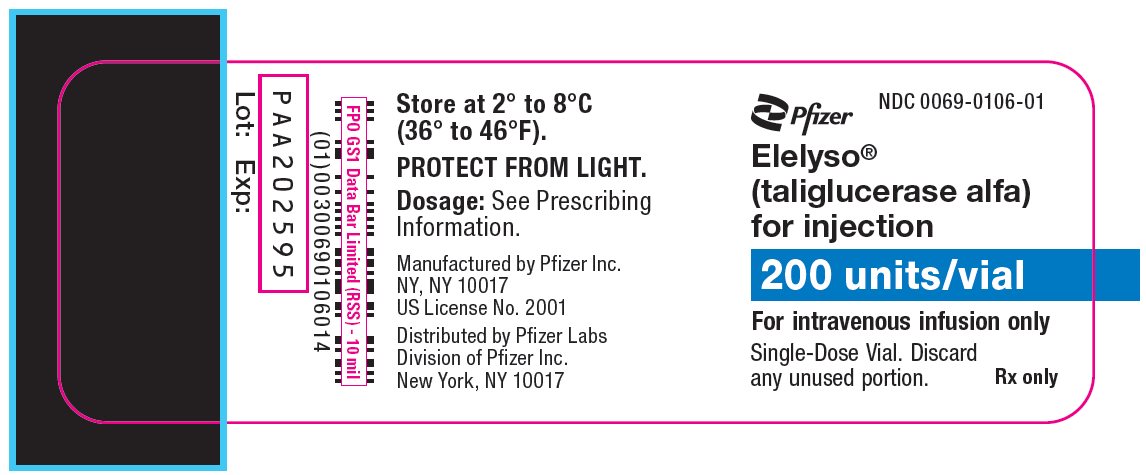
PRINCIPAL DISPLAY PANEL - 200 unit Vial Label NDC 0069-0106-01 Pfizer Elelyso ® (taliglucerase alfa) for injection 200 units/vial For intravenous infusion only Single-Dose Vial. Discard any unused portion. Rx only PRINCIPAL DISPLAY PANEL - 200 unit Vial Label
PRINCIPAL DISPLAY PANEL - 200 unit Vial Carton NDC 0069-0106-01 Pfizer Elelyso ® (taliglucerase alfa) for injection 200 units/vial For intravenous infusion only ANTI- COUNTERFEIT LABEL PLACEMENT NO VARNISH NO COPY NO INK Single-Dose Vial. Discard any unused portion. Rx only PRINCIPAL DISPLAY PANEL - 200 unit Vial Carton
Medicare Part D spend CMS · PART D · 2026 (Q1)
Reported adverse events (FAERS)
Top reported reactions
Age at onset
Reporter sex
Serious outcomes
Where does this data come from?
About this NDC listing & data coverage
What data is (and isn’t) available for this NDC — tap to expand
| NDC identity (package / product / labeler codes) | ✓ Available |
| Labeler | ✓ Available |
| Product & package description | ✓ Available |
| Marketing category & status | ✓ Available |
| Active ingredient / dosage form / route | ✓ Available |
| FDA label (SPL via DailyMed) | ✓ Available |
| Package photos | ✓ Available |
| Inactive ingredients (structured) | ✓ Available |
| NADAC pharmacy acquisition price (CMS) | — Not published for this NDC CMS publishes NADAC only for NDCs reported in its retail-pharmacy survey. |
| Orange Book / therapeutic-equivalence data | ✓ Available |
| HCPCS J-code billing crosswalk | ✓ Available |
| Medicaid utilization (CMS SDUD) | — Not published for this NDC CMS reports utilization only for NDCs with Medicaid claims above its privacy threshold. |