
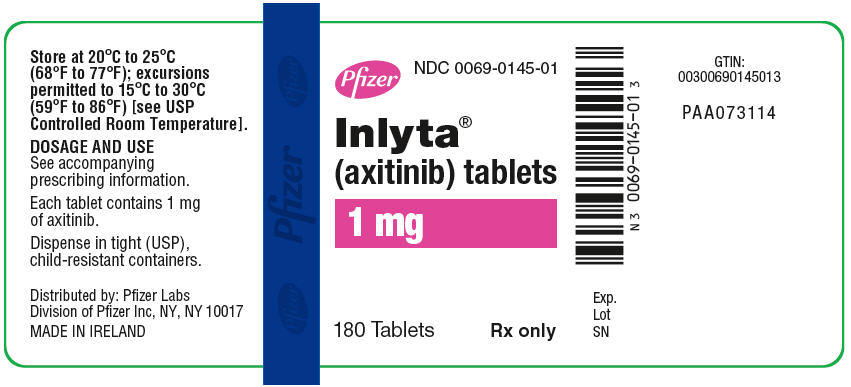
Inlyta axitinib 1 mg Tablet, Film Coated, 180-count — NDC 0069-0145-01 (Billing 00069-0145-01)
This is a package of 180 tablets of Inlyta axitinib 1 mg Tablet, Film Coated from Pfizer Laboratories Div Pfizer Inc, marketed since Jan 2012 and currently FDA-listed. It is this product's only package size.
NDC database record
One package, one record: these facts belong to NDC 0069-0145-01 alone.
- Record
- FDA NDC Directory package listing · Human prescription drug
- Code segments
- 0069 labeler · 0145 product · 01 package
- Package marketed since
- Jan 27, 2012
- Sample package
- No — commercial package
- Listing certified through
- Dec 31, 2026
- Billing quantity
- 180 EA per package
- Barcode (UPC)
- 0300690145013, 0300690151113
- Medicaid fills, this package
- 297 prescriptions in the last four reported quarters
- FDA record last changed
- Jul 24, 2026
Identity & classification
Regulatory identifiers FDA, NLM and CMS codes for this package
Drug-database identifiers Medi-Span GPI and First Databank GCN / HICL / AHFS classification
- GSN (GCN sequence number): 068497
- GCN: 31294
- GPI-14 (Medi-Span): 21335013000320
- HICL (First Databank): 038446
- AHFS class code: 10:00.00.00
- RxCUI (RxNorm): 1243004
Where does this data come from?
- FDA openFDA NDC Directory · synced Oct 1, 2026
- FDA label on DailyMed · label index refreshed Oct 6, 2026
- RxNorm (NLM RxNav) · catalog refreshed Oct 1, 2026
- Medi-Span GPI (licensed)
- First Databank (licensed) · refreshed Oct 1, 2026
RxNorm drug class
This medicine belongs to the Kinase Inhibitor class.
Where does this data come from?
- RxClass (NLM) · catalog refreshed Oct 1, 2026
Clinical
Axitinib is used alone to treat advanced renal cell carcinoma (RCC, a type of cancer that begins in the cells of the kidneys) in people who have not been treated successfully with another medication. Axitinib is used in combination with avelumab (Bavencio) or pembrolizumab (Keytruda) to treat advanced renal cell carcinoma. Axitinib is in a class of medications called kinase inhibitors. It works by blocking the action of an abnormal protein that signals cancer cells to multiply. This helps slow or stop the spread of cancer cells.
Read the full MedlinePlus article ↗- It treats advanced renal cell carcinoma, a kidney cancer. Inlyta is used with avelumab or pembrolizumab as first treatment, or alone after one earlier treatment has stopped working...
- Swallow the tablet whole with a full glass of water, twice a day about 12 hours apart. You can take it with or without food. If you miss a dose or vomit, don't double up. Just take...
- Diarrhea, tiredness, high blood pressure, nausea, poor appetite, a hoarse voice, and sore hands and feet are common. An underactive thyroid can also happen. Tell your care team abo...
- Call for signs of bleeding, a clot or stroke, very high blood pressure, heart failure symptoms like swelling or breathlessness, severe belly pain, or severe headache with confusion...
Patient education
Supplement & herbal interactions
Some supplements/herbs that may interact with Axitinib — tap one for details:
Where does this data come from?
- MedlinePlus (NLM) · refreshed Oct 1, 2026
- FDA label on DailyMed · label index refreshed Oct 6, 2026
Ask a licensed pharmacist directly — free, answered by our team.
Pricing
A drug doesn't have one price. Each row is a different public payment system, and none is what you'd pay at the counter — that depends on your insurance. The ⓘ on each row explains what it measures.
| Price system | Per each | Per package |
|---|---|---|
| Retail pharmacies payNADAC · weekly | Not in the retail survey — common for institutional, discontinued, or low-volume packs. | |
| Medicaid paysCMS SDUD · 12 mo | $117.02 | $21,063.58 / 180 tablets |
| Medicare drug plans payPart D · Q2 2026 | $112.18 | $20,191.81 / 180 tablets |
Where does this data come from?
- CMS NADAC weekly file
- CMS ASP pricing files · refreshed Sep 20, 2026
- CMS Medicaid State Drug Utilization Data · through Q4 2025
- CMS Part D plan pricing files · refreshed Sep 24, 2026
- VA National Acquisition Center price file
Packaging — all sizes for this product
| Package NDC | Description | Marketing start | Marketing end | Status |
|---|---|---|---|---|
| 00069-0145-01 You're viewing this Main listing | 180 TABLET, FILM COATED in 1 BOTTLE | 2012-01-27 | — | Active |
Therapeutic equivalents
| Product | Labeler | Pack | NADAC/unit | TE | Status | Price vs. this |
|---|---|---|---|---|---|---|
| Inlyta 1 mgthis 00069-0145-01 | Pfizer | 180 tablets | — | — | FDA listed | — |
| Inlyta 1 mg 63539-0026-01 | U.S. | 90 tablets | — | — | FDA listed | — |
Where does this data come from?
- FDA openFDA NDC Directory · synced Oct 1, 2026
- FDA Orange Book · refreshed Oct 3, 2026
- CMS NADAC weekly file
Availability & generic status
The FDA lists approved generic versions of this medicine, but that does not always mean a pharmacy can get one today. Patent rules, launch agreements, supply and pricing can affect when generics actually arrive.
Why the date isn’t exact: Generic timing can change because patents may be challenged, settled, licensed, added, removed, or worked around with a narrower label — and FDA approval does not always mean a pharmacy can get the generic today.
🛈 What do these terms mean?
- Patent
- Legal protection listed in the Orange Book that may delay generic approval or launch. Issued by the U.S. Patent & Trademark Office.
- Substance patent
- Covers the active drug molecule itself — the hardest to design around. A generic generally can’t launch until it expires.
- Formulation (product) patent
- Covers a specific formulation or dosage form. A generic can sometimes work around it with a different formulation.
- Method-of-use patent
- A patent covering one specific approved use of the drug — not necessarily the whole molecule. A generic can sometimes launch with a “skinny label” that carves out the protected use and keeps the others.
- Skinny label
- A generic label that omits a still-patented use when the FDA allows it — letting a generic reach the market for the unprotected uses.
- Exclusivity
- FDA-granted marketing protection, separate from patents — e.g. 5-yr new chemical entity, 7-yr orphan drug, or a +6-month pediatric extension.
- Paragraph IV
- A generic applicant’s formal challenge to a listed patent. It can potentially lead to earlier generic entry, but often involves litigation or a settlement.
- RLD / RS
- Reference Listed Drug — the brand product the FDA uses as the reference for generic applications. Reference Standard — the product the FDA expects generics to compare against in bioequivalence testing.
- TE / AB rating
- FDA therapeutic-equivalence rating. An AB rating generally means the FDA considers a generic therapeutically equivalent to — and substitutable for — the brand.
- LOE (loss of exclusivity)
- The latest patent or exclusivity currently listed — the loss-of-exclusivity / latest-listed-protection date shown on this page. Paragraph-IV challenges and settlements can move the real date earlier; FDA approval and a manufacturer’s decision to market can move it later.
Built from the FDA Orange Book. The bars above are scaled to each protection’s expiry; the red LOE marker is the last one to lapse.
| Patent | Type | Use code | Expires |
|---|---|---|---|
| US 12534530 ↗ | Method of use | U-4411 | Feb 3, 2035 |
| US 12534530 ↗ | Method of use | U-4411 | Feb 3, 2035 |
| US 12534530 ↗ | Method of use | U-4412 | Feb 3, 2035 |
| US 12534530 ↗ | Method of use | U-4412 | Feb 3, 2035 |
| US 10570202 ↗ | Method of use | U-2844 | Feb 3, 2035 |
| US 10570202 ↗ | Method of use | U-2844 | Feb 3, 2035 |
| US 10869924 ↗ | Method of use | U-3044 | Jan 12, 2037 |
| US 10869924 ↗ | Method of use | U-3044 | Jan 12, 2037 |
| US 8791140 ↗ | Drug substance | — | Dec 14, 2030 |
| US 8791140 ↗ | Drug substance | — | Dec 14, 2030 |
| US 8791140*PED ↗ | Drug product | — | Jun 14, 2031 |
| US 8791140*PED ↗ | Drug product | — | Jun 14, 2031 |
| US 12534530*PED ↗ | Drug product | — | Aug 3, 2035 |
| US 12534530*PED ↗ | Drug product | — | Aug 3, 2035 |
| US 10869924*PED ↗ | Drug product | — | Jul 12, 2037 |
| US 10869924*PED ↗ | Drug product | — | Jul 12, 2037 |
| US 10570202*PED ↗ | Drug product | — | Aug 3, 2035 |
| US 10570202*PED ↗ | Drug product | — | Aug 3, 2035 |
Is there a generic version of INLYTA 1 MG TABLET?
The FDA approved a generic — why can’t I get it at my pharmacy yet?
Why do different websites show different generic release dates?
What does “FDA listed” mean?
What does a patent or protection date mean here?
What does “current Orange Book estimate” mean?
Can a generic come out before the last patent expires?
Can a generic come out after the listed dates?
What is the difference between patents and exclusivity?
Why are there multiple patent dates?
Where does this data come from?
- FDA Orange Book · refreshed Oct 3, 2026
What it looks like
Where does this data come from?
- FDA label on DailyMed · label index refreshed Oct 6, 2026
Inactive Ingredients / Excipients
Inactive ingredients, also called excipients, are components of the drug product other than the active ingredient. They may include fillers, dyes, coatings, preservatives, flavors, or other formulation ingredients.
🧪 Avoiding an ingredient? See Axitinib inactive ingredients by manufacturer: every current product's list side by side, so you can ask your pharmacy for the version that does not list it.
💡 Tap an ingredient (hover on desktop) to see what it is and why it’s used.
-
UNII M28OL1HH48
Croscarmellose sodium is a plant-based substance derived from cellulose. It acts as a disintegrant, helping tablets and capsules break down quickly in the digestive system so the medicine can be absorbed.
-
UNII 1K09F3G675
Ferric oxide red is an inorganic iron compound used as a colorant in medicines. It gives tablets, capsules, or other dosage forms a red or reddish tint for identification and appearance.
-
UNII 288VBX44JC
Hypromellose is a plant-based cellulose derivative that acts as a binder and film-coating agent in medications. It helps hold tablet ingredients together and creates a smooth, protective coating on pills.
-
UNII EWQ57Q8I5X
Lactose monohydrate is a natural sugar derived from milk. It serves as a filler and binder in tablets and capsules, helping create the proper size, texture, and consistency of the medicine.
-
UNII 70097M6I30
Magnesium stearate is a salt made from magnesium and stearic acid, a fatty substance. It's used in tablets and capsules as a lubricant and glidant to help ingredients flow smoothly during manufacturing and prevent sticking.
-
UNII OP1R32D61U
Microcrystalline cellulose is a purified form of cellulose, a natural fiber from plant sources. It acts as a binder and filler in tablets and capsules, helping hold ingredients together and give the medicine its shape and size.
-
UNII 15FIX9V2JP
Titanium dioxide is a bright white mineral powder commonly used as a colorant and opacifying agent. It makes pills and tablets white or lighter in color and helps make coatings non-transparent.
-
UNII XHX3C3X673
Triacetin is a clear, oily liquid made from glycerin and acetic acid. It works as a plasticizer and solvent in medicines, helping soften coatings and improve how liquids mix together in formulations.
8 inactive ingredients listed in the exact product block matched to this NDC.
Where does this data come from?
ingredient classCode="IACT" elements from the exact product block matched by this NDC. Label-section narrative from DailyMed / the openFDA label index is shown separately when available.- FDA label on DailyMed · label index refreshed Oct 6, 2026
- FDA openFDA NDC Directory · synced Oct 1, 2026
Inactive ingredient FAQ
Are inactive ingredients the same for every manufacturer?
Why might an inactive ingredient be missing?
Can inactive ingredients matter?
Manufacturer & labeler
More NDCs from Pfizer Laboratories Div Pfizer Inc labeler code 00069
- Heparin Sodium 1000 [USP'U]/mL Injection NDC 0069-0043-01
- ELELYSO Taliglucerase alfa 200 U/5mL Injection, Powder, Lyophilized, For Solution NDC 0069-0106-01
- BOSULIF Bosutinib 100 mg Tablet, Film Coated NDC 0069-0135-01
- BOSULIF Bosutinib 500 mg Tablet, Film Coated NDC 0069-0136-01
- Inlyta axitinib 5 mg Tablet, Film Coated NDC 0069-0151-11
- Ibrance palbociclib 75 mg Capsule NDC 0069-0187-21
- Ibrance palbociclib 100 mg Capsule NDC 0069-0188-21
- Ibrance palbociclib 125 mg Capsule NDC 0069-0189-21
- BOSULIF Bosutinib 400 mg Tablet, Film Coated NDC 0069-0193-01
- Fragmin Dalteparin Sodium 2500 [iU]/.2mL Injection NDC 0069-0195-02
Where does this data come from?
- FDA openFDA NDC Directory · synced Oct 1, 2026
- Drugs@FDA
Full prescribing information FDA SPL
🎯 Indications and Usage ▾
1 INDICATIONS AND USAGE INLYTA is a kinase inhibitor indicated: • in combination with avelumab, for the first-line treatment of patients with advanced renal cell carcinoma (RCC). ( 1.1 ) • in combination with pembrolizumab, for the first-line treatment of patients with advanced RCC. ( 1.1 ) • as a single agent, for the treatment of advanced renal cell carcinoma (RCC) after failure of one prior systemic therapy. ( 1.2 )
1.1First-Line Advanced Renal Cell Carcinoma INLYTA in combination with avelumab is indicated for the first-line treatment of patients with advanced renal cell carcinoma (RCC). INLYTA in combination with pembrolizumab is indicated for the first-line treatment of patients with advanced RCC.
1.2Second-Line Advanced Renal Cell Carcinoma INLYTA as a single agent is indicated for the treatment of advanced RCC after failure of one prior systemic therapy.
⏱️ Dosage and Administration ▾
2 DOSAGE AND ADMINISTRATION • INLYTA 5 mg orally twice daily with avelumab 800 mg every 2 weeks. ( 2.1 ) • INLYTA 5 mg orally twice daily with pembrolizumab 200 mg every 3 weeks or 400 mg every 6 weeks. ( 2.1 ) • INLYTA as a single agent the starting dose is 5 mg orally twice daily.
( 2.1 ) • Dose adjustments can be made based on individual safety and tolerability. ( 2.2 ) • Administer INLYTA dose approximately 12 hours apart with or without food. ( 2.1 ) • INLYTA should be swallowed whole with a glass of water.
( 2.1 ) • See Full Prescribing Information for dosage modifications for adverse reactions. ( 2.2 ) • If a strong CYP3A4/5 inhibitor is required, decrease the INLYTA dose by approximately half. ( 2.2 ) • For patients with moderate hepatic impairment, decrease the starting dose by approximately half.
( 2.2 )
2.1Recommended Dosing First-Line Advanced RCC INLYTA in Combination with Avelumab The recommended starting dosage of INLYTA is 5 mg orally taken twice daily (12 hours apart) with or without food in combination with avelumab 800 mg administered as an intravenous infusion over 60 minutes every 2 weeks until disease progression or unacceptable toxicity. When INLYTA is used in combination with avelumab, dose escalation of INLYTA above the initial 5 mg dose may be considered at intervals of two weeks or longer. Review the Full Prescribing Information for recommended avelumab dosing information.
INLYTA in Combination with Pembrolizumab The recommended starting dosage of INLYTA is 5 mg orally twice daily (12 hours apart) with or without food in combination with pembrolizumab 200 mg every 3 weeks or 400 mg every 6 weeks administered as an intravenous infusion over 30 minutes until disease progression or unacceptable toxicity. When INLYTA is used in combination with pembrolizumab, dose escalation of INLYTA above the initial 5 mg dose may be considered at intervals of six weeks or longer. Review the Full Prescribing Information for recommended pembrolizumab dosing information.
Second-Line Advanced RCC When INLYTA is used as a single agent, the recommended starting oral dose is 5 mg twice daily. Administer INLYTA doses approximately 12 hours apart with or without food. Important Administration Instructions Advise patients to swallow INLYTA whole with a full glass of water.
If the patient vomits or misses a dose, an additional dose should not be taken. Advise the patient to take the next prescribed dose at the usual time.
2.2Dose Modification Guidelines Dose increase or reduction is recommended based on individual safety and tolerability. Recommended INLYTA dosage increases and reductions are provided in Table 1. Over the course of treatment, patients who tolerate INLYTA for at least two consecutive weeks with no adverse reactions Grade >2 (according to the Common Toxicity Criteria for Adverse Events [CTCAE]), are normotensive, and are not receiving anti-hypertension medication, may have their dose increased.
Table 1: Recommended Dosage Increases and Reductions for INLYTA Dose Modification Dose Regimen Recommended starting dosage 5 mg twice daily Dosage increase First dose increase 7 mg twice daily Second dose increase 10 mg twice daily Dosage reduction for management of adverse drug reactions First dose reduction from 5 mg twice daily 3 mg twice daily Second dose reduction 2 mg twice daily Recommended dosage modifications for adverse reactions for INLYTA are provided in Table 2. Table 2: Recommended Dosage Modification for INLYTA for Adverse Reactions Adverse Reaction Severity Dosage Modifications for INLYTA Hypertension [see Warnings and Precautions (5.1) ] SBP >150 mmHg or DBP >100 mmHg despite antihypertensive treatment • Reduce dose by one level.
SBP >160 mmHg or DBP >105 mmHg • Withhold until BP <150/100 mmHg. • Resume at a reduced dose. Grade 4 or hypertensive crisis • Permanently discontinue. Hemorrhage [see Warnings and Precautions (5.4) ] Grade 3 or 4 • Withhold until resolution to Grade 0 or 1 or baseline. • Either… [Excerpted — this section continues on DailyMed.]
💊 Dosage Forms and Strengths ▾
3 DOSAGE FORMS AND STRENGTHS • 1 mg tablets of INLYTA: red, film-coated, oval tablets, debossed with "Pfizer" on one side and "1 XNB" on the other side. • 5 mg tablets of INLYTA: red, film-coated, triangular tablets, debossed with "Pfizer" on one side and "5 XNB" on the other side. 1 mg and 5 mg tablets ( 3 )
⛔ Contraindications ▾
4 CONTRAINDICATIONS None. None. ( 4 )
⚠️ Warnings and Cautions ▾
5 WARNINGS AND PRECAUTIONS • Hypertension: Hypertension including hypertensive crisis has been observed. Blood pressure should be well-controlled prior to initiating INLYTA. Monitor for hypertension and treat as needed.
Withhold and then dose reduce INLYTA or permanently discontinue based on severity of hypertension. ( 5.1 ) • Arterial and Venous Thromboembolic Events: Arterial and venous thrombotic events have been observed and can be fatal. Use with caution in patients who are at increased risk for these events.
Permanently discontinue INLYTA if an arterial thromboembolic event occurs during treatment. Withhold INLYTA and then resume at same dose or permanently discontinue based on severity of VTE. ( 5.2 , 5.3 ) • Hemorrhage: Hemorrhagic events, including fatal events, have been reported.
INLYTA has not been studied in patients with evidence of untreated brain metastasis or recent active gastrointestinal bleeding and should not be used in those patients. Withhold and then dose reduce INLYTA or discontinue based on severity and persistence of hemorrhage. ( 5.4 ) • Cardiac Failure: Cardiac failure has been observed and can be fatal.
Monitor for signs or symptoms of cardiac failure throughout treatment with INLYTA. Management of cardiac failure may require dose reduction, dose interruption or permanent discontinuation of INLYTA. ( 5.5 ) • Gastrointestinal Perforation and Fistula Formation: Gastrointestinal perforation and fistula, including death, have occurred.
Use with caution in patients at risk for gastrointestinal perforation or fistula. ( 5.6 ) • Hypothyroidism: Hypothyroidism requiring thyroid hormone replacement has been reported. Monitor thyroid function before initiation of, and periodically throughout, treatment with INLYTA.
( 5.7 ) • Impaired Wound Healing: Withhold INLYTA for at least 2 days prior to elective surgery. Do not administer for at least 2 weeks following major surgery and until adequate wound healing. Resume INLYTA at a reduced dose or discontinue based on severity and persistence of the impaired wound healing.
The safety of resumption of INLYTA after resolution of wound healing complications has not been established. ( 5.8 ) • Reversible Posterior Leukoencephalopathy Syndrome (RPLS): RPLS has been observed. Permanently discontinue INLYTA if signs or symptoms of RPLS occur.
( 5.9 ) • Proteinuria: Monitor for proteinuria before initiation of, and periodically throughout, treatment with INLYTA. For moderate to severe proteinuria, withhold and then dose reduce INLYTA. ( 5.10 ) • Hepatotoxicity: Liver enzyme elevation has occurred during treatment with INLYTA as a single agent.
Monitor ALT, AST and bilirubin before initiation of, and periodically throughout, treatment with INLYTA. When used in combination with avelumab or pembrolizumab, higher frequencies of Grade 3 and 4 ALT and AST elevation may occur. Consider more frequent monitoring of liver enzymes.
Withhold INLYTA and avelumab or pembrolizumab, initiate corticosteroid therapy as needed, and/or permanently discontinue the combination for severe or life-threatening hepatotoxicity. ( 5.11 ) • Use in Patients with Hepatic Impairment: Decrease the starting dose of INLYTA if used in patients with moderate hepatic impairment. INLYTA has not been studied in patients with severe hepatic impairment.
( 2.2 , 5.12 ) • Major adverse cardiovascular events (INLYTA in combination with avelumab): Optimize management of cardiovascular risk factors. Permanently discontinue INLYTA in combination with avelumab for Grade 3–4 events. ( 5.13 ) • Embryo-Fetal Toxicity: INLYTA can cause fetal harm.
Advise patients of the potential risk to the fetus and to use effective contraception. ( 5.14 , 8.1 , 8.3 )
5.1Hypertension In a controlled clinical study with INLYTA for the treatment of patients with RCC, hypertension was reported in 145/359 patients (40%) receiving INLYTA and 103/355 patients (29%) receiving sorafenib. Grade 3/4 hypertension was observed in 56/359 patients (16%… [Excerpted — this section continues on DailyMed.]
🤒 Adverse Reactions ▾
6 ADVERSE REACTIONS The following clinically significant adverse reactions are discussed elsewhere in the labeling [see Warnings and Precautions (5) ] : • Hypertension [see Warnings and Precautions (5.1) ] • Arterial thromboembolic events [see Warnings and Precautions (5.2) ] • Venous thromboembolic events [see Warnings and Precautions (5.3) ] • Hemorrhage [see Warnings and Precautions (5.4) ] • Cardiac failure [see Warnings and Precautions (5.5) ] • Gastrointestinal perforation and fistula formation [see Warnings and Precautions (5.6) ] • Thyroid dysfunction [see Warnings and Precautions (5.7) ] • Reversible posterior leukoencephalopathy syndrome [see Warnings and Precautions (5.9) ] • Proteinuria [see Warnings and Precautions (5.10) ] • Hepatotoxicity [see Warnings and Precautions (5.11) ] • Hepatic impairment [see Warnings and Precautions (5.12) ] Most common adverse reactions (≥20%) are: INLYTA in combination with avelumab: diarrhea, fatigue, hypertension, musculoskeletal pain, nausea, mucositis, palmar-plantar erythrodysesthesia, dysphonia, decreased appetite, hypothyroidism, rash, hepatotoxicity, cough, dyspnea, abdominal pain, and headache.
( 6.1 ) INLYTA in combination with pembrolizumab: diarrhea, fatigue/asthenia, hypertension, hepatotoxicity, hypothyroidism, decreased appetite, palmar-plantar erythrodysesthesia, nausea, stomatitis/mucosal inflammation, dysphonia, rash, cough, and constipation. ( 6.1 ) INLYTA as a single agent: diarrhea, hypertension, fatigue, decreased appetite, nausea, dysphonia, palmar-plantar erythrodysesthesia (hand-foot) syndrome, weight decreased, vomiting, asthenia, and constipation. ( 6.1 ) To report SUSPECTED ADVERSE REACTIONS, contact Pfizer Inc. at 1-800-438-1985 or FDA at 1-800-FDA-1088 or www.fda.gov/medwatch .
6.1Clinical Trials Experience Because clinical trials are conducted under widely varying conditions, adverse reaction rates observed in the clinical trials of a drug cannot be directly compared to rates in the clinical trials of another drug and may not reflect the rates observed in clinical practice. The safety of INLYTA has been evaluated in combination with avelumab in JAVELIN Renal 101 and pembrolizumab in KEYNOTE-426 for the first-line treatment of patients with advanced RCC [see Clinical Studies (14.1) ] . The data described [see Adverse Reactions (6.1) ] reflect exposure to INLYTA in combination with avelumab in 434 patients and pembrolizumab in 429 patients [see Clinical Studies (14.1) ] .
The safety of INLYTA has been evaluated in 715 patients in second-line monotherapy studies, which included 537 patients with advanced RCC. The data described [see Adverse Reactions (6.1) ] reflect exposure to INLYTA in 359 patients with advanced RCC who participated in a randomized clinical study versus sorafenib [see Clinical Studies (14.2) ] . First-Line Advanced RCC INLYTA in Combination with Avelumab The safety of INLYTA in combination with avelumab was evaluated in JAVELIN Renal 101.
Patients with autoimmune disease other than type I diabetes mellitus, vitiligo, psoriasis, or thyroid disorders not requiring immunosuppressive treatment were excluded. Patients received INLYTA 5 mg twice daily (N=434) in combination with avelumab 10 mg/kg every 2 weeks administered or sunitinib 50 mg once daily for 4 weeks followed by 2 weeks off (N=439). In the INLYTA plus avelumab arm, 70% were exposed to avelumab for ≥6 months and 29% were exposed for ≥1 year in JAVELIN Renal 101 [see Clinical Studies (14.1) ] .
The median age of patients treated with INLYTA in combination with avelumab was 62 years (range: 29 to 83), 38% of patients were 65 years or older, 71% were male, 75% were White, and the Eastern Cooperative Oncology Group (ECOG) performance score was 0 (64%) or 1 (36%). Fatal adverse reactions occurred in 1.8% of patients receiving INLYTA in combination with avelumab. These included sudden cardiac death (1.2%), stroke (0.2%), myocarditis (0.2%), and necrotizing pancreatitis (0.2%).
Serious… [Excerpted — this section continues on DailyMed.]
🔄 Drug Interactions ▾
7 DRUG INTERACTIONS • Avoid strong CYP3A4/5 inhibitors. If unavoidable, reduce the INLYTA dose. ( 2.2 , 7.1 ) • Avoid strong CYP3A4/5 inducers. ( 7.2 )
7.1CYP3A4/5 Inhibitors Co-administration of ketoconazole, a strong inhibitor of CYP3A4/5, increased the plasma exposure of axitinib in healthy volunteers. Co-administration of INLYTA with strong CYP3A4/5 inhibitors should be avoided. Grapefruit or grapefruit juice may also increase axitinib plasma concentrations and should be avoided.
Selection of concomitant medication with no or minimal CYP3A4/5 inhibition potential is recommended. If a strong CYP3A4/5 inhibitor must be co-administered, the INLYTA dose should be reduced [see Dosage and Administration (2.2) and Clinical Pharmacology (12.3) ] .
7.2CYP3A4/5 Inducers Co-administration of rifampin, a strong inducer of CYP3A4/5, reduced the plasma exposure of axitinib in healthy volunteers. Co-administration of INLYTA with strong CYP3A4/5 inducers (e.g., rifampin, dexamethasone, phenytoin, carbamazepine, rifabutin, rifapentine, phenobarbital, and St. John's wort) should be avoided.
Selection of concomitant medication with no or minimal CYP3A4/5 induction potential is recommended [see Dosage and Administration (2.2) , Clinical Pharmacology (12.3) ] . Moderate CYP3A4/5 inducers (e.g., bosentan, efavirenz, etravirine, modafinil, and nafcillin) may also reduce the plasma exposure of axitinib and should be avoided if possible.
👥 Use in Specific Populations ▾
8 USE IN SPECIFIC POPULATIONS Lactation: Advise not to breastfeed. ( 8.2 )
8.1Pregnancy Risk Summary Based on findings in animal studies and its mechanism of action, INLYTA can cause fetal harm when administered to a pregnant woman. There are no available human data to inform the drug-associated risk. In developmental toxicity studies, axitinib was teratogenic, embryotoxic and fetotoxic in mice at exposures lower than human exposures at the recommended starting dose (see Data ) .
Advise females of reproductive potential of the potential risk to a fetus. The background risk of major birth defects and miscarriage for the indicated populations are unknown. However, the background risk in the United States (U.S.) general population of major birth defects is 2%–4% and of miscarriage is 15%–20% of clinically recognized pregnancies.
When INLYTA is used in combination with avelumab or pembrolizumab, refer to the full prescribing information of avelumab or pembrolizumab for pregnancy information. Data Animal Data Oral axitinib administered twice daily to female mice prior to mating and through the first week of pregnancy caused an increase in post-implantation loss at all doses tested (≥15 mg/kg/dose, approximately 10 times the systemic exposure (AUC) in patients at the recommended starting dose). In an embryo-fetal developmental toxicity study, pregnant mice received oral doses of 0.15, 0.5 and 1.5 mg/kg/dose axitinib twice daily during the period of organogenesis.
Embryo-fetal toxicities observed in the absence of maternal toxicity included malformation (cleft palate) at 1.5 mg/kg/dose (approximately 0.5 times the AUC in patients at the recommended starting dose) and variation in skeletal ossification at ≥0.5 mg/kg/dose (approximately 0.15 times the AUC in patients at the recommended starting dose).
8.2Lactation Risk Summary There are no data on the presence of axitinib in human milk, or its effects on the breastfed child or on milk production. Because of the potential for serious adverse reactions in a breastfed child from INLYTA, advise lactating women not to breastfeed during treatment and for 2 weeks after the last dose. When INLYTA is used in combination with avelumab or pembrolizumab, refer to the full prescribing information of avelumab or pembrolizumab for lactation information.
8.3Females and Males of Reproductive Potential Based on findings in animal studies, INLYTA can cause fetal harm when administered to a pregnant woman [see Use in Specific Populations (8.1) ]. When INLYTA is used in combination with avelumab or pembrolizumab, refer to the full prescribing information of avelumab or pembrolizumab for contraception information. Pregnancy Testing Verify pregnancy status in females of reproductive potential prior to initiating treatment with INLYTA.
Contraception Females Advise females of reproductive potential to use effective contraception during treatment with INLYTA and for 1 week after the last dose. Males Based on findings in animal studies, advise males with female partners of reproductive potential to use effective contraception during treatment and for 1 week after the last dose. Infertility Females and Males Based on findings in animals, INLYTA may impair fertility in females and males of reproductive potential [see Nonclinical Toxicology (13.1) ] .
8.4Pediatric Use The safety and effectiveness of INLYTA in pediatric patients have not been established. The safety and effectiveness of INLYTA were assessed, but not established, in two open label studies: a dose finding study of INLYTA as a single agent in 17 pediatric patients aged 5 to <17 years with recurrent or refractory solid tumors (ADVL1315, NCT02164838) and a randomized study of INLYTA as a single agent or in combination in 7 pediatric patients aged 7 to <17 years (AREN1721, NCT03595124). No new safety signals were observed with INLYTA in pediatric patients across these studies.
Exposure in pediatric patients who received INLYTA at the maximum tolerated… [Excerpted — this section continues on DailyMed.]
🤰 Pregnancy ▾
8.1Pregnancy Risk Summary Based on findings in animal studies and its mechanism of action, INLYTA can cause fetal harm when administered to a pregnant woman. There are no available human data to inform the drug-associated risk. In developmental toxicity studies, axitinib was teratogenic, embryotoxic and fetotoxic in mice at exposures lower than human exposures at the recommended starting dose (see Data ) .
Advise females of reproductive potential of the potential risk to a fetus. The background risk of major birth defects and miscarriage for the indicated populations are unknown. However, the background risk in the United States (U.S.) general population of major birth defects is 2%–4% and of miscarriage is 15%–20% of clinically recognized pregnancies.
When INLYTA is used in combination with avelumab or pembrolizumab, refer to the full prescribing information of avelumab or pembrolizumab for pregnancy information. Data Animal Data Oral axitinib administered twice daily to female mice prior to mating and through the first week of pregnancy caused an increase in post-implantation loss at all doses tested (≥15 mg/kg/dose, approximately 10 times the systemic exposure (AUC) in patients at the recommended starting dose). In an embryo-fetal developmental toxicity study, pregnant mice received oral doses of 0.15, 0.5 and 1.5 mg/kg/dose axitinib twice daily during the period of organogenesis.
Embryo-fetal toxicities observed in the absence of maternal toxicity included malformation (cleft palate) at 1.5 mg/kg/dose (approximately 0.5 times the AUC in patients at the recommended starting dose) and variation in skeletal ossification at ≥0.5 mg/kg/dose (approximately 0.15 times the AUC in patients at the recommended starting dose).
🧒 Pediatric Use ▾
8.4Pediatric Use The safety and effectiveness of INLYTA in pediatric patients have not been established. The safety and effectiveness of INLYTA were assessed, but not established, in two open label studies: a dose finding study of INLYTA as a single agent in 17 pediatric patients aged 5 to <17 years with recurrent or refractory solid tumors (ADVL1315, NCT02164838) and a randomized study of INLYTA as a single agent or in combination in 7 pediatric patients aged 7 to <17 years (AREN1721, NCT03595124). No new safety signals were observed with INLYTA in pediatric patients across these studies.
Exposure in pediatric patients who received INLYTA at the maximum tolerated dosage were lower than those previously observed in adults who received the approved recommended starting dosage. Juvenile Animal Toxicity Data Toxicities in bone and teeth were observed in immature mice and dogs administered oral axitinib twice daily for 1 month or longer. Effects in bone consisted of thickened growth plates in mice and dogs at ≥15 mg/kg/dose (approximately 6 and 15 times, respectively, the systemic exposure (AUC) in patients at the recommended starting dose).
Abnormalities in growing incisor teeth (including dental caries, malocclusions and broken and/or missing teeth) were observed in mice administered oral axitinib twice daily at ≥5 mg/kg/dose (approximately 1.5 times the AUC in patients at the recommended starting dose). Other toxicities of potential concern to pediatric patients have not been evaluated in juvenile animals.
🧓 Geriatric Use ▾
8.5Geriatric Use In a controlled clinical study with INLYTA for the treatment of patients with RCC, 123/359 patients (34%) treated with INLYTA were ≥65 years of age. Although greater sensitivity in some older individuals cannot be ruled out, no overall differences were observed in the safety and effectiveness of INLYTA between patients who were ≥65 years of age and younger. Of the 434 patients randomized to INLYTA 5 mg twice daily administered in combination with avelumab 10 mg/kg in the JAVELIN Renal 101 trial, 38% were 65 years or older and 8% were 75 years or older.
No overall difference in safety or efficacy was reported between patients who were ≥65 years of age and younger. Of the 432 patients randomized to INLYTA 5 mg twice daily administered in combination with pembrolizumab 200 mg in the KEYNOTE-426 trial, 40% were 65 years or older. No overall difference in safety or efficacy was reported between patients who were ≥65 years of age and younger.
No dosage adjustment is required in elderly patients [see Dosage and Administration (2.2) , Clinical Pharmacology (12.3) ] .
🆘 Overdosage ▾
10 OVERDOSAGE There is no specific treatment for INLYTA overdose. In a controlled clinical study with INLYTA for the treatment of patients with RCC, 1 patient inadvertently received a dose of 20 mg twice daily for 4 days and experienced dizziness (Grade 1). In a clinical dose finding study with INLYTA, subjects who received starting doses of 10 mg twice daily or 20 mg twice daily experienced adverse reactions which included hypertension, seizures associated with hypertension, and fatal hemoptysis.
In cases of suspected overdose, INLYTA should be withheld and supportive care instituted.
🧬 Clinical Pharmacology ▾
12 CLINICAL PHARMACOLOGY
12.1Mechanism of Action Axitinib has been shown to inhibit receptor tyrosine kinases including vascular endothelial growth factor receptors (VEGFR)-1, VEGFR-2, and VEGFR-3 at therapeutic plasma concentrations. These receptors are implicated in pathologic angiogenesis, tumor growth, and cancer progression. VEGF-mediated endothelial cell proliferation and survival were inhibited by axitinib in vitro and in mouse models.
Axitinib was shown to inhibit tumor growth and phosphorylation of VEGFR-2 in tumor xenograft mouse models.
12.2Pharmacodynamics The effect of a single oral dose of INLYTA (5 mg) in the absence and presence of 400 mg ketoconazole on the QTc interval was evaluated in a randomized, single-blinded, two-way crossover study in 35 healthy subjects. No large changes in mean QTc interval (i.e., >20 ms) from placebo were detected up to 3 hours post-dose. However, small increases in mean QTc interval (i.e., <10 ms) cannot be ruled out.
12.3Pharmacokinetics The population pharmacokinetic analysis pooled data from 17 trials in healthy subjects and patients with cancer. A two-compartment disposition model with first-order absorption and lag-time adequately describes the axitinib concentration-time profile. Absorption and Distribution Following single oral 5-mg dose administration, the median Tmax ranged from 2.5 to 4.1 hours.
Based on the plasma half-life, steady state is expected within 2 to 3 days of dosing. Dosing of axitinib at 5 mg twice daily resulted in approximately 1.4-fold accumulation compared to administration of a single dose. At steady state, axitinib exhibits approximately linear pharmacokinetics within the 1-mg to 20-mg dose range.
The mean absolute bioavailability of axitinib after an oral 5 mg dose is 58%. Compared to overnight fasting, administration of INLYTA with a moderate fat meal resulted in 10% lower AUC and a high fat, high-calorie meal resulted in 19% higher AUC. INLYTA can be administered with or without food [see Dosage and Administration (2.1) ] .
Axitinib is highly bound (>99%) to human plasma proteins with preferential binding to albumin and moderate binding to α1-acid glycoprotein. In patients with advanced RCC (n=20), at the 5 mg twice daily dose in the fed state, the geometric mean (CV%) C max and AUC 0–24 were 27.8 (79%) ng/mL and 265 (77%) ng.h/mL, respectively. The geometric mean (CV%) clearance and apparent volume of distribution were 38 (80%) L/h and 160 (105%) L, respectively.
Metabolism and Elimination The plasma half-life of INLYTA ranges from 2.5 to 6.1 hours. Axitinib is metabolized primarily in the liver by CYP3A4/5 and to a lesser extent by CYP1A2, CYP2C19, and UGT1A1. Following oral administration of a 5-mg radioactive dose of axitinib, approximately 41% of the radioactivity was recovered in feces and approximately 23% was recovered in urine.
Unchanged axitinib, accounting for 12% of the dose, was the major component identified in feces. Unchanged axitinib was not detected in urine; the carboxylic acid and sulfoxide metabolites accounted for the majority of radioactivity in urine. In plasma, the N-glucuronide metabolite represented the predominant radioactive component (50% of circulating radioactivity) and unchanged axitinib and the sulfoxide metabolite each accounted for approximately 20% of the circulating radioactivity.
The sulfoxide and N-glucuronide metabolites show approximately ≥400-fold less in vitro potency against VEGFR-2 compared to axitinib. Drug-Drug Interactions Effects of Other Drugs on INLYTA Axitinib is metabolized primarily in the liver by CYP3A4/5. Additionally, the aqueous solubility of axitinib is pH dependent, with higher pH resulting in lower solubility.
The effects of a strong CYP3A4/5 inhibitor, a strong CYP3A4/5 inducer, and an antacid on the pharmacokinetics of axitinib are presented in Figure 1 [see Dosage and Administration (2.2) and Drug Interactions (7.1 , 7.2) ] . Figure 1. Impact of Co-administered Drugs and Hepatic Im… [Excerpted — this section continues on DailyMed.]
🧬 Mechanism of Action ▾
12.1Mechanism of Action Axitinib has been shown to inhibit receptor tyrosine kinases including vascular endothelial growth factor receptors (VEGFR)-1, VEGFR-2, and VEGFR-3 at therapeutic plasma concentrations. These receptors are implicated in pathologic angiogenesis, tumor growth, and cancer progression. VEGF-mediated endothelial cell proliferation and survival were inhibited by axitinib in vitro and in mouse models.
Axitinib was shown to inhibit tumor growth and phosphorylation of VEGFR-2 in tumor xenograft mouse models.
📦 How Supplied / Storage and Handling ▾
16 HOW SUPPLIED/STORAGE AND HANDLING INLYTA tablets are supplied as follows: • 1 mg tablets are red film-coated, oval tablets debossed with "Pfizer" on one side and "1 XNB" on the other; available in bottles of 180: NDC 0069-0145-01. • 5 mg tablets are red film-coated, triangular tablets debossed with "Pfizer" on one side and "5 XNB" on the other; available in bottles of 60: NDC 0069-0151-11. • Store at 20°C to 25°C (68°F to 77°F); excursions permitted to 15°C to 30°C (59°F to 86°F) [see USP Controlled Room Temperature].
📋 Description ▾
11 DESCRIPTION INLYTA (axitinib) is a kinase inhibitor. Axitinib has the chemical name N-methyl-2-[3-((E)-2-pyridin-2-yl-vinyl)-1H-indazol-6-ylsulfanyl]-benzamide. The molecular formula is C22H18N4OS and the molecular weight is 386.47 Daltons.
The chemical structure is: Axitinib is a white to light-yellow powder with a pKa of 4.8. The solubility of axitinib in aqueous media over the range pH 1.1 to pH 7.8 is in excess of 0.2 µg/mL. The partition coefficient (n-octanol/water) is 3.5.
INLYTA is supplied as red, film-coated tablets containing either 1 mg or 5 mg of axitinib together with microcrystalline cellulose, lactose monohydrate, croscarmellose sodium, magnesium stearate, and Opadry ® II red 32K15441 as inactive ingredients. The Opadry II red 32K15441 film coating contains lactose monohydrate, HPMC 2910/Hypromellose 15cP, titanium dioxide, triacetin (glycerol triacetate), and red iron oxide. Chemical Structure
💬 Information for Patients ▾
17 PATIENT COUNSELING INFORMATION Advise the patient to read the FDA-approved patient labeling (Patient Information). Hypertension Advise patients that hypertension may develop during INLYTA treatment and that blood pressure should be monitored regularly during treatment [see Warnings and Precautions (5.1) ] . Arterial/Venous Thromboembolic Events Advise patients that arterial and venous thromboembolic events have been observed during INLYTA treatment and to inform their doctor if they experience symptoms suggestive of thromboembolic events [see Warnings and Precautions (5.2 , 5.3) ] .
Hemorrhage Advise patients that INLYTA may increase the risk of bleeding and to promptly inform their doctor of any bleeding episodes [see Warnings and Precautions (5.4) ] . Cardiac Failure Advise patients that cardiac failure may develop during INLYTA treatment and that signs or symptoms of cardiac failure should be regularly monitored for during treatment [see Warnings and Precautions (5.5) ] . Gastrointestinal Disorders Advise patients that gastrointestinal disorders such as diarrhea, nausea, vomiting, and constipation may develop during INLYTA treatment and to seek immediate medical attention if they experience persistent or severe abdominal pain because cases of gastrointestinal perforation and fistula have been reported in patients taking INLYTA [see Warnings and Precautions (5.6) and Adverse Reactions (6.1) ] .
Abnormal Thyroid Function Advise patients that abnormal thyroid function may develop during INLYTA treatment and to inform their doctor if symptoms of abnormal thyroid function occur [see Warnings and Precautions (5.7) ] . Impaired Wound Healing Advise patients that INLYTA may impair wound healing. Advise patients to inform their healthcare provider of any planned surgical procedure [see Warnings and Precautions (5.8) ] .
Reversible Posterior Leukoencephalopathy Syndrome Advise patients to inform their doctor if they have worsening of neurological function consistent with RPLS (headache, seizure, lethargy, confusion, blindness and other visual and neurologic disturbances) [see Warnings and Precautions (5.9) ] . Hepatotoxicity Inform patients of the signs and symptoms of hepatotoxicity. Advise patients to contact their healthcare provider immediately for signs or symptoms of hepatotoxicity [see Warnings and Precautions (5.11) ].
Major Adverse Cardiovascular Events Advise patients receiving INLYTA in combination with avelumab to contact their healthcare provider immediately for signs or symptoms of cardiovascular events including but not limited to new or worsening chest discomfort, dyspnea, or peripheral edema [see Warnings and Precautions (5.13) ] . Embryo-Fetal Toxicity Advise females to inform their healthcare provider if they are pregnant or become pregnant. Inform female patients of the risk to a fetus and potential loss of the pregnancy [see Use in Specific Populations (8.1) ] .
Advise females of reproductive potential to use effective contraception during treatment with INLYTA and for 1 week after the last dose. Advise male patients with female partners of reproductive potential to use effective contraception during treatment and for 1 week following the last dose [see Warnings and Precautions (5.14) and Use in Specific Populations (8.3) ] . When INLYTA is used in combination with avelumab or pembrolizumab, refer to the full prescribing information of avelumab or pembrolizumab for pregnancy and contraception information.
Lactation Advise patients not to breastfeed while taking INLYTA and for 2 weeks after receiving the last dose [see Use in Specific Populations (8.2) ] . When INLYTA is used in combination with avelumab or pembrolizumab, refer to the full prescribing information of avelumab or pembrolizumab for lactation information. Infertility Advise males and females of reproductive potential that INLYTA may impair fertility [see Use in Specific Populations (8.3) ] .
Concomitant Medications Advise patients to inform their d… [Excerpted — this section continues on DailyMed.]
🧬 Pharmacokinetics ▾
12.3Pharmacokinetics The population pharmacokinetic analysis pooled data from 17 trials in healthy subjects and patients with cancer. A two-compartment disposition model with first-order absorption and lag-time adequately describes the axitinib concentration-time profile. Absorption and Distribution Following single oral 5-mg dose administration, the median Tmax ranged from 2.5 to 4.1 hours.
Based on the plasma half-life, steady state is expected within 2 to 3 days of dosing. Dosing of axitinib at 5 mg twice daily resulted in approximately 1.4-fold accumulation compared to administration of a single dose. At steady state, axitinib exhibits approximately linear pharmacokinetics within the 1-mg to 20-mg dose range.
The mean absolute bioavailability of axitinib after an oral 5 mg dose is 58%. Compared to overnight fasting, administration of INLYTA with a moderate fat meal resulted in 10% lower AUC and a high fat, high-calorie meal resulted in 19% higher AUC. INLYTA can be administered with or without food [see Dosage and Administration (2.1) ] .
Axitinib is highly bound (>99%) to human plasma proteins with preferential binding to albumin and moderate binding to α1-acid glycoprotein. In patients with advanced RCC (n=20), at the 5 mg twice daily dose in the fed state, the geometric mean (CV%) C max and AUC 0–24 were 27.8 (79%) ng/mL and 265 (77%) ng.h/mL, respectively. The geometric mean (CV%) clearance and apparent volume of distribution were 38 (80%) L/h and 160 (105%) L, respectively.
Metabolism and Elimination The plasma half-life of INLYTA ranges from 2.5 to 6.1 hours. Axitinib is metabolized primarily in the liver by CYP3A4/5 and to a lesser extent by CYP1A2, CYP2C19, and UGT1A1. Following oral administration of a 5-mg radioactive dose of axitinib, approximately 41% of the radioactivity was recovered in feces and approximately 23% was recovered in urine.
Unchanged axitinib, accounting for 12% of the dose, was the major component identified in feces. Unchanged axitinib was not detected in urine; the carboxylic acid and sulfoxide metabolites accounted for the majority of radioactivity in urine. In plasma, the N-glucuronide metabolite represented the predominant radioactive component (50% of circulating radioactivity) and unchanged axitinib and the sulfoxide metabolite each accounted for approximately 20% of the circulating radioactivity.
The sulfoxide and N-glucuronide metabolites show approximately ≥400-fold less in vitro potency against VEGFR-2 compared to axitinib. Drug-Drug Interactions Effects of Other Drugs on INLYTA Axitinib is metabolized primarily in the liver by CYP3A4/5. Additionally, the aqueous solubility of axitinib is pH dependent, with higher pH resulting in lower solubility.
The effects of a strong CYP3A4/5 inhibitor, a strong CYP3A4/5 inducer, and an antacid on the pharmacokinetics of axitinib are presented in Figure 1 [see Dosage and Administration (2.2) and Drug Interactions (7.1 , 7.2) ] . Figure 1. Impact of Co-administered Drugs and Hepatic Impairment on Axitinib Pharmacokinetics Figure 1 Effects of INLYTA on Other Drugs In vitro studies demonstrated that axitinib has the potential to inhibit CYP1A2 and CYP2C8.
However, co-administration of axitinib with paclitaxel, a CYP2C8 substrate, did not increase plasma concentrations of paclitaxel in patients. In vitro studies indicated that axitinib does not inhibit CYP2A6, CYP2C9, CYP2C19, CYP2D6, CYP2E1, CYP3A4/5, or UGT1A1 at therapeutic plasma concentrations. In vitro studies in human hepatocytes indicated that axitinib does not induce CYP1A1, CYP1A2, or CYP3A4/5.
Axitinib is an inhibitor of the efflux transporter P-glycoprotein (P-gp) in vitro. However, INLYTA is not expected to inhibit P-gp at therapeutic plasma concentrations. Specific Populations Patients with Hepatic Impairment The effects of hepatic impairment on the pharmacokinetics of axitinib are presented in Figure 1 [see Dosage and Administration (2.2) , Warnings and Precautions (5.12) , Use in Spe… [Excerpted — this section continues on DailyMed.]
🧬 Pharmacodynamics ▾
12.2Pharmacodynamics The effect of a single oral dose of INLYTA (5 mg) in the absence and presence of 400 mg ketoconazole on the QTc interval was evaluated in a randomized, single-blinded, two-way crossover study in 35 healthy subjects. No large changes in mean QTc interval (i.e., >20 ms) from placebo were detected up to 3 hours post-dose. However, small increases in mean QTc interval (i.e., <10 ms) cannot be ruled out.
🔬 Clinical Studies ▾
14 CLINICAL STUDIES
14.1First-Line Advanced RCC INLYTA in Combination with Avelumab The efficacy and safety of INLYTA in combination with avelumab was demonstrated in the JAVELIN Renal 101 trial (NCT02684006), a randomized, multicenter, open-label, study of INLYTA in combination with avelumab in 886 patients with untreated advanced RCC regardless of tumor PD-L1 expression [intent-to-treat (ITT) population]. Patients with autoimmune disease or conditions requiring systemic immunosuppression were excluded. Randomization was stratified according to Eastern Cooperative Oncology Group (ECOG) Performance Status (PS) (0 vs.
1) and region (United States vs. Canada/Western Europe vs. the rest of the world). Patients were randomized (1:1) to one of the following treatment arms: • INLYTA 5 mg twice daily orally was given in combination with avelumab 10 mg/kg intravenous infusion every 2 weeks (N=442).
Patients who tolerated INLYTA 5 mg twice daily without Grade 2 or greater INLYTA-related adverse events for 2 consecutive weeks could increase to 7 mg and then subsequently to 10 mg twice daily. INLYTA could be interrupted or reduced to 3 mg twice daily and subsequently to 2 mg twice daily to manage toxicity. • Sunitinib 50 mg once daily orally for 4 weeks followed by 2 weeks off (N=444) until radiographic or clinical progression or unacceptable toxicity. Treatment with INLYTA and avelumab continued until RECIST v1.1-defined progression of disease by Blinded Independent Central Review (BICR) assessment or unacceptable toxicity.
Administration of INLYTA and avelumab was permitted beyond RECIST-defined disease progression if the patient was clinically stable and considered to be deriving clinical benefit by the investigator. Assessment of tumor status was performed at baseline, after randomization at 6 weeks, then every 6 weeks thereafter up to 18 months after randomization, and every 12 weeks thereafter until documented confirmed disease progression by BICR. Baseline characteristics were a median age of 61 years (range: 27 to 88), 38% of patients were 65 years or older, 75% were male, 75% were White, and the ECOG PS was 0 (63%) or 1 (37%), respectively.
Patient distribution by International Metastatic Renal Cell Carcinoma Database (IMDC) risk groups was 21% favorable, 62% intermediate, and 16% poor. The major efficacy outcome measures were progression-free survival (PFS), as assessed by an BICR using RECIST v1.1 and overall survival (OS) in patients with PD-L1-positive tumors using a clinical trial assay (PD-L1 expression level ≥1%). Since PFS was statistically significant in patients with PD-L1-positive tumors [HR 0.61 (95% CI: 0.48, 0.79)], it was then tested in the ITT population and a statistically significant improvement in PFS in the ITT population was also demonstrated.
With a median overall survival follow-up of 19 months, overall survival data were immature with 27% deaths in the ITT population. Efficacy results are presented in Table 10 and Figure 2. Table 10: Efficacy Results from JAVELIN Renal 101 Trial-ITT Efficacy Endpoints (Based on BICR Assessment) INLYTA plus avelumab (N=422) Sunitinib (N=444) BICR: Blinded Independent Central Review; CI: Confidence interval; NE: Not estimable.
Progression-Free Survival (PFS) Events (%) 180 (41) 216 (49) Median in Months (95% CI) 13.8 (11.1, NE) 8.4 (6.9, 11.1) Hazard ratio (95% CI) 0.69 (0.56, 0.84) 2-sided p-value p-value based on stratified log-rank. 0.0002 Confirmed Objective Response Rate (ORR) Objective Response Rate n (%) 227 (51.4) 114 (25.7) (95% CI) (46.6, 56.1) (21.7, 30.0) Complete Response (CR) n (%) 15 (3.4) 8 (1.8) Partial Response (PR) n (%) 212 (48) 106 (24) Figure 2. K-M Estimates for PFS Based on BICR Assessment - ITT Figure 2 INLYTA in Combination with Pembrolizumab The efficacy of INLYTA in combination with pembrolizumab was investigated in KEYNOTE-426 (NCT02853331), a randomized, multicenter, open-label trial conducted in 861 patients who had not received systemic ther… [Excerpted — this section continues on DailyMed.]
🧪 Nonclinical Toxicology ▾
13 NONCLINICAL TOXICOLOGY
13.1Carcinogenesis, Mutagenesis, Impairment of Fertility Carcinogenicity studies have not been conducted with axitinib. Axitinib was not mutagenic in an in vitro bacterial reverse mutation (Ames) assay and was not clastogenic in the in vitro human lymphocyte chromosome aberration assay. Axitinib was genotoxic in the in vivo mouse bone marrow micronucleus assay.
INLYTA has the potential to impair reproductive function and fertility in humans. In repeat-dose toxicology studies, findings in the male reproductive tract were observed in the testes/epididymis (decreased organ weight, atrophy or degeneration, decreased numbers of germinal cells, hypospermia or abnormal sperm forms, reduced sperm density and count) at ≥15 mg/kg/dose administered orally twice daily in mice (approximately 7 times the systemic exposure (AUC) in patients at the recommended starting dose) and ≥1.5 mg/kg/dose administered orally twice daily in dogs (approximately 0.1 times the AUC in patients at the recommended starting dose).
Findings in the female reproductive tract in mice and dogs included signs of delayed sexual maturity, reduced or absent corpora lutea, decreased uterine weights and uterine atrophy at ≥5 mg/kg/dose (approximately 1.5 or 0.3 times the AUC in patients at the recommended starting dose compared to mice and dogs, respectively). In a fertility study in mice, axitinib did not affect mating or fertility rate when administered orally twice daily to males at any dose tested up to 50 mg/kg/dose following at least 70 days of administration (approximately 57 times the AUC in patients at the recommended starting dose).
In female mice, reduced fertility and embryonic viability were observed at all doses tested (≥15 mg/kg/dose administered orally twice daily) following at least 15 days of treatment with axitinib (approximately 10 times the AUC in patients at the recommended starting dose).
📄 Carcinogenesis, Mutagenesis, Impairment of Fertility ▾
13.1Carcinogenesis, Mutagenesis, Impairment of Fertility Carcinogenicity studies have not been conducted with axitinib. Axitinib was not mutagenic in an in vitro bacterial reverse mutation (Ames) assay and was not clastogenic in the in vitro human lymphocyte chromosome aberration assay. Axitinib was genotoxic in the in vivo mouse bone marrow micronucleus assay.
INLYTA has the potential to impair reproductive function and fertility in humans. In repeat-dose toxicology studies, findings in the male reproductive tract were observed in the testes/epididymis (decreased organ weight, atrophy or degeneration, decreased numbers of germinal cells, hypospermia or abnormal sperm forms, reduced sperm density and count) at ≥15 mg/kg/dose administered orally twice daily in mice (approximately 7 times the systemic exposure (AUC) in patients at the recommended starting dose) and ≥1.5 mg/kg/dose administered orally twice daily in dogs (approximately 0.1 times the AUC in patients at the recommended starting dose).
Findings in the female reproductive tract in mice and dogs included signs of delayed sexual maturity, reduced or absent corpora lutea, decreased uterine weights and uterine atrophy at ≥5 mg/kg/dose (approximately 1.5 or 0.3 times the AUC in patients at the recommended starting dose compared to mice and dogs, respectively). In a fertility study in mice, axitinib did not affect mating or fertility rate when administered orally twice daily to males at any dose tested up to 50 mg/kg/dose following at least 70 days of administration (approximately 57 times the AUC in patients at the recommended starting dose).
In female mice, reduced fertility and embryonic viability were observed at all doses tested (≥15 mg/kg/dose administered orally twice daily) following at least 15 days of treatment with axitinib (approximately 10 times the AUC in patients at the recommended starting dose).
📄 Patient Package Insert ▾
PATIENT INFORMATION INLYTA ® (in-ly-ta) (axitinib) tablets Important information: If your healthcare provider prescribes INLYTA for you to be taken with avelumab or pembrolizumab, also read the Medication Guide for avelumab or pembrolizumab. What is INLYTA? INLYTA is a prescription medicine used to treat kidney cancer that has spread or cannot be removed by surgery (advanced renal cell carcinoma or RCC): • in combination with avelumab or pembrolizumab as your first treatment. • alone when 1 prior drug treatment regimen for your RCC has not worked.
It is not known if INLYTA is safe and effective in children. Before taking INLYTA, tell your healthcare provider about all of your medical conditions, including if you: • have high blood pressure • have thyroid problems • have liver problems • have a history of blood clots in your veins or arteries (types of blood vessels), including stroke, heart attack, or change in vision • have any bleeding problems • have a history of heart problems, including heart failure • have an unhealed wound • plan to have surgery or have had a recent surgery.
You should stop taking INLYTA for at least 2 days before planned surgery. See " What are the possible side effects of INLYTA? " For females, tell your healthcare provider if you: • are pregnant or plan to become pregnant. Taking INLYTA during pregnancy can harm your unborn baby.
You should not become pregnant during treatment with INLYTA. • are able to become pregnant. You should have a pregnancy test before you start treatment with INLYTA. Use effective birth control during treatment and for 1 week after your last dose of INLYTA.
Talk to your healthcare provider about birth control methods that you can use to prevent pregnancy during this time. • are breastfeeding or plan to breastfeed. It is not known if INLYTA passes into your breast milk. Do not breastfeed during treatment and for 2 weeks after your last dose of INLYTA.
For males with female partners who are able to become pregnant: • Use effective birth control during treatment and for 1 week after your last dose of INLYTA. • If your female partner becomes pregnant during your treatment with INLYTA, tell your healthcare provider right away. Tell your healthcare provider about all the medicines you take, including prescription and over-the-counter medicines, vitamins, and herbal supplements. INLYTA and certain other medicines can affect each other causing serious side effects.
Talk with your healthcare provider before you start taking any new medicine. Know the medicines you take. Keep a list of them to show your healthcare provider and pharmacist when you get a new medicine.
How should I take INLYTA? • Take INLYTA exactly as prescribed by your healthcare provider. • Your healthcare provider may change your dose if needed. • INLYTA can be taken with or without food. • Take INLYTA 2 times a day about 12 hours apart. • Swallow INLYTA tablets whole with a glass of water. • Your healthcare provider should check your blood pressure regularly during treatment with INLYTA. • If you vomit or miss a dose of INLYTA, take your next dose at your regular time. Do not take two doses at the same time. • If you take too much INLYTA, call your healthcare provider or go to the nearest hospital emergency room right away.
What should I avoid while taking INLYTA? • Do not drink grapefruit juice or eat grapefruit. Grapefruit may increase the amount of INLYTA in your blood. What are the possible side effects of INLYTA?
INLYTA may cause serious side effects, including: • High blood pressure (hypertension). High blood pressure is common with INLYTA and may sometimes be severe. Your healthcare provider should check your blood pressure regularly during treatment with INLYTA.
If you develop blood pressure problems, your healthcare provider may prescribe medicine to treat your high blood pressure, lower your dose, or stop your treatment with INLYTA. • Blood clots in your veins or arteries. INLYTA can cause blood clots which… [Excerpted — this section continues on DailyMed.]
📄 Package Label / Principal Display Panel ▾
PRINCIPAL DISPLAY PANEL - 1 mg Tablet Bottle Label Pfizer NDC 0069-0145-01 Inlyta ® (axitinib) tablets 1 mg 180 Tablets Rx only PRINCIPAL DISPLAY PANEL - 1 mg Tablet Bottle Label
PRINCIPAL DISPLAY PANEL - 5 mg Tablet Bottle Label Pfizer NDC 0069-0151-11 Inlyta ® (axitinib) tablets 5 mg 60 Tablets Rx only PRINCIPAL DISPLAY PANEL - 5 mg Tablet Bottle Label
Medicaid utilization & spend
Medicare Part D spend CMS · PART D · 2026 (Q1)
Reported adverse events (FAERS)
Top reported reactions
Age at onset
Reporter sex
Serious outcomes
Where does this data come from?
About this NDC listing & data coverage
What data is (and isn’t) available for this NDC — tap to expand
| NDC identity (package / product / labeler codes) | ✓ Available |
| Labeler | ✓ Available |
| Product & package description | ✓ Available |
| Marketing category & status | ✓ Available |
| Active ingredient / dosage form / route | ✓ Available |
| FDA label (SPL via DailyMed) | ✓ Available |
| Package photos | ✓ Available |
| Inactive ingredients (structured) | ✓ Available |
| NADAC pharmacy acquisition price (CMS) | — Not published for this NDC CMS publishes NADAC only for NDCs reported in its retail-pharmacy survey. |
| Orange Book / therapeutic-equivalence data | ✓ Available |
| HCPCS J-code billing crosswalk | — Not published for this NDC Most self-administered / retail products have no J-code — that is normal. |
| Medicaid utilization (CMS SDUD) | ✓ Available |