
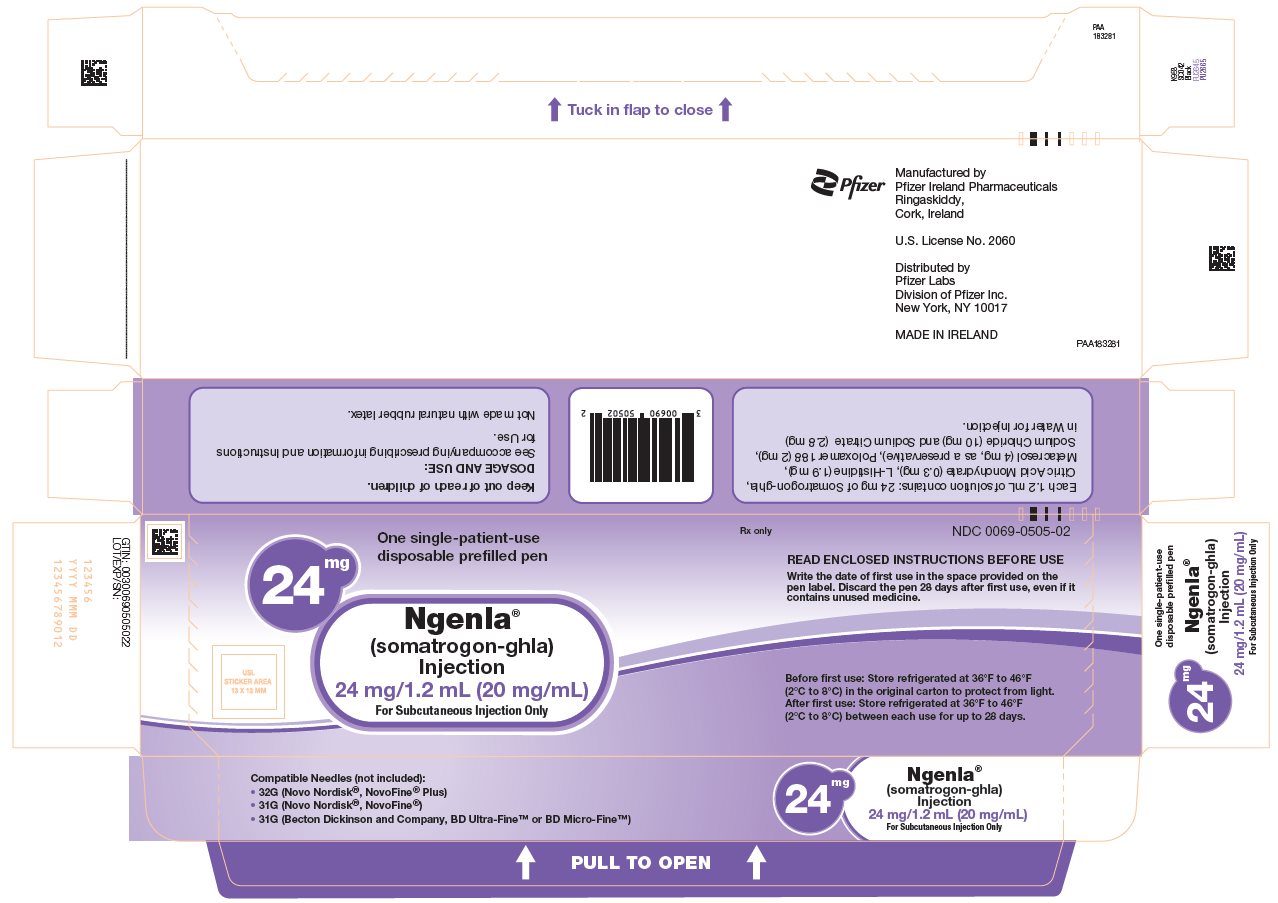
Ngenla somatrogon-ghla 24 mg/1.2mL Injection, Solution, 1 cartridge — NDC 0069-0505-02 (Billing 00069-0505-02)
This is a package of 1 cartridge of Ngenla somatrogon-ghla 24 mg/1.2mL Injection, Solution from Pfizer Laboratories Div Pfizer Inc, marketed since Jul 2023 and currently FDA-listed. It is this product's only package size.
NDC database record
One package, one record: these facts belong to NDC 0069-0505-02 alone.
- Record
- FDA NDC Directory package listing · Human prescription drug
- Code segments
- 0069 labeler · 0505 product · 02 package
- Package marketed since
- Jul 31, 2023
- Sample package
- No — commercial package
- Listing certified through
- Dec 31, 2027
- Barcode (UPC-A, from the NDC)
- 3 0069050502 2
- Medicaid fills, this package
- 437 prescriptions in the last four reported quarters
- FDA record last changed
- Sep 3, 2026
Identity & classification
Regulatory identifiers FDA, NLM and CMS codes for this package
Drug-database identifiers Medi-Span GPI and First Databank GCN / HICL / AHFS classification
- GSN (GCN sequence number): 083177
- GCN: 52062
- HICL (First Databank): 047896
- AHFS class code: 68:28.00.00
- RxCUI (RxNorm): 2644517
Where does this data come from?
- FDA openFDA NDC Directory · synced Oct 8, 2026
- FDA label on DailyMed · label index refreshed Oct 8, 2026
- RxNorm (NLM RxNav) · catalog refreshed Oct 8, 2026
- Medi-Span GPI (licensed)
- First Databank (licensed) · refreshed Oct 8, 2026
RxNorm drug class
This medicine belongs to the Somatropin and somatropin agonists class.
Where does this data come from?
- RxClass (NLM) · catalog refreshed Oct 8, 2026
Clinical
Somatrogon-ghla injection is used to replace growth hormone (a natural hormone produced by your body) and to increase growth in children 3 years of age or older with growth hormone deficiency. Somatrogon-ghla is a human growth hormone (hGH) analog. It works by replacing growth hormones that are normally produced in the body.
Read the full MedlinePlus article ↗Patient education
Supplement & herbal interactions
Some supplements/herbs that may interact with Somatrogon-ghla — tap one for details:
Where does this data come from?
- MedlinePlus (NLM) · refreshed Oct 8, 2026
- FDA label on DailyMed · label index refreshed Oct 8, 2026
Ask a licensed pharmacist directly — free, answered by our team.
Pricing
A drug doesn't have one price. Each row is a different public payment system, and none is what you'd pay at the counter — that depends on your insurance. The ⓘ on each row explains what it measures.
| Price system | Per mL | Per package |
|---|---|---|
| Retail pharmacies payNADAC · weekly | Not in the retail survey — common for institutional, discontinued, or low-volume packs. | |
| Medicaid paysCMS SDUD · 12 mo | $1,763.15 | $2,115.78 / 1.2 ml |
| Medicare drug plans payPart D · quarterly | No Part D plan price is available for this NDC in our data. | |
Where does this data come from?
- CMS NADAC weekly file
- CMS ASP pricing files · refreshed Sep 20, 2026
- CMS Medicaid State Drug Utilization Data · through Q1 2026
- CMS Part D plan pricing files · refreshed Sep 24, 2026
- VA National Acquisition Center price file
Packaging — all sizes for this product
| Package NDC | Description | Marketing start | Marketing end | Status |
|---|---|---|---|---|
| 00069-0505-02 You're viewing this Main listing | 1 CARTRIDGE in 1 CARTON / 1.2 mL in 1 CARTRIDGE | 2023-08-14 | — | Active |
Therapeutic equivalents
| Product | Labeler | Pack | NADAC/unit | TE | Status | Price vs. this |
|---|---|---|---|---|---|---|
| Ngenla 24 mg/1.2mLthis 00069-0505-02 | Pfizer | 1 cartridge | — | — | FDA listed | — |
Where does this data come from?
- FDA openFDA NDC Directory · synced Oct 8, 2026
- FDA Purple Book · refreshed Oct 5, 2026
- CMS NADAC weekly file
Availability & biosimilar status
Biologics have no small-molecule generics; biosimilar competition is tracked in the FDA Purple Book.
Why the date isn’t exact: Biosimilar timing can change because patents may be challenged, settled, licensed, added or removed, and litigation can move the real date earlier or later.
🛈 What do these terms mean?
- Biologic patent
- A patent the reference product’s maker has publicly listed. A biosimilar generally can’t launch until these expire — unless they’re invalidated or resolved in a settlement.
- Reference-product exclusivity
- A flat 12 years of FDA market protection from the biologic’s first licensure (the BPCIA). No biosimilar can be licensed before it ends, regardless of patents.
- Interchangeable exclusivity
- The first interchangeable biosimilar can earn a period as the only interchangeable version (pharmacists can substitute it without the prescriber).
- Earliest biosimilar (LOE)
- The latest of all the dates above — the soonest a biosimilar can realistically reach the market. Litigation and settlements can move it earlier.
Biologics have no small-molecule “generics” — competition comes from FDA-licensed biosimilars, tracked in the FDA Purple Book.
| Code | What it grants | Expires |
|---|---|---|
| RefProduct | Reference-product exclusivity (12-year, BPCIA) — no biosimilar can be licensed before this date | Jun 27, 2035 |
Is there a biosimilar for NGENLA PEN 24 MG/1.2 ML?
Why do different websites show different biosimilar dates?
Can a biosimilar launch before the last patent expires?
What does “current Purple Book estimate” mean?
What does “FDA listed” mean?
What does a patent or protection date mean here?
Where does this data come from?
- FDA Purple Book · refreshed Oct 5, 2026
Inactive Ingredients / Excipients
Inactive ingredients, also called excipients, are components of the drug product other than the active ingredient. They may include fillers, dyes, coatings, preservatives, flavors, or other formulation ingredients.
💡 Tap an ingredient (hover on desktop) to see what it is and why it’s used.
-
0.3 mg / 1.2 mL
UNII 2968PHW8QP
A weak organic acid derived from citrus fruits or made through fermentation. It works as a buffer to control pH, a preservative to extend shelf life, and a flavoring agent in medications.
-
1.9 mg / 1.2 mL
UNII 4QD397987E
An amino acid used as a buffer and stabilizer in medications. It helps maintain the pH balance and protects the active drug from breaking down during storage and use.
-
4 mg / 1.2 mL
UNII GGO4Y809LO
Metacresol is a preservative derived from coal tar or petroleum. It prevents bacterial and fungal growth in liquid medicines, helping keep the product safe and stable during storage.
-
2 mg / 1.2 mL
UNII LQA7B6G8JG
A synthetic polymer made by combining water-soluble compounds. It acts as a surfactant and solubilizer to help mix oil and water-based ingredients, improving the medicine's texture and how active ingredients dissolve.
-
10 mg / 1.2 mL
UNII 451W47IQ8X
Sodium chloride is common table salt. It's used in medicines as a buffer to maintain proper pH, as a filler to add bulk, or to adjust the osmotic balance in liquid formulations.
-
3.1 mg / 1.2 mL
UNII B22547B95K
A salt derived from citric acid that helps maintain the proper acid-base balance in the medicine. It's used as a buffer to keep the product stable and at the right pH level.
-
UNII 059QF0KO0R
Water is a liquid solvent that dissolves and mixes ingredients together in liquid medicines, syrups, and injections. It helps distribute the active drug evenly throughout the product.
7 inactive ingredients listed in the exact product block matched to this NDC.
Where does this data come from?
ingredient classCode="IACT" elements from the exact product block matched by this NDC. Label-section narrative from DailyMed / the openFDA label index is shown separately when available.- FDA label on DailyMed · label index refreshed Oct 8, 2026
- FDA openFDA NDC Directory · synced Oct 8, 2026
Inactive ingredient FAQ
Are inactive ingredients the same for every manufacturer?
Why might an inactive ingredient be missing?
Can inactive ingredients matter?
Manufacturer & labeler
More NDCs from Pfizer Laboratories Div Pfizer Inc labeler code 00069
- Chantix varenicline tartrate 1 mg Tablet, Film Coated NDC 0069-0469-03
- CHANTIX varenicline tartrate Kit NDC 0069-0471-03
- Ibrance palbociclib 100 mg Tablet, Film Coated NDC 0069-0486-03
- Xeljanz XR tofacitinib 11 mg Tablet, Film Coated, Extended Release NDC 0069-0501-30
- Xeljanz XR tofacitinib 22 mg Tablet, Film Coated, Extended Release NDC 0069-0502-30
- BOSULIF Bosutinib 50 mg Capsule NDC 0069-0504-30
- Xalkori CRIZOTINIB 50 mg Capsule, Coated Pellets NDC 0069-0507-60
- Ngenla somatrogon-ghla 60 mg/1.2mL Injection, Solution NDC 0069-0520-02
- Paxlovid nirmatrelvir and ritonavir Kit NDC 0069-0521-11
- Talzenna talazoparib .5 mg Capsule, Liquid Filled NDC 0069-0546-30
- SUTENT Sunitinib malate 12.5 mg Capsule NDC 0069-0550-38
- PENBRAYA meningococcal groups a, b, c, w, and y vaccine Kit NDC 0069-0600-01
Where does this data come from?
- FDA openFDA NDC Directory · synced Oct 8, 2026
- Drugs@FDA
Full prescribing information FDA SPL
🎯 Indications and Usage ▾
1 INDICATIONS AND USAGE NGENLA is indicated for the treatment of pediatric patients aged 3 years and older who have growth failure due to an inadequate secretion of endogenous growth hormone. NGENLA is a human growth hormone analog indicated for treatment of pediatric patients aged 3 years and older who have growth failure due to inadequate secretion of endogenous growth hormone ( 1 ).
⏱️ Dosage and Administration ▾
2 DOSAGE AND ADMINISTRATION • NGENLA treatment should be supervised by a healthcare provider who is experienced in the diagnosis and management of pediatric patients with growth hormone deficiency ( 2.1 ). • Administer NGENLA by subcutaneous injection once weekly, on the same day each week, at any time of the day in the abdomen, thighs, buttocks, or upper arms with weekly rotation of injection site ( 2.1 ). • The recommended dosage is 0.66 mg/kg based on actual body weight administered once weekly ( 2.3 ). • Individualize dosage for each patient based on the growth response ( 2.3 ). • Patients switching from daily growth hormone may initiate treatment with once-weekly NGENLA on the day following their last daily injection ( 2.3 ). • If more than one injection is required to deliver a complete dose, each injection should be administered at a different injection site ( 2.3 ).
2.1Important Dosing and Administration Information • NGENLA treatment should be supervised by a healthcare provider who is experienced in the diagnosis and management of pediatric patients aged 3 years and older with growth failure due to growth hormone deficiency (GHD) [see Indications and Usage (1) ] . • Refer patient to the Instructions for Use for complete administration instructions. • Administer NGENLA by subcutaneous injection, once weekly, on the same day each week, at any time of the day in the abdomen, thighs, buttocks, or upper arms.
Rotate the injection site weekly. • Parenteral drug products should be inspected visually for particulate matter and discoloration prior to administration, whenever solution and container permit. If flakes, particles or discoloration are observed, do not use the pen. Do not shake; shaking can damage the product. • Prefilled pens deliver somatrogon-ghla in 0.2 mg or 0.5 mg increments.
2.2Perform Fundoscopic Examination Prior to Initiation of NGENLA • Perform fundoscopic examination before initiating treatment with NGENLA to exclude preexisting papilledema. If papilledema is identified, evaluate the etiology and treat the underlying cause before initiating treatment with NGENLA [see Warnings and Precautions (5.5) ] .
2.3Recommended Dosage and Monitoring for Pediatric Patients with GHD • Recommended dosage of NGENLA is 0.66 mg/kg based on actual body weight administered once weekly by subcutaneous (SC) injection. • Individualize dosage for each patient based on the growth response. • The day of weekly administration can be changed if necessary as long as the time between 2 doses is at least 3 days. After selecting a new dosing day, the once weekly dosing should be continued. • When switching from daily growth hormone, the once-weekly NGENLA may be initiated on the day following their last daily injection. • If more than one injection is required to deliver a complete dose, each injection should be administered at a different injection site.
2.4Missed Dose • If a dose is missed, administer NGENLA as soon as possible within 3 days after the missed dose. • If more than 3 days have passed, skip the missed dose and administer the next dose on the regularly scheduled day.
💊 Dosage Forms and Strengths ▾
3 DOSAGE FORMS AND STRENGTHS NGENLA (somatrogon-ghla) is a clear and colorless to slightly light yellow solution available as: • Injection: 24 mg/1.2 mL (20 mg/mL) in a single-patient-use, disposable prefilled pen that delivers a dose in 0.2 mg increments. • Injection: 60 mg/1.2 mL (50 mg/mL) in a single-patient-use, disposable prefilled pen that delivers a dose in 0.5 mg increments. Injection: • 24 mg/1.2 mL (20 mg/mL) single-patient-use prefilled pen that delivers a dose in 0.2 mg increments ( 3 ). • 60 mg/1.2 mL (50 mg/mL) single-patient-use prefilled pen that delivers a dose in 0.5 mg increments ( 3 ).
⛔ Contraindications ▾
4 CONTRAINDICATIONS • Acute critical illness after open heart surgery, abdominal surgery or multiple accidental trauma, or those with acute respiratory failure due to the risk of increased mortality with somatropin [see Warnings and Precautions (5.1) ] . • Hypersensitivity to somatrogon-ghla or any of the excipients in NGENLA [see Warnings and Precautions (5.2) ]. • Closed epiphyses. • Active malignancy due to the risk of malignancy progression [see Warnings and Precautions (5.3) ] . • Active proliferative or severe non-proliferative diabetic retinopathy [see Warnings and Precautions (5.4) ] . • Prader-Willi syndrome who are severely obese, have a history of upper airway obstruction or sleep apnea or have severe respiratory impairment due to the risk of sudden death [see Warnings and Precautions (5.13) ] . • Acute critical illness ( 4 ). • Hypersensitivity to somatrogon-ghla or excipients ( 4 ). • Closed epiphyses ( 4 ). • Active malignancy ( 4 ). • Active proliferative or severe non-proliferative diabetic retinopathy ( 4 ). • Prader-Willi syndrome who are severely obese or have severe respiratory impairment ( 4 ).
⚠️ Warnings and Cautions ▾
5 WARNINGS AND PRECAUTIONS • Severe Hypersensitivity : Severe hypersensitivity reactions may occur. In the event of an allergic reaction, seek prompt medical attention ( 5.2 ). • Increased Risk of Neoplasms : Monitor patients with preexisting tumors for progression or recurrence. Increased risk of a second neoplasm in childhood cancer survivors treated with somatropin – in particular meningiomas in patients treated with radiation to the head for their first neoplasm ( 5.3 ). • Glucose Intolerance and Diabetes Mellitus : NGENLA may decrease insulin sensitivity, particularly at higher doses.
Monitor glucose levels periodically in all patients receiving NGENLA, especially in patients with existing diabetes mellitus or at risk for its development ( 5.4 ). • Intracranial Hypertension : Perform fundoscopic examinations prior to initiation of treatment with NGENLA and periodically thereafter. If preexisting papilledema is identified, evaluate the etiology and treat the underlying cause before initiating. If papilledema occurs with NGENLA, stop treatment ( 5.5 ). • Fluid Retention: May occur and may be dose dependent.
Reduce dose as necessary ( 5.6 ). • Hypoadrenalism: Monitor patients for reduced serum cortisol levels and/or need for glucocorticoid dose increases in those with known hypoadrenalism ( 5.7 ). • Hypothyroidism : Monitor thyroid function periodically as hypothyroidism may become evident or worsen after initiation with NGENLA ( 5.8 ). • Slipped Capital Femoral Epiphysis : May develop. Evaluate patients with the onset of a limp or persistent hip or knee pain ( 5.9 ). • Progression of Preexisting Scoliosis : Monitor for development or progression of scoliosis ( 5.10 ). • Pancreatitis : Consider pancreatitis in patients with persistent severe abdominal pain ( 5.11 ). • Lipoatrophy: May occur if NGENLA is administered in the same location over a long period of time.
Rotate injection sites ( 5.12 ).
5.1Increased Mortality in Patients with Acute Critical Illness Increased mortality in patients with acute critical illness due to complications following open heart surgery, abdominal surgery or multiple accidental trauma, or those with acute respiratory failure has been reported with somatropin [see Contraindications (4) ] . The safety of continuing NGENLA treatment for the approved indication in patients who concurrently develop these illnesses has not been established.
5.2Severe Hypersensitivity Severe systemic hypersensitivity reactions including anaphylaxis and angioedema have been reported with somatropin. Inform patients and/or caregivers that such reactions are possible and that prompt medical attention should be sought if an allergic reaction occurs. NGENLA is contraindicated in patients with known hypersensitivity to somatrogon-ghla or any excipients in NGENLA [see Contraindications (4) ] .
5.3Increased Risk of Neoplasms Active Malignancy There is an increased risk of malignancy progression with somatropin treatment in patients with active malignancy [see Contraindications (4) ] . Any preexisting malignancy should be inactive, and its treatment should be completed prior to instituting therapy with NGENLA. Discontinue NGENLA if there is evidence of recurrent malignancy.
Risk of Second Neoplasm in Pediatric Patients In childhood cancer survivors, who were treated with radiation to the brain/head for their first neoplasm and who developed subsequent GHD and were treated with somatropin, an increased risk of a second neoplasm has been reported. Intracranial tumors, in particular meningiomas, were the most common of these second neoplasms. Monitor all patients with a history of GHD secondary to an intracranial neoplasm while on NGENLA therapy for progression or recurrence of the tumor.
New Malignancy During Treatment Because children with certain rare genetic causes of short stature have an increased risk of developing malignancies, thoroughly consider the risks and benefits of starting NGENLA in these patients. If treatment… [Excerpted — this section continues on DailyMed.]
🤒 Adverse Reactions ▾
6 ADVERSE REACTIONS The following clinically significant adverse reactions are described elsewhere in the labeling: • Increased mortality in patients with acute critical illness [see Warnings and Precautions (5.1) ] • Severe hypersensitivity [see Warnings and Precautions (5.2) ] • Increased risk of neoplasm [see Warnings and Precautions (5.3) ] • Glucose intolerance and diabetes mellitus [see Warnings and Precautions (5.4) ] • Intracranial hypertension [see Warnings and Precautions (5.5) ] • Fluid retention [see Warnings and Precautions (5.6) ] • Hypoadrenalism [see Warnings and Precautions (5.7) ] • Hypothyroidism [see Warnings and Precautions (5.8) ] • Slipped capital femoral epiphysis [see Warnings and Precautions (5.9) ] • Progression of preexisting scoliosis [see Warnings and Precautions (5.10) ] • Pancreatitis [see Warnings and Precautions (5.11) ] • Lipoatrophy [see Warnings and Precautions (5.12) ] • Sudden death in pediatric patients with Prader-Willi syndrome [ see Warnings and Precautions (5.13) ] Adverse reactions reported in ≥5% of patients treated with NGENLA are: injection site reactions, nasopharyngitis, headache, pyrexia, anemia, cough, vomiting, hypothyroidism, abdominal pain, rash, and oropharyngeal pain ( 6.1 ).
To report SUSPECTED ADVERSE REACTIONS, contact Pfizer Inc. at 1-800-438-1985 or FDA at 1-800-FDA-1088 or www.fda.gov/medwatch .
6.1Clinical Trials Experience Because clinical trials are conducted under widely varying conditions, adverse reaction rates observed in the clinical trials of a drug cannot be directly compared to rates in the clinical trials of another drug and may not reflect the rates observed in practice. Safety data are derived from a safety and efficacy study in pediatric patients with GHD [see Clinical Studies (14.1) ]. The data from the 12-month main study period reflect exposure of 109 patients to NGENLA administered once weekly (0.66 mg/kg/wk) and 115 patients to somatropin administered once daily (0.034 mg/kg/day).
The mean age across the treatment groups, was 7.7 years (min 3.01, max 11.96); 40.2% of patients were >3 years to ≤7 years, 59.8% were >7 years, 71.9% of patients were male, and 28.1% were female. In this study, 74.6% of patients were White, 20.1% were Asian, 0.9% were Black or African American, 0.5% were American Indian or Alaska Native, 0.5% were Native Hawaiian or Other Pacific Islander, and for 3.6% race information was missing; 10.7% of patients identified as Hispanic or Latino. Baseline disease characteristics were balanced across treatment groups.
Table 1 shows the adverse reactions that occurred in ≥5% of patients treated with NGENLA or daily somatropin during the 12-month main study period. Reporting of injection site reactions was solicited through the use of a patient diary after each weekly injection for patients administered NGENLA and once weekly for patients administered daily injections of somatropin. Table 1 Adverse Reactions Occurring in ≥5% of NGENLA- or Somatropin-Treated Pediatric Patients (52 Weeks of Treatment) Adverse reactions that are medically related were grouped to a single preferred term.
Adverse Drug Reactions Daily Somatropin (N=115) n (%) NGENLA (N=109) n (%) Injection site reactions Injection site reactions included: injection site pain (39% somatrogon-ghla vs 25% daily somatropin), injection site swelling/induration/hypertrophy/inflammation (10% somatrogon-ghla vs 1% daily somatropin), injection site erythema (8% somatrogon-ghla vs none daily somatropin), injection site pruritus (5% somatrogon-ghla vs none daily somatropin), injection site hemorrhage (5% somatrogon-ghla vs none daily somatropin).
29 (25.2) 46 (42.2) Nasopharyngitis Nasopharyngitis included: rhinitis, pharyngitis, rhinitis allergic, pharyngitis streptococcal, viral pharyngitis, nasopharyngitis. 33 (28.7) 36 (33) Headache 25 (21.7) 18 (16.5) Pyrexia 17 (14.8) 18 (16.5) Anemia 10 (8.7) 10 (9.2) Cough 9 (7.8) 9 (8.3) Vomiting 9 (7.8) 8 (7.3) Hypothyroidism 3 (2.6) 7 (6.4… [Excerpted — this section continues on DailyMed.]
🔄 Drug Interactions ▾
7 DRUG INTERACTIONS Table 2 includes a list of drugs with clinically significant drug interactions when administered concomitantly with NGENLA and instructions for preventing or managing them. Table 2 Clinically Significant Drug Interactions with NGENLA Replacement Glucocorticoid Treatment Clinical Impact: Microsomal enzyme 11β-hydroxysteroid dehydrogenase type 1 (11βHSD-1) is required for conversion of cortisone to its active metabolite, cortisol, in hepatic and adipose tissue. Growth hormone inhibits 11βHSD-1.
Consequently, individuals with untreated GH deficiency have relative increases in 11βHSD-1 and serum cortisol. Initiation of NGENLA may result in inhibition of 11βHSD-1 and reduced serum cortisol concentrations. Intervention: Patients treated with glucocorticoid replacement for hypoadrenalism may require an increase in their maintenance or stress doses following initiation of NGENLA [see Warnings and Precautions (5.7) ] .
Examples: Cortisone acetate and prednisone may be affected more than others because conversion of these drugs to their biologically active metabolites is dependent on the activity of 11βHSD-1. Supraphysiologic Glucocorticoid Treatment Clinical Impact: Supraphysiologic glucocorticoid treatment may attenuate the growth-promoting effects of NGENLA in pediatric patients. Intervention: Carefully adjust glucocorticoid replacement dosing in pediatric patients receiving glucocorticoid treatments to avoid hypoadrenalism and an inhibitory effect on growth.
Cytochrome P450-Metabolized Drugs Clinical Impact: Limited published data indicate that growth hormone treatment increases cytochrome P450 (CYP450)-mediated antipyrine clearance. NGENLA may alter the clearance of compounds known to be metabolized by CYP450 liver enzymes. Intervention: Careful monitoring is advisable when NGENLA is administered in combination with drugs metabolized by CYP450 liver enzymes.
Oral Estrogen Clinical Impact: Oral estrogens may reduce the serum IGF-1 response to NGENLA. Intervention: Patients receiving oral estrogen replacement may require higher NGENLA dosages. Insulin and/or Other Antihyperglycemic Agents Clinical Impact: Treatment with NGENLA may decrease insulin sensitivity, particularly at higher doses.
Intervention: Patients with diabetes mellitus may require adjustment of their doses of insulin and/or other antihyperglycemic agents [see Warnings and Precautions (5.4) ] . • Replacement Glucocorticoid Treatment: Patients treated with glucocorticoid for hypoadrenalism may require an increase in their maintenance or stress dose following initiation of NGENLA ( 7 ). • Pharmacologic Glucocorticoid Therapy and Supraphysiologic Glucocorticoid Treatment: Adjust glucocorticoid dosing in pediatric patients to avoid both hypoadrenalism and an inhibitory effect on growth ( 7 ). • Cytochrome P450-Metabolized Drugs: NGENLA may alter the clearance.
Monitor carefully if used with NGENLA ( 7 ). • Oral Estrogen: Larger doses of NGENLA may be required ( 7 ). • Insulin and/or Other Antihyperglycemic Agents: Dose adjustment of insulin or antihyperglycemic agent may be required ( 5.4 , 7 ).
👥 Use in Specific Populations ▾
8 USE IN SPECIFIC POPULATIONS
8.1Pregnancy Risk Summary There are no available data on NGENLA use in pregnant women to evaluate for a drug associated risk of major birth defects, miscarriage, or other adverse maternal or fetal outcomes. In reproduction studies with pregnant rats, there was no evidence of embryo-fetal toxicity following administration of somatrogon-ghla subcutaneously during organogenesis at doses up to 45 times the maximum recommended human dose based on exposure (see Data ) . The background risk of major birth defects and miscarriage in the indicated population is unknown.
In the U.S. general population, the estimated background risk of major birth defects and miscarriage in clinically recognized pregnancies is 2% to 4% and 15% to 20%, respectively. Data Animal Data In an embryo-fetal development toxicity study in rats, no adverse maternal or embryo-fetal effects were observed when somatrogon-ghla was administered via subcutaneous injection every 2 days from gestation day (GD) 6 to 18 at doses up to 30 mg/kg (45 times the maximum recommended human dose based on C av exposure). In a pre- and postnatal development study in rats, somatrogon-ghla was administered via subcutaneous injection to pregnant rats every 2 days from GD 6 to lactation day 20 at doses up to 30 mg/kg.
There was no evidence of maternal toxicity and no adverse effects on the first generation (F1) offspring. Somatrogon-ghla elicited an increase in F1 mean body weights in both sexes and increased the mean copulatory interval in F1 females at the highest dose (30 mg/kg), consistent with a longer estrous cycle length. However, there were no effects on mating indices in F1 females.
8.2Lactation Risk Summary There are no data on the presence of somatrogon-ghla in human or animal milk, the effects on the breastfed infant, or the effects on milk production. The developmental and health benefits of breastfeeding should be considered along with the mother’s clinical need for NGENLA and any potential adverse effects on the breastfed infant from NGENLA or from the underlying maternal condition.
8.3Females and Males of Reproductive Potential Pregnancy Testing Although somatrogon-ghla did not interfere with hCG pregnancy testing in a limited number of commercial tests, interference with hCG blood and urine pregnancy testing in patients receiving somatrogon-ghla may be possible, leading to either false positive or false negative results. Alternative methods (i.e., not reliant on hCG) are recommended to determine pregnancy.
8.4Pediatric Use The safety and effectiveness of NGENLA have been established for the treatment of growth failure due to inadequate secretion of endogenous growth hormone (GH) in pediatric patients aged 3 years and older [see Clinical Studies (14.1) ]. The use of NGENLA for this indication is supported by evidence from a 52‑week, multi-center, randomized, open-label, active-controlled, parallel-group phase 3 study in 224 treatment-naïve, prepubertal pediatric subjects with growth hormone deficiency. Risks in pediatric patients associated with growth hormone use include: • Increased risk of second neoplasm in pediatric cancer survivors treated with radiation to the brain and/or head [see Warnings and Precautions (5.3) ] • Slipped capital femoral epiphysis [see Warnings and Precautions (5.9) ] • Progression of preexisting scoliosis [see Warnings and Precautions (5.10) ] • Pancreatitis [see Warnings and Precautions (5.11) ] • Sudden death in pediatric patients with Prader-Willi Syndrome.
NGENLA is not indicated for the treatment of pediatric patients with growth failure secondary to genetically confirmed Prader‑Willi syndrome. [see Warnings and Precautions (5.13) ]
🤰 Pregnancy ▾
8.1Pregnancy Risk Summary There are no available data on NGENLA use in pregnant women to evaluate for a drug associated risk of major birth defects, miscarriage, or other adverse maternal or fetal outcomes. In reproduction studies with pregnant rats, there was no evidence of embryo-fetal toxicity following administration of somatrogon-ghla subcutaneously during organogenesis at doses up to 45 times the maximum recommended human dose based on exposure (see Data ) . The background risk of major birth defects and miscarriage in the indicated population is unknown.
In the U.S. general population, the estimated background risk of major birth defects and miscarriage in clinically recognized pregnancies is 2% to 4% and 15% to 20%, respectively. Data Animal Data In an embryo-fetal development toxicity study in rats, no adverse maternal or embryo-fetal effects were observed when somatrogon-ghla was administered via subcutaneous injection every 2 days from gestation day (GD) 6 to 18 at doses up to 30 mg/kg (45 times the maximum recommended human dose based on C av exposure). In a pre- and postnatal development study in rats, somatrogon-ghla was administered via subcutaneous injection to pregnant rats every 2 days from GD 6 to lactation day 20 at doses up to 30 mg/kg.
There was no evidence of maternal toxicity and no adverse effects on the first generation (F1) offspring. Somatrogon-ghla elicited an increase in F1 mean body weights in both sexes and increased the mean copulatory interval in F1 females at the highest dose (30 mg/kg), consistent with a longer estrous cycle length. However, there were no effects on mating indices in F1 females.
🧒 Pediatric Use ▾
8.4Pediatric Use The safety and effectiveness of NGENLA have been established for the treatment of growth failure due to inadequate secretion of endogenous growth hormone (GH) in pediatric patients aged 3 years and older [see Clinical Studies (14.1) ]. The use of NGENLA for this indication is supported by evidence from a 52‑week, multi-center, randomized, open-label, active-controlled, parallel-group phase 3 study in 224 treatment-naïve, prepubertal pediatric subjects with growth hormone deficiency. Risks in pediatric patients associated with growth hormone use include: • Increased risk of second neoplasm in pediatric cancer survivors treated with radiation to the brain and/or head [see Warnings and Precautions (5.3) ] • Slipped capital femoral epiphysis [see Warnings and Precautions (5.9) ] • Progression of preexisting scoliosis [see Warnings and Precautions (5.10) ] • Pancreatitis [see Warnings and Precautions (5.11) ] • Sudden death in pediatric patients with Prader-Willi Syndrome.
NGENLA is not indicated for the treatment of pediatric patients with growth failure secondary to genetically confirmed Prader‑Willi syndrome. [see Warnings and Precautions (5.13) ]
🆘 Overdosage ▾
10 OVERDOSAGE Acute overdosage may lead initially to hypoglycemia and subsequently to hyperglycemia. Overdose with growth hormone may cause fluid retention. Long-term overdosage could result in signs and symptoms of gigantism consistent with the effects of excess growth hormone.
🧬 Clinical Pharmacology ▾
12 CLINICAL PHARMACOLOGY
12.1Mechanism of Action Somatrogon-ghla binds to the GH receptor and initiates a signal transduction cascade culminating in changes in growth and metabolism. Somatrogon-ghla binding leads to activation of the STAT5b signaling pathway and increases the serum concentration of Insulin-like Growth Factor (IGF-1). GH and IGF-1 stimulate metabolic changes, linear growth, and enhance growth velocity in pediatric patients with GHD.
12.2Pharmacodynamics Following single dose administration of somatrogon, dose-dependent increases in IGF-1 response were observed. Following multiple dosing, IGF-1 SDS levels were in the normal range for pediatric patients with GHD, similar to daily somatropin. IGF-1 levels peak approximately 2 days (48 hours) post-dose, with the average weekly IGF-1 occurring approximately 4 days post-dose.
12.3Pharmacokinetics Somatrogon-ghla pharmacokinetics (PK) was assessed using a population PK approach for NGENLA in 151 pediatric patients (aged 3 to 15.5 years) with GHD. Absorption Following subcutaneous injection, serum concentrations increased slowly, peaking 6 to 25 hours with a median of 11 hours after dosing. In pediatric patients with GHD, somatrogon-ghla exposure increases in a dose-proportional manner for doses of 0.25 mg/kg/wk, 0.48 mg/kg/wk, and 0.66 mg/kg/wk.
There is no accumulation of somatrogon-ghla after once weekly administration. In pediatric patients with GHD, the mean population PK estimated steady-state peak concentrations (mean ± SD) following 0.66 mg/kg/wk was 495 ± 90 ng/mL. Distribution In pediatric patients with GHD, the mean population PK estimated apparent central volume of distribution was 0.342 L/kg and apparent peripheral volume of distribution was 0.671 L/kg.
Elimination In pediatric patients with GHD, the mean population PK estimated apparent clearance was 0.0398 L/h/kg. The mean population PK estimated effective half-life was 37.7 hours, which allows for weekly dosing. Somatrogon-ghla will be present in the circulation for about 8 days after the last dose.
Metabolism The metabolism of somatrogon-ghla is believed to be classical protein catabolism, with subsequent recovery of the amino acids and return to the systemic circulation. Excretion Excretion was not evaluated in clinical studies. Specific Populations Based on population PK analyses, age, sex, race, and ethnicity do not have a clinically meaningful effect on the pharmacokinetics of somatrogon-ghla in pediatric patients with GHD.
The exposure of somatrogon-ghla decreases with an increase in body weight. However, the somatrogon-ghla dosing regimen of 0.66 mg/kg/wk provides adequate systemic exposure over the body weight range of 10 to 54 kg evaluated in the clinical studies. Renal or Hepatic Impairment NGENLA has not been studied in patients with hepatic or renal impairment.
12.6Immunogenicity The observed incidence of anti-drug antibodies is highly dependent on the sensitivity and specificity of the assay. Differences in assay methods preclude meaningful comparisons of the incidence of anti-drug antibodies in the studies described below with the incidence of anti-drug antibodies in other studies, including those of somatrogon or other growth hormone products. During the 12-month main period of study NCT 02968004, 84/109 (77.1%) of somatrogon-ghla‑treated patients tested positive for anti-drug antibodies, with most showing specificity to human growth hormone.
The anti-drug antibodies persisted in most of the subjects during the study. Neutralizing antibodies developed in 8/217 (3.7%) of somatrogon-ghla-treated patients during the study for up to 42 months of exposure to somatrogon-ghla. The neutralizing antibodies were transient in all subjects.
Anti-drug antibodies, including neutralizing-antibodies, did not appear to have a clinically significant impact on the safety or effectiveness of NGENLA during the 12‑month randomized treatment period. Additionally, no apparent effect of anti-drug antibodies o… [Excerpted — this section continues on DailyMed.]
🧬 Mechanism of Action ▾
12.1Mechanism of Action Somatrogon-ghla binds to the GH receptor and initiates a signal transduction cascade culminating in changes in growth and metabolism. Somatrogon-ghla binding leads to activation of the STAT5b signaling pathway and increases the serum concentration of Insulin-like Growth Factor (IGF-1). GH and IGF-1 stimulate metabolic changes, linear growth, and enhance growth velocity in pediatric patients with GHD.
📦 How Supplied / Storage and Handling ▾
16 HOW SUPPLIED/STORAGE AND HANDLING How Supplied NGENLA (somatrogon-ghla) injection is a clear and colorless to slightly light yellow solution containing a preservative and supplied as one single-patient-use disposable prefilled pen per carton available in the following packages: 24 mg/1.2 mL Prefilled Pen NDC: 0069-0505-02 60 mg/1.2 mL Prefilled Pen NDC: 0069-0520-02 Somatrogon-ghla solution concentration 20 mg/mL 50 mg/mL Color scheme Lilac pen cap, injection button and label Blue pen cap, injection button and label Dose increments 0.2 mg/0.01 mL 0.5 mg/0.01 mL Maximum dose 12 mg (0.6 mL) 30 mg (0.6 mL) Not made with natural rubber latex.
Sterile needles are required for administration but not included. Consult the Instructions for Use for needles that can be used. Storage and Handling Before first use: Store refrigerated at 36°F to 46°F (2°C to 8°C) in the original carton to protect from light.
After first use: Store the pen refrigerated at 36°F to 46°F (2°C to 8°C) between each use, for up to 28 days. Do not freeze or shake. Do not expose to heat.
Do not use if it has been frozen. Store away from direct sunlight. Always remove and safely discard the needle after each injection and store the NGENLA prefilled pen without an injection needle attached.
Always use a new needle for each injection. Replace the cap on your prefilled pen when it is not in use. Write the date of first use in the space provided on the pen label.
The prefilled pen should not be used more than 28 days after first use.
📦 Storage and Handling ▾
Storage and Handling Before first use: Store refrigerated at 36°F to 46°F (2°C to 8°C) in the original carton to protect from light. After first use: Store the pen refrigerated at 36°F to 46°F (2°C to 8°C) between each use, for up to 28 days. Do not freeze or shake.
Do not expose to heat. Do not use if it has been frozen. Store away from direct sunlight.
Always remove and safely discard the needle after each injection and store the NGENLA prefilled pen without an injection needle attached. Always use a new needle for each injection. Replace the cap on your prefilled pen when it is not in use.
Write the date of first use in the space provided on the pen label. The prefilled pen should not be used more than 28 days after first use.
📋 Description ▾
11 DESCRIPTION Somatrogon-ghla, a human growth hormone analog, is a fusion protein produced in Chinese Hamster Ovary (CHO) cells by recombinant DNA technology. It is comprised of the amino acid sequence of human growth hormone (hGH) with one copy of the C-terminal peptide (CTP) from the beta chain of human chorionic gonadotropin (hCG) at the N-terminus and 2 copies of CTP (in tandem) at the C-terminus. Somatrogon-ghla has an approximate molecular weight of 40 KDa.
NGENLA (somatrogon-ghla) injection is a sterile, clear and colorless to slightly light yellow solution for subcutaneous use supplied in a 24 mg/1.2 mL (20 mg/mL) or 60 mg/1.2 mL (50 mg/mL) single-patient-use prefilled pen. Each 1.2 mL of solution contains either 24 mg or 60 mg of somatrogon-ghla, and the inactive ingredients citric acid monohydrate (0.3 mg), histidine (1.9 mg), metacresol (4 mg, as a preservative), poloxamer 188 (2 mg), sodium chloride (10 mg) and sodium citrate (2.8 mg) in water for injection. NGENLA has a pH of approximately 6.6.
💬 Information for Patients ▾
17 PATIENT COUNSELING INFORMATION Advise the patient and/or caregiver to read the FDA-approved patient labeling (Patient Information and Instructions for Use). • Hypersensitivity Reactions Advise patients and caregivers that serious systemic hypersensitivity reactions (anaphylaxis and angioedema) are possible and that prompt medical attention should be sought if an allergic reaction occurs [see Warnings and Precautions (5.2) ] . • Neoplasm Advise childhood cancer survivors and caregivers that individuals treated with radiation to the head are at increased risk of secondary neoplasms and, as a precaution, need to be monitored for recurrence.
Advise patients to report marked changes in skin pigmentation or changes in the appearance of preexisting nevi [see Warnings and Precautions (5.3) ] . • Glucose Intolerance/Diabetes Mellitus Advise patients and caregivers that new onset of insulin resistance and hyperglycemia may occur and monitoring of blood glucose during treatment with NGENLA in patients with glucose intolerance or who have risk factors for diabetes, may be needed [see Warnings and Precautions (5.4) ] . • Intracranial Hypertension Advise patients and caregivers to report to their healthcare provider any visual changes, headache, and nausea and/or vomiting [see Warnings and Precautions (5.5) ] . • Fluid Retention Advise patients and caregivers that fluid retention during NGENLA therapy may occur.
Inform patients of the clinical manifestations of fluid retention (e.g. edema, arthralgia, myalgia, nerve compression syndromes including carpal tunnel syndrome/paresthesia) and to report to their healthcare provider if any of these signs or symptoms occur during treatment with NGENLA. • Hypoadrenalism Advise patients and caregivers who have or who are at risk for corticotropin deficiency that hypoadrenalism may develop and to report to their healthcare provider if extreme fatigue, dizziness, weakness, vomiting, dehydration or weight loss is experienced during treatment with NGENLA [see Warnings and Precautions (5.7) ] . • Hypothyroidism Advise patients and caregivers that undiagnosed/untreated hypothyroidism may prevent an optimal response to NGENLA.
Advise patients and caregivers they may require periodic thyroid function tests during treatment with NGENLA [see Warnings and Precautions (5.8) ] . • Pancreatitis Advise patients and caregivers that pancreatitis may develop and to report to their healthcare provider any new onset persistent severe abdominal pain. • Lipoatrophy Advise patients and caregivers that lipoatrophy may occur if NGENLA is administered subcutaneously at the same site over a long period of time. Advise patients to rotate injection sites when administering NGENLA to reduce this risk.
🧬 Pharmacokinetics ▾
12.3Pharmacokinetics Somatrogon-ghla pharmacokinetics (PK) was assessed using a population PK approach for NGENLA in 151 pediatric patients (aged 3 to 15.5 years) with GHD. Absorption Following subcutaneous injection, serum concentrations increased slowly, peaking 6 to 25 hours with a median of 11 hours after dosing. In pediatric patients with GHD, somatrogon-ghla exposure increases in a dose-proportional manner for doses of 0.25 mg/kg/wk, 0.48 mg/kg/wk, and 0.66 mg/kg/wk.
There is no accumulation of somatrogon-ghla after once weekly administration. In pediatric patients with GHD, the mean population PK estimated steady-state peak concentrations (mean ± SD) following 0.66 mg/kg/wk was 495 ± 90 ng/mL. Distribution In pediatric patients with GHD, the mean population PK estimated apparent central volume of distribution was 0.342 L/kg and apparent peripheral volume of distribution was 0.671 L/kg.
Elimination In pediatric patients with GHD, the mean population PK estimated apparent clearance was 0.0398 L/h/kg. The mean population PK estimated effective half-life was 37.7 hours, which allows for weekly dosing. Somatrogon-ghla will be present in the circulation for about 8 days after the last dose.
Metabolism The metabolism of somatrogon-ghla is believed to be classical protein catabolism, with subsequent recovery of the amino acids and return to the systemic circulation. Excretion Excretion was not evaluated in clinical studies. Specific Populations Based on population PK analyses, age, sex, race, and ethnicity do not have a clinically meaningful effect on the pharmacokinetics of somatrogon-ghla in pediatric patients with GHD.
The exposure of somatrogon-ghla decreases with an increase in body weight. However, the somatrogon-ghla dosing regimen of 0.66 mg/kg/wk provides adequate systemic exposure over the body weight range of 10 to 54 kg evaluated in the clinical studies. Renal or Hepatic Impairment NGENLA has not been studied in patients with hepatic or renal impairment.
🧬 Pharmacodynamics ▾
12.2Pharmacodynamics Following single dose administration of somatrogon, dose-dependent increases in IGF-1 response were observed. Following multiple dosing, IGF-1 SDS levels were in the normal range for pediatric patients with GHD, similar to daily somatropin. IGF-1 levels peak approximately 2 days (48 hours) post-dose, with the average weekly IGF-1 occurring approximately 4 days post-dose.
🔬 Clinical Studies ▾
14 CLINICAL STUDIES
14.1Treatment-Naïve Pediatric Patients with Growth Hormone Deficiency A multi-center, randomized, open-label, active-controlled, parallel-group phase 3 study (NCT 02968004) was conducted in 224 treatment-naïve, prepubertal pediatric subjects with growth hormone deficiency (GHD). The primary efficacy endpoint was annualized height velocity at Week 52. One hundred nine (109) subjects received 0.66 mg/kg/week NGENLA, and 115 subjects received 0.034 mg/kg/day daily somatropin.
The subjects age ranged from 3 to 12 years, with a mean of 7.7 years. One hundred sixty-one (71.9%) subjects were male and 63 (28.1%) were female. One hundred sixty-seven (74.6%) subjects were White, 45 (20.1%) subjects were Asian, 2 (0.9%) subjects were Black or African-American, 1 (0.5%) subject was American Indian or Alaska Native, 1 (0.5%) subject was Native Hawaiian or Other Pacific Islander, and for 8 (3.6%) subjects race information was missing; 24 (10.7%) subjects identified as Hispanic or Latino.
The subjects had a mean baseline height standard deviation score (SDS) of -2.9. Treatment with once-weekly NGENLA for 52 weeks resulted in an annualized height velocity of 10.1 cm/year. Patients treated with daily somatropin achieved an annualized height velocity of 9.8 cm/year after 52 weeks of treatment.
Refer to Table 3. Table 3. Annualized Height Velocity at Week 52 in Pediatric Patients with GHD Abbreviations: CI=confidence interval; LSM=least square mean; N=number of patients randomized and treated The estimates of LSM are from analysis of covariance model with treatment, age group, gender, peak growth hormone levels, and region as fixed factors and baseline height SDS as a covariate.
Missing data is imputed by multiple imputation using SAS PROC MI with MNAR/FCS Method. Treatment Parameter Treatment Group LSM Treatment Difference (95% CI) ( NGENLA minus Daily Somatropin ) NGENLA (N=109) Daily Somatropin (N=115) LSM Estimate LSM Estimate Annualized Height Velocity (cm/yr) 10.1 9.8 0.3 (-0.2, 0.9) The mean height SDS at Week 52 was -1.94 in NGENLA arm and -1.99 in the daily somatropin arm. The mean increase in height SDS from baseline at Week 52 was 0.92 in NGENLA arm and 0.87 in the daily somatropin arm, respectively.
🧪 Nonclinical Toxicology ▾
13 NONCLINICAL TOXICOLOGY
13.1Carcinogenesis, Mutagenesis, Impairment of Fertility Carcinogenesis No long term carcinogenicity studies have been performed with somatrogon-ghla. Mutagenesis Genotoxicity studies have not been performed. Impairment of Fertility The potential for somatrogon-ghla to affect fertility and early embryonic development was evaluated in male and female rats administered subcutaneously before cohabitation, through mating to implantation.
Somatrogon‑ghla elicited an increase in estrous cycle length, copulatory interval, and number of corpora lutea at exposures ≥22-fold the MRHD, but there was no impact on female fertility, mating indices, number of viable embryos or early embryonic development, or on male fertility up to 30 mg/kg every two days (45-fold the MRHD based on exposure).
📄 Carcinogenesis, Mutagenesis, Impairment of Fertility ▾
13.1Carcinogenesis, Mutagenesis, Impairment of Fertility Carcinogenesis No long term carcinogenicity studies have been performed with somatrogon-ghla. Mutagenesis Genotoxicity studies have not been performed. Impairment of Fertility The potential for somatrogon-ghla to affect fertility and early embryonic development was evaluated in male and female rats administered subcutaneously before cohabitation, through mating to implantation.
Somatrogon‑ghla elicited an increase in estrous cycle length, copulatory interval, and number of corpora lutea at exposures ≥22-fold the MRHD, but there was no impact on female fertility, mating indices, number of viable embryos or early embryonic development, or on male fertility up to 30 mg/kg every two days (45-fold the MRHD based on exposure).
📄 Patient Package Insert ▾
This Patient Information has been approved by the U.S. Food and Drug Administration. Revised: 04/2026 PATIENT INFORMATION NGENLA ® (en’ JEN-lah) (somatrogon-ghla) injection, for subcutaneous use What is NGENLA?
NGENLA is a prescription medicine that contains a form of human growth hormone, like the growth hormone made by the human body. NGENLA is given by injection under the skin (subcutaneous) in children who are not growing because of low or no growth hormone levels. Do not use NGENLA if: • your child has a critical illness caused by certain types of heart or stomach surgery, trauma or breathing (respiratory) problems. • your child is allergic to somatrogon-ghla or any of the ingredients in NGENLA.
See the end of this leaflet for a complete list of ingredients in NGENLA. • your child has closed bone growth plates (epiphyses). • your child has cancer or other tumors. • your child’s healthcare provider tells you that your child has certain types of eye problems caused by diabetes (diabetic retinopathy). • your child has Prader-Willi syndrome, is severely obese, or has breathing problems including sleep apnea (briefly stop breathing during sleep). Before using NGENLA, tell your child’s healthcare provider about all of your child’s medical conditions, including if your child: • has had heart or stomach surgery, trauma or serious breathing (respiratory) problems. • has had a history of problems breathing while they slept (sleep apnea). • has or has had cancer or any tumor. • has diabetes. • is pregnant or plans to become pregnant.
It is not known if NGENLA will harm your child’s unborn baby. Talk to your child’s healthcare provider if your child is pregnant or plans to become pregnant. • is breastfeeding or plans to breastfeed. It is not known if NGENLA passes into breast milk.
You and your child’s healthcare provider should decide if they will take NGENLA while breastfeeding. Tell your child’s healthcare provider about all the medicines your child takes , including prescription and over-the-counter medicines, vitamins, and herbal supplements. NGENLA may affect how other medicines work, and other medicines may affect how NGENLA works.
How should I use NGENLA? • Read the detailed Instructions for Use that come with NGENLA. • NGENLA comes in 2 different dosage strengths. Your child’s healthcare provider will prescribe the dose of medicine and the dosage strength that is right for your child. • Your child’s healthcare provider will show you how to inject NGENLA before it is used for the first time. Do not try to inject NGENLA until you have been shown the right way by your child’s healthcare provider. • Inject NGENLA exactly as your child’s healthcare provider tells you to. • NGENLA is injected under the skin (subcutaneously) and can be given in the stomach (abdomen), thighs, buttocks, or upper arms.
Rotate the site of injection weekly. • Inject NGENLA 1 time each week, on the same day each week, at any time of the day. • You may change the day of the week NGENLA is used as long as the last dose was injected 3 or more days before. After the new day of the week has been chosen, continue with the 1 time a week schedule. • If your child misses a dose of NGENLA the missed dose should be injected as soon as possible within 3 days after the missed dose. If more than 3 days have passed, skip your child’s missed dose.
Inject the next dose on the regularly scheduled day. • NGENLA prefilled pens are for use by 1 person only. • Do not share your child’s NGENLA prefilled pens and needles with another person, even if the needle has been changed. Your child may give another person an infection or get an infection from them. What are the possible side effects of NGENLA?
NGENLA may cause serious side effects, including: • high risk of death in people who have critical illnesses because of heart or stomach surgery, trauma or serious breathing (respiratory) problems. • serious allergic reactions. Get medical help right away if your child has the foll… [Excerpted — this section continues on DailyMed.]
📖 Instructions for Use ▾
Instructions for Use NGENLA ® (en’ JEN-lah) (somatrogon-ghla) 24 mg injection, for subcutaneous use Read this Instructions for Use before you start using NGENLA and each time you get a new refill. There may be new information. This information does not take the place of talking to your healthcare provider about your medical condition or treatment.
Important information about your NGENLA pen: • The NGENLA pen for injection is a single-patient-use, disposable (throw away) prefilled pen containing 24 mg of medicine. You can give more than 1 dose from the pen. • NGENLA can be given by a patient, caregiver or healthcare provider. Do not try to inject NGENLA yourself until you are shown the right way to give the injections and read and understand the Instructions for Use.
If your healthcare provider decides that you or a caregiver may be able to give your injections of NGENLA at home, you should receive training on the right way to prepare and inject NGENLA. It is important that you read, understand, and follow these instructions so that you inject NGENLA the right way. • It is important to talk to your healthcare provider to be sure you understand your NGENLA dosing instructions. To help you remember when to inject NGENLA, you can mark your calendar ahead of time.
Call your healthcare provider if you or your caregiver have any questions about the right way to inject NGENLA, or call the helpline on 1-800-645-1280. • Do not share your pen with other people, even if the needle has been changed. You may give other people a serious infection or get a serious infection from them. • Each turn (click) of the dose knob dials 0.2 mg of medicine. You can give from 0.2 mg to 12 mg in a single injection.
If your dose is more than 12 mg, you will need to give more than 1 injection. Each injection should be given at a different injection site. • A new pen may contain slightly more than 24 mg of medicine, this is normal. • Always use a new sterile needle for each injection. This will decrease the risk of contamination, infection, leakage of medicine, and blocked needles leading to the wrong dose. • Do not shake your pen.
Shaking can damage the medicine. • The pen is not recommended for use by the blind or visually impaired without the assistance of a person trained in the proper use of the product. Supplies you will need each time you inject Included in the carton: • 1 NGENLA prefilled pen Not included in the carton: • 1 new sterile needle for each injection • Alcohol swabs • Cotton balls or gauze pads • Adhesive bandage • 1 FDA-cleared sharps disposal container for disposal of pen needles and pens (See How should I dispose of the pen needles and pens? ) 24 mg NGENLA pen: Needles to use Pen needles are not included with your NGENLA pen.
You will need a prescription from your healthcare provider to get pen needles up to a length of 8 mm from your pharmacy. Talk with your healthcare provider about the right needle for you. • Needles to use with your NGENLA pen: o 32G (Novo Nordisk®, NovoFine® Plus) o 31G (Novo Nordisk®, NovoFine®) o 31G (Becton, Dickinson and Company, BD Ultra-Fine™ or BD Micro-Fine™) o 31G (embecta™, Ultra-Fine™ or Micro-Fine™) • Needles with safety shield to use with your NGENLA pen: o 30G (Becton, Dickinson and Company, AutoShield Duo™) o 30G (embecta™, AutoShield Duo™) o 30G (Novo Nordisk®, NovoFine® AutoCover®) Sterile needle (example) not supplied: Sterile needle with safety shield (example) not supplied: Note: Needles with safety shield do not have an inner needle cap.
Steps 5, 6 and 11 within these instructions relating to the inner needle cap may not apply when using a needle with safety shield. Refer to the safety shield needle manufacturer’s instructions for use (IFU) for more information on attaching and removing the safety needle. When using safety shield needles, priming is required only for the first use of a new pen; follow the NGENLA pen IFU for priming.
Caution: Never use a bent or damaged needle. Always handle pen… [Excerpted — this section continues on DailyMed.]
📄 Package Label / Principal Display Panel ▾
PRINCIPAL DISPLAY PANEL - 24 mg Cartridge Label Manufactured by: Pfizer Ireland Pharmaceuticals Unlimited Company Ringaskiddy, Co. Cork, Ireland U.S. License No.
2060 LOT: EXP: Date of first use ____ / ____ / ____ Discard pen and any unused medicine 28 days after first use NDC 0069-0505-01 Store refrigerated 24mg Ngenla ® (somatrogon-ghla) Injection 24 mg/1.2 mL (20 mg/mL) For Subcutaneous Injection Only mg Single-patient-use Rx only PRINCIPAL DISPLAY PANEL - 24 mg Cartridge Label
PRINCIPAL DISPLAY PANEL - 24 mg Cartridge Carton One single-patient-use disposable prefilled pen Rx only NDC 0069-0505-02 24mg Ngenla ® (somatrogon-ghla) Injection 24 mg/1.2 mL (20 mg/mL) For Subcutaneous Injection Only READ ENCLOSED INSTRUCTIONS BEFORE USE Write the date of first use in the space provided on the pen label. Discard the pen 28 days after first use, even if it contains unused medicine. Before first use: Store refrigerated at 36°F to 46°F (2°C to 8°C) in the original carton to protect from light.
After first use: Store refrigerated at 36°F to 46°F (2°C to 8°C) between each use for up to 28 days. Do not freeze or shake. Do not expose to heat.
Store away from direct sunlight. Do not use if it has been frozen. PRINCIPAL DISPLAY PANEL - 24 mg Cartridge Carton
PRINCIPAL DISPLAY PANEL - 60 mg Cartridge Label Manufactured by: Pfizer Ireland Pharmaceuticals Unlimited Company Ringaskiddy, Co. Cork, Ireland U.S. License No.
2060 LOT: EXP: Date of first use ____ / ____ / ____ Discard pen and any unused medicine 28 days after first use NDC 0069-0520-01 Store refrigerated 60mg Ngenla ® (somatrogon-ghla) Injection 60 mg/1.2 mL (50 mg/mL) For Subcutaneous Injection Only mg Single-patient-use Rx only PRINCIPAL DISPLAY PANEL - 60 mg Cartridge Label
PRINCIPAL DISPLAY PANEL - 60 mg Cartridge Carton One single-patient-use disposable prefilled pen Rx only NDC 0069-0520-02 60mg Ngenla ® (somatrogon-ghla) Injection 60 mg/1.2 mL (50 mg/mL) For Subcutaneous Injection Only READ ENCLOSED INSTRUCTIONS BEFORE USE Write the date of first use in the space provided on the pen label. Discard the pen 28 days after first use, even if it contains unused medicine. Before first use: Store refrigerated at 36°F to 46°F (2°C to 8°C) in the original carton to protect from light.
After first use: Store refrigerated at 36°F to 46°F (2°C to 8°C) between each use for up to 28 days. Do not freeze or shake. Do not expose to heat.
Store away from direct sunlight. Do not use if it has been frozen. PRINCIPAL DISPLAY PANEL - 60 mg Cartridge Carton
Medicaid utilization & spend
About this NDC listing & data coverage
What data is (and isn’t) available for this NDC — tap to expand
| NDC identity (package / product / labeler codes) | ✓ Available |
| Labeler | ✓ Available |
| Product & package description | ✓ Available |
| Marketing category & status | ✓ Available |
| Active ingredient / dosage form / route | ✓ Available |
| FDA label (SPL via DailyMed) | ✓ Available |
| Package photos | ✓ Available |
| Inactive ingredients (structured) | ✓ Available |
| NADAC pharmacy acquisition price (CMS) | — Not published for this NDC CMS publishes NADAC only for NDCs reported in its retail-pharmacy survey. |
| Orange Book / therapeutic-equivalence data | ✓ Available |
| HCPCS J-code billing crosswalk | — Not published for this NDC Most self-administered / retail products have no J-code — that is normal. |
| Medicaid utilization (CMS SDUD) | ✓ Available |