
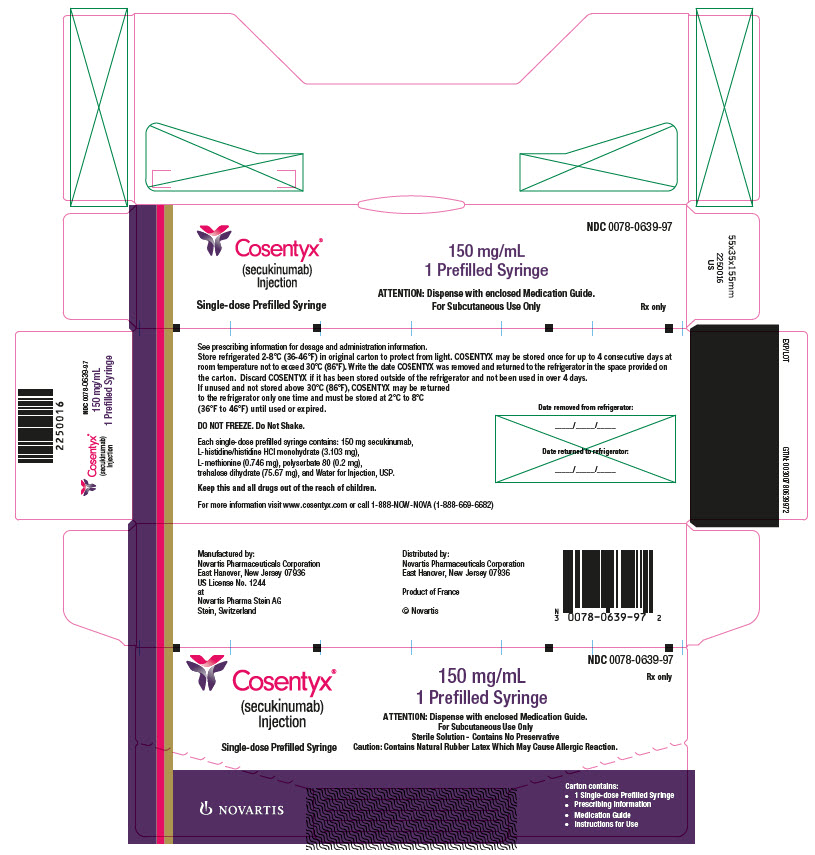
COSENTYX secukinumab 150 mg/mL Injection, 1 mL — NDC 0078-0639-97 (Billing 00078-0639-97)
This is a package of 1 mL of COSENTYX secukinumab 150 mg/mL Injection from Novartis Pharmaceuticals Corporation, marketed since Jan 2015 and currently FDA-listed; retail pharmacies pay about $7,879.81 per mL (NADAC).
NDC database record
One package, one record: these facts belong to NDC 0078-0639-97 alone.
- Record
- FDA NDC Directory package listing · Human prescription drug
- Code segments
- 0078 labeler · 0639 product · 97 package
- Package marketed since
- Jan 21, 2015
- Sample package
- No — commercial package
- Listing certified through
- Dec 31, 2027
- Billing quantity
- 1 mL per package
- Barcode (UPC-A, from the NDC)
- 3 0078063997 2
- Medicaid fills, this package
- 2,015 prescriptions in the last four reported quarters
- FDA record last changed
- Sep 10, 2026
Identity & classification
Regulatory identifiers FDA, NLM and CMS codes for this package
Drug-database identifiers Medi-Span GPI and First Databank GCN / HICL / AHFS classification
- GSN (GCN sequence number): 073394
- GCN: 37788
- HICL (First Databank): 041715
- AHFS class code: 90:24.20.92
- RxCUI (RxNorm): 1599792
Where does this data come from?
- FDA openFDA NDC Directory · synced Oct 1, 2026
- FDA label on DailyMed · label index refreshed Oct 5, 2026
- RxNorm (NLM RxNav) · catalog refreshed Oct 1, 2026
- Medi-Span GPI (licensed)
- First Databank (licensed) · refreshed Oct 1, 2026
RxNorm drug class
This medicine belongs to the Interleukin-17A Antagonist class.
Where does this data come from?
- RxClass (NLM) · catalog refreshed Oct 1, 2026
Clinical
- It treats plaque psoriasis, psoriatic arthritis, ankylosing spondylitis, non-radiographic axial spondyloarthritis, enthesitis-related arthritis, and hidradenitis suppurativa. Which...
- Most people inject it under the skin, often weekly for the first month and then about every 4 weeks. Adults can do it themselves after training. Rotate sites and avoid tender, brui...
- The most common are cold-like symptoms, upper respiratory infections, and diarrhea. Some people also get a runny nose, sore throat, cold sores, or hives. Call your doctor if sympto...
- Get help for swelling of the face or throat, trouble breathing, or widespread hives. Also call for signs of infection, new bowel symptoms, or a severe rash. Cosentyx can raise infe...
Patient education
Supplement & herbal interactions
Where does this data come from?
- MedlinePlus (NLM) · refreshed Oct 1, 2026
- FDA label on DailyMed · label index refreshed Oct 5, 2026
Ask a licensed pharmacist directly — free, answered by our team.
Pricing
A drug doesn't have one price. Each row is a different public payment system, and none is what you'd pay at the counter — that depends on your insurance. The ⓘ on each row explains what it measures.
| Price system | Per mL | Per package |
|---|---|---|
| Retail pharmacies payNADAC · weekly | $7,879.810 | $7,879.81 / 1 ml |
| Medicaid paysCMS SDUD · 12 mo | $7,338.44 | $7,338.44 / 1 ml |
| Medicare drug plans payPart D · Q2 2026 | $3,932.09 | $3,932.09 / 1 ml |
| Medicare Part B allowsASP · J3247 | $18.233 / J3247 unit | — |
Where does this data come from?
- CMS NADAC weekly file · file of Sep 30, 2026
- CMS ASP pricing files · refreshed Sep 20, 2026
- CMS Medicaid State Drug Utilization Data · through Q4 2025
- CMS Part D plan pricing files · refreshed Sep 24, 2026
- VA National Acquisition Center price file
Billing & reimbursement
Where does this data come from?
- CMS ASP NDC-HCPCS crosswalk · refreshed Sep 22, 2026
- DMEPDAC NDC-HCPCS crosswalk
- openFDA NSDE billing units · refreshed Sep 7, 2026
Packaging — all sizes for this product
| Package NDC | Description | Per unit | Per pack | Marketing start | Marketing end | Status |
|---|---|---|---|---|---|---|
| 00078-0639-41 0078-0639-41 Main listing | 2 mL in 1 CARTON | $3,946.35 / mL | $7,892.70 | 2015-01-21 | — | Active |
| 00078-0639-68 0078-0639-68 | 1 mL in 1 CARTON | $7,858.48 / mL | $7,858.48 | 2015-01-21 | — | Active |
| 00078-0639-97 You're viewing this | 1 mL in 1 CARTON | $7,879.81 / mL | $7,879.81 | 2015-01-21 | — | Active |
| 00078-0639-98 0078-0639-98 | 2 mL in 1 CARTON | $3,924.35 / mL | $7,848.70 | 2015-01-21 | — | Active |
Per mL, this pack runs about 101% above the cheapest pack (2 mL, $3,924.35 vs $7,879.81 NADAC).
This pack accounts for about 2.7% of this product's recent Medicaid fills; most go to the 2 ml pack. See all packs ↓
Pack size FAQ
What quantity is in this package?
How does this package differ from NDC 00078-0639-68?
What NDC number is used to bill for this package of COSENTYX secukinumab 150 mg/mL Injection?
Prices are the latest CMS NADAC pharmacy acquisition cost per NDC; per-pack figures are per-unit × pack quantity, shown only when the pack is denominated in the same measure NADAC prices.
Therapeutic equivalents
| Product | Labeler | Pack | NADAC/unit | TE | Status | Price vs. this |
|---|---|---|---|---|---|---|
| Cosentyx 150 mg/mLthis 00078-0639-97 | Novartis | 1 ml | $7,879.810 | — | Availability likely | — |
Where does this data come from?
- FDA openFDA NDC Directory · synced Oct 1, 2026
- FDA Purple Book · refreshed Oct 5, 2026
- CMS NADAC weekly file · file of Sep 30, 2026
Availability & biosimilar status
Biologics have no small-molecule generics; biosimilar competition is tracked in the FDA Purple Book.
Why the date isn’t exact: Biosimilar timing can change because patents may be challenged, settled, licensed, added or removed, and litigation can move the real date earlier or later.
🛈 What do these terms mean?
- Biologic patent
- A patent the reference product’s maker has publicly listed. A biosimilar generally can’t launch until these expire — unless they’re invalidated or resolved in a settlement.
- Reference-product exclusivity
- A flat 12 years of FDA market protection from the biologic’s first licensure (the BPCIA). No biosimilar can be licensed before it ends, regardless of patents.
- Interchangeable exclusivity
- The first interchangeable biosimilar can earn a period as the only interchangeable version (pharmacists can substitute it without the prescriber).
- Earliest biosimilar (LOE)
- The latest of all the dates above — the soonest a biosimilar can realistically reach the market. Litigation and settlements can move it earlier.
Biologics have no small-molecule “generics” — competition comes from FDA-licensed biosimilars, tracked in the FDA Purple Book.
| Code | What it grants | Expires |
|---|---|---|
| RefProduct | Reference-product exclusivity (12-year, BPCIA) — no biosimilar can be licensed before this date | Jan 21, 2027 |
Is there a biosimilar for COSENTYX 150 MG/ML SYRINGE?
Why do different websites show different biosimilar dates?
Can a biosimilar launch before the last patent expires?
What does “current Purple Book estimate” mean?
What does “FDA listed” mean?
What does a patent or protection date mean here?
Where does this data come from?
- FDA Purple Book · refreshed Oct 5, 2026
Inactive Ingredients / Excipients
Inactive ingredients, also called excipients, are components of the drug product other than the active ingredient. They may include fillers, dyes, coatings, preservatives, flavors, or other formulation ingredients.
💡 Tap an ingredient (hover on desktop) to see what it is and why it’s used.
-
3.103 mg / 1 mL
UNII 4QD397987E
An amino acid used as a buffer and stabilizer in medications. It helps maintain the pH balance and protects the active drug from breaking down during storage and use.
-
3.103 mg / 1 mL
UNII X573657P6P
Histidine monohydrochloride monohydrate is an amino acid salt used as a buffer in medicines. It helps maintain the proper acidity level of liquid formulations to keep the drug stable and effective.
-
0.746 mg / 1 mL
UNII AE28F7PNPL
Methionine is an amino acid used as a nutrient supplement and pH buffer in medicines. It helps stabilize the formulation and supports the product's overall composition.
-
UNII N762921K75
A colorless, odorless gas that makes up most of the air we breathe. In medicines, it's used as a packaging gas or propellant to protect products from oxidation and maintain freshness.
-
0.200 mg / 1 mL
UNII 6OZP39ZG8H
Polysorbate 80 is a synthetic emulsifier derived from sorbitol and oleic acid. It helps mix oil and water-based ingredients together in medications and improves how the product disperses in the body.
-
75.67 mg / 1 mL
UNII 7YIN7J07X4
A natural sugar derived from plants and microorganisms. It acts as a filler to give the medication bulk and stability, and helps preserve the active ingredient during storage and manufacturing.
-
UNII 059QF0KO0R
Water is a liquid solvent that dissolves and mixes ingredients together in liquid medicines, syrups, and injections. It helps distribute the active drug evenly throughout the product.
7 inactive ingredients listed in the exact product block matched to this NDC.
Where does this data come from?
ingredient classCode="IACT" elements from the exact product block matched by this NDC. Label-section narrative from DailyMed / the openFDA label index is shown separately when available.- FDA label on DailyMed · label index refreshed Oct 5, 2026
- FDA openFDA NDC Directory · synced Oct 1, 2026
Inactive ingredient FAQ
Are inactive ingredients the same for every manufacturer?
Why might an inactive ingredient be missing?
Can inactive ingredients matter?
Manufacturer & labeler
More NDCs from Novartis Pharmaceuticals Corporation labeler code 00078
- Focalin XR dexmethylphenidate hydrochloride 25 mg Capsule, Extended Release NDC 0078-0608-05
- Focalin XR dexmethylphenidate hydrochloride 35 mg Capsule, Extended Release NDC 0078-0609-05
- Afinitor everolimus 7.5 mg Tablet NDC 0078-0620-51
- Afinitor Disperz everolimus 2 mg Tablet, For Suspension NDC 0078-0626-51
- Afinitor Disperz everolimus 3 mg Tablet, For Suspension NDC 0078-0627-51
- Afinitor Disperz everolimus 5 mg Tablet, For Suspension NDC 0078-0628-51
- Gleevec imatinib mesylate 400 mg Tablet NDC 0078-0649-13
- Jadenu deferasirox 90 mg Tablet, Film Coated NDC 0078-0654-15
- Jadenu deferasirox 180 mg Tablet, Film Coated NDC 0078-0655-15
- Jadenu deferasirox 360 mg Tablet, Film Coated NDC 0078-0656-15
- ENTRESTO Sacubitril and Valsartan 24 mg; 26 mg Tablet, Film Coated NDC 0078-0659-20
- Tykerb lapatinib 250 mg Tablet NDC 0078-0671-19
Where does this data come from?
- FDA openFDA NDC Directory · synced Oct 1, 2026
- Drugs@FDA
Full prescribing information FDA SPL
🎯 Indications and Usage ▾
1 INDICATIONS AND USAGE COSENTYX is a human interleukin-17A antagonist indicated for the treatment of: moderate to severe plaque psoriasis (PsO) in adults and pediatric patients 6 years and older who are candidates for systemic therapy or phototherapy. ( 1.1 ) active psoriatic arthritis (PsA) in adults and pediatric patients 2 years of age and older. ( 1.2 ) active ankylosing spondylitis (AS) in adults and pediatric patients 12 years of age and older.
( 1.3 ) active non-radiographic axial spondyloarthritis (nr-axSpA) in adults with objective signs of inflammation. ( 1.4 ) active enthesitis-related arthritis (ERA) in pediatric patients 4 years of age and older. ( 1.5 ) moderate to severe hidradenitis suppurativa (HS) in adults and pediatric patients 12 years of age and older.
( 1.6 )
1.1Plaque Psoriasis COSENTYX ® is indicated for the treatment of moderate to severe plaque psoriasis (PsO) in adults and pediatric patients 6 years and older who are candidates for systemic therapy or phototherapy.
1.2Psoriatic Arthritis COSENTYX is indicated for the treatment of active psoriatic arthritis (PsA) in adults and pediatric patients 2 years of age and older.
1.3Ankylosing Spondylitis COSENTYX is indicated for the treatment of active ankylosing spondylitis (AS) in adults and pediatric patients 12 years of age and older.
1.4Non-Radiographic Axial Spondyloarthritis COSENTYX is indicated for the treatment of active non-radiographic axial spondyloarthritis (nr-axSpA) in adult patients with objective signs of inflammation.
1.5Enthesitis-Related Arthritis COSENTYX is indicated for the treatment of active enthesitis-related arthritis (ERA) in pediatric patients 4 years of age and older.
1.6Hidradenitis Suppurativa COSENTYX is indicated for the treatment of moderate to severe hidradenitis suppurativa (HS) in adults and pediatric patients 12 years of age and older.
⏱️ Dosage and Administration ▾
2 DOSAGE AND ADMINISTRATION Prior to COSENTYX initiation, complete all age-appropriate vaccinations, evaluate patients for tuberculosis (TB). ( 2.1 ) See Full Prescribing Information for instructions on preparation and administration of COSENTYX. ( 2.2 , 2.11 , 2.12 ) Administration of Intravenous Formulation: COSENTYX for intravenous use must be diluted prior to administration.
Administer as an intravenous infusion after dilution over a period of 30 minutes. ( 2.12 ) Plaque Psoriasis: Subcutaneous Dosage in Adults: Recommended dosage is 300 mg by subcutaneous injection at Weeks 0, 1, 2, 3, and 4 and every 4 weeks thereafter. For some patients, a dose of 150 mg may be acceptable.
( 2.3 ) Subcutaneous Dosage in Pediatric Patients 6 Years and Older: Recommended weight-based dosage is administered by subcutaneous injection at Weeks 0, 1, 2, 3, and 4 and every 4 weeks thereafter. For patients < 50 kg, the dose is 75 mg. For patients ≥ 50 kg, the dose is 150 mg.
( 2.3 ) Psoriatic Arthritis: Adult Patients Subcutaneous Dosage: For PsA patients with coexistent moderate to severe PsO, use the dosage and administration for PsO. ( 2.3 ) For other PsA patients, administer with or without a loading dosage. With a loading dosage : 150 mg at Weeks 0, 1, 2, 3, and 4 and every 4 weeks thereafter Without a loading dosage : 150 mg every 4 weeks If a patient continues to have active PsA, consider a dosage of 300 mg every 4 weeks.
( 2.4 ) Intravenous Dosage: The recommended intravenous dosages are: With a loading dosage : 6 mg/kg given at Week 0 as a loading dose, followed by 1.75 mg/kg every 4 weeks thereafter (max. maintenance dose 300 mg per infusion). Without a loading dosage : 1.75 mg/kg every 4 weeks (max. maintenance dose 300 mg per infusion). ( 2.4 ) Pediatric Patients 2 Years and Older Subcutaneous Dosages : Administer by subcutaneous injection at Weeks 0, 1, 2, 3, and 4 and every 4 weeks thereafter: For patients ≥ 15 kg and < 50 kg the dose is 75 mg.
For patients ≥ 50 kg the dose is 150 mg. ( 2.5 ) Ankylosing Spondylitis: Adult Patients Subcutaneous Dosage: Administer with or without a loading dosage. The recommended dosages are: With a loading dosage : 150 mg at Weeks 0, 1, 2, 3, and 4 and every 4 weeks thereafter.
Without a loading dosage : 150 mg every 4 weeks. If a patient continues to have active ankylosing spondylitis, consider a dosage of 300 mg every 4 weeks. ( 2.6 ) Intravenous Dosage: The recommended intravenous dosages are: With a loading dosage : 6 mg/kg given at Week 0 as a loading dose, followed by 1.75 mg/kg every 4 weeks thereafter (max. maintenance dose 300 mg per infusion).
Without a loading dosage : 1.75 mg/kg every 4 weeks (max. maintenance dose 300 mg per infusion). ( 2.6 ) Pediatric Patients 12 Years and Older Subcutaneous Dosage: Administer by subcutaneous injection at Weeks 0, 1, 2, 3, and 4 and every 4 weeks thereafter. For patients < 50 kg, the dose is 75 mg.
For patients ≥ 50 kg, the dose is 150 mg. ( 2.7 ) Non-Radiographic Axial Spondyloarthritis: Subcutaneous Dosage: Administer with or without a loading dosage. The recommended dosage is: With a loading dosage : 150 mg at Weeks 0, 1, 2, 3, and 4 and every 4 weeks thereafter.
Without a loading dosage : 150 mg every 4 weeks. ( 2.8 ) Intravenous Dosage: The recommended intravenous dosages are: With a loading dosage : 6 mg/kg given at Week 0 as a loading dose, followed by 1.75 mg/kg every 4 weeks thereafter (max. maintenance dose 300 mg per infusion). Without a loading dosage : 1.75 mg/kg every 4 weeks (max. maintenance dose 300 mg per infusion).
( 2.8 ) Enthesitis-Related Arthritis: Recommended weight-based dosage is administered by subcutaneous injection at Weeks 0, 1, 2, 3, and 4 and every 4 weeks thereafter. For patients ≥ 15 kg and < 50 kg the dose is 75 mg. For patients ≥ 50 kg the dose is 150 mg.
( 2.9 ) Hidradenitis Suppurativa: Subcutaneous Dosage in Adults : Recommended dosage is 300 mg by subcutaneous injection at Weeks 0, 1, 2, 3, and 4 and every 4 we… [Excerpted — this section continues on DailyMed.]
💊 Dosage Forms and Strengths ▾
3 DOSAGE FORMS AND STRENGTHS Injection for subcutaneous use: 300 mg/2 mL as a clear to opalescent, colorless to slightly yellowish solution in a single-dose UnoReady pen 150 mg/mL as a clear to opalescent, colorless to slightly yellowish solution in a single-dose Sensoready pen 150 mg/mL as a clear to opalescent, colorless to slightly yellowish solution in a single-dose prefilled syringe 75 mg/0.5 mL as a clear to opalescent, colorless to slightly yellowish solution in a single-dose prefilled syringe (for pediatric patients less than 50 kg) Injection for intravenous use: 125 mg/5 mL as a clear to opalescent, colorless to slightly yellowish solution in a single-dose vial for dilution prior to intravenous infusion (for healthcare professional use only).
Subcutaneous Injection Injection : 300 mg/2 mL solution in a single-dose UnoReady ® pen. ( 3 ) Injection : 150 mg/mL solution in a single-dose Sensoready ® pen and in a single-dose prefilled syringe. ( 3 ) Injection : 75 mg/0.5 mL solution in a single-dose prefilled syringe (for pediatric patients).
( 3 ) Intravenous Infusion Injection : 125 mg/5 mL solution in a single-dose vial. ( 3 )
⛔ Contraindications ▾
4 CONTRAINDICATIONS COSENTYX is contraindicated in patients with a previous serious hypersensitivity reaction to secukinumab or to any of the excipients in COSENTYX. Cases of anaphylaxis and angioedema have been reported during treatment with COSENTYX [see Warnings and Precautions (5.2)] . Serious hypersensitivity to secukinumab or any excipients in COSENTYX. ( 4 )
⚠️ Warnings and Cautions ▾
5 WARNINGS AND PRECAUTIONS Infections : Serious infections have occurred. Exercise caution when considering the use of COSENTYX in patients with a chronic infection or a history of recurrent infection. If a serious infection develops, discontinue COSENTYX until the infection resolves.
( 5.1 ) Hypersensitivity Reactions : If an anaphylactic reaction or other serious allergic reaction occurs, discontinue COSENTYX immediately and initiate appropriate therapy. ( 5.2 ) Tuberculosis (TB) : Prior to initiating treatment with COSENTYX, evaluate for TB. ( 5.3 ) Inflammatory Bowel Disease (IBD) : Cases of IBD were observed in clinical trials.
Exercise caution when prescribing COSENTYX to patients with IBD. ( 5.4 ) Eczematous Eruptions : Cases of severe eczematous eruptions have occurred in patients receiving COSENTYX. ( 5.5 ) Immunizations : Avoid use of live vaccines in patients treated with COSENTYX.
( 5.7 )
5.1Infections COSENTYX may increase the risk of infections. In clinical trials, a higher rate of infections was observed in COSENTYX treated subjects compared to placebo-treated subjects. In placebo-controlled clinical trials in subjects with moderate to severe PsO, higher rates of common infections, such as nasopharyngitis (11.4% versus 8.6%), upper respiratory tract infection (2.5% versus 0.7%) and mucocutaneous infections with candida (1.2% versus 0.3%) were observed in subjects treated with COSENTYX compared to placebo-treated subjects.
A similar increase in risk of infection in subjects treated with COSENTYX was seen in placebo-controlled trials in subjects with PsA, AS and nr-axSpA. The incidence of some types of infections, including fungal infections, appeared to be dose-dependent in clinical trials [see Adverse Reactions (6.1)] . In the postmarketing setting, serious bacterial, viral, and fungal opportunistic infections, and some fatal infections have been reported in patients receiving IL-17 inhibitors including COSENTYX.
Cases of Hepatitis B virus reactivation have been reported [see Adverse Reactions (6.2)] . Exercise caution when considering the use of COSENTYX in patients with a chronic infection or a history of recurrent infection. Instruct patients to seek medical advice if signs or symptoms suggestive of an infection occur.
If a patient develops a serious infection, monitor the patient closely and discontinue COSENTYX until the infection resolves. If signs of Hepatitis B virus reactivation occur, consult a hepatitis specialist. COSENTYX is not recommended for use in patients with active viral hepatitis.
5.2Hypersensitivity Reactions Serious hypersensitivity reactions including anaphylaxis, angioedema, and urticaria have been reported in COSENTYX treated subjects in clinical trials and in the post-marketing setting [see Adverse Reactions (6.1, 6.2)] . If an anaphylactic or other serious allergic reaction occurs, immediately discontinue administration of COSENTYX and initiate appropriate therapy [see Contraindications (4)] .
5.3Pre-Treatment Evaluation for Tuberculosis Evaluate patients for active or latent TB infection prior to initiating treatment with COSENTYX. Avoid administration of COSENTYX to patients with active TB infection. Initiate treatment of latent TB prior to administering COSENTYX.
Consider anti-TB therapy prior to initiation of COSENTYX in patients with a past history of latent or active TB in whom an adequate course of treatment cannot be confirmed. Monitor patients closely for signs and symptoms of active TB during and after treatment. In the postmarketing setting, cases were reported where patients with a history of latent tuberculosis (TB) who were treated with COSENTYX developed active TB.
5.4Inflammatory Bowel Disease Inflammatory Bowel Disease (IBD) exacerbations, in some cases serious and/or leading to discontinuation of COSENTYX, occurred in COSENTYX treated subjects during clinical trials in PsO, PsA, AS, nr-axSpA, and HS. In adult subjects with HS, the incidence of IBD was higher in s… [Excerpted — this section continues on DailyMed.]
🤒 Adverse Reactions ▾
6 ADVERSE REACTIONS The following adverse reactions are discussed in greater detail elsewhere in the labeling: Infections [see Warnings and Precautions (5.1)] Hypersensitivity Reactions [see Warnings and Precautions (5.2)] Inflammatory Bowel Disease [see Warnings and Precautions (5.4)] Eczematous Eruptions [see Warnings and Precautions (5.5)] Most common adverse reactions (> 1%) are nasopharyngitis, diarrhea, and upper respiratory tract infection. ( 6.1 ) To report SUSPECTED ADVERSE REACTIONS, contact Novartis Pharmaceuticals Corporation at 1-888-669-6682 or FDA at 1-800-FDA-1088 or www.fda.gov/medwatch .
6.1Clinical Trials Experience Because clinical trials are conducted under widely varying conditions, adverse reaction rates observed in the clinical trials of a drug cannot be directly compared to rates in the clinical trials of another drug and may not reflect the rates observed in practice. Adverse Reactions in Clinical Trials of Subcutaneous COSENTYX Adverse Reactions from Clinical Trials in Adults with PsO A total of 3,430 adult subjects with PsO were treated with COSENTYX in controlled and uncontrolled clinical trials.
Of these, 1,641 subjects were treated with COSENTYX for at least 1 year. Four placebo-controlled Phase 3 trials in PsO subjects (Trials PsO1, PsO2, PsO3, and PsO4) were pooled to evaluate the safety of COSENTYX in comparison to placebo up to 12 weeks after treatment initiation. In total, 2,077 subjects were evaluated (691 in the COSENTYX 300 mg group, 692 in the COSENTYX 150 mg group, and 694 in the placebo group).
Subjects randomized to COSENTYX received 300 mg or 150 mg doses subcutaneously at Weeks 0, 1, 2, 3, and 4 followed by the same dose every 4 weeks [see Clinical Studies (14)] . Table 2 summarizes the adverse reactions that occurred at a rate of at least 1% and at a higher rate in the COSENTYX groups than the placebo group during the 12-week placebo-controlled period of these trials. Table 2: Adverse Reactions Reported by Greater Than 1% of Adult Subjects With PsO (and at a Higher Rate in Subjects Treated with COSENTYX) Through Week 12 in Trials PsO1, PsO2, PsO3, and PsO4 COSENTYX Adverse reactions 300 mg (N = 691) n (%) 150 mg (N = 692) n (%) Placebo (N = 694) n (%) Nasopharyngitis 79 (11.4) 85 (12.3) 60 (8.6) Diarrhea 28 (4.1) 18 (2.6) 10 (1.4) Upper respiratory tract infection 17 (2.5) 22 (3.2) 5 (0.7) Rhinitis 10 (1.4) 10 (1.4) 5 (0.7) Oral herpes 9 (1.3) 1 (0.1) 2 (0.3) Pharyngitis 8 (1.2) 7 (1.0) 0 (0) Urticaria 4 (0.6) 8 (1.2) 1 (0.1) Rhinorrhea 8 (1.2) 2 (0.3) 1 (0.1) Adverse reactions that occurred in subjects treated with COSENTYX at rates less than 1% in the placebo-controlled period of Trials PsO1, PsO2, PsO3, and PsO4 through Week 12 included: sinusitis, tinea pedis, conjunctivitis, tonsillitis, oral candidiasis, impetigo, otitis media, otitis externa, IBD, increased liver transaminases, and neutropenia.
Infections In the placebo-controlled period of the clinical trials in PsO (a total of 1,382 subjects treated with COSENTYX and 694 subjects treated with placebo up to 12 weeks), infections were reported in 28.7% of subjects treated with COSENTYX compared with 18.9% of subjects treated with placebo. Over the entire treatment period (a total of 3,430 PsO subjects treated with COSENTYX for up to 52 weeks for the majority of subjects), infections were reported in 47.5% of subjects treated with COSENTYX (0.9 per subject-year of follow-up) and serious infections were reported in 1.2% of subjects treated with COSENTYX (0.015 per subject-year of follow-up).
Phase 3 data showed an increasing trend for some types of infection with increasing serum secukinumab concentrations. Candida infections, herpes viral infections, staphylococcal skin infections, and infections requiring treatment increased as serum secukinumab concentration increased. In the PsO open-label extension of Trials PsO1 and PsO2 (median follow-up of 3.9 years), representing 3,582 subject-years of exposure, 74% of COSENTYX treat… [Excerpted — this section continues on DailyMed.]
🔄 Drug Interactions ▾
7 DRUG INTERACTIONS Certain CYP450 Substrates Increased concentrations of cytokines (e.g., IL-17) during chronic inflammation associated with certain diseases including PsO, PsA, AS, nr-axSpA, ERA, and HS may suppress the formation of CYP enzymes. Upon initiation or discontinuation of COSENTYX in patients who are receiving concomitant CYP450 substrates, particularly those where minimal decreases in the concentration may reduce CYP substrate effectiveness or minimal increases in the concentration may increase CYP substrate adverse reactions, consider monitoring for therapeutic effect or concentration of the CYP substrate and consider dosage adjustment of the CYP substrate as needed [see Clinical Pharmacology (12.3)] .
👥 Use in Specific Populations ▾
8 USE IN SPECIFIC POPULATIONS
8.1Pregnancy Risk Summary Limited available human data with COSENTYX use in pregnant women are insufficient to inform a drug-associated risk of adverse developmental outcomes. In an embryo-fetal development study, no adverse developmental effects were observed in infants born to pregnant monkeys after subcutaneous administration of secukinumab during organogenesis at doses up to 30 times the maximum recommended human dose (MRHD) (see Data) . The background risk of major birth defects and miscarriage for the indicated population is unknown; however, the background risk in the U.S. general population of major birth defects is 2% to 4% and of miscarriage is 15% to 20% of clinically recognized pregnancies.
Data Animal Data An embryo-fetal development study was performed in cynomolgus monkeys with secukinumab. No malformations or embryo-fetal toxicity were observed in fetuses from pregnant monkeys that were administered secukinumab weekly by the subcutaneous route during the period of organogenesis at doses up to 30 times the MRHD (on a mg/kg basis at a maternal dose of 150 mg/kg). A pre- and post-natal development toxicity study was performed in mice with a murine analog of secukinumab.
No treatment-related effects on functional, morphological, or immunological development were observed in fetuses from pregnant mice that were administered the murine analog of secukinumab on gestation days 6, 11, and 17 and on postpartum days 4, 10, and 16 at doses up to 150 mg/kg/dose.
8.2Lactation Risk Summary It is not known whether secukinumab is excreted in human milk or absorbed systemically after ingestion. There are no data on the effects of COSENTYX on the breastfed child or the effects on milk production. The developmental and health benefits of breastfeeding should be considered along with the mother’s clinical need for COSENTYX and any potential adverse effects on the breastfed child from COSENTYX or from the underlying maternal condition.
8.4Pediatric Use Subcutaneous Administration Pediatric Plaque Psoriasis The safety and effectiveness of COSENTYX have been established for the treatment of moderate to severe PsO in pediatric patients aged 6 years and older who are candidates for systemic therapy or phototherapy [see Adverse Reactions (6.1) and Clinical Studies (14.2)] . The safety and effectiveness of COSENTYX in pediatric patients with PsO below the age of 6 years old have not been established. Juvenile Psoriatic Arthritis The safety and effectiveness of COSENTYX have been established for the treatment of active JPsA in pediatric patients aged 2 years and older who weigh 15 kg or more [see Adverse Reactions (6.1) and Clinical Studies (14.6)] .
The safety and effectiveness of COSENTYX in pediatric patients with JPsA below the age of 2 years old or with a body weight less than 15 kg have not been established. Juvenile Ankylosing Spondylitis The safety and effectiveness of COSENTYX have been established for treatment of JAS in pediatric patients 12 years of age and older. Use of COSENTYX for this indication is supported by safety and efficacy data from adequate and well-controlled trials in adult subjects with AS.
Additional evidence includes pharmacokinetic data from adult subjects with PsO, PsA, and AS and pediatric subjects with PsO, JPsA, and ERA, as well as safety data from clinical trials in pediatric subjects with PsO, JPsA, and ERA. The pharmacokinetics are predicted to be comparable between adult AS and pediatric subjects with JAS [see Adverse Reactions (6.1), Clinical Pharmacology (12.3), and Clinical Studies (14.4)] . The safety and effectiveness of COSENTYX in pediatric patients with JAS below the age of 12 years old have not been established.
Axial Juvenile Spondyloarthritis Six pediatric patients with axial symptoms were participants in a study for JPsA and ERA (NCT03031782). Due to the limited number of patients and uncertainty fulfilling Axial Juvenile Spondyloarthritis (AxJSpA) classifi… [Excerpted — this section continues on DailyMed.]
🤰 Pregnancy ▾
8.1Pregnancy Risk Summary Limited available human data with COSENTYX use in pregnant women are insufficient to inform a drug-associated risk of adverse developmental outcomes. In an embryo-fetal development study, no adverse developmental effects were observed in infants born to pregnant monkeys after subcutaneous administration of secukinumab during organogenesis at doses up to 30 times the maximum recommended human dose (MRHD) (see Data) . The background risk of major birth defects and miscarriage for the indicated population is unknown; however, the background risk in the U.S. general population of major birth defects is 2% to 4% and of miscarriage is 15% to 20% of clinically recognized pregnancies.
Data Animal Data An embryo-fetal development study was performed in cynomolgus monkeys with secukinumab. No malformations or embryo-fetal toxicity were observed in fetuses from pregnant monkeys that were administered secukinumab weekly by the subcutaneous route during the period of organogenesis at doses up to 30 times the MRHD (on a mg/kg basis at a maternal dose of 150 mg/kg). A pre- and post-natal development toxicity study was performed in mice with a murine analog of secukinumab.
No treatment-related effects on functional, morphological, or immunological development were observed in fetuses from pregnant mice that were administered the murine analog of secukinumab on gestation days 6, 11, and 17 and on postpartum days 4, 10, and 16 at doses up to 150 mg/kg/dose.
🧒 Pediatric Use ▾
8.4Pediatric Use Subcutaneous Administration Pediatric Plaque Psoriasis The safety and effectiveness of COSENTYX have been established for the treatment of moderate to severe PsO in pediatric patients aged 6 years and older who are candidates for systemic therapy or phototherapy [see Adverse Reactions (6.1) and Clinical Studies (14.2)] . The safety and effectiveness of COSENTYX in pediatric patients with PsO below the age of 6 years old have not been established. Juvenile Psoriatic Arthritis The safety and effectiveness of COSENTYX have been established for the treatment of active JPsA in pediatric patients aged 2 years and older who weigh 15 kg or more [see Adverse Reactions (6.1) and Clinical Studies (14.6)] .
The safety and effectiveness of COSENTYX in pediatric patients with JPsA below the age of 2 years old or with a body weight less than 15 kg have not been established. Juvenile Ankylosing Spondylitis The safety and effectiveness of COSENTYX have been established for treatment of JAS in pediatric patients 12 years of age and older. Use of COSENTYX for this indication is supported by safety and efficacy data from adequate and well-controlled trials in adult subjects with AS.
Additional evidence includes pharmacokinetic data from adult subjects with PsO, PsA, and AS and pediatric subjects with PsO, JPsA, and ERA, as well as safety data from clinical trials in pediatric subjects with PsO, JPsA, and ERA. The pharmacokinetics are predicted to be comparable between adult AS and pediatric subjects with JAS [see Adverse Reactions (6.1), Clinical Pharmacology (12.3), and Clinical Studies (14.4)] . The safety and effectiveness of COSENTYX in pediatric patients with JAS below the age of 12 years old have not been established.
Axial Juvenile Spondyloarthritis Six pediatric patients with axial symptoms were participants in a study for JPsA and ERA (NCT03031782). Due to the limited number of patients and uncertainty fulfilling Axial Juvenile Spondyloarthritis (AxJSpA) classification criteria, the effectiveness and safety of COSENTYX in AxJSpA has not been established. Safety was comparable to pediatric patients treated with COSENTYX for JPsA and ERA [see Adverse Reactions (6.1)] .
Enthesitis-Related Arthritis The safety and effectiveness of COSENTYX have been established for the treatment of active ERA in pediatric patients aged 4 years and older who weigh 15 kg or more [see Adverse Reactions (6.1) and Clinical Studies (14.6)] . The safety and effectiveness of COSENTYX in pediatric patients with ERA below the age of 4 years old or with body weight less than 15 kg have not been established. Hidradenitis Suppurativa The safety and effectiveness of COSENTYX have been established for the treatment of moderate to severe HS in pediatric patients 12 years of age and older who weigh 30 kg or more.
Use of COSENTYX for this indication is supported by safety and efficacy data from adequate and well-controlled trials in adult subjects with moderate to severe HS. Additional evidence includes population pharmacokinetic modeling and simulation based on data from adult subjects with PsO and HS and pediatric subjects with PsO, as well as safety data from clinical trials in pediatric subjects with PsO and JIA (JPsA and ERA) [see Adverse Reactions (6.1), Clinical Pharmacology (12.3), and Clinical Studies (14.7)] . The safety and effectiveness of COSENTYX in pediatric patients with HS below the age of 12 years old or with a body weight less than 30 kg have not been established.
Intravenous Administration The safety and effectiveness of intravenous COSENTYX in pediatric patients have not been established.
🧓 Geriatric Use ▾
8.5Geriatric Use Of the 3,430 PsO subjects exposed to subcutaneous COSENTYX in clinical trials, a total of 230 (7%) were 65 years of age and older, and 32 (1%) subjects were 75 years of age and older. Although no differences in safety or efficacy were observed between subjects 65 years of age and older and younger adult subjects, the number of subjects 65 years of age and older was not sufficient to determine whether they respond differently from younger adult subjects. Of the 1,060 subjects with HS exposed to COSENTYX in clinical trials, a total of 14 (1.3%) were 65 years of age and older.
Clinical trials in HS did not include sufficient numbers of subjects 65 years of age and older to determine whether they respond differently from younger adult subjects.
🆘 Overdosage ▾
10 OVERDOSAGE In the event of overdosage, it is recommended that the patient be monitored for any signs or symptoms of adverse reactions and appropriate symptomatic treatment be instituted. Consider contacting the Poison Help line (1-800-222-1222) or a medical toxicologist for additional overdose management recommendations.
🧬 Clinical Pharmacology ▾
12 CLINICAL PHARMACOLOGY
12.1Mechanism of Action Secukinumab is a human IgG1 monoclonal antibody that selectively binds to the interleukin-17A (IL-17A) cytokine and inhibits its interaction with the IL-17 receptor. IL-17A is a naturally occurring cytokine that is involved in normal inflammatory and immune responses. Secukinumab inhibits the release of proinflammatory cytokines and chemokines.
12.2Pharmacodynamics Elevated levels of IL-17A are found in psoriatic plaques and in HS lesions. Treatment with COSENTYX may reduce epidermal neutrophils and IL-17A levels in psoriatic plaques. Serum levels of total IL-17A (free and secukinumab-bound IL-17A) measured at Week 4 and Week 12 were increased following secukinumab treatment.
These pharmacodynamic activities are based on small exploratory trials. The relationship between these pharmacodynamic activities and the mechanism(s) by which secukinumab exerts its clinical effects is unknown. Increased numbers of IL-17A producing lymphocytes and innate immune cells and increased levels of IL-17A have been found in the blood of patients with PsA and AS.
Increased numbers of IL-17A producing lymphocytes have also been found in patients with nr-axSpA. Immune Response to Non-Live Vaccines During Treatment Healthy individuals who received a single 150 mg dose of COSENTYX 2 weeks prior to vaccination with a non-U.S.-approved group C meningococcal polysaccharide conjugate vaccine and a non-U.S.-approved inactivated seasonal influenza vaccine had similar antibody responses compared to individuals who did not receive COSENTYX prior to vaccination. The clinical effectiveness of meningococcal and influenza vaccines has not been assessed in patients undergoing treatment with COSENTYX [see Warnings and Precautions (5.7)] .
12.3Pharmacokinetics Pharmacokinetics Following Subcutaneous Administration The observed pharmacokinetics (PK) of secukinumab administered subcutaneously in patients with PsO, PsA, AS and nr-axSpA were similar. The secukinumab PK is also similar in pediatric patients with ERA and PsO for the same weight tiered dosing regimen. The mean steady-state trough concentration of secukinumab was approximately 26% lower in HS subjects than that of PsO subjects.
Absorption Following a single subcutaneous dose of either 150 mg or 300 mg (administered as two injections of 150 mg) of COSENTYX in PsO subjects, secukinumab reached peak mean (± SD) serum concentrations (C max ) of 13.7 ± 4.8 mcg/mL and 27.3 ± 9.5 mcg/mL, respectively, by approximately 6 days post dose. Following multiple subcutaneous doses of COSENTYX (administered as one or two injections of 150 mg), the mean (± SD) serum trough concentrations of secukinumab ranged from 22.8 ± 10.2 mcg/mL (150 mg) to 45.4 ± 21.2 mcg/mL (300 mg) at Week 12.
At the 300 mg dose at Week 4 and Week 12, the mean trough concentrations resulted from the Sensoready pen were approximately 30% higher than those from the prefilled syringe. Following multiple subcutaneous doses of 300 mg administered via the UnoReady pen, the mean serum trough concentrations of secukinumab were generally consistent with those in the previous Sensoready pen study used to deliver 300 mg. Steady-state concentrations of secukinumab were achieved by Week 24 following the every 4-week dosing regimen.
The mean (± SD) steady-state trough concentrations ranged from 16.7 ± 8.2 mcg/mL (150 mg) to 34.4 ± 16.6 mcg/mL (300 mg administered as two injections of 150 mg). In healthy subjects and subjects with PsO, secukinumab bioavailability ranged from 55% to 77% following subcutaneous COSENTYX dose of 150 mg or 300 mg (administered as two injections of 150 mg). Following subcutaneous administrations of 300 mg of COSENTYX at Weeks 0, 1, 2, 3, and 4 and then every 4 weeks thereafter, steady-state concentrations of secukinumab were achieved by Week 24 in both HS trials.
The mean (± SD) steady-state trough concentrations were 25.7 ± 15.7 mcg/mL and 26.0 ± 13.9 mcg/mL in HS Trial 1 and HS Trial… [Excerpted — this section continues on DailyMed.]
🧬 Mechanism of Action ▾
12.1Mechanism of Action Secukinumab is a human IgG1 monoclonal antibody that selectively binds to the interleukin-17A (IL-17A) cytokine and inhibits its interaction with the IL-17 receptor. IL-17A is a naturally occurring cytokine that is involved in normal inflammatory and immune responses. Secukinumab inhibits the release of proinflammatory cytokines and chemokines.
📦 How Supplied / Storage and Handling ▾
16 HOW SUPPLIED/STORAGE AND HANDLING How Supplied COSENTYX (secukinumab) injection is a clear to opalescent, colorless to slightly yellowish solution available as follows: COSENTYX injection for subcutaneous use Strength Dosage Form Carton Contents NDC 75 mg/0.5 mL COSENTYX prefilled syringe 1 prefilled syringe 0078-1056-97 150 mg/mL COSENTYX prefilled syringe 1 prefilled syringe 0078-0639-97 2 prefilled syringes 0078-0639-98 COSENTYX Sensoready pen 1 Sensoready pen 0078-0639-68 2 Sensoready pens 0078-0639-41 300 mg/2 mL COSENTYX UnoReady pen 1 UnoReady pen 0078-1070-68 The removable cap of the COSENTYX Sensoready pen and prefilled syringes (150 mg/mL, 75 mg/0.5 mL) contains natural rubber latex.
All COSENTYX pens and prefilled syringes are equipped with a needle safety guard. COSENTYX injection for intravenous use Strength Dosage Form Carton Contents NDC 125 mg/5 mL COSENTYX vial 1 vial of solution for dilution prior to intravenous infusion 0078-1168-61 Storage and Handling Refrigerate COSENTYX at 2ºC to 8ºC (36ºF to 46ºF). Keep COSENTYX in the original carton to protect from light until the time of use.
Do not freeze. To avoid foaming, do not shake. COSENTYX does not contain a preservative; discard any unused portion.
If removed from refrigeration, COSENTYX Sensoready pen and prefilled syringes (150 mg/mL, 75 mg/0.5 mL): May be stored for up to 4 days at room temperature not to exceed 30°C (86°F). Write the date COSENTYX is removed from and returned to the refrigerator in the space provided on the carton. Discard if stored outside of the refrigerator over 4 days.
May be returned to the refrigerator only one time and must be stored at 2ºC to 8ºC (36ºF to 46ºF) until used or expired.
📋 Description ▾
11 DESCRIPTION Secukinumab, a recombinant human monoclonal IgG1/κ antibody, is an interleukin-17A antagonist. It is expressed in a recombinant Chinese Hamster Ovary (CHO) cell line. Secukinumab has a molecular mass of approximately 151 kDa; both heavy chains of secukinumab contain oligosaccharide chains.
COSENTYX Injection for Subcutaneous Use COSENTYX injection is a sterile, preservative-free, clear to slightly opalescent, colorless to slightly yellow solution for subcutaneous use. COSENTYX injection is supplied in a single-dose UnoReady pen (300 mg/2 mL) with a 27-gauge fixed ½-inch needle, a single-dose Sensoready pen (150 mg/mL) with a 27-gauge fixed ½-inch needle, or a single-dose prefilled syringe (150 mg/mL, 75 mg/0.5 mL) with a 27-gauge fixed ½-inch needle. The removable cap of the COSENTYX Sensoready pen and prefilled syringes (150 mg/mL, 75 mg/0.5 mL) contains natural rubber latex.
Each COSENTYX UnoReady pen (300 mg/2 mL) contains 300 mg of secukinumab formulated in: L-histidine/histidine hydrochloride monohydrate (6.206 mg), L-methionine (1.492 mg), polysorbate 80 (0.4 mg), trehalose dihydrate (151.34 mg), and Sterile Water for Injection, USP, at pH of 5.8. Each COSENTYX Sensoready pen or prefilled syringe (150 mg/mL) contains 150 mg of secukinumab formulated in: L-histidine/histidine hydrochloride monohydrate (3.103 mg), L-methionine (0.746 mg), polysorbate 80 (0.2 mg), trehalose dihydrate (75.67 mg), and Sterile Water for Injection, USP, at pH of 5.8.
Each COSENTYX prefilled syringe (75 mg/0.5 mL) contains 75 mg of secukinumab formulated in: L-histidine/histidine hydrochloride monohydrate (1.552 mg), L-methionine (0.373 mg), polysorbate 80 (0.1 mg), trehalose dihydrate (37.83 mg), and Sterile Water for Injection, USP, at pH of 5.8. COSENTYX Injection for Intravenous Use COSENTYX solution is supplied as a sterile, preservative free, clear to opalescent, colorless to slightly yellowish solution in single-dose vials for intravenous infusion after dilution. Each COSENTYX vial (125 mg/5 mL) contains 125 mg of secukinumab formulated in: L-histidine (5.67 mg), L-histidine hydrochloride monohydrate (13.3 mg), L-methionine (3.73 mg), polysorbate 80 (1 mg), trehalose dihydrate (426 mg), and Sterile Water for Injection, USP, at pH of 5.8.
💬 Information for Patients ▾
17 PATIENT COUNSELING INFORMATION Advise the patient to read the FDA-approved patient labeling (Medication Guide and Instructions for Use). Infections Inform patients that COSENTYX may lower the ability of their immune system to fight infections and that serious infections, including opportunistic infections, may occur with the use of COSENTYX. Instruct patients of the importance of communicating any history of infections to the doctor and contacting their doctor if they develop any symptoms of infection [see Warnings and Precautions (5.1, 5.3)] .
Hypersensitivity Advise patients to seek immediate medical attention if they experience any symptoms of serious hypersensitivity reactions [see Warnings and Precautions (5.2)] . Eczematous Eruptions Inform patients that skin reactions resembling eczema may occur with the use of COSENTYX. Instruct patients to seek medical advice if they develop signs or symptoms of eczema [see Warnings and Precautions (5.5)] .
Risk of Hypersensitivity in Latex-Sensitive Individuals Advise latex-sensitive patients that the removal cap of the COSENTYX Sensoready pen and prefilled syringes (150 mg/mL, 75 mg/0.5 mL) contains natural rubber latex, which may cause an allergic reaction in latex-sensitive individuals [see Warnings and Precautions (5.6)] . Immunization Advise patients that vaccination with live vaccines is not recommended during COSENTYX treatment. Instruct patients to inform the healthcare practitioner that they are taking COSENTYX prior to a potential vaccination [see Warnings and Precautions (5.7)] .
Instructions on Subcutaneous Injection Technique If a patient or caregiver is to subcutaneously administer COSENTYX, instruct him/her in injection techniques and assess their ability to inject subcutaneously to ensure the proper administration of COSENTYX [see Dosage and Administration (2.2, 2.10), Medication Guide, and Instructions for Use] . For pediatric patients, inform patients and caregivers that pediatric patients should not self-administer COSENTYX. Instruct patients or caregivers in the technique of proper syringe and needle disposal and advise them not to reuse these items.
Instruct patients to inject the full amount of COSENTYX according to the directions provided in the Medication Guide and Instructions for Use. Storage Instruct patients to store COSENTYX in a refrigerator at 2°C to 8°C (36ºF to 46ºF) and to discard expired or unused COSENTYX. Inform patients that if removed from refrigeration, COSENTYX Sensoready pen and prefilled syringes (150 mg/mL, 75 mg/0.5 mL) may be stored for up to 4 days at room temperature not to exceed 86°F (30°C).
Instruct patients to discard if kept outside of the refrigerator over 4 days [see How Supplied/Storage and Handling (16)] . Manufactured by: Novartis Pharmaceuticals Corporation East Hanover, New Jersey 07936 US License Number 1244 © Novartis T2026-32
💬 Medication Guide ▾
This Medication Guide has been approved by the U.S. Food and Drug Administration. Revised: August 2026 T2026-33 MEDICATION GUIDE COSENTYX ® (koe-sen-tix) (secukinumab) injection, for subcutaneous or intravenous use What is the most important information I should know about COSENTYX?
COSENTYX is a medicine that affects your immune system. COSENTYX may increase your risk of having serious side effects such as: Infections. COSENTYX may lower the ability of your immune system to fight infections and may increase your risk of infections.
Some people have had serious infections during treatment with COSENTYX, including tuberculosis (TB), and infections caused by bacteria, fungi, or viruses. Some people have died from these infections. Your healthcare provider should check you for TB before starting treatment with COSENTYX.
If your healthcare provider feels that you are at risk for TB, you may be treated with medicine for TB before you begin treatment with COSENTYX and during treatment with COSENTYX. Your healthcare provider should watch you closely for signs and symptoms of TB during treatment with COSENTYX. Do not use COSENTYX if you have an active TB infection.
Before starting COSENTYX, tell your healthcare provider if you: are being treated for an infection have an infection that does not go away or that keeps coming back have TB or have been in close contact with someone with TB have or have had Hepatitis B think you have an infection or have symptoms of an infection such as: ◦ fever, sweats, or chills ◦ muscle aches ◦ cough ◦ shortness of breath ◦ blood in your phlegm ◦ weight loss ◦ warm, red, or painful skin or sores on your body ◦ diarrhea or stomach pain ◦ burning when you urinate or urinate more often than normal After starting COSENTYX, call your healthcare provider right away if you have any of the signs of infection listed above.
Do not use COSENTYX if you have any signs of infection unless you are instructed to by your healthcare provider. See “What are the possible side effects of COSENTYX?” for more information about side effects. What is COSENTYX?
COSENTYX is a prescription medicine used to treat: adults and children 6 years of age and older with moderate to severe plaque psoriasis (PsO) who may benefit from taking injections or medicines by mouth (systemic therapy) or phototherapy (treatment using ultraviolet or UV light) adults and children 2 years of age and older with active psoriatic arthritis (PsA) adults and children 12 years of age and older with active ankylosing spondylitis (AS) adults with active non-radiographic axial spondyloarthritis (nr-axSpA) and objective signs of inflammation children 4 years of age and older with active enthesitis-related arthritis (ERA) adults and children 12 years of age and older with moderate to severe hidradenitis suppurativa (HS) It is not known if COSENTYX is safe and effective in children: under 6 years of age with PsO under 2 years of age or weighing less than 33 pounds (15 kg) with active PsA under 12 years of age with AS under 4 years of age or weighing less than 33 pounds (15 kg) with active ERA under 12 years of age or weighing less than 66 pounds (30 kg) with HS Who should not use COSENTYX?
Do not use COSENTYX if you have had a serious allergic reaction to secukinumab or any of the other ingredients in COSENTYX. See the end of this Medication Guide for a complete list of ingredients in COSENTYX. Before using COSENTYX, tell your healthcare provider about all of your medical conditions, including if you: have any of the conditions or symptoms listed in the section “What is the most important information I should know about COSENTYX?” have inflammatory bowel disease (Crohn’s disease or ulcerative colitis). are allergic to latex.
The removable needle cap on the COSENTYX Sensoready pen and prefilled syringes (150 mg/mL, 75 mg/0.5 mL) contains latex. have recently received or are scheduled to receive an immunization (vaccine). People who take COSENTYX should not receive li… [Excerpted — this section continues on DailyMed.]
🧬 Pharmacokinetics ▾
12.3Pharmacokinetics Pharmacokinetics Following Subcutaneous Administration The observed pharmacokinetics (PK) of secukinumab administered subcutaneously in patients with PsO, PsA, AS and nr-axSpA were similar. The secukinumab PK is also similar in pediatric patients with ERA and PsO for the same weight tiered dosing regimen. The mean steady-state trough concentration of secukinumab was approximately 26% lower in HS subjects than that of PsO subjects.
Absorption Following a single subcutaneous dose of either 150 mg or 300 mg (administered as two injections of 150 mg) of COSENTYX in PsO subjects, secukinumab reached peak mean (± SD) serum concentrations (C max ) of 13.7 ± 4.8 mcg/mL and 27.3 ± 9.5 mcg/mL, respectively, by approximately 6 days post dose. Following multiple subcutaneous doses of COSENTYX (administered as one or two injections of 150 mg), the mean (± SD) serum trough concentrations of secukinumab ranged from 22.8 ± 10.2 mcg/mL (150 mg) to 45.4 ± 21.2 mcg/mL (300 mg) at Week 12.
At the 300 mg dose at Week 4 and Week 12, the mean trough concentrations resulted from the Sensoready pen were approximately 30% higher than those from the prefilled syringe. Following multiple subcutaneous doses of 300 mg administered via the UnoReady pen, the mean serum trough concentrations of secukinumab were generally consistent with those in the previous Sensoready pen study used to deliver 300 mg. Steady-state concentrations of secukinumab were achieved by Week 24 following the every 4-week dosing regimen.
The mean (± SD) steady-state trough concentrations ranged from 16.7 ± 8.2 mcg/mL (150 mg) to 34.4 ± 16.6 mcg/mL (300 mg administered as two injections of 150 mg). In healthy subjects and subjects with PsO, secukinumab bioavailability ranged from 55% to 77% following subcutaneous COSENTYX dose of 150 mg or 300 mg (administered as two injections of 150 mg). Following subcutaneous administrations of 300 mg of COSENTYX at Weeks 0, 1, 2, 3, and 4 and then every 4 weeks thereafter, steady-state concentrations of secukinumab were achieved by Week 24 in both HS trials.
The mean (± SD) steady-state trough concentrations were 25.7 ± 15.7 mcg/mL and 26.0 ± 13.9 mcg/mL in HS Trial 1 and HS Trial 2, respectively. Following subcutaneous administrations of 300 mg of COSENTYX at Weeks 0, 1, 2, 3, and 4 and then every 2 weeks thereafter, steady-state concentrations of secukinumab were achieved by Week 16 in both HS trials. The mean (± SD) steady-state trough concentrations were 55.0 ± 26.1 mcg/mL and 58.1 ± 30.1 mcg/mL in HS Trial 1 and HS Trial 2, respectively.
Distribution The mean volume of distribution during the terminal phase (Vz) following a single intravenous administration ranged from 7.10 to
8.60L in PsO subjects. Secukinumab concentrations in interstitial fluid in lesional and non-lesional skin of PsO subjects ranged from 27% to 40% of those in serum at 1 and 2 weeks after a single subcutaneous dose of COSENTYX 300 mg (administered as two injections of 150 mg). Elimination Metabolism The metabolic pathway of secukinumab has not been characterized.
As a human IgG1κ monoclonal antibody secukinumab is expected to be degraded into small peptides and amino acids via catabolic pathways in the same manner as endogenous IgG. Excretion The mean systemic clearance (CL) ranged from
0.14 L/day to
0.22L/day and the mean half-life ranged from 22 to 31 days in PsO subjects following intravenous and subcutaneous administration across all PsO trials. In a population PK analysis, the mean systemic CL in subjects with HS was
0.26L/day. The mean elimination half-life, as estimated from population PK analysis, was 23 days in HS subjects. Dose Linearity Secukinumab exhibited dose-proportional PK in subjects with PsO over a dose range from 25 mg (approximately 0.083 times the recommended dose) to 300 mg following subcutaneous administrations.
Weight Secukinumab clearance and volume of distribution increase as body weight increases. Specific Populations Pat… [Excerpted — this section continues on DailyMed.]
🧬 Pharmacodynamics ▾
12.2Pharmacodynamics Elevated levels of IL-17A are found in psoriatic plaques and in HS lesions. Treatment with COSENTYX may reduce epidermal neutrophils and IL-17A levels in psoriatic plaques. Serum levels of total IL-17A (free and secukinumab-bound IL-17A) measured at Week 4 and Week 12 were increased following secukinumab treatment.
These pharmacodynamic activities are based on small exploratory trials. The relationship between these pharmacodynamic activities and the mechanism(s) by which secukinumab exerts its clinical effects is unknown. Increased numbers of IL-17A producing lymphocytes and innate immune cells and increased levels of IL-17A have been found in the blood of patients with PsA and AS.
Increased numbers of IL-17A producing lymphocytes have also been found in patients with nr-axSpA. Immune Response to Non-Live Vaccines During Treatment Healthy individuals who received a single 150 mg dose of COSENTYX 2 weeks prior to vaccination with a non-U.S.-approved group C meningococcal polysaccharide conjugate vaccine and a non-U.S.-approved inactivated seasonal influenza vaccine had similar antibody responses compared to individuals who did not receive COSENTYX prior to vaccination. The clinical effectiveness of meningococcal and influenza vaccines has not been assessed in patients undergoing treatment with COSENTYX [see Warnings and Precautions (5.7)] .
🔬 Clinical Studies ▾
14 CLINICAL STUDIES
14.1Adult Plaque Psoriasis Four multicenter, randomized, double-blind, placebo-controlled trials of subcutaneous COSENTYX (Trials PsO1, PsO2, PsO3, and PsO4) enrolled 2,403 subjects (691 randomized to COSENTYX 300 mg, 692 to COSENTYX 150 mg, 694 to placebo, and 323 to a biologic active control) 18 years of age and older with PsO who had a minimum BSA involvement of 10%, and Psoriasis Area and Severity Index (PASI) score greater than or equal to 12, and who were candidates for phototherapy or systemic therapy. In these studies, each 300 mg dose was administered as two injections of 150 mg.
Trial PsO1 (NCT01365455) enrolled 738 subjects (245 randomized to COSENTYX 300 mg, 245 to COSENTYX 150 mg, and 248 to placebo). Subjects received subcutaneous treatment at Weeks 0, 1, 2, 3, and 4 followed by dosing every 4 weeks. Subjects randomized to receive placebo that were non-responders at Week 12 were crossed over to receive COSENTYX (either 300 mg or 150 mg) at Weeks 12, 13, 14, 15, and 16 followed by the same dose every 4 weeks.
All subjects were followed for up to 52 weeks following first administration of trial treatment. Trial PsO2 (NCT01358578) enrolled 1306 subjects (327 randomized to COSENTYX 300 mg, 327 to COSENTYX 150 mg, 326 to placebo, and 323 to a biologic active control). Subjects received subcutaneous treatment at Weeks 0, 1, 2, 3, and 4 followed by dosing every 4 weeks.
Subjects randomized to receive placebo that were non-responders at Week 12 crossed over to receive COSENTYX (either 300 mg or 150 mg) at Weeks 12, 13, 14, 15, and 16 followed by the same dose every 4 weeks. All subjects were followed for up to 52 weeks following first administration of trial treatment. Trial PsO3 (NCT01555125) enrolled 177 subjects (59 randomized to COSENTYX 300 mg, 59 to COSENTYX 150 mg, and 59 to placebo) and assessed safety, tolerability, and usability of COSENTYX self-administration via prefilled syringe for 12 weeks.
Subjects received subcutaneous treatment at Weeks 0, 1, 2, 3, and 4, followed by the same dose every 4 weeks for up to 12 weeks total. Trial PsO4 (NCT01636687) enrolled 182 subjects (60 randomized to COSENTYX 300 mg, 61 to COSENTYX 150 mg, and 61 to placebo) and assessed safety, tolerability, and usability of COSENTYX self-administration via Sensoready pen for 12 weeks. Subjects received subcutaneous treatment at Weeks 0, 1, 2, 3, and 4, followed by the same dose every 4 weeks for up to 12 weeks total.
Endpoints In all trials, the endpoints were the proportion of subjects who achieved a reduction in PASI score of at least 75% (PASI 75) from baseline to Week 12 and treatment success (clear or almost clear) on the Investigator’s Global Assessment modified 2011 (IGA). Other evaluated outcomes included the proportion of subjects who achieved a reduction in PASI score of at least 90% (PASI 90) from baseline at Week 12, maintenance of efficacy to Week 52, and improvements in itching, pain, and scaling at Week 12 based on the Psoriasis Symptom Diary © .
The PASI is a composite score that takes into consideration both the percentage of BSA affected and the nature and severity of psoriatic changes within the affected regions (induration, erythema, and scaling). The IGA is a 5-category scale, including “0 = clear”, “1 = almost clear”, “2 = mild”, “3 = moderate” or “4 = severe” indicating the physician’s overall assessment of the psoriasis severity focusing on induration, erythema, and scaling. Treatment success of “clear” or “almost clear” consisted of no signs of psoriasis or normal to pink coloration of lesions, no thickening of the plaque, and none to minimal focal scaling.
Baseline Disease Characteristics Across all treatment groups, the baseline PASI score ranged from 11 to 72 with a median of 20 and the baseline IGA score ranged from “moderate” (62%) to “severe” (38%). Of the 2,077 PsO subjects who were included in the placebo-controlled trials, 79% were biologic-naïve (have never received a prior treat… [Excerpted — this section continues on DailyMed.]
🧪 Nonclinical Toxicology ▾
13 NONCLINICAL TOXICOLOGY
13.1Carcinogenesis, Mutagenesis, Impairment of Fertility Animal studies have not been conducted to evaluate the carcinogenic or mutagenic potential of COSENTYX. Some published literature suggests that IL-17A directly promotes cancer cell invasion in vitro, whereas other reports indicate IL-17A promotes T-cell mediated tumor rejection. Depletion of IL-17A with a neutralizing antibody inhibited tumor development in mice.
The relevance of experimental findings in mouse models for malignancy risk in humans is unknown. No effects on fertility were observed in male and female mice that were administered a murine analog of secukinumab at subcutaneous doses up to 150 mg/kg once weekly prior to and during the mating period.
📄 Carcinogenesis, Mutagenesis, Impairment of Fertility ▾
13.1Carcinogenesis, Mutagenesis, Impairment of Fertility Animal studies have not been conducted to evaluate the carcinogenic or mutagenic potential of COSENTYX. Some published literature suggests that IL-17A directly promotes cancer cell invasion in vitro, whereas other reports indicate IL-17A promotes T-cell mediated tumor rejection. Depletion of IL-17A with a neutralizing antibody inhibited tumor development in mice.
The relevance of experimental findings in mouse models for malignancy risk in humans is unknown. No effects on fertility were observed in male and female mice that were administered a murine analog of secukinumab at subcutaneous doses up to 150 mg/kg once weekly prior to and during the mating period.
📖 Instructions for Use ▾
INSTRUCTIONS FOR USE COSENTYX ® [koe-sen-tix] (secukinumab) injection, for subcutaneous use 150 mg/mL single-dose prefilled syringe Be sure that you read, understand, and follow this Instructions for Use before injecting COSENTYX. Your healthcare provider should show you how to prepare and inject COSENTYX properly using the prefilled syringe before you use it for the first time. Children should not inject COSENTYX themselves using the prefilled syringe.
An adult caregiver should prepare and inject COSENTYX after receiving proper training in subcutaneous injection technique. Talk to your healthcare provider if you have any questions. Important Information You Need to Know Before Injecting COSENTYX: Do not use the COSENTYX prefilled syringe if either the seal on the outside carton or the seal of the blister are broken.
Keep the COSENTYX prefilled syringe in the sealed carton until you are ready to use it. Do not use the COSENTYX prefilled syringe if the syringe has been dropped onto a hard surface or dropped after removing the needle cap. Do not shake the COSENTYX prefilled syringe.
The needle caps of the prefilled syringes contain latex. Do not handle the prefilled syringes if you are sensitive to latex. The prefilled syringe has a needle guard that will be activated to cover the needle after the injection is finished.
The needle guard will help to prevent needle stick injuries to anyone who handles the prefilled syringe. Do not remove the needle cap until just before you give the injection. Avoid touching the syringe guard wings before use.
Touching them may cause the syringe guard to be activated too early. Throw away (dispose of) the used COSENTYX prefilled syringe right away after use. Do not re-use the COSENTYX prefilled syringe.
See “How should I dispose of used COSENTYX prefilled syringes?” at the end of this Instructions for Use. How should I store COSENTYX? Store your carton of COSENTYX prefilled syringes in a refrigerator, between 36°F to 46°F (2°C to 8°C).
Keep the COSENTYX prefilled syringes in the original carton until ready to use to protect from light. The COSENTYX prefilled syringes may be stored at room temperature, up to 86°F (30°C), for up to 4 days. Write the date the COSENTYX prefilled syringes were removed from and returned to the refrigerator in the space provided on the carton.
Throw away the COSENTYX prefilled syringe if it has been kept outside of the refrigerator over 4 days. COSENTYX prefilled syringe may be returned to the refrigerator only 1 time and must be stored between 36°F to 46°F (2°C to 8°C) until you use it or until it expires. Do not freeze the COSENTYX prefilled syringes.
Throw away (dispose of) any expired or unused COSENTYX prefilled syringes. Keep COSENTYX and all medicines out of the reach of children. This Instructions for Use has been approved by the U.S.
Food and Drug Administration. Revised: July 2023 COSENTYX prefilled syringe parts (see Figure A): Figure A What you need for your injection: Included in the carton: A new COSENTYX prefilled syringe. Each COSENTYX prefilled syringe contains 150 mg of COSENTYX.
Check to make sure that you have the correct medicine and dose. If your prescribed dose of COSENTYX is 150 mg , you must give 1 injection . If your prescribed dose of COSENTYX is 300 mg , you must give 2 injections .
Not included in the carton (see Figure B): • 1 Alcohol wipe • 1 Cotton ball or gauze • Sharps disposal container See “ How should I dispose of used COSENTYX prefilled syringes ?” at the end of this Instructions for Use. Figure B Prepare the COSENTYX 150 mg prefilled syringe Step 1. Find a clean, well-lit, flat work surface.
Step 2. Take the carton containing the COSENTYX prefilled syringe out of the refrigerator and leave it unopened on your work surface for about 15 to 30 minutes so that it reaches room temperature. Step 3.
Wash your hands well with soap and water. Step 4. Remove the COSENTYX prefilled syringe from the outer carton and take it out of the blister.… [Excerpted — this section continues on DailyMed.]
📄 Recent Major Changes ▾
Indications and Usage ( 1.3 ) 4/2026 Dosage and Administration ( 2.7 ) 4/2026 Indications and Usage ( 1.6 ) 3/2026 Dosage and Administration ( 2.10 ) 3/2026
📄 Package Label / Principal Display Panel ▾
PRINCIPAL DISPLAY PANEL NDC 0078-0639-97 Rx only Cosentyx ® (secukinumab) Injection Single-dose Prefilled Syringe 150 mg/mL 1 Prefilled Syringe ATTENTION: Dispense with enclosed Medication Guide. For Subcutaneous Use Only Sterile Solution - Contains No Preservative Caution: Contains Natural Rubber Latex Which May Cause Allergic Reaction. NOVARTIS PRINCIPAL DISPLAY PANEL NDC 0078-0639-97 Rx only Cosentyx® (secukinumab) Injection Single-dose Prefilled Syringe 150 mg/mL 1 Prefilled Syringe ATTENTION: Dispense with enclosed Medication Guide.
For Subcutaneous Use Only Sterile Solution - Contains No Preservative Caution: Contains Natural Rubber Latex Which May Cause Allergic Reaction. NOVARTIS
PRINCIPAL DISPLAY PANEL NDC 0078-1056-97 Rx only Cosentyx ® (secukinumab) Injection 75 mg/0.5 mL 1 Single-dose Prefilled Syringe For Subcutaneous Use Only Caution: Contains Natural Rubber Latex Which May Cause Allergic Reaction. ATTENTION: Dispense with enclosed Medication Guide. NOVARTIS PRINCIPAL DISPLAY PANEL NDC 0078-1056-97 Cosentyx® (secukinumab) Injection 75 mg/0.5 mL 1 Single-dose Prefilled Syringe For Subcutaneous Use Only Caution: Contains Natural Rubber Latex Which May Cause Allergic Reaction.
ATTENTION: Dispense with enclosed Medication Guide. NOVARTIS
PRINCIPAL DISPLAY PANEL NDC 0078-1070-68 Rx only Cosentyx ® (secukinumab) Injection Single-dose prefilled UnoReady ® Pen 300 mg/2 mL For Subcutaneous Use Only 1 UnoReady ® Pen ATTENTION: Dispense with enclosed Medication Guide. Carton contains: • 1 Single-dose prefilled UnoReady ® Pen • Prescribing Information • Medication Guide • Instructions for Use NOVARTIS PRINCIPAL DISPLAY PANEL NDC 0078-1070-68 Rx only Cosentyx® (secukinumab) Injection Single-dose prefilled UnoReady® Pen 300 mg/2 mL For Subcutaneous Use Only 1 UnoReady® Pen ATTENTION: Dispense with enclosed Medication Guide.
Carton contains: • 1 Single-dose prefilled UnoReady® Pen • Prescribing Information • Medication Guide • Instructions for Use NOVARTIS
PRINCIPAL DISPLAY PANEL NDC 0078-1168-61 Rx only Cosentyx ® (secukinumab) Injection 125 mg/5 mL (25 mg/mL) For Intravenous Infusion After Dilution. ATTENTION: Dispense with enclosed Medication Guide. 1 Single-Dose Vial. Discard Unused Portion. NOVARTIS PRINCIPAL DISPLAY PANEL NDC 0078-1168-61 Rx only Cosentyx® (secukinumab) Injection 125 mg/5 mL (25 mg/mL) For Intravenous Infusion After Dilution. 1 Single-Dose Vial. Discard Unused Portion. NOVARTIS