
Liraglutide 6 mg/mL Injection — NDC 0143-9144-03 (Billing 00143-9144-03)
This is a package of Liraglutide 6 mg/mL Injection from Hikma Pharmaceuticals USA Inc., marketed since Dec 2024 and currently FDA-listed; retail pharmacies pay about $30.63 per mL (NADAC). It is the main listing for this product, which comes in 2 package sizes.
NDC database record
One package, one record: these facts belong to NDC 0143-9144-03 alone.
- Record
- FDA NDC Directory package listing · Human prescription drug
- Code segments
- 0143 labeler · 9144 product · 03 package
- Package marketed since
- Dec 24, 2024
- Sample package
- No — commercial package
- Listing certified through
- Dec 31, 2027
- Barcode (UPC-A, from the NDC)
- 3 0143914403 8
- Medicaid fills, this package
- 37,949 prescriptions in the last four reported quarters
- FDA record last changed
- Jul 24, 2026
Other active recalls for Liraglutide (different manufacturers) — 1 · tap to view
Identity & classification
Regulatory identifiers FDA, NLM and CMS codes for this package
Drug-database identifiers Medi-Span GPI and First Databank GCN / HICL / AHFS classification
- GSN (GCN sequence number): 065344
- GCN: 26189
- GPI-14 (Medi-Span): 2717005000D220
- HICL (First Databank): 036436
- AHFS class code: 28:20.08.92
- RxCUI (RxNorm): 897122
Where does this data come from?
- FDA openFDA NDC Directory · synced Oct 8, 2026
- FDA label on DailyMed · label index refreshed Oct 8, 2026
- RxNorm (NLM RxNav) · catalog refreshed Oct 1, 2026
- Medi-Span GPI (licensed)
- First Databank (licensed) · refreshed Oct 8, 2026
RxNorm drug class
This medicine belongs to the GLP-1 Receptor Agonist class.
Where does this data come from?
- RxClass (NLM) · catalog refreshed Oct 1, 2026
Clinical
Liraglutide injection is used for the following: to control blood sugar levels in certain patients with type 2 diabetes (condition in which blood sugar is too high because the body does not make or use insulin normally). to reduce the risk of a heart attack, stroke, or death in adults with type 2 diabetes and heart and blood vessel disease. to assist with weight loss in certain people who are obese or overweight and have weight-related medical problems. Liraglutide injection is in a class of medications called incretin mimetics. It works by helping the pancreas to release the right amount...
Read the full MedlinePlus article ↗- Saxenda, which contains liraglutide, helps with chronic weight management along with a lower-calorie diet and more activity. It is for adults with obesity, or overweight with a wei...
- You inject it under the skin once a day, in your belly, thigh or upper arm. Any time of day works, with or without food. You start low and go up weekly to help your stomach adjust....
- Stomach problems are the most common, like nausea, diarrhea, constipation and vomiting. Headache, dizziness, tiredness and injection site reactions can also happen. Call us if you...
- Tell us everything you take. If you use insulin or a sulfonylurea, your blood sugar could drop too low, so your doctor may adjust those doses. It can also slow how fast pills are a...
Patient education
Supplement & herbal interactions
Some supplements/herbs that may interact with Liraglutide — tap one for details:
Liraglutide may be associated with lower levels of 1 nutrient — worth a chat with your pharmacist, not a cause for alarm.
Where does this data come from?
- MedlinePlus (NLM) · refreshed Oct 8, 2026
- FDA label on DailyMed · label index refreshed Oct 8, 2026
Ask a licensed pharmacist directly — free, answered by our team.
Pricing
A drug doesn't have one price. Each row is a different public payment system, and none is what you'd pay at the counter — that depends on your insurance. The ⓘ on each row explains what it measures.
| Price system | Per mL | Per package |
|---|---|---|
| Retail pharmacies payNADAC · weekly | $30.632 | $275.69 / 9 ml |
| Medicaid paysCMS SDUD · 12 mo | $49.79 | $448.11 / 9 ml |
| Medicare drug plans payPart D · Q2 2026 | $58.91 | $530.22 / 9 ml |
Where does this data come from?
- CMS NADAC weekly file · file of Oct 7, 2026
- CMS ASP pricing files · refreshed Sep 20, 2026
- CMS Medicaid State Drug Utilization Data · through Q1 2026
- CMS Part D plan pricing files · refreshed Sep 24, 2026
- VA National Acquisition Center price file
Packaging — all sizes for this product
| Package NDC | Description | Per unit | Per pack | Marketing start | Marketing end | Status |
|---|---|---|---|---|---|---|
| 00143-9144-02 0143-9144-02 | 2 SYRINGE, PLASTIC in 1 CARTON / 3 mL in 1 SYRINGE, PLASTIC | $31.41 / mL | $188.44 | 2024-12-24 | — | Active |
| 00143-9144-03 You're viewing this Main listing | 3 SYRINGE, PLASTIC in 1 CARTON / 3 mL in 1 SYRINGE, PLASTIC | $30.63 / mL | $275.69 | 2024-12-24 | — | Active |
This pack has the lowest per-mL cost of the 2 priced pack sizes ($30.63 NADAC).
In Medicaid, this is the most-dispensed pack of this product — about 61% of fills over the last four reported quarters. See all packs ↓
Pack size FAQ
What quantity is in this package?
What NDC number is used to bill for this package of Liraglutide 6 mg/mL Injection?
Prices are the latest CMS NADAC pharmacy acquisition cost per NDC; per-pack figures are per-unit × pack quantity, shown only when the pack is denominated in the same measure NADAC prices.
Therapeutic equivalents
| Product | Labeler | Pack | NADAC/unit | TE | Status | Price vs. this |
|---|---|---|---|---|---|---|
| Liraglutide 6 mg/mLthis 00143-9144-03 | Hikma | 3 syringes | $30.632 | AP1 | Availability likely | — |
| Liraglutide 6 mg/mL 71288-0563-84 | Meitheal | 3 syringes | $30.632 | AP1 | Availability likely | — |
| Liraglutide 6 mg/mL 00480-3667-20 | Teva | 2 syringes | $31.406 | AP1 | Availability likely | +3% |
| Liraglutide 6 mg/mL 69097-0920-67 | Cipla | 2 syringes | $31.406 | AP1 | Availability likely | +3% |
| Liraglutide 6 mg/mL 70377-0094-52 | Biocon | 2 syringes | $31.406 | AP1 | Availability likely | +3% |
| Liraglutide 6 mg/mL 70748-0346-02 | Lupin | 2 syringes | $31.406 | AP1 | Availability likely | +3% |
| Liraglutide 6 mg/mL 72603-0745-02 | NorthStar | 2 syringes | $31.406 | AP1 | Availability likely | +3% |
| liraglutide 6 mg/mL 69097-0910-55 | Cipla | 5 syringes | $49.248 | AP2 | Availability likely | +61% |
| Liraglutide 6 mg/mL 00480-7250-46 | Teva | 5 syringes | $49.248 | AP2 | Availability likely | +61% |
| Saxenda 6 mg/mL 00169-2800-15 | Novo | 5 syringes | $87.126 | AP2 | Availability likely | +184% |
| Victoza 6 mg/mL 00169-4060-12 | Novo | 2 syringes | $87.748 | AP1 | Availability likely | +186% |
| Liraglutide 18 mg/3mL 14403-3400-01 | Hybio | 3 ml | — | AP1 | FDA listed | — |
| Victoza 6 mg/mL 50090-2853-00 | A-S | 3 syringes | — | AP1 | FDA listed | — |
| Victoza 6 mg/mL 50090-4503-00 | A-S | 3 syringes | — | AP1 | FDA listed | — |
| Liraglutide 6 mg/mL 50090-7501-00 | A-S | 3 syringes | — | AP1 | FDA listed | — |
| Liraglutide 6 mg/mL 81607-0018-01 | Orbicular | 3 syringes | — | AP1 | FDA listed | — |
| liraglutide 6 mg/mL 81607-0019-01 | Orbicular | 3 syringes | — | AP2 | FDA listed | — |
| Saxenda 6 mg/mL 50090-4257-00 | A-S | 5 syringes | — | AP2 | FDA listed | — |
| Liraglutide 6 mg/mL 70377-0095-52 | Biocon | 3 syringes | — | AP2 | FDA listed | — |
Where does this data come from?
- FDA openFDA NDC Directory · synced Oct 8, 2026
- FDA Orange Book · refreshed Oct 3, 2026
- CMS NADAC weekly file · file of Oct 7, 2026
Availability & generic status
This product is an FDA-approved generic. Other versions of the same drug are listed under Therapeutic equivalents, least expensive first.
Where does this data come from?
- FDA Orange Book · refreshed Oct 3, 2026
Inactive Ingredients / Excipients
Inactive ingredients, also called excipients, are components of the drug product other than the active ingredient. They may include fillers, dyes, coatings, preservatives, flavors, or other formulation ingredients.
🧪 Avoiding an ingredient? See Liraglutide Injection inactive ingredients by manufacturer: every current product's list side by side, so you can ask your pharmacy for the version that does not list it.
💡 Tap an ingredient (hover on desktop) to see what it is and why it’s used.
-
5.5 mg / 1 mL
UNII 339NCG44TV
Phenol is a chemical compound derived from coal tar or petroleum. It serves as a preservative and antimicrobial agent in medicines, helping prevent bacterial and fungal growth to keep the product stable and safe during storage.
-
14 mg / 1 mL
UNII 6DC9Q167V3
Propylene glycol is a clear liquid derived from petroleum or vegetable sources. It acts as a solvent, humectant, and preservative in medicines, helping dissolve active ingredients and maintain product stability.
-
1.42 mg / 1 mL
UNII 94255I6E2T
Sodium phosphate dibasic dihydrate is a salt that helps control the acidity level of a medicine. It acts as a buffer and pH regulator to keep the medication stable and effective.
-
UNII 059QF0KO0R
Water is a liquid solvent that dissolves and mixes ingredients together in liquid medicines, syrups, and injections. It helps distribute the active drug evenly throughout the product.
4 inactive ingredients listed in the exact product block matched to this NDC.
Where does this data come from?
ingredient classCode="IACT" elements from the exact product block matched by this NDC. Label-section narrative from DailyMed / the openFDA label index is shown separately when available.- FDA label on DailyMed · label index refreshed Oct 8, 2026
- FDA openFDA NDC Directory · synced Oct 8, 2026
Inactive ingredient FAQ
Are inactive ingredients the same for every manufacturer?
Why might an inactive ingredient be missing?
Can inactive ingredients matter?
Manufacturer & labeler
More NDCs from Hikma Pharmaceuticals USA Inc. labeler code 00143
- Gentamicin 40 mg/mL Injection, Solution NDC 0143-9129-10
- Mitomycin 20 mg Injection, Powder, Lyophilized, For Solution NDC 0143-9135-01
- Mitomycin 40 mg Injection, Powder, Lyophilized, For Solution NDC 0143-9136-01
- Cefazolin 2 g Injection, Powder, For Solution NDC 0143-9139-25
- Cefazolin 3 g Injection, Powder, For Solution NDC 0143-9140-25
- Dobutamine 12.5 mg/mL Injection, Solution NDC 0143-9141-10
- COMBOGESIC IV acetaminophen and ibuprofen injection 1000 mg/100mL; 300 mg/100mL Injection NDC 0143-9150-10
- Dihydroergotamine Mesylate 1 mg/mL Injection NDC 0143-9151-10
- Vancomycin Hydrochloride 1.25 g Injection, Powder, Lyophilized, For Solution NDC 0143-9152-10
- Vancomycin Hydrochloride 1.5 g Injection, Powder, Lyophilized, For Solution NDC 0143-9153-10
- Furosemide 10 mg/mL Injection NDC 0143-9155-25
- Furosemide 10 mg/mL Injection NDC 0143-9156-10
Where does this data come from?
- FDA openFDA NDC Directory · synced Oct 8, 2026
- Drugs@FDA
Full prescribing information FDA SPL
🚨 Boxed Warning ▾
WARNING: RISK OF THYROID C-CELL TUMORS Liraglutide causes dose-dependent and treatment-duration-dependent thyroid C-cell tumors at clinically relevant exposures in both g enders of rats and mice. It is unknown whether liraglutide injection causes thyroid C-cell tumors, including medullary thyroid carcinoma (MTC), in humans, as the human relevance of liraglutide-induced rodent thyroid C-cell tumors has not been determined [see Warnings and Precautions ( 5.1 ) and Nonclinical Toxicology ( 13.1 )]. Liraglutide injection is contraindicated in patients with a personal or family history of MTC and in patients with Multiple Endocrine Neoplasia syndrome type 2 (MEN 2).
Counsel patients regarding the potential risk for MTC with the use of liraglutide injection and inform them of symptoms of thyroid tumors (e.g., a mass in the neck, dysphagia, dyspnea, persistent hoarseness). Routine monitoring of serum calcitonin or using thyroid ultrasound is of uncertain value for early detection of MTC in patients treated with liraglutide injection [see Contraindications ( 4 ) and Warnings and Precautions ( 5.1 )]. WARNING: RISK OF THYROID C-CELL TUMORS See full prescribing information for complete boxed warning.
Li raglutide causes thyroid C-cell tumors at clinically relevant exposures in both genders of rats and mice. It is unknown whether liraglutide injection causes thyroid C-cell tumors, including medullary thyroid carcinoma (MTC), in humans, as the human relevance of liraglutide-induced rodent thyroid C-cell tumors has not been determined ( 5.1 , 13.1 ). Liraglutide injection is contraindicated in patients with a personal or family history of MTC or in patients with Multiple Endocrine Neoplasia syndrome type 2 (MEN 2).
Counsel patients regarding the potential risk of MTC and the symptoms of thyroid tumors ( 4 , 5.1 ).
🎯 Indications and Usage ▾
1 INDICATIONS AND USAGE Liraglutide injection is indicated: as an adjunct to diet and exercise to improve glycemic control in adults and pediatric patients aged 10 years and older with type 2 diabetes mellitus Limitations of Use : Liraglutide injection contains liraglutide. Coadministration with other liraglutide-containing products is not recommended. Liraglutide injection is a glucagon-like peptide-1 (GLP-1) receptor agonist indicated: as an adjunct to diet and exercise to improve glycemic control in adults and pediatric patients aged 10 years and older with type 2 diabetes mellitus ( 1 ).
Limitations of Use : Coadministration with other liraglutide-containing products is not recommended.
⏱️ Dosage and Administration ▾
2 DOSAGE AND ADMINISTRATION Adult Patients : Initiate at 0.6 mg injected subcutaneously once daily for one week then increase to 1.2 mg daily. If additional glycemic control is required, increase the dose to 1.8 mg daily after one week of treatment with the 1.2 mg daily dose ( 2.1 ). Pediatric Patients : Initiate at 0.6 mg injected subcutaneously once daily for at least one week.
If additional glycemic control is required increase the dose to 1.2 mg daily and if additional glycemic control is still required, increase the dose to 1.8 mg daily after at least one week of treatment with the 1.2 mg daily dose ( 2.1 ). Inspect visually prior to each injection. Only use if solution is clear, colorless, and contains no particles ( 2.3 ).
Inject liraglutide injection subcutaneously once-daily at any time of day, independently of meals, in the abdomen, thigh or upper arm ( 2.3 ). When using liraglutide injection with insulin, administer as separate injections. Never mix.
( 2.3 ).
2.1Recommended Dosage Adult Patients The recommended starting dosage of liraglutide injection is 0.6 mg injected subcutaneously once daily for one week. The 0.6 mg once daily dosage is intended to reduce the risk of gastrointestinal adverse reactions [see Warnings and Precautions ( 5.6 ), Adverse Reactions ( 6.1 )] during initial titration and is not effective for glycemic control in adults. After one week at the 0.6 mg once daily dosage, increase the dosage to 1.2 mg injected subcutaneously once daily.
If additional glycemic control is required, increase the dosage to the maximum recommended dosage of 1.8 mg injected subcutaneously once daily after at least one week of treatment with the 1.2 mg once daily dosage. Pediatric Patients Aged 10 Years and Older The recommended starting dosage of liraglutide injection is 0.6 mg injected subcutaneously once daily. If additional glycemic control is required, increase the dosage in 0.6 mg increments after at least one week on the current dosage to reduce the risk of gastrointestinal adverse reactions [see Warnings and Precautions ( 5.6 ), Adverse Reactions ( 6.1 )] .
The maximum recommended dosage is 1.8 mg injected subcutaneously once daily.
2.2Recommendations Regarding Missed Dose Instruct patients who miss a dose of liraglutide injection to resume the once -daily dosage regimen as prescribed with the next scheduled dose. Do not administer an extra dose or increase the dose to make up for the missed dose. If more than 3 days have elapsed since the last liraglutide injection dose, reinitiate liraglutide injection at 0.6 mg once daily to mitigate any gastrointestinal adverse reactions associated with reinitiation of treatment.
Upon reinitiation, liraglutide injection should be titrated at the discretion of the healthcare provider.
2.3Important Administration Instructions Inspect visually prior to each injection. Only use if solution is clear, colorless, and contains no particles. Inject liraglutide injection subcutaneously once daily at any time of day, independently of meals.
Inject liraglutide injection subcutaneously in the abdomen, thigh or upper arm. No dosage adjustment is needed if changing the injection site and/or timing. Rotate injection sites within the same region in order to reduce the risk of cutaneous amyloidosis [see Adverse Reactions ( 6.2 )] .
When using liraglutide injection with insulin, administer as separate injections. Never mix. It is acceptable to inject liraglutide injection and insulin in the same body region but the injections should not be adjacent to each other.
💊 Dosage Forms and Strengths ▾
3 DOSAGE FORMS AND STRENGTHS Injection: 18 mg/3 mL (6 mg/mL) clear, colorless solution in a prefilled, single-patient-use pen that delivers doses of 0.6 mg, 1.2 mg, or 1.8 mg. Injection: 6 mg/mL solution in a pre-filled, single-patient-use pen that delivers doses of 0.6 mg, 1.2 mg, or 1.8 mg (3) .
⛔ Contraindications ▾
4 CONTRAINDICATIONS Liraglutide injection is contraindicated in patients with a: personal or family history of medullary thyroid carcinoma (MTC) or in patients with Multiple Endocrine Neoplasia syndrome type 2 (MEN 2) [see Warnings and Precautions ( 5.1 )] . serious hypersensitivity reaction to liraglutide or to any of the excipients in liraglutide injection. Serious hypersensitivity reactions including anaphylactic reactions and angioedema have been reported with liraglutide injection [see Warnings and Precautions ( 5.7 )].
Patients with a personal or family history of medullary thyroid carcinoma or in patients with Multiple Endocrine Neoplasia syndrome type 2 ( 4 ). Patients with a serious hypersensitivity reaction to liraglutide or any of the excipients in liraglutide injection ( 4 ).
⚠️ Warnings and Cautions ▾
5 WARNINGS AND PRECAUTIONS Acute Pancreatitis : Has been observed in patients treated with GLP-1 receptor agonists, including Liraglutide injection. Discontinue if pancreatitis is suspected. ( 5.2 ).
Never share a liraglutide injection pen between patients, even if the needle is changed ( 5.3 ). Hypoglycemia: Adult patients taking an insulin secretagogue or insulin may have an increased risk of hypoglycemia, including severe hypoglycemia. In pediatric patients 10 years of age and older, the risk of hypoglycemia was higher with liraglutide injection regardless of insulin and/or metformin use.
Reduction in the dose of insulin secretagogues or insulin may be necessary ( 5.4 ). Acute Kidney Injury Due to Volume Depletion : Monitor renal function in patients reporting adverse reactions that could lead to volume depletion. ( 5.5 ) Severe Gastrointestinal Adverse Reactions: Use has been associated with gastrointestinal adverse reactions, sometimes severe.
Liraglutide injection is not recommended in patients with severe gastroparesis. ( 5.6 ) Hypersensitivity Reactions : Postmarketing reports of serious hypersensitivity reactions (e.g., anaphylactic reactions and angioedema). Discontinue Liraglutide injection and promptly seek medical advice.
( 5.7 ) Acute Gallbladder Disease :: If cholelithiasis or cholecystitis are suspected, gallbladder studies are indicated. ( 5.8 ) Pulmonary Aspiration During General Anesthesia or Deep Sedation : Has been reported in patients receiving GLP-1 receptor agonists undergoing elective surgeries or procedures. Instruct patients to inform healthcare providers of any planned surgeries or procedures ( 5.9 ).
5.1Risk of Thyroid C-cell Tumors Liraglutide causes dose-dependent and treatment-duration-dependent thyroid C-cell tumors (adenomas and/or carcinomas) at clinically relevant exposures in both genders of rats and mice [see Nonclinical Toxicology ( 13.1 )] . Malignant thyroid C-cell carcinomas were detected in rats and mice. It is unknown whether liraglutide injection will cause thyroid C-cell tumors, including medullary thyroid carcinoma (MTC), in humans, as the human relevance of liraglutide-induced rodent thyroid C-cell tumors has not been determined.
Cases of MTC in patients treated with liraglutide injection have been reported in the postmarketing period; the data in these reports are insufficient to establish or exclude a causal relationship between MTC and liraglutide injection use in humans. Liraglutide injection is contraindicated in patients with a personal or family history of MTC or in patients with MEN 2. Counsel patients regarding the potential risk for MTC with the use of liraglutide injection and inform them of symptoms of thyroid tumors (e.g., a mass in the neck, dysphagia, dyspnea, persistent hoarseness).
Routine monitoring of serum calcitonin or using thyroid ultrasound is of uncertain value for early detection of MTC in patients treated with liraglutide injection. Such monitoring may increase the risk of unnecessary procedures, due to low test specificity for serum calcitonin and a high background incidence of thyroid disease. Significantly elevated serum calcitonin may indicate MTC and patients with MTC usually have calcitonin values >50 ng/L.
If serum calcitonin is measured and found to be elevated, the patient should be further evaluated. Patients with thyroid nodules noted on physical examination or neck imaging should also be further evaluated.
5.2Acute Pancreatitis Acute pancreatitis, including fatal and non-fatal hemorrhagic or necrotizing pancreatitis, has been observed in patients treated with GLP-1 receptor agonist, including liraglutide [see adverse reactions ( 6 )]. After initiation of Liraglutide injection, observe patients carefully for signs and symptoms of acute pancreatitis which may include persistent or severe abdominal pain (sometimes radiating to the back) and which may or may not be accompanied by nausea or vomiting. If pancreatitis is suspected, discontinue Li… [Excerpted — this section continues on DailyMed.]
🤒 Adverse Reactions ▾
6 ADVERSE REACTIONS The following serious adverse reactions are described below or elsewhere in the prescribing information: Risk of Thyroid C-cell Tumors [see Warnings and Precautions ( 5.1 )] Acute Pancreatitis [see Warnings and Precautions ( 5.2 )] Hypoglycemia [see Warnings and Precautions ( 5.4 )] Acute Kidney Injury Due to Volume Depletion [see Warnings and Precautions ( 5.5 )] Severe Gastrointestinal Adverse Reactions [see Warnings and Precautions ( 5.6 )] Hypersensitivity Reactions [see Warnings and Precautions ( 5.6 )] Acute Gallbladder Disease [see Warnings and Precautions ( 5.8) ] Pulmonary Aspiration During General Anesthesia or Deep Sedation [see Warnings and Precautions ( 5.9 )] Most common adverse reactions (incidence ≥5%) in clinical trials are nausea, diarrhea, vomiting, decreased appetite, dyspepsia, constipation ( 6.1 ).
Immunogenicity-related events, including urticaria, were more common among liraglutide injection-treated patients (0.8%) than among comparator-treated patients (0.4%) in clinical trials ( 12.6 ). To report SUSPECTED ADVERSE REACTIONS, contact Hikma Pharmaceuticals USA Inc. at 1-877-845-0689 or FDA at 1-800-FDA-1088 or www.fda.gov/medwatch.
6.1Clinical Trials Experience Because clinical trials are conducted under widely varying conditions, adverse reaction rates observed in the clinical trials of a drug cannot be directly compared to rates in the clinical trials of another drug and may not reflect the rates observed in practice. Common Adverse Reactions The safety of liraglutide injection in patients with type 2 diabetes mellitus was evaluated in 5 glycemic control, placebo-controlled trials in adults and one trial of 52 weeks duration in pediatric patients 10 years of age and older [see Clinical Studies ( 14.1 )] .
The data in Table 1 reflect exposure of 1,673 adult patients to liraglutide injection and a mean duration of exposure to liraglutide injection of 37.3 weeks. The mean age of adult patients was 58 years, 4% were 75 years or older and 54% were male. The population was 79% White, 6% Black or African American, 13% Asian; 4% were of Hispanic or Latino ethnicity.
At baseline the population had diabetes for an average of 9 years and a mean HbA 1c of 8.4%. Baseline estimated renal function was normal or mildly impaired in 88% and moderately impaired in 12% of the pooled population. Table 1 shows common adverse reactions in adults, excluding hypoglycemia, associated with the use of liraglutide injection for the treatment of type 2 diabetes mellitus.
These adverse reactions occurred more commonly on liraglutide injection than on placebo and occurred in at least 5% of patients treated with liraglutide injection. Overall, the type, and severity of adverse reactions in pediatric patients 10 years of age and older and above were comparable to that observed in the adult population. Table 1 Adverse reactions reported in ≥ 5% of Adult Patients Treated with Liraglutide Injection for Type 2 Diabetes Mellitus Placebo N=661 Liraglutide 1.2 mg N= 645 Liraglutide 1.8 mg N= 1024 Adverse Reaction (%) (%) (%) Nausea 5 18 20 Diarrhea 4 10 12 Headache 7 11 10 Nasopharyngitis 8 9 10 Vomiting 2 6 9 Decreased appetite 1 10 9 Dyspepsia 1 4 7 Upper Respiratory Tract Infection 6 7 6 Constipation 1 5 5 Back Pain 3 4 5 Cumulative proportions were calculated combining studies using Cochran-Mantel-Haenszel weights.
In an analysis of placebo- and active-controlled trials, the types and frequency of common adverse reactions, excluding hypoglycemia, were similar to those listed in Table 1 . Other Adverse Reactions Gastrointestinal Adverse Reactions In the pool of 5 glycemic control, placebo-controlled adult clinical trials, withdrawals due to gastrointestinal adverse reactions, occurred in 4.3% of liraglutide injection-treated patients and 0.5% of placebo-treated patients. Withdrawal due to gastrointestinal adverse events mainly occurred during the first 2 to 3 months of the trials.
Injection site reactions Injection si… [Excerpted — this section continues on DailyMed.]
🔄 Drug Interactions ▾
7 DRUG INTERACTIONS Effects of delayed gastric emptying on oral medications: Liraglutide injection delays gastric emptying and may impact absorption of concomitantly administered oral medications ( 7 ).
7.1Effects of Delayed Gastric Emptying on Oral Medications Liraglutide injection causes a delay of gastric emptying, and thereby has the potential to impact the absorption of concomitantly administered oral medications. In clinical pharmacology trials, liraglutide injection did not affect the absorption of the tested orally administered medications to any clinically relevant degree [see Clinical Pharmacology ( 12.3 )] . Nonetheless, caution should be exercised when oral medications are concomitantly administered with liraglutide injection.
7.2Concomitant Use with an Insulin Secretagogue (e.g., Sulfonylurea) or with Insulin Liraglutide injection stimulates insulin release in the presence of elevated blood glucose concentrations. Patients receiving liraglutide injection in combination with an insulin secretagogue (e.g., sulfonylurea) or insulin may have an increased risk of hypoglycemia, including severe hypoglycemia. When initiating liraglutide injection, consider reducing the dose of concomitantly administered insulin secretagogues (such as sulfonylureas) or insulin to reduce the risk of hypoglycemia [see Warnings and Precautions ( 5.4 ) and Adverse Reactions ( 6.1 )].
👥 Use in Specific Populations ▾
8 USE IN SPECIFIC POPULATIONS Pregnancy: Liraglutide injection should be used during pregnancy only if the potential benefit justifies the potential risk to the fetus ( 8.1 ).
8.1Pregnancy Risk Summary Based on animal reproduction studies, there may be risks to the fetus from exposure to liraglutide injection during pregnancy. Liraglutide injection should be used during pregnancy only if the potential benefit justifies the potential risk to the fetus. Animal reproduction studies identified increased adverse developmental outcomes from exposure during pregnancy.
Liraglutide exposure was associated with early embryonic deaths and an imbalance in some fetal abnormalities in pregnant rats administered liraglutide during organogenesis at doses that approximate clinical exposures at the maximum recommended human dose (MRHD) of 1.8 mg/day. In pregnant rabbits administered liraglutide during organogenesis, decreased fetal weight and an increased incidence of major fetal abnormalities were seen at exposures below the human exposures at the MRHD [see Animal Data] . The estimated background risk of major birth defects for women with uncontrolled pre-gestational diabetes (Hemoglobin A 1C >7) is 6 to 10%.
The major birth defect rate has been reported to be as high as 20 to 25% in women with a Hemoglobin A 1C >10. In the U.S. general population, the estimated background risk of major birth defects and miscarriage in clinically recognized pregnancies is 2 to 4% and 15 to 20%, respectively. Clinical Considerations Disease-associated maternal and/or embryo/fetal risk Poorly controlled diabetes in pregnancy increases the maternal risk for diabetic ketoacidosis, pre-eclampsia, spontaneous abortions, preterm delivery, and delivery complications.
Poorly controlled diabetes increases the fetal risk for major birth defects, still birth, and macrosomia related morbidity. Animal Data Female rats given subcutaneous doses of 0.1, 0.25 and 1.0 mg/kg/day liraglutide beginning 2 weeks before mating through gestation day 17 had estimated systemic exposures 0.8-, 3-, and 11-times the human exposure at the MRHD based on plasma AUC comparison. The number of early embryonic deaths in the 1 mg/kg/day group increased slightly.
Fetal abnormalities and variations in kidneys and blood vessels, irregular ossification of the skull, and a more complete state of ossification occurred at all doses. Mottled liver and minimally kinked ribs occurred at the highest dose. The incidence of fetal malformations in liraglutide-treated groups exceeding concurrent and historical controls were misshapen oropharynx and/or narrowed opening into larynx at 0.1 mg/kg/day and umbilical hernia at 0.1 and 0.25 mg/kg/day.
Pregnant rabbits given subcutaneous doses of 0.01, 0.025 and 0.05 mg/kg/day liraglutide from gestation day 6 through day 18 inclusive, had estimated systemic exposures less than the human exposure at the MRHD of 1.8 mg/day at all doses, based on plasma AUC. Liraglutide decreased fetal weight and dose-dependently increased the incidence of total major fetal abnormalities at all doses. The incidence of malformations exceeded concurrent and historical controls at 0.01 mg/kg/day (kidneys, scapula), ≥ 0.01 mg/kg/day (eyes, forelimb), 0.025 mg/kg/day (brain, tail and sacral vertebrae, major blood vessels and heart, umbilicus), ≥ 0.025 mg/kg/day (sternum) and at 0.05 mg/kg/day (parietal bones, major blood vessels).
Irregular ossification and/or skeletal abnormalities occurred in the skull and jaw, vertebrae and ribs, sternum, pelvis, tail, and scapula; and dose-dependent minor skeletal variations were observed. Visceral abnormalities occurred in blood vessels, lung, liver, and esophagus. Bilobed or bifurcated gallbladder was seen in all treatment groups, but not in the control group.
In pregnant female rats given subcutaneous doses of 0.1, 0.25 and 1.0 mg/kg/day liraglutide from gestation day 6 through weaning or termination of nursing on lactation day 24, estimated systemic expo… [Excerpted — this section continues on DailyMed.]
🤰 Pregnancy ▾
8.1Pregnancy Risk Summary Based on animal reproduction studies, there may be risks to the fetus from exposure to liraglutide injection during pregnancy. Liraglutide injection should be used during pregnancy only if the potential benefit justifies the potential risk to the fetus. Animal reproduction studies identified increased adverse developmental outcomes from exposure during pregnancy.
Liraglutide exposure was associated with early embryonic deaths and an imbalance in some fetal abnormalities in pregnant rats administered liraglutide during organogenesis at doses that approximate clinical exposures at the maximum recommended human dose (MRHD) of 1.8 mg/day. In pregnant rabbits administered liraglutide during organogenesis, decreased fetal weight and an increased incidence of major fetal abnormalities were seen at exposures below the human exposures at the MRHD [see Animal Data] . The estimated background risk of major birth defects for women with uncontrolled pre-gestational diabetes (Hemoglobin A 1C >7) is 6 to 10%.
The major birth defect rate has been reported to be as high as 20 to 25% in women with a Hemoglobin A 1C >10. In the U.S. general population, the estimated background risk of major birth defects and miscarriage in clinically recognized pregnancies is 2 to 4% and 15 to 20%, respectively. Clinical Considerations Disease-associated maternal and/or embryo/fetal risk Poorly controlled diabetes in pregnancy increases the maternal risk for diabetic ketoacidosis, pre-eclampsia, spontaneous abortions, preterm delivery, and delivery complications.
Poorly controlled diabetes increases the fetal risk for major birth defects, still birth, and macrosomia related morbidity. Animal Data Female rats given subcutaneous doses of 0.1, 0.25 and 1.0 mg/kg/day liraglutide beginning 2 weeks before mating through gestation day 17 had estimated systemic exposures 0.8-, 3-, and 11-times the human exposure at the MRHD based on plasma AUC comparison. The number of early embryonic deaths in the 1 mg/kg/day group increased slightly.
Fetal abnormalities and variations in kidneys and blood vessels, irregular ossification of the skull, and a more complete state of ossification occurred at all doses. Mottled liver and minimally kinked ribs occurred at the highest dose. The incidence of fetal malformations in liraglutide-treated groups exceeding concurrent and historical controls were misshapen oropharynx and/or narrowed opening into larynx at 0.1 mg/kg/day and umbilical hernia at 0.1 and 0.25 mg/kg/day.
Pregnant rabbits given subcutaneous doses of 0.01, 0.025 and 0.05 mg/kg/day liraglutide from gestation day 6 through day 18 inclusive, had estimated systemic exposures less than the human exposure at the MRHD of 1.8 mg/day at all doses, based on plasma AUC. Liraglutide decreased fetal weight and dose-dependently increased the incidence of total major fetal abnormalities at all doses. The incidence of malformations exceeded concurrent and historical controls at 0.01 mg/kg/day (kidneys, scapula), ≥ 0.01 mg/kg/day (eyes, forelimb), 0.025 mg/kg/day (brain, tail and sacral vertebrae, major blood vessels and heart, umbilicus), ≥ 0.025 mg/kg/day (sternum) and at 0.05 mg/kg/day (parietal bones, major blood vessels).
Irregular ossification and/or skeletal abnormalities occurred in the skull and jaw, vertebrae and ribs, sternum, pelvis, tail, and scapula; and dose-dependent minor skeletal variations were observed. Visceral abnormalities occurred in blood vessels, lung, liver, and esophagus. Bilobed or bifurcated gallbladder was seen in all treatment groups, but not in the control group.
In pregnant female rats given subcutaneous doses of 0.1, 0.25 and 1.0 mg/kg/day liraglutide from gestation day 6 through weaning or termination of nursing on lactation day 24, estimated systemic exposures were 0.8-, 3-, and 11-times human exposure at the MRHD of 1.8 mg/day, based on plasma AUC. A slight delay in parturition was observed in the majority of treated rats. Gro… [Excerpted — this section continues on DailyMed.]
🧒 Pediatric Use ▾
8.4Pediatric Use The safety and effectiveness of liraglutide injection as an adjunct to diet and exercise to improve glycemic control in type 2 diabetes mellitus have been established in pediatric patients 10 years of age and older. Use of liraglutide injection for this indication is supported by a 26-week placebo-controlled clinical trial and a 26-week open-label extension in 134 pediatric patients 10 to 17 years of age with type 2 diabetes mellitus, a pediatric pharmacokinetic study, and studies in adults with type 2 diabetes mellitus [ see Clinical Pharmacology ( 12.3 ) and Clinical Studies ( 14.1 , 14.2 )] .
The risk of hypoglycemia was higher with liraglutide injection in pediatric patients regardless of insulin and/or metformin use [see Adverse Reactions ( 6.1 )] . The safety and effectiveness of liraglutide injection have not been established in pediatric patients less than 10 years of age.
🧓 Geriatric Use ▾
8.5Geriatric Use In the liraglutide injection treatment arms of the glycemic control trials, a total of 832 (19.3%) of the patients were 65 to 74 years of age and 145 (3.4%) were 75 years of age and over [see Clinical Studies ( 14.1 )] . No overall differences in safety or effectiveness for liraglutide injection have been observed between patients 65 years of age and older and younger patients.
🆘 Overdosage ▾
10 OVERDOSAGE Overdoses have been reported in clinical trials and post-marketing use of liraglutide injection. Observed effects have included severe nausea, severe vomiting, and severe hypoglycemia. In the event of overdosage, consider contacting the Poison Help line (1-800-222-1222) or a medical toxicologist for additional overdosage management recommendations.
Initiate appropriate supportive treatment according to the patient’s clinical signs and symptoms.
🧬 Clinical Pharmacology ▾
12 CLINICAL PHARMACOLOGY
12.1Mechanism of Action Liraglutide is an acylated human (GLP-1) receptor agonist with 97% amino acid sequence homology to endogenous human GLP-1(7-37). GLP-1(7-37) represents <20% of total circulating endogenous GLP-1. Like GLP-1(7-37), liraglutide activates the GLP-1 receptor, a membrane-bound cell-surface receptor coupled to adenylyl cyclase by the stimulatory G-protein, Gs, in pancreatic beta cells.
Liraglutide increases intracellular cyclic AMP (cAMP) leading to insulin release in the presence of elevated glucose concentrations. This insulin secretion subsides as blood glucose concentrations decrease and approach euglycemia. Liraglutide also decreases glucagon secretion in a glucose-dependent manner.
The mechanism of blood glucose lowering also involves a delay in gastric emptying. GLP-1(7-37) has a half-life of 1.5-2 minutes due to degradation by the ubiquitous endogenous enzymes, dipeptidyl peptidase (DPP) and neutral endopeptidases (NEP). Unlike native GLP-1, liraglutide is stable against metabolic degradation by both peptidases and has a plasma half-life of 13 hours after subcutaneous administration.
The pharmacokinetic profile of liraglutide, which makes it suitable for once daily administration, is a result of self-association that delays absorption, plasma protein binding and stability against metabolic degradation by DPP-IV and NEP.
12.2Pharmacodynamics Liraglutide injection’s pharmacodynamic profile is consistent with its pharmacokinetic profile observed after single subcutaneous administration as liraglutide injection lowered fasting, premeal and postprandial glucose throughout the day [see Clinical Pharmacology ( 12.3 )] . Fasting and postprandial glucose was measured before and up to 5 hours after a standardized meal after treatment to steady state with 0.6, 1.2 and 1.8 mg liraglutide injection or placebo. Compared to placebo, the postprandial plasma glucose AUC 0-300min was 35% lower after liraglutide injection 1.2 mg and 38% lower after liraglutide injection 1.8 mg.
Glucose-dependent insulin secretion The effect of a single dose of 7.5 mcg/kg (~ 0.7 mg) liraglutide injection on insulin secretion rates (ISR) was investigated in 10 patients with type 2 diabetes mellitus during graded glucose infusion. In these patients, on average, the ISR response was increased in a glucose-dependent manner (Figure 2). Figure 2 Mean Insulin Secretion Rate (ISR) versus Glucose Concentration Following Single-Dose Liraglutide Injection 7.5 mcg/kg (~ 0.7 mg) or Placebo in Patients with Type 2 Diabetes Mellitus (N=10) During Graded Glucose Infusion Glucagon secretion Liraglutide injection lowered blood glucose by stimulating insulin secretion and lowering glucagon secretion.
A single dose of liraglutide injection 7.5 mcg/kg (~ 0.7 mg) did not impair glucagon response to low glucose concentrations. Gastric emptying Liraglutide injection causes a delay of gastric emptying, thereby reducing the rate at which postprandial glucose appears in the circulation. Cardiac Electrophysiology (QTc) The effect of liraglutide injection on cardiac repolarization was tested in a QTc study.
Liraglutide injection at steady state concentrations with daily doses up to 1.8 mg did not produce QTc prolongation. Figure 2 Mean Insulin Secretion Rate (ISR) versus Glucose Concentration Following Single-Dose Liraglutide Injection 7.5 mcg/kg (~ 0.7 mg) or Placebo in Patients with Type 2 Diabetes (N=10) During Graded Glucose Infusion
12.3Pharmacokinetics Absorption Following subcutaneous administration, maximum concentrations of liraglutide are achieved at 8 to 12 hours post dosing. The mean peak (C max ) and total (AUC) exposures of liraglutide were 35 ng/mL and 960 ng·h/mL, respectively, for a subcutaneous single dose of 0.6 mg. After subcutaneous single dose administrations, C max and AUC of liraglutide increased proportionally over the therapeutic dose range of 0.6 mg to 1.8 mg.
At 1.8 mg liraglutide injection, the average steady… [Excerpted — this section continues on DailyMed.]
🧬 Mechanism of Action ▾
12.1Mechanism of Action Liraglutide is an acylated human (GLP-1) receptor agonist with 97% amino acid sequence homology to endogenous human GLP-1(7-37). GLP-1(7-37) represents <20% of total circulating endogenous GLP-1. Like GLP-1(7-37), liraglutide activates the GLP-1 receptor, a membrane-bound cell-surface receptor coupled to adenylyl cyclase by the stimulatory G-protein, Gs, in pancreatic beta cells.
Liraglutide increases intracellular cyclic AMP (cAMP) leading to insulin release in the presence of elevated glucose concentrations. This insulin secretion subsides as blood glucose concentrations decrease and approach euglycemia. Liraglutide also decreases glucagon secretion in a glucose-dependent manner.
The mechanism of blood glucose lowering also involves a delay in gastric emptying. GLP-1(7-37) has a half-life of 1.5-2 minutes due to degradation by the ubiquitous endogenous enzymes, dipeptidyl peptidase (DPP) and neutral endopeptidases (NEP). Unlike native GLP-1, liraglutide is stable against metabolic degradation by both peptidases and has a plasma half-life of 13 hours after subcutaneous administration.
The pharmacokinetic profile of liraglutide, which makes it suitable for once daily administration, is a result of self-association that delays absorption, plasma protein binding and stability against metabolic degradation by DPP-IV and NEP.
📦 How Supplied / Storage and Handling ▾
16 HOW SUPPLIED/STORAGE AND HANDLING How Supplied Liraglutide Injection: 18 mg/3 mL (6 mg/mL) clear, colorless solution in a pre-filled, single-patient-use pen that delivers doses of 0.6 mg, 1.2 mg, or 1.8 mg is available in the following package sizes: 2 x Liraglutide Injection pen NDC 0143-9144-02 3 x Liraglutide Injection pen NDC 0143-9144-03 Recommended Storage Prior to first use, Liraglutide Injection should be stored in a refrigerator between 36ºF to 46ºF (2ºC to 8ºC). Do not store in the freezer or directly adjacent to the refrigerator cooling element.
Do not freeze Liraglutide Injection and do not use Liraglutide Injection if it has been frozen. After first use of the Liraglutide Injection pen, the pen can be stored for 30 days at controlled room temperature 59°F to 86°F (15°C to 30°C) or in a refrigerator 36°F to 46°F (2°C to 8°C). Keep the pen cap on when not in use.
Protect Liraglutide Injection from excessive heat and sunlight. Always remove and safely discard the needle after each injection and store the Liraglutide Injection pen without an injection needle attached. This will reduce the potential for contamination, infection, and leakage while also ensuring dosing accuracy.
Always use a new needle for each injection to prevent contamination.
📋 Description ▾
11 DESCRIPTION Liraglutide Injection contains liraglutide, an analog of human GLP-1 and acts as a GLP-1 receptor agonist. Liraglutide Injection contains chemically synthesized Liraglutide that has been engineered to be 97% homologous to native human GLP-1 by substituting arginine for lysine at position 34. Liraglutide is made by attaching a C-16 fatty acid (palmitic acid) with a glutamic acid spacer on the remaining lysine residue at position 26 of the peptide precursor.
The molecular formula of liraglutide is C 172 H 265 N 43 O 51 and the molecular weight is 3751.2 Daltons. The structural formula (Figure 1) is: Figure 1 Structural Formula of liraglutide Liraglutide Injection is a sterile, aqueous, clear, colorless or almost colorless solution for subcutaneous use. Each 1 mL of Liraglutide Injection solution contains 6 mg of liraglutide and the following inactive ingredients: disodium phosphate dihydrate, 1.42 mg; propylene glycol, 14 mg; phenol, 5.5 mg; and water for injection.
Liraglutide Injection has a pH of approximately 8.15, hydrochloric acid or sodium hydroxide may be added to adjust pH. Each pre-filled pen contains a 3 mL solution of Liraglutide Injection equivalent to 18 mg liraglutide (free-base, anhydrous). Figure 1 Structural Formula of liraglutide
💬 Information for Patients ▾
17 PATIENT COUNSELING INFORMATION Advise the patient to read the FDA-approved patient labeling (Medication Guide). Risk of Thyroid C-cell Tumors Inform patients that liraglutide causes benign and malignant thyroid C-cell tumors in mice and rats and that the human relevance of this finding is unknown. Counsel patients to report symptoms of thyroid tumors (e.g., a lump in the neck, hoarseness, dysphagia, or dyspnea) to their physician [see Boxed Warning and Warnings and Precautions ( 5.1 )] .
Acute Pancreatitis Inform patients of the potential risk for acute pancreatitis and its symptoms: severe abdominal pain that may radiate to the back, and which may or may not be accompanied by nausea or vomiting. Instruct patients to discontinue Liraglutide Injection promptly and contact their physician if pancreatitis is suspected [see Warnings and Precautions ( 5.2 )]. Never Share a Liraglutide Injection Pen Between Patients Advise patients that they must never share a liraglutide injection pen with another person, even if the needle is changed, because doing so carries a risk for transmission of blood-borne pathogens [see Warnings and Precautions ( 5.3 )] .
Hypoglycemia Inform patients that hypoglycemia has been reported when liraglutide injection is used with insulin secretagogues or insulin and may occur in pediatric patients regardless of concomitant antidiabetic treatment. Educate patients or caregivers on the signs and symptoms of hypoglycemia [see Warnings and Precautions ( 5.4 )] . Acute Kidney Injury Due to Volume Depletion Inform patients of the potential risk of acute kidney injury due to dehydration associated with gastrointestinal adverse reactions.
Advise patients to take precautions to avoid fluid depletion. Inform patients of the signs and symptoms of acute kidney injury and instruct them to promptly report any of these signs or symptoms or persistent (or extended) nausea, vomiting, and diarrhea to their healthcare provider [see Warnings and Precautions ( 5.5 )]. Severe Gastrointestinal Adverse Reactions Inform patients of the potential risk of severe gastrointestinal adverse reactions.
Instruct patients to contact their healthcare provider if they have severe or persistent gastrointestinal symptoms [see Warnings and Precautions ( 5.6 )] . Hypersensitivity Reactions Inform patients that serious hypersensitivity reactions have been reported during postmarketing use of liraglutide injection. Advise patients on the symptoms of hypersensitivity reactions and instruct them to stop taking liraglutide injection and seek medical advice promptly if such symptoms occur [see Warnings and Precautions ( 5.7 )] .
Acute Gallbladder Disease Inform patients of the potential risk for cholelithiasis or cholecystitis. Instruct patients to contact their physician if cholelithiasis or cholecystitis is suspected for appropriate clinical follow-up [see Warnings and Precautions ( 5.8 )]. Pulmonary Aspiration During General Anesthesia or Deep Sedation Inform patients that liraglutide injection may cause their stomach to empty more slowly which may lead to complications with anesthesia or deep sedation during planned surgeries or procedures.
Instruct patients to inform healthcare providers prior to any planned surgeries or procedures if they are taking liraglutide injection [see Warnings and Precautions ( 5.9 )] . Missed Dose Inform patients not to take an extra dose of liraglutide injection to make up for a missed dose. If a dose is missed, the once-daily regimen should be resumed as prescribed with the next scheduled dose.
If more than 3 days have elapsed since the last dose, advise the patient to reinitiate liraglutide injection at 0.6 mg to mitigate any gastrointestinal symptoms associated with reinitiation of treatment. Liraglutide injection should be titrated at the discretion of the healthcare provider [see Dosage and Administration ( 2.2 )]. Manufactured by: Hybio Pharmaceutical Co., Ltd.
(Pingshan Factory) 2nd Luhui Rd. Kengzi Jinsha Commun… [Excerpted — this section continues on DailyMed.]
💬 Medication Guide ▾
Medication Guide Liraglutide (lir-a-gloo-tide) Injection (liraglutide) injection, for subcutaneous use Read this Medication Guide before you start using liraglutide injection and each time you get a refill. There may be new information. This information does not take the place of talking to your healthcare provider about your medical condition or your treatment.
What is the most important information I should know about liraglutide injection? Liraglutide injection may cause serious side effects, including: Possible thyroid tumors, including cancer . Tell your healthcare provider if you get a lump or swelling in your neck, hoarseness, trouble swallowing, or shortness of breath.
These may be symptoms of thyroid cancer. In studies with rats and mice, liraglutide injection and medicines that work like liraglutide injection caused thyroid tumors, including thyroid cancer. It is not known if liraglutide injection will cause thyroid tumors or a type of thyroid cancer called medullary thyroid carcinoma (MTC) in people.
Do not use liraglutide injection if you or any of your family have ever had a type of thyroid cancer called medullary thyroid carcinoma (MTC), or if you have an endocrine system condition called Multiple Endocrine Neoplasia syndrome type 2 (MEN 2). What is liraglutide injection? liraglutide injection is an injectable prescription medicine used: along with diet and exercise to improve blood sugar (glucose) in adults and children who are 10 years of age and older with type 2 diabetes mellitus. to reduce the risk of major cardiovascular events such as heart attack, stroke or death in adults with type 2 diabetes mellitus with known heart disease. liraglutide injection is not recommended for people who take liraglutide or other medicines called glucagon-like peptide-1 (GLP-1) receptor agonists.
It is not known if liraglutide injection is safe and effective to lower blood sugar (glucose) in children under 10 years of age. Who should not use liraglutide injection? Do not use liraglutide injection if: you or any of your family have ever had a type of thyroid cancer called medullary thyroid carcinoma (MTC) or if you have an endocrine system condition called Multiple Endocrine Neoplasia syndrome type 2 (MEN 2). you have had a serious allergic reaction to liraglutide or any of the ingredients in liraglutide injection.
See the end of this Medication Guide for a complete list of ingredients in liraglutide injection. . See “ What are the possible side effects of Liraglutide injection? ” for symptoms of a serious allergic reaction. What should I tell my healthcare provider before using liraglutide injection?
Before using Liraglutide Injection, tell your healthcare provider if you have any other medical conditions, including if you: have or have had problems with your pancreas. have severe problems with your stomach, such as slowed emptying of your stomach (gastroparesis) or problems with digesting food. are scheduled to have surgery or other procedures that use anesthesia or deep sleepiness (deep sedation). are pregnant or plan to become pregnant. It is not known if liraglutide injection will harm your unborn baby. Tell your healthcare provider if you become pregnant while using liraglutide injection. are breastfeeding or plan to breastfeed.
It is not known if liraglutide injection passes into your breast milk. You should talk with your healthcare provider about the best way to feed your baby while using liraglutide injection. Tell your healthcare provider about all the medicines you take, including prescription and over-the-counter medicines, vitamins, and herbal supplements.
Liraglutide injection may affect the way some medicines work and some medicines may affect the way liraglutide injection works. Before using liraglutide injection, talk to your healthcare provider about low blood sugar and how to manage it. Tell your healthcare provider if you are taking other medicines to treat diabetes, including insulin or sulfonylureas.
Know… [Excerpted — this section continues on DailyMed.]
🧬 Pharmacokinetics ▾
12.3Pharmacokinetics Absorption Following subcutaneous administration, maximum concentrations of liraglutide are achieved at 8 to 12 hours post dosing. The mean peak (C max ) and total (AUC) exposures of liraglutide were 35 ng/mL and 960 ng·h/mL, respectively, for a subcutaneous single dose of 0.6 mg. After subcutaneous single dose administrations, C max and AUC of liraglutide increased proportionally over the therapeutic dose range of 0.6 mg to 1.8 mg.
At 1.8 mg liraglutide injection, the average steady state concentration of liraglutide over 24 hours was approximately 128 ng/mL. AUC 0-∞ was equivalent between upper arm and abdomen, and between upper arm and thigh. AUC 0-∞ from thigh was 22% lower than that from abdomen.
However, liraglutide exposures were considered comparable among these three subcutaneous injection sites. Absolute bioavailability of liraglutide following subcutaneous administration is approximately 55%. Distribution The mean apparent volume of distribution after subcutaneous administration of liraglutide injection 0.6 mg is approximately 13 L.
The mean volume of distribution after intravenous administration of liraglutide injection is
0.07L/kg. Liraglutide is extensively bound to plasma protein (>98%). Elimination The mean apparent clearance following subcutaneous administration of a single dose of liraglutide is approximately
1.2L/h with an elimination half-life of approximately 13 hours. Metabolism During the initial 24 hours following administration of a single [ 3 H]-liraglutide dose to healthy subjects, the major component in plasma was intact liraglutide. Liraglutide is endogenously metabolized in a similar manner to large proteins without a specific organ as a major route of elimination.
Excretion Following a [ 3 H]-liraglutide dose, intact liraglutide was not detected in urine or feces. Only a minor part of the administered radioactivity was excreted as liraglutide-related metabolites in urine or feces (6% and 5%, respectively). The majority of urine and feces radioactivity was excreted during the first 6 to 8 days.
Specific Populations Geriatric Patients Age had no effect on the pharmacokinetics of liraglutide injection based on a pharmacokinetic study in healthy elderly subjects (65 to 83 years) and population pharmacokinetic analyses of patients 18 to 80 years of age [see Use in Specific Populations ( 8.5 )] . Pediatric Patients A population pharmacokinetic analysis was conducted for liraglutide injection using data from 72 pediatric patients (10 to 17 years of age) with type 2 diabetes mellitus. The pharmacokinetic profile of liraglutide injection in the pediatric patients was consistent with that in adults.
Male and Female Patients Based on the results of population pharmacokinetic analyses, females have 25% lower weight-adjusted clearance of liraglutide injection compared to males. Race or Ethnic Groups Race and ethnicity had no effect on the pharmacokinetics of liraglutide injection based on the results of population pharmacokinetic analyses that included White, Black or African American, Asian and Hispanic or Latino/Non-Hispanic or Latino subjects. Body Weight Body weight significantly affects the pharmacokinetics of liraglutide injection based on results of population pharmacokinetic analyses.
The exposure of liraglutide decreases with an increase in baseline body weight. However, the 1.2 mg and 1.8 mg daily doses of liraglutide injection provided adequate systemic exposures over the body weight range of 40 to 160 kg evaluated in the clinical trials. Liraglutide was not studied in patients with body weight >160 kg.
Patients with Renal Impairment The single-dose pharmacokinetics of liraglutide injection were evaluated in patients with varying degrees of renal impairment. Patients with mild (estimated creatinine clearance 50 to 80 mL/min) to severe (estimated creatinine clearance <30 mL/min) renal impairment and subjects with end-stage renal disease requiring dialysis were included in the… [Excerpted — this section continues on DailyMed.]
🧬 Pharmacodynamics ▾
12.2Pharmacodynamics Liraglutide injection’s pharmacodynamic profile is consistent with its pharmacokinetic profile observed after single subcutaneous administration as liraglutide injection lowered fasting, premeal and postprandial glucose throughout the day [see Clinical Pharmacology ( 12.3 )] . Fasting and postprandial glucose was measured before and up to 5 hours after a standardized meal after treatment to steady state with 0.6, 1.2 and 1.8 mg liraglutide injection or placebo. Compared to placebo, the postprandial plasma glucose AUC 0-300min was 35% lower after liraglutide injection 1.2 mg and 38% lower after liraglutide injection 1.8 mg.
Glucose-dependent insulin secretion The effect of a single dose of 7.5 mcg/kg (~ 0.7 mg) liraglutide injection on insulin secretion rates (ISR) was investigated in 10 patients with type 2 diabetes mellitus during graded glucose infusion. In these patients, on average, the ISR response was increased in a glucose-dependent manner (Figure 2). Figure 2 Mean Insulin Secretion Rate (ISR) versus Glucose Concentration Following Single-Dose Liraglutide Injection 7.5 mcg/kg (~ 0.7 mg) or Placebo in Patients with Type 2 Diabetes Mellitus (N=10) During Graded Glucose Infusion Glucagon secretion Liraglutide injection lowered blood glucose by stimulating insulin secretion and lowering glucagon secretion.
A single dose of liraglutide injection 7.5 mcg/kg (~ 0.7 mg) did not impair glucagon response to low glucose concentrations. Gastric emptying Liraglutide injection causes a delay of gastric emptying, thereby reducing the rate at which postprandial glucose appears in the circulation. Cardiac Electrophysiology (QTc) The effect of liraglutide injection on cardiac repolarization was tested in a QTc study.
Liraglutide injection at steady state concentrations with daily doses up to 1.8 mg did not produce QTc prolongation. Figure 2 Mean Insulin Secretion Rate (ISR) versus Glucose Concentration Following Single-Dose Liraglutide Injection 7.5 mcg/kg (~ 0.7 mg) or Placebo in Patients with Type 2 Diabetes (N=10) During Graded Glucose Infusion
🔬 Clinical Studies ▾
14 CLINICAL STUDIES
14.1Glycemic Control Trials in Adults with Type 2 Diabetes Mellitus In glycemic control trials in adults, liraglutide injection has been studied as monotherapy and in combination with one or two oral anti-diabetic medications or basal insulin. In each of the placebo controlled trials, treatment with liraglutide injection produced clinically and statistically significant improvements in hemoglobin A 1c and fasting plasma glucose (FPG) compared to placebo. All liraglutide injection-treated patients started at 0.6 mg/day.
The dose was increased in weekly intervals by 0.6 mg to reach 1.2 mg or 1.8 mg for patients randomized to these higher doses. Liraglutide injection 0.6 mg is not effective for glycemic control and is intended only as a starting dose to reduce gastrointestinal intolerance [see Dosage and Administration ( 2 )] . Monotherapy In this 52-week trial, 746 adult patients with type 2 diabetes mellitus were randomized to liraglutide injection 1.2 mg, liraglutide injection 1.8 mg, or glimepiride 8 mg.
Patients who were randomized to glimepiride were initially treated with 2 mg daily for two weeks, increasing to 4 mg daily for another two weeks, and finally increasing to 8 mg daily. Treatment with liraglutide injection 1.8 mg and 1.2 mg resulted in a statistically significant reduction in HbA 1c compared to glimepiride (Table 3) . The percentage of patients who discontinued due to ineffective therapy was 3.6% in the liraglutide injection 1.8 mg treatment group, 6.0% in the liraglutide injection 1.2 mg treatment group, and 10.1% in the glimepiride-treatment group.
The mean age of participants was 53 years, and the mean duration of diabetes was 5 years. Participants were 49.7% male, 77.5% White, 12.6% Black or African American and 35.0% of Hispanic or Latino ethnicity. The mean BMI was 33.1 kg/m 2 .
Table 3 Results of a 52-week Monotherapy Trial in Adults with Type 2 Diabetes Mellitus a Liraglutide Injection 1.8 mg Liraglutide Injection 1.2 mg Glimepiride 8 mg Intent-to-Treat Population (N) 246 251 248 HbA 1c (%) Mean Baseline Change from baseline (adjusted mean) b Difference from glimepiride arm (adjusted mean) b 95% Confidence Interval 8.2 -1.1 -0.6** (-0.8, -0.4) 8.2 -0.8 -0.3* (-0.5, -0.1) 8.2 -0.5 0 0 Percentage of patients achieving HbA 1c <7% 51 43 28 Fasting Plasma Glucose (mg/dL) (Mean) Baseline Change from baseline (adjusted mean) b Difference from glimepiride arm (adjusted mean) b 95% Confidence Interval 172 -26 -20** (-29, -12) 168 -15 -10* (-19, -1) 172 -5 0 0 Body Weight (kg) (Mean) Baseline Change from baseline (adjusted mean) b Difference from glimepiride arm (adjusted mean) b 95% Confidence Interval 92.6 -2.5 -3.6** (-4.3, -2.9) 92.1 -2.1 -3.2** (-3.9, -2.5) 93.3 +1.1 0 0 a Intent-to-treat population using last observation on study b Least squares mean adjusted for baseline value *p-value <0.05 **p-value <0.0001 Figure 3 Mean HbA 1c for Adult Patients with Type 2 Diabetes Mellitus who Completed the 52-week Trial and for the Last Observation Carried Forward (LOCF, intent-to-treat) data at Week 52 (Monotherapy) Combination Therapy Add-on to Metformin In this 26-week trial, 1,091 adult patients with type 2 diabetes mellitus were randomized to liraglutide injection 0.6 mg, liraglutide injection 1.2 mg, liraglutide injection 1.8 mg, placebo, or glimepiride 4 mg (one-half of the maximal approved dose in the United States), all as add-on to metformin.
Randomization occurred after a 6-week run-in period consisting of a 3-week initial forced metformin titration period followed by a maintenance period of another 3 weeks. During the titration period, doses of metformin were increased up to 2,000 mg/day. Treatment with liraglutide injection 1.2 mg and 1.8 mg as add-on to metformin resulted in a significant mean HbA 1c reduction relative to placebo add-on to metformin and resulted in a similar mean HbA 1c reduction relative to glimepiride 4 mg add-on to metformin (Table 4).
The percentage of patients… [Excerpted — this section continues on DailyMed.]
🧪 Nonclinical Toxicology ▾
13 NONCLINICAL TOXICOLOGY
13.1Carcinogenesis, Mutagenesis, Impairment of Fertility A 104-week carcinogenicity study was conducted in male and female CD-1 mice at doses of 0.03, 0.2, 1.0, and 3.0 mg/kg/day liraglutide administered by bolus subcutaneous injection yielding systemic exposures 0.2-, 2-, 10- and 45-times the human exposure, respectively, at the MRHD of 1.8 mg/day based on plasma AUC comparison. A dose-related increase in benign thyroid C-cell adenomas was seen in the 1.0 and the 3.0 mg/kg/day groups with incidences of 13% and 19% in males and 6% and 20% in females, respectively.
C-cell adenomas did not occur in control groups or 0.03 and 0.2 mg/kg/day groups. Treatment-related malignant C-cell carcinomas occurred in 3% of females in the 3.0 mg/kg/day group. Thyroid C-cell tumors are rare findings during carcinogenicity testing in mice.
A treatment-related increase in fibrosarcomas was seen on the dorsal skin and subcutis, the body surface used for drug injection, in males in the 3 mg/kg/day group. These fibrosarcomas were attributed to the high local concentration of drug near the injection site. The liraglutide concentration in the clinical formulation (6 mg/mL) is 10-times higher than the concentration in the formulation used to administer 3 mg/kg/day liraglutide to mice in the carcinogenicity study (0.6 mg/mL).
A 104-week carcinogenicity study was conducted in male and female Sprague Dawley rats at doses of 0.075, 0.25 and 0.75 mg/kg/day liraglutide administered by bolus subcutaneous injection with exposures 0.5-, 2- and 8-times the human exposure, respectively, resulting from the MRHD based on plasma AUC comparison. A treatment-related increase in benign thyroid C-cell adenomas was seen in males in 0.25 and 0.75 mg/kg/day liraglutide groups with incidences of 12%, 16%, 42%, and 46% and in all female liraglutide-treated groups with incidences of 10%, 27%, 33%, and 56% in 0 (control), 0.075, 0.25, and 0.75 mg/kg/day groups, respectively.
A treatment-related increase in malignant thyroid C-cell carcinomas was observed in all male liraglutide-treated groups with incidences of 2%, 8%, 6%, and 14% and in females at 0.25 and 0.75 mg/kg/day with incidences of 0%, 0%, 4%, and 6% in 0 (control), 0.075, 0.25, and 0.75 mg/kg/day groups, respectively. Thyroid C-cell carcinomas are rare findings during carcinogenicity testing in rats. Studies in mice demonstrated that liraglutide-induced C-cell proliferation was dependent on the GLP-1 receptor and that liraglutide did not cause activation of the REarranged during Transfection (RET) proto-oncogene in thyroid C-cells.
Human relevance of thyroid C-cell tumors in mice and rats is unknown and has not been determined by clinical studies or nonclinical studies [see Boxed Warning and Warnings and Precautions ( 5.1 )] . Liraglutide was negative with and without metabolic activation in the Ames test for mutagenicity and in a human peripheral blood lymphocyte chromosome aberration test for clastogenicity. Liraglutide was negative in repeat-dose in vivo micronucleus tests in rats.
In rat fertility studies using subcutaneous doses of 0.1, 0.25 and 1.0 mg/kg/day liraglutide, males were treated for 4 weeks prior to and throughout mating and females were treated 2 weeks prior to and throughout mating until gestation day 17. No direct adverse effects on male fertility was observed at doses up to 1.0 mg/kg/day, a high dose yielding an estimated systemic exposure 11- times the human exposure at the MRHD, based on plasma AUC. In female rats, an increase in early embryonic deaths occurred at 1.0 mg/kg/day.
Reduced body weight gain and food consumption were observed in females at the 1.0 mg/kg/day dose.
📄 Carcinogenesis, Mutagenesis, Impairment of Fertility ▾
13.1Carcinogenesis, Mutagenesis, Impairment of Fertility A 104-week carcinogenicity study was conducted in male and female CD-1 mice at doses of 0.03, 0.2, 1.0, and 3.0 mg/kg/day liraglutide administered by bolus subcutaneous injection yielding systemic exposures 0.2-, 2-, 10- and 45-times the human exposure, respectively, at the MRHD of 1.8 mg/day based on plasma AUC comparison. A dose-related increase in benign thyroid C-cell adenomas was seen in the 1.0 and the 3.0 mg/kg/day groups with incidences of 13% and 19% in males and 6% and 20% in females, respectively.
C-cell adenomas did not occur in control groups or 0.03 and 0.2 mg/kg/day groups. Treatment-related malignant C-cell carcinomas occurred in 3% of females in the 3.0 mg/kg/day group. Thyroid C-cell tumors are rare findings during carcinogenicity testing in mice.
A treatment-related increase in fibrosarcomas was seen on the dorsal skin and subcutis, the body surface used for drug injection, in males in the 3 mg/kg/day group. These fibrosarcomas were attributed to the high local concentration of drug near the injection site. The liraglutide concentration in the clinical formulation (6 mg/mL) is 10-times higher than the concentration in the formulation used to administer 3 mg/kg/day liraglutide to mice in the carcinogenicity study (0.6 mg/mL).
A 104-week carcinogenicity study was conducted in male and female Sprague Dawley rats at doses of 0.075, 0.25 and 0.75 mg/kg/day liraglutide administered by bolus subcutaneous injection with exposures 0.5-, 2- and 8-times the human exposure, respectively, resulting from the MRHD based on plasma AUC comparison. A treatment-related increase in benign thyroid C-cell adenomas was seen in males in 0.25 and 0.75 mg/kg/day liraglutide groups with incidences of 12%, 16%, 42%, and 46% and in all female liraglutide-treated groups with incidences of 10%, 27%, 33%, and 56% in 0 (control), 0.075, 0.25, and 0.75 mg/kg/day groups, respectively.
A treatment-related increase in malignant thyroid C-cell carcinomas was observed in all male liraglutide-treated groups with incidences of 2%, 8%, 6%, and 14% and in females at 0.25 and 0.75 mg/kg/day with incidences of 0%, 0%, 4%, and 6% in 0 (control), 0.075, 0.25, and 0.75 mg/kg/day groups, respectively. Thyroid C-cell carcinomas are rare findings during carcinogenicity testing in rats. Studies in mice demonstrated that liraglutide-induced C-cell proliferation was dependent on the GLP-1 receptor and that liraglutide did not cause activation of the REarranged during Transfection (RET) proto-oncogene in thyroid C-cells.
Human relevance of thyroid C-cell tumors in mice and rats is unknown and has not been determined by clinical studies or nonclinical studies [see Boxed Warning and Warnings and Precautions ( 5.1 )] . Liraglutide was negative with and without metabolic activation in the Ames test for mutagenicity and in a human peripheral blood lymphocyte chromosome aberration test for clastogenicity. Liraglutide was negative in repeat-dose in vivo micronucleus tests in rats.
In rat fertility studies using subcutaneous doses of 0.1, 0.25 and 1.0 mg/kg/day liraglutide, males were treated for 4 weeks prior to and throughout mating and females were treated 2 weeks prior to and throughout mating until gestation day 17. No direct adverse effects on male fertility was observed at doses up to 1.0 mg/kg/day, a high dose yielding an estimated systemic exposure 11- times the human exposure at the MRHD, based on plasma AUC. In female rats, an increase in early embryonic deaths occurred at 1.0 mg/kg/day.
Reduced body weight gain and food consumption were observed in females at the 1.0 mg/kg/day dose.
📄 Recent Major Changes ▾
RECENT MAJOR CHANGES Warning and Precautions, Pulmonary Aspiration During General Anesthesia or Deep Sedation (5.8).......................................................................11/2024 Indications and Usage……………………………………………...05/2025 Warning and Precautions, Severe Gastrointestinal Adverse Reactions ( 5.6 )…………………...10/2025 Pulmonary Aspiration During General Anesthesia or Deep Sedation ( 5.9 ).......................................................................11/2024
📄 Package Label / Principal Display Panel ▾
Principal Display Panel - 3 Liraglutide Injection Pens NDC0143- 9144 -03 Rx Only List XXXXX Liraglutide Injection For Single Patient Use Only 18 mg/3 mL (6 mg/mL) Each pen delivers doses of 0.6 mg, 1.2 mg or 1.8 mg Subcutaneous use ONLY. Discard pen 30 days after first use REFRIGERATE - DO NOT FREEZE Contains: 3 Liraglutide Injection Pens, Product Literature Dispense the enclosed Medication Guide to each patient. Intended for use with compatible disposable pen needles.
3 Pens Carton 3pk-268108-6
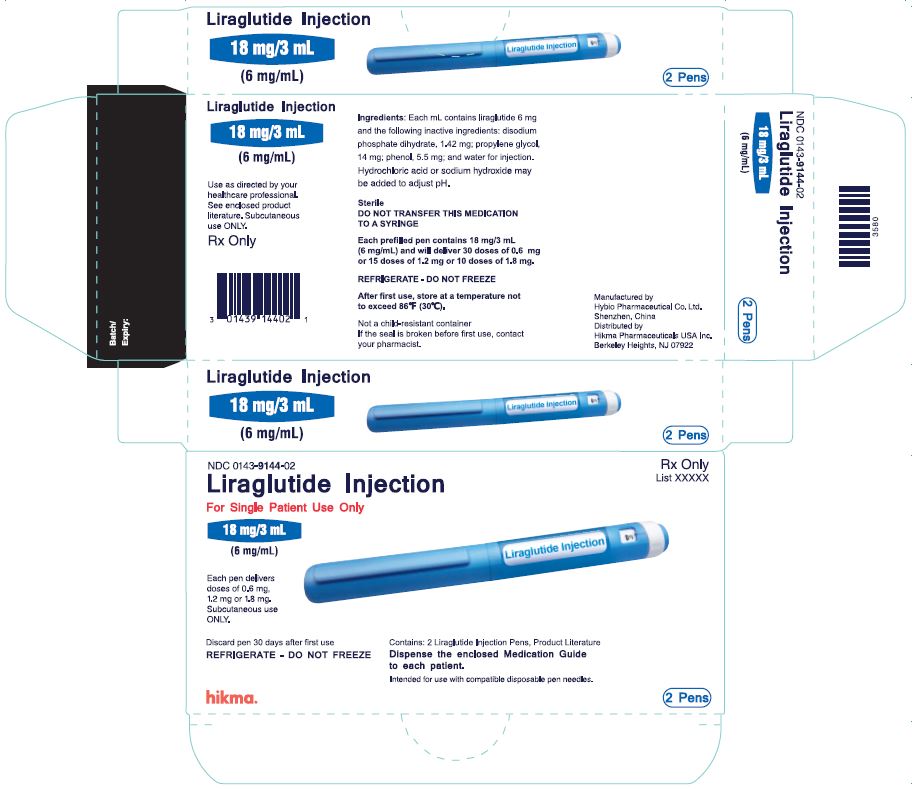
Principal Display Panel - 2 Liraglutide Injection Pens NDC0143- 9144 -02 Rx only List XXXXX Liraglutide Injection For Single Patient Use Only 18 mg/3 mL (6 mg/mL) Each pen delivers doses of 0.6 mg, 1.2 mg or 1.8 mg Subcutaneous use ONLY. Discard pen 30 days after first use REFRIGERATE - DO NOT FREEZE Contains: 2 Liraglutide Injection Pens, Product Literature Dispense the enclosed Medication Guide to each patient. Intended for use with compatible disposable pen needles.
2 Pens Carton 2pk-268109-6