
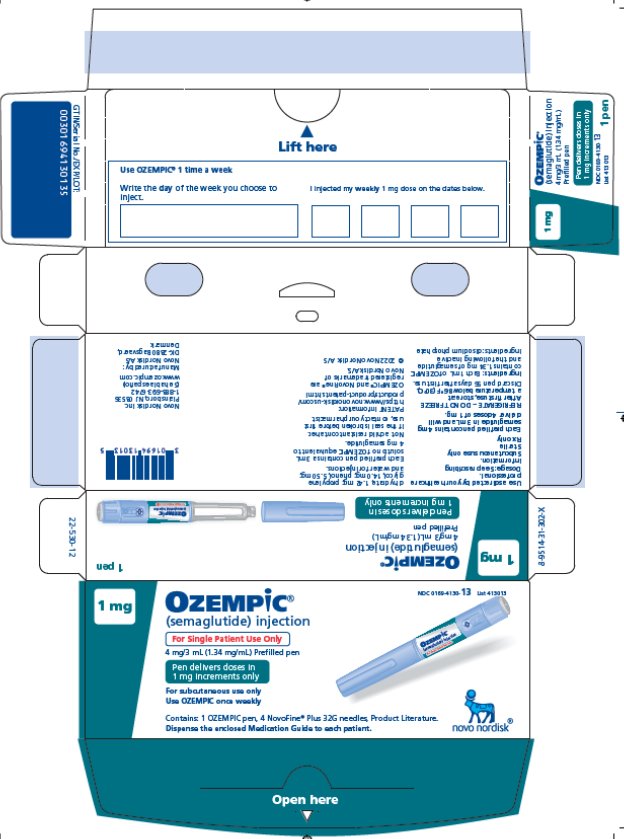
Ozempic semaglutide 1.34 mg/mL Injection, Solution — NDC 0169-4130-13 (Billing 00169-4130-13)
This is a package of Ozempic semaglutide 1.34 mg/mL Injection, Solution from Novo Nordisk Pharmaceutical Industries, LP, marketed since Sep 2020 and currently FDA-listed; retail pharmacies pay about $331.90 per mL (NADAC). It is this product's only package size.
NDC database record
One package, one record: these facts belong to NDC 0169-4130-13 alone.
- Record
- FDA NDC Directory package listing · Human prescription drug
- Code segments
- 0169 labeler · 4130 product · 13 package
- Package marketed since
- Jan 3, 2021
- Sample package
- No — commercial package
- Listing certified through
- Dec 31, 2027
- Barcode (UPC-A, from the NDC)
- 3 0169413013 5
- Medicaid fills, this package
- 1,084,398 prescriptions in the last four reported quarters
- FDA record last changed
- Oct 8, 2026
Identity & classification
Regulatory identifiers FDA, NLM and CMS codes for this package
Drug-database identifiers Medi-Span GPI and First Databank GCN / HICL / AHFS classification
- GSN (GCN sequence number): 081168
- GCN: 48208
- HICL (First Databank): 044675
- AHFS class code: 28:20.08.92
Where does this data come from?
- FDA openFDA NDC Directory · synced Oct 1, 2026
- FDA label on DailyMed · label index refreshed Oct 6, 2026
- RxNorm (NLM RxNav) · catalog refreshed Oct 1, 2026
- Medi-Span GPI (licensed)
- First Databank (licensed) · refreshed Oct 1, 2026
Clinical
Semaglutide injection is used for the following: to control blood sugar levels in certain patients with type 2 diabetes (condition in which blood sugar is too high because the body does not make or use insulin normally). to reduce the risk of a heart attack, stroke, or death in adults with type 2 diabetes and heart and blood vessel disease. to reduce the risk of a heart attack, stroke, or death in adults who are obese or overweight and have heart and blood vessel disease. to reduce the risk of worsening of kidney disease and death in certain adults with type 2 diabetes and kidney diseas...
Read the full MedlinePlus article ↗- It depends on the product. Wegovy is used for weight management and to lower heart risks in adults with heart disease plus obesity or overweight. Wegovy injection is also used for...
- Wegovy injection and Ozempic are weekly shots under the skin, any time of day, with or without food. Wegovy tablets are taken once daily on an empty stomach with plain water, then...
- Nausea, diarrhea, vomiting, constipation, and stomach pain are the most common, especially early on or after a dose increase. Headache and tiredness are also common. Call your doct...
- Call for severe stomach pain that won't go away, swelling of the face or throat, trouble breathing, a lump in your neck, trouble swallowing, or hoarseness that persists. Also call...
Patient education
Supplement & herbal interactions
Some supplements/herbs that may interact with Semaglutide — tap one for details:
Semaglutide may be associated with lower levels of 1 nutrient — worth a chat with your pharmacist, not a cause for alarm.
Where does this data come from?
- MedlinePlus (NLM) · refreshed Oct 1, 2026
- FDA label on DailyMed · label index refreshed Oct 6, 2026
Ask a licensed pharmacist directly — free, answered by our team.
Pricing
A drug doesn't have one price. Each row is a different public payment system, and none is what you'd pay at the counter — that depends on your insurance. The ⓘ on each row explains what it measures.
| Price system | Per mL | Per package |
|---|---|---|
| Retail pharmacies payNADAC · weekly | $331.900 | $995.70 / 3 ml |
| Medicaid paysCMS SDUD · 12 mo | $323.17 | $969.51 / 3 ml |
| Medicare drug plans payPart D · Q2 2026 | $328.59 | $985.76 / 3 ml |
Where does this data come from?
- CMS NADAC weekly file · file of Sep 30, 2026
- CMS ASP pricing files · refreshed Sep 20, 2026
- CMS Medicaid State Drug Utilization Data · through Q1 2026
- CMS Part D plan pricing files · refreshed Sep 24, 2026
- VA National Acquisition Center price file
Packaging — all sizes for this product
| Package NDC | Description | Marketing start | Marketing end | Status |
|---|---|---|---|---|
| 00169-4130-13 You're viewing this Main listing | 1 SYRINGE, PLASTIC in 1 CARTON / 3 mL in 1 SYRINGE, PLASTIC | 2021-01-03 | — | Active |
Therapeutic equivalents
| Product | Labeler | Pack | NADAC/unit | TE | Status | Price vs. this |
|---|---|---|---|---|---|---|
| Ozempic 1.34 mg/mLthis 00169-4130-13 | Novo | 1 syringe | $331.900 | — | Availability likely | — |
| Ozempic 1.34 mg/mL 50090-5949-00 | A-S | 1 syringe | — | — | FDA listed | — |
Where does this data come from?
- FDA openFDA NDC Directory · synced Oct 1, 2026
- FDA Orange Book · refreshed Oct 3, 2026
- CMS NADAC weekly file · file of Sep 30, 2026
Availability & generic status
We did not find an FDA-approved generic match for this exact strength, form and route. Patent/protection dates below may affect future generic timing.
Why the date isn’t exact: Generic timing can change because patents may be challenged, settled, licensed, added, removed, or worked around with a narrower label — and FDA approval does not always mean a pharmacy can get the generic today.
🛈 What do these terms mean?
- Patent
- Legal protection listed in the Orange Book that may delay generic approval or launch. Issued by the U.S. Patent & Trademark Office.
- Substance patent
- Covers the active drug molecule itself — the hardest to design around. A generic generally can’t launch until it expires.
- Formulation (product) patent
- Covers a specific formulation or dosage form. A generic can sometimes work around it with a different formulation.
- Method-of-use patent
- A patent covering one specific approved use of the drug — not necessarily the whole molecule. A generic can sometimes launch with a “skinny label” that carves out the protected use and keeps the others.
- Skinny label
- A generic label that omits a still-patented use when the FDA allows it — letting a generic reach the market for the unprotected uses.
- Exclusivity
- FDA-granted marketing protection, separate from patents — e.g. 5-yr new chemical entity, 7-yr orphan drug, or a +6-month pediatric extension.
- Paragraph IV
- A generic applicant’s formal challenge to a listed patent. It can potentially lead to earlier generic entry, but often involves litigation or a settlement.
- RLD / RS
- Reference Listed Drug — the brand product the FDA uses as the reference for generic applications. Reference Standard — the product the FDA expects generics to compare against in bioequivalence testing.
- TE / AB rating
- FDA therapeutic-equivalence rating. An AB rating generally means the FDA considers a generic therapeutically equivalent to — and substitutable for — the brand.
- LOE (loss of exclusivity)
- The latest patent or exclusivity currently listed — the loss-of-exclusivity / latest-listed-protection date shown on this page. Paragraph-IV challenges and settlements can move the real date earlier; FDA approval and a manufacturer’s decision to market can move it later.
Built from the FDA Orange Book. The bars above are scaled to each protection’s expiry; the red LOE marker is the last one to lapse.
| Patent | Type | Use code | Expires |
|---|---|---|---|
| US 8129343 ↗ | Drug substance | U-2202 | Dec 5, 2031 |
| US 8536122 ↗ | Drug substance | U-3355 | Mar 20, 2026 |
| US 8129343 ↗ | Drug substance | U-3355 | Dec 5, 2031 |
| US 12295988 ↗ | Method of use | U-2628 | Oct 10, 2038 |
| US 12569543 ↗ | Method of use | U-4446 | Apr 28, 2037 |
| US 12569543 ↗ | Method of use | U-4446 | Apr 28, 2037 |
| US 12569543 ↗ | Method of use | U-4446 | Apr 28, 2037 |
| US 10335462 ↗ | Method of use | U-2580 | Jun 21, 2033 |
| US 8129343 ↗ | Drug substance | U-3469 | Dec 5, 2031 |
| US 8536122 ↗ | Drug substance | U-3469 | Mar 20, 2026 |
| US 8536122 ↗ | Drug substance | U-2202 | Mar 20, 2026 |
| US 10335462 ↗ | Method of use | U-2580 | Jun 21, 2033 |
| US 10335462 ↗ | Method of use | U-2580 | Jun 21, 2033 |
| US 8129343 ↗ | Drug substance | U-2202 | Dec 5, 2031 |
| US 8536122 ↗ | Drug substance | U-2202 | Mar 20, 2026 |
| US 11318191 ↗ | Method of use | U-1852 | Feb 17, 2041 |
| US 11318191 ↗ | Method of use | U-4561 | Feb 17, 2041 |
| US 11318191 ↗ | Method of use | U-1852 | Feb 17, 2041 |
| US 11318191 ↗ | Method of use | U-4561 | Feb 17, 2041 |
| US 11318191 ↗ | Method of use | U-1852 | Feb 17, 2041 |
| US 11318191 ↗ | Method of use | U-4561 | Feb 17, 2041 |
| US 12569543 ↗ | Method of use | U-4446 | Apr 28, 2037 |
| US 12569543 ↗ | Method of use | U-4446 | Apr 28, 2037 |
| US 12569543 ↗ | Method of use | U-4446 | Apr 28, 2037 |
| US 12295988 ↗ | Method of use | U-1852 | Oct 10, 2038 |
| US 12295988 ↗ | Method of use | U-1852 | Oct 10, 2038 |
| US 12295988 ↗ | Method of use | U-1852 | Oct 10, 2038 |
| US 12214017 ↗ | Method of use | U-1852 | Aug 24, 2038 |
| US 12214017 ↗ | Method of use | U-1852 | Aug 24, 2038 |
| US 12214017 ↗ | Method of use | U-1852 | Aug 24, 2038 |
| US 11752198 ↗ | Method of use | U-1852 | Aug 24, 2038 |
| US 11752198 ↗ | Method of use | U-1852 | Aug 24, 2038 |
| US 11752198 ↗ | Method of use | U-1852 | Aug 24, 2038 |
| US 10888605 ↗ | Method of use | U-1852 | Aug 24, 2038 |
| US 10888605 ↗ | Method of use | U-1852 | Aug 24, 2038 |
| US 10888605 ↗ | Method of use | U-1852 | Aug 24, 2038 |
| US 10335462 ↗ | Method of use | U-1852 | Jun 21, 2033 |
| US 8129343 ↗ | Drug substance | U-3355 | Dec 5, 2031 |
| US 8129343 ↗ | Drug substance | U-3355 | Dec 5, 2031 |
| US 8129343 ↗ | Drug substance | U-3355 | Dec 5, 2031 |
| US 10357616 ↗ delist req. | Drug product | — | Jan 20, 2026 |
| US 9108002 ↗ delist req. | Drug product | — | Jan 20, 2026 |
| US 11097063 ↗ delist req. | Drug product | — | Jul 17, 2026 |
| US 11097063 ↗ delist req. | Drug product | — | Jul 17, 2026 |
| US 9775953 ↗ delist req. | Drug product | — | Jul 17, 2026 |
| US 10376652 ↗ delist req. | Drug product | — | Jan 20, 2026 |
| US 9687611 ↗ delist req. | Drug product | — | Feb 27, 2027 |
| US 9775953 ↗ delist req. | Drug product | — | Jul 17, 2026 |
| US 8920383 ↗ delist req. | Drug product | — | Jul 17, 2026 |
| US 10357616 ↗ delist req. | Drug product | — | Jan 20, 2026 |
| US 10376652 ↗ delist req. | Drug product | — | Jan 20, 2026 |
| US 9861757 ↗ delist req. | Drug product | — | Jan 20, 2026 |
| US 9616180 ↗ delist req. | Drug product | — | Jan 20, 2026 |
| US 9861757 ↗ delist req. | Drug product | — | Jan 20, 2026 |
| US 9616180 ↗ delist req. | Drug product | — | Jan 20, 2026 |
| US 10357616 ↗ delist req. | Drug product | — | Jan 20, 2026 |
| US RE46363 ↗ delist req. | Drug product | — | Aug 3, 2026 |
| US 9457154 ↗ delist req. | Drug product | — | Sep 29, 2027 |
| US 9861757 ↗ delist req. | Drug product | — | Jan 20, 2026 |
| US 9687611 ↗ delist req. | Drug product | — | Feb 27, 2027 |
| US 9616180 ↗ delist req. | Drug product | — | Jan 20, 2026 |
| US 9457154 ↗ delist req. | Drug product | — | Sep 29, 2027 |
| US 8920383 ↗ delist req. | Drug product | — | Jul 17, 2026 |
| US 8920383 ↗ delist req. | Drug product | — | Jul 17, 2026 |
| US 10376652 ↗ delist req. | Drug product | — | Jan 20, 2026 |
| US 9108002 ↗ delist req. | Drug product | — | Jan 20, 2026 |
| US 9687611 ↗ delist req. | Drug product | — | Feb 27, 2027 |
| US 9775953 ↗ delist req. | Drug product | — | Jul 17, 2026 |
| US 10220155 ↗ delist req. | Drug product | — | Jul 17, 2026 |
| US 10376652 ↗ delist req. | Drug product | — | Jan 20, 2026 |
| US 9775953 ↗ delist req. | Drug product | — | Jul 17, 2026 |
| US 9616180 ↗ delist req. | Drug product | — | Jan 20, 2026 |
| US RE46363 ↗ delist req. | Drug product | — | Aug 3, 2026 |
| US 9457154 ↗ delist req. | Drug product | — | Sep 29, 2027 |
| US 8920383 ↗ delist req. | Drug product | — | Jul 17, 2026 |
| US 11097063 ↗ delist req. | Drug product | — | Jul 17, 2026 |
| US RE46363 ↗ delist req. | Drug product | — | Aug 3, 2026 |
| US 9108002 ↗ delist req. | Drug product | — | Jan 20, 2026 |
| US 10220155 ↗ delist req. | Drug product | — | Jul 17, 2026 |
| US 9687611 ↗ delist req. | Drug product | — | Feb 27, 2027 |
| US 9132239 ↗ delist req. | Drug product | — | Feb 1, 2032 |
| US 9132239 ↗ delist req. | Drug product | — | Feb 1, 2032 |
| US RE46363 ↗ delist req. | Drug product | — | Aug 3, 2026 |
| US 10220155 ↗ delist req. | Drug product | — | Jul 17, 2026 |
| US 9132239 ↗ delist req. | Drug product | — | Feb 1, 2032 |
| US 9457154 ↗ delist req. | Drug product | — | Sep 29, 2027 |
| US 10220155 ↗ delist req. | Drug product | — | Jul 17, 2026 |
| US 11097063 ↗ delist req. | Drug product | — | Jul 17, 2026 |
| US 9132239 ↗ delist req. | Drug product | — | Feb 1, 2032 |
| US 9861757 ↗ delist req. | Drug product | — | Jan 20, 2026 |
| US 9108002 ↗ delist req. | Drug product | — | Jan 20, 2026 |
| US 10357616 ↗ delist req. | Drug product | — | Jan 20, 2026 |
| Code | What it grants | Expires |
|---|---|---|
| I-961 | New indication (3-year) | Jan 28, 2028 |
| I-961 | New indication (3-year) | Jan 28, 2028 |
| I-961 | New indication (3-year) | Jan 28, 2028 |
| I-961 | New indication (3-year) | Jan 28, 2028 |
Is there a generic version of OZEMPIC 1 MG/DOSE (4 MG/3 ML)?
The FDA approved a generic — why can’t I get it at my pharmacy yet?
Why do different websites show different generic release dates?
What does “FDA listed” mean?
What does a patent or protection date mean here?
What does “current Orange Book estimate” mean?
Can a generic come out before the last patent expires?
Can a generic come out after the listed dates?
What is the difference between patents and exclusivity?
Why are there multiple patent dates?
Where does this data come from?
- FDA Orange Book · refreshed Oct 3, 2026
Inactive Ingredients / Excipients
Inactive ingredients, also called excipients, are components of the drug product other than the active ingredient. They may include fillers, dyes, coatings, preservatives, flavors, or other formulation ingredients.
🧪 Avoiding an ingredient? See Semaglutide inactive ingredients by manufacturer: every current product's list side by side, so you can ask your pharmacy for the version that does not list it.
💡 Tap an ingredient (hover on desktop) to see what it is and why it’s used.
-
5.50 mg / 1 mL
UNII 339NCG44TV
Phenol is a chemical compound derived from coal tar or petroleum. It serves as a preservative and antimicrobial agent in medicines, helping prevent bacterial and fungal growth to keep the product stable and safe during storage.
-
14.0 mg / 1 mL
UNII 6DC9Q167V3
Propylene glycol is a clear liquid derived from petroleum or vegetable sources. It acts as a solvent, humectant, and preservative in medicines, helping dissolve active ingredients and maintain product stability.
-
1.42 mg / 1 mL
UNII 94255I6E2T
Sodium phosphate dibasic dihydrate is a salt that helps control the acidity level of a medicine. It acts as a buffer and pH regulator to keep the medication stable and effective.
-
UNII 059QF0KO0R
Water is a liquid solvent that dissolves and mixes ingredients together in liquid medicines, syrups, and injections. It helps distribute the active drug evenly throughout the product.
4 inactive ingredients listed in the exact product block matched to this NDC.
Where does this data come from?
ingredient classCode="IACT" elements from the exact product block matched by this NDC. Label-section narrative from DailyMed / the openFDA label index is shown separately when available.- FDA label on DailyMed · label index refreshed Oct 6, 2026
- FDA openFDA NDC Directory · synced Oct 1, 2026
Inactive ingredient FAQ
Are inactive ingredients the same for every manufacturer?
Why might an inactive ingredient be missing?
Can inactive ingredients matter?
Manufacturer & labeler
More NDCs from Novo Nordisk Pharmaceutical Industries, LP labeler code 00169
- Fiasp insulin aspart 100 [iU]/mL Injection, Solution NDC 0169-3206-15
- NOVOLOG insulin aspart 100 [iU]/mL Injection, Solution NDC 0169-3303-12
- NovoLog Mix 70/30 insulin aspart 100 [iU]/mL Injection, Suspension NDC 0169-3685-12
- Levemir insulin detemir 100 [iU]/mL Injection, Solution NDC 0169-3687-12
- NovoLog Mix 70/30 insulin aspart 100 [iU]/mL Injection, Suspension NDC 0169-3696-19
- Victoza liraglutide 6 mg/mL Injection NDC 0169-4060-12
- Ozempic semaglutide .68 mg/mL Injection, Solution NDC 0169-4181-13
- Rybelsus oral semaglutide 3 mg Tablet NDC 0169-4303-13
- Rybelsus oral semaglutide 7 mg Tablet NDC 0169-4307-13
- Rybelsus oral semaglutide 14 mg Tablet NDC 0169-4314-13
- Wegovy semaglutide 4 mg Tablet NDC 0169-4404-31
- Wegovy semaglutide 9 mg Tablet NDC 0169-4409-31
Where does this data come from?
- FDA openFDA NDC Directory · synced Oct 1, 2026
- Drugs@FDA
Full prescribing information FDA SPL
📄 FDA label ▾
No FDA label is on file for this product yet. Labels load from openFDA / DailyMed and refresh weekly.