
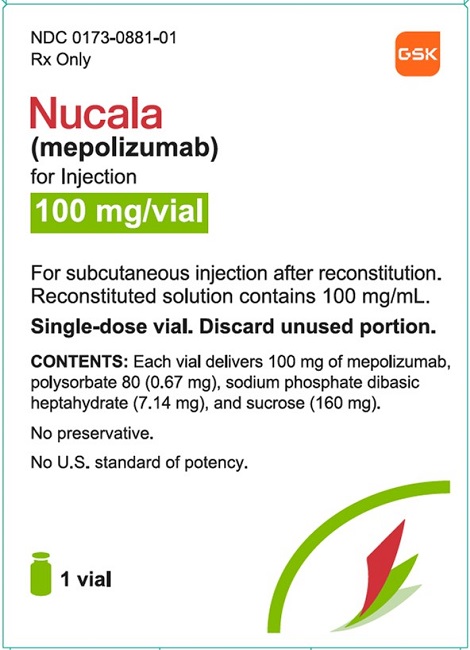
Nucala mepolizumab 100 mg/mL Injection, Powder, For Solution, 1 vial — NDC 0173-0881-01 (Billing 00173-0881-01)
This is a package of 1 vial of Nucala mepolizumab 100 mg/mL Injection, Powder, For Solution from GlaxoSmithKline LLC, marketed since Nov 2015 and currently FDA-listed. It is the main listing for this product, which comes in 2 package sizes.
NDC database record
One package, one record: these facts belong to NDC 0173-0881-01 alone.
- Record
- FDA NDC Directory package listing · Human prescription drug
- Code segments
- 0173 labeler · 0881 product · 01 package
- Package marketed since
- Nov 4, 2015
- Sample package
- No — commercial package
- Listing certified through
- Dec 31, 2026
- Billing quantity
- 1 EA per package
- Barcode (UPC-A, from the NDC)
- 3 0173088101 4
- Medicaid fills, this package
- 6,550 prescriptions in the last four reported quarters
- FDA record last changed
- Jul 24, 2026
Identity & classification
Regulatory identifiers FDA, NLM and CMS codes for this package
Drug-database identifiers Medi-Span GPI and First Databank GCN / HICL / AHFS classification
- GSN (GCN sequence number): 075111
- GCN: 40084
- GPI-14 (Medi-Span): 44604055002120
- HICL (First Databank): 042775
- AHFS class code: 48:10.20.00
- RxCUI (RxNorm): 1720601
Where does this data come from?
- FDA openFDA NDC Directory · synced Oct 8, 2026
- FDA label on DailyMed · label index refreshed Oct 8, 2026
- RxNorm (NLM RxNav) · catalog refreshed Oct 1, 2026
- Medi-Span GPI (licensed)
- First Databank (licensed) · refreshed Oct 8, 2026
RxNorm drug class
This medicine belongs to the Interleukin-5 Antagonist class.
Where does this data come from?
- RxClass (NLM) · catalog refreshed Oct 1, 2026
Clinical
Mepolizumab injection is used alone or with other medications to treat asthma and chronic obstructive pulmonary disease (COPD, a group of diseases that affect the lungs and airways) to treat chronic rhinosinusitis with nasal polyps (a condition where nasal cavity and sinuses become inflammed for 12 weeks or longer and soft, non-cancerous growths develop) to treat eosinophilic granulomatosis with polyangiitis (EGPA; a condition that involves asthma, high levels of white blood cells, and blood vessel swelling) to treat hypereosinophilic syndrome (HES; a condition involving high levels of a...
Read the full MedlinePlus article ↗- Mepolizumab (Nucala) is used for severe eosinophilic asthma, chronic rhinosinusitis with nasal polyps, COPD with an eosinophilic phenotype, EGPA and HES. For asthma, nasal polyps a...
- No. It is a maintenance medicine and does not relieve sudden symptoms or acute bronchospasm. Keep using your rescue plan and get medical help if your asthma or COPD gets worse.
- Can I use it when I'm having an asthma attack?
- It is usually injected under the skin every 4 weeks. The vial form is given by a healthcare professional. The prefilled autoinjector or syringe may be used at home if your provider...
Patient education
Supplement & herbal interactions
Where does this data come from?
- MedlinePlus (NLM) · refreshed Oct 8, 2026
- FDA label on DailyMed · label index refreshed Oct 8, 2026
Ask a licensed pharmacist directly — free, answered by our team.
Pricing
A drug doesn't have one price. Each row is a different public payment system, and none is what you'd pay at the counter — that depends on your insurance. The ⓘ on each row explains what it measures.
| Price system | Per mL | Per package |
|---|---|---|
| Retail pharmacies payNADAC · weekly | Not in the retail survey — common for institutional, discontinued, or low-volume packs. | |
| Medicaid paysCMS SDUD · 12 mo | $2,660.93 | $2,660.93 / 1 ml |
| Medicare drug plans payPart D · Q2 2026 | $3,660.75 | $3,660.75 / 1 ml |
| Medicare Part B allowsASP · J2182 | $32.281 / J2182 unit | — |
Where does this data come from?
- CMS NADAC weekly file
- CMS ASP pricing files · refreshed Sep 20, 2026
- CMS Medicaid State Drug Utilization Data · through Q1 2026
- CMS Part D plan pricing files · refreshed Sep 24, 2026
- VA National Acquisition Center price file
Billing & reimbursement
Where does this data come from?
- CMS ASP NDC-HCPCS crosswalk · refreshed Sep 22, 2026
- DMEPDAC NDC-HCPCS crosswalk
- openFDA NSDE billing units · refreshed Oct 7, 2026
Packaging — all sizes for this product
| Package NDC | Description | Marketing start | Marketing end | Status |
|---|---|---|---|---|
| 00173-0881-01 You're viewing this Main listing | 1 VIAL in 1 CARTON / 1 mL in 1 VIAL | 2015-11-04 | — | Active |
| 00173-0881-61 0173-0881-61 | 1 VIAL in 1 CARTON / 1 mL in 1 VIAL | 2016-06-17 | — | Active |
In Medicaid, this is the most-dispensed pack of this product — about 100% of fills over the last four reported quarters. See all packs ↓
Pack size FAQ
What quantity is in this package?
How does this package differ from NDC 00173-0881-61?
What NDC number is used to bill for this package of Nucala mepolizumab 100 mg/mL Injection, Powder, For Solution?
Therapeutic equivalents
| Product | Labeler | Pack | NADAC/unit | TE | Status | Price vs. this |
|---|---|---|---|---|---|---|
| Nucala 100 mg/mLthis 00173-0881-01 | GlaxoSmithKline | 1 vial | — | — | FDA listed | — |
| Nucala 100 mg/mL 00173-0892-01 | GlaxoSmithKline | 1 syringe | — | — | FDA listed | — |
Where does this data come from?
- FDA openFDA NDC Directory · synced Oct 8, 2026
- FDA Purple Book · refreshed Oct 5, 2026
- CMS NADAC weekly file
Availability & biosimilar status
Biologics have no small-molecule generics; biosimilar competition is tracked in the FDA Purple Book.
Why the date isn’t exact: Biosimilar timing can change because patents may be challenged, settled, licensed, added or removed, and litigation can move the real date earlier or later.
🛈 What do these terms mean?
- Biologic patent
- A patent the reference product’s maker has publicly listed. A biosimilar generally can’t launch until these expire — unless they’re invalidated or resolved in a settlement.
- Reference-product exclusivity
- A flat 12 years of FDA market protection from the biologic’s first licensure (the BPCIA). No biosimilar can be licensed before it ends, regardless of patents.
- Interchangeable exclusivity
- The first interchangeable biosimilar can earn a period as the only interchangeable version (pharmacists can substitute it without the prescriber).
- Earliest biosimilar (LOE)
- The latest of all the dates above — the soonest a biosimilar can realistically reach the market. Litigation and settlements can move it earlier.
Biologics have no small-molecule “generics” — competition comes from FDA-licensed biosimilars, tracked in the FDA Purple Book.
| Code | What it grants | Expires |
|---|---|---|
| RefProduct | Reference-product exclusivity (12-year, BPCIA) — no biosimilar can be licensed before this date | Nov 4, 2027 |
Is there a biosimilar for NUCALA 100 MG/ML POWDER VIAL?
Why do different websites show different biosimilar dates?
Can a biosimilar launch before the last patent expires?
What does “current Purple Book estimate” mean?
What does “FDA listed” mean?
What does a patent or protection date mean here?
Where does this data come from?
- FDA Purple Book · refreshed Oct 5, 2026
Inactive Ingredients / Excipients
Inactive ingredients, also called excipients, are components of the drug product other than the active ingredient. They may include fillers, dyes, coatings, preservatives, flavors, or other formulation ingredients.
🧪 Avoiding an ingredient? See Mepolizumab Injection inactive ingredients by manufacturer: every current product's list side by side, so you can ask your pharmacy for the version that does not list it.
💡 Tap an ingredient (hover on desktop) to see what it is and why it’s used.
-
UNII 6OZP39ZG8H
Polysorbate 80 is a synthetic emulsifier derived from sorbitol and oleic acid. It helps mix oil and water-based ingredients together in medications and improves how the product disperses in the body.
-
UNII 70WT22SF4B
A mineral salt that acts as a buffer to maintain the pH balance of the medication. It helps stabilize the drug's potency and prevents unwanted chemical changes during storage.
-
UNII C151H8M554
A natural sugar derived from sugar cane or sugar beets. It's used as a sweetener, filler, and binder to improve taste, add bulk, and help hold tablet or capsule ingredients together.
3 inactive ingredients listed in the exact product block matched to this NDC.
Where does this data come from?
ingredient classCode="IACT" elements from the exact product block matched by this NDC. Label-section narrative from DailyMed / the openFDA label index is shown separately when available.- FDA label on DailyMed · label index refreshed Oct 8, 2026
- FDA openFDA NDC Directory · synced Oct 8, 2026
Inactive ingredient FAQ
Are inactive ingredients the same for every manufacturer?
Why might an inactive ingredient be missing?
Can inactive ingredients matter?
Manufacturer & labeler
More NDCs from GlaxoSmithKline LLC labeler code 00173
- LAMICTAL lamotrigine Kit NDC 0173-0817-28
- Breo Ellipta fluticasone furoate and vilanterol trifenatate 100 ug; 25 ug Powder NDC 0173-0859-10
- Anoro Ellipta umeclidinium bromide and vilanterol trifenatate 62.5 ug; 25 ug Powder NDC 0173-0869-06
- Incruse Ellipta umeclidinium 62.5 ug Aerosol, Powder NDC 0173-0873-06
- Arnuity Ellipta fluticasone furoate 100 ug Powder NDC 0173-0874-10
- Arnuity Ellipta fluticasone furoate 200 ug Powder NDC 0173-0876-10
- Breo Ellipta fluticasone furoate and vilanterol trifenatate 200 ug; 25 ug Powder NDC 0173-0882-10
- Trelegy Ellipta fluticasone furoate, umeclidinium bromide and vilanterol trifenatate 100 ug; 62.5 ug; 25 ug Powder NDC 0173-0887-10
- Arnuity Ellipta fluticasone furoate 50 ug Powder NDC 0173-0888-10
- Krintafel tafenoquine succinate 150 mg Tablet, Film Coated NDC 0173-0889-13
- Nucala mepolizumab 100 mg/mL Injection, Solution NDC 0173-0892-01
- Trelegy Ellipta fluticasone furoate, umeclidinium bromide and vilanterol trifenatate 200 ug; 62.5 ug; 25 ug Powder NDC 0173-0893-10
Where does this data come from?
- FDA openFDA NDC Directory · synced Oct 8, 2026
- Drugs@FDA
Full prescribing information FDA SPL
🎯 Indications and Usage ▾
1 INDICATIONS AND USAGE NUCALA is an interleukin-5 (IL-5) antagonist monoclonal antibody (IgG1 kappa) indicated for: • Add-on maintenance treatment of adult and pediatric patients aged 6 years and older with severe asthma and with an eosinophilic phenotype. ( 1.1 ) • Add-on maintenance treatment of adult patients aged 18 years and older with chronic rhinosinusitis with nasal polyps (CRSwNP). ( 1.2 ) • Add-on maintenance treatment of adult patients with inadequately controlled chronic obstructive pulmonary disease (COPD) and an eosinophilic phenotype.
( 1.3 ) • The treatment of adult patients with eosinophilic granulomatosis with polyangiitis (EGPA). ( 1.4 ) • The treatment of adult and pediatric patients aged 12 years and older with hypereosinophilic syndrome (HES) for greater than or equal to 6 months without an identifiable non-hematologic secondary cause. ( 1.5 ) Limitations of use: Not for relief of acute bronchospasm or status asthmaticus.
( 1.1 , 1.3 )
1.1Maintenance Treatment of Severe Asthma NUCALA is indicated for the add-on maintenance treatment of adult and pediatric patients aged 6 years and older with severe asthma and with an eosinophilic phenotype [see Use in Specific Populations ( 8.4 ), Clinical Studies ( 14.1 )] . Limitations of Use NUCALA is not indicated for the relief of acute bronchospasm or status asthmaticus [see Warnings and Precautions ( 5.2 )] .
1.2Maintenance Treatment of Chronic Rhinosinusitis with Nasal Polyps NUCALA is indicated for the add-on maintenance treatment of chronic rhinosinusitis with nasal polyps (CRSwNP) in adult patients aged 18 years and older with inadequate response to nasal corticosteroids.
1.3Maintenance Treatment of Chronic Obstructive Pulmonary Disease NUCALA is indicated for the add-on maintenance treatment of adult patients with inadequately controlled chronic obstructive pulmonary disease (COPD) and an eosinophilic phenotype. Limitations of Use NUCALA is not indicated for the relief of acute bronchospasm [see Warnings and Precautions ( 5.2 )].
1.4Eosinophilic Granulomatosis with Polyangiitis NUCALA is indicated for the treatment of adult patients with eosinophilic granulomatosis with polyangiitis (EGPA).
1.5Hypereosinophilic Syndrome NUCALA is indicated for the treatment of adult and pediatric patients aged 12 years and older with hypereosinophilic syndrome (HES) for greater than or equal to 6 months without an identifiable non-hematologic secondary cause.
⏱️ Dosage and Administration ▾
2 DOSAGE AND ADMINISTRATION • Severe asthma in patients aged 12 years and older: 100 mg administered subcutaneously once every 4 weeks. ( 2.1 ) • Severe asthma in patients aged 6 to 11 years: 40 mg administered subcutaneously once every 4 weeks. ( 2.1 ) • CRSwNP: 100 mg administered subcutaneously once every 4 weeks.
( 2.1 ) • COPD: 100 mg administered subcutaneously once every 4 weeks. ( 2.1 ) • EGPA: 300 mg administered subcutaneously once every 4 weeks. ( 2.1 ) • HES: 300 mg administered subcutaneously once every 4 weeks.
( 2.1 )
2.1Recommended Dosage NUCALA is for subcutaneous use only, and should be injected into the upper arm, thigh, or abdomen [see Dosage and Administration ( 2.2 , 2.3 )]. Table 1. Recommended Dosage of NUCALA a 300 mg dose is administered as 3 separate 100 mg dose injections administered at least 5 cm (approximately 2 inches) apart.
Indication Adults Pediatric Patients Severe asthma 100 mg every 4 weeks • 12 to 17 years of age: 100 mg every 4 weeks • 6 to 11 years of age: 40 mg every 4 weeks Chronic rhinosinusitis with nasal polyps 100 mg every 4 weeks Not applicable Chronic obstructive pulmonary disease 100 mg every 4 weeks Not applicable Eosinophilic granulomatosis with polyangiitis 300 mg a every 4 weeks Not applicable Hypereosinophilic syndrome 300 mg a every 4 weeks 12 to 17 years of age: 300 mg a every 4 weeks
2.2Preparation and Administration of NUCALA for Injection Vial NUCALA for injection should be reconstituted and administered by a healthcare professional. In line with clinical practice, monitoring of patients after administration of biologic agents is recommended [see Warnings and Precautions ( 5.1 )] . Reconstitution Instructions 1.
Reconstitute NUCALA for injection in the vial with 1.2 mL of Sterile Water for Injection, USP, preferably using a 2- or 3-mL syringe and a 21-gauge needle. The reconstituted solution will contain a concentration of 100 mg/mL mepolizumab. Do not mix with other medications.
2. Direct the stream of Sterile Water for Injection vertically onto the center of the lyophilized powder, which may have a cake-like appearance. Gently swirl the vial for 10 seconds with a circular motion at 15-second intervals until the powder is dissolved.
Note: Do not shake the reconstituted solution during the procedure as this may lead to product foaming or precipitation. Reconstitution is typically complete within 5 minutes after the Sterile Water for Injection has been added, but it may take additional time. 3.
If a mechanical reconstitution device (swirler) is used to reconstitute NUCALA for injection, swirl at 450 rpm for no longer than 10 minutes. Alternatively, swirling at 1,000 rpm for no longer than 5 minutes is acceptable. 4.
Visually inspect the reconstituted solution for particulate matter and clarity before use. The solution should be clear to opalescent and colorless to pale yellow or pale brown, essentially particle free. Small air bubbles, however, are expected and acceptable.
If particulate matter remains in the solution or if the solution appears cloudy or milky, the solution must not be administered. 5. If the reconstituted solution is not used immediately: • store below 30°C (86°F), • do not freeze, and • discard if not used within 8 hours of reconstitution.
Administration of 100 mg Dose 1. For subcutaneous administration, preferably using a 1-mL polypropylene syringe fitted with a disposable 21- to 27-gauge x 0.5-inch (13-mm) needle. 2.
Just before administration, remove 1 mL of reconstituted NUCALA for injection. Do not shake the reconstituted solution during the procedure as this could lead to product foaming or precipitation. 3.
Administer the 1 mL injection (equivalent to 100 mg of mepolizumab) subcutaneously into the upper arm, thigh, or abdomen. Administration of 40 mg Dose 1. For subcutaneous administration, preferably using a 1-mL polypropylene syringe fitted with a disposable 21- to 27-gauge x 0.5-inch (13-mm) needle.
2. Just before administration, remove 0… [Excerpted — this section continues on DailyMed.]
💊 Dosage Forms and Strengths ▾
3 DOSAGE FORMS AND STRENGTHS For Injection • 100 mg white to off-white lyophilized powder in a single-dose vial for reconstitution. Injection • 100 mg/mL as a clear to opalescent, colorless to pale yellow to pale brown solution in a single-dose prefilled autoinjector. • 100 mg/mL as a clear to opalescent, colorless to pale yellow to pale brown solution in a single-dose prefilled glass syringe. • 40 mg/0.4 mL as a clear to opalescent, colorless to pale yellow to pale brown solution in a single-dose prefilled glass syringe. • For injection: 100 mg of lyophilized powder in a single-dose vial for reconstitution.
( 3 ) • Injection: 100 mg/mL, single-dose prefilled autoinjector or single-dose prefilled syringe. ( 3 ) • Injection: 40 mg/0.4 mL, single-dose prefilled syringe. ( 3 )
⛔ Contraindications ▾
4 CONTRAINDICATIONS NUCALA is contraindicated in patients with a history of hypersensitivity to mepolizumab or excipients in the formulation [see Warnings and Precautions ( 5.1 ), Description ( 11 )] . History of hypersensitivity to mepolizumab or excipients in the formulation. ( 4 )
⚠️ Warnings and Cautions ▾
5 WARNINGS AND PRECAUTIONS • Hypersensitivity reactions (e.g., anaphylaxis, angioedema, bronchospasm, hypotension, urticaria, rash) have occurred after administration of NUCALA. Discontinue NUCALA in the event of a hypersensitivity reaction. ( 5.1 ) • Herpes zoster infections have occurred in patients receiving NUCALA.
Consider vaccination if medically appropriate. ( 5.3 ) • Do not discontinue systemic or inhaled corticosteroids abruptly upon initiation of therapy with NUCALA. Decrease corticosteroids gradually, if appropriate.
( 5.4 ) • Treat patients with pre-existing helminth infections before therapy with NUCALA. If patients become infected while receiving treatment with NUCALA and do not respond to anti-helminth treatment, discontinue NUCALA until parasitic infection resolves. ( 5.5 )
5.1Hypersensitivity Reactions Hypersensitivity reactions (e.g., anaphylaxis, angioedema, bronchospasm, hypotension, urticaria, rash) have occurred following administration of NUCALA. These reactions generally occur within hours of administration, but in some instances can have a delayed onset (i.e., days). In the event of a hypersensitivity reaction, NUCALA should be discontinued [see Contraindications ( 4 )] .
5.2Acute Symptoms of Asthma or Chronic Obstructive Pulmonary Disease or Acute Deteriorating Disease NUCALA should not be used to treat acute symptoms or acute exacerbations of asthma or COPD. Do not use NUCALA to treat acute bronchospasm or status asthmaticus. Patients should seek medical advice if their asthma or COPD remains uncontrolled or worsens after initiation of treatment with NUCALA.
5.3Opportunistic Infections: Herpes Zoster Herpes zoster has occurred in subjects receiving NUCALA 100 mg in controlled clinical trials [see Adverse Reactions ( 6.1 )] . Consider vaccination if medically appropriate.
5.4Reduction of Corticosteroid Dosage Do not discontinue systemic or inhaled corticosteroids (ICS) abruptly upon initiation of therapy with NUCALA. Reductions in corticosteroid dosage, if appropriate, should be gradual and performed under the direct supervision of a physician. Reduction in corticosteroid dosage may be associated with systemic withdrawal symptoms and/or unmask conditions previously suppressed by systemic corticosteroid therapy.
5.5Parasitic (Helminth) Infection Eosinophils may be involved in the immunological response to some helminth infections. Patients with known parasitic infections were excluded from participation in clinical trials. It is unknown if NUCALA will influence a patient’s response against parasitic infections.
Treat patients with pre-existing helminth infections before initiating therapy with NUCALA. If patients become infected while receiving treatment with NUCALA and do not respond to anti-helminth treatment, discontinue treatment with NUCALA until infection resolves.
🤒 Adverse Reactions ▾
6 ADVERSE REACTIONS The following adverse reactions are described in greater detail in other sections: • Hypersensitivity reactions [see Warnings and Precautions ( 5.1 )] • Opportunistic infections: herpes zoster [see Warnings and Precautions ( 5.3 )] Most common adverse reactions (incidence ≥5%): • Asthma: Headache, injection site reaction, back pain, and fatigue. ( 6.1 ) • CRSwNP: Oropharyngeal pain and arthralgia. ( 6.1 ) • COPD: Back pain, diarrhea, and cough.
( 6.1 ) • EGPA and HES: Most common adverse reactions are similar to asthma. ( 6.1 ) To report SUSPECTED ADVERSE REACTIONS, contact GlaxoSmithKline at 1-888-825-5249 or FDA at 1-800-FDA-1088 or www.fda.gov/medwatch.
6.1Clinical Trials Experience Because clinical trials are conducted under widely varying conditions, adverse reaction rates observed in the clinical trials of a drug cannot be directly compared with rates in the clinical trials of another drug and may not reflect the rates observed in practice. Adverse Reactions in Adult and Adolescent Patients Aged 12 Years and Older with Severe Asthma A total of 1,327 patients with severe asthma were evaluated in 3 randomized, placebo-controlled, multicenter trials of 24 to 52 weeks’ duration (Severe Asthma Trials DREAM, MENSA, and SIRIUS).
Of these, 1,192 had a history of 2 or more exacerbations in the year prior to enrollment despite regular use of high-dose ICS plus additional controller(s) (Severe Asthma Trials DREAM and MENSA), and 135 patients required daily oral corticosteroids (OCS) in addition to regular use of high-dose ICS plus additional controller(s) to maintain asthma control (Severe Asthma Trial SIRIUS). All patients had markers of eosinophilic airway inflammation [see Clinical Studies ( 14.1 )] . Of the patients enrolled, 59% were female, 85% were White, and ages ranged from 12 to 82 years.
Mepolizumab was administered subcutaneously or intravenously once every 4 weeks; 263 patients received NUCALA (mepolizumab 100 mg subcutaneously) for at least 24 weeks. Serious adverse events that occurred in more than 1 patient and in a greater percentage of patients receiving NUCALA 100 mg (n = 263) than placebo (n = 257) included 1 event, herpes zoster (2 patients vs. 0 patients, respectively).
The incidence of adverse reactions in the first 24 weeks of treatment in the 2 confirmatory efficacy and safety trials MENSA and SIRIUS with NUCALA 100 mg is shown in Table 2 . Table 2. Adverse Reactions with NUCALA with ≥3% Incidence and More Common than Placebo in Patients with Severe Asthma (MENSA and SIRIUS) Adverse Reaction NUCALA (Mepolizumab 100 mg Subcutaneous) (n = 263) % Placebo (n = 257) % Headache 19 18 Injection site reaction 8 3 Back pain 5 4 Fatigue 5 4 Influenza 3 2 Urinary tract infection 3 2 Abdominal pain upper 3 2 Pruritus 3 2 Eczema 3 <1 Muscle spasms 3 <1 52-Week Trial: Adverse reactions from the Severe Asthma Trial DREAM with 52 weeks of treatment with mepolizumab 75 mg intravenously (n = 153) or placebo (n = 155) and with ≥3% incidence and more common than placebo and not shown in Table 2 were: abdominal pain, allergic rhinitis, asthenia, bronchitis, cystitis, dizziness, dyspnea, ear infection, gastroenteritis, lower respiratory tract infection, musculoskeletal pain, nasal congestion, nasopharyngitis, nausea, pharyngitis, pyrexia, rash, toothache, viral infection, viral respiratory tract infection, and vomiting.
In addition, 3 cases of herpes zoster occurred in patients receiving mepolizumab 75 mg intravenously compared with 2 patients in the placebo group. Systemic Reactions, including Hypersensitivity Reactions: In the Severe Asthma Trials DREAM, MENSA, and SIRIUS described above, the percentage of patients who experienced systemic (allergic and non-allergic) reactions was 3% in the group receiving NUCALA 100 mg and 5% in the placebo group. Systemic allergic/hypersensitivity reactions were reported by 1% of patients in the group receiving NUCALA 100 mg and 2% of patients in the placebo group.
The m… [Excerpted — this section continues on DailyMed.]
🔄 Drug Interactions ▾
7 DRUG INTERACTIONS Formal drug interaction trials have not been performed with NUCALA.
👥 Use in Specific Populations ▾
8 USE IN SPECIFIC POPULATIONS
8.1Pregnancy Risk Summary The data on pregnancy exposure are insufficient to inform on drug-associated risk. Monoclonal antibodies, such as mepolizumab, are transported across the placenta in a linear fashion as pregnancy progresses; therefore, potential effects on a fetus are likely to be greater during the second and third trimester of pregnancy. In a prenatal and postnatal development study conducted in cynomolgus monkeys, there was no evidence of fetal harm with intravenous administration of mepolizumab throughout pregnancy at doses that produced exposures up to approximately 9 times the exposure at the maximum recommended human dose (MRHD) of 300 mg subcutaneous (see Data) .
In the U.S. general population, the estimated background risk of major birth defects and miscarriage in clinically recognized pregnancies is 2% to 4% and 15% to 20%, respectively. Clinical Considerations Disease-Associated Maternal and/or Embryofetal Risk: In women with poorly or moderately controlled asthma, evidence demonstrates that there is an increased risk of preeclampsia in the mother and prematurity, low birth weight, and small for gestational age in the neonate. The level of asthma control should be closely monitored in pregnant women and treatment adjusted as necessary to maintain optimal control.
Data Animal Data: In a prenatal and postnatal development study, pregnant cynomolgus monkeys received mepolizumab from gestation Days 20 to 140 at doses that produced exposures up to approximately 9 times that achieved with the MRHD (on an AUC basis with maternal intravenous doses up to 100 mg/kg once every 4 weeks). Mepolizumab did not elicit adverse effects on fetal or neonatal growth (including immune function) up to 9 months after birth. Examinations for internal or skeletal malformations were not performed.
Mepolizumab crossed the placenta in cynomolgus monkeys. Concentrations of mepolizumab were approximately 2.4 times higher in infants than in mothers up to Day 178 postpartum. Levels of mepolizumab in milk were ≤0.5% of maternal serum concentration.
In a fertility, early embryonic, and embryofetal development study, pregnant CD-1 mice received an analogous antibody, which inhibits the activity of murine interleukin-5 (IL-5), at an intravenous dose of 50 mg/kg once per week throughout gestation. The analogous antibody was not teratogenic in mice. Embryofetal development of IL-5–deficient mice has been reported to be generally unaffected relative to wild-type mice.
8.2Lactation Risk Summary There is no information regarding the presence of mepolizumab in human milk, the effects on the breastfed infant, or the effects on milk production. However, mepolizumab is a humanized monoclonal antibody (IgG1 kappa), and immunoglobulin G (IgG) is present in human milk in small amounts. Mepolizumab was present in the milk of cynomolgus monkeys postpartum following dosing during pregnancy [see Use in Specific Populations ( 8.1 )].
The developmental and health benefits of breastfeeding should be considered along with the mother’s clinical need for NUCALA and any potential adverse effects on the breastfed infant from mepolizumab or from the underlying maternal condition.
8.4Pediatric Use Severe Asthma The safety and effectiveness of NUCALA for severe asthma, and with an eosinophilic phenotype, have been established in pediatric patients aged 6 years and older. Use of NUCALA in adolescents aged 12 to 17 years is supported by evidence from adequate and well-controlled trials in adults and adolescents. A total of 28 adolescents aged 12 to 17 years with severe asthma were enrolled in the Phase 3 asthma trials.
Of these, 25 were enrolled in the 32-week exacerbation trial (MENSA) and had a mean age of 14.8 years. Patients had a history of 2 or more exacerbations in the previous year despite regular use of medium- or high-dose ICS plus additional controller(s) with or without OCS and had blood eosinophils of ≥150 cells/mcL at screeni… [Excerpted — this section continues on DailyMed.]
🤰 Pregnancy ▾
8.1Pregnancy Risk Summary The data on pregnancy exposure are insufficient to inform on drug-associated risk. Monoclonal antibodies, such as mepolizumab, are transported across the placenta in a linear fashion as pregnancy progresses; therefore, potential effects on a fetus are likely to be greater during the second and third trimester of pregnancy. In a prenatal and postnatal development study conducted in cynomolgus monkeys, there was no evidence of fetal harm with intravenous administration of mepolizumab throughout pregnancy at doses that produced exposures up to approximately 9 times the exposure at the maximum recommended human dose (MRHD) of 300 mg subcutaneous (see Data) .
In the U.S. general population, the estimated background risk of major birth defects and miscarriage in clinically recognized pregnancies is 2% to 4% and 15% to 20%, respectively. Clinical Considerations Disease-Associated Maternal and/or Embryofetal Risk: In women with poorly or moderately controlled asthma, evidence demonstrates that there is an increased risk of preeclampsia in the mother and prematurity, low birth weight, and small for gestational age in the neonate. The level of asthma control should be closely monitored in pregnant women and treatment adjusted as necessary to maintain optimal control.
Data Animal Data: In a prenatal and postnatal development study, pregnant cynomolgus monkeys received mepolizumab from gestation Days 20 to 140 at doses that produced exposures up to approximately 9 times that achieved with the MRHD (on an AUC basis with maternal intravenous doses up to 100 mg/kg once every 4 weeks). Mepolizumab did not elicit adverse effects on fetal or neonatal growth (including immune function) up to 9 months after birth. Examinations for internal or skeletal malformations were not performed.
Mepolizumab crossed the placenta in cynomolgus monkeys. Concentrations of mepolizumab were approximately 2.4 times higher in infants than in mothers up to Day 178 postpartum. Levels of mepolizumab in milk were ≤0.5% of maternal serum concentration.
In a fertility, early embryonic, and embryofetal development study, pregnant CD-1 mice received an analogous antibody, which inhibits the activity of murine interleukin-5 (IL-5), at an intravenous dose of 50 mg/kg once per week throughout gestation. The analogous antibody was not teratogenic in mice. Embryofetal development of IL-5–deficient mice has been reported to be generally unaffected relative to wild-type mice.
🧒 Pediatric Use ▾
8.4Pediatric Use Severe Asthma The safety and effectiveness of NUCALA for severe asthma, and with an eosinophilic phenotype, have been established in pediatric patients aged 6 years and older. Use of NUCALA in adolescents aged 12 to 17 years is supported by evidence from adequate and well-controlled trials in adults and adolescents. A total of 28 adolescents aged 12 to 17 years with severe asthma were enrolled in the Phase 3 asthma trials.
Of these, 25 were enrolled in the 32-week exacerbation trial (MENSA) and had a mean age of 14.8 years. Patients had a history of 2 or more exacerbations in the previous year despite regular use of medium- or high-dose ICS plus additional controller(s) with or without OCS and had blood eosinophils of ≥150 cells/mcL at screening or ≥300 cells/mcL within 12 months prior to enrollment. [See Clinical Studies ( 14.1 ).] Patients had a reduction in the rate of exacerbations that trended in favor of NUCALA. Of the 19 adolescents who received NUCALA, 9 received 100 mg and the mean apparent clearance in these patients was 35% less than that of adults.
The safety profile observed in adolescents was generally similar to that of the overall population in the Phase 3 studies [see Adverse Reactions ( 6.1 )] . Use of NUCALA in pediatric patients aged 6 to 11 years with severe asthma, and with an eosinophilic phenotype, is supported by evidence from adequate and well-controlled trials in adults and adolescents with additional pharmacokinetic, pharmacodynamic, and safety data in children aged 6 to 11 years. A single open-label clinical trial was conducted in 36 children aged 6 to 11 years (mean age: 8.6 years, 31% female) with severe asthma.
Enrollment criteria were the same as for adolescents in the 32-week exacerbation trial (MENSA). Based upon the pharmacokinetic data from this trial, a subcutaneous dose of 40 mg every 4 weeks was determined to have similar exposure to adults and adolescents administered a subcutaneous dose of 100 mg [ see Clinical Pharmacology ( 12.3 )] . The effectiveness of NUCALA in pediatric patients aged 6 to 11 years is extrapolated from efficacy in adults and adolescents with support from pharmacokinetic analyses showing similar drug exposure levels for 40 mg administered subcutaneously every 4 weeks in children aged 6 to 11 years compared with adults and adolescents [ see Clinical Pharmacology ( 12.3 )] .
The safety profile and pharmacodynamic response observed in this trial for children aged 6 to 11 years were similar to that seen in adults and adolescents [see Adverse Reactions ( 6.1 ), Clinical Pharmacology ( 12.2 )] . The safety and effectiveness in pediatric patients aged younger than 6 years with severe asthma have not been established. Chronic Rhinosinusitis with Nasal Polyps The safety and effectiveness in patients aged younger than 18 years with CRSwNP have not been established.
Chronic Obstructive Pulmonary Disease The safety and effectiveness in pediatric patients aged younger than 18 years with COPD have not been established. COPD is largely a disease of adult patients. Eosinophilic Granulomatosis with Polyangiitis The safety and effectiveness in patients aged younger than 18 years with EGPA have not been established.
Hypereosinophilic Syndrome The safety and effectiveness of NUCALA for HES have been established in adolescent patients aged 12 years and older. The safety and effectiveness in pediatric patients aged younger than 12 years with HES have not been established. Use of NUCALA for this indication is supported by evidence from an adequate and well-controlled study (NCT02836496) in adults and adolescents and an open-label extension study (NCT03306043).
One adolescent received NUCALA during the controlled study and this patient and an additional 3 adolescents received NUCALA during the open-label extension study [see Clinical Studies ( 14.5 )] . The 1 adolescent treated with NUCALA in the 32-week trial did not have a HES flare or an adverse event reported. All ad… [Excerpted — this section continues on DailyMed.]
🧓 Geriatric Use ▾
8.5Geriatric Use Of the total number of patients treated with NUCALA (n = 4106) for severe asthma, HES, EGPA, CRSwNP, and COPD, 1073 (26%) were 65 years of age and older and 241 (6%) were 75 years of age and older [see Clinical Studies ( 14 )] . No overall differences in safety and effectiveness were observed between these patients and younger patients. Other reported clinical experience has not identified differences in responses between the elderly and younger patients, but greater sensitivity in some older individuals cannot be ruled out.
🆘 Overdosage ▾
10 OVERDOSAGE There is no specific treatment for an overdose with mepolizumab. If overdose occurs, the patient should be treated supportively with appropriate monitoring as necessary. Consider contacting the Poison Help line (1-800-222-1222) or a medical toxicologist for additional overdose management recommendations.
🧬 Clinical Pharmacology ▾
12 CLINICAL PHARMACOLOGY
12.1Mechanism of Action Mepolizumab is an IL-5 antagonist (IgG1 kappa). IL-5 is the major cytokine responsible for the growth and differentiation, recruitment, activation, and survival of eosinophils. Mepolizumab binds to IL-5 with a dissociation constant of 100 pM, inhibiting the bioactivity of IL-5 by blocking its binding to the alpha chain of the IL-5 receptor complex expressed on the eosinophil cell surface.
Inflammation is an important component in the pathogenesis of asthma, CRSwNP, COPD, EGPA, and HES. Multiple cell types (e.g., mast cells, eosinophils, neutrophils, macrophages, lymphocytes) and mediators (e.g., histamine, eicosanoids, leukotrienes, cytokines) are involved in inflammation. Mepolizumab, by inhibiting IL-5 signaling, reduces the production and survival of eosinophils; however, the mechanism of mepolizumab action in asthma, CRSwNP, COPD, EGPA, and HES has not been definitively established.
12.2Pharmacodynamics The pharmacodynamic response (blood eosinophil reduction) following repeat doses of mepolizumab administered subcutaneously or intravenously was evaluated in adult subjects with asthma and blood eosinophil levels >200 cells/mcL. Subjects received 1 of 4 mepolizumab treatments (administered every 28 days for a total of 3 doses): 12.5 mg subcutaneous, 125 mg subcutaneous, 250 mg subcutaneous, or 75 mg intravenous. Sixty-six of the 70 randomized subjects completed the trial.
Compared with baseline levels, blood eosinophils decreased in a dose‑dependent manner. A reduction in blood eosinophil levels was observed in all treatment groups by Day 3 (48 hours post-dose). On Day 84 (4 weeks post-last dose), the observed geometric mean reduction from baseline in blood eosinophils was 64%, 78%, 84%, and 90% in the 12.5-mg subcutaneous, 75-mg intravenous, 125-mg subcutaneous, and 250-mg subcutaneous treatment groups, respectively.
The model-predicted subcutaneous doses providing 50% and 90% of maximal reduction of blood eosinophils at Day 84 were estimated to be 11 and 99 mg, respectively. These results, along with the clinical efficacy data from the dose-ranging exacerbation DREAM Trial in adult and adolescent subjects with severe asthma supported the evaluation of mepolizumab 75 mg intravenous and 100 mg subcutaneous in the confirmatory severe asthma trials [see Clinical Studies ( 14.1 )] . Following subcutaneous administration of mepolizumab 100 mg every 4 weeks for 32 weeks in adult and adolescent subjects with severe asthma (MENSA Trial), blood eosinophils were reduced to a geometric mean count of 40 cells/mcL, which corresponds to a geometric mean reduction of 84% compared with placebo.
The pharmacodynamic response (blood eosinophil reduction) was also evaluated in children aged 6 to 11 years with severe asthma. Following subcutaneous administration of mepolizumab 40 mg every 4 weeks for 52 weeks, blood eosinophils were reduced to a geometric mean count of 48 cells/mcL. This corresponds to a geometric mean reduction from baseline of 85%.
The magnitude of reduction in adults, adolescents, and children with severe asthma was observed within 4 weeks of treatment and was maintained throughout the treatment periods. Following subcutaneous administration of NUCALA 100 mg every 4 weeks (for CRSwNP or COPD), or 300 mg every 4 weeks (for EGPA or HES), blood eosinophils were reduced to a similar magnitude to that observed in patients with severe asthma compared to placebo. For adults with CRSwNP, following subcutaneous administration of mepolizumab 100 mg every 4 weeks for 52 weeks, blood eosinophils were reduced to a geometric mean count of 60 cells/mcL.
There was a geometric mean reduction of 83% compared with placebo. This magnitude of reduction was observed within 4 weeks of treatment and was maintained throughout the treatment period [see Clinical Studies ( 14.2 )] . For adults with COPD, following subcutaneous administration of mepolizumab 100 mg every 4 weeks for 52 to 104 weeks, blo… [Excerpted — this section continues on DailyMed.]
🧬 Mechanism of Action ▾
12.1Mechanism of Action Mepolizumab is an IL-5 antagonist (IgG1 kappa). IL-5 is the major cytokine responsible for the growth and differentiation, recruitment, activation, and survival of eosinophils. Mepolizumab binds to IL-5 with a dissociation constant of 100 pM, inhibiting the bioactivity of IL-5 by blocking its binding to the alpha chain of the IL-5 receptor complex expressed on the eosinophil cell surface.
Inflammation is an important component in the pathogenesis of asthma, CRSwNP, COPD, EGPA, and HES. Multiple cell types (e.g., mast cells, eosinophils, neutrophils, macrophages, lymphocytes) and mediators (e.g., histamine, eicosanoids, leukotrienes, cytokines) are involved in inflammation. Mepolizumab, by inhibiting IL-5 signaling, reduces the production and survival of eosinophils; however, the mechanism of mepolizumab action in asthma, CRSwNP, COPD, EGPA, and HES has not been definitively established.
📦 How Supplied / Storage and Handling ▾
16 HOW SUPPLIED/STORAGE AND HANDLING NUCALA for Injection NUCALA (mepolizumab) for injection is a sterile, preservative-free, white to off-white, lyophilized powder for reconstitution and subcutaneous injection in a single-dose glass vial with a flip-off seal. The vial stopper is not made with natural rubber latex. NUCALA for injection is supplied as: 100-mg single-dose vials in cartons of 1 (NDC 0173-0881-01).
Store vials below 77°F (25°C). Do not freeze. Store in the original carton to protect from light.
NUCALA Injection NUCALA (mepolizumab) injection is a sterile, preservative-free, clear to opalescent, colorless to pale yellow to pale brown solution for subcutaneous use. Each single-dose prefilled autoinjector delivers 100 mg of mepolizumab in 1 mL of solution. Each single-dose prefilled syringe delivers 100 mg of mepolizumab in 1 mL of solution or 40 mg of mepolizumab in 0.4 mL of solution.
The autoinjectors and syringes are not made with natural rubber latex. NUCALA injection is supplied as: • 100 mg/mL, single-dose, prefilled autoinjector with attached 29-gauge, half-inch needle in cartons of 1 (NDC 0173-0892-01). • 100 mg/mL, single-dose, prefilled glass syringe with attached 29-gauge, half-inch needle with a needle guard in cartons of 1 (NDC 0173-0892-42). • 40 mg/0.4 mL, single-dose, prefilled glass syringe with attached 29-gauge, half-inch needle with a needle guard in cartons of 1 (NDC 0173-0904-42).
Prior to Dispensing: Refrigerate prefilled autoinjectors and prefilled syringes at 36°F to 46°F (2°C to 8°C). Keep the product in the original carton to protect from light. Do not freeze.
Do not shake. Avoid exposure to heat. Following Dispensing: Refrigerate prefilled autoinjectors and prefilled syringes at 36°F to 46°F (2°C to 8°C).
Keep the product in the original carton to protect from light until the time of use. Do not freeze. Do not shake.
Avoid exposure to heat. If necessary, an unopened carton can be stored outside the refrigerator at up to 86°F (30°C) for up to 7 days. Discard if left out of the refrigerator for more than 7 days.
NUCALA injection must be administered within 8 hours after removal from the carton. Discard if not administered within 8 hours.
📋 Description ▾
11 DESCRIPTION Mepolizumab is a humanized IL-5 antagonist monoclonal antibody. Mepolizumab is produced by recombinant DNA technology in Chinese hamster ovary cells. Mepolizumab has a molecular weight of approximately 149 kDa.
NUCALA for injection is a sterile, preservative-free, white to off-white, lyophilized powder in a single-dose vial for subcutaneous injection after reconstitution. Upon reconstitution with 1.2 mL of Sterile Water for Injection, USP, the resulting concentration is 100 mg/mL and delivers 1 mL [see Dosage and Administration ( 2.2 )] . Each vial delivers 100 mg of mepolizumab, polysorbate 80 (0.67 mg), sodium phosphate dibasic heptahydrate (7.14 mg), and sucrose (160 mg), with a pH of 7.0.
The vial stopper is not made with natural rubber latex. NUCALA injection is a sterile, preservative-free, clear to opalescent, colorless to pale yellow to pale brown solution for subcutaneous use. NUCALA injection is supplied in a single-dose, 1-mL, prefilled autoinjector with a fixed 29‑gauge, half-inch needle and in a single-dose, 1-mL, prefilled syringe with a fixed 29‑gauge, half-inch needle with a needle guard.
Each 1 mL delivers 100 mg mepolizumab, citric acid monohydrate (0.95 mg), EDTA disodium dihydrate (0.019 mg), polysorbate 80 (0.20 mg), sodium phosphate dibasic heptahydrate (4.16 mg), and sucrose (120 mg), with a pH of 6.3. NUCALA injection is supplied in a single-dose, 0.4-mL, prefilled syringe with a fixed 29-gauge, half-inch needle with a needle guard. Each 0.4 mL delivers 40 mg mepolizumab, citric acid monohydrate (0.38 mg), EDTA disodium dihydrate (0.0074 mg), polysorbate 80 (0.08 mg), sodium phosphate dibasic heptahydrate (1.66 mg), and sucrose (48 mg), with a pH of 6.3.
The prefilled autoinjector and prefilled syringe are not made with natural rubber latex.
💬 Information for Patients ▾
17 PATIENT COUNSELING INFORMATION Advise the patient to read the FDA-approved patient labeling (Patient Information and Instructions for Use). Hypersensitivity Reactions Inform patients that hypersensitivity reactions (e.g., anaphylaxis, angioedema, bronchospasm, hypotension, urticaria, rash) have occurred after administration of NUCALA. Instruct patients to contact their healthcare provider if such reactions occur.
Not for Acute Symptoms or Deteriorating Disease Inform patients that NUCALA does not treat acute asthma symptoms or acute exacerbations of asthma or COPD. Inform patients to seek medical advice if their asthma remains uncontrolled or COPD symptoms worsen after initiation of treatment with NUCALA. Opportunistic Infections: Herpes Zoster Inform patients that herpes zoster infections have occurred in patients receiving NUCALA and where medically appropriate, inform patients that vaccination should be considered.
Reduction of Corticosteroid Dosage Inform patients to not discontinue systemic or inhaled corticosteroids except under the direct supervision of a physician. Inform patients that reduction in corticosteroid dose may be associated with systemic withdrawal symptoms and/or unmask conditions previously suppressed by systemic corticosteroid therapy. Trademarks are owned by or licensed to the GSK group of companies.
Manufactured by GlaxoSmithKline LLC Philadelphia, PA 19104 U.S. License No. 1727 Distributed by GlaxoSmithKline Durham, NC 27701 ©2025 GSK group of companies or its licensor.
NCL:13PI
🧬 Pharmacokinetics ▾
12.3Pharmacokinetics Following subcutaneous dosing in adult subjects with asthma, mepolizumab exhibited approximately dose‑proportional pharmacokinetics over a dose range of 12.5 to 250 mg. The pharmacokinetic properties of mepolizumab observed in subjects with CRSwNP (adults), COPD (adults), EGPA (adults), or HES (adults and adolescents) were similar to the pharmacokinetic properties observed in subjects with severe asthma (adults and adolescents). Subcutaneous administration of mepolizumab 300 mg had approximately 3 times the systemic exposure of mepolizumab 100 mg.
Absorption Following 100-mg subcutaneous administration in the upper arm of adult and adolescent subjects with asthma, the bioavailability of mepolizumab was estimated to be approximately 80%. Following repeat subcutaneous administration once every 4 weeks, there was approximately a 2-fold accumulation at steady state. Distribution The population central volume of distribution of mepolizumab in adult subjects with asthma is estimated to be
3.6L for a 70-kg individual. Elimination Following subcutaneous administration of mepolizumab in adult subjects with asthma, the mean terminal half-life (t 1/2 ) ranged from 16 to 22 days. The population apparent systemic clearance of mepolizumab in adult and adolescent subjects with asthma is estimated to be
0.28L/day for a 70-kg individual. Metabolism: Mepolizumab is a humanized IgG1 monoclonal antibody that is degraded by the proteolytic enzymes widely distributed in the body and not restricted to hepatic tissue. Specific Populations Racial Groups and Male and Female Patients: Population pharmacokinetics analyses indicated there was no significant effect of race and gender on mepolizumab clearance.
Age: Population pharmacokinetics analyses indicated there was no significant effect of age on mepolizumab clearance. Pediatric Patients: Mepolizumab pharmacokinetics following subcutaneous administration in subjects aged 6 to 11 years with severe asthma was investigated in the initial 12-week treatment phase of an open-label clinical trial. Exposures (AUC) following subcutaneous administration of either 40 mg (for children weighing <40 kg) or 100 mg (for children weighing ≥40 kg) were 1.32 and 1.97 times higher, respectively, compared with that observed in adults and adolescents receiving 100 mg.
Based on these results, simulation of a 40-mg subcutaneous dose every 4 weeks in children aged 6 to 11 years, irrespective of body weight, resulted in predicted exposures similar to that observed in adults and adolescents. Patients with Renal Impairment: No clinical trials have been conducted to investigate the effect of renal impairment on the pharmacokinetics of mepolizumab. Based on population pharmacokinetic analyses, mepolizumab clearance was comparable between subjects with creatinine clearance values between 50 and 80 mL/min and patients with normal renal function.
There are limited data available in subjects with creatinine clearance values <50 mL/min; however, mepolizumab is not cleared renally. Patients with Hepatic Impairment: No clinical trials have been conducted to investigate the effect of hepatic impairment on the pharmacokinetics of mepolizumab. Since mepolizumab is degraded by widely distributed proteolytic enzymes, not restricted to hepatic tissue, changes in hepatic function are unlikely to have any effect on the elimination of mepolizumab.
Drug Interaction Studies No formal drug interaction studies have been conducted with mepolizumab. In population pharmacokinetics analyses of Phase 3 studies, there was no evidence of an effect of commonly coadministered small molecule drugs on mepolizumab exposure.
🧬 Pharmacodynamics ▾
12.2Pharmacodynamics The pharmacodynamic response (blood eosinophil reduction) following repeat doses of mepolizumab administered subcutaneously or intravenously was evaluated in adult subjects with asthma and blood eosinophil levels >200 cells/mcL. Subjects received 1 of 4 mepolizumab treatments (administered every 28 days for a total of 3 doses): 12.5 mg subcutaneous, 125 mg subcutaneous, 250 mg subcutaneous, or 75 mg intravenous. Sixty-six of the 70 randomized subjects completed the trial.
Compared with baseline levels, blood eosinophils decreased in a dose‑dependent manner. A reduction in blood eosinophil levels was observed in all treatment groups by Day 3 (48 hours post-dose). On Day 84 (4 weeks post-last dose), the observed geometric mean reduction from baseline in blood eosinophils was 64%, 78%, 84%, and 90% in the 12.5-mg subcutaneous, 75-mg intravenous, 125-mg subcutaneous, and 250-mg subcutaneous treatment groups, respectively.
The model-predicted subcutaneous doses providing 50% and 90% of maximal reduction of blood eosinophils at Day 84 were estimated to be 11 and 99 mg, respectively. These results, along with the clinical efficacy data from the dose-ranging exacerbation DREAM Trial in adult and adolescent subjects with severe asthma supported the evaluation of mepolizumab 75 mg intravenous and 100 mg subcutaneous in the confirmatory severe asthma trials [see Clinical Studies ( 14.1 )] . Following subcutaneous administration of mepolizumab 100 mg every 4 weeks for 32 weeks in adult and adolescent subjects with severe asthma (MENSA Trial), blood eosinophils were reduced to a geometric mean count of 40 cells/mcL, which corresponds to a geometric mean reduction of 84% compared with placebo.
The pharmacodynamic response (blood eosinophil reduction) was also evaluated in children aged 6 to 11 years with severe asthma. Following subcutaneous administration of mepolizumab 40 mg every 4 weeks for 52 weeks, blood eosinophils were reduced to a geometric mean count of 48 cells/mcL. This corresponds to a geometric mean reduction from baseline of 85%.
The magnitude of reduction in adults, adolescents, and children with severe asthma was observed within 4 weeks of treatment and was maintained throughout the treatment periods. Following subcutaneous administration of NUCALA 100 mg every 4 weeks (for CRSwNP or COPD), or 300 mg every 4 weeks (for EGPA or HES), blood eosinophils were reduced to a similar magnitude to that observed in patients with severe asthma compared to placebo. For adults with CRSwNP, following subcutaneous administration of mepolizumab 100 mg every 4 weeks for 52 weeks, blood eosinophils were reduced to a geometric mean count of 60 cells/mcL.
There was a geometric mean reduction of 83% compared with placebo. This magnitude of reduction was observed within 4 weeks of treatment and was maintained throughout the treatment period [see Clinical Studies ( 14.2 )] . For adults with COPD, following subcutaneous administration of mepolizumab 100 mg every 4 weeks for 52 to 104 weeks, blood eosinophils were reduced to a geometric mean count of 50‑60 cells/mcL.
There was a geometric mean reduction of approximately 79% compared with placebo, and this magnitude of reduction was observed within 4 weeks of treatment and was maintained throughout the treatment period [see Clinical Studies ( 14.3 )] . For adults with EGPA, following subcutaneous administration of mepolizumab 300 mg every 4 weeks for 52 weeks, blood eosinophils were reduced to a geometric mean count of 38 cells/mcL. There was a geometric mean reduction of 83% compared with placebo, and this magnitude of reduction was observed within 4 weeks of treatment [see Clinical Studies ( 14.4 )] .
For adults and pediatric patients aged 12 years and older with HES, following subcutaneous administration of mepolizumab 300 mg every 4 weeks for 32 weeks, blood eosinophils were reduced to a geometric mean count of 70 cells/mcL. There was a geometric mean reduction of 92% compa… [Excerpted — this section continues on DailyMed.]
🔬 Clinical Studies ▾
14 CLINICAL STUDIES
14.1Severe Asthma The asthma development program for NUCALA in patients aged 12 years and older included 3 double-blind, randomized, placebo‑controlled trials: 1 dose-ranging and exacerbation trial (DREAM, NCT01000506) and 2 confirmatory trials (MENSA, NCT01691521 and SIRIUS, NCT01691508). Mepolizumab was administered every 4 weeks in all 3 trials as add-on to background treatment. All patients continued their background asthma therapy throughout the duration of the trials.
Dose-Ranging and Exacerbation Trial DREAM was a 52-week dose-ranging and exacerbation-reduction trial in patients with severe asthma with a history of 2 or more exacerbations in the previous year despite regular use of high‑dose ICS plus additional controller(s) with or without OCS. Patients enrolled in this trial were required to have at least 1 of the following 4 pre-specified criteria in the previous 12 months: blood eosinophil count ≥300 cells/mcL, sputum eosinophil count ≥3%, exhaled nitric oxide concentration ≥50 ppb, or deterioration of asthma control after ≤25% reduction in regular maintenance ICS/OCS.
Three intravenous dosages of mepolizumab (75, 250, and 750 mg) administered once every 4 weeks were evaluated compared with placebo. Results from this trial and the pharmacodynamic study supported the evaluation of mepolizumab 75 mg intravenously and 100 mg subcutaneously in the subsequent trials [see Clinical Pharmacology ( 12.2 )] . NUCALA is not indicated for intravenous use and should only be administered by the subcutaneous route.
Confirmatory Trials A total of 711 patients with severe asthma were studied in the 2 confirmatory trials (MENSA and SIRIUS). In these 2 trials patients were required to have blood eosinophils of ≥150 cells/mcL at screening (within 6 weeks of dosing) or blood eosinophils of ≥300 cells/mcL within 12 months of enrollment. The screening blood eosinophils of ≥150 cells/mcL criterion was derived from exploratory analyses of data from the DREAM Trial.
MENSA was a 32-week placebo‑ and active‑controlled trial in patients with severe asthma with a history of 2 or more exacerbations in the previous year despite regular use of high-dose ICS plus additional controller(s) with or without OCS. Patients received mepolizumab 75 mg intravenously (n = 191), NUCALA 100 mg (n = 194), or placebo (n = 191) once every 4 weeks for 32 weeks. SIRIUS was a 24-week OCS-reduction trial in patients with severe asthma who required daily OCS in addition to regular use of high-dose ICS plus additional controller(s) to maintain asthma control.
Patients in the SIRIUS Trial were not required to have a history of exacerbations in the previous year. Patients received NUCALA 100 mg (n = 69) or placebo (n = 66) once every 4 weeks for 24 weeks. The baseline mean OCS use was similar in the 2 treatment groups: 13.2 mg in the placebo group and 12.4 mg in the group receiving NUCALA 100 mg.
The demographics and baseline characteristics of these 3 trials are provided in Table 5 . Table 5. Demographics and Baseline Characteristics of Severe Asthma Trials FEV 1 = forced expiratory volume in 1 second, SABA = short-acting beta 2 -agonist, FVC = forced vital capacity.
DREAM (N = 616) MENSA (N = 576) SIRIUS (N = 135) Mean age, years 49 50 50 Female, n (%) 387 (63) 328 (57) 74 (55) White, n (%) 554 (90) 450 (78) 128 (95) Duration of asthma, years, mean 19 20 19 Never smoked, n (%) 483 (78) 417 (72) 82 (61) Baseline FEV 1 , L 1.88 1.82
1.95Baseline % predicted FEV 1 60 61 59 Baseline % reversibility 25 27 26 Baseline post-SABA FEV 1 /FVC 0.67 0.66
0.66Geometric mean eosinophil count at baseline, cells/mcL 250 290 240 Mean number of exacerbations in previous year 3.6 3.6
3.1Exacerbations Efficacy was assessed in DREAM and MENSA using an endpoint of the frequency of exacerbations defined as worsening of asthma requiring use of oral/systemic corticosteroids and/or hospitalization and/or emergency department visits. For patients on maintenance OCS, an exa… [Excerpted — this section continues on DailyMed.]
🧪 Nonclinical Toxicology ▾
13 NONCLINICAL TOXICOLOGY
13.1Carcinogenesis, Mutagenesis, Impairment of Fertility Long-term animal studies have not been performed to evaluate the carcinogenic potential of mepolizumab. Published literature using animal models suggests that IL-5 and eosinophils are part of an early inflammatory reaction at the site of tumorigenesis and can promote tumor rejection. However, other reports indicate that eosinophil infiltration into tumors can promote tumor growth.
Therefore, the malignancy risk in humans from an antibody to IL-5 such as mepolizumab is unknown. Male and female fertility were unaffected based upon no adverse histopathological findings in the reproductive organs from cynomolgus monkeys receiving mepolizumab for 6 months at intravenous dosages up to 100 mg/kg once every 4 weeks (approximately 20 times the MRHD of 300 mg on an AUC basis). Mating and reproductive performance were unaffected in male and female CD-1 mice receiving an analogous antibody, which inhibits the activity of murine IL-5, at an intravenous dosage of 50 mg/kg once per week.
📄 Carcinogenesis, Mutagenesis, Impairment of Fertility ▾
13.1Carcinogenesis, Mutagenesis, Impairment of Fertility Long-term animal studies have not been performed to evaluate the carcinogenic potential of mepolizumab. Published literature using animal models suggests that IL-5 and eosinophils are part of an early inflammatory reaction at the site of tumorigenesis and can promote tumor rejection. However, other reports indicate that eosinophil infiltration into tumors can promote tumor growth.
Therefore, the malignancy risk in humans from an antibody to IL-5 such as mepolizumab is unknown. Male and female fertility were unaffected based upon no adverse histopathological findings in the reproductive organs from cynomolgus monkeys receiving mepolizumab for 6 months at intravenous dosages up to 100 mg/kg once every 4 weeks (approximately 20 times the MRHD of 300 mg on an AUC basis). Mating and reproductive performance were unaffected in male and female CD-1 mice receiving an analogous antibody, which inhibits the activity of murine IL-5, at an intravenous dosage of 50 mg/kg once per week.
📄 Patient Package Insert ▾
Patient Information NUCALA (new KAH la) (mepolizumab) for injection, for subcutaneous use NUCALA (new KAH la) (mepolizumab) injection, for subcutaneous use What is NUCALA? • NUCALA is a prescription medicine: o for the add-on maintenance treatment of severe asthma in people 6 years of age and older whose asthma is not controlled with their current asthma medicines. NUCALA helps prevent severe asthma attacks (exacerbations). NUCALA is not used to treat sudden breathing problems that occur with asthma. o for add-on maintenance treatment of chronic rhinosinusitis with nasal polyps (CRSwNP) in adults whose disease is not controlled with nasal corticosteroids.
NUCALA helps reduce symptoms (e.g., nasal congestion, nasal discharge, mucus in the throat, loss of smell). NUCALA helps reduce the size of your nasal polyps and the use of oral corticosteroid medicines. NUCALA helps prevent surgery for your nasal polyps. o for add-on maintenance treatment of chronic obstructive pulmonary disease (COPD) in adults whose disease is not controlled and who are at risk of flare-ups and increasing symptoms.
NUCALA helps prevent flare-ups of COPD symptoms (exacerbations). NUCALA is not used to treat sudden breathing problems that can occur with COPD. o for the treatment of adults with eosinophilic granulomatosis with polyangiitis (EGPA). NUCALA helps reduce symptoms and flares, and it may allow your healthcare provider to reduce your oral corticosteroid medicine. o for the treatment of people 12 years of age and older with hypereosinophilic syndrome (HES) for 6 months or more.
NUCALA helps reduce symptoms and prevent flares. • NUCALA works by targeting inflammation that plays a major role in severe asthma, CRSwNP, COPD, EGPA and HES. NUCALA reduces blood eosinophils. Eosinophils are a type of white blood cells that may contribute to your disease.
It is not known if NUCALA is safe and effective in: • children with severe asthma under 6 years of age. • children and adolescents with CRSwNP, COPD or EGPA under 18 years of age; or • children with HES under 12 years of age. Do not use NUCALA if you are allergic to mepolizumab or any of the ingredients in NUCALA. See the end of this leaflet for a complete list of ingredients in NUCALA.
Before receiving NUCALA, tell your healthcare provider about all of your medical conditions, including if you: • have a parasitic (helminth) infection. • are taking oral or inhaled corticosteroid medicines. Do not stop taking your corticosteroid medicines unless instructed by your healthcare provider. This may cause other symptoms that were controlled by the corticosteroid medicine to come back. • are pregnant or plan to become pregnant.
It is not known if NUCALA may harm your unborn baby. • are breastfeeding or plan to breastfeed. You and your healthcare provider should decide if you will use NUCALA and breastfeed. You should not do both without talking with your healthcare provider first. • Tell your healthcare provider about all the medicines you take, including prescription and over-the-counter medicines, vitamins, and herbal supplements. • Do not stop taking your other medicines unless instructed to do so by your healthcare provider.
How will I receive NUCALA? Your healthcare provider will prescribe the dose that is right for you depending on what you are being treated for. When injection is given by a healthcare provider: • A healthcare provider will inject NUCALA under your skin (subcutaneously) every 4 weeks.
When injection is given by a patient or patient caregiver with a prefilled syringe or prefilled autoinjector: • NUCALA may be prescribed as a single-dose prefilled autoinjector for people 12 years of age and older or as a single-dose prefilled syringe for people 6 years of age and older. • Use NUCALA every 4 weeks exactly as your healthcare provider tells you to. • Before you use NUCALA, your healthcare provider will show you or your caregiver how to give the injections. • Read the Instructions for Use that come… [Excerpted — this section continues on DailyMed.]
📖 Instructions for Use ▾
Instructions for Use NUCALA (mepolizumab) injection, for subcutaneous use 100 mg/mL Prefilled Autoinjector Important information NUCALA is a prescription medicine that is injected under the skin (subcutaneous) from a single-dose prefilled autoinjector. You and your caregiver should be trained on how to prepare and perform your injection before trying to do it yourself. The following instructions provide the information you need to correctly use the prefilled autoinjector with yellow needle guard.
Before starting your injection, it is important that you read and understand these instructions and then carefully follow them so that you complete each step successfully. Storage information • Store in the refrigerator between 36°F to 46°F (2°C to 8°C). • Keep in the original carton until time of use to protect from light. • Do not freeze. Do not shake.
Keep away from heat. • If necessary, an unopened carton can be stored outside the refrigerator at up to 86°F (30°C) for up to 7 days. • Safely throw away the prefilled autoinjector if it is left out of the refrigerator in the unopened carton for more than 7 days. • The prefilled autoinjector must be used within 8 hours after you take it out of the carton. Safely throw it away if it is not used within 8 hours. • Safely throw away medicine that is out of date or no longer needed. Keep NUCALA and all medicines out of the reach of children.
Warnings • Do not use the prefilled autoinjector more than 1 time. Throw away the autoinjector in an FDA-cleared sharps disposal container after your injection. • Do not share the prefilled autoinjector with other people. You may give other people a serious infection, or you may get a serious infection from them. • Do not use the prefilled autoinjector if it was dropped or looks damaged.
Know your prefilled autoinjector Supplies in carton 1 Prefilled autoinjector Supplies not in carton • Alcohol swab • Cotton ball or gauze • Adhesive bandage • Sharps disposal container (See Step 8 “Throw away your used autoinjector” at the end of this Instructions for Use for proper disposal instructions.) Prepare 1. Take out the prefilled autoinjector • Take the carton out of the refrigerator and make sure the security seals are not broken. • Remove the tray from the carton. • Peel off the clear plastic cover from the corner of the tray. • Holding the middle of the prefilled autoinjector (near the inspection window), carefully take the prefilled autoinjector out of the tray. • Place the prefilled autoinjector on a clean, flat surface at room temperature away from direct sunlight and out of the reach of children. o Do not use the prefilled autoinjector if the security seal on the carton is broken.
Contact GSK for more information at 1-888-825-5249. o Do not remove the clear needle cap at this step. 2. Inspect and wait 30 minutes before use • Check that the expiration date on the label of the prefilled autoinjector has not passed. • Look at the medicine in the inspection window.
It should be clear to pale yellow to pale brown in color and without cloudiness or particles. • It is normal to see 1 or more air bubbles. • Wait 30 minutes (and no more than 8 hours) before use. o Do not use if the expiration date has passed. o Do not warm your prefilled autoinjector in a microwave, hot water, or direct sunlight. o Do not use if the medicine is cloudy or discolored, or has particles. Contact GSK for more information at 1-888-825-5249. o Do not use the prefilled autoinjector if it has been left out of the carton for more than 8 hours.
3. Choose your injection site • You can inject in your thighs or abdomen. • If you are giving the injection to someone else as a caregiver or healthcare provider, you can also inject into their upper arm. • If you need more than 1 injection to complete your dose, leave at least 2 inches between each injection site. o Do not inject where your skin is bruised, tender, red, or hard. o Do not inject within 2 inches of your belly button. 4.
Clean your i… [Excerpted — this section continues on DailyMed.]
📄 Recent Major Changes ▾
Indications and Usage, Maintenance Treatment of Chronic Obstructive Pulmonary Disease ( 1.3 ) 5/2025 Dosage and Administration, Recommended Dosage ( 2.1 ) 5/2025 Warnings and Precautions, Acute Symptoms of Asthma or Chronic Obstructive Pulmonary Disease or Acute Deteriorating Disease ( 5.2 ) 5/2025
📄 Package Label / Principal Display Panel ▾
PRINCIPAL DISPLAY PANEL NDC 0173-0881-01 Nucala (mepolizumab) for Injection 100 mg/vial Rx Only GSK For subcutaneous injection after reconstitution. Reconstituted solution contains 100mg/mL. Single-dose vial.
Discard unused portion. Contents: Each vial delivers 100 mg of mepolizumab, polysorbate 80 (0.67 mg), sodium phosphate dibasic heptahydrate (7.14 mg), and sucrose (160 mg). No preservative.
No U.S. standard of potency. 1 vial Do not accept if glued carton seals are broken. ©2023 GSK group of companies or its licensor. Rev.
4/23 62000000087874 Nucala 100 mg per vial carton
PRINCIPAL DISPLAY PANEL NDC 0173-0892-01 Nucala (mepolizumab) 100 mg/mL Rx Only GSK Prefilled Autoinjector For subcutaneous use only. Contents: -1 Single-Dose 1-mL. Prefilled Autoinjector -Instructions for Use -Prescribing Information -Patient Information ©2023 GSK group of companies or its licensor. Do not accept if security seal is missing or broken. 62000000087671 Rev. 5/23 Nucala 100 mg autoinjector carton
PRINCIPAL DISPLAY PANEL NDC 0173-0904-42 Nucala (mepolizumab) Injection 40mg/0.4 mL Rx Only GSK Prefilled Syringe For subcutaneous use only. Contents: - 1 Single-Dose 0.4-mL Prefilled Syringe - Instructions for Use - Prescribing Information - Patient Information ©2023 GSK group of companies or its licensor. Do not accept if security seal is missing or broken. Rev. 4/23 62000000087781 Nucala 40 mg syringe carton
Medicaid utilization & spend
Medicaid utilization by pack size
Medicare Part D spend CMS · PART D · 2026 (Q1)
Reported adverse events (FAERS)
Top reported reactions
Age at onset
Reporter sex
Serious outcomes
Where does this data come from?
About this NDC listing & data coverage
What data is (and isn’t) available for this NDC — tap to expand
| NDC identity (package / product / labeler codes) | ✓ Available |
| Labeler | ✓ Available |
| Product & package description | ✓ Available |
| Marketing category & status | ✓ Available |
| Active ingredient / dosage form / route | ✓ Available |
| FDA label (SPL via DailyMed) | ✓ Available |
| Package photos | ✓ Available |
| Inactive ingredients (structured) | ✓ Available |
| NADAC pharmacy acquisition price (CMS) | — Not published for this NDC CMS publishes NADAC only for NDCs reported in its retail-pharmacy survey. |
| Orange Book / therapeutic-equivalence data | ✓ Available |
| HCPCS J-code billing crosswalk | ✓ Available |
| Medicaid utilization (CMS SDUD) | ✓ Available |