
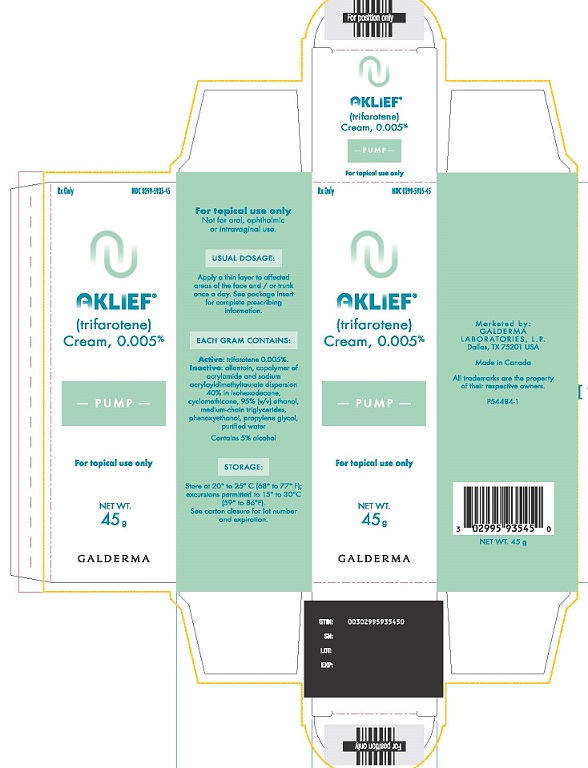
AKLIEF trifarotene 50 ug/g Cream
🆔 Identity & classification
Where does this data come from?
🏷️ RxNorm drug class
This medicine belongs to the Retinoid class.
Where does this data come from?
🏭 Manufacturer & labeler
Where does this data come from?
🩺 Clinical
Trifarotene is used to treat acne in adults and children 9 years of age and older. Trifarotene is in a class of medications called retinoids. It works by promoting peeling of affected skin areas, unclogging pores, and preventing new pimples from forming under the skin.
Read the full MedlinePlus article ↗- Aklief Cream is a prescription treatment for acne vulgaris — the common kind of acne. It's approved for people aged 9 and older, and you can use it on your face, chest, shoulders,...
- Apply a thin layer to your affected skin once a day, in the evening, after washing and fully drying your skin. One pump from the dispenser is enough for the face; two pumps cover t...
- How do I apply it, and when should I use it?
- Yes, that's very common, especially in the first four weeks. Redness, peeling, dryness, stinging, or a burning feeling are the most frequently reported side effects. The good news...
Patient education
Supplement & herbal interactions
Some supplements/herbs that may interact with Trifarotene — tap one for details:
Where does this data come from?
Ask a licensed pharmacist directly — free, answered by our team.
🧪 Inactive Ingredients / Excipients
Inactive ingredients, also called excipients, are components of the drug product other than the active ingredient. They may include fillers, dyes, coatings, preservatives, flavors, or other formulation ingredients.
💡 Tap an ingredient (hover on desktop) to see what it is and why it’s used.
-
UNII M4PPW69Y4H
A synthetic polymer made from acrylic acid and sodium acrylate that acts as a binder and thickener. It helps hold tablet ingredients together and controls how quickly the medicine dissolves in the body.
-
UNII 3K9958V90M
A liquid solvent derived from fermentation or chemical synthesis. In medicines, alcohol dissolves active ingredients, helps preserve the product, and improves how the body absorbs certain drugs.
-
UNII 344S277G0Z
Allantoin is a naturally derived compound that helps soften and soothe skin. In medicines, it works as a skin-conditioning agent and may help support wound healing and reduce irritation in topical formulations.
-
UNII 0THT5PCI0R
A silicone-based liquid that helps distribute active ingredients evenly throughout topical products. It acts as a solvent and emollient, allowing medicines to spread smoothly on skin while improving texture and absorption.
-
UNII 918X1OUF1E
Isohexadecane is a synthetic hydrocarbon oil used as an emollient and solvent in topical medicines. It helps dissolve active ingredients and improves spreadability and absorption through the skin.
-
UNII C9H2L21V7U
A fat derived from coconut or palm oil containing shorter fatty acid chains. It serves as a solvent and carrier to help dissolve or suspend active ingredients, improving absorption and stability in liquid formulations.
-
UNII HIE492ZZ3T
Phenoxyethanol is a synthetic preservative and antimicrobial agent used to prevent bacterial and fungal growth in medicines and cosmetic products, extending shelf life and maintaining product safety.
-
UNII 6DC9Q167V3
Propylene glycol is a clear liquid derived from petroleum or vegetable sources. It acts as a solvent, humectant, and preservative in medicines, helping dissolve active ingredients and maintain product stability.
-
UNII 059QF0KO0R
Water is a liquid solvent that dissolves and mixes ingredients together in liquid medicines, syrups, and injections. It helps distribute the active drug evenly throughout the product.
9 inactive ingredients listed in the exact product block matched to this NDC.
Where does this data come from?
ingredient classCode="IACT" elements from the exact product block matched by this NDC. Label-section narrative from DailyMed / the openFDA label index is shown separately when available.Inactive ingredient FAQ
Are inactive ingredients the same for every manufacturer?
Why might an inactive ingredient be missing?
Can inactive ingredients matter?
💲 Pricing
A drug doesn't have one price. Each row is a different public payment system, and none is what you'd pay at the counter — that depends on your insurance. The ⓘ on each row explains what it measures.
| Price system | Per g | Per package |
|---|---|---|
| Retail pharmacies payNADAC · weekly | $16.363 | $736.34 / 45 g |
| Medicaid paysCMS SDUD · 12 mo | $16.02 | $721.01 / 45 g |
| Medicare drug plans payPart D · Q2 2026 | $16.36 | $736.08 / 45 g |
Where does this data come from?
🔁 Therapeutic equivalents
| Product | Labeler | Pack | NADAC/unit | TE | Status | Price vs. this |
|---|---|---|---|---|---|---|
| Aklief 50 ug/gthis 00299-5935-45 | Galderma | 1 bottle | $16.363 | — | Availability likely | — |
Where does this data come from?
⏳ Availability & generic status
We did not find an FDA-approved generic match for this exact strength, form and route. Patent/protection dates below may affect future generic timing.
Why the date isn’t exact: Generic timing can change because patents may be challenged, settled, licensed, added, removed, or worked around with a narrower label — and FDA approval does not always mean a pharmacy can get the generic today.
🛈 What do these terms mean?
- Patent
- Legal protection listed in the Orange Book that may delay generic approval or launch. Issued by the U.S. Patent & Trademark Office.
- Substance patent
- Covers the active drug molecule itself — the hardest to design around. A generic generally can’t launch until it expires.
- Formulation (product) patent
- Covers a specific formulation or dosage form. A generic can sometimes work around it with a different formulation.
- Method-of-use patent
- A patent covering one specific approved use of the drug — not necessarily the whole molecule. A generic can sometimes launch with a “skinny label” that carves out the protected use and keeps the others.
- Skinny label
- A generic label that omits a still-patented use when the FDA allows it — letting a generic reach the market for the unprotected uses.
- Exclusivity
- FDA-granted marketing protection, separate from patents — e.g. 5-yr new chemical entity, 7-yr orphan drug, or a +6-month pediatric extension.
- Paragraph IV
- A generic applicant’s formal challenge to a listed patent. It can potentially lead to earlier generic entry, but often involves litigation or a settlement.
- RLD / RS
- Reference Listed Drug — the brand product the FDA uses as the reference for generic applications. Reference Standard — the product the FDA expects generics to compare against in bioequivalence testing.
- TE / AB rating
- FDA therapeutic-equivalence rating. An AB rating generally means the FDA considers a generic therapeutically equivalent to — and substitutable for — the brand.
- LOE (loss of exclusivity)
- The latest patent or exclusivity currently listed — the loss-of-exclusivity / latest-listed-protection date shown on this page. Paragraph-IV challenges and settlements can move the real date earlier; FDA approval and a manufacturer’s decision to market can move it later.
Built from the FDA Orange Book. The bars above are scaled to each protection’s expiry; the red LOE marker is the last one to lapse.
| Patent | Type | Use code | Expires |
|---|---|---|---|
| US 9084778 ↗ | Method of use | U-134 | May 30, 2033 |
| US 9498465 ↗ | Method of use | U-1033 | May 30, 2033 |
| US 7807708 ↗ | Drug substance | — | Jul 19, 2031 |
Is there a generic version of AKLIEF 0.005% CREAM?
The FDA approved a generic — why can’t I get it at my pharmacy yet?
Why do different websites show different generic release dates?
What does “FDA listed” mean?
What does a patent or protection date mean here?
What does “current Orange Book estimate” mean?
Can a generic come out before the last patent expires?
Can a generic come out after the listed dates?
What is the difference between patents and exclusivity?
Why are there multiple patent dates?
Where does this data come from?
🗺️ Medicaid utilization & spend
💊 Medicaid utilization by pack size
📊 Medicare Part D spend CMS · PART D · 2026 (Q1)
📦 Packaging — all sizes for this product
| Package NDC | Description | Per unit | Per pack | Marketing start | Status |
|---|---|---|---|---|---|
| 00299-5935-02 | 1 TUBE in 1 BLISTER PACK (0299-5935-02) / 2 g in 1 TUBE | — | — | 2019-10-04 | Active |
| 00299-5935-30 | 1 BOTTLE, PUMP in 1 CARTON (0299-5935-30) / 30 g in 1 BOTTLE, PUMP | — | — | 2019-10-04 | Discontinued by firm |
| 00299-5935-45 You're viewing this | 1 BOTTLE, PUMP in 1 CARTON (0299-5935-45) / 45 g in 1 BOTTLE, PUMP | $16.36 / g | $736.34 | 2019-10-04 | Active |
| 00299-5935-75 | 1 BOTTLE, PUMP in 1 CARTON (0299-5935-75) / 75 g in 1 BOTTLE, PUMP | — | — | 2019-10-04 | Discontinued by firm |
In Medicaid, this is the most-dispensed pack of this product — about 100% of fills over the last four reported quarters. See all packs ↓
Pack size FAQ
What quantity is in NDC 00299-5935-45?
What NDC number is used to bill for this package of AKLIEF trifarotene 50 ug/g Cream?
Prices are the latest CMS NADAC pharmacy acquisition cost per NDC; per-pack figures are per-unit × pack quantity, shown only when the pack is denominated in the same measure NADAC prices.
📄 Full prescribing information FDA SPL
🎯 Indications and Usage ▾
1 INDICATIONS AND USAGE AKLIEF Cream is a retinoid indicated for the topical treatment of acne vulgaris in patients 9 years of age and older. AKLIEF Cream is a retinoid indicated for the topical treatment of acne vulgaris in patients 9 years of age and older. ( 1 )
⏱️ Dosage and Administration ▾
2 DOSAGE AND ADMINISTRATION Apply a thin layer of AKLIEF Cream to the affected areas once daily, in the evening, on clean and dry skin. One pump actuation should be enough to cover the face (i.e., forehead, cheeks, nose, and chin). Two actuations of the pump should be enough to cover the upper trunk (i.e., reachable upper back, shoulders and chest).
One additional pump actuation may be used for middle and lower back if acne is present. The use of a moisturizer is recommended as frequently as needed from the initiation of treatment. Avoid contact with the eyes, lips, paranasal creases, mucous membranes.
AKLIEF Cream is for topical use only. Not for oral, ophthalmic, or intravaginal use. For topical use only.
Not for oral, ophthalmic or intravaginal use. Apply a thin layer of AKLIEF Cream to the affected areas of the face and/or trunk once a day, in the evening, on clean and dry skin. Avoid contact with the eyes, lips, paranasal creases, and mucous membranes.
( 2 )
💊 Dosage Forms and Strengths ▾
3 DOSAGE FORMS AND STRENGTHS Cream: 0.005%. Each gram of AKLIEF Cream contains 50 mcg of trifarotene in a white cream. Cream: 0.005% trifarotene. ( 3 )
⛔ Contraindications ▾
4 CONTRAINDICATIONS None None ( 4 )
⚠️ Warnings and Cautions ▾
5 WARNINGS AND PRECAUTIONS Skin irritation: Erythema, scaling, dryness, and stinging/burning may be experienced with use of AKLIEF Cream. Use a moisturizer from the initiation of treatment, and, if appropriate, reduce the frequency of application of AKLIEF Cream, suspend or discontinue use. ( 5.1 ) Ultraviolet Light and Environmental Exposure: Minimize exposure to sunlight and sunlamps.
Use sunscreen and protective clothing over treated areas when exposure cannot be avoided. ( 5.2 )
5.1Skin Irritation Patients using AKLIEF Cream may experience erythema, scaling, dryness, and stinging/burning. Maximum severity of these reactions typically occurred within the first 4 weeks of treatment, and severity decreased with continued use of the medication. Depending upon the severity of these adverse reactions, instruct patients to use a moisturizer, reduce the frequency of application of AKLIEF Cream, or suspend use temporarily.
If severe reactions persist the treatment may be discontinued. Avoid application of AKLIEF Cream to cuts, abrasions, or eczematous or sunburned skin. Use of “waxing” as a depilatory method should be avoided on skin treated with AKLIEF Cream.
5.2Ultraviolet Light and Environmental Exposure Minimize unprotected exposure to ultraviolet rays (including sunlight and sunlamps) during treatment with AKLIEF Cream. Warn patients who normally experience high levels of sun exposure and those with inherent sensitivity to sun to exercise caution. Use of sunscreen products and protective clothing over treated areas is recommended when exposure cannot be avoided.
🤒 Adverse Reactions ▾
6 ADVERSE REACTIONS Most common adverse reactions (incidence ≥ 1%) in patients treated with AKLIEF Cream were application site irritation, application site pruritus, and sunburn ( 6 ). To report SUSPECTED ADVERSE REACTIONS, contact Galderma Laboratories, L.P. at 1-866-735-4137 or FDA at 1-800-FDA-1088 or www.fda.gov/medwatch .
6.1Clinical trials experience Because clinical trials are conducted under widely varying conditions, adverse reaction rates observed in the clinical trials of a drug cannot be directly compared with rates in the clinical trials of another drug and may not reflect rates observed in practice. In the three Phase 3 clinical trials, 1673 subjects with acne vulgaris on the face and trunk, 9 years and older were exposed to AKLIEF Cream. Of these, 1220 subjects were treated once daily for up to 12 weeks and 453 were treated once daily for up to 1 year.
Adverse reactions reported in the 2 randomized, double-blind, vehicle-controlled 12-week clinical trials in ≥ 1.0% of subjects treated with AKLIEF Cream (and for which the rate exceeded the rate for vehicle), as well as the corresponding rates reported in subjects treated with the vehicle cream are presented in Table 1. Table 1. Adverse Reactions Occurring in ≥ 1.0% of Subjects with Acne Vulgaris of the Face and Trunk in the Two 12-week Phase 3 Clinical Trials Preferred Term AKLIEF Cream (N=1220) Vehicle Cream (N=1200) Application site irritation 91 (7.5) 4 (0.3) Application site pruritus 29 (2.4) 10 (0.8) Sunburn 32 (2.6) 6 (0.5) Additional adverse reactions that were reported in more than one subject treated with AKLIEF Cream (and at a frequency <1%) included application site pain, application site dryness, application site discoloration, application site rash, application site swelling, application site erosion, acne, dermatitis allergic, and erythema.
In the one-year, open-label safety trial that included 453 subjects 9 years and older, with acne vulgaris of the face and trunk, the pattern of adverse reactions for AKLIEF Cream was similar to that experienced in the 12-week controlled trials. A total of 12.6% of subjects had at least one adverse reaction during the trial, and 2.9% of subjects had an adverse reaction leading to treatment discontinuation. The most common adverse reactions (≥1% of subjects) for the entire trial were application site pruritus (4.6%), application site irritation (4.2%), and sunburn (5.5%).
The frequency of adverse reactions decreased over time. Skin irritation was evaluated by active assessment of erythema, scaling, dryness, and stinging/burning and collected separately. In the two 12-week Phase 3 clinical trials, these signs/symptoms were assessed at baseline and at least one post-baseline visit, in 1214 subjects (for face) and 1202 subjects (for trunk) treated with AKLIEF Cream.
The percentage of subjects who were assessed to have these signs and symptoms at any post baseline visit and at a severity worse than baseline are summarized in Table 2. Table 2. Application Site Tolerability Reactions at Any Post Baseline Visit Face AKLIEF Cream N=1214 Maximum Severity during Treatment Vehicle Cream N=1194 Maximum Severity during Treatment Mild Moderate Severe Mild Moderate Severe Erythema 30.6% 28.4% 6.2% 21% 6.8% 0.8% Scaling 37.5% 27.1% 4.9% 23.7% 5.9% 0.3% Dryness 39% 29.7% 4.8% 29.9% 6.8% 0.8% Stinging/Burning 35.6% 20.6% 5.9% 15.9% 3.8% 0.5% Trunk N=1202 N=1185 Erythema 26.5% 18.9% 5.2% 12.7% 4.4% 0.4% Scaling 29.7% 13.7% 1.7% 13.2% 2.6% 0.1% Dryness 32.9% 16.1% 1.8% 17.8% 3.9% 0.1% Stinging/Burning 26.1% 10.9% 4.3% 9.2% 2.2% 0.5% Local tolerability on the face in subjects treated with AKLIEF Cream worsened for any of the signs/symptoms compared with baseline to a score of moderate for up to 30% of subjects, or severe for up to 6% of subjects.
On the trunk, the corresponding percentages were up to 19% (moderate) and up to 5% (severe). The scores reached maximum severity at Week 1 for the face, and at Week 2 to 4 of treatment for th…
🔄 Drug Interactions ▾
7 DRUG INTERACTIONS Topical application of AKLIEF Cream is not expected to affect the circulating concentrations of oral hormonal contraceptives containing ethinyl estradiol and levonorgestrel.
👥 Use in Specific Populations ▾
8 USE IN SPECIFIC POPULATIONS
8.1Pregnancy Risk Summary Available data from clinical trials with AKLIEF Cream use in pregnant women have not identified a drug-associated risk of major birth defects, miscarriage or adverse maternal or fetal outcomes. There are case reports of major birth defects similar to those seen in fetuses exposed to oral retinoids in pregnant women exposed to other topical retinoids, but these case reports do not establish a pattern or association with retinoid-related embryopathy. In animal reproduction studies, oral doses of trifarotene administered to pregnant rats and rabbits during organogenesis that resulted in systemic exposures more than 800 times the systemic exposure at the maximum recommended human dose (MRHD) of AKLIEF Cream resulted in adverse fetal effects, including fetal deaths and external, visceral, and skeletal malformations (see Data) .
The background risk of major birth defects and miscarriage for the indicated population is unknown. All pregnancies have a background risk of birth defect, loss, or other adverse outcomes. In the US general population, the estimated background risk of major birth defects and miscarriage in clinically recognized pregnancies is 2% to 4% and 15% to 20%, respectively.
Data Animal Data Oral administration of trifarotene to pregnant rats during the period of organogenesis at doses that resulted in systemic exposures greater than 1600 times those in humans at the MRHD of AKLIEF Cream resulted in adverse fetal effects, including fetal deaths, reduced mean fetal weight, and external, visceral, and skeletal malformations. Oral administration of trifarotene to pregnant rabbits during the period of organogenesis at doses that resulted in systemic exposures at least 800 times those in humans at the MRHD of AKLIEF Cream resulted in adverse fetal effects, including defects of the tail, limbs, urogenital organs, and vertebral column.
Trifarotene administered orally to female rats from gestation Day 6 to lactation Day 20, at doses that resulted in systemic exposures up to 594 times those in humans at the MRHD of AKLIEF Cream, had no effect on maternal function or behavior, including gestation, delivery, pup-rearing, lactation and nursing, or survival or development of pups . There were no effects of maternal treatment on behavior, learning, memory, or reproductive function of pups.
8.2Lactation Risk Summary There are no data on the presence of trifarotene in human milk, the effects on the breastfed infant, or the effects on milk production. In animal studies, trifarotene was present in rat milk with oral administration of the drug. When a drug is present in animal milk, it is likely that the drug will be present in human milk.
It is possible that topical administration of large amounts of trifarotene could result in sufficient systemic absorption to produce detectable quantities in human milk (see Clinical Considerations) . The developmental and health benefits of breastfeeding should be considered along with the mother’s clinical need for AKLIEF Cream and any potential adverse effects on the breastfed infant from AKLIEF Cream or from the underlying maternal condition. Clinical Considerations To minimize potential exposure to the breastfed infant via breastmilk, use AKLIEF Cream on the smallest area of skin and for the shortest duration possible while breastfeeding.
Advise breastfeeding women not to apply AKLIEF Cream directly to the nipple and areola to avoid direct infant exposure.
8.4Pediatric Use Safety and effectiveness of AKLIEF Cream for the topical treatment of acne vulgaris have been established in pediatric patients age 9 years to 17 years based on evidence from well-controlled clinical trials, a long-term safety trial, and a pharmacokinetic trial. A total of 897 pediatric subjects aged 9 to 17 years received AKLIEF Cream in the clinical trials [see Clinical Pharmacology ( 12.3 ) and Clinical Studies ( 14 )] . Safety and effectiveness of AKLIEF Cream have n…
🤰 Pregnancy ▾
8.1Pregnancy Risk Summary Available data from clinical trials with AKLIEF Cream use in pregnant women have not identified a drug-associated risk of major birth defects, miscarriage or adverse maternal or fetal outcomes. There are case reports of major birth defects similar to those seen in fetuses exposed to oral retinoids in pregnant women exposed to other topical retinoids, but these case reports do not establish a pattern or association with retinoid-related embryopathy. In animal reproduction studies, oral doses of trifarotene administered to pregnant rats and rabbits during organogenesis that resulted in systemic exposures more than 800 times the systemic exposure at the maximum recommended human dose (MRHD) of AKLIEF Cream resulted in adverse fetal effects, including fetal deaths and external, visceral, and skeletal malformations (see Data) .
The background risk of major birth defects and miscarriage for the indicated population is unknown. All pregnancies have a background risk of birth defect, loss, or other adverse outcomes. In the US general population, the estimated background risk of major birth defects and miscarriage in clinically recognized pregnancies is 2% to 4% and 15% to 20%, respectively.
Data Animal Data Oral administration of trifarotene to pregnant rats during the period of organogenesis at doses that resulted in systemic exposures greater than 1600 times those in humans at the MRHD of AKLIEF Cream resulted in adverse fetal effects, including fetal deaths, reduced mean fetal weight, and external, visceral, and skeletal malformations. Oral administration of trifarotene to pregnant rabbits during the period of organogenesis at doses that resulted in systemic exposures at least 800 times those in humans at the MRHD of AKLIEF Cream resulted in adverse fetal effects, including defects of the tail, limbs, urogenital organs, and vertebral column.
Trifarotene administered orally to female rats from gestation Day 6 to lactation Day 20, at doses that resulted in systemic exposures up to 594 times those in humans at the MRHD of AKLIEF Cream, had no effect on maternal function or behavior, including gestation, delivery, pup-rearing, lactation and nursing, or survival or development of pups . There were no effects of maternal treatment on behavior, learning, memory, or reproductive function of pups.
8.5Geriatric Use Clinical trials of AKLIEF Cream did not include any subjects aged 65 years and over to determine whether they respond differently than younger subjects.
🧓 Geriatric Use ▾
8.4Pediatric Use Safety and effectiveness of AKLIEF Cream for the topical treatment of acne vulgaris have been established in pediatric patients age 9 years to 17 years based on evidence from well-controlled clinical trials, a long-term safety trial, and a pharmacokinetic trial. A total of 897 pediatric subjects aged 9 to 17 years received AKLIEF Cream in the clinical trials [see Clinical Pharmacology ( 12.3 ) and Clinical Studies ( 14 )] . Safety and effectiveness of AKLIEF Cream have not been established in pediatric subjects under the age of 9 years.
🧬 Clinical Pharmacology ▾
12 CLINICAL PHARMACOLOGY
12.1Mechanism of Action Trifarotene is an agonist of retinoic acid receptors (RAR), with particular activity at the gamma subtype of RAR. Stimulation of RAR results in modulation of target genes which are associated with various processes, including cell differentiation and mediation of inflammation. The exact process by which trifarotene ameliorates acne is unknown.
12.2Pharmacodynamics At the approved recommended dosage, AKLIEF Cream does not prolong the QT interval to any clinically relevant extent.
12.3Pharmacokinetics Pharmacokinetics of trifarotene was evaluated in a study involving 19 adult subjects with acne vulgaris following once daily application of AKLIEF Cream for 29 days (daily dose range 1.5 g/day to 2 g/day) to the face, shoulders, chest and upper back. Absorption: Systemic concentrations were at steady state following 2 weeks of treatment and were quantifiable in 7 subjects. Steady state C max ranged from below the limit of quantification (less than 5 pg/mL) to 10 pg/mL and AUC 0-24h ranged from 75 to 104 pg.h/mL in adults.
No drug accumulation is expected with long-term use. Distribution Plasma protein binding is approximately 99.9% Elimination The terminal half-life ranged from 2 to 9 hours. Metabolism Trifarotene is primarily metabolized by CYP2C9, CYP3A4, CYP2C8, and to a lesser extent by CYP2B6 in vitro .
Excretion Trifarotene is primarily excreted by the feces. Specific Populations Pediatric Patients Steady state C max ranged from less than 5 pg/mL to 9 pg/mL and AUC 0-24h ranged from 89 to 106 pg.h/mL in pediatrics (10 to 17- years-old). Steady state conditions were achieved in patients following 2 weeks of topical administration.
No drug accumulation is expected with long-term use. Drug Interactions Studies Clinical Studies and Model-Based Approaches No clinically significant differences in the pharmacokinetics of trifarotene were predicted when used concomitantly with fluconazole (a moderate CYP2C9 and CYP3A inhibitor). In Vitro Studies Cytochrome P450 (CYP) Enzymes: AKLIEF Cream is not expected to inhibit CYP1A2, 2B6, 2C8, 2C9, 2C19, 2D6 and 3A4, or induce CYP1A2, 2B6, and 3A4.
Transporter Systems : AKLIEF Cream is not expected to inhibit MATE, OATP, OAT, OCT, BCRP, P-gp, BSEP, or MRP.
🧬 Mechanism of Action ▾
12.1Mechanism of Action Trifarotene is an agonist of retinoic acid receptors (RAR), with particular activity at the gamma subtype of RAR. Stimulation of RAR results in modulation of target genes which are associated with various processes, including cell differentiation and mediation of inflammation. The exact process by which trifarotene ameliorates acne is unknown.
📦 How Supplied / Storage and Handling ▾
16 HOW SUPPLIED/STORAGE AND HANDLING AKLIEF Cream, 0.005% is provided as a white cream supplied in the following packaging configurations with corresponding NDC numbers: 45-gram pump NDC 0299-5935-45 Storage and Handling - Store at 20˚ to 25˚C (68˚ to 77˚F); excursions permitted to 15° to 30°C (59° to 86°F).. - Keep away from heat. - Keep out of reach of children.
📋 Description ▾
11 DESCRIPTION AKLIEF Cream for topical administration contains 0.005% (50 mcg/g) trifarotene. Trifarotene is a terphenyl acid derivative and is a retinoid. The chemical name of trifarotene is 3”-tert-Butyl-4’-(2-hydroxy-ethoxy)-4”-pyrrolidin-1-yl-[1,1’,3’,1”]terphenyl-4- carboxylic acid.
Trifarotene has the molecular formula of C 29 H 33 NO 4 , the molecular weight of 459.58, and the following structural formula: Trifarotene is a white to off-white to slightly yellow powder with the melting point of 245°C. It is practically insoluble in water with pKa1 of 5.69 and pKa2 of 4.55. AKLIEF (trifarotene) Cream 0.005% contains the following inactive ingredients: allantoin, copolymer of acrylamide and sodium acryloyldimethyltaurate dispersion 40% in isohexadecane, cyclomethicone, 95% (v/v) ethanol, medium-chain triglycerides, phenoxyethanol, propylene glycol, purified water. trifarotene chemical structure
💬 Information for Patients ▾
17 PATIENT COUNSELING INFORMATION See FDA-approved patient labeling (Patient Information). Advise the patient to: Cleanse the area to be treated; pat dry. Apply AKLIEF Cream as a thin layer once daily in the evening to the face, avoiding the eyes, lips, nasolabial folds, and mucous membranes.
A thin layer of AKLIEF Cream may also be applied to the chest, shoulders, and back. Avoid applying AKLIEF Cream to damaged skin (such as cuts, abrasions), eczematous areas, and sunburned skin. Reduce the risk of such irritation, use a moisturizer from the start of treatment, and, if appropriate, reduce the frequency of application of AKLIEF Cream or suspend use temporarily.
AKLIEF Cream may cause irritation such as erythema, scaling, dryness, and stinging or burning. Minimize exposure to sunlight, including sunlamps and phototherapy devices. Use sunscreen products and protective apparel (e.g., hat) over treated areas when exposure to sunlight cannot be avoided.
Avoid concomitant use of other potentially irritating topical products (medicated or not). Use AKLIEF Cream on the smallest area of skin and for the shortest duration possible while breastfeeding. Advise breastfeeding women not to apply AKLIEF Cream directly to the nipple and areola to avoid direct infant exposure.
Marketed by: GALDERMA LABORATORIES, L.P. Dallas, Texas 75201 USA Made in Canada All trademarks are the property of their respective owners. Patient Information AKLIEF® (trifarotene) cream Important: AKLIEF Cream is for use on the skin only.
Do not use AKLIEF Cream in your mouth eyes, or vagina. What is AKLIEF Cream? AKLIEF Cream is a prescription medicine used on the skin (topical) to treat acne vulgaris in people 9 years of age and older.
It is not known if AKLIEF Cream is safe and effective in children younger than 9 years old. Before using AKLIEF Cream, tell your healthcare provider about all of your medical conditions, including if you : have skin problems, including eczema, cuts or sunburn are pregnant or planning to become pregnant. It is not known if AKLIEF Cream can harm your unborn baby. are breastfeeding or plan to breastfeed.
It is not known if AKLIEF Cream passes into your breast milk. Breastfeeding women should use AKLIEF Cream on the smallest area of skin and for the shortest time needed while breastfeeding. Do not apply AKIEF Cream to the nipple and areola to avoid contact with your baby.
Tell your healthcare provider about all the medicines you take, including prescription and over-the-couter medicines, vitamins and herbal supplements. Especially tell your healthcare provider if you use any other medicine for acne. How should I use AKLIEF Cream?
Use AKLIEF Cream exactly as your healthcare provider tell you to use it. Apply a thin layer of AKLIEF Cream over the affected areas 1 time each day, in the evening. Applying AKLIEF Cream: Wash the area where the cream will be applied and pat dry.
If you receive a sample tube of AKLIEF Cream, follow your healthcare provider’s instructions about how much to apply. AKLIEF Cream comes in a pump. Press down on (depress) the pump 1 time to dispense a small amount of AKLIEF Cream and spread a thin layer over your face (forehead, cheeks, nose, and chin).
Avoid contact with your eyes, lips, mouth, and the corners of your nose. Press down on the pump 2 times to dispense enough AKLIEF Cream to apply a thin layer to cover your upper trunk (the area of your upper back that you can reach, shoulders, and chest). One more pump may be used to apply a thin layer of AKLIEF Cream to your middle and lower back, if acne is present.
When you begin treatment with AKLIEF Cream, you should begin applying a moisturizer on your skin as often as needed. See “Local skin irritation” below. What should I avoid while using AKLIEF Cream?
Minimize exposure to sunlight. You should avoid using sunlamps, tanning beds, and ultraviolet light during treatment with AKLIEF Cream. If you have to be in sunlight or are sensitive to sunlight, use a sunscreen w…