
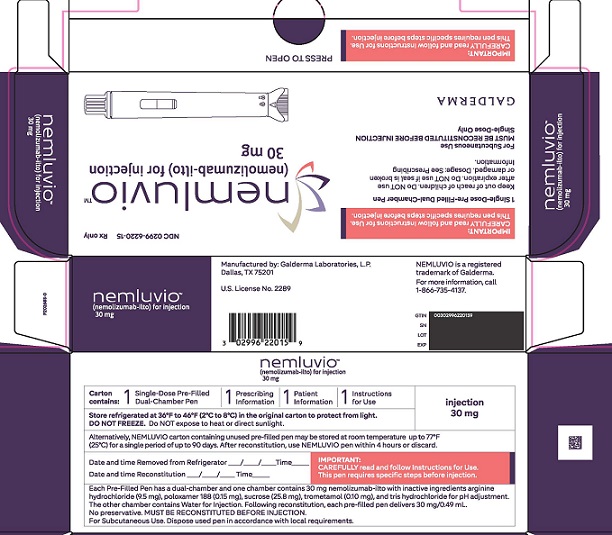
Nemluvio nemolizumab-ilto 30 mg/100mg Injection, Powder, Lyophilized, For Solution — NDC 0299-6220-10 (Billing 00299-6220-10)
This is a package of Nemluvio nemolizumab-ilto 30 mg/100mg Injection, Powder, Lyophilized, For Solution from Galderma Laboratories, L.P., marketed since Aug 2024 and currently FDA-listed.
NDC database record
One package, one record: these facts belong to NDC 0299-6220-10 alone.
- Record
- FDA NDC Directory package listing · Human prescription drug
- Code segments
- 0299 labeler · 6220 product · 10 package
- Package marketed since
- Aug 13, 2024
- Sample package
- Yes — professional sample, not for sale
- Listing certified through
- Dec 31, 2026
- Barcode (UPC-A, from the NDC)
- 3 0299622010 4
- FDA record last changed
- Jul 24, 2026
Identity & classification
Regulatory identifiers FDA, NLM and CMS codes for this package
Drug-database identifiers Medi-Span GPI and First Databank GCN / HICL / AHFS classification
- GSN (GCN sequence number): 086424
- GCN: 56136
- GPI-14 (Medi-Span): 9079355510D420
- HICL (First Databank): 049814
- AHFS class code: 84:06.28.00
- RxCUI (RxNorm): 2691325
Where does this data come from?
- FDA openFDA NDC Directory · synced Oct 1, 2026
- FDA label on DailyMed · label index refreshed Oct 3, 2026
- RxNorm (NLM RxNav) · catalog refreshed Oct 1, 2026
- Medi-Span GPI (licensed)
- First Databank (licensed) · refreshed Oct 1, 2026
RxNorm drug class
This medicine belongs to the Interleukin-31 Receptor alpha Antagonist class.
Where does this data come from?
- RxClass (NLM) · catalog refreshed Oct 1, 2026
Clinical
Patient education
Supplement & herbal interactions
Where does this data come from?
- MedlinePlus (NLM) · refreshed Oct 1, 2026
- FDA label on DailyMed · label index refreshed Oct 3, 2026
Ask a licensed pharmacist directly — free, answered by our team.
Pricing
A drug doesn't have one price. Each row is a different public payment system, and none is what you'd pay at the counter — that depends on your insurance. The ⓘ on each row explains what it measures.
| Price system | Per mL | Per package |
|---|---|---|
| Retail pharmacies payNADAC · weekly | Not in the retail survey — common for institutional, discontinued, or low-volume packs. | |
| Medicaid paysCMS SDUD · 12 mo | No recent Medicaid claims on file for this NDC — rare and low-volume NDCs are suppressed in the public data. | |
| Medicare drug plans payPart D · Q2 2026 | $4,272.69 | — |
Where does this data come from?
- CMS NADAC weekly file
- CMS ASP pricing files · refreshed Sep 20, 2026
- CMS Medicaid State Drug Utilization Data · refreshed Oct 4, 2026
- CMS Part D plan pricing files · refreshed Sep 24, 2026
- VA National Acquisition Center price file
Packaging — all sizes for this product
| Package NDC | Description | Marketing start | Marketing end | Status |
|---|---|---|---|---|
| 00299-6220-10 You're viewing this | 1 SYRINGE, GLASS in 1 CARTON / 30 mg in 1 SYRINGE, GLASS Sample | 2024-08-13 | — | Active |
| 00299-6220-15 0299-6220-15 Main listing | 1 SYRINGE in 1 CARTON / 30 mg in 1 SYRINGE | 2024-08-13 | — | Active |
This pack shows little to no recent Medicaid volume — a different pack size carries most fills. See all packs ↓
Pack size FAQ
What quantity is in this package?
What NDC number is used to bill for this package of Nemluvio nemolizumab-ilto 30 mg/100mg Injection, Powder, Lyophilized, For Solution?
Therapeutic equivalents
| Product | Labeler | Pack | NADAC/unit | TE | Status | Price vs. this |
|---|---|---|---|---|---|---|
| Nemluvio 30 mg/100mgthis 00299-6220-10 | Galderma | 1 syringe | — | — | FDA listed | — |
Where does this data come from?
- FDA openFDA NDC Directory · synced Oct 1, 2026
- FDA Purple Book · refreshed Sep 5, 2026
- CMS NADAC weekly file
Availability & biosimilar status
Biologics have no small-molecule generics; biosimilar competition is tracked in the FDA Purple Book.
Why the date isn’t exact: Biosimilar timing can change because patents may be challenged, settled, licensed, added or removed, and litigation can move the real date earlier or later.
🛈 What do these terms mean?
- Biologic patent
- A patent the reference product’s maker has publicly listed. A biosimilar generally can’t launch until these expire — unless they’re invalidated or resolved in a settlement.
- Reference-product exclusivity
- A flat 12 years of FDA market protection from the biologic’s first licensure (the BPCIA). No biosimilar can be licensed before it ends, regardless of patents.
- Interchangeable exclusivity
- The first interchangeable biosimilar can earn a period as the only interchangeable version (pharmacists can substitute it without the prescriber).
- Earliest biosimilar (LOE)
- The latest of all the dates above — the soonest a biosimilar can realistically reach the market. Litigation and settlements can move it earlier.
Biologics have no small-molecule “generics” — competition comes from FDA-licensed biosimilars, tracked in the FDA Purple Book.
| Code | What it grants | Expires |
|---|---|---|
| RefProduct | Reference-product exclusivity (12-year, BPCIA) — no biosimilar can be licensed before this date | Aug 12, 2036 |
Is there a biosimilar for NEMLUVIO 30 MG PEN?
Why do different websites show different biosimilar dates?
Can a biosimilar launch before the last patent expires?
What does “current Purple Book estimate” mean?
What does “FDA listed” mean?
What does a patent or protection date mean here?
Where does this data come from?
- FDA Purple Book · refreshed Sep 5, 2026
Inactive Ingredients / Excipients
Inactive ingredients, also called excipients, are components of the drug product other than the active ingredient. They may include fillers, dyes, coatings, preservatives, flavors, or other formulation ingredients.
💡 Tap an ingredient (hover on desktop) to see what it is and why it’s used.
-
UNII LQA7B6G8JG
A synthetic polymer made by combining water-soluble compounds. It acts as a surfactant and solubilizer to help mix oil and water-based ingredients, improving the medicine's texture and how active ingredients dissolve.
-
UNII C151H8M554
A natural sugar derived from sugar cane or sugar beets. It's used as a sweetener, filler, and binder to improve taste, add bulk, and help hold tablet or capsule ingredients together.
-
UNII 023C2WHX2V
Tromethamine is a chemical buffer that helps maintain the proper acidity level in liquid medicines. It neutralizes acids and stabilizes the solution so the medication remains effective and safe throughout its shelf life.
-
UNII 383V75M34E
A salt form of tromethamine, an organic base compound. It functions as a buffer to help maintain the medicine's pH level and improve stability during storage.
-
UNII 059QF0KO0R
Water is a liquid solvent that dissolves and mixes ingredients together in liquid medicines, syrups, and injections. It helps distribute the active drug evenly throughout the product.
5 inactive ingredients listed in the exact product block matched to this NDC.
Where does this data come from?
ingredient classCode="IACT" elements from the exact product block matched by this NDC. Label-section narrative from DailyMed / the openFDA label index is shown separately when available.- FDA label on DailyMed · label index refreshed Oct 3, 2026
- FDA openFDA NDC Directory · synced Oct 1, 2026
Inactive ingredient FAQ
Are inactive ingredients the same for every manufacturer?
Why might an inactive ingredient be missing?
Can inactive ingredients matter?
Manufacturer & labeler
More NDCs from Galderma Laboratories, L.P. labeler code 00299
- DIFFERIN adapalene 3 mg/g Gel NDC 0299-5918-02
- Aklief trifarotene 50 ug/g Cream NDC 0299-5935-02
- Twyneo tretinoin and benzoyl peroxide 1 mg/g; 30 mg/g Cream NDC 0299-5945-00
- Tri-Luma fluocinolone acetonide, hydroquinone, and tretinoin .1 mg/g; 40 mg/g; .5 mg/g Cream NDC 0299-5950-02
- Dysport Botulinum Toxin Type A 300 U Injection, Powder, Lyophilized, For Solution NDC 0299-5962-01
- Mirvaso brimonidine tartrate 5 mg/g Gel NDC 0299-5980-00
Where does this data come from?
- FDA openFDA NDC Directory · synced Oct 1, 2026
- Drugs@FDA
Full prescribing information FDA SPL
🎯 Indications and Usage ▾
1 INDICATIONS AND USAGE NEMLUVIO is an interleukin-31 receptor antagonist indicated for: Prurigo Nodularis The treatment of adults with prurigo nodularis. ( 1.1 ) Atopic Dermatitis The treatment of adults and pediatric patients 12 years of age and older with moderate-to-severe atopic dermatitis in combination with topical corticosteroids and/or calcineurin inhibitors when the disease is not adequately controlled with topical prescription therapies. ( 1.2 )
1.1Prurigo Nodularis NEMLUVIO is indicated for the treatment of adults with prurigo nodularis.
1.2Atopic Dermatitis NEMLUVIO is indicated for the treatment of adults and pediatric patients 12 years of age and older with moderate-to-severe atopic dermatitis in combination with topical corticosteroids and/or calcineurin inhibitors when the disease is not adequately controlled with topical prescription therapies.
⏱️ Dosage and Administration ▾
2 DOSAGE AND ADMINISTRATION Complete all age-appropriate vaccinations as recommended by current immunization guidelines prior to treatment with NEMLUVIO. ( 2.1 ) Prurigo Nodularis: Adult Patients Weighing Less Than 90kg: The recommended subcutaneous dosage is an initial dose of 60 mg (two 30 mg injections), followed by 30 mg given every 4 weeks. ( 2.2 ) Adult Patients Weighing 90kg or More: The recommended subcutaneous dosage is an initial dose of 60 mg (two 30 mg injections), followed by 60 mg given every 4 weeks.
( 2.2 ) Atopic Dermatitis: The recommended subcutaneous dosage is an initial dose of 60 mg (two 30 mg injections), followed by 30 mg given every 4 weeks. ( 2.3 ) After 16 weeks of treatment, for patients who achieve clear or almost clear skin, a dosage of 30 mg every 8 weeks is recommended. ( 2.3 ) Use NEMLUVIO with topical corticosteroids and/or topical calcineurin inhibitors.
When the disease has sufficiently improved, discontinue use of topical therapies. ( 2.3 ) Administer NEMLUVIO by subcutaneous injection. ( 2.5 ) NEMLUVIO must be reconstituted prior to administration.
( 2.6 )
2.1Vaccination Prior to Treatment Complete all age-appropriate vaccinations as recommended by current immunization guidelines prior to treatment with NEMLUVIO [ see Warnings and Precautions (5.2) ].
2.2Recommended Dosage for Prurigo Nodularis Adult Patients Weighing Less Than 90 kg: The recommended subcutaneous dosage of NEMLUVIO for adult patients weighing less than 90 kg is an initial dose of 60 mg (two 30 mg injections), followed by 30 mg given every 4 weeks. Adult Patients Weighing 90 kg or More: The recommended subcutaneous dosage of NEMLUVIO for adult patients weighing 90 kg or more is an initial dose of 60 mg (two 30 mg injections), followed by 60 mg given every 4 weeks.
2.3Recommended Dosage for Atopic Dermatitis The recommended subcutaneous dosage of NEMLUVIO in adults and pediatric patients 12 years of age and older is an initial dose of 60 mg (two 30 mg injections), followed by 30 mg given every 4 weeks. After 16 weeks of treatment, for patients who achieve clear or almost clear skin, a subcutaneous dosage of 30 mg every 8 weeks is recommended. Concomitant Topical Therapies: Use NEMLUVIO with topical corticosteroids and/or topical calcineurin inhibitors.
When the disease has sufficiently improved, discontinue use of topical therapies.
2.4Missed Dose If a dose is missed, administer the dose as soon as possible. Thereafter, resume dosing at the regular scheduled time.
2.5Important Administration Instructions NEMLUVIO is administered by subcutaneous injection. NEMLUVIO is intended for use under the guidance of a healthcare provider. Prior to the first injection, provide patients and/or caregivers with proper training on the preparation and administration of NEMLUVIO.
Patients may self-inject NEMLUVIO after receiving training on subcutaneous injection techniques. In pediatric patients 12 years of age and older, administer NEMLUVIO by or under the supervision of a trained adult or caregiver. For the initial dose, administer each of the two NEMLUVIO injections at different injection sites.
Administer NEMLUVIO subcutaneously into the front upper thighs or abdomen avoiding the 2-inch (5 cm) area around the navel. NEMLUVO may be subcutaneously injected into the upper arm, but this should only be performed by a caregiver or healthcare professional. Alternate the injection site with each injection.
Do not inject NEMLUVIO into skin that is tender, inflamed, swollen, damaged or has bruises or scars or open wounds. Refer to the Instructions for Use for complete administration instructions with illustrations [ see Instructions for Use ].
2.6Preparation for Use of NEMLUVIO Before injection, remove NEMLUVIO carton from the refrigerator and allow to reach room temperature (30-45 minutes). Inspect NEMLUVIO visually prior to reconstitution. NEMLUVIO is supplied in a single-dose, prefilled, dual-chamber pen with white powder in one chamber a… [Excerpted — this section continues on DailyMed.]
💊 Dosage Forms and Strengths ▾
3 DOSAGE FORMS AND STRENGTHS For injection: single-dose, prefilled, dual-chamber pen containing 30 mg of nemolizumab-ilto as a white lyophilized powder in one chamber and diluent, water for injection, in the other chamber. For injection: single-dose, prefilled, dual-chamber pen containing 30 mg of nemolizumab-ilto lyophilized powder and diluent, water for injection. ( 3 )
⛔ Contraindications ▾
4 CONTRAINDICATIONS NEMLUVIO is contraindicated in patients who have known hypersensitivity to nemolizumab-ilto or to any of the excipients in NEMLUVIO [ see Warnings and Precautions (5.1) ]. Known hypersensitivity to nemolizumab-ilto or to any of the excipients in NEMLUVIO. ( 4 )
⚠️ Warnings and Cautions ▾
5 WARNINGS AND PRECAUTIONS Hypersensitivity: Hypersensitivity reactions have been reported with NEMLUVIO use. If a clinically significant hypersensitivity reaction occurs, immediately institute appropriate therapy and discontinue NEMLUVIO. ( 5.1 ) Vaccinations: Avoid use of live vaccines during treatment with NEMLUVIO. ( 5.2 )
5.1Hypersensitivity Hypersensitivity reactions, such as facial angioedema, have been reported with use of NEMLUVIO. NEMLUVIO is contraindicated in patients with a known hypersensitivity to nemolizumab-ilto or to any of the excipients in NEMLUVIO. If a clinically significant hypersensitivity reaction occurs, immediately institute appropriate therapy and discontinue NEMLUVIO [ see Contraindications (4) , Adverse Reactions (6.1) ].
5.2Vaccinations Complete all age-appropriate vaccinations as recommended by current immunization guidelines prior to treatment with NEMLUVIO. Avoid use of live vaccines in patients during treatment with NEMLUVIO. It is unknown if administration of live vaccines during NEMLUVIO treatment will impact the safety or effectiveness of these vaccines. No data are available on the response to non-live vaccines.
🤒 Adverse Reactions ▾
6 ADVERSE REACTIONS The following clinically significant adverse reactions are described in greater details elsewhere in the labeling: Hypersensitivity [ see Warnings and Precautions (5.1) ] Most common adverse reactions are: Prurigo Nodularis (incidence ≥1%): headache, dermatitis atopic, eczema, and eczema nummular. ( 6.1 ) Atopic Dermatitis (incidence ≥1%): headache (including migraine), arthralgia, urticaria, and myalgia. ( 6.1 ) To report SUSPECTED ADVERSE REACTIONS, contact Galderma Laboratories, L.P. at 1-866-735-4137 or FDA at 1-800-FDA-1088 or www.fda.gov/medwatch .
6.1Clinical Trials Experience Because clinical trials are conducted under widely varying conditions, adverse reaction rates observed in the clinical trials of a drug cannot be directly compared to rates in the clinical trials of another drug and may not reflect the rates observed in practice. Prurigo Nodularis A total of 508 adult subjects with prurigo nodularis were treated with NEMLUVIO in two placebo-controlled trials and an open label long-term extension trial. Of these, 375 subjects were exposed for at least 1 year in the drug development program for prurigo nodularis.
The safety of NEMLUVIO in adult subjects with prurigo nodularis was evaluated in two randomized, doubleblind, placebo-controlled, multicenter trials (OLYMPIA 1 and OLYMPIA 2). Subjects were treated for up to 24 weeks in OLYMPIA 1 and up to 16 weeks in OLYMPIA 2. In these 2 trials, 370 subjects were treated with subcutaneous injections of NEMLUVIO, and 186 subjects received placebo [ see Clinical Studies (14.1 )].
Subjects weighing less than 90 kg in the NEMLUVIO group received an initial NEMLUVIO dose of 60 mg or placebo at Week 0, followed by a NEMLUVIO dose of 30 mg or placebo every 4 weeks. Subjects weighing 90 kg or more in the NEMLUVIO group received an initial NEMLUVIO dose of 60 mg or placebo at Week 0 followed by a NEMLUVIO dose of 60 mg or placebo every 4 weeks. During the treatment period in Trials OLYMPIA 1 and OLYMPIA 2, the proportion of subjects who discontinued treatment because of adverse reactions was 4% in the NEMLUVIO group versus 3% in the placebo group.
Table 1 summarizes the adverse reactions that occurred at a rate of at least 1% in the NEMLUVIO group, and for which the rate exceeds the rate in the placebo group through Week 16. Table 1: Adverse Reactions Occurring in ≥1% of Adult Subjects with Prurigo Nodularis in the NEMLUVIO Group and Greater than Placebo in the OLYMPIA 1 and OLYMPIA 2 Trials through Week 16. *includes: headache and tension headache Adverse Reaction NEMLUVIO N= 370 n (%) Placebo (N= 186) n (%) Headache* 23 (6) 6 (3) Dermatitis atopic 16 (4) 1 (0.5) Eczema 14 (4) 3 (2) Eczema nummular 11 (3) 0 Specific Adverse Reactions Hypersensitivity reactions Type 1 hypersensitivity reactions (Ig-E mediated reactions), including one report of discrete facial (peri-ocular) angioedema, were reported in subjects treated with NEMLUVIO [ see Contraindications (4) ].
Atopic Dermatitis Adults and Pediatric Subjects 12 Years of Age and Older A total of 1148 subjects, including 180 subjects 12 to 17 years of age, with moderate-to-severe atopic dermatitis were treated with NEMLUVIO for at least 1 year during the drug development program. The safety of NEMLUVIO was evaluated in a pool of two randomized, double-blind, placebo-controlled, multicenter phase 3 trials (ARCADIA 1, ARCADIA 2). In these two trials, 1135 adult and pediatric subjects 12 years of age and older with moderate-to-severe AD were treated with subcutaneous injections of NEMLUVIO (initial dose of 60 mg, followed by 30 mg every 4 weeks), with concomitant topical corticosteroids (TCS) and/or topical calcineurin inhibitors (TCI) for up to 16 weeks (Initial Treatment Period) [ see Clinical Studies (14.2 )].
After the Initial Treatment Period, subjects who responded to NEMLUVIO were re-randomized to receive NEMLUVIO 30 mg every 4 weeks, NEMLUVIO 30 mg every 8 weeks, or placebo every 4 weeks for the Maintenan… [Excerpted — this section continues on DailyMed.]
👥 Use in Specific Populations ▾
8 USE IN SPECIFIC POPULATIONS
8.1Pregnancy Risk Summary Available data on NEMLUVIO use in pregnant women exposed during clinical trials are insufficient to evaluate for a drug-associated risk of major birth defects, miscarriage, or other adverse maternal or fetal outcomes. In an enhanced pre- and postnatal development study in cynomolgus monkeys, when nemolizumab-ilto was administered subcutaneously during organogenesis to parturition, an increase in early postnatal death was observed at a dose 36 times the maximum recommended human dose (MRHD) for PN and 50 times for AD (see Data).
The clinical significance of this nonclinical finding is unknown. The background risk of major birth defects and miscarriage for the indicated populations are unknown. All pregnancies have a background risk of birth defects, loss, or other adverse outcomes.
In the U.S. general population, the estimated background risk of major birth defects and miscarriage in clinically recognized pregnancies is 2% to 4% and 15% to 20%, respectively. Clinical Considerations Fetal/Neonatal Adverse Reactions Transport of endogenous IgG antibodies across the placenta increases as pregnancy progresses, and peaks during the third trimester. Therefore, NEMLUVIO may be present in infants exposed in utero.
The potential impact of infants being exposed in utero to NEMLUVIO should be considered. Data Animal Data In an enhanced pre- and postnatal development study, subcutaneous doses up to 25 mg/kg of nemolizumab-ilto were administered to pregnant cynomolgus monkeys once every two weeks during organogenesis to parturition. No maternal or embryofetal toxicities were observed at doses up to 25 mg/kg (36 times the MRHD for PN and 50 times for AD, based on AUC comparison).
Early postnatal death occurred in the offspring of one control monkey and 3 monkeys at 25 mg/kg (36 times the MRHD for PN and 50 times for AD, based on AUC comparison). The clinical significance of this nonclinical finding is unknown. Nemolizumab-ilto was administered subcutaneously to the offspring at doses up to 25 mg/kg (122 times the MRHD for PN and 168 times for AD, based on AUC comparison), once every 2 weeks for 6 months, starting from postnatal day 35.
No adverse effects were noted in the remaining offspring.
8.2Lactation Risk Summary There are no data on the presence of nemolizumab-ilto in human milk, the effects on the breastfed infant, or the effects on milk production. Nemolizumab-ilto was detected in breast milk of monkeys (see Data). Endogenous maternal IgG and monoclonal antibodies are transferred in human milk.
The effects of local gastrointestinal exposure and limited systemic exposure in the breastfed infant to nemolizumab-ilto are unknown. The developmental and health benefits of breastfeeding should be considered along with the mother’s clinical need for NEMLUVIO and any potential adverse effects on the breastfed child from NEMLUVIO or from the underlying maternal condition. Data Nemolizumab-ilto was detected in breast milk of monkeys in the enhanced pre- and postnatal development study following subcutaneous doses up to 25 mg/kg once every two weeks during organogenesis to parturition.
The mean nemolizumab-ilto concentrations in milk were approximately 0.3 – 0.5% of the maternal plasma levels from lactation day 7 to 63. The concentration of nemolizumab-ilto in animal milk does not necessarily predict the concentration of drug in human milk.
8.4Pediatric Use Prurigo Nodularis The safety and effectiveness of NEMLUVIO have not been established in pediatric patients. Atopic Dermatitis The safety and effectiveness of NEMLUVIO for the treatment of moderate-to-severe atopic dermatitis in combination with topical corticosteroids and/or calcineurin inhibitors have been established in pediatric patients 12 years of age and older whose disease is not adequately controlled with topical prescription therapies. Use of NEMLUVIO for this indication is supported by evidence from two randomized, double-bl… [Excerpted — this section continues on DailyMed.]
🤰 Pregnancy ▾
8.1Pregnancy Risk Summary Available data on NEMLUVIO use in pregnant women exposed during clinical trials are insufficient to evaluate for a drug-associated risk of major birth defects, miscarriage, or other adverse maternal or fetal outcomes. In an enhanced pre- and postnatal development study in cynomolgus monkeys, when nemolizumab-ilto was administered subcutaneously during organogenesis to parturition, an increase in early postnatal death was observed at a dose 36 times the maximum recommended human dose (MRHD) for PN and 50 times for AD (see Data).
The clinical significance of this nonclinical finding is unknown. The background risk of major birth defects and miscarriage for the indicated populations are unknown. All pregnancies have a background risk of birth defects, loss, or other adverse outcomes.
In the U.S. general population, the estimated background risk of major birth defects and miscarriage in clinically recognized pregnancies is 2% to 4% and 15% to 20%, respectively. Clinical Considerations Fetal/Neonatal Adverse Reactions Transport of endogenous IgG antibodies across the placenta increases as pregnancy progresses, and peaks during the third trimester. Therefore, NEMLUVIO may be present in infants exposed in utero.
The potential impact of infants being exposed in utero to NEMLUVIO should be considered. Data Animal Data In an enhanced pre- and postnatal development study, subcutaneous doses up to 25 mg/kg of nemolizumab-ilto were administered to pregnant cynomolgus monkeys once every two weeks during organogenesis to parturition. No maternal or embryofetal toxicities were observed at doses up to 25 mg/kg (36 times the MRHD for PN and 50 times for AD, based on AUC comparison).
Early postnatal death occurred in the offspring of one control monkey and 3 monkeys at 25 mg/kg (36 times the MRHD for PN and 50 times for AD, based on AUC comparison). The clinical significance of this nonclinical finding is unknown. Nemolizumab-ilto was administered subcutaneously to the offspring at doses up to 25 mg/kg (122 times the MRHD for PN and 168 times for AD, based on AUC comparison), once every 2 weeks for 6 months, starting from postnatal day 35.
No adverse effects were noted in the remaining offspring.
🧒 Pediatric Use ▾
8.4Pediatric Use Prurigo Nodularis The safety and effectiveness of NEMLUVIO have not been established in pediatric patients. Atopic Dermatitis The safety and effectiveness of NEMLUVIO for the treatment of moderate-to-severe atopic dermatitis in combination with topical corticosteroids and/or calcineurin inhibitors have been established in pediatric patients 12 years of age and older whose disease is not adequately controlled with topical prescription therapies. Use of NEMLUVIO for this indication is supported by evidence from two randomized, double-blind, placebo-controlled trials [ See Adverse Reactions (6.1) and Clinical Studies (14.2) ].
The safety and effectiveness of NEMLUVIO have not been established in pediatric patients younger than 12 years of age.
🧓 Geriatric Use ▾
8.5Geriatric Use Prurigo Nodularis Of the 370 subjects with prurigo nodularis exposed to NEMLUVIO in OLYMPIA 1 and OLYMPIA 2, 99 (26.8%) subjects were 65 years of age or older. The long-term safety of NEMLUVIO was assessed in 508 subjects, among which 133 (26.2%) were 65 years of age or older. Clinical trials of NEMLUVIO did not include sufficient numbers of subjects 65 years of age or older to determine whether they respond differently than younger adult subjects. [ see Clinical Pharmacology (12.3) ].
Atopic Dermatitis Of the 1192 subjects with atopic dermatitis exposed to NEMLUVIO in the primary safety population, 72 (6.0%) subjects were 65 years of age or older. The long-term safety of NEMLUVIO was assessed in 78 (4.5%) subjects 65 years of age or older. Clinical studies of NEMLUVIO did not include sufficient numbers of subjects aged 65 and over to determine whether they respond differently from younger adult subjects [ see Clinical Pharmacology (12.3) ].
🆘 Overdosage ▾
10 OVERDOSAGE There is no specific treatment for NEMLUVIO overdosage. In the event of overdosage, contact Poison Control (1-800-222-1222) for the latest recommendations and monitor the patient for any signs or symptoms of adverse reactions and institute appropriate symptomatic treatment immediately.
🧬 Clinical Pharmacology ▾
12 CLINICAL PHARMACOLOGY
12.1Mechanism of Action Nemolizumab-ilto is a humanized IgG2 monoclonal antibody that inhibits IL-31 signaling by binding selectively to IL-31 RA. IL-31 is a naturally occurring cytokine that is involved in pruritus, inflammation, epidermal dysregulation, and fibrosis. Nemolizumab-ilto inhibited IL-31-induced responses including the release of proinflammatory cytokines and chemokines.
12.2Pharmacodynamics Pharmacodynamics of nemolizumab-ilto in the treatment of prurigo nodularis and atopic dermatitis are unknown.
12.3Pharmacokinetics After a single-dose, nemolizumab-ilto exposure increased dose proportionally over a dose range of 0.03 and 3 mg/kg following subcutaneous administration. After multiple doses, nemolizumab-ilto systemic exposure increased in an approximately dose-proportional manner across the subcutaneous dose range up to 30 mg. There was a decrease in bioavailability by 9% with the 60 mg subcutaneous dose and by 15% with the 90 mg subcutaneous dose.
Prurigo Nodularis: Following multiple doses of NEMLUVIO in subjects with prurigo nodularis, the estimated mean (SD) steady-state trough concentrations of nemolizumab-ilto were 3.04 (1.23) μg/mL in subjects with bodyweight less than 90 kg; and 3.66 (1.63) μg/mL in subjects with bodyweight of 90 kg or more. Steady state nemolizumab-ilto concentrations were achieved by week 4 in subjects weighting less than 90 kg and by week 12 in subjects weighing 90 kg or more. Atopic Dermatitis: Following multiple doses of NEMLUVIO in subjects with atopic dermatitis, the estimated mean (SD) steady-state trough concentrations of nemolizumab-ilto were 2.63 (1.27) μg/mL for 30 mg administered every 4 weeks and 0.74 (0.44) μg/mL for 30 mg administered every 8 weeks.
Steady-state nemolizumab-ilto concentrations were achieved 4 weeks after the initial 60 mg loading dose. Absorption Following an initial subcutaneous dose of 60 mg, nemolizumab-ilto reached peak mean (SD) concentrations (Cmax) of 7.5 (2.31) μg/mL by approximately 6 days post dose. Distribution The volume of distribution of nemolizumab-ilto was estimated to be
7.67L. Elimination Nemolizumab-ilto is expected to be degraded in the same manner as endogenous IgG. The terminal elimination half-life (SD) of nemolizumab-ilto was estimated to be 18.9 (4.96) days and systemic clearance was estimated to be 0.263 L/day.
Metabolism The metabolic pathway of nemolizumab-ilto has not been characterized. Nemolizumab-ilto is expected to be degraded into small peptides by catabolic pathways. Specific Populations Geriatric Populations No clinically significant difference in the pharmacokinetics of nemolizumab-ilto was estimated based on age (subjects 18 to 65 years of age and older than 65 years of age).
Dose adjustment in this population is not needed. Pediatric Population Atopic Dermatitis: No clinically significant difference in the pharmacokinetics of nemolizumab-ilto was estimated in pediatric subjects 12 to 17 years of age compared to adults. Dose adjustment in this population is not needed.
Renal or Hepatic Impairment No clinically significant differences in the pharmacokinetics of nemolizumab-ilto were estimated based on mild to moderate renal or hepatic impairments. The effect of severe renal and severe hepatic impairments on the pharmacokinetics of nemolizumab-ilto is unknown. Body Weight The exposure of nemolizumab-ilto decreases with increasing body weight.
After a 30-mg dose every 4 weeks, the steady state mean exposure parameters (AUCss, Cmaxss and Ctrough) of subjects with bodyweight of above 87 kg is expected to be 1.7-fold lower than that of subjects weighing below 62 kg. Prurigo Nodularis: The variability in systemic exposure due to body weight had a clinically meaningful impact on skin lesion efficacy (IGA response) but not on pruritus improvement. Atopic Dermatitis: The difference in systemic exposure due to body weight had no clinically meaningful impact on efficacy in subjects with atopic dermati… [Excerpted — this section continues on DailyMed.]
🧬 Mechanism of Action ▾
12.1Mechanism of Action Nemolizumab-ilto is a humanized IgG2 monoclonal antibody that inhibits IL-31 signaling by binding selectively to IL-31 RA. IL-31 is a naturally occurring cytokine that is involved in pruritus, inflammation, epidermal dysregulation, and fibrosis. Nemolizumab-ilto inhibited IL-31-induced responses including the release of proinflammatory cytokines and chemokines.
📦 How Supplied / Storage and Handling ▾
16 HOW SUPPLIED/STORAGE AND HANDLING How Supplied NEMLUVIO (nemolizumab-ilto) for injection is a sterile, preservative-free, white lyophilized powder available in a single-dose, dual-chamber, prefilled pen containing 30 mg of nemolizumab-ilto in one chamber and the diluent, water for injection, in the other chamber. Following reconstitution, each prefilled pen delivers 30 mg/0.49 mL of nemolizumab-ilto. Each carton contains 1 single-dose prefilled pen: Presentation Pack size NDC# Prefilled Pen Pack of 1 pen 0299-6220-15 Storage and Handling Store the NEMLUVIO dual-chamber, prefilled pen in a refrigerator at 36°F to 46°F (2°C to 8°C) in the original carton to protect from light until the expiration date.
Do not freeze. Do NOT expose to heat or direct sunlight. Alternatively, the NEMLUVIO carton containing the unused dual-chamber, prefilled pen may be stored at room temperature [up to 77°F (25°C)] for up to 90 days.
Write the date the NEMLUVIO dual-chamber, prefilled pen is first removed from the refrigerator in the space provided on the inner partition for the pen. Do not use the NEMLUVIO dual-chamber, prefilled pen beyond the expiration date or 90 days after the date it was first removed from the refrigerator (whichever is earlier).
📋 Description ▾
11 DESCRIPTION Nemolizumab-ilto, an interleukin-31 receptor alpha (IL-31RA) antagonist, is a humanized monoclonal modified immunoglobulin G (IgG) antibody with a molecular weight of approximately 144 kDa. Nemolizumab-ilto is produced by recombinant DNA technology in Chinese Hamster Ovary cells. NEMLUVIO (nemolizumab-ilto) for injection is a sterile, preservative-free, white lyophilized powder in a dualchamber, single-dose, prefilled pen for subcutaneous use.
One chamber contains 30 mg of nemolizumab-ilto with inactive ingredients arginine hydrochloride (9.5 mg), poloxamer 188 (0.15 mg), sucrose (25.8 mg), trometamol (0.10 mg), and tris hydrochloride for pH adjustment. The diluent, water for injection, is in the other chamber. Following reconstitution, each prefilled pen delivers 30 mg/0.49 mL of nemolizumab-ilto with a pH of 6.7 to 7.3.
💬 Information for Patients ▾
PATIENT INFORMATION NEMLUVIO® [Nem LOO vee oh] (nemolizumab-ilto) for injection, for subcutaneous use What is NEMLUVIO? NEMLUVIO is a prescription medicine used: to treat adults with prurigo nodularis. to treat adults and children 12 years of age and older with moderate-to-severe eczema (atopic dermatitis) that is not well controlled with prescription therapies used on the skin (topical). NEMLUVIO can be used with certain prescription topical medicines.
It is not known if NEMLUVIO is safe and effective in children with prurigo nodularis under 18 years of age. It is not known if NEMLUVIO is safe and effective in children with atopic dermatitis under 12 years of age. Do not take NEMLUVIO if you are allergic to nemolizumab-ilto or to any ingredients in NEMLUVIO.
See the end of this Patient Information leaflet for a complete list of ingredients in NEMLUVIO. Before taking NEMLUVIO, tell your healthcare provider about all of your medical conditions, including if you: are scheduled to receive any vaccination. You should avoid receiving a live vaccine right before or during treatment with NEMLUVIO. are pregnant or plan to become pregnant.
It is not known whether NEMLUVIO will harm your unborn baby. are breastfeeding or plan to breastfeed. It is not known whether NEMLUVIO passes into your breast milk and if it can harm your baby. Tell your healthcare provider about all of the medicines you take, including prescription and over-the-counter medicines, vitamins, and herbal supplements.
How should I take NEMLUVIO? See the detailed Instructions for Use that comes with NEMLUVIO for information on how to prepare and inject NEMLUVIO and how to properly store and throw away (dispose of) used NEMLUVIO prefilled pens . Use NEMLUVIO exactly as prescribed by your healthcare provider.
Use NEMLUVIO with prescription topical therapies. When your eczema has sufficiently improved, your healthcare provider may discontinue topical therapies. Your healthcare provider will tell you how much NEMLUVIO to inject and how often to inject it.
NEMLUVIO comes as a single-dose prefilled pen with a needle guard. NEMLUVIO is given as an injection under the skin (subcutaneous injection). If your healthcare provider decides that you or a caregiver can give the injections of NEMLUVIO, you or your caregiver should receive training on the right way to prepare and inject NEMLUVIO.
Do not try to inject NEMLUVIO until you have been shown the right way by your healthcare provider. If you miss a dose, inject the missed dose as soon as possible, then continue with your next dose at your regular scheduled time. If you inject too much NEMLUVIO, call your healthcare provider or the Poison Help line at 1-800-222-1222 or go to the nearest hospital emergency room right away.
Your healthcare provider may prescribe other medicines to use with NEMLUVIO. Use the other prescribed medicines exactly as your healthcare provider tells you to. What should I avoid while taking NEMLUVIO?
You should avoid receiving live vaccines while taking NEMLUVIO. What are the possible side effects of NEMLUVIO? NEMLUVIO may cause serious side effects, including: allergic reactions (hypersensitivity).
NEMLUVIO can cause allergic reactions that can sometimes be serious. Stop using NEMLUVIO and tell your healthcare provider or get emergency help right away if you get any of the following symptoms: o breathing problems or wheezing o swelling of the face, lips, mouth, tongue, or throat o fainting, dizziness, feeling lightheaded o fast pulse o swollen lymph nodes o joint pain o fever o skin rash (red or rough skin) o nausea or vomiting o general ill feeling o cramps in your stomach area The most common side effects of NEMLUVIO in people treated for prurigo nodularis include: headache skin rashes: atopic dermatitis (a type of eczema), eczema, and eczema nummular (scattered circular patches) The most common side effects of NEMLUVIO in people treated for atopic dermatitis include: headache joint pain hives (itchy red r… [Excerpted — this section continues on DailyMed.]
🧬 Pharmacokinetics ▾
12.3Pharmacokinetics After a single-dose, nemolizumab-ilto exposure increased dose proportionally over a dose range of 0.03 and 3 mg/kg following subcutaneous administration. After multiple doses, nemolizumab-ilto systemic exposure increased in an approximately dose-proportional manner across the subcutaneous dose range up to 30 mg. There was a decrease in bioavailability by 9% with the 60 mg subcutaneous dose and by 15% with the 90 mg subcutaneous dose.
Prurigo Nodularis: Following multiple doses of NEMLUVIO in subjects with prurigo nodularis, the estimated mean (SD) steady-state trough concentrations of nemolizumab-ilto were 3.04 (1.23) μg/mL in subjects with bodyweight less than 90 kg; and 3.66 (1.63) μg/mL in subjects with bodyweight of 90 kg or more. Steady state nemolizumab-ilto concentrations were achieved by week 4 in subjects weighting less than 90 kg and by week 12 in subjects weighing 90 kg or more. Atopic Dermatitis: Following multiple doses of NEMLUVIO in subjects with atopic dermatitis, the estimated mean (SD) steady-state trough concentrations of nemolizumab-ilto were 2.63 (1.27) μg/mL for 30 mg administered every 4 weeks and 0.74 (0.44) μg/mL for 30 mg administered every 8 weeks.
Steady-state nemolizumab-ilto concentrations were achieved 4 weeks after the initial 60 mg loading dose. Absorption Following an initial subcutaneous dose of 60 mg, nemolizumab-ilto reached peak mean (SD) concentrations (Cmax) of 7.5 (2.31) μg/mL by approximately 6 days post dose. Distribution The volume of distribution of nemolizumab-ilto was estimated to be
7.67L. Elimination Nemolizumab-ilto is expected to be degraded in the same manner as endogenous IgG. The terminal elimination half-life (SD) of nemolizumab-ilto was estimated to be 18.9 (4.96) days and systemic clearance was estimated to be 0.263 L/day.
Metabolism The metabolic pathway of nemolizumab-ilto has not been characterized. Nemolizumab-ilto is expected to be degraded into small peptides by catabolic pathways. Specific Populations Geriatric Populations No clinically significant difference in the pharmacokinetics of nemolizumab-ilto was estimated based on age (subjects 18 to 65 years of age and older than 65 years of age).
Dose adjustment in this population is not needed. Pediatric Population Atopic Dermatitis: No clinically significant difference in the pharmacokinetics of nemolizumab-ilto was estimated in pediatric subjects 12 to 17 years of age compared to adults. Dose adjustment in this population is not needed.
Renal or Hepatic Impairment No clinically significant differences in the pharmacokinetics of nemolizumab-ilto were estimated based on mild to moderate renal or hepatic impairments. The effect of severe renal and severe hepatic impairments on the pharmacokinetics of nemolizumab-ilto is unknown. Body Weight The exposure of nemolizumab-ilto decreases with increasing body weight.
After a 30-mg dose every 4 weeks, the steady state mean exposure parameters (AUCss, Cmaxss and Ctrough) of subjects with bodyweight of above 87 kg is expected to be 1.7-fold lower than that of subjects weighing below 62 kg. Prurigo Nodularis: The variability in systemic exposure due to body weight had a clinically meaningful impact on skin lesion efficacy (IGA response) but not on pruritus improvement. Atopic Dermatitis: The difference in systemic exposure due to body weight had no clinically meaningful impact on efficacy in subjects with atopic dermatitis.
Dose adjustment based on body weight is not needed. Drug Interaction Studies The effects of nemolizumab on the pharmacokinetics of midazolam (CYP3A4/5 substrate), warfarin (CYP2C9 substrate), omeprazole (CYP2C19 substrate), metoprolol (CYP2D6 substrate), and caffeine (CYP1A2 substrate) were evaluated in a study in 14 subjects with moderate to severe AD receiving an initial SC dose of 60 mg followed by 30 mg SC every four weeks for 12 weeks. No clinically significant changes in the exposure of CYP450 substrates before and after multiple… [Excerpted — this section continues on DailyMed.]
🧬 Pharmacodynamics ▾
12.2Pharmacodynamics Pharmacodynamics of nemolizumab-ilto in the treatment of prurigo nodularis and atopic dermatitis are unknown.
🔬 Clinical Studies ▾
14 CLINICAL STUDIES
14.1Prurigo Nodularis Two randomized, double-blind, placebo-controlled trials (OLYMPIA 1 [NCT04501666] and OLYMPIA 2 [NCT04501679]) enrolled a total of 560 adult subjects with prurigo nodularis (PN). Disease severity was defined using an Investigator’s Global Assessment (IGA) in the overall assessment of prurigo nodularis nodules on a severity scale of 0 to 4. Subjects enrolled in these two trials had an IGA score ≥ 3, severe pruritus as defined by a weekly average of the peak pruritus numeric rating scale (PP-NRS) score of ≥7 on a scale of 0 to 10, and greater than or equal to 20 nodular lesions.
OLYMPIA 1 and OLYMPIA 2 assessed the effect of NEMLUVIO on the signs and symptoms of PN, targeting improvement in skin lesions and pruritus over 16 weeks. In OLYMPIA 1, subjects were extended up to 24 weeks of treatment. Subjects weighing less than 90 kg in the NEMLUVIO group received subcutaneous injections of NEMLUVIO 60 mg at Week 0, followed by NEMLUVIO 30 mg injections every 4 weeks.
Subjects weighing 90 kg or more in the NEMLUVIO group received subcutaneous injections of NEMLUVIO 60 mg at Week 0 and every 4 weeks. In these trials, at baseline, 60% of subjects were female, 81% were White, 9% were Asian, 7% were Black or African American; for ethnicity, 4% of subjects identified as Hispanic or Latino. Twenty-five (25)% of subjects were older than 65 years of age.
Thirty-two (32)% of subjects had a history of atopy. The baseline weekly average PP-NRS score was a mean of 8.5. Fifty-eight (58)% of subjects had a baseline IGA score of 3 (moderate PN), and 42% of subjects had a baseline IGA of 4 (severe PN).
The PP-NRS score is a weekly average of daily PP-NRS scores on an 11-point scale from 0-10 that assesses the maximal intensity of pruritus in the last 24 hours with 0 being no itch and 10 being worst itch imaginable. The IGA is a 5-category scale, including “0 = clear”, “1 = almost clear”, “2 = mild”, “3 = moderate” or “4 = severe” indicating the investigator’s overall assessment of the pruriginous nodules. Efficacy was assessed with the proportion of subjects with an improvement of ≥4 from baseline in PP-NRS, the proportion of subjects with an IGA of 0 (Clear) or 1 (Almost Clear) and a ≥2-point improvement from baseline, the proportion of subjects who achieved a response in both PP-NRS and IGA per the criteria described above, and the proportion of subjects with PP-NRS <2.
The efficacy results for OLYMPIA 1 and OLYMPIA 2 are presented in Table 3 and Figures 1, 2, and 3. Table 3: Efficacy Results at Week 16 in Adult Subjects with PN in OLYMPIA1 and OLYMPIA 2 a Not adjusted for multiplicity. b Subjects who received rescue therapy or had missing data (fewer than 4 PP-NRS daily diary entries in a 7-day period) were considered non-responders. OLYMPIA 1 OLYMPIA2 NEMLUVIO (N=190) Placebo (N=96) Difference from Placebo (95% CI) NEMLUVIO (N=183) Placebo (N=91) Difference from Placebo (95% CI) Proportion of subjects with both an improvement (reduction) of ≥4 from baseline in PP-NRS and IGA 0 or 1 a,b 22% a 2% a 15% (8%, 21%) a 25% a 4% a 22% (14%, 30%) a Proportion of subjects with IGA 0 or 1 b 26% 7% 15% (7%, 23%) 38% 11% 29% (19%, 38%) Proportion of subjects with an improvement (reduction) of ≥4 from baseline in PP-NRS b 56% 16% 38% (27%, 48%) 49% 16% 34% (23%, 45%) Proportion of subjects with PP-NRS <2 b 32% 4% 28% (20%, 36%) 31% 7% 26% (18%, 34%) Figure 1: Proportion of Adult Subjects with PN with PP-NRS Improvement ≥4 from Baseline Over Time in OLYMPIA 1 and OLYMPIA 2 a a Subjects who received rescue therapy or had missing data (fewer than 4 PP-NRS daily diary entries in a 7-day period) were considered non-responders.
Figure 2: Proportion of Adult Subjects with PN with PP-NRS <2 Over Time in OLYMPIA 1 and OLYMPIA 2 a a Subjects who received rescue therapy or had missing data (fewer than 4 PP-NRS daily diary entries in a 7-day period) were considered non-responders. Figure 3: Proportion of Adult Subjects with PN wi… [Excerpted — this section continues on DailyMed.]
🧪 Nonclinical Toxicology ▾
13 NONCLINICAL TOXICOLOGY
13.1Carcinogenesis, Mutagenesis, Impairment of Fertility Animal studies have not been conducted to evaluate the carcinogenic or mutagenic potential of NEMLUVIO. No effects on fertility parameters as reproductive organ morphology, menstrual cycle length, or sperm/testicular analysis were observed in male or female sexually mature cynomolgus monkeys that were administered nemolizumab-ilto at subcutaneous doses up to 25 mg/kg once every two weeks for 6 months (53 times the MRHD for PN and 72 times for AD, based on AUC comparison).
The monkeys were not mated to evaluate fertility.
📄 Carcinogenesis, Mutagenesis, Impairment of Fertility ▾
13.1Carcinogenesis, Mutagenesis, Impairment of Fertility Animal studies have not been conducted to evaluate the carcinogenic or mutagenic potential of NEMLUVIO. No effects on fertility parameters as reproductive organ morphology, menstrual cycle length, or sperm/testicular analysis were observed in male or female sexually mature cynomolgus monkeys that were administered nemolizumab-ilto at subcutaneous doses up to 25 mg/kg once every two weeks for 6 months (53 times the MRHD for PN and 72 times for AD, based on AUC comparison).
The monkeys were not mated to evaluate fertility.
📄 Patient Package Insert ▾
INSTRUCTIONS FOR USE NEMLUVIO® [Nem LOO vee oh] (nemolizumab-ilto) for injection, for subcutaneous use This Instructions for Use contains information on how to inject NEMLUVIO. Read and understand these instructions before using the NEMLUVIO pen. Do not inject yourself or someone else until you have been instructed how to inject NEMLUVIO.
In adolescents (ages 12 to 17 years old), it is recommended that NEMLUVIO be given by or under supervision of a trained adult or caregiver. Your healthcare provider will instruct you or your caregiver how to prepare and inject a dose of NEMLUVIO before you try to do it yourself the first time. Call your healthcare provider if you have any questions.
NEMLUVIO is supplied as a single-dose pen (called NEMLUVIO pen or pen in these instructions). It contains medicine (30 mg of lyophilized powder) in one chamber and water for dissolving the medicine in the other chamber. Before you can inject it, you must mix the lyophilized powder with the water for dissolving the medicine.
Important Information What you need to know before using the NEMLUVIO pen: Read all the instructions carefully before using the NEMLUVIO pen. Mark your calendar ahead of time to remember when to take NEMLUVIO. Do not use the NEMLUVIO pen if it has been dropped on a hard surface or is damaged, cracked or broken.
Follow all steps exactly as described. This makes sure that you get the correct dose of medicine. Make sure that the lyophilized powder is completely dissolved before injecting (Step 9).
After dissolving the powder, inject the medicine right away to avoid any contamination or break down of medicine (degradation). To use the pen for injection, while holding upright, gently twist (do not pull) the gray cap to the left (counterclockwise) until the orange needle guard pops up. Then, gently pull the gray cap off the orange needle guard.
Do not press the orange needle guard until ready to inject (Step 12). In some cases, your healthcare provider may prescribe 2 pens for a full dose. Use the second NEMLUVIO pen right away after using the first pen.
Choose a different injection site at least 1 inch away from the first injection site. To reduce the risk of accidental needle stick injury, each NEMLUVIO pen has an orange needle guard. After injecting the medicine and lifting the pen from your skin, the orange needle guard locks into place automatically to cover the needle (Step 16).
Throw away (dispose of) the used NEMLUVIO pen right away after use in a sharps disposal container. See Section C: Throwing away (Disposing of) NEMLUVIO below. Storage Information: Store the NEMLUVIO pen in the refrigerator between 36°F to 46°F (2°C to 8°C) until the expiration date.
Store the NEMLUVIO pen in the original carton to protect it from light. The NEMLUVIO pen can be stored at room temperature up to 77°F (25°C) for up to 90 days. Throw away (dispose of) the NEMLUVIO pen after the expiration date and any NEMLUVIO pen that has been left at room temperature longer than 90 days.
After the NEMLUVIO pen lyophilized powder and water for injection are mixed (reconstituted), the NEMLUVIO pen must be used within 4 hours or thrown away (disposed of). Do not heat or put the NEMLUVIO pen into direct sunlight. Do not freeze the NEMLUVIO pen.
If the NEMLUVIO pen was heated or frozen, throw it away (dispose of it). Keep the NEMLUVIO pen and all medicines out of the reach of children. Traveling Information: Generally, you are allowed to carry pens with you on an airplane.
Be sure to carry the NEMLUVIO pens in the original carton with you in your carry-on luggage. If you have any other questions refer to the Frequently asked questions (FAQs) on the back of this leaflet. A.
Preparing to inject NEMLUVIO Step 1: Let NEMLUVIO reach room temperature Injecting cold medicine might result in pain at the injection site. Take the NEMLUVIO carton out of the refrigerator and let it come to room temperature for 30 to 45 minutes before starting Step 2 (see Figure A). Do not:… [Excerpted — this section continues on DailyMed.]
📖 Instructions for Use ▾
17 PATIENT COUNSELING INFORMATION Advise the patient to read the FDA-approved patient labeling (Patient Information and Instructions for Use). Hypersensitivity Advise patients to seek immediate medical attention and discontinue NEMLUVIO if they experience any symptoms of hypersensitivity reactions [see Warnings and Precautions (5.1) ] . Vaccinations Instruct patients to inform their healthcare provider that they are taking NEMLUVIO prior to a potential vaccination [ see Warnings and Precautions (5.2 )].
Administration Instructions: Instruct patients and/or caregivers to receive proper training in subcutaneous injection technique prior to self-injection [see Dosage and Administration (2.5)] . Inform patients and/or caregivers that Galderma Customer Support may be called toll-free for assistance at 1-866-735-4137. Inform patients that NEMLUVIO must be reconstituted prior to administration.
Advise patients and/or caregivers to refer to the Instructions for Use that accompanies the NEMLUVIO pen for complete mixing and administration instructions with illustrations [ see Dosage and Administration (2.5 , 2.6 ), Instructions for Use ]. Inform patients and/or caregivers of proper pen disposal and caution against any reuse of needles. Instruct patients and/or caregivers to discard used pens in an appropriate sharps disposal container following safe needle disposal practices [see Instructions for Use ].
Advise patients and/or caregivers of the importance of complying with dosing schedule. If a dose is missed, instruct patients and/or caregivers to administer the injection as soon as possible, and thereafter, resume dosing at the regular scheduled time [ see Dosage and Administration (2.4) ]. Manufactured by: Galderma Laboratories, L.P., Dallas, TX 75201 U.S.
License No. 2289 NEMLUVIO ® is a registered trademark of Galderma. © 2025 Galderma Laboratories, L.P. All rights reserved.
📄 Recent Major Changes ▾
Indications and Usage, Atopic Dermatitis ( 1.2 ) 06/2025 Dosage and Administration, Atopic Dermatitis (2.3 ) 06/2025
📄 Package Label / Principal Display Panel ▾
PRINCIPAL DISPLAY PANEL 30 mg PRE-FILLED DUAL-CHAMBER PEN CARTON IMPORTANT: CAREFULLY read and follow Instructions for Use. This pen requires specific steps before injection. 1 Single-Dose Pre-Filled Dual-Chamber Pen Keep out of reach of children.
Do NOT use after expiration. Do NOT use if seal is broken or damaged. Dosage: See Prescribing For Subcutaneous Use MUST BE RECONSTITUTED BEFORE INJECTION Single-Dose only GALDERMA NDC 0299-6220-15 Rx only nemluvio™ (nemluvio-ilto) for injection 30 mg
Medicaid utilization by pack size
Medicare Part D spend CMS · PART D · 2026 (Q1)
Reported adverse events (FAERS)
Top reported reactions
Age at onset
Reporter sex
Serious outcomes
Where does this data come from?
About this NDC listing & data coverage
What data is (and isn’t) available for this NDC — tap to expand
| NDC identity (package / product / labeler codes) | ✓ Available |
| Labeler | ✓ Available |
| Product & package description | ✓ Available |
| Marketing category & status | ✓ Available |
| Active ingredient / dosage form / route | ✓ Available |
| FDA label (SPL via DailyMed) | ✓ Available |
| Package photos | ✓ Available |
| Inactive ingredients (structured) | ✓ Available |
| NADAC pharmacy acquisition price (CMS) | — Not published for this NDC CMS publishes NADAC only for NDCs reported in its retail-pharmacy survey. |
| Orange Book / therapeutic-equivalence data | ✓ Available |
| HCPCS J-code billing crosswalk | — Not published for this NDC Most self-administered / retail products have no J-code — that is normal. |
| Medicaid utilization (CMS SDUD) | — Not published for this NDC CMS reports utilization only for NDCs with Medicaid claims above its privacy threshold. |