
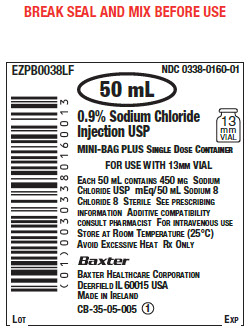
SODIUM CHLORIDE 900 mg/100mL Injection — NDC 0338-0166-01 (Billing 00338-0166-01)
This is a package of SODIUM CHLORIDE 900 mg/100mL Injection from Baxter Healthcare Corporation, marketed since Dec 1992 and currently FDA-listed. It is this product's only package size.
Other active recalls for Sodium Chloride (different manufacturers) — 6 · tap to view
Identity & classification
Regulatory identifiers FDA, NLM and CMS codes for this package
- RxCUI (RxNorm): 1807548
Where does this data come from?
- FDA openFDA NDC Directory · synced Oct 1, 2026
- FDA label on DailyMed · label index refreshed Oct 1, 2026
- RxNorm (NLM RxNav) · catalog refreshed Oct 1, 2026
- Medi-Span GPI (licensed)
- First Databank (licensed) · refreshed Oct 1, 2026
RxNorm drug class
This medicine belongs to the Sodium class.
Where does this data come from?
- RxClass (NLM) · catalog refreshed Oct 1, 2026
Clinical
- It depends on the product. IV forms replace fluid and salt, while injection diluents dissolve other drugs. Other forms are used for rinsing, nasal congestion and nasal care, or to...
- Follow the directions on your product. Many are used as often as needed by adults and children 4 and over. Do not share the bottle, because that can spread infection.
- Some people get fever, irritation or infection at the IV site, or too much fluid in the body. Tell your nurse right away if the IV site hurts or looks red.
- What side effects should I expect with IV sodium chloride?
Patient education
Supplement & herbal interactions
Some supplements/herbs that may interact with Sodium Chloride — tap one for details:
Where does this data come from?
- MedlinePlus (NLM) · refreshed Oct 1, 2026
- FDA label on DailyMed · label index refreshed Oct 1, 2026
Ask a licensed pharmacist directly — free, answered by our team.
Pricing
A drug doesn't have one price. Each row is a different public payment system, and none is what you'd pay at the counter — that depends on your insurance. The ⓘ on each row explains what it measures.
| Price system | Per each | Per package |
|---|---|---|
| Retail pharmacies payNADAC · weekly | Not in the retail survey — common for institutional, discontinued, or low-volume packs. | |
| Medicaid paysCMS SDUD · 12 mo | No recent Medicaid claims on file for this NDC — rare and low-volume NDCs are suppressed in the public data. | |
| Medicare drug plans payPart D · Q2 2026 | $0.0121 | $0.36 / 30 bags |
Where does this data come from?
- CMS NADAC weekly file
- CMS ASP pricing files · refreshed Sep 20, 2026
- CMS Medicaid State Drug Utilization Data · refreshed Oct 3, 2026
- CMS Part D plan pricing files · refreshed Sep 24, 2026
- VA National Acquisition Center price file
Packaging — all sizes for this product
| Package NDC | Description | Marketing start | Marketing end | Status |
|---|---|---|---|---|
| 00338-0166-01 You're viewing this Main listing | 30 BAG in 1 CARTON / 100 mL in 1 BAG | 2022-12-07 | — | Active |
Therapeutic equivalents
| Product | Labeler | Pack | NADAC/unit | TE | Status | Price vs. this |
|---|---|---|---|---|---|---|
| Sodium Chloride 900 mg/100mL 00409-7101-02 | Hospira, | 24 pouches | $0.021 | AP | Availability likely | — |
| Sodium Chloride 9 mg/mL 00264-1800-31 | B. | 50 ml | — | AP | FDA listed | — |
| Sodium Chloride 9 g/1000mL 00338-0049-01 | Baxter | 150 ml | — | — | Discontinued | — |
| Sodium Chloride 900 mg/100mL 00338-0162-01 | Baxter | 100 ml | — | AP | FDA listed | — |
| Sodium Chloride 900 mg/100mLthis 00338-0166-01 | Baxter | 100 ml | — | AP | FDA listed | — |
| Sodium Chloride 900 mg/100mL 00338-0186-04 | Baxter | 100 ml | — | AP | FDA listed | — |
| Sodium Chloride 900 mg/100mL 00338-0196-04 | Baxter | 100 ml | — | AP | FDA listed | — |
| Sodium Chloride 900 mg/100mL 00338-0553-11 | Baxter | 50 ml | — | AP | FDA listed | — |
| Sodium Chloride 900 mg/100mL 00338-9159-30 | Baxter | 100 ml | — | AP | FDA listed | — |
| Sodium Chloride 9 g/1000mL 00338-9661-60 | Baxter | 100 ml | — | — | FDA listed | — |
| Sodium Chloride 900 mg/100mL 00338-9662-35 | Baxter | 100 ml | — | AP | FDA listed | — |
| Sodium Chloride 9 g/1000mL 00338-9663-60 | Baxter | 100 ml | — | — | FDA listed | — |
| Sodium Chloride 9 mg/mL 00487-4301-05 | Nephron | 50 ml | — | AP | FDA listed | — |
| Sodium Chloride 900 mg/100mL 00990-7984-13 | ICU | 48 pouches | — | AP | FDA listed | — |
| Sodium chloride 9 mg/mL 17271-0701-02 | Becton | 50 ml | — | AP | FDA listed | — |
| Sodium chloride 9 mg/mL 17271-0771-02 | BECTON | 50 ml | — | AP | FDA listed | — |
| 0.9% Sodium Chloride 900 mg/100mL 51662-1520-01 | HF | 100 ml | — | AP | FDA listed | — |
| Sodium chloride 9 mg/mL 63323-0623-53 | Fresenius | 50 ml | — | AP | FDA listed | — |
| Sodium chloride 9 mg/mL 65219-0220-10 | Fresenius | 100 ml | — | AP | FDA listed | — |
| Sodium chloride 9 mg/mL 65219-0468-50 | Fresenius | 100 ml | — | AP | FDA listed | — |
| Sodium Chloride 9 g/1000mL 70512-0841-06 | SOLA | 50 ml | — | AP | FDA listed | — |
| Sodium Chloride 9 g/1000mL 76297-0001-01 | LABORATORIOS | 500 ml | — | AP | FDA listed | — |
| Sodium Chloride 9 g/1000mL 79672-0613-10 | Nextgen | 50 ml | — | AP | FDA listed | — |
| Sodium Chloride 9 g/1000mL 81826-0001-01 | CODAN | 50 ml | — | AP | FDA listed | — |
| Sodium Chloride 9 g/1000mL 84549-0049-48 | ProPharma | 100 ml | — | — | FDA listed | — |
| Isotonic Sodium Chloride .9 g/100mL 85184-0001-01 | HAVER | 100 ml | — | — | Discontinued | — |
| Sodium Chloride 900 mg/100mL 51662-1522-01 | HF | 500 ml | — | AP | FDA listed | — |
| Sodium Chloride 900 mg/100mL 46163-0300-10 | Fresenius | 1000 ml | — | AP | FDA listed | — |
| Sodium Chloride 900 mg/100mL 49230-0300-10 | Fresenius | 1000 ml | — | AP | FDA listed | — |
| Sodium Chloride 900 mg/100mL 00990-7983-02 | ICU | 24 pouches | — | AP | FDA listed | — |
Where does this data come from?
- FDA openFDA NDC Directory · synced Oct 1, 2026
- FDA Orange Book · refreshed Sep 3, 2026
- CMS NADAC weekly file
Availability & generic status
FDA-approved generic versions are listed, and recent pricing/market data suggests they may be available — see Therapeutic equivalents.
Where does this data come from?
- FDA Orange Book · refreshed Sep 3, 2026
Inactive Ingredients / Excipients
Inactive ingredients, also called excipients, are components of the drug product other than the active ingredient. They may include fillers, dyes, coatings, preservatives, flavors, or other formulation ingredients.
💡 Tap an ingredient (hover on desktop) to see what it is and why it’s used.
-
UNII 059QF0KO0R
Water is a liquid solvent that dissolves and mixes ingredients together in liquid medicines, syrups, and injections. It helps distribute the active drug evenly throughout the product.
1 inactive ingredient listed in the exact product block matched to this NDC.
Where does this data come from?
ingredient classCode="IACT" elements from the exact product block matched by this NDC. Label-section narrative from DailyMed / the openFDA label index is shown separately when available.- FDA label on DailyMed · label index refreshed Oct 1, 2026
- FDA openFDA NDC Directory · synced Oct 1, 2026
Inactive ingredient FAQ
Are inactive ingredients the same for every manufacturer?
Why might an inactive ingredient be missing?
Can inactive ingredients matter?
Manufacturer & labeler
Where does this data come from?
- FDA openFDA NDC Directory · synced Oct 1, 2026
- Drugs@FDA
Full prescribing information FDA SPL
🎯 Indications and Usage ▾
INDICATIONS AND USAGE 0.9% Sodium Chloride Injection, USP is indicated as a source of water and electrolytes and may also be used as diluent for reconstitution of a powdered or liquid (up to 10 mL) drug product packaged in a vial with a 13mm or 20mm closure.
⏱️ Dosage and Administration ▾
DOSAGE AND ADMINISTRATION Important Administration Instructions • 0.9 % Sodium Chloride Injection, USP is intended for intravenous administration using sterile equipment. • Do not connect flexible plastic containers in series in order to avoid air embolism due to possible residual air contained in the primary container. • Set the vent to the closed position on a vented intravenous administration set to prevent air embolism. • Use a dedicated line without any connections to avoid air embolism. • Do not pressurize intravenous solutions contained in flexible plastic containers to increase flow rates. • Prior to infusion, visually inspect the solution for particulate matter and discoloration.
The solution should be clear and there should be no precipitates. Do not administer unless solution is clear, and container is undamaged. Dosing Information The choice of product, dosage, volume, rate, and duration of administration is dependent upon the age, weight and clinical condition of the patient and concomitant therapy, and administration should be determined by a healthcare provider experienced in intravenous fluid therapy.
⛔ Contraindications ▾
CONTRAINDICATIONS None known.
⚠️ Warnings ▾
WARNINGS Hypersensitivity Hypersensitivity and infusion reactions, including hypotension, pyrexia, tremor, chills, urticaria, rash, and pruritus have been reported with 0.9% Sodium Chloride Injection, USP. Stop the infusion immediately if signs or symptoms of a hypersensitivity reaction develop, such as tachycardia, chest pain, dyspnea and flushing. Appropriate therapeutic countermeasures must be instituted as clinically indicated.
Electrolyte Imbalances Fluid Overload Depending on the volume and rate of infusion, and the patient’s underlying clinical condition, the intravenous administration of Sodium Chloride Injection, USP can cause fluid distrurbance such as overhydration/hypervolemia and congested states, including pulmonary congestion and edema. Avoid 0.9% Sodium Chloride Injection, USP in patients with or at risk for fluid and/or solute overloading. If use cannot be avoided, fluid balance, electrolyte concentrations, and acid base balance, as needed and especially during prolonged use.
Hyponatremia 0.9% Sodium Chloride Injection, USP may cause hyponatremia. Hyponatremia can lead to acute hyponatremic encephalopathy characterized by headache, nausea, seizures, lethargy, and vomiting. Patients with brain edema are at particular risk of severe, irreversible and life-threatening brain injury.
The risk of hospital-acquired hyponatremia is increased in patients with cardiac or pulmonary failure, and in patients with non-osmotic vasopressin release (including SIADH) treated with high volume of Sodium Chloride Injection, USP. The risk for hyponatremia is increased in pediatric patients, elderly patients, postoperative patients, in those with psychogenic polydipsia, and in patients treated with medications that increase the risk of hyponatremia (such as diuretics, certain antiepileptic and psychotropic medications).
See DRUG INTERACTIONS . Patients at increased risk for developing complications of hyponatremia such as hyponatremic encephalopathy, include pediatric patients, women (in particular pre-menopausal women), patients with hypoxemia, and patients with underlying central nervous system disease. Avoid 0.9% Sodium Chloride Injection, USP in patients with or at risk for hyponatremia.
If use cannot be avoided, monitor serum sodium concentrations. Rapid correction of hyponatremia is potentially dangerous with risk of serious neurologic complications. Brain adaptations reducing risk of cerebral edema make the brain vulnerable to injury when chronic hyponatremia is too rapidly corrected, which is known as osmotic demyelination syndrome (ODS).
To avoid complications, monitor serum sodium and chloride concentrations, fluid status, acid-base balance, and signs of neurologic complications. Hypernatremia Hypernatremia may occur with Sodium Chloride Injection, USP. Conditions that may increase the risk of hypernatremia, fluid overload and edema (central and peripheral), include patients with: primary hyperaldosteronism; secondary hyperaldosteronism associated with, for example, hypertension, congestive heart failure, liver disease (including cirrhosis), renal disease (including renal artery stenosis, nephrosclerosis); and pre-eclampsia.
Certain medications, such as corticosteroids or corticotropin, may also increase risk of sodium and fluid retention, see DRUG INTERACTIONS . Avoid 0.9% Sodium Chloride Injection, USP in patients with, or at risk for, hypernatremia. If use cannot be avoided, monitor serum sodium concentrations.
Rapid correction of hypernatremia is potentially dangerous with risk of serious neurologic complications. Excessively rapid correction of hypernatremia is also associated with a risk for serious neurologic complications such as osmotic demyelination syndrome (ODS) with risk of seizures and cerebral edema. For use only with a single dose powdered or liquid (up to 10 mL) drug vial with a 13mm or 20mm closure.
Do not administer unless drug is completely dissolved and drug vial is empty. Do not remove drug vial at an…
🤒 Adverse Reactions ▾
ADVERSE REACTIONS Post-Marketing Adverse Reactions The following adverse reactions have been identified during postapproval use of 0.9% Sodium Chloride Injection, USP. Because these reactions are reported voluntarily from a population of uncertain size, it is not always possible to reliably estimate their frequency or establish a causal relationship to drug exposure. The following adverse reactions have been reported in the post-marketing experience during use of 0.9% Sodium Chloride Injection, USP and include the following: Hypersensitivity reactions: hypersensitivity/infusion reactions, including hypotension, pyrexia, tremor, chills, urticaria, rash, and pruritus.
General disorders and administration site conditions: infusion site reactions, such as infusion site erythema, injection site streaking, burning sensation, and infusion site urticaria. Metabolism and nutrition disorders: hypernatremia, hyperchloremic metabolic acidosis, and hyponatremia, which may be symptomatic. Nervous System Disorders: Hyponatremic encephalopathy.
If an adverse reaction does occur, discontinue the infusion, evaluate the patient, institute appropriate therapeutic countermeasures and save the remainder of the fluid for examination if deemed necessary.
🔄 Drug Interactions ▾
Drug Interactions Other Products that Affect Fluid and/or Electrolyte Balance Administration of Sodium Chloride Injection, USP to patients treated concomitantly with drugs associated with sodium and fluid retention, may increase the risk of hypernatremia and volume overload. Avoid use of Sodium Chloride Injection, USP in patients receiving such products, such as corticosteroids or corticotropin. If use cannot be avoided, monitor serum electrolytes, fluid balance and acid-base balance.
Lithium Renal sodium and lithium clearance may be decreased during administration of Sodium Chloride Injection, USP. Monitor serum may result in increased lithium concentrations during concomitant use. Renal sodium and lithium clearance may be increased during administration of Sodium Chloride Injection, USP.
Monitor serum lithium concentrations during concomitant use. Other Drugs that Increase the Risk of Hyponatremia Administration of 0.9% Sodium Chloride Injection, USP in patients treated concomitantly with medications associated with hyponatremia may increase the risk of developing hyponatremia. Avoid use of 0.9% Sodium Chloride Injection, USP in patients receiving products, such as diuretics, and certain antiepileptic and psychotropic medications.
Drugs that increase the vasopressin effect reduce renal electrolyte free water excretion and may also increase the risk of hyponatremia following treatment with intravenous fluids. If use cannot be avoided, monitor serum sodium concentrations.
🤰 Pregnancy ▾
Pregnancy There are no adequate and well controlled studies with Sodium Chloride Injection, USP, in pregnant women and animal reproduction studies have not been conducted with this drug. Therefore, it is not known whether Sodium Chloride Injection, USP can cause fetal harm when administered to a pregnant woman. Sodium Chloride Injection, USP should be given during pregnancy only if the potential benefit justifies the potential risk to the fetus.
🧒 Pediatric Use ▾
Pediatric Use The use of Sodium Chloride Injection, USP in pediatric patients is based on clinical practice. (See DOSAGE AND ADMINISTRATION . ) Closely monitor plasma electrolyte concentrations in pediatric patients who may have impaired ability to regulate fluids and electrolytes. In very low birth weight infants, excessive or rapid administration of Sodium Chloride Injection, USP may result in increased serum osmolality and risk of intracerebral hemorrhage.
Children (including neonates and older children) are at increased risk of developing hyponatremia as well as for developing hyponatremic encephalopathy.
🧓 Geriatric Use ▾
Geriatric Use Geriatric patients are at increased risk of developing electrolyte imbalances. Sodium Chloride Injection, USP is known to be substantially excreted by the kidney, and the risk of toxic reactions to this drug may be greater in patients with impaired renal function. Therefore, dose selection for an elderly patient should be cautious, usually starting at the low end of the dosing range, reflecting the greater frequency of decreased hepatic, renal, or cardiac function, and of concomitant disease or other drug therapy.
Consider monitoring renal function in elderly patients.
🆘 Overdosage ▾
OVERDOSAGE Excessive administration of: • 0.9% Sodium Chloride Injection, USP can cause hypernatremia. • 0.9% Sodium Chloride Injection, USP can cause fluid overload (which can lead to pulmonary and/or peripheral edema). See WARNINGS and ADVERSE REACTIONS . When assessing an overdose, any additives in the solution must also be considered.
The effects of an overdose may require immediate medical attention and treatment. Interventions include discontinuation of Sodium Chloride Injection, USP administration, dose reduction, and other measures as indicated for the specific clinical constellation (e.g., monitoring of fluid balance, electrolyte concentrations and acid base balance).
🧬 Clinical Pharmacology ▾
CLINICAL PHARMACOLOGY Sodium Chloride Injection, USP has value as a source of water and electrolytes. It is capable of inducing diuresis depending on the clinical condition of the patient.
📦 How Supplied / Storage and Handling ▾
HOW SUPPLIED 0.9% Sodium Chloride Injection, USP is a sterile solution supplied in Mini-Bag Plus Containers. The product is available as single packs (1 unit per overpouch). Table 1 lists single pack presentation compatible with vials with a 13 mm closure, and Table 2 lists single pack presentation compatible with vials with a 20 mm closure.
Table 1. Presentations of 0.9% Sodium Chloride Injection Compatible with Vials with a 13 mm Closure Product Description Size Vial Adaptor Size Configuration Code NDC 0.9% Sodium Chloride Injection, USP 50 mL 13 mm single pack EZPB0038LF O338-0160-01 100 mL 13 mm single pack EZPB0039LF 0338-0162-01 Table 2. Presentations of 0.9% Sodium Chloride Injection Compatible with Vials with a 20 mm Closure Product Description Size Vial Adaptor Size Configuration Code NDC 0.9% Sodium Chloride Injection, USP 50 mL 20 mm single pack EZPB0042LF O338-0164-01 100 mL 20 mm single pack EZPB0043LF 0338-0166-01 Minimize exposure of 0.9% Sodium Chloride Injection to heat.
Avoid excessive heat. Store at room temperature (25°C (77°F)).
📋 Description ▾
DESCRIPTION 0.9% Sodium Chloride Injection, USP in the Mini-Bag Plus Container System is a sterile, nonpyrogenic solution for intravenous administration after admixture with a single dose powdered or liquid (up to 10 mL) drug vial. It contains no antimicrobial agents. The nominal pH is 5.0 (4.5 to 7.0).
Each 100 mL contains 900 mg of Sodium Chloride, USP (NaCl). The osmolarity is 308 mOsmol/L (calculated). Hydrochloric Acid, NF or Sodium Hydroxide, NF may be added for pH adjustment.
It contains 154 mEq/L sodium and 154 mEq/L chloride. The Mini-Bag Plus Container is a standard diluent container with an integral drug vial adaptor. It allows for drug admixture after connection to a single dose powdered or liquid (up to 10 mL) drug vial having a 13mm or 20mm closure .
A breakaway seal in the tube between the vial adaptor and the container is broken to allow transfer of the diluent into the vial and reconstitution of the drug. The Mini-Bag Plus product mechanically prohibits the transfer of contaminants into and out of the system during and after docking, minimizing environmental and personal exposure. The reconstituted drug is then transferred from the vial into the container diluent and mixed to result in an admixture for delivery to the patient.
The VIAFLEX Plastic Container is fabricated from a specially formulated polyvinyl chloride (PL 146 Plastic). Exposure to temperatures above 25°C/77°F during transport and storage will lead to minor losses in moisture content. Higher temperatures lead to greater losses.
It is unlikely that these minor losses will lead to clinically significant changes within the expiration period. The amount of water that can permeate from inside the container into the overwrap is insufficient to affect the solution significantly. Solutions in contact with the plastic container can leach out certain chemical components from the plastic in very small amounts.
However, biological testing was supportive of the safety of the plastic container materials.
Medicare Part D spend CMS · PART D · 2026 (Q1)
About this NDC listing & data coverage
What data is (and isn’t) available for this NDC — tap to expand
| NDC identity (package / product / labeler codes) | ✓ Available |
| Labeler | ✓ Available |
| Product & package description | ✓ Available |
| Marketing category & status | ✓ Available |
| Active ingredient / dosage form / route | ✓ Available |
| FDA label (SPL via DailyMed) | ✓ Available |
| Package photos | ✓ Available |
| Inactive ingredients (structured) | ✓ Available |
| NADAC pharmacy acquisition price (CMS) | — Not published for this NDC CMS publishes NADAC only for NDCs reported in its retail-pharmacy survey. |
| Orange Book / therapeutic-equivalence data | ✓ Available |
| HCPCS J-code billing crosswalk | — Not published for this NDC Most self-administered / retail products have no J-code — that is normal. |
| Medicaid utilization (CMS SDUD) | — Not published for this NDC CMS reports utilization only for NDCs with Medicaid claims above its privacy threshold. |