
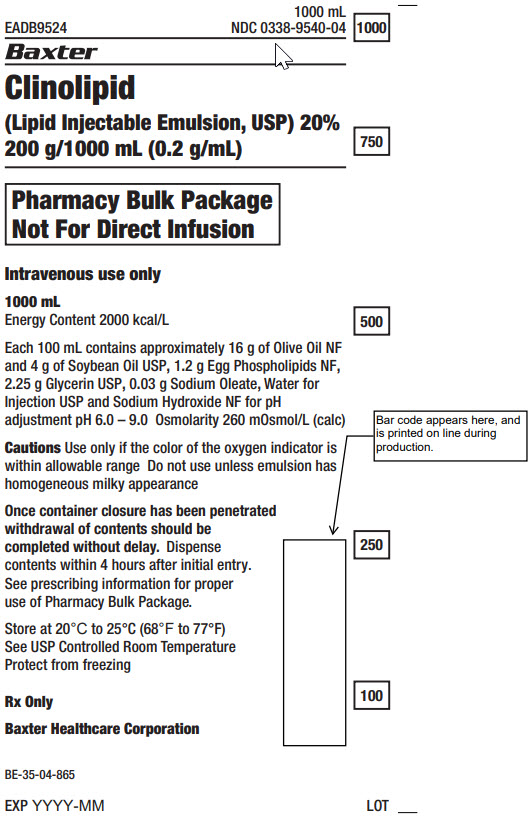
Clinolipid Olive Oil and Soybean 16 g/100mL; 4 g/100mL Injection, Emulsion — NDC 0338-9540-08 (Billing 00338-9540-08)
This is a package of Clinolipid Olive Oil and Soybean 16 g/100mL; 4 g/100mL Injection, Emulsion from Baxter Healthcare Corporation, marketed since Jan 2016 and currently FDA-listed. It is the main listing for this product, which comes in 4 package sizes.
NDC database record
One package, one record: these facts belong to NDC 0338-9540-08 alone.
- Record
- FDA NDC Directory package listing · Human prescription drug
- Code segments
- 0338 labeler · 9540 product · 08 package
- Package marketed since
- Jan 1, 2016
- Sample package
- No — commercial package
- Listing certified through
- Dec 31, 2027
- Barcode (UPC-A, from the NDC)
- 3 0338954008 3
- Medicaid fills, this package
- 4,730 prescriptions in the last four reported quarters
- FDA record last changed
- Jul 24, 2026
Identity & classification
Regulatory identifiers FDA, NLM and CMS codes for this package
Drug-database identifiers Medi-Span GPI and First Databank GCN / HICL / AHFS classification
- GSN (GCN sequence number): 058056
- GCN: 23372
- GPI-14 (Medi-Span): 80200010601620
- HICL (First Databank): 037112
- AHFS class code: 40:20.00.00
- RxCUI (RxNorm): 1986373
Where does this data come from?
- FDA openFDA NDC Directory · synced Oct 1, 2026
- FDA label on DailyMed · label index refreshed Oct 6, 2026
- RxNorm (NLM RxNav) · catalog refreshed Oct 1, 2026
- Medi-Span GPI (licensed)
- First Databank (licensed) · refreshed Oct 1, 2026
RxNorm drug class
This medicine belongs to the Lipid Emulsion class.
Where does this data come from?
- RxClass (NLM) · catalog refreshed Oct 1, 2026
Clinical
Patient education
Supplement & herbal interactions
Where does this data come from?
- MedlinePlus (NLM) · refreshed Oct 1, 2026
- FDA label on DailyMed · label index refreshed Oct 6, 2026
Ask a licensed pharmacist directly — free, answered by our team.
Pricing
A drug doesn't have one price. Each row is a different public payment system, and none is what you'd pay at the counter — that depends on your insurance. The ⓘ on each row explains what it measures.
| Price system | Per mL | Per package |
|---|---|---|
| Retail pharmacies payNADAC · weekly | Not in the retail survey — common for institutional, discontinued, or low-volume packs. | |
| Medicaid paysCMS SDUD · 12 mo | $0.1764 | $1,058.40 / 6000 ml |
| Medicare drug plans payPart D · Q2 2026 | $0.0845 | $507.00 / 6000 ml |
Where does this data come from?
- CMS NADAC weekly file
- CMS ASP pricing files · refreshed Sep 20, 2026
- CMS Medicaid State Drug Utilization Data · through Q1 2026
- CMS Part D plan pricing files · refreshed Sep 24, 2026
- VA National Acquisition Center price file
Packaging — all sizes for this product
| Package NDC | Description | Marketing start | Marketing end | Status |
|---|---|---|---|---|
| 00338-9540-05 0338-9540-05 | 15 BAG in 1 CARTON / 100 mL in 1 BAG | 2016-01-01 | — | Active |
| 00338-9540-06 0338-9540-06 | 10 BAG in 1 CARTON / 250 mL in 1 BAG | 2016-01-01 | — | Active |
| 00338-9540-07 0338-9540-07 | 12 BAG in 1 CARTON / 500 mL in 1 BAG | 2016-01-01 | — | Active |
| 00338-9540-08 You're viewing this Main listing | 6 BAG in 1 CARTON / 1000 mL in 1 BAG | 2016-01-01 | — | Active |
In Medicaid, this is the most-dispensed pack of this product — about 81% of fills over the last four reported quarters. See all packs ↓
Pack size FAQ
What quantity is in this package?
What NDC number is used to bill for this package of Clinolipid Olive Oil and Soybean 16 g/100mL; 4 g/100mL Injection, Emulsion?
Therapeutic equivalents
| Product | Labeler | Pack | NADAC/unit | TE | Status | Price vs. this |
|---|---|---|---|---|---|---|
| Clinolipid 16 g/100mL; 4 g/100mLthis 00338-9540-08 | Baxter | 1000 ml | — | — | FDA listed | — |
Where does this data come from?
- FDA openFDA NDC Directory · synced Oct 1, 2026
- FDA Orange Book · refreshed Oct 3, 2026
- CMS NADAC weekly file
Availability & generic status
We did not find an FDA-approved generic match for this exact strength, form and route. Patent/protection dates below may affect future generic timing.
Why the date isn’t exact: Generic timing can change because patents may be challenged, settled, licensed, added, removed, or worked around with a narrower label — and FDA approval does not always mean a pharmacy can get the generic today.
🛈 What do these terms mean?
- Patent
- Legal protection listed in the Orange Book that may delay generic approval or launch. Issued by the U.S. Patent & Trademark Office.
- Substance patent
- Covers the active drug molecule itself — the hardest to design around. A generic generally can’t launch until it expires.
- Formulation (product) patent
- Covers a specific formulation or dosage form. A generic can sometimes work around it with a different formulation.
- Method-of-use patent
- A patent covering one specific approved use of the drug — not necessarily the whole molecule. A generic can sometimes launch with a “skinny label” that carves out the protected use and keeps the others.
- Skinny label
- A generic label that omits a still-patented use when the FDA allows it — letting a generic reach the market for the unprotected uses.
- Exclusivity
- FDA-granted marketing protection, separate from patents — e.g. 5-yr new chemical entity, 7-yr orphan drug, or a +6-month pediatric extension.
- Paragraph IV
- A generic applicant’s formal challenge to a listed patent. It can potentially lead to earlier generic entry, but often involves litigation or a settlement.
- RLD / RS
- Reference Listed Drug — the brand product the FDA uses as the reference for generic applications. Reference Standard — the product the FDA expects generics to compare against in bioequivalence testing.
- TE / AB rating
- FDA therapeutic-equivalence rating. An AB rating generally means the FDA considers a generic therapeutically equivalent to — and substitutable for — the brand.
- LOE (loss of exclusivity)
- The latest patent or exclusivity currently listed — the loss-of-exclusivity / latest-listed-protection date shown on this page. Paragraph-IV challenges and settlements can move the real date earlier; FDA approval and a manufacturer’s decision to market can move it later.
Built from the FDA Orange Book. The bars above are scaled to each protection’s expiry; the red LOE marker is the last one to lapse.
| Code | What it grants | Expires |
|---|---|---|
| NPP | New Patient Population | Apr 24, 2027 |
Is there a generic version of CLINOLIPID 20% (200 GM/1000ML)?
The FDA approved a generic — why can’t I get it at my pharmacy yet?
Why do different websites show different generic release dates?
What does “FDA listed” mean?
What does a patent or protection date mean here?
What does “current Orange Book estimate” mean?
Can a generic come out before the last patent expires?
Can a generic come out after the listed dates?
What is the difference between patents and exclusivity?
Why are there multiple patent dates?
Where does this data come from?
- FDA Orange Book · refreshed Oct 3, 2026
Inactive Ingredients / Excipients
Inactive ingredients, also called excipients, are components of the drug product other than the active ingredient. They may include fillers, dyes, coatings, preservatives, flavors, or other formulation ingredients.
💡 Tap an ingredient (hover on desktop) to see what it is and why it’s used.
-
1.20 g / 100 mL
UNII 1Z74184RGV
Egg phospholipids are naturally derived fats from eggs that help mix oil and water-based ingredients together. They work as emulsifiers in medicines, keeping the formula stable and uniform.
-
2.25 g / 100 mL
UNII PDC6A3C0OX
Glycerin is a clear, thick liquid derived from plant oils or fats. It acts as a humectant to retain moisture, a sweetener, and a solvent in medications.
-
0.03 g / 100 mL
UNII 399SL044HN
Sodium oleate is a salt derived from oleic acid, a natural fatty acid. In medicines, it acts as an emulsifier and surfactant, helping mix oil and water ingredients together and improving how the drug dissolves and spreads in the body.
3 inactive ingredients listed in the exact product block matched to this NDC.
Where does this data come from?
ingredient classCode="IACT" elements from the exact product block matched by this NDC. Label-section narrative from DailyMed / the openFDA label index is shown separately when available.- FDA label on DailyMed · label index refreshed Oct 6, 2026
- FDA openFDA NDC Directory · synced Oct 1, 2026
Inactive ingredient FAQ
Are inactive ingredients the same for every manufacturer?
Why might an inactive ingredient be missing?
Can inactive ingredients matter?
Manufacturer & labeler
More NDCs from Baxter Healthcare Corporation labeler code 00338
- Micafungin in Sodium Chloride 100 mg/100mL Injection NDC 0338-9053-12
- Micafungin in Sodium Chloride 150 mg/150mL Injection NDC 0338-9055-10
- Dextrose 2.5 g/50mL Injection NDC 0338-9143-30
- Dextrose 5 g/100mL Injection NDC 0338-9147-30
- SODIUM CHLORIDE 450 mg/50mL Injection NDC 0338-9151-30
- SODIUM CHLORIDE 900 mg/100mL Injection NDC 0338-9159-30
- Metronidazole 500 mg/100mL Injection, Solution NDC 0338-9541-24
- SODIUM CHLORIDE 9 g/1000mL Injection, Solution NDC 0338-9543-01
- clindamycin phosphate 300 mg/50mL Injection, Solution NDC 0338-9545-24
- clindamycin phosphate 600 mg/50mL Injection, Solution NDC 0338-9549-24
- clindamycin phosphate 900 mg/50mL Injection, Solution NDC 0338-9553-24
- DEXMEDETOMIDINE HYDROCHLORIDE 200 ug/50mL Injection NDC 0338-9555-24
Where does this data come from?
- FDA openFDA NDC Directory · synced Oct 1, 2026
- Drugs@FDA
Full prescribing information FDA SPL
🎯 Indications and Usage ▾
1 INDICATIONS AND USAGE CLINOLIPID is indicated in adults and pediatric patients, including term and preterm neonates, as a source of calories and essential fatty acids for parenteral nutrition (PN) when oral or enteral nutrition is not possible, insufficient, or contraindicated. CLINOLIPID is indicated in adults and pediatric patients, including term and preterm neonates, as a source of calories and essential fatty acids for parenteral nutrition (PN) when oral or enteral nutrition is not possible, insufficient, or contraindicated.
( 1 )
⏱️ Dosage and Administration ▾
2 DOSAGE AND ADMINISTRATION • Use a 1.2 micron in-line filter when administering to a patient. ( 2.1 ) • For infusion into a central or peripheral vein. ( 2.2 ) • See full prescribing information for administration and admixing instructions.
( 2.2 , 2.3 ) • CLINOLIPID Pharmacy Bulk Package is only indicated for use in pharmacy admixture programs for the preparation of three-in-one or total nutrition admixtures. ( 2.2 ) • Protect the admixed parenteral solution from light. ( 2.3 ) • Recommended dosage depends on age, energy expenditure, clinical status, body weight, tolerance, ability to metabolize and eliminate lipids, and consideration of additional energy given to the patient.
( 2.4 ) • For information on the age-appropriate infusion rate, see the full prescribing information. ( 2.4 , 5.1 ) Age Initial Dose Maximum Dose Birth to 2 years of age (including preterm and term neonates) 0.5 to 1 g/kg/day 3 g/kg/day Pediatric patients 2 to less than 12 years of age 1 to 2 g/kg/day 3 g/kg/day Pediatric patients 12 to 17 years of age 1 g/kg/day 3 g/kg/day Adults 1 to 1.5 g/kg/day 2.5 g/kg/day
2.1Use of an Inline Filter When Administering CLINOLIPID to a Patient Fragments of the administration port membrane could be dislodged into the bag after spiking. Use a 1.2 micron in-line filter during administration of CLINOLIPID (alone or as part of an admixture) to remove particulate matter or micro-precipitate contamination during administration of a lipid injection (alone or as part of an admixture). Particulate matter greater than 5 microns has the capability of obstructing blood flow through capillaries, which could lead to embolism and vascular occlusion.
Do not use filters of less than 1.2 micron pore size with lipid emulsions.
2.2Important Administration Instructions Before opening the overwrap, check the color of the oxygen indicator. Compare the color of the indicator to the reference color printed next to the OK symbol depicted in the printed area of the indicator label. Do not use the product if the color of the oxygen absorber/indicator does not correspond to the reference color printed next to the OK symbol.
After opening the bag, use the contents immediately and discard unused portion. Visually inspect that the emulsion is a homogeneous liquid with a milky appearance. Inspect for particulate matter and discoloration prior to administration, whenever solution and container permit.
Do not exceed the recommended maximum infusion rate (0.75 mL/kg/hour for pediatric patients and 0.5 mL/kg/hour for adults) [see Dosage and Administration (2.4 ) and Warnings and Precautions (5.1) ] . When Administering CLINOLIPID to a Patient : Do not connect flexible bags in series to avoid air embolism due to possible residual gas contained in the primary bag. Air embolism can result if residual gas in the bag is not fully evacuated prior to administration if the flexible bag is pressurized to increase flow rates.
Do not use vented administration sets with the vent in the open position. This can result in air embolism. If CLINOLIPID is mixed with dextrose and/or amino acid solutions, check the compatibility before administration by inspecting the mixture closely for the presence of precipitates.
Formation of precipitates could result in vascular occlusion. CLINOLIPID can be administered via central or peripheral vein. When administered with dextrose and amino acids, the choice of a central or peripheral venous route should depend on the osmolarity of the final infusate.
Do not use administration sets and lines that contain di-2-ethylhexyl phthalate (DEHP). Use only a 1.2 micron pore size in-line filter to administer CLINOLIPID. DO NOT use any size less than 1.2 micron pore size in-line filter [see Dosage and Administration (2.1) ] .
CLINOLIPID 100 mL, 250 mL and 500 mL single-dose Flexible Containers: • After removing the overpouch, infuse immediately. If not used immediately, the product should be stored for no longer than 24 hours at no more than… [Excerpted — this section continues on DailyMed.]
💊 Dosage Forms and Strengths ▾
3 DOSAGE FORMS AND STRENGTHS CLINOLIPID is a sterile, homogenous, white, milky, lipid injectable emulsion supplied as: • 20% (20 g/100 mL)(0.2g/mL) of lipid in 100 mL single-dose Flexible Container • 20% (50 g/250 mL)(0.2g/mL) of lipid in 250 mL single-dose Flexible Container • 20% (100 g/500 mL)(0.2g/mL) of lipid in 500 mL single-dose Flexible Container • 20% (200 g/1,000 mL)(0.2g/mL) of lipid in 1,000 mL Pharmacy Bulk Package Injectable emulsion: • 20% (20 g/100 mL) (0.2 g/mL) of lipid in 100 mL single-dose flexible container ( 3 ) • 20% (50 g/250 mL) (0.2 g/mL) of lipid in 250 mL single-dose flexible container ( 3 ) • 20% (100 g/500 mL) (0.2 g/mL) of lipid in 500 mL single-dose flexible container ( 3 ) • 20% (200 g/1,000 mL) (0.2 g/mL) of lipid in 1,000 mL Pharmacy Bulk Package ( 3 )
⛔ Contraindications ▾
4 CONTRAINDICATIONS The use of CLINOLIPID is contraindicated in patients with the following: • Known hypersensitivity to egg, soybean, peanut or to any of the active or inactive ingredients in CLINOLIPID [see Warnings and Precautions (5.3) ] . • Severe disorders of lipid metabolism characterized by hypertriglyceridemia (serum triglyceride >1,000 mg/dL) [see Warnings and Precautions (5.7) ] . • Known hypersensitivity to egg, soybean, peanut, or any of the active or inactive ingredients. ( 4 ) • Severe disorders of lipid metabolism characterized by hypertriglyceridemia (serum triglycerides >1,000 mg/dL).
( 4 , 5.7 )
⚠️ Warnings and Cautions ▾
5 WARNINGS AND PRECAUTIONS • Clinical Decompensation with Rapid Infusion of Intravenous Lipid Emulsion in Neonates and Infants: Acute respiratory distress, metabolic acidosis, and death after rapid infusion of intravenous lipid emulsions have been reported. ( 5.1 , 8.4 ) • Parenteral Nutrition-Associated Liver Disease : Increased risk in patients who receive parenteral nutrition for greater than 2 weeks, especially preterm neonates. Monitor liver tests: if abnormalities occur, consider discontinuation or dosage reduction.
( 5.2 , 8.4 ) • Hypersensitivity Reactions : Monitor for signs or symptoms. Discontinue infusion if reactions occur. ( 5.3 ) • Risk of Infections, Fat Overload Syndrome, Refeeding Syndrome, Hypertriglyceridemia, and Essential Fatty Acid Deficiency : Monitor for signs and symptoms; monitor laboratory parameters.
( 5.4 , 5.5 , 5.6 , 5.7 , 5.9 ) • Aluminum Toxicity : Increased risk in patients with renal impairment, including preterm neonates. ( 5.8 , 8.4 )
5.1Clinical Decompensation with Rapid Infusion of Intravenous Lipid Emulsion in Neonates and Infants In the postmarketing setting, serious adverse reactions including acute respiratory distress, metabolic acidosis, and death have been reported in neonates and infants after rapid infusion of intravenous lipid emulsions. Hypertriglyceridemia was commonly reported. Strictly adhere to the recommended total daily dosage; the hourly infusion rate should not exceed 0.75 mL/kg/hour [see Dosage and Administration (2.4) ] .
Preterm and small for gestational age infants have poor clearance of intravenous lipid emulsion and increased free fatty acid plasma levels following lipid emulsion infusion. The risk due to poor lipid clearance should be considered when administering intravenous lipid emulsions. Carefully monitor the infant’s ability to eliminate the infused lipids from the circulation (e.g., measure serum triglycerides and/or plasma free fatty acid levels).
If signs of poor clearance of lipids from the circulation occur, stop the infusion and initiate a medical evaluation [see Warnings and Precautions (5.5 , 5.7 ) and Overdosage (10) ] .
5.2Parenteral Nutrition Associated Liver Disease and Other Hepatobiliary Disorders Risk of Parenteral Nutrition-Associated Liver Disease Parenteral nutrition-associated liver disease (PNALD), also referred to as intestinal failure-associated liver disease (IFALD), can present as cholestasis or hepatic steatosis, and may progress to steatohepatitis with fibrosis and cirrhosis (possibly leading to chronic hepatic failure). The etiology of PNALD is multifactorial; however, intravenously administered phytosterols (plant sterols) contained in plant-derived lipid emulsions, including CLINOLIPID, have been associated with development of PNALD.
Monitor liver tests in patients treated with CLINOLIPID and consider discontinuation or dosage reduction if abnormalities occur. Other Hepatobiliary Disorders Hepatobiliary disorders including cholecystitis and cholelithiasis have developed in some PN-treated patients without preexisting liver disease. Monitor liver tests when administering CLINOLIPID.
Patients developing signs of hepatobiliary disorders should be assessed early to determine whether these conditions are related to CLINOLIPID use.
5.3Hypersensitivity Reactions CLINOLIPID contains soybean oil and egg phospholipids, which may cause hypersensitivity reactions. Cross reactions have been observed between soybean and peanut. In postmarketing experience, anaphylaxis has been reported following CLINOLIPID administration [see Adverse Reactions (6.2 )] .
CLINOLIPID is contraindicated in patients with known hypersensitivity to egg, soybean, peanut, or any of the active or inactive ingredients in CLINOLIPID [see Contraindications (4)]. If a hypersensitivity reaction occurs, stop infusion of CLINOLIPID immediately and initiate appropriate treatment and supportive measures.
5.4Infections Lipid emulsions, such as CLINOLIPID, can support microb… [Excerpted — this section continues on DailyMed.]
🤒 Adverse Reactions ▾
6 ADVERSE REACTIONS The following clinically significant adverse reactions are described elsewhere in the labeling: • Clinical Decompensation with Rapid Infusion of Intravenous Lipid Emulsion in Neonates and Infants [see Warnings and Precautions (5.1) ] • Parenteral Nutrition-Associated Liver Disease and Other Hepatobiliary Disorders [see Warnings and Precautions (5.2)] • Hypersensitivity reactions [see Warnings and Precautions (5.3) ] • Infections [see Warnings and Precautions (5.4) ] • Fat overload syndrome [see Warnings and Precautions (5.5) ] • Refeeding syndrome [see Warnings and Precautions (5.6) ] • Hypertriglyceridemia [see Warnings and Precautions (5.7) ] • Aluminum toxicity [see Warnings and Precautions (5.8) ] • Essential Fatty Acid Deficiency [see Warnings and Precautions (5.9) ] Most common (≥5%) adverse drug reactions from clinical trials in adults were nausea and vomiting, hyperlipidemia, hyperglycemia, hypoproteinemia, and abnormal liver function tests.
Most common (≥5%) adverse reactions from clinical trials in pediatric patients were hyperbilirubinemia, patent ductus arteriosus, anemia, gastroesophageal reflux disease, bradycardia, feeding intolerance, neonatal intraventricular hemorrhage, increased alkaline phosphatase, atrial septal defect, hyponatremia, sepsis, and infantile apnea. ( 6.1 ) To report SUSPECTED ADVERSE REACTIONS, contact Baxter Healthcare at 1-866-888-2472 or FDA at 1-800-FDA-1088 or www.fda.gov/medwatch.
6.1Clinical Trials Experience Because clinical trials are conducted under widely varying conditions, adverse reaction rates observed in the clinical trials of a drug cannot be directly compared to rates in the clinical trials of another drug and may not reflect the rates observed in practice. The CLINOLIPID trials had small sample sizes and patients had a variety of underlying medical conditions both between different trials and within the individual trials. Patients had gastrointestinal diseases/dysfunction or were recovering from gastrointestinal or other surgeries, trauma, burns, or were afflicted by other chronic illness.
Adult Trials Commonly observed adverse reactions in 261 adult patients who received CLINOLIPID were nausea and vomiting, hyperlipidemia, hyperglycemia, hypoproteinemia, and abnormal liver function tests and occurred in 2 to 10 % of patients. The largest clinical trial in adult patients (Study 1) enrolled 48 subjects with different underlying diagnoses. Study 2 was a randomized, open label multicenter study that enrolled 22 subjects, aged 32-81 years, who required long-term parenteral nutrition.
The most common adverse reactions in Study 1 and Study 2 were infectious complications (urinary tract infection, septicemia, and fever of unknown origin), treatment emergent abnormalities on liver/gallbladder ultrasound and abnormalities of serum chemistries, principally, hepatic function tests. Adverse reactions reported with other intravenous lipid emulsions include hyperlipidemia, hypercoagulability, thrombophlebitis, and thrombocytopenia. Adverse reactions reported in long-term use with other intravenous lipid emulsions include hepatomegaly, jaundice due to central lobular cholestasis, splenomegaly, thrombocytopenia, leukopenia, abnormalities in liver function tests, brown pigmentation of the liver and overloading syndrome (focal seizures, fever, leukocytosis, hepatomegaly, splenomegaly, and shock).
Pediatric Trials The safety of CLINOLIPID in pediatric patients was evaluated in Studies 3, 4, 5, and 6 [see Clinical Studies (14.2) ] . In Study 3, EFAD was defined by calculating the Holman index (the triene [Mead acid] to tetraene [arachidonic acid] ratio; T:T ratio > 0.4). Although no patient developed EFAD, one CLINOLIPID-treated patient who had a T:T ratio that increased from < 0.2 at baseline to > 0.2 at end of study treatment was considered at risk for EFAD.
This patient’s arachidonic and linoleic acid levels remained within the normal range. No soybean oil lipid emulsio… [Excerpted — this section continues on DailyMed.]
🔄 Drug Interactions ▾
7 DRUG INTERACTIONS No drug interaction studies have been performed with CLINOLIPID. Olive and soybean oils have a natural content of Vitamin K 1 that may counteract the anticoagulant activity of coumadin derivatives, including warfarin. The anticoagulant activity of coumarin derivatives, including warfarin, may be counteracted. ( 7 )
👥 Use in Specific Populations ▾
8 USE IN SPECIFIC POPULATIONS
8.1Pregnancy Risk Summary Administration of the recommended dose of CLINOLIPID is not expected to cause major defects, miscarriage, or other adverse maternal or fetal outcomes. No animal reproduction studies have been conducted with lipid injectable emulsion. There are clinical considerations if CLINOLIPID is used in pregnant women [see Clinical Considerations ] .
The estimated background risk of major birth defects and miscarriage for the indicated population are unknown. All pregnancies have a background risk of birth defect, loss, or other adverse outcomes. In the U.S. general population, the estimated background risk of major birth defects and miscarriage in clinically recognized pregnancies is 2 to 4% and 15 to 20%, respectively.
Clinical Considerations Disease-Associated Maternal and/or Embryo-Fetal Risk: Severe malnutrition in a pregnant woman is associated with preterm delivery, low birth weight, intrauterine growth restriction, congenital malformations and perinatal mortality. Parenteral nutrition should be considered if a pregnant woman’s nutritional requirements cannot be fulfilled by oral or enteral intake. It is not known whether the administration of CLINOLIPID to pregnant women provides adequate essential fatty acids to the developing fetus.
8.2Lactation Risk Summary There are no data available to assess the presence of CLINOLIPID and/or its active metabolite(s) in human milk, the effects on the breastfed child or the effects on milk production. The developmental and health benefits of breastfeeding should be considered along with the mother’s clinical need for CLINOLIPID and any potential adverse effects on the breastfed child from CLINOLIPID or from the underlying maternal condition.
8.4Pediatric Use The safety and effectiveness of CLINOLIPID have been established as a source of calories and essential fatty acids for PN in pediatric patients, including term and preterm neonates, when oral or enteral nutrition is not possible, insufficient, or contraindicated. Use of CLINOLIPID in pediatric patients is supported by evidence from four studies that enrolled pediatric patients, including preterm and term neonates, and additional evidence from clinical studies in adults. Use of CLINOLIPID in older pediatric patients is supported by evidence from two studies in pediatric patients up to 9 years of age treated for a median of 15 and 56 days, respectively, with additional evidence from clinical studies in adults [see Clinical Studies (14.2) ] .
No clinically significant cases of EFAD were observed in short term pediatric clinical studies. However, one premature neonate in study 3 became at risk for EFAD after 14 days of treatment based on a Holman Index increase above 0.2. This patient’s arachidonic and linoleic acid levels remained within the normal range [see Adverse Reactions (6.1) ] .
Monitor pediatric patients for laboratory evidence of EFAD, including fatty acid profile (i.e., arachidonic acid) because they may be particularly vulnerable to neurologic complications if adequate amounts of essential fatty acids are not provided [see Warnings and Precautions (5.9) ] . In the postmarketing setting, clinical decompensation with rapid infusion of intravenous lipid emulsion in neonates and infants, sometimes fatal, has been reported [see Warnings and Precautions (5.1) ] . Because of immature renal function, preterm infants receiving prolonged treatment with CLINOLIPID may be at risk for aluminum toxicity [see Warnings and Precautions (5.8) ] .
8.5Geriatric Use Of the total number of subjects in clinical studies of CLINOLIPID, 21% were 65 and over, while 10% were 75 and over. No overall differences in safety or effectiveness were observed between these subjects and younger subjects, and other reported clinical experience has not identified differences in responses between the elderly and younger patients, but greater sensitivity of some older individuals cannot be ruled out.
🤰 Pregnancy ▾
8.1Pregnancy Risk Summary Administration of the recommended dose of CLINOLIPID is not expected to cause major defects, miscarriage, or other adverse maternal or fetal outcomes. No animal reproduction studies have been conducted with lipid injectable emulsion. There are clinical considerations if CLINOLIPID is used in pregnant women [see Clinical Considerations ] .
The estimated background risk of major birth defects and miscarriage for the indicated population are unknown. All pregnancies have a background risk of birth defect, loss, or other adverse outcomes. In the U.S. general population, the estimated background risk of major birth defects and miscarriage in clinically recognized pregnancies is 2 to 4% and 15 to 20%, respectively.
Clinical Considerations Disease-Associated Maternal and/or Embryo-Fetal Risk: Severe malnutrition in a pregnant woman is associated with preterm delivery, low birth weight, intrauterine growth restriction, congenital malformations and perinatal mortality. Parenteral nutrition should be considered if a pregnant woman’s nutritional requirements cannot be fulfilled by oral or enteral intake. It is not known whether the administration of CLINOLIPID to pregnant women provides adequate essential fatty acids to the developing fetus.
🧒 Pediatric Use ▾
8.4Pediatric Use The safety and effectiveness of CLINOLIPID have been established as a source of calories and essential fatty acids for PN in pediatric patients, including term and preterm neonates, when oral or enteral nutrition is not possible, insufficient, or contraindicated. Use of CLINOLIPID in pediatric patients is supported by evidence from four studies that enrolled pediatric patients, including preterm and term neonates, and additional evidence from clinical studies in adults. Use of CLINOLIPID in older pediatric patients is supported by evidence from two studies in pediatric patients up to 9 years of age treated for a median of 15 and 56 days, respectively, with additional evidence from clinical studies in adults [see Clinical Studies (14.2) ] .
No clinically significant cases of EFAD were observed in short term pediatric clinical studies. However, one premature neonate in study 3 became at risk for EFAD after 14 days of treatment based on a Holman Index increase above 0.2. This patient’s arachidonic and linoleic acid levels remained within the normal range [see Adverse Reactions (6.1) ] .
Monitor pediatric patients for laboratory evidence of EFAD, including fatty acid profile (i.e., arachidonic acid) because they may be particularly vulnerable to neurologic complications if adequate amounts of essential fatty acids are not provided [see Warnings and Precautions (5.9) ] . In the postmarketing setting, clinical decompensation with rapid infusion of intravenous lipid emulsion in neonates and infants, sometimes fatal, has been reported [see Warnings and Precautions (5.1) ] . Because of immature renal function, preterm infants receiving prolonged treatment with CLINOLIPID may be at risk for aluminum toxicity [see Warnings and Precautions (5.8) ] .
🧓 Geriatric Use ▾
8.5Geriatric Use Of the total number of subjects in clinical studies of CLINOLIPID, 21% were 65 and over, while 10% were 75 and over. No overall differences in safety or effectiveness were observed between these subjects and younger subjects, and other reported clinical experience has not identified differences in responses between the elderly and younger patients, but greater sensitivity of some older individuals cannot be ruled out.
🆘 Overdosage ▾
10 OVERDOSAGE In the event of overdose, serious adverse reactions may result [see Warnings and Precautions (5.1 , 5.5 )] . Stop the infusion to allow lipids to clear from serum. The effects are usually reversible after the lipid infusion is stopped. If medically appropriate, further intervention may be indicated. The lipid administered and fatty acids produced are not dialyzable.
🧬 Clinical Pharmacology ▾
12 CLINICAL PHARMACOLOGY CLINOLIPID administered intravenously provides biologically utilizable source of calories and essential fatty acids.
12.1Mechanism of Action Fatty acids serve as an important substrate for energy production. The most common mechanism of action for energy production derived from fatty acid metabolism is beta oxidation. Fatty acids are important for membrane structure and function, precursors for bioactive molecules (such as prostaglandins), and as regulators of gene expression.
12.2Pharmacodynamics Infused essential fatty acids are synthesized into higher derivative fatty acids. Olive oil contains significant amounts of alpha-tocopherol that contributes to Vitamin E status.
12.3Pharmacokinetics Metabolism and Excretion The fatty acids, phospholipids, and glycerol found in lipid emulsions are metabolized by cells to carbon dioxide and water. The metabolism of these substances results in the generation of energy in the form of adenosine triphosphate (ATP). Some fatty acids are stored in the body in fat tissue, cell membranes, or as intracellular triglycerides.
There is constant turn-over of these tissues, with the result that the lipid components are eventually metabolized to carbon dioxide and water. Carbon dioxide is expired through the lungs. Water is excreted through the kidneys or lost through evaporation/expiration through the skin, lungs, and other tissue surfaces.
Some lipids (i.e., phospholipids, cholesterol, and bile acids) are excreted through the biliary system.
🧬 Mechanism of Action ▾
12.1Mechanism of Action Fatty acids serve as an important substrate for energy production. The most common mechanism of action for energy production derived from fatty acid metabolism is beta oxidation. Fatty acids are important for membrane structure and function, precursors for bioactive molecules (such as prostaglandins), and as regulators of gene expression.
📦 How Supplied / Storage and Handling ▾
16 HOW SUPPLIED/STORAGE AND HANDLING CLINOLIPID is a sterile, white, milky homogenous lipid injectable emulsion supplied in CLARITY polyolefin Flexible Containers as follows: Strengths Container Size Product Code NDC Number (1 Bag) NDC Number (Shelf Pack) 20% (20 g/100 mL) (0.2 g/mL) 100 mL EADB9520 0338-9540-01 (single-dose Flexible Container) 0338-9540-05 (15 pack) 20% (50 g/250 mL) (0.2 g/mL) 250 mL EADB9521 0338-9540-02 (single-dose Flexible Container) 0338-9540-06 (10 pack) 20% (100 g/500 mL) (0.2 g/mL) 500 mL EADB9523 0338-9540-03 (single-dose Flexible Container) 0338-9540-07 (12 pack) 20% (200 g/1,000 mL) (0.2 g/mL) 1,000 mL EADB9524 0338-9540-04 (Pharmacy Bulk Package bag) 0338-9540-08 (6 pack) The CLARITY Container is a lipid-compatible plastic container (PL 2401-1).
The bag is packaged in an oxygen barrier overpouch, which contains an oxygen absorber / oxygen indicator sachet. CLINOLIPID should be stored at 20°C to 25°C (68°F to 77°F). Excursion permitted between 15°C to 30 °C (59°F to 86°F).
See USP Controlled Room Temperature. Protect from freezing. Avoid excessive heat.
Store in overpouch until ready to use. CLINOLIPID 100 mL, 250 mL and 500 mL single-dose Flexible Containers : After removing the overpouch, infuse immediately. If not used immediately, the product should be stored for no longer than 24 hours at not more than 25°C (77°F) [ See Dosage and Administration (2.2) ].
CLINOLIPID 1,000 mL Pharmacy Bulk Package : Use the pharmacy bulk package immediately for admixing after removal from overpouch. If not used immediately, the product should be stored for no longer than 24 hours at not more than 25°C (77°F) [ see Dosage and Administration (2.2) ].
📋 Description ▾
11 DESCRIPTION CLINOLIPID lipid injectable emulsion, USP is a sterile, non-pyrogenic, homogenous, white, milky lipid emulsion for intravenous infusion. The lipid content of CLINOLIPID is 0.2 g/mL and comprises a mixture of refined olive oil and refined soybean oil in an approximate ratio of 4:1 (olive:soy). The mean concentration of linoleic acid (an omega-6 essential fatty acid) is 35.8 mg/mL (range 27.6 to 44.0 mg/mL) and α-linolenic acid (an omega-3 essential fatty acid) is 4.7 mg/mL (range 1.0 to 8.4 mg/mL).
The phospholipids provide 470 milligrams or 15 mmol of phosphorus per liter. The total energy content, including fat, phospholipids and glycerin is 2000 kcal/L. Each 100 mL of CLINOLIPID 20% contains approximately 16 g of Olive Oil NF and 4 g of Soybean Oil USP, 1.2 g Egg Phospholipids NF, 2.25 g Glycerin USP, 0.03 g Sodium Oleate, and Water for Injection USP.
Sodium Hydroxide NF for pH adjustment, pH: 6.0 to 9.0. The olive and soybean oils are refined natural products consisting of a mixture of neutral triglycerides of predominantly unsaturated fatty acids with the following structure: The major component fatty acids are linoleic (13.8 to 22.0%), oleic (44.3 to 79.5%), palmitic (7.6 to 19.3%), linolenic (0.5 to 4.2%), palmitoleic (0.0 to 3.2%) and stearic (0.7 to 5.0%). These fatty acids have the following chemical and structural formulas: CLINOLIPID has an osmolality of approximately 340 mOsmol/kg water (which represents an osmolarity of 260 mOsmol/liter of emulsion).
CLINOLIPID contains no more than 25 mcg/L of aluminum. Structural Formula 1 Structural Formula 2
💬 Information for Patients ▾
17 PATIENT COUNSELING INFORMATION When initiating CLINOLIPID administration, discuss the following information with the patient or caregiver: Parenteral Nutrition-Associated Liver Disease and Other Hepatobiliary Disorders Inform patients and caregivers that use of parenteral nutrition may result in parenteral nutrition-associated liver disease and/or other hepatobiliary disorders [see Warnings and Precautions (5.2) ]. Hypersensitivity Reactions Inform patients and caregivers that CLINOLIPID may cause hypersensitivity reactions, including anaphylaxis.
If CLINOLIPID is infused at home, instruct patients or caregivers to stop the infusion of CLINOLIPID immediately and seek medical attention if they experience signs or symptoms of a hypersensitivity reaction, such as rapid or weak heartbeat, feeling faint, difficulty in breathing or swallowing, vomiting, nausea, headache, sweating, dizziness, hives, rash, itching, flushing dizziness, fever, or chills [see Warnings and Precautions (5.3) ]. Infections Inform patients and caregivers that patients who receive CLINOLIPID are at risk of infection.
If CLINOLIPID is infused at home, instruct patients or caregivers to ensure aseptic techniques are used for the preparation and administration of CLINOLIPID and to monitor for signs and symptoms of infection [see Warnings and Precautions (5.4) ]. Fat Overload Syndrome Inform patients and caregivers that fat overload syndrome has been reported with the use of intravenous lipid emulsions. If CLINOLIPID is infused at home, instruct patients or caregivers to stop CLINOLIPID if signs or symptoms of fat overload syndrome occur [see Warnings and Precautions (5.5) ].
Refeeding Syndrome If the patient is severely malnourished, inform patients and caregivers that administering parenteral nutrition including CLINOLIPID may result in refeeding syndrome [see Warnings and Precautions (5.6) ]. Hypertriglyceridemia Inform patients and caregivers about the risks of hypertriglyceridemia with CLINOLIPID use [see Warnings and Precautions (5.7) ] . Aluminum Toxicity Inform patients and caregivers that prolonged PN administration in patients with renal impairment, including preterm neonates, may result in aluminum reaching toxic levels associated with central nervous system and bone toxicity [see Warnings and Precautions (5.8) ].
Preparation and Administration Instructions If it is acceptable for a patient or caregiver to administer CLINOLIPID at home, then provide recommendations on how to prepare, add compatible additives (when appropriate), administer, and store CLINOLIPID [see Dosage and Administration (2.1 , 2.2 )].
🧬 Pharmacokinetics ▾
12.3Pharmacokinetics Metabolism and Excretion The fatty acids, phospholipids, and glycerol found in lipid emulsions are metabolized by cells to carbon dioxide and water. The metabolism of these substances results in the generation of energy in the form of adenosine triphosphate (ATP). Some fatty acids are stored in the body in fat tissue, cell membranes, or as intracellular triglycerides.
There is constant turn-over of these tissues, with the result that the lipid components are eventually metabolized to carbon dioxide and water. Carbon dioxide is expired through the lungs. Water is excreted through the kidneys or lost through evaporation/expiration through the skin, lungs, and other tissue surfaces.
Some lipids (i.e., phospholipids, cholesterol, and bile acids) are excreted through the biliary system.
🧬 Pharmacodynamics ▾
12.2Pharmacodynamics Infused essential fatty acids are synthesized into higher derivative fatty acids. Olive oil contains significant amounts of alpha-tocopherol that contributes to Vitamin E status.
🔬 Clinical Studies ▾
14 CLINICAL STUDIES
14.1Adult Clinical Studies Two clinical trials (Study 1 and Study 2) in adults compared CLINOLIPID to soybean oil-based intravenous lipid emulsion. Although Study 1 and Study 2 were not adequately designed to demonstrate noninferiority of CLINOLIPID to the soybean oil comparator, they support CLINOLIPID as a source of calories and essential fatty acids in adults. The lipid dosage was variable in Studies 1 and 2 and adjusted to the patient’s nutritional requirements.
Study 1 was a randomized, open-label, multicenter study. Forty-eight patients, aged 17 to 75 years, requiring total parenteral nutrition (TPN) for ≥15 days (mean 22 days) were enrolled and randomized to either CLINOLIPID or a soybean oil-based intravenous lipid emulsion. Nutritional efficacy was assessed by anthropometric indices (body weight, arm circumference, skin-fold thickness), biomarkers of protein metabolism (total protein, albumin) and lipid metabolism.
Anthropometric criteria (body weight, arm circumference, and skin fold thickness) were comparable for both groups. Mean total serum protein and albumin increased similarly in both groups. Study 2 was a randomized, open label multicenter study that enrolled 22 patients aged 32-81 years who required long-term parenteral nutrition.
Twelve patients received CLINOLIPID for a mean of 202 days (range 24 to 408 days) and 10 patients received the comparator lipid for a mean of 145 days (range 29-394 days). The two groups had similar outcomes for weight, weight loss, mid-arm circumference and triceps skinfold thickness.
14.2Pediatric Clinical Studies The efficacy of CLINOLIPID compared to a soybean oil-based lipid emulsions was evaluated in 179 pediatric patients in four randomized, active-controlled, parallel-group clinical studies. Three studies (161 patients) were double-blinded. Although the four pediatric clinical studies were not adequately designed to demonstrate the noninferiority of CLINOLIPID to the soybean oil comparator, they support CLINOLIPID as a source of calories and essential fatty acids in pediatric patients, including term and preterm neonates.
The 179 pediatric patients (89 treated with CLINOLIPID; 90 with comparator) consisted of 140 patients who were less than 1 month of age, 23 patients one month to less than two years old, and 16 patients two to less than 18 years old. Nutritional efficacy in pediatric patients, including preterm infants, was assessed by evaluating growth parameters, protein biomarkers, changes in triglyceride and cholesterol concentrations, and fatty acid parameters. Study 3 (NCT 04555044) randomized 102 patients (101 analyzed) to receive either CLINOLIPID (n = 50) or a soybean oil-based lipid emulsion (n = 51) as part of PN in the hospital setting.
Baseline characteristics and outcomes during the study were similar in the two groups. The majority of study patients (n=94, 93%) were preterm neonates born at less than 37 weeks of gestation. The median age at enrollment in this study was day one of life and the median gestational age of neonates was 29 weeks.
Eighty-five patients (84%) were very low birth weight, including 53 patients (52%) with a birth weight of 1000-1499 grams and 32 patients (32%) with a birthweight of less than 1000 g. Forty-one patients (41%) were Black, 42 (42%) were White, and 8 (8%) were Hispanic or Latino. In both study groups, the mean daily dose administered was approximately 2.3 g/kg/day (SD 0.8 g/kg/day), and the median duration of treatment was 8 days (range: 3 – 60 days; interquartile range [IQR]: 8 – 10 days).
The primary endpoint was at risk of developing EFAD, defined as triene:tetraene (T:T) ratio >0.4, which did not occur during the study in either treatment group. Secondary endpoints included incidence of parenteral nutrition-associated cholestasis (PNAC) defined as direct bilirubin ≥2 mg/dL with no other etiology identified. One patient in the CLINOLIPID group (2%) and two patients in the comparator group (3.9%) devel… [Excerpted — this section continues on DailyMed.]
🧪 Nonclinical Toxicology ▾
13 NONCLINICAL TOXICOLOGY
13.1Carcinogenesis, Mutagenesis, Impairment of Fertility Studies with CLINOLIPID have not been performed to evaluate the carcinogenic potential, mutagenic potential, or effects on fertility.
13.2Animal Toxicology and/or Pharmacology CLINOLIPID was evaluated in toxicity studies conducted in rats and dogs for up to 3 months. The principal signs of toxicity noted in the 3-month studies were: • Slight hemolytic anemia at 12 g/kg/day in rats and at 6 g/kg/day in dogs. These doses in rats and dogs are 4 and 2 times higher, respectively, than the maximum recommended pediatric dose (3 g/kg/day) of CLINOLIPID. • Dose-dependent decrease in urea levels in rats at 6 and 12 g/kg/day dose levels and in dogs at 3, 4.5 and 6 g/kg/day dose levels associated with decreased feed consumption. • Hypercholesterolemia in dogs at 3, 4.5 and 6 g/kg/day dose levels. • Hepatic pathology of lipid and pigmentary overload in male and female rats at 3, 6 and 12 g/kg/day dose levels and brownish-yellow pigmentation in vacuolated Kupffer cells in male and female dogs at 3, 4.5 and 6 g/kg/day dose levels with hepatocyte vacuolation in male dogs at 6 g/kg/day and female dogs at 4.5 and 6 g/kg/day dose levels. • Splenic pigmentation and vacuolization in rats at 3, 6 and 12 g/kg/day dose levels, and dogs in 4.5 and 6 g/kg/day dose levels.
At doses of 3 g/kg/day, slight lipid and pigmentary overload of the liver and vacuolization of Kupffer cells were observed in rats and dogs. At a dose of 12 g/kg/day in rats, hepatocellular vacuolation, granulomatous inflammation of the liver, hepatocellular necrosis and hemosiderosis of the liver and lipid deposits and splenic hemosiderosis, were observed. In dogs, at a dose of 6 g/kg/day, brownish-yellow pigmentation in the Kupffer cells of liver and spleen, hyperplasia of vacuolated Kupffer cells, hepatocyte vacuolization, a slight increase in the number of lipid storage cells (Ito cells) in the liver and macrophage vacuolization of the spleen were observed.
📄 Carcinogenesis, Mutagenesis, Impairment of Fertility ▾
13.1Carcinogenesis, Mutagenesis, Impairment of Fertility Studies with CLINOLIPID have not been performed to evaluate the carcinogenic potential, mutagenic potential, or effects on fertility.
📄 Recent Major Changes ▾
Warnings and Precautions ( 5.3 ) 7/2025
📄 Package Label / Principal Display Panel ▾
PACKAGE/LABEL PRINCIPAL DISPLAY PANEL Container Label 1000 mL EADB9524 NDC 0338-9540-04 Baxter Logo Clinolipid (Lipid Injectable Emulsion, USP) 20% 200 g/1000 mL (0.2 g/mL) Pharmacy Bulk Package Not For Direct Infusion Intravenous use only 1000 mL Energy Content 2000 kcal/L Each 100 mL contains approximately 16 g of Olive Oil NF and 4 g of Soybean Oil USP, 1.2 g Egg Phospholipids NF, 2.25 g Glycerin USP, 0.03 g Sodium Oleate, Water for Injection USP and Sodium Hydroxide NF for pH adjustment pH 6.0–9.0 Osmolarity 260 mOsmol/L (calc) Cautions Use only if the color of the oxygen indicator is within allowable range Do not use unless emulsion has homogeneous milky appearance Once container closure has been penetrated withdrawal of contents should be completed without delay.
Dispense contents within 4 hours after initial entry. See prescribing information for proper use of Pharmacy Bulk Package. Store at 20 to 25 °C (68 to 77 °F) See USP Controlled Room Temperature Protect from freezing Rx Only Bar code appears here, and is printed on line during production.
Baxter Healthcare Corporation BE-35-04-865 EXP YYY-MM LOT 1000 750 500 250 100 Clinolipid Representative Container Label 0338-9540-04.jpg
Medicaid utilization & spend
Medicaid utilization by pack size
Medicare Part D spend CMS · PART D · 2026 (Q1)
About this NDC listing & data coverage
What data is (and isn’t) available for this NDC — tap to expand
| NDC identity (package / product / labeler codes) | ✓ Available |
| Labeler | ✓ Available |
| Product & package description | ✓ Available |
| Marketing category & status | ✓ Available |
| Active ingredient / dosage form / route | ✓ Available |
| FDA label (SPL via DailyMed) | ✓ Available |
| Package photos | ✓ Available |
| Inactive ingredients (structured) | ✓ Available |
| NADAC pharmacy acquisition price (CMS) | — Not published for this NDC CMS publishes NADAC only for NDCs reported in its retail-pharmacy survey. |
| Orange Book / therapeutic-equivalence data | ✓ Available |
| HCPCS J-code billing crosswalk | — Not published for this NDC Most self-administered / retail products have no J-code — that is normal. |
| Medicaid utilization (CMS SDUD) | ✓ Available |