
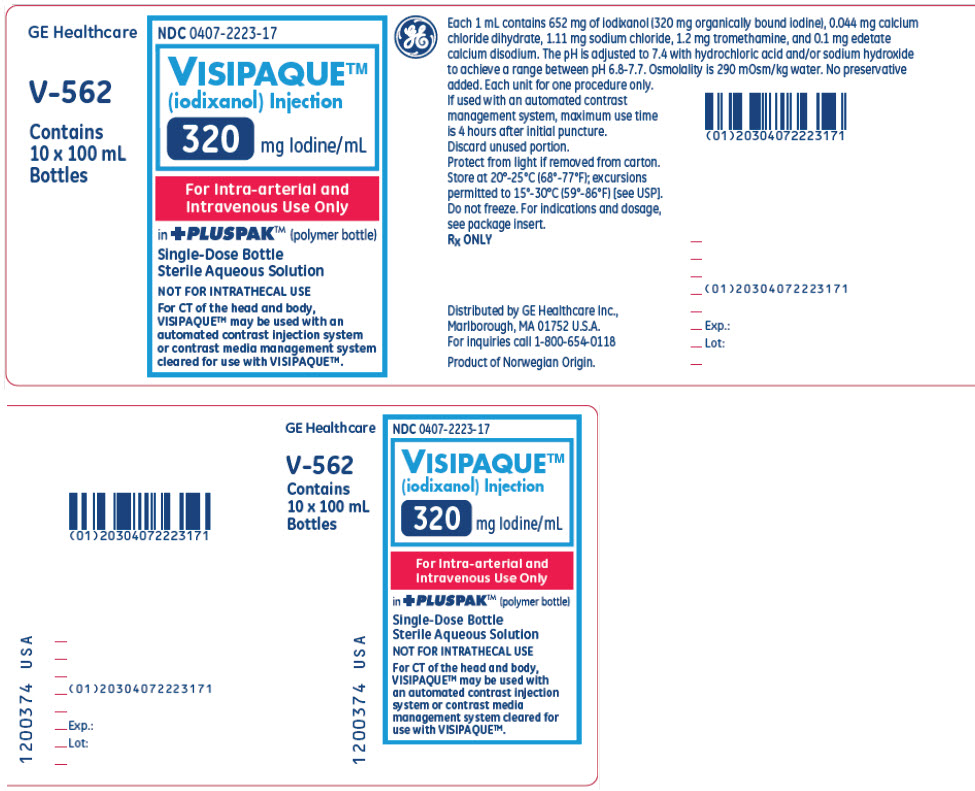
Visipaque Iodixanol 320 mg/mL Injection, Solution — NDC 0407-2223-66 (Billing 00407-2223-66)
This is a package of Visipaque Iodixanol 320 mg/mL Injection, Solution from GE Healthcare Inc., no longer marketed (first marketed May 2006), no longer in the FDA NDC Directory.
NDC database record
One package, one record: these facts belong to NDC 0407-2223-66 alone.
- Record
- FDA NDC Directory package listing · Human prescription drug
- Code segments
- 0407 labeler · 2223 product · 66 package
- Listing certified through
- Dec 31, 2026
- Barcode (UPC-A, from the NDC)
- 3 0407222366 5
- FDA record last changed
- Oct 8, 2026
Identity & classification
Regulatory identifiers FDA, NLM and CMS codes for this package
Drug-database identifiers Medi-Span GPI and First Databank GCN / HICL / AHFS classification
- GSN (GCN sequence number): 027416
- GCN: 46861
- GPI-14 (Medi-Span): 94402041002030
- HICL (First Databank): 011569
- AHFS class code: 36:68.00.00
Where does this data come from?
- FDA openFDA NDC Directory · synced Oct 8, 2026
- FDA label on DailyMed · label index refreshed Oct 8, 2026
- RxNorm (NLM RxNav) · catalog refreshed Oct 1, 2026
- Medi-Span GPI (licensed)
- First Databank (licensed) · refreshed Oct 8, 2026
Clinical
Patient education
Supplement & herbal interactions
Some supplements/herbs that may interact with Iodixanol — tap one for details:
Where does this data come from?
- MedlinePlus (NLM) · refreshed Oct 8, 2026
- FDA label on DailyMed · label index refreshed Oct 8, 2026
Ask a licensed pharmacist directly — free, answered by our team.
Pricing
A drug doesn't have one price. Each row is a different public payment system, and none is what you'd pay at the counter — that depends on your insurance. The ⓘ on each row explains what it measures.
| Price system | Per mL | Per package |
|---|---|---|
| Retail pharmacies payNADAC · weekly | Not in the retail survey — common for institutional, discontinued, or low-volume packs. | |
| Medicaid paysCMS SDUD · 12 mo | No recent Medicaid claims on file for this NDC — rare and low-volume NDCs are suppressed in the public data. | |
| Medicare drug plans payPart D · quarterly | No Part D plan price is available for this NDC in our data. | |
| Medicare Part B allowsASP · Q9967 | $0.155 / Q9967 unit | — |
Where does this data come from?
- CMS NADAC weekly file
- CMS ASP pricing files · refreshed Sep 20, 2026
- CMS Medicaid State Drug Utilization Data · refreshed Oct 8, 2026
- CMS Part D plan pricing files · refreshed Sep 24, 2026
- VA National Acquisition Center price file
Billing & reimbursement
Where does this data come from?
- CMS ASP NDC-HCPCS crosswalk · refreshed Sep 22, 2026
- DMEPDAC NDC-HCPCS crosswalk
- openFDA NSDE billing units · refreshed Oct 7, 2026
Packaging — all sizes for this product
| Package NDC | Description | Marketing start | Marketing end | Status |
|---|---|---|---|---|
| 00407-2223-16 0407-2223-16 | 10 BOTTLE, PLASTIC in 1 BOX / 50 mL in 1 BOTTLE, PLASTIC | 2003-09-09 | — | Active |
| 00407-2223-17 0407-2223-17 Main listing | 10 BOTTLE, PLASTIC in 1 BOX / 100 mL in 1 BOTTLE, PLASTIC | 2003-09-09 | — | Active |
| 00407-2223-19 0407-2223-19 | 10 BOTTLE, PLASTIC in 1 BOX / 150 mL in 1 BOTTLE, PLASTIC | 2003-09-09 | — | Active |
| 00407-2223-21 0407-2223-21 | 10 BOTTLE, PLASTIC in 1 BOX / 200 mL in 1 BOTTLE, PLASTIC | 2003-09-09 | — | Active |
| 00407-2223-62 0407-2223-62 | 10 BOTTLE, PLASTIC in 1 BOX / 50 mL in 1 BOTTLE, PLASTIC | 2010-06-01 | — | Discontinued by firm |
| 00407-2223-64 0407-2223-64 | 10 BOTTLE, PLASTIC in 1 BOX / 100 mL in 1 BOTTLE, PLASTIC | 2010-06-01 | — | Discontinued by firm |
| 00407-2223-66 You're viewing this | 10 BOTTLE, PLASTIC in 1 BOX / 150 mL in 1 BOTTLE, PLASTIC | 2010-06-01 | — | Discontinued by firm |
| 00407-2223-67 0407-2223-67 | 10 BOTTLE, PLASTIC in 1 BOX / 200 mL in 1 BOTTLE, PLASTIC | 2010-06-01 | — | Discontinued by firm |
| 00407-2223-23 0407-2223-23 | 10 BOTTLE, PLASTIC in 1 BOX / 500 mL in 1 BOTTLE, PLASTIC | 2006-05-01 | — | Active |
This pack accounts for about 0.7% of this product's recent Medicaid fills; most go to a different pack size. See all packs ↓
Pack size FAQ
What quantity is in this package?
What NDC number is used to bill for this package of Visipaque Iodixanol 320 mg/mL Injection, Solution?
Therapeutic equivalents
| Product | Labeler | Pack | NADAC/unit | TE | Status | Price vs. this |
|---|---|---|---|---|---|---|
| Iodixanol 320 mg/mL 65219-0383-05 | FRESENIUS | 10 bottles | — | AP | FDA listed | — |
| Visipaque 320 mg/mLthis 00407-2223-66 | GE | 10 bottles | — | — | Discontinued | — |
Where does this data come from?
- FDA openFDA NDC Directory · synced Oct 8, 2026
- FDA Orange Book · refreshed Oct 3, 2026
- CMS NADAC weekly file
Availability & generic status
The FDA lists approved generic versions of this medicine, but that does not always mean a pharmacy can get one today. Patent rules, launch agreements, supply and pricing can affect when generics actually arrive.
Where does this data come from?
- FDA Orange Book · refreshed Oct 3, 2026
What it looks like
Where does this data come from?
- FDA label on DailyMed · label index refreshed Oct 8, 2026
Inactive Ingredients / Excipients
Inactive ingredients, also called excipients, are components of the drug product other than the active ingredient. They may include fillers, dyes, coatings, preservatives, flavors, or other formulation ingredients.
💡 Tap an ingredient (hover on desktop) to see what it is and why it’s used.
-
0.044 mg / 1 mL
UNII M4I0D6VV5M
Calcium chloride is a salt compound that acts as a firming agent and source of calcium ions in medications. It's used in formulations to help maintain tablet structure, improve texture, or serve as a buffering agent.
-
0.1 mg / 1 mL
UNII 25IH6R4SGF
Edetate calcium disodium is a chelating agent, a chemical that binds to metal ions. It's used in some medications to prevent unwanted metals from interfering with the drug's stability and effectiveness.
-
UNII QTT17582CB
A strong acid used to adjust and maintain the proper pH level in liquid medicines, ensuring stability and preventing breakdown of active ingredients.
-
1.11 mg / 1 mL
UNII 451W47IQ8X
Sodium chloride is common table salt. It's used in medicines as a buffer to maintain proper pH, as a filler to add bulk, or to adjust the osmotic balance in liquid formulations.
-
UNII 55X04QC32I
A strong alkaline chemical used to adjust and maintain the pH balance of liquid medicines. It helps keep the medicine stable and ensures it stays effective during storage.
-
1.2 mg / 1 mL
UNII 023C2WHX2V
Tromethamine is a chemical buffer that helps maintain the proper acidity level in liquid medicines. It neutralizes acids and stabilizes the solution so the medication remains effective and safe throughout its shelf life.
6 inactive ingredients listed in the exact product block matched to this NDC.
Where does this data come from?
ingredient classCode="IACT" elements from the exact product block matched by this NDC. Label-section narrative from DailyMed / the openFDA label index is shown separately when available.- FDA label on DailyMed · label index refreshed Oct 8, 2026
- FDA openFDA NDC Directory · synced Oct 8, 2026
Inactive ingredient FAQ
Are inactive ingredients the same for every manufacturer?
Why might an inactive ingredient be missing?
Can inactive ingredients matter?
Manufacturer & labeler
More NDCs from GE Healthcare Inc. labeler code 00407
- OMNIPAQUE Iohexol 240 mg/mL Injection, Solution NDC 0407-1412-10
- OMNIPAQUE Iohexol 300 mg/mL Injection, Solution NDC 0407-1413-10
- Omnipaque Iohexol 350 mg/mL Injection, Solution NDC 0407-1414-48
- OMNIPAQUE Iohexol 9 mg/mL Solution NDC 0407-1415-09
- OMNIPAQUE Iohexol 12 mg/mL Solution NDC 0407-1416-12
- Visipaque Iodixanol 270 mg/mL Injection, Solution NDC 0407-2222-16
- Optison Perflutren Protein-Type A Microspheres Human Albumin Microspheres and 10 mg/mL; .22 mg/mL Injection, Solution NDC 0407-2707-03
- CLARISCAN gadoterate meglumine 376.9 mg/mL Injection, Solution NDC 0407-2943-01
- Flyrcado FLURPIRIDAZ F-18 55 mCi/mL Injection NDC 0407-8787-01
Where does this data come from?
- FDA openFDA NDC Directory · synced Oct 8, 2026
- Drugs@FDA
Full prescribing information FDA SPL
🚨 Boxed Warning ▾
WARNING: NOT FOR INTRATHECAL USE Inadvertent intrathecal administration may cause death, convulsions/seizures, cerebral hemorrhage, coma, paralysis, arachnoiditis, acute renal failure, cardiac arrest, rhabdomyolysis, hyperthermia, and brain edema [see Contraindications (4) and Adverse Reactions (5.1) ] . WARNING: NOT FOR INTRATHECAL USE See full prescribing information for complete boxed warning Inadvertent intrathecal administration may cause death, convulsions/seizures, cerebral hemorrhage, coma, paralysis, arachnoiditis, acute renal failure, cardiac arrest, rhabdomyolysis, hyperthermia, and brain edema.
( 4 , 5.1 )
🎯 Indications and Usage ▾
1 INDICATIONS AND USAGE VISIPAQUE is indicated for: VISIPAQUE injection is a radiographic contrast agent indicated for the following: Intra-arterial Procedures ( 1.1 ) Adults and pediatric patients 12 years of age and over Intra-arterial digital subtraction angiography (270 and 320 mg Iodine/mL). Angiocardiography (left ventriculography and selective coronary arteriography), peripheral arteriography, visceral arteriography, and cerebral arteriography (320 mg Iodine/mL). Pediatric patients less than 12 years of age Angiocardiography, cerebral arteriography, and visceral arteriography (320 mg Iodine/mL).
Intravenous Procedures ( 1.2 ) Adults and pediatric patients 12 years of age and over Computed tomography (CT) imaging head and body (270 and 320 mg Iodine/mL). Excretory urography (270 and 320 mg Iodine/mL). Peripheral venography (270 mg Iodine/mL).
Coronary computed tomography angiography (CCTA) to assist diagnostic evaluation of patients with suspected coronary artery disease (320 mg Iodine/mL). Pediatric patients less than 12 years of age CT imaging of the head and body (270 mg Iodine/mL). Excretory urography (270 mg Iodine/mL).
1.1Intra-arterial Procedures Adult and pediatric patients 12 years of age and older (270 and 320 mg Iodine/mL) intra-arterial digital subtraction angiography (IA-DSA). (320 mg Iodine/mL) angiocardiography (left ventriculography and selective coronary arteriography), peripheral arteriography, visceral arteriography, and cerebral arteriography. Pediatric patients less than 12 years of age (320 mg Iodine/mL) angiocardiography, cerebral arteriography, and visceral arteriography.
1.2Intravenous Procedures Adult and pediatric patients 12 years of age and older (270 and 320 mg Iodine/mL) CT imaging of the head and body. (270 and 320 mg Iodine/mL) excretory urography. (270 mg Iodine/mL) peripheral venography.
(320 mg Iodine/mL) coronary computed tomography angiography (CCTA) to assist in the diagnostic evaluation of patients with suspected coronary artery disease. Pediatric patients less than 12 years of age (270 mg Iodine/mL) CT imaging of the head and body. (270 mg Iodine/mL) excretory urography.
⏱️ Dosage and Administration ▾
2 DOSAGE AND ADMINISTRATION Individualize the combination of volume and concentration of VISIPAQUE Injection considering age, body weight, size of the vessel, rate of blood flow within the vessel, and other applicable factors. ( 2.1 , 2.2 , 2.3 , 2.4 ) For CT of the head and body, VISIPAQUE may be used with an automated contrast injection system or contrast media management system cleared for use with VISIPAQUE. ( 2.5 ) For the adult patients, the maximum recommended total dose of iodine is 80 grams.
( 2.1 ) Patients should be adequately hydrated prior to and following the intravascular administration of iodinated contrast agents. ( 2.1 , 5.3 ) See full prescribing information for complete dosing and administration information. ( 2 )
2.1Important Dosage and Administration Instructions VISIPAQUE is for intravascular use only [see Boxed Warning , Contraindications (4) , and Warnings and Precautions (5.1) ] Use sterile technique for all handling and administration of VISIPAQUE. Do not use if tamper-evident ring is broken or missing. Warm VISIPAQUE and administer at body or room temperature.
Inspect VISIPAQUE for particulate matter or discoloration before administration, whenever solution and container permit. Do not administer if VISIPAQUE contains particulate matter or is discolored. Do not mix VISIPAQUE with, or inject in intravenous lines containing, other drugs or total nutritional admixtures.
Use the lowest dose necessary to obtain adequate visualization. Individualize the volume, strength, and rate of administration of VISIPAQUE. Consider factors such as age, bodyweight, vessel size, blood flow rate within the vessel, anticipated pathology, degree and extent of opacification required, structures or area to be examined, disease processes affecting the patient, and equipment and technique to be employed.
The maximum recommended total dose of iodine for adults is 80 grams. Avoid extravasation when injecting VISIPAQUE; especially in patients with severe arterial or venous disease [see Warnings and Precautions (5.6) ]. Hydrate patients before and after VISIPAQUE administration [see Warnings and Precautions (5.3) ].
2.2Intra-Arterial Dosage and Administration Intra-arterial digital subtraction angiography (IA-DSA) (270 and 320 mg Iodine/mL) Angiocardiography (left ventriculography and selective coronary arteriography), peripheral arteriography, visceral arteriography, and cerebral arteriography (320 mg Iodine/mL) Use Injection rates approximately equal to the flow rate in the vessel being injected. The usual single injection volumes or total dose per patient (mL/kg) for adults and adolescents over 12 years of age are listed in Table 1.
TABLE 1 ADULTS and PEDIATRIC PATIENTS 12 YEARS OF AGE AND OLDER VISIPAQUE SINGLE DOSE RECOMMENDATIONS FOR INJECTION INTO SELECTED ARTERIES ARTERIOGRAPHY IA-DSA IA-DSA = Intra-Arterial Digital Subtraction Angiography Maximum Total Dose Intra-Arterial Injection Sites 320 mg Iodine/mL 270 mg Iodine/mL 320 mg Iodine/mL Carotid Arteries 10 to 14 mL 5 to 8 mL Usually Not to Exceed 175 mL Vertebral Arteries 10 to 12 mL 5 to 8 mL Right Coronary Artery 3 to 8 mL Usually Not to Exceed 200 mL Left Coronary Artery 3 to 10 mL Left Ventricle 20 to 45 mL Renal Arteries 8 to 18 mL 10 to 25 mL -- Usually Not to Exceed 250 mL Aortography 30 to 70 mL 20 to 50 mL 10 to 50 mL Major Branches of Aorta 10 to 70 mL 5 to 30 mL 2 to 10 mL Aortofemoral Runoffs 20 to 90 mL -- 6 to 15 mL Peripheral Arteries 15 to 30 mL -- 3 to 15 mL
2.3Intravenous Dosage and Administration Computed Tomography of the Head or Body (270 mg Iodine/mL and 320 mg Iodine/mL) Excretory Urography (270 mg Iodine/mL and 320 mg Iodine/mL) Peripheral Venography (270 mg Iodine/mL) Coronary Computed Tomography Angiography (CCTA) (320 mg Iodine/mL) Recommended dosage of VISIPAQUE is dependent on: the administration procedure, patient weight, and CT device factors, as detailed in Table 2. Calibrate the intravenous injection rate so that image acquisition coi… [Excerpted — this section continues on DailyMed.]
💊 Dosage Forms and Strengths ▾
3 DOSAGE FORMS AND STRENGTHS Injection: Non-ionic, isotonic, water-soluble, sterile, pyrogen-free, colorless to pale yellow solution in the following strengths: 270 mg of organically bound iodine per mL (550 mg Iodixanol per mL) 320 mg of organically bound iodine per mL (652 mg Iodixanol per mL) Available in the following format: Single-dose polymer bottle (+ PLUS PAK™) Injection: In concentrations of 270 and 320 mg of organically bound iodine per mL (550 mg and 652 mg of Iodixanol per mL). ( 3 )
⛔ Contraindications ▾
4 CONTRAINDICATIONS VISIPAQUE is contraindicated for intrathecal use [see Warnings and Precautions (5.1) ]. Not indicated for intrathecal use. ( 4 )
⚠️ Warnings and Cautions ▾
5 WARNINGS AND PRECAUTIONS Hypersensitivity Reactions: Life-threatening or fatal reactions can occur. Always have emergency equipment and trained personnel available. ( 5.2 ) Contrast-Induced Acute Kidney Injury: Acute injury including renal failure can occur.
Minimize dose and maintain adequate hydration to minimize risk. ( 5.3 ) Cardiovascular adverse reactions: Hemodynamic disturbances including shock and cardiac arrest may occur during or after administration. ( 5.4 ) Thyroid dysfunction in pediatric patients 0 to 3 Years of Age: Individualize thyroid function monitoring based on risk factors such as prematurity.
( 5.8 )
5.1Risks Associated with Inadvertent Intrathecal Administration VISIPAQUE is for intravascular use only and is contraindicated for intrathecal use [see Contraindications (4) and Dosage and Administration (2.1) ]. Inadvertent Intrathecal administration can cause death, convulsions/seizures, cerebral hemorrhage, coma, paralysis, arachnoiditis, acute renal failure, cardiac arrest, rhabdomyolysis, hyperthermia, and brain edema.
5.2Hypersensitivity Reactions VISIPAQUE can cause life-threatening or fatal hypersensitivity reactions including anaphylaxis. Manifestations include respiratory arrest, laryngospasm, bronchospasm, angioedema, and shock. Most severe reactions develop shortly after the start of the injection (within 3 minutes), but reactions can occur up to hours later.
There is an increased risk in patients with a history of a previous reaction to contrast agent, and known allergies (i.e., bronchial asthma, drug, or food allergies) or other hypersensitivities. Premedication with antihistamines or corticosteroids does not prevent serious life-threatening reactions, but may reduce both their incidence and severity. Obtain a history of allergy, hypersensitivity, or hypersensitivity reactions to iodinated contrast agents and always have emergency resuscitation equipment and trained personnel available prior to VISIPAQUE administration.
Monitor all patients for hypersensitivity reactions.
5.3Contrast-Induced Acute Kidney Injury Acute kidney injury, including renal failure, may occur after VISIPAQUE administration. Risk factors include: pre-existing renal impairment, dehydration, diabetes mellitus, congestive heart failure, advanced vascular disease, elderly age, concomitant use of nephrotoxic or diuretic medications, multiple myeloma / paraproteinaceous diseases, repetitive and/or large doses of an iodinated contrast agent. Use the lowest necessary dose of VISIPAQUE in patients with renal impairment.
Adequately hydrate patients prior to and following VISIPAQUE administration. Do not use laxatives, diuretics, or preparatory dehydration prior to VISIPAQUE administration.
5.4Cardiovascular Adverse Reactions Life-threatening or fatal cardiovascular reactions including hypotension, shock, cardiac arrest have occurred with the use of VISIPAQUE. Most deaths occur during injection or five to ten minutes later, with cardiovascular disease as the main aggravating factor. Cardiac decompensation, serious arrhythmias, and myocardial ischemia or infarction can occur during coronary arteriography and ventriculography.
Based upon clinical literature reported deaths from the administration of iodinated contrast agents range from 6.6 per million (0.00066%) to 1 in 10,000 (0.01%). Use the lowest necessary dose of VISIPAQUE in patients with congestive heart failure and always have emergency resuscitation equipment and trained personnel available. Monitor all patients for severe cardiovascular reactions.
5.5Thromboembolic Events Angiocardiography Serious, rarely fatal, thromboembolic events causing myocardial infarction and stroke can occur during angiocardiography procedures with both ionic and nonionic contrast media. During these procedures, increased thrombosis and activation of the complement system occurs. Risk factors for thromboembolic events include: length of procedure, catheter and syringe material, underlying dis… [Excerpted — this section continues on DailyMed.]
🤒 Adverse Reactions ▾
6 ADVERSE REACTIONS The following clinically significant adverse reactions are described elsewhere in the labeling: Risks Associated with Inadvertent Intrathecal Administration [see Warnings and Precautions (5.1) ] Hypersensitivity Reactions [see Warnings and Precautions (5.2) ] Contrast-Induced Kidney Injury [see Warnings and Precautions (5.3) ] Cardiovascular Adverse Reactions [see Warnings and Precautions (5.4) ] Thromboembolic Events [see Warnings and Precautions (5.5) ] Thyroid Dysfunction in Pediatric Patients 0 to 3 Years of Age [see Warnings and Precautions (5.8) ] Severe Cutaneous Adverse Reactions [see Warnings and Precautions (5.11) ] Most common adverse reactions (incidence greater than 0.5%) in adult patients after VISIPAQUE injection: Discomfort, warmth, pain; Cardiovascular: angina.
Gastrointestinal: diarrhea, nausea, vomiting. Nervous System: agitation, anxiety, insomnia, nervousness, dizziness, headache, migraine, unusual skin sensations, sensory disturbance, fainting, sensation of spinning. Skin: itchy rash, severe itching, hives.
Special Senses: Smell, taste, and vision alteration. ( 6.1 ) Pediatric patients experienced similar adverse reactions. ( 6.3 ) To report SUSPECTED ADVERSE REACTIONS, contact GE HealthCare at 1-800-654-0118 or FDA at 1-800-FDA-1088 or www.fda.gov/medwatch .
6.1Clinical Trials Experience Because clinical trials are conducted under widely varying conditions, adverse reaction rates observed in the clinical trials of a drug cannot be directly compared to rates in the clinical trials of another drug and may not reflect the rates observed in practice. VISIPAQUE is often associated with sensations of discomfort, warmth or pain. In a subgroup of 1259 patients; 30% who received VISIPAQUE or a comparator had application site discomfort, pain, warmth or cold.
VISIPAQUE had a trend toward fewer patient reports of moderate or severe pain or warmth. Pain was reported in 2% of patients receiving VISIPAQUE and 10% of patients receiving a comparator. Heat was reported in 29% of patients receiving VISIPAQUE and 51% of patients receiving a comparator.
Table 3 shows the incidence of events reported in blinded, controlled clinical studies of VISIPAQUE in a total of 1244 adult patients. Adverse events (AEs) are listed by body system and in decreasing order of occurrence greater than 0.5% of patients. One or more adverse events were reported in 20% of patients during the study period (24 to 72 hours).
In a 757 patient subgroup, the number of women reporting adverse events was 83/299 (28%) and the number of men was 77/458 (16%). A total of 3% of women and 0.8% of men reported chest pain. TABLE 3 ADVERSE EVENTS REPORTED IN CONTROLLED CLINICAL TRIALS IN GREATER THAN 0.5% OF 1244 ADULT PATIENTS RECEIVING VISIPAQUE OR OTHER IODINATED CONTRAST AGENTS NUMBER OF PATIENTS EXPOSED VISIPAQUE N (%) = 1244 Pooled Comparators N (%) = 861 Number of Patients with Any Adverse Event 248 (19.9) 194 (22.5) Body As a Whole Patients with Any Event 41 (3.3) 22 (2.6) Edema (any location) 7 (0.6) 0 (0) Cardiovascular Patients with Any Event 37 (3.0) 39 (4.5) Angina Pectoris/Chest Pain 28 (2.2) 22 (2.6) Gastrointestinal Patients with Any Event 51 (4.1) 46 (5.3) Diarrhea 7 (0.6) 6 (0.7) Nausea 35 (2.8) 32 (3.7) Vomiting 10 (0.8) 11 (1.3) Nervous System Patients with Any Event 101 (8.1) 60 (7.0) Agitation, Anxiety, Insomnia, Nervousness 10 (0.8) 0 (0) Dizziness 8 (0.7) 8 (0.9) Headache/Migraine 31 (2.5) 15 (1.7) Paresthesia 12 (1.0) 1 (0.1) Sensory Disturbance 10 (0.8) 9 (1.0) Syncope 8 (0.6) 1 (0.1) Vertigo 30 (2.4) 20 (2.3) Skin (not including application site) Patients with Any Event 42 (4.6) 18 (2.1) Nonurticarial Rash or Erythema 26 (2.1) 4 (0.5) Pruritus 20 (1.6) 3 (0.3) Urticaria 6 (0.5) 10 (1.2) Special Senses Patients with Any Event 57 (4.6) 38 (4.4) Parosmia 6 (0.5) 4 (0.5) Taste Perversion 43 (3.5) 32 (3.7) Scotoma 14 (1.1) 2 (0.2) The following selected adverse events were reported in ≤0.5% of the 1244 patients.
Body as… [Excerpted — this section continues on DailyMed.]
🔄 Drug Interactions ▾
7 DRUG INTERACTIONS
7.1Drug-Drug Interactions Metformin In patients with renal impairment, metformin can cause lactic acidosis. Iodinated contrast agents appear to increase the risk of metformin-induced lactic acidosis, possibly as a result of worsening renal function. Stop metformin at the time of, or prior to, VISIPAQUE administration in patients with an eGFR between 30 and 60 mL/min/1.73 m 2 ; in patients with a history of hepatic impairment, alcoholism or heart failure; or in patients who will be administered intra-arterial iodinated contrast.
Re-evaluate eGFR 48 hours after the imaging procedure, and reinstitute metformin only after renal function is stable. Radioactive Iodine Administration of iodinated contrast agents may interfere with thyroid uptake of radioactive iodine (I-131 and I-123) and decrease therapeutic and diagnostic efficacy in patients with carcinoma of the thyroid. The decrease in efficacy lasts for 6 to 8 weeks.
Beta-adrenergic Blocking Agents The use of beta-adrenergic blocking agents lowers the threshold for and increases the severity of contrast reactions, and reduces the responsiveness of treatment of hypersensitivity reactions with epinephrine. Because of the risk of hypersensitivity reactions, use caution when administering VISIPAQUE to patients taking beta-blockers. Oral Cholecystographic Contrast Agents Renal toxicity has been reported in patients with liver dysfunction who were given an oral cholecystographic agent followed by intravascular iodinated contrast agents.
Postpone the administration of VISIPAQUE in patients who have recently received an oral cholecystographic contrast agent.
7.2Drug-Laboratory Test Interactions Effect on Thyroid Tests The results of protein bound iodine and radioactive iodine uptake studies, which depend on iodine estimation, will not accurately reflect thyroid function for at least 16 days following administration of iodinated contrast agents. However, thyroid function tests which do not depend on iodine estimations (e.g., T3 resin uptake and total or free thyroxine T4 assays) are not affected. Effect on Urine Tests As reported with other contrast agents, VISIPAQUE may produce a false-positive result for protein in the urine using urine dip tests.
However, the Coomassie blue method has been shown to give accurate results for the measurement of urine protein in the presence of VISIPAQUE. In addition, care should be used in interpreting the results of urine specific gravity measurements in the presence of high levels of VISIPAQUE and other contrast agents in the urine. Refractometry or urine osmolality may be substituted.
👥 Use in Specific Populations ▾
8 USE IN SPECIFIC POPULATIONS Lactation: A lactating woman may pump and discard breast milk for 10 hours after VISIPAQUE administration. ( 8.2 ) Geriatrics: Exercise caution in dose selection for elderly patients. ( 8.5 )
8.1Pregnancy Risk Summary There are no data with iodixanol use in pregnant women to inform any drug-associated risks. In animal reproduction studies, no developmental toxicity occurred with intravenous iodixanol administration to rats and rabbits at doses up to 0.24 (rat) or 0.48 (rabbit) times the maximum recommended human intravenous dose ( see Data ). All pregnancies have a background risk of birth defect, loss or other adverse outcomes.
In the U.S. general population, the estimated background risk of major birth defects and miscarriage in clinically recognized pregnancies is 2 to 4% and 15 to 20%, respectively. Data Animal Data Reproduction studies were performed in rats and rabbits with intravenous administration of iodixanol at doses up to 2 g Iodine/kg, daily, from implantation of the embryo (gestation day 7 in rat; 6 in rabbit) through closure of the hard palate (gestation day 17 in rats; 18 in rabbits). No maternal toxicity occurred, and no adverse effects occurred on fetal survival, embryo-fetal development, or the ability of dams to rear a litter.
8.2Lactation Risk Summary There are no data on the presence of iodixanol in human milk, the effects on the breastfed infant or the effects on milk production. Iodinated contrast agents are poorly excreted into human milk and are poorly absorbed by the gastrointestinal tract of a breastfed infant. The developmental and health benefits of breastfeeding should be considered along with the mother's clinical need for VISIPAQUE and any potential adverse effects on the breastfed infant from VISIPAQUE or from the underlying maternal condition.
Clinical Considerations Interruption of breastfeeding after exposure to iodinated contrast agents is not necessary because the potential exposure of the breastfed infant to iodine is small. However, a lactating woman may consider interrupting breastfeeding and pumping and discarding breast milk for 10 hours (approximately 5 elimination half-lives) after VISIPAQUE administration in order to minimize drug exposure to a breast fed infant.
8.4Pediatric Use The safety and efficacy of VISIPAQUE have been established in pediatric patients down to birth for angiocardiography, cerebral arteriography, visceral arteriography, CT imaging of the head and body, and excretory urography. The safety and efficacy of VISIPAQUE have also been established in pediatric patients 12 years and older for intra-arterial digital subtraction angiography, peripheral arteriography, peripheral venography and CCTA. Use of VISIPAQUE is supported by evidence from adequate and well controlled studies of VISIPAQUE in adults and additional safety data obtained in 459 pediatric patients.
In general, the types of adverse reactions reported are similar to those of adults. A higher number of adverse events in patients less than 1 year of age compared to older patients were observed in a study of VISIPAQUE [see Adverse Events (6.3) ] . The elimination of VISIPAQUE is slower in this age group [see Clinical Pharmacology (12.3) ] .
Thyroid function tests indicative of thyroid dysfunction, characterized by hypothyroidism or transient thyroid suppression have been reported following iodinated contrast media administration in pediatric patients, including term and preterm neonates. Some patients were treated for hypothyroidism. After exposure to iodinated contrast media, individualize thyroid function monitoring in pediatric patients 0 to 3 years of age based on underlying risk factors, especially in term and preterm neonates [see Warnings and Precautions (5.8) and Adverse Reactions (6.2) ] .
Pediatric patients at higher risk of experiencing an adverse reaction during and after administration of any contrast agent may include those with asthma, hypersensitivity to othe… [Excerpted — this section continues on DailyMed.]
🤰 Pregnancy ▾
8.1Pregnancy Risk Summary There are no data with iodixanol use in pregnant women to inform any drug-associated risks. In animal reproduction studies, no developmental toxicity occurred with intravenous iodixanol administration to rats and rabbits at doses up to 0.24 (rat) or 0.48 (rabbit) times the maximum recommended human intravenous dose ( see Data ). All pregnancies have a background risk of birth defect, loss or other adverse outcomes.
In the U.S. general population, the estimated background risk of major birth defects and miscarriage in clinically recognized pregnancies is 2 to 4% and 15 to 20%, respectively. Data Animal Data Reproduction studies were performed in rats and rabbits with intravenous administration of iodixanol at doses up to 2 g Iodine/kg, daily, from implantation of the embryo (gestation day 7 in rat; 6 in rabbit) through closure of the hard palate (gestation day 17 in rats; 18 in rabbits). No maternal toxicity occurred, and no adverse effects occurred on fetal survival, embryo-fetal development, or the ability of dams to rear a litter.
🧒 Pediatric Use ▾
8.4Pediatric Use The safety and efficacy of VISIPAQUE have been established in pediatric patients down to birth for angiocardiography, cerebral arteriography, visceral arteriography, CT imaging of the head and body, and excretory urography. The safety and efficacy of VISIPAQUE have also been established in pediatric patients 12 years and older for intra-arterial digital subtraction angiography, peripheral arteriography, peripheral venography and CCTA. Use of VISIPAQUE is supported by evidence from adequate and well controlled studies of VISIPAQUE in adults and additional safety data obtained in 459 pediatric patients.
In general, the types of adverse reactions reported are similar to those of adults. A higher number of adverse events in patients less than 1 year of age compared to older patients were observed in a study of VISIPAQUE [see Adverse Events (6.3) ] . The elimination of VISIPAQUE is slower in this age group [see Clinical Pharmacology (12.3) ] .
Thyroid function tests indicative of thyroid dysfunction, characterized by hypothyroidism or transient thyroid suppression have been reported following iodinated contrast media administration in pediatric patients, including term and preterm neonates. Some patients were treated for hypothyroidism. After exposure to iodinated contrast media, individualize thyroid function monitoring in pediatric patients 0 to 3 years of age based on underlying risk factors, especially in term and preterm neonates [see Warnings and Precautions (5.8) and Adverse Reactions (6.2) ] .
Pediatric patients at higher risk of experiencing an adverse reaction during and after administration of any contrast agent may include those with asthma, hypersensitivity to other medication and/or allergens, cyanotic and acyanotic heart disease, congestive heart failure, or a serum creatinine greater than 1.5 mg/dL. Pediatric patients with immature renal function or dehydration may be at increased risk for adverse events due to slower elimination of iodinated contrast agents [see Clinical Pharmacology (12.3) ].
🧓 Geriatric Use ▾
8.5Geriatric Use In clinical studies of VISIPAQUE, 254/757 (34%) of patients were 65 and over. No overall differences in safety or effectiveness were observed between these patients and younger patients. Other reported clinical experience has not identified differences in response between the elderly and younger patients, but greater sensitivity of some older individuals cannot be ruled out.
In general, dose selection for an elderly patient should be cautious usually starting at the low end of the dosing range, reflecting the greater frequency of decreased hepatic, renal or cardiac function, and of concomitant disease or other drug therapy.
🆘 Overdosage ▾
10 OVERDOSAGE The adverse effects of overdosage of any contrast agent may be life-threatening and affect mainly the pulmonary and cardiovascular systems. Treatment of an overdosage is directed toward the support of all vital functions and prompt institution of symptomatic therapy. VISIPAQUE Injection does not bind to plasma or serum protein and can be dialyzed.
🧬 Clinical Pharmacology ▾
12 CLINICAL PHARMACOLOGY
12.1Mechanism of Action Intravascular injection of iodixanol opacifies vessels in the path of flow of the contrast agent, permitting visualization of internal structures. In imaging of the body, iodinated contrast agents diffuse from the vascular into the extravascular space. In a normal brain with an intact blood-brain barrier, contrast does not diffuse into the extravascular space.
In patients with a disrupted blood-brain barrier, contrast agent accumulates in the interstitial space in the region of disruption.
12.2Pharmacodynamics Following administration of VISIPAQUE, the degree of enhancement is directly related to the iodine content in an administered dose. Peak iodine plasma levels occur immediately following rapid injection. The time to maximum contrast enhancement can vary, depending on the organ, from the time that peak blood iodine concentrations are reached to one hour after intravenous bolus administration.
When a delay between peak blood iodine concentrations and peak contrast is present, it suggests that radiographic contrast enhancement is at least in part dependent on the accumulation of iodine- containing medium within the lesion and outside the blood pool. For angiography, contrast enhancement is greatest immediately (15 seconds to 120 seconds) after rapid injection. Iodinated contrast agents may be visualized in the renal parenchyma within 30 to 60 seconds following rapid intravenous injection.
Opacification of the calyces and pelves in patients with normal renal function becomes apparent within 1 to 3 minutes, with optimum contrast occurring within 5 to 15 minutes.
12.3Pharmacokinetics Distribution In an in vitro human plasma study, iodixanol did not bind to protein. The volume of distribution in adults was
0.26L/kg body weight, consistent with distribution to extracellular space. Elimination In 40 healthy, young male volunteers receiving a single intravenous administration of VISIPAQUE in doses of 0.3 to 1.2 gram Iodine/kg body weight, the elimination half-life was 2.1 hr. (± 0.1).
Renal clearance was 110 ± 14 mL/min, equivalent to glomerular filtration (108 mL/min). These values were independent of the dose administered. Metabolism Iodixanol does not undergo metabolism.
Excretion In adults, approximately 97% of the injected dose of iodixanol is excreted unchanged in urine within 24 hours, with less than 2% excreted in feces within five days post-injection. Specific Populations Pediatric: Forty pediatric patients ≤12 years old, with renal function that is normal for their age, received multiple intra-arterial administrations of VISIPAQUE in doses of 0.32 to 3.2 gram Iodine/kg body weight. The elimination half-lives for these patients are shown in Table 5.
Dose adjustments to account for differences in elimination half-life in pediatric patients less than 6 months of age have not been studied. TABLE 5 MEAN ELIMINATION HALF-LIFE* IN PEDIATRIC PATIENTS Age Range Number of Patients Elimination half-life (hr. ± SD) Newborn to < 2 months 8 4.1 ± 1.4 2 to 6 months 8 2.8 ± 0.6 6 to 12 months 9 2.4 ± 0.4 1 to 2 years 5 2.3 ± 0.6 2 to 12 years 10 2.3 ±
0.5Adults 40 2.1 ±
0.1Renal Impairment: In patients with significantly impaired renal function, the total clearance of iodixanol is reduced and the half-life is increased. In a study of 16 adult patients who were scheduled for renal transplant, the mean creatinine clearance was 13.6 ± 4.7 mL/min). In these patients, plasma half-life was 23 hours (t 1/2 for typical patients = 2.1 hours).
Contrast enhancement time in kidneys increased from 6 hours to at least 24 hours. Dose adjustments in patients with renal impairment have not been studied. In patients with normal blood brain barriers and severe renal impairment, iodinated contrast agents have been associated with blood-brain barrier disruption and accumulation of contrast in the brain.
VISIPAQUE has been shown to be dialyzable. In an in vitro hemodialysis study, after 4 hours of dialysi… [Excerpted — this section continues on DailyMed.]
🧬 Mechanism of Action ▾
12.1Mechanism of Action Intravascular injection of iodixanol opacifies vessels in the path of flow of the contrast agent, permitting visualization of internal structures. In imaging of the body, iodinated contrast agents diffuse from the vascular into the extravascular space. In a normal brain with an intact blood-brain barrier, contrast does not diffuse into the extravascular space.
In patients with a disrupted blood-brain barrier, contrast agent accumulates in the interstitial space in the region of disruption.
📦 How Supplied / Storage and Handling ▾
16 HOW SUPPLIED/STORAGE AND HANDLING
16.1How Supplied VISIPAQUE injection is a ready-to-use sterile, pyrogen-free, preservative free, colorless to pale yellow solution available in two (2) strengths. It is supplied in the following configurations: VISIPAQUE (iodixanol) Injection 270 mg Iodine/mL: 50 mL in single-dose + PLUS PAK ™ (polymer bottle), boxes of 10 (NDC 0407-2222-16) 100 mL in single-dose + PLUS PAK ™ (polymer bottle), boxes of 10 (NDC 0407-2222-17) 150 mL in single-dose + PLUS PAK ™ (polymer bottle), boxes of 10 (NDC 0407-2222-19) 200 mL in single-dose + PLUS PAK ™ (polymer bottle), boxes of 10 (NDC 0407-2222-21) VISIPAQUE (iodixanol) Injection 320 mg Iodine/mL: 50 mL in single-dose + PLUS PAK ™ (polymer bottle), boxes of 10 (NDC 0407-2223-16) 100 mL in single-dose + PLUS PAK ™ (polymer bottle), boxes of 10 (NDC 0407-2223-17) 150 mL in single-dose + PLUS PAK ™ (polymer bottle), boxes of 10 (NDC 0407-2223-19) 200 mL in single-dose + PLUS PAK ™ (polymer bottle), boxes of 10 (NDC 0407-2223-21)
16.2Storage and Handling Protect VISIPAQUE from direct exposure to sunlight. Store VISIPAQUE at controlled room temperature, 20°C to 25°C (68°F to 77°F); excursions permitted to 15°C to 30°C (59°F to 86°F) [see USP Controlled Room Temperature]. VISIPAQUE may be stored in a contrast media warmer for up to one month at 37°C (98.6°F).
Do not freeze. Discard any product that is inadvertently frozen, as freezing may compromise the closure integrity of the immediate container.
📦 Storage and Handling ▾
16.2Storage and Handling Protect VISIPAQUE from direct exposure to sunlight. Store VISIPAQUE at controlled room temperature, 20°C to 25°C (68°F to 77°F); excursions permitted to 15°C to 30°C (59°F to 86°F) [see USP Controlled Room Temperature]. VISIPAQUE may be stored in a contrast media warmer for up to one month at 37°C (98.6°F).
Do not freeze. Discard any product that is inadvertently frozen, as freezing may compromise the closure integrity of the immediate container.
📋 Description ▾
11 DESCRIPTION
11.1Chemical Characteristics VISIPAQUE (iodixanol) injection is a dimeric, iso-osmolar, nonionic, water-soluble, radiographic contrast medium for intravascular (intravenous and intra-arterial) use. It is provided as a ready-to-use sterile, pyrogen-free, and preservative free, colorless to pale yellow solution. The chemical formula is 5,5´-[(2-hydroxy-1,3-propanediyl) bis(acetylimino)] bis[N,N´-bis(2,3-dihydroxypropyl)-2,4,6-triiodo-1,3- benzenedicarboxamide] with a molecular weight of 1550.20 (iodine content 49.1%).
VISIPAQUE (C 35 H 44 I 6 N 6 O 15 ) has the following structural formula: VISIPAQUE is available in two strengths: VISIPAQUE 270 mg Iodine/mL (550 mg Iodixanol/mL), 0.074 mg calcium chloride dihydrate, 1.87 mg sodium chloride, 1.2 mg tromethamine, and 0.1 mg edetate calcium disodium. VISIPAQUE 320 mg Iodine/mL (652 mg Iodixanol/mL), 0.044 mg calcium chloride dihydrate, 1.11 mg sodium chloride, 1.2 mg tromethamine and 0.1 mg edetate calcium disodium. Sodium chloride and calcium chloride have been added, resulting in an isotonic solution for injection providing for both concentrations a sodium/calcium ratio equivalent to blood.
The pH is adjusted to 7.4 with hydrochloric acid and/or sodium hydroxide to achieve a range between pH 6.8 and 7.7 at 22°C. Chemical Structure
11.2Physical Characteristics The two concentrations of VISIPAQUE Injection (270 mg Iodine/mL and 320 mg Iodine/mL) have the following physical properties: TABLE 4 Physical Properties of VISIPAQUE Parameter Concentration (mg Iodine/mL) 320 270 Osmolality (mOsmol/kg water) 290 290 Viscosity (cP) @ 20°C 26.6 12.7 @ 37°C 11.8
6.3Density (g/mL) @ 20°C 1.369 1.314 @ 37°C 1.356 1.303
💬 Information for Patients ▾
17 PATIENT COUNSELING INFORMATION Hypersensitivity Reactions Advise the patient concerning the risk of hypersensitivity reactions that can occur both during and after VISIPAQUE administration. Advise the patient to report any signs or symptoms of hypersensitivity reactions during the procedure and to seek immediate medical attention for any signs or symptoms experienced after discharge [see Warnings and Precautions (5.2) ]. Advise patients to inform their physician if they develop a rash after receiving VISIPAQUE [see Warnings and Precautions (5.11) ].
Contrast-Induced Acute Kidney Injury Advise the patient concerning appropriate hydration to decrease the risk of contrast-induced acute kidney injury [see Warnings and Precautions (5.3) ]. Extravasation If extravasation occurs during injection, advise patients to seek medical care for progression of symptoms [see Warnings and Precautions (5.6) ]. Thyroid Dysfunction Advise parents/caregivers about the risk of developing thyroid dysfunction after VISIPAQUE administration.
Advise parents/caregivers about when to seek medical care for their child to monitor for thyroid dysfunction [see Warnings and Precautions (5.8) ].
🧬 Pharmacokinetics ▾
12.3Pharmacokinetics Distribution In an in vitro human plasma study, iodixanol did not bind to protein. The volume of distribution in adults was
0.26L/kg body weight, consistent with distribution to extracellular space. Elimination In 40 healthy, young male volunteers receiving a single intravenous administration of VISIPAQUE in doses of 0.3 to 1.2 gram Iodine/kg body weight, the elimination half-life was 2.1 hr. (± 0.1).
Renal clearance was 110 ± 14 mL/min, equivalent to glomerular filtration (108 mL/min). These values were independent of the dose administered. Metabolism Iodixanol does not undergo metabolism.
Excretion In adults, approximately 97% of the injected dose of iodixanol is excreted unchanged in urine within 24 hours, with less than 2% excreted in feces within five days post-injection. Specific Populations Pediatric: Forty pediatric patients ≤12 years old, with renal function that is normal for their age, received multiple intra-arterial administrations of VISIPAQUE in doses of 0.32 to 3.2 gram Iodine/kg body weight. The elimination half-lives for these patients are shown in Table 5.
Dose adjustments to account for differences in elimination half-life in pediatric patients less than 6 months of age have not been studied. TABLE 5 MEAN ELIMINATION HALF-LIFE* IN PEDIATRIC PATIENTS Age Range Number of Patients Elimination half-life (hr. ± SD) Newborn to < 2 months 8 4.1 ± 1.4 2 to 6 months 8 2.8 ± 0.6 6 to 12 months 9 2.4 ± 0.4 1 to 2 years 5 2.3 ± 0.6 2 to 12 years 10 2.3 ±
0.5Adults 40 2.1 ±
0.1Renal Impairment: In patients with significantly impaired renal function, the total clearance of iodixanol is reduced and the half-life is increased. In a study of 16 adult patients who were scheduled for renal transplant, the mean creatinine clearance was 13.6 ± 4.7 mL/min). In these patients, plasma half-life was 23 hours (t 1/2 for typical patients = 2.1 hours).
Contrast enhancement time in kidneys increased from 6 hours to at least 24 hours. Dose adjustments in patients with renal impairment have not been studied. In patients with normal blood brain barriers and severe renal impairment, iodinated contrast agents have been associated with blood-brain barrier disruption and accumulation of contrast in the brain.
VISIPAQUE has been shown to be dialyzable. In an in vitro hemodialysis study, after 4 hours of dialysis with a cellulose membrane, approximately 36% of iodixanol was removed from the plasma. After 4 hours of dialysis with polysulfone membranes, approximately 49% of iodixanol was removed.
🧬 Pharmacodynamics ▾
12.2Pharmacodynamics Following administration of VISIPAQUE, the degree of enhancement is directly related to the iodine content in an administered dose. Peak iodine plasma levels occur immediately following rapid injection. The time to maximum contrast enhancement can vary, depending on the organ, from the time that peak blood iodine concentrations are reached to one hour after intravenous bolus administration.
When a delay between peak blood iodine concentrations and peak contrast is present, it suggests that radiographic contrast enhancement is at least in part dependent on the accumulation of iodine- containing medium within the lesion and outside the blood pool. For angiography, contrast enhancement is greatest immediately (15 seconds to 120 seconds) after rapid injection. Iodinated contrast agents may be visualized in the renal parenchyma within 30 to 60 seconds following rapid intravenous injection.
Opacification of the calyces and pelves in patients with normal renal function becomes apparent within 1 to 3 minutes, with optimum contrast occurring within 5 to 15 minutes.
🔬 Clinical Studies ▾
14 CLINICAL STUDIES VISIPAQUE was studied in 1244 adult patients. Approximately one-half (590) of the VISIPAQUE patients were 60 years of age or older; the mean age was 56 years (range 18 to 90). A total of patients, 806 (65%) were male.
The racial distribution was: Caucasian-85%, Black-12%, Oriental <1%, and other or unknown-3%. A total of 1235 patients were evaluable for efficacy. Efficacy assessment was based on quality of the radiographic diagnostic visualization (i.e., either: excellent, good, poor, or none) and on the ability to make a diagnosis (i.e., either: confirmed a previous diagnosis, found normal, or diagnosed new findings).
14.1Intra-arterial Administration Studies Angiocardiography, cerebral arteriography, peripheral arteriography, and visceral arteriography were studied with either one or both concentrations of VISIPAQUE Injection (270 mg Iodine/mL or 320 mg Iodine/mL). In these intra-arterial studies, diagnostic visualization ratings were good or excellent in all the patients and a radiologic diagnosis was made in all of the patients. In additional intra-arterial studies, overall quality of diagnostic visualization was rated optimal in the majority of patients and a radiologic diagnosis was made in all (100%) of the patients.
The number of patients studied in each indication is provided below. Angiocardiography was evaluated in two randomized, double-blind clinical studies in 101 adult patients given VISIPAQUE 320 mg Iodine/mL. Seven additional angiocardiography studies were performed in 217 adult patients given VISIPAQUE 320 mg Iodine/mL.
Visualization ratings were good or excellent in all the patients given VISIPAQUE; a radiologic diagnosis was made in the majority of the patients. Confirmation of the radiologic findings by other diagnostic methods was not obtained. Cerebral arteriography was evaluated in two randomized, double-blind clinical trials in 51 adult patients given VISIPAQUE 320 mg Iodine/mL.
Two additional cerebral arteriography studies were performed in 15 adult patients given VISIPAQUE Injection 270 mg Iodine/mL, 40 patients given VISIPAQUE 320 mg Iodine/mL. Visualization ratings were good or excellent in all the patients a radiologic diagnosis was made in the majority of the patients. Confirmation of the radiologic findings by other diagnostic methods was not obtained.
Peripheral arteriography was evaluated in two randomized, double-blind clinical trials in 49 adult patients given VISIPAQUE 320 mg Iodine/mL. Four additional peripheral arteriography studies were performed in 41 adult patients given VISIPAQUE 270 mg Iodine/mL, 85 patients given VISIPAQUE 320 mg Iodine/mL. Visualization ratings were good or excellent in 100% of the patients given VISIPAQUE; a radiologic diagnosis was made in the majority of the patients.
Confirmation of the radiologic findings by other diagnostic methods was not obtained. Visceral arteriography was evaluated in two randomized, double-blind clinical trials in 55 adult patients given VISIPAQUE 320 mg Iodine/mL. Visualization ratings were good or excellent in all of the patients; a radiologic diagnosis was made in the majority of the patients.
Confirmation of the radiologic findings by other diagnostic methods was not obtained. Similar studies with digital subtraction angiography (DSA) were completed with comparable findings noted in cerebral arteriography, peripheral arteriography, and visceral arteriography. Studies have not been conducted to determine the lowest effective concentration of VISIPAQUE.
14.2Intravenous Administration Studies Excretory urography, computed tomography (CT) of the head, CT of the body, peripheral venography, and coronary computed tomography angiography (CCTA) were studied with either one or both VISIPAQUE Injection concentrations (270 mg Iodine/mL or 320 mg Iodine/mL). In the non-CCTA intravenous studies, diagnostic visualization ratings were good or excellent in 96-100% of the patients and a radiologic diagnosis was made in all of th… [Excerpted — this section continues on DailyMed.]
🧪 Nonclinical Toxicology ▾
13 NONCLINICAL TOXICOLOGY
13.1Carcinogenesis, Mutagenesis, Impairment of Fertility Long-term animal studies have not been performed with iodixanol to evaluate carcinogenic potential. Iodixanol was not genotoxic in a series of studies including the Ames test, the CHO/HGPRT assay, a chromosome aberration assay in CHO cells, and a mouse micronucleus assay. Iodixanol did not impair the fertility of male or female rats when administered at doses up to 0.24 times the maximum recommended human dose.
📄 Carcinogenesis, Mutagenesis, Impairment of Fertility ▾
13.1Carcinogenesis, Mutagenesis, Impairment of Fertility Long-term animal studies have not been performed with iodixanol to evaluate carcinogenic potential. Iodixanol was not genotoxic in a series of studies including the Ames test, the CHO/HGPRT assay, a chromosome aberration assay in CHO cells, and a mouse micronucleus assay. Iodixanol did not impair the fertility of male or female rats when administered at doses up to 0.24 times the maximum recommended human dose.
📄 Package Label / Principal Display Panel ▾
PRINCIPAL DISPLAY PANEL - 100 mL Bottle Box Label - 2222 V-552 Contains 10 x 100 mL Bottles NDC 0407-2222-17 VISIPAQUE™ (iodixanol) Injection 270 mgI/mL NOT FOR INTRATHECAL USE in +PLUSPAK™ (polymer bottle) Single-Dose Bottle Sterile Aqueous Injection Each 1 mL contains 550 mg of iodixanol (270 mg organically bound iodine), 0.074 mg calcium chloride dihydrate, 1.87 mg sodium chloride, 1.2 mg tromethamine, and 0.1 mg edetate calcium disodium. The pH is adjusted to 7.4 with hydrochloric acid and/or sodium hydroxide to achieve a range between pH 6.8-7.7.
Osmolality is 290 mOsm/kg water. No preservative added. Each unit for one procedure only.
Discard unused portion. Protect from light if removed from carton. Store at 20°-25°C (68°-77°F); excursions permitted to 15°-30°C (59°-86°F) [see USP].
Do not freeze. For indications and dosage, see prescribing information. R X ONLY Distributed by GE Healthcare Inc., Arlington Heights, IL 60004 U.S.A.
For inquiries call 1-800-654-0118 Product of Norwegian Origin. (01)20304072222174 Exp.: Lot: 1209190 USA GE HealthCare PRINCIPAL DISPLAY PANEL - 100 mL Bottle Box Label - 2222
PRINCIPAL DISPLAY PANEL - 100 mL Bottle Box Label - 2223 V-562 Contains 10 x 100 mL Bottles NDC 0407-2223-17 VISIPAQUE™ (iodixanol) Injection 320 mg Iodine/mL For Intra-arterial and Intravenous Use Only in +PLUSPAK™ (polymer bottle) Single-Dose Bottle Sterile Aqueous Solution NOT FOR INTRATHECAL USE For CT of the head and body, VISIPAQUE™ may be used with an automated contrast injection system or contrast media management system cleared for use with VISIPAQUE™. Each 1 mL contains 652 mg of iodixanol (320 mg organically bound iodine), 0.044 mg calcium chloride dihydrate, 1.11 mg sodium chloride, 1.2 mg tromethamine, and 0.1 mg edetate calcium disodium.
The pH is adjusted to 7.4 with hydrochloric acid and/or sodium hydroxide to achieve a range between pH 6.8-7.7. Osmolality is 290 mOsm/kg water. No preservative added.
Each unit for one procedure only. If used with an automated contrast management system, maximum use time is 4 hours after initial puncture. Discard unused portion.
Protect from light if removed from carton. Store at 20°-25°C (68°-77°F); excursions permitted to 15°-30°C (59°-86°F) [see USP]. Do not freeze.
For indications and dosage, see prescribing information. R X ONLY Distributed by GE Healthcare Inc., Arlington Heights, IL 60004 U.S.A. For inquiries call 1-800-654-0118 Product of Norwegian Origin.
(01)20304072223171 Exp.: Lot: 1209198 USA GE HealthCare PRINCIPAL DISPLAY PANEL - 100 mL Bottle Box Label - 2223
Medicaid utilization by pack size
Reported adverse events (FAERS)
Top reported reactions
Age at onset
Reporter sex
Serious outcomes
Where does this data come from?
About this NDC listing & data coverage
What data is (and isn’t) available for this NDC — tap to expand
| NDC identity (package / product / labeler codes) | ✓ Available |
| Labeler | ✓ Available |
| Product & package description | ✓ Available |
| Marketing category & status | ✓ Available |
| Active ingredient / dosage form / route | ✓ Available |
| FDA label (SPL via DailyMed) | ✓ Available |
| Package photos | ✓ Available |
| Inactive ingredients (structured) | ✓ Available |
| NADAC pharmacy acquisition price (CMS) | — Not published for this NDC CMS publishes NADAC only for NDCs reported in its retail-pharmacy survey. |
| Orange Book / therapeutic-equivalence data | — Not published for this NDC Applies only to products approved under an NDA/ANDA; many listings are out of scope. |
| HCPCS J-code billing crosswalk | ✓ Available |
| Medicaid utilization (CMS SDUD) | — Not published for this NDC CMS reports utilization only for NDCs with Medicaid claims above its privacy threshold. |