
Xtandi enzalutamide 40 mg Capsule, 120-count — NDC 0469-0125-99 (Billing 00469-0125-99)
This is a package of 120 capsules of Xtandi enzalutamide 40 mg Capsule from Astellas Pharma US, Inc., marketed since Aug 2012 and currently FDA-listed. It is this product's only package size.
NDC database record
One package, one record: these facts belong to NDC 0469-0125-99 alone.
- Record
- FDA NDC Directory package listing · Human prescription drug
- Code segments
- 0469 labeler · 0125 product · 99 package
- Package marketed since
- Aug 31, 2012
- Sample package
- No — commercial package
- Listing certified through
- Dec 31, 2027
- Billing quantity
- 120 EA per package
- Barcode (UPC)
- 0304690125990, 0304690725602
- Medicaid fills, this package
- 3,526 prescriptions in the last four reported quarters
- FDA record last changed
- Aug 13, 2026
Identity & classification
Regulatory identifiers FDA, NLM and CMS codes for this package
Drug-database identifiers Medi-Span GPI and First Databank GCN / HICL / AHFS classification
- GSN (GCN sequence number): 069918
- GCN: 33183
- HICL (First Databank): 039580
- AHFS class code: 10:00.00.00
- RxCUI (RxNorm): 1307303
Where does this data come from?
- FDA openFDA NDC Directory · synced Oct 8, 2026
- FDA label on DailyMed · label index refreshed Oct 6, 2026
- RxNorm (NLM RxNav) · catalog refreshed Oct 1, 2026
- Medi-Span GPI (licensed)
- First Databank (licensed) · refreshed Oct 8, 2026
RxNorm drug class
This medicine belongs to the Androgen Receptor Inhibitor class.
Where does this data come from?
- RxClass (NLM) · catalog refreshed Oct 1, 2026
Clinical
Enzalutamide is used to treat certain types of prostate cancer. Enzalutamide is in a class of medications called androgen receptor inhibitors. It works by blocking the effects of androgen (a male reproductive hormone) to stop the growth and spread of cancer cells.
Read the full MedlinePlus article ↗- It treats prostate cancer. Specifically, it is used for castration-resistant prostate cancer, metastatic castration-sensitive prostate cancer, and non-metastatic castration-sensiti...
- You can take it with or without food. Swallow each capsule or tablet whole with enough water. Don't chew, open, crush, or cut them. Follow your prescriber's directions.
- The most common are tiredness, hot flashes, aches and pains, constipation or diarrhea, lower appetite, high blood pressure, and headache. Falls and fractures are also more common,...
- Get help right away for a seizure, sudden confusion, vision loss, or severe headache. Also seek help for facial, lip, tongue, or throat swelling, chest pain, or trouble swallowing...
Patient education
Supplement & herbal interactions
Some supplements/herbs that may interact with Enzalutamide — tap one for details:
Where does this data come from?
- MedlinePlus (NLM) · refreshed Oct 1, 2026
- FDA label on DailyMed · label index refreshed Oct 6, 2026
Ask a licensed pharmacist directly — free, answered by our team.
Pricing
A drug doesn't have one price. Each row is a different public payment system, and none is what you'd pay at the counter — that depends on your insurance. The ⓘ on each row explains what it measures.
| Price system | Per each | Per package |
|---|---|---|
| Retail pharmacies payNADAC · weekly | Not in the retail survey — common for institutional, discontinued, or low-volume packs. | |
| Medicaid paysCMS SDUD · 12 mo | $122.70 | $14,724.29 / 120 capsules |
| Medicare drug plans payPart D · Q2 2026 | $122.25 | $14,669.76 / 120 capsules |
Where does this data come from?
- CMS NADAC weekly file
- CMS ASP pricing files · refreshed Sep 20, 2026
- CMS Medicaid State Drug Utilization Data · through Q1 2026
- CMS Part D plan pricing files · refreshed Sep 24, 2026
- VA National Acquisition Center price file
Packaging — all sizes for this product
| Package NDC | Description | Marketing start | Marketing end | Status |
|---|---|---|---|---|
| 00469-0125-99 You're viewing this Main listing | 1 BOTTLE in 1 CARTON / 120 CAPSULE in 1 BOTTLE | 2012-08-31 | — | Active |
Therapeutic equivalents
| Product | Labeler | Pack | NADAC/unit | TE | Status | Price vs. this |
|---|---|---|---|---|---|---|
| Xtandi 40 mgthis 00469-0125-99 | Astellas | 120 capsules | — | — | FDA listed | — |
| Xtandi 40 mg 00469-1125-56 | Astellas | 56 capsules | — | — | FDA listed | — |
Where does this data come from?
- FDA openFDA NDC Directory · synced Oct 8, 2026
- FDA Orange Book · refreshed Oct 3, 2026
- CMS NADAC weekly file
Availability & generic status
The FDA lists approved generic versions of this medicine, but that does not always mean a pharmacy can get one today. Patent rules, launch agreements, supply and pricing can affect when generics actually arrive.
Why the date isn’t exact: Generic timing can change because patents may be challenged, settled, licensed, added, removed, or worked around with a narrower label — and FDA approval does not always mean a pharmacy can get the generic today.
🛈 What do these terms mean?
- Patent
- Legal protection listed in the Orange Book that may delay generic approval or launch. Issued by the U.S. Patent & Trademark Office.
- Substance patent
- Covers the active drug molecule itself — the hardest to design around. A generic generally can’t launch until it expires.
- Formulation (product) patent
- Covers a specific formulation or dosage form. A generic can sometimes work around it with a different formulation.
- Method-of-use patent
- A patent covering one specific approved use of the drug — not necessarily the whole molecule. A generic can sometimes launch with a “skinny label” that carves out the protected use and keeps the others.
- Skinny label
- A generic label that omits a still-patented use when the FDA allows it — letting a generic reach the market for the unprotected uses.
- Exclusivity
- FDA-granted marketing protection, separate from patents — e.g. 5-yr new chemical entity, 7-yr orphan drug, or a +6-month pediatric extension.
- Paragraph IV
- A generic applicant’s formal challenge to a listed patent. It can potentially lead to earlier generic entry, but often involves litigation or a settlement.
- RLD / RS
- Reference Listed Drug — the brand product the FDA uses as the reference for generic applications. Reference Standard — the product the FDA expects generics to compare against in bioequivalence testing.
- TE / AB rating
- FDA therapeutic-equivalence rating. An AB rating generally means the FDA considers a generic therapeutically equivalent to — and substitutable for — the brand.
- LOE (loss of exclusivity)
- The latest patent or exclusivity currently listed — the loss-of-exclusivity / latest-listed-protection date shown on this page. Paragraph-IV challenges and settlements can move the real date earlier; FDA approval and a manufacturer’s decision to market can move it later.
Built from the FDA Orange Book. The bars above are scaled to each protection’s expiry; the red LOE marker is the last one to lapse.
| Patent | Type | Use code | Expires |
|---|---|---|---|
| US 8183274 ↗ | Method of use | U-1281 | Aug 24, 2026 |
| US 9126941 ↗ | Method of use | U-2345 | May 15, 2026 |
| US 9126941 ↗ | Method of use | U-1588 | May 15, 2026 |
| US 8183274 ↗ | Method of use | U-1588 | Aug 24, 2026 |
| US 9126941 ↗ | Method of use | U-2708 | May 15, 2026 |
| US 8183274 ↗ | Method of use | U-2708 | Aug 24, 2026 |
| US 12161628 ↗ | Method of use | U-4101 | Feb 23, 2037 |
| US 12161628 ↗ | Method of use | U-4102 | Feb 23, 2037 |
| US 12161628 ↗ | Method of use | U-4103 | Feb 23, 2037 |
| US 12161628 ↗ | Method of use | U-4104 | Feb 23, 2037 |
| US 8183274 ↗ | Method of use | U-2345 | Aug 24, 2026 |
| US 8183274 ↗ | Method of use | U-3763 | Aug 24, 2026 |
| US 9126941 ↗ | Method of use | U-3763 | May 15, 2026 |
| US 7709517 ↗ | Drug substance | — | Aug 13, 2027 |
| Code | What it grants | Expires |
|---|---|---|
| I-926 | New indication (3-year) | Nov 17, 2026 |
Is there a generic version of XTANDI 40 MG CAPSULE?
The FDA approved a generic — why can’t I get it at my pharmacy yet?
Why do different websites show different generic release dates?
What does “FDA listed” mean?
What does a patent or protection date mean here?
What does “current Orange Book estimate” mean?
Can a generic come out before the last patent expires?
Can a generic come out after the listed dates?
What is the difference between patents and exclusivity?
Why are there multiple patent dates?
Where does this data come from?
- FDA Orange Book · refreshed Oct 3, 2026
What it looks like
Where does this data come from?
- FDA label on DailyMed · label index refreshed Oct 6, 2026
Inactive Ingredients / Excipients
Inactive ingredients, also called excipients, are components of the drug product other than the active ingredient. They may include fillers, dyes, coatings, preservatives, flavors, or other formulation ingredients.
🧪 Avoiding an ingredient? See Enzalutamide inactive ingredients by manufacturer: every current product's list side by side, so you can ask your pharmacy for the version that does not list it.
Where does this data come from?
IACT rows and label-wide narrative are kept separate; availability and product-level specificity depend on the submitted label.- FDA label on DailyMed · label index refreshed Oct 6, 2026
- FDA openFDA NDC Directory · synced Oct 8, 2026
Inactive ingredient FAQ
Are inactive ingredients the same for every manufacturer?
Why might an inactive ingredient be missing?
Can inactive ingredients matter?
Manufacturer & labeler
More NDCs from Astellas Pharma US, Inc. labeler code 00469
- CRESEMBA isavuconazonium sulfate 40 mg/mL Injection, Powder, Lyophilized, For Solution NDC 0469-0420-01
- Cresemba isavuconazonium sulfate 100 mg Capsule NDC 0469-0520-02
- Prograf Tacrolimus .5 mg Capsule, Gelatin Coated NDC 0469-0607-73
- Prograf Tacrolimus 1 mg Capsule, Gelatin Coated NDC 0469-0617-73
- Xtandi enzalutamide 40 mg Tablet NDC 0469-0625-99
- Astagraf XL tacrolimus extended-release capsules .5 mg Capsule, Coated, Extended Release NDC 0469-0647-11
Where does this data come from?
- FDA openFDA NDC Directory · synced Oct 8, 2026
- Drugs@FDA
Full prescribing information FDA SPL
🎯 Indications and Usage ▾
1 INDICATIONS AND USAGE XTANDI ® is indicated for the treatment of patients with: • castration-resistant prostate cancer (CRPC) • metastatic castration-sensitive prostate cancer (mCSPC) • non‑metastatic castration‑sensitive prostate cancer (nmCSPC) with biochemical recurrence at high risk for metastasis (high-risk BCR) XTANDI is an androgen receptor inhibitor indicated for the treatment of patients with: • castration-resistant prostate cancer. ( 1 ) • metastatic castration-sensitive prostate cancer. ( 1 ) • non‑metastatic castration‑sensitive prostate cancer with biochemical recurrence at high risk for metastasis.
( 1 )
⏱️ Dosage and Administration ▾
2 DOSAGE AND ADMINISTRATION • Take XTANDI 160 mg administered orally once daily with or without food. ( 2.1 ) • Advise patients to take each capsule or tablet whole with a sufficient amount of water to ensure that all medication is successfully swallowed. ( 2.1 , 5.7 ) • Patients receiving XTANDI for castration-resistant prostate cancer, or metastatic castration-sensitive prostate cancer should also receive a gonadotropin-releasing hormone (GnRH) analog concurrently or should have had bilateral orchiectomy.
( 2.1 ) • Patients with non-metastatic castration-sensitive prostate cancer with biochemical recurrence at high risk for metastasis may be treated with or without a GnRH analog. ( 2.1 )
2.1Recommended Dosage The recommended dosage of XTANDI is 160 mg administered orally once daily with or without food [see Clinical Pharmacology ( 12.3 )] until disease progression or unacceptable toxicity. Advise patients to take each capsule or tablet whole with a sufficient amount of water to ensure that all medication is successfully swallowed. Do NOT chew, dissolve, or open the capsules.
Do NOT cut, crush, or chew the tablets. Patients with CRPC or mCSPC receiving XTANDI should also receive a gonadotropin-releasing hormone (GnRH) analog concurrently or should have had bilateral orchiectomy. Patients with nmCSPC with high-risk BCR may be treated with XTANDI with or without a GnRH analog.
For patients who receive XTANDI with or without a GnRH analog, treatment can be suspended if PSA is undetectable (< 0.2 ng/mL) after 36 weeks of therapy. Reinitiate treatment when PSA has increased to ≥ 2.0 ng/mL for patients who had prior radical prostatectomy or ≥ 5.0 ng/mL for patients who had prior primary radiation therapy [see Clinical Studies ( 14 )] .
2.2Dosage Modifications for Adverse Reactions If a patient experiences a ≥ Grade 3 or an intolerable adverse reaction, withhold XTANDI for one week or until symptoms improve to ≤ Grade 2, then resume at the same or a reduced dose (120 mg or 80 mg) if warranted [see Warnings and Precautions ( 5.1 , 5.2 )] .
2.3Dosage Modifications for Drug Interactions Strong CYP2C8 Inhibitors Avoid the coadministration of strong CYP2C8 inhibitors. If the coadministration of a strong CYP2C8 inhibitor cannot be avoided, reduce the XTANDI dosage to 80 mg once daily. If the coadministration of the strong inhibitor is discontinued, increase the XTANDI dosage to the dosage used prior to initiation of the strong CYP2C8 inhibitor [see Clinical Pharmacology ( 12.3 )].
Strong CYP3A4 Inducers Avoid the coadministration of strong CYP3A4 inducers. If the coadministration of a strong CYP3A4 inducer cannot be avoided, increase the XTANDI dosage from 160 mg to 240 mg orally once daily. If the coadministration of the strong CYP3A4 inducer is discontinued, decrease the XTANDI dosage to the dosage used prior to initiation of the strong CYP3A4 inducer [see Clinical Pharmacology ( 12.3 )].
💊 Dosage Forms and Strengths ▾
3 DOSAGE FORMS AND STRENGTHS XTANDI 40 mg capsules are white to off-white oblong soft gelatin capsules imprinted in black ink with ENZ. XTANDI 40 mg tablets are yellow, round, film-coated and debossed with E 40. XTANDI 80 mg tablets are yellow, oval, film-coated and debossed with E 80. • Capsules: 40 mg ( 3 ) • Tablets: 40 mg, 80 mg ( 3 )
⛔ Contraindications ▾
4 CONTRAINDICATIONS None. None. ( 4 )
⚠️ Warnings and Cautions ▾
5 WARNINGS AND PRECAUTIONS • Seizure occurred in 0.6% of patients receiving XTANDI. In patients with predisposing factors, seizures were reported in 2.2% of patients. Permanently discontinue XTANDI in patients who develop a seizure during treatment.
( 5.1 ) • Posterior reversible encephalopathy syndrome (PRES): Discontinue XTANDI. ( 5.2 ) • Hypersensitivity: Discontinue XTANDI. ( 5.3 ) • Ischemic Heart Disease: Optimize management of cardiovascular risk factors.
Discontinue XTANDI for Grade 3-4 adverse reactions ( 5.4 ) • Falls and Fractures: Evaluate patients for fracture and fall risk, and treat patients with bone-targeted agents according to established guidelines. ( 5.5 ) • Embryo-Fetal Toxicity: XTANDI can cause fetal harm and loss of pregnancy. Advise males with female partners of reproductive potential to use effective contraception.
( 5.6 , 8.1 , 8.3 ) • Severe Dysphagia or Choking Related to Product Size: Consider using smaller XTANDI tablet(s) in patients who have difficulty swallowing. Discontinue XTANDI for patients who cannot swallow capsules or tablets. ( 2.1 , 5.7 ) • Interference with Immunoassay Measurement of Digoxin: XTANDI can interfere with certain digoxin immunoassays, resulting in falsely elevated digoxin plasma concentration results.
( 5.8 , 7.3 )
5.1Seizure Seizure occurred in 0.6% of patients receiving XTANDI in eight randomized clinical trials. In these trials, patients with predisposing factors for seizure were generally excluded. Seizure occurred from 13 to 2250 days after initiation of XTANDI.
Patients experiencing seizure were permanently discontinued from therapy, and all seizure events resolved. In a single-arm trial designed to assess the risk of seizure in patients with pre-disposing factors for seizure, 8 of 366 (2.2%) XTANDI-treated patients experienced a seizure. Three of the 8 patients experienced a second seizure during continued treatment with XTANDI after their first seizure resolved.
It is unknown whether anti-epileptic medications will prevent seizures with XTANDI. Patients in the study had one or more of the following pre-disposing factors: the use of medications that may lower the seizure threshold (~ 54%), history of traumatic brain or head injury (~ 28%), history of cerebrovascular accident or transient ischemic attack (~ 24%), and Alzheimer’s disease, meningioma, or leptomeningeal disease from prostate cancer, unexplained loss of consciousness within the last 12 months, past history of seizure, presence of a space occupying lesion of the brain, history of arteriovenous malformation, or history of brain infection (all < 5%).
Approximately 17% of patients had more than one risk factor. Advise patients of the risk of developing a seizure while receiving XTANDI and of engaging in any activity where sudden loss of consciousness could cause serious harm to themselves or others. Permanently discontinue XTANDI in patients who develop a seizure during treatment.
5.2Posterior Reversible Encephalopathy Syndrome (PRES) There have been reports of posterior reversible encephalopathy syndrome (PRES) in patients receiving XTANDI [see Adverse Reactions ( 6.2 )] . PRES is a neurological disorder which can present with rapidly evolving symptoms including seizure, headache, lethargy, confusion, blindness, and other visual and neurological disturbances, with or without associated hypertension. A diagnosis of PRES requires confirmation by brain imaging, preferably magnetic resonance imaging (MRI).
Discontinue XTANDI in patients who develop PRES.
5.3Hypersensitivity Hypersensitivity reactions, including edema of the face (0.5%), tongue (0.1%), or lip (0.1%) have been observed with enzalutamide in eight randomized clinical trials. Pharyngeal edema has been reported in post-marketing cases. Advise patients who experience any symptoms of hypersensitivity to temporarily discontinue XTANDI and promptly seek medical care. Permanently discontinue XTANDI for serious hypersensitivity reactions.
5.4Ischemic… [Excerpted — this section continues on DailyMed.]
🤒 Adverse Reactions ▾
6 ADVERSE REACTIONS The following adverse reactions are discussed in more detail in other sections of the labeling: • Seizure [see Warnings and Precautions ( 5.1 )] • Posterior Reversible Encephalopathy Syndrome (PRES) [see Warnings and Precautions ( 5.2 )] • Hypersensitivity [see Warnings and Precautions ( 5.3 )] • Ischemic Heart Disease [see Warnings and Precautions ( 5.4 )] • Falls and Fractures [see Warnings and Precautions ( 5.5 )] • Dysphagia or Choking [see Warnings and Precautions ( 5.7 )] The most common adverse reactions (≥ 10%) that occurred more frequently (≥ 2% over placebo) in the XTANDI-treated patients are musculoskeletal pain, fatigue, hot flush, constipation, decreased appetite, diarrhea, hypertension, hemorrhage, fall, fracture, and headache.
( 6.1 ) To report SUSPECTED ADVERSE REACTIONS, contact Astellas Pharma US, Inc. at 1-800-727-7003 or FDA at 1-800-FDA-1088 or www.fda.gov/medwatch .
6.1Clinical Trial Experience Because clinical trials are conducted under widely varying conditions, adverse reaction rates observed in the clinical trials of a drug cannot be directly compared to rates in the clinical trials of another drug and may not reflect the rates observed in practice. The data in WARNINGS and PRECAUTIONS reflect eight randomized, controlled trials [AFFIRM, PREVAIL, TERRAIN, PROSPER, ARCHES, EMBARK, Asian PREVAIL (NCT02294461), and STRIVE (NCT01664923)] that were pooled to conduct safety analyses in patients with CRPC (N = 3651), mCSPC (N = 754), or nmCSPC with high‑risk BCR (N = 707) treated with XTANDI.
Patients received XTANDI 160 mg (N = 5112) or placebo orally once daily (N = 2829) or bicalutamide 50 mg orally once daily (N = 387). In these eight trials, the median duration of treatment was 22.1 months (range: < 0.1 to 95.0) in patients that received XTANDI. In five placebo-controlled trials (AFFIRM, PROSPER, PREVAIL, ARCHES, and EMBARK), the median duration of treatment was 19.4 months (range: < 0.1 to 90.4) in the XTANDI group [see Clinical Studies ( 14 )].
In these five trials, the most common adverse reactions (≥ 10%) that occurred more frequently (≥ 2% over placebo) in the XTANDI-treated patients were musculoskeletal pain, fatigue, hot flush, constipation, decreased appetite, diarrhea, hypertension, hemorrhage, fall, fracture and headache. AFFIRM: XTANDI versus Placebo in Metastatic CRPC Following Chemotherapy AFFIRM enrolled 1199 patients with metastatic CRPC who had previously received docetaxel. The median duration of treatment was 8.3 months with XTANDI and 3.0 months with placebo.
During the trial, 48% of patients on the XTANDI arm and 46% of patients on the placebo arm received glucocorticoids. Grade 3 and higher adverse reactions were reported among 47% of XTANDI-treated patients. Discontinuations due to adverse reactions were reported for 16% of XTANDI-treated patients.
The most common adverse reaction leading to treatment discontinuation was seizure, which occurred in 0.9% of the XTANDI-treated patients compared to none (0%) of the placebo-treated patients. Table 1 shows adverse reactions reported in AFFIRM that occurred at a ≥ 2% higher frequency in the XTANDI arm compared to the placebo arm. Table 1.
Adverse Reactions in AFFIRM XTANDI (N = 800) Placebo (N = 399) Grade 1-4 CTCAE v 4. (%) Grade 3-4 (%) Grade 1-4 (%) Grade 3-4 (%) General Disorders Asthenic Conditions Includes asthenia and fatigue. 51 9 44 9 Peripheral Edema 15 1 13
0.8Musculoskeletal and Connective Tissue Disorders Back Pain 26 5 24 4 Arthralgia 21 2.5 17
1.8Musculoskeletal Pain 15 1.3 12
0.3Muscular Weakness 10 1.5 7
1.8Musculoskeletal Stiffness 2.6 0.3 0.3 0 Gastrointestinal Disorders Diarrhea 22 1.1 18
0.3Vascular Disorders Hot Flush 20 0 10 0 Hypertension 6 2.1 2.8
1.3Nervous System Disorders Headache 12 0.9 5 0 Dizziness Includes dizziness and vertigo. 9 0.5 7
0.5Spinal Cord Compression and Cauda Equina Syndrome 7 7 4.5
3.8Paresthesia 7 0 4.5 0 Mental Impairment Disorders Includes amnesia, memory impai… [Excerpted — this section continues on DailyMed.]
🔄 Drug Interactions ▾
7 DRUG INTERACTIONS • Strong CYP2C8 Inhibitors: Avoid strong CYP2C8 inhibitors. If coadministration cannot be avoided, reduce the dosage of XTANDI. ( 2.3 , 7.1 ) • Strong CYP3A4 Inducers: Avoid strong CYP3A4 inducers.
If coadministration cannot be avoided, increase the dosage of XTANDI. ( 2.3 , 7.1 ) • Avoid coadministration with certain CYP3A4, CYP2C9, or CYP2C19 substrates for which a minimal decrease in concentration may lead to therapeutic failure of the substrate. In cases where active metabolites are formed, there may be increased exposure to the active metabolites.
( 7.2 )
7.1Effect of Other Drugs on XTANDI Strong CYP2C8 Inhibitors The coadministration of XTANDI with gemfibrozil (a strong CYP2C8 inhibitor) increases plasma concentrations of enzalutamide plus N-desmethyl enzalutamide, which may increase the incidence and severity of adverse reactions of XTANDI. Avoid the coadministration of XTANDI with strong CYP2C8 inhibitors. If the coadministration of XTANDI with a strong CYP2C8 inhibitor cannot be avoided, reduce the dosage of XTANDI [see Dosage and Administration ( 2.3 ), Clinical Pharmacology ( 12.3 )].
Strong CYP3A4 Inducers The coadministration of XTANDI with rifampin (a strong CYP3A4 inducer and a moderate CYP2C8 inducer) decreases plasma concentrations of enzalutamide plus N-desmethyl enzalutamide, which may decrease the efficacy of XTANDI. Avoid the coadministration of XTANDI with strong CYP3A4 inducers. If the coadministration of XTANDI with a strong CYP3A4 inducer cannot be avoided, increase the dosage of XTANDI [see Dosage and Administration ( 2.3 ), Clinical Pharmacology ( 12.3 )].
7.2Effect of XTANDI on Other Drugs Certain CYP3A4, CYP2C9, or CYP2C19 Substrates XTANDI is a strong CYP3A4 inducer and a moderate CYP2C9 and CYP2C19 inducer. The coadministration of XTANDI decreases the concentrations of certain CYP3A4, CYP2C9, or CYP2C19 substrates [see Clinical Pharmacology ( 12.3 )] , which may reduce the efficacy of these substrates. Avoid the coadministration of XTANDI with certain CYP3A4, CYP2C9, or CYP2C19 substrates for which a minimal decrease in concentration may lead to therapeutic failure of the substrate.
If the coadministration cannot be avoided, increase the dosage of these substrates in accordance with their Prescribing Information. In cases where active metabolites are formed, there may be increased exposure to the active metabolites.
7.3Laboratory Test Interference XTANDI can interfere with certain digoxin immunoassays (e.g., Chemiluminescent Microparticle Immunoassays), resulting in falsely elevated digoxin plasma concentration results. Notify the laboratory conducting the digoxin plasma concentration assay to use an appropriate method in patients receiving XTANDI and digoxin [see Warnings and Precautions ( 5.8 )] .
👥 Use in Specific Populations ▾
8 USE IN SPECIFIC POPULATIONS
8.1Pregnancy Risk Summary The safety and efficacy of XTANDI have not been established in females. Based on animal reproductive studies and mechanism of action, XTANDI can cause fetal harm and loss of pregnancy. There are no human data on the use of XTANDI in pregnant females.
In animal reproduction studies, oral administration of enzalutamide in pregnant mice during organogenesis caused adverse developmental effects at doses lower than the maximum recommended human dose (see Data). Data Animal Data In an embryo-fetal developmental toxicity study in mice, enzalutamide caused developmental toxicity when administered at oral doses of 10 or 30 mg/kg/day throughout the period of organogenesis (gestational days 6-15). Findings included embryo-fetal lethality (increased post-implantation loss and resorptions) and decreased anogenital distance at ≥ 10 mg/kg/day, and cleft palate and absent palatine bone at 30 mg/kg/day.
Doses of 30 mg/kg/day caused maternal toxicity. The doses tested in mice (1, 10 and 30 mg/kg/day) resulted in systemic exposures (AUC) approximately 0.04, 0.4 and 1.1 times, respectively, the exposures in patients. Enzalutamide did not cause developmental toxicity in rabbits when administered throughout the period of organogenesis (gestational days 6-18) at dose levels up to 10 mg/kg/day (approximately 0.4 times the exposures in patients based on AUC).
In a pharmacokinetic study in pregnant rats with a single oral 30 mg/kg enzalutamide administration on gestation day 14, enzalutamide and/or its metabolites were present in the fetus at a C max that was approximately 0.3 times the concentration found in maternal plasma and occurred 4 hours after administration.
8.2Lactation Risk Summary The safety and efficacy of XTANDI have not been established in females. There is no information available on the presence of XTANDI in human milk, the effects of the drug on the breastfed infant, or the effects of the drug on milk production. Enzalutamide and/or its metabolites were present in milk of lactating rats (see Data) .
Data Following a single oral administration in lactating rats on postnatal day 14, enzalutamide and/or its metabolites were present in milk at a C max that was 4 times higher than concentrations in the plasma and occurred 4 hours after administration.
8.3Females and Males of Reproductive Potential Contraception Males Based on findings in animal reproduction studies, advise male patients with female partners of reproductive potential to use effective contraception during treatment and for 3 months after the last dose of XTANDI [see Use in Specific Populations ( 8.1 )] . Infertility Males Based on animal studies, XTANDI may impair fertility in males of reproductive potential [see Nonclinical Toxicology ( 13.1 )] .
8.4Pediatric Use Safety and effectiveness of XTANDI in pediatric patients have not been established.
8.5Geriatric Use Of 5112 patients who received XTANDI in eight randomized, controlled clinical trials, 78% were 65 and over, while 33% were 75 and over. No overall differences in safety or effectiveness were observed between these patients and younger patients. Other reported clinical experience has not identified differences in responses between the elderly and younger patients, but greater sensitivity of some older individuals cannot be ruled out.
8.6Renal Impairment No dosage modification is recommended for patients with mild to moderate renal impairment (creatinine clearance [CLcr] ≥ 30 mL/min). XTANDI has not been studied in patients with severe renal impairment (CLcr < 30 mL/min) or end-stage renal disease [see Clinical Pharmacology ( 12.3 )] .
8.7Hepatic Impairment No dosage modification is recommended for patients with mild, moderate, or severe hepatic impairment [see Clinical Pharmacology ( 12.3 )].
🤰 Pregnancy ▾
8.1Pregnancy Risk Summary The safety and efficacy of XTANDI have not been established in females. Based on animal reproductive studies and mechanism of action, XTANDI can cause fetal harm and loss of pregnancy. There are no human data on the use of XTANDI in pregnant females.
In animal reproduction studies, oral administration of enzalutamide in pregnant mice during organogenesis caused adverse developmental effects at doses lower than the maximum recommended human dose (see Data). Data Animal Data In an embryo-fetal developmental toxicity study in mice, enzalutamide caused developmental toxicity when administered at oral doses of 10 or 30 mg/kg/day throughout the period of organogenesis (gestational days 6-15). Findings included embryo-fetal lethality (increased post-implantation loss and resorptions) and decreased anogenital distance at ≥ 10 mg/kg/day, and cleft palate and absent palatine bone at 30 mg/kg/day.
Doses of 30 mg/kg/day caused maternal toxicity. The doses tested in mice (1, 10 and 30 mg/kg/day) resulted in systemic exposures (AUC) approximately 0.04, 0.4 and 1.1 times, respectively, the exposures in patients. Enzalutamide did not cause developmental toxicity in rabbits when administered throughout the period of organogenesis (gestational days 6-18) at dose levels up to 10 mg/kg/day (approximately 0.4 times the exposures in patients based on AUC).
In a pharmacokinetic study in pregnant rats with a single oral 30 mg/kg enzalutamide administration on gestation day 14, enzalutamide and/or its metabolites were present in the fetus at a C max that was approximately 0.3 times the concentration found in maternal plasma and occurred 4 hours after administration.
🧒 Pediatric Use ▾
8.4Pediatric Use Safety and effectiveness of XTANDI in pediatric patients have not been established.
🧓 Geriatric Use ▾
8.5Geriatric Use Of 5112 patients who received XTANDI in eight randomized, controlled clinical trials, 78% were 65 and over, while 33% were 75 and over. No overall differences in safety or effectiveness were observed between these patients and younger patients. Other reported clinical experience has not identified differences in responses between the elderly and younger patients, but greater sensitivity of some older individuals cannot be ruled out.
🆘 Overdosage ▾
10 OVERDOSAGE In the event of an overdosage, stop treatment with XTANDI and initiate general supportive measures taking into consideration the half-life of 5.8 days. In a dose escalation study, no seizures were reported at < 240 mg daily, whereas 3 seizures were reported, 1 each at 360 mg, 480 mg, and 600 mg daily. Patients may be at increased risk of seizure following an overdosage.
🧬 Clinical Pharmacology ▾
12 CLINICAL PHARMACOLOGY
12.1Mechanism of Action Enzalutamide is an androgen receptor inhibitor that acts on different steps in the androgen receptor signaling pathway. Enzalutamide has been shown to competitively inhibit androgen binding to androgen receptors; and consequently, inhibits nuclear translocation of androgen receptors and their interaction with DNA. A major metabolite, N‑desmethyl enzalutamide, exhibited similar in vitro activity to enzalutamide.
Enzalutamide decreased proliferation and induced cell death of prostate cancer cells in vitro , and decreased tumor volume in a mouse prostate cancer xenograft model.
12.2Pharmacodynamics Once daily dosing of 160 mg enzalutamide in addition to ADT reduced PSA levels to undetectable levels (< 0.2 ng/mL) in 68% of patients with mCSPC (ARCHES). Based on the efficacy results of AFFIRM after once daily dosing of 160 mg enzalutamide, no exposure‑response relationship for the efficacy endpoint of overall survival could be identified. In addition, there was no clinically meaningful exposure-response relationship for adverse effects (e.g. fatigue, flushing, headache, or hypertension) within the limited exposure range for 160 mg/day.
Cardiac Electrophysiology At the recommended dosage, XTANDI does not cause large mean increases (i.e., > 20 msec) in the QT interval.
12.3Pharmacokinetics Enzalutamide achieves steady-state by Day 28 and its AUC accumulates approximately 8.3-fold relative to a single dose. At steady-state, the mean (%CV) maximum concentration (C max ) for enzalutamide and N-desmethyl enzalutamide are 16.6 µg/mL (23%) and 12.7 µg/mL (30%), respectively, and the mean (%CV) minimum concentrations (C min ) are 11.4 µg/mL (26%) and 13.0 µg/mL (30%), respectively. Enzalutamide showed approximately dose proportional pharmacokinetics over the daily dose range of 30 (0.2 times the approved recommended dosage) to 360 mg (2.25 times the approved recommended dosage).
Absorption The median T max is 1 hour (0.5 to 3 hours) following a single 160 mg dose of capsules and 2 hours (0.5 to 6 hours) following a single 160 mg dose of tablets. Effect of Food There was no clinically meaningful effect on enzalutamide or N-desmethyl enzalutamide pharmacokinetics following the administration of XTANDI with a high‑fat meal (approximately 150 calories from protein, 250 calories from carbohydrates, and 500 to 600 calories from fat). Distribution The mean (%CV) volume of distribution after a single oral dose is 110 L (29%).
Enzalutamide is 97% to 98% bound to plasma proteins, primarily albumin. N-desmethyl enzalutamide is 95% bound to plasma proteins. Elimination Enzalutamide is primarily eliminated by hepatic metabolism.
The mean apparent clearance (CL/F) of enzalutamide after a single dose is
0.56L/h (0.33 to
1.02L/h). The mean terminal half-life (t 1/2 ) for enzalutamide after a single oral dose is 5.8 days (2.8 to 10.2 days). The mean terminal t 1/2 for N‑desmethyl enzalutamide is approximately 7.8 to 8.6 days.
Metabolism Enzalutamide is metabolized by CYP2C8 and CYP3A4. CYP2C8 is primarily responsible for the formation of the active metabolite (N-desmethyl enzalutamide). Carboxylesterase 1 metabolizes N-desmethyl enzalutamide and enzalutamide to the inactive carboxylic acid metabolite.
Specific Populations No clinically meaningful differences in the pharmacokinetics of enzalutamide were observed based on age (41 to 92 years), race (White, Chinese, and Japanese), body weight (46 kg to 163 kg), mild to moderate renal impairment (CLcr ≥ 30 mL/min) and hepatic impairment (Child-Pugh A, B, and C). Severe renal impairment and end stage renal disease (CLcr < 30 mL/min) have not been studied. Drug Interaction Studies Clinical Studies Effect of CYP2C8 Inhibitors on XTANDI : The coadministration of XTANDI 160 mg with gemfibrozil (strong CYP2C8 inhibitor) increased the AUC of enzalutamide plus N-desmethyl enzalutamide by 2.2-fold with minimal effect on C max .
Effect of CYP3A4 and CYP2C8 Inducers on… [Excerpted — this section continues on DailyMed.]
🧬 Mechanism of Action ▾
12.1Mechanism of Action Enzalutamide is an androgen receptor inhibitor that acts on different steps in the androgen receptor signaling pathway. Enzalutamide has been shown to competitively inhibit androgen binding to androgen receptors; and consequently, inhibits nuclear translocation of androgen receptors and their interaction with DNA. A major metabolite, N‑desmethyl enzalutamide, exhibited similar in vitro activity to enzalutamide.
Enzalutamide decreased proliferation and induced cell death of prostate cancer cells in vitro , and decreased tumor volume in a mouse prostate cancer xenograft model.
📦 How Supplied / Storage and Handling ▾
16 HOW SUPPLIED/STORAGE AND HANDLING XTANDI (enzalutamide) 40 mg capsules are supplied as white to off-white oblong soft gelatin capsules imprinted in black ink with ENZ and are available in the following package size: • Bottles of 120 capsules with child resistant closures (NDC 0469-0125-99) XTANDI (enzalutamide) 40 mg tablets are supplied as yellow, round, film-coated tablets debossed with E 40, and are available in the following package size: • Bottles of 120 tablets with child resistant closures (NDC 0469-0625-99) XTANDI (enzalutamide) 80 mg tablets are supplied as yellow, oval, film-coated tablets debossed with E 80, and are available in the following package size: • Bottles of 60 tablets with child resistant closures (NDC 0469-0725-60) Store XTANDI capsules and tablets at 20°C to 25°C (68°F to 77°F) in a dry place and keep the container tightly closed.
Excursions permitted from 15°C to 30°C (59°F to 86°F).
📋 Description ▾
11 DESCRIPTION Enzalutamide is an androgen receptor inhibitor. The chemical name is 4-{3-[4-cyano-3-(trifluoromethyl)phenyl]-5,5-dimethyl-4-oxo-2-sulfanylideneimidazolidin-1-yl}-2-fluoro- N -methylbenzamide. The molecular weight is 464.44 and molecular formula is C 21 H 16 F 4 N 4 O 2 S.
The structural formula is: Enzalutamide is a white crystalline non-hygroscopic solid. It is practically insoluble in water. XTANDI is available as liquid-filled soft gelatin capsules for oral administration.
Each capsule contains 40 mg of enzalutamide as a solution in caprylocaproyl polyoxylglycerides. The inactive ingredients are caprylocaproyl polyoxylglycerides, butylated hydroxyanisole, butylated hydroxytoluene, gelatin, sorbitol sorbitan solution, glycerin, purified water, titanium dioxide, and black iron oxide. XTANDI is also available as film-coated tablets for oral administration.
Each tablet contains 40 mg or 80 mg of enzalutamide. The inactive ingredients are hypromellose acetate succinate, microcrystalline cellulose, colloidal silicon dioxide, croscarmellose sodium, and magnesium stearate. The tablet film-coat contains hypromellose, talc, polyethylene glycol, titanium dioxide, and ferric oxide.
Structural formula of Enzalutamide
💬 Information for Patients ▾
17 PATIENT COUNSELING INFORMATION Advise the patient to read the FDA-approved patient labeling (Patient Information) . Seizure • Inform patients that XTANDI has been associated with an increased risk of seizure. Discuss conditions that may predispose to seizures and medications that may lower the seizure threshold.
Advise patients of the risk of engaging in any activity where sudden loss of consciousness could cause serious harm to themselves or others. Inform patients to contact their healthcare provider right away if they have loss of consciousness or seizure [see Warnings and Precautions ( 5.1 )] . Posterior Reversible Encephalopathy Syndrome (PRES) • Inform patients to contact their healthcare provider right away if they experience rapidly worsening symptoms possibly indicative of PRES such as seizure, headache, decreased alertness, confusion, reduced eyesight, or blurred vision [see Warnings and Precautions ( 5.2 )] .
Hypersensitivity • Inform patients that XTANDI may be associated with hypersensitivity reactions that include swelling of the face, lip, tongue, or throat [see Warnings and Precautions ( 5.3 )] . Advise patients who experience these types of symptoms of hypersensitivity to discontinue XTANDI and promptly contact their healthcare provider. Ischemic Heart Disease • Inform patients that XTANDI has been associated with an increased risk of ischemic heart disease.
Advise patients to seek immediate medical attention if any symptoms suggestive of a cardiovascular event occur [see Warnings and Precautions ( 5.4 )] . Falls and Fractures • Inform patients that XTANDI is associated with an increased incidence of dizziness/vertigo, falls, and fractures. Advise patients to report these adverse reactions to their healthcare provider [see Warnings and Precautions ( 5.5 )] .
Dysphagia or Choking • Inform patients that the size of XTANDI capsules and tablets has been associated with severe dysphagia or choking. • Advise patients to take each capsule or tablet as instructed in Dosage and Administration. • Advise patients to inform their healthcare provider if experiencing difficulty swallowing XTANDI [see Warnings and Precautions ( 5.7 )]. Hypertension • Inform patients that XTANDI is associated with an increased incidence of hypertension [see Adverse Reactions ( 6.1 )] . Dosage and Administration • Inform patients who have not undergone bilateral orchiectomy and are receiving GnRH therapy that they need to maintain this treatment during the course of treatment with XTANDI. • Instruct patients to take their dose at the same time each day (once daily).
XTANDI can be taken with or without food. Advise patients to take each capsule or tablet whole with a sufficient amount of water to ensure that all medication is successfully swallowed. Do not chew, dissolve, or open the capsules.
Do not cut, crush, or chew the tablets [see Warnings and Precautions ( 5.7 )] . • Inform patients that they should not interrupt, modify the dose, or stop XTANDI without first consulting their healthcare provider. • Inform patients that if they miss a dose, then they should take it as soon as they remember. If they forget to take the dose for the whole day, then they should take their normal dose the next day. They should not take more than their prescribed dose per day [see Dosage and Administration ( 2.1 )] .
Embryo-Fetal Toxicity • Inform patients that XTANDI can be harmful to a developing fetus and can cause loss of pregnancy. • Advise male patients with female partners of reproductive potential to use effective contraception during treatment and for 3 months after the last dose of XTANDI. Advise male patients to use a condom if having sex with a pregnant woman [see Warnings and Precautions ( 5.6 )] . Infertility • Inform male patients that XTANDI may impair fertility [see Use in Specific Populations ( 8.3 )] .
Drug Interactions • Advise patients to inform their healthcare providers of all concomitant medications, including prescription medicines,… [Excerpted — this section continues on DailyMed.]
🧬 Pharmacokinetics ▾
12.3Pharmacokinetics Enzalutamide achieves steady-state by Day 28 and its AUC accumulates approximately 8.3-fold relative to a single dose. At steady-state, the mean (%CV) maximum concentration (C max ) for enzalutamide and N-desmethyl enzalutamide are 16.6 µg/mL (23%) and 12.7 µg/mL (30%), respectively, and the mean (%CV) minimum concentrations (C min ) are 11.4 µg/mL (26%) and 13.0 µg/mL (30%), respectively. Enzalutamide showed approximately dose proportional pharmacokinetics over the daily dose range of 30 (0.2 times the approved recommended dosage) to 360 mg (2.25 times the approved recommended dosage).
Absorption The median T max is 1 hour (0.5 to 3 hours) following a single 160 mg dose of capsules and 2 hours (0.5 to 6 hours) following a single 160 mg dose of tablets. Effect of Food There was no clinically meaningful effect on enzalutamide or N-desmethyl enzalutamide pharmacokinetics following the administration of XTANDI with a high‑fat meal (approximately 150 calories from protein, 250 calories from carbohydrates, and 500 to 600 calories from fat). Distribution The mean (%CV) volume of distribution after a single oral dose is 110 L (29%).
Enzalutamide is 97% to 98% bound to plasma proteins, primarily albumin. N-desmethyl enzalutamide is 95% bound to plasma proteins. Elimination Enzalutamide is primarily eliminated by hepatic metabolism.
The mean apparent clearance (CL/F) of enzalutamide after a single dose is
0.56L/h (0.33 to
1.02L/h). The mean terminal half-life (t 1/2 ) for enzalutamide after a single oral dose is 5.8 days (2.8 to 10.2 days). The mean terminal t 1/2 for N‑desmethyl enzalutamide is approximately 7.8 to 8.6 days.
Metabolism Enzalutamide is metabolized by CYP2C8 and CYP3A4. CYP2C8 is primarily responsible for the formation of the active metabolite (N-desmethyl enzalutamide). Carboxylesterase 1 metabolizes N-desmethyl enzalutamide and enzalutamide to the inactive carboxylic acid metabolite.
Specific Populations No clinically meaningful differences in the pharmacokinetics of enzalutamide were observed based on age (41 to 92 years), race (White, Chinese, and Japanese), body weight (46 kg to 163 kg), mild to moderate renal impairment (CLcr ≥ 30 mL/min) and hepatic impairment (Child-Pugh A, B, and C). Severe renal impairment and end stage renal disease (CLcr < 30 mL/min) have not been studied. Drug Interaction Studies Clinical Studies Effect of CYP2C8 Inhibitors on XTANDI : The coadministration of XTANDI 160 mg with gemfibrozil (strong CYP2C8 inhibitor) increased the AUC of enzalutamide plus N-desmethyl enzalutamide by 2.2-fold with minimal effect on C max .
Effect of CYP3A4 and CYP2C8 Inducers on XTANDI : The coadministration of XTANDI 160 mg after multiple oral doses of rifampin (strong CYP3A4 and moderate CYP2C8 inducer) decreased the AUC of enzalutamide plus N-desmethyl enzalutamide by 37% with no effect on C max . Effect of CYP3A4 Inhibitors on XTANDI : The coadministration of XTANDI 160 mg after multiple oral doses of itraconazole (strong CYP3A4 inhibitor) increased the AUC of enzalutamide plus N-desmethyl enzalutamide by 1.3-fold with no effect on C max . Effect of XTANDI on Other Drugs: The coadministration of XTANDI 160 mg orally once daily with midazolam (a sensitive CYP3A4 substrate) decreased midazolam AUC by 86% and C max by 77%.
Coadministration of XTANDI 160 mg orally once daily with warfarin (a sensitive CYP2C9 substrate) decreased S‑warfarin AUC by 56% and C max by 17%. Coadministration of XTANDI 160 mg orally once daily with omeprazole (a sensitive CYP2C19 substrate) decreased omeprazole AUC by 72% and C max by 62%. Coadministration of XTANDI 160 mg orally once daily with digoxin (a P-glycoprotein substrate) increased digoxin AUC by 33% and C max by 17%.
No clinically meaningful changes in exposure of pioglitazone (a sensitive CYP2C8 substrate), caffeine (a sensitive CYP1A2 substrate), dextromethorphan (a sensitive CYP2D6 substrate), or rosuvastatin (a BCRP substrate) were observed follo… [Excerpted — this section continues on DailyMed.]
🧬 Pharmacodynamics ▾
12.2Pharmacodynamics Once daily dosing of 160 mg enzalutamide in addition to ADT reduced PSA levels to undetectable levels (< 0.2 ng/mL) in 68% of patients with mCSPC (ARCHES). Based on the efficacy results of AFFIRM after once daily dosing of 160 mg enzalutamide, no exposure‑response relationship for the efficacy endpoint of overall survival could be identified. In addition, there was no clinically meaningful exposure-response relationship for adverse effects (e.g. fatigue, flushing, headache, or hypertension) within the limited exposure range for 160 mg/day.
Cardiac Electrophysiology At the recommended dosage, XTANDI does not cause large mean increases (i.e., > 20 msec) in the QT interval.
🔬 Clinical Studies ▾
14 CLINICAL STUDIES The efficacy of XTANDI in patients with CRPC (N = 4692), mCSPC (N = 1150), or nmCSPC with high‑risk BCR (N = 1068) was demonstrated in six randomized, multicenter clinical trials. Patients received concomitant GnRH therapy or had prior bilateral orchiectomy, unless otherwise indicated. AFFIRM (NCT00974311): XTANDI versus Placebo in Metastatic CRPC Following Chemotherapy In AFFIRM, a total of 1199 patients who had received prior docetaxel-based chemotherapy were randomized 2:1 to receive either XTANDI orally at a dose of 160 mg once daily (N = 800) or placebo orally once daily (N = 399).
Study treatment continued until disease progression (evidence of radiographic progression, a skeletal-related event, or clinical progression), initiation of new systemic antineoplastic treatment, unacceptable toxicity, or withdrawal. Patients with a previous history of seizure, taking medicines known to decrease the seizure threshold, or with other risk factors for seizure were not eligible [see Warnings and Precautions ( 5.1 )] . The following patient demographics and baseline disease characteristics were balanced between the treatment arms.
The median age was 69 years (range 41-92) and the racial distribution was 92.7% White, 3.9% Black, 1.1% Asian, and 2.1% Other. Ninety-two percent of patients had an ECOG performance status score of 0-1 and 28% had a mean Brief Pain Inventory score of ≥ 4. Ninety-one percent of patients had metastases in bone and 23% had visceral involvement in the lung and/or liver.
Fifty-nine percent of patients had radiographic evidence of disease progression and 41% had PSA-only progression on study entry. All patients had received prior docetaxel-based therapy and 24% had received two cytotoxic chemotherapy regimens. During the trial, 48% of patients on the XTANDI arm and 46% of patients on the placebo arm received glucocorticoids.
A statistically significant improvement in overall survival was demonstrated at the pre-specified interim analysis at the time of 520 deaths in patients on the XTANDI arm compared to patients on the placebo arm ( Table 9 and Figure 1 ). Table 9. Overall Survival of Patients Treated with Either XTANDI or Placebo in AFFIRM NR = Not reached.
XTANDI (N = 800) Placebo (N = 399) Number of Deaths (%) 308 (38.5) 212 (53.1) Median Survival, months (95% CI) 18.4 (17.3, NR) 13.6 (11.3, 15.8) P-value P-value is derived from a log-rank test stratified by baseline ECOG performance status score (0-1 vs. 2) and mean baseline pain score (BPI‑SF score < 4 vs. ≥ 4). p < 0.0001 Hazard Ratio (95% CI) Hazard Ratio is derived from a stratified proportional hazards model. Hazard Ratio < 1 favors XTANDI.
0.63(0.53, 0.75) Figure 1. Kaplan-Meier Curves of Overall Survival in AFFIRM PREVAIL (NCT01212991): XTANDI versus Placebo in Chemotherapy-naïve Metastatic CRPC In PREVAIL, 1717 chemotherapy-naïve patients were randomized 1:1 to receive either XTANDI orally at a dose of 160 mg once daily (N = 872) or placebo orally once daily (N = 845). Patients with visceral metastases, patients with a history of mild to moderate heart failure (NYHA class I or II), and patients taking medications associated with lowering the seizure threshold were allowed.
Patients with a previous history of seizure or a condition that might predispose to seizure and patients with moderate or severe pain from prostate cancer were excluded. Study treatment continued until disease progression (evidence of radiographic progression, a skeletal-related event, or clinical progression) and the initiation of a cytotoxic chemotherapy or an investigational agent, unacceptable toxicity, or withdrawal. Overall survival and radiographic progression-free survival (rPFS) were assessed.
Radiographic progression was assessed with the use of sequential imaging and was defined by bone scan identification of 2 or more new bone lesions with confirmation (Prostate Cancer Clinical Trials Working Group 2 criteria) and/or Response Evaluation Criteria in… [Excerpted — this section continues on DailyMed.]
🧪 Nonclinical Toxicology ▾
13 NONCLINICAL TOXICOLOGY
13.1Carcinogenesis, Mutagenesis, Impairment of Fertility A two-year carcinogenicity study was conducted in male and female rats at oral enzalutamide doses of 10, 30, and 100 mg/kg/day. Enzalutamide increased the incidence of benign Leydig cell tumors in the testes at all dose levels tested (≥ 0.3 times the human exposure based on AUC) and combined incidence of urothelial papilloma and carcinoma in the urinary bladder in male rats at 100 mg/kg/day (1.4 times the human exposure based on AUC). The findings in the testes are considered to be related to the pharmacological activity of enzalutamide.
Rats are regarded as more sensitive than humans to developing interstitial cell tumors in the testes. Administration of enzalutamide to male and female rasH2 transgenic mice by oral gavage daily for 26 weeks did not result in increased incidence of neoplasms at doses up to 20 mg/kg/day. Enzalutamide did not induce mutations in the bacterial reverse mutation (Ames) assay and was not genotoxic in either the in vitro mouse lymphoma thymidine kinase (Tk) gene mutation assay or the in vivo mouse micronucleus assay.
Based on nonclinical findings in repeat-dose toxicology studies, which were consistent with the pharmacological activity of enzalutamide, male fertility may be impaired by treatment with XTANDI. In a 26-week study in rats, atrophy of the prostate and seminal vesicles was observed at ≥ 30 mg/kg/day (equal to the human exposure based on AUC). In 4-, 13-, and 39-week studies in dogs, hypospermatogenesis and atrophy of the prostate and epididymides were observed at ≥ 4 mg/kg/day (0.3 times the human exposure based on AUC).
📄 Carcinogenesis, Mutagenesis, Impairment of Fertility ▾
13.1Carcinogenesis, Mutagenesis, Impairment of Fertility A two-year carcinogenicity study was conducted in male and female rats at oral enzalutamide doses of 10, 30, and 100 mg/kg/day. Enzalutamide increased the incidence of benign Leydig cell tumors in the testes at all dose levels tested (≥ 0.3 times the human exposure based on AUC) and combined incidence of urothelial papilloma and carcinoma in the urinary bladder in male rats at 100 mg/kg/day (1.4 times the human exposure based on AUC). The findings in the testes are considered to be related to the pharmacological activity of enzalutamide.
Rats are regarded as more sensitive than humans to developing interstitial cell tumors in the testes. Administration of enzalutamide to male and female rasH2 transgenic mice by oral gavage daily for 26 weeks did not result in increased incidence of neoplasms at doses up to 20 mg/kg/day. Enzalutamide did not induce mutations in the bacterial reverse mutation (Ames) assay and was not genotoxic in either the in vitro mouse lymphoma thymidine kinase (Tk) gene mutation assay or the in vivo mouse micronucleus assay.
Based on nonclinical findings in repeat-dose toxicology studies, which were consistent with the pharmacological activity of enzalutamide, male fertility may be impaired by treatment with XTANDI. In a 26-week study in rats, atrophy of the prostate and seminal vesicles was observed at ≥ 30 mg/kg/day (equal to the human exposure based on AUC). In 4-, 13-, and 39-week studies in dogs, hypospermatogenesis and atrophy of the prostate and epididymides were observed at ≥ 4 mg/kg/day (0.3 times the human exposure based on AUC).
📄 Patient Package Insert ▾
PATIENT INFORMATION XTANDI ® (ex TAN dee) (enzalutamide) capsules XTANDI ® (ex TAN dee) (enzalutamide) tablets What is XTANDI ® ? XTANDI is a prescription medicine used to treat men with prostate cancer that: • no longer responds to a hormone therapy or surgical treatment to lower testosterone OR • has spread to other parts of the body and responds to a hormone therapy or surgical treatment to lower testosterone OR • has not spread to other parts of the body and responds to a hormone therapy or surgical treatment to lower testosterone, and who are at high risk of cancer spreading to other parts of the body It is not known if XTANDI is safe and effective in females.
It is not known if XTANDI is safe and effective in children. Before taking XTANDI, tell your healthcare provider about all your medical conditions, including if you: • have a history of seizures, brain injury, stroke, or brain tumors. • have a history of heart disease. • have high blood pressure. • have abnormal amounts of fat or cholesterol in your blood (dyslipidemia). • are pregnant or plan to become pregnant. XTANDI can cause harm to your unborn baby and loss of pregnancy (miscarriage). • have a partner who is pregnant or may become pregnant. o Males who have female partners who are able to become pregnant should use effective birth control (contraception) during treatment with XTANDI and for 3 months after the last dose of XTANDI. o Males must use a condom during sex with a pregnant female. • are breastfeeding or plan to breastfeed.
It is not known if XTANDI passes into your breast milk. Tell your healthcare provider about all the medicines you take, including prescription and over-the-counter medicines, vitamins, and herbal supplements. XTANDI may affect the way other medicines work, and other medicines may affect how XTANDI works.
You should not start or stop any medicine before you talk with the healthcare provider that prescribed XTANDI. Know the medicines you take. Keep a list of them with you to show your healthcare provider and pharmacist when you get a new medicine.
How should I take XTANDI? • Take XTANDI exactly as your healthcare provider tells you. • Take your prescribed dose of XTANDI 1 time a day, at the same time each day. • Your healthcare provider may change your dose if needed. • Do not change or stop taking your prescribed dose of XTANDI without talking with your healthcare provider first. • XTANDI can be taken with or without food. • Swallow each XTANDI capsule or tablet whole with enough water to make sure that you can swallow all of the medicine successfully. Do not chew, dissolve, or open the capsules.
Do not cut, crush, or chew the tablets. Your healthcare provider may change your treatment to a smaller tablet size or stop your treatment with XTANDI if you have swallowing problems with capsules or tablets. • If you are receiving gonadotropin-releasing hormone (GnRH) therapy, you should continue with this treatment during your treatment with XTANDI unless you have had a surgery to lower the amount of testosterone in your body (surgical castration). • If you miss a dose of XTANDI, take your prescribed dose as soon as you remember that day.
If you miss your daily dose, take your prescribed dose at your regular time the next day. Do not take more than your prescribed dose of XTANDI each day. • If you take too much XTANDI, call your healthcare provider or go to the nearest emergency room right away. You may have an increased risk of seizure if you take too much XTANDI.
What are the possible side effects of XTANDI? XTANDI may cause serious side effects including: • Seizure. If you take XTANDI you may be at risk of having a seizure.
You should avoid activities where a sudden loss of consciousness could cause serious harm to yourself or others. Tell your healthcare provider right away if you have loss of consciousness or seizure. • Posterior Reversible Encephalopathy Syndrome (PRES). If you take XTANDI you may be at risk of developing a condition… [Excerpted — this section continues on DailyMed.]
📄 Recent Major Changes ▾
Warnings and Precautions ( 5.8 ) 12/2025
📄 Package Label / Principal Display Panel ▾
PACKAGE/LABEL PRINCIPAL DISPLAY PANEL NDC 0469-0125-99 Rx Only Xtandi ® (enzalutamide) capsules 40 mg Swallow capsules whole with a sufficient amount of water. Do not chew, dissolve, or open the capsules. 120 Capsules Manufactured by Catalent Pharma Solutions, LLC for Astellas Pharma US, Inc., Northbrook, IL 60062 111607-04 415196-XTA-USA 4006396 Xtandi (enzalutimide) capsules 40 mg label
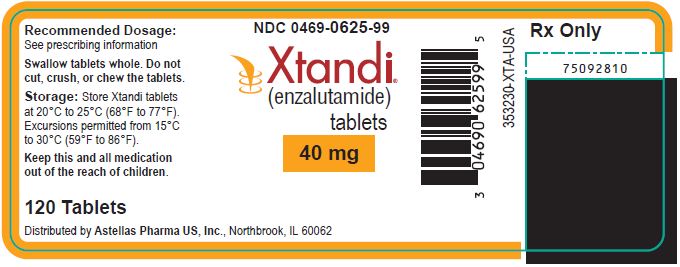
PACKAGE/LABEL PRINCIPAL DISPLAY PANEL NDC 0469-0625-99 Rx Only Xtandi ® (enzalutamide) tablets 40 mg Swallow tablets whole with a sufficient amount of water. Do not cut, crush or chew the tablets. 120 Tablets Distributed by Astellas Pharma US, Inc. , Northbrook, IL 60062 75104449 415196-XTA-USA 4006397 Xtandi (enzalutamide) tablets 40 mg label
PACKAGE/LABEL PRINCIPAL DISPLAY PANEL NDC 0469-0725-60 Rx Only Xtandi ® (enzalutamide) tablets 80 mg Swallow tablets whole with a sufficient amount of water. Do not cut, crush, or chew the tablets. 60 Tablets Distributed by Astellas Pharma US, Inc. , Northbrook, IL 60062 75104452 415196-XTA-USA 4006399 Xtandi (enzalutamide) tablets 80 mg label
PACKAGE/LABEL PRINCIPAL DISPLAY PANEL NDC 0469-1125-56 Rx Only Xtandi ® 40 mg 56 Soft Capsules SAMPLE SAMPLE – NOT FOR SALE Xtandi (enzalutamide) capsules blister sample 40 mg (outside)
PACKAGE/LABEL PRINCIPAL DISPLAY PANEL NDC 0469-1725-56 Rx Only Xtandi ® (enzalutamide) tablets 40 mg Swallow tablets whole with a sufficient amount of water. Do not cut, crush, or chew the tablets. 56 Tablets Sample – Not for Sale Distributed by Astellas Pharma US, Inc. , Northbrook, IL 60062 75104450 415196-XTA-USA 4006398 Xtandi (enzalutamide) tablets 40 mg label - Sample
Medicaid utilization & spend
Medicare Part D spend CMS · PART D · 2026 (Q1)
About this NDC listing & data coverage
What data is (and isn’t) available for this NDC — tap to expand
| NDC identity (package / product / labeler codes) | ✓ Available |
| Labeler | ✓ Available |
| Product & package description | ✓ Available |
| Marketing category & status | ✓ Available |
| Active ingredient / dosage form / route | ✓ Available |
| FDA label (SPL via DailyMed) | ✓ Available |
| Package photos | ✓ Available |
| Inactive ingredients (structured) | — Not published for this NDC The labeler did not submit a structured excipient list, or no SPL is available. |
| NADAC pharmacy acquisition price (CMS) | — Not published for this NDC CMS publishes NADAC only for NDCs reported in its retail-pharmacy survey. |
| Orange Book / therapeutic-equivalence data | ✓ Available |
| HCPCS J-code billing crosswalk | — Not published for this NDC Most self-administered / retail products have no J-code — that is normal. |
| Medicaid utilization (CMS SDUD) | ✓ Available |