
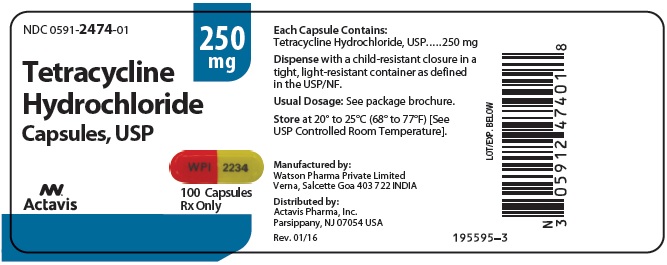
Tetracycline Hydrochloride 250 mg Capsule, 100-count — NDC 0591-2474-01 (Billing 00591-2474-01)
This is a package of 100 capsules of Tetracycline Hydrochloride 250 mg Capsule from Actavis Pharma, Inc., no longer marketed (first marketed Aug 2011), no longer in the FDA NDC Directory; retail pharmacies pay about $0.2472 per capsule (NADAC). It is the main listing for this product, which comes in 2 package sizes.
Identity & classification
Regulatory identifiers FDA, NLM and CMS codes for this package
Drug-database identifiers Medi-Span GPI and First Databank GCN / HICL / AHFS classification
- GSN (GCN sequence number): 009189
- GCN: 40072
- GPI-14 (Medi-Span): 04000060100105
- HICL (First Databank): 004003
- AHFS class code: 08:12.24.00
- RxCUI (RxNorm): 198250
Where does this data come from?
- FDA openFDA NDC Directory · synced Oct 1, 2026
- FDA label on DailyMed · label index refreshed Oct 1, 2026
- RxNorm (NLM RxNav) · catalog refreshed Oct 1, 2026
- Medi-Span GPI (licensed)
- First Databank (licensed) · refreshed Oct 1, 2026
RxNorm drug class
This medicine belongs to the Tetracycline-class Antimicrobial class.
Where does this data come from?
- RxClass (NLM) · catalog refreshed Oct 1, 2026
Clinical
Tetracycline is used to treat infections caused by bacteria and certain other infections spread by ticks, lice, mites, and infected animals. It is also used to treat acne.Tetracycline is in a class of medications called tetracycline antibiotics. It works to treat infections by stopping bacteria from growing and spreading. It works to treat acne by killing the bacteria that infects pores and by lowering the amount of oil on your skin that can cause acne. Antibiotics such as tetracycline will not work for colds, flu, or other viral infections. Using antibiotics when they are not needed increase...
Read the full MedlinePlus article ↗- The tablets and capsules treat certain bacterial infections, such as respiratory, skin and chlamydia infections, when the bacteria are susceptible. Topical products are first aid t...
- Swallow them with a full glass of water, and don't take them right before lying down. That helps prevent irritation of your esophagus. Food, dairy and antacids can block absorption...
- How should I take the capsules or tablets?
- Stomach upset is most common, including nausea, vomiting, diarrhea and loss of appetite. You may also burn more easily in the sun, so cover up. Call your doctor for severe diarrhea...
Patient education
Supplement & herbal interactions
Tetracycline may be associated with lower levels of 11 nutrients — worth a chat with your pharmacist, not a cause for alarm.
Where does this data come from?
- MedlinePlus (NLM) · refreshed Oct 1, 2026
- FDA label on DailyMed · label index refreshed Oct 1, 2026
Ask a licensed pharmacist directly — free, answered by our team.
Pricing
A drug doesn't have one price. Each row is a different public payment system, and none is what you'd pay at the counter — that depends on your insurance. The ⓘ on each row explains what it measures.
| Price system | Per ea | Per package |
|---|---|---|
| Retail pharmacies payNADAC · weekly | $0.247 | $24.72 / 100 capsules |
| Medicaid paysCMS SDUD · 12 mo | $0.6994 | $69.94 / 100 capsules |
| Medicare drug plans payPart D · Q2 2026 | $1.66 | $166.47 / 100 capsules |
Where does this data come from?
- CMS NADAC weekly file · file of Sep 30, 2026
- CMS ASP pricing files · refreshed Sep 20, 2026
- CMS Medicaid State Drug Utilization Data · through Q1 2026
- CMS Part D plan pricing files · refreshed Sep 24, 2026
- VA National Acquisition Center price file
Packaging — all sizes for this product
| Package NDC | Description | Per unit | Per pack | Marketing start | Marketing end | Status |
|---|---|---|---|---|---|---|
| 00591-2474-01 You're viewing this Main listing | 100 CAPSULE in 1 BOTTLE, PLASTIC | $0.2472 / ea | $24.72 | 2011-08-15 | — | Discontinued by firm |
| 00591-2474-00 0591-2474-00 | 37590 CAPSULE in 1 BOX | — | — | — | — | Active |
You're viewing the smallest of 2 pack sizes for this product.
Pack size FAQ
What quantity is in this package?
How does this package differ from NDC 00591-2474-00?
What NDC number is used to bill for this package of Tetracycline Hydrochloride 250 mg Capsule?
Prices are the latest CMS NADAC pharmacy acquisition cost per NDC; per-pack figures are per-unit × pack quantity, shown only when the pack is denominated in the same measure NADAC prices.
Therapeutic equivalents
| Product | Labeler | Pack | NADAC/unit | TE | Status | Price vs. this |
|---|---|---|---|---|---|---|
| Tetracycline Hydrochloride 250 mgthis 00591-2474-01 | Actavis | 100 capsules | $0.247 | AB | Discontinued | — |
| Tetracycline Hydrochloride 250 mg 23155-0766-01 | Heritage | 100 capsules | $0.247 | AB | Availability likely | — |
| Tetracycline Hydrochloride 250 mg 51991-0906-01 | Breckenridge | 100 capsules | $0.247 | AB | Availability likely | — |
| Tetracycline Hydrochloride 250 mg 60219-1522-01 | Amneal | 100 capsules | $0.247 | AB | Availability likely | — |
| Tetracycline Hydrochloride 250 mg 62135-0225-01 | Chartwell | 100 capsules | $0.247 | AB | Availability likely | — |
| Tetracycline Hydrochloride 250 mg 69238-1522-01 | Amneal | 100 capsules | $0.247 | AB | Availability likely | — |
| tetracycline hydrochloride 250 mg 23155-0017-01 | Heritage | 100 capsules | $0.769 | AB | FDA listed | +211% |
| Tetracycline Hydrochloride 250 mg 71335-2415-01 | Bryant | 20 capsules | — | AB | FDA listed | — |
| Tetracycline Hydrochloride 250 mg 71335-3170-01 | Bryant | 20 capsules | — | AB | FDA listed | — |
Where does this data come from?
- FDA openFDA NDC Directory · synced Oct 1, 2026
- FDA Orange Book · refreshed Sep 3, 2026
- CMS NADAC weekly file · file of Sep 30, 2026
Availability & generic status
This product is an FDA-approved generic. Other versions of the same drug are listed under Therapeutic equivalents, least expensive first.
Where does this data come from?
- FDA Orange Book · refreshed Sep 3, 2026
What it looks like
Where does this data come from?
- FDA label on DailyMed · label index refreshed Oct 1, 2026
Inactive Ingredients / Excipients
Inactive ingredients, also called excipients, are components of the drug product other than the active ingredient. They may include fillers, dyes, coatings, preservatives, flavors, or other formulation ingredients.
💡 Tap an ingredient (hover on desktop) to see what it is and why it’s used.
-
UNII 5138Q19F1X
Ammonia is a colorless gas made from nitrogen and hydrogen. It's used in medicines as a pH buffer to maintain the correct acidity level and help keep the product stable.
-
UNII 3SY5LH9PMK
Anhydrous lactose is a milk sugar with no water content. It acts as a filler and binder in tablets and capsules, adding bulk and helping ingredients stick together.
-
UNII 1678RKX8RT
A synthetic red dye used to color tablets, capsules, and liquid medicines. It helps make pills visually distinct and easier to identify.
-
UNII 35SW5USQ3G
A synthetic yellow dye used to color medicines. It helps make tablets, capsules, and liquids visually distinct so patients can easily identify their medication.
-
UNII H77VEI93A8
A synthetic yellow dye used to color medications. It helps identify the drug and make it visually distinctive, with no effect on how the medicine works.
-
UNII XM0M87F357
A dark iron oxide compound that gives medicines their black or dark color. It's used as a colorant in tablets and capsules to help identify the product and make it visually distinctive.
-
UNII 2G86QN327L
Gelatin is a protein derived from animal collagen, commonly used in medicines as a gelling agent and capsule material. It helps create soft or hard capsule shells that hold and release medication, and can also thicken liquid formulations.
-
UNII 70097M6I30
Magnesium stearate is a salt made from magnesium and stearic acid, a fatty substance. It's used in tablets and capsules as a lubricant and glidant to help ingredients flow smoothly during manufacturing and prevent sticking.
-
UNII 6DC9Q167V3
Propylene glycol is a clear liquid derived from petroleum or vegetable sources. It acts as a solvent, humectant, and preservative in medicines, helping dissolve active ingredients and maintain product stability.
-
UNII 46N107B71O
Shellac is a natural resin secreted by the lac beetle. It's used as a coating on tablets and capsules to control how quickly the medicine dissolves and to improve appearance and stability.
-
UNII 368GB5141J
A detergent and foaming agent derived from coconut or palm oil. In medications, it helps break down and mix oil and water-based ingredients, aids in tablet disintegration, and improves how the drug dissolves and spreads in the mouth or digestive system.
-
UNII 15FIX9V2JP
Titanium dioxide is a bright white mineral powder commonly used as a colorant and opacifying agent. It makes pills and tablets white or lighter in color and helps make coatings non-transparent.
12 inactive ingredients listed in the exact product block matched to this NDC.
Where does this data come from?
ingredient classCode="IACT" elements from the exact product block matched by this NDC. Label-section narrative from DailyMed / the openFDA label index is shown separately when available.- FDA label on DailyMed · label index refreshed Oct 1, 2026
- FDA openFDA NDC Directory · synced Oct 1, 2026
Inactive ingredient FAQ
Are inactive ingredients the same for every manufacturer?
Why might an inactive ingredient be missing?
Can inactive ingredients matter?
Manufacturer & labeler
Where does this data come from?
- FDA openFDA NDC Directory · synced Oct 1, 2026
- Drugs@FDA
Full prescribing information FDA SPL
🎯 Indications and Usage ▾
INDICATIONS AND USAGE To reduce the development of drug-resistant bacteria and maintain the effectiveness of tetracycline hydrochloride and other antibacterial drugs, tetracycline hydrochloride should be used only to treat infections that are proven or strongly suspected to be caused by susceptible bacteria. When culture and susceptibility information are available, they should be considered in selecting or modifying antibacterial therapy. In the absence of such data, local epidemiology and susceptibility patterns may contribute to the empiric selection of therapy.
Tetracycline is indicated in the treatment of infections caused by susceptible strains of the designated organisms in the conditions listed below: Upper respiratory tract infections caused by Streptococcus pyogenes , Streptococcus pneumoniae and Hemophilus influenzae . Note: Tetracycline should not be used for streptococcal disease unless the organism has been demonstrated to be susceptible. Lower respiratory tract infections caused by Streptococcus pyogenes , Streptococcus pneumoniae , Mycoplasma pneumoniae (Eaton agent, and Klebsiella sp. ).
Skin and soft tissue infections caused by Streptococcus pyogenes , Staphylococcus aureaus . (Tetracyclines are not the drugs of choice in the treatment of any type of staphylococcal infections.) Infections caused by rickettsia including Rocky Mountain spotted fever, typhus group infections, Q fever, rickettsialpox. Psittacosis caused by Chlamydophila psittaci .
Infections caused by Chlamydia trachomatis such as uncomplicated urethral, endocervical or rectal infections, inclusion conjunctivitis, trachoma, and lymphogranuloma venereum. Granuloma inquinale caused by Klebsiella granulomatis . Relapsing fever caused by Borrelia sp .
Bartonellosis caused by Bartonella bacilliformis . Chancroid caused by Hemophilus ducreyi . Tularemia caused by Francisella tularensis .
Plaque caused by Yersinia pestis . Cholera caused by Vibrio cholerae . Brucellosis caused by Brucella species (tetracycline may be used in conjunction with an aminoglycoside).
Infections due to Campylobacter fetus . As adjunctive therapy in intestinal amebiasis caused by Entamoeba histolytica . Urinary tract infections caused by susceptible strains of Escherichia coli , Klebsiella , etc.
Other infections caused by susceptible gram-negative organisms such as E. coli , Enterobacter aerogenes, Shigella sp., Acinetobacter sp ., Klebsiella sp ., and Bacteroides sp. In severe acne, adjunctive therapy with tetracycline may be useful. When penicillin is contraindicated, tetracyclines are alternative drugs in the treatment of the following infections: Syphilis and yaws caused by Treponema pallidum and pertenue , respectively, Vincent’s infection caused by Fusobacterium fusiforme , Infections caused by Neisseria gonorrhoeae , Anthrax caused by Bacillus anthracis , Infections due to Listeria monocytogenes , Actinomycosis caused by Actinomyces species, Infections due to Clostridium species.
⏱️ Dosage and Administration ▾
DOSAGE AND ADMINISTRATION Adults: Usual daily dose, 1 gram as 500 mg twice a day or 250 mg four times a day. Higher doses such as 500 mg four times a day may be required for severe infections or for those infections which do not respond to the smaller doses. For pediatric patients above eight years of age: Usual daily dose, 10 mg/lb to 20 mg/lb (25 mg/kg to 50 mg/kg) body weight divided in four equal doses.
Administration of adequate amounts of fluid with the capsule formulation of tetracycline is recommended to wash down the drug and reduce the risk of esophageal irritation and ulceration (see ADVERSE REACTIONS ). Absorption of tetracycline is impaired by antacids containing aluminum, calcium or magnesium and preparations containing iron, zinc or sodium bicarbonate. Food and some dairy products also interfere with absorption.
When used in streptococcal infections, therapy should be continued for 10 days. For treatment of brucellosis, 500 mg tetracycline four times a day for three weeks accompanied by streptomycin, 1 gram intramuscularly twice daily the first week and once daily the second week. For the treatment of syphilis in patients allergic to penicillin, the following dosage of tetracycline is recommended: early syphilis (less than one year’s duration), 500 mg four times a day for 15 days.
Syphilis of more than one year’s duration (except neurosyphilis), 500 mg four times a day for 30 days. For treatment of gonorrhea, the recommended dose is 500 mg by mouth four times a day for seven days. Uncomplicated urethral, endocervical or rectal infections in adults caused by Chlamydiatrachomatis : 500 mg, by mouth, four times a day for at least seven days.
In cases of moderate to severe acne which, in the judgement of the clinician, require long-term treatment, the recommended initial dosage is 1 gram daily in divided doses. When improvement is noted, reduce dosage gradually to maintenance levels ranging from 125 mg to 500 mg daily. In some patients it may be possible to maintain adequate remission of lesions with alternate day or intermittent therapy.
Tetracycline therapy of acne should augment the other standard measures known to be of value. Duration of long-term treatment which can safely be recommended has not been established (see WARNINGS and Carcinogenesis, Mutagenesis, Impairment of Fertility ). Use in Specific Population In patients with renal impairment (see WARNINGS ): decrease total dosage by reduction of recommended individual doses and/or by extending time intervals between doses.
⛔ Contraindications ▾
CONTRAINDICATIONS This drug is contraindicated in persons who have shown hypersensitivity to any of the tetracyclines.
⚠️ Warnings ▾
WARNINGS Tooth Development The use of drugs of the tetracycline-class during tooth development (last half of pregnancy, infancy and childhood to the age of 8 years) may cause permanent discoloration of the teeth (yellow-gray-brown). This adverse reaction is more common during long-term use of the drugs but it has been observed following repeated short-term courses. Enamel hypoplasia has also been reported.
Tetracycline drugs should not be used in this age group, except for anthrax, unless other drugs are not likely to be effective or are contraindicated. Clostridium difficile Associated Diarrhea Clostridium difficile associated diarrhea (CDAD) has been reported with use of nearly all antibacterial agents, including tetracyclines, and may range in severity from mild diarrhea to fatal colitis. Treatment with antibacterial agents alters the normal flora of the colon leading to overgrowth of C. difficile .
C. difficile produces toxins A and B which contribute to the development of CDAD. Hypertoxin producing strains of C. difficile cause increased morbidity and mortality, as these infections can be refractory to antimicrobial therapy and may require colectomy. CDAD must be considered in all patients who present with diarrhea following antibacterial drugs.
Careful medical history is necessary since CDAD has been reported to occur over two months after the administration of antibacterial agents. If CDAD is suspected or confirmed, ongoing use of antibacterial drugs not directed against C. difficile need to be discontinued. Appropriate fluid and electrolyte management, protein supplementation, antibacterial treatment of C. difficile , and institute surgical evaluation clinically indicated.
Photosensitivity Photosensitivity manifested by an exaggerated sunburn reaction has been observed in some individuals taking tetracyclines. Advise patients apt to be exposed to direct sunlight or ultraviolet lights that this reaction can occur with tetracycline drugs. Discontinue treatment at the first evidence of skin erythema.
Fixed Drug Eruption Fixed drug eruptions have occurred with tetracycline and have been associated with worsening severity upon subsequent administrations, including generalized bullous fixed drug eruption (see ADVERSE REACTIONS ). If severe skin reactions occur, discontinue tetracycline hydrochloride capsules immediately and institute appropriate therapy. Intracranial Hypertension Intracranial hypertension (IH, pseudotumor cerebri) has been associated with the use of tetracyclines including Achromycin V.
Clinical manifestations of IH include headache, blurred vision, diplopia, and vision loss; papilledema can be found on fundoscopy. Women of childbearing age who are overweight or have a history of IH are at greater risk for developing tetracycline associated IH. Concomitant use of isotretinoin and tetracycline should be avoided because isotretinoin, a systemic retinoid, is also known to cause pseudotumor cerebri.
Although IH typically resolves after discontinuation of treatment, the possibility for permanent visual loss exists. If visual disturbance occurs during treatment, prompt ophthalmologic evaluation is warranted. Since intracranial pressure can remain elevated for weeks after drug cessation patients should be monitored until they stabilize.
Skeletal Development All tetracyclines form a stable calcium complex in any bone forming tissue. A decrease in fibula growth rate has been observed in premature infants given oral tetracycline in doses of 25 mg/kg every six hours. This reaction was shown to be reversible when the drug was discontinued.
Results of animal studies indicate that tetracyclines cross the placenta, are found in fetal tissues and can have toxic effects on the developing fetus (often related to retardation of skeletal development). Evidence of embryotoxicity has also been noted in animals treated early in pregnancy. If this drug is used during pregnancy or if the patient becomes pregnant while taking this dr… [Excerpted — this section continues on DailyMed.]
🤒 Adverse Reactions ▾
ADVERSE REACTIONS Gastrointestinal: anorexia, nausea, epigastric distress, vomiting, diarrhea, glossitis, black hairy tongue, dysphagia, enterocolitis, and inflammatory lesions (with Candida overgrowth) in the anogenital region. Esophagitis and esophageal ulceration have been reported in patients receiving particularly the capsule and also the tablet forms of tetracyclines. Most of the patients were reported to have taken medication immediately before going to bed (see DOSAGE AND ADMINISTRATION ).
Teeth: permanent discoloration of teeth may be caused during tooth development. Enamel hypoplasia has been reported (see WARNINGS ). Skin: fixed drug eruption, maculopapular and erythematous rashes.
Exfoliative dermatitis has been reported. Onycholysis and discoloration of the nails have been reported. Photosensitivity is discussed in WARNINGS .
Renal Toxicity: an increase in BUN has been reported and is dose related. Liver: hepatotoxicity and liver failure have been observed in patients receiving tetracycline and in tetracycline-treated patients with renal impairment. Hypersensitivity Reactions: urticaria, angioneurotic edema, anaphylaxis, anaphylactoid purpura, pericarditis, exacerbation of systemic lupus erythematosus, and serum sickness-like reactions, as fever, rash, and arthralgia.
Blood: hemolytic anemia, thrombocytopenia, thrombocytopenic purpura, neutropenia and eosinophilia have been reported. When given over prolonged periods, tetracyclines have been reported to produce brown-black microscopic discoloration of thyroid glands. No abnormalities of thyroid function studies are known to occur.
To report SUSPECTED ADVERSE REACTIONS, contact Teva at 1-888-838-2872 or FDA at 1-800-FDA-1088 or www.fda.gov/medwatch.
🔄 Drug Interactions ▾
Drug Interactions Since bacteriostatic drugs may interfere with the bactericidal action of penicillin, it is advisable to avoid giving tetracycline in conjunction with penicillin or other bactericidal antibacterials. Because the tetracyclines have been shown to depress plasma prothrombin activity, patients who are on anticoagulant therapy may require downward adjustment of their anticoagulant dosage. Absorption of tetracyclines is impaired by antacids containing aluminum, calcium or magnesium and preparations containing iron, zinc, or sodium bicarbonate.
Concurrent use of tetracycline may render oral contraceptives less effective.
🤰 Pregnancy ▾
Pregnancy Teratogenic Effects (see WARNINGS ) Nonteratogenic Effects (see WARNINGS ) Pregnant women with renal disease may be more prone to develop tetracycline-associated liver failure.
🧒 Pediatric Use ▾
Pediatric Use See WARNINGS and DOSAGE AND ADMINISTRATION .
🆘 Overdosage ▾
OVERDOSAGE In case of overdosage, discontinue medication, treat symptomatically and institute supportive measures. Tetracycline is not dialyzable.
🧬 Clinical Pharmacology ▾
CLINICAL PHARMACOLOGY Tetracyclines are readily absorbed and are bound to plasma protein in varying degrees. They are concentrated by the liver in the bile and excreted in the urine and feces at high concentrations in a biologically active form. Microbiology Tetracyclines are primarily bacteriostatic and exert their antimicrobial effect by the inhibition of protein synthesis by binding to the 30S ribosomal subunit.
Tetracycline is active against a broad range of gram-negative and gram-positive organisms. The drugs in the tetracycline class have closely similar antimicrobial spectra, and cross-resistance among them is common. Tetracycline has been shown to be active against most isolates of the following bacteria, both in vitro and in clinical infections as described in the INDICATIONS AND USAGE section of the package insert.
Gram-negative Bacteria Acinetobacter species Haemophilus influenzae Bartonella bacilliformis Klebsiella species Brucella species Klebsiella granulomatis Campylobacter fetus Neisseria gonorrhoeae Enterobacter aerogenes Shigella species Escherichia coli Vibrio cholera e Francisella tularensis Yersinia pestis Haemophilus ducreyi Gram-positive Bacteria Bacillus anthracis Staphylococcus aureus Streptococcus pyogenes Listeria monocytogenes Streptococcus pneumoniae Anaerobes Bacteroides species Fusobacterium fusiforme Clostridium species Propionibacterium acnes Other Bacteria Actinomyces species Rickettsiae Borrelia recurrentis Treponema pallidum Chlamydophila psittaci Treponema pallidum subspecies pertenue Chlamydia trachomatis Parasites Entamoeba species Balantidium coli Susceptibility Testing For specific information regarding susceptibility test interpretive criteria and associated test methods and quality control standards recognized by FDA for this drug, please see: https://www.fda.gov/STIC.
📦 How Supplied / Storage and Handling ▾
HOW SUPPLIED Tetracycline hydrochloride capsules, USP are available as: 250 mg: Capsules with orange opaque cap/yellow opaque body, imprinted with “ WPI ” on cap and “ 2234 ” on body. Available in bottles of 100 (NDC 0591-2474-01). 500 mg: Capsules with black opaque cap/yellow opaque body, imprinted with “ WPI ” on cap and “ 2235 ” on body.
Available in bottles of 100 (NDC 0591-2475-01). Dispense in a tight, light-resistant container as defined in the USP, with a child-resistant closure (as required). Store at 20° to 25°C (68° to 77°F) [see USP Controlled Room Temperature].
Call your doctor for medical advice about side effects. You may report side effects to FDA at 1-800-FDA-1088. Keep this and all medications out of the reach of children.
📋 Description ▾
DESCRIPTION Tetracycline, USP is a yellow, odorless, crystalline powder. Tetracycline, USP is stable in air but exposure to strong sunlight causes it to darken. Its potency is affected in solutions of pH below 2 and is rapidly destroyed by alkali hydroxide solutions.
Tetracycline, USP is very slightly soluble in water, freely soluble in dilute acid and in alkali hydroxide solutions, sparingly soluble in alcohol, and practically insoluble in chloroform and in ether. The chemical name for tetracycline hydrochloride is 4-(Dimethylamino)-1,4,4a,5,5a,6,11,12a-octahydro-3,6,10,12,-12a-pentahydroxy-6-methyl-1,11-dioxo-2-naphthacenecar-boxamide monohydrochloride. Its structural formula is as follows: Each capsule, for oral administration, contains tetracycline hydrochloride USP, 250 mg or 500 mg.
Inactive Ingredients: Anhydrous lactose, magnesium stearate, and sodium lauryl sulfate. The 250 mg capsule shell contains D&C Red No. 22, D&C Yellow No.
10, FD&C Yellow No. 6, gelatin, and titanium dioxide. The imprinting ink for the 250 mg capsule contains ammonium hydroxide, black iron oxide, propylene glycol, shellac glaze.
The 500 mg capsule shell contains D&C Yellow No. 10, FD&C Blue No.1, FD&C Red No. 40, gelatin, and titanium dioxide.
The imprinting ink for the 500 mg capsule contains propylene glycol, shellac glaze, titanium dioxide. new
💬 Information for Patients ▾
Information for Patients Counsel patients that antibacterial drugs including tetracycline should only be used to treat bacterial infections. They do not treat viral infections (e.g., the common cold). When tetracycline is prescribed to treat a bacterial infection, tell patients that although it is common to feel better early in the course of therapy, the medication should be taken exactly as directed.
Skipping doses or not completing the full course of therapy may (1) decrease the effectiveness of the immediate treatment and (2) increase the likelihood that bacteria will develop resistance and will not be treatable by tetracycline or other antibacterial drugs in the future.
⚠️ Precautions ▾
PRECAUTIONS General As with other antibacterials, use of this drug may result in overgrowth of nonsusceptible organisms, including fungi. If superinfection occurs, discontinue antibacterial and institute appropriate therapy. Treat all infections due to Group A beta-hemolytic streptococci for at least ten days.
Perform incision and drainage or other surgical procedures in conjunction with antibacterial therapy, when indicated. Prescribing tetracycline in the absence of proven or strongly suspected bacterial infection or a prophylactic indication is unlikely to provide benefit to the patient and increases the risk of the development of drug-resistant bacteria. Information for Patients Counsel patients that antibacterial drugs including tetracycline should only be used to treat bacterial infections.
They do not treat viral infections (e.g., the common cold). When tetracycline is prescribed to treat a bacterial infection, tell patients that although it is common to feel better early in the course of therapy, the medication should be taken exactly as directed. Skipping doses or not completing the full course of therapy may (1) decrease the effectiveness of the immediate treatment and (2) increase the likelihood that bacteria will develop resistance and will not be treatable by tetracycline or other antibacterial drugs in the future.
Laboratory Tests In sexually transmitted infections, when coexistent syphilis is suspected, perform dark field examinations before treatment is started and the blood serology repeated monthly for at least four months. Drug Interactions Since bacteriostatic drugs may interfere with the bactericidal action of penicillin, it is advisable to avoid giving tetracycline in conjunction with penicillin or other bactericidal antibacterials. Because the tetracyclines have been shown to depress plasma prothrombin activity, patients who are on anticoagulant therapy may require downward adjustment of their anticoagulant dosage.
Absorption of tetracyclines is impaired by antacids containing aluminum, calcium or magnesium and preparations containing iron, zinc, or sodium bicarbonate. Concurrent use of tetracycline may render oral contraceptives less effective. Carcinogenesis, Mutagenesis, Impairment of Fertility Long-term animal studies are currently being conducted to determine whether tetracycline hydrochloride has carcinogenic potential.
Some related antibacterials (oxytetracycline, minocycline) have shown evidence of oncogenic activity in rats. In two in vitro mammalian cell assay systems (L 51784y mouse lymphoma and Chinese hamster lung cells), there was evidence of mutagenicity with tetracycline hydrochloride. Tetracycline hydrochloride had no effect on fertility when administered in the diet to male and female rats at a daily intake of approximately 400 mg/kg/day, roughly 8 times the highest recommended human dose based on body surface area.
Pregnancy Teratogenic Effects (see WARNINGS ) Nonteratogenic Effects (see WARNINGS ) Pregnant women with renal disease may be more prone to develop tetracycline-associated liver failure. Labor and Delivery The effect of tetracyclines on labor and delivery is unknown. Nursing Mothers Because of potential for serious adverse reaction in nursing infants from tetracyclines, a decision should be made whether to discontinue the drug, taking into account the importance of the drug to the mother (see WARNINGS ).
Pediatric Use See WARNINGS and DOSAGE AND ADMINISTRATION .
🍼 Nursing Mothers ▾
Nursing Mothers Because of potential for serious adverse reaction in nursing infants from tetracyclines, a decision should be made whether to discontinue the drug, taking into account the importance of the drug to the mother (see WARNINGS ).
📄 Carcinogenesis, Mutagenesis, Impairment of Fertility ▾
Carcinogenesis, Mutagenesis, Impairment of Fertility Long-term animal studies are currently being conducted to determine whether tetracycline hydrochloride has carcinogenic potential. Some related antibacterials (oxytetracycline, minocycline) have shown evidence of oncogenic activity in rats. In two in vitro mammalian cell assay systems (L 51784y mouse lymphoma and Chinese hamster lung cells), there was evidence of mutagenicity with tetracycline hydrochloride.
Tetracycline hydrochloride had no effect on fertility when administered in the diet to male and female rats at a daily intake of approximately 400 mg/kg/day, roughly 8 times the highest recommended human dose based on body surface area.
📄 Package Label / Principal Display Panel ▾
PRINCIPAL DISPLAY PANEL NDC 0591-2474-01 Tetracycline Hydrochloride Capsules, USP 250 mg Rx only 100 Capsules 250mg
PRINCIPAL DISPLAY PANEL NDC 0591-2475-01 Tetracycline Hydrochloride Capsules, USP 500 mg Rx only 100 Capsules 500mg
Medicaid utilization & spend
Medicaid utilization by pack size
Reported adverse events (FAERS)
Top reported reactions
Age at onset
Reporter sex
Serious outcomes
Where does this data come from?
About this NDC listing & data coverage
What data is (and isn’t) available for this NDC — tap to expand
| NDC identity (package / product / labeler codes) | ✓ Available |
| Labeler | ✓ Available |
| Product & package description | ✓ Available |
| Marketing category & status | ✓ Available |
| Active ingredient / dosage form / route | ✓ Available |
| FDA label (SPL via DailyMed) | ✓ Available |
| Package photos | ✓ Available |
| Inactive ingredients (structured) | ✓ Available |
| NADAC pharmacy acquisition price (CMS) | ✓ Available |
| Orange Book / therapeutic-equivalence data | ✓ Available |
| HCPCS J-code billing crosswalk | — Not published for this NDC Most self-administered / retail products have no J-code — that is normal. |
| Medicaid utilization (CMS SDUD) | ✓ Available |