
Tamoxifen Citrate 20 mg Tablet, 90-count — NDC 0591-2473-19 (Billing 00591-2473-19)
This is a package of 90 tablets of Tamoxifen Citrate 20 mg Tablet from Actavis Pharma, Inc., marketed since Aug 2011 and currently FDA-listed; retail pharmacies pay about $0.2768 per tablet (NADAC).
NDC database record
One package, one record: these facts belong to NDC 0591-2473-19 alone.
- Record
- FDA NDC Directory package listing · Human prescription drug
- Code segments
- 0591 labeler · 2473 product · 19 package
- Package marketed since
- Aug 15, 2011
- Sample package
- No — commercial package
- Listing certified through
- Dec 31, 2026
- Billing quantity
- 90 EA per package
- Barcode (UPC-A, from the NDC)
- 3 0591247319 6
- Medicaid fills, this package
- 3,387 prescriptions in the last four reported quarters
- FDA record last changed
- Jul 24, 2026
Identity & classification
Regulatory identifiers FDA, NLM and CMS codes for this package
Drug-database identifiers Medi-Span GPI and First Databank GCN / HICL / AHFS classification
- GSN (GCN sequence number): 013574
- GCN: 38721
- GPI-14 (Medi-Span): 21402680100320
- HICL (First Databank): 003926
- AHFS class code: 10:00.00.00
- RxCUI (RxNorm): 198240
Where does this data come from?
- FDA openFDA NDC Directory · synced Oct 8, 2026
- FDA label on DailyMed · label index refreshed Oct 8, 2026
- RxNorm (NLM RxNav) · catalog refreshed Oct 1, 2026
- Medi-Span GPI (licensed)
- First Databank (licensed) · refreshed Oct 8, 2026
RxNorm drug class
This medicine belongs to the Estrogen Agonist/Antagonist class.
Where does this data come from?
- RxClass (NLM) · catalog refreshed Oct 1, 2026
Clinical
Tamoxifen is used to treat breast cancer that has spread to other parts of the body in men and women. It is used to treat early breast cancer in women who have already been treated with surgery, radiation, and/or chemotherapy. It is used to reduce the risk of developing a more serious type of breast cancer in women who have had ductal carcinoma in situ (DCIS; a type of breast cancer that does not spread outside of the milk duct where it forms) and who have been treated with surgery and radiation. It is used to reduce the risk of breast cancer in women who are at high risk for the disease due t...
Read the full MedlinePlus article ↗- Tamoxifen works by blocking estrogen from fueling breast cancer cells — think of it as putting a lock on the door that estrogen uses to make cancer grow. Depending on your situatio...
- What exactly is tamoxifen supposed to do for me?
- For most breast cancer uses — including after surgery and for DCIS or high-risk reduction — treatment is typically 5 years. In some adjuvant situations, Soltamox may be used for up...
- Hot flashes and vaginal changes (dryness, discharge, or irregular periods) are the most common things people notice — they're uncomfortable but generally manageable. Nausea, mood c...
Patient education
Supplement & herbal interactions
Some supplements/herbs that may interact with Tamoxifen Citrate — tap one for details:
Where does this data come from?
- MedlinePlus (NLM) · refreshed Oct 8, 2026
- FDA label on DailyMed · label index refreshed Oct 8, 2026
Ask a licensed pharmacist directly — free, answered by our team.
Pricing
A drug doesn't have one price. Each row is a different public payment system, and none is what you'd pay at the counter — that depends on your insurance. The ⓘ on each row explains what it measures.
| Price system | Per ea | Per package |
|---|---|---|
| Retail pharmacies payNADAC · weekly | $0.277 | $24.91 / 90 tablets |
| Medicaid paysCMS SDUD · 12 mo | $0.4765 | $42.89 / 90 tablets |
| Medicare drug plans payPart D · Q2 2026 | $0.3161 | $28.45 / 90 tablets |
Where does this data come from?
- CMS NADAC weekly file · file of Oct 7, 2026
- CMS ASP pricing files · refreshed Sep 20, 2026
- CMS Medicaid State Drug Utilization Data · through Q1 2026
- CMS Part D plan pricing files · refreshed Sep 24, 2026
- VA National Acquisition Center price file
Packaging — all sizes for this product
| Package NDC | Description | Per unit | Per pack | Marketing start | Marketing end | Status |
|---|---|---|---|---|---|---|
| 00591-2473-19 You're viewing this | 90 TABLET in 1 BOTTLE, PLASTIC | $0.2768 / ea | $24.91 | 2011-08-15 | — | Active |
| 00591-2473-30 0591-2473-30 Main listing | 30 TABLET in 1 BOTTLE, PLASTIC | $0.2768 / ea | $8.30 | 2011-08-15 | — | Active |
You're viewing the largest of 2 pack sizes for this product.
This pack has the lowest per-ea cost of the 2 priced pack sizes ($0.2768 NADAC).
This pack accounts for about 19% of this product's recent Medicaid fills; most go to the 30 tablets pack. See all packs ↓
Pack size FAQ
What quantity is in this package?
How does this package differ from NDC 00591-2473-30?
What NDC number is used to bill for this package of Tamoxifen Citrate 20 mg Tablet?
Prices are the latest CMS NADAC pharmacy acquisition cost per NDC; per-pack figures are per-unit × pack quantity, shown only when the pack is denominated in the same measure NADAC prices.
Therapeutic equivalents
| Product | Labeler | Pack | NADAC/unit | TE | Status | Price vs. this |
|---|---|---|---|---|---|---|
| Tamoxifen Citrate 20 mg 00378-0274-93 | Mylan | 30 tablets | $0.277 | AB | Availability likely | — |
| Tamoxifen Citrate 20 mgthis 00591-2473-19 | Actavis | 90 tablets | $0.277 | AB | Availability likely | — |
| Tamoxifen Citrate 20 mg 59651-0300-30 | Aurobindo | 30 tablets | $0.277 | AB | Availability likely | — |
| Tamoxifen Citrate 20 mg 75907-0059-10 | Dr. | 1000 tablets | $0.277 | AB | Availability likely | — |
| Tamoxifen Citrate 20 mg 51862-0643-10 | Mayne | 1000 tablets | $0.285 | AB | FDA listed | +3% |
| Tamoxifen Citrate 20 mg 50090-0942-00 | A-S | 90 tablets | — | AB | FDA listed | — |
| Tamoxifen Citrate 20 mg 63187-0976-30 | Proficient | 30 tablets | — | AB | FDA listed | — |
| Tamoxifen Citrate 20 mg 72162-2209-03 | Bryant | 30 tablets | — | AB | FDA listed | — |
Where does this data come from?
- FDA openFDA NDC Directory · synced Oct 8, 2026
- FDA Orange Book · refreshed Oct 3, 2026
- CMS NADAC weekly file · file of Oct 7, 2026
Availability & generic status
This product is an FDA-approved generic. Other versions of the same drug are listed under Therapeutic equivalents, least expensive first.
Where does this data come from?
- FDA Orange Book · refreshed Oct 3, 2026
What it looks like
Where does this data come from?
- FDA label on DailyMed · label index refreshed Oct 8, 2026
Inactive Ingredients / Excipients
Inactive ingredients, also called excipients, are components of the drug product other than the active ingredient. They may include fillers, dyes, coatings, preservatives, flavors, or other formulation ingredients.
🧪 Avoiding an ingredient? See Tamoxifen inactive ingredients by manufacturer: every current product's list side by side, so you can ask your pharmacy for the version that does not list it.
💡 Tap an ingredient (hover on desktop) to see what it is and why it’s used.
-
UNII OP1R32D61U
Microcrystalline cellulose is a purified form of cellulose, a natural fiber from plant sources. It acts as a binder and filler in tablets and capsules, helping hold ingredients together and give the medicine its shape and size.
-
UNII M28OL1HH48
Croscarmellose sodium is a plant-based substance derived from cellulose. It acts as a disintegrant, helping tablets and capsules break down quickly in the digestive system so the medicine can be absorbed.
-
UNII EWQ57Q8I5X
Lactose monohydrate is a natural sugar derived from milk. It serves as a filler and binder in tablets and capsules, helping create the proper size, texture, and consistency of the medicine.
-
UNII 70097M6I30
Magnesium stearate is a salt made from magnesium and stearic acid, a fatty substance. It's used in tablets and capsules as a lubricant and glidant to help ingredients flow smoothly during manufacturing and prevent sticking.
-
UNII O8232NY3SJ
A plant-based carbohydrate derived from corn kernels. It acts as a filler to add bulk, a binder to hold ingredients together, and a disintegrant to help the tablet break apart in your stomach for absorption.
5 inactive ingredients listed in the exact product block matched to this NDC.
Where does this data come from?
ingredient classCode="IACT" elements from the exact product block matched by this NDC. Label-section narrative from DailyMed / the openFDA label index is shown separately when available.- FDA label on DailyMed · label index refreshed Oct 8, 2026
- FDA openFDA NDC Directory · synced Oct 8, 2026
Inactive ingredient FAQ
Are inactive ingredients the same for every manufacturer?
Why might an inactive ingredient be missing?
Can inactive ingredients matter?
Manufacturer & labeler
More NDCs from Actavis Pharma, Inc. labeler code 00591
- Isotretinoin 10 mg Capsule NDC 0591-2433-15
- Isotretinoin 20 mg Capsule NDC 0591-2434-15
- Isotretinoin 30 mg Capsule NDC 0591-2435-15
- Isotretinoin 40 mg Capsule NDC 0591-2436-15
- Isotretinoin 25 mg Capsule NDC 0591-2451-15
- Tamoxifen Citrate 10 mg Tablet NDC 0591-2472-18
- Tetracycline Hydrochloride 250 mg Capsule NDC 0591-2474-00
- Tetracycline Hydrochloride 500 mg Capsule NDC 0591-2475-00
- Isotretinoin 35 mg Capsule NDC 0591-2501-15
- Budesonide 9 mg Tablet, Film Coated, Extended Release NDC 0591-2510-30
- bosentan 62.5 mg Tablet, Film Coated NDC 0591-2511-60
- bosentan 125 mg Tablet, Film Coated NDC 0591-2512-60
Where does this data come from?
- FDA openFDA NDC Directory · synced Oct 8, 2026
- Drugs@FDA
Full prescribing information FDA SPL
🚨 Boxed Warning ▾
WARNING For Women with Ductal Carcinoma in Situ (DCIS) and Women at High Risk for Breast Cancer Serious and life-threatening events associated with tamoxifen in the risk reduction setting (women at high risk for cancer and women with DCIS) include uterine malignancies, stroke and pulmonary embolism. Incidence rates for these events were estimated from the NSABP P-1 trial (see CLINICAL PHARMACOLOGY, Clinical Studies , Reduction in Breast Cancer Incidence in High Risk Women ). Uterine malignancies consist of both endometrial adenocarcinoma (incidence rate per 1,000 women-years of 2.20 for tamoxifen vs.
0.71for placebo) and uterine sarcoma (incidence rate per 1,000 women-years of 0.17 for tamoxifen vs. 0.4 for placebo)*. For stroke, the incidence rate per 1,000 women-years was 1.43 for tamoxifen vs.
1.00for placebo**. For pulmonary embolism, the incidence rate per 1,000 women-years was 0.75 for tamoxifen versus 0.25 for placebo**. Some of the strokes, pulmonary emboli, and uterine malignancies were fatal.
Health care providers should discuss the potential benefits versus the potential risks of these serious events with women at high risk of breast cancer and women with DCIS considering tamoxifen to reduce their risk of developing breast cancer. The benefits of tamoxifen citrate outweigh its risks in women already diagnosed with breast cancer. *Updated long-term follow-up data (median length of follow-up is 6.9 years) from NSABP P-1 study. See WARNINGS: Effects on the Uterus-Endometrial Cancer and Uterine Sarcoma . **See Table 3 under CLINICAL PHARMACOLOGY, Clinical Studies .
🎯 Indications and Usage ▾
INDICATIONS AND USAGE Metastatic Breast Cancer: Tamoxifen citrate tablets, USP are effective in the treatment of metastatic breast cancer in women and men. In premenopausal women with metastatic breast cancer, tamoxifen is an alternative to oophorectomy or ovarian irradiation. Available evidence indicates that patients whose tumors are estrogen receptor positive are more likely to benefit from tamoxifen therapy.
Adjuvant Treatment of Breast Cancer: Tamoxifen citrate tablets, USP are indicated for the treatment of node-positive breast cancer in women following total mastectomy or segmental mastectomy, axillary dissection, and breast irradiation. In some tamoxifen adjuvant studies, most of the benefit to date has been in the subgroup with four or more positive axillary nodes. Tamoxifen citrate tablets, USP are indicated for the treatment of axillary node-negative breast cancer in women following total mastectomy or segmental mastectomy, axillary dissection, and breast irradiation.
The estrogen and progesterone receptor values may help to predict whether adjuvant tamoxifen therapy is likely to be beneficial. Tamoxifen reduces the occurrence of contralateral breast cancer in patients receiving adjuvant tamoxifen therapy for breast cancer. Ductal Carcinoma in Situ (DCIS): In women with DCIS, following breast surgery and radiation, tamoxifen citrate tablets are indicated to reduce the risk of invasive breast cancer (see BOXED WARNING at the beginning of the label).
The decision regarding therapy with tamoxifen for the reduction in breast cancer incidence should be based upon an individual assessment of the benefits and risks of tamoxifen therapy. Current data from clinical trials support 5 years of adjuvant tamoxifen therapy for patients with breast cancer. Reduction in Breast Cancer Incidence in High Risk Women: Tamoxifen citrate tablets are indicated to reduce the incidence of breast cancer in women at high risk for breast cancer.
This effect was shown in a study of 5 years planned duration with a median follow-up of 4.2 years. Twenty-five percent of the participants received drug for 5 years. The longer-term effects are not known.
In this study, there was no impact of tamoxifen on overall or breast cancer-related mortality (see BOXED WARNING at the beginning of the label). Tamoxifen citrate tablets are indicated only for high-risk women. “High risk” is defined as women at least 35 years of age with a 5-year predicted risk of breast cancer ≥1.67%, as calculated by the Gail Model. Examples of combinations of factors predicting a 5-year risk ≥1.67% are: Age 35 or older and any of the following combination of factors: One first degree relative with a history of breast cancer, 2 or more benign biopsies, and a history of a breast biopsy showing atypical hyperplasia; or At least 2 first degree relatives with a history of breast cancer, and a personal history of at least one breast biopsy; or LCIS Age 40 or older and any of the following combination of factors: One first degree relative with a history of breast cancer, 2 or more benign biopsies, age at first live birth 25 or older, and age at menarche 11 or younger; or At least 2 first degree relatives with a history of breast cancer, and age at first live birth 19 or younger; or One first degree relative with a history of breast cancer, and a personal history of a breast biopsy showing atypical hyperplasia.
Age 45 or older and any of the following combination of factors: At least 2 first degree relatives with a history of breast cancer and age at first live birth 24 or younger; or One first degree relative with a history of breast cancer with a personal history of a benign breast biopsy, age at menarche 11 or less and age at first live birth 20 or more. Age 50 or older and any of the following combination of factors: At least 2 first degree relatives with a history of breast cancer; or History of 1 breast biopsy showing atypical hyperplasia, and age at first live birth 30 or older and a… [Excerpted — this section continues on DailyMed.]
⏱️ Dosage and Administration ▾
DOSAGE AND ADMINISTRATION For patients with breast cancer, the recommended daily dose is 20 to 40 mg. Dosages greater than 20 mg per day should be given in divided doses (morning and evening). In three single agent adjuvant studies in women, one 10 mg tamoxifen citrate tablet was administered two (ECOG and NATO) or three (Toronto) times a day for two years.
In the NSABP B-14 adjuvant study in women with node-negative breast cancer, one 10 mg tamoxifen citrate tablet was given twice a day for at least 5 years. Results of the B-14 study suggest that continuation of therapy beyond five years does not provide additional benefit (see CLINICAL PHARMACOLOGY ). In the EBCTCG 1995 overview, the reduction in recurrence and mortality was greater in those studies that used tamoxifen for about 5 years than in those that used tamoxifen for a shorter period of therapy.
There was no indication that doses greater than 20 mg per day were more effective. Current data from clinical trials support 5 years of adjuvant tamoxifen therapy for patients with breast cancer. Ductal Carcinoma in Situ (DCIS): The recommended dose is tamoxifen citrate tablets 20 mg daily for 5 years.
Reduction in Breast Cancer Incidence in High Risk Women: The recommended dose is tamoxifen citrate tablets 20 mg daily for 5 years. There are no data to support the use of tamoxifen other than for 5 years (see CLINICAL PHARMACOLOGY, Clinical Studies , Reduction in Breast Cancer Incidence in High Risk Women ).
⛔ Contraindications ▾
CONTRAINDICATIONS Tamoxifen citrate tablets are contraindicated in patients with known hypersensitivity to the drug or any of its ingredients. Reduction in Breast Cancer Incidence in High Risk Women and Women with DCIS: Tamoxifen citrate tablets are contraindicated in women who require concomitant coumarin-type anticoagulant therapy or in women with a history of deep-vein thrombosis or pulmonary embolus.
⚠️ Warnings ▾
WARNINGS Effects in Metastatic Breast Cancer Patients: As with other additive hormonal therapy (estrogens and androgens), hypercalcemia has been reported in some breast cancer patients with bone metastases within a few weeks of starting treatment with tamoxifen. If hypercalcemia does occur, appropriate measures should be taken and, if severe, tamoxifen should be discontinued. Effects on the Uterus-Endometrial Cancer and Uterine Sarcoma: An increased incidence of uterine malignancies has been reported in association with tamoxifen treatment.
The underlying mechanism is unknown, but may be related to the estrogen-like effect of tamoxifen. Most uterine malignancies seen in association with tamoxifen are classified as adenocarcinoma of the endometrium. However, rare uterine sarcomas, including malignant mixed mullerian tumors (MMMT), have also been reported.
Uterine sarcoma is generally associated with a higher FIGO stage (III/IV) at diagnosis, poorer prognosis, and shorter survival. Uterine sarcoma has been reported to occur more frequently among long-term users (≥2 years) of tamoxifen citrate than non-users. Some of the uterine malignancies (endometrial carcinoma or uterine sarcoma) have been fatal.
In the NSABP P-1 trial, among participants randomized to tamoxifen there was a statistically significant increase in the incidence of endometrial cancer (33 cases of invasive endometrial cancer, compared to 14 cases among participants randomized to placebo (RR=2.48, 95% CI: 1.27 to 4.92). The 33 cases in participants receiving tamoxifen were FIGO Stage I, including 20 IA, 12 IB, and 1 IC endometrial adenocarcinomas. In participants randomized to placebo, 13 were FIGO Stage I (8 IA and 5 IB) and 1 was FIGO Stage IV.
Five women on tamoxifen citrate and 1 on placebo received postoperative radiation therapy in addition to surgery. This increase was primarily observed among women at least 50 years of age at the time of randomization (26 cases of invasive endometrial cancer, compared to 6 cases among participants randomized to placebo (RR=4.50, 95% CI: 1.78 to 13.16). Among women ≤49 years of age at the time of randomization there were 7 cases of invasive endometrial cancer, compared to 8 cases among participants randomized to placebo (RR=0.94, 95% CI: 0.28 to 2.89).
If age at the time of diagnosis is considered, there were 4 cases of endometrial cancer among participants ≤49 randomized to tamoxifen compared to 2 among participants randomized to placebo (RR=2.21, 95% CI: 0.4 to 12.0). For women ≥50 at the time of diagnosis, there were 29 cases among participants randomized to tamoxifen compared to 12 among women on placebo (RR=2.5, 95% CI: 1.3 to 4.9). The risk ratios were similar in the two groups, although fewer events occurred in younger women.
Most (29 of 33 cases in the tamoxifen group) endometrial cancers were diagnosed in symptomatic women, although 5 of 33 cases in the tamoxifen group occurred in asymptomatic women. Among women receiving tamoxifen the events appeared between 1 and 61 months (average=32 months) from the start of treatment. In an updated review of long-term data (median length of total follow-up is 6.9 years, including blinded follow-up) on 8,306 women with an intact uterus at randomization in the NSABP P-1 risk reduction trial, the incidence of both adenocarcinomas and rare uterine sarcomas was increased in women taking tamoxifen.
During blinded follow-up, there were 36 cases of FIGO Stage I endometrial adenocarcinoma (22 were FIGO Stage IA, 13 IB, and 1 IC) in women receiving tamoxifen and 15 cases in women receiving placebo [14 were FIGO Stage I (9 IA and 5 IB), and 1 case was FIGO Stage IV]. Of the patients receiving tamoxifen who developed endometrial cancer, one with Stage IA and 4 with Stage IB cancers received radiation therapy. In the placebo group, one patient with FIGO Stage IB cancer received radiation therapy and the patient with FIGO Stage IVB cancer received chemotherapy and hormonal therapy.
During to… [Excerpted — this section continues on DailyMed.]
🤒 Adverse Reactions ▾
ADVERSE REACTIONS Adverse reactions to tamoxifen are relatively mild and rarely severe enough to require discontinuation of treatment in breast cancer patients. Continued clinical studies have resulted in further information which better indicates the incidence of adverse reactions with tamoxifen as compared to placebo. Metastatic Breast Cancer: Increased bone and tumor pain and, also, local disease flare have occurred, which are sometimes associated with a good tumor response.
Patients with increased bone pain may require additional analgesics. Patients with soft tissue disease may have sudden increases in the size of preexisting lesions, sometimes associated with marked erythema within and surrounding the lesions and/or the development of new lesions. When they occur, the bone pain or disease flare are seen shortly after starting tamoxifen and generally subside rapidly.
In patients treated with tamoxifen for metastatic breast cancer, the most frequent adverse reaction to tamoxifen is hot flashes. Other adverse reactions which are seen infrequently are hypercalcemia, peripheral edema, distaste for food, pruritus vulvae, depression, dizziness, light-headedness, headache, hair thinning and/or partial hair loss, and vaginal dryness. Premenopausal Women: The following table summarizes the incidence of adverse reactions reported at a frequency of 2% or greater from clinical trials (Ingle, Pritchard, Buchanan) which compared tamoxifen therapy to ovarian ablation in premenopausal patients with metastatic breast cancer.
TAMOXIFEN All Effects % of Women OVARIAN ABLATION All Effects % of Women Adverse Reactions* n=104 n=100 Flush 33 46 Amenorrhea 16 69 Altered Menses 13 5 Oligomenorrhea 9 1 Bone Pain 6 6 Menstrual Disorder 6 4 Nausea 5 4 Cough/Coughing 4 1 Edema 4 1 Fatigue 4 1 Musculoskeletal Pain 3 0 Pain 3 4 Ovarian Cyst(s) 3 2 Depression 2 2 Abdominal Cramps 1 2 Anorexia 1 2 *Some women had more than one adverse reaction. Male Breast Cancer: Tamoxifen is well tolerated in males with breast cancer. Reports from the literature and case reports suggest that the safety profile of tamoxifen in males is similar to that seen in women.
Loss of libido and impotence have resulted in discontinuation of tamoxifen therapy in male patients. Also, in oligospermic males treated with tamoxifen, LH, FSH, testosterone and estrogen levels were elevated. No significant clinical changes were reported.
Adjuvant Breast Cancer: In the NSABP B-14 study, women with axillary node-negative breast cancer were randomized to 5 years of tamoxifen 20 mg/day or placebo following primary surgery. The reported adverse effects are tabulated below (mean follow-up of approximately 6.8 years) showing adverse events more common on tamoxifen than on placebo. The incidence of hot flashes (64% vs.
48%), vaginal discharge (30% vs. 15%), and irregular menses (25% vs. 19%) were higher with tamoxifen compared with placebo.
All other adverse effects occurred with similar frequency in the 2 treatment groups, with the exception of thrombotic events; a higher incidence was seen in tamoxifen-treated patients (through 5 years, 1.7% vs. 0.4%). Two of the patients treated with tamoxifen who had thrombotic events died.
NSABP B-14 Study Adverse Effect % of Women TAMOXIFEN (n=1422) PLACEBO (n=1437) Hot Flashes 64 48 Fluid Retention 32 30 Vaginal Discharge 30 15 Nausea 26 24 Irregular Menses 25 19 Weight Loss (>5%) 23 18 Skin Changes 19 15 Increased SGOT 5 3 Increased Bilirubin 2 1 Increased Creatinine 2 1 Thrombocytopenia * 2 1 Thrombotic Events Deep Vein Thrombosis 0.8
0.2Pulmonary Embolism 0.5
0.2Superficial Phlebitis 0.4 0.0 *Defined as a platelet count of <100,000/mm 3 In the Eastern Cooperative Oncology Group (ECOG) adjuvant breast cancer trial, tamoxifen or placebo was administered for 2 years to women following mastectomy. When compared to placebo, tamoxifen showed a significantly higher incidence of hot flashes (19% vs. 8% for placebo). The incidence of all other adverse reactions… [Excerpted — this section continues on DailyMed.]
🔄 Drug Interactions ▾
Drug Interactions: When tamoxifen is used in combination with coumarin-type anticoagulants, a significant increase in anticoagulant effect may occur. Where such coadministration exists, careful monitoring of the patient's prothrombin time is recommended. In the NSABP P-1 trial, women who required coumarin-type anticoagulants for any reason were ineligible for participation in the trial (see CONTRAINDICATIONS ).
There is an increased risk of thromboembolic events occurring when cytotoxic agents are used in combination with tamoxifen. Tamoxifen reduced letrozole plasma concentrations by 37%. The effect of tamoxifen on metabolism and excretion of other antineoplastic drugs, such as cyclophosphamide and other drugs that require mixed function oxidases for activation, is not known.
Tamoxifen and N-desmethyl tamoxifen plasma concentrations have been shown to be reduced when coadministered with rifampin or aminoglutethimide. Induction of CYP3A4-mediated metabolism is considered to be the mechanism by which these reductions occur; other CYP3A4 inducing agents have not been studied to confirm this effect. One patient receiving tamoxifen with concomitant phenobarbital exhibited a steady-state serum level of tamoxifen lower than that observed for other patients (i.e., 26 ng/mL vs. mean value of 122 ng/mL).
However, the clinical significance of this finding is not known. Rifampin induced the metabolism of tamoxifen and significantly reduced the plasma concentrations of tamoxifen in 10 patients. Aminoglutethimide reduces tamoxifen and N-desmethyl tamoxifen plasma concentrations.
Medroxyprogesterone reduces plasma concentrations of N-desmethyl, but not tamoxifen. Concomitant bromocriptine therapy has been shown to elevate serum tamoxifen and N-desmethyl tamoxifen. Based on clinical and pharmacokinetic results from the anastrozole adjuvant trial, tamoxifen citrate should not be administered with anastrozole (see CLINICAL PHARMACOLOGY, Drug-Drug Interactions ).
👥 Use in Specific Populations ▾
Special Populations: The effects of age, gender and race on the pharmacokinetics of tamoxifen have not been determined. The effects of reduced liver function on the metabolism and pharmacokinetics of tamoxifen have not been determined. Pediatric Patients The pharmacokinetics of tamoxifen and N-desmethyl tamoxifen were characterized using a population pharmacokinetic analysis with sparse samples per patient obtained from 27 female pediatric patients aged 2 to 10 years enrolled in a study designed to evaluate the safety, efficacy, and pharmacokinetics of tamoxifen in treating McCune-Albright Syndrome.
Rich data from two tamoxifen citrate pharmacokinetic trials in which 59 postmenopausal women with breast cancer completed the studies were included in the analysis to determine the structural pharmacokinetic model for tamoxifen. A one-compartment model provided the best fit to the data. In pediatric patients, an average steady-state peak plasma concentration (C ss , max ) and AUC were of 187 ng/mL and 4110 ng hr/mL, respectively, and C ss , max occurred approximately 8 hours after dosing.
Clearance (CL/F) as body weight adjusted in female pediatric patients was approximately 2.3-fold higher than in female breast cancer patients. In the youngest cohort of female pediatric patients (2 to 6 year olds), CL/F was 2.6-fold higher; in the oldest cohort (7 to 10.9 year olds) CL/F was approximately 1.9-fold higher. Exposure to N-desmethyl tamoxifen was comparable between the pediatric and adult patients.
The safety and efficacy of tamoxifen for girls aged 2 to 10 years with McCune-Albright Syndrome and precocious puberty have not been studied beyond one year of treatment. The long-term effects of tamoxifen therapy in girls have not been established. In adults treated with tamoxifen an increase in incidence of uterine malignancies, stroke and pulmonary embolism has been noted (see BOXED WARNING ).
🤰 Pregnancy ▾
Pregnancy Category D: See WARNINGS .
🧒 Pediatric Use ▾
Pediatric Use: The safety and efficacy of tamoxifen for girls aged 2 to 10 years with McCune-Albright s yndrome and precocious puberty have not been studied beyond one year of treatment. The long-term effects of tamoxifen therapy for girls have not been established. In adults treated with tamoxifen, an increase in incidence of uterine malignancies, stroke and pulmonary embolism has been noted (see BOXED WARNING and CLINICAL PHARMACOLOGY, Clinical Studies , McCune-Albright Syndrome subsection).
🧓 Geriatric Use ▾
Geriatric Use: In the NSABP P-1 trial, the percentage of women at least 65 years of age was 16%. Women at least 70 years of age accounted for 6% of the participants. A reduction in breast cancer incidence was seen among participants in each of the subsets.
A total of 28 and 10 invasive breast cancers were seen among participants 65 and older in the placebo and tamoxifen groups, respectively. Across all other outcomes, the results in this subset reflect the results observed in the subset of women at least 50 years of age. No overall differences in tolerability were observed between older and younger patients (see CLINICAL PHARMACOLOGY, Clinical Studies , Reduction in Breast Cancer Incidence in High Risk Women ).
In the NSABP B-24 trial, the percentage of women at least 65 years of age was 23%. Women at least 70 years of age accounted for 10% of participants. A total of 14 and 12 invasive breast cancers were seen among participants 65 and older in the placebo and tamoxifen groups, respectively.
This subset is too small to reach any conclusions on efficacy. Across all other endpoints, the results in this subset were comparable to those of younger women enrolled in this trial. No overall differences in tolerability were observed between older and younger patients.
🆘 Overdosage ▾
OVERDOSAGE Signs observed at the highest doses following studies to determine LD 50 in animals were respiratory difficulties and convulsions. Acute overdosage in humans has not been reported. In a study of advanced metastatic cancer patients which specifically determined the maximum tolerated dose of tamoxifen in evaluating the use of very high doses to reverse multidrug resistance, acute neurotoxicity manifested by tremor, hyperreflexia, unsteady gait and dizziness were noted.
These symptoms occurred within 3 to 5 days of beginning tamoxifen and cleared within 2 to 5 days after stopping therapy. No permanent neurologic toxicity was noted. One patient experienced a seizure several days after tamoxifen was discontinued and neurotoxic symptoms had resolved.
The causal relationship of the seizure to tamoxifen therapy is unknown. Doses given in these patients were all greater than 400 mg/m 2 loading dose, followed by maintenance doses of 150 mg/m 2 of tamoxifen given twice a day. In the same study, prolongation of the QT interval on the electrocardiogram was noted when patients were given doses higher than 250 mg/m 2 loading dose, followed by maintenance doses of 80 mg/m 2 of tamoxifen given twice a day.
For a woman with a body surface area of 1.5 m 2 the minimal loading dose and maintenance doses given at which neurological symptoms and QT changes occurred were at least 6 fold higher in respect to the maximum recommended dose. No specific treatment for overdosage is known; treatment must be symptomatic.
🧬 Clinical Pharmacology ▾
CLINICAL PHARMACOLOGY Tamoxifen citrate is a nonsteroidal agent that has demonstrated potent antiestrogenic properties in animal test systems. The antiestrogenic effects may be related to its ability to compete with estrogen for binding sites in target tissues such as breast. Tamoxifen inhibits the induction of rat mammary carcinoma induced by dimethylbenzanthracene (DMBA) and causes the regression of already established DMBA-induced tumors.
In this rat model, tamoxifen appears to exert its antitumor effects by binding the estrogen receptors. In cytosols derived from human breast adenocarcinomas, tamoxifen competes with estradiol for estrogen receptor protein. Absorption and Distribution: Following a single oral dose of 20 mg tamoxifen, an average peak plasma concentration of 40 ng/mL (range 35 to 45 ng/mL) occurred approximately 5 hours after dosing.
The decline in plasma concentrations of tamoxifen is biphasic with a terminal elimination half-life of about 5 to 7 days. The average peak plasma concentration of N-desmethyl tamoxifen is 15 ng/mL (range 10 to 20 ng/mL). Chronic administration of 10 mg tamoxifen given twice daily for 3 months to patients results in average steady-state plasma concentrations of 120 ng/mL (range 67 to 183 ng/mL) for tamoxifen and 336 ng/mL (range 148 to 654 ng/mL) for N-desmethyl tamoxifen.
The average steady-state plasma concentrations of tamoxifen and N-desmethyl tamoxifen after administration of 20 mg tamoxifen once daily for 3 months are 122 ng/mL (range 71 to 183 ng/mL) and 353 ng/mL (range 152 to 706 ng/mL), respectively. After initiation of therapy, steady-state concentrations for tamoxifen are achieved in about 4 weeks and steady-state concentrations for N-desmethyl tamoxifen are achieved in about 8 weeks, suggesting a half-life of approximately 14 days for this metabolite. In a steady-state, crossover study of 10 mg tamoxifen citrate tablets given twice a day vs. a 20 mg tamoxifen tablet given once daily, the 20 mg tamoxifen citrate tablet was bioequivalent to the 10 mg tamoxifen citrate tablets.
Metabolism: Tamoxifen is extensively metabolized after oral administration. N-desmethyl tamoxifen is the major metabolite found in patients’ plasma. The biological activity of N-desmethyl tamoxifen appears to be similar to that of tamoxifen.
4-Hydroxytamoxifen and a side chain primary alcohol derivative of tamoxifen have been identified as minor metabolites in plasma. Tamoxifen is a substrate of cytochrome P-450 3A, 2C9 and 2D6, and an inhibitor of P-glycoprotein. Excretion: Studies in women receiving 20 mg of 14 C tamoxifen have shown that approximately 65% of the administered dose was excreted from the body over a period of 2 weeks with fecal excretion as the primary route of elimination.
The drug is excreted mainly as polar conjugates, with unchanged drug and unconjugated metabolites accounting for less than 30% of the total fecal radioactivity. Special Populations: The effects of age, gender and race on the pharmacokinetics of tamoxifen have not been determined. The effects of reduced liver function on the metabolism and pharmacokinetics of tamoxifen have not been determined.
Pediatric Patients The pharmacokinetics of tamoxifen and N-desmethyl tamoxifen were characterized using a population pharmacokinetic analysis with sparse samples per patient obtained from 27 female pediatric patients aged 2 to 10 years enrolled in a study designed to evaluate the safety, efficacy, and pharmacokinetics of tamoxifen in treating McCune-Albright Syndrome. Rich data from two tamoxifen citrate pharmacokinetic trials in which 59 postmenopausal women with breast cancer completed the studies were included in the analysis to determine the structural pharmacokinetic model for tamoxifen.
A one-compartment model provided the best fit to the data. In pediatric patients, an average steady-state peak plasma concentration (C ss , max ) and AUC were of 187 ng/mL and 4110 ng hr/mL, respectively, and C ss , max occurred appr… [Excerpted — this section continues on DailyMed.]
📦 How Supplied / Storage and Handling ▾
HOW SUPPLIED Tamoxifen Citrate Tablets, USP are available as: 10 mg: Containing 15.2 mg tamoxifen citrate USP, an amount equivalent to 10 mg of tamoxifen. White, round, unscored, biconvex tablet. Debossed with "2232" on one side and " WPI " on the other side.
Available in bottles of: Unit-of-use 60 Tablets NDC 0591-2472-60 Unit-of-use 180 Tablets NDC 0591-2472-18 20 mg: Containing 30.4 mg tamoxifen citrate USP, an amount equivalent to 20 mg of tamoxifen. White, round, unscored, biconvex tablet. Debossed with " 2233" on one side and " WPI" on the other side.
Available in bottles of: Unit-of-use 30 Tablets NDC 0591-2473-30 Unit-of-use 90 Tablets NDC 0591-2473-19 Store at 20° to 25°C (68° to 77°F) [See USP Controlled Room Temperature]. Dispense in a well-closed, light-resistant container. Keep this and all medications out of the reach of children.
For more information about tamoxifen citrate, call 1-888-838-2872. Brands listed are the trademarks of their respective owners. Manufactured For: Teva Pharmaceuticals Parsippany, NJ 07054 Rev.
B 5/2025
📋 Description ▾
DESCRIPTION Tamoxifen citrate tablets, USP, a nonsteroidal antiestrogen, are for oral administration. Chemically, tamoxifen is the trans-isomer of a triphenylethylene derivative. The chemical name is (Z)2-[4-(1,2-diphenyl-1-butenyl) phenoxy]-N, N-dimethylethanamine 2 hydroxy-1,2,3- propanetricarboxylate (1:1).
The structural formula is as follows: C 26 H 29 NO•C 6 H 8 O 7 Molecular Weight: 563.62 The pKa' is 8.85, the equilibrium solubility in water at 37°C is 0.5 mg/mL and in
0.02N HCl at 37°C, it is 0.2 mg/mL. 10 mg Tablets : Each tablet contains 15.2 mg of tamoxifen citrate, USP which is equivalent to 10 mg of tamoxifen. 20 mg Tablets : Each tablet contains 30.4 mg of tamoxifen citrate, USP which is equivalent to 20 mg of tamoxifen. Each tablet contains the following inactive ingredients: croscarmellose sodium, lactose monohydrate, magnesium stearate, microcrystalline cellulose, and pregelatinized maize starch. 1
💬 Information for Patients ▾
Information for Patients: Patients should be instructed to read the Medication Guide supplied as required by law when tamoxifen citrate is dispensed. The complete text of the Medication Guide is reprinted at the end of this document. Reduction in Invasive Breast Cancer and DCIS in Women with DCIS: Women with DCIS treated with lumpectomy and radiation therapy who are considering tamoxifen to reduce the incidence of a second breast cancer event should assess the risks and benefits of therapy, since treatment with tamoxifen decreased the incidence of invasive breast cancer, but has not been shown to affect survival (see Table 1 in CLINICAL PHARMACOLOGY ).
Reduction in Breast Cancer Incidence in High Risk Women: Women who are at high risk for breast cancer can consider taking tamoxifen therapy to reduce the incidence of breast cancer. Whether the benefits of treatment are considered to outweigh the risks depends on a woman's personal health history and on how she weighs the benefits and risks. Tamoxifen therapy to reduce the incidence of breast cancer may therefore not be appropriate for all women at high risk for breast cancer.
Women who are considering tamoxifen therapy should consult their health care professional for an assessment of the potential benefits and risks prior to starting therapy for reduction in breast cancer incidence (see Table 3 in CLINICAL PHARMACOLOGY ). Women should understand that tamoxifen reduces the incidence of breast cancer, but may not eliminate risk. Tamoxifen decreased the incidence of small estrogen receptor positive tumors, but did not alter the incidence of estrogen receptor negative tumors or larger tumors.
In women with breast cancer who are at high risk of developing a second breast cancer, treatment with about 5 years of tamoxifen reduced the annual incidence rate of a second breast cancer by approximately 50%. Women who are pregnant or who plan to become pregnant should not take tamoxifen to reduce their risk of breast cancer. Effective nonhormonal contraception must be used by all premenopausal women taking tamoxifen and for approximately two months after discontinuing therapy if they are sexually active.
Tamoxifen does not cause infertility, even in the presence of menstrual irregularity. For sexually active women of child-bearing potential, tamoxifen therapy should be initiated during menstruation. In women with menstrual irregularity, a negative B-HCG immediately prior to the initiation of therapy is sufficient (see WARNINGS, Pregnancy Category D ).
Two European trials of tamoxifen to reduce the risk of breast cancer were conducted and showed no difference in the number of breast cancer cases between the tamoxifen and placebo arms. These studies had trial designs that differed from that of NSABP P-1, were smaller than NSABP P-1, and enrolled women at a lower risk for breast cancer than those in P-1. Monitoring During Tamoxifen Citrate Therapy: Women taking or having previously taken tamoxifen should be instructed to seek prompt medical attention for new breast lumps, vaginal bleeding, gynecologic symptoms (menstrual irregularities, changes in vaginal discharge, or pelvic pain or pressure), symptoms of leg swelling or tenderness, unexplained shortness of breath, or changes in vision.
Women should inform all care providers, regardless of the reason for evaluation, that they take tamoxifen. Women taking tamoxifen to reduce the incidence of breast cancer should have a breast examination, a mammogram, and a gynecologic examination prior to the initiation of therapy. These studies should be repeated at regular intervals while on therapy, in keeping with good medical practice.
Women taking tamoxifen as adjuvant breast cancer therapy should follow the same monitoring procedures as for women taking tamoxifen for the reduction in the incidence of breast cancer. Women taking tamoxifen as treatment for metastatic breast cancer should review this monitoring plan with their care provider and select th… [Excerpted — this section continues on DailyMed.]
💬 Medication Guide ▾
MEDICATION GUIDE Tamoxifen Citrate ( ta mox′ i fen si′ trate ) Tablets, USP Written for women who use tamoxifen to lower their high chance of getting breast cancer or who have ductal carcinoma in situ (DCIS) This Medication Guide discusses only the use of tamoxifen to lower the chance of getting breast cancer in high-risk women and in women treated for DCIS. People taking tamoxifen to treat breast cancer have different benefits and different decisions to make than high-risk women or women with ductal carcinoma in situ (DCIS) taking tamoxifen to reduce the chance of getting breast cancer.
If you already have breast cancer, talk with your doctor about how the benefits of treating breast cancer with tamoxifen compare to the risks that are described in this document. Why should I read this Medication Guide? This guide has information to help you decide whether to use tamoxifen to lower your chance of getting breast cancer.
You and your doctor should talk about whether the possible benefit of tamoxifen in lowering your high chance of getting breast cancer is greater than its possible risks . Your doctor has a special computer program or hand-held calculator to tell if you are in the high-risk group. If you have DCIS and have been treated with surgery and radiation therapy, your doctor may prescribe tamoxifen to decrease your chance of getting invasive (spreading) breast cancer.
Read this guide carefully before you start tamoxifen. It is important to read the information you get each time you get more medicine. There may be something new.
This guide does not tell you everything about tamoxifen and does not take the place of talking with your doctor. Only you and your doctor can determine if tamoxifen is right for you. What is the most important information I should know about using tamoxifen to reduce the chance of getting breast cancer?
Tamoxifen is a prescription medicine that is like estrogen (female hormone) in some ways and different in other ways. In the breast, tamoxifen can block estrogen’s effects. Because it does this, tamoxifen may block the growth of breast cancers that need estrogen to grow (cancers that are estrogen- or progesterone-receptor positive).
Tamoxifen can lower the chance of getting breast cancer in women with a higher than normal chance of getting breast cancer in the next five years (high-risk women) and women with DCIS. Because high-risk women don’t have cancer yet, it is important to think carefully about whether the possible benefit of tamoxifen in lowering the chance of getting breast cancer is greater than its possible risks . This Medication Guide reviews the risks and benefits of using tamoxifen to reduce the chance of getting breast cancer in high-risk women and women with DCIS.
This guide does not discuss the special benefits and decisions for people who already have breast cancer. Why do women and men use tamoxifen? Tamoxifen has more than one use.
Tamoxifen is used: to lower the chance of getting breast cancer in women with a higher than normal chance of getting breast cancer in the next 5 years (high-risk women). to lower the chance of getting invasive (spreading) breast cancer in women who had surgery and radiation for ductal carcinoma in situ (DCIS). DCIS means the cancer is only inside the milk ducts. to treat breast cancer in women after they have finished early treatment. Early treatment can include surgery, radiation, and chemotherapy.
Tamoxifen may keep the cancer from spreading to other parts of the body. It may also reduce the woman’s chance of getting a new breast cancer. in women and men, to treat breast cancer that has spread to other parts of the body (metastatic breast cancer). This guide talks only about using tamoxifen to lower the chance of getting breast cancer (#1 and #2 above).
What are the benefits of tamoxifen to lower the chance of getting breast cancer in high-risk women and in women treated for DCIS? A large U.S. study looked at high-risk women and compared the ones who… [Excerpted — this section continues on DailyMed.]
⚠️ Precautions ▾
PRECAUTIONS General: Decreases in platelet counts, usually to 50,000 to 100,000/mm 3 , infrequently lower, have been occasionally reported in patients taking tamoxifen for breast cancer. In patients with significant thrombocytopenia, rare hemorrhagic episodes have occurred, but it is uncertain if these episodes are due to tamoxifen therapy. Leukopenia has been observed, sometimes in association with anemia and/or thrombocytopenia.
There have been rare reports of neutropenia and pancytopenia in patients receiving tamoxifen; this can sometimes be severe. In the NSABP P-1 trial, 6 women on tamoxifen citrate and 2 on placebo experienced grade 3 to 4 drops in platelet counts (≤50,000/mm 3 ). Information for Patients: Patients should be instructed to read the Medication Guide supplied as required by law when tamoxifen citrate is dispensed.
The complete text of the Medication Guide is reprinted at the end of this document. Reduction in Invasive Breast Cancer and DCIS in Women with DCIS: Women with DCIS treated with lumpectomy and radiation therapy who are considering tamoxifen to reduce the incidence of a second breast cancer event should assess the risks and benefits of therapy, since treatment with tamoxifen decreased the incidence of invasive breast cancer, but has not been shown to affect survival (see Table 1 in CLINICAL PHARMACOLOGY ). Reduction in Breast Cancer Incidence in High Risk Women: Women who are at high risk for breast cancer can consider taking tamoxifen therapy to reduce the incidence of breast cancer.
Whether the benefits of treatment are considered to outweigh the risks depends on a woman's personal health history and on how she weighs the benefits and risks. Tamoxifen therapy to reduce the incidence of breast cancer may therefore not be appropriate for all women at high risk for breast cancer. Women who are considering tamoxifen therapy should consult their health care professional for an assessment of the potential benefits and risks prior to starting therapy for reduction in breast cancer incidence (see Table 3 in CLINICAL PHARMACOLOGY ).
Women should understand that tamoxifen reduces the incidence of breast cancer, but may not eliminate risk. Tamoxifen decreased the incidence of small estrogen receptor positive tumors, but did not alter the incidence of estrogen receptor negative tumors or larger tumors. In women with breast cancer who are at high risk of developing a second breast cancer, treatment with about 5 years of tamoxifen reduced the annual incidence rate of a second breast cancer by approximately 50%.
Women who are pregnant or who plan to become pregnant should not take tamoxifen to reduce their risk of breast cancer. Effective nonhormonal contraception must be used by all premenopausal women taking tamoxifen and for approximately two months after discontinuing therapy if they are sexually active. Tamoxifen does not cause infertility, even in the presence of menstrual irregularity.
For sexually active women of child-bearing potential, tamoxifen therapy should be initiated during menstruation. In women with menstrual irregularity, a negative B-HCG immediately prior to the initiation of therapy is sufficient (see WARNINGS, Pregnancy Category D ). Two European trials of tamoxifen to reduce the risk of breast cancer were conducted and showed no difference in the number of breast cancer cases between the tamoxifen and placebo arms.
These studies had trial designs that differed from that of NSABP P-1, were smaller than NSABP P-1, and enrolled women at a lower risk for breast cancer than those in P-1. Monitoring During Tamoxifen Citrate Therapy: Women taking or having previously taken tamoxifen should be instructed to seek prompt medical attention for new breast lumps, vaginal bleeding, gynecologic symptoms (menstrual irregularities, changes in vaginal discharge, or pelvic pain or pressure), symptoms of leg swelling or tenderness, unexplained shortness of breath, or changes in vision.
Women should inform al… [Excerpted — this section continues on DailyMed.]
🍼 Nursing Mothers ▾
Nursing Mothers: Tamoxifen has been reported to inhibit lactation. Two placebo-controlled studies in over 150 women have shown that tamoxifen significantly inhibits early postpartum milk production. In both studies tamoxifen was administered within 24 hours of delivery for between 5 and 18 days.
The effect of tamoxifen on established milk production is not known. There are no data that address whether tamoxifen is excreted into human milk. If excreted, there are no data regarding the effects of tamoxifen in breast milk on the breastfed infant or breastfed animals.
However, direct neonatal exposure of tamoxifen to mice and rats (not via breast milk) produced 1) reproductive tract lesions in female rodents (similar to those seen in humans after intrauterine exposure to diethylstilbestrol) and 2) functional defects of the reproductive tract in male rodents such as testicular atrophy and arrest of spermatogenesis. It is not known if tamoxifen citrate is excreted in human milk. Because of the potential for serious adverse reactions in nursing infants from tamoxifen, women taking tamoxifen should not breast feed.
🔬 Clinical Studies ▾
C linical S tudies Metastatic Breast Cancer: Premenopausal Women (Tamoxifen vs. Ablation): Three prospective, randomized studies (Ingle, Pritchard, Buchanan) compared tamoxifen to ovarian ablation (oophorectomy or ovarian irradiation) in premenopausal women with advanced breast cancer. Although the objective response rate, time to treatment failure, and survival were similar with both treatments, the limited patient accrual prevented a demonstration of equivalence.
In an overview analysis of survival data from the 3 studies, the hazard ratio for death (tamoxifen/ovarian ablation) was 1.00 with two-sided 95% confidence intervals of 0.73 to 1.37. Elevated serum and plasma estrogens have been observed in premenopausal women receiving tamoxifen, but the data from the randomized studies do not suggest an adverse effect of this increase. A limited number of premenopausal patients with disease progression during tamoxifen therapy responded to subsequent ovarian ablation.
Male Breast Cancer: Published results from 122 patients (119 evaluable) and case reports in 16 patients (13 evaluable) treated with tamoxifen citrate have shown that tamoxifen is effective for the palliative treatment of male breast cancer. Sixty-six of these 132 evaluable patients responded to tamoxifen which constitutes a 50% objective response rate. Adjuvant Breast Cancer: Overview: The Early Breast Cancer Trialists' Collaborative Group (EBCTCG) conducted worldwide overviews of systemic adjuvant therapy for early breast cancer in 1985, 1990, and again in 1995.
In 1998, 10-year outcome data were reported for 36,689 women in 55 randomized trials of adjuvant tamoxifen using doses of 20 to 40 mg/day for 1 to 5+ years. Twenty-five percent of patients received 1 year or less of trial treatment, 52% received 2 years, and 23% received about 5 years. Forty-eight percent of tumors were estrogen receptor (ER) positive (>10 fmol/mg), 21% were ER poor (<10 fmol/l), and 31% were ER unknown.
Among 29,441 patients with ER positive or unknown breast cancer, 58% were entered into trials comparing tamoxifen to no adjuvant therapy and 42% were entered into trials comparing tamoxifen in combination with chemotherapy vs. the same chemotherapy alone. Among these patients, 54% had node positive disease and 46% had node negative disease. Among women with ER positive or unknown breast cancer and positive nodes who received about 5 years of treatment, overall survival at 10 years was 61.4% for tamoxifen vs.
50.5% for control (logrank 2p <0.00001). The recurrence-free rate at 10 years was 59.7% for tamoxifen vs. 44.5% for control (logrank 2p <0.00001).
Among women with ER positive or unknown breast cancer and negative nodes who received about 5 years of treatment, overall survival at 10 years was 78.9% for tamoxifen vs. 73.3% for control (logrank 2p <0.00001). The recurrence-free rate at 10 years was 79.2% for tamoxifen vs.
64.3% for control (logrank 2p <0.00001). The effect of the scheduled duration of tamoxifen may be described as follows. In women with ER positive or unknown breast cancer receiving 1 year or less, 2 years or about 5 years of tamoxifen, the proportional reductions in mortality were 12%, 17%, and 26%, respectively (trend significant at 2p <0.003).
The corresponding reductions in breast cancer recurrence were 21%, 29% and 47% (trend significant at 2p <0.00001). Benefit is less clear for women with ER poor breast cancer in whom the proportional reduction in recurrence was 10% (2p = 0.007) for all durations taken together, or 9% (2p = 0.02) if contralateral breast cancers are excluded. The corresponding reduction in mortality was 6% (NS).
The effects of about 5 years of tamoxifen on recurrence and mortality were similar regardless of age and concurrent chemotherapy. There was no indication that doses greater than 20 mg per day were more effective. Anastrozole Adjuvant ATAC Trial - Study of Anastrozole compared to Tamoxifen for Adjuvant Treatment of Early Breast Cancer: An anas… [Excerpted — this section continues on DailyMed.]
📄 Carcinogenesis, Mutagenesis, Impairment of Fertility ▾
Carcinogenesis: A conventional carcinogenesis study in rats at doses of 5, 20, and 35 mg/kg/day (about one, three and seven-fold the daily maximum recommended human dose on a mg/m 2 basis) administered by oral gavage for up to 2 years revealed a significant increase in hepatocellular carcinoma at all doses. The incidence of these tumors was significantly greater among rats administered 20 or 35 mg/kg/day (69%) compared to those administered 5 mg/kg/day (14%). In a separate study, rats were administered tamoxifen at 45 mg/kg/day (about nine-fold the daily maximum recommended human dose on a mg/m 2 basis); hepatocellular neoplasia was exhibited at 3 to 6 months.
Granulosa cell ovarian tumors and interstitial cell testicular tumors were observed in 2 separate mouse studies. The mice were administered the trans and racemic forms of tamoxifen for 13 to 15 months at doses of 5, 20 and 50 mg/kg/day (about one-half, two, and five-fold the daily recommended human dose on a mg/m 2 basis).
📄 Package Label / Principal Display Panel ▾
PRINCIPAL DISPLAY PANEL NDC 0591-2472-60 Tamoxifen Citrate Tablets, USP 10mg Equivalent to 10 mg tamoxifen PHARMACIST: Dispense the accompanying Medication Guide to each patient. 60 Tablets Unit-of-use Rx Only 2
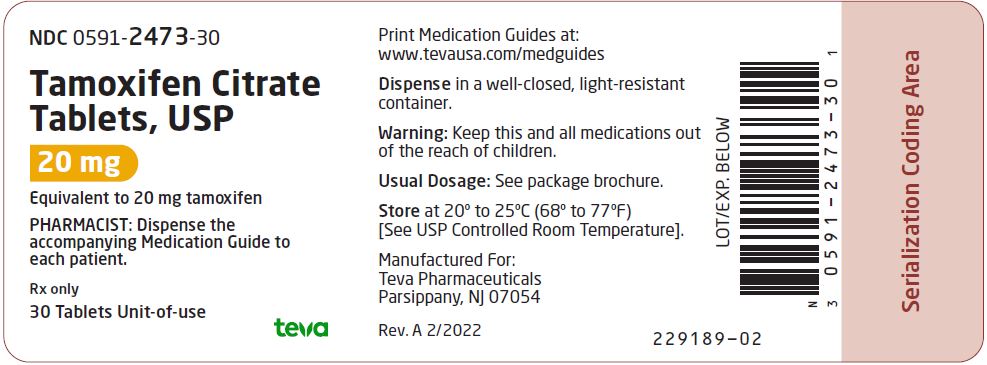
PRINCIPAL DISPLAY PANEL NDC 0591-2473-30 Tamoxifen Citrate Tablets, USP 20 mg Equivalent to 20 mg tamoxifen PHARMACIST: Dispense the accompanying Medication Guide to each patient. 30 Tablets Unit-of-use Rx Only 3