
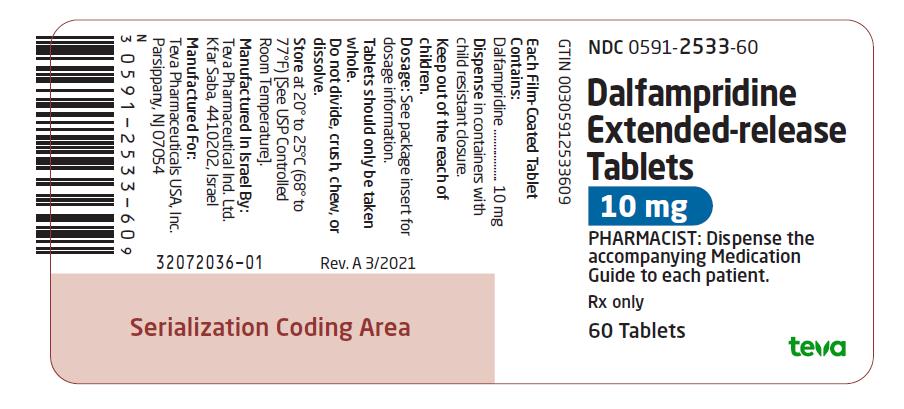
Dalfampridine 10 mg Tablet, Film Coated, Extended Release, 60-count — NDC 0591-2533-60 (Billing 00591-2533-60)
This is a package of 60 tablets of Dalfampridine 10 mg Tablet, Film Coated, Extended Release from Actavis Pharma, Inc., marketed since May 2022 and currently FDA-listed; retail pharmacies pay about $0.3992 per tablet (NADAC). It is this product's only package size.
NDC database record
One package, one record: these facts belong to NDC 0591-2533-60 alone.
- Record
- FDA NDC Directory package listing · Human prescription drug
- Code segments
- 0591 labeler · 2533 product · 60 package
- Package marketed since
- May 31, 2022
- Sample package
- No — commercial package
- Listing certified through
- Dec 31, 2026
- Billing quantity
- 60 EA per package
- Barcode (UPC)
- 0305912533609
- Medicaid fills, this package
- 3,151 prescriptions in the last four reported quarters
- FDA record last changed
- Jul 24, 2026
Identity & classification
Regulatory identifiers FDA, NLM and CMS codes for this package
Drug-database identifiers Medi-Span GPI and First Databank GCN / HICL / AHFS classification
- GSN (GCN sequence number): 066066
- GCN: 28246
- GPI-14 (Medi-Span): 62406030007420
- HICL (First Databank): 013907
- AHFS class code: 92:56.00.00
- RxCUI (RxNorm): 897021
Where does this data come from?
- FDA openFDA NDC Directory · synced Oct 8, 2026
- FDA label on DailyMed · label index refreshed Oct 8, 2026
- RxNorm (NLM RxNav) · catalog refreshed Oct 1, 2026
- Medi-Span GPI (licensed)
- First Databank (licensed) · refreshed Oct 8, 2026
RxNorm drug class
This medicine belongs to the Potassium Channel Blocker class.
Where does this data come from?
- RxClass (NLM) · catalog refreshed Oct 1, 2026
Clinical
- Dalfampridine is used to improve walking in adults with multiple sclerosis. In studies, people walked faster on it. It treats walking ability rather than the MS itself.
- Take one tablet twice a day, about 12 hours apart, with or without food. Swallow it whole. Do not split, crush or chew it. If you miss a dose, just skip it and take the next one on...
- People most often reported urinary tract infections, trouble sleeping, dizziness, headache, nausea, weakness and back pain. Tell your doctor or pharmacist if these bother you or do...
- If you have a seizure, stop the medicine and get medical help. Do not restart it. Also get emergency help for trouble breathing, hives, or swelling of the throat or tongue, which c...
Patient education
Supplement & herbal interactions
Some supplements/herbs that may interact with Dalfampridine — tap one for details:
Where does this data come from?
- MedlinePlus (NLM) · refreshed Oct 8, 2026
- FDA label on DailyMed · label index refreshed Oct 8, 2026
Ask a licensed pharmacist directly — free, answered by our team.
Pricing
A drug doesn't have one price. Each row is a different public payment system, and none is what you'd pay at the counter — that depends on your insurance. The ⓘ on each row explains what it measures.
| Price system | Per ea | Per package |
|---|---|---|
| Retail pharmacies payNADAC · weekly | $0.399 | $23.95 / 60 tablets |
| Medicaid paysCMS SDUD · 12 mo | $1.15 | $68.83 / 60 tablets |
| Medicare drug plans payPart D · Q2 2026 | $2.60 | $155.77 / 60 tablets |
Where does this data come from?
- CMS NADAC weekly file · file of Oct 7, 2026
- CMS ASP pricing files · refreshed Sep 20, 2026
- CMS Medicaid State Drug Utilization Data · through Q1 2026
- CMS Part D plan pricing files · refreshed Sep 24, 2026
- VA National Acquisition Center price file
Packaging — all sizes for this product
| Package NDC | Description | Marketing start | Marketing end | Status |
|---|---|---|---|---|
| 00591-2533-60 You're viewing this Main listing | 60 TABLET, FILM COATED, EXTENDED RELEASE in 1 BOTTLE | 2022-05-31 | — | Active |
Therapeutic equivalents
| Product | Labeler | Pack | NADAC/unit | TE | Status | Price vs. this |
|---|---|---|---|---|---|---|
| Dalfampridine 10 mg 62756-0429-86 | Sun | 60 tablets | $0.396 | — | FDA listed | save 1% |
| Dalfampridine 10 mgthis 00591-2533-60 | Actavis | 60 tablets | $0.399 | AB | Availability likely | — |
| Dalfampridine 10 mg 16729-0292-12 | Accord | 60 tablets | $0.399 | AB | Availability likely | — |
| Dalfampridine 10 mg 82249-0702-60 | CivicaScript | 60 tablets | $0.399 | AB | Availability likely | — |
| Ampyra 10 mg 00259-5010-60 | Merz | 60 tablets | — | AB | FDA listed | — |
| Ampyra 10 mg 10144-0427-60 | Merz | 60 tablets | — | AB | FDA listed | — |
| Dalfampridine 10 mg 42571-0275-05 | Micro | 500 tablets | — | AB | FDA listed | — |
| Dalfampridine 10 mg 51407-0876-60 | Golden | 60 tablets | — | AB | FDA listed | — |
| Dalfampridine 10 mg 63629-9450-01 | Bryant | 60 tablets | — | AB | Discontinued | — |
| Dalfampridine 10 mg 65862-0863-01 | Aurobindo | 100 tablets | — | AB | FDA listed | — |
| Dalfampridine 10 mg 67877-0444-05 | Ascend | 500 tablets | — | AB | FDA listed | — |
| Dalfampridine 10 mg 72162-2459-06 | Bryant | 60 tablets | — | AB | FDA listed | — |
Where does this data come from?
- FDA openFDA NDC Directory · synced Oct 8, 2026
- FDA Orange Book · refreshed Oct 3, 2026
- CMS NADAC weekly file · file of Oct 7, 2026
Availability & generic status
This product is an FDA-approved generic. Other versions of the same drug are listed under Therapeutic equivalents, least expensive first.
Where does this data come from?
- FDA Orange Book · refreshed Oct 3, 2026
Inactive Ingredients / Excipients
Inactive ingredients, also called excipients, are components of the drug product other than the active ingredient. They may include fillers, dyes, coatings, preservatives, flavors, or other formulation ingredients.
🧪 Avoiding an ingredient? See Dalfampridine inactive ingredients by manufacturer: every current product's list side by side, so you can ask your pharmacy for the version that does not list it.
💡 Tap an ingredient (hover on desktop) to see what it is and why it’s used.
-
UNII L11K75P92J
A mineral salt made from calcium and phosphate. It acts as a filler and binder in tablets to add bulk and help hold the medicine together in solid form.
-
UNII 3NXW29V3WO
Hypromellose is a plant-based thickener made from cellulose. It's used in medicines as a binder to hold ingredients together, a coating for tablets, and a thickener for liquids.
-
UNII 70097M6I30
Magnesium stearate is a salt made from magnesium and stearic acid, a fatty substance. It's used in tablets and capsules as a lubricant and glidant to help ingredients flow smoothly during manufacturing and prevent sticking.
-
UNII 3WJQ0SDW1A
Polyethylene glycol is a synthetic liquid or solid polymer used in medicines as a solvent, lubricant, and humectant. It helps dissolve active ingredients, reduces friction during manufacturing, and retains moisture in the final product.
-
UNII ETJ7Z6XBU4
Silicon dioxide is a naturally occurring mineral used as a glidant and anti-caking agent. It helps powder ingredients flow smoothly and prevents clumping during manufacturing and storage.
-
UNII 15FIX9V2JP
Titanium dioxide is a bright white mineral powder commonly used as a colorant and opacifying agent. It makes pills and tablets white or lighter in color and helps make coatings non-transparent.
6 inactive ingredients listed in the exact product block matched to this NDC.
Where does this data come from?
ingredient classCode="IACT" elements from the exact product block matched by this NDC. Label-section narrative from DailyMed / the openFDA label index is shown separately when available.- FDA label on DailyMed · label index refreshed Oct 8, 2026
- FDA openFDA NDC Directory · synced Oct 8, 2026
Inactive ingredient FAQ
Are inactive ingredients the same for every manufacturer?
Why might an inactive ingredient be missing?
Can inactive ingredients matter?
Manufacturer & labeler
More NDCs from Actavis Pharma, Inc. labeler code 00591
- Tetracycline Hydrochloride 500 mg Capsule NDC 0591-2475-00
- Isotretinoin 35 mg Capsule NDC 0591-2501-15
- Budesonide 9 mg Tablet, Film Coated, Extended Release NDC 0591-2510-30
- bosentan 62.5 mg Tablet, Film Coated NDC 0591-2511-60
- bosentan 125 mg Tablet, Film Coated NDC 0591-2512-60
- Chlorzoxazone 500 mg Tablet NDC 0591-2520-00
- Valganciclovir hydrochloride for Oral 50 mg/mL Powder, For Solution NDC 0591-2579-20
- Butalbital, Acetaminophen, and Caffeine 50 mg; 300 mg; 40 mg Capsule NDC 0591-2640-01
- Butalbital, Acetaminophen, Caffeine, and Codeine Phosphate 50 mg; 300 mg; 40 mg; 30 mg Capsule NDC 0591-2641-01
- Lidocaine 50 mg/g Patch NDC 0591-2679-30
- Potassium Citrate 5 meq Tablet, Extended Release NDC 0591-2682-00
- Albendazole 200 mg Tablet, Film Coated NDC 0591-2712-00
Where does this data come from?
- FDA openFDA NDC Directory · synced Oct 8, 2026
- Drugs@FDA
Full prescribing information FDA SPL
🎯 Indications and Usage ▾
1 INDICATIONS AND USAGE Dalfampridine extended-release tablets are indicated as a treatment to improve walking in adult patients with multiple sclerosis (MS). This was demonstrated by an increase in walking speed [see Clinical Studies (14) ]. Dalfampridine is a potassium channel blocker indicated to improve walking in adult patients with multiple sclerosis (MS). This was demonstrated by an increase in walking speed ( 1 , 14 ).
⏱️ Dosage and Administration ▾
2 DOSAGE AND ADMINISTRATION The maximum recommended dosage is 10 mg twice daily (approximately 12 hours apart). There is no evidence of additional benefit with doses greater than 10 mg twice daily. Adverse reactions, including seizures, were more frequent at higher doses.
( 2.1 ) Take with or without food. Administer tablets whole; do not divide, crush, chew, or dissolve ( 2.2 ) Patients should not take double or extra doses if they miss a dose. ( 2.2) Estimated creatinine clearance (CrCl) should be known before initiating treatment with dalfampridine extended-release tablets.
In patients with mild renal impairment (CrCl 51 to 80 mL/min), dalfampridine extended-release tablets may reach plasma levels associated with a greater risk of seizures, and the potential benefits of dalfampridine extended-release tablets should be carefully considered against the risk of seizures in these patients ( 2.3 , 5.2 , 8.6 )
2.1Dosage Information The maximum recommended dosage of dalfampridine extended-release tablets is one 10 mg tablet twice daily and should not be exceeded. Take doses approximately 12 hours apart. There is no evidence of additional benefit at doses greater than 10 mg twice daily. Adverse reactions, including seizures, and discontinuations because of adverse reactions were more frequent at higher doses.
2.2Administration Instructions Dalfampridine extended-release tablets can be taken with or without food. Administer tablets whole; do not divide, crush, chew, or dissolve dalfampridine extended-release tablets. If a dose is missed, patients should not take double or extra doses.
2.3Renal Monitoring Prior to and During Treatment Estimated creatinine clearance (CrCl) should be known before initiating treatment with dalfampridine extended-release tablets, and monitored at least annually during treatment with dalfampridine extended-release tablets. CrCl can be estimated using the following equation (multiply by 0.85 for women): 2
2.4Dosage in Patients with Renal Impairment In patients with mild renal impairment (CrCl 51 to 80 mL/min), dalfampridine extended-release tablets plasma levels may approach those seen at a dose of 15 mg twice daily, a dose that is 1.5 times the maximum recommended dose and may be associated with an increased risk of seizures. As mild renal impairment is common after age 50, estimating CrCl is particularly important in these patients. The potential benefits of dalfampridine extended-release tablets should be carefully considered against the risk of seizures in these patients [see Warnings and Precautions (5.2 ) and Clinical Pharmacology (12.3) ].
Dalfampridine extended-release tablets are contraindicated in patients with moderate or severe renal impairment (CrCl ≤50 mL/min).
💊 Dosage Forms and Strengths ▾
3 DOSAGE FORMS AND STRENGTHS Dalfampridine extended-release tablets are available in a 10 mg strength and is a film-coated, white to off-white, biconvex, oval shaped, unscored tablet, debossed with “ WPI ” on one side and “ 2533 ” on the other. 10 mg tablets ( 3 )
⛔ Contraindications ▾
4 CONTRAINDICATIONS The use of dalfampridine is contraindicated in the following conditions: History of seizure [see Warnings and Precautions (5.1) ] Moderate or severe renal impairment (CrCl ≤50 mL/min) [see Warnings and Precautions (5.2)] History of hypersensitivity to dalfampridine or 4-aminopyridine; reactions have included anaphylaxis [see Warnings and Precautions (5.4 )] History of seizure ( 4 ) Moderate or severe renal impairment (CrCl≤50 mL/min) ( 4 ) History of hypersensitivity to dalfampridine or 4-aminopyridine ( 4 )
⚠️ Warnings and Cautions ▾
5 WARNINGS AND PRECAUTIONS Dalfampridine can cause seizures; the risk of seizures increases with increasing dalfampridine doses; discontinue dalfampridine and do not restart if a seizure occurs ( 5.1 ) Avoid concomitant use with other forms of 4-aminopyridine (4AP, fampridine), since the active ingredient is the same ( 5.3 ) Dalfampridine can cause anaphylaxis. Discontinue and do not restart dalfampridine extended-release tablets if this occurs ( 5.4 )
5.1Seizures Dalfampridine can cause seizures. Increased incidence of seizures has been observed at 20 mg twice daily (2 times the maximum recommended dosage) in controlled clinical studies of 9 to 14 weeks duration with dalfampridine in patients with MS. In open-label extension trials in MS patients, the incidence of seizures during treatment with dalfampridine 15 mg twice daily (1.7/100PY) was over 4 times higher than the incidence during treatment with 10 mg twice daily (0.4/100PY).
In the post-marketing period seizures have been reported. The majority of seizures occurred at the recommended dose and in patients without a history of seizures, and generally within days to weeks of starting therapy. Dalfampridine has not been evaluated in patients with a history of seizures or with evidence of epileptiform activity on an EEG, as these patients were excluded from clinical trials.
The risk of seizures in patients with epileptiform activity on an EEG is unknown, and could be substantially higher than that observed in dalfampridine clinical studies. Permanently discontinue dalfampridine in patients who have a seizure while on treatment. Dalfampridine is contraindicated in patients with a history of seizures [see Contraindications (4) ] .
5.2Renal Impairment Dalfampridine is eliminated through the kidneys primarily as unchanged drug [see Clinical Pharmacology (12.3) ]. Because patients with moderate to severe renal impairment (CrCl ≤50 mL/min) would require a dose lower than 10 mg twice daily and no strength smaller than 10 mg is available, dalfampridine is contraindicated in these patients [see Contraindications (4) ] . In patients with mild renal impairment (CrCl 51 to 80 mL/min), dalfampridine plasma levels may approach those seen at a dose of 15 mg twice daily, a dose that may be associated with an increased risk of seizures [see Warnings and Precautions (5.1) ] .
5.3Concurrent Treatment with Other Forms of 4-Aminopyridine Avoid concomitant use with other forms of 4-aminopyridine (4-AP, fampridine) since the active ingredient is the same. Instruct patients to discontinue use of any product containing 4-aminopyridine prior to initiating treatment with dalfampridine in order to reduce the potential for dose-related adverse reactions.
5.4Anaphylaxis Dalfampridine can cause anaphylaxis and severe allergic reactions. Signs and symptoms have included respiratory compromise, urticaria, and angioedema of the throat and or tongue. Dalfampridine is contraindicated in patients with a history of hypersensitivity to dalfampridine or 4-aminopyridine.
Inform patients of the signs and symptoms of anaphylaxis and instruct them to discontinue dalfampridine and seek immediate medical care should these signs and symptoms occur.
🤒 Adverse Reactions ▾
6 ADVERSE REACTIONS The following serious adverse reactions are described in more detail elsewhere in the labeling: Seizures [see Warnings and Precautions ( 5.1 )] Anaphylaxis [see Warnings and Precautions ( 5.4 )] The most common adverse events (incidence ≥2% and at a rate greater than the placebo rate) for dalfampridine were urinary tract infection, insomnia, dizziness, headache, nausea, asthenia, back pain, balance disorder, multiple sclerosis relapse, paresthesia, nasopharyngitis, constipation, dyspepsia, and pharyngolaryngeal pain ( 6.1 ).
To report SUSPECTED ADVERSE REACTIONS, contact Teva at 1-888-838-2872 or FDA at 1-800-FDA-1088 or www.fda.gov/medwatch.
6.1Clinical Trials Experience Because clinical studies are conducted under widely varying conditions, adverse reaction rates observed in the clinical studies of a drug cannot be directly compared to rates in the clinical studies of another drug and may not reflect the rates observed in practice. In three placebo-controlled clinical trials of up to 14 weeks duration, 4% (15/400) of patients treated with dalfampridine 10 mg twice daily experienced one or more adverse reactions leading to discontinuation, compared to 2% (5/238) of placebo-treated patients.
The adverse reactions leading to discontinuation of at least 2 patients treated with dalfampridine and that led to discontinuation more frequently compared to placebo were headache (dalfampridine 0.5%, placebo 0%), balance disorder (dalfampridine 0.5%, placebo 0%), dizziness (dalfampridine 0.5%, placebo 0%), and confusional state (dalfampridine 0.3%, placebo 0%). Table 1 lists adverse reactions that occurred in ≥2% of patients treated with dalfampridine 10 mg twice daily, and more frequently than in placebo-treated patients, in controlled clinical trials.
Table 1: Adverse Reactions with an Incidence ≥2% of Dalfampridine-Treated Adult MS Patients and More Frequent with Dalfampridine Compared to Placebo in Controlled Clinical Trials Adverse Reaction Placebo (N=238) % Dalfampridine Extended-Release Tablets 10 mg twice daily (N=400) % Urinary tract infection 8 12 Insomnia 4 9 Dizziness 4 7 Headache 4 7 Nausea 3 7 Asthenia 4 7 Back pain 2 5 Balance disorder 1 5 Multiple sclerosis relapse 3 4 Paresthesia 3 4 Nasopharyngitis 2 4 Constipation 2 3 Dyspepsia 1 2 Pharyngolaryngeal pain 1 2 Other Adverse Reactions Dalfampridine has been evaluated in a total of 1,952 subjects, including 917 MS patients.
A total of 741 patients have been treated with dalfampridine for over six months, 501 for over one year and 352 for over two years. The experience in open-label clinical trials is consistent with the safety profile observed in the placebo-controlled clinical trials. As in controlled clinical trials, a dose-dependent increase in the incidence of seizures has been observed in open-label clinical trials with dalfampridine in patients with MS as follows: dalfampridine 10 mg twice daily 0.41 per 100 person-years (95% confidence interval 0.13 to 0.96); dalfampridine 15 mg twice daily 1.7 per 100 person-years (95% confidence interval 0.21 to 6.28).
6.2Postmarketing Experience The following adverse reactions have been identified during post approval use with dalfampridine. Because these reactions are reported voluntarily from a population of uncertain size, it is not always possible to reliably estimate their frequency or establish a causal relationship to drug exposure: vomiting, vertigo.
🔄 Drug Interactions ▾
7 DRUG INTERACTIONS OCT2 Inhibitors: Concomitant use may cause an increased exposure and potential risk of seizures ( 7.1 )
7.1OCT2 Inhibitors Concurrent treatment with OCT2 inhibitors, such as cimetidine, may cause increased exposure to dalfampridine [see Clinical Pharmacology ( 12.3 )] . Elevated levels of dalfampridine increase the risk of seizures [see Warnings and Precautions ( 5.1 , 5.2 )]. The potential benefits of taking OCT2 inhibitors concurrently with dalfampridine should be considered against the risk of seizures in these patients.
7.2Baclofen No interaction was identified between dalfampridine and baclofen [see Clinical Pharmacology ( 12.3 )] .
👥 Use in Specific Populations ▾
8 USE IN SPECIFIC POPULATIONS Pregnancy: Based on animal data, may cause fetal harm ( 8.1 ) Geriatric use: Because elderly patients are more likely to have decreased renal function, it is particularly important to know the estimated CrCl in these patients before initiating dalfampridine treatment ( 4 , 5.2 , 8.6 )
8.1Pregnancy Risk Summary There are no adequate data on the developmental risk associated with use of dalfampridine in pregnant women. Administration of dalfampridine to animals during pregnancy and lactation resulted in decreased offspring viability and growth at clinically relevant doses [see Data] . In the U.S. general population, the estimated background risk of major birth defects and miscarriage in clinically recognized pregnancies is 2 to 4% and 15 to 20%, respectively.
The background risk of major birth defects and miscarriage for the indicated population is unknown. Data Animal Data Oral administration of dalfampridine to pregnant rats and rabbits throughout organogenesis resulted in no evidence of developmental toxicity in either species. The highest doses tested (10 mg/kg/day in rats, 5 mg/kg/day in rabbits), which were associated with maternal toxicity, are approximately 5 times the MRHD on a body surface area (mg/m 2 ) basis.
Oral administration of dalfampridine (0, 1, 3, and 9 to 6 mg/kg/day; high dose reduced during the second week of dosing) to female rats throughout pregnancy and lactation resulted in decreased offspring viability at the highest dose tested and decreased body weight in offspring at the mid and high doses. The no-effect dose for pre- and postnatal developmental toxicity in rats (1 mg/kg/day) is less than the MRHD on an mg/m 2 basis.
8.2Lactation Risk Summary There are no data on the presence of dalfampridine in human milk, the effects of dalfampridine on the breastfed infant, or the effects on milk production. The developmental and health benefits of breastfeeding should be considered along with the mother’s clinical need for dalfampridine and any potential adverse effects on the breastfed infant from dalfampridine or from the underlying maternal condition.
8.4Pediatric Use Safety and effectiveness in patients younger than 18 years of age have not been established.
8.5Geriatric Use Clinical studies of dalfampridine did not include sufficient numbers of subjects aged 65 and over to determine whether they respond differently than younger subjects. A population PK analysis showed that dalfampridine clearance modestly decreased with increasing age, but not sufficiently to necessitate a modification of dose with age. Other reported clinical experience has identified no differences in responses between the elderly and younger patients.
Dalfampridine is known to be substantially excreted by the kidneys and the risk of adverse reactions, including seizures, is greater with increasing exposure of dalfampridine. Because elderly patients are more likely to have decreased renal function, it is particularly important to know the estimated creatinine clearance (CrCl) in these patients [see Warnings and Precautions (5.2) ].
8.6Impaired Renal Function Clearance of dalfampridine is decreased in patients with renal impairment and is significantly correlated with creatinine clearance (CrCl) [see Clinical Pharmacology (12.3) ] . Dalfampridine is contraindicated in patients with moderate or severe renal impairment (CrCl ≤50 mL/min) [see Contraindications (4) ]. The risk of seizures in patients with mild renal impairment (CrCl 51 to 80 mL/min) is unknown, but dalfampridine plasma levels in these patients may approach those seen at a dose of 15 mg twice daily, a dose that may be associated with an increased risk of seizures.
If unknown, estimated creatinine clearance should be calculated prior to initiating treatment with dalfampridine [see Dosage and Administration (2.3) and Warnings and Precautions (5.2) ] .
🤰 Pregnancy ▾
8.1Pregnancy Risk Summary There are no adequate data on the developmental risk associated with use of dalfampridine in pregnant women. Administration of dalfampridine to animals during pregnancy and lactation resulted in decreased offspring viability and growth at clinically relevant doses [see Data] . In the U.S. general population, the estimated background risk of major birth defects and miscarriage in clinically recognized pregnancies is 2 to 4% and 15 to 20%, respectively.
The background risk of major birth defects and miscarriage for the indicated population is unknown. Data Animal Data Oral administration of dalfampridine to pregnant rats and rabbits throughout organogenesis resulted in no evidence of developmental toxicity in either species. The highest doses tested (10 mg/kg/day in rats, 5 mg/kg/day in rabbits), which were associated with maternal toxicity, are approximately 5 times the MRHD on a body surface area (mg/m 2 ) basis.
Oral administration of dalfampridine (0, 1, 3, and 9 to 6 mg/kg/day; high dose reduced during the second week of dosing) to female rats throughout pregnancy and lactation resulted in decreased offspring viability at the highest dose tested and decreased body weight in offspring at the mid and high doses. The no-effect dose for pre- and postnatal developmental toxicity in rats (1 mg/kg/day) is less than the MRHD on an mg/m 2 basis.
🧒 Pediatric Use ▾
8.4Pediatric Use Safety and effectiveness in patients younger than 18 years of age have not been established.
🧓 Geriatric Use ▾
8.5Geriatric Use Clinical studies of dalfampridine did not include sufficient numbers of subjects aged 65 and over to determine whether they respond differently than younger subjects. A population PK analysis showed that dalfampridine clearance modestly decreased with increasing age, but not sufficiently to necessitate a modification of dose with age. Other reported clinical experience has identified no differences in responses between the elderly and younger patients.
Dalfampridine is known to be substantially excreted by the kidneys and the risk of adverse reactions, including seizures, is greater with increasing exposure of dalfampridine. Because elderly patients are more likely to have decreased renal function, it is particularly important to know the estimated creatinine clearance (CrCl) in these patients [see Warnings and Precautions (5.2) ].
🆘 Overdosage ▾
10 OVERDOSAGE Three cases of overdose were reported in controlled clinical trials with dalfampridine, involving two MS patients. The first patient took six times the currently recommended dose (60 mg) and was taken to the emergency room with altered mental state. The second patient took 40 mg doses on two separate occasions.
In the first instance, she experienced a complex partial seizure and, in the second instance, a period of confusion. Both patients recovered by the following day without sequelae. Several cases of overdose are found in the scientific literature in which various formulations of dalfampridine were used, resulting in numerous adverse events including seizure, confusion, tremulousness, diaphoresis, and amnesia.
In some instances, patients developed status epilepticus, requiring intensive supportive care and were responsive to standard therapy for seizures. In one published case report, an MS patient who ingested 300 mg of 4-aminopyridine (dalfampridine) developed a condition that resembled limbic encephalitis. This patient developed weakness, reduced awareness, memory loss, hypophonic speech, and temporal lobe hyperintensities on MRI.
The patient’s speech and language and ambulation improved over time, and an MRI at 4 months after the overdose no longer showed signal abnormalities. At one year, the patient continued to have difficulty with short term memory and learning new tasks.
🧬 Clinical Pharmacology ▾
12 CLINICAL PHARMACOLOGY
12.1Mechanism of action The mechanism by which dalfampridine exerts its therapeutic effect has not been fully elucidated. Dalfampridine is a broad spectrum potassium channel blocker. In animal studies, dalfampridine has been shown to increase conduction of action potentials in demyelinated axons through inhibition of potassium channels.
12.2Pharmacodynamics Dalfampridine does not prolong the QTc interval and does not have a clinically important effect on QRS duration.
12.3Pharmacokinetics Absorption and Distribution Orally administered dalfampridine is rapidly and completely absorbed from the gastrointestinal tract. Absolute bioavailability of extended-release dalfampridine tablets has not been assessed, but relative bioavailability is 96% when compared to an aqueous oral solution. The extended-release tablet delays absorption of dalfampridine relative to the solution formulation, giving a slower rise to a lower peak concentration (C max ), with no effect on the extent of absorption (AUC).
Single dalfampridine extended-release tablet 10 mg doses administered to healthy volunteers in a fasted state gave peak concentrations ranging from 17.3 ng/mL to 21.6 ng/mL occurring 3 to 4 hours post-administration (T max ). In comparison, C max with the same 10 mg dose of dalfampridine in an oral solution was 42.7 ng/mL and occurred approximately 1.3 hours after dosing. Exposure increased proportionally with dose.
Dalfampridine is largely unbound to plasma proteins (97 to 99%). The apparent volume of distribution is
2.6L/kg. There is no apparent difference in pharmacokinetic parameter values following administration of dalfampridine extended-release tablets to either healthy volunteers or patients with MS. When dalfampridine is taken with food, there is a slight increase in C max (12 to 17%) and a slight decrease in AUC (4 to 7%).
These changes in exposure are not clinically significant, and therefore the drug may be taken with or without food [see Dosage and Administration (2.2) ]. Metabolism and Elimination Dalfampridine and metabolites elimination is nearly complete after 24 hours, with 95.9% of the dose recovered in urine and 0.5% recovered in feces. Most of the excreted radioactivity in urine was parent drug (90.3%).
Two metabolites were identified: 3-hydroxy-4-aminopyridine (4.3%) and 3-hydroxy-4-aminopyridine sulfate (2.6%). These metabolites have been shown to have no pharmacologic activity on potassium channels. The apparent elimination half-life of dalfampridine following administration of the extended-release tablet formulation of dalfampridine is 5.2 to 6.5 hours.
The plasma half-life of the sulfate conjugate is approximately 7.6 hours and the half-life of 3-hydroxy-4-aminopyridine could not be calculated because concentrations for most subjects were close to or below the limit of quantitation. In vitro studies with human liver microsomes indicate that CYP2E1 was the major enzyme responsible for the 3-hydroxylation of dalfampridine. The identity of the CYP enzymes suspected of playing a minor role in the 3-hydroxylation of dalfampridine could not be established unequivocally.
Specific Populations Pediatric The safety and effectiveness in patients younger than 18 years of age have not been established. Geriatric A population pharmacokinetic analysis showed that dalfampridine clearance modestly decreased with increasing age, but not sufficiently to necessitate a modification of dose. Gender A population pharmacokinetic analysis suggested that female patients would be expected to have higher maximum dalfampridine plasma concentration than male patients.
The magnitude of these differences is small and does not necessitate any dose modification. Renal Impairment [see Contraindications (4) and Warnings and Precautions (5.2) ]. The pharmacokinetics of dalfampridine was studied in 9 male and 11 female subjects with varying degrees of renal function.
Elimination of the drug is significantly correlated with… [Excerpted — this section continues on DailyMed.]
🧬 Mechanism of Action ▾
12.1Mechanism of action The mechanism by which dalfampridine exerts its therapeutic effect has not been fully elucidated. Dalfampridine is a broad spectrum potassium channel blocker. In animal studies, dalfampridine has been shown to increase conduction of action potentials in demyelinated axons through inhibition of potassium channels.
📦 How Supplied / Storage and Handling ▾
16 HOW SUPPLIED/STORAGE AND HANDLING Dalfampridine extended-release tablets, 10 mg are film-coated, white to off-white, biconvex, oval shaped, unscored tablets. The tablets are identified by a debossed code “ WPI ” on one side and “ 2533 ” on the other side and are available as follows: NDC 0591-2533-60 bottles of 60 tablets Store at 20° to 25°C (68° to 77°F) [See USP Controlled Room Temperature].
📋 Description ▾
11 DESCRIPTION Dalfampridine, USP is a potassium channel blocker, available in a 10 mg tablet strength. Each tablet contains 10 mg dalfampridine, formulated as an extended-release tablet for twice-daily oral administration. Dalfampridine, USP is also known by its chemical name, 4-aminopyridine, with the following structure: Dalfampridine extended-release tablets are available in a 10 mg strength and are white to off-white, biconvex, oval shaped, film-coated, unscored tablets, debossed with “ WPI ” on one side and “ 2533 ” on the other side, containing 10 mg of dalfampridine.
Inactive ingredients consist of colloidal silicon dioxide, dibasic calcium phosphate, hypromellose, magnesium stearate, polyethylene glycol, and titanium dioxide. Dalfampridine, USP is a fine white powder with a molecular weight of 94.1, CAS 504-24-5, and a molecular formula of C 5 H 6 N 2 . At ambient conditions, dalfampridine is soluble in water and methanol, sparingly soluble in acetone, 2-butanone, ethyl acetate, dichloromethane, ethanol, isopropanol alcohol and isobutyl alcohol; slightly soluble in toluene and diisopropyl ether; very slightly soluble in hexane and heptane.
Chemical Structure
💬 Information for Patients ▾
17 PATIENT COUNSELING INFORMATION Advise the patient to read the FDA-approved patient labeling (Medication Guide). Risk of Seizures Inform patients that dalfampridine extended-release tablets can cause seizures, and that they must discontinue use of dalfampridine extended-release tablets if they experience a seizure [see Warnings and Precautions ( 5.1 )]. Dalfampridine extended-release tablets dosing Instruct patients to take dalfampridine extended-release tablets exactly as prescribed.
Instruct patients not to take a double dose after they miss a dose, as this would increase their risk of seizure. Instruct patients not to take more than 2 tablets in a 24-hour period and to make sure that there is an approximate 12-hour interval between doses [see Dosage and Administration ( 2.1 , 2.2 )] . Anaphylaxis Advise patients to discontinue dalfampridine extended-release tablets and seek medical care if they develop signs and symptoms of anaphylaxis [see Warnings and Precautions ( 5.4 )].
Effects on Driving or Using Machinery Counsel patients that central nervous system-related adverse reactions, such as vertigo and dizziness, associated with the use of dalfampridine extended-release tablets might impair their ability to drive or use machinery should they develop these symptoms. Drug Interactions Instruct patients to notify their healthcare provider prior to starting any new medication, including over-the-counter drugs. Storage Advise patients to store dalfampridine extended-release tablets at 20° to 25°C (68° to 77°F) [See USP Controlled Room Temperature].
Advise patients to safely throw away dalfampridine extended-release tablets that is out of date or no longer needed. Manufactured In Israel By: Teva Pharmaceutical Ind. Ltd.
Kfar Saba, 4410202, Israel Manufactured For: Teva Pharmaceuticals USA, Inc. Parsippany, NJ 07054 Rev. D 12/2021
💬 Medication Guide ▾
MEDICATION GUIDE Dalfampridine ( dal fam ′ pri deen ) Extended-Release Tablets Read this Medication Guide before you start taking dalfampridine extended-release tablets and each time you get a refill. There may be new information. This information does not take the place of talking with your doctor about your medical condition or your treatment.
What is the most important information I should know about dalfampridine extended-release tablets? Dalfampridine extended-release tablets can cause seizures. You could have a seizure even if you never had a seizure before.
Your chance of having a seizure is higher if you take too much dalfampridine extended-release tablets or if your kidneys have a mild decrease of function, which is common after age 50. Your doctor may do a blood test to check how well your kidneys are working, if that is not known before you start taking dalfampridine extended-release tablets. Do not take dalfampridine extended-release tablets if you have ever had a seizure.
Before taking dalfampridine extended-release tablets tell your doctor if you have kidney problems. Take dalfampridine extended-release tablets exactly as prescribed by your doctor. See “How should I take dalfampridine extended-release tablets?” Stop taking dalfampridine extended-release tablets and call your doctor right away if you have a seizure while taking dalfampridine extended-release tablets.
What are dalfampridine extended-release tablets? Dalfampridine extended-release tablets are a prescription medicine used to help improve walking in adults with multiple sclerosis (MS). This was shown by an increase in walking speed.
It is not known if dalfampridine extended-release tablets are safe or effective in children less than 18 years of age. Who should not take dalfampridine extended-release tablets? Do not take dalfampridine extended-release tablets if you: have ever had a seizure have certain types of kidney problems are allergic to dalfampridine (4-aminopyridine), the active ingredient in dalfampridine extended-release tablets What should I tell my doctor before taking dalfampridine extended-release tablets?
Before you take dalfampridine extended-release tablets, tell your doctor if you: have any other medical conditions are taking compounded 4-aminopyridine (fampridine, 4-AP) are taking any other medicines, including over-the-counter medicines such as cimetidine are pregnant or plan to become pregnant. It is not known if dalfampridine extended-release tablets will harm your unborn baby. are breastfeeding or plan to breastfeed. It is not known if dalfampridine passes into your breast milk.
Talk with your healthcare provider about the best way to feed your baby if you take dalfampridine extended-release tablets. Tell your doctor about all the medicines you take, including prescription and non-prescription medicines, vitamins and herbal supplements. Know the medicines you take.
Keep a list of them and show it to your doctor and pharmacist when you get a new medicine. How should I take dalfampridine extended-release tablets? Take dalfampridine extended-release tablets exactly as your doctor tells you to take it.
Do not change your dose of dalfampridine extended-release tablets. Take one tablet of dalfampridine extended-release tablets 2 times each day about 12 hours apart. Do not take more than 2 tablets of dalfampridine extended-release tablets in a 24-hour period.
Take dalfampridine extended-release tablets whole. Do not break, crush, chew or dissolve dalfampridine extended-release tablets before swallowing. If you cannot swallow dalfampridine extended-release tablets whole, tell your doctor.
Dalfampridine extended-release tablets are released slowly over time. If the tablet is broken, the medicine may be released too fast. This can raise your chance of having a seizure.
Dalfampridine extended-release tablets can be taken with or without food. If you miss a dose of dalfampridine extended-release tablets, do not make up the missed dose. Do no… [Excerpted — this section continues on DailyMed.]
🧬 Pharmacokinetics ▾
12.3Pharmacokinetics Absorption and Distribution Orally administered dalfampridine is rapidly and completely absorbed from the gastrointestinal tract. Absolute bioavailability of extended-release dalfampridine tablets has not been assessed, but relative bioavailability is 96% when compared to an aqueous oral solution. The extended-release tablet delays absorption of dalfampridine relative to the solution formulation, giving a slower rise to a lower peak concentration (C max ), with no effect on the extent of absorption (AUC).
Single dalfampridine extended-release tablet 10 mg doses administered to healthy volunteers in a fasted state gave peak concentrations ranging from 17.3 ng/mL to 21.6 ng/mL occurring 3 to 4 hours post-administration (T max ). In comparison, C max with the same 10 mg dose of dalfampridine in an oral solution was 42.7 ng/mL and occurred approximately 1.3 hours after dosing. Exposure increased proportionally with dose.
Dalfampridine is largely unbound to plasma proteins (97 to 99%). The apparent volume of distribution is
2.6L/kg. There is no apparent difference in pharmacokinetic parameter values following administration of dalfampridine extended-release tablets to either healthy volunteers or patients with MS. When dalfampridine is taken with food, there is a slight increase in C max (12 to 17%) and a slight decrease in AUC (4 to 7%).
These changes in exposure are not clinically significant, and therefore the drug may be taken with or without food [see Dosage and Administration (2.2) ]. Metabolism and Elimination Dalfampridine and metabolites elimination is nearly complete after 24 hours, with 95.9% of the dose recovered in urine and 0.5% recovered in feces. Most of the excreted radioactivity in urine was parent drug (90.3%).
Two metabolites were identified: 3-hydroxy-4-aminopyridine (4.3%) and 3-hydroxy-4-aminopyridine sulfate (2.6%). These metabolites have been shown to have no pharmacologic activity on potassium channels. The apparent elimination half-life of dalfampridine following administration of the extended-release tablet formulation of dalfampridine is 5.2 to 6.5 hours.
The plasma half-life of the sulfate conjugate is approximately 7.6 hours and the half-life of 3-hydroxy-4-aminopyridine could not be calculated because concentrations for most subjects were close to or below the limit of quantitation. In vitro studies with human liver microsomes indicate that CYP2E1 was the major enzyme responsible for the 3-hydroxylation of dalfampridine. The identity of the CYP enzymes suspected of playing a minor role in the 3-hydroxylation of dalfampridine could not be established unequivocally.
Specific Populations Pediatric The safety and effectiveness in patients younger than 18 years of age have not been established. Geriatric A population pharmacokinetic analysis showed that dalfampridine clearance modestly decreased with increasing age, but not sufficiently to necessitate a modification of dose. Gender A population pharmacokinetic analysis suggested that female patients would be expected to have higher maximum dalfampridine plasma concentration than male patients.
The magnitude of these differences is small and does not necessitate any dose modification. Renal Impairment [see Contraindications (4) and Warnings and Precautions (5.2) ]. The pharmacokinetics of dalfampridine was studied in 9 male and 11 female subjects with varying degrees of renal function.
Elimination of the drug is significantly correlated with the creatinine clearance. Total body clearance of dalfampridine was reduced by about 45 % in patients with mild renal impairment (CrCl 51 to 80 mL/min), by about 50% in patients with moderate renal impairment (CrCl = 30 to 50 mL/min), and by about 75% in patients with severe renal impairment (CrCl <30 mL/min). The terminal half-life of dalfampridine is about 3.3 times longer in patients with severe renal impairment but is not prolonged in patients with mild or moderate renal impairment.
Hepatic… [Excerpted — this section continues on DailyMed.]
🧬 Pharmacodynamics ▾
12.2Pharmacodynamics Dalfampridine does not prolong the QTc interval and does not have a clinically important effect on QRS duration.
🔬 Clinical Studies ▾
14 CLINICAL STUDIES The effectiveness of dalfampridine in improving walking in patients with multiple sclerosis was evaluated in two adequate and well controlled trials involving 540 patients. Patients in these two clinical trials had a mean disease duration of 13 years and a mean Kurtzke Expanded Disability Status Scale (EDSS) score of 6. Trial 1 was a randomized, placebo-controlled, parallel group, 21-week study (one week post screening, two-week, single-blind placebo run-in, 14-week double-blind treatment, and 4-week no treatment follow-up) in 301 patients with multiple sclerosis at 33 centers in the U.S. and Canada: 229 patients assigned to dalfampridine 10 mg twice daily and 72 patients assigned to placebo.
A total of 283 patients (212 dalfampridine and 71 placebo) completed all study visits. Patient inclusion criteria included the ability to walk 25 feet in 8 to 45 seconds. Patient exclusion criteria included a history of seizures or evidence of epileptiform activity on a screening EEG, and onset of an MS exacerbation within 60 days.
Trial 2 was a randomized, placebo-controlled, parallel group, 14-week study (one week post-screening, two weeks of single-blind, placebo run-in, nine weeks of double-blind treatment, and two weeks of no-treatment follow-up) in 239 patients with multiple sclerosis at 39 centers in the U.S. and Canada: 120 patients assigned to 10 mg twice daily and 119 assigned to placebo. A total of 227 patients (113 dalfampridine and 114 placebo) completed all study visits. The patient inclusion and exclusion criteria used in Trial 1 were employed in Trial 2, and in addition patients with severe renal impairment were also excluded.
The primary measure of efficacy in both trials was walking speed (in feet per second) as measured by the Timed 25-foot Walk (T25FW), using a responder analysis. A responder was defined as a patient who showed faster walking speed for at least three visits out of a possible four during the double-blind period than the maximum value achieved in the five non-double-blind no treatment visits (four before the double-blind period and one after). A significantly greater proportion of patients taking dalfampridine 10 mg twice daily were responders, compared to patients taking placebo, as measured by the T25FW (Trial 1: 34.8% vs.
8.3%; Trial 2: 42.9% vs. 9.3%). The increased response rate in the dalfampridine group was observed across all four major types of MS disease course.
During the double-blind treatment period, a significantly greater proportion of patients taking dalfampridine 10 mg twice daily had increases in walking speed of at least 10%, 20%, or 30% from baseline, compared to placebo (Figure 1 and Figure 2). Figure 1: Average walking speed change (%) from baseline during the double-blind phase of Trial 1 Figure 2: Average walking speed change (%) from baseline during the double-blind phase of Trial 2 In Trial 1 and Trial 2, consistent improvements in walking speed were shown to be associated with improvements on a patient self-assessment of ambulatory disability, the 12-item Multiple Sclerosis Walking Scale (MSWS-12), for both drug and placebo treated patients.
However, a drug-placebo difference was not established for that outcome measure. The majority of patients in these trials (63%) were using immunomodulatory drugs (interferons, glatiramer acetate, or natalizumab), but the magnitude of improvement in walking ability was independent of concomitant treatment with these drugs. No differences in effectiveness based on degree of impairment, age, gender, or body mass index were detected.
There were too few non-Caucasians in the patient population to evaluate the effect of race. figure 1 figure2
🧪 Nonclinical Toxicology ▾
13 NONCLINICAL TOXICOLOGY
13.1Carcinogenesis, Mutagenesis, Impairment of Fertility Carcinogenesis Two-year dietary carcinogenicity studies of dalfampridine were conducted in mice and rats. In mice, the doses tested (approximately 2, 12.5, and 80 mg/kg/day) were associated with plasma exposures (AUC) up to 11 times the plasma AUC in humans at the maximum recommended human dose (MRHD) of 20 mg/day. There was no evidence of drug-related carcinogenicity.
In rats, the doses tested (approximately 2, 6, and 18 mg/kg/day) were approximately 1, 3, and 9 times the MRHD on a body surface area (mg/m 2 ) basis. There was a significant increase in uterine polyps at the highest dose tested. Mutagenesis Dalfampridine was negative in in vitro (bacterial reverse mutation, mouse lymphoma tk , chromosomal aberration) and in vivo (mouse bone marrow, rat erythrocyte micronucleus) genetic toxicology assays.
Impairment of Fertility Oral administration of dalfampridine (0, 1, 3, and 9 mg/kg/day) to male and female rats prior to and throughout mating, and continuing in females through early pregnancy (to gestation day 13) or throughout pregnancy and lactation resulted in no adverse effects on fertility. Reduced offspring viability and body weight were observed at 9 mg/kg/day. The no-effect dose for adverse effects on fertility (9 mg/kg/day) and reproductive performance (3 mg/kg/day) are 4 times and similar to, respectively, the MRHD on an mg/m 2 basis.
📄 Carcinogenesis, Mutagenesis, Impairment of Fertility ▾
13.1Carcinogenesis, Mutagenesis, Impairment of Fertility Carcinogenesis Two-year dietary carcinogenicity studies of dalfampridine were conducted in mice and rats. In mice, the doses tested (approximately 2, 12.5, and 80 mg/kg/day) were associated with plasma exposures (AUC) up to 11 times the plasma AUC in humans at the maximum recommended human dose (MRHD) of 20 mg/day. There was no evidence of drug-related carcinogenicity.
In rats, the doses tested (approximately 2, 6, and 18 mg/kg/day) were approximately 1, 3, and 9 times the MRHD on a body surface area (mg/m 2 ) basis. There was a significant increase in uterine polyps at the highest dose tested. Mutagenesis Dalfampridine was negative in in vitro (bacterial reverse mutation, mouse lymphoma tk , chromosomal aberration) and in vivo (mouse bone marrow, rat erythrocyte micronucleus) genetic toxicology assays.
Impairment of Fertility Oral administration of dalfampridine (0, 1, 3, and 9 mg/kg/day) to male and female rats prior to and throughout mating, and continuing in females through early pregnancy (to gestation day 13) or throughout pregnancy and lactation resulted in no adverse effects on fertility. Reduced offspring viability and body weight were observed at 9 mg/kg/day. The no-effect dose for adverse effects on fertility (9 mg/kg/day) and reproductive performance (3 mg/kg/day) are 4 times and similar to, respectively, the MRHD on an mg/m 2 basis.
📄 Package Label / Principal Display Panel ▾
Principal Display Panel NDC 0591-2533-60 Dalfampridine Extended-release Tablets 10 mg PHARMACIST: Dispense the accompanying Medication Guide to each patient. Rx only 60 Tablets new