
Fluvastatin Sodium ER 80 mg Tablet, Extended Release, 100-count — NDC 0781-8017-01 (Billing 00781-8017-01)
This is a package of 100 tablets of Fluvastatin Sodium ER 80 mg Tablet, Extended Release from Sandoz Inc, marketed since Oct 2015 and currently FDA-listed; retail pharmacies pay about $2.88 per tablet (NADAC). It is the main listing for this product, which comes in 2 package sizes.
NDC database record
One package, one record: these facts belong to NDC 0781-8017-01 alone.
- Record
- FDA NDC Directory package listing · Human prescription drug
- Code segments
- 0781 labeler · 8017 product · 01 package
- Package marketed since
- May 2, 2018
- Sample package
- No — commercial package
- Listing certified through
- Dec 31, 2026
- Billing quantity
- 100 EA per package
- Barcode (UPC)
- 0307818017313
- FDA record last changed
- Jul 24, 2026
Identity & classification
Regulatory identifiers FDA, NLM and CMS codes for this package
Drug-database identifiers Medi-Span GPI and First Databank GCN / HICL / AHFS classification
- GSN (GCN sequence number): 046757
- GCN: 89424
- GPI-14 (Medi-Span): 39400030107530
- HICL (First Databank): 008946
- AHFS class code: 24:06.08.00
- RxCUI (RxNorm): 360507
Where does this data come from?
- FDA openFDA NDC Directory · synced Oct 1, 2026
- FDA label on DailyMed · label index refreshed Oct 5, 2026
- RxNorm (NLM RxNav) · catalog refreshed Oct 1, 2026
- Medi-Span GPI (licensed)
- First Databank (licensed) · refreshed Oct 1, 2026
RxNorm drug class
This medicine belongs to the HMG-CoA Reductase Inhibitor class.
Where does this data come from?
- RxClass (NLM) · catalog refreshed Oct 1, 2026
Clinical
Fluvastatin is used to decrease the amount of cholesterol (a fat-like substance that can build up in blood vessels leading to heart attack or strokes or other medical conditions) reduce the risk of needing procedures to restore blood flow to the heart in patients with congenital heart disease (CHD; a structural problem with the heart) Fluvastatin is in a class of medications called HMG-CoA reductase inhibitors (statins). It works by slowing how much cholesterol your body makes.This lowers the amount of cholesterol that can build up on the walls of the arteries and block blood flow to the...
Read the full MedlinePlus article ↗- It lowers cholesterol along with a healthy diet. It is also used in people with coronary heart disease to lower the chance of needing a procedure to open the heart arteries and to...
- Take it by mouth, with or without food. Swallow capsules whole and do not open them. If you have the extended-release tablet, do not break, crush or chew it. Follow the schedule yo...
- Headache, mild muscle aches, stomach upset, nausea, diarrhea and flu-like symptoms are the more common ones. Most are mild. Let me or your doctor know if they bother you.
- Call promptly for unexplained muscle pain, tenderness or weakness, especially with fever. Also call for yellow skin or eyes, or signs of allergic reaction like swelling or trouble...
Patient education
Supplement & herbal interactions
Fluvastatin may be associated with lower levels of 1 nutrient — worth a chat with your pharmacist, not a cause for alarm.
Where does this data come from?
- MedlinePlus (NLM) · refreshed Oct 1, 2026
- FDA label on DailyMed · label index refreshed Oct 5, 2026
Ask a licensed pharmacist directly — free, answered by our team.
Pricing
A drug doesn't have one price. Each row is a different public payment system, and none is what you'd pay at the counter — that depends on your insurance. The ⓘ on each row explains what it measures.
| Price system | Per ea | Per package |
|---|---|---|
| Retail pharmacies payNADAC · weekly | $2.879 | $287.93 / 100 tablets |
| Medicaid paysCMS SDUD · 12 mo | No recent Medicaid claims on file for this NDC — rare and low-volume NDCs are suppressed in the public data. | |
| Medicare drug plans payPart D · Q2 2026 | $2.72 | $271.70 / 100 tablets |
Where does this data come from?
- CMS NADAC weekly file · file of Sep 30, 2026
- CMS ASP pricing files · refreshed Sep 20, 2026
- CMS Medicaid State Drug Utilization Data · refreshed Oct 5, 2026
- CMS Part D plan pricing files · refreshed Sep 24, 2026
- VA National Acquisition Center price file
Packaging — all sizes for this product
| Package NDC | Description | Per unit | Per pack | Marketing start | Marketing end | Status |
|---|---|---|---|---|---|---|
| 00781-8017-01 You're viewing this Main listing | 100 TABLET, EXTENDED RELEASE in 1 BOTTLE | $2.88 / ea | $287.93 | 2018-05-02 | — | Active |
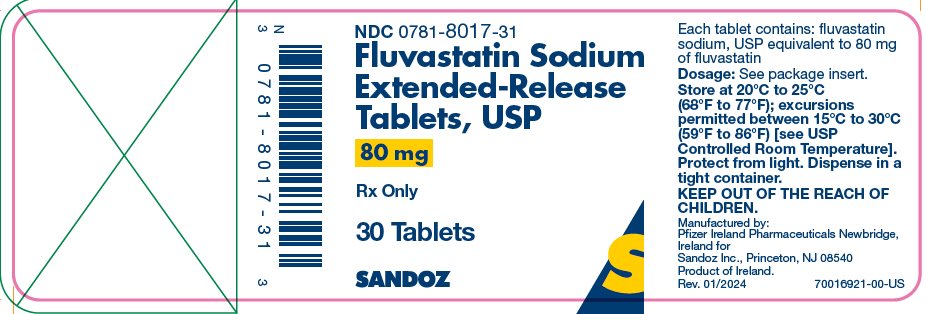
| 00781-8017-31 0781-8017-31 | 30 TABLET, EXTENDED RELEASE in 1 BOTTLE | $2.88 / ea | $86.38 | 2018-05-02 | — | Active |
You're viewing the largest of 2 pack sizes for this product.
This pack has the lowest per-ea cost of the 2 priced pack sizes ($2.88 NADAC).
Pack size FAQ
What quantity is in this package?
How does this package differ from NDC 00781-8017-31?
What NDC number is used to bill for this package of Fluvastatin Sodium ER 80 mg Tablet, Extended Release?
Prices are the latest CMS NADAC pharmacy acquisition cost per NDC; per-pack figures are per-unit × pack quantity, shown only when the pack is denominated in the same measure NADAC prices.
Therapeutic equivalents
| Product | Labeler | Pack | NADAC/unit | TE | Status | Price vs. this |
|---|---|---|---|---|---|---|
| Fluvastatin Sodium 80 mg 00093-7446-01 | Teva | 100 tablets | $2.879 | AB | Availability likely | — |
| Fluvastatin Sodium 80 mg 00527-2580-32 | Lannett | 30 tablets | $2.879 | AB | Availability likely | — |
| Fluvastatin Sodium Er 80 mgthis 00781-8017-01 | Sandoz | 100 tablets | $2.879 | AB | Availability likely | — |
| Lescol XL 80 mg 66758-0211-31 | Sandoz | 30 tablets | $13.064 | AB | Availability likely | +354% |
Where does this data come from?
- FDA openFDA NDC Directory · synced Oct 1, 2026
- FDA Orange Book · refreshed Oct 3, 2026
- CMS NADAC weekly file · file of Sep 30, 2026
Availability & generic status
FDA-approved generic versions are listed, and recent pricing/market data suggests they may be available — see Therapeutic equivalents.
Where does this data come from?
- FDA Orange Book · refreshed Oct 3, 2026
What it looks like
Where does this data come from?
- FDA label on DailyMed · label index refreshed Oct 5, 2026
Inactive Ingredients / Excipients
Inactive ingredients, also called excipients, are components of the drug product other than the active ingredient. They may include fillers, dyes, coatings, preservatives, flavors, or other formulation ingredients.
💡 Tap an ingredient (hover on desktop) to see what it is and why it’s used.
-
UNII EX438O2MRT
Ferric oxide yellow is a naturally occurring iron compound used as a colorant in medications. It gives tablets, capsules, and other forms a yellow or golden hue for identification and appearance.
-
UNII 0A7M0N7SPE
Hydroxypropyl cellulose is a plant-derived thickener made by chemically modifying cellulose. It acts as a binder to hold tablet ingredients together, a film-former for coatings, and a thickener in liquid formulations.
-
UNII Z78RG6M2N2
Hypromellose 2208 is a plant-derived thickening agent used as a binder and film-coating material in tablets and capsules. It helps hold ingredients together and creates a protective coating that controls how quickly the medicine dissolves.
-
UNII 70097M6I30
Magnesium stearate is a salt made from magnesium and stearic acid, a fatty substance. It's used in tablets and capsules as a lubricant and glidant to help ingredients flow smoothly during manufacturing and prevent sticking.
-
UNII OP1R32D61U
Microcrystalline cellulose is a purified form of cellulose, a natural fiber from plant sources. It acts as a binder and filler in tablets and capsules, helping hold ingredients together and give the medicine its shape and size.
-
UNII Q662QK8M3B
Polyethylene glycol 8000 is a synthetic polymer made from ethylene oxide. It acts as a binder and filler in tablets and capsules, helping hold ingredients together and add bulk to the medicine.
-
UNII HM5Z15LEBN
Potassium bicarbonate is a salt that acts as a buffer and pH regulator in medicines. It helps maintain a stable acid-alkaline balance so the drug stays effective and doesn't irritate the stomach or mouth.
-
UNII FZ989GH94E
Povidone is a synthetic polymer made from a plastic-like material. It acts as a binder to hold tablet ingredients together and as a disintegrant to help the tablet break apart in your stomach so the medicine can be absorbed.
-
UNII 15FIX9V2JP
Titanium dioxide is a bright white mineral powder commonly used as a colorant and opacifying agent. It makes pills and tablets white or lighter in color and helps make coatings non-transparent.
9 inactive ingredients listed in the exact product block matched to this NDC.
Where does this data come from?
ingredient classCode="IACT" elements from the exact product block matched by this NDC. Label-section narrative from DailyMed / the openFDA label index is shown separately when available.- FDA label on DailyMed · label index refreshed Oct 5, 2026
- FDA openFDA NDC Directory · synced Oct 1, 2026
Inactive ingredient FAQ
Are inactive ingredients the same for every manufacturer?
Why might an inactive ingredient be missing?
Can inactive ingredients matter?
Manufacturer & labeler
More NDCs from Sandoz Inc labeler code 00781
- Rivastigmine 4.6 mg/24h Patch, Extended Release NDC 0781-7304-31
- Rivastigmine 9.5 mg/24h Patch, Extended Release NDC 0781-7309-31
- Rivastigmine 13.3 mg/24h Patch, Extended Release NDC 0781-7313-31
- Budesonide .25 mg/2mL Suspension NDC 0781-7515-87
- Budesonide .5 mg/2mL Suspension NDC 0781-7516-87
- Budesonide 1 mg/2mL Suspension NDC 0781-7517-87
- Trifluoperazine Hydrochloride 1 mg Tablet, Film Coated NDC 0781-8028-01
- Armodafinil 50 mg Tablet NDC 0781-8029-31
- Trifluoperazine Hydrochloride 2 mg Tablet, Film Coated NDC 0781-8032-01
- Trifluoperazine Hydrochloride 5 mg Tablet, Film Coated NDC 0781-8034-01
- Trifluoperazine Hydrochloride 10 mg Tablet, Film Coated NDC 0781-8036-01
- Armodafinil 150 mg Tablet NDC 0781-8037-31
Where does this data come from?
- FDA openFDA NDC Directory · synced Oct 1, 2026
- Drugs@FDA
Full prescribing information FDA SPL
🎯 Indications and Usage ▾
1 INDICATIONS AND USAGE Fluvastatin sodium extended-release tablets are indicated: • To reduce the risk of undergoing coronary revascularization procedures and slow the progression of coronary atherosclerosis in adults with clinically evident coronary heart disease. • As an adjunct to diet to reduce low-density lipoprotein cholesterol (LDL-C) in adults with primary hyperlipidemia. • As an adjunct to diet to reduce LDL-C in adults and pediatric patients 10 years of age and older with heterozygous familial hypercholesterolemia (HeFH) who require 80 mg of fluvastatin daily.
Fluvastatin sodium extended-release tablets are indicated ( 1 ): • To reduce the risk of undergoing coronary revascularization procedures and slow the progression of coronary atherosclerosis in adults with clinically evident coronary heart disease. • As an adjunct to diet to reduce low-density lipoprotein cholesterol (LDL-C) in adults with primary hyperlipidemia. • As an adjunct to diet to reduce LDL-C in adults and pediatric patients 10 years of age and older with heterozygous familial hypercholesterolemia (HeFH) who require 80 mg
⏱️ Dosage and Administration ▾
2 DOSAGE AND ADMINISTRATION • Fluvastatin sodium extended-release tablets can be taken with or without food and may be taken at any time of the day. ( 2.1 ) • Do not break, crush or chew fluvastatin sodium extended-release tablets prior to administration. ( 2.1 ) • Adults : The recommended starting dose is 80 mg (administered as one 80 mg fluvastatin sodium extended-release tablet once daily).
( 2.2 ) Children : The recommended dose is 80 mg once daily in pediatric patients 10 years of age and older who require 80 mg of fluvastatin. Fluvastatin sodium extended-release tablets are not recommended for dosage initiation in pediatric patients because the recommended starting dosage cannot be achieved with the available strength of 80 mg. ( 2.3 )
2.1Important Dosage Information • Take fluvastatin sodium extended-release tablets orally once daily as a single dose, with or without food. • Do not break, crush, or chew fluvastatin sodium extended-release tablets. • Fluvastatin sodium extended-release tablet is only available as an 80 mg tablet. Fluvastatin sodium extended-release tablets cannot be titrated [see Dosage and Administration (2.2, 2.3)] . • For patients that require a high-intensity statin or are unable to achieve their LDL-C goal receiving fluvastatin sodium extended-release tablets 80 mg daily, prescribe alternative LDL-C-lowering treatment. • Assess LDL-C when clinically appropriate, as early as 4 weeks after initiating fluvastatin sodium extended-release tablets.
2.2Recommended Dosage in Adult Patients The recommended dosage for fluvastatin sodium extended-release tablets is 80 mg once daily.
2.3Recommended Dosage in Pediatric Patients Aged 10 Years of Age and Older with HeFH Fluvastatin sodium extended-release tablets are not recommended for dosage initiation in pediatric patients because the recommended starting dosage cannot be achieved with the available strength of 80 mg. Recommend use of another fluvastatin product to initiate dosing in pediatric patients. The recommended dosage of fluvastatin sodium extended-release tablets is 80 mg once daily in pediatric patients 10 years of age and older who require 80 mg of fluvastatin.
💊 Dosage Forms and Strengths ▾
3 DOSAGE FORMS AND STRENGTHS Extended-release tablets: 80 mg of fluvastatin: yellow, round, slightly biconvex film-coated tablets with beveled edges debossed with “LESCOL XL” on one side and “80” on the other. Extended-release tablets: 80 mg of fluvastatin ( 3 )
⛔ Contraindications ▾
4 CONTRAINDICATIONS Fluvastatin sodium extended-release tablets are contraindicated in patients with: • Acute liver failure or decompensated cirrhosis [see Warnings and Precautions ( 5.3 )] . • Hypersensitivity to fluvastatin or any of the excipients in fluvastatin sodium extended-release tablets. Hypersensitivity reactions, including anaphylaxis, angioedema, and Stevens-Johnson syndrome have been reported [see Adverse Reactions ( 6.2 )] . • Acute liver failure or decompensated cirrhosis ( 4 ) • Hypersensitivity to fluvastatin or any excipient in fluvastatin sodium extended-release tablets ( 4 )
⚠️ Warnings and Cautions ▾
5 WARNINGS AND PRECAUTIONS • Myopathy and Rhabdomyolysis : Risk factors include age 65 years or greater, uncontrolled hypothyroidism, renal impairment, and concomitant use with certain other drugs. Discontinue fluvastatin sodium extended-release tablets if markedly elevated creatine kinase (CK) levels occur, or myopathy is diagnosed or suspected. Temporarily discontinue fluvastatin sodium extended-release tablets in patients experiencing an acute or serious condition at high risk of developing renal failure secondary to rhabdomyolysis.
Inform patients of the risk of myopathy and rhabdomyolysis when starting or increasing fluvastatin sodium extended-release tablets dosage. Instruct patients to promptly report unexplained muscle pain, tenderness, or weakness, particularly if accompanied by malaise or fever. ( 5.1 ) • Immune-Mediated Necrotizing Myopathy (IMNM) : Rare reports of IMNM, an autoimmune myopathy, have been reported with statin use.
Discontinue fluvastatin sodium extended-release tablets if IMNM is suspected.( 5.2 ) • Hepatic Dysfunction : Increases in serum transaminases have occurred, some persistent. Rare reports of fatal and non-fatal hepatic failure have occurred. Consider testing liver enzyme before initiating therapy and as clinically indicated thereafter.
If serious hepatic injury with clinical symptoms and/or hyperbilirubinemia or jaundice occurs, promptly discontinue fluvastatin sodium extended-release tablets ( 5.3 )
5.1Myopathy and Rhabdomyolysis Fluvastatin sodium extended-release tablets may cause myopathy (muscle pain, tenderness, or weakness associated with elevated creatine kinase [CK]) and rhabdomyolysis. Acute kidney injury secondary to myoglobinuria and rare fatalities have occurred as a result of rhabdomyolysis with statins, including fluvastatin sodium extended-release tablets . Myopathy, defined as muscle aching or muscle weakness in conjunction with increases in CK, values to greater than 10 times the upper limit of normal (ULN) was < 0.1% in fluvastatin clinical trials [see Adverse Reactions ( 6.1 )] .
Risk Factors for Myopathy Risk factors for myopathy include age 65 years or greater, uncontrolled hypothyroidism, renal impairment, and concomitant use with certain other drugs (including other lipid-lowering therapies) [see Drug Interactions ( 7.1 )] . Steps to Prevent or Reduce the Risk of Myopathy and Rhabdomyolysis Avoid concomitant use of fluvastatin sodium extended-release tablets with gemfibrozil, cyclosporin, and fluconazole. When used concomitantly with fluvastatin sodium extended-release tablets, lipid modifying doses (≥ 1 g/day) of niacin, fibrates, and colchicine may also increase the risk of myopathy and rhabdomyolysis [see Drug Interactions ( 7.1 )] .
Discontinue fluvastatin sodium extended-release tablets if markedly elevated CK levels occur or if myopathy is either diagnosed or suspected. Muscle symptoms and CK increases may resolve if fluvastatin sodium extended-release tablets are discontinued. Temporarily discontinue fluvastatin sodium extended-release tablets in patients experiencing an acute or serious condition at high risk of developing renal failure secondary to rhabdomyolysis, e.g., sepsis, shock, severe hypovolemia, major surgery, trauma, severe metabolic, endocrine, or electrolyte disorders, or uncontrolled epilepsy.
Inform patients of the risk of myopathy and rhabdomyolysis when starting fluvastatin sodium extended-release tablets. Instruct patients to promptly report any unexplained muscle pain, tenderness, or weakness, particularly if accompanied by malaise or fever.
5.2Immune-Mediated Necrotizing Myopathy There have been rare reports of immune-mediated necrotizing myopathy (IMNM), an autoimmune myopathy, associated with statin use, including reports of recurrence when the same or a different statin was administered. IMNM is characterized by proximal muscle weakness and elevated serum CK, which persist despite discontinuation of statin treatment; positive anti-HMG… [Excerpted — this section continues on DailyMed.]
🤒 Adverse Reactions ▾
6 ADVERSE REACTIONS The following serious adverse reactions are discussed in greater detail in other sections of the label: • Myopathy and Rhabdomyolysis [see Warnings and Precautions ( 5.1 )] • Immune-Mediated Necrotizing Myopathy [see Warnings and Precautions ( 5.2 )] • Hepatic Dysfunction [see Warnings and Precautions ( 5.3 )] • Increases in HbA1c and Fasting Serum Glucose Levels [see Warnings and Precautions ( 5.4 )] Most frequent adverse reactions occurring in ≥ 2.5% of subjects treated with fluvastatin sodium extended-release tablets and more than placebo are: influenza-like symptoms, sinusitis, dyspepsia, urinary tract infection, bronchitis, and nausea.
( 6.1 ) To report SUSPECTED ADVERSE REACTIONS, contact Sandoz Inc. at 1-800-525-8747 or FDA at 1-800-FDA-1088 or www.fda.gov/medwatch.
6.1Clinical Trials Experience Because clinical trials are conducted under widely varying conditions, adverse reaction rates observed in the clinical trials of a drug cannot be directly compared to rates in the clinical trials of another drug and may not reflect the rates observed in practice. In the fluvastatin capsule, clinical trials there were 2326 patients treated with fluvastatin (age range, 18 to 75 years, 44% women, 94% White, 4% Black or African American, 2% other ethnicities) with a median treatment duration of 24 weeks.
The most common adverse reactions that led to treatment discontinuation and occurred at an incidence greater than placebo were: transaminase increased (0.8%), upper abdominal pain (0.3%), dyspepsia (0.3%), fatigue (0.2%), and diarrhea (0.2%). In the fluvastatin sodium extended-release tablets clinical trials there were 912 patients treated with fluvastatin sodium extended-release tablets (age range, 21 to 87 years, 52% women, 91% White, 4% Black of African American, 5% other ethnicities) with a median treatment duration of 24 weeks.
The most common adverse reactions that led to treatment discontinuation were abdominal pain (0.7%), diarrhea (0.5%), nausea (0.4%), dyspepsia (0.4%) and chest pain (0.3%). Adverse reactions occurring in the fluvastatin capsules and fluvastatin sodium extended-release tablets controlled trials with a frequency ≥ 2% included the following: Table 1. Adverse Reactions Reported in ≥ 2% in Patients Treated with Fluvastatin Capsules/ Fluvastatin Sodium Extended-Release Tablets and at an Incidence Greater Than Placebo in Placebo-Controlled Trials Pooled Dosages Adverse reaction Placebo a N = 960 (%) Fluvastatin capsules a N = 2326 (%) Fluvastatin sodium extended-release tablets b N = 912 (%) Influenza-like symptoms 5.7 5.1
7.1Headache 7.8 8.9
4.7Myalgia 4.5 5.0
3.8Abdominal pain 3.8 4.9
3.7Dyspepsia 3.2 7.9
3.5Sinusitis 1.9 2.6
3.5Diarrhea 4.2 4.9
3.3 Arthropathy NA NA
3.2Urinary tract infection 1.1 1.6
2.7Nausea 2.0 3.2
2.5Bronchitis 1.0 1.8
2.6Fatigue 2.3 2.7
1.6Flatulence 2.5 2.6
1.4Arthritis 2.0 2.1
1.3Allergy 2.2 2.3
1.0Insomnia 1.4 2.7 0.8 a Controlled trials with fluvastatin capsules (20 mg and 40 mg daily and 40 mg twice daily) compared to placebo. b Controlled trials with fluvastatin sodium extended-release 80 mg tablets as compared to fluvastatin capsules. In the Fluvastatin Capsules Intervention Prevention Study (LIPS), the effect of fluvastatin capsules 40 mg, administered twice daily on the risk of recurrent cardiac events was assessed in 1677 patients with coronary heart disease who had undergone a percutaneous coronary intervention.
This was a multicenter, randomized, double-blind, placebo-controlled trial, patients were treated with dietary/lifestyle counseling and either fluvastatin capsules 40 mg (n = 844) or placebo (n = 833) given twice daily for a median of 3.9 years [see Clinical Studies ( 14.3 )]. Table 2. Adverse Reactions Reported in ≥ 2% in Patients Treated with Fluvastatin Capsules/ Fluvastatin Sodium Extended-Release Tablets and at an Incidence Greater Than Placebo in the LIPS Trial Table 2.
Adverse Reactions Reported in ≥ 2% in Patients Treated with… [Excerpted — this section continues on DailyMed.]
🔄 Drug Interactions ▾
7 DRUG INTERACTIONS • Gemfibrozil : Avoid use with fluvastatin sodium extended-release tablets. ( 7.1 ) • Cyclosporine and Fluconazole : Avoid use with fluvastatin sodium extended-release tablets. ( 7.1 ) • Fibrates, Lipid-modifying doses (≥ 1 g/day) of Niacin, and Colchicine : Consider if the benefit of concomitant use with fluvastatin sodium extended-release tablets outweighs the increased risk of myopathy and rhabdomyolysis.
If concomitant use is decided, monitor patients for signs and symptoms of myopathy, particularly during initiation of therapy and during upward dose titration. ( 7.1 ) • Warfarin : Obtain an International Normalized Ratio (INR) before starting and frequently enough after initiation or discontinuation to ensure that no significant alteration in INR occurs. Once the INR is stable, monitor INR at regular intervals.
( 7.2 ) • Glyburide : Monitor blood glucose levels when fluvastatin sodium extended-release tablets are initiated. ( 7.2 ) • Phenytoin : Monitor plasma phenytoin levels when fluvastatin sodium extended-release tablets treatment is initiated. ( 7.2 )
7.1Drug Interactions that Increase the Risk of Myopathy and Rhabdomyolysis with Fluvastatin Sodium Extended-Release Tablets Table 3 includes a list of drugs that increase the risk of myopathy and rhabdomyolysis when used concomitantly with fluvastatin and instructions for preventing or managing them [see Warnings and Precautions ( 5.1 ), Clinical Pharmacology ( 12.3 )] . Table 3. Drug Interactions That Increase the Risk of Myopathy and Rhabdomyolysis with Fluvastatin Sodium Extended-Release Tablets Gemfibrozil Clinical impact There is an increased risk of myopathy/rhabdomyolysis when fluvastatin sodium extended-release tablets are administered with gemfibrozil Intervention Avoid concomitant use of gemfibrozil with fluvastatin sodium extended-release tablets.
Cyclosporine Clinical impact Cyclosporine coadministration increases fluvastatin exposure. The risk of myopathy and rhabdomyolysis may be increased with concomitant use of cyclosporine with fluvastatin sodium extended-release tablets. Intervention Avoid concomitant use of cyclosporine with fluvastatin sodium extended-release tablets.
Fluconazole Clinical impact Fluconazole coadministration increases fluvastatin exposure. The risk of myopathy and rhabdomyolysis may be increased with concomitant use of fluconazole with fluvastatin sodium extended-release tablets. Intervention Avoid concomitant use of fluconazole with fluvastatin sodium extended-release tablets.
Niacin Clinical impact Risk of myopathy and rhabdomyolysis may be enhanced with concomitant use with lipid-modifying doses (≥ 1 g/day) of niacin with fluvastatin sodium extended-release tablets. Intervention Consider if the benefit of using lipid-modifying doses (≥ 1 g/day) of niacin concomitantly with fluvastatin sodium extended-release tablets outweighs the increased risk of myopathy and rhabdomyolysis. If concomitant use is decided, monitor patients for signs and symptoms of myopathy, particularly during initiation of therapy and during upward dose titration.
Fibrates Clinical impact Fibrates may cause myopathy when given alone. The risk of myopathy and rhabdomyolysis may be increased with concomitant use of fibrates with fluvastatin sodium extended-release tablets. Intervention Consider if the benefit of using fibrates concomitantly with fluvastatin sodium extended-release tablets outweighs the increased risk of myopathy and rhabdomyolysis.
If concomitant use is decided, monitor patients for signs and symptoms of myopathy, particularly during initiation of therapy and during upward dose titration. Colchicine Clinical impact Cases of myopathy and rhabdomyolysis have been reported with concomitant use of colchicine with fluvastatin. Intervention Consider if the benefit of using colchicine concomitantly with fluvastatin sodium extended-release tablets outweighs the increased risk of myopathy and rhabdomyolysis.
If concomitant use is decide… [Excerpted — this section continues on DailyMed.]
👥 Use in Specific Populations ▾
8 USE IN SPECIFIC POPULATIONS • Pregnancy: May cause fetal harm ( 8.1 ) • Lactation: Breastfeeding not recommended during treatment with fluvastatin sodium extended-release tablets ( 8.2 )
8.1Pregnancy Risk Summary Discontinue fluvastatin sodium extended-release tablets when pregnancy is recognized. Alternatively, consider the ongoing therapeutic needs of the individual patient. Fluvastatin sodium extended-release tablets decrease synthesis of cholesterol and possibly other biologically active substances derived from cholesterol; therefore, fluvastatin sodium extended-release tablets may cause fetal harm when administered to pregnant patients based on the mechanism of action [see Clinical Pharmacology (12.1)] .
In addition, treatment of hyperlipidemia is not generally necessary during pregnancy. Atherosclerosis is a chronic process and the discontinuation of lipid-lowering drugs during pregnancy should have little impact on the outcome of long-term therapy of primary hyperlipidemia for most patients. Available data from case series and prospective and retrospective observational cohort studies over decades of use with statins in pregnant women have not identified a drug-associated risk of major congenital malformations.
Published data from prospective and retrospective observational cohort studies with fluvastatin sodium extended-release tablets’ use in pregnant women are insufficient to determine if there is a drug-associated risk of miscarriage (see Data) . In animal reproduction studies, no adverse developmental effects were observed in pregnant rats or rabbits orally administered fluvastatin during the period of organogenesis at doses that resulted in 2 and 5 times, respectively, the human exposure at the maximum recommended human dosage of 40 mg/day, based on body surface area (mg/m 2 ) (see Data) .
The estimated background risk of major birth defects and miscarriage for the indicated population is unknown. In the U.S. general population, the estimated background risk of major birth defects and miscarriage in clinically recognized pregnancies is 2% to 4% and 15% to 20%, respectively. Data Human Data A Medicaid cohort linkage study of 1152 statin-exposed pregnant women compared to 886,996 controls did not find a significant teratogenic effect from maternal use of statins in the first trimester of pregnancy, after adjusting for potential confounders, including maternal age, diabetes mellitus, hypertension, obesity, and alcohol and tobacco use using propensity score-based methods.
The relative risk of congenital malformations between the group with statin use and the group with no statin use in the first trimester was 1.07 (95% CI: 0.85 to 1.37) after controlling for confounders, particularly preexisting diabetes mellitus. There were also no statistically significant increases in any of the organ-specific malformations assessed after accounting for confounders. In the majority of pregnancies, statin treatment was initiated prior to pregnancy and was discontinued at some point in the first trimester when pregnancy was identified.
Study limitations include reliance on physician coding to define the presence of a malformation, lack of control for certain confounders such as body mass index, use of prescription dispensing as verification for the use of a statin, and lack of information on non-live births. Animal Data Fluvastatin sodium given to rats during organogenesis at doses of 12 mg/kg/day and in rabbits at doses of 10 mg/kg/day produced delays in skeletal development. These doses resulted in 2 times (rat at 12 mg/kg) or 5 times (rabbit at 10 mg/kg) the 40 mg human exposure based on mg/m 2 surface area.
Malaligned thoracic vertebrae were seen in rats at 36 mg/kg, a dose that produced significant maternal toxicity. A study in which female rats were given fluvastatin during the third trimester at 12 and 24 mg/kg/day resulted in maternal mortality at or near term and postpartum. In addition, fetal and neonatal lethality were… [Excerpted — this section continues on DailyMed.]
🆘 Overdosage ▾
10 OVERDOSAGE No specific antidotes for fluvastatin sodium extended-release tablets are known. In the event of an overdose of fluvastatin sodium extended-release tablets, consider contacting the Poison Help line (1-800-222-1222) or a medical toxicologist for additional overdosage management recommendations.
🧬 Clinical Pharmacology ▾
12 CLINICAL PHARMACOLOGY
12.1Mechanism of Action Fluvastatin is a competitive inhibitor of HMG-CoA reductase, the rate limiting enzyme that converts 3-hydroxy-3-methylglutaryl-coenzyme A (HMG-CoA) to mevalonate, a precursor of cholesterol.
12.2Pharmacodynamics Inhibition of HMG-CoA reductase by fluvastatin accelerates the expression of LDL-receptors, followed by the uptake of LDL-C from blood to the liver, leading to a decrease in plasma LDL-C and total cholesterol. Sustained inhibition of cholesterol synthesis in the liver also decreases levels of very-low-density lipoproteins. The maximum LDL-C reduction of fluvastatin sodium extended-release tablets is usually achieved by 4 weeks and is maintained after that.
12.3Pharmacokinetics Absorption Fluvastatin administered as fluvastatin sodium extended-release 80 mg tablets reaches peak concentration in approximately 3 hours under fasting conditions, after a low-fat meal, or 2.5 hours after a low-fat meal. The mean relative bioavailability of the extended-release tablet is approximately 29% (range, 9% to 66%) compared to that of the fluvastatin immediate-release capsule administered under fasting conditions. Administration of a high-fat meal delayed the absorption (T max 6h) and increased the bioavailability of the extended-release tablet by approximately 50%.
However, the maximum concentration of fluvastatin sodium extended-release tablet seen after a high-fat meal is less than the peak concentration following a single dose or twice daily dose of the 40 mg fluvastatin capsule. Distribution Fluvastatin is 98% bound to plasma proteins. The mean volume of distribution (VD ss ) is estimated at
0.35L/kg. At therapeutic concentrations, the protein binding of fluvastatin is not affected by warfarin, salicylic acid and glyburide. Elimination Metabolism Fluvastatin is metabolized in the liver, primarily via hydroxylation of the indole ring at the 5- and 6-positions.
N-dealkylation and beta-oxidation of the side-chain also occurs. The hydroxy metabolites have some pharmacologic activity, but do not circulate in the blood. Fluvastatin has two enantiomers.
Both enantiomers of fluvastatin are metabolized in a similar manner. In vitro data indicate that fluvastatin metabolism involves multiple Cytochrome P450 (CYP) isozymes. CYP2C9 isoenzyme is primarily involved in the metabolism of fluvastatin (approximately 75%), while CYP2C8 and CYP3A4 isoenzymes are involved to a much less extent, i.e., approximately 5% and approximately 20%, respectively.
Excretion Following oral administration, fluvastatin is primarily (about 90%) excreted in the feces as metabolites, with less than 2% present as unchanged drug. Approximately 5% of a radiolabeled oral dose were recovered in urine. The elimination half-life (t 1/2 ) of fluvastatin is approximately 3 hours.
Specific Populations Geriatric Patients Plasma levels of fluvastatin are not significantly different in patients age > 65 years compared to patients age 21 to 49 years. Gender In a study evaluating the effect of age and gender on fluvastatin pharmacokinetics, there were no significant differences in fluvastatin exposures between males and females, except between younger females and younger males (both ages 21-49 years), where there was an approximate 30% increase in area under the curve (AUC) in females. Adjusting for body weight decreases the magnitude of the differences seen.
For fluvastatin sodium extended-release tablets, the AUC increases 67% and 77% for women compared to men under fasted and high- fat meal fed conditions, respectively. Pediatric Patients Pharmacokinetic data in the pediatric population are not available. Patients with Renal Impairment In patients with moderate to severe renal impairment (CLCr 10-40 mL/min), AUC and Cmax increased approximately 1.2-fold after administration of a single dose of 40 mg fluvastatin compared to healthy volunteers.
In patients with end-stage renal disease on hemodialysis, the AUC increased by approx… [Excerpted — this section continues on DailyMed.]
🧬 Mechanism of Action ▾
12.1Mechanism of Action Fluvastatin is a competitive inhibitor of HMG-CoA reductase, the rate limiting enzyme that converts 3-hydroxy-3-methylglutaryl-coenzyme A (HMG-CoA) to mevalonate, a precursor of cholesterol.
📦 How Supplied / Storage and Handling ▾
16 HOW SUPPLIED/STORAGE AND HANDLING How Supplied Fluvastatin sodium extended-release tablets supplied as: Strength How supplied NDC Tablet description 80 mg of fluvastatin bottles of 30 0781-8017-31 Yellow, round, slightly biconvex film-coated tablet with beveled edges debossed with “LESCOL XL” on one side and “80” on the other bottles of 100 0781-8017-01 Store and Dispense Store at 20ºC to 25ºC (68ºF to 77ºF); excursions permitted between 15ºC to 30ºC (59ºF to 86ºF) [see USP Controlled Room Temperature]. Dispense in a tight container.
Protect from light.
📋 Description ▾
11 DESCRIPTION Fluvastatin sodium inhibits 3-hydroxy-3-methylglutaryl-coenzyme A (HMG-CoA) reductase. Fluvastatin sodium is [ R *, S *-( E )]-(±)-7-[3-(4-fluorophenyl)-1-(1-methylethyl)-1 H -indol-2-yl]-3,5-dihydroxy-6-heptenoic acid, monosodium salt. The empirical formula of fluvastatin sodium is C 24 H 25 FNO 4 •Na, its molecular weight is 433.46 g/mol and its structural formula is: Fluvastatin sodium is a white to pale yellow, hygroscopic powder soluble in water, ethanol and methanol.
Fluvastatin sodium is supplied as extended-release tablets containing 84.24 mg of fluvastatin sodium, equivalent to 80 mg of fluvastatin, for oral use. Fluvastatin sodium extended-release tablets contain the following inactive ingredients: hydroxypropyl cellulose, hydroxypropyl methyl cellulose, magnesium stearate, microcrystalline cellulose, polyethylene glycol 8000, potassium bicarbonate, povidone, titanium dioxide, and yellow iron oxide. Fluvastatin sodium structural formula
💬 Information for Patients ▾
17 PATIENT COUNSELING INFORMATION Advise the patient to read the FDA-approved patient labeling (Patient Information). Myopathy and Rhabdomyolysis Advise patients that fluvastatin sodium extended-release tablets may cause myopathy and rhabdomyolysis. Instruct patients to promptly report any unexplained muscle pain, tenderness, or weakness particularly if accompanied by malaise or fever [see Warnings and Precautions ( 5.1 ), Drug Interactions ( 7.1 )] .
Hepatic Dysfunction Inform patients that fluvastatin sodium extended-release tablets may cause liver enzyme elevations and possibly liver failure. Advise patients to promptly report fatigue, anorexia, right upper abdominal discomfort, dark urine, or jaundice [see Warnings and Precautions ( 5.3 )] . Increases in HbA1c and Fasting Serum Glucose Levels Inform patients that increases in HbA1c and fasting serum glucose levels may occur with fluvastatin sodium extended-release tablets.
Encourage patients to optimize lifestyle measures, including regular exercise, maintaining a healthy body weight, and making healthy food choices [see Warnings and Precautions ( 5.4 )] . Pregnancy Advise pregnant patients and patients who can become pregnant of the potential risk to a fetus. Advise patients to inform their healthcare provider of a known or suspected pregnancy to discuss if fluvastatin sodium extended-release tablets should be discontinued [see Use in Specific Populations ( 8.1 )] .
Lactation Advise patients that breastfeeding is not recommended during treatment with fluvastatin sodium extended-release tablets [see Use in Specific Populations ( 8.2 )] . Mfd. by: Pfizer Ireland Pharmaceuticals Newbridge, Ireland for Sandoz Inc., Princeton, NJ 08540
🧬 Pharmacokinetics ▾
12.3Pharmacokinetics Absorption Fluvastatin administered as fluvastatin sodium extended-release 80 mg tablets reaches peak concentration in approximately 3 hours under fasting conditions, after a low-fat meal, or 2.5 hours after a low-fat meal. The mean relative bioavailability of the extended-release tablet is approximately 29% (range, 9% to 66%) compared to that of the fluvastatin immediate-release capsule administered under fasting conditions. Administration of a high-fat meal delayed the absorption (T max 6h) and increased the bioavailability of the extended-release tablet by approximately 50%.
However, the maximum concentration of fluvastatin sodium extended-release tablet seen after a high-fat meal is less than the peak concentration following a single dose or twice daily dose of the 40 mg fluvastatin capsule. Distribution Fluvastatin is 98% bound to plasma proteins. The mean volume of distribution (VD ss ) is estimated at
0.35L/kg. At therapeutic concentrations, the protein binding of fluvastatin is not affected by warfarin, salicylic acid and glyburide. Elimination Metabolism Fluvastatin is metabolized in the liver, primarily via hydroxylation of the indole ring at the 5- and 6-positions.
N-dealkylation and beta-oxidation of the side-chain also occurs. The hydroxy metabolites have some pharmacologic activity, but do not circulate in the blood. Fluvastatin has two enantiomers.
Both enantiomers of fluvastatin are metabolized in a similar manner. In vitro data indicate that fluvastatin metabolism involves multiple Cytochrome P450 (CYP) isozymes. CYP2C9 isoenzyme is primarily involved in the metabolism of fluvastatin (approximately 75%), while CYP2C8 and CYP3A4 isoenzymes are involved to a much less extent, i.e., approximately 5% and approximately 20%, respectively.
Excretion Following oral administration, fluvastatin is primarily (about 90%) excreted in the feces as metabolites, with less than 2% present as unchanged drug. Approximately 5% of a radiolabeled oral dose were recovered in urine. The elimination half-life (t 1/2 ) of fluvastatin is approximately 3 hours.
Specific Populations Geriatric Patients Plasma levels of fluvastatin are not significantly different in patients age > 65 years compared to patients age 21 to 49 years. Gender In a study evaluating the effect of age and gender on fluvastatin pharmacokinetics, there were no significant differences in fluvastatin exposures between males and females, except between younger females and younger males (both ages 21-49 years), where there was an approximate 30% increase in area under the curve (AUC) in females. Adjusting for body weight decreases the magnitude of the differences seen.
For fluvastatin sodium extended-release tablets, the AUC increases 67% and 77% for women compared to men under fasted and high- fat meal fed conditions, respectively. Pediatric Patients Pharmacokinetic data in the pediatric population are not available. Patients with Renal Impairment In patients with moderate to severe renal impairment (CLCr 10-40 mL/min), AUC and Cmax increased approximately 1.2-fold after administration of a single dose of 40 mg fluvastatin compared to healthy volunteers.
In patients with end-stage renal disease on hemodialysis, the AUC increased by approximately 1.5-fold. Fluvastatin sodium extended-release tablets were not evaluated in patients with renal impairment [see Use in Specific Populations (8.6)] . However, systemic exposures after administration of fluvastatin sodium extended-release tablets are lower than after the 40 mg immediate release capsule.
Patients with Hepatic Impairment In patients with hepatic impairment due to liver cirrhosis, fluvastatin AUC and Cmax increased approximately 2.5-fold compared to healthy subjects after administration of a single 40 mg dose [see Use in Specific Populations (8.7)] . The enantiomer ratios of the two isomers of fluvastatin in hepatic impairment patients were comparable to those observed in healthy subjects. Drug… [Excerpted — this section continues on DailyMed.]
🔬 Clinical Studies ▾
14 CLINICAL STUDIES Secondary Prevention of Cardiovascular Disease In the Fluvastatin Capsules Intervention Prevention Study (LIPS), the effect of fluvastatin capsules 40 mg administered twice daily on the risk of recurrent cardiac events (time to first occurrence of cardiac death, nonfatal myocardial infarction, or revascularization) was assessed in 1677 adult patients with CHD who had undergone a percutaneous coronary intervention (PCI) procedure (mean time from PCI to randomization = 3 days). In this multicenter, randomized, double-blind, placebo-controlled trial, patients were treated with dietary/lifestyle counseling and either fluvastatin 40 mg (n = 844) or placebo (n = 833) given twice daily for a median of 3.9 years.
The study population was 84% male, 98% White, with 37% > 65 years of age. Mean baseline lipid concentrations were: total cholesterol 201 mg/dL, LDL-C 132 mg/dL, triglycerides 70 mg/dL, and HDL-C 39 mg/dL. Fluvastatin capsules significantly reduced the risk of recurrent cardiac events (Figure 1) by 22% (p = 0.013, 181 patients in the fluvastatin capsules group versus 222 patients in the placebo group).
Revascularization procedures comprised the majority of the initial recurrent cardiac events (143 revascularization procedures in the fluvastatin capsules group and 171 in the placebo group). Consistent trends in risk reduction were observed in patients > 65 years of age. Figure 1.
Primary Endpoint – Recurrent Cardiac Events (Cardiac Death, Nonfatal MI or Revascularization Procedure) (ITT Population) Outcome data for the Fluvastatin Capsules Intervention Prevention Study are shown in Figure 2. After exclusion of revascularization procedures (CABG and repeat PCI) occurring within the first 6 months of the initial procedure involving the originally instrumental site, treatment with fluvastatin capsules was associated with a 32% (p = 0.002) reduction in risk of late revascularization procedures (CABG or PCI occurring at the original site > 6 months after the initial procedure, or at another site).
Figure 2. Fluvastatin Capsules Intervention Prevention Study–- Primary and Secondary Endpoints In the Lipoprotein and Coronary Atherosclerosis Study (LCAS), the effect of fluvastatin capsule therapy on coronary atherosclerosis was assessed by quantitative coronary angiography (QCA) in patients with CAD and mild to moderate hypercholesterolemia (baseline LDL-C range 115 to 190 mg/dL). In this randomized double-blind, placebo-controlled trial, 429 patients were treated with conventional measures (Step 1, AHA Diet) and either fluvastatin 40 mg/day or placebo.
In order to provide treatment to patients receiving placebo with LDL-C levels ≥160 mg/dL at baseline, adjunctive therapy with cholestyramine was added after Week 12 to all patients in the study with baseline LDL-C values of ≥ 160 mg/dL, which were present in 25% of the study population. Quantitative coronary angiograms were evaluated at baseline and 2.5 years in 340 (79%) angiographic evaluable patients. Compared to placebo, fluvastatin capsules significantly slowed the progression of coronary atherosclerosis as measured by within-patient per-lesion change in minimum lumen diameter (MLD), the primary endpoint (Figure 3 below), percent diameter stenosis (Figure 4), and the formation of new lesions (13% of all fluvastatin patients versus 22% of all placebo patients).
A significant difference in favor of fluvastatin capsules was found between all fluvastatin and all placebo patients in the distribution among the three categories of definite progression, definite regression, and mixed or no change. Beneficial angiographic results (change in MLD) were independent of patients’ gender and consistent across a range of baseline LDL-C levels. Figure 3.
Change in Minimum Lumen Diameter (mm) Figure 4. Change in % Diameter Stenosis Primary Hyperlipidemia in Adults Fluvastatin sodium extended-release tablets have been studied in five controlled trials of adult patients with primary… [Excerpted — this section continues on DailyMed.]
🧪 Nonclinical Toxicology ▾
13 NONCLINICAL TOXICOLOGY
13.1Carcinogenesis, Mutagenesis, Impairment of Fertility In a 2-year carcinogenicity study in rats at doses of 6, 9, and 18 to 24 (escalated after 1 year) mg/kg/day, there was an increased incidence of thyroid follicular cell adenomas and carcinomas in males treated with 18 to 4 mg/kg/day. Additionally, a low incidence of forestomach squamous papillomas and one forestomach carcinoma were observed at the 18 to 24 mg/kg/day dose, likely due to prolonged direct contact exposure rather than a systemic effect. This dose represents a plasma AUC exposure approximately 26 to 35 times the mean human plasma drug concentration after a 40 mg oral dose.
A carcinogenicity study conducted in mice at doses of 0.3, 15 and 30 mg/kg/day revealed a statistically significant increase in forestomach squamous cell papillomas in females at 15 mg/kg/day and in males and females at 30 mg/kg/day. These doses represent plasma AUC exposures approximately 2 and 7 times the mean human plasma drug concentration after a 40 mg oral dose. No evidence of mutagenicity was observed in vitro, with or without rat-liver metabolic activation, in the following studies: microbial mutagen tests using mutant strains of Salmonella typhimurium or Escherichia coli ; malignant transformation assay in BALB/3T3 cells; unscheduled DNA synthesis in rat primary hepatocytes; chromosomal aberrations in V79 Chinese Hamster cells; HGPRT V79 Chinese Hamster cells.
In addition, there was no evidence of genotoxicity in vivo in either a rat chromosome aberration study or mouse micronucleus test. In a fertility study in rats with daily doses up to 6 mg/kg/day for females and 20 mg/kg/day for males, fluvastatin sodium had no adverse effects on the fertility or reproductive performance. Hamsters treated for 3 months at 20 mg/kg/day (approximately three times the 40 mg human daily dose based on body surface area, mg/m 2 ) showed small seminal vesicles and testes, along with tubular degeneration and aspermatogenesis in the testes and vesiculitis in the seminal vesicles.
Rats treated for 2 years at 18 mg/kg/day (approximately four times human exposure based on body surface area) exhibited vesiculitis in the seminal vesicles and edema in the testes.
📄 Carcinogenesis, Mutagenesis, Impairment of Fertility ▾
13.1Carcinogenesis, Mutagenesis, Impairment of Fertility In a 2-year carcinogenicity study in rats at doses of 6, 9, and 18 to 24 (escalated after 1 year) mg/kg/day, there was an increased incidence of thyroid follicular cell adenomas and carcinomas in males treated with 18 to 4 mg/kg/day. Additionally, a low incidence of forestomach squamous papillomas and one forestomach carcinoma were observed at the 18 to 24 mg/kg/day dose, likely due to prolonged direct contact exposure rather than a systemic effect. This dose represents a plasma AUC exposure approximately 26 to 35 times the mean human plasma drug concentration after a 40 mg oral dose.
A carcinogenicity study conducted in mice at doses of 0.3, 15 and 30 mg/kg/day revealed a statistically significant increase in forestomach squamous cell papillomas in females at 15 mg/kg/day and in males and females at 30 mg/kg/day. These doses represent plasma AUC exposures approximately 2 and 7 times the mean human plasma drug concentration after a 40 mg oral dose. No evidence of mutagenicity was observed in vitro, with or without rat-liver metabolic activation, in the following studies: microbial mutagen tests using mutant strains of Salmonella typhimurium or Escherichia coli ; malignant transformation assay in BALB/3T3 cells; unscheduled DNA synthesis in rat primary hepatocytes; chromosomal aberrations in V79 Chinese Hamster cells; HGPRT V79 Chinese Hamster cells.
In addition, there was no evidence of genotoxicity in vivo in either a rat chromosome aberration study or mouse micronucleus test. In a fertility study in rats with daily doses up to 6 mg/kg/day for females and 20 mg/kg/day for males, fluvastatin sodium had no adverse effects on the fertility or reproductive performance. Hamsters treated for 3 months at 20 mg/kg/day (approximately three times the 40 mg human daily dose based on body surface area, mg/m 2 ) showed small seminal vesicles and testes, along with tubular degeneration and aspermatogenesis in the testes and vesiculitis in the seminal vesicles.
Rats treated for 2 years at 18 mg/kg/day (approximately four times human exposure based on body surface area) exhibited vesiculitis in the seminal vesicles and edema in the testes.
📄 Patient Package Insert ▾
PATIENT INFORMATION Fluvastatin (floo-vah-STA-tin ) Sodium Extended-Release Tablets, USP for oral use You must read and follow all instructions before using fluvastatin sodium extended-release tablets. Read this Patient Information before you start taking fluvastatin sodium extended-release tablets and each time you get a refill. There may be new information.
This information does not take the place of talking with your healthcare provider about your medical condition or your treatment. If you have any questions about fluvastatin sodium extended-release tablets, ask your doctor or pharmacist. What are fluvastatin sodium extended-release tablets?
Fluvastatin sodium extended-release tablets are a prescription medicine “that contains the cholesterol lowering medicine, fluvastatin.” Fluvastatin sodium extended-release tablets are used in adults with heart disease (coronary artery disease) to: • lower the need for heart and blood vessel procedures to improve flow to the heart, called coronary revascularization. • slow the buildup of too much cholesterol in the arteries of the heart. Fluvastatin sodium extended-release tablets are used along with diet to lower the level of: • low-density lipoprotein cholesterol (LDL-C) or “bad” cholesterol in adults with hyperlipidemia (high levels of fat in the blood) • LDL-C in adults and children 10 years of age and older with heterozygous familial hypercholesterolemia (HeFH), an inherited condition that causes high levels of LDL, who require 80 mg of fluvastatin daily.
The safety and effectiveness of fluvastatin sodium extended-release tablets have not been established in children younger than 10 years of age with heterozygous familial hypercholesterolemia (HeFH) or in children with other types of hyperlipidemia (high levels in fat in the blood) other than HeFH. Do not take fluvastatin sodium extended-release tablets if you: • have liver problems (acute liver failure or decompensated cirrhosis) • are allergic to fluvastatin or any of the ingredients in fluvastatin sodium extended-release tablets.
See the end of this Patient Information leaflet for a complete list of ingredients in fluvastatin sodium extended-release tablets. Before you take fluvastatin sodium extended-release tablets, tell your healthcare provider about all of your medical conditions, including if you: • have muscle aches or weakness • drink more than 2 glasses of alcohol daily • have diabetes • have a thyroid problem • have kidney problems • are pregnant or plan to become pregnant. If you become pregnant while taking fluvastatin sodium extended-release tablets, stop taking fluvastatin sodium extended-release tablets and call your healthcare provider. • are breastfeeding or plan to breastfeed.
It is not known if fluvastatin sodium passes into your breast milk. Talk to your healthcare provider about the best way to feed your baby if you take fluvastatin sodium extended-release tablets. You should not breastfeed while taking fluvastatin sodium extended-release tablets.
Tell your healthcare provider about all the medicines you take, including prescription and over-the-counter medicines, vitamins, and herbal supplements. Talk to your healthcare provider before you start taking any new medicines. Tell your healthcare provider who prescribes fluvastatin sodium extended-release tablets if another healthcare provider increases the dose of another medicine you are taking.
Fluvastatin sodium extended-release tablets may affect the way other medicines work, and other medicines may affect how fluvastatin sodium extended-release tablets work. Especially tell your healthcare provider if you take: • warfarin (a medicine used to reduce blood clotting) • glyburide (a medicine used to treat diabetes) • phenytoin (a medicine used to treat epilepsy) Taking fluvastatin sodium extended-release tablets with certain medicines can also increase the risk of muscle problems. Especially tell your healthcare provider if you take: • gemfibrozil (a medicine u… [Excerpted — this section continues on DailyMed.]
📄 Recent Major Changes ▾
Contraindications, Pregnancy and Lactation ( 4) Removed 11/2023
📄 Package Label / Principal Display Panel ▾
PRINCIPAL DISPLAY PANEL NDC 0781-8017-31 Fluvastatin Sodium Extended-Release Tablets, USP 80 mg Rx Only 30 tablets Sandoz 30tablets-label