
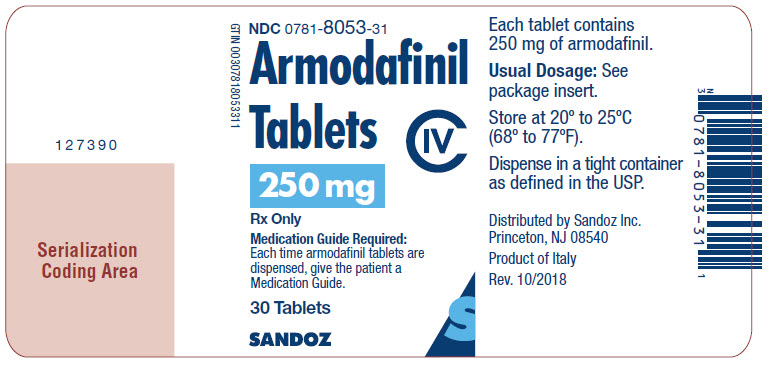
Armodafinil 250 mg Tablet, 30-count — NDC 0781-8053-31 (Billing 00781-8053-31)
This is a package of 30 tablets of Armodafinil 250 mg Tablet from Sandoz Inc, marketed since Dec 2016 and currently FDA-listed, this package's marketing is listed to end Jun 2028; retail pharmacies pay about $0.9082 per tablet (NADAC). It is this product's only package size.
NDC database record
One package, one record: these facts belong to NDC 0781-8053-31 alone.
- Record
- FDA NDC Directory package listing · Human prescription drug
- Code segments
- 0781 labeler · 8053 product · 31 package
- Package marketed since
- Dec 1, 2016
- Package marketing ended
- Jun 30, 2028
- Sample package
- No — commercial package
- Billing quantity
- 30 EA per package
- Barcode (UPC-A, from the NDC)
- 3 0781805331 1
- FDA record last changed
- Jul 24, 2026
Identity & classification
Regulatory identifiers FDA, NLM and CMS codes for this package
Drug-database identifiers Medi-Span GPI and First Databank GCN / HICL / AHFS classification
- GSN (GCN sequence number): 062821
- GCN: 98592
- GPI-14 (Medi-Span): 61400010000340
- HICL (First Databank): 034868
- AHFS class code: 28:20.80.00
- RxCUI (RxNorm): 724859
Where does this data come from?
- FDA openFDA NDC Directory · synced Oct 8, 2026
- FDA label on DailyMed · label index refreshed Oct 6, 2026
- RxNorm (NLM RxNav) · catalog refreshed Oct 1, 2026
- Medi-Span GPI (licensed)
- First Databank (licensed) · refreshed Oct 8, 2026
RxNorm drug class
This medicine belongs to the Centrally acting sympathomimetics class.
Where does this data come from?
- RxClass (NLM) · catalog refreshed Oct 1, 2026
Clinical
- It promotes wakefulness, so yes, it has some similarities to stimulants like amphetamine in terms of keeping you alert. But its mechanism is different — it mainly works through the...
- What exactly does armodafinil do — is it like a stimulant?
- For sleep apnea or narcolepsy, take it once in the morning. For shift work disorder, take it about an hour before your shift starts. Food won't significantly change how much of the...
- When should I take it, and does it matter if I eat first?
Patient education
Supplement & herbal interactions
Some supplements/herbs that may interact with Armodafinil — tap one for details:
Armodafinil may be associated with lower levels of 3 nutrients — worth a chat with your pharmacist, not a cause for alarm.
Where does this data come from?
- MedlinePlus (NLM) · refreshed Oct 1, 2026
- FDA label on DailyMed · label index refreshed Oct 6, 2026
Ask a licensed pharmacist directly — free, answered by our team.
Pricing
A drug doesn't have one price. Each row is a different public payment system, and none is what you'd pay at the counter — that depends on your insurance. The ⓘ on each row explains what it measures.
| Price system | Per ea | Per package |
|---|---|---|
| Retail pharmacies payNADAC · weekly | $0.908 | $27.25 / 30 tablets |
| Medicaid paysCMS SDUD · 12 mo | No recent Medicaid claims on file for this NDC — rare and low-volume NDCs are suppressed in the public data. | |
| Medicare drug plans payPart D · Q2 2026 | $0.6003 | $18.01 / 30 tablets |
Where does this data come from?
- CMS NADAC weekly file · file of Oct 7, 2026
- CMS ASP pricing files · refreshed Sep 20, 2026
- CMS Medicaid State Drug Utilization Data · refreshed Oct 8, 2026
- CMS Part D plan pricing files · refreshed Sep 24, 2026
- VA National Acquisition Center price file
Packaging — all sizes for this product
| Package NDC | Description | Marketing start | Marketing end | Status |
|---|---|---|---|---|
| 00781-8053-31 You're viewing this Main listing | 30 TABLET in 1 BOTTLE | 2016-12-01 | Jun 30, 2028 | Active |
Therapeutic equivalents
| Product | Labeler | Pack | NADAC/unit | TE | Status | Price vs. this |
|---|---|---|---|---|---|---|
| Armodafinil 250 mg 69339-0180-03 | Natco | 30 tablets | $0.901 | AB | FDA listed | save 1% |
| Armodafinil 250 mg 00093-3094-56 | Teva | 30 tablets | $0.908 | AB | Availability likely | — |
| Armodafinil 250 mg 00378-3433-93 | Mylan | 30 tablets | $0.908 | AB | Availability likely | — |
| Armodafinil 250 mgthis 00781-8053-31 | Sandoz | 30 tablets | $0.908 | AB | Availability likely | — |
| armodafinil 250 mg 63459-0225-30 | Cephalon, | 30 tablets | $34.739 | — | Discontinued | +3725% |
| Nuvigil 250 mg 60505-4850-03 | Apotex | 30 tablets | $34.772 | AB | Availability likely | +3729% |
| Armodafinil 250 mg 55700-0510-30 | Quality | 30 tablets | — | AB | FDA listed | — |
| Nuvigil 250 mg 60429-0004-30 | Golden | 30 tablets | — | AB | FDA listed | — |
| Armodafinil 250 mg 65862-0807-05 | Aurobindo | 500 tablets | — | AB | FDA listed | — |
| Armodafinil 250 mg 71335-1308-01 | Bryant | 30 tablets | — | AB | FDA listed | — |
| Armodafinil 250 mg 72189-0133-30 | direct | 30 tablets | — | AB | FDA listed | — |
| Armodafinil 250 mg 72189-0261-30 | direct | 30 tablets | — | AB | FDA listed | — |
Where does this data come from?
- FDA openFDA NDC Directory · synced Oct 8, 2026
- FDA Orange Book · refreshed Oct 3, 2026
- CMS NADAC weekly file · file of Oct 7, 2026
Availability & generic status
FDA-approved generic versions are listed, and recent pricing/market data suggests they may be available — see Therapeutic equivalents.
Where does this data come from?
- FDA Orange Book · refreshed Oct 3, 2026
What it looks like
Where does this data come from?
- FDA label on DailyMed · label index refreshed Oct 6, 2026
Inactive Ingredients / Excipients
Inactive ingredients, also called excipients, are components of the drug product other than the active ingredient. They may include fillers, dyes, coatings, preservatives, flavors, or other formulation ingredients.
🧪 Avoiding an ingredient? See Armodafinil inactive ingredients by manufacturer: every current product's list side by side, so you can ask your pharmacy for the version that does not list it.
💡 Tap an ingredient (hover on desktop) to see what it is and why it’s used.
-
UNII M28OL1HH48
Croscarmellose sodium is a plant-based substance derived from cellulose. It acts as a disintegrant, helping tablets and capsules break down quickly in the digestive system so the medicine can be absorbed.
-
UNII EWQ57Q8I5X
Lactose monohydrate is a natural sugar derived from milk. It serves as a filler and binder in tablets and capsules, helping create the proper size, texture, and consistency of the medicine.
-
UNII 70097M6I30
Magnesium stearate is a salt made from magnesium and stearic acid, a fatty substance. It's used in tablets and capsules as a lubricant and glidant to help ingredients flow smoothly during manufacturing and prevent sticking.
-
UNII OP1R32D61U
Microcrystalline cellulose is a purified form of cellulose, a natural fiber from plant sources. It acts as a binder and filler in tablets and capsules, helping hold ingredients together and give the medicine its shape and size.
-
UNII U725QWY32X
Povidone K30 is a synthetic polymer made from petroleum. It acts as a binder to hold tablet ingredients together and as a disintegrant to help the tablet break apart in the stomach so the medicine can be absorbed.
-
UNII O8232NY3SJ
A plant-based carbohydrate derived from corn kernels. It acts as a filler to add bulk, a binder to hold ingredients together, and a disintegrant to help the tablet break apart in your stomach for absorption.
6 inactive ingredients listed in the exact product block matched to this NDC.
Where does this data come from?
ingredient classCode="IACT" elements from the exact product block matched by this NDC. Label-section narrative from DailyMed / the openFDA label index is shown separately when available.- FDA label on DailyMed · label index refreshed Oct 6, 2026
- FDA openFDA NDC Directory · synced Oct 8, 2026
Inactive ingredient FAQ
Are inactive ingredients the same for every manufacturer?
Why might an inactive ingredient be missing?
Can inactive ingredients matter?
Manufacturer & labeler
More NDCs from Sandoz Inc labeler code 00781
- Armodafinil 150 mg Tablet NDC 0781-8037-31
- Armodafinil 200 mg Tablet NDC 0781-8045-31
- Perphenazine 2 mg Tablet, Film Coated NDC 0781-8046-01
- Perphenazine 4 mg Tablet, Film Coated NDC 0781-8047-01
- Perphenazine 8 mg Tablet, Film Coated NDC 0781-8048-01
- Perphenazine 16 mg Tablet, Film Coated NDC 0781-8049-01
- Pirfenidone 267 mg Tablet, Film Coated NDC 0781-8085-32
- Pirfenidone 801 mg Tablet, Film Coated NDC 0781-8086-92
- Azithromycin 250 mg Tablet, Film Coated NDC 0781-8089-26
- Azithromycin 500 mg Tablet, Film Coated NDC 0781-8090-03
- Azithromycin 600 mg Tablet, Film Coated NDC 0781-8091-31
- Bumetanide .5 mg Tablet NDC 0781-8099-01
Where does this data come from?
- FDA openFDA NDC Directory · synced Oct 8, 2026
- Drugs@FDA
Full prescribing information FDA SPL
🎯 Indications and Usage ▾
1 INDICATIONS AND USAGE Armodafinil tablets are indicated to improve wakefulness in adult patients with excessive sleepiness associated with obstructive sleep apnea (OSA), narcolepsy, or shift work disorder (SWD). Limitations of Use In OSA, armodafinil tablets are indicated to treat excessive sleepiness and not as treatment for the underlying obstruction. If continuous positive airway pressure (CPAP) is the treatment of choice for a patient, a maximal effort to treat with CPAP for an adequate period of time should be made prior to initiating armodafinil tablets for excessive sleepiness.
Armodafinil tablets are indicated to improve wakefulness in adult patients with excessive sleepiness associated with obstructive sleep apnea (OSA), narcolepsy, or shift work disorder (SWD). ( 1 ) Limitations of Use In OSA, armodafinil tablets are indicated to treat excessive sleepiness and not as treatment for the underlying obstruction.
⏱️ Dosage and Administration ▾
2 DOSAGE AND ADMINISTRATION The recommended dosage of armodafinil tablets for each indication is as follows: OSA or Narcolepsy: 150 mg to 250 mg once a day in the morning. ( 2.1 ) SWD: 150 mg once a day, taken approximately one hour prior to start of the work shift. ( 2.2 ) Hepatic Impairment: reduced dose in patients with severe hepatic impairment. ( 2.3 , 12.3 ) Geriatric Patients: consider lower dose. ( 2.4 , 12.3 )
2.1Dosage in Obstructive Sleep Apnea (OSA) and Narcolepsy The recommended dosage of armodafinil tablets for patients with OSA or narcolepsy is 150 mg to 250 mg taken orally once a day as a single dose in the morning. In patients with OSA, doses up to 250 mg/day, given as a single dose, have been well tolerated, but there is no consistent evidence that these doses confer additional benefit beyond that of the 150 mg/day dose [see Clinical Pharmacology ( 12.3 ) and Clinical Studies ( 14.1 , 14.2 )].
2.2Dosage in Shift Work Disorder (SWD) The recommended dosage of armodafinil tablets for patients with SWD is 150 mg taken orally once a day as a single dose approximately 1 hour prior to the start of their work shift.
2.3Dosage Modification in Patients with Severe Hepatic Impairment In patients with severe hepatic impairment, the dosage of armodafinil tablets should be reduced [see Use in Specific Populations ( 8.6 ) and Clinical Pharmacology ( 12.3 )] .
2.4Use in Geriatric Patients Consideration should be given to the use of lower doses and close monitoring in geriatric patients [see Use in Specific Populations ( 8.5 )] .
💊 Dosage Forms and Strengths ▾
3 DOSAGE FORMS AND STRENGTHS 50 mg – round, white to off-white tablet with on one side and "205" on the other 150 mg – oval, white to off-white tablet with on one side and "215" on the other 200 mg – rounded, rectangular, white to off-white tablet with on one side and "220" on the other 250 mg – oval, white to off-white tablet with on one side and "225" on the other Tablets: 50 mg, 150 mg, 200 mg, and 250 mg. ( 3 ) formw formw formw formw
⛔ Contraindications ▾
4 CONTRAINDICATIONS Armodafinil is contraindicated in patients with known hypersensitivity to modafinil or armodafinil or its inactive ingredients [see Warnings and Precautions ( 5.1 , 5.2 , 5.3 )] . Armodafinil is contraindicated in patients with known hypersensitivity to modafinil or armodafinil. ( 4 )
⚠️ Warnings and Cautions ▾
5 WARNINGS AND PRECAUTIONS Serious Rash, including Stevens-Johnson Syndrome: discontinue armodafinil at the first sign of rash, unless the rash is clearly not drug-related. ( 5.1 ) DRESS/Multi-organ Hypersensitivity Reactions: if suspected, discontinue armodafinil. ( 5.2 ) Angioedema and Anaphylaxis Reactions: if suspected, discontinue armodafinil.
( 5.3 ) Persistent Sleepiness: assess patients frequently for degree of sleepiness and, if appropriate, advise patients to avoid driving or engaging in any other potentially dangerous activity. ( 5.4 ) Psychiatric Symptoms: use particular caution in treating patients with a history of psychosis, depression, or mania. Consider discontinuing armodafinil if psychiatric symptoms develop.
( 5.5 ) Known Cardiovascular Disease: consider increased monitoring. ( 5.7 )
5.1Serious Dermatologic Reactions, including Stevens-Johnson Syndrome and Toxic Epidermal Necrosis Serious rash requiring hospitalization and discontinuation of treatment has been reported in association with the use of armodafinil or modafinil (the racemic mixture of S- and R-enantiomers). Armodafinil has not been studied in pediatric patients in any setting and is not approved for use in pediatric patients for any indication. In clinical trials of modafinil, the incidence of rash resulting in discontinuation was approximately 0.8% (13 per 1,585) in pediatric patients (age <17 years); these rashes included 1 case of possible Stevens-Johnson syndrome (SJS) and 1 case of apparent multi-organ hypersensitivity reaction/Drug Rash with Eosinophilia and Systemic Symptoms (DRESS) [see Warnings and Precautions ( 5.2 )] .
Several of the cases were associated with fever and other abnormalities (e.g., vomiting, leukopenia). The median time to rash that resulted in discontinuation was 13 days. No such cases were observed among 380 pediatric patients who received placebo.
Skin and mouth sores, blistering, and ulceration have been reported with modafinil and armodafinil in the postmarketing setting. Recurrence of signs and symptoms of serious dermatologic reactions following rechallenge has been reported in some cases. Rare cases of serious or life-threatening rash, including SJS and toxic epidermal necrolysis (TEN), have been reported in adults and children in worldwide postmarketing experience with modafinil and armodafinil.
There are no factors, including duration of therapy, that are known to predict the risk of occurrence or the severity of rash associated with modafinil or armodafinil. In cases where the time to onset was reported, serious rash occurred 1 day to 2 months after initiation of treatment, but isolated cases of serious dermatologic reactions have been reported with symptoms beginning after prolonged treatment (e.g., 3 months). Although benign rashes also occur with armodafinil, it is not possible to reliably predict which rashes will prove to be serious.
Accordingly, armodafinil should be discontinued at the first sign of rash, skin or mouth sores, or blistering or ulceration, unless the rash is clearly not drug-related. Discontinuation of treatment may not prevent a rash from becoming life-threatening or permanently disabling or disfiguring.
5.2Drug Reaction with Eosinophilia and System Symptoms (DRESS)/Multiorgan Hypersensitivity DRESS, also known as multi-organ hypersensitivity, has been reported with armodafinil. DRESS typically, although not exclusively, presents with fever, rash, lymphadenopathy, and/or facial swelling, in association with other organ system involvement, such as hepatitis, nephritis, hematologic abnormalities, myocarditis, or myositis, sometimes resembling an acute viral infection. Eosinophilia is often present.
This disorder is variable in its expression, and other organ systems not noted here may be involved. It is important to note that early manifestations of hypersensitivity (e.g., fever, lymphadenopathy) may be present even though rash is not evident. One fatal case of DRESS that occurred in c… [Excerpted — this section continues on DailyMed.]
🤒 Adverse Reactions ▾
6 ADVERSE REACTIONS The following serious adverse reactions are described below and elsewhere in the labeling: Serious Dermatologic Reactions [see Warnings and Precautions ( 5.1 )] Drug Reaction with Eosinophilia and System Symptoms (DRESS)/Multiorgan Hypersensitivity [see Warnings and Precautions ( 5.2 )] Angioedema and Anaphylaxis Reactions [see Warnings and Precautions ( 5.3 )] Persistent Sleepiness [see Warnings and Precautions ( 5.4 )] Psychiatric Symptoms [see Warnings and Precautions ( 5.5 )] Effects on Ability to Drive and Use Machinery [see Warnings and Precautions ( 5.6 )] Cardiovascular Events [see Warnings and Precautions ( 5.7 )] Most common adverse reactions (≥5%): headache, nausea, dizziness, and insomnia.
( 6.1 ) To report SUSPECTED ADVERSE REACTIONS, contact Teva Pharmaceuticals at 1-888-483-8279 or FDA at 1-800-FDA-1088 or www.fda.gov/medwatch.
6.1Clinical Trials Experience Because clinical trials are conducted under widely varying conditions, adverse reaction rates observed in the clinical trials of a drug cannot be directly compared to rates in the clinical trials of another drug and may not reflect the rates observed in practice. Armodafinil has been evaluated for safety in over 1,100 patients with excessive sleepiness associated with OSA, SWD, and narcolepsy. Most Common Adverse Reactions In the placebo-controlled clinical trials, the most common adverse reactions (≥5%) associated with the use of armodafinil more frequently than in placebo-treated patients were headache, nausea, dizziness, and insomnia.
The adverse reaction profile was similar across the studies. Table 1 presents the adverse reactions that occurred at a rate of 1% or more and were more frequent in armodafinil-treated patients than in placebo-treated patients in the placebo-controlled clinical trials. Table 1 Adverse Reactions in Pooled Placebo-Controlled Clinical Trials Adverse reactions that occurred in > 1% of armodafinil-treated patients and greater incidence than that of placebo. in OSA, Narcolepsy, and SWD with Armodafinil (150 mg and 250 mg) Armodafinil (%) N=645 Placebo (%) N=445 Headache 17 9 Nausea 7 3 Dizziness 5 2 Insomnia 5 1 Anxiety 4 1 Diarrhea 4 2 Dry Mouth 4 1 Depression 2 0 Dyspepsia 2 0 Fatigue 2 1 Palpitations 2 1 Rash 2 0 Upper Abdominal Pain 2 1 Agitation 1 0 Anorexia 1 0 Constipation 1 0 Contact Dermatitis 1 0 Decreased Appetite 1 0 Depressed Mood 1 0 Disturbance In Attention 1 0 Dyspnea 1 0 Hyperhydrosis 1 0 Increased Gamma-Glutamyltransferase 1 0 Increased Heart Rate 1 0 Influenza-Like Illness 1 0 Loose Stools 1 0 Migraine 1 0 Nervousness 1 0 Pain 1 0 Paresthesia 1 0 Polyuria 1 0 Pyrexia 1 0 Seasonal Allergy 1 0 Thirst 1 0 Tremor 1 0 Vomiting 1 0 Dose-Dependent Adverse Reactions In the placebo-controlled clinical trials which compared doses of 150 mg/day and 250 mg/day of armodafinil and placebo, the following adverse reactions were dose-related: headache, rash, depression, dry mouth, insomnia, and nausea.
See Table 2 for additional information. Table 2 Dose-Dependent Adverse Reactions in Pooled Placebo-Controlled Clinical Trials in OSA, Narcolepsy and SWD Armodafinil 250 mg (%) N=198 Armodafinil 150 mg (%) N=447 Armodafinil Combined (%) N=645 Placebo (%) N=445 Headache 23 14 17 9 Nausea 9 6 7 3 Insomnia 6 4 5 1 Dry Mouth 7 2 4 <1 Rash 4 1 2 <1 Depression 3 1 2 <1 Adverse Reactions Resulting in Discontinuation of Treatment In placebo-controlled clinical trials, 44 of the 645 patients (7%) who received armodafinil discontinued due to an adverse reaction compared to 16 of the 445 (4%) of patients that received placebo.
The most frequent reason for discontinuation was headache (1%). Laboratory Abnormalities Clinical chemistry, hematology, and urinalysis parameters were monitored in the studies. Mean plasma levels of gamma glutamyltransferase (GGT) and alkaline phosphatase (AP) were found to be higher following administration of armodafinil, but not placebo.
Few patients, however, had GGT or AP elevations outside of t… [Excerpted — this section continues on DailyMed.]
🔄 Drug Interactions ▾
7 DRUG INTERACTIONS Effects of Armodafinil on CYP3A4/5 Substrates The clearance of drugs that are substrates for CYP3A4/5 (e.g., steroidal contraceptives, cyclosporine, midazolam, and triazolam) may be increased by armodafinil via induction of metabolic enzymes, which results in lower systemic exposure. Dosage adjustment of these drugs should be considered when these drugs are used concomitantly with armodafinil [see Clinical Pharmacology ( 12.3 )] . The effectiveness of steroidal contraceptives may be reduced when used with armodafinil and for one month after discontinuation of therapy.
Alternative or concomitant methods of contraception are recommended for patients taking steroidal contraceptives (e.g., ethinyl estradiol) when treated concomitantly with armodafinil and for one month after discontinuation of armodafinil treatment. Blood levels of cyclosporine may be reduced when used with armodafinil. Monitoring of circulating cyclosporine concentrations and appropriate dosage adjustment for cyclosporine should be considered when used concomitantly with armodafinil.
Effects of Armodafinil on CYP2C19 Substrates Elimination of drugs that are substrates for CYP2C19 (e.g., phenytoin, diazepam, propranolol, omeprazole, and clomipramine) may be prolonged by armodafinil via inhibition of metabolic enzymes, with resultant higher systemic exposure. Dose reduction of these drugs may be required when these drugs are used concomitantly with armodafinil. Warfarin More frequent monitoring of prothrombin times/INR should be considered whenever armodafinil is coadministered with warfarin [see Clinical Pharmacology ( 12.3 )] .
Monoamine Oxidase (MAO) Inhibitors Caution should be used when concomitantly administering MAO inhibitors and armodafinil. Steroidal contraceptives (e.g., ethinyl estradiol): use alternative or concomitant methods of contraception while taking armodafinil and for one month after discontinuation of armodafinil treatment. ( 7 ) Cyclosporine: blood concentrations of cyclosporine may be reduced.
( 7 ) CYP2C19 substrates, such as omeprazole, phenytoin, and diazepam: exposure of these medications may be increased. ( 7 )
👥 Use in Specific Populations ▾
8 USE IN SPECIFIC POPULATIONS Pregnancy: based on animal data, may cause fetal harm. ( 8.1 )
8.1Pregnancy Pregnancy Registry There is a pregnancy exposure registry that monitors pregnancy outcomes in women exposed to armodafinil during pregnancy. Healthcare providers are encouraged to register pregnant patients, or pregnant women may enroll themselves in the registry by calling 1-866-404-4106. Risk Summary Limited available data on armodafinil use in pregnant women are insufficient to inform a drug associated risk of adverse pregnancy outcomes.
Intrauterine growth restriction and spontaneous abortion have been reported in association with armodafinil and modafinil. Although the pharmacology of armodafinil is not identical to that of the sympathomimetic amines, armodafinil shares some pharmacologic properties with this class [see Clinical Pharmacology ( 12.1 )] . Some sympathomimetics have been associated with intrauterine growth restriction and spontaneous abortions.
In animal reproduction studies of armodafinil (R-modafinil) and modafinil (a mixture of R- and S-modafinil) conducted in pregnant rats (armodafinil, modafinil) and rabbits (modafinil) during organogenesis, evidence of developmental toxicity (increased embryofetal and offspring mortality, decreased fetal growth) was observed at clinically relevant plasma exposures. All pregnancies have a background risk of birth defects, loss, or other adverse outcomes. The estimated background risk of major birth defects and miscarriage for the indicated populations is unknown.
In the U.S. general population, the estimated background risk of major birth defects and miscarriage in clinically recognized pregnancies is 2 to 4% and 15 to 20%, respectively. Data Animal Data Oral administration of armodafinil (60, 200, or 600 mg/kg/day) to pregnant rats throughout organogenesis resulted in decreased fetal body weight and increased incidences of fetal variations indicative of growth delay at the highest dose, which was also maternally toxic. The highest no-effect dose for embryofetal developmental toxicity in rat (200 mg/kg/day) was associated with a plasma armodafinil exposure (AUC) less than that in humans at the maximum recommended human dose (MRHD) of armodafinil (250 mg/day).
Modafinil (50, 100, or 200 mg/kg/day) administered orally to pregnant rats throughout organogenesis produced an increase in resorptions and an increased incidence of fetal variations at the highest dose tested. The higher no-effect dose for embryofetal developmental toxicity (100 mg/kg/day) was associated with a plasma armodafinil AUC less than that in humans at the MRHD of armodafinil. However, in a subsequent rat study of up to 480 mg/kg/day of modafinil, no adverse effects on embryofetal development were observed.
In a study in which modafinil (45, 90, or 180 mg/kg/day) was orally administered to pregnant rabbits during organogenesis, embryofetal death was increased at the highest dose. The highest no-effect dose for developmental toxicity (100 mg/kg/day) was associated with a plasma armodafinil AUC less than that in humans at the MRHD of armodafinil. Modafinil administration to rats throughout gestation and lactation at oral doses of up to 200 mg/kg/day resulted in decreased viability in the offspring at doses greater than 20 mg/kg/day, a dose resulting in a plasma armodafinil AUC less than that in humans at the MRHD of armodafinil.
No effects on postnatal developmental and neurobehavioral parameters were observed in surviving offspring.
8.2Lactation Risk Summary There are no data on the presence of armodafinil or its metabolites in human milk, the effects on the breastfed infant, or the effect of this drug on milk production. Modafinil was present in rat milk when animals were dosed during the lactation period. The developmental and health benefits of breastfeeding should be considered along with the mother’s clinical need for armodafinil and any potential adverse effects on the breastfed child from armo… [Excerpted — this section continues on DailyMed.]
🤰 Pregnancy ▾
8.1Pregnancy Pregnancy Registry There is a pregnancy exposure registry that monitors pregnancy outcomes in women exposed to armodafinil during pregnancy. Healthcare providers are encouraged to register pregnant patients, or pregnant women may enroll themselves in the registry by calling 1-866-404-4106. Risk Summary Limited available data on armodafinil use in pregnant women are insufficient to inform a drug associated risk of adverse pregnancy outcomes.
Intrauterine growth restriction and spontaneous abortion have been reported in association with armodafinil and modafinil. Although the pharmacology of armodafinil is not identical to that of the sympathomimetic amines, armodafinil shares some pharmacologic properties with this class [see Clinical Pharmacology ( 12.1 )] . Some sympathomimetics have been associated with intrauterine growth restriction and spontaneous abortions.
In animal reproduction studies of armodafinil (R-modafinil) and modafinil (a mixture of R- and S-modafinil) conducted in pregnant rats (armodafinil, modafinil) and rabbits (modafinil) during organogenesis, evidence of developmental toxicity (increased embryofetal and offspring mortality, decreased fetal growth) was observed at clinically relevant plasma exposures. All pregnancies have a background risk of birth defects, loss, or other adverse outcomes. The estimated background risk of major birth defects and miscarriage for the indicated populations is unknown.
In the U.S. general population, the estimated background risk of major birth defects and miscarriage in clinically recognized pregnancies is 2 to 4% and 15 to 20%, respectively. Data Animal Data Oral administration of armodafinil (60, 200, or 600 mg/kg/day) to pregnant rats throughout organogenesis resulted in decreased fetal body weight and increased incidences of fetal variations indicative of growth delay at the highest dose, which was also maternally toxic. The highest no-effect dose for embryofetal developmental toxicity in rat (200 mg/kg/day) was associated with a plasma armodafinil exposure (AUC) less than that in humans at the maximum recommended human dose (MRHD) of armodafinil (250 mg/day).
Modafinil (50, 100, or 200 mg/kg/day) administered orally to pregnant rats throughout organogenesis produced an increase in resorptions and an increased incidence of fetal variations at the highest dose tested. The higher no-effect dose for embryofetal developmental toxicity (100 mg/kg/day) was associated with a plasma armodafinil AUC less than that in humans at the MRHD of armodafinil. However, in a subsequent rat study of up to 480 mg/kg/day of modafinil, no adverse effects on embryofetal development were observed.
In a study in which modafinil (45, 90, or 180 mg/kg/day) was orally administered to pregnant rabbits during organogenesis, embryofetal death was increased at the highest dose. The highest no-effect dose for developmental toxicity (100 mg/kg/day) was associated with a plasma armodafinil AUC less than that in humans at the MRHD of armodafinil. Modafinil administration to rats throughout gestation and lactation at oral doses of up to 200 mg/kg/day resulted in decreased viability in the offspring at doses greater than 20 mg/kg/day, a dose resulting in a plasma armodafinil AUC less than that in humans at the MRHD of armodafinil.
No effects on postnatal developmental and neurobehavioral parameters were observed in surviving offspring.
🧒 Pediatric Use ▾
8.4Pediatric Use Safety and effectiveness in pediatric patients have not been established. Serious rash has been seen in pediatric patients receiving modafinil [see Warnings and Precautions ( 5.1 )] .
🧓 Geriatric Use ▾
8.5Geriatric Use In elderly patients, elimination of armodafinil and its metabolites may be reduced as a consequence of aging. Therefore, consideration should be given to the use of lower doses and close monitoring in this population [see Dosage and Administration ( 2.4 ) and Clinical Pharmacology ( 12.3 )] .
🆘 Overdosage ▾
10 OVERDOSAGE Fatal overdoses involving modafinil alone or involving armodafinil or modafinil in combination with other drugs have been reported in the postmarketing setting. Symptoms most often accompanying armodafinil or modafinil overdose, alone or in combination with other drugs, have included anxiety, dyspnea, insomnia; central nervous system symptoms such as restlessness, disorientation, confusion, excitation and hallucination; digestive changes such as nausea and diarrhea; and cardiovascular changes such as tachycardia, bradycardia, hypertension, and chest pain.
No specific antidote exists for the toxic effects of an armodafinil overdose. Such overdoses should be managed with primarily supportive care, including cardiovascular monitoring.
🧬 Clinical Pharmacology ▾
12 CLINICAL PHARMACOLOGY
12.1Mechanism of Action The mechanism(s) through which armodafinil promotes wakefulness is unknown. Armodafinil (R-modafinil) has pharmacological properties similar to those of modafinil (a mixture of R- and S-modafinil), to the extent tested in animal and in vitro studies. The R- and S-enantiomers have similar pharmacological actions in animals.
Armodafinil and modafinil have wake-promoting actions similar to sympathomimetic agents including amphetamine and methylphenidate, although their pharmacologic profile is not identical to that of the sympathomimetic amines. Modafinil-induced wakefulness can be attenuated by the α 1-adrenergic receptor antagonist, prazosin; however, modafinil is inactive in other in vitro assay systems known to be responsive to α -adrenergic agonists such as the rat vas deferens preparation. Armodafinil is an indirect dopamine receptor agonist; both armodafinil and modafinil bind in vitro to the dopamine transporter and inhibit dopamine reuptake.
For modafinil, this activity has been associated in vivo with increased extracellular dopamine levels in some brain regions of animals. In genetically engineered mice lacking the dopamine transporter (DAT), modafinil lacked wake-promoting activity, suggesting that this activity was DAT-dependent. However, the wake-promoting effects of modafinil, unlike those of amphetamine, were not antagonized by the dopamine receptor antagonist haloperidol in rats.
In addition, alpha-methyl-p-tyrosine, a dopamine synthesis inhibitor, blocks the action of amphetamine, but does not block locomotor activity induced by modafinil. In addition to its wake-promoting effects and ability to increase locomotor activity in animals, modafinil produces psychoactive and euphoric effects, alterations in mood, perception, thinking, and feelings typical of other CNS stimulants in humans. Modafinil has reinforcing properties, as evidenced by its self-administration in monkeys previously trained to self-administer cocaine; modafinil was also partially discriminated as stimulant-like.
Based on nonclinical studies, two major metabolites, acid and sulfone, of modafinil or armodafinil, do not appear to contribute to the CNS-activating properties of the parent compounds.
12.3Pharmacokinetics Armodafinil exhibits linear time-independent kinetics following single and multiple oral dose administration. Increase in systemic exposure is proportional over the dose range of 50 to 400 mg. No time-dependent change in kinetics was observed through 12 weeks of dosing.
Apparent steady state for armodafinil was reached within 7 days of dosing. At steady state, the systemic exposure for armodafinil is 1.8 times the exposure observed after a single dose. The concentration-time profiles of the R-enantiomer following administration of a single-dose of 50 mg armodafinil or 100 mg modafinil (a 1:1 mixture of R- and S-enantiomers) are nearly superimposable.
However, the C max and AUC 0-∞ , of armodafinil at steady-state were approximately 37% and 70% higher, respectively, following administration of 200 mg armodafinil than the corresponding values of modafinil following administration of 200 mg modafinil due to the more rapid clearance of the S-enantiomer (elimination half-life approximately 4 hours) as compared to the R-enantiomer. Absorption Armodafinil is readily absorbed after oral administration. The absolute oral bioavailability was not determined due to the aqueous insolubility of armodafinil, which precluded intravenous administration.
Peak plasma concentrations are attained at approximately 2 hours in the fasted state. Food effect on the overall bioavailability of armodafinil is considered minimal; however, time to reach peak concentration (t max ) may be delayed by approximately 2 to 4 hours in the fed state. Since the delay in t max is also associated with elevated plasma concentrations later in time, food can potentially affect the onset and time course of pharmacologic action fo… [Excerpted — this section continues on DailyMed.]
🧬 Mechanism of Action ▾
12.1Mechanism of Action The mechanism(s) through which armodafinil promotes wakefulness is unknown. Armodafinil (R-modafinil) has pharmacological properties similar to those of modafinil (a mixture of R- and S-modafinil), to the extent tested in animal and in vitro studies. The R- and S-enantiomers have similar pharmacological actions in animals.
Armodafinil and modafinil have wake-promoting actions similar to sympathomimetic agents including amphetamine and methylphenidate, although their pharmacologic profile is not identical to that of the sympathomimetic amines. Modafinil-induced wakefulness can be attenuated by the α 1-adrenergic receptor antagonist, prazosin; however, modafinil is inactive in other in vitro assay systems known to be responsive to α -adrenergic agonists such as the rat vas deferens preparation. Armodafinil is an indirect dopamine receptor agonist; both armodafinil and modafinil bind in vitro to the dopamine transporter and inhibit dopamine reuptake.
For modafinil, this activity has been associated in vivo with increased extracellular dopamine levels in some brain regions of animals. In genetically engineered mice lacking the dopamine transporter (DAT), modafinil lacked wake-promoting activity, suggesting that this activity was DAT-dependent. However, the wake-promoting effects of modafinil, unlike those of amphetamine, were not antagonized by the dopamine receptor antagonist haloperidol in rats.
In addition, alpha-methyl-p-tyrosine, a dopamine synthesis inhibitor, blocks the action of amphetamine, but does not block locomotor activity induced by modafinil. In addition to its wake-promoting effects and ability to increase locomotor activity in animals, modafinil produces psychoactive and euphoric effects, alterations in mood, perception, thinking, and feelings typical of other CNS stimulants in humans. Modafinil has reinforcing properties, as evidenced by its self-administration in monkeys previously trained to self-administer cocaine; modafinil was also partially discriminated as stimulant-like.
Based on nonclinical studies, two major metabolites, acid and sulfone, of modafinil or armodafinil, do not appear to contribute to the CNS-activating properties of the parent compounds.
📦 How Supplied / Storage and Handling ▾
16 HOW SUPPLIED/STORAGE AND HANDLING
16.1How Supplied Armodafinil tablets are available as follows: 50 mg Each round, white to off-white tablet is debossed with on one side and "205" on the other. NDC 0781-8029-31 – Bottles of 30 150 mg Each oval, white to off-white tablet is debossed with on one side and "215" on the other. NDC 0781-8037-31 – Bottles of 30 200 mg Each rounded, rectangular, white to off-white tablet is debossed with on one side and "220" on the other.
NDC 0781-8045-31 – Bottles of 30 250 mg Each oval, white to off-white tablet is debossed with on one side and "225" on the other. NDC 0781-8053-31 – Bottles of 30 formw formw formw formw
16.2Storage Store at 20 o to 25 o C (68 o to 77 o F).
📋 Description ▾
11 DESCRIPTION Armodafinil tablets are a wakefulness‑promoting agent for oral administration. Armodafinil is the R-enantiomer of modafinil which is a 1:1 mixture of the R- and S-enantiomers. The chemical name for armodafinil is 2‑[(R)-(diphenylmethyl)sulfinyl]acetamide.
The molecular formula is C 15 H 15 NO 2 S and the molecular weight is 273.35. The chemical structure is: Armodafinil is a white to off-white, crystalline powder that is slightly soluble in water, sparingly soluble in acetone, and soluble in methanol. Armodafinil tablets contain 50, 150, 200 or 250 mg of armodafinil and the following inactive ingredients: croscarmellose sodium, lactose monohydrate, magnesium stearate, microcrystalline cellulose, povidone, and pregelatinized starch. chemical structure
💬 Information for Patients ▾
17 PATIENT COUNSELING INFORMATION Advise the patient to read the FDA-approved patient labeling (Medication Guide). Serious Dermatologic Reactions Advise patients and caregivers about the risk of potentially fatal serious skin reactions. Educate patients about the signs and symptoms that may signal a serious skin reaction.
Instruct patients to discontinue armodafinil and consult with their healthcare provider immediately if a skin reaction such as rash, mouth sores, blisters, or peeling skin occurs during treatment with armodafinil [see Warnings and Precautions ( 5.1 )] . DRESS/Multi-organ Hypersensitivity Instruct patients that a fever associated with signs of other organ system involvement (e.g., rash, lymphadenopathy, hepatic dysfunction) may be drug-related and should be reported to their healthcare provider immediately [see Warnings and Precautions ( 5.2 )] .
Angioedema and Anaphylactic Reactions Advise patients of life-threatening symptoms suggesting anaphylaxis or angioedema (such as hives, difficulty in swallowing or breathing, hoarseness, or swelling of the face, eyes, lips, or tongue) that can occur with armodafinil. Instruct them to discontinue armodafinil and immediately report these symptoms to their healthcare provider [see Warnings and Precautions ( 5.3 )] . Wakefulness Advise patients that treatment with armodafinil will not eliminate their abnormal tendency to fall asleep.
Advise patients that they should not alter their previous behavior with regard to potentially dangerous activities (e.g., driving, operating machinery) or other activities requiring appropriate levels of wakefulness, until and unless treatment with armodafinil has been shown to produce levels of wakefulness that permit such activities. Advise patients that armodafinil is not a replacement for sleep. Continuing Previously Prescribed Treatments Inform patients that it may be critical that they continue to take their previously prescribed treatments (e.g., patients with OSA receiving CPAP should continue to do so).
Psychiatric Symptoms Advise patients to stop taking armodafinil and contact their physician right away if they experience, depression, anxiety, or signs of psychosis or mania. Pregnancy Advise women that there is a pregnancy exposure registry that monitors pregnancy outcomes in women exposed to armodafinil during pregnancy [see Use in Specific Populations ( 8.1 )] . Females of Reproductive Potential Caution females regarding the potential increased risk of pregnancy when using hormonal contraceptives (including depot or implantable contraceptives) with armodafinil and advise females who are using a hormonal method of contraception to use an additional barrier method or an alternative non-hormonal method of contraception during treatment with armodafinil and for one month after discontinuation of armodafinil.
Concomitant Medication Advise patients to inform their physician if they are taking, or plan to take, any prescription or over‑the‑counter drugs, because of the potential for interactions between armodafinil and other drugs. Alcohol Advise patients that the use of armodafinil in combination with alcohol has not been studied. Advise patients that it is prudent to avoid alcohol while taking armodafinil.
The brands listed are the registered trademarks of their respective owners and are not trademarks of Sandoz Inc. Distributed by Sandoz Inc. Princeton, NJ 08540 Rev.
January 2023
💬 Medication Guide ▾
MEDICATION GUIDE Armodafinil tablets, for oral use, C-IV (are-moe-DAFF-ih-nil) What is the most important information I should know about armodafinil tablets? Armodafinil tablets are a federal controlled substance (C-IV) because it can be abused or lead to dependence. Keep armodafinil tablets in a safe place to prevent misuse and abuse.
Selling or giving away armodafinil tablets may harm others, and is against the law. Tell your doctor if you have ever abused or been dependent on alcohol, prescription medicines or street drugs. Armodafinil tablets may cause serious side effects including a serious rash or a serious allergic reaction that may affect parts of your body such as your liver or blood cells.
Any of these may need to be treated in a hospital and may be life-threatening. Stop taking armodafinil tablets and call your doctor right away or get emergency help if you have any of these symptoms: skin rash, hives, sores in your mouth, or your skin blisters and peels swelling of your face, eyes, lips, tongue, or throat trouble swallowing, breathing or hoarseness fever, shortness of breath, swelling of the legs, yellowing of the skin or whites of the eyes, or dark urine. If you have a severe rash with armodafinil tablets, stopping the medicine may not keep the rash from becoming life-threatening or causing you to be permanently disabled or disfigured.
Armodafinil tablets are not approved for use in children for any medical condition. It is not known if armodafinil tablets are safe and effective in children under the age of 18. What are armodafinil tablets?
Armodafinil tablets are a prescription medicine used to improve wakefulness in adults who are very sleepy due to one of the following diagnosed sleep disorders: narcolepsy obstructive sleep apnea (OSA). Armodafinil tablets are used with other medical treatments for this sleep disorder. Armodafinil tablets do not take the place of using your CPAP machine or other treatments that your doctor has prescribed for this condition.
It is important that you continue to use these treatments as prescribed by your doctor. shift work disorder (SWD) Armodafinil tablets will not cure these sleep disorders. Armodafinil tablets may help the sleepiness caused by these conditions, but it may not stop all your sleepiness. Armodafinil tablets do not take the place of getting enough sleep.
Follow your doctor’s advice about good sleep habits and using other treatments. Do not take armodafinil tablets if you: are allergic to any of its ingredients. See the end of this Medication Guide for a complete list of ingredients in armodafinil tablets. have had a rash or allergic reaction to either armodafinil tablets (NUVIGIL ® ) or modafinil (PROVIGIL ® ).
These medicines are very similar. Before you take armodafinil tablets, tell your doctor about all of your medical conditions, including if you: have a history of mental health problems, including psychosis have heart problems or had a heart attack have high blood pressure. Your blood pressure may need to be checked more often while taking armodafinil tablets. have liver or kidney problems have a history of drug or alcohol abuse or addiction are pregnant or planning to become pregnant.
It is not known if armodafinil tablets will harm your unborn baby. Pregnancy Registry: There is a registry for women who become pregnant during treatment with armodafinil tablets. The purpose of this registry is to collect information about the safety of armodafinil tablets during pregnancy.
Contact the registry as soon as you learn that you are pregnant, or ask your doctor to contact the registry for you. You or your doctor can get information and enroll you in the registry by calling 1-866-404-4106. are breastfeeding. It is not known if armodafinil passes into your milk.
Talk to your doctor about the best way to feed your baby if you take armodafinil tablets. Tell your doctor about all the medicines you take , including prescription and over-the-counter medicines, vitamins… [Excerpted — this section continues on DailyMed.]
🧬 Pharmacokinetics ▾
12.3Pharmacokinetics Armodafinil exhibits linear time-independent kinetics following single and multiple oral dose administration. Increase in systemic exposure is proportional over the dose range of 50 to 400 mg. No time-dependent change in kinetics was observed through 12 weeks of dosing.
Apparent steady state for armodafinil was reached within 7 days of dosing. At steady state, the systemic exposure for armodafinil is 1.8 times the exposure observed after a single dose. The concentration-time profiles of the R-enantiomer following administration of a single-dose of 50 mg armodafinil or 100 mg modafinil (a 1:1 mixture of R- and S-enantiomers) are nearly superimposable.
However, the C max and AUC 0-∞ , of armodafinil at steady-state were approximately 37% and 70% higher, respectively, following administration of 200 mg armodafinil than the corresponding values of modafinil following administration of 200 mg modafinil due to the more rapid clearance of the S-enantiomer (elimination half-life approximately 4 hours) as compared to the R-enantiomer. Absorption Armodafinil is readily absorbed after oral administration. The absolute oral bioavailability was not determined due to the aqueous insolubility of armodafinil, which precluded intravenous administration.
Peak plasma concentrations are attained at approximately 2 hours in the fasted state. Food effect on the overall bioavailability of armodafinil is considered minimal; however, time to reach peak concentration (t max ) may be delayed by approximately 2 to 4 hours in the fed state. Since the delay in t max is also associated with elevated plasma concentrations later in time, food can potentially affect the onset and time course of pharmacologic action for armodafinil.
Distribution Armodafinil has an apparent volume of distribution of approximately 42 L. Data specific to armodafinil protein binding are not available. However, modafinil is moderately bound to plasma protein (approximately 60%), mainly to albumin.
The potential for interactions of armodafinil with highly protein‑bound drugs is considered to be minimal. Elimination After oral administration of armodafinil, armodafinil exhibits an apparent monoexponential decline from the peak plasma concentration. The apparent terminal t ½ is approximately 15 hours.
The oral clearance of armodafinil is approximately 33 mL/min. Metabolism In vitro and in vivo data show that armodafinil undergoes hydrolytic deamidation, S-oxidation, and aromatic ring hydroxylation, with subsequent glucuronide conjugation of the hydroxylated products. Amide hydrolysis is the single most prominent metabolic pathway, with sulfone formation by cytochrome P450 (CYP) 3A4/5 being next in importance.
The other oxidative products are formed too slowly in vitro to enable identification of the enzyme(s) responsible. Only two metabolites reach appreciable concentrations in plasma (i.e., R-modafinil acid and modafinil sulfone). Excretion Data specific to armodafinil disposition are not available.
However, modafinil is mainly eliminated via metabolism, predominantly in the liver, with less than 10% of the parent compound excreted in the urine. A total of 81% of the administered radioactivity was recovered in 11 days post-dose, predominantly in the urine (80% vs. 1% in the feces).
Specific Populations Age In a clinical study, systemic exposure of armodafinil was approximately 15% higher in elderly subjects (≥65 years of age, N=24), corresponding to approximately 12% lower oral clearance (CL/F), as compared to young subjects (18 to 45 years of age, N=25). Systemic exposure of armodafinil acid (metabolite) was approximately 61% and 73% greater for C max and AUC 0-τ , respectively, compared to young subjects. Systemic exposure of the sulfone metabolite was approximately 20% lower for elderly subjects compared with young subjects.
A subgroup analysis of elderly subjects demonstrated elderly subjects ≥75 and 65 to 74 years of age had approximately 21% and 9% lower or… [Excerpted — this section continues on DailyMed.]
🔬 Clinical Studies ▾
14 CLINICAL STUDIES
14.1Obstructive Sleep Apnea (OSA) The effectiveness of armodafinil in improving wakefulness in patients with excessive sleepiness associated with OSA was established in two 12-week, multi-center, placebo-controlled, parallel-group, double-blind clinical studies of outpatients who met the criteria for OSA. The criteria include either: 1) excessive sleepiness or insomnia, plus frequent episodes of impaired breathing during sleep, and associated features such as loud snoring, morning headaches or dry mouth upon awakening; or 2) excessive sleepiness or insomnia; and polysomnography demonstrating one of the following: more than five obstructive apneas, each greater than 10 seconds in duration, per hour of sleep; and one or more of the following: frequent arousals from sleep associated with the apneas, bradytachycardia, or arterial oxygen desaturation in association with the apneas.
In addition, for entry into these studies, all patients were required to have excessive sleepiness as demonstrated by a score ≥10 on the Epworth Sleepiness Scale (ESS), despite treatment with continuous positive airway pressure (CPAP). Evidence that CPAP was effective in reducing episodes of apnea/hypopnea was required along with documentation of CPAP use. Patients were required to be compliant with CPAP, defined as CPAP use ≥4 hours/night on ≥70% of nights.
CPAP use continued throughout the study. In both studies, the primary measures of effectiveness were 1) sleep latency, as assessed by the Maintenance of Wakefulness Test (MWT) and 2) the change in the patient’s overall disease status, as measured by the Clinical Global Impression of Change (CGI-C) at the final visit. For a successful trial both measures had to show statistically significant improvement.
The MWT measures latency (in minutes) to sleep onset. An extended MWT was performed with test sessions at 2 hour intervals between 9AM and 7PM. The primary analysis was the average of the sleep latencies from the first four test sessions (9AM to 3PM).
For each test session, the subject was asked to attempt to remain awake without using extraordinary measures. Each test session was terminated after 30 minutes if no sleep occurred or immediately after sleep onset. The CGI-C is a 7-point scale, centered at No Change , and ranging from Very Much Worse to Very Much Improved.
Evaluators were not given any specific guidance about the criteria they were to apply when rating patients. In the first study, a total of 395 patients with OSA were randomized to receive armodafinil 150 mg/day, armodafinil 250 mg/day or matching placebo. Patients treated with armodafinil showed a statistically significant improvement in the ability to remain awake compared to placebo-treated patients as measured by the MWT at final visit.
A statistically significant greater number of patients treated with armodafinil showed improvement in overall clinical condition as rated by the CGI-C scale at final visit. The average sleep latencies (in minutes) in the MWT at baseline for the trials are shown in Table 3 below, along with the average change from baseline on the MWT at final visit. The percentages of patients who showed any degree of improvement on the CGI-C in the clinical trials are shown in Table 4 below.
The two doses of armodafinil produced statistically significant effects of similar magnitudes on the MWT, and also on the CGI-C. In the second study, 263 patients with OSA were randomized to either armodafinil 150 mg/day or placebo. Patients treated with armodafinil showed a statistically significant improvement in the ability to remain awake compared to placebo-treated patients as measured by the MWT (Table 3) .
A statistically significant greater number of patients treated with armodafinil showed improvement in overall clinical condition as rated by the CGI-C scale (Table 4) . Nighttime sleep measured with polysomnography was not affected by the use of armodafinil in either study.
14.2Narcolepsy The effect… [Excerpted — this section continues on DailyMed.]
🔒 Drug Abuse and Dependence ▾
9 DRUG ABUSE AND DEPENDENCE
9.1Controlled Substance Armodafinil is a Schedule IV controlled substance.
9.2Abuse Abuse of armodafinil has been reported in patients treated with armodafinil. Patterns of abuse have included euphoric mood and use of increasingly large doses or recurrent use of armodafinil for a desired effect. Drug diversion has also been noted.
During the postmarketing period, misuse of armodafinil has been observed (e.g., taking armodafinil against a physician’s advice, and obtaining armodafinil from multiple physicians). Abuse of armodafinil, the active ingredient of armodafinil, poses a risk of overdosage similar to that seen for modafinil, which may lead to tachycardia, insomnia, agitation, dizziness, anxiety, nausea, headache, dystonia, tremor, chest pain, hypertension, seizures, delirium, or hallucinations. Other signs and symptoms of CNS stimulant abuse include tachypnea, sweating, dilated pupils, hyperactivity, restlessness, decreased appetite, loss of coordination, flushed skin, vomiting, and abdominal pain.
In humans, modafinil produces psychoactive and euphoric effects, alterations in mood, perception, thinking and feelings typical of other CNS stimulants. In in vitro binding studies, modafinil binds to the dopamine reuptake site and causes an increase in extracellular dopamine, but no increase in dopamine release. Modafinil is reinforcing, as evidenced by its self-administration in monkeys previously trained to self-administer cocaine.
In some studies, modafinil was also partially discriminated as stimulant-like. Physicians should follow patients closely, especially those with a history of drug and/or stimulant (e.g., methylphenidate, amphetamine, or cocaine) abuse. Patients should be observed for signs of misuse or abuse (e.g., incrementation of doses or drug-seeking behavior).
The abuse potential of modafinil (200, 400, and 800 mg) was assessed relative to methylphenidate (45 and 90 mg) in an inpatient study in individuals experienced with drugs of abuse. Results from this clinical study demonstrated that modafinil produced psychoactive and euphoric effects and feelings consistent with other scheduled CNS stimulants (methylphenidate).
9.3Dependence Physical dependence is a state that develops as a result of physiological adaptation in response to repeated drug use, manifested by withdrawal signs and symptoms after abrupt discontinuation or a significant dose reduction of a drug. Physical dependence can occur in patients treated with armodafinil. Abrupt cessation or dose reduction following chronic use can result in withdrawal symptoms, including shaking, sweating, chills, nausea, vomiting, confusion, aggression, and atrial fibrillation.
Drug withdrawal convulsions, suicidality, fatigue, insomnia, aches, depression and headache have also been observed during the postmarketing period. Also, abrupt withdrawal has caused deterioration of psychiatric symptoms such as depression. Tolerance is a physiological state characterized by a reduced response to a drug after repeated administration (i.e., a higher dose of a drug is required to produce the same effect that was once obtained at a lower dose).
Multiple cases of development of tolerance to armodafinil have been reported during the postmarketing period.
🔒 Controlled Substance ▾
9.1Controlled Substance Armodafinil is a Schedule IV controlled substance.
🧪 Nonclinical Toxicology ▾
13 NONCLINICAL TOXICOLOGY
13.1Carcinogenesis, Mutagenesis, Impairment of Fertility Carcinogenesis In a mouse carcinogenicity study, armodafinil (R-modafinil) was administered at oral doses of up to 300 mg/kg/day in males and 100 mg/kg/day in females for approximately two years, no tumorigenic effects were observed. In a rat carcinogenicity study modafinil (a mixture of R- and S-modafinil) was administered at oral doses of up to 60 mg/kg/day for two years; no tumorigenic effects were observed. At the highest doses studied in mouse and rat, the plasma armodafinil exposures (AUC) were less than that in humans at the MRHD of armodafinil (250 mg/day).
Mutagenesis Armodafinil was negative in an in vitro bacterial reverse mutation assay and in an in vitro chromosomal aberration assay in human lymphocytes. Modafinil was negative in a series of in vitro (i.e., bacterial reverse mutation, mouse lymphoma tk, chromosomal aberration in human lymphocytes, cell transformation in BALB/3T3 mouse embryo cells) or in vivo (mouse bone marrow micronucleus) assays. Impairment of Fertility A fertility and early embryonic development (to implantation) study was not conducted with armodafinil alone.
Oral administration of modafinil (doses of up to 480 mg/kg/day) to male and female rats prior to and throughout mating, and continuing in females through day 7 of gestation produced an increase in the time to mate at the highest dose; no effects were observed on other fertility or reproductive parameters. The no-effect dose of 240 mg/kg/day was associated with a plasma armodafinil AUC less than that in humans at the MRHD of armodafinil.
📄 Carcinogenesis, Mutagenesis, Impairment of Fertility ▾
13.1Carcinogenesis, Mutagenesis, Impairment of Fertility Carcinogenesis In a mouse carcinogenicity study, armodafinil (R-modafinil) was administered at oral doses of up to 300 mg/kg/day in males and 100 mg/kg/day in females for approximately two years, no tumorigenic effects were observed. In a rat carcinogenicity study modafinil (a mixture of R- and S-modafinil) was administered at oral doses of up to 60 mg/kg/day for two years; no tumorigenic effects were observed. At the highest doses studied in mouse and rat, the plasma armodafinil exposures (AUC) were less than that in humans at the MRHD of armodafinil (250 mg/day).
Mutagenesis Armodafinil was negative in an in vitro bacterial reverse mutation assay and in an in vitro chromosomal aberration assay in human lymphocytes. Modafinil was negative in a series of in vitro (i.e., bacterial reverse mutation, mouse lymphoma tk, chromosomal aberration in human lymphocytes, cell transformation in BALB/3T3 mouse embryo cells) or in vivo (mouse bone marrow micronucleus) assays. Impairment of Fertility A fertility and early embryonic development (to implantation) study was not conducted with armodafinil alone.
Oral administration of modafinil (doses of up to 480 mg/kg/day) to male and female rats prior to and throughout mating, and continuing in females through day 7 of gestation produced an increase in the time to mate at the highest dose; no effects were observed on other fertility or reproductive parameters. The no-effect dose of 240 mg/kg/day was associated with a plasma armodafinil AUC less than that in humans at the MRHD of armodafinil.
📄 Package Label / Principal Display Panel ▾
Package/Label Display Panel NDC 0781- 8029 -31 Armodafinil Tablets CIV 50 mg Rx only Medication Guide Required : Each time armodafinil tablets are dispensed, give the patient a Medication Guide. 30 Tablets SANDOZ S image
Package/Label Display Panel NDC 0781- 8037 -31 Armodafinil Tablets CIV 150 mg Rx only Medication Guide Required : Each time armodafinil tablets are dispensed, give the patient a Medication Guide. 30 Tablets SANDOZ S image
Package/Label Display Panel NDC 0781- 8045 -31 Armodafinil Tablets CIV 200 mg Rx only Medication Guide Required : Each time armodafinil tablets are dispensed, give the patient a Medication Guide. 30 Tablets SANDOZ S image
Package/Label Display Panel NDC 0781- 8053 -31 Armodafinil Tablets CIV 250 mg Rx only Medication Guide Required: Each time armodafinil tablets are dispensed, give the patient a Medication Guide. 30 Tablets SANDOZ S image