
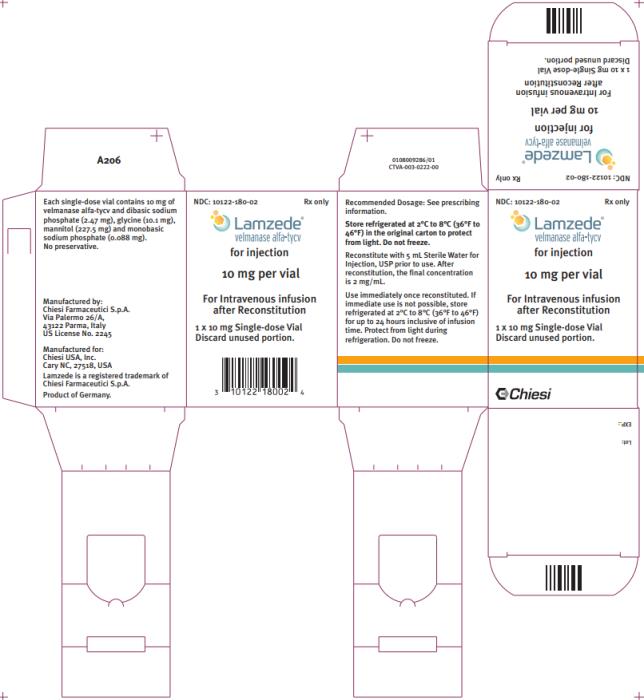
Lamzede Velmanase alfa-tycv 10 mg Injection, Powder, Lyophilized, For Solution, 10-count — NDC 10122-180-10 (Billing 10122-0180-10)
This is a package of 10 injections of Lamzede Velmanase alfa-tycv 10 mg Injection, Powder, Lyophilized, For Solution from Chiesi USA, Inc., marketed since Mar 2023 and currently FDA-listed.
NDC database record
One package, one record: these facts belong to NDC 10122-180-10 alone.
- Record
- FDA NDC Directory package listing · Human prescription drug
- Code segments
- 10122 labeler · 180 product · 10 package
- Package marketed since
- Mar 1, 2023
- Sample package
- No — commercial package
- Listing certified through
- Dec 31, 2027
- Barcode (UPC-A, from the NDC)
- 3 1012218010 9
- FDA record last changed
- Oct 8, 2026
Identity & classification
Regulatory identifiers FDA, NLM and CMS codes for this package
Drug-database identifiers Medi-Span GPI and First Databank GCN / HICL / AHFS classification
- GSN (GCN sequence number): 080623
- GCN: 47541
- GPI-14 (Medi-Span): 30902380702120
- HICL (First Databank): 046263
- AHFS class code: 44:00.00.00
- RxCUI (RxNorm): 2630729
Where does this data come from?
- FDA openFDA NDC Directory · synced Oct 8, 2026
- FDA label on DailyMed · label index refreshed Oct 8, 2026
- RxNorm (NLM RxNav) · catalog refreshed Oct 1, 2026
- Medi-Span GPI (licensed)
- First Databank (licensed) · refreshed Oct 8, 2026
RxNorm drug class
This medicine belongs to the Recombinant Human Lysosomal alpha-Mannosidase class.
Where does this data come from?
- RxClass (NLM) · catalog refreshed Oct 1, 2026
Clinical
- Alpha-mannosidosis is a rare inherited disease where your body doesn't make enough of an enzyme called alpha-mannosidase. Without it, sugar-containing waste products pile up inside...
- What exactly is alpha-mannosidosis, and how does this medicine help?
- Yes — velmanase alfa is given as an IV infusion, meaning it goes directly into a vein. You'll need to go to a clinic or infusion center for each dose, which is once a week. The inf...
- How is this medicine given, and will I need to go somewhere special for it?
Patient education
Supplement & herbal interactions
Where does this data come from?
- MedlinePlus (NLM) · refreshed Oct 8, 2026
- FDA label on DailyMed · label index refreshed Oct 8, 2026
Ask a licensed pharmacist directly — free, answered by our team.
Pricing
A drug doesn't have one price. Each row is a different public payment system, and none is what you'd pay at the counter — that depends on your insurance. The ⓘ on each row explains what it measures.
| Price system | Per mL | Per package |
|---|---|---|
| Retail pharmacies payNADAC · weekly | Not in the retail survey — common for institutional, discontinued, or low-volume packs. | |
| Medicaid paysCMS SDUD · 12 mo | No recent Medicaid claims on file for this NDC — rare and low-volume NDCs are suppressed in the public data. | |
| Medicare drug plans payPart D · quarterly | No Part D plan price is available for this NDC in our data. | |
Where does this data come from?
- CMS NADAC weekly file
- CMS ASP pricing files · refreshed Sep 20, 2026
- CMS Medicaid State Drug Utilization Data · refreshed Oct 8, 2026
- CMS Part D plan pricing files · refreshed Sep 24, 2026
- VA National Acquisition Center price file
Packaging — all sizes for this product
| Package NDC | Description | Marketing start | Marketing end | Status |
|---|---|---|---|---|
| 10122-0180-02 10122-180-02 Main listing | 1 INJECTION, POWDER, LYOPHILIZED, FOR SOLUTION in 1 CARTON | 2023-03-01 | — | Active |
| 10122-0180-05 10122-180-05 | 5 INJECTION, POWDER, LYOPHILIZED, FOR SOLUTION in 1 CARTON | 2023-03-01 | — | Active |
| 10122-0180-10 You're viewing this | 10 INJECTION, POWDER, LYOPHILIZED, FOR SOLUTION in 1 CARTON | 2023-03-01 | — | Active |
You're viewing the largest of 3 pack sizes for this product.
Pack size FAQ
What quantity is in this package?
How does this package differ from NDC 10122-0180-02?
What NDC number is used to bill for this package of Lamzede Velmanase alfa-tycv 10 mg Injection, Powder, Lyophilized, For Solution?
Therapeutic equivalents
| Product | Labeler | Pack | NADAC/unit | TE | Status | Price vs. this |
|---|---|---|---|---|---|---|
| Lamzede 10 mgthis 10122-0180-10 | Chiesi | 10 injections | — | — | FDA listed | — |
Where does this data come from?
- FDA openFDA NDC Directory · synced Oct 8, 2026
- FDA Purple Book · refreshed Oct 5, 2026
- CMS NADAC weekly file
Availability & biosimilar status
Biologics have no small-molecule generics; biosimilar competition is tracked in the FDA Purple Book.
Why the date isn’t exact: Biosimilar timing can change because patents may be challenged, settled, licensed, added or removed, and litigation can move the real date earlier or later.
🛈 What do these terms mean?
- Biologic patent
- A patent the reference product’s maker has publicly listed. A biosimilar generally can’t launch until these expire — unless they’re invalidated or resolved in a settlement.
- Reference-product exclusivity
- A flat 12 years of FDA market protection from the biologic’s first licensure (the BPCIA). No biosimilar can be licensed before it ends, regardless of patents.
- Interchangeable exclusivity
- The first interchangeable biosimilar can earn a period as the only interchangeable version (pharmacists can substitute it without the prescriber).
- Earliest biosimilar (LOE)
- The latest of all the dates above — the soonest a biosimilar can realistically reach the market. Litigation and settlements can move it earlier.
Biologics have no small-molecule “generics” — competition comes from FDA-licensed biosimilars, tracked in the FDA Purple Book.
| Code | What it grants | Expires |
|---|---|---|
| RefProduct | Reference-product exclusivity (12-year, BPCIA) — no biosimilar can be licensed before this date | Feb 16, 2035 |
Is there a biosimilar for LAMZEDE 10 MG VIAL?
Why do different websites show different biosimilar dates?
Can a biosimilar launch before the last patent expires?
What does “current Purple Book estimate” mean?
What does “FDA listed” mean?
What does a patent or protection date mean here?
Where does this data come from?
- FDA Purple Book · refreshed Oct 5, 2026
Inactive Ingredients / Excipients
Inactive ingredients, also called excipients, are components of the drug product other than the active ingredient. They may include fillers, dyes, coatings, preservatives, flavors, or other formulation ingredients.
🧪 Avoiding an ingredient? See Velmanase alfa inactive ingredients by manufacturer: every current product's list side by side, so you can ask your pharmacy for the version that does not list it.
💡 Tap an ingredient (hover on desktop) to see what it is and why it’s used.
-
10.1 mg
UNII TE7660XO1C
Glycine is an amino acid used in medicines as a buffer to help stabilize pH and improve taste. It may also serve as a filler or binder to give the product proper form and consistency.
-
227.5 mg
UNII 3OWL53L36A
A natural sugar alcohol derived from seaweed or synthesized in the lab. It's used as a filler to add bulk, a sweetener in sugar-free formulas, and a disintegrant to help tablets break apart in the stomach.
-
2.47 mg
UNII GR686LBA74
Sodium phosphate, dibasic is a salt derived from phosphoric acid. It acts as a buffer to help maintain the medicine's pH balance and may serve as a binder or filler in tablets and capsules.
-
0.088 mg
UNII 3980JIH2SW
A salt form of phosphoric acid that acts as a buffer and pH adjuster in medicines. It helps keep the product at the correct acidity level for stability and effectiveness.
4 inactive ingredients listed in the exact product block matched to this NDC.
Where does this data come from?
ingredient classCode="IACT" elements from the exact product block matched by this NDC. Label-section narrative from DailyMed / the openFDA label index is shown separately when available.- FDA label on DailyMed · label index refreshed Oct 8, 2026
- FDA openFDA NDC Directory · synced Oct 8, 2026
Inactive ingredient FAQ
Are inactive ingredients the same for every manufacturer?
Why might an inactive ingredient be missing?
Can inactive ingredients matter?
Manufacturer & labeler
More NDCs from Chiesi USA, Inc. labeler code 10122
- Ferriprox Deferiprone 1000 mg Tablet, Film Coated NDC 10122-103-05
- Ferriprox deferiprone 1000 mg Tablet NDC 10122-104-01
- Trimbow beclomethasone dipropionate/formoterol fumarate/glycopyrrolate 86 ug; 4.9 ug; 10.6 ug Aerosol, Metered NDC 10122-120-02
- Trimbow beclomethasone dipropionate/formoterol fumarate/glycopyrrolate 172 ug; 4.9 ug; 10.6 ug Aerosol, Metered NDC 10122-121-02
- ELFABRIO pegunigalsidase alfa 20 mg/10mL Injection, Solution, Concentrate NDC 10122-160-02
- ELFABRIO pegunigalsidase alfa 5 mg/2.5mL Injection, Solution, Concentrate NDC 10122-165-02
- Myalept metreleptin 11.3 mg/2.2mL Injection, Powder, Lyophilized, For Solution NDC 10122-210-02
- FILSUVEZ birch triterpenes 100 mg/g Gel NDC 10122-310-02
- Juxtapid lomitapide mesylate 2 mg Capsule NDC 10122-402-28
- Juxtapid lomitapide mesylate 5 mg Capsule NDC 10122-405-28
- Juxtapid lomitapide mesylate 10 mg Capsule NDC 10122-410-28
- Juxtapid lomitapide mesylate 20 mg Capsule NDC 10122-420-28
Where does this data come from?
- FDA openFDA NDC Directory · synced Oct 8, 2026
- Drugs@FDA
Full prescribing information FDA SPL
🚨 Boxed Warning ▾
WARNING: SEVERE HYPERSENSITIVITY REACTIONS Hypersensitivity Reactions Including Anaphylaxis Patients treated with LAMZEDE have experienced hypersensitivity reactions, including anaphylaxis. Appropriate medical support measures, including cardiopulmonary resuscitation equipment , should be readily available during LAMZEDE administration. If a severe hypersensitivity reaction (e.g., anaphylaxis) occurs, discontinue LAMZEDE immediately and initiate appropriate medical treatment.
In patients with severe hypersensitivity reaction, a desensitization procedure to LAMZEDE may be considered [see Warnings and Precautions ( 5.1 )]. WARNING: SEVERE HYPERSENSITIVITY REACTIONS See full prescribing information for complete boxed warning. Hypersensitivity Reactions Including Anaphylaxis Appropriate medical support measures, including cardiopulmonary resuscitation equipment , should be readily available.
If a severe hypersensitivity reaction occurs, discontinue LAMZEDE immediately and initiate appropriate medical treatment. ( 5.1 )
🎯 Indications and Usage ▾
1 INDICA TIONS AND USAGE LAMZEDE is indicated for the treatment of non-central nervous system manifestations of alpha-mannosidosis in adult and pediatric patients. LAMZEDE is recombinant human lysosomal alpha-mannosidase indicated for the treatment of non-central nervous system manifestations of alpha-mannosidosis in adult and pediatric patients. ( 1 )
⏱️ Dosage and Administration ▾
2 DOSAGE AND ADMINISTRATION For females of reproductive potential, verify that the patient is not pregnant prior to initiating treatment. ( 2.1 ) Consider pretreating with antihistamines, antipyretics, and/or corticosteroids prior to LAMZEDE administration. ( 2.2 ) Recommended LAMZEDE dosage is 1 mg/kg (actual body weight) administered once every week as an intravenous infusion.
( 2.2 ) See the full prescribing information for dosage modifications due to hypersensitivity reactions or IARs. ( 2.3 ) See the full prescribing information for reconstitution and administration instructions. ( 2.4 , 2.5 )
2.1Important Recommendations Prior to LAMZEDE Treatment Initiation For females of reproductive potential, verify that the patient is not pregnant [see Use in Specific Populations ( 8.1 , 8.3 )] .
2.2Recommended Dosage and Administration Prior to LAMZEDE administration, consider pre-treating with antihistamines, antipyretics, and/or corticosteroids [see Warnings and Precautions ( 5.1 , 5.2 )] . The recommended dosage of LAMZEDE is 1 mg/kg (actual body weight) administered once every week as an intravenous infusion. The total volume of infusion is determined by the patient’s actual body weight and should be administered over a minimum of 60 minutes for patients weighing up to 49 kg.
Patients weighing 50 kg and greater should be infused at a maximum infusion rate of 25 mL/hour to control the protein load [ s ee Dosage and Administration ( 2.4 )] . If one or more doses are missed, restart the treatment as soon as possible, as long as it is at least 3 days from the next scheduled dose. If it is within 3 days from the next scheduled dose, give only the next dose per schedule.
2. 3 Dosage and Administration Modifications Due to Hypersensitivity Reactions and/or Infusion-Associated Reactions In the event of a severe hypersensitivity reaction (including anaphylaxis) or severe infusion-associated reaction (IAR), immediately discontinue LAMZEDE administration and initiate appropriate medical treatment. For additional recommendations in the event of a severe hypersensitivity reaction or IAR, see Warnings and Precautions ( 5.1 , 5.2 ).
In the event of a mild to moderate hypersensitivity reaction or a mild to moderate IAR, consider temporarily holding the infusion for 15 to 30 minutes, slowing the infusion rate to 25% to 50% of the recommended rate, and initiating appropriate medical treatment [see Warnings and Precautions ( 5.1 , 5.2 )] . If symptoms: Persist despite temporarily holding or slowing the infusion, stop the infusion and monitor the patient. If symptoms continue to persist, discontinue the infusion, and consider re-initiating the infusion within 7 to 14 days at 25% to 50% of the recommended rate with appropriate pretreatment.
Subside following holding or slowing the infusion, resume infusion at 25% to 50% the recommended rate. If tolerated, increase the infusion rate by increments of 25% of the recommended rate until the recommended infusion rate is reached. Closely monitor the patient.
2. 4 Reconstitution Instructions Use aseptic technique during preparation. Reconstitute LAMZEDE in the following manner: Determine the number of LAMZEDE vials to be reconstituted based on the patient’s weight in kg and the recommended dose [see Dosage and Administration ( 2.2 ) ] .
Round the number of vials up to the next whole number. Remove vials from the refrigerator and set aside for approximately 30 minutes to allow vials to come to room temperature. Reconstitute each vial by slowly injecting 5 mL of Sterile Water for Injection, down the inside wall of each vial.
Avoid adding the Sterile Water for Injection to the vial forcefully or directly onto the lyophilized powder to minimize foaming. Allow the reconstituted vials to stand on the table for 5 – 15 minutes. Then gently tilt and roll each vial for 15 – 20 seconds to enhance the dissolution process.
Each vial will yield a concentration of 2 mg/mL. Do not invert, swirl, or shake the vials. Visu… [Excerpted — this section continues on DailyMed.]
💊 Dosage Forms and Strengths ▾
3 DOSAGE FORMS AND STRENGTHS For injection: 10 mg of velmanase alfa-tycv as a white to off-white lyophilized powder with a cake-like appearance in a single-dose vial for reconstitution. For injection: 10 mg of velmanase alfa-tycv as a lyophilized powder in a single-dose vial for reconstitution. ( 3 )
⛔ Contraindications ▾
4 CONTRAINDICATIONS None. None. ( 4 )
⚠️ Warnings and Cautions ▾
5 WARNINGS AND PRECAUTIONS Infusion -Associ ated Reactions (IARs) : If severe IARs occur, discontinue LAMZEDE and initiate appropriate medical treatment. ( 5.2 ) Embryo - F etal Toxicity : May cause fetal harm. Advise females of reproductive potential to use effective contraception during treatment and for 14 days after the last dose if LAMZEDE is discontinued. ( 5.3 , 8.1 , 8.3 )
5.1Hypersensitivity Reactions Including Anaphylaxis Hypersensitivity reactions including anaphylaxis have been reported in LAMZEDE-treated patients. In clinical trials, 19 (50%) LAMZEDE-treated patients (5 adult patients and 14 pediatric patients) experienced hypersensitivity reactions, including 2 (5%) patients (1 adult patient and 1 pediatric patient) who experienced anaphylaxis and an additional 3 (8%) pediatric patients who experienced severe hypersensitivity reactions that required medical treatment [see Clinical Studies ( 14 )] .
In the 5 patients who experienced anaphylaxis or severe hypersensitivity requiring medical treatment, 4 (80%) were anti-drug antibody (ADA) positive [see Clinical Pharmacology ( 12.6 ) ] . Anaphylaxis and severe hypersensitivity signs and symptoms included cyanosis, hypotension, emesis, urticaria, erythema, facial swelling, pyrexia, and tremor. Prior to LAMZEDE administration, consider pretreating with antihistamines, antipyretics, and/or corticosteroids.
Appropriate medical support measures, including cardiopulmonary resuscitation equipment, should be readily available during LAMZEDE administration. If a severe hypersensitivity reaction (e.g., anaphylaxis) occurs, discontinue LAMZEDE immediately and initiate appropriate medical treatment. Consider the risks and benefits of re-administering LAMZEDE following severe hypersensitivity reactions (including anaphylaxis).
Patients may be rechallenged using slower infusion rates. In patients with severe hypersensitivity reaction, desensitization measures to LAMZEDE may be considered. If the decision is made to readminister LAMZEDE, ensure the patient tolerates the infusion.
If the patient tolerates the infusion, the rate may be increased to reach the recommended dosage. If a mild or moderate hypersensitivity reaction occurs, consider slowing the infusion rate or temporarily withholding the dose [see Dosage and Administration ( 2.3 )] .
5.2Infusion-Associated Reactions Infusion-associated reactions (IARs) have been reported in LAMZEDE-treated patients. In clinical trials 19 (50%) LAMZEDE-treated patients (3 adult and 16 pediatric patients) experienced IARs. Of these 19 patients, 5 (13 % of all patients) required pretreatment in the clinical trials.
One LAMZEDE-treated patient in clinical trials discontinued due to recurrent IARs. The most frequent symptoms of IARs that occurred in >10% of the population were pyrexia, chills, erythema, vomiting, cough, urticaria, rash and conjunctivitis. Similar symptoms were observed in adult and pediatric populations.
Prior to LAMZEDE administration, consider pretreating with antihistamines, antipyretics, and/or corticosteroids to reduce the risk of infusion-associated reactions (IARs). However, IARs may still occur in patients after receiving pretreatment. If a severe IAR occurs, discontinue LAMZEDE immediately and initiate appropriate medical treatment.
Consider the risks and benefits of readministering LAMZEDE following a severe IAR. Patients may be rechallenged using slower infusion rates. Once a patient tolerates the infusion, the infusion rate may be increased to reach the recommended infusion rate.
If a mild or moderate IAR occurs, consider slowing the infusion rate or temporarily withholding the dose [see Dosage and Administration ( 2.3 )] . 5. 3 Embryo -F etal Toxicity Based on findings from animal reproduction studies, LAMZEDE may cause embryo-fetal harm when administered to a pregnant female.
Administration of velmanase alfa-tycv to pregnant rats during the period of organogenesis caused skeletal and visceral malformations. In ra… [Excerpted — this section continues on DailyMed.]
🤒 Adverse Reactions ▾
6 ADVERSE REACTIONS The following clinically significant adverse reactions are described elsewhere in the labeling: Hypersensitivity Reactions Including Anaphylaxis [see Warnings and Precautions ( 5.1 )] Infusion-Associated Reactions (IARs) [see Warnings and Precautions ( 5.2 ) ] Most common adverse reactions (incidence > 20%) are hypersensitivity reactions including anaphylaxis ( 5.1 ), nasopharyngitis, pyrexia, headache, and arthralgia. ( 6.1 ) To report SUSPECTED ADVERSE REACTIONS, contact Chiesi USA, Inc. at 1-888-661-9260 or FDA at 1-800-FDA-1088 or www.fda.gov/medwatch.
6.1Clinical Trials Experience Because clinical trials are conducted under widely varying conditions, adverse reaction rates observed in the clinical trials of a drug cannot be directly compared to rates in the clinical trials of another drug and may not reflect the rates observed in practice. Adverse Reactions F rom Trial 1 The safety of LAMZEDE was evaluated in Trial 1, which included a total of 15 LAMZEDE-treated patients (8 adult patients aged 18-35 years old and 7 pediatric patients aged 6-17 years old; 9 male, 6 female) with alpha-mannosidosis [see Clinical Studies ( 14 )].
All patients received LAMZEDE 1 mg/kg weekly via intravenous infusion for 52 weeks. A serious adverse reaction of acute renal failure was reported in 1 (7%) LAMZEDE-treated patient (see Description of Selected Adverse Reactions) . Table 1 lists adverse reactions that occurred in at least 2 LAMZEDE-treated patients in Trial 1.
Table 1: Adverse Reactions (≥2 patients) in Adult and Pediatric Patients with Alpha-Mannosidosis Treated with LAMZEDE in Trial 1 Adverse Reaction LAMZEDE N=15 n (%) Placebo N=10 n (%) Nasopharyngitis 10 (66) 7 (70) Pyrexia 6 (40) 5 (50) Headache 5 (33) 3 (30) Arthralgia 3 (20) 1 (10) Acute tonsillitis 2 (13) 0 Urinary tract infection 1 2 (13) 1 (10) Eye pruritus 2 (13) 0 Gastroenteritis 2 (13) 0 Hypersensitivity 2 (13) 0 Influenza 2 (13) 0 Syncope 2 (13) 0 Toothache 2 (13) 0 Back pain 2 (13) 1 (10) Ear infection 2 (13) 1 (10) 1 “Urinary tract infection” is composed of similar terms.
Adverse Reactions from Trials 2 and 3 In Trial 2, 5 pediatric patients aged 3 to 5 years old (3 male, 2 female) with alpha-mannosidosis received LAMZEDE weekly for a mean exposure of 121 weeks [see Clinical Studies ( 14 )] . One patient treated with LAMZEDE (20%) presented serious reactions (chills and hyperthermia on the same occasion). The adverse reactions that occurred in at least 2 of 5 patients (and are in addition to the adverse reactions already identified in Trial 1 above) included: cough, otitis media, rhinitis, conjunctivitis, fall, ligament sprain, oropharyngeal pain, swelling face, and upper respiratory tract infection.
Trial 3 is an integrated analysis that pooled the cumulative databases from LAMZEDE phase 1, 2, and 3 trials in patients with alpha-mannosodosis. A total of 33 patients (20 male, 13 female) aged 6 to 35 years old (14 adults, 19 pediatric) received LAMZEDE weekly for a mean exposure of 89 weeks in adult patients and 155 weeks in pediatric patients. One patient was withdrawn from the trial due to repeated IARs and successfully reintroduced after 89 weeks of pause.
The adverse reactions that occurred in at least 10% of patients (and are in addition to the adverse reactions already identified in Trial 1 and 2 above) included abdominal pain upper, contusion, excoriation, post-lumbar puncture syndrome, wound, weight increased, erythema, rash, and tooth extraction. Description of S elected A dverse R eactions Acute R enal F ailure One patient out of 38 (3%) experienced one episode of acute renal failure. This patient paused LAMZEDE treatment for 4 weeks and acute renal failure resolved within 12 weeks of diagnosis.
This patient is noted to have received the concomitant medication of ibuprofen. Immunoglobulin A V asculitis One episode of immunoglobulin A vasculitis (IgAV), reported as Henoch Schonlein Purpura , occurred in one patient out of 38 (3%) who devel… [Excerpted — this section continues on DailyMed.]
👥 Use in Specific Populations ▾
8 USE IN SPECIFIC POPULATIONS
8.1Pregnancy Risk Summary Based on findings from animal reproduction studies, LAMZEDE may cause embryo-fetal harm when administered to a pregnant female. In animal reproduction studies, major visceral malformations were observed in rats and rabbits when velmanase alfa-tycv was administered in pregnant rats and rabbits during the period of organogenesis. These malformations were observed in rats at the highest dose level, at exposures that were approximately 7-fold the recommended dose in patients of 1 mg/kg.
Malformations occurred at all dose levels in rabbits with the highest dose exposures approximately 2.5-fold the recommended patient dose of 1 mg/kg ( see Data ) . There are no available data on LAMZEDE use in pregnant females to evaluate a drug-associated risk of major birth defects, miscarriage or other adverse maternal or fetal outcomes. Advise the pregnant female of the potential risk to the fetus.
The decision to continue or discontinue LAMZEDE treatment during pregnancy should consider the female’s need for LAMZEDE, the potential drug-related risks to the fetus, and the potential adverse outcomes from untreated maternal disease. The background risk of major birth defects and miscarriage for the indicated population is unknown. All pregnancies have a background risk of birth defects, loss, or other adverse outcomes.
In the U.S. general population, the estimated background risk of major birth defects and miscarriage in clinically recognized pregnancies is 2 to 4% and 15 to 20%, respectively. Data Animal Data In an embryo-fetal development study in the rat, velmanase alfa-tycv was administered during the period of organogenesis from gestation day (GD) 6 to GD 17. Major malformations and variations were observed at exposures that were approximately 7-fold greater than the recommended dose of 1 mg/kg.
Treatment-related major malformations included cleft palate, cleft palatine skull, severely bent pelvic girdle, and duplicated sternebrae. In an embryofetal development study in the rabbit, administration of velmanase alfa-tycv from GDs 6 through 18 was associated with skeletal and/or visceral malformations, which occurred at exposures that were approximately 2.5-fold greater than those observed in patients treated at the 1 mg/kg dose level. Major malformations observed in rabbits included incomplete intraventricular septum; severely reduced size of one or more lung lobe; unilateral renal agenesis; unilateral ureter; diaphraghmatic hernia involving one or more lobe of the liver; hydrocephaly; single olfactory lobe; cystic dilatation of the cerebellum; malformed cervical, thoracic, caudal, and/or sacral vertebrae; and fused, absent, or vestigial ribs.
In the pre- and post-natal development study in rats, velmanase alfa-tycv was administered intravenously every 3 days at 0, 3.3, 10, and 30 mg/kg from GD 6 to lactation day 20. Velmanase alfa-tycv did not induce effects on maternal reproductive function or on developmental and reproductive parameters of male and female offspring; thus, the maternal and developmental NOAELs were 30 mg/kg. Exposures at this dose, based on the embryo-fetal development study, were estimated to be approximately 10-fold greater than the 1 mg/kg dose of velmanase alfa-tycv.
8.2Lactation Risk Summary There are no data on the presence of velmanase alfa-tycv or its metabolite in either human or animal milk, the effects on the breastfed infant, or the effects on milk production. The developmental and health benefits of breastfeeding should be considered along with the mother’s clinical need for LAMZEDE and any potential adverse effects on the breastfed infant from velmanase alfa-tycv or from the underlying maternal condition.
8.3Females and Males of Reproductive Potential LAMZEDE may cause embryo-fetal harm when administered to a pregnant female [see Use in Specific Populations ( 8.1 )]. Pregnancy Testing For females of reproductive potential, verify that the patient is not… [Excerpted — this section continues on DailyMed.]
🤰 Pregnancy ▾
8.1Pregnancy Risk Summary Based on findings from animal reproduction studies, LAMZEDE may cause embryo-fetal harm when administered to a pregnant female. In animal reproduction studies, major visceral malformations were observed in rats and rabbits when velmanase alfa-tycv was administered in pregnant rats and rabbits during the period of organogenesis. These malformations were observed in rats at the highest dose level, at exposures that were approximately 7-fold the recommended dose in patients of 1 mg/kg.
Malformations occurred at all dose levels in rabbits with the highest dose exposures approximately 2.5-fold the recommended patient dose of 1 mg/kg ( see Data ) . There are no available data on LAMZEDE use in pregnant females to evaluate a drug-associated risk of major birth defects, miscarriage or other adverse maternal or fetal outcomes. Advise the pregnant female of the potential risk to the fetus.
The decision to continue or discontinue LAMZEDE treatment during pregnancy should consider the female’s need for LAMZEDE, the potential drug-related risks to the fetus, and the potential adverse outcomes from untreated maternal disease. The background risk of major birth defects and miscarriage for the indicated population is unknown. All pregnancies have a background risk of birth defects, loss, or other adverse outcomes.
In the U.S. general population, the estimated background risk of major birth defects and miscarriage in clinically recognized pregnancies is 2 to 4% and 15 to 20%, respectively. Data Animal Data In an embryo-fetal development study in the rat, velmanase alfa-tycv was administered during the period of organogenesis from gestation day (GD) 6 to GD 17. Major malformations and variations were observed at exposures that were approximately 7-fold greater than the recommended dose of 1 mg/kg.
Treatment-related major malformations included cleft palate, cleft palatine skull, severely bent pelvic girdle, and duplicated sternebrae. In an embryofetal development study in the rabbit, administration of velmanase alfa-tycv from GDs 6 through 18 was associated with skeletal and/or visceral malformations, which occurred at exposures that were approximately 2.5-fold greater than those observed in patients treated at the 1 mg/kg dose level. Major malformations observed in rabbits included incomplete intraventricular septum; severely reduced size of one or more lung lobe; unilateral renal agenesis; unilateral ureter; diaphraghmatic hernia involving one or more lobe of the liver; hydrocephaly; single olfactory lobe; cystic dilatation of the cerebellum; malformed cervical, thoracic, caudal, and/or sacral vertebrae; and fused, absent, or vestigial ribs.
In the pre- and post-natal development study in rats, velmanase alfa-tycv was administered intravenously every 3 days at 0, 3.3, 10, and 30 mg/kg from GD 6 to lactation day 20. Velmanase alfa-tycv did not induce effects on maternal reproductive function or on developmental and reproductive parameters of male and female offspring; thus, the maternal and developmental NOAELs were 30 mg/kg. Exposures at this dose, based on the embryo-fetal development study, were estimated to be approximately 10-fold greater than the 1 mg/kg dose of velmanase alfa-tycv.
🧒 Pediatric Use ▾
8.4Pediatric Use The safety and effectiveness of LAMZEDE for the treatment of alpha-mannosidosis have been established in pediatric patients. Use of LAMZEDE for this indication is supported by evidence from an adequate and well-controlled clinical trial in adult and pediatric patients, and from an open label trial in 5 pediatric patients (younger than 6 years of age) [ see Clinical Studies ( 14 ) ] . LAMZEDE-treated pediatric patients reported a higher incidence of hypersensitivity reactions compared to LAMZEDE-treated adult patients [ see Warnings and Precautions ( 5.1 ) , Adverse Reactions ( 6.1 ) ] .
🧓 Geriatric Use ▾
8. 5 Geriatric Use Alpha-mannosidosis is largely a disease of pediatric and young adult patients. Clinical trials of LAMZEDE did not include patients 65 years of age and older.
🧬 Clinical Pharmacology ▾
12 CLINICAL PHARMACOLOGY
12.1Mechanism of Action Alpha-mannosidosis is a lysosomal storage disease that results from reduced activity of the enzyme alpha-mannosidase, caused by gene variants in Mannosidase Alpha Class 2B Member 1. Alpha-mannosidase catalyzes the degradation of accumulated mannose-containing oligosaccharides. The deficiency of alpha-mannosidase causes an intra-lysosomal accumulation of mannose-rich oligosaccharides in various tissues.
Velmanase alfa-tycv provides an exogenous source of alpha-mannosidase. Velmanase alfa-tycv is internalized via binding to the mannose-6-phosphate receptor on the cell surface and transported into lysosomes where it is thought to exert enzyme activity.
12.2Pharmacodynamics Serum oligosaccharide concentrations are elevated in patients with alpha-mannosidosis. In clinical studies, serum oligosaccharide concentrations were quantified by assessment of 2-mannose oligosaccharides. LAMZEDE treatment resulted in reductions of serum oligosaccharide concentrations in patients with alpha-mannosidosis [ see Clinical Studies ( 14 ) ] .
12.3Pharmacokinetics The pharmacokinetics of velmanase alfa-tycv were evaluated in adult patients with alpha-mannosidosis and are presented as mean (standard deviation, SD) unless otherwise specified. The steady state maximum plasma velmanase alfa-tycv concentration (C max ) was 7.9 (0.9) μg/mL and area under the concentration-time curve (AUC 0-t ) was 159.8 (24.4) μg∙h/mL at the approved recommended dosage of 1 mg/kg. Distribution The volume of distribution of velmanase alfa-tycv was 276 (43) mL/kg in patients with alpha-mannosidosis.
Elimination The total body clearance of velmanase alfa-tycv was 5.7 (0.9) mL/h/kg and the mean terminal half-life (t 1/2 ) was 33.6 hours in patients with alpha-mannosidosis. Metabolism Velmanase alfa-tycv is expected to be metabolized into small peptides by catabolic pathways. Speci fic Population Pediatric Patie nts In pediatric patients (6 to 17 years of age) with alpha-mannosidosis, the C max and AUC 0- t at steady state were 6.6 (1.0) μg/mL and 109.8 (17.8) μg∙h/mL, respectively, at the recommended dose of 1 mg/kg velmanase alfa-tycv administered once a week.
In pediatric patients (3 to <6 years of age) with alpha-mannosidosis, the C max and AUC 0- t at steady state were 7.0 (2.3) μg/mL and 75.9 (39.7) μg∙h/mL at the recommended dose of 1 mg/kg velmanase alfa-tycv amininistered once a week.
12.6Immunogenicity The observed incidence of anti-drug antibodies is highly dependent on the sensitivity and specificity of the assay. Differences in assay methods preclude meaningful comparisons of the incidence of anti-drug antibodies in the studies described below with the incidence of anti-drug antibodies in other studies, including those of velmanase alfa-tycv or of other velmanase alfa products. In Trial 2 following 104 weeks treatment with LAMZEDE [see Clinical Studies ( 14 )] , 4 out of 5 pediatric patients (80%) developed anti-velmanase alfa-tycv antibodies (anti-drug antibodies, ADA).
Three out of 4 ADA-positive patients (75%) developed neutralizing antibodies that inhibit velmanase alfa-tycv enzyme activity. In Trial 3 [see Adverse Reactions ( 6.1 )] , 33 patients (10 adult, 23 pediatric) received LAMZEDE for up to 209 weeks. Among the 33 patients, 5 patients (1 adult and 4 pediatric) (15%) had ADA before treatment with LAMZEDE and for 1 patient the ADA level increased after treatment with LAMZEDE.
Four other patients (1 adult and 3 pediatric) (12%) developed ADA after treatment with LAMZEDE. ADA positive samples were tested for neutralizing antibodies that inhibit velmanase alfa-tycv enzyme activity (NAb) during treatment in Trial 1. Four patients with ADA positive results also had positive NAb results during treatment with LAMZEDE.
However, NAb positive results of similar magnitude were detected in 4 patients during treatment with placebo. Neutralizing antibodies that inhibit cellular uptake of velmanase alfa-tycv have not… [Excerpted — this section continues on DailyMed.]
🧬 Mechanism of Action ▾
12.1Mechanism of Action Alpha-mannosidosis is a lysosomal storage disease that results from reduced activity of the enzyme alpha-mannosidase, caused by gene variants in Mannosidase Alpha Class 2B Member 1. Alpha-mannosidase catalyzes the degradation of accumulated mannose-containing oligosaccharides. The deficiency of alpha-mannosidase causes an intra-lysosomal accumulation of mannose-rich oligosaccharides in various tissues.
Velmanase alfa-tycv provides an exogenous source of alpha-mannosidase. Velmanase alfa-tycv is internalized via binding to the mannose-6-phosphate receptor on the cell surface and transported into lysosomes where it is thought to exert enzyme activity.
📦 How Supplied / Storage and Handling ▾
16 HOW SUPPLIED/STORAGE AND HANDLING How Supplied LAMZEDE (velmanase alfa-tycv) for injection is supplied as a white to off-white lyophilized powder with a cake-like appearance in a single-dose vial. Each vial contains 10 mg of velmanase alfa-tycv. LAMZEDE is available as: One 10 mg single-dose vial in a carton: NDC 10122-180-02 Five 10 mg single-dose vials in a carton: NDC 10122-180-05 Ten 10 mg single-dose vials in a carton: NDC 10122-180-10 Storage and Handling Store refrigerated at 2°C to 8°C (36°F to 46°F) in the original carton to protect from light.
Do not freeze.
📋 Description ▾
11 DESCRIPTION Velmanase alfa-tycv, is lysosomal alpha-mannosidase produced by recombinant DNA technology in Chinese Hamster Ovary (CHO) cells. The amino acid sequence of the monomeric protein is identical to the naturally occurring human enzyme, alpha-mannosidase. Velmanase alfa-tycv has an approximate molecular weight of 130 kDa.
LAMZEDE (velmanase alfa-tycv) for injection is a sterile, preservative-free, white to off-white lyophilized powder with a cake-like appearance for intravenous infusion after reconstitution. Each single-dose vial contains 10 mg of velmanase alfa-tycv and the inactive ingredients dibasic sodium phosphate (2.47 mg), glycine (10.1 mg), mannitol (227.5 mg) and monobasic sodium phosphate (0.088 mg). After reconstitution with 5 mL Sterile Water for Injection, USP the resultant concentration is 2 mg/mL with pH of 7.5 ± 0.5.
💬 Information for Patients ▾
17 PATIENT COUNSELING INFORMATION H ypersensitivity R eactions Including Anaphylaxis and Infusion-Associated Reactions (IARs) Advise the patient and caregiver that reactions related to the infusion may occur during and after LAMZEDE treatment, including anaphylactic reactions, other serious or severe hypersensitivity reactions, and IARs. Inform the patient and caregiver of the signs and symptoms of hypersensitivity reactions and IARs and to seek medical care should signs and symptoms occur [ see Warnings and Precautions ( 5.1 , 5.2 ) ] .
Embryo-Fetal Toxicity LAMZEDE may cause embryo-fetal harm. Advise the pregnant female of the potential risk to the fetus. Advise a female patient and caregiver to inform their healthcare provider of a known or suspected pregnancy [ see Warnings and Precautions ( 5.3 ) and Use in Specific Populations ( 8.1 ) ] .
Advise a female of reproductive potential to use effective contraception during treatment and for 14 days after the last dose if LAMZEDE is discontinued [see Use in Specific Populations ( 8.1 , 8.3 )] . Manufactured by: Chiesi Farmaceutici S.p.A. Via Palermo 26/A, 43122 Parma, Italy U.S.
License No. 2245 Manufactured at: Patheon Italia S.p.A., Ferentino FR, Italy, 03013 Manufactured for: Chiesi USA, Inc., Cary NC, 27518, USA. Product of Germany.
LAMZEDE is a registered trademark of Chiesi Farmaceutici S.p.A. CTVA-001-0222-00-SPL
🧬 Pharmacokinetics ▾
12.3Pharmacokinetics The pharmacokinetics of velmanase alfa-tycv were evaluated in adult patients with alpha-mannosidosis and are presented as mean (standard deviation, SD) unless otherwise specified. The steady state maximum plasma velmanase alfa-tycv concentration (C max ) was 7.9 (0.9) μg/mL and area under the concentration-time curve (AUC 0-t ) was 159.8 (24.4) μg∙h/mL at the approved recommended dosage of 1 mg/kg. Distribution The volume of distribution of velmanase alfa-tycv was 276 (43) mL/kg in patients with alpha-mannosidosis.
Elimination The total body clearance of velmanase alfa-tycv was 5.7 (0.9) mL/h/kg and the mean terminal half-life (t 1/2 ) was 33.6 hours in patients with alpha-mannosidosis. Metabolism Velmanase alfa-tycv is expected to be metabolized into small peptides by catabolic pathways. Speci fic Population Pediatric Patie nts In pediatric patients (6 to 17 years of age) with alpha-mannosidosis, the C max and AUC 0- t at steady state were 6.6 (1.0) μg/mL and 109.8 (17.8) μg∙h/mL, respectively, at the recommended dose of 1 mg/kg velmanase alfa-tycv administered once a week.
In pediatric patients (3 to <6 years of age) with alpha-mannosidosis, the C max and AUC 0- t at steady state were 7.0 (2.3) μg/mL and 75.9 (39.7) μg∙h/mL at the recommended dose of 1 mg/kg velmanase alfa-tycv amininistered once a week.
🧬 Pharmacodynamics ▾
12.2Pharmacodynamics Serum oligosaccharide concentrations are elevated in patients with alpha-mannosidosis. In clinical studies, serum oligosaccharide concentrations were quantified by assessment of 2-mannose oligosaccharides. LAMZEDE treatment resulted in reductions of serum oligosaccharide concentrations in patients with alpha-mannosidosis [ see Clinical Studies ( 14 ) ] .
🔬 Clinical Studies ▾
14 CLINICAL STUDIES Trial 1 Trial 1 (NCT01681953) was a phase 3 multicenter, randomized, double-blinded, placebo-controlled, parallel group trial in adult and pediatric patients with alpha-mannosidosis. The trial evaluated the efficacy of LAMZEDE over 52 weeks at a dose of 1 mg/kg given weekly as an intravenous infusion. A total of 25 patients were enrolled (14 males, 11 females), including 13 adult patients (age range: ≥18 to 35 years; mean: 25 years) and 12 pediatric patients (age range: ≥6 to <18 years; mean: 11 years); all patients were White.
Ethnicity data were not collected. All patients had alpha-mannosidase activity below 11% of normal and in the range of 8 to 29 µmol/h/mg at baseline. All patients but one were naïve to LAMZEDE.
Fifteen patients (8 adult and 7 pediatric) received LAMZEDE and 10 patients (5 adult and 5 pediatric) received placebo. All patients completed the trial. The efficacy results for the clinical endpoints assessed at 12 months, 3-minute stair climbing test (3MSCT), 6-minute walking test (6MWT) and forced vital capacity (FVC) (% predicted), favored the LAMZEDE group and were supported by a reduction in serum oligosaccharide concentration.
The results of 3MSCT, 6MWT, FVC (% predicted), and serum oligosaccaride concentrations are presented in Table 2. Table 2: Change from Baseline in Clinical Endpoints and Serum Oligosaccharide in LAMZEDE- or Placebo-Treated Adult and Pediatric Patients with Alpha-Mannosidosis Over 12 Months LAMZEDE (n=15) Placebo (n=10) Treatment difference (95% CI) 3MSCT (steps/min) Baseline mean (SD) 52.9 (11.2) 55.5 (16.0) -- Mean absolute change from baseline (SD) 0.6 (8.6) -2.4 (5.5) 2.6 (-3.8, 9.1) Mean relative change (%) from baseline (SD) 0.5 (16.1) -3.6 (13.1) 3.4 (-9.5, 16.3) FVC (% predicted) Baseline mean (SD) 81.7 (20.7) 90.4 (10.4) -- Mean absolute change from baseline (SD) 8.2 (9.9) 2.0 (12.6) 5.5 (-5.0, 16.1) Mean relative change (%) from baseline (SD) 11.4 (13.1) 1.9 (15.4) 7.4 (-5.7, 20.5) 6MWT (meters) Baseline mean (SD) 459.6 (72.3) 465.7 (140.5) -- Mean absolute change from baseline (SD) 4.4 (46.1) -4.6 (40.8) 7.4 (-30.7, 45.5) Mean relative change (%) from baseline (SD) 1.2 (9.8) -0.8 (10.8) 1.6 (-7.2, 10.4) Serum oligosaccharides ( μ mol/L) Baseline mean (SD) 6.8 (1.2) 6.6 (1.9) -- Mean absolute change from baseline (SD) -5.1 (1.2) -1.6 (1.7) -3.5 (-4.4, -2.6) Mean relative change (%) from baseline (SD) -75.8 (11.2) -20.3 (24.0) -55.6 (-69.3, -41.9) Mean = sample mean and SD = standard deviation.
For each endpoint, the treatment difference in the adjusted means (95% CI) were calculated using an analysis of covariance that included baseline age, baseline value of the endpoint as covariates. Missing data of FVC (% predicted) were not imputed. Trial 2 LAMZEDE was investigated in a single arm trial in pediatric alpha-mannosidosis patients less than 6 years of age (NCT02998879).
All patients had alpha-mannosidase activity below 10% of normal at baseline.The trial enrolled five patients ranging from 3.7 to 5.9 years of age, with a mean age of 4.5 years. Four patients were White, race was not recorded for 1 patient; and 3 were male and 2 were female. Patients received LAMZEDE 1 mg/kg as intravenous infusion once weekly (4 patients for 24 months, 1 patient for 40 months).
The mean (SD) absolute and percentage changes from Baseline for serum oligosaccharides at 24 months were -7.7 (4.27) μmol/L and -65.8% (23.1%) respectively.
🧪 Nonclinical Toxicology ▾
13 NONCLINICAL TOXICOLOGY
13.1Carcinogenesis, Mutagenesis, Impairment of Fertility Carcinogenesis Animal studies to evaluate the carcinogenic potential of velmanase alfa-tycv have not been conducted. In the pre- and postnatal development study in the rat, one female at the 30 mg/kg dose level developed a malignant histiocytic sarcoma of the ovary. A relationship to treatment for this tumor cannot be excluded.
The AUC associated with tumor formation in this study was approximately 10-fold greater than those observed in patients treated at the 1 mg/kg dose level. Mutagenesis Studies to evaluate the mutagenic potential of velmanase alfa-tycv have not been conducted. Impairment of Fertility Intravenous administration of velmanase alfa-tycv twice-weekly for two weeks prior to pairing, through day 6 of gestation, showed no adverse effects on fertility parameters in rats.
Based on data from the embryofetal study, exposures in the fertility study were approximately 10-fold greater than those observed in patients treated at the 1 mg/kg dose level.
📄 Package Label / Principal Display Panel ▾
PRINCIPAL DISPLAY PANEL Principle Display Panel – 1 Vial Carton NDC 10122-180-02 Rx only Lamzede® Velmanase alfa-tycv for injection 10 mg per vial For Intravenous infusion after Reconstitution 1 x 10mg Single-dose Vial Discard unused portion. PRINCIPAL DISPLAY PANEL Principle Display Panel – 1 Vial Carton NDC 10122-180-02 Rx only Lamzede® velmanasealfa-tycv for injection 10 mg per vial For Intravenous infusion after Reconstitution 1 x 10mg Single-dose Vial Discard unused portion.
Medicaid utilization by pack size
Medicare Part D spend CMS · PART D · 2026 (Q1)
Reported adverse events (FAERS)
Top reported reactions
Age at onset
Reporter sex
Serious outcomes
Where does this data come from?
About this NDC listing & data coverage
What data is (and isn’t) available for this NDC — tap to expand
| NDC identity (package / product / labeler codes) | ✓ Available |
| Labeler | ✓ Available |
| Product & package description | ✓ Available |
| Marketing category & status | ✓ Available |
| Active ingredient / dosage form / route | ✓ Available |
| FDA label (SPL via DailyMed) | ✓ Available |
| Package photos | ✓ Available |
| Inactive ingredients (structured) | ✓ Available |
| NADAC pharmacy acquisition price (CMS) | — Not published for this NDC CMS publishes NADAC only for NDCs reported in its retail-pharmacy survey. |
| Orange Book / therapeutic-equivalence data | ✓ Available |
| HCPCS J-code billing crosswalk | — Not published for this NDC Most self-administered / retail products have no J-code — that is normal. |
| Medicaid utilization (CMS SDUD) | — Not published for this NDC CMS reports utilization only for NDCs with Medicaid claims above its privacy threshold. |