
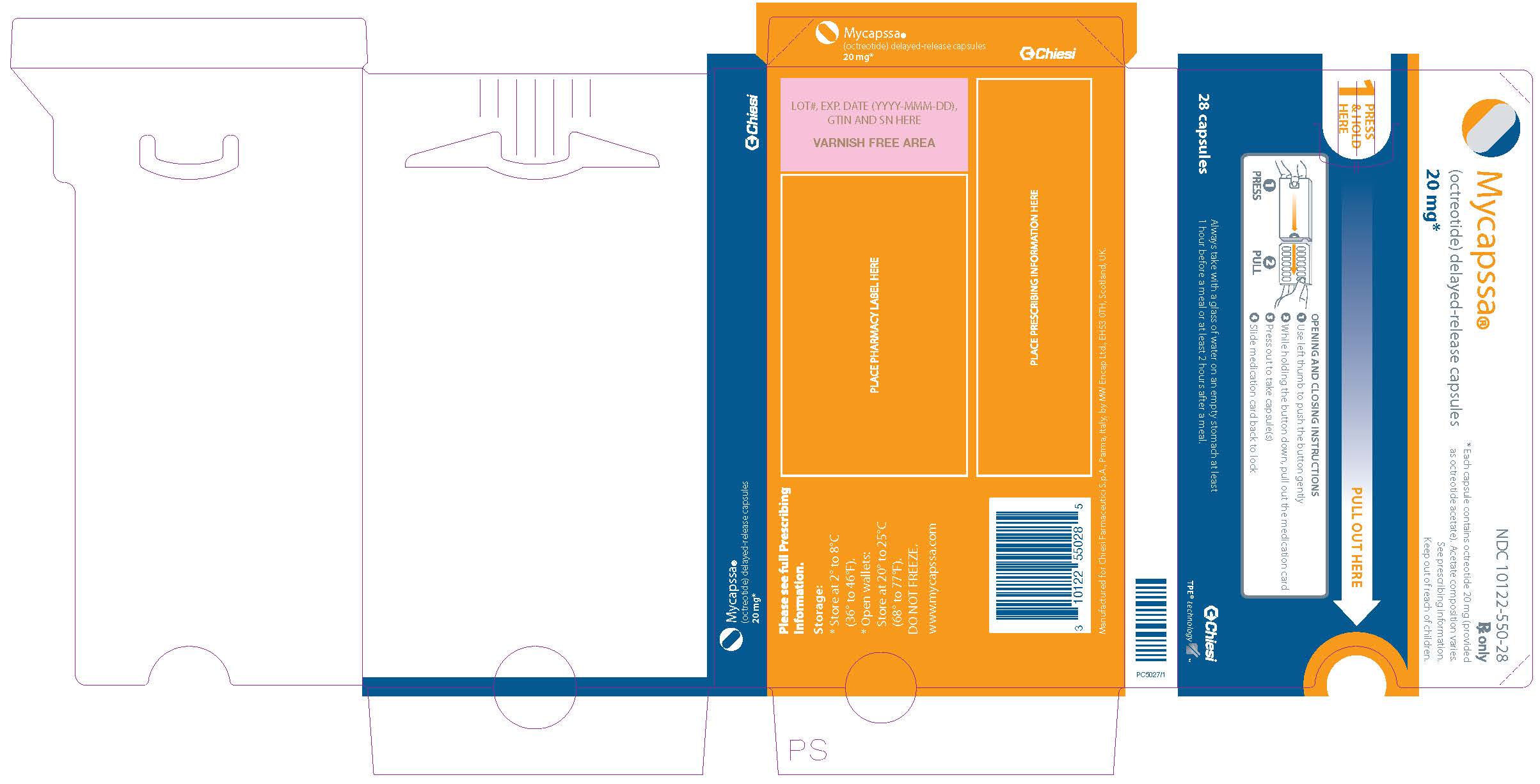
Mycapssa Octreotide 20 mg Capsule, Delayed Release — NDC 10122-550-28 (Billing 10122-0550-28)
This is a package of Mycapssa Octreotide 20 mg Capsule, Delayed Release from Chiesi USA, Inc., marketed since Jul 2020 and currently FDA-listed. It is this product's only package size.
NDC database record
One package, one record: these facts belong to NDC 10122-550-28 alone.
- Record
- FDA NDC Directory package listing · Human prescription drug
- Code segments
- 10122 labeler · 550 product · 28 package
- Package marketed since
- Jul 6, 2020
- Sample package
- No — commercial package
- Listing certified through
- Dec 31, 2026
- Barcode (UPC-A, from the NDC)
- 3 1012255028 5
- FDA record last changed
- Jul 24, 2026
Identity & classification
Regulatory identifiers FDA, NLM and CMS codes for this package
Drug-database identifiers Medi-Span GPI and First Databank GCN / HICL / AHFS classification
- GSN (GCN sequence number): 081277
- GCN: 48334
- GPI-14 (Medi-Span): 30170070106520
- HICL (First Databank): 002826
- AHFS class code: 68:29.04.00
- RxCUI (RxNorm): 2380611
Where does this data come from?
- FDA openFDA NDC Directory · synced Oct 8, 2026
- FDA label on DailyMed · label index refreshed Oct 6, 2026
- RxNorm (NLM RxNav) · catalog refreshed Oct 1, 2026
- Medi-Span GPI (licensed)
- First Databank (licensed) · refreshed Oct 8, 2026
RxNorm drug class
This medicine belongs to the Somatostatin Analog class.
Where does this data come from?
- RxClass (NLM) · catalog refreshed Oct 1, 2026
Clinical
Octreotide is used to treat acromegaly (condition in which the body produces too much growth hormone, causing enlargement of the hands, feet, and facial features; joint pain; and other symptoms) in people who have been treated successfully with octreotide injection or lanreotide injection. Octreotide is in a class of medications called octapeptides. It works by decreasing the amounts of certain natural substances produced by the body.
Read the full MedlinePlus article ↗- It treats acromegaly, which is too much growth hormone. It also treats the severe diarrhea and flushing from metastatic carcinoid tumors, and the watery diarrhea from VIPomas. Myca...
- It depends on your product. Injections go under the skin or into a vein, while the long-acting kit is given by a provider in the buttock about every 4 weeks. Mycapssa capsules are...
- Stomach issues are the most common, like diarrhea, belly pain, gas and nausea. Injection-site pain and headache can also happen. These often ease after the first month.
- Call for severe upper belly pain, fever, yellowing of the skin or eyes, a very slow or irregular heartbeat, or signs of high or low blood sugar. Get help right away for trouble bre...
Patient education
Supplement & herbal interactions
Some supplements/herbs that may interact with Octreotide — tap one for details:
Where does this data come from?
- MedlinePlus (NLM) · refreshed Oct 1, 2026
- FDA label on DailyMed · label index refreshed Oct 6, 2026
Ask a licensed pharmacist directly — free, answered by our team.
Pricing
A drug doesn't have one price. Each row is a different public payment system, and none is what you'd pay at the counter — that depends on your insurance. The ⓘ on each row explains what it measures.
| Price system | Per each | Per package |
|---|---|---|
| Retail pharmacies payNADAC · weekly | Not in the retail survey — common for institutional, discontinued, or low-volume packs. | |
| Medicaid paysCMS SDUD · 12 mo | No recent Medicaid claims on file for this NDC — rare and low-volume NDCs are suppressed in the public data. | |
| Medicare drug plans payPart D · Q2 2026 | $120.41 | $3,371.39 / 28 capsules |
Where does this data come from?
- CMS NADAC weekly file
- CMS ASP pricing files · refreshed Sep 20, 2026
- CMS Medicaid State Drug Utilization Data · refreshed Oct 8, 2026
- CMS Part D plan pricing files · refreshed Sep 24, 2026
- VA National Acquisition Center price file
Packaging — all sizes for this product
| Package NDC | Description | Marketing start | Marketing end | Status |
|---|---|---|---|---|
| 10122-0550-28 You're viewing this Main listing | 4 BLISTER PACK in 1 DOSE PACK / 7 CAPSULE, DELAYED RELEASE in 1 BLISTER PACK | 2020-07-06 | — | Active |
Therapeutic equivalents
| Product | Labeler | Pack | NADAC/unit | TE | Status | Price vs. this |
|---|---|---|---|---|---|---|
| Mycapssa 20 mgthis 10122-0550-28 | Chiesi | 7 capsules | — | — | FDA listed | — |
| Mycapssa 20 mg 69880-0120-28 | Amryt | 7 capsules | — | — | FDA listed | — |
Where does this data come from?
- FDA openFDA NDC Directory · synced Oct 8, 2026
- FDA Orange Book · refreshed Oct 3, 2026
- CMS NADAC weekly file
Availability & generic status
We did not find an FDA-approved generic match for this exact strength, form and route. Patent/protection dates below may affect future generic timing.
Why the date isn’t exact: Generic timing can change because patents may be challenged, settled, licensed, added, removed, or worked around with a narrower label — and FDA approval does not always mean a pharmacy can get the generic today.
🛈 What do these terms mean?
- Patent
- Legal protection listed in the Orange Book that may delay generic approval or launch. Issued by the U.S. Patent & Trademark Office.
- Substance patent
- Covers the active drug molecule itself — the hardest to design around. A generic generally can’t launch until it expires.
- Formulation (product) patent
- Covers a specific formulation or dosage form. A generic can sometimes work around it with a different formulation.
- Method-of-use patent
- A patent covering one specific approved use of the drug — not necessarily the whole molecule. A generic can sometimes launch with a “skinny label” that carves out the protected use and keeps the others.
- Skinny label
- A generic label that omits a still-patented use when the FDA allows it — letting a generic reach the market for the unprotected uses.
- Exclusivity
- FDA-granted marketing protection, separate from patents — e.g. 5-yr new chemical entity, 7-yr orphan drug, or a +6-month pediatric extension.
- Paragraph IV
- A generic applicant’s formal challenge to a listed patent. It can potentially lead to earlier generic entry, but often involves litigation or a settlement.
- RLD / RS
- Reference Listed Drug — the brand product the FDA uses as the reference for generic applications. Reference Standard — the product the FDA expects generics to compare against in bioequivalence testing.
- TE / AB rating
- FDA therapeutic-equivalence rating. An AB rating generally means the FDA considers a generic therapeutically equivalent to — and substitutable for — the brand.
- LOE (loss of exclusivity)
- The latest patent or exclusivity currently listed — the loss-of-exclusivity / latest-listed-protection date shown on this page. Paragraph-IV challenges and settlements can move the real date earlier; FDA approval and a manufacturer’s decision to market can move it later.
Built from the FDA Orange Book. The bars above are scaled to each protection’s expiry; the red LOE marker is the last one to lapse.
| Patent | Type | Use code | Expires |
|---|---|---|---|
| US 11338011 ↗ | Method of use | U-2857 | Feb 3, 2036 |
| US 12251418 ↗ | Method of use | U-2857 | Feb 3, 2036 |
| US 12246054 ↗ | Method of use | U-2857 | Feb 3, 2036 |
| US 11141457 ↗ | Method of use | U-3232 | Dec 28, 2040 |
| US 10695397 ↗ | Method of use | U-2857 | Feb 3, 2036 |
| US 8535695 ↗ | Method of use | U-2857 | Sep 17, 2029 |
| US 10238709 ↗ | Method of use | U-2857 | Feb 3, 2036 |
| US 11510963 ↗ | Method of use | U-2857 | Feb 3, 2036 |
| US 11052126 ↗ | Method of use | U-2857 | Feb 3, 2036 |
| US 11857595 ↗ | Method of use | U-3784 | Feb 3, 2036 |
| US 11890316 ↗ | Method of use | U-3232 | Dec 28, 2040 |
| US 11986529 ↗ | Method of use | U-2857 | Sep 17, 2029 |
| US 11969471 ↗ | Drug product | — | Sep 17, 2029 |
| US 8329198 ↗ | Drug product | — | Sep 17, 2029 |
| US 9265812 ↗ | Drug product | — | Sep 17, 2029 |
| US 9566246 ↗ | Drug product | — | Sep 17, 2029 |
| Code | What it grants | Expires |
|---|---|---|
| ODE-474 | Orphan Drug Exclusivity (7-year) | Jun 26, 2027 |
Is there a generic version of MYCAPSSA DR 20 MG CAPSULE?
The FDA approved a generic — why can’t I get it at my pharmacy yet?
Why do different websites show different generic release dates?
What does “FDA listed” mean?
What does a patent or protection date mean here?
What does “current Orange Book estimate” mean?
Can a generic come out before the last patent expires?
Can a generic come out after the listed dates?
What is the difference between patents and exclusivity?
Why are there multiple patent dates?
Where does this data come from?
- FDA Orange Book · refreshed Oct 3, 2026
What it looks like
Where does this data come from?
- FDA label on DailyMed · label index refreshed Oct 6, 2026
Inactive Ingredients / Excipients
Inactive ingredients, also called excipients, are components of the drug product other than the active ingredient. They may include fillers, dyes, coatings, preservatives, flavors, or other formulation ingredients.
🧪 Avoiding an ingredient? See Octreotide inactive ingredients by manufacturer: every current product's list side by side, so you can ask your pharmacy for the version that does not list it.
💡 Tap an ingredient (hover on desktop) to see what it is and why it’s used.
-
UNII 5138Q19F1X
Ammonia is a colorless gas made from nitrogen and hydrogen. It's used in medicines as a pH buffer to maintain the correct acidity level and help keep the product stable.
-
UNII XM0M87F357
A dark iron oxide compound that gives medicines their black or dark color. It's used as a colorant in tablets and capsules to help identify the product and make it visually distinctive.
-
UNII 2G86QN327L
Gelatin is a protein derived from animal collagen, commonly used in medicines as a gelling agent and capsule material. It helps create soft or hard capsule shells that hold and release medication, and can also thicken liquid formulations.
-
UNII TM2TZD4G4A
A plant-derived oily substance used as an emulsifier and solubilizer in medicines. It helps blend water and oil-based ingredients together and improves how the body absorbs certain active drugs.
-
UNII 02F3473H9O
A mineral salt used in medications as a source of magnesium. It helps bind ingredients together, improve texture, and maintain the product's stability during storage.
-
UNII NX76LV5T8J
A synthetic plastic polymer made from methacrylic acid and ethyl acrylate. It's used as a coating or binder to control how and where the medicine dissolves in your digestive system.
-
UNII 6OZP39ZG8H
Polysorbate 80 is a synthetic emulsifier derived from sorbitol and oleic acid. It helps mix oil and water-based ingredients together in medications and improves how the product disperses in the body.
-
UNII 333AG72FWJ
Povidone K12 is a synthetic polymer derived from petroleum. It acts as a binder and disintegrant in tablets and capsules, helping hold ingredients together and allowing the tablet to break apart for absorption.
-
UNII 6DC9Q167V3
Propylene glycol is a clear liquid derived from petroleum or vegetable sources. It acts as a solvent, humectant, and preservative in medicines, helping dissolve active ingredients and maintain product stability.
-
UNII 46N107B71O
Shellac is a natural resin secreted by the lac beetle. It's used as a coating on tablets and capsules to control how quickly the medicine dissolves and to improve appearance and stability.
-
UNII ETJ7Z6XBU4
Silicon dioxide is a naturally occurring mineral used as a glidant and anti-caking agent. It helps powder ingredients flow smoothly and prevents clumping during manufacturing and storage.
-
UNII 8MDF5V39QO
A white powder form of baking soda that acts as a buffer and pH regulator in medicines. It helps maintain the right acid-base balance and may aid tablet disintegration.
-
UNII 9XTM81VK2B
Sodium caprylate is a salt derived from caprylic acid, a naturally occurring fatty acid. In medicines, it acts as a preservative and antimicrobial agent to help prevent contamination and extend shelf life.
-
UNII 368GB5141J
A detergent and foaming agent derived from coconut or palm oil. In medications, it helps break down and mix oil and water-based ingredients, aids in tablet disintegration, and improves how the drug dissolves and spreads in the mouth or digestive system.
-
UNII 7SEV7J4R1U
A powder made from a naturally occurring mineral. In medicines, talc works as a glidant and anti-caking agent, helping tablets and capsules flow smoothly during manufacturing and preventing clumping.
-
UNII 15FIX9V2JP
Titanium dioxide is a bright white mineral powder commonly used as a colorant and opacifying agent. It makes pills and tablets white or lighter in color and helps make coatings non-transparent.
-
UNII 6P92858988
A synthetic oil made from glycerin and capric acid, used as a solvent and absorption enhancer to help the body take in active ingredients more effectively in oral medications.
-
UNII 8Z96QXD6UM
Triethyl citrate is a clear liquid derived from citric acid. It acts as a plasticizer and solvent in tablet coatings and film formulations, helping the coating remain flexible and adhere properly to the medicine.
18 inactive ingredients listed in the exact product block matched to this NDC.
Where does this data come from?
ingredient classCode="IACT" elements from the exact product block matched by this NDC. Label-section narrative from DailyMed / the openFDA label index is shown separately when available.- FDA label on DailyMed · label index refreshed Oct 6, 2026
- FDA openFDA NDC Directory · synced Oct 8, 2026
Inactive ingredient FAQ
Are inactive ingredients the same for every manufacturer?
Why might an inactive ingredient be missing?
Can inactive ingredients matter?
Manufacturer & labeler
More NDCs from Chiesi USA, Inc. labeler code 10122
- Juxtapid lomitapide mesylate 10 mg Capsule NDC 10122-410-28
- Juxtapid lomitapide mesylate 20 mg Capsule NDC 10122-420-28
- Juxtapid lomitapide mesylate 30 mg Capsule NDC 10122-430-28
- Trimbow beclomethasone dipropionate/formoterol fumarate/glycopyrrolate 86 ug; 4.9 ug; 10.6 ug Aerosol, Metered NDC 10122-460-02
- Revcovi elapegademase-lvlr 1.6 mg/mL Injection NDC 10122-502-01
- Curosurf poractant alfa 80 mg/mL Suspension NDC 10122-510-01
- Trimbow beclomethasone dipropionate/formoterol fumarate/glycopyrrolate 172 ug; 4.9 ug; 10.6 ug Aerosol, Metered NDC 10122-590-02
- Cleviprex clevipidine .5 mg/mL Emulsion NDC 10122-610-10
- Cleviprex clevipidine .5 mg/mL Emulsion NDC 10122-611-10
- Kengreal cangrelor 50 mg Injection, Powder, Lyophilized, For Solution NDC 10122-620-10
- BETHKIS tobramycin 300 mg/4mL Solution NDC 10122-820-04
- Zyflo zileuton 600 mg Tablet NDC 10122-901-12
Where does this data come from?
- FDA openFDA NDC Directory · synced Oct 8, 2026
- Drugs@FDA
Full prescribing information FDA SPL
🎯 Indications and Usage ▾
1 INDICATIONS AND USAGE MYCAPSSA is indicated for long-term maintenance treatment in acromegaly patients who have responded to and tolerated treatment with octreotide or lanreotide. MYCAPSSA is a somatostatin analog indicated for long-term maintenance treatment in acromegaly patients who have responded to and tolerated treatment with octreotide or lanreotide ( 1 ).
⏱️ Dosage and Administration ▾
2 DOSAGE AND ADMINISTRATION Take MYCAPSSA orally with a glass of water on an empty stomach, at least 1 hour before a meal or at least 2 hours after a meal ( 2.1 ). Initiate MYCAPSSA at a dosage of 40 mg daily, administered as 20 mg orally twice daily ( 2.2 ). Monitor insulin-like growth factor 1 (IGF-1) levels and patient's signs and symptoms every two weeks during the dose titration or as indicated ( 2.2 ).
Titrate the MYCAPSSA dosage, based on IGF-1 levels and patient's signs and symptoms. Increase the dosage in increments of 20 mg ( 2.2 ). The maximum recommended dosage is 80 mg daily ( 2.2 ).
Once the maintenance dosage of MYCAPSSA is achieved, monitor IGF-1 levels and patient's signs and symptoms monthly or as indicated ( 2.2 ). For patients with end-stage renal disease, initiate at a dosage of 20 mg orally once daily. Titrate and adjust the maintenance dosage based on IGF-1 levels, patient's signs and symptoms and tolerability ( 2.4 ).
2.1Important Administration Instructions Take MYCAPSSA orally with a glass of water on an empty stomach, at least 1 hour before a meal or at least 2 hours after a meal. Swallow MYCAPSSA capsules whole. Do not crush or chew the capsules.
2.2Recommended Dosage, Titration, and Monitoring Initiate MYCAPSSA at a dosage of 40 mg daily, administered as 20 mg orally twice daily. Monitor insulin-like growth factor 1 (IGF-1) levels and patient's signs and symptoms every two weeks during the dose titration or as indicated. Titrate the MYCAPSSA dosage based on IGF-1 levels and patient's signs and symptoms.
Increase the dosage in increments of 20 mg daily. For MYCAPSSA dosages of 60 mg daily, administer as 40 mg in the morning and 20 mg in the evening. For MYCAPSSA dosages of 80 mg daily, administer as 40 mg twice daily.
The maximum recommended dosage of MYCAPSSA is 80 mg daily. Once the maintenance dosage of MYCAPSSA is achieved, monitor IGF-1 levels and patient's signs and symptoms monthly or as indicated.
2.3Dosage Interruptions and Modifications If IGF-1 levels remain above the upper normal limit after treatment with the maximum recommended dosage of 80 mg daily or the patient cannot tolerate treatment with MYCAPSSA, consider discontinuing MYCAPSSA and switching patient to another somatostatin analog. Withdraw MYCAPSSA therapy periodically to assess disease activity. If IGF-1 levels increase and signs and symptoms recur, resume MYCAPSSA therapy.
2.4Recommended Dosage in Patients with End Stage Renal Disease For patients with end-stage renal disease, initiate MYCAPSSA at a dosage of 20 mg orally once daily. Titrate and adjust the maintenance dosage of MYCAPSSA based on IGF-1 levels, patient's signs and symptoms and tolerability [see Dosage and Administration (2.2 , 2.3) , Use in Specific Populations (8.6) ].
2.5Dosage Modifications with Concomitant Use of Proton Pump Inhibitors, H2-receptor Antagonists, or Antacids Patients taking proton pump inhibitors, H2-receptor antagonists, or antacids concomitantly with MYCAPSSA may require increased dosages of MYCAPSSA [see Drug Interactions (7.1) ] .
💊 Dosage Forms and Strengths ▾
3 DOSAGE FORMS AND STRENGTHS Delayed-release capsules: 20 mg. White hard gelatin capsules imprinted with "OT" on one half of the capsule and "20" on the other half. Each capsule contains 20 mg octreotide, provided as octreotide acetate. Delayed-release capsules: 20 mg.
⛔ Contraindications ▾
4 CONTRAINDICATIONS Hypersensitivity to octreotide or any of the components of MYCAPSSA. Anaphylactoid reactions, including anaphylactic shock, have been reported in patients receiving octreotide [see Adverse Reactions (6.3) ]. Hypersensitivity to octreotide or any of the components of MYCAPSSA.
⚠️ Warnings and Cautions ▾
5 WARNINGS AND PRECAUTIONS Cholelithiasis and Complications of Cholelithiasis: Monitor periodically. Discontinue if complications of cholelithiasis are suspected ( 5.1 ). Hypoglycemia or Hyperglycemia: Monitor glucose and adjust antidiabetic treatment as needed ( 5.2 ).
Thyroid Function Abnormalities: Hypothyroidism may occur. Assess thyroid function periodically ( 5.3 ). Cardiac Function: Bradycardia, arrhythmia, or conduction abnormalities may occur.
Drugs that have bradycardia effects may need dosage adjustments ( 5.4 , 7.2 ). Steatorrhea and Malabsorption of Dietary Fats: New onset steatorrhea, stool discoloration, loose stools, abdominal bloating, and weight loss may occur. If new occurrence or worsening of these symptoms are reported, evaluate for potential pancreatic exocrine insufficiency ( 5.5 ) Change in vitamin B12 levels: Monitor vitamin B 12 levels during treatment ( 5.6 ).
5.1Cholelithiasis and Complications of Cholelithiasis MYCAPSSA may inhibit gallbladder contractility and decrease bile secretion, which may lead to gallbladder abnormalities or sludge. Gallbladder-related adverse reactions have been reported in clinical trials in patients receiving MYCAPSSA. There have been postmarketing reports of cholelithiasis (gallstones) in patients taking somatostatin analogs resulting in complications, including cholecystitis, cholangitis, pancreatitis and requiring cholecystectomy [see Adverse Reactions (6) ].
Monitor patients periodically. If complications of cholelithiasis are suspected, discontinue MYCAPSSA and treat appropriately.
5.2Hyperglycemia and Hypoglycemia MYCAPSSA alters the balance between the counter-regulatory hormones, insulin, glucagon, and growth hormone, which may result in hypoglycemia, or hyperglycemia, or diabetes mellitus. In clinical trials with MYCAPSSA, the following adverse reactions were reported: increased blood glucose (7%), hypoglycemia (4%), and diabetes mellitus (1%) [see Adverse Reactions (6.1) ] . Blood glucose levels should be monitored when MYCAPSSA treatment is initiated, or when the dose is altered.
Adjust antidiabetic treatment accordingly .
5.3Thyroid Function Abnormalities MYCAPSSA suppresses the secretion of thyroid-stimulating hormone, which may result in hypothyroidism. In clinical trials with MYCAPSSA, the following adverse reactions were reported: hypothyroidism (1%), increased TSH (1%), or decreased free T4 (1%) [see Adverse Reactions (6.1) ] . Assess thyroid function periodically during treatment with MYCAPSSA.
5.4Cardiac Function Abnormalities Cardiac conduction abnormalities and other ECG changes including QT prolongation, axis shifts, early repolarization, low voltage, R/S transition, and early R wave progression, have occurred during treatment with octreotide. In MYCAPSSA clinical trials the following adverse reactions were reported: bradycardia (2%), conduction abnormalities (1%), and arrhythmias/tachycardia (2%) [see Adverse Reactions (6) ] . These ECG changes may occur in patients with acromegaly .
Dosage adjustments of concomitantly used drugs that have bradycardia effects (i.e. beta-blockers) may be necessary [see Drug Interactions (7.2) ].
5.5Steatorrhea and Malabsorption of Dietary Fats New onset steatorrhea, stool discoloration and loose stools have been reported in patients receiving somatostatin analogs, including octreotide. Somatostatin analogs reversibly inhibit secretion of pancreatic enzymes and bile acids, which may result in malabsorption of dietary fats and subsequent symptoms of steatorrhea, loose stools, abdominal bloating, and weight loss. If new occurrence or worsening of these symptoms are reported in patients receiving MYCAPSSA, evaluate patients for potential pancreatic exocrine insufficiency and manage accordingly.
5.6Changes in Vitamin B12 Levels Decreased vitamin B 12 levels and abnormal Schilling’s tests have been observed in some patients receiving octreotide. Monitor vitamin B 12 levels during treatment with MYCAPSSA.
🤒 Adverse Reactions ▾
6 ADVERSE REACTIONS The following important adverse reactions are described below and elsewhere in the labeling: Cholelithiasis and Complications of Cholelithiasis [see Warnings and Precautions (5.1) ] Hyperglycemia and Hypoglycemia [see Warnings and Precautions (5.2) ] Thyroid Function Abnormalities [see Warnings and Precautions (5.3) ] Cardiac Function Abnormalities [see Warnings and Precautions (5.4) ] Steatorrhea and Malabsorption of Dieatary Fats [see Warnings and Precautions (5.5) ] Changes in Vitamin B 12 Levels [ see Warnings and Precautions (5.6) ] Most common adverse reactions (incidence >10 %) are nausea, diarrhea, headache, arthralgia, asthenia, hyperhidrosis, peripheral swelling, blood glucose increased, vomiting, abdominal discomfort, dyspepsia, sinusitis, osteoarthritis ( 6.1 ).
To report SUSPECTED ADVERSE REACTIONS, contact Chiesi Farmaceutici S.p.A. at 1-888-661-9260 or FDA at 1-800-FDA-1088 or www.fda.gov/medwatch
6.1Clinical Studies Experience Because clinical trials are conducted under widely varying conditions, adverse reaction rates observed in the clinical trials of a drug cannot be directly compared to rates in the clinical trials of another drug and may not reflect the rates observed in practice. MYCAPSSA has been evaluated in patients with acromegaly in a placebo-controlled study [see Clinical Studies (14) ] and an open-label baseline-controlled study . The data reflect exposure of 183 patients to MYCAPSSA for a mean duration of 29 weeks.
In the overall study population, 56% were female and the average age of patients was 54.3 years. Adverse reactions occurring ≥ 5% and greater than placebo for the placebo-controlled study are presented in Table 1 and adverse reactions occurring ≥ 5% in the open-label study are presented in Table 2. Table 1: Adverse Reactions Occurring ≥ 5% and Greater than Placebo in a Placebo-Controlled Study with MYCAPSSA in Acromegaly Patients MYCAPSSA % (N=28) PLACEBO % (N=28) Diarrhea 29 21 Nausea 21 11 Blood glucose increased Includes blood glucose increased, hyperglycemia and glycosylated hemoglobin increased 14 7 Vomiting 14 0 Abdominal discomfort 14 11 Dyspepsia 11 4 Sinusitis 11 0 Osteoarthritis 11 0 Urinary tract infection 7 4 Pain 7 0 Large intestine polyp 7 0 Cholelithiasis 7 4 Table 2: Adverse Reactions Occurring ≥ 5% in an Open-Label Study with MYCAPSSA in Acromegaly Patients MYCAPSSA % (N=155) Headache 33 Nausea 30 Arthralgia 26 Asthenia 22 Hyperhidrosis 21 Diarrhea 18 Peripheral swelling 16 Dyspepsia 8 Abdominal pain upper 8 Abdominal distension 7 Nasopharyngitis 7 Influenza 7 Blood glucose increased Includes blood glucose increased, hyperglycemia and impaired fasting glucose 6 Vomiting 6 Flatulence 6 Back pain 6 Abdominal pain 5 Dizziness 5 Fatigue 5 Upper respiratory tract infection 5 Hypertension 5 Other Adverse Reactions Gallbladder Abnormalities In the placebo-controlled study, in patients treated with MYCAPSSA, acute cholecystitis occurred in 4% of patients.
In the open-label study, cholelithiasis occurred in 4.5% of patients and bile duct obstruction, bile duct stone, acute cholecystitis and jaundice occurred in 1% of patients each. Hypoglycemia/Hyperglycemia In the placebo-controlled study, 18% of patients treated with MYCAPSSA and 4% of patients treated with placebo developed at least one glucose value above the upper normal limit. All patients with abnormal glucose values were asymptomatic.
Asymptomatic hypoglycemia was reported in 4% of patients. In the open-label study 16% of patients developed a glucose value above the upper limit of normal. Asymptomatic hypoglycemia was reported in 4% and symptomatic hypoglycemia was reported in 1% of patients.
Diabetes was reported in 1% of patients. Hypothyroidism In the open-label study, hypothyroidism, increased TSH, or decreased free T4 were reported in 1% of patients. Cardiac In the open-label study, bradycardia was reported in 2%, conduction abnormalities in 1%, and arrhythmias/tachycardia in 2% of patien… [Excerpted — this section continues on DailyMed.]
🔄 Drug Interactions ▾
7 DRUG INTERACTIONS Proton Pump Inhibitors, H2-receptor Antagonists, or Antacids: may decrease bioavailability of MYCAPSSA and the MYCAPSSA dose may need to be increased ( 7 ). Cyclosporine : may have decreased bioavailability and require dose adjustment ( 7 ). Insulin and Antidiabetic Drugs: patients receiving insulin or antidiabetic drugs agents may require dose adjustment ( 7 ).
Digoxin: exposure may be decreased and assessment of clinical response to digoxin should be performed ( 7 ). Lisinopril: bioavailability may be increased, monitor patient's blood pressure and adjust dose of lisinopril if needed ( 7 ). Levonorgestrel: counsel women to use an alternative non-hormonal method of contraception or a back-up method when MYCAPSSA is used with combined oral contraceptives ( 7 ).
Bromocriptine: dose adjustment of bromocriptine may be necessary ( 7 ). Beta Blocker and Calcium Channel Blockers : dose adjustment of beta blockers or calcium channel blockers may be necessary ( 7 ). Drugs Metabolized by CYP 450 Enzymes: concomitant use with other drugs mainly metabolized by CYP3A4 that have a narrow therapeutic index (e.g., quinidine) should be used with caution and increased monitoring may be required ( 7 ).
7.1Effects of Other Drugs on MYCAPSSA Proton Pump Inhibitors, H2-receptor Antagonists, or Antacids Clinical Impact: Concomitant administration of MYCAPSSA with esomeprazole resulted in a decrease in the bioavailability for MYCAPSSA [ See Clinical Pharmacology (12.3) ] . Drugs that alter the pH of the upper GI tract (e.g., other proton pump inhibitors (PPIs), H2-receptor antagonists, and antacids) may alter the absorption of MYCAPSSA and lead to a reduction in bioavailability. Intervention: Co-administration of MYCAPSSA with PPIs, H2-blockers, or antacids may require increased doses of MYCAPSSA.
7.2Effects of MYCAPSSA on Other Drugs Cyclosporine Clinical Impact: Concomitant administration of MYCAPSSA with cyclosporine resulted in a decrease in cyclosporine bioavailability [see Clinical Pharmacology (12.3) ]. Intervention: Adjustment of cyclosporine dose to maintain therapeutic levels may be necessitated. Insulin and Antidiabetic Drugs Clinical Impact: MYCAPSSA inhibits the secretion of insulin and glucagon.
Intervention: Monitor blood glucose levels in diabetic patients upon MYCAPSSA initiation and subsequent dose adjustment. Patients receiving insulin or antidiabetic drugs agents may require dose adjustment of these therapeutic agents. Digoxin Clinical Impact: Concomitant administration of MYCAPSSA with digoxin resulted in a decrease in digoxin peak exposure [see Clinical Pharmacology (12.3) ].
Intervention: Digoxin has a narrow therapeutic ratio and careful assessment of clinical response should be performed when digoxin is concomitantly administered with MYCAPSSA. Lisinopril Clinical Impact: Concomitant administration of MYCAPSSA increases lisinopril bioavailability [see Clinical Pharmacology (12.3) ] . Intervention: Monitor patient's blood pressure and adjust the dosage of lisinopril if needed.
Levonorgestrel Clinical Impact: Concomitant administration of MYCAPSSA with levonorgestrel decreases levonorgestrel bioavailability [see Clinical Pharmacology (12.3) ] . Intervention: Decreased bioavailability may potentially diminish the effectiveness of combined oral contraceptives (COCs) or increase breakthrough bleeding. Counsel women to use an alternative non-hormonal method of contraception or a back-up method when MYCAPSSA is used with COCs.
Bromocriptine Clinical Impact: Concomitant administration of MYCAPSSA with bromocriptine may increase the systemic exposure of bromocriptine [see Clinical Pharmacology (12.3) ]. Intervention: Dose adjustment of bromocriptine may be necessary. Beta Blocker and Calcium Channel Blockers Clinical Impact: MYCAPSSA may cause bradycardia in acromegaly patients.
Intervention: Patients receiving beta blockers or calcium channel blockers may require dose adjustments of these therapeu… [Excerpted — this section continues on DailyMed.]
👥 Use in Specific Populations ▾
8 USE IN SPECIFIC POPULATIONS Females and Males of Reproductive Potential: Advise premenopausal females of the potential for an unintended pregnancy ( 8.3 ).
8.1Pregnancy Risk Summary Available data from case reports with octreotide acetate use in pregnant women are insufficient to identify a drug-associated risk of major birth defects, miscarriage or adverse maternal or fetal outcomes. Animal reproduction studies have not been conducted with MYCAPSSA. No adverse developmental effects were observed with intravenous administration of octreotide to pregnant rats and rabbits during organogenesis at doses 7 and 13 times, respectively, the clinical dose based on octreotide injection body surface area.
Transient growth retardation, with no impact on postnatal development, was observed in rat offspring from a pre- and post-natal study of octreotide at intravenous doses below the clinical dose based on octreotide injection body surface area (see Data ) . The estimated background risk of major birth defects and miscarriage for the indicated population is unknown. In the U.S. general population, the estimated background risk of major birth defects and miscarriage in clinically recognized pregnancies is 2%-4% and 15%-20%, respectively.
Data Animal Data In embryo-fetal development studies in rats and rabbits, pregnant animals received intravenous doses of octreotide up to 1 mg/kg/day during the period of organogenesis. A slight reduction in body weight gain was noted in pregnant rats at 0.1 and 1 mg/kg/day. There were no maternal effects in rabbits or embryo-fetal effects in either species up to the maximum dose tested.
At 1 mg/kg/day in rats and rabbits, the dose multiple was approximately 7 and 13 times, respectively, the clinical dose based on octreotide injection body surface area. In a pre- and post-natal development rat study at intravenous doses of 0.02-1 mg/kg/day, a transient growth retardation of the offspring was observed at all doses which was possibly a consequence of growth hormone inhibition by octreotide. The doses attributed to the delayed growth are below the clinical dose based on octreotide injection body surface area.
8.2Lactation Risk Summary There is no information available on the presence of octreotide in human milk, the effects of the drug on the breastfed infant, or the effects of the drug on milk production. Studies show that octreotide administered subcutaneously passes into the milk of lactating rats ( see Data ). When a drug is present in animal milk, it is likely that the drug will be present in human milk.
The developmental and health benefits of breastfeeding should be considered along with the mother's clinical need for MYCAPSSA and any potential adverse effects on the breastfed child from MYCAPSSA or from the underlying maternal condition. Data Following a subcutaneous dose (1 mg/kg) of octreotide to lactating rats, transfer of octreotide into milk was observed at a low concentration compared to plasma (milk/plasma ratio of 0.009).
8.3Females and Males of Reproductive Potential Discuss the potential for unintended pregnancy with premenopausal women as the therapeutic benefits of a reduction in GH levels and normalization of IGF-1 concentration in acromegalic females treated with octreotide may lead to improved fertility.
8.4Pediatric Use Safety and efficacy of MYCAPSSA in pediatric patients have not been established. In post-marketing reports, serious adverse reactions, including hypoxia, necrotizing enterocolitis, and death, have been reported with octreotide injection use in pediatric patients, most notably in children under 2 years of age.
8.5Geriatric Use Clinical studies of octreotide did not include sufficient numbers of subjects aged 65 and over to determine whether they respond differently from younger subjects. In MYCAPSSA clinical studies, 39 patients (21%) were age 65 years or over and 1 patient was age 75 years or over. No overall differences in safety or effectiveness were observed be… [Excerpted — this section continues on DailyMed.]
🤰 Pregnancy ▾
8.1Pregnancy Risk Summary Available data from case reports with octreotide acetate use in pregnant women are insufficient to identify a drug-associated risk of major birth defects, miscarriage or adverse maternal or fetal outcomes. Animal reproduction studies have not been conducted with MYCAPSSA. No adverse developmental effects were observed with intravenous administration of octreotide to pregnant rats and rabbits during organogenesis at doses 7 and 13 times, respectively, the clinical dose based on octreotide injection body surface area.
Transient growth retardation, with no impact on postnatal development, was observed in rat offspring from a pre- and post-natal study of octreotide at intravenous doses below the clinical dose based on octreotide injection body surface area (see Data ) . The estimated background risk of major birth defects and miscarriage for the indicated population is unknown. In the U.S. general population, the estimated background risk of major birth defects and miscarriage in clinically recognized pregnancies is 2%-4% and 15%-20%, respectively.
Data Animal Data In embryo-fetal development studies in rats and rabbits, pregnant animals received intravenous doses of octreotide up to 1 mg/kg/day during the period of organogenesis. A slight reduction in body weight gain was noted in pregnant rats at 0.1 and 1 mg/kg/day. There were no maternal effects in rabbits or embryo-fetal effects in either species up to the maximum dose tested.
At 1 mg/kg/day in rats and rabbits, the dose multiple was approximately 7 and 13 times, respectively, the clinical dose based on octreotide injection body surface area. In a pre- and post-natal development rat study at intravenous doses of 0.02-1 mg/kg/day, a transient growth retardation of the offspring was observed at all doses which was possibly a consequence of growth hormone inhibition by octreotide. The doses attributed to the delayed growth are below the clinical dose based on octreotide injection body surface area.
🧒 Pediatric Use ▾
8.4Pediatric Use Safety and efficacy of MYCAPSSA in pediatric patients have not been established. In post-marketing reports, serious adverse reactions, including hypoxia, necrotizing enterocolitis, and death, have been reported with octreotide injection use in pediatric patients, most notably in children under 2 years of age.
🧓 Geriatric Use ▾
8.5Geriatric Use Clinical studies of octreotide did not include sufficient numbers of subjects aged 65 and over to determine whether they respond differently from younger subjects. In MYCAPSSA clinical studies, 39 patients (21%) were age 65 years or over and 1 patient was age 75 years or over. No overall differences in safety or effectiveness were observed between these patients and younger patients, and other reported clinical experience has not identified differences in responses between the elderly and younger patients, but greater sensitivity of some older individuals cannot be ruled out.
🆘 Overdosage ▾
10 OVERDOSAGE A limited number of accidental overdoses of injectable octreotide acetate in adults has been reported. The doses ranged from 2.4 mg/day to 6 mg/day administered by continuous infusion or subcutaneously 1.5 mg three times a day. Adverse reactions in some patients included arrhythmia, hypotension, cardiac arrest, brain hypoxia, pancreatitis, hepatic steatosis, hepatomegaly, lactic acidosis, flushing, diarrhea, lethargy, weakness, and weight loss.
If overdose occurs, contact Poison Control (1-800-222-1222) for latest recommendations.
🧬 Clinical Pharmacology ▾
12 CLINICAL PHARMACOLOGY
12.1Mechanism of Action Octreotide exerts pharmacologic actions similar to the natural hormone somatostatin, but is a more potent inhibitor of GH, glucagon, and insulin than somatostatin. Like somatostatin, it also suppresses luteinizing hormone (LH) response to gonadotropin-releasing hormone (GnRH), decreases splanchnic blood flow, and inhibits release of serotonin, gastrin, vasoactive intestinal peptide, secretin, motilin, and pancreatic polypeptide.
12.2Pharmacodynamics In a single-dose PK study conducted in healthy volunteers, inhibition of GH (as measured by C avg ) was observed in all subjects receiving MYCAPSSA, as compared to their GH levels prior to MYCAPSSA. In a study designed to assess the duration of MYCAPSSA-induced increased intestinal permeability, an increase in paracellular permeability was observed 2 hours after MYCAPSSA administration and returned to baseline by 5.5 hours after MYCAPSSA administration. MYCAPSSA-induced permeability is completely reversible within this timeframe.
MYCAPSSA maintained GH and IGF-1 levels in patients with acromegaly. Single doses of octreotide acetate given subcutaneously have been shown to inhibit gallbladder contractility and to decrease bile secretion in normal volunteers. In clinical trials the incidence of gallstone or biliary sludge formation was markedly increased [see Warnings and Precautions (5.1) ].
Octreotide acetate may cause clinically significant suppression of TSH [see Warnings and Precautions (5.3) ] .
12.3Pharmacokinetics Absorption In healthy subjects, similar systemic exposure (AUC) was observed between a single dose oral administration of MYCAPSSA (20 mg octreotide acetate), and a single dose of subcutaneous Sandostatin IR (0.1 mg octreotide acetate). Peak octreotide levels (C max ) were 33% lower following oral administration compared to the subcutaneous route. Absorption time was longer following oral administration compared to the subcutaneous route; peak concentrations were reached at a median of 1.67–2.5 hours after 20 mg MYCAPSSA administration compared to 0.5 hours for the subcutaneous administration.
In healthy subjects, after single-dose oral administration of MYCAPSSA, the systemic exposure of octreotide (C max , AUC 0-24 , and AUC 0-inf ) increased dose-proportionally at doses ranging from 3–40 mg. In patients with acromegaly, there was a dose-related increase in the mean plasma octreotide concentrations after chronic administration of MYCAPSSA 40 mg (20 mg bid), 60 mg (40 mg AM / 20 mg PM), and 80 mg (40 mg AM / 40 mg PM) bid. Mean peak concentrations (C max ) following chronic dosing were lower in patients with acromegaly (mean [CV%] = 2.51 ng/mL [80%] and 5.30 ng/mL [76%] at 20 and 40 mg bid, respectively) compared to single-dose peak concentrations observed in healthy subjects at the same dose (mean [CV%] = 3.62 [53%] and 8.21 ng/mL [88%] at 20 and 40 mg, respectively).
Effect of Food on Oral Absorption In healthy subjects, data from a single-dose, crossover PK study of food effect demonstrated that administration of MYCAPSSA 20 mg capsules with food led to an approximate 90% decrease in the rate (C max ) and extent of absorption (AUC 0-t ). Distribution In healthy volunteers, the distribution half-life (t α½ ) of octreotide acetate from plasma after subcutaneous administration was 0.2 h, the volume of distribution (Vdss) was estimated to be
13.6L, and the total body clearance ranged from 7–10 L/hr. In blood, the distribution into the erythrocytes was found to be negligible and about 65% was bound in the plasma in a concentration-independent manner. Binding was mainly to lipoprotein and, to a lesser extent, to albumin. In patients with acromegaly, the Vdss following subcutaneous administration was increased compared to healthy volunteers, estimated to be
21.6L; mean peak concentrations were lower in acromegaly patients compared to healthy volunteers (2.8 ng/mL vs 5.2 ng/mL, respectively after 0.1 ng/mL dose). El… [Excerpted — this section continues on DailyMed.]
🧬 Mechanism of Action ▾
12.1Mechanism of Action Octreotide exerts pharmacologic actions similar to the natural hormone somatostatin, but is a more potent inhibitor of GH, glucagon, and insulin than somatostatin. Like somatostatin, it also suppresses luteinizing hormone (LH) response to gonadotropin-releasing hormone (GnRH), decreases splanchnic blood flow, and inhibits release of serotonin, gastrin, vasoactive intestinal peptide, secretin, motilin, and pancreatic polypeptide.
📦 How Supplied / Storage and Handling ▾
16 HOW SUPPLIED/STORAGE AND HANDLING MYCAPSSA delayed-release 20 mg capsules are white hard gelatin capsules imprinted with "OT" on one half of the capsule and "20" on the other half. The capsules are supplied as: NDC Number Package Size 10122-550-28 Wallet of 28 capsules Storage Until first use, store unopened wallets of MYCAPSSA refrigerated at 2° to 8°C (36° to 46°F). Do not freeze.
After first use, opened wallets may be stored at 20° to 25°C (68° to 77°F) for up to 1 month.
📦 Storage and Handling ▾
Storage Until first use, store unopened wallets of MYCAPSSA refrigerated at 2° to 8°C (36° to 46°F). Do not freeze. After first use, opened wallets may be stored at 20° to 25°C (68° to 77°F) for up to 1 month.
📋 Description ▾
11 DESCRIPTION MYCAPSSA delayed release capsules contain octreotide acetate, a somatostatin analog. Octreotide is known chemically as L-cysteinamide, D-phenylalanyl-L-cysteinyl-L-phenylalanyl-D-tryptophyl-L-lysyl-L-threonyl-N-[2-hydroxy-1-(hydroxy-methyl) propyl]-, cyclic (2→7)-disulfide; [R-(R*,R*)]. The molecular weight of octreotide is 1019.3 (free peptide, C 49 H 66 N 10 O 10 S 2 ) and its amino acid sequence is: MYCAPSSA (octreotide) delayed-release capsules are enteric-coated capsules for oral use.
Each capsule contains 20 mg of octreotide (provided as octreotide acetate). Octreotide is present as a salt with 1.4 to 2.5 molar equivalents of acetate. The capsules contain the following inactive ingredients: polyvinylpyrrolidone (PVP-12), sodium caprylate, magnesium chloride, polysorbate 80, glyceryl monocaprylate, glyceryl tricaprylate, gelatin, gelatin capsules, and Acryl-EZE ® (methacrylate).
The capsule is printed with "OT 20" in Opacode ® black ink. Formula
💬 Information for Patients ▾
17 PATIENT COUNSELING INFORMATION Advise the patient to read the FDA-approved patient labeling (Patient Information). Cholelithiasis and Complications of Cholelithiasis Advise patients to contact their healthcare provider if they experience signs or symptoms of gallstones (cholelithiasis) or complications of cholelithiasis (e.g., cholecystitis, cholangitis and pancreatitis) [see Warnings and Precautions (5.1) ]. Hypoglycemia and Hyperglycemia Advise patients to contact their healthcare provider if they have problems with blood sugar levels, either hyperglycemia or hypoglycemia [see Warnings and Precautions (5.2) ].
Thyroid Function Abnormalities Inform patients that their thyroid function will be assessed periodically during treatment [see Warnings and Precautions (5.3) ]. Cardiac Function Abnormalities Inform patients to contact the health care provider in case they notice irregular heartbeat [see Warnings and Precautions (5.4) ]. Steatorrhea and Malabsorption of Dietary Fats Advise patients to contact their healthcare provider if they experience new or worsening symptoms of steatorrhea, stool discoloration, loose stools, abdominal bloating, weight loss [see Warnings and Precautions (5.5) ] .
Changes in Vitamin B 12 Levels Inform patients that Vitamin B 12 levels may be monitored during the treatment [see Warnings and Precautions (5.5) ]. Females and Males of Reproductive Potential Inform female patients that treatment with MYCAPSSA may result in unintended pregnancy [see Use in Specific Populations (8.3) ].
🧬 Pharmacokinetics ▾
12.3Pharmacokinetics Absorption In healthy subjects, similar systemic exposure (AUC) was observed between a single dose oral administration of MYCAPSSA (20 mg octreotide acetate), and a single dose of subcutaneous Sandostatin IR (0.1 mg octreotide acetate). Peak octreotide levels (C max ) were 33% lower following oral administration compared to the subcutaneous route. Absorption time was longer following oral administration compared to the subcutaneous route; peak concentrations were reached at a median of 1.67–2.5 hours after 20 mg MYCAPSSA administration compared to 0.5 hours for the subcutaneous administration.
In healthy subjects, after single-dose oral administration of MYCAPSSA, the systemic exposure of octreotide (C max , AUC 0-24 , and AUC 0-inf ) increased dose-proportionally at doses ranging from 3–40 mg. In patients with acromegaly, there was a dose-related increase in the mean plasma octreotide concentrations after chronic administration of MYCAPSSA 40 mg (20 mg bid), 60 mg (40 mg AM / 20 mg PM), and 80 mg (40 mg AM / 40 mg PM) bid. Mean peak concentrations (C max ) following chronic dosing were lower in patients with acromegaly (mean [CV%] = 2.51 ng/mL [80%] and 5.30 ng/mL [76%] at 20 and 40 mg bid, respectively) compared to single-dose peak concentrations observed in healthy subjects at the same dose (mean [CV%] = 3.62 [53%] and 8.21 ng/mL [88%] at 20 and 40 mg, respectively).
Effect of Food on Oral Absorption In healthy subjects, data from a single-dose, crossover PK study of food effect demonstrated that administration of MYCAPSSA 20 mg capsules with food led to an approximate 90% decrease in the rate (C max ) and extent of absorption (AUC 0-t ). Distribution In healthy volunteers, the distribution half-life (t α½ ) of octreotide acetate from plasma after subcutaneous administration was 0.2 h, the volume of distribution (Vdss) was estimated to be
13.6L, and the total body clearance ranged from 7–10 L/hr. In blood, the distribution into the erythrocytes was found to be negligible and about 65% was bound in the plasma in a concentration-independent manner. Binding was mainly to lipoprotein and, to a lesser extent, to albumin. In patients with acromegaly, the Vdss following subcutaneous administration was increased compared to healthy volunteers, estimated to be
21.6L; mean peak concentrations were lower in acromegaly patients compared to healthy volunteers (2.8 ng/mL vs 5.2 ng/mL, respectively after 0.1 ng/mL dose). Elimination According to data obtained with the immediate-release octreotide subcutaneous injection, approximately 32% of the dose is excreted unchanged in the urine. In healthy subjects, there was no effect of route of administration on octreotide elimination, and comparable mean elimination half-lives (t ½ ) of 2.3 hours and 2.7 hours were demonstrated between subcutaneous injection and oral octreotide treatments, respectively.
In patients with acromegaly, elimination after chronic dosing was slightly slower than that seen in healthy volunteers, with mean apparent half-life values at steady state ranging from 3.2–4.5 hours across doses (20 mg, 40 mg, 60 mg, and 80 mg). Elimination is complete approximately 48 hours after the last dose in patients who have achieved steady-state plasma levels. Minimal accumulation (approximately 10%) was observed in patients after repeat administration of MYCAPSSA.
Specific Populations Geriatric Patients In patients 65 years of age and older, after subcutaneous administration of octreotide acetate, the half-life of octreotide increased significantly (46%) and clearance of octreotide decreased significantly (26%). Patients with Renal Impairment Exposure in patients with severe renal impairment was not substantially different from that of the matched controls. Following oral administration of a single dose of 20 mg MYCAPSSA to patients with severe renal impairment (eGFR 15–29 mL/min/1.73m 2 ) and patients with end-stage renal disease (ESRD) requiring dialysis, patien… [Excerpted — this section continues on DailyMed.]
🧬 Pharmacodynamics ▾
12.2Pharmacodynamics In a single-dose PK study conducted in healthy volunteers, inhibition of GH (as measured by C avg ) was observed in all subjects receiving MYCAPSSA, as compared to their GH levels prior to MYCAPSSA. In a study designed to assess the duration of MYCAPSSA-induced increased intestinal permeability, an increase in paracellular permeability was observed 2 hours after MYCAPSSA administration and returned to baseline by 5.5 hours after MYCAPSSA administration. MYCAPSSA-induced permeability is completely reversible within this timeframe.
MYCAPSSA maintained GH and IGF-1 levels in patients with acromegaly. Single doses of octreotide acetate given subcutaneously have been shown to inhibit gallbladder contractility and to decrease bile secretion in normal volunteers. In clinical trials the incidence of gallstone or biliary sludge formation was markedly increased [see Warnings and Precautions (5.1) ].
Octreotide acetate may cause clinically significant suppression of TSH [see Warnings and Precautions (5.3) ] .
🔬 Clinical Studies ▾
14 CLINICAL STUDIES The efficacy of MYCAPSSA was established in a 9 month, randomized, double-blind, placebo-controlled study (NCT03252353) that enrolled 56 patients with acromegaly. In the overall study population, 54% were female and the average age of patients was 55 years. 91% of patients were Caucasian, 5% Asian, 2% Black, and 2% Other.
The percentage of patients with previous pituitary surgery was 88%. The baseline IGF-1 levels (the average of 2 assessments measured within 2 weeks of randomization) was 0.80 times ULN (range: 0.5–1.1 times ULN) in the patients treated with MYCAPSSA and 0.84 times ULN (range: 0.3–1.1 times ULN) in patients treated with the placebo. In this study, patients initiated MYCAPSSA treatment twice daily 1 month after their last injection of somatostatin analogs.
The starting dose was 40 mg (20 mg in the morning and 20 mg in the evening). Dose increase was allowed during dose titration to 60 mg (40 mg in the morning and 20 mg in the evening) and to a maximal dose of 80 mg daily (40 mg in the morning and 40 mg in the evening) until patients were deemed adequately controlled based on biochemical results and/or clinical judgement. Patients then maintained their target dose until end of treatment.
The primary efficacy endpoint was somatostatin dose-adjusted proportion of patients who maintain their biochemical response, defined as an IGF-1 levels less than or equal to the ULN at the end of 9 months of treatment. 58% of patients treated with MYCAPSSA vs. 19% of patients treated with placebo maintained their biochemical response.
25% of patients treated with MYCAPSSA required discontinuation of MYCAPSSA and treatment with other somatostatin analogs at some point during the 9-month study. Criteria for somatostatin analog rescue were IGF-1 levels ≥ 1.3 times ULN and exacerbation of acromegaly signs and symptoms on two consecutive assessments while treated for at least 2 weeks with 80 mg/day or other reasons such as adverse reactions or patient's decision.
🧪 Nonclinical Toxicology ▾
13 NONCLINICAL TOXICOLOGY
13.1Carcinogenesis, Mutagenesis, Impairment of Fertility Studies in laboratory animals have demonstrated no mutagenic potential of octreotide acetate. No carcinogenicity studies have been conducted with MYCAPSSA. No carcinogenic potential was demonstrated in mice treated subcutaneously with octreotide acetate for 85–99 weeks at doses up to 2000 mcg/kg/day (8 times the clinical dose based on octreotide injection body surface area).
In a 116-week subcutaneous study in rats administered octreotide acetate, a 27% and 12% incidence of injection-site sarcomas or squamous cell carcinomas was observed in males and females, respectively, at the highest dose level of 1250 mcg/kg/day (10 times the clinical dose based on octreotide injection body surface area) compared to an incidence of 8% to 10% in the vehicle-control groups. The increased incidence of injection-site tumors was most probably caused by irritation and the high sensitivity of the rat to repeated subcutaneous injections at the same site.
There was also a 15% incidence of uterine adenocarcinomas in the 1250 mcg/kg/day females compared to 7% in the saline-control females and 0% in the vehicle-control females. The presence of endometritis coupled with the absence of corpora lutea, the reduction in mammary fibroadenomas, and the presence of uterine dilatation suggest that the uterine tumors were associated with estrogen dominance in the aged female rats, which does not occur in humans. No fertility studies in animals have been conducted with MYCAPSSA.
Injectable octreotide acetate did not impair fertility in rats at doses up to 1000 mcg/kg/day, which represents 7 times the clinical dose based on octreotide injection body surface area.
📄 Carcinogenesis, Mutagenesis, Impairment of Fertility ▾
13.1Carcinogenesis, Mutagenesis, Impairment of Fertility Studies in laboratory animals have demonstrated no mutagenic potential of octreotide acetate. No carcinogenicity studies have been conducted with MYCAPSSA. No carcinogenic potential was demonstrated in mice treated subcutaneously with octreotide acetate for 85–99 weeks at doses up to 2000 mcg/kg/day (8 times the clinical dose based on octreotide injection body surface area).
In a 116-week subcutaneous study in rats administered octreotide acetate, a 27% and 12% incidence of injection-site sarcomas or squamous cell carcinomas was observed in males and females, respectively, at the highest dose level of 1250 mcg/kg/day (10 times the clinical dose based on octreotide injection body surface area) compared to an incidence of 8% to 10% in the vehicle-control groups. The increased incidence of injection-site tumors was most probably caused by irritation and the high sensitivity of the rat to repeated subcutaneous injections at the same site.
There was also a 15% incidence of uterine adenocarcinomas in the 1250 mcg/kg/day females compared to 7% in the saline-control females and 0% in the vehicle-control females. The presence of endometritis coupled with the absence of corpora lutea, the reduction in mammary fibroadenomas, and the presence of uterine dilatation suggest that the uterine tumors were associated with estrogen dominance in the aged female rats, which does not occur in humans. No fertility studies in animals have been conducted with MYCAPSSA.
Injectable octreotide acetate did not impair fertility in rats at doses up to 1000 mcg/kg/day, which represents 7 times the clinical dose based on octreotide injection body surface area.
📄 Patient Package Insert ▾
Patient Information MYCAPSSA® [my (as in sky)-cap-sah] (octreotide) delayed-release capsules, for oral use This Patient Information has been approved by the U.S. Food and Drug Administration. Approved: 07/2024 What is MYCAPSSA?
MYCAPSSA is an oral prescription medicine used in the long-term maintenance treatment of acromegaly in people for whom initial treatment with octreotide or lanreotide has been effective and tolerated. It is not known if MYCAPSSA is safe and effective in children. Do not take MYCAPSSA if you : are allergic to octreotide acetate or any of the ingredients in MYCAPSSA.
MYCAPSSA can cause a serious allergic reaction including anaphylactic shock. Stop taking MYCAPSSA right away and get emergency help if you have any of these symptoms: swelling of your tongue, throat, lips, eyes or face severe itching of the skin with rash or raised bumps chest pain trouble swallowing or breathing feeling faint rapid heart beat See the end of this leaflet for a complete list of ingredients in MYCAPSSA. Before you take MYCAPSSA, tell your healthcare provider about all of your medical conditions, including if you: have liver cirrhosis or liver problems have kidney problems are pregnant or plan to become pregnant.
It is not known if MYCAPSSA will harm your unborn baby. MYCAPSSA may increase your chance of becoming pregnant. are breastfeeding or plan to breastfeed. It is not known if MYCAPSSA passes into your breast milk.
Talk to your healthcare provider about the best way to feed your baby if you take MYCAPSSA. Tell your healthcare provider about all the medicines you take, including prescription and over-the-counter medicines, vitamins, and herbal supplements. MYCAPSSA may affect the way other medicines work, and other medicines may affect how MYCAPSSA works.
Especially tell your healthcare provider if you take oral contraceptives. Use an alternative non-hormonal method of contraception or a back-up method while taking MYCAPSSA. Know the medicines you take.
Keep a list of them to show your healthcare provider and pharmacist when you get a new medicine. How should I take MYCAPSSA? Read the detailed "Instructions for Use" at the end of this Patient Information about the right way to take MYCAPSSA.
Take MYCAPSSA exactly as your healthcare provider tells you to take it. Take MYCAPSSA with a glass of water on an empty stomach. Take MYCAPSSA at least 1 hour before a meal or at least 2 hours after a meal (for example, you could take your morning dose 1 hour before breakfast and your evening dose at bedtime).
Swallow the capsules whole. Do not crush or chew the capsules before swallowing. What are the possible side effects of MYCAPSSA? gallbladder problems.
MYCAPSSA may cause problems with the gallbladder. Tell your healthcare provider if you have sudden pain in your upper right stomach (abdomen), sudden pain in your right shoulder or between your shoulder blades, yellowing of your skin or the whites of your eyes, fever with chills, nausea blood sugar problems. MYCAPSSA may cause you to have high blood sugar (hyperglycemia), low blood sugar (hypoglycemia), or diabetes.
Tell your healthcare provider if you have problems with high or low blood sugar. Your healthcare provider will check your blood sugar when you start taking MYCAPSSA or when your dose is changed. thyroid problems . MYCAPSSA may keep your thyroid from releasing thyroid hormones leading to hypothyroidism.
Your thyroid function will be checked regularly during your treatment with MYCAPSSA. heart rhythm problems . Tell your healthcare provider if you have an irregular heartbeat (your heart is not beating normally). fatty stool . MYCAPSSA may cause your body to have issues with absorbing dietary fats.
Tell your healthcare provider if you have any new or worsening symptoms including fatty stools, changes in the color of your stools, loose stools, stomach (abdominal) bloating or weight loss. low vitamin B12 levels in your blood. Your healthcare provider may check your vitamin B12… [Excerpted — this section continues on DailyMed.]
📖 Instructions for Use ▾
INSTRUCTIONS FOR USE MYCAPSSA® [my (as in sky)-cap-sah] (octreotide) delayed-release capsules, for oral use Read this Instructions for Use before you start taking MYCAPSSA and each time you get a refill. There may be new information. This information does not take the place of talking to your healthcare provider about your medical condition or treatment.
Talk to your healthcare provider or pharmacist if you have any questions about how to use MYCAPSSA. Important information: Each MYCAPSSA wallet contains twenty-eight 20-mg capsules. The number of wallets required in a 28-day period depends on your prescribed dose.
How to Use the MYCAPSSA Wallet Each MYCAPSSA wallet has a locking mechanism that helps to keep the medicine away from children. Become familiar with using the MYCAPSSA wallet so you will know how to use it the right way. To open the wallet: Step 1.
With your left thumb, gently press the tip of the release button on the left side of the wallet (see Figure A). Step 2. While holding the release button, grasp the medicine card at the notch on the right side and pull it out (see Figure A).
Step 3. Unfold the medicine card (see Figure A). Figure A: How to Open the MYCAPSSA Wallet How to Remove a Capsule from the MYCAPSSA Wallet Capsules need to be removed carefully, because if they are cracked or broken they may not be as effective.
Follow these instructions to easily remove capsules without damaging them. Place the tip of a thumb at the edge of a capsule's plastic cavity (see Figure B). Gently push the capsule until it is removed.
Collect the removed capsule in your hand. Do not use two thumbs to push a capsule as this could damage it. Do not press the middle of a capsule.
This could also damage it. If a capsule is cracked or broken, throw it away (discard it) and remove another capsule. Figure B: How to Remove a Capsule from the Medicine Card Inside the MYCAPSSA Wallet This Instructions for Use has been approved by the U.S.
Food and Drug Administration. Approved: 01/2024 Figure A Figure B
📄 Recent Major Changes ▾
Warnings and Precautions, Steatorrhea and Malabsorption of Dietary Fats ( 5.5 ) 07/2024
📄 Package Label / Principal Display Panel ▾
PRINCIPAL DISPLAY PANEL - 20 mg Blister Pack Always take with a glass of water on an empty stomach at least 1 hour before a meal or at least 2 hours after a meal. Mycapssa ® (octreotide) delayed-release capsules 20 mg* 2 28 Capsules *Each capsule contains octreotide 20 mg (provided as octreotide acetate). Acetate composition varies. See prescribing information. Blister Pack
PRINCIPAL DISPLAY PANEL - 20 mg Blister Pack Dose Pack NDC 10122-550-28 Mycapssa ® (octreotide) delayed-release capsules 20 mg* Rx only *Each capsule contains octreotide 20 mg (provided as octreotide acetate). Acetate composition varies. See prescribing information.
Keep out of reach of children. 1 PRESS & HOLD HERE PULL OUT HERE ❶ PRESS ❷ PULL OPENING AND CLOSING INSTRUCTIONS Use left thumb to push the button gently While holding the button down, pull out the medication card Press out to take capsule(s) Slide medication card back to lock 28 capsules Always take with a glass of water on an empty stomach at least 1 hour before a meal or at least 2 hours after a meal. Blister Dose Pack
Medicare Part D spend CMS · PART D · 2026 (Q1)
About this NDC listing & data coverage
What data is (and isn’t) available for this NDC — tap to expand
| NDC identity (package / product / labeler codes) | ✓ Available |
| Labeler | ✓ Available |
| Product & package description | ✓ Available |
| Marketing category & status | ✓ Available |
| Active ingredient / dosage form / route | ✓ Available |
| FDA label (SPL via DailyMed) | ✓ Available |
| Package photos | ✓ Available |
| Inactive ingredients (structured) | ✓ Available |
| NADAC pharmacy acquisition price (CMS) | — Not published for this NDC CMS publishes NADAC only for NDCs reported in its retail-pharmacy survey. |
| Orange Book / therapeutic-equivalence data | ✓ Available |
| HCPCS J-code billing crosswalk | — Not published for this NDC Most self-administered / retail products have no J-code — that is normal. |
| Medicaid utilization (CMS SDUD) | — Not published for this NDC CMS reports utilization only for NDCs with Medicaid claims above its privacy threshold. |