
Eight Hour Nourishing Lip Spf 20 Octinoxate, Avobenzone 4 mg/g; 3 mg/g Emulsion, 14.2 g — NDC 10967-671-61 (Billing 10967-0671-61)
This is a package of 14.2 g of Eight Hour Nourishing Lip Spf 20 Octinoxate, Avobenzone 4 mg/g; 3 mg/g Emulsion from REVLON, marketed since Oct 2020 and currently FDA-listed. It is this product's only package size.
NDC database record
One package, one record: these facts belong to NDC 10967-671-61 alone.
- Record
- FDA NDC Directory package listing · Human OTC drug
- Code segments
- 10967 labeler · 671 product · 61 package
- Package marketed since
- Oct 21, 2020
- Sample package
- No — commercial package
- Listing certified through
- Dec 31, 2026
- Barcode (UPC)
- 0012345678905
- FDA record last changed
- Aug 27, 2026
Identity & classification
Regulatory identifiers FDA, NLM and CMS codes for this package
Where does this data come from?
- FDA openFDA NDC Directory · synced Oct 1, 2026
- FDA label on DailyMed · label index refreshed Oct 6, 2026
- RxNorm (NLM RxNav) · catalog refreshed Oct 1, 2026
- Medi-Span GPI (licensed)
- First Databank (licensed) · refreshed Oct 1, 2026
Clinical
This is a topical lip emulsion that functions as an over-the-counter sunscreen product. It contains two ultraviolet (UV) filters, octinoxate and avobenzone, which are commonly used together to help absorb and scatter UV rays across a broad spectrum of sunlight. The emulsion base is designed to nourish and protect the delicate lip area while providing sun protection with an SPF 20 rating. This product is marketed under the FDA's OTC monograph rules for sunscreen ingredients.
Patient education
Supplement & herbal interactions
Where does this data come from?
- MedlinePlus (NLM) · refreshed Oct 1, 2026
- FDA label on DailyMed · label index refreshed Oct 6, 2026
Ask a licensed pharmacist directly — free, answered by our team.
Pricing
A drug doesn't have one price. Each row is a different public payment system, and none is what you'd pay at the counter — that depends on your insurance. The ⓘ on each row explains what it measures.
| Price system | Per mL | Per package |
|---|---|---|
| Retail pharmacies payNADAC · weekly | Not in the retail survey — common for institutional, discontinued, or low-volume packs. | |
| Medicaid paysCMS SDUD · 12 mo | No recent Medicaid claims on file for this NDC — rare and low-volume NDCs are suppressed in the public data. | |
| Medicare drug plans payPart D · quarterly | No Part D plan price is available for this NDC in our data. | |
Where does this data come from?
- CMS NADAC weekly file
- CMS ASP pricing files · refreshed Sep 20, 2026
- CMS Medicaid State Drug Utilization Data · refreshed Oct 7, 2026
- CMS Part D plan pricing files · refreshed Sep 24, 2026
- VA National Acquisition Center price file
Packaging — all sizes for this product
| Package NDC | Description | Marketing start | Marketing end | Status |
|---|---|---|---|---|
| 10967-0671-61 You're viewing this Main listing | 14.2 g in 1 TUBE, WITH APPLICATOR | 2020-10-21 | — | Active |
Therapeutic equivalents
| Product | Labeler | Pack | NADAC/unit | TE | Status | Price vs. this |
|---|---|---|---|---|---|---|
| Eight Hour Nourishing Lip Spf 20 4 mg/g; 3 mg/gthis 10967-0671-61 | REVLON | 14.2 g | — | — | FDA listed | — |
Where does this data come from?
- FDA openFDA NDC Directory · synced Oct 1, 2026
- FDA Orange Book · refreshed Oct 3, 2026
- CMS NADAC weekly file
Availability & generic status
We did not find an FDA-approved generic match for this exact strength, form and route.
Where does this data come from?
- FDA Orange Book · refreshed Oct 3, 2026
Inactive Ingredients / Excipients
Inactive ingredients, also called excipients, are components of the drug product other than the active ingredient. They may include fillers, dyes, coatings, preservatives, flavors, or other formulation ingredients.
💡 Tap an ingredient (hover on desktop) to see what it is and why it’s used.
-
UNII 9E8X80D2L0
A synthetic form of vitamin E used as an antioxidant and preservative in medications. It helps prevent the active ingredients from degrading when exposed to oxygen or light.
-
UNII A9EJ3J61HQ
A synthetic liquid derived from benzoic acid and long-chain alcohols. It functions as a solvent and penetration enhancer in topical formulations, helping active ingredients dissolve and absorb into the skin.
-
UNII 12V64UPU6R
A plant-based fat extracted from murumuru palm seeds. It acts as an emollient and thickener in topical formulations, helping create smooth texture and improve skin feel in creams and lotions.
-
UNII 1P9D0Z171K
BHT is a synthetic antioxidant that prevents fats and oils in medicines from breaking down and becoming rancid. It helps keep the product stable and effective during storage.
-
UNII 2EH13UN8D3
A synthetic compound used as a solvent and penetration enhancer in topical formulations. It helps dissolve active ingredients and allows them to penetrate the skin more effectively.
-
UNII D5340Y2I9G
Castor oil is a natural plant-based oil used in medicines as a lubricant, laxative agent, and solvent. It helps medicine ingredients dissolve or flow smoothly and can aid bowel movement in formulations designed for that purpose.
-
UNII 7QDB5EE79Y
A synthetic oily substance used as a plasticizer and lubricant in tablet coatings and capsule shells. It helps make these outer layers flexible and smooth so they dissolve properly in the digestive tract.
-
UNII 1K09F3G675
Ferric oxide red is an inorganic iron compound used as a colorant in medicines. It gives tablets, capsules, or other dosage forms a red or reddish tint for identification and appearance.
-
UNII EX438O2MRT
Ferric oxide yellow is a naturally occurring iron compound used as a colorant in medications. It gives tablets, capsules, and other forms a yellow or golden hue for identification and appearance.
-
UNII NNE56F2N14
A synthetic compound derived from glycerin and polyethylene glycol. It acts as an emulsifier and solubilizer to help mix water and oil-based ingredients and keep them blended throughout the product's shelf life.
-
UNII Y9H1V576FH
Honey is a natural sweetener made by bees from flower nectar. In medicines, it adds sweetness to improve taste and may help soothe throat irritation in lozenges or syrups.
-
UNII ZF94AP8MEY
Hydrogenated castor oil is a processed plant oil made by adding hydrogen to castor oil. It's used as a binder to help hold tablet ingredients together and as a lubricant to prevent sticking during manufacturing.
-
UNII 7EV65EAW6H
Lanolin is a waxy substance derived from sheep's wool. It's used in medicines as an emollient and skin-conditioning agent to soften formulations and improve spreadability in topical products like creams and ointments.
-
UNII 9KJL21T0QJ
Linoleic acid is an omega-6 fatty acid derived from plant oils. It serves as an emulsifier and skin conditioning agent in topical formulations, helping ingredients mix smoothly and improving product texture.
-
UNII 0RBV727H71
A natural fatty acid derived from plant oils. It helps dissolve other ingredients and improve how the medicine spreads or absorbs in the body.
-
UNII XOF597Q3KY
A refined form of wax made from petroleum, microcrystalline wax is used in medicines as a coating agent, binder, and hardening ingredient. It helps give tablets and capsules their shape and protective outer layer.
-
UNII 446U8J075B
Nylon-12 is a synthetic plastic polymer used as a coating or film-forming agent in medicines. It helps create a protective barrier around tablets or capsules to control how and when the medicine is released in the body.
-
UNII 4T6H12BN9U
Petrolatum is a purified mineral oil-based jelly derived from petroleum. In medicines, it acts as an emollient, lubricant, and moisture barrier to soften skin, reduce friction, and help prevent water loss from formulations.
-
UNII 1NA5AO9GH7
A synthetic polymer derived from petroleum, polybutene is used as a binder and lubricant in solid medications to help hold ingredients together and improve the tablet or capsule's flow during manufacturing.
-
UNII K49155WL9Y
Shea butter is a fat extracted from shea tree nuts. It's used in medicines as an emollient and lubricant to soften the product, improve texture, and help ingredients blend smoothly together.
-
UNII 3W1JG795YI
Sunflower oil is a natural vegetable oil derived from sunflower seeds. It serves as a solvent, lubricant, and carrier in medicines, helping dissolve active ingredients and improve how the medication flows and absorbs in the body.
-
UNII R0ZB2556P8
Tocopherol is a form of vitamin E derived from plant oils. It acts as an antioxidant in medicines to prevent oils and fats from breaking down and spoiling during storage.
-
UNII 1D1K0N0VVC
A fat-soluble form of vitamin A used as a colorant and nutritional fortification ingredient. It gives products a yellow or orange tint and increases vitamin A content in the formula.
-
UNII 2ZA36H0S2V
Beeswax is a natural wax produced by honeybees. In medicines, it works as a coating agent and thickener to control how fast the drug dissolves and improve the product's texture and appearance.
24 inactive ingredients listed in the exact product block matched to this NDC.
Label-section wording can be broader than the structured product block and may mention additional formulation ingredients.
Where does this data come from?
ingredient classCode="IACT" elements from the exact product block matched by this NDC. Label-section narrative from DailyMed / the openFDA label index is shown separately when available.- FDA label on DailyMed · label index refreshed Oct 6, 2026
- FDA openFDA NDC Directory · synced Oct 1, 2026
Inactive ingredient FAQ
Are inactive ingredients the same for every manufacturer?
Why might an inactive ingredient be missing?
Can inactive ingredients matter?
Manufacturer & labeler
More NDCs from REVLON labeler code 10967
- Elizabeth Arden, Great 8, Moisturizer SPF 35 Avobenzone, Octisalate, Homosalate 3 mg/mL; 10 mg/mL; 5 mg/mL Emulsion NDC 10967-665-15
- CERAMIDE LIFT and FIRM Octinoxate, Oxybenzone, Avobenzone, Octisalate, Octocrylene 5 mg/g; 5 mg/g; 7.5 mg/g; 2.2 mg/g Emulsion NDC 10967-666-17
- CERAMIDE LIFT and FIRM EYE SPF 15 Oxybenzone, Octinoxate 4.1 mg/g; 1.4 mg/g Emulsion NDC 10967-667-61
- Ceramide Makeup Spf 15 Octinoxate, Titanium Dioxide 3 mg/g; 4 mg/g Cream NDC 10967-668-01
- CERAMIDE PREMIERE BROAD SPECTRUM SPF 30 Octinoxate, Octisalate, Oxybenzone, Octocrylene, Avobenzone 4 mg/g; 7.5 mg/g; 3 mg/g; 2 mg/g; 5 mg/g Emulsion NDC 10967-669-17
- Prevage City Smart Titanium Dioxide, Zinc Oxide 5.6 mg/g; 6.2 mg/g Emulsion NDC 10967-670-62
- Ea Eight Hour Skin Protectant Petrolatum 56.8 mg/g Emulsion NDC 10967-672-17
- Eight Hour Skin Fragrance Free Petrolatum 56.8 mg/g Cream NDC 10967-673-17
- Ea Eight Hr Lip Sheer Tints Oxybenzone, Padimate O, Petrolatum 8 mg/g; 30.2 mg/g; 3 mg/g Lipstick NDC 10967-674-61
- Eight Hour Night Dimethicone 2 mg/g Emulsion NDC 10967-675-16
- Elizabeth Arden Eight Hr Protectant Clear Lip 1.147 g/3.7g; .2775 g/3.7g; .111 g/3.7g; .074 g/3.7g Lipstick NDC 10967-676-64
- Mitchum Clinical Soft Solid Powder Fresh ALUMINUM ZIRCONIUM TETRACHLOROHYDREX GLY 20.0% .2 g/g Stick NDC 10967-678-16
Where does this data come from?
- FDA openFDA NDC Directory · synced Oct 1, 2026
- Drugs@FDA
FDA label — Drug Facts FDA SPL
🎯 Indications and Usage ▾
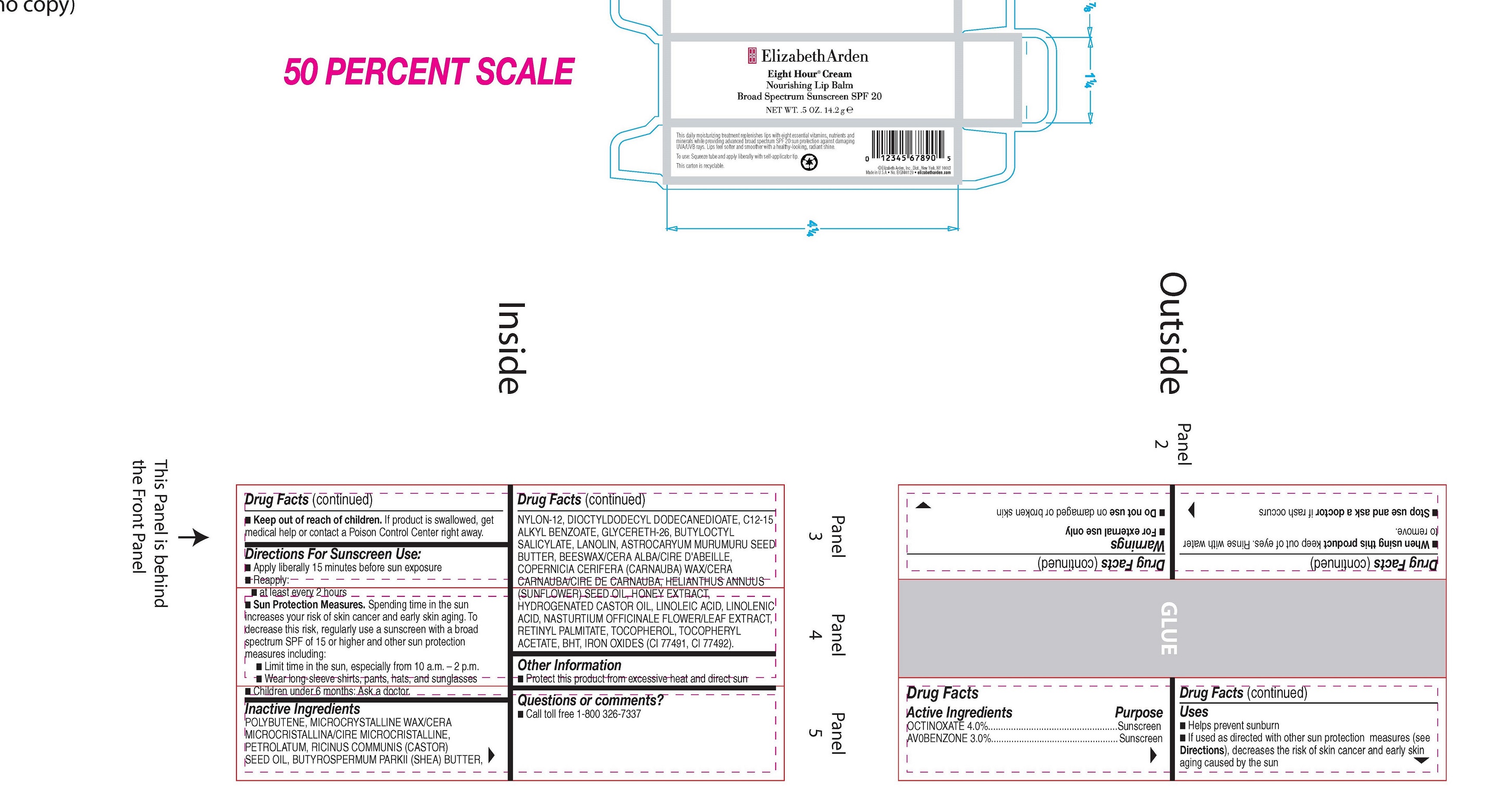
Helps prevent sunburn If used as directed with other sun protection measures (see Directions ), decreases the risk of skin cancer and early skin againg caused by the sun
⏱️ Dosage and Administration ▾
Apply liberally 15 minutes before sun exposure Reapply at least every 2 hours
⚠️ Warnings ▾
For external use only. Do not use on damaged or broken skin. When using this product keep out of eyes. Rinse with water to remove . Stop using and ask a doctor if rash occurs.
🧪 Active Ingredient ▾
Active Ingredients Active Ingredients Purpose OCTINOXATE 4.0%...................................................Sunscreen AV0BENZONE 3.0%..................................................Sunscreen
🧪 Inactive Ingredients ▾
Inactive Ingredients POLYBUTENE, MICROCRYSTALLINE WAX/CERA MICROCRISTALLINA/CIRE MICROCRISTALLINE, PETROLATUM, RICINUS COMMUNIS (CASTOR) SEED OIL, BUTYROSPERMUM PARKII (SHEA) BUTTER, NYLON-12, DIOCTYLDODECYL DODECANEDIOATE, C12-15 ALKYL BENZOATE, GLYCERETH-26, BUTYLOCTYL SALICYLATE, LANOLIN, ASTROCARYUM MURUMURU SEED BUTTER, BEESWAX/CERA ALBA/CIRE D'ABEILLE, COPERNICIA CERIFERA (CARNAUBA) WAX/CERA CARNAUBA/CIRE DE CARNAUBA, HELIANTHUS ANNUUS (SUNFLOWER) SEED OIL, HONEY EXTRACT, HYDROGENATED CASTOR OIL, LINOLEIC ACID, LINOLENIC ACI, NASTURTIUM OFFICINALE FLOWER/LEAF EXTRACT, RETINYL PALMITATE, TO DCOPHEROL, TOCOPHERYL ACETATE, BHT, IRON OXIDES (CI 77491, CI 77492).
🎯 Purpose ▾
Sunscreen
📄 When Using This Product ▾
Directions For Sunscreen Use Directions For Sunscreen Use: - Apply liberally 15 minutes before sun exposure - Reapply: - at least every 2 hours - Sun Protection Measures. Spending time in the sun increases your risk of skin cancer and early skin aging. To decrease this risk, regularly use a sunscreen with a broad spectrum SPF of 15 or higher and other sun protection measures including: - Limit time in the sun, especially from 10 a.m. – 2 p.m. - Wear long-sleeve shirts, pants, hats, and sunglasses - Children under 6 months: Ask a doctor.
📄 Keep Out of Reach of Children ▾
Keep Out of Reach of Children . If product is swallowed, get medical help or contact a poison control center right away.
📖 Instructions for Use ▾
Uses Uses - Helps prevent sunburn - If used as directed with other sun protection measures (see Directions), decreases the risk of skin cancer and early skin aging caused by the sun
📄 Package Label / Principal Display Panel ▾
CARTON ART NOURISHING LIP
Reported adverse events (FAERS)
Top reported reactions
Reporter sex
Where does this data come from?
About this NDC listing & data coverage
What data is (and isn’t) available for this NDC — tap to expand
| NDC identity (package / product / labeler codes) | ✓ Available |
| Labeler | ✓ Available |
| Product & package description | ✓ Available |
| Marketing category & status | ✓ Available |
| Active ingredient / dosage form / route | ✓ Available |
| FDA label (SPL via DailyMed) | ✓ Available |
| Package photos | ✓ Available |
| Inactive ingredients (structured) | ✓ Available |
| NADAC pharmacy acquisition price (CMS) | — Not published for this NDC CMS publishes NADAC only for NDCs reported in its retail-pharmacy survey. |
| Orange Book / therapeutic-equivalence data | — Not published for this NDC Applies only to products approved under an NDA/ANDA; many listings are out of scope. |
| HCPCS J-code billing crosswalk | — Not published for this NDC Most self-administered / retail products have no J-code — that is normal. |
| Medicaid utilization (CMS SDUD) | — Not published for this NDC CMS reports utilization only for NDCs with Medicaid claims above its privacy threshold. |