
Bactoshield CHG CHLORHEXIDINE GLUCONATE 40 mg/mL Solution, 118 mL — NDC 11084-039-03 (Billing 11084-0039-03)
This is a package of 118 mL of Bactoshield CHG CHLORHEXIDINE GLUCONATE 40 mg/mL Solution from SC Johnson Professional USA, Inc., marketed since Dec 2022 and currently FDA-listed, this package's marketing is listed to end Dec 2027. It is the main listing for this product, which comes in 2 package sizes.
Other active recalls for Chlorhexidine Gluconate (different manufacturers) — 1 · tap to view
Identity & classification
Regulatory identifiers FDA, NLM and CMS codes for this package
- RxCUI (RxNorm): 211365
Where does this data come from?
- FDA openFDA NDC Directory · synced Oct 1, 2026
- FDA label on DailyMed · label index refreshed Oct 1, 2026
- RxNorm (NLM RxNav) · catalog refreshed Oct 1, 2026
- Medi-Span GPI (licensed)
- First Databank (licensed) · refreshed Oct 1, 2026
RxNorm drug class
This medicine belongs to the Antiinfectives and antiseptics for local oral treatment class.
Where does this data come from?
- RxClass (NLM) · catalog refreshed Oct 1, 2026
Clinical
- It treats gingivitis, which means red, swollen gums that may bleed. You use it between dental visits as part of a program with your dentist. It has not been tested in people with A...
- It can. Staining of teeth and other mouth surfaces is one of the most common side effects. You may also notice more tartar and changes in taste. Your dentist should remove tartar a...
- Anyone allergic to chlorhexidine gluconate or any ingredient in the product should avoid it. Serious allergic reactions, including anaphylaxis, have been reported with dental produ...
- Keep it out of reach of children. A small child who swallows 1 or 2 ounces may have stomach upset, nausea or signs of alcohol intoxication. Get medical help if more than 4 ounces i...
Patient education
Supplement & herbal interactions
Where does this data come from?
- MedlinePlus (NLM) · refreshed Oct 1, 2026
- FDA label on DailyMed · label index refreshed Oct 1, 2026
Ask a licensed pharmacist directly — free, answered by our team.
Pricing
A drug doesn't have one price. Each row is a different public payment system, and none is what you'd pay at the counter — that depends on your insurance. The ⓘ on each row explains what it measures.
| Price system | Per mL | Per package |
|---|---|---|
| Retail pharmacies payNADAC · weekly | Not in the retail survey — common for institutional, discontinued, or low-volume packs. | |
| Medicaid paysCMS SDUD · 12 mo | No recent Medicaid claims on file for this NDC — rare and low-volume NDCs are suppressed in the public data. | |
| Medicare drug plans payPart D · quarterly | No Part D plan price is available for this NDC in our data. | |
Where does this data come from?
- CMS NADAC weekly file
- CMS ASP pricing files · refreshed Sep 20, 2026
- CMS Medicaid State Drug Utilization Data · refreshed Oct 2, 2026
- CMS Part D plan pricing files · refreshed Sep 24, 2026
- VA National Acquisition Center price file
Packaging — all sizes for this product
| Package NDC | Description | Marketing start | Marketing end | Status |
|---|---|---|---|---|
| 11084-0039-03 You're viewing this Main listing | 118 mL in 1 BOTTLE | 2022-12-01 | Dec 31, 2027 | Active |
| 11084-0039-24 11084-039-24 | 946 mL in 1 BOTTLE | 2022-12-01 | Dec 31, 2027 | Active |
You're viewing the smallest of 2 pack sizes for this product.
Pack size FAQ
What quantity is in this package?
How does this package differ from NDC 11084-0039-24?
What NDC number is used to bill for this package of Bactoshield CHG CHLORHEXIDINE GLUCONATE 40 mg/mL Solution?
Therapeutic equivalents
| Product | Labeler | Pack | NADAC/unit | TE | Status | Price vs. this |
|---|---|---|---|---|---|---|
| Antiseptic Skin Cleanser 4 g/100mL 70000-0407-01 | Cardinal | 237 ml | $0.025 | — | FDA listed | — |
| Antiseptic Skin Cleanser 4 g/100mL 00116-1061-04 | Xttrium | 118 ml | $0.034 | — | Availability likely | — |
| Antiseptic Skin Cleanser 4 mg/100mL 46122-0137-34 | AmerisourceBergen | 237 ml | $0.037 | — | Availability likely | — |
| Foster and Thrive 4 g/100mL 70677-1221-01 | McKesson | 237 ml | $0.037 | — | Availability likely | — |
| Chlorhexidine Gluconate 40 mg/mL 16571-0111-12 | Rising | 118 ml | $0.040 | — | Availability likely | — |
| Betasept .04 mg/mL 67618-0200-04 | Atlantis | 118 ml | $0.040 | — | Availability likely | — |
| Cardinal Health 4 g/100mL 00116-0061-04 | Xttrium | 118 ml | — | — | Discontinued | — |
| Antiseptic Skin Cleanser 4 mg/100mL 00116-0137-34 | Xttrium | 237 ml | — | — | FDA listed | — |
| Antiseptic Skin Cleanser 4 mg/100mL 00116-0161-08 | Xttrium | 237 ml | — | — | FDA listed | — |
| Betasept .04 mg/mL 00116-0200-01 | Xttrium | 3785 ml | — | — | FDA listed | — |
| Antiseptic Skin Cleanser 4 mg/100mL 00116-0401-50 | Xttrium | 237 ml | — | — | FDA listed | — |
| Antiseptic Skin Cleanser 4 g/100mL 00116-0407-01 | Xttrium | 237 ml | — | — | FDA listed | — |
| Antiseptic Skin Cleanser 4 g/100mL 00116-0767-08 | Xttrium | 237 ml | — | — | FDA listed | — |
| CliniClean 4 g/100mL 00116-0901-05 | Xttrium | 118 ml | — | — | Discontinued | — |
| Dyna-Hex 4 4 g/100mL 00116-1060-18 | Xttrium | 535 ml | — | — | FDA listed | — |
| Foster and Thrive 4 g/100mL 00116-1221-01 | Xttrium | 237 ml | — | — | FDA listed | — |
| Bactoshield CHG 40 mg/mL 00116-1344-08 | Xttrium | 3780 ml | — | — | FDA listed | — |
| Antiseptic Skin Cleanser 4 mg/100mL 00116-3678-07 | Xttrium | 473 ml | — | — | FDA listed | — |
| Hibiclens 4 g/100mL 00234-0575-40 | Molnlycke | 118 ml | — | — | FDA listed | — |
| Antiseptic Skin Cleanser 4 mg/100mL 00363-1061-08 | Walgreen | 237 ml | — | — | FDA listed | — |
| Maxiclens Chlorhexidine Gluconate Liquid Solution, 4% 40 mg/mL 00404-0219-01 | Henry | 118 ml | — | — | FDA listed | — |
| Maxiclens Chlorhexidine Gluconate Liquid Solution, 4% 40 mg/mL 00404-0220-03 | Henry | 236 ml | — | — | FDA listed | — |
| Maxiclens Chlorhexidine Gluconate Liquid Solution, 4% 40 mg/mL 00404-0221-04 | Henry | 473 ml | — | — | FDA listed | — |
| Bactoshield CHG 40 mg/mLthis 11084-0039-03 | SC | 118 ml | — | — | FDA listed | — |
| Bactoshield CHG 40 mg/mL 11084-0128-03 | SC | 118 ml | — | — | FDA listed | — |
| Antiseptic Skin Cleanser 4 g/100mL 11822-0116-05 | Rite | 237 ml | — | — | FDA listed | — |
| Antiseptic Skin Cleanser 4 g/100mL 11822-0891-02 | Rite | 532 ml | — | — | FDA listed | — |
| Antiseptic Skin Cleanser 4 mg/100mL 11822-3678-07 | Rite | 473 ml | — | — | FDA listed | — |
| BD E-Z Scrub 107 40 g/1000mL 17271-0107-03 | Becton | 18 ml | — | — | FDA listed | — |
| Antiseptic Skin Cleanser 4 mg/100mL 36800-0401-50 | Topco | 237 ml | — | — | FDA listed | — |
| Halyard Chlorhexidine Gluconate 40 mg/mL 39892-0960-01 | Owens | 118 ml | — | — | FDA listed | — |
| Halyard Chlorhexidine Gluconate 40 mg/mL 39892-0961-01 | Owens | 118 ml | — | — | FDA listed | — |
| Antiseptic Skin Cleanser 4 mg/100mL 41250-0162-08 | Meijer | 237 ml | — | — | Discontinued | — |
| Scrub, Scrub-Stat, Foam Safe, Micro-Guard 40 mg/mL 42939-0125-19 | AVA, | 946 ml | — | — | FDA listed | — |
| Scrub, Scrub-Stat, Foam Safe, Micro-Guard 40 mg/mL 42939-0128-01 | AVA, | 118 ml | — | — | FDA listed | — |
| Scrub-Stat 40 mg/mL 47593-0464-11 | Ecolab | 3780 ml | — | — | FDA listed | — |
| Scrub-Stat 40 mg/mL 47593-0468-21 | Ecolab | 208000 ml | — | — | Discontinued | — |
| Antiseptic Skin Cleanser 4 g/100mL 59779-0767-08 | CVS | 237 ml | — | — | FDA listed | — |
| Antiseptic Skin Cleanser 4 mg/100mL 63868-0940-08 | Chain | 237 ml | — | — | FDA listed | — |
| Antiseptic Skin Cleanser 4 g/100mL 68599-5401-00 | McKesson | 4 bottles | — | — | FDA listed | — |
| CliniClean 4 g/100mL 69464-0901-05 | HR | 118 ml | — | — | Discontinued | — |
| Hibiclens 4 g/100mL 76420-0535-08 | Asclemed | 236 ml | — | — | FDA listed | — |
| Surgical Scrub Brush/Sponge With Nail Cleaner 4% CHG 4 g/100mL 84128-0003-01 | Xinxiang | 30 patches | — | — | FDA listed | — |
Where does this data come from?
- FDA openFDA NDC Directory · synced Oct 1, 2026
- FDA Orange Book · refreshed Sep 3, 2026
- CMS NADAC weekly file
Availability & generic status
The FDA lists approved generic versions of this medicine, but that does not always mean a pharmacy can get one today. Patent rules, launch agreements, supply and pricing can affect when generics actually arrive.
Where does this data come from?
- FDA Orange Book · refreshed Sep 3, 2026
What it looks like
Where does this data come from?
- FDA label on DailyMed · label index refreshed Oct 1, 2026
Inactive Ingredients / Excipients
Inactive ingredients, also called excipients, are components of the drug product other than the active ingredient. They may include fillers, dyes, coatings, preservatives, flavors, or other formulation ingredients.
💡 Tap an ingredient (hover on desktop) to see what it is and why it’s used.
-
UNII 92005F972D
A foaming and thickening agent derived from coconut oil. It's used in liquid medicines to improve texture, help distribute active ingredients evenly, and create a pleasant consistency for easier swallowing or application.
-
UNII WQ29KQ9POT
Gluconolactone is a mild organic acid derived from glucose. It functions as a buffer and pH regulator in medicines, helping maintain stable acidity levels and improve product stability.
-
UNII X70SE62ZAR
Hydroxyethyl cellulose is a plant-derived thickener made from cellulose. It's used in medicines as a binder to hold ingredients together, a thickener for gels or liquids, and sometimes as a coating agent.
-
UNII ND2M416302
Isopropyl alcohol is a clear liquid solvent derived from petroleum. In medicines, it dissolves active ingredients and other components, helps the product flow smoothly, and aids in sterilization during manufacturing.
-
UNII 4F6FC4MI8W
Lauramine oxide is a surfactant, a substance that helps mix oil and water together. It's used in medicines to improve how ingredients blend and to help the product dissolve or spread properly.
-
UNII 09179OX7TB
PEG-75 Lanolin is a waxy substance derived from sheep's wool that has been chemically modified to mix easily with water and oil. It acts as an emulsifier and moisturizer in topical formulations, helping blend different ingredients and soften the skin.
-
UNII 8I9428H868
Tridecyl alcohol is a fatty alcohol derived from natural oils or made synthetically. In medicines, it works as an emulsifier and surfactant to help mix oil and water-based ingredients together smoothly.
-
UNII 059QF0KO0R
Water is a liquid solvent that dissolves and mixes ingredients together in liquid medicines, syrups, and injections. It helps distribute the active drug evenly throughout the product.
8 inactive ingredients listed in the exact product block matched to this NDC.
Label-section wording can be broader than the structured product block and may mention additional formulation ingredients.
Where does this data come from?
ingredient classCode="IACT" elements from the exact product block matched by this NDC. Label-section narrative from DailyMed / the openFDA label index is shown separately when available.- FDA label on DailyMed · label index refreshed Oct 1, 2026
- FDA openFDA NDC Directory · synced Oct 1, 2026
Inactive ingredient FAQ
Are inactive ingredients the same for every manufacturer?
Why might an inactive ingredient be missing?
Can inactive ingredients matter?
Manufacturer & labeler
Where does this data come from?
- FDA openFDA NDC Directory · synced Oct 1, 2026
- Drugs@FDA
FDA label — Drug Facts FDA SPL
🎯 Indications and Usage ▾
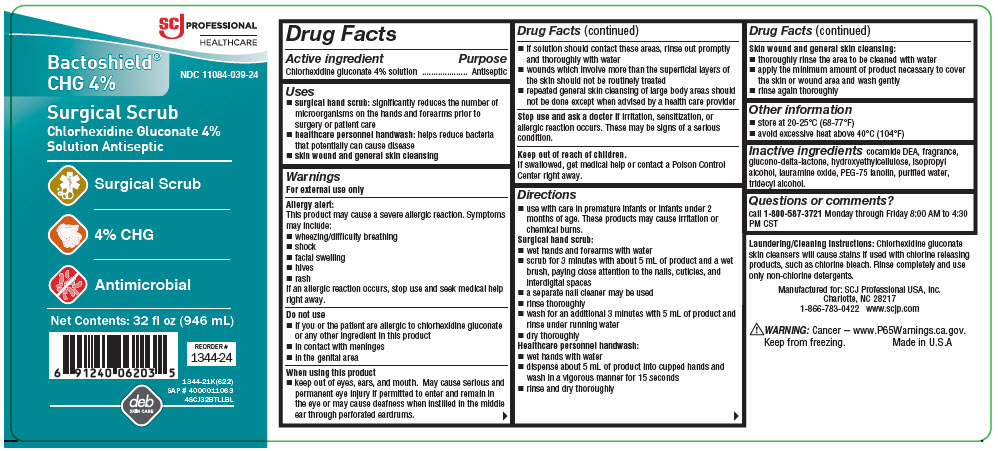
Uses surgical hand scrub: significantly reduces the number of microorganisms on the hands and forearms prior to surgery or patient care healthcare personnel handwash: helps reduce bacteria that potentially can cause disease skin wound and general skin cleansing
⏱️ Dosage and Administration ▾
Directions use with care in premature infants or infants under 2 months of age. These products may cause irritation or chemical burns. Surgical hand scrub wet hands and forearms with water scrub for 3 minutes with about 5 mL of product and a wet brush, paying close attention to the nails, cuticles, and interdigital spaces a separate nail cleaner may be used rinse thoroughly wash for an additional 3 minutes with 5 mL of product and rinse under running water dry thoroughly Healthcare personnel handwash wet hands with water dispense about 5 mL of product into cupped hands and wash in a vigorous manner for 15 seconds rinse and dry thoroughly Skin wound and general skin cleansing thoroughly rinse the area to be cleaned with water apply the minimum amount of product necessary to cover the skin or wound area and wash gently rinse again thoroughly
⚠️ Warnings ▾
Warnings For external use only Allergy alert This product may cause a severe allergic reaction. Symptoms may include: wheezing/difficulty breathing shock facial swelling hives rash If an allergic reaction occurs, stop use and seek medical help right away. Do not use if you or the patient are allergic to chlorhexidine gluconate or any other ingredient in this product in contact with meninges in the genital area When using this product keep out of eyes, ears, and mouth.
May cause serious and permanent eye injury if permitted to enter and remain in the eye or may cause deafness when instilled in the middle ear through perforated eardrums. if solution should contact these areas, rinse out promptly and thoroughly with water wounds which involve more than the superficial layers of the skin should not be routinely treated repeated general skin cleansing of large body areas should not be done except when advised by a health care provider Stop use and ask a doctor if irritation, sensitization, or allergic reaction occurs.
These may be signs of a serious condition. Keep out of reach of children. If swallowed, get medical help or contact a Poison Control Center right away.
📦 Storage and Handling ▾
Other information store at 20-25°C (68-77°F) avoid excessive heat above 40°C (104°F)
🧪 Active Ingredient ▾
Active ingredient Chlorhexidine gluconate 4% solution
🧪 Inactive Ingredients ▾
Inactive ingredients cocamide DEA, fragrance, glucono-delta-lactone, hydroxyethylcellulose, isopropyl alcohol, lauramine oxide, PEG-75 lanolin, purified water, tridecyl alcohol.
🎯 Purpose ▾
Purpose Antiseptic
📄 Do Not Use ▾
Do not use if you or the patient are allergic to chlorhexidine gluconate or any other ingredient in this product in contact with meninges in the genital area
📄 When Using This Product ▾
When using this product keep out of eyes, ears, and mouth. May cause serious and permanent eye injury if permitted to enter and remain in the eye or may cause deafness when instilled in the middle ear through perforated eardrums. if solution should contact these areas, rinse out promptly and thoroughly with water wounds which involve more than the superficial layers of the skin should not be routinely treated repeated general skin cleansing of large body areas should not be done except when advised by a health care provider
📄 Stop Use and Ask a Doctor If ▾
Stop use and ask a doctor if irritation, sensitization, or allergic reaction occurs. These may be signs of a serious condition.
📄 Keep Out of Reach of Children ▾
Keep out of reach of children. If swallowed, get medical help or contact a Poison Control Center right away.
📄 Questions or Comments ▾
Questions or comments? call 1-800-587-3721 Monday through Friday 8:00 AM to 4:30 PM CST
📄 Package Label / Principal Display Panel ▾
PRINCIPAL DISPLAY PANEL - 946 mL Bottle Label SCJ PROFESSIONAL HEALTHCARE Bactoshield ® CHG 4% NDC 11084-039-24 Surgical Scrub Chlorhexidine Gluconate 4% Solution Antiseptic Surgical Scrub 4% CHG Antimicrobial Net Contents: 32 fl oz (946 mL) REORDER # 1344-24 1344-21K(622) SAP # 4000011063 4SCJ32BTLLBL deb SKIN CARE PRINCIPAL DISPLAY PANEL - 946 mL Bottle Label
Medicare Part D spend CMS · PART D · 2026 (Q1)
Reported adverse events (FAERS)
Top reported reactions
Age at onset
Reporter sex
Serious outcomes
Where does this data come from?
About this NDC listing & data coverage
What data is (and isn’t) available for this NDC — tap to expand
| NDC identity (package / product / labeler codes) | ✓ Available |
| Labeler | ✓ Available |
| Product & package description | ✓ Available |
| Marketing category & status | ✓ Available |
| Active ingredient / dosage form / route | ✓ Available |
| FDA label (SPL via DailyMed) | ✓ Available |
| Package photos | ✓ Available |
| Inactive ingredients (structured) | ✓ Available |
| NADAC pharmacy acquisition price (CMS) | — Not published for this NDC CMS publishes NADAC only for NDCs reported in its retail-pharmacy survey. |
| Orange Book / therapeutic-equivalence data | — Not published for this NDC Applies only to products approved under an NDA/ANDA; many listings are out of scope. |
| HCPCS J-code billing crosswalk | — Not published for this NDC Most self-administered / retail products have no J-code — that is normal. |
| Medicaid utilization (CMS SDUD) | — Not published for this NDC CMS reports utilization only for NDCs with Medicaid claims above its privacy threshold. |