
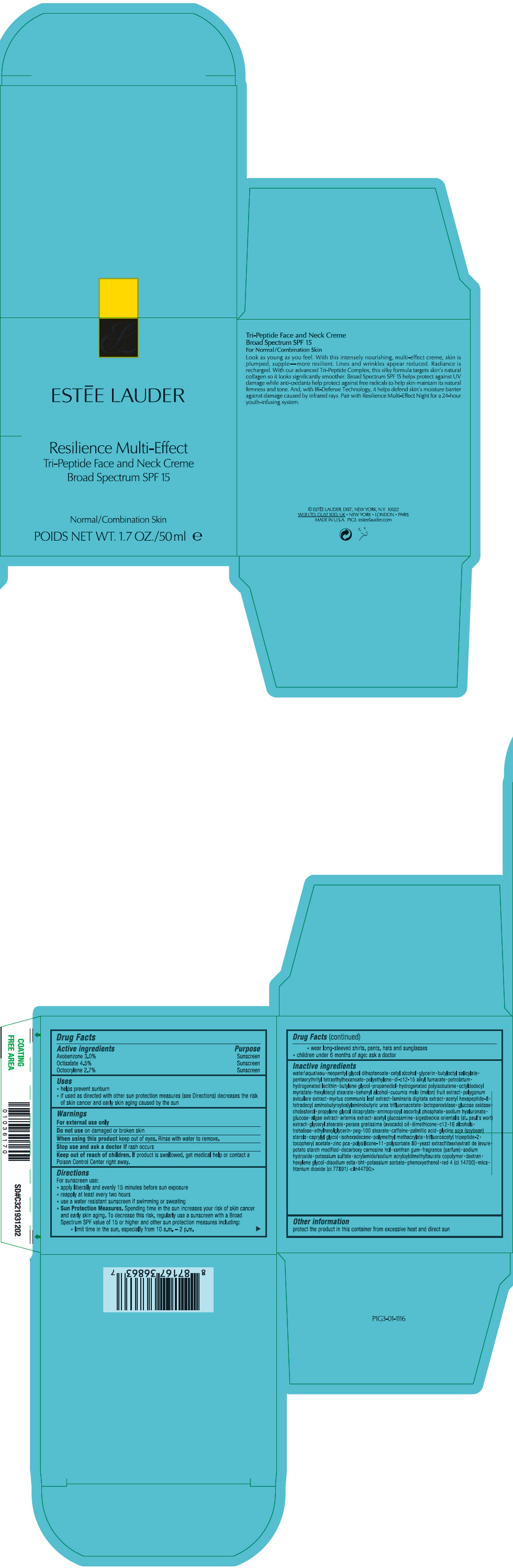
RESILIENCE MULTI-EFFECT TRI-PEPTIDE FACE AND NECK CREME BROAD SPECTRUM SPF 15 AVOBENZONE, OCTISALATE, and OCTOCRYLENE 30 mg/mL; 45 mg/mL; 27 mg/mL Cream — NDC 11559-052-01 (Billing 11559-0052-01)
This is a package of RESILIENCE MULTI-EFFECT TRI-PEPTIDE FACE AND NECK CREME BROAD SPECTRUM SPF 15 AVOBENZONE, OCTISALATE, and OCTOCRYLENE 30 mg/mL; 45 mg/mL; 27 mg/mL Cream from ESTEE LAUDER INC, no longer marketed (first marketed Nov 2018), no longer in the FDA NDC Directory. It is the main listing for this product, which comes in 6 package sizes.
NDC database record
One package, one record: these facts belong to NDC 11559-052-01 alone.
- Record
- FDA NDC Directory package listing · Human OTC drug
- Code segments
- 11559 labeler · 052 product · 01 package
- Package marketed since
- Nov 1, 2018
- Sample package
- No — commercial package
- Listing certified through
- Dec 31, 2026
- Barcode (UPC-A, from the NDC)
- 3 1155905201 4
- FDA record last changed
- Jul 24, 2026
Identity & classification
Regulatory identifiers FDA, NLM and CMS codes for this package
Where does this data come from?
- FDA openFDA NDC Directory · synced Oct 1, 2026
- FDA label on DailyMed · label index refreshed Oct 6, 2026
- RxNorm (NLM RxNav) · catalog refreshed Oct 1, 2026
- Medi-Span GPI (licensed)
- First Databank (licensed) · refreshed Oct 1, 2026
Clinical
This is a topical cream for the face and neck marketed as an over-the-counter monograph sunscreen product. It contains three UV-filtering ingredients, avobenzone, octisalate, and octocrylene, which are commonly used together in sunscreens to absorb ultraviolet radiation and help protect skin from sun exposure. The product is formulated with a broad-spectrum SPF 15 rating. Topical sunscreen creams of this type are typically applied to exposed skin as part of sun protection routines.
Patient education
Supplement & herbal interactions
Where does this data come from?
- MedlinePlus (NLM) · refreshed Oct 1, 2026
- FDA label on DailyMed · label index refreshed Oct 6, 2026
Ask a licensed pharmacist directly — free, answered by our team.
Pricing
A drug doesn't have one price. Each row is a different public payment system, and none is what you'd pay at the counter — that depends on your insurance. The ⓘ on each row explains what it measures.
| Price system | Per g | Per package |
|---|---|---|
| Retail pharmacies payNADAC · weekly | Not in the retail survey — common for institutional, discontinued, or low-volume packs. | |
| Medicaid paysCMS SDUD · 12 mo | No recent Medicaid claims on file for this NDC — rare and low-volume NDCs are suppressed in the public data. | |
| Medicare drug plans payPart D · quarterly | No Part D plan price is available for this NDC in our data. | |
Where does this data come from?
- CMS NADAC weekly file
- CMS ASP pricing files · refreshed Sep 20, 2026
- CMS Medicaid State Drug Utilization Data · refreshed Oct 6, 2026
- CMS Part D plan pricing files · refreshed Sep 24, 2026
- VA National Acquisition Center price file
Packaging — all sizes for this product
| Package NDC | Description | Marketing start | Marketing end | Status |
|---|---|---|---|---|
| 11559-0052-01 You're viewing this Main listing | 1 JAR in 1 CARTON / 50 mL in 1 JAR | 2018-11-01 | — | Inactivated by FDA |
| 11559-0052-02 11559-052-02 | 1 JAR in 1 CARTON / 75 mL in 1 JAR | 2022-03-02 | — | Inactivated by FDA |
| 11559-0052-03 11559-052-03 | 1 JAR in 1 CARTON / 30 mL in 1 JAR | 2022-03-02 | — | Inactivated by FDA |
| 11559-0052-04 11559-052-04 | 1 JAR in 1 CARTON / 15 mL in 1 JAR | 2022-03-02 | — | Inactivated by FDA |
| 11559-0052-05 11559-052-05 | 7 mL in 1 PACKET | 2022-03-02 | — | Discontinued by firm |
| 11559-0052-06 11559-052-06 | 7 mL in 1 JAR | 2023-11-01 | — | Inactivated by FDA |
Pack size FAQ
What quantity is in this package?
What NDC number is used to bill for this package of RESILIENCE MULTI-EFFECT TRI-PEPTIDE FACE AND NECK CREME BROAD SPECTRUM SPF 15 AVOBENZONE, OCTISALATE, and OCTOCRYLENE 30 mg/mL; 45 mg/mL; 27 mg/mL Cream?
Therapeutic equivalents
| Product | Labeler | Pack | NADAC/unit | TE | Status | Price vs. this |
|---|---|---|---|---|---|---|
| Resilience Multi-Effect Tri-Peptide Face And Neck Creme Broad Spectrum Spf 15 30 mg/mL; 45 mg/mL; 27 mg/mLthis 11559-0052-01 | ESTEE | 1 jar | — | — | Discontinued | — |
Where does this data come from?
- FDA openFDA NDC Directory · synced Oct 1, 2026
- FDA Orange Book · refreshed Oct 3, 2026
- CMS NADAC weekly file
Availability & generic status
We did not find an FDA-approved generic match for this exact strength, form and route.
Where does this data come from?
- FDA Orange Book · refreshed Oct 3, 2026
Inactive Ingredients / Excipients
Inactive ingredients, also called excipients, are components of the drug product other than the active ingredient. They may include fillers, dyes, coatings, preservatives, flavors, or other formulation ingredients.
💡 Tap an ingredient (hover on desktop) to see what it is and why it’s used.
-
UNII L4EL31FWIL
A synthetic peptide (short chain of amino acids) used as a conditioning or texture-enhancing agent in topical formulations. It helps improve product feel and skin compatibility in creams and lotions.
-
UNII 290O2PQ83R
A stabilized form of vitamin C used in topical products as an antioxidant ingredient. It helps prevent degradation of other active ingredients and maintains product stability during storage.
-
UNII 5SL0G7R0OK
A simple sugar made from corn or other plants, used in medicines as a filler and sweetener. It helps create the right texture and taste in tablets, powders, and liquid formulations.
-
UNII SDS87L369F
A natural oil extracted from avocado fruit. It's used as an emollient and skin-conditioning agent in topical formulations to help soften and smooth the product's texture.
-
UNII 1P9D0Z171K
BHT is a synthetic antioxidant that prevents fats and oils in medicines from breaking down and becoming rancid. It helps keep the product stable and effective during storage.
-
UNII 3XUS85K0RA
Butylene glycol is a clear liquid derived from petroleum or plants that acts as a humectant, solvent, and preservative booster in medicines. It helps keep formulations stable, dissolve active ingredients, and maintain moisture in topical products.
-
UNII 2EH13UN8D3
A synthetic compound used as a solvent and penetration enhancer in topical formulations. It helps dissolve active ingredients and allows them to penetrate the skin more effectively.
-
UNII S4827SZE3L
A mixture of fatty alcohols derived from plant or petroleum sources with 12 to 16 carbon atoms. Used as an emulsifier and thickening agent to help blend water and oil components and give the product its desired texture.
-
UNII 3G6A5W338E
Caffeine is a natural stimulant compound commonly extracted from coffee beans and tea leaves. In medicines, it serves as an active booster in pain relievers and cold products to enhance alertness and improve the effectiveness of other ingredients.
-
UNII 00YIU5438U
Caprylyl glycol is a clear liquid derived from coconut oil. In medicines, it acts as a humectant to retain moisture, a preservative booster to prevent microbial growth, and a solvent to help dissolve or mix other ingredients.
-
UNII 936JST6JCN
Cetyl alcohol is a waxy, fatty substance derived from plant or animal sources. It acts as an emulsifier and thickener in medicines, helping blend oil and water components and giving products a smooth, creamy texture.
-
UNII 97C5T2UQ7J
Cholesterol is a fatty substance found naturally in animal tissues. In medications, it's used as an ingredient in liposomal formulations and lipid-based drug delivery systems to help encapsulate and stabilize active drugs for better absorption.
-
UNII 6X7K9I5QR7
A dipeptide compound derived from carnosine, used as an antioxidant and stabilizing agent in formulations to help protect the product and maintain ingredient stability during storage.
-
UNII A1CB3Z898P
A synthetic oily compound made from plant-derived fatty acids and fumaric acid. It acts as a solubilizer and emulsifier to help dissolve and stabilize active ingredients in the medicine.
-
UNII 92RU3N3Y1O
Dimethicone is a silicone-based oil that acts as an anti-foaming agent and lubricant in medicines. It reduces gas bubbles in liquid formulations and helps coat and protect the stomach lining when ingested.
-
UNII 9G1OE216XY
Docosanol is a waxy, fatty alcohol derived from plant sources. It acts as an emollient and thickener in topical medicines, helping to soften the skin and improve product texture and stability.
-
UNII 8NLQ36F6MM
Edetate disodium anhydrous is a chemical compound that binds to metal ions in a medicine. It's used as a stabilizer to prevent unwanted chemical reactions and help keep the drug product effective during storage.
-
UNII 147D247K3P
Ethylhexylglycerin is a synthetic preservative used to prevent bacteria and mold from growing in medicines and personal care products. It helps keep the product safe and stable throughout its shelf life.
-
UNII X3W0AM1JLX
A synthetic red dye used to color medicines and products. It helps make pills, liquids, and capsules visually distinct and easier to identify.
-
UNII 0T8392U5N1
Glucose oxidase is an enzyme derived from fungi that breaks down glucose. It's used in medicines as a preservative and oxygen scavenger to protect other ingredients from degradation and extend shelf life.
-
UNII PDC6A3C0OX
Glycerin is a clear, thick liquid derived from plant oils or fats. It acts as a humectant to retain moisture, a sweetener, and a solvent in medications.
-
UNII 230OU9XXE4
A waxy substance made from glycerin and stearic acid that acts as an emulsifier to blend oily and watery ingredients together. It also helps thicken and stabilize the medicine's texture.
-
UNII OJX2P28Y14
A synthetic ester oil made from long-chain fatty acids. It works as an emollient and lubricant in topical formulations, helping the product spread smoothly on skin and improve texture.
-
UNII KEH0A3F75J
Hexylene glycol is a clear liquid alcohol used as a solvent and preservative in medicines. It helps dissolve other ingredients and keeps the product stable during storage.
-
UNII UG00KM4WR7
A plastic polymer used as a container material and film coating. It helps protect the medicine from moisture and air exposure during storage and shipping.
-
UNII YSE9PPT4TH
Hyaluronate sodium is a natural carbohydrate that holds moisture. It's used in medicines as a lubricant, thickener, and moisture-retaining agent to improve texture and delivery of the active ingredient.
-
UNII 7D1YQ9Y5EZ
Hydrogenated polybutene is a thick, wax-like ingredient made by chemically processing petroleum. It acts as a binder and lubricant, helping hold tablet ingredients together and allowing pills to slide smoothly during manufacturing and packaging.
-
UNII H1109Z9J4N
A natural emulsifier derived from soybean oil. It helps mix oil and water-based ingredients together, ensuring even distribution of active ingredients throughout the medicine.
-
UNII 918X1OUF1E
Isohexadecane is a synthetic hydrocarbon oil used as an emollient and solvent in topical medicines. It helps dissolve active ingredients and improves spreadability and absorption through the skin.
-
UNII 5CIT1X6U5V
A naturally derived flavoring ingredient from melon fruit, used to add taste and aroma to make medicines more pleasant to take, especially for children.
-
UNII V8A1AW0880
Mica is a naturally occurring mineral that's ground into fine powder. It's used in medicines as a colorant and anti-caking agent to improve appearance and prevent clumping in tablets or powders.
-
UNII JQZ6YM58U5
A protein enzyme derived from white blood cells that breaks down harmful substances. In medicines, it may serve as an active biological component in certain therapeutic formulations rather than a traditional inactive filler or binder.
-
UNII V956696549
N-Acetylglucosamine is a naturally occurring sugar compound derived from chitin. In medicines, it typically serves as a filler or binding agent to help hold tablet ingredients together and add bulk to the formulation.
-
UNII 5LKW3C543X
A synthetic oily liquid derived from neopentyl glycol and heptanoic acid. It serves as an emollient and solvent in formulations, helping to dissolve or suspend active ingredients and improve the texture and spreadability of topical products.
-
UNII S013N99GR8
Octyldodecyl myristate is a synthetic oil derived from myristic acid. It serves as an emollient and skin-conditioning agent in topical medicines, helping the product spread smoothly and keeping the skin soft.
-
UNII 2V16EO95H1
Palmitic acid is a saturated fatty acid derived from plant and animal sources. It serves as an emulsifier and lubricant in medicines, helping ingredients mix smoothly and preventing sticking during manufacturing.
-
UNII YD01N1999R
A waxy substance made from polyethylene glycol and stearic acid. It helps mix oil and water-based ingredients together and serves as an emulsifier and solubilizer in liquid and semi-solid medicines.
-
UNII XJ7052W897
A synthetic ester derived from pentaerythritol, used primarily as an emollient and skin-conditioning agent in topical formulations. It helps soften and smooth the product's texture while improving how it spreads on skin.
-
UNII 4T6H12BN9U
Petrolatum is a purified mineral oil-based jelly derived from petroleum. In medicines, it acts as an emollient, lubricant, and moisture barrier to soften skin, reduce friction, and help prevent water loss from formulations.
-
UNII HIE492ZZ3T
Phenoxyethanol is a synthetic preservative and antimicrobial agent used to prevent bacterial and fungal growth in medicines and cosmetic products, extending shelf life and maintaining product safety.
-
UNII Z47NNT4J11
A synthetic plastic polymer used as a film-coating material on tablets and capsules. It helps protect the medicine, control how fast it dissolves, and improve appearance by creating a smooth, glossy outer layer.
-
UNII 6OZP39ZG8H
Polysorbate 80 is a synthetic emulsifier derived from sorbitol and oleic acid. It helps mix oil and water-based ingredients together in medications and improves how the product disperses in the body.
-
UNII 1VPU26JZZ4
Potassium sorbate is a salt derived from sorbic acid, a naturally occurring preservative. It prevents growth of mold, yeast, and some bacteria, extending the medicine's shelf life.
-
UNII 1K573LC5TV
A mineral salt used in medications as an electrolyte source and to adjust the osmotic balance of liquid formulations, helping the medicine absorb properly in the body.
-
UNII 5965N8W85T
Propanediol is a clear liquid organic compound derived from vegetable sources or synthesized chemically. It acts as a humectant to retain moisture, a solvent to dissolve active ingredients, and a preservative booster in liquid medications and supplements.
-
UNII 581437HWX2
A synthetic oily liquid made from propylene glycol and fatty acids. It works as an emollient and solubilizer in medicines, helping dissolve active ingredients and improve how the product spreads or absorbs.
-
UNII 55X04QC32I
A strong alkaline chemical used to adjust and maintain the pH balance of liquid medicines. It helps keep the medicine stable and ensures it stays effective during storage.
-
UNII PL360EPO9J
Soy sterol is a plant-derived fat extracted from soybeans. It's used as an emulsifier and stabilizer to help keep oil and water mixed together and maintain the medicine's texture and consistency.
-
UNII 8I089SAH3T
A carbohydrate powder extracted from potatoes. It serves as a filler to add bulk and volume to the tablet or capsule, and as a disintegrant to help the medicine break apart and release its active ingredient in your body.
-
UNII 15FIX9V2JP
Titanium dioxide is a bright white mineral powder commonly used as a colorant and opacifying agent. It makes pills and tablets white or lighter in color and helps make coatings non-transparent.
-
UNII B8WCK70T7I
Trehalose is a natural sugar made from two glucose molecules linked together. It's used in medicines as a filler to add bulk, a sweetener for taste, and a stabilizer to help keep active ingredients effective during storage.
-
UNII 059QF0KO0R
Water is a liquid solvent that dissolves and mixes ingredients together in liquid medicines, syrups, and injections. It helps distribute the active drug evenly throughout the product.
-
UNII TTV12P4NEE
Xanthan gum is a thickening and stabilizing ingredient made from fermented corn or other sugars. It's added to medicines to improve texture, prevent separation of liquids and solids, and help the product stay consistent.
-
UNII C32PQ86DH4
Zinc PCA is a zinc salt of pyroglutamic acid, a naturally occurring amino acid derivative. It's used in medications as a skin-conditioning agent and to help maintain product stability and texture in topical formulations.
54 inactive ingredients listed in the exact product block matched to this NDC.
Label-section wording can be broader than the structured product block and may mention additional formulation ingredients.
Where does this data come from?
ingredient classCode="IACT" elements from the exact product block matched by this NDC. Label-section narrative from DailyMed / the openFDA label index is shown separately when available.- FDA label on DailyMed · label index refreshed Oct 6, 2026
- FDA openFDA NDC Directory · synced Oct 1, 2026
Inactive ingredient FAQ
Are inactive ingredients the same for every manufacturer?
Why might an inactive ingredient be missing?
Can inactive ingredients matter?
Manufacturer & labeler
More NDCs from ESTEE LAUDER INC labeler code 11559
- YOUTH DEW ROLL-ON ANTIPERSPIRANT DEODORANT ALUMINUM CHLOROHYDRATE 200 mg/mL Liquid NDC 11559-001-01
- DOUBLE WEAR MAXIMUM COVER CAMOUFLAGE MAKEUP FOR FACE AND BODY BROAD SPECTRUM SPF 15 titanium dioxide 14 mg/mL Cream NDC 11559-030-01
- DAYWEAR MULTI-PROTECTION ANTII-OXIDANT 24H-MOISTURE CREME BROAD SPECTRUM SPF 15 NORMAL/COMBINATION SKIN AVOBENZONE and OCTISALATE 30 mg/mL; 50 mg/mL Cream NDC 11559-049-01
- PERFECTIONIST PRO MULTI-DEFENSE UV FLUID BROAD SPRECTRUM SPF 45 TITANIUM DIOXIDE and ZINC OXIDE 63 mg/mL; 40 mg/mL Lotion NDC 11559-050-01
- RESILIENCE MULTI-EFFECT TRI-PEPTIDE FACE AND NECK CREME BROAD SPECTRUM SPF 15 dry skin AVOBENZONE, OCTISALATE, and OCTOCRYLENE .03 g/mL; .045 g/mL; .027 g/mL Cream NDC 11559-053-01
- DAYWEAR ANTI OXIDANT 72H-HYDRATION SORBET CREME BROAD SPECTRUM SPF 15 AVOBENZONE, HOMOSALATE, OCTISALATE, and OCTOCRYLENE 20 mg/mL; 40 mg/mL; 45 mg/mL; 20 mg/mL Cream NDC 11559-055-01
- REVITALIZING SUPREME PLUS GLOBAL ANTI-AGING CELL POWER CREME BROAD SPECTRUM SPF 15 AVOBENZONE, OCTISALATE, and OCTOCRYLENE 30 mg/mL; 45 mg/mL; 50 mg/mL Cream NDC 11559-056-01
- RE-NUTRIV ULTRA RADIANCE MAKEUP BROAD SPECTRUM SPF 20 OCTINOXATE and TITANIUM DIOXIDE 22 mg/mL; 14 mg/mL Liquid NDC 11559-057-01
- FUTURIST HYDRA RESCUE MOISTURIZING MAKEUP BROAD SPECTRUM SPF 45 ENSULIZOLE, OCTINOXATE, OCTISALATE, and ZINC OXIDE 27 mg/mL; 67 mg/mL; 45 mg/mL; 38 mg/mL Liquid NDC 11559-058-01
- ESTEE LAUDER MULTI-DEFENSE AQUA UV gel BROAD SPECTRUM SPF 50 AVOBENZONE, HOMOSALATE, OCTISALATE, OCTOCRYLENE, AND OXYBENZONE 30 mg/mL; 50 mg/mL; 45 mg/mL; 28 mg/mL; 30 mg/mL Lotion NDC 11559-060-01
Where does this data come from?
- FDA openFDA NDC Directory · synced Oct 1, 2026
- Drugs@FDA
FDA label — Drug Facts FDA SPL
🎯 Indications and Usage ▾
Uses helps prevent sunburn if used as directed with other sun protection measures (see Directions ) decreases the risk of skin cancer and early skin aging caused by the sun
⏱️ Dosage and Administration ▾
Directions For sunscreen use: apply liberally and evenly 15 minutes before sun exposure reapply at least every two hours use a water resistant sunscreen if swimming or sweating Sun Protection Measures. Spending time in the sun increases your risk of skin cancer and early skin aging. To decrease this risk, regularly use a sunscreen with a Broad Spectrum SPF value of 15 or higher and other sun protection measures including: limit time in the sun, especially from 10 a.m. – 2 p.m. wear long-sleeved shirts, pants, hats and sunglasses children under 6 months of age: ask a doctor
⚠️ Warnings ▾
Warnings For external use only Do not use on damaged or broken skin When using this product keep out of eyes. Rinse with water to remove. Stop use and ask a doctor if rash occurs Keep out of reach of children. If product is swallowed, get medical help or contact a Poison Control Center right away.
📦 Storage and Handling ▾
Other information protect the product in this container from excessive heat and direct sun
🧪 Active Ingredient ▾
Active ingredients Purpose Avobenzone 3.0% Sunscreen Octisalate 4.5% Sunscreen Octocrylene 2.7% Sunscreen
🧪 Inactive Ingredients ▾
Inactive ingredients water\aqua\eau • neopentyl glycol diheptanoate • cetyl alcohol • glycerin • butyloctyl salicylate • pentaerythrityl tetraethylhexanoate • polyethylene • di-c12-15 alkyl fumarate • petrolatum • hydrogenated lecithin • butylene glycol • propanediol • hydrogenated polyisobutene • octyldodecyl myristate • hexyldecyl stearate • behenyl alcohol • cucumis melo (melon) fruit extract • polygonum aviculare extract • myrtus communis leaf extract • laminaria digitata extract • acetyl hexapeptide-8 • tetradecyl aminobutyroylvalylaminobutyric urea trifluoroacetate • lactoperoxidase • glucose oxidase • cholesterol • propylene glycol dicaprylate • aminopropyl ascorbyl phosphate • sodium hyaluronate • glucose • algae extract • artemia extract • acetyl glucosamine • sigesbeckia orientalis (st. paul's wort) extract • glyceryl stearate • persea gratissima (avocado) oil • dimethicone • c12-16 alcohols • trehalose • ethylhexylglycerin • peg-100 stearate • caffeine • palmitic acid • glycine soja (soybean) sterols • caprylyl glycol • isohexadecane • polymethyl methacrylate • trifluoroacetyl tripeptide-2 • tocopheryl acetate • zinc pca • polysilicone-11 • polysorbate 80 • yeast extract\faex\extrait de levure • potato starch modified • decarboxy carnosine hcl • xanthan gum • fragrance (parfum) • sodium hydroxide • potassium sulfate • acrylamide/sodium acryloyldimethyltaurate copolymer • dextran • hexylene glycol • disodium edta • bht • potassium sorbate • phenoxyethanol • red 4 (ci 14700) • mica • titanium dioxide (ci 77891) <iln44790>
🎯 Purpose ▾
Active ingredients Purpose Avobenzone 3.0% Sunscreen Octisalate 4.5% Sunscreen Octocrylene 2.7% Sunscreen
📄 Do Not Use ▾
Do not use on damaged or broken skin
📄 When Using This Product ▾
When using this product keep out of eyes. Rinse with water to remove.
📄 Stop Use and Ask a Doctor If ▾
Stop use and ask a doctor if rash occurs
📄 Keep Out of Reach of Children ▾
Keep out of reach of children. If product is swallowed, get medical help or contact a Poison Control Center right away.
📄 Package Label / Principal Display Panel ▾
PRINCIPAL DISPLAY PANEL - 50 ml Jar Carton ESTĒE LAUDER Resilience Multi-Effect Tri-Peptide Face and Neck Creme Broad Spectrum SPF 15 Normal/Combination Skin NET WT.
1.7OZ./50 ml e Principal Display Panel - 50 ml Jar Carton
Reported adverse events (FAERS)
Top reported reactions
Reporter sex
Where does this data come from?
About this NDC listing & data coverage
What data is (and isn’t) available for this NDC — tap to expand
| NDC identity (package / product / labeler codes) | ✓ Available |
| Labeler | ✓ Available |
| Product & package description | ✓ Available |
| Marketing category & status | ✓ Available |
| Active ingredient / dosage form / route | ✓ Available |
| FDA label (SPL via DailyMed) | ✓ Available |
| Package photos | ✓ Available |
| Inactive ingredients (structured) | ✓ Available |
| NADAC pharmacy acquisition price (CMS) | — Not published for this NDC CMS publishes NADAC only for NDCs reported in its retail-pharmacy survey. |
| Orange Book / therapeutic-equivalence data | — Not published for this NDC Applies only to products approved under an NDA/ANDA; many listings are out of scope. |
| HCPCS J-code billing crosswalk | — Not published for this NDC Most self-administered / retail products have no J-code — that is normal. |
| Medicaid utilization (CMS SDUD) | — Not published for this NDC CMS reports utilization only for NDCs with Medicaid claims above its privacy threshold. |