
Fluoxetine 20 mg Tablet, 28-count
Past resolved recalls for this product (2)
🆔 Identity & classification
Where does this data come from?
🏷️ RxNorm drug class
This medicine belongs to the Serotonin Reuptake Inhibitor class.
Where does this data come from?
🏭 Manufacturer & labeler
Where does this data come from?
🩺 Clinical
- Most people don't feel a noticeable difference right away — that's completely normal. It typically takes several weeks to start feeling the full benefit, and some people need a few...
- How long does it take for fluoxetine to actually start working?
- It's really important not to stop on your own, even if you feel great. Stopping suddenly can cause discontinuation symptoms, and your condition may come back. The good news is that...
- Can I stop taking fluoxetine if I start feeling better?
Patient education
Supplement & herbal interactions
Some supplements/herbs that may interact with Fluoxetine — tap one for details:
Fluoxetine may be associated with lower levels of 1 nutrient — worth a chat with your pharmacist, not a cause for alarm.
Where does this data come from?
Ask a licensed pharmacist directly — free, answered by our team.
💊 What it looks like
Where does this data come from?
🧪 Inactive Ingredients / Excipients
Inactive ingredients, also called excipients, are components of the drug product other than the active ingredient. They may include fillers, dyes, coatings, preservatives, flavors, or other formulation ingredients.
💡 Tap an ingredient (hover on desktop) to see what it is and why it’s used.
-
UNII OP1R32D61U
Microcrystalline cellulose is a purified form of cellulose, a natural fiber from plant sources. It acts as a binder and filler in tablets and capsules, helping hold ingredients together and give the medicine its shape and size.
-
UNII M28OL1HH48
Croscarmellose sodium is a plant-based substance derived from cellulose. It acts as a disintegrant, helping tablets and capsules break down quickly in the digestive system so the medicine can be absorbed.
-
UNII 35SW5USQ3G
A synthetic yellow dye used to color medicines. It helps make tablets, capsules, and liquids visually distinct so patients can easily identify their medication.
-
UNII H77VEI93A8
A synthetic yellow dye used to color medications. It helps identify the drug and make it visually distinctive, with no effect on how the medicine works.
-
UNII 70097M6I30
Magnesium stearate is a salt made from magnesium and stearic acid, a fatty substance. It's used in tablets and capsules as a lubricant and glidant to help ingredients flow smoothly during manufacturing and prevent sticking.
-
UNII U725QWY32X
Povidone K30 is a synthetic polymer made from petroleum. It acts as a binder to hold tablet ingredients together and as a disintegrant to help the tablet break apart in the stomach so the medicine can be absorbed.
-
UNII ETJ7Z6XBU4
Silicon dioxide is a naturally occurring mineral used as a glidant and anti-caking agent. It helps powder ingredients flow smoothly and prevents clumping during manufacturing and storage.
7 inactive ingredients listed in the exact product block matched to this NDC.
Where does this data come from?
ingredient classCode="IACT" elements from the exact product block matched by this NDC. Label-section narrative from DailyMed / the openFDA label index is shown separately when available.Inactive ingredient FAQ
Are inactive ingredients the same for every manufacturer?
Why might an inactive ingredient be missing?
Can inactive ingredients matter?
💲 Pricing
A drug doesn't have one price. Each row is a different public payment system, and none is what you'd pay at the counter — that depends on your insurance. The ⓘ on each row explains what it measures.
| Price system | Per ea | Per package |
|---|---|---|
| Retail pharmacies payNADAC · weekly | $0.084 | $2.35 / 28 tablets |
| Medicaid paysCMS SDUD · 12 mo | $0.5406 | $15.14 / 28 tablets |
| Medicare drug plans payPart D · Q2 2026 | $0.1973 | $5.52 / 28 tablets |
Where does this data come from?
🔁 Therapeutic equivalents
| Product | Labeler | Pack | NADAC/unit | TE | Status | Price vs. this |
|---|---|---|---|---|---|---|
| Fluoxetine 20 mgthis 13668-0473-91 | Torrent | 28 tablets | $0.084 | — | Availability likely | — |
| Fluoxetine 20 mg 16714-0113-01 | NorthStar | 30 tablets | $0.084 | AB | Availability likely | — |
| Fluoxetine 20 mg 43598-0566-01 | Dr.Reddy's | 100 tablets | $0.084 | AB | Availability likely | — |
| Fluoxetine 20 mg 50228-0421-01 | ScieGen | 100 tablets | $0.084 | AB | Availability likely | — |
| Fluoxetine 20 mg 62332-0243-30 | Alembic | 30 tablets | $0.084 | AB | Availability likely | — |
| Fluoxetine 20 mg 59651-0309-01 | Aurobindo | 100 tablets | $0.084 | AB | Availability likely | — |
| Fluoxetine 20 mg 84386-0105-49 | Aurobindo | 4000 tablets | — | AB | FDA listed | — |
| Fluoxetine 20 mg 70518-4428-00 | REMEDYREPACK | 30 tablets | — | AB | FDA listed | — |
| Fluoxetine 20 mg 64380-0903-04 | Strides | 30 tablets | — | AB | FDA listed | — |
| Fluoxetine 20 mg 71335-2785-01 | Bryant | 100 tablets | — | AB | FDA listed | — |
Where does this data come from?
⏳ Availability & generic status
This product is an FDA-approved generic. Other versions of the same drug are listed under Therapeutic equivalents, least expensive first.
Where does this data come from?
🗺️ Medicaid utilization & spend
💊 Medicaid utilization by pack size
📦 Packaging — all sizes for this product
| Package NDC | Description | Per unit | Per pack | Marketing start | Status |
|---|---|---|---|---|---|
| 13668-0473-01 | 100 TABLET in 1 BOTTLE (13668-473-01) | $0.1431 / ea | $14.31 | 2016-10-21 | Active |
| 13668-0473-10 | 1000 TABLET in 1 BOTTLE (13668-473-10) | — | — | 2016-10-21 | Active |
| 13668-0473-30 | 30 TABLET in 1 BOTTLE (13668-473-30) | $0.0838 / ea | $2.51 | 2016-10-21 | Active |
| 13668-0473-74 | 100 TABLET in 1 CARTON (13668-473-74) | — | — | 2016-10-21 | Active |
| 13668-0473-91 You're viewing this | 28 TABLET in 1 CARTON (13668-473-91) | $0.0838 / ea | $2.35 | 2016-10-21 | Active |
This pack effectively ties for the lowest per-ea cost of the 3 priced pack sizes ($0.0838 NADAC).
This pack accounts for about 1.3% of this product's recent Medicaid fills; most go to the 30 tablets pack. See all packs ↓
Pack size FAQ
What quantity is in NDC 13668-0473-91?
What is the difference between NDC 13668-0473-91 and NDC 13668-0473-30?
What NDC number is used to bill for this package of Fluoxetine 20 mg Tablet?
Prices are the latest CMS NADAC pharmacy acquisition cost per NDC; per-pack figures are per-unit × pack quantity, shown only when the pack is denominated in the same measure NADAC prices.
📄 Full prescribing information FDA SPL
🚨 Boxed Warning ▾
WARNING: SUICIDALITY AND ANTIDEPRESSANT DRUGS See full prescribing information for complete boxed warning. Increased risk of suicidal thinking and behavior in children, adolescents, and young adults taking antidepressants for Major Depressive Disorder (MDD) and other psychiatric disorders. Fluoxetine tablet is not approved for use in pediatric patients ( 5.1 ).
WARNING: SUICIDALITY AND ANTIDEPRESSANT DRUGS Antidepressants increased the risk compared to placebo of suicidal thinking and behavior (suicidality) in children, adolescents, and young adults in short-term studies of Major Depressive Disorder (MDD) and other psychiatric disorders. Anyone considering the use of fluoxetine tablet or any other antidepressant in a child, adolescent, or young adult must balance this risk with the clinical need. Short-term studies did not show an increase in the risk of suicidality with antidepressants compared to placebo in adults beyond age 24; there was a reduction in risk with antidepressants compared to placebo in adults aged 65 and older.
Depression and certain other psychiatric disorders are themselves associated with increases in the risk of suicide. Patients of all ages who are started on antidepressant therapy should be monitored appropriately and observed closely for clinical worsening, suicidality, or unusual changes in behavior. Families and caregivers should be advised of the need for close observation and communication with the prescriber.
Fluoxetine tablet is not approved for use in pediatric patients [ s ee Warnings and Precautions ( 5.1 ) and Use in Specific Populations ( 8.4 )].
🎯 Indications and Usage ▾
1 INDICATIONS AND USAGE Fluoxetine tablets, USP are selective serotonin reuptake inhibitor (SSRI) indicated for the treatment of Premenstrual Dysphoric Disorder (PMDD) ( 1.1 )
1.1Premenstrual Dysphoric Disorder (PMDD) Fluoxetine tablets, USP are indicated for the treatment of premenstrual dysphoric disorder (PMDD) [see Clinical Studies ( 14.1 )]. The effectiveness of fluoxetine tablets, USP in long-term use (that is, for more than 6 months) has not been systematically evaluated in placebo-controlled trials. The use of fluoxetine tablets, USP for extended periods should be periodically re-evaluated for the individual patient [ see Dosage and Administration ( 2.1 )].
⏱️ Dosage and Administration ▾
2 DOSAGE AND ADMINISTRATION 20 mg/day continuously or intermittently ( 2.1 )
2.1Treatment The recommended dose of fluoxetine tablets for the treatment of PMDD is 20 mg/day given continuously (every day of the menstrual cycle) or intermittently (defined as starting a daily dose 14 days prior to the anticipated onset of menstruation through the first full day of menses and repeating with each new cycle). The dosing regimen should be based on individual patient characteristics. In a study comparing continuous dosing of fluoxetine 20 and 60 mg/day to placebo, both doses were proven to be effective, but there was no statistically significant added benefit for the 60 mg/day compared with the 20 mg/day dose.
Fluoxetine doses above 60 mg/day have not been systematically studied in patients with PMDD. The maximum fluoxetine dose should not exceed 80 mg/day [see Clinical Studies ( 14.1 )] . Systematic evaluation of fluoxetine tablets has shown that its efficacy in PMDD is maintained for periods of up to 6 months at a dose of 20 mg/day given continuously and up to 3 months at a dose of 20 mg/day given intermittently [see Clinical Studies ( 14.1 )] .
Patients should be periodically re-assessed to determine the need for continued treatment.
2.2Dosing in Specific Populations Treatment of Pregnant Women — PMDD does not exist in pregnancy. However, if there is a need to treat pregnant women with fluoxetine, the physician should carefully consider the potential risks and potential benefits of treatment. Neonates exposed to SSRIs or SNRIs late in the third trimester have developed complications requiring prolonged hospitalization, respiratory support, and tube feeding [see Use in Specific Populations ( 8.1 )] .
Hepatic Impairment — A lower or less frequent dosage should be used in patients with hepatic impairment [see Clinical Pharmacology ( 12.3 ) and Use in Specific Populations ( 8.6 )]. Concomitant Illness — Patients with concurrent disease or on multiple concomitant medications may require dosage adjustments [see Warnings and Precautions ( 5.11 ) and Clinical Pharmacology ( 12.3 )] .
2.3Discontinuation of Treatment Symptoms associated with discontinuation of fluoxetine, SNRIs, and SSRIs, have been reported [see Warnings and Precautions ( 5.14 )] .
2.4Switching a Patient To or From a Monoamine Oxidase Inhibitor (MAOI) Intended to Treat Psychiatric Disorders At least 14 days should elapse between discontinuation of an MAOI intended to treat psychiatric disorders and initiation of therapy with fluoxetine tablets. Conversely, at least 5 weeks should be allowed after stopping fluoxetine tablets before starting an MAOI intended to treat psychiatric disorders [ see Contraindications ( 4.1 )].
2.5Use of Fluoxetine Tablets with Other MAOIs such as Linezolid or Methylene Blue Do not start fluoxetine tablets in a patient who is being treated with linezolid or intravenous methylene blue because there is an increased risk of serotonin syndrome. In a patient who requires more urgent treatment of a psychiatric condition, other interventions, including hospitalization, should be considered [ see Contraindications ( 4.1 )]. In some cases, a patient already receiving fluoxetine tablets therapy may require urgent treatment with linezolid or intravenous methylene blue.
If acceptable alternatives to linezolid or intravenous methylene blue treatment are not available and the potential benefits of linezolid or intravenous methylene blue treatment are judged to outweigh the risks of serotonin syndrome in a particular patient, fluoxetine tablets should be stopped promptly, and linezolid or intravenous methylene blue can be administered. The patient should be monitored for symptoms of serotonin syndrome for five weeks or until 24 hours after the last dose of linezolid or intravenous methylene blue, whichever comes first.
Therapy with fluoxetine tablets may be resumed 24 hours after the last dose of linezolid or intravenous methylene blue [see Warnings and Preca…
💊 Dosage Forms and Strengths ▾
3 DOSAGE FORMS AND STRENGTHS Tablets: 10 mg, 20 mg ( 3 ) 10 mg tablet is a light cream to cream colored, flat round, uncoated tablets with beveled edges, debossed with "43" on one side and plain on other side. 20 mg tablet is a light yellow to yellow colored, flat round, uncoated tablets with beveled edges, debossed with "73" on one side and plain on other side.
⛔ Contraindications ▾
4 CONTRAINDICATIONS Serotonin Syndrome and MAOIs: Do not use with MAOIs intended to treat psychiatric disorders with fluoxetine tablet or within 5 weeks of stopping treatment with fluoxetine tablets. Do not use fluoxetine tablet within 14 days of stopping an MAIO intended to treat psychiatric disorders. In addition, do not start fluoxetine tablet in a patient who is being treated with linezolid or intravenous methylene blue ( 4.1 ) Do not use with pimozide due to risk of drug interaction or QTc prolongation ( 4.2 , 7.9 ) Do not use with thioridazine due to QTc interval prolongation or potential for elevated thioridazine plasma levels.
Do not use thioridazine within 5 weeks of discontinuing fluoxetine tablet ( 4.2 , 7.9 )
4.1Monoamine Oxidase Inhibitors The use of MAOIs intended to treat psychiatric disorders with fluoxetine tablet or within 5 weeks of stopping treatment with fluoxetine tablet is contraindicated because of an increased risk of serotonin syndrome. The use of fluoxetine tablet within 14 days of stopping an MAOI intended to treat psychiatric disorders is also contraindicated [see Dosage and Administration ( 2.4 ) and Warnings and Precautions ( 5.2 )]. Starting fluoxetine tablet in a patient who is being treated with MAOIs such as linezolid or intravenous methylene blue is also contraindicated because of an increased risk of serotonin syndrome [ see Dosage and Administration ( 2.5 ) and Warnings and Precautions ( 5.2 )].
4.2Other Contraindications The use of fluoxetine hydrochloride is contraindicated with the following: Pimozide [see Drug Interactions ( 7.9 )] Thioridazine [see Drug Interactions ( 7.9 )]
⚠️ Warnings and Cautions ▾
5 WARNINGS AND PRECAUTIONS Clinical Worsening and Suicide Risk: Monitor for clinical worsening and suicidal thinking and behavior ( 5.1 ) Serotonin Syndrome: Serotonin syndrome has been reported with SSRIs and SNRIs, including fluoxetine hydrochloride, both when taken alone, but especially when co-administered with other serotonergic agents. If such symptoms occur, discontinue fluoxetine tablet and serotonergic agents and initiate supportive treatment. If concomitant use of fluoxetine hydrochloride with other serotonergic drugs is clinically warranted, patients should be made aware of a potential increased risk for serotonin syndrome, particularly during treatment initiation and dose increases ( 5.2 ) Allergic Reactions and Rash: Discontinue upon appearance of rash or allergic phenomena ( 5.3 ) Activation of Mania/Hypomania: Screen for Bipolar Disorder and monitor for mania/hypomania ( 5.4 ) Seizures: Use cautiously in patients with a history of seizures or with conditions that potentially lower the seizure threshold ( 5.5 ) Altered Appetite and Weight: Significant weight loss has occurred ( 5.6 ) Abnormal Bleeding : May increase the risk of bleeding.
Use with NSAIDs, aspirin, warfarin, or drugs that affect coagulation may potentiate the risk of gastrointestinal or other bleeding ( 5.7 ) Angle-Closure Glaucoma: Angle-closure glaucoma has occurred in patients who have untreated anatomically narrow angles and who are treated with antidepressants ( 5.8 ) Hyponatremia: Has been reported with fluoxetine in association with syndrome of inappropriate antidiuretic hormone (SIADH) ( 5.9 ) Anxiety and Insomnia: May occur ( 5.10 ) Potential for Cognitive and Motor Impairment: Has potential to impair judgment, thinking, and motor skills.
Use caution when operating machinery ( 5.12 ) Long Half-Life: Changes in dose will not be fully reflected in plasma for several weeks ( 5.13 ) Sexual dysfunction: Fluoxetine tablets use may cause symptoms of sexual dysfunction ( 5.15 )
5.1Clinical Worsening and Suicide Risk Patients with Major Depressive Disorder (MDD), both adult and pediatric, may experience worsening of their depression and/or the emergence of suicidal ideation and behavior (suicidality) or unusual changes in behavior, whether or not they are taking antidepressant medications, and this risk may persist until significant remission occurs. Suicide is a known risk of depression and certain other psychiatric disorders, and these disorders themselves are the strongest predictors of suicide.
There has been a long-standing concern, however, that antidepressants may have a role in inducing worsening of depression and the emergence of suicidality in certain patients during the early phases of treatment. Pooled analyses of short-term placebo-controlled trials of antidepressant drugs (SSRIs and others) showed that these drugs increase the risk of suicidal thinking and behavior (suicidality) in children, adolescents, and young adults (ages 18 to 24) with Major Depressive Disorder (MDD) and other psychiatric disorders.
Short-term studies did not show an increase in the risk of suicidality with antidepressants compared to placebo in adults beyond age 24; there was a reduction with antidepressants compared to placebo in adults aged 65 and older. The pooled analyses of placebo-controlled trials in children and adolescents with MDD, Obsessive Compulsive Disorder (OCD), or other psychiatric disorders included a total of 24 short-term trials of 9 antidepressant drugs in over 4,400 patients. The pooled analyses of placebo-controlled trials in adults with MDD or other psychiatric disorders included a total of 295 short-term trials (median duration of 2 months) of 11 antidepressant drugs in over 77,000 patients.
There was considerable variation in risk of suicidality among drugs, but a tendency toward an increase in the younger patients for almost all drugs studied. There were differences in absolute risk of suicidality across the different indications, wi…
🤒 Adverse Reactions ▾
6 ADVERSE REACTIONS Most common adverse reactions (incidence rate greater than or equal to 5% and greater than placebo) associated with fluoxetine tablet 20 mg (either continuous or intermittent) for PMDD: Headache, asthenia, pain, accidental injury, infection, flu syndrome, nausea, diarrhea, insomnia, dizziness, nervousness, thinking abnormal, libido decreased, rhinitis, and pharyngitis ( 6.1 ). To report SUSPECTED ADVERSE REACTIONS, contact Torrent Pharma Inc. at 1-800-912-9561 or FDA at 1-800-FDA-1088 or www.fda.gov/medwatch.
6.1Clinical Trials Experience Because clinical trials are conducted under widely varying conditions, adverse reaction rates observed in the clinical trials of a drug cannot be directly compared to rates in the clinical trials of another drug and may not reflect or predict the rates observed in practice. Multiple doses of fluoxetine have been administered to 10,782 patients with various diagnoses in US clinical trials. Adverse reactions were recorded by clinical investigators using descriptive terminology of their own choosing.
Consequently, it is not possible to provide a meaningful estimate of the proportion of individuals experiencing adverse reactions without first grouping similar types of reactions into a limited (that is, reduced) number of standardized reaction categories. In the tables and tabulations that follow, COSTART Dictionary terminology has been used to classify reported adverse reactions. The stated frequencies represent the proportion of individuals who experienced, at least once, a treatment-emergent adverse reaction of the type listed.
A reaction was considered treatment-emergent if it occurred for the first time or worsened while receiving therapy following baseline evaluation. It is important to emphasize that reactions reported during therapy were not necessarily caused by it. The prescriber should be aware that the figures in the tables and tabulations cannot be used to predict the incidence of side effects in the course of usual medical practice where patient characteristics and other factors differ from those that prevailed in the clinical trials.
Similarly, the cited frequencies cannot be compared with figures obtained from other clinical investigations involving different treatments, uses, and investigators. The cited figures, however, do provide the prescribing physician with some basis for estimating the relative contribution of drug and nondrug factors to the side effect incidence rate in the population studied. Incidence in placebo-controlled PMDD clinical trials — In 1 of 3 placebo-controlled, continuous-dosing trials and 1 placebo-controlled, intermittent-dosing trial of fluoxetine in PMDD, treatment-emergent adverse reactions reporting rates were assessed.
The information contained in Table 5 enumerates the most common treatment-emergent adverse reactions associated with the use of fluoxetine tablet 20 mg (incidence of at least 5% for fluoxetine tablet 20 mg and greater than placebo) for the treatment of PMDD and is based on data from the continuous-dosing trial at the recommended dose of fluoxetine tablet (fluoxetine tablets 20 mg, N = 104; placebo, N = 108) and data from the intermittent-dosing trial of fluoxetine in PMDD (fluoxetine tablets 20 mg, N = 86; placebo, N = 88).
Table 5: Most Common Treatment-Emergent Adverse Reactions: Incidence in PMDD Placebo-Controlled Clinical Trials Percentage of Patients Reporting Adverse Reaction Body System/Adverse Reaction 1 Fluoxetine tablet 20 mg/day Continuously (N = 104) Fluoxetine tablet 20 mg/day Intermittently (N = 86) Placebo (Pooled) (N = 196) Body as a Whole Headache 13 15 11 Asthenia 12 8 4 Pain 9 3 7 Accidental injury 8 1 5 Infection 7 0 3 Flu syndrome 12 3 7 Digestive System Nausea 13 9 6 Diarrhea 6 2 6 Nervous System Insomnia 9 10 7 Dizziness 7 2 3 Nervousness 7 3 3 Thinking abnormal 2 6 5 0 Libido decreased 3 9 1 Respiratory System Rhinitis 23 16 15 Pharyngitis 10 6 5 1 Included in the table are adverse reaction…
🔄 Drug Interactions ▾
7 DRUG INTERACTIONS Monoamine Oxidase Inhibitors (MAOI): Fluoxetine is contraindicated for use with MAOI's, or within 14 days of discontinuing an MAOI due to risk of drug interaction. At least 5 weeks should be allowed after stopping fluoxetine before starting treatment with an MAOI ( 4 , 7.1 ) Pimozide: Fluoxetine is contraindicated for use with pimozide due to risk of drug interaction or QTc prolongation ( 4 , 7.9 ) Thioridazine: Fluoxetine is contraindicated for use with thioridazine due to QTc interval prolongation or potential for elevated thioridazine plasma levels.
Do not use thioridazine within 5 weeks of discontinuing fluoxetine tablet. ( 4 , 7.9 ) Drugs Metabolized by CYP2D6: Fluoxetine is a potent inhibitor of CYP2D6 enzyme pathway ( 7.9 ) Tricyclic Antidepressants (TCAs): Monitor TCA levels during coadministration with fluoxetine hydrochloride or when fluoxetine hydrochloride has been recently discontinued ( 7.9 ) CNS Acting Drugs: Caution should be used when taken in combination with other centrally acting drugs ( 7.2 ) Benzodiazepines: Diazepam – increased t ½ , alprazolam - further psychomotor performance decrement due to increased levels ( 7.9 ) Antipsychotics: Potential for elevation of haloperidol and clozapine levels ( 7.9 ) Anticonvulsants: Potential for elevated phenytoin and carbamazepine levels and clinical anticonvulsant toxicity ( 7.9 ) Serotonergic Drugs: Potential for Serotonin Syndrome ( 5.2 , 7.3 ) Triptans: There have been rare post marketing reports of Serotonin Syndrome with use of an SSRI and a triptan ( 5.2 , 7.4 ) Tryptophan: Concomitant use with tryptophan is not recommended ( 5.2 , 7.5 ) Drugs that Interfere with Hemostasis (for example, NSAIDs, Aspirin, Warfarin): May potentiate the risk of bleeding ( 7.6 ) Drugs Tightly Bound to Plasma Proteins: May cause a shift in plasma concentrations ( 7.8 , 7.9 ) The potential for interaction by a variety of mechanisms (for example, pharmacodynamic, pharmacokinetic drug inhibition or enhancement, etc.) is a possibility.
7.1Monoamine Oxidase Inhibitors (MAOI) Concomitant use of fluoxetine tablets in patients taking MAOIs is contraindicated. There have been reports of serious, sometimes fatal, reactions (including hyperthermia, rigidity, myoclonus, autonomic instability with possible rapid fluctuations of vital signs, and mental status changes that include extreme agitation progressing to delirium and coma) in patients receiving fluoxetine in combination with a monoamine oxidase inhibitor (MAOI), and in patients who have recently discontinued fluoxetine and are then started on an MAOI.
Some cases presented with features resembling neuroleptic malignant syndrome. Therefore, fluoxetine, including fluoxetine tablet , should not be used in combination with an MAOI, or within a minimum of 14 days of discontinuing therapy with an MAOI [see Contraindications ( 4 )]. Since fluoxetine and its major metabolite have very long elimination half-lives, at least 5 weeks (perhaps longer, especially if fluoxetine has been prescribed chronically and/or at higher doses) should be allowed after stopping fluoxetine before starting an MAOI [see Dosage and Administration ( 2.4 and 2.5 ), Contraindications ( 4.1 ), Warnings and Precautions ( 5.2 ), and Clinical Pharmacology ( 12.3 )].
7.2CNS Acting Drugs Caution is advised if the concomitant administration of fluoxetine, including fluoxetine tablet, and other CNS acting drugs is required. In evaluating individual cases, consideration should be given to using lower initial doses of the concomitantly administered drugs, using conservative titration schedules, and monitoring of clinical status [see Clinical Pharmacology ( 12.3 )] .
7.3Serotonergic Drugs Based on the mechanism of action of SNRIs and SSRIs, including fluoxetine hydrochloride, and the potential for serotonin syndrome, caution is advised when fluoxetine hydrochloride is coadministered with other drugs that may affect the serotonergic neurotransmitter systems, suc…
👥 Use in Specific Populations ▾
8 USE IN SPECIFIC POPULATIONS Pregnancy: PMDD does not exist during pregnancy. Fluoxetine should be used during pregnancy only if the potential benefit justifies the potential risks to the fetus ( 8.1 ) Nursing Mothers: Breast feeding is not recommended ( 8.3 ) Hepatic Impairment: Lower or less frequent dosing may be appropriate in patients with cirrhosis ( 8.6 )
8.1Pregnancy Pregnancy Category C — It should be noted that the diagnosis of PMDD does exist during pregnancy. Fluoxetine should be used during pregnancy only if the potential benefit justifies the potential risk to the fetus. All pregnancies have a background risk of birth defects, loss, or other adverse outcome regardless of drug exposure. .
Treatment of Pregnant Women during the First Trimester — There are no adequate and well-controlled clinical studies on the use of fluoxetine in pregnant women. Results of a number of published epidemiological studies assessing the risk of fluoxetine exposure during the first trimester of pregnancy have demonstrated inconsistent results. More than 10 cohort studies and case-control studies failed to demonstrate an increased risk for congenital malformations overall.
However, one prospective cohort study conducted by the European Network of Teratology Information Services reported an increased risk of cardiovascular malformations in infants born to women (N = 253) exposed to fluoxetine during the first trimester of pregnancy compared to infants of women (N = 1,359) who were not exposed to fluoxetine. There was no specific pattern of cardiovascular malformations. Overall, however, a causal relationship has not been established.
Non-teratogenic Effects — Based on data from published observational studies, exposure to SSRIs, particularly in the month before delivery, has been associated with a less than 2-fold increase in the risk of postpartum hemorrhage [see Warnings and Precautions ( 5.7 ) and Clinical Considerations] . Neonates exposed to fluoxetine and other SSRIs or serotonin and norepinephrine reuptake inhibitors (SNRIs), late in the third trimester have developed complications requiring prolonged hospitalization, respiratory support, and tube feeding.
Such complications can arise immediately upon delivery. Reported clinical findings have included respiratory distress, cyanosis, apnea, seizures, temperature instability, feeding difficulty, vomiting, hypoglycemia, hypotonia, hypertonia, hyperreflexia, tremor, jitteriness, irritability, and constant crying. These features are consistent with either a direct toxic effect of SSRIs and SNRIs or, possibly, a drug discontinuation syndrome.
It should be noted that, in some cases, the clinical picture is consistent with serotonin syndrome [see Warnings and Precautions ( 5.2 )] . Maternal Adverse Reactions — Use of fluoxetine tablets in the month before delivery may be associated with an increased risk of postpartum hemorrhage [see Warnings and Precautions ( 5.7 )] . Infants exposed to SSRIs in pregnancy may have an increased risk for persistent pulmonary hypertension of the newborn (PPHN).
PPHN occurs in 1 to 2 per 1,000 live births in the general population and is associated with substantial neonatal morbidity and mortality. Several recent epidemiological studies suggest a positive statistical association between SSRI use (including fluoxetine) in pregnancy and PPHN. Other studies do not show a significant statistical association.
Physicians should also note the results of a prospective longitudinal study of 201 pregnant women with a history of major depression, who were either on antidepressants or had received antidepressants less than 12 weeks prior to their last menstrual period, and were in remission. Women who discontinued antidepressant medication during pregnancy showed a significant increase in relapse of their major depression compared to those women who remained on antidepressant medication throughout pregnancy. When treating a pregnant woman with fluoxetine the physician…
🤰 Pregnancy ▾
8.1Pregnancy Pregnancy Category C — It should be noted that the diagnosis of PMDD does exist during pregnancy. Fluoxetine should be used during pregnancy only if the potential benefit justifies the potential risk to the fetus. All pregnancies have a background risk of birth defects, loss, or other adverse outcome regardless of drug exposure. .
Treatment of Pregnant Women during the First Trimester — There are no adequate and well-controlled clinical studies on the use of fluoxetine in pregnant women. Results of a number of published epidemiological studies assessing the risk of fluoxetine exposure during the first trimester of pregnancy have demonstrated inconsistent results. More than 10 cohort studies and case-control studies failed to demonstrate an increased risk for congenital malformations overall.
However, one prospective cohort study conducted by the European Network of Teratology Information Services reported an increased risk of cardiovascular malformations in infants born to women (N = 253) exposed to fluoxetine during the first trimester of pregnancy compared to infants of women (N = 1,359) who were not exposed to fluoxetine. There was no specific pattern of cardiovascular malformations. Overall, however, a causal relationship has not been established.
Non-teratogenic Effects — Based on data from published observational studies, exposure to SSRIs, particularly in the month before delivery, has been associated with a less than 2-fold increase in the risk of postpartum hemorrhage [see Warnings and Precautions ( 5.7 ) and Clinical Considerations] . Neonates exposed to fluoxetine and other SSRIs or serotonin and norepinephrine reuptake inhibitors (SNRIs), late in the third trimester have developed complications requiring prolonged hospitalization, respiratory support, and tube feeding.
Such complications can arise immediately upon delivery. Reported clinical findings have included respiratory distress, cyanosis, apnea, seizures, temperature instability, feeding difficulty, vomiting, hypoglycemia, hypotonia, hypertonia, hyperreflexia, tremor, jitteriness, irritability, and constant crying. These features are consistent with either a direct toxic effect of SSRIs and SNRIs or, possibly, a drug discontinuation syndrome.
It should be noted that, in some cases, the clinical picture is consistent with serotonin syndrome [see Warnings and Precautions ( 5.2 )] . Maternal Adverse Reactions — Use of fluoxetine tablets in the month before delivery may be associated with an increased risk of postpartum hemorrhage [see Warnings and Precautions ( 5.7 )] . Infants exposed to SSRIs in pregnancy may have an increased risk for persistent pulmonary hypertension of the newborn (PPHN).
PPHN occurs in 1 to 2 per 1,000 live births in the general population and is associated with substantial neonatal morbidity and mortality. Several recent epidemiological studies suggest a positive statistical association between SSRI use (including fluoxetine) in pregnancy and PPHN. Other studies do not show a significant statistical association.
Physicians should also note the results of a prospective longitudinal study of 201 pregnant women with a history of major depression, who were either on antidepressants or had received antidepressants less than 12 weeks prior to their last menstrual period, and were in remission. Women who discontinued antidepressant medication during pregnancy showed a significant increase in relapse of their major depression compared to those women who remained on antidepressant medication throughout pregnancy. When treating a pregnant woman with fluoxetine the physician should carefully consider both the potential risks of taking an SSRI, along with the established benefits of treating depression with an antidepressant.
The decision can only be made on a case by case basis . Animal Data — In embryo-fetal development studies in rats and rabbits, there was no evidence of teratogenicity following administration of fluoxetine at dose…
🧒 Pediatric Use ▾
8.4Pediatric Use Safety and effectiveness of fluoxetine tablets in the pediatric population have not been established [ see Boxed Warning and Warnings and Precautions ( 5.1 ) ] . When considering the use of fluoxetine tablets in a child or adolescent, the potential risks must be balanced with the clinical need. Significant toxicity, including myotoxicity, long-term neurobehavioral and reproductive toxicity, and impaired bone development, has been observed following exposure of juvenile animals to fluoxetine.
Some of these effects occurred at clinically relevant exposures. As with other SSRIs, decreased weight gain has been observed in association with the use of fluoxetine in children and adolescent patients. After 19 weeks of treatment in a clinical trial, pediatric subjects treated with fluoxetine gained an average of 1.1 cm less in height and 1.1 kg less in weight than subjects treated with placebo.
In addition, fluoxetine treatment was associated with a decrease in alkaline phosphatase levels. The safety of fluoxetine treatment for pediatric patients has not been systematically assessed for chronic treatment longer than several months in duration. In particular, there are no studies that directly evaluate the longer-term effects of fluoxetine on the growth, development and maturation of children and adolescent patients.
Therefore, height and weight should be monitored periodically in pediatric patients receiving fluoxetine [see Warnings and Precautions ( 5.6 )] . In a study in which fluoxetine (3, 10, or 30 mg/kg) was orally administered to young rats from weaning (Postnatal Day 21) through adulthood (Day 90), male and female sexual development was delayed at all doses, and growth (body weight gain, femur length) was decreased during the dosing period in animals receiving the highest dose. At the end of the treatment period, serum levels of creatine kinase (marker of muscle damage) were increased at the intermediate and high doses, and abnormal muscle and reproductive organ histopathology (skeletal muscle degeneration and necrosis, testicular degeneration and necrosis, epididymal vacuolation and hypospermia) was observed at the high dose.
When animals were evaluated after a recovery period (up to 11 weeks after cessation of dosing), neurobehavioral abnormalities (decreased reactivity at all doses and learning deficit at the high dose) and reproductive functional impairment (decreased mating at all doses and impaired fertility at the high dose) were seen; in addition, testicular and epididymal microscopic lesions and decreased sperm concentrations were found in the high dose group, indicating that the reproductive organ effects seen at the end of treatment were irreversible.
The reversibility of fluoxetine-induced muscle damage was not assessed. Adverse effects similar to those observed in rats treated with fluoxetine during the juvenile period have not been reported after administration of fluoxetine to adult animals. Plasma exposures (AUC) to fluoxetine in juvenile rats receiving the low, intermediate, and high dose in this study were approximately 0.1 to 0.2, 1 to 2, and 5 to 10 times, respectively, the average exposure in pediatric patients receiving the maximum recommended dose (MRD) of 20 mg/day.
Rat exposures to the major metabolite, norfluoxetine, were approximately 0.3 to 0.8, 1 to 8, and 3 to 20 times, respectively, pediatric exposure at the MRD. A specific effect of fluoxetine on bone development has been reported in mice treated with fluoxetine during the juvenile period. When mice were treated with fluoxetine (5 or 20 mg/kg, intraperitoneal) for 4 weeks starting at 4 weeks of age, bone formation was reduced resulting in decreased bone mineral content and density.
These doses did not affect overall growth (body weight gain or femoral length). The doses administered to juvenile mice in this study are approximately 0.5 and 2 times the MRD for pediatric patients on a body surface area (mg/m 2 ) basis. In another m…
🧓 Geriatric Use ▾
8.5Geriatric Use The diagnosis of PMDD is not applicable to postmenopausal women.
🆘 Overdosage ▾
10 OVERDOSAGE The following have been reported with fluoxetine tablet overdosage: • Seizures, which may be delayed, and altered mental status including coma. • Cardiovascular toxicity, which may be delayed, including QRS and QTc interval prolongation, wide complex tachyarrhythmias, torsade de pointes, and cardiac arrest. Hypertension most commonly seen, but rarely can see hypotension alone or with co-ingestants including alcohol. • Serotonin syndrome (patients with a multiple drug overdosage with other proserotonergic drugs may have a higher risk).
Gastrointestinal decontamination with activated charcoal should be considered in patients who present early after a fluoxetine overdose. Consider contacting a poison center (1-800-221-2222) or a medical toxicologist for overdosage management recommendations.
🧬 Clinical Pharmacology ▾
12 CLINICAL PHARMACOLOGY
12.1Mechanisam of Action Although the exact mechanism of fluoxetine hydrochloride is unknown, it is presumed to be linked to its inhibition of CNS neuronal uptake of serotonin.
12.2Pharmacodynamics Studies at clinically relevant doses in humans have demonstrated that fluoxetine blocks the uptake of serotonin into human platelets. Studies in animals also suggest that fluoxetine is a much more potent uptake inhibitor of serotonin than of norepinephrine. Antagonism of muscarinic, histaminergic, and α 1 -adrenergic receptors has been hypothesized to be associated with various anticholinergic, sedative, and cardiovascular effects of classical tricyclic antidepressant (TCA) drugs.
Fluoxetine binds to these and other membrane receptors from brain tissue much less potently in vitro than do the tricyclic drugs. Enantiomers — Fluoxetine is a racemic mixture (50/50) of R -fluoxetine and S -fluoxetine enantiomers. In animal models, both enantiomers are specific and potent serotonin uptake inhibitors with essentially equivalent pharmacologic activity.
The S -fluoxetine enantiomer is eliminated more slowly and is the predominant enantiomer present in plasma at steady state.
12.3Pharmacokinetics Systemic Bioavailability/Absorption —Mean plasma fluoxetine concentrations following single-dose administration of fluoxetine hydrochloride 20 mg tablets are shown in Figure 1; fluoxetine and norfluoxetine pharmacokinetic parameters are shown in Table 7. Figure 1. Mean (± SD) Plasma Fluoxetine Concentrations Following Single- Dose Administration of Fluoxetine Hydrochloride 20 mg Tablets to Healthy Female Volunteers (n = 23) Table 7.
Summary of Mean Pharmacokinetic Parameters Following Single-Dose Administration of Fluoxetine 20 mg Tablets to Healthy Female Volunteers (n = 23) (C max and AUC (0-t): shown as Mean (% Coefficient of Variation); T max and T 1/2 : shown as median (range)) Dose Analyte C max (ng/mL) T max (hour) AUC (0-T) (ng.h/mL) T ½ a (hour) Fluoxetine tablet 20 mg Fluoxetine 13.2 (22) 8.0 (2.0 to 10.0) 722.4 (138) 26.5 (15.7 to 310.0) Norfluoxetine 9.7 (37) 48.0 (11.0 to 144.0) 2114.3 (41) 110.4 (66.8 to 308.0) a) 3 subjects had longer fluoxetine elimination half-life values ranging from 100 to 300 hours; see Clinical issues relating to metabolism/elimination for more information on "poor metabolizers" Food does not appear to affect the systemic bioavailability of fluoxetine, although it may delay its absorption by 1 to 2 hours, which is probably not clinically significant.
Thus, fluoxetine may be administered with or without food. Protein Binding — Over the concentration range from 200 to 1,000 ng/mL, approximately 94.5% of fluoxetine is bound in vitro to human serum proteins, including albumin and α 1 -glycoprotein. The interaction between fluoxetine and other highly protein-bound drugs has not been fully evaluated, but may be important [ see Drug Interactions ( 7.8 and 7.9 ) ] .
Metabolism — Fluoxetine is extensively metabolized in the liver to norfluoxetine and a number of other unidentified metabolites. The only identified active metabolite, norfluoxetine, is formed by demethylation of fluoxetine. In animal models, S -norfluoxetine is a potent and selective inhibitor of serotonin uptake and has activity essentially equivalent to R - or S -fluoxetine.
R -norfluoxetine is significantly less potent than the parent drug in the inhibition of serotonin uptake. Variability in Metabolism — A subset (about 7%) of the population has reduced activity of the drug metabolizing enzyme cytochrome P450 2D6 (CYP2D6). Such individuals are referred to as "poor metabolizers" of drugs such as debrisoquin, dextromethorphan, and the TCAs.
In a study involving labeled and unlabeled enantiomers administered as a racemate, these individuals metabolized S -fluoxetine at a slower rate and thus achieved higher concentrations of S -fluoxetine. Consequently, concentrations of S -norfluoxetine at steady state were lower. The metabolism…
🧬 Mechanism of Action ▾
12.1Mechanisam of Action Although the exact mechanism of fluoxetine hydrochloride is unknown, it is presumed to be linked to its inhibition of CNS neuronal uptake of serotonin.
📦 How Supplied / Storage and Handling ▾
16 HOW SUPPLIED/STORAGE AND HANDLING
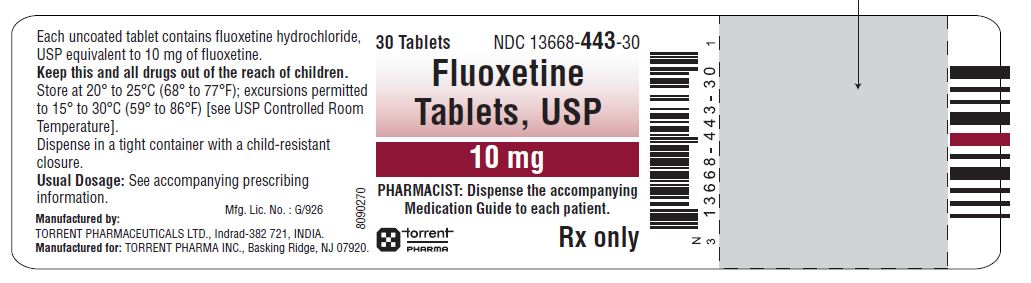
16.1How Supplied Fluoxetine tablets, USP are available in 10 mg and 20 mg strengths. 10 mg - Light cream to cream colored, flat round, uncoated tablets with beveled edges, debossed with "43" on one side and plain on other side. Bottles of 30 NDC 13668-443-30 Bottles of 100 NDC 13668-443-01 Bottles of 1,000 NDC 13668-443-10 100 Unit dose Tablets NDC 13668-443-74 28 Unit dose Tablets NDC 13668-443-91 20 mg - Light yellow to yellow colored, flat round, uncoated tablets with beveled edges, debossed with "73" on one side and plain on other side.
Bottles of 30 NDC 13668-473-30 Bottles of 100 NDC 13668-473-01 Bottles of 1,000 NDC 13668-473-10 100 Unit dose Tablets NDC 13668-473-74 28 Unit dose Tablets NDC 13668-473-91
16.2Storage and Handling Store at 20° to 25°C (68° to 77°F); excursions permitted to 15° to 30°C (59° to 86°F) [see USP Controlled Room Temperature].
16.1How Supplied Fluoxetine tablets, USP are available in 10 mg and 20 mg strengths. 10 mg - Light cream to cream colored, flat round, uncoated tablets with beveled edges, debossed with "43" on one side and plain on other side. Bottles of 30 NDC 13668-443-30 Bottles of 100 NDC 13668-443-01 Bottles of 1,000 NDC 13668-443-10 100 Unit dose Tablets NDC 13668-443-74 28 Unit dose Tablets NDC 13668-443-91 20 mg - Light yellow to yellow colored, flat round, uncoated tablets with beveled edges, debossed with "73" on one side and plain on other side.
Bottles of 30 NDC 13668-473-30 Bottles of 100 NDC 13668-473-01 Bottles of 1,000 NDC 13668-473-10 100 Unit dose Tablets NDC 13668-473-74 28 Unit dose Tablets NDC 13668-473-91
📦 Storage and Handling ▾
16.2Storage and Handling Store at 20° to 25°C (68° to 77°F); excursions permitted to 15° to 30°C (59° to 86°F) [see USP Controlled Room Temperature].
📋 Description ▾
11 DESCRIPTION Fluoxetine tablets, USP are a selective serotonin reuptake inhibitor (SSRI) for oral administration. It is designated (±)-N-methyl-3-phenyl-3-[(α,α,α-trifluoro- p -tolyl)oxy]propylamine hydrochloride and has the empirical formula of C 17 H 18 F 3 NO•HCl. Its molecular weight is 345.79.
The structural formula is: Fluoxetine hydrochloride, USP is a white to off-white crystalline solid with a solubility of 14 mg/mL in water. Each Fluoxetine tablets, USP contains fluoxetine hydrochloride equivalent to 10 mg or 20 mg of fluoxetine. Each tablet also contains colloidal silicon dioxide, croscarmellose sodium, D&C yellow no.
10 lake, FD&C yellow no. 6 lake, magnesium stearate, microcrystalline cellulose, and povidone. Structure
💬 Information for Patients ▾
17 PATIENT COUNSELING INFORMATION See the FDA-approved Medication Guide.
17.1General Information Healthcare providers should instruct their patients to read the Medication Guide before starting therapy with fluoxetine tablet and to reread it each time the prescription is renewed. Healthcare providers should inform patients, their families, and their caregivers about the benefits and risks associated with treatment with fluoxetine tablet and should counsel them in its appropriate use. Healthcare providers should instruct patients, their families, and their caregivers to read the Medication Guide and should assist them in understanding its contents.
Patients should be given the opportunity to discuss the contents of the Medication Guide and to obtain answers to any questions they may have. Patients should be advised of the following issues and asked to alert their healthcare provider if these occur while taking fluoxetine tablet.
17.2Clinical Worsening and Suicide Risk Patients, their families, and their caregivers should be encouraged to be alert to the emergence of anxiety, agitation, panic attacks, insomnia, irritability, hostility, aggressiveness, impulsivity, akathisia (psychomotor restlessness), hypomania, mania, other unusual changes in behavior, worsening of depression, and suicidal ideation, especially early during antidepressant treatment and when the dose is adjusted up or down. Families and caregivers of patients should be advised to look for the emergence of such symptoms on a day-to-day basis, since changes may be abrupt.
Such symptoms should be reported to the patient's prescriber or health professional, especially if they are severe, abrupt in onset, or were not part of the patient's presenting symptoms. Symptoms such as these may be associated with an increased risk for suicidal thinking and behavior and indicate a need for very close monitoring and possibly changes in the medication [see Boxed Warning and Warnings and Precautions ( 5.1 )] .
17.3Serotonin Syndrome Patients should be cautioned about the risk of serotonin syndrome with the concomitant use of fluoxetine tablets and other serotonergic agents including triptans, tricyclic antidepressants, opioids, lithium, tryptophan, buspirone, amphetamines, and St. John's Wort [see Contraindications ( 4.1 ), Warnings and Precautions ( 5.2 ), and Drug Interactions ( 7.3 )]. Patients should be advised of the signs and symptoms associated with serotonin syndrome that may include mental status changes (for example, agitation, hallucinations, delirium, and coma), autonomic instability (for example, tachycardia, labile blood pressure, dizziness, diaphoresis, flushing, hyperthermia), neuromuscular changes (for example, tremor, rigidity, myoclonus, hyperreflexia, incoordination), seizures, and/or gastrointestinal symptoms (for example, nausea, vomiting, diarrhea).
Patients should be cautioned to seek medical care immediately if they experience these symptoms.
17.4Allergic Reactions and Rash Patients should be advised to notify their physician if they develop a rash or hives [see Warnings and Precautions ( 5.3 )] . Patients should also be advised of the signs and symptoms associated with a severe allergic reaction, including swelling of the face, eyes, or mouth, or trouble breathing. Patients should be cautioned to seek medical care immediately if they experience these symptoms.
17.5Abnormal Bleeding Patients should be cautioned about the concomitant use of fluoxetine and NSAIDs, aspirin, warfarin, or other drugs that affect coagulation since combined use of psychotropic drugs that interfere with serotonin reuptake and these agents have been associated with an increased risk of bleeding [see Warnings and Precautions ( 5.7 ) and Drug Interactions ( 7.6 )] . Patients should be advised to call their doctor if they experience any increased or unusual bruising or bleeding while taking fluoxetine tablet.
17.6 Angle-Closure Glaucoma Patients should be advised that taking fluo…
💬 Medication Guide ▾
Medication Guide FLUOXETINE (Floa-OX-e-teen) TABLETS, USP Read the Medication Guide that comes with fluoxetine tablets before you start taking it and each time you get a refill. There may be new information. This Medication Guide does not take the place of talking to your healthcare provider about your medical condition or treatment.
Talk with your healthcare provider if there is something you do not understand or you want to learn more about. Fluoxetine tablet is in a class of drugs called selective serotonin reuptake inhibitors (SSRIs), which are often used for the treatment of depression and anxiety disorders. Although fluoxetine tablets are not a treatment for depression, it contains fluoxetine hydrochloride, the same active ingredient in some antidepressants.
What is the most important information I should know about fluoxetine tablets? Fluoxetine tablets and other antidepressant medicines may cause serious side effects including: 1. Suicidal thoughts or actions: Fluoxetine tablets and other antidepressant medicines may increase suicidal thoughts or actions in some children, teenagers, or young adults within the first few months of treatment or when the dose is changed.
Depression or other serious mental illnesses are the most important causes of suicidal thoughts or actions. Watch for these changes and call your healthcare provider right away if you notice: º New or sudden changes in mood, behavior, actions, thoughts, or feelings, especially if severe. º Pay particular attention to such changes when fluoxetine tablets are started or when the dose is changed. Keep all follow-up visits with your healthcare provider and call between visits if you are worried about symptoms.
Call your healthcare provider right away if you have any of the following symptoms, or call 911 if an emergency, especially if they are new, worse, or worry you: attempts to commit suicide acting on dangerous impulses acting aggressive or violent thoughts about suicide or dying new or worse depression new or worse anxiety or panic attacks feeling agitated, restless, angry or irritable trouble sleeping an increase in activity or talking more than what is normal for you other unusual changes in behavior or mood Call your healthcare provider right away if you have any of the following symptoms, or call 911 if an emergency.
Fluoxetine tablets may be associated with these serious side effects: 2. Serotonin Syndrome. This condition can be life-threatening and may include: agitation, hallucinations, coma or other changes in mental status coordination problems or muscle twitching (overactive reflexes) racing heartbeat, high or low blood pressure sweating or fever nausea, vomiting, or diarrhea muscle rigidity dizziness flushing tremor seizures 3.
Severe allergic reactions: trouble breathing swelling of the face, tongue, eyes or mouth rash, itchy welts (hives) or blisters, alone or with fever or joint pain 4. Manic episodes: greatly increased energy severe trouble sleeping racing thoughts reckless behavior unusually grand ideas excessive happiness or irritability talking more or faster than usual 5. Seizures or convulsions 6.
Changes in appetite or weight. Children and adolescents should have height and weight monitored during treatment. 7.
Abnormal bleeding: Fluoxetine tablets and other antidepressant medicines may increase your risk of bleeding or bruising, especially if you take the blood thinner warfarin (Coumadin ® , Jantoven ® ), a non-steroidal anti-inflammatory drug (NSAID's, like ibuprofen or naproxen), or aspirin. 8. Visual Problems eye pain changes in vision swelling or redness in or around the eye Only some people are at risk for these problems.
You may want to undergo an eye examination to see if you are at risk and receive preventative treatment if you are. 9. Low salt (sodium) levels in the blood.
Elderly people may be at greater risk for this. Symptoms may include: headache weakness or feeling unsteady confusion, problems concentrating or thinking…