
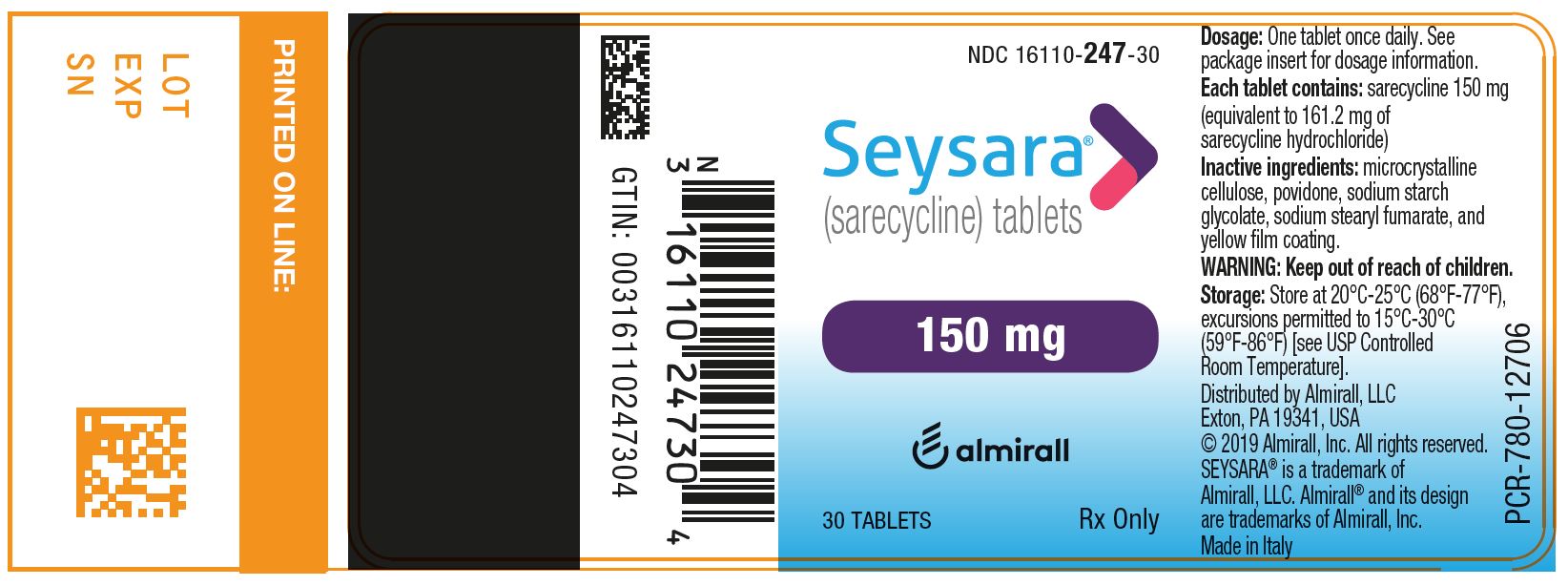
sarecycline hydrochloride 150 mg Tablet, Coated, 30-count — NDC 16110-247-30 (Billing 16110-0247-30)
This is a package of 30 tablets of sarecycline hydrochloride 150 mg Tablet, Coated from Almirall, LLC, marketed since Jan 2019 and currently FDA-listed.
NDC database record
One package, one record: these facts belong to NDC 16110-247-30 alone.
- Record
- FDA NDC Directory package listing · Drug for further processing
- Code segments
- 16110 labeler · 247 product · 30 package
- Listing certified through
- Dec 31, 2027
- Billing quantity
- 30 EA per package
- Barcode (UPC-A, from the NDC)
- 3 1611024730 4
- FDA record last changed
- Oct 2, 2026
Identity & classification
Regulatory identifiers FDA, NLM and CMS codes for this package
Drug-database identifiers Medi-Span GPI and First Databank GCN / HICL / AHFS classification
- GSN (GCN sequence number): 079080
- GCN: 45512
- GPI-14 (Medi-Span): 04000057100340
- HICL (First Databank): 045331
- AHFS class code: 08:12.24.04
Where does this data come from?
- FDA openFDA NDC Directory · synced Oct 1, 2026
- FDA label on DailyMed · label index refreshed Oct 6, 2026
- RxNorm (NLM RxNav) · catalog refreshed Oct 1, 2026
- Medi-Span GPI (licensed)
- First Databank (licensed) · refreshed Oct 1, 2026
Clinical
Sarecycline is used to treat certain types of acne. Sarecycline is in a class of medications called tetracycline antibiotics. It works to treat acne by killing the bacteria that infects pores and by lowering the amount of oil on your skin that causes acne. Antibiotics such as sarecycline will not work for colds, flu, or other viral infections. Using antibiotics when they are not needed increases your risk of getting an infection later that resists antibiotic treatment.
Read the full MedlinePlus article ↗- It treats the inflamed pimples of moderate to severe non-nodular acne vulgaris in people 9 and older. It is not meant for treating infections. Use it only as prescribed so the anti...
- Take one tablet by mouth once a day, with or without food. Drink a full glass of water to help prevent irritation of your esophagus. Follow your prescriber's directions, and expect...
- Nausea was the most common one in studies. Some women had vaginal yeast infections. Call your doctor if you get vision changes, bad headaches, or diarrhea that won't go away.
- Yes. This medicine can make you sunburn more easily. Avoid tanning beds and UV treatments, wear loose, protective clothing outdoors, and ask about other sun protection.
Patient education
Supplement & herbal interactions
Where does this data come from?
- MedlinePlus (NLM) · refreshed Oct 1, 2026
- FDA label on DailyMed · label index refreshed Oct 6, 2026
Ask a licensed pharmacist directly — free, answered by our team.
Pricing
A drug doesn't have one price. Each row is a different public payment system, and none is what you'd pay at the counter — that depends on your insurance. The ⓘ on each row explains what it measures.
| Price system | Per each | Per package |
|---|---|---|
| Retail pharmacies payNADAC · weekly | Not in the retail survey — common for institutional, discontinued, or low-volume packs. | |
| Medicaid paysCMS SDUD · 12 mo | No recent Medicaid claims on file for this NDC — rare and low-volume NDCs are suppressed in the public data. | |
| Medicare drug plans payPart D · Q2 2026 | $36.94 | $1,108.14 / 30 tablets |
Where does this data come from?
- CMS NADAC weekly file
- CMS ASP pricing files · refreshed Sep 20, 2026
- CMS Medicaid State Drug Utilization Data · refreshed Oct 8, 2026
- CMS Part D plan pricing files · refreshed Sep 24, 2026
- VA National Acquisition Center price file
Packaging — all sizes for this product
| Package NDC | Description | Marketing start | Marketing end | Status |
|---|---|---|---|---|
| 16110-0247-30 You're viewing this | 30 TABLET, COATED in 1 BOTTLE | 2019-01-04 | — | Active |
| 16110-0247-00 16110-247-00 Main listing | 192000 TABLET, COATED in 1 BAG | — | — | Active |
You're viewing the smallest of 2 pack sizes for this product.
Pack size FAQ
What quantity is in this package?
How does this package differ from NDC 16110-0247-00?
What NDC number is used to bill for this package of sarecycline hydrochloride 150 mg Tablet, Coated?
Therapeutic equivalents
| Product | Labeler | Pack | NADAC/unit | TE | Status | Price vs. this |
|---|---|---|---|---|---|---|
| sarecycline hydrochloride 150 mgthis 16110-0247-30 | Almirall, | 30 tablets | — | — | FDA listed | — |
| sarecycline hydrochloride 150 mg 63069-0247-00 | Penn | 192000 tablets | — | — | FDA listed | — |
Where does this data come from?
- FDA openFDA NDC Directory · synced Oct 1, 2026
- FDA Orange Book · refreshed Oct 3, 2026
- CMS NADAC weekly file
Availability & generic status
We did not find an FDA-approved generic match for this exact strength, form and route.
Where does this data come from?
- FDA Orange Book · refreshed Oct 3, 2026
What it looks like
Where does this data come from?
- FDA label on DailyMed · label index refreshed Oct 6, 2026
Inactive Ingredients / Excipients
Inactive ingredients, also called excipients, are components of the drug product other than the active ingredient. They may include fillers, dyes, coatings, preservatives, flavors, or other formulation ingredients.
🧪 Avoiding an ingredient? See Sarecycline inactive ingredients by manufacturer: every current product's list side by side, so you can ask your pharmacy for the version that does not list it.
Where does this data come from?
IACT rows and label-wide narrative are kept separate; availability and product-level specificity depend on the submitted label.- FDA label on DailyMed · label index refreshed Oct 6, 2026
- FDA openFDA NDC Directory · synced Oct 1, 2026
Inactive ingredient FAQ
Are inactive ingredients the same for every manufacturer?
Why might an inactive ingredient be missing?
Can inactive ingredients matter?
Manufacturer & labeler
More NDCs from Almirall, LLC labeler code 16110
- Tazorac tazarotene 1 mg/g Gel NDC 16110-042-10
- Seysara sarecycline hydrochloride 60 mg Tablet, Coated NDC 16110-245-00
- Seysara sarecycline hydrochloride 100 mg Tablet, Coated NDC 16110-246-00
- Klisyri tirbanibulin 10 mg/g Ointment NDC 16110-391-05
- Aczone dapsone 75 mg/g Gel NDC 16110-526-30
- Cordran flurandrenolide 4 ug/cm2 Tape NDC 16110-587-24
- Acticlate CAP doxycycline hyclate 75 mg Capsule NDC 16110-601-01
- Tazorac tazarotene .5 mg/g Gel NDC 16110-833-10
- Azelex azelaic acid .2 g/g Cream NDC 16110-869-30
Where does this data come from?
- FDA openFDA NDC Directory · synced Oct 1, 2026
- Drugs@FDA
Full FDA label FDA SPL
🎯 Indications and Usage ▾
1 INDICATIONS AND USAGE SEYSARA ® (sarecycline) tablet, is indicated for the treatment of inflammatory lesions of non-nodular moderate to severe acne vulgaris in patients 9 years of age and older. Limitations of Use Efficacy of SEYSARA beyond 12 weeks and safety beyond 12 months have not been established. SEYSARA has not been evaluated in the treatment of infections [see Clinical Studies ( 14 )] .
To reduce the development of drug-resistant bacteria as well as to maintain the effectiveness of other antibacterial drugs, SEYSARA should be used only as indicated [see Warnings and Precautions ( 5.6 )] . SEYSARA ® is a tetracycline-class drug indicated for the treatment of inflammatory lesions of non-nodular moderate to severe acne vulgaris in patients 9 years of age and older. ( 1 ) Limitations of Use Efficacy of SEYSARA beyond 12 weeks and safety beyond 12 months have not been established.
SEYSARA has not been evaluated in the treatment of infections. To reduce the development of drug-resistant bacteria as well as to maintain the effectiveness of other antibacterial drugs, SEYSARA should be used only as indicated [see Warnings and Precautions ( 5.6 )].
⏱️ Dosage and Administration ▾
2 DOSAGE AND ADMINISTRATION The recommended dosage of SEYSARA is based on body weight described in Table 1 . If there is no improvement after 12 weeks, reassess treatment with SEYSARA. Table 1: Dosing Table for SEYSARA Body Weight (kg) Tablet Strength 33 to 54 kg 60 mg tablet 55 to 84 kg 100 mg tablet 85 to 136 kg 150 mg tablet Take SEYSARA once daily, with or without food.
To reduce the risk of esophageal irritation and ulceration, administer SEYSARA with adequate amounts of fluid. The recommended dosage of SEYSARA is once daily with or without food ( 2 ): 60 mg for patients who weigh 33-54 kg, 100 mg for patients who weigh 55-84 kg, 150 mg for patients who weigh 85-136 kg.
💊 Dosage Forms and Strengths ▾
3 DOSAGE FORMS AND STRENGTHS SEYSARA (sarecycline) tablets: 60 mg: capsule-shaped, yellow, film-coated tablets debossed with “S60” on one side and blank on the other side. 100 mg: capsule-shaped, yellow, film-coated tablets debossed with “S100” on one side and blank on the other side. 150 mg: capsule-shaped, yellow, film-coated tablets debossed with “S150” on one side and blank on the other side. Tablets: 60 mg, 100 mg, 150 mg ( 3 )
⛔ Contraindications ▾
4 CONTRAINDICATIONS SEYSARA is contraindicated in persons who have shown hypersensitivity to any of the tetracyclines. SEYSARA is contraindicated in persons who have shown hypersensitivity to any of the tetracyclines. ( 4 )
⚠️ Warnings and Cautions ▾
5 WARNINGS AND PRECAUTIONS The use of SEYSARA during tooth development (second and third trimesters of pregnancy, infancy, and childhood up to the age of 8 years) may cause permanent discoloration of the teeth (yellow-gray-brown). ( 5.1 ) If Clostridium difficile Associated Diarrhea (antibiotic associated colitis) occurs, discontinue SEYSARA. ( 5.2 ) Central nervous system side effects, including light-headedness, dizziness or vertigo, have been reported with tetracycline use.
Patients who experience these symptoms should be cautioned about driving vehicles or using hazardous machinery. These symptoms may disappear during therapy and may disappear when the drug is discontinued. ( 5.3 ) SEYSARA may cause intracranial hypertension.
Discontinue SEYSARA if symptoms occur. ( 5.4 ) Photosensitivity can occur with SEYSARA. Patients should minimize or avoid exposure to natural or artificial sunlight.
( 5.5 )
5.1Teratogenic Effects SEYSARA, like other tetracyclines, can cause fetal harm when administered to a pregnant woman. If SEYSARA is used during pregnancy or if the patient becomes pregnant while taking SEYSARA, the patient should be informed of the potential hazard to the fetus and treatment should be stopped immediately. The use of drugs of the tetracycline-class during tooth development (second and third trimesters of pregnancy, infancy, and childhood up to the age of 8 years) may cause permanent discoloration of the teeth (yellow-gray-brown).
This adverse reaction is more common during long-term use of these drugs, but has been observed following repeated short-term courses. Enamel hypoplasia has also been reported. All tetracyclines form a stable calcium complex in any bone-forming tissue.
A decrease in fibula growth rate has been observed in premature human infants given oral tetracycline in doses of 25 mg/kg every 6 hours. This reaction was shown to be reversible when the drug was discontinued. Results of animal studies indicate that tetracyclines cross the placenta, are found in fetal tissues, and can cause retardation of skeletal development on the developing fetus.
Evidence of embryotoxicity has been noted in animals treated with SEYSARA during pregnancy in association with maternal toxicity [see Use in Specific Populations ( 8.1 )] .
5.2Clostridium difficile Associated Diarrhea (Antibiotic Associated Colitis) Clostridium difficile associated diarrhea (CDAD) has been reported with nearly all antibacterial agents, and may range in severity from mild diarrhea to fatal colitis. Treatment with antibacterial agents alters the normal flora of the colon leading to potential overgrowth of C. difficile. C. difficile produces toxins A and B which contribute to the development of CDAD.
Hypertoxin producing strains of C. difficile cause increased morbidity and mortality, as these infections can be refractory to antimicrobial therapy and may require colectomy. CDAD must be considered in all patients who present with diarrhea following antibiotic use. Careful medical history is necessary since CDAD has been reported to occur over two months after the administration of antibacterial agents.
If CDAD is suspected or confirmed, ongoing antibiotic use not directed against C. difficile should be discontinued. Appropriate fluid and electrolyte management, protein supplementation, antibiotic treatment of C. difficile , and surgical evaluation should be instituted as clinically indicated.
5.3Central Nervous System Effects Central nervous system side effects including light-headedness, dizziness or vertigo have been reported with tetracycline use. Patients who experience these symptoms should be cautioned about driving vehicles or using hazardous machinery. These symptoms may disappear during therapy and may disappear when the drug is discontinued.
5.4Intracranial Hypertension Intracranial hypertension in adults and adolescents has been associated with the use of tetracyclines. Clinical manifestations include headache, blurred vision and pap… [Excerpted — this section continues on DailyMed.]
🤒 Adverse Reactions ▾
6 ADVERSE REACTIONS Most common adverse reaction (incidence ≥ 1%) is nausea. ( 6.1 ) To report SUSPECTED ADVERSE REACTIONS, contact Almirall at 1-866-665-2782 or FDA at 1-800-FDA-1088 or www.fda.gov/medwatch .
6.1Clinical Trials Experience Because clinical trials are conducted under widely varying conditions, adverse reaction rates observed in the clinical trials of a drug cannot be directly compared to rates in the clinical trials of another drug and may not reflect the rates observed in practice. A total of 1064 subjects and 1069 subjects with moderate to severe acne vulgaris were treated with SEYSARA and placebo, respectively, for 12 weeks in 3 controlled clinical trials. The only adverse drug reaction that was reported in at least 1% of subjects was nausea, SEYSARA (3.1%) versus placebo (2.0%).
The following additional adverse drug reactions occurred in less than 1% of female SEYSARA subjects: vulvovaginal mycotic infection (0.8%) and vulvovaginal candidiasis (0.6%).
🔄 Drug Interactions ▾
7 DRUG INTERACTIONS Oral retinoids: avoid coadministration. ( 5.4 , 7.1 ) Antacids and iron preparations: separate dosing of SEYSARA. ( 7.1 ) Penicillin: avoid coadministration. ( 7.2 ) Anticoagulants: decrease anticoagulant dosage as appropriate. ( 7.2 ) P-glycoprotein substrates: monitor for toxicities of drugs that may require dosage reduction. ( 7.2 )
7.1Effect of Other Drugs on SEYSARA Oral Retinoids Tetracyclines may cause increased intracranial pressure as do oral retinoids, including isotretinoin and acitretin [see Warnings and Precautions ( 5.4 )] . Avoid coadministration of SEYSARA with oral retinoids. Antacids and Iron Preparations Coadministration with antacids containing aluminum, calcium or magnesium, bismuth subsalicylate, and iron-containing preparations may impair absorption of SEYSARA, similar to other tetracyclines, which may decrease its efficacy.
Separate dosing of SEYSARA from antacids containing aluminum, calcium or magnesium, bismuth subsalicylate, and iron-containing preparations.
7.2Effect of SEYSARA on Other Drugs Penicillin Similar to other tetracyclines, SEYSARA may interfere with the bactericidal action of penicillin. Avoid coadministration of SEYSARA with penicillin. Anticoagulants Similar to other tetracyclines, SEYSARA may depress plasma prothrombin activity, which may increase the risk of bleeding in patients who are on anticoagulant therapy.
Decrease anticoagulant dosage when coadministered with SEYSARA as appropriate. P-Glycoprotein (P-gp) Substrates Concomitant use of SEYSARA may increase concentrations of concomitantly administered P-gp substrates (e.g. digoxin). Monitor for toxicities of drugs that are P-gp substrates and may require dosage reduction when given concurrently with SEYSARA [see Clinical Pharmacology ( 12.3 )] .
Oral Hormonal Contraceptives There is no clinically significant effect of SEYSARA on the efficacy of oral contraceptives containing ethinyl estradiol and norethindrone acetate [see Clinical Pharmacology ( 12.3 )] .
👥 Use in Specific Populations ▾
8 USE IN SPECIFIC POPULATIONS Sarecycline, like other tetracycline-class drugs, can cause fetal harm when administered to a pregnant woman. ( 5.1 , 8.1 ) The use of drugs of the tetracycline class during tooth development may cause permanent discoloration of teeth. ( 5.1 , 8.4 ) Lactation: Breastfeeding is not recommended. ( 8.2 )
8.1Pregnancy Risk Summary SEYSARA, like tetracycline class drugs, may cause fetal harm, permanent discoloration of teeth, and reversible inhibition of bone growth when administered during pregnancy [see Warnings and Precautions ( 5.1 ) and Use in Specific Populations ( 8.4 )] . The limited available human data are not sufficient to inform a drug-associated risk for birth defects or miscarriage. Tetracyclines are known to cross the placental barrier; therefore, SEYSARA may be transmitted from the mother to the developing fetus.
In animal reproduction studies, sarecycline induced skeletal malformations in fetuses when orally administered to pregnant rats during the period of organogenesis at a dose 1.4 times the maximum recommended human dose (MRHD) of 150 mg/day (based on AUC comparison). When dosing with sarecycline continued through the period of lactation, decreases in offspring survival, offspring body weight, and implantation sites and viable embryos in offspring females occurred at a dose 3 times the MRHD (based on AUC comparison) [see Data ] .
The potential risk to the fetus outweighs the potential benefit to the mother from SEYSARA use during pregnancy; therefore, pregnant patients should discontinue SEYSARA as soon as pregnancy is recognized. All pregnancies have a background risk of birth defect, loss, or other adverse outcomes. The background risk of major birth defects and miscarriage for the indicated population is unknown.
In the U.S. general population, the estimated background risk of major birth defects and miscarriage in clinically recognized pregnancies is 2% to 4% and 15% to 20%, respectively. Data Animal Data In an embryofetal developmental study in rats, sarecycline was administered to pregnant rats at oral doses up to 500 mg/kg/day during the period of organogenesis. Decreases in maternal body weight, fetal body weight and litter size and increases in the number of resorption and postimplantation loss occurred at 500 mg/kg/day (7 times the MRHD based on AUC comparison).
Skeletal malformations (bent forelimb, hindlimb, and scapula) occurred at all dose levels (≥ 50 mg/kg/day, 1.4 times the MRHD based on AUC comparison). In an embryofetal developmental study in rabbits, sarecycline was administered to pregnant rabbits at oral doses up to 150 mg/kg/day during the period of organogenesis. Excessive maternal toxicity (mortality/moribundity/abortion) occurred at 150 mg/kg/day (5 times the MRHD based on AUC comparison) and this dose group was terminated early.
Maternal moribundity also occurred at 100 mg/kg/day (0.6 times the MRHD based on AUC comparison). No significant embryofetal toxicity or malformations were observed at doses up to 100 mg/kg/day (0.6 times the MRHD based on AUC comparison). In a pre- and post-natal developmental study in rats, sarecycline was administered to maternal rats at oral doses up to 400 mg/kg/day during the period of organogenesis through lactation.
Excessive litter toxicity (litter loss and stillbirth) occurred at 400 mg/kg/day (8 times the MRHD based on AUC comparison), which led to early termination of dams at parturition. Decreases in body weight and food consumption of dams during the lactation period occurred at 150 mg/kg/day (3 times the MRHD based on AUC comparison). Decreases in offspring survival and offspring body weight during the preweaning and growth period, and decreases in implantation sites and viable embryos in female offspring occurred at 150 mg/kg/day (3 times the MRHD based on AUC comparison).
No significant maternal or developmental toxicity was observed at 50 mg/kg/day (1.4 times the MRHD based on AUC comparison).
8.2Lactation Ris… [Excerpted — this section continues on DailyMed.]
🤰 Pregnancy ▾
8.1Pregnancy Risk Summary SEYSARA, like tetracycline class drugs, may cause fetal harm, permanent discoloration of teeth, and reversible inhibition of bone growth when administered during pregnancy [see Warnings and Precautions ( 5.1 ) and Use in Specific Populations ( 8.4 )] . The limited available human data are not sufficient to inform a drug-associated risk for birth defects or miscarriage. Tetracyclines are known to cross the placental barrier; therefore, SEYSARA may be transmitted from the mother to the developing fetus.
In animal reproduction studies, sarecycline induced skeletal malformations in fetuses when orally administered to pregnant rats during the period of organogenesis at a dose 1.4 times the maximum recommended human dose (MRHD) of 150 mg/day (based on AUC comparison). When dosing with sarecycline continued through the period of lactation, decreases in offspring survival, offspring body weight, and implantation sites and viable embryos in offspring females occurred at a dose 3 times the MRHD (based on AUC comparison) [see Data ] .
The potential risk to the fetus outweighs the potential benefit to the mother from SEYSARA use during pregnancy; therefore, pregnant patients should discontinue SEYSARA as soon as pregnancy is recognized. All pregnancies have a background risk of birth defect, loss, or other adverse outcomes. The background risk of major birth defects and miscarriage for the indicated population is unknown.
In the U.S. general population, the estimated background risk of major birth defects and miscarriage in clinically recognized pregnancies is 2% to 4% and 15% to 20%, respectively. Data Animal Data In an embryofetal developmental study in rats, sarecycline was administered to pregnant rats at oral doses up to 500 mg/kg/day during the period of organogenesis. Decreases in maternal body weight, fetal body weight and litter size and increases in the number of resorption and postimplantation loss occurred at 500 mg/kg/day (7 times the MRHD based on AUC comparison).
Skeletal malformations (bent forelimb, hindlimb, and scapula) occurred at all dose levels (≥ 50 mg/kg/day, 1.4 times the MRHD based on AUC comparison). In an embryofetal developmental study in rabbits, sarecycline was administered to pregnant rabbits at oral doses up to 150 mg/kg/day during the period of organogenesis. Excessive maternal toxicity (mortality/moribundity/abortion) occurred at 150 mg/kg/day (5 times the MRHD based on AUC comparison) and this dose group was terminated early.
Maternal moribundity also occurred at 100 mg/kg/day (0.6 times the MRHD based on AUC comparison). No significant embryofetal toxicity or malformations were observed at doses up to 100 mg/kg/day (0.6 times the MRHD based on AUC comparison). In a pre- and post-natal developmental study in rats, sarecycline was administered to maternal rats at oral doses up to 400 mg/kg/day during the period of organogenesis through lactation.
Excessive litter toxicity (litter loss and stillbirth) occurred at 400 mg/kg/day (8 times the MRHD based on AUC comparison), which led to early termination of dams at parturition. Decreases in body weight and food consumption of dams during the lactation period occurred at 150 mg/kg/day (3 times the MRHD based on AUC comparison). Decreases in offspring survival and offspring body weight during the preweaning and growth period, and decreases in implantation sites and viable embryos in female offspring occurred at 150 mg/kg/day (3 times the MRHD based on AUC comparison).
No significant maternal or developmental toxicity was observed at 50 mg/kg/day (1.4 times the MRHD based on AUC comparison).
🧒 Pediatric Use ▾
8.4Pediatric Use The safety and effectiveness of SEYSARA have been established in pediatric patients 9 years of age and older for the treatment of moderate to severe inflammatory lesions of non-nodular acne vulgaris [see Pharmacokinetics ( 12.3 ) and Clinical Studies ( 14 )] . Safety and effectiveness of SEYSARA in pediatric patients below the age of 9 years has not been established. Use of tetracycline-class antibiotics below the age of 8 is not recommended due to the potential for tooth discoloration [see Warnings and Precautions ( 5.1 )] .
🧓 Geriatric Use ▾
8.5Geriatric Use Clinical studies of SEYSARA did not include sufficient numbers of subjects aged 65 and over to determine whether they respond differently from younger subjects.
🆘 Overdosage ▾
10 OVERDOSAGE In case of overdosage, discontinue medication, treat symptomatically, and institute supportive measures. Dialysis does not alter serum half-life and thus would not be of benefit in treating cases of overdose.
🧬 Clinical Pharmacology ▾
12 CLINICAL PHARMACOLOGY
12.1Mechanism of Action Sarecycline is an aminomethylcycline within the tetracycline class of drugs. [see CLINICAL PHARMACOLOGY ( 12.4 )] . The mechanism of action of SEYSARA in treating the inflammatory lesions of non-nodular acne vulgaris is not known.
12.2Pharmacodynamics The pharmacodynamics of SEYSARA for the treatment of acne vulgaris are unknown. Cardiac Electrophysiology At approximately 3 times the maximum recommended dose, SEYSARA did not prolong the QT interval to a clinically relevant extent.
12.3Pharmacokinetics Increasing the SEYSARA dose from 60 to 150 mg once daily in healthy subjects resulted in a slightly less than proportional increase in sarcyeline steady-state C max and AUC tau . A mean accumulation ratio of sarecycline ranges from 1.5 to 1.6 fold with repeated dosing. Steady-state of sarecycline was reached by Day 7.
Absorption The median time to peak plasma concentration (T max ) of sarecycline is 1.5 to 2.0 hours. Effect of Food Coadministration with a high-fat (approximately 50% of total caloric content of the meal), high-calorie (800 to 1000 Kcal) meal that included milk delayed T max by approximately 0.53 hour and decreased sarecycline C max by 31% and AUC by 27%. Distribution Protein binding of sarecycline is 62.5% to 74.7% in vitro.
The mean apparent volume of distribution of sarecycline at steady-state ranges from
91.4 L to
97.0L. Elimination The mean apparent oral clearance (CL/F) of sarecycline at steady state is approximately 3 L/h. The mean elimination half-life of sarecycline is 21 to 22 hours.
Metabolism Metabolism of sarecycline by enzymes in human liver microsomes is minimal (< 15%) in vitro. Minor metabolites resulting from non-enzymic epimerization, O-/N-demethylation, hydroxylation, and desaturation have been found. Excretion After a single 100 mg oral dose of radiolabeled sarecycline, 42.6% of the dose was recovered in feces (14.9% as unchanged) and 44.1% in urine (24.7% as unchanged).
Specific Populations No clinically significant differences in the pharmacokinetics of sarecycline were observed based on age (11 to 73 years), weight (42 to 133 kg), sex, renal impairment, or mild to moderate hepatic impairment (Child Pugh A to B). The effect of end-stage renal disease (ESRD) or severe hepatic impairment (Child-Pugh C) on sarecycline pharmacokinetics has not been assessed. Drug Interaction Studies Clinical Studies Coadministration of SEYSARA with a combination oral contraceptive, ethinyl estradiol (EE) 20 mcg plus norethindrone (NE) acetate 1 mg, increased EE C max by 14% and AUC tau by 11%, and increased NE C max by 18% and AUC tau by 23%.
Coadministration of a single dose of SEYSARA 150 mg resulted in a 26% increase in C max of digoxin, a P-gp substrate. In Vitro Studies Sarecycline is not a substrate for P-gp, BCRP, OATP1B1, or OATP1B3. Sarecycline is a P-gp inhibitor.
Sarecycline does not inhibit CYP1A2, CYP2A6, CYP2B6, CYP2C8, CYP2C9, CYP2C19, CYP2D6, CYP2E1, or CYP3A4/5 isozymes, and does not inhibit OATP1B1, OATP1B3, OCT2, OAT1, OAT3, or BCRP. Sarecycline does not induce CYP1A2, CYP2B6, or CYP3A4/5 isozymes.
12.4Microbiology Mechanism of Action In P. acnes , sarecycline binds to the 30S ribosomal subunit and interacts with 16S ribosomal RNA. Furthermore, it protrudes its C7 moiety into the mRNA binding channel to interact with mRNA. Sarecycline blocks P. acnes protein synthesis and inhibits bacterial growth however, the clinical significance is unknown.
Resistance P. acnes strains displayed a low propensity for the development of resistance to sarecycline, with spontaneous mutation frequencies being 10 -10 at 4 – 8 × MIC. Antimicrobial Activity Sarecycline is active in vitro against most isolates of Propionibacterium acnes .
🧬 Mechanism of Action ▾
12.1Mechanism of Action Sarecycline is an aminomethylcycline within the tetracycline class of drugs. [see CLINICAL PHARMACOLOGY ( 12.4 )] . The mechanism of action of SEYSARA in treating the inflammatory lesions of non-nodular acne vulgaris is not known.
📦 How Supplied / Storage and Handling ▾
16 HOW SUPPLIED/STORAGE AND HANDLING How Supplied 1) SEYSARA (sarecycline) tablets, 60 mg are capsule-shaped, yellow, film-coated tablets debossed with “S60” on one side and blank on the other side. Bottles of 30 tablets with child-resistant closure: NDC: 16110-245-30 2) SEYSARA (sarecycline) tablets, 100 mg are capsule-shaped, yellow, film-coated tablets debossed with “S100” on one side and blank on the other side. Bottles of 30 tablets with child-resistant closure: NDC: 16110-246-30 3) SEYSARA (sarecycline) tablets, 150 mg are capsule-shaped, yellow, film-coated tablets debossed with “S150” on one side and blank on the other side.
Bottles of 30 tablets with child-resistant closure: NDC: 16110-247-30 Storage Store at 20°C - 25°C (68°F - 77°F); excursions permitted to 15°C - 30°C (59°F - 86°F) [See USP Controlled Room Temperature]. Handling Protect from moisture and excessive heat.
📦 Storage and Handling ▾
Storage Store at 20°C - 25°C (68°F - 77°F); excursions permitted to 15°C - 30°C (59°F - 86°F) [See USP Controlled Room Temperature]. Handling Protect from moisture and excessive heat.
📋 Description ▾
11 DESCRIPTION SEYSARA (sarecycline) tablets are a tetracycline class drug for oral administration. Sarecycline hydrochloride is chemically described as (4 S ,4a S ,5a R ,12a S )-4-(dimethylamino)-3,10,12,12a-tetrahydroxy-7-[(methoxy-(methyl)-amino)- methyl]-1,11-dioxo-1,4,4a,5,5a,6,11, 12a-octahydrotetracene-2-carboxamide monohydrochloride with an empirical formula of C 24 H 29 N 3 O 8 .HCl and a molecular weight of 523.96. The structural formula is represented below: SEYSARA tablets contain 64.5 mg, 107.5 mg, and 161.2 mg of sarecycline hydrochloride equivalent to 60 mg, 100 mg, and 150 mg sarecycline respectively.
Inactive ingredients in the tablet formulations are: microcrystalline cellulose, povidone, sodium starch glycolate, and sodium stearyl fumarate. The yellow film coating contains D&C yellow #10 aluminum lake, iron oxide yellow, methacrylic acid copolymer type C, polyethylene glycol, polyvinyl alcohol, sodium bicarbonate, talc, and titatnium dioxide. Chemical Structure
💬 Information for Patients ▾
17 PATIENT COUNSELING INFORMATION Advise the patient to read the FDA-approved patient labeling ( Patient Information ). Patients taking SEYSARA should receive the following information and instructions: SEYSARA should not be used by pregnant women or women attempting to conceive a child [see Use in Specific Populations ( 8.1 )] . Advise a woman that breastfeeding is not recommended during SEYSARA therapy.
Advise patients that C. difficile colitis can occur with antibiotic therapy. If patients develop watery or bloody stools, they should seek medical attention. Advise patients that intracranial hypertension can occur with tetracycline therapy.
If patients experience headache or blurred vision, they should seek medical attention. Patients who experience central nervous system symptoms should be cautioned about driving vehicles or using hazardous machinery while on SEYSARA therapy. Patients should seek medical help for persistent central nervous system symptoms.
Photosensitivity manifested by an exaggerated sunburn reaction has been observed in some individuals taking tetracyclines. Advise patients to minimize or avoid exposure to natural or artificial sunlight (tanning beds or UVA/B treatment) while using SEYSARA. If patients need to be outdoors while using SEYSARA, they should wear loose-fitting clothes that protect skin from sun exposure and discuss other sun protection measures with their physician.
Treatment should be discontinued at the first evidence of skin erythema. Advise patients that because of the potential for drug-resistant bacteria to develop during the use of SEYSARA, take SEYSARA as directed. Skipping doses or not completing the full course of therapy may decrease the effectiveness of the current treatment course and increase the likelihood that bacteria will develop resistance and will not be treatable by other antibacterial drugs in the future.
Advise patients to drink fluids liberally along with SEYSARA to reduce the risk of esophageal irritation and ulceration [see Dosage and Administration ( 2 )] . © 2019 Almirall, LLC. All rights reserved. SEYSARA ® is a registered trademark of Almirall, LLC.
Almirall ® and its design are trademarks of Almirall, LLC. Distributed by: Almirall, LLC Malvern, PA 19355, USA Almirall
🧬 Pharmacokinetics ▾
12.3Pharmacokinetics Increasing the SEYSARA dose from 60 to 150 mg once daily in healthy subjects resulted in a slightly less than proportional increase in sarcyeline steady-state C max and AUC tau . A mean accumulation ratio of sarecycline ranges from 1.5 to 1.6 fold with repeated dosing. Steady-state of sarecycline was reached by Day 7.
Absorption The median time to peak plasma concentration (T max ) of sarecycline is 1.5 to 2.0 hours. Effect of Food Coadministration with a high-fat (approximately 50% of total caloric content of the meal), high-calorie (800 to 1000 Kcal) meal that included milk delayed T max by approximately 0.53 hour and decreased sarecycline C max by 31% and AUC by 27%. Distribution Protein binding of sarecycline is 62.5% to 74.7% in vitro.
The mean apparent volume of distribution of sarecycline at steady-state ranges from
91.4 L to
97.0L. Elimination The mean apparent oral clearance (CL/F) of sarecycline at steady state is approximately 3 L/h. The mean elimination half-life of sarecycline is 21 to 22 hours.
Metabolism Metabolism of sarecycline by enzymes in human liver microsomes is minimal (< 15%) in vitro. Minor metabolites resulting from non-enzymic epimerization, O-/N-demethylation, hydroxylation, and desaturation have been found. Excretion After a single 100 mg oral dose of radiolabeled sarecycline, 42.6% of the dose was recovered in feces (14.9% as unchanged) and 44.1% in urine (24.7% as unchanged).
Specific Populations No clinically significant differences in the pharmacokinetics of sarecycline were observed based on age (11 to 73 years), weight (42 to 133 kg), sex, renal impairment, or mild to moderate hepatic impairment (Child Pugh A to B). The effect of end-stage renal disease (ESRD) or severe hepatic impairment (Child-Pugh C) on sarecycline pharmacokinetics has not been assessed. Drug Interaction Studies Clinical Studies Coadministration of SEYSARA with a combination oral contraceptive, ethinyl estradiol (EE) 20 mcg plus norethindrone (NE) acetate 1 mg, increased EE C max by 14% and AUC tau by 11%, and increased NE C max by 18% and AUC tau by 23%.
Coadministration of a single dose of SEYSARA 150 mg resulted in a 26% increase in C max of digoxin, a P-gp substrate. In Vitro Studies Sarecycline is not a substrate for P-gp, BCRP, OATP1B1, or OATP1B3. Sarecycline is a P-gp inhibitor.
Sarecycline does not inhibit CYP1A2, CYP2A6, CYP2B6, CYP2C8, CYP2C9, CYP2C19, CYP2D6, CYP2E1, or CYP3A4/5 isozymes, and does not inhibit OATP1B1, OATP1B3, OCT2, OAT1, OAT3, or BCRP. Sarecycline does not induce CYP1A2, CYP2B6, or CYP3A4/5 isozymes.
12.4Microbiology Mechanism of Action In P. acnes , sarecycline binds to the 30S ribosomal subunit and interacts with 16S ribosomal RNA. Furthermore, it protrudes its C7 moiety into the mRNA binding channel to interact with mRNA. Sarecycline blocks P. acnes protein synthesis and inhibits bacterial growth however, the clinical significance is unknown.
Resistance P. acnes strains displayed a low propensity for the development of resistance to sarecycline, with spontaneous mutation frequencies being 10 -10 at 4 – 8 × MIC. Antimicrobial Activity Sarecycline is active in vitro against most isolates of Propionibacterium acnes .
🧬 Pharmacodynamics ▾
12.2Pharmacodynamics The pharmacodynamics of SEYSARA for the treatment of acne vulgaris are unknown. Cardiac Electrophysiology At approximately 3 times the maximum recommended dose, SEYSARA did not prolong the QT interval to a clinically relevant extent.
🔬 Clinical Studies ▾
14 CLINICAL STUDIES The safety and efficacy of once daily SEYSARA was assessed in two 12-week multicenter, randomized, double-blind, placebo-controlled studies (Study 1 [NCT02320149] and Study 2 [NCT02322866]). Efficacy was assessed in a total of 2002 subjects 9 years of age and older. Overall, 57% were female, 78% were Caucasian, 15% were Black or African American and 51% were adults (18 to 45 years of age).
Subjects were randomized to receive either SEYSARA or placebo once daily. The two co-primary efficacy endpoints were: Percentage of subjects with Investigator’s Global Assessment (IGA) success: a score of clear (0) or almost clear (1) and 2-point decrease from baseline on IGA score at Week 12. Absolute reduction from baseline in inflammatory lesion counts at Week 12.
The results at Week 12 are presented in the following table. Table 2: Clinical Efficacy of SEYSARA at Week 12 Study 1 Study 2 SEYSARA (N=483) Placebo (N=485) SEYSARA (N=519) Placebo (N=515) Investigator’s Global Assessment IGA Success 21.9% 10.5% 22.6% 15.3% Inflammatory Lesions Mean absolute reduction 15.3 10.2 15.5
11.1Mean percent reduction 52.2% 35.2% 50.8% 36.4% Mean absolute and percent reduction in inflammatory lesions was also greater with SEYSARA compared to placebo at Weeks 3, 6, and 9 for both studies.
🧪 Nonclinical Toxicology ▾
13 NONCLINICAL TOXICOLOGY
13.1Carcinogenesis, Mutagenesis, Impairment of Fertility In a 2-year oral mouse carcinogenicity study and a 2-year oral rat carcinogenicity study, no drug-related neoplasms were observed in male mice at oral doses of sarecycline up to 100 mg/kg/day (approximately equal to the MRHD based on AUC comparison) or in female mice at doses up to 60 mg/kg/day (approximately equal to the MRHD based on AUC comparison), or in rats at doses up to 200/100 mg/kg/day (dose reduced from 200 to 100 mg/kg/day due to increased mortality; 8 times the MRHD based on AUC comparison).
Sarecycline was not mutagenic or clastogenic in a series of in vitro and in vivo genotoxicity studies, including a bacteria reverse mutation (Ames) assay, an in vitro chromosomal aberration assay in CHO cells, the L5178Y/TK +/- Mouse Lymphoma Assay, and an in vivo micronucleus assay in rats. In a fertility and early embryonic development study in rats, sarecycline was administered to both male and female rats at oral doses up to 400 mg/kg/day prior to pairing and through the mating and postmating period. Female fertility was not affected at doses up to 400 mg/kg/day (8 times the MRHD based on AUC comparison).
In sperm evaluation, decreased sperm motility, decreased sperm count and concentration, and an increase in percent abnormal sperm occurred at 400 mg/kg/day (8 times the MRHD based on AUC comparison). Male fertility was not affected at doses up to 150 mg/kg/day (4 times the MRHD based on AUC comparison).
📄 Carcinogenesis, Mutagenesis, Impairment of Fertility ▾
13.1Carcinogenesis, Mutagenesis, Impairment of Fertility In a 2-year oral mouse carcinogenicity study and a 2-year oral rat carcinogenicity study, no drug-related neoplasms were observed in male mice at oral doses of sarecycline up to 100 mg/kg/day (approximately equal to the MRHD based on AUC comparison) or in female mice at doses up to 60 mg/kg/day (approximately equal to the MRHD based on AUC comparison), or in rats at doses up to 200/100 mg/kg/day (dose reduced from 200 to 100 mg/kg/day due to increased mortality; 8 times the MRHD based on AUC comparison).
Sarecycline was not mutagenic or clastogenic in a series of in vitro and in vivo genotoxicity studies, including a bacteria reverse mutation (Ames) assay, an in vitro chromosomal aberration assay in CHO cells, the L5178Y/TK +/- Mouse Lymphoma Assay, and an in vivo micronucleus assay in rats. In a fertility and early embryonic development study in rats, sarecycline was administered to both male and female rats at oral doses up to 400 mg/kg/day prior to pairing and through the mating and postmating period. Female fertility was not affected at doses up to 400 mg/kg/day (8 times the MRHD based on AUC comparison).
In sperm evaluation, decreased sperm motility, decreased sperm count and concentration, and an increase in percent abnormal sperm occurred at 400 mg/kg/day (8 times the MRHD based on AUC comparison). Male fertility was not affected at doses up to 150 mg/kg/day (4 times the MRHD based on AUC comparison).
📄 Patient Package Insert ▾
This Patient Information has been approved by the U.S. Food and Drug Administration. Issued: 07/2019 PATIENT INFORMATION SEYSARA® (SAY' sara) (sarecycline) tablets What is SEYSARA?
SEYSARA is a prescription medicine used to treat moderate to severe acne vulgaris in people 9 years and older. SEYSARA should not be used for the treatment or prevention of infections It is not known if SEYSARA is safe and effective for use for longer than 12 weeks. It is not known if SEYSARA is safe and effective in children under 9 years of age.
Do not take SEYSARA: if you are allergic to medicines in the tetracycline-class. Ask your healthcare provider or pharmacist for a list of these medicines if you are not sure. What should I tell my healthcare provider before taking SEYSARA?
Before taking SEYSARA, tell your healthcare provider about all of your medical conditions, including if you: have diarrhea or watery stools have vision problems are pregnant or plan to become pregnant. SEYSARA may harm your unborn baby. Taking SEYSARA during the second and third trimesters of pregnancy may cause serious side effects on the growth of bone and teeth of your baby.
Stop taking SEYSARA and call your healthcare provider right away if you become pregnant during your treatment with SEYSARA. are breastfeeding or plan to breastfeed. SEYSARA can pass into your breast milk and may harm your baby. Talk to your healthcare provider about the best way to feed your baby if you take SEYSARA.
You should not breastfeed during treatment with SEYSARA. Tell your healthcare provider about all the medicines you take, including prescription and over-the-counter medicines, vitamins, and herbal supplements. SEYSARA and other medicines can affect each other causing serious side effects.
Especially tell your healthcare provider if you take: a blood thinner a penicillin antibiotic medicine antacids that contain aluminum, calcium or magnesium or iron-containing products an acne medication taken by mouth that contains isotretinoin or acitretin How should I take SEYSARA? Take SEYSARA exactly as your healthcare provider tells you. Skipping doses or not taking all doses of SEYSARA may: make the treatment not work as well. increase the chance that the bacteria will become resistant to SEYSARA.
Take SEYSARA 1 time a day with or without food. Take SEYSARA with enough fluid to completely swallow the tablet and to lower your risk of getting irritation or ulcers in your esophagus. Your esophagus is the tube that connects your mouth to your stomach.
If you take too much SEYSARA, stop taking SEYSARA and call your healthcare provider right away or go to the nearest hospital emergency room. What should I avoid during treatment with SEYSARA? Avoid sunlight or artificial sunlight, such as a tanning booth or sunlamp.
You could get severe sunburn. Use sunscreen and wear loose-fitting clothes that cover your skin while out in sunlight. Stop taking SEYSARA if you get sunburn.
You should not drive or operate dangerous machinery until you know how SEYSARA affects you. Tetracyclines may cause you to feel dizzy or lightheaded, or have a spinning feeling (vertigo). What are the possible side effects of SEYSARA?
SEYSARA may cause serious side effects, including: Harm to an unborn baby. See “ What should I tell my healthcare provider before taking SEYSARA? ” Permanent teeth discoloration. SEYSARA may permanently turn a baby or child's teeth yellow-gray-brown during tooth development.
You should not use SEYSARA during tooth development. Tooth development happens in the second and third trimesters of pregnancy, and from birth to 8 years of age. Slow bone growth.
SEYSARA may slow bone growth in infants and children. Slow bone growth is reversible after stopping treatment with SEYSARA. Diarrhea.
Diarrhea can happen with most antibiotics, including SEYSARA. This diarrhea may be caused by an infection (Clostridium difficile) in your intestines. Call your healthcare provider right away if you get watery or bloody stool… [Excerpted — this section continues on DailyMed.]
📄 Package Label / Principal Display Panel ▾
PRINCIPAL DISPLAY PANEL - NDC: 16110-245-30 - 60 mg 30-count Bottle Label 60 mg 30-count Bottle Label
PRINCIPAL DISPLAY PANEL - NDC: 16110-246-30 - 100 mg 30-count Bottle Label 100 mg 30-count Bottle Label
PRINCIPAL DISPLAY PANEL - NDC: 16110-247-30 - 150 mg 30-count Bottle Label 150 mg 30-count Bottle Label
Reported adverse events (FAERS)
Top reported reactions
Age at onset
Reporter sex
Where does this data come from?
About this NDC listing & data coverage
What "drug for further processing" means
FDA lists this package under the "drug for further processing" marketing category: Almirall, LLC supplies it to other companies for further processing or repackaging (blister cards that are later repackaged or co-packaged are a common example). The units themselves are a finished dosage form — which is why pricing or Medicaid data can still appear — but this exact package code may not be the presentation a retail pharmacy dispenses.
What data is (and isn’t) available for this NDC — tap to expand
| NDC identity (package / product / labeler codes) | ✓ Available |
| Labeler | ✓ Available |
| Product & package description | ✓ Available |
| Marketing category & status | ✓ Available |
| Active ingredient / dosage form / route | ✓ Available |
| FDA label (SPL via DailyMed) | ✓ Available |
| Package photos | ✓ Available |
| Inactive ingredients (structured) | — Not published for this NDC The labeler did not submit a structured excipient list, or no SPL is available. |
| NADAC pharmacy acquisition price (CMS) | — Not published for this NDC CMS publishes NADAC only for NDCs reported in its retail-pharmacy survey. |
| Orange Book / therapeutic-equivalence data | — Not published for this NDC Applies only to products approved under an NDA/ANDA; many listings are out of scope. |
| HCPCS J-code billing crosswalk | — Not published for this NDC Most self-administered / retail products have no J-code — that is normal. |
| Medicaid utilization (CMS SDUD) | — Not published for this NDC CMS reports utilization only for NDCs with Medicaid claims above its privacy threshold. |