
Cleviprex clevidipine .5 mg/mL Emulsion — NDC 18124-011-50 (Billing 18124-0011-50)
This is a package of Cleviprex clevidipine .5 mg/mL Emulsion from Fresenius Kabi Austria GmbH, marketed since Sep 2008 and currently FDA-listed.
Identity & classification
Regulatory identifiers FDA, NLM and CMS codes for this package
- RxCUI (RxNorm): 1790239
Where does this data come from?
- FDA openFDA NDC Directory · synced Oct 1, 2026
- FDA label on DailyMed · label index refreshed Oct 1, 2026
- RxNorm (NLM RxNav) · catalog refreshed Oct 1, 2026
- Medi-Span GPI (licensed)
- First Databank (licensed) · refreshed Oct 1, 2026
RxNorm drug class
This medicine belongs to the Dihydropyridine Calcium Channel Blocker class.
Where does this data come from?
- RxClass (NLM) · catalog refreshed Oct 1, 2026
Clinical
Patient education
Supplement & herbal interactions
Some supplements/herbs that may interact with Clevidipine — tap one for details:
Clevidipine may be associated with lower levels of 1 nutrient — worth a chat with your pharmacist, not a cause for alarm.
Where does this data come from?
- MedlinePlus (NLM) · refreshed Oct 1, 2026
- FDA label on DailyMed · label index refreshed Oct 1, 2026
Ask a licensed pharmacist directly — free, answered by our team.
Pricing
A drug doesn't have one price. Each row is a different public payment system, and none is what you'd pay at the counter — that depends on your insurance. The ⓘ on each row explains what it measures.
| Price system | Per mL | Per package |
|---|---|---|
| Retail pharmacies payNADAC · weekly | Not in the retail survey — common for institutional, discontinued, or low-volume packs. | |
| Medicaid paysCMS SDUD · 12 mo | No recent Medicaid claims on file for this NDC — rare and low-volume NDCs are suppressed in the public data. | |
| Medicare drug plans payPart D · quarterly | No Part D plan price is available for this NDC in our data. | |
Where does this data come from?
- CMS NADAC weekly file
- CMS ASP pricing files · refreshed Sep 20, 2026
- CMS Medicaid State Drug Utilization Data · refreshed Oct 3, 2026
- CMS Part D plan pricing files · refreshed Sep 24, 2026
- VA National Acquisition Center price file
Packaging — all sizes for this product
| Package NDC | Description | Marketing start | Marketing end | Status |
|---|---|---|---|---|
| 18124-0011-00 18124-011-00 Main listing | 10 CARTON in 1 CARTON / 1 VIAL, SINGLE-USE in 1 CARTON / 100 mL in 1 VIAL, SINGLE-USE | 2008-09-15 | — | Active |
| 18124-0011-25 18124-011-25 | 4 CARTON in 1 CARTON / 1 VIAL, SINGLE-USE in 1 CARTON / 250 mL in 1 VIAL, SINGLE-USE | 2008-09-15 | — | Active |
| 18124-0011-50 You're viewing this | 10 CARTON in 1 CARTON / 1 VIAL, SINGLE-USE in 1 CARTON / 50 mL in 1 VIAL, SINGLE-USE | 2008-09-15 | — | Active |
Pack size FAQ
What quantity is in this package?
What NDC number is used to bill for this package of Cleviprex clevidipine .5 mg/mL Emulsion?
Therapeutic equivalents
| Product | Labeler | Pack | NADAC/unit | TE | Status | Price vs. this |
|---|---|---|---|---|---|---|
| Cleviprex .5 mg/mLthis 18124-0011-50 | Fresenius | 1 vial | — | — | FDA listed | — |
Where does this data come from?
- FDA openFDA NDC Directory · synced Oct 1, 2026
- FDA Orange Book · refreshed Sep 3, 2026
- CMS NADAC weekly file
Availability & generic status
We did not find an FDA-approved generic match for this exact strength, form and route. Patent/protection dates below may affect future generic timing.
Why the date isn’t exact: Generic timing can change because patents may be challenged, settled, licensed, added, removed, or worked around with a narrower label — and FDA approval does not always mean a pharmacy can get the generic today.
🛈 What do these terms mean?
- Patent
- Legal protection listed in the Orange Book that may delay generic approval or launch. Issued by the U.S. Patent & Trademark Office.
- Substance patent
- Covers the active drug molecule itself — the hardest to design around. A generic generally can’t launch until it expires.
- Formulation (product) patent
- Covers a specific formulation or dosage form. A generic can sometimes work around it with a different formulation.
- Method-of-use patent
- A patent covering one specific approved use of the drug — not necessarily the whole molecule. A generic can sometimes launch with a “skinny label” that carves out the protected use and keeps the others.
- Skinny label
- A generic label that omits a still-patented use when the FDA allows it — letting a generic reach the market for the unprotected uses.
- Exclusivity
- FDA-granted marketing protection, separate from patents — e.g. 5-yr new chemical entity, 7-yr orphan drug, or a +6-month pediatric extension.
- Paragraph IV
- A generic applicant’s formal challenge to a listed patent. It can potentially lead to earlier generic entry, but often involves litigation or a settlement.
- RLD / RS
- Reference Listed Drug — the brand product the FDA uses as the reference for generic applications. Reference Standard — the product the FDA expects generics to compare against in bioequivalence testing.
- TE / AB rating
- FDA therapeutic-equivalence rating. An AB rating generally means the FDA considers a generic therapeutically equivalent to — and substitutable for — the brand.
- LOE (loss of exclusivity)
- The latest patent or exclusivity currently listed — the loss-of-exclusivity / latest-listed-protection date shown on this page. Paragraph-IV challenges and settlements can move the real date earlier; FDA approval and a manufacturer’s decision to market can move it later.
Built from the FDA Orange Book. The bars above are scaled to each protection’s expiry; the red LOE marker is the last one to lapse.
| Patent | Type | Use code | Expires |
|---|---|---|---|
| US 8658676 ↗ | Drug product | — | Oct 10, 2031 |
| US 11103490 ↗ | Drug product | — | Oct 10, 2031 |
| US 10010537 ↗ | Drug product | — | Oct 10, 2031 |
| US 10010537 ↗ | Drug product | — | Oct 10, 2031 |
| US 8658676 ↗ | Drug product | — | Oct 10, 2031 |
| US 10010537 ↗ | Drug product | — | Oct 10, 2031 |
| US 11103490 ↗ | Drug product | — | Oct 10, 2031 |
| US 8658676 ↗ | Drug product | — | Oct 10, 2031 |
| US 11103490 ↗ | Drug product | — | Oct 10, 2031 |
Is there a generic version of this drug?
The FDA approved a generic — why can’t I get it at my pharmacy yet?
Why do different websites show different generic release dates?
What does “FDA listed” mean?
What does a patent or protection date mean here?
What does “current Orange Book estimate” mean?
Can a generic come out before the last patent expires?
Can a generic come out after the listed dates?
What is the difference between patents and exclusivity?
Why are there multiple patent dates?
Where does this data come from?
- FDA Orange Book · refreshed Sep 3, 2026
What it looks like
Where does this data come from?
- FDA label on DailyMed · label index refreshed Oct 1, 2026
Inactive Ingredients / Excipients
Inactive ingredients, also called excipients, are components of the drug product other than the active ingredient. They may include fillers, dyes, coatings, preservatives, flavors, or other formulation ingredients.
💡 Tap an ingredient (hover on desktop) to see what it is and why it’s used.
-
UNII 7FLD91C86K
Edetate disodium is a chemical compound that binds and removes certain metal ions. In medicines, it acts as a preservative and stabilizer by preventing metals like calcium from interfering with the product's shelf life and consistency.
-
UNII 1Z74184RGV
Egg phospholipids are naturally derived fats from eggs that help mix oil and water-based ingredients together. They work as emulsifiers in medicines, keeping the formula stable and uniform.
-
UNII PDC6A3C0OX
Glycerin is a clear, thick liquid derived from plant oils or fats. It acts as a humectant to retain moisture, a sweetener, and a solvent in medications.
-
UNII 2UMI9U37CP
Oleic acid is a naturally occurring fatty acid derived from plant or animal oils. It functions as an emulsifier and solvent in medicines, helping blend water and oil-based ingredients together and dissolving other components.
-
UNII 55X04QC32I
A strong alkaline chemical used to adjust and maintain the pH balance of liquid medicines. It helps keep the medicine stable and ensures it stays effective during storage.
-
UNII 241ATL177A
Soybean oil is a natural plant oil derived from soybean seeds. It's used in medicines as a solvent and carrier to help dissolve or suspend active ingredients and improve how the body absorbs them.
6 inactive ingredients listed in the exact product block matched to this NDC.
Where does this data come from?
ingredient classCode="IACT" elements from the exact product block matched by this NDC. Label-section narrative from DailyMed / the openFDA label index is shown separately when available.- FDA label on DailyMed · label index refreshed Oct 1, 2026
- FDA openFDA NDC Directory · synced Oct 1, 2026
Inactive ingredient FAQ
Are inactive ingredients the same for every manufacturer?
Why might an inactive ingredient be missing?
Can inactive ingredients matter?
Manufacturer & labeler
Where does this data come from?
- FDA openFDA NDC Directory · synced Oct 1, 2026
- Drugs@FDA
Full prescribing information FDA SPL
🎯 Indications and Usage ▾
1 INDICATIONS AND USAGE Cleviprex is indicated for the reduction of blood pressure when oral therapy is not feasible or not desirable. Cleviprex is a dihydropyridine calcium channel blocker indicated for the reduction of blood pressure when oral therapy is not feasible or not desirable. (1)
⏱️ Dosage and Administration ▾
2 DOSAGE AND ADMINISTRATION For intravenous use : Cleviprex is intended for intravenous use. Titrate Cleviprex to achieve the desired blood pressure reduction. Individualize dosage depending on the blood pressure response of the patient and the goal blood pressure.
(2.2) Monitoring : Monitor blood pressure and heart rate during infusion, and until vital signs stabilize. (2.1) Initial dose : Initiate intravenous infusion of Cleviprex at 1- 2 mg/hour. (2.2) Dose titration : Double the dose at short (90 second) intervals initially.
As the blood pressure approaches goal, increase the dose by less than doubling and lengthen the time between dose adjustments to every 5-10 minutes. An approximately 1-2 mg/hour increase will generally produce an additional 2-4 mmHg decrease in systolic pressure. (2.2) Maintenance dose : Most patients will achieve the desired therapeutic response at approximately 4-6 mg/hour.
Severe hypertension is likely to require higher doses. (2.2) Maximum dose : Most patients have received maximum doses of 16 mg/hour or less. There is limited experience with short-term dosing as high as 32 mg/hour.
Because of lipid load restrictions, no more than 1000 mL or an average of 21 mg/hour of Cleviprex infusion is recommended per 24 hour period. There is little experience beyond 72 hours at any dose. (2.2)
2.1Monitoring Monitor blood pressure and heart rate continually during infusion, and then until vital signs are stable. Patients who receive prolonged Cleviprex infusions and are not transitioned to other antihypertensive therapies should be monitored for the possibility of rebound hypertension for at least 8 hours after the infusion is stopped. These patients may need follow-up adjustments in blood pressure control.
2.2Recommended Dosing Cleviprex is intended for intravenous use. Titrate drug to achieve the desired blood pressure reduction. Individualize dosage depending on the blood pressure to be obtained and the response of the patient.
Initial dose: Initiate the intravenous infusion of Cleviprex at 1-2 mg/hour. Dose titration: The dose may be doubled at short (90 second) intervals initially. As the blood pressure approaches goal, the increase in doses should be less than doubling and the time between dose adjustments should be lengthened to every 5-10 minutes.
An approximately 1-2 mg/hour increase will generally produce an additional 2-4 mmHg decrease in systolic pressure. Maintenance dose: The desired therapeutic response for most patients occurs at doses of 4-6 mg/hour. Patients with severe hypertension may require doses up to 32 mg/hour, but there is limited experience at this dose rate.
Maximum dose: Most patients were treated with maximum doses of 16 mg/hour or less.There is limited short-term experience with doses up to 32 mg/hour. Because of lipid load restrictions, no more than 1000 mL or an average of 21 mg/hour of Cleviprex infusion is recommended per 24 hour period. In clinical trials, 55 hypertensive patients were treated with >500mL of Cleviprex infusion per 24 hour period.
There is little experience with infusion durations beyond 72 hours at any dose. Transition to an oral antihypertensive agent: Discontinue Cleviprex or titrate downward while appropriate oral therapy is established. When an oral antihypertensive agent is being instituted, consider the lag time of onset of the oral agent’s effect.
Continue blood pressure monitoring until desired effect is achieved. Special populations: Special populations were not specifically studied. In clinical trials, 78 patients with abnormal hepatic function (one or more of the following: elevated serum bilirubin, AST/SGOT, ALT/SGPT) and 121 patients with moderate to severe renal impairment were treated with Cleviprex.
An initial Cleviprex infusion rate of 1-2 mg/hour is appropriate in these patients. Table 1 is a guideline for dosing conversion from mg/hour to mL/hour. Table 1.
Dose conversion Dose (mg/hour) Dose (mL/hour) 1 2 2 4 4 8 6 12 8 16 10 20 12 24 14… [Excerpted — this section continues on DailyMed.]
💊 Dosage Forms and Strengths ▾
3 DOSAGE FORMS AND STRENGTHS Cleviprex is a sterile, milky white injectable emulsion for intravenous use, available in the following configurations: 50 mL single use vial with 0.5 mg/mL clevidipine 100 mL single use vial with 0.5 mg/mL clevidipine 250 mL single use vial with 0.5 mg/mL clevidipine Injectible Emulsion. Single-use vials. 50 mL, or 100 mL, or 250 mL. Concentration is 0.5 mg/mL. (3)
⛔ Contraindications ▾
4 CONTRAINDICATIONS Cleviprex is contraindicated in patients with: Allergy to soy or eggs (4.1) Defective lipid metabolism (4.2) Severe aortic stenosis (4.3)
4.1Known Allergy Cleviprex is contraindicated in patients with allergies to soybeans, soy products, eggs, or egg products.
4.2Defective Lipid Metabolism Cleviprex is contraindicated in patients with defective lipid metabolism such as pathologic hyperlipemia, lipoid nephrosis, or acute pancreatitis if it is accompanied by hyperlipidemia.
4.3Severe Aortic Stenosis Cleviprex is contraindicated in patients with severe aortic stenosis because afterload reduction can be expected to reduce myocardial oxygen delivery.
⚠️ Warnings and Cautions ▾
5 WARNINGS AND PRECAUTIONS Maintain aseptic technique. Discard unused portion 12 hours after stopper puncture. (5.1) Hypotension and reflex tachycardia are potential consequences of rapid upward titration of Cleviprex.
(5.2) Dihydropyridine calcium channel blockers can produce negative inotropic effects and exacerbate heart failure. Monitor heart failure patients carefully. (5.4) Cleviprex gives no protection against the effects of abrupt beta-blocker withdrawal.
(5.5) Patients who receive prolonged Cleviprex infusions and are not transitioned to other antihypertensive therapies should be monitored for the possibility of rebound hypertension for at least 8 hours after the infusion is stopped. (5.6)
5.1Need for Aseptic Technique Use aseptic technique and discard any unused product within 12 hours of stopper puncture [see Dosage and Administration (2.3)] .
5.2Hypotension and Reflex Tachycardia Cleviprex may produce systemic hypotension and reflex tachycardia. If either occurs, decrease the dose of Cleviprex. There is limited experience with short-duration therapy with beta-blockers as a treatment for Cleviprex-induced tachycardia. Beta-blocker use for this purpose is not recommended.
5.3Lipid Intake Cleviprex contains approximately 0.2 g of lipid per mL (2.0 kcal). Lipid intake restrictions may be necessary for patients with significant disorders of lipid metabolism. For these patients, a reduction in the quantity of concurrently administered lipids may be necessary to compensate for the amount of lipid infused as part of the Cleviprex formulation.
5.4Negative Inotropy Dihydropyridine calcium channel blockers can produce negative inotropic effects and exacerbate heart failure. Monitor heart failure patients carefully.
5.5Beta-Blocker Withdrawal Cleviprex is not a beta-blocker, does not reduce heart rate, and gives no protection against the effects of abrupt beta-blocker withdrawal. Beta-blockers should be withdrawn only after a gradual reduction in dose.
5.6Rebound Hypertension Patients who receive prolonged Cleviprex infusions and are not transitioned to other antihypertensive therapies should be monitored for the possibility of rebound hypertension for at least 8 hours after the infusion is stopped.
5.7Pheochromocytoma There is no information to guide use of Cleviprex in treating hypertension associated with pheochromocytoma.
🤒 Adverse Reactions ▾
6 ADVERSE REACTIONS The following risk is discussed elsewhere in the labeling: Hypotension and Reflex Tachycardia [see Warnings and Precautions (5.2)] Most common adverse reactions (>2%) are headache, nausea, and vomiting. (6.1) To report SUSPECTED ADVERSE REACTIONS, contact The Medicines Company at 1-888-977-MDCO (6326) or FDA at 1-800-FDA-1088 or www.fda.gov/medwatch.
6.1Clinical Trials Experience Cleviprex clinical development included 19 studies, with 99 healthy subjects and 1307 hypertensive patients who received at least one dose of clevidipine (1406 total exposures). Clevidipine was evaluated in 15 studies in hypertensive patients: 1099 patients with perioperative hypertension, 126 with severe hypertension and 82 patients with essential hypertension. The desired therapeutic response was achieved at doses of 4-6 mg/hour.
Cleviprex was infused for <24 hours in the majority of patients (n=1199); it was infused as a continuous infusion in an additional 93 patients for durations between 24 and 72 hours. Because clinical trials are conducted under widely varying conditions, adverse reaction rates observed in the clinical trials of a drug cannot be directly compared to rates in the clinical trials of another drug and may not reflect the rates observed in practice. Perioperative Hypertension The placebo-controlled experience with Cleviprex in the perioperative setting was both small and brief (about 30 minutes).
Table 2 shows treatment-emergent adverse reactions and the category of “any common adverse event” in ESCAPE-1 and ESCAPE-2 where the rate on Cleviprex exceeded the rate on placebo by at least 5% (common adverse reactions). Table 2. Common adverse reactions in placebo-controlled perioperative studies.
ESCAPE-1 ESCAPE-2 CLV N=53(%) PBO N=51(%) CLV N=61(%) PBO N=49(%) Any common adverse event 27 (51%) 21 (41%) 32 (53%) 24 (49%) Acute renal failure 5 (9%) 1 (2%) -- -- Atrial fibrillation -- -- 13 (21%) 6 (12%) Nausea -- -- 13 (21%) 6 (12%) Three randomized, parallel, open-label studies called ECLIPSE, with longer exposure in cardiac surgery patients define the adverse reactions for patients with perioperative hypertension. Each ECLIPSE study compared Cleviprex (n=752) to an active comparator: nitroglycerin (NTG, n=278), sodium nitroprusside (SNP, n=283), or nicardipine (NIC, n=193).
The pooled mean maximum dose in these studies was 10 mg/hour and the mean duration of treatment was 8 hours. There were many adverse events associated with the operative procedure in the clinical studies of Cleviprex and relatively few plausibly related to the drugs used to lower blood pressure. Thus, the ability to differentiate the adverse event profile between treatments is limited.
The adverse events observed within one hour of the end of the infusion were similar in patients who received Cleviprex and in those who received comparator agents. There was no adverse reaction that was more than 2% more common on Cleviprex than on the average of all comparators. Serious Adverse Events and Discontinuation – Perioperative Hypertension Studies The incidence of adverse events leading to study drug discontinuation in patients with perioperative hypertension receiving Cleviprex was 5.9% versus 3.2% for all active comparators.
For patients receiving Cleviprex and all active comparators the incidence of serious adverse events within one hour of drug infusion discontinuation was similar. Severe Hypertension The adverse events for patients with severe hypertension are based on an uncontrolled study in patients with severe hypertension (VELOCITY, n=126). The common adverse reactions for Cleviprex in severe hypertension included headache (6.3%), nausea (4.8%), and vomiting (3.2%).
The incidence of adverse events leading to study drug discontinuation for Cleviprex in severe hypertension was 4.8%. Less Common Adverse Reactions in Patients with Severe or Essential Hypertension Adverse reactions that were reported in <1% of patients with severe or essential hyp… [Excerpted — this section continues on DailyMed.]
🔄 Drug Interactions ▾
7 DRUG INTERACTIONS No clinical drug interaction studies were conducted. Clevidipine and its major dihydropyridine metabolite do not have the potential for blocking or inducing any CYP enzyme. At clinically relevant concentrations, clevidipine and its metabolites do not inhibit or induce any CYP450 enzymes. The potential of clevidipine to interact with other drugs is low. (7)
👥 Use in Specific Populations ▾
8 USE IN SPECIFIC POPULATIONS Pediatric use : Safety and effectiveness of Cleviprex in children under 18 years of age have not been established. (8.4 )
8.1Pregnancy Pregnancy Category C There are no adequate and well-controlled studies of Cleviprex use in pregnant women. In animal studies, clevidipine caused increases in maternal and fetal mortality and length of gestation. Cleviprex should be used during pregnancy only if the potential benefit justifies the potential risk to the fetus.
There was decreased fetal survival when pregnant rats and rabbits were treated with clevidipine during organogenesis at doses 0.7 times (on a body surface area basis) the maximum recommended human dose (MRHD) in rats and 2 times the MRHD in rabbits. In pregnant rats dosed with clevidipine during late gestation and lactation, there were dose-related increases in maternal mortality, length of gestation and prolonged parturition at doses greater than or equal to 1/6 of the MRHD based on body surface area. When offspring of these dams were mated, they had a conception rate lower than that of controls.
Clevidipine has been shown to cross the placenta in rats [see Nonclinical Toxicology (13.3)] .
8.2Labor and Delivery Cleviprex in the labor and delivery setting has not been established as safe and effective. Other calcium channel blockers suppress uterine contractions in humans. Pregnant rats treated with clevidipine during late gestation had an increased rate of prolonged parturition.
8.3Nursing Mothers It is not known whether clevidipine is excreted in human milk. Because many drugs are excreted in human milk, consider possible infant exposure when Cleviprex is administered to a nursing woman.
8.4Pediatric Use The safety and effectiveness of Cleviprex in children under 18 years of age have not been established.
8.5Geriatric Use Of the 1406 subjects (1307 with hypertension) treated with Cleviprex in clinical studies, 620 were ≥65 years of age and 232 were ≥75 years of age. No overall differences in safety or effectiveness were observed between these and younger patients. Other reported clinical experience has not identified differences in responses between the elderly and younger patients.
In general, for an elderly patient doses should be titrated cautiously, usually starting at the low end of the dosing range, reflecting the greater frequency of decreased hepatic, renal or cardiac function, and of concomitant disease or other drug therapy.
🤰 Pregnancy ▾
8.1Pregnancy Pregnancy Category C There are no adequate and well-controlled studies of Cleviprex use in pregnant women. In animal studies, clevidipine caused increases in maternal and fetal mortality and length of gestation. Cleviprex should be used during pregnancy only if the potential benefit justifies the potential risk to the fetus.
There was decreased fetal survival when pregnant rats and rabbits were treated with clevidipine during organogenesis at doses 0.7 times (on a body surface area basis) the maximum recommended human dose (MRHD) in rats and 2 times the MRHD in rabbits. In pregnant rats dosed with clevidipine during late gestation and lactation, there were dose-related increases in maternal mortality, length of gestation and prolonged parturition at doses greater than or equal to 1/6 of the MRHD based on body surface area. When offspring of these dams were mated, they had a conception rate lower than that of controls.
Clevidipine has been shown to cross the placenta in rats [see Nonclinical Toxicology (13.3)] .
🧒 Pediatric Use ▾
8.4Pediatric Use The safety and effectiveness of Cleviprex in children under 18 years of age have not been established.
🧓 Geriatric Use ▾
8.5Geriatric Use Of the 1406 subjects (1307 with hypertension) treated with Cleviprex in clinical studies, 620 were ≥65 years of age and 232 were ≥75 years of age. No overall differences in safety or effectiveness were observed between these and younger patients. Other reported clinical experience has not identified differences in responses between the elderly and younger patients.
In general, for an elderly patient doses should be titrated cautiously, usually starting at the low end of the dosing range, reflecting the greater frequency of decreased hepatic, renal or cardiac function, and of concomitant disease or other drug therapy.
🆘 Overdosage ▾
10 OVERDOSAGE There has been no experience of overdosage in human clinical trials. In clinical trials, doses of Cleviprex up to 106 mg/hour or 1153 mg maximum total dose were administered. The expected major effects of overdose would be hypotension and reflex tachycardia.
Discontinuation of Cleviprex leads to a reduction in antihypertensive effects within 5 to 15 minutes [see Clinical Pharmacology (12.2)] . In case of suspected overdosage, Cleviprex should be discontinued immediately and the patient’s blood pressure should be supported.
🧬 Clinical Pharmacology ▾
12 CLINICAL PHARMACOLOGY
12.1Mechanism of Action Clevidipine is a dihydropyridine L-type calcium channel blocker. L-type calcium channels mediate the influx of calcium during depolarization in arterial smooth muscle. Experiments in anesthetized rats and dogs show that clevidipine reduces mean arterial blood pressure by decreasing systemic vascular resistance.
Clevidipine does not reduce cardiac filling pressure (pre-load), confirming lack of effects on the venous capacitance vessels.
12.2Pharmacodynamics Cleviprex is titrated to the desired reduction in blood pressure. The effect of Cleviprex appears to plateau at approximately 25% of baseline systolic pressure. The infusion rate for which half the maximal effect is observed is approximately 10 mg/hour.
Onset of Effect: In the perioperative patient population, Cleviprex produces a 4-5% reduction in systolic blood pressure within 2-4 minutes after starting a 0.4 mcg/kg/min infusion (approximately 1-2 mg/hr). Maintenance of Effect: In studies up to 72 hours of continuous infusion, there was no evidence of tolerance or hysteresis. Offset of Effect: In most patients, full recovery of blood pressure is achieved in 5-15 minutes after the infusion is stopped.
In studies up to 72 hours of continuous infusion, in patients that were not transitioned to other antihypertensive therapies, there was some evidence of rebound hypertension following Cleviprex discontinuation. Hemodynamics: Cleviprex causes a dose-dependent decrease in systemic vascular resistance. Heart Rate: An increase in heart rate is a normal response to vasodilation and decrease in blood pressure; in some patients these increases in heart rate may be pronounced [see Warnings and Precautions (5.2)] .
Electrophysiologic Effects: In healthy volunteers, clevidipine or its major carboxylic acid metabolite, at therapeutic and supratherapeutic concentrations (approximately 2.8 times steady-state), did not prolong cardiac repolarization.
12.3Pharmacokinetics Clevidipine is rapidly distributed and metabolized resulting in a very short half life. The arterial blood concentration of clevidipine declines in a multi-phasic pattern following termination of the infusion. The initial phase half-life is approximately 1 minute, and accounts for 85-90% of clevidipine elimination.
The terminal half-life is approximately 15 minutes. Distribution: Clevidipine is >99.5% bound to proteins in plasma at 37°C. The steady-state volume of distribution was determined to be
0.17L/kg in arterial blood. Metabolism and Elimination: Clevidipine is rapidly metabolized by hydrolysis of the ester linkage, primarily by esterases in the blood and extravascular tissues, making its elimination unlikely to be affected by hepatic or renal dysfunction. The primary metabolites are the carboxylic acid metabolite and formaldehyde formed by hydrolysis of the ester group.
The carboxylic acid metabolite is inactive as an antihypertensive. This metabolite is further metabolized by glucuronidation or oxidation to the corresponding pyridine derivative. The clearance of the primary dihydropyridine metabolite is
0.03L/h/kg and the terminal half-life is approximately 9 hours. In vitro studies show that clevidipine and its metabolite at the concentrations achieved in clinical practice will not inhibit or induce any CYP enzyme. In a clinical study with radiolabeled clevidipine, 83% of the drug was excreted in urine and feces.
The major fraction, 63-74% is excreted in the urine, 7-22% in the feces. More than 90% of the recovered radioactivity is excreted within the first 72 hours of collection.
🧬 Mechanism of Action ▾
12.1Mechanism of Action Clevidipine is a dihydropyridine L-type calcium channel blocker. L-type calcium channels mediate the influx of calcium during depolarization in arterial smooth muscle. Experiments in anesthetized rats and dogs show that clevidipine reduces mean arterial blood pressure by decreasing systemic vascular resistance.
Clevidipine does not reduce cardiac filling pressure (pre-load), confirming lack of effects on the venous capacitance vessels.
📦 How Supplied / Storage and Handling ▾
16 HOW SUPPLIED/STORAGE AND HANDLING Cleviprex (clevidipine) injectable emulsion is supplied as a sterile, milky white liquid emulsion product in single-use glass vials at a concentration of 0.5 mg/mL of clevidipine. NDC 65293-005-50: 50 mL vial NDC 65293-005-00: 100 mL vial NDC 65293-005-25: 250 mL vial Storage Leave vials in cartons until use. Clevidipine is photosensitive and storage in cartons protects against photodegradation.
Protection from light during administration is not required. Store vials refrigerated at 2-8°C (36-46°F). Do not freeze .
Vials in cartons may be transferred to 25°C (77°F, USP controlled room temperature) for a period not to exceed 2 months. Upon transfer to room temperature, mark vials in cartons “This product was removed from the refrigerator on _/_/_ date. It must be used or discarded 2 months after this date or the labeled expiration date (whichever date comes first).” Do not return to refrigerated storage after beginning room temperature storage.
Handling Maintain aseptic technique while handling Cleviprex. Cleviprex is a single-use parenteral product that contains 0.005% disodium edetate to inhibit the rate of growth of microorganisms, for up to 12 hours, in the event of accidental contamination. However, Cleviprex can still support the growth of microorganisms, as it is not an antimicrobially preserved product under USP standards.
Do not use if contamination is suspected. Once the stopper is punctured, use within 12 hours and discard any unused portion. Cleviprex inhibits microbial growth for up to 12 hours, as demonstrated by test data for representative USP microorganisms, staphylococcus epidermidis and serratiamarcescens.
📦 Storage and Handling ▾
Storage Leave vials in cartons until use. Clevidipine is photosensitive and storage in cartons protects against photodegradation. Protection from light during administration is not required.
Store vials refrigerated at 2-8°C (36-46°F). Do not freeze . Vials in cartons may be transferred to 25°C (77°F, USP controlled room temperature) for a period not to exceed 2 months.
Upon transfer to room temperature, mark vials in cartons “This product was removed from the refrigerator on _/_/_ date. It must be used or discarded 2 months after this date or the labeled expiration date (whichever date comes first).” Do not return to refrigerated storage after beginning room temperature storage. Handling Maintain aseptic technique while handling Cleviprex.
Cleviprex is a single-use parenteral product that contains 0.005% disodium edetate to inhibit the rate of growth of microorganisms, for up to 12 hours, in the event of accidental contamination. However, Cleviprex can still support the growth of microorganisms, as it is not an antimicrobially preserved product under USP standards. Do not use if contamination is suspected.
Once the stopper is punctured, use within 12 hours and discard any unused portion. Cleviprex inhibits microbial growth for up to 12 hours, as demonstrated by test data for representative USP microorganisms, staphylococcus epidermidis and serratiamarcescens.
📋 Description ▾
11 DESCRIPTION Cleviprex is a sterile, milky-white emulsion containing 0.5 mg/mL of clevidipine suitable for intravenous administration. Clevidipine is a dihydropyridine calcium channel blocker. Chemically, the active substance, clevidipine, is butyroxymethyl methyl 4-(2´,3´-dichlorophenyl)-1,4-dihydro-2,6-dimethyl-3,5-pyridinedicarboxylate.
It is a racemic mixture with a molecular weight of 456.3 g/mol. Each enantiomer has equipotent antihypertensive activity. The structure and formula are: Clevidipine is practically insoluble in water and is formulated in an oil-in-water emulsion.
In addition to the active ingredient, clevidipine, Cleviprex contains soybean oil (200 mg/mL), glycerin (22.5 mg/mL), purified egg yolk phospholipids (12 mg/mL),oleic acid (0.3 mg/mL), disodium edetate (0.05 mg/mL), and sodium hydroxide to adjust pH. Cleviprex has a pH of 6.0 – 8.0 and is a ready-to-use emulsion. Clevidipine Structure and Formula
💬 Information for Patients ▾
17 PATIENT COUNSELING INFORMATION Advise patients with underlying hypertension that they require continued follow up for their medical condition, and, if applicable, encourage patients to continue taking their oral antihypertensive medication(s) as directed. Advise patients to contact a healthcare professional immediately for any of the following signs of a new hypertensive emergency: neurological symptoms, visual changes, or evidence of congestive heart failure. Manufactured by: Fresenius Kabi Austria GmbH, Graz, Austria Marketed by: The Medicines Company Parsippany, New Jersey 07054 For information call: 888-977-MDCO (6326) US Patent 5,856,346 US Patent 5,739,152 TMC [PN 1220-3 (November 08, 2013)] M088834/04 USA
🍼 Nursing Mothers ▾
8.3Nursing Mothers It is not known whether clevidipine is excreted in human milk. Because many drugs are excreted in human milk, consider possible infant exposure when Cleviprex is administered to a nursing woman.
🧬 Pharmacokinetics ▾
12.3Pharmacokinetics Clevidipine is rapidly distributed and metabolized resulting in a very short half life. The arterial blood concentration of clevidipine declines in a multi-phasic pattern following termination of the infusion. The initial phase half-life is approximately 1 minute, and accounts for 85-90% of clevidipine elimination.
The terminal half-life is approximately 15 minutes. Distribution: Clevidipine is >99.5% bound to proteins in plasma at 37°C. The steady-state volume of distribution was determined to be
0.17L/kg in arterial blood. Metabolism and Elimination: Clevidipine is rapidly metabolized by hydrolysis of the ester linkage, primarily by esterases in the blood and extravascular tissues, making its elimination unlikely to be affected by hepatic or renal dysfunction. The primary metabolites are the carboxylic acid metabolite and formaldehyde formed by hydrolysis of the ester group.
The carboxylic acid metabolite is inactive as an antihypertensive. This metabolite is further metabolized by glucuronidation or oxidation to the corresponding pyridine derivative. The clearance of the primary dihydropyridine metabolite is
0.03L/h/kg and the terminal half-life is approximately 9 hours. In vitro studies show that clevidipine and its metabolite at the concentrations achieved in clinical practice will not inhibit or induce any CYP enzyme. In a clinical study with radiolabeled clevidipine, 83% of the drug was excreted in urine and feces.
The major fraction, 63-74% is excreted in the urine, 7-22% in the feces. More than 90% of the recovered radioactivity is excreted within the first 72 hours of collection.
🧬 Pharmacodynamics ▾
12.2Pharmacodynamics Cleviprex is titrated to the desired reduction in blood pressure. The effect of Cleviprex appears to plateau at approximately 25% of baseline systolic pressure. The infusion rate for which half the maximal effect is observed is approximately 10 mg/hour.
Onset of Effect: In the perioperative patient population, Cleviprex produces a 4-5% reduction in systolic blood pressure within 2-4 minutes after starting a 0.4 mcg/kg/min infusion (approximately 1-2 mg/hr). Maintenance of Effect: In studies up to 72 hours of continuous infusion, there was no evidence of tolerance or hysteresis. Offset of Effect: In most patients, full recovery of blood pressure is achieved in 5-15 minutes after the infusion is stopped.
In studies up to 72 hours of continuous infusion, in patients that were not transitioned to other antihypertensive therapies, there was some evidence of rebound hypertension following Cleviprex discontinuation. Hemodynamics: Cleviprex causes a dose-dependent decrease in systemic vascular resistance. Heart Rate: An increase in heart rate is a normal response to vasodilation and decrease in blood pressure; in some patients these increases in heart rate may be pronounced [see Warnings and Precautions (5.2)] .
Electrophysiologic Effects: In healthy volunteers, clevidipine or its major carboxylic acid metabolite, at therapeutic and supratherapeutic concentrations (approximately 2.8 times steady-state), did not prolong cardiac repolarization.
🔬 Clinical Studies ▾
14 CLINICAL STUDIES
14.1Perioperative Hypertension Cleviprex was evaluated in two double-blind, randomized, parallel, placebo-controlled, multicenter trials of cardiac surgery patients—pre-operative use in ESCAPE-1 (n=105) and post-operative use in ESCAPE-2 (n=110). Patients were undergoing coronary artery bypass grafting, with or without valve replacement. Inclusion in ESCAPE-1 required a systolic pressure ≥160 mmHg.
In ESCAPE-2, the entry criterion was systolic pressure of ≥140 mmHg within 4 hours of the completed surgery. The mean baseline blood pressure was 178/77 mmHg in ESCAPE -1 and 150/71 mmHg in ESCAPE-2. The population of both studies included 27% females and 47% patients older than age 65.
Cleviprex was infused in ESCAPE-1 preoperatively for 30 minutes, until treatment failure, or until induction of anesthesia, whichever came first. Cleviprex was infused in ESCAPE-2 postoperatively for a minimum of 30 minutes unless alternative therapy was required. The maximum infusion time allowed in the ESCAPE studies was 60 minutes.
In both studies infusion of Cleviprex was started at a dose of 1- 2 mg/hour and was titrated upwards, as tolerated, in doubling increments every 90 seconds up to an infusion rate of 16 mg/hour in order to achieve the desired blood pressure-lowering effect. At doses above 16 mg/hour, increments were 7 mg/hour. The average Cleviprex infusion rate in ESCAPE-1 was 15.3 mg/hour and in ESCAPE-2 it was 5.1 mg/hour.
The mean duration of exposure in the same ESCAPE studies was 30 minutes for the Cleviprex-treated patients. Approximately 4% of Cleviprex-treated subjects in ESCAPE-1 and 41% in ESCAPE-2 were on concomitant vasodilators during the first 30 minutes of Cleviprex administration. Cleviprex lowered blood pressure within 2-4 minutes.
The change in systolic blood pressure over 30 minutes for ESCAPE-1 (preoperative) and ESCAPE-2 (postoperative) are shown in Figure 1 and 2. Figure 1. Mean change in systolic blood pressure (mmHg) during 30-minute infusion, ESCAPE-1 (preoperative) Figure 2.
Mean change in systolic blood pressure (mmHg) during 30-minute infusion, ESCAPE-2 (postoperative) The change in heart rate over 30 minutes for ESCAPE-1 (preoperative) and ESCAPE-2 (postoperative) are shown in Figure 3 and 4. Figure 3. Mean change in heart rate (bpm) during 30-minute infusion, ESCAPE-1 (preoperative) Figure 4.
Mean change in heart rate (bpm) during 30-minute infusion, ESCAPE-2 (postoperative) In three Phase 3 open-label clinical trials (ECLIPSE), 1512 patients were randomized to receive Cleviprex, nitroglycerin (perioperative hypertension), sodium nitroprusside (perioperative hypertension), or nicardipine (postoperative hypertension), for the treatment of hypertension in cardiac surgery. The mean exposure in the ECLIPSE studies was 8 hours at 4.5 mg/hour for the 752 patients who were treated with Cleviprex. Blood pressure control was assessed by measuring the magnitude and duration of SBP excursions outside the predefined pre- and post-operative SBP target range of 75-145 mmHg and the predefined intra-operative SBP range of 65-135 mmHg.
In general, blood pressure control was similar with the four treatments. Figure 1. Mean change in systolic blood pressure (mmHg) during 30-minute infusion, ESCAPE-1 (preoperative) Figure 2.
Mean change in systolic blood pressure (mmHg) during 30-minute infusion, ESCAPE-2 (postoperative) Figure 3. Mean change in heart rate (bpm) during 30-minute infusion, ESCAPE-1 (preoperative) Figure 4. Mean change in heart rate (bpm) during 30-minute infusion, ESCAPE-2 (postoperative)
14.2Severe Hypertension Cleviprex was evaluated in an open-label, uncontrolled clinical trial (VELOCITY) in 126 patients with severe hypertension (SBP >180 mmHg or diastolic blood pressure [DBP] >115 mmHg). Cleviprex infusion was initiated at 2 mg/hour and up-titrated every 3 minutes, doubling up to a maximum dose of 32 mg/hour as required to achieve a prespecified target blood pressure range within 30 mi… [Excerpted — this section continues on DailyMed.]
🧪 Nonclinical Toxicology ▾
13 NONCLINICAL TOXICOLOGY
13.1Carcinogenesis, Mutagenesis, Impairment of Fertility Clevidipine displayed positive genotoxic potential in vitro in the Ames test, mouse lymphoma thymidine kinase locus assay, and chromosomal aberration assay, but not in vivo in the mouse micronucleus test. Formaldehyde, a metabolite of clevidipine, a known genotoxicant in vitro and a probable human carcinogen, appears to be at least partially responsible for the positive in vitro results. Long-term studies for evaluation of carcinogenic potential have not been performed with clevidipine due to the intended short-term duration of human use.
There were no adverse effects on fertility or mating behavior of male rats at clevidipine doses of up to 55 mg/kg/day, approximately equivalent to the maximum recommended human dose (MRHD) of 504 mg/day (21 mg/hour x 24 hours) on a body surface area basis. Female rats demonstrated pseudopregnancy and changes in estrus cycle at doses as low as 13 mg/kg/day (about 1/4 th the MRHD); however, doses of up to 55 mg/kg/day did not affect mating performance or fertility.
13.3Developmental Toxicology When pregnant rats were dosed with clevidipine during late gestation and lactation, there were dose-related increases in mortality, length of gestation and prolonged parturition at dose levels as low as 13 mg/kg/day (about 1/4 th the maximum recommended human dose of 504 mg/day (21 mg/hour x 24 hours) on a body surface area basis). When offspring of these dams were mated, they had a conception rate lower than that of controls. Clevidipine crosses the placental membrane in this species and doses of 35 or more mg/kg/day (about 0.7 times the MRHD) administered during organogenesis adversely affected fetal survival.
Fetal survival was also adversely affected when pregnant rabbits were treated during organogenesis with 55 mg/kg/day (about twice the MRHD on a body surface area basis).
📄 Carcinogenesis, Mutagenesis, Impairment of Fertility ▾
13.1Carcinogenesis, Mutagenesis, Impairment of Fertility Clevidipine displayed positive genotoxic potential in vitro in the Ames test, mouse lymphoma thymidine kinase locus assay, and chromosomal aberration assay, but not in vivo in the mouse micronucleus test. Formaldehyde, a metabolite of clevidipine, a known genotoxicant in vitro and a probable human carcinogen, appears to be at least partially responsible for the positive in vitro results. Long-term studies for evaluation of carcinogenic potential have not been performed with clevidipine due to the intended short-term duration of human use.
There were no adverse effects on fertility or mating behavior of male rats at clevidipine doses of up to 55 mg/kg/day, approximately equivalent to the maximum recommended human dose (MRHD) of 504 mg/day (21 mg/hour x 24 hours) on a body surface area basis. Female rats demonstrated pseudopregnancy and changes in estrus cycle at doses as low as 13 mg/kg/day (about 1/4 th the MRHD); however, doses of up to 55 mg/kg/day did not affect mating performance or fertility.
📄 Package Label / Principal Display Panel ▾
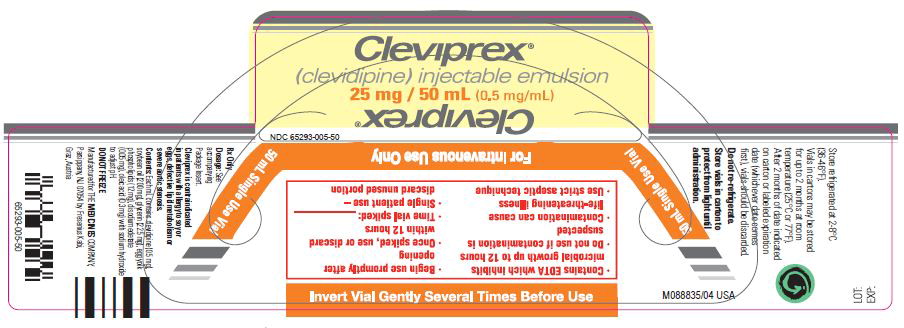
Package Label - Principal Display Panel - 25mg/50mL Vial Label Package Label - Principal Display Panel - 25mg/50mL Vial Label
Package Label - Principal Display Panel - 25mg/50mL Inner Carton Package Label - Principal Display Panel - 25mg/50mL Inner Carton
Package Label - Principal Display Panel - 25mg/50mL Outer Carton Package Label - Principal Display Panel - 25mg/50mL Outer Carton
Package Label - Principal Display Panel - 50mg/100mL Vial Label Package Label - Principal Display Panel - 50mg/100mL Vial Label
Package Label - Principal Display Panel - 50mg/100mL Inner Carton Package Label - Principal Display Panel - 50mg/100mL Inner Carton
Package Label - Principal Display Panel - 50mg/100mL Outer Carton Package Label - Principal Display Panel - 50mg/100mL Outer Carton
Package Label - Principal Display Panel - 125mg/250mL Vial Label Package Label - Principal Display Panel - 125mg/250mL Vial Label
Package Label - Principal Display Panel - 125mg/250mL Inner Carton Package Label - Principal Display Panel - 125mg/250mL Inner Carton
Package Label - Principal Display Panel - 125mg/250mL Outer Carton Package Label - Principal Display Panel - 125mg/250mL Outer Carton
About this NDC listing & data coverage
What data is (and isn’t) available for this NDC — tap to expand
| NDC identity (package / product / labeler codes) | ✓ Available |
| Labeler | ✓ Available |
| Product & package description | ✓ Available |
| Marketing category & status | ✓ Available |
| Active ingredient / dosage form / route | ✓ Available |
| FDA label (SPL via DailyMed) | ✓ Available |
| Package photos | ✓ Available |
| Inactive ingredients (structured) | ✓ Available |
| NADAC pharmacy acquisition price (CMS) | — Not published for this NDC CMS publishes NADAC only for NDCs reported in its retail-pharmacy survey. |
| Orange Book / therapeutic-equivalence data | ✓ Available |
| HCPCS J-code billing crosswalk | — Not published for this NDC Most self-administered / retail products have no J-code — that is normal. |
| Medicaid utilization (CMS SDUD) | — Not published for this NDC CMS reports utilization only for NDCs with Medicaid claims above its privacy threshold. |