
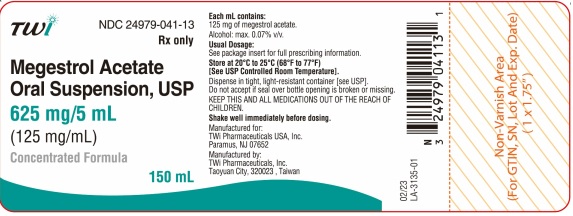
Megestrol Acetate 125 mg/mL Suspension, 150 mL — NDC 24979-041-13 (Billing 24979-0041-13)
This is a package of 150 mL of Megestrol Acetate 125 mg/mL Suspension from Upsher-Smith Laboratories, LLC, marketed since Mar 2015 and currently FDA-listed; retail pharmacies pay about $1.44 per mL (NADAC). It is the main listing for this product, which comes in 2 package sizes.
NDC database record
One package, one record: these facts belong to NDC 24979-041-13 alone.
- Record
- FDA NDC Directory package listing · Human prescription drug
- Code segments
- 24979 labeler · 041 product · 13 package
- Package marketed since
- Jul 28, 2015
- Sample package
- No — commercial package
- Listing certified through
- Dec 31, 2027
- Billing quantity
- 150 mL per package
- Barcode (UPC-A, from the NDC)
- 3 2497904113 1
- Medicaid fills, this package
- 1,740 prescriptions in the last four reported quarters
- FDA record last changed
- Jul 24, 2026
Identity & classification
Regulatory identifiers FDA, NLM and CMS codes for this package
Drug-database identifiers Medi-Span GPI and First Databank GCN / HICL / AHFS classification
- GSN (GCN sequence number): 059343
- GCN: 24948
- GPI-14 (Medi-Span): 26000023201840
- HICL (First Databank): 003923
- AHFS class code: 10:00.00.00
- RxCUI (RxNorm): 577154
Where does this data come from?
- FDA openFDA NDC Directory · synced Oct 8, 2026
- FDA label on DailyMed · label index refreshed Oct 6, 2026
- RxNorm (NLM RxNav) · catalog refreshed Oct 1, 2026
- Medi-Span GPI (licensed)
- First Databank (licensed) · refreshed Oct 8, 2026
RxNorm drug class
This medicine belongs to the Progestin class.
Where does this data come from?
- RxClass (NLM) · catalog refreshed Oct 1, 2026
Clinical
Megestrol tablets are used to relieve the symptoms and reduce the suffering caused by advanced breast cancer and advanced endometrial cancer (cancer that begins in the lining of the uterus). Megestrol suspension is used to treat loss of appetite, malnutrition, and severe weight loss in patients with acquired immunodeficiency syndrome (AIDS). Megestrol should not be used to prevent loss of appetite and severe weight loss in patients who have not yet developed this condition. Megestrol is a man-made version of the human hormone progesterone. It treats breast cancer and endometrial cancer by affe...
Read the full MedlinePlus article ↗- It depends on the form. The oral suspension is used for appetite and weight loss in people with AIDS. The tablets are used for palliative treatment of advanced breast or endometria...
- Both forms are taken by mouth. If you use the suspension, shake the bottle well first. It can be taken with or without meals. Follow your prescriber's directions and the label.
- With the suspension, the common ones are nausea, diarrhea, rash, gas, weakness, high blood pressure, and impotence. Mention any that bother you. Call right away for signs of a bloo...
- No. Megestrol can harm an unborn baby and should not be used in pregnancy. If you could become pregnant, you should have a negative pregnancy test first and use effective contracep...
Patient education
Supplement & herbal interactions
Some supplements/herbs that may interact with Megestrol Acetate — tap one for details:
Where does this data come from?
- MedlinePlus (NLM) · refreshed Oct 1, 2026
- FDA label on DailyMed · label index refreshed Oct 6, 2026
Ask a licensed pharmacist directly — free, answered by our team.
Pricing
A drug doesn't have one price. Each row is a different public payment system, and none is what you'd pay at the counter — that depends on your insurance. The ⓘ on each row explains what it measures.
| Price system | Per mL | Per package |
|---|---|---|
| Retail pharmacies payNADAC · weekly | $1.440 | $216.05 / 150 ml |
| Medicaid paysCMS SDUD · 12 mo | $1.48 | $222.05 / 150 ml |
| Medicare drug plans payPart D · Q2 2026 | $2.10 | $315.42 / 150 ml |
Where does this data come from?
- CMS NADAC weekly file · file of Oct 7, 2026
- CMS ASP pricing files · refreshed Sep 20, 2026
- CMS Medicaid State Drug Utilization Data · through Q1 2026
- CMS Part D plan pricing files · refreshed Sep 24, 2026
- VA National Acquisition Center price file
Packaging — all sizes for this product
| Package NDC | Description | Per unit | Per pack | Marketing start | Marketing end | Status |
|---|---|---|---|---|---|---|
| 24979-0041-13 You're viewing this Main listing | 150 mL in 1 BOTTLE | $1.44 / mL | $216.04 | 2015-07-28 | — | Active |
| 24979-0041-35 24979-041-35 | 35 mL in 1 BOTTLE | — | — | 2025-12-01 | — | Active |
You're viewing the largest of 2 pack sizes for this product.
In Medicaid, this is the most-dispensed pack of this product — about 100% of fills over the last four reported quarters. See all packs ↓
Pack size FAQ
What quantity is in this package?
How does this package differ from NDC 24979-0041-35?
What NDC number is used to bill for this package of Megestrol Acetate 125 mg/mL Suspension?
Prices are the latest CMS NADAC pharmacy acquisition cost per NDC; per-pack figures are per-unit × pack quantity, shown only when the pack is denominated in the same measure NADAC prices.
Therapeutic equivalents
| Product | Labeler | Pack | NADAC/unit | TE | Status | Price vs. this |
|---|---|---|---|---|---|---|
| Megestrol Acetate 125 mg/mLthis 24979-0041-13 | Upsher-Smith | 150 ml | $1.440 | — | Availability likely | — |
| Megestrol Acetate 125 mg/mL 71205-0943-15 | Proficient | 150 ml | — | — | FDA listed | — |
Where does this data come from?
- FDA openFDA NDC Directory · synced Oct 8, 2026
- FDA Orange Book · refreshed Oct 3, 2026
- CMS NADAC weekly file · file of Oct 7, 2026
Availability & generic status
This product is an FDA-approved generic. Other versions of the same drug are listed under Therapeutic equivalents, least expensive first.
Where does this data come from?
- FDA Orange Book · refreshed Oct 3, 2026
What it looks like
Where does this data come from?
- FDA label on DailyMed · label index refreshed Oct 6, 2026
Inactive Ingredients / Excipients
Inactive ingredients, also called excipients, are components of the drug product other than the active ingredient. They may include fillers, dyes, coatings, preservatives, flavors, or other formulation ingredients.
🧪 Avoiding an ingredient? See Megestrol inactive ingredients by manufacturer: every current product's list side by side, so you can ask your pharmacy for the version that does not list it.
💡 Tap an ingredient (hover on desktop) to see what it is and why it’s used.
-
UNII 3K9958V90M
A liquid solvent derived from fermentation or chemical synthesis. In medicines, alcohol dissolves active ingredients, helps preserve the product, and improves how the body absorbs certain drugs.
-
UNII 0VUT3PMY82
Hypromellose 2910 is a plant-derived thickening agent made from cellulose. In medicines, it forms protective coatings on tablets or capsules, controls how fast the drug releases, and thickens liquid formulations.
-
UNII OJ245FE5EU
Sodium benzoate is a salt derived from benzoic acid, a preservative. It's added to medicines to prevent growth of bacteria, fungi, and other microorganisms that could spoil the product.
-
UNII 368GB5141J
A detergent and foaming agent derived from coconut or palm oil. In medications, it helps break down and mix oil and water-based ingredients, aids in tablet disintegration, and improves how the drug dissolves and spreads in the mouth or digestive system.
-
UNII C151H8M554
A natural sugar derived from sugar cane or sugar beets. It's used as a sweetener, filler, and binder to improve taste, add bulk, and help hold tablet or capsule ingredients together.
-
UNII B22547B95K
A salt derived from citric acid that helps maintain the proper acid-base balance in the medicine. It's used as a buffer to keep the product stable and at the right pH level.
6 inactive ingredients listed in the exact product block matched to this NDC.
Where does this data come from?
ingredient classCode="IACT" elements from the exact product block matched by this NDC. Label-section narrative from DailyMed / the openFDA label index is shown separately when available.- FDA label on DailyMed · label index refreshed Oct 6, 2026
- FDA openFDA NDC Directory · synced Oct 8, 2026
Inactive ingredient FAQ
Are inactive ingredients the same for every manufacturer?
Why might an inactive ingredient be missing?
Can inactive ingredients matter?
Manufacturer & labeler
More NDCs from Upsher-Smith Laboratories, LLC labeler code 24979
- Diltiazem Hydrochloride 180 mg Capsule, Extended Release NDC 24979-027-00
- Diltiazem Hydrochloride 240 mg Capsule, Extended Release NDC 24979-028-00
- Diltiazem Hydrochloride 300 mg Capsule, Extended Release NDC 24979-029-00
- Diltiazem Hydrochloride 360 mg Capsule, Extended Release NDC 24979-030-00
- Cyclobenzaprine Hydrochloride 15 mg Capsule, Extended Release NDC 24979-035-04
- Cyclobenzaprine Hydrochloride 30 mg Capsule, Extended Release NDC 24979-036-04
- Testosterone 16.2 mg/g Gel NDC 24979-078-15
- Bupropion Hydrochloride (XL) 150 mg Tablet, Extended Release NDC 24979-101-02
- Bupropion Hydrochloride (XL) 300 mg Tablet, Extended Release NDC 24979-102-02
- CYCLOSPORINE .5 mg/mL Emulsion NDC 24979-126-18
- dimethyl fumarate 120 mg Capsule, Delayed Release NDC 24979-127-02
- dimethyl fumarate 240 mg Capsule, Delayed Release NDC 24979-128-02
Where does this data come from?
- FDA openFDA NDC Directory · synced Oct 8, 2026
- Drugs@FDA
Full prescribing information FDA SPL
🎯 Indications and Usage ▾
1 INDICATIONS AND USAGE Megestrol acetate oral suspension is indicated for the treatment of anorexia, cachexia, or an unexplained significant weight loss in patients with a diagnosis of acquired immunodeficiency syndrome (AIDS). Limitations of Use Therapy with megestrol acetate oral suspension for weight loss should only be instituted after treatable causes of weight loss are sought and addressed. These treatable causes include possible malignancies, systemic infections, gastrointestinal disorders affecting absorption, endocrine disease, renal disease or psychiatric diseases.
Megestrol acetate oral suspension is not intended for prophylactic use to avoid weight loss. Megestrol acetate oral suspension is a progestin indicated for the treatment of anorexia, cachexia, or an unexplained significant weight loss in patients with a diagnosis of acquired immunodeficiency syndrome (AIDS) (1) .
⏱️ Dosage and Administration ▾
2 DOSAGE AND ADMINISTRATION Obtain a negative pregnancy test in females of reproductive potential prior to initiating treatment ( 2.1 ) The recommended adult initial dosage of megestrol acetate oral suspension is 625 mg/day (5 mL/day or one teaspoon daily) ( 2.2 ). Shake container well before using ( 2.2 ).
2.1Testing Prior to Megestrol Acetate Oral Suspension Administration Obtain a negative pregnancy test in females of reproductive potential prior to initiating treatment with megestrol acetate oral suspension [see Contraindications ( 4 ), Warnings and Precautions ( 5.2 ), Use in Specific Populations ( 8.1 , 8.3 )].
2.2Dosing and Administration The recommended adult initial dosage of megestrol acetate oral suspension is 625 mg/day (5 mL/day or one teaspoon daily). Shake the container well before using. This strength (125 mg/mL) is not substitutable with other strengths (e.g., 40 mg/mL). Refer to the prescribing information of the 40 mg/mL product for dosage recommendations for the 40 mg/mL strength.
💊 Dosage Forms and Strengths ▾
3 DOSAGE FORMS AND STRENGTHS Megestrol acetate oral suspension is milky white, lemon flavored, and contains 125 mg per mL. Oral suspension containing 125 mg of megestrol acetate per mL (3) .
⛔ Contraindications ▾
4 CONTRAINDICATIONS History of hypersensitivity to megestrol acetate or any component of the formulation. Pregnancy [see Warnings and Precautions ( 5.2 ), Use in Specific Populations ( 8.1 , 8.3 )]. History of hypersensitivity to megestrol acetate or any component of the formulation ( 4 ). Pregnancy ( 4 )( 8.1 ).
⚠️ Warnings and Cautions ▾
5 WARNINGS AND PRECAUTIONS Use with caution in patients with a history of thromboembolic disease (5.1) . Fetal Effects: May cause fetal harm. Females of reproductive potential should be advised to avoid becoming pregnant ( 5.2 ).
Clinical cases of overt Cushing's Syndrome have been reported in association with the chronic use of megestrol acetate. In addition, clinical cases of adrenal insufficiency have been observed in patients receiving or being withdrawn from chronic megestrol acetate in the stressed and non-stressed state (5.3) . New onset and exacerbation of pre-existing diabetes have been reported (5.4) .
5.1General Effects on HIV viral replication have not been determined. Use with caution in patients with a history of thromboembolic disease.
5.2Fetal Toxicity Based on animal studies, megestrol acetate may cause fetal harm when administered to a pregnant woman. Pregnant rats treated with low doses of megestrol acetate resulted in a reduction in fetal weight and number of live births, and feminization of male fetuses. There are no available human data to assess for any drug associated risks of miscarriage, birth defects, or adverse maternal or fetal outcomes.
If this drug is used during pregnancy, or if the patient becomes pregnant while taking (receiving) this drug, advise the patient of the potential hazard to the fetus [see Use in Specific Populations ( 8.1 ), Nonclinical Toxicology ( 13.1 )]. Obtain a pregnancy test in females of reproductive potential prior to initiating treatment with megestrol acetate oral suspension [see Dosage and Administration ( 2.1 )]. Advise females of reproductive potential to use effective contraception while taking megestrol acetate oral suspension [see Use in Specific Populations ( 8.3 )].
5.3Adrenal Insufficiency The glucocorticoid activity of megestrol acetate oral suspension has not been fully evaluated. Clinical cases of overt Cushing's Syndrome have been reported in association with the chronic use of megestrol acetate. In addition, clinical cases of adrenal insufficiency have been observed in patients receiving or being withdrawn from chronic megestrol acetate therapy in the stressed and non-stressed state.
Furthermore, adrenocorticotropin (ACTH) stimulation testing has revealed the frequent occurrence of asymptomatic pituitary-adrenal suppression in patients treated with chronic megestrol acetate therapy. Therefore, the possibility of adrenal insufficiency should be considered in any patient receiving or being withdrawn from chronic megestrol acetate oral suspension therapy who presents with symptoms and/or signs suggestive of hypoadrenalism (e.g., hypotension, nausea, vomiting, dizziness, or weakness) in either the stressed or non-stressed state.
Laboratory evaluation for adrenal insufficiency and consideration of replacement or stress doses of a rapidly acting glucocorticoid are strongly recommended in such patients. Failure to recognize inhibition of the hypothalamic-pituitary adrenal axis may result in death. Finally, in patients who are receiving or being withdrawn from chronic megestrol acetate oral suspension therapy, consideration should be given to the use of empiric therapy with stress doses of a rapidly acting glucocorticoid during stress or serious intercurrent illness (e.g., surgery, infection).
5.4Diabetes Clinical cases of new onset diabetes mellitus and exacerbation of pre-existing diabetes mellitus have been reported in association with the chronic use of megestrol acetate.
🤒 Adverse Reactions ▾
6 ADVERSE REACTIONS The most common adverse events occurring in > 5% of all patients receiving 800mg/20mL of megestrol acetate oral suspension in the two clinical efficacy trials were nausea, diarrhea, impotence, rash, flatulence, hypertension, and asthenia (6.2) . To report SUSPECTED ADVERSE REACTIONS, contact TWi Pharmaceuticals, Inc. at 1-844-518-2989 or FDA at 1-800-FDA-1088 or www.fda.gov/medwatch.
6.1Serious and Otherwise Important Adverse Reactions The following serious reactions and otherwise important adverse drug reactions are discussed in greater detail in other sections of the labeling: Hypersensitivity [see Contraindications ( 4 )] Thromboembolic Disease [see Warnings and Precautions ( 5.1 )] Adrenal Insufficiency [see Warnings and Precautions ( 5.3 )] Diabetes [see Warnings and Precautions ( 5.4 )]
6.2Clinical Trial Experience Because clinical trials are conducted under widely varying conditions, adverse reactions observed in the clinical trials of a drug cannot be directly compared to rates in the clinical trials of another drug and may not reflect the rates observed in practice. The safety of megestrol acetate oral suspension, 125 mg/mL was based on three studies of megestrol acetate oral suspension (40 mg/mL). The adverse reaction profile of these 3 studies are presented below.
Adverse events which occurred in at least 5% of patients in any arm of the two clinical efficacy trials and the open trial for megestrol acetate oral suspension are listed below by treatment group. All patients listed had at least one post baseline visit during the 12 study weeks. Table 1: Adverse Events Percentage of Patients Reporting Adverse Events Trial 1 (N=236) Trial 2 (N=87) Open Label Trial Placebo Placebo Megestrol Acetate mg/day 0 100 400 800 0 800 1200 No. of Patients N=34 N=68 N=69 N=65 N=38 N=49 N=176 Diarrhea 15 13 8 15 8 6 10 Impotence 3 4 6 14 0 4 7 Rash 9 9 4 12 3 2 6 Flatulence 9 0 1 9 3 10 6 Hypertension 0 0 0 8 0 0 4 Asthenia 3 2 3 6 8 4 5 Insomnia 0 3 4 6 0 0 1 Nausea 9 4 0 5 3 4 5 Anemia 6 3 3 5 0 0 0 Fever 3 6 4 5 3 2 1 Libido Decreased 3 4 0 5 0 2 1 Dyspepsia 0 0 3 3 5 4 2 Hyperglycemia 3 0 6 3 0 0 3 Headache 6 10 1 3 3 0 3 Pain 6 0 0 2 5 6 4 Vomiting 9 3 0 2 3 6 4 Pneumonia 6 2 0 2 3 0 1 Urinary Frequency 0 0 1 2 5 2 1 Adverse events which occurred in 1% to 3% of all patients enrolled in the two clinical efficacy trials with at least one follow-up visit during the first 12 weeks of the study are listed below by body system.
Adverse events occurring less than 1% are not included. There were no significant differences between incidence of these events in patients treated with megestrol acetate and patients treated with placebo. Body as a Whole - abdominal pain, chest pain, infection, moniliasis and sarcoma Cardiovascular System - cardiomyopathy and palpitation Digestive System - constipation, dry mouth, hepatomegaly, increased salivation and oral moniliasis Hemic and Lymphatic System - leukopenia Metabolic and Nutritional - LDH increased, edema and peripheral edema Nervous System - paresthesia, confusion, convulsion, depression, neuropathy, hypesthesia and abnormal thinking Respiratory System - dyspnea, cough, pharyngitis and lung disorder Skin and Appendages - alopecia, herpes, pruritus, vesiculobullous rash, sweating and skin disorder Special Senses - amblyopia Urogenital System - albuminuria, urinary incontinence, urinary tract infection and gynecomastia.
6.3Postmarketing Experience Postmarketing reports associated with megestrol acetate oral suspension include thromboembolic phenomena including thrombophlebitis, deep vein thrombosis, and pulmonary embolism; and glucose intolerance.
🔄 Drug Interactions ▾
7 DRUG INTERACTIONS Due to a significant decrease in indinavir exposure, administration of a higher dose of indinavir should be considered when coadministering with megestrol acetate ( 7.1 , 12.3 ).
7.1Indinavir Due to the significant decrease in the exposure of indinavir by megestrol acetate, administration of a higher dose of indinavir should be considered when coadministering with megestrol acetate [See Clinical Pharmacology ( 12.3 )] .
7.2Zidovudine and Rifabutin No dosage adjustment for zidovudine and rifabutin is needed when megestrol acetate is coadministered with these drugs [See Clinical Pharmacology ( 12.3 )] .
👥 Use in Specific Populations ▾
8 USE IN SPECIFIC POPULATIONS Lactation : Women infected with HIV-1 should be instructed not to breastfeed due to the potential for HIV transmission ( 8.2 ). Geriatrics : In general, dose selection for an elderly patient should be cautious, usually starting at the low end of the dosing range, reflecting the greater frequency of decreased hepatic, renal or cardiac function, and of concomitant disease or other therapy ( 8.5 ).
8.1Pregnancy Risk Summary Based on animal data, megestrol acetate may cause fetal harm when administered to a pregnant woman and is contraindicated during pregnancy [see Contraindications ( 4 )] . There are no available human data to assess for any drug-associated risks of miscarriage, birth defects, or adverse maternal or fetal outcomes. There are no adequate animal developmental toxicity data at clinically relevant doses.
Pregnant rats treated with low doses of megestrol acetate resulted in a reduction in fetal weight and number of live births, and feminization of male fetuses at doses below maximum recommended clinical dosing based on body surface area ( see Data ). Advise a pregnant women of the potential risk to the fetus. The estimated background risk of major birth defects and miscarriage for the indicated population is unknown.
In the U.S. general population, the estimated background risk of major birth defects and of miscarriage in clinically recognized pregnancies is 2 to 4% and 15 to 20%, respectively. Data Reproduction studies were performed in pregnant rats at oral doses ranging from 0.05 to 12.5 mg/kg/day, which are below the maximum recommended clinical dose based on body surface area. Reduction in fetal weight and number of live births were observed at 12.5 mg/kg/day (5 times lower than the maximum clinical dose) when dams were dosed on days 12 through 18 of pregnancy.
Feminization of male fetuses also occurred when dams were dosed on days 13 through 20 of pregnancy at 3 mg/kg/day, approximately 22 times below the maximum clinical dose.
8.2Lactation Risk Summary The Centers for Disease Control and Prevention recommend that HIV-1 infected mothers not breastfeed their infants to avoid risking postnatal transmission of HIV-1. Megestrol acetate is present in human milk. There are no data on the effects of megesterol acetate on the breastfed infant or the effects on milk production.
Because of the potential for HIV transmission and adverse effects on a breastfed infant, instruct mothers not to breastfeed if they are taking megestrol acetate oral suspension.
8.3Females and Males of Reproductive Potential Pregnancy testing Pregnancy testing is recommended prior to treatment with megestrol acetate oral suspension [see Dosage and Administration ( 2.1 ), Use in Specific Populations ( 8.1 )]. Contraception Megestrol acetate oral suspension may cause fetal harm when administered during pregnancy [see Use in Specific Populations ( 8.1 )]. Advise females of reproductive potential to use effective contraception during treatment with megestrol acetate oral suspension.
8.4Pediatric Use Safety and effectiveness in pediatric patients have not been established.
8.5Geriatric Use Clinical studies of megestrol acetate oral suspension in the treatment of anorexia, cachexia, or an unexplained significant weight loss in patients with AIDS did not include sufficient numbers of patients aged 65 years and older to determine whether they respond differently than younger patients. Other reported clinical experience has not identified differences in responses between elderly and younger patients. In general, dose selection for an elderly patient should be cautious, usually starting at the low end of the dosing range, reflecting the greater frequency of decreased hepatic, renal, or cardiac function, and of concomitant disease or other drug therapy.
Megestrol acetate is known to be substantially excreted by the kidney, and the risk of toxic reactions to this drug may be greater in patients with impaired renal function.… [Excerpted — this section continues on DailyMed.]
🤰 Pregnancy ▾
8.1Pregnancy Risk Summary Based on animal data, megestrol acetate may cause fetal harm when administered to a pregnant woman and is contraindicated during pregnancy [see Contraindications ( 4 )] . There are no available human data to assess for any drug-associated risks of miscarriage, birth defects, or adverse maternal or fetal outcomes. There are no adequate animal developmental toxicity data at clinically relevant doses.
Pregnant rats treated with low doses of megestrol acetate resulted in a reduction in fetal weight and number of live births, and feminization of male fetuses at doses below maximum recommended clinical dosing based on body surface area ( see Data ). Advise a pregnant women of the potential risk to the fetus. The estimated background risk of major birth defects and miscarriage for the indicated population is unknown.
In the U.S. general population, the estimated background risk of major birth defects and of miscarriage in clinically recognized pregnancies is 2 to 4% and 15 to 20%, respectively. Data Reproduction studies were performed in pregnant rats at oral doses ranging from 0.05 to 12.5 mg/kg/day, which are below the maximum recommended clinical dose based on body surface area. Reduction in fetal weight and number of live births were observed at 12.5 mg/kg/day (5 times lower than the maximum clinical dose) when dams were dosed on days 12 through 18 of pregnancy.
Feminization of male fetuses also occurred when dams were dosed on days 13 through 20 of pregnancy at 3 mg/kg/day, approximately 22 times below the maximum clinical dose.
🧒 Pediatric Use ▾
8.4Pediatric Use Safety and effectiveness in pediatric patients have not been established.
🧓 Geriatric Use ▾
8.5Geriatric Use Clinical studies of megestrol acetate oral suspension in the treatment of anorexia, cachexia, or an unexplained significant weight loss in patients with AIDS did not include sufficient numbers of patients aged 65 years and older to determine whether they respond differently than younger patients. Other reported clinical experience has not identified differences in responses between elderly and younger patients. In general, dose selection for an elderly patient should be cautious, usually starting at the low end of the dosing range, reflecting the greater frequency of decreased hepatic, renal, or cardiac function, and of concomitant disease or other drug therapy.
Megestrol acetate is known to be substantially excreted by the kidney, and the risk of toxic reactions to this drug may be greater in patients with impaired renal function. Because elderly patients are more likely to have decreased renal function, care should be taken in dose selection, and it may be useful to monitor renal function.
🆘 Overdosage ▾
10 OVERDOSAGE No serious unexpected side effects have resulted from studies involving megestrol acetate oral suspension administered in dosages as high as 1200 mg/day. In post-marketing experience, limited reports of overdose have been received. Signs and symptoms reported in the context of overdose included diarrhea, nausea, abdominal pain, shortness of breath, cough, unsteady gait, listlessness, and chest pain.
There is no specific antidote for overdose with megestrol acetate oral suspension. In case of overdose, appropriate supportive measures should be taken. Megestrol acetate has not been tested for dialyzability; however, due to its low solubility it is postulated that dialysis would not be an effective means of treating overdose.
🧬 Clinical Pharmacology ▾
12 CLINICAL PHARMACOLOGY
12.1Mechanism of Action Several investigators have reported on the appetite enhancing property of megestrol acetate and its possible use in cachexia. The precise mechanism by which megestrol acetate produces effects in anorexia and cachexia is unknown at the present time.
12.3Pharmacokinetics Absorption and Distribution Mean plasma concentrations of megestrol acetate after administration of 625 mg (125 mg/mL) of megestrol acetate oral suspension are equivalent under fed conditions to 800 mg (40 mg/mL) of megestrol acetate oral suspension in healthy volunteers. In order to characterize the dose proportionality of megestrol acetate oral suspension, pharmacokinetic studies across a range of doses were conducted when administered under fasting and fed conditions. Pharmacokinetics of megestrol acetate was linear in the dosing range between 150 mg and 675 mg after megestrol acetate oral suspension administration regardless of meal condition.
The mean peak plasma concentration (C max ) and the mean area under the concentration time-curve (AUC) after a high fat meal were increased by 48% and 36%, respectively, compared to those under the fasting condition after 625 mg megestrol acetate oral suspension administration. This food effect is less than that seen for the original formulation, megestrol acetate 800 mg/20 mL, where a high fat meal significantly increased AUC and C max of megestrol acetate to 2-fold and 7-fold, respectively, compared to those under the fasting condition.
There was no difference in safety following administration in the fed state, therefore megestrol acetate oral suspension could be taken without regard to meals. Plasma steady state pharmacokinetics of megestrol acetate was evaluated in 10 adult, cachectic male adult patients with acquired immunodeficiency syndrome (AIDS) and an involuntary weight loss greater than 10% of baseline who received single oral doses of 800 mg/day of megestrol acetate oral suspension for 21 days. The Mean (±1SD) C max of megestrol acetate was 753 (±539) ng/mL.
The mean AUC was 10476 (±7788) ng x hr/mL. Median T max value was five hours. In another study, 24 asymptomatic HIV seropositive male adult subjects were dosed once daily with 750 mg of megestrol acetate oral suspension for 14 days.
Mean C max and AUC values were 490 (±238) ng/mL and 6779 (±3048) hr x ng/mL, respectively. The median T max value was three hours. The mean C min value was 202 (±101) ng/mL.
The mean % of fluctuation value was 107 (±40). Metabolism and Excretion The major route of drug elimination in humans is urine. When radio-labeled megestrol acetate was administered to humans in doses of 4 to 90 mg, the urinary excretion within 10 days ranged from 56.5% to 78.4% (mean 66.4%) and fecal excretion ranged from 7.7% to 30.3% (mean 19.8%).
The total recovered radioactivity varied between 83.1% and 94.7% (mean 86.2%). Megestrol acetate metabolites which were identified in urine constituted 5% to 8% of the dose administered. Respiratory excretion as labeled carbon dioxide and fat storage may have accounted for at least part of the radioactivity not found in urine and feces.
The mean elimination half-life of megestrol ranged from 20 to 50 hours in healthy subjects. Specific Populations The pharmacokinetics of megestrol acetate has not been studied in specific population, for example, pediatric, renal impairment, and hepatic impairment. Drug Interactions The effects of indinavir, zidovudine or rifabutin on the pharmacokinetics of megestrol acetate were not studied.
Zidovudine Pharmacokinetic studies show that there are no significant alterations in exposure of zidovudine when megestrol acetate is administered with this drug. Rifabutin Pharmacokinetic studies show that there are no significant alterations in exposure of rifabutin when megestrol acetate is administered with this drug. Indinavir A pharmacokinetic study in healthy male subjects demonstrated that coadministration of megestrol acetate… [Excerpted — this section continues on DailyMed.]
🧬 Mechanism of Action ▾
12.1Mechanism of Action Several investigators have reported on the appetite enhancing property of megestrol acetate and its possible use in cachexia. The precise mechanism by which megestrol acetate produces effects in anorexia and cachexia is unknown at the present time.
📦 How Supplied / Storage and Handling ▾
16 HOW SUPPLIED/STORAGE AND HANDLING
16.1How Supplied Megestrol acetate oral suspension is a milky white, lemon flavored oral suspension containing 125 mg per mL. Available in bottles of 35 mL or 150 mL: Bottle of 35 mL (1 fl. oz.): NDC 24979‑041‑35 Bottle of 150 mL (5 fl. oz.): NDC 24979‑041‑13
16.2Storage Store megestrol acetate oral suspension between 20° to 25° C (68° to 77° F) and dispense in a tight container. Protect from heat.
16.3Safe Handling Health Hazard Data There is no threshold limit value established by OSHA, NIOSH, or ACGIH. Exposure or overdose at levels approaching recommended dosing levels could result in side effects described above [see Warnings and Precautions ( 5 ) and Adverse Reactions ( 6 )]. Women at risk of pregnancy should avoid such exposure.
📋 Description ▾
11 DESCRIPTION Megestrol acetate oral suspension contains megestrol acetate, a synthetic derivative of the naturally occurring steroid hormone, progesterone. Megestrol acetate is a white, crystalline solid chemically designated as 17-Hydroxy-6-methyl pregna-4,6-diene-3,20-dione acetate. Solubility at 37° C in water is 2 mcg per mL, solubility in plasma is 24 mcg per mL.
Its molecular weight is 384.52. The chemical formula is C 24 H 32 O 4 and the structural formula is represented as follows: Figure 1: Megestrol Acetate Chemical Structure Megestrol acetate oral suspension is an oral suspension containing 125 mg of megestrol acetate per mL. Megestrol acetate oral suspension contains the following inactive ingredients: alcohol (max 0.07% v/v from flavor), citric acid monohydrate, hypromellose, lemon flavor, sodium benzoate, sodium citrate dihydrate, sodium lauryl sulfate, and sucrose.
The USP dissolution test is pending. b5862d67-figure-01
💬 Information for Patients ▾
17 PATIENT COUNSELING INFORMATION 023The prescriber should inform the patient about the product differences to avoid overdosing or underdosing of megestrol acetate. The recommended adult dosage of megestrol acetate oral suspension is one teaspoon (5 mL) once a day [see Dosage and Administration ( 2 )]. Patients using megestrol acetate oral suspension should receive the following instructions: This medication is to be used as directed by the physician.
Megestrol acetate oral suspension (625 mg/5 mL) does not contain the same amount of megestrol acetate as Megace oral suspension or any of the other megestrol acetate oral suspensions. Megestrol acetate oral suspension contains 625 mg of megestrol acetate per 5 mL (125mg/mL) whereas Megace oral suspension and other megestrol acetate oral suspensions contain 800 mg per 20 mL (40 mg/mL). Report any adverse reaction experiences while taking this medication.
Fetal Toxicity [see Warnings and Precautions ( 5.2 ), Use in Specific Populations ( 8.1 , 8.3 )] Advise pregnant women and females of reproductive potential of the potential risk to a fetus. Advise females to inform their healthcare provider of a known or suspected pregnancy. Advise female patients of reproductive potential to use effective contraception during treatment with megestrol acetate oral suspension.
Lactation [see Use in Specific Populations ( 8.2 )] Advise mothers not to breastfeed because of the risk of passing the HIV-1 virus to the baby in breast milk. All trademarks are property of their respective owners. Distributed by UPSHER-SMITH LABORATORIES, LLC Maple Grove, MN 55369 LA-3136-03 Revised: 12/2025
🍼 Nursing Mothers ▾
8.3Females and Males of Reproductive Potential Pregnancy testing Pregnancy testing is recommended prior to treatment with megestrol acetate oral suspension [see Dosage and Administration ( 2.1 ), Use in Specific Populations ( 8.1 )]. Contraception Megestrol acetate oral suspension may cause fetal harm when administered during pregnancy [see Use in Specific Populations ( 8.1 )]. Advise females of reproductive potential to use effective contraception during treatment with megestrol acetate oral suspension.
🧬 Pharmacokinetics ▾
12.3Pharmacokinetics Absorption and Distribution Mean plasma concentrations of megestrol acetate after administration of 625 mg (125 mg/mL) of megestrol acetate oral suspension are equivalent under fed conditions to 800 mg (40 mg/mL) of megestrol acetate oral suspension in healthy volunteers. In order to characterize the dose proportionality of megestrol acetate oral suspension, pharmacokinetic studies across a range of doses were conducted when administered under fasting and fed conditions. Pharmacokinetics of megestrol acetate was linear in the dosing range between 150 mg and 675 mg after megestrol acetate oral suspension administration regardless of meal condition.
The mean peak plasma concentration (C max ) and the mean area under the concentration time-curve (AUC) after a high fat meal were increased by 48% and 36%, respectively, compared to those under the fasting condition after 625 mg megestrol acetate oral suspension administration. This food effect is less than that seen for the original formulation, megestrol acetate 800 mg/20 mL, where a high fat meal significantly increased AUC and C max of megestrol acetate to 2-fold and 7-fold, respectively, compared to those under the fasting condition.
There was no difference in safety following administration in the fed state, therefore megestrol acetate oral suspension could be taken without regard to meals. Plasma steady state pharmacokinetics of megestrol acetate was evaluated in 10 adult, cachectic male adult patients with acquired immunodeficiency syndrome (AIDS) and an involuntary weight loss greater than 10% of baseline who received single oral doses of 800 mg/day of megestrol acetate oral suspension for 21 days. The Mean (±1SD) C max of megestrol acetate was 753 (±539) ng/mL.
The mean AUC was 10476 (±7788) ng x hr/mL. Median T max value was five hours. In another study, 24 asymptomatic HIV seropositive male adult subjects were dosed once daily with 750 mg of megestrol acetate oral suspension for 14 days.
Mean C max and AUC values were 490 (±238) ng/mL and 6779 (±3048) hr x ng/mL, respectively. The median T max value was three hours. The mean C min value was 202 (±101) ng/mL.
The mean % of fluctuation value was 107 (±40). Metabolism and Excretion The major route of drug elimination in humans is urine. When radio-labeled megestrol acetate was administered to humans in doses of 4 to 90 mg, the urinary excretion within 10 days ranged from 56.5% to 78.4% (mean 66.4%) and fecal excretion ranged from 7.7% to 30.3% (mean 19.8%).
The total recovered radioactivity varied between 83.1% and 94.7% (mean 86.2%). Megestrol acetate metabolites which were identified in urine constituted 5% to 8% of the dose administered. Respiratory excretion as labeled carbon dioxide and fat storage may have accounted for at least part of the radioactivity not found in urine and feces.
The mean elimination half-life of megestrol ranged from 20 to 50 hours in healthy subjects. Specific Populations The pharmacokinetics of megestrol acetate has not been studied in specific population, for example, pediatric, renal impairment, and hepatic impairment. Drug Interactions The effects of indinavir, zidovudine or rifabutin on the pharmacokinetics of megestrol acetate were not studied.
Zidovudine Pharmacokinetic studies show that there are no significant alterations in exposure of zidovudine when megestrol acetate is administered with this drug. Rifabutin Pharmacokinetic studies show that there are no significant alterations in exposure of rifabutin when megestrol acetate is administered with this drug. Indinavir A pharmacokinetic study in healthy male subjects demonstrated that coadministration of megestrol acetate (675 mg for 14 days) and indinavir (single dose 800 mg) results in a significant decrease in the pharmacokinetic parameters (~32% for C max and ~21% for AUC) of indinavir.
🔬 Clinical Studies ▾
14 CLINICAL STUDIES The efficacy of megestrol acetate oral suspension, 125 mg/mL, was based on two trials of megestrol acetate oral suspension (40 mg/mL). These two trials are described below. Trial 1 One was a multicenter, randomized, double-blind, placebo-controlled study comparing megestrol acetate (MA) at doses of 100 mg, 400 mg, and 800 mg per day versus placebo in AIDS patients with anorexia/cachexia and significant weight loss.
Of the 270 patients entered on study, 195 met all inclusion/exclusion criteria, had at least two additional post baseline weight measurements over a 12 week period or had one post baseline weight measurement but dropped out for therapeutic failure. The percent of patients gaining 2.3 kg or more at maximum weight gain in 12 study weeks was statistically significantly greater for the 800 mg (64%) and 400 mg (57%) MA-treated groups than for the placebo group (24%). Mean weight increased from baseline to last evaluation in 12 study weeks in the 800 mg MA-treated group by 3.5 kg, the 400 mg MA group by 1.9 kg, the 100 mg MA group by 0.9 kg and decreased in the placebo group by 0.7 kg.
Mean weight changes at 4, 8 and 12 weeks for patients evaluable for efficacy in the two clinical trials is shown graphically. Changes in body composition during the 12 study weeks as measured by bioelectrical impedance analysis showed increases in non-water body weight in the MA-treated groups. In addition, edema developed or worsened in only 3 patients.
Greater percentages of MA-treated patients in the 800 mg group (89%), the 400 mg group (68%) and the 100 mg group (72%), than in the placebo group (50%), showed an improvement in appetite at last evaluation during the 12 study weeks. A statistically significant difference was observed between the 800 mg MA-treated group and the placebo group in the change in caloric intake from baseline to time of maximum weight change. Patients were asked to assess weight change, appetite, appearance, and overall perception of well-being in a 9 question survey.
At maximum weight change only the 800 mg MA-treated group gave responses that were statistically significantly more favorable to all questions when compared to the placebo-treated group. A dose response was noted in the survey with positive responses correlating with higher dose for all questions. Trial 2 The second trial was a multicenter, randomized, double-blind, placebo-controlled study comparing megestrol acetate 800 mg/day versus placebo in AIDS patients with anorexia/cachexia and significant weight loss.
Of the 100 patients entered on study, 65 met all inclusion/exclusion criteria, had at least two additional post baseline weight measurements over a 12 week period or had one post baseline weight measurement but dropped out for therapeutic failure. Patients in the 800 mg MA-treated group had a statistically significantly larger increase in mean maximum weight change than patients in the placebo group. From baseline to study week 12, mean weight increased by 5.1 kg in the MA-treated group and decreased 1.0 kg in the placebo group.
Changes in body composition as measured by bioelectrical impedance analysis showed increases in non-water weight in the MA-treated group ( see Clinical Studies table ). No edema was reported in the MA-treated group. A greater percentage of MA-treated patients (67%) than placebo-treated patients (38%) showed an improvement in appetite at last evaluation during the 12 study weeks; this difference was statistically significant.
There were no statistically significant differences between treatment groups in mean caloric change or in daily caloric intake at time to maximum weight change. In the same 9 question survey referenced in the first trial, patients' assessments of weight change, appetite, appearance, and overall perception of well-being showed increases in mean scores in MA-treated patients as compared to the placebo group. In both trials, patients tolerated the drug well and no statistically si… [Excerpted — this section continues on DailyMed.]
🧪 Nonclinical Toxicology ▾
13 NONCLINICAL TOXICOLOGY
13.1Carcinogenesis, Mutagenesis, Impairment of Fertility Data on carcinogenesis were obtained from studies conducted in dogs, monkeys and rats treated with megestrol acetate at doses below the recommended clinical dose based on body surface area. No males were used in the dog and monkey studies. In female beagles, megestrol acetate (0.01, 0.1 or 0.25 mg/kg/day) administered for up to 7 years induced both benign and malignant tumors of the breast at doses greater than or equal to 0.01 mg/kg/day, approximately 75 to 187 times below the maximum clinical dose.
In female monkeys, no tumors were found following 10 years of treatment with 0.01, 0.1 or 0.5 mg/kg/day megestrol acetate, up to 65 times below the maximum clinical dose. Pituitary tumors were observed in female rats treated for 2 years with 3.9 or 10 mg/kg/day of megestrol acetate, approximately 6 to 17 times below the maximum clinical dose. The relationship of these tumors in rats and dogs to humans is unknown but should be considered in assessing the risk-to-benefit ratio when prescribing megestrol acetate oral suspension and in surveillance of patients on therapy.
Megestrol acetate induced unscheduled DNA synthesis in primary cultures of human hepatocytes, but not in rat hepatocytes. Megestrol administered to mice increased the frequency of sister chromatid exchange and chromosomal aberrations in bone marrow cells after single intraperitonial doses of 16.25 and 32.50 mg/kg. Impaired reproductive capability was observed in male offspring born to female rats treated during gestation days 13 through 20 with oral doses greater than or equal to 3 mg/kg/day megestrol, approximately 22 times below the maximum clinical dose.
Female dogs treated daily with megestrol oral capsules for 7 years experienced a complete cessation of estrus activity and ovulation at doses of 0.1, or 0.25 mg/kg/day, approximately 187 and 75 times below the maximum clinical dose, respectively.
13.2Animal Pharmacology and/or Toxicology Long-term treatment with megestrol acetate oral suspension may increase the risk of respiratory infections. A trend toward increased frequency of respiratory infections, decreased lymphocyte counts and increased neutrophil counts was observed in a two-year chronic toxicity/carcinogenicity study of megestrol acetate conducted in rats.
📄 Carcinogenesis, Mutagenesis, Impairment of Fertility ▾
13.1Carcinogenesis, Mutagenesis, Impairment of Fertility Data on carcinogenesis were obtained from studies conducted in dogs, monkeys and rats treated with megestrol acetate at doses below the recommended clinical dose based on body surface area. No males were used in the dog and monkey studies. In female beagles, megestrol acetate (0.01, 0.1 or 0.25 mg/kg/day) administered for up to 7 years induced both benign and malignant tumors of the breast at doses greater than or equal to 0.01 mg/kg/day, approximately 75 to 187 times below the maximum clinical dose.
In female monkeys, no tumors were found following 10 years of treatment with 0.01, 0.1 or 0.5 mg/kg/day megestrol acetate, up to 65 times below the maximum clinical dose. Pituitary tumors were observed in female rats treated for 2 years with 3.9 or 10 mg/kg/day of megestrol acetate, approximately 6 to 17 times below the maximum clinical dose. The relationship of these tumors in rats and dogs to humans is unknown but should be considered in assessing the risk-to-benefit ratio when prescribing megestrol acetate oral suspension and in surveillance of patients on therapy.
Megestrol acetate induced unscheduled DNA synthesis in primary cultures of human hepatocytes, but not in rat hepatocytes. Megestrol administered to mice increased the frequency of sister chromatid exchange and chromosomal aberrations in bone marrow cells after single intraperitonial doses of 16.25 and 32.50 mg/kg. Impaired reproductive capability was observed in male offspring born to female rats treated during gestation days 13 through 20 with oral doses greater than or equal to 3 mg/kg/day megestrol, approximately 22 times below the maximum clinical dose.
Female dogs treated daily with megestrol oral capsules for 7 years experienced a complete cessation of estrus activity and ovulation at doses of 0.1, or 0.25 mg/kg/day, approximately 187 and 75 times below the maximum clinical dose, respectively.
📄 Package Label / Principal Display Panel ▾
PRINCIPAL DISPLAY PANEL - 150 mL Bottle Label image description image description image description image description