
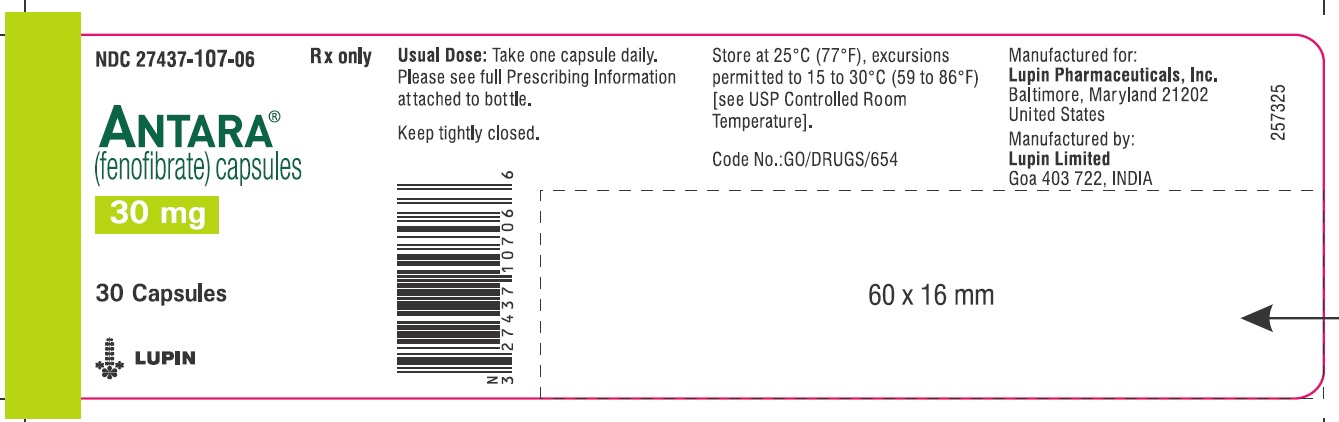
Antara fenofibrate 30 mg Capsule, 30-count — NDC 27437-107-06 (Billing 27437-0107-06)
This is a package of 30 capsules of Antara fenofibrate 30 mg Capsule from Lupin Pharmaceuticals, Inc., no longer marketed (first marketed Nov 2013), no longer in the FDA NDC Directory. It is the main listing for this product, which comes in 2 package sizes.
NDC database record
One package, one record: these facts belong to NDC 27437-107-06 alone.
- Record
- FDA NDC Directory package listing · Human prescription drug
- Code segments
- 27437 labeler · 107 product · 06 package
- Listing certified through
- Dec 31, 2026
- Billing quantity
- 30 EA per package
- Barcode (UPC)
- 0327437107066, 0327437108094
- FDA record last changed
- Jul 24, 2026
Other active recalls for Fenofibrate (different manufacturers) — 2 · tap to view
Identity & classification
Regulatory identifiers FDA, NLM and CMS codes for this package
Drug-database identifiers Medi-Span GPI and First Databank GCN / HICL / AHFS classification
- GSN (GCN sequence number): 071642
- GCN: 35559
- GPI-14 (Medi-Span): 39200025100103
- HICL (First Databank): 020377
- AHFS class code: 24:06.06.00
- RxCUI (RxNorm): 1442163
Where does this data come from?
- FDA openFDA NDC Directory · synced Oct 8, 2026
- FDA label on DailyMed · label index refreshed Oct 8, 2026
- RxNorm (NLM RxNav) · catalog refreshed Oct 1, 2026
- Medi-Span GPI (licensed)
- First Databank (licensed) · refreshed Oct 8, 2026
RxNorm drug class
This medicine belongs to the Peroxisome Proliferator-activated Receptor alpha Agonist class.
Where does this data come from?
- RxClass (NLM) · catalog refreshed Oct 1, 2026
Clinical
Fenofibrate is used to reduce the amount of cholesterol (a fat-like substance that can build up in blood vessels leading to heart attack or strokes or other medical conditions) and triglycerides (other fatty substances) in the blood. Fenofibrate is in a class of medications called fibrates. It works by speeding the natural processes that remove cholesterol from the body.
Read the full MedlinePlus article ↗- It helps lower triglycerides, and in some products LDL cholesterol, while raising HDL in some cases. It works alongside a healthy diet, not instead of one. Which uses apply depends...
- It depends on the product. Tricor tablets and some capsules like Antara can be taken with or without food, while Lipofen should be taken with food. Check your label or ask me, and...
- Common ones include abdominal pain, back pain, headache, nausea, constipation and a stuffy nose. It can also raise liver enzymes, which is why you will need blood tests.
- Call right away for muscle pain or weakness, dark urine, yellow skin or eyes, severe belly pain, or leg swelling and chest pain. Seek emergency help for facial swelling, trouble br...
Patient education
Supplement & herbal interactions
Some supplements/herbs that may interact with Fenofibrate — tap one for details:
Where does this data come from?
- MedlinePlus (NLM) · refreshed Oct 8, 2026
- FDA label on DailyMed · label index refreshed Oct 8, 2026
Ask a licensed pharmacist directly — free, answered by our team.
Pricing
A drug doesn't have one price. Each row is a different public payment system, and none is what you'd pay at the counter — that depends on your insurance. The ⓘ on each row explains what it measures.
| Price system | Per each | Per package |
|---|---|---|
| Retail pharmacies payNADAC · weekly | Not in the retail survey — common for institutional, discontinued, or low-volume packs. | |
| Medicaid paysCMS SDUD · 12 mo | No recent Medicaid claims on file for this NDC — rare and low-volume NDCs are suppressed in the public data. | |
| Medicare drug plans payPart D · quarterly | No Part D plan price is available for this NDC in our data. | |
Where does this data come from?
- CMS NADAC weekly file
- CMS ASP pricing files · refreshed Sep 20, 2026
- CMS Medicaid State Drug Utilization Data · refreshed Oct 8, 2026
- CMS Part D plan pricing files · refreshed Sep 24, 2026
- VA National Acquisition Center price file
Packaging — all sizes for this product
| Package NDC | Description | Marketing start | Marketing end | Status |
|---|---|---|---|---|
| 27437-0107-06 You're viewing this Main listing | 30 CAPSULE in 1 BOTTLE | 2013-11-01 | — | Discontinued by firm |
| 27437-0107-19 27437-107-19 | 7 CAPSULE in 1 BOTTLE | 2013-11-01 | — | Active |
You're viewing the largest of 2 pack sizes for this product.
Pack size FAQ
What quantity is in this package?
How does this package differ from NDC 27437-0107-19?
What NDC number is used to bill for this package of Antara fenofibrate 30 mg Capsule?
Therapeutic equivalents
| Product | Labeler | Pack | NADAC/unit | TE | Status | Price vs. this |
|---|---|---|---|---|---|---|
| Antara 30 mgthis 27437-0107-06 | Lupin | 30 capsules | — | — | Discontinued | — |
Where does this data come from?
- FDA openFDA NDC Directory · synced Oct 8, 2026
- FDA Orange Book · refreshed Oct 3, 2026
- CMS NADAC weekly file
Availability & generic status
FDA-approved generic versions are listed, and recent pricing/market data suggests they may be available — see Therapeutic equivalents.
Why the date isn’t exact: Generic timing can change because patents may be challenged, settled, licensed, added, removed, or worked around with a narrower label — and FDA approval does not always mean a pharmacy can get the generic today.
🛈 What do these terms mean?
- Patent
- Legal protection listed in the Orange Book that may delay generic approval or launch. Issued by the U.S. Patent & Trademark Office.
- Substance patent
- Covers the active drug molecule itself — the hardest to design around. A generic generally can’t launch until it expires.
- Formulation (product) patent
- Covers a specific formulation or dosage form. A generic can sometimes work around it with a different formulation.
- Method-of-use patent
- A patent covering one specific approved use of the drug — not necessarily the whole molecule. A generic can sometimes launch with a “skinny label” that carves out the protected use and keeps the others.
- Skinny label
- A generic label that omits a still-patented use when the FDA allows it — letting a generic reach the market for the unprotected uses.
- Exclusivity
- FDA-granted marketing protection, separate from patents — e.g. 5-yr new chemical entity, 7-yr orphan drug, or a +6-month pediatric extension.
- Paragraph IV
- A generic applicant’s formal challenge to a listed patent. It can potentially lead to earlier generic entry, but often involves litigation or a settlement.
- RLD / RS
- Reference Listed Drug — the brand product the FDA uses as the reference for generic applications. Reference Standard — the product the FDA expects generics to compare against in bioequivalence testing.
- TE / AB rating
- FDA therapeutic-equivalence rating. An AB rating generally means the FDA considers a generic therapeutically equivalent to — and substitutable for — the brand.
- LOE (loss of exclusivity)
- The latest patent or exclusivity currently listed — the loss-of-exclusivity / latest-listed-protection date shown on this page. Paragraph-IV challenges and settlements can move the real date earlier; FDA approval and a manufacturer’s decision to market can move it later.
Built from the FDA Orange Book. The bars above are scaled to each protection’s expiry; the red LOE marker is the last one to lapse.
| Patent | Type | Use code | Expires |
|---|---|---|---|
| US 9314447 ↗ | Method of use | U-1447 | May 31, 2033 |
| US 9314447 ↗ | Method of use | U-1448 | May 31, 2033 |
Is there a generic version of ANTARA 30 MG CAPSULE?
The FDA approved a generic — why can’t I get it at my pharmacy yet?
Why do different websites show different generic release dates?
What does “FDA listed” mean?
What does a patent or protection date mean here?
What does “current Orange Book estimate” mean?
Can a generic come out before the last patent expires?
Can a generic come out after the listed dates?
What is the difference between patents and exclusivity?
Why are there multiple patent dates?
Where does this data come from?
- FDA Orange Book · refreshed Oct 3, 2026
What it looks like
Where does this data come from?
- FDA label on DailyMed · label index refreshed Oct 8, 2026
Inactive Ingredients / Excipients
Inactive ingredients, also called excipients, are components of the drug product other than the active ingredient. They may include fillers, dyes, coatings, preservatives, flavors, or other formulation ingredients.
🧪 Avoiding an ingredient? See Fenofibrate inactive ingredients by manufacturer: every current product's list side by side, so you can ask your pharmacy for the version that does not list it.
💡 Tap an ingredient (hover on desktop) to see what it is and why it’s used.
-
UNII 35SW5USQ3G
A synthetic yellow dye used to color medicines. It helps make tablets, capsules, and liquids visually distinct so patients can easily identify their medication.
-
UNII 92RU3N3Y1O
Dimethicone is a silicone-based oil that acts as an anti-foaming agent and lubricant in medicines. It reduces gas bubbles in liquid formulations and helps coat and protect the stomach lining when ingested.
-
UNII L06K8R7DQK
A synthetic blue dye approved by the FDA for use in medications and foods. It serves as a colorant to make pills and liquids visually distinct and easier to identify.
-
UNII EX438O2MRT
Ferric oxide yellow is a naturally occurring iron compound used as a colorant in medications. It gives tablets, capsules, and other forms a yellow or golden hue for identification and appearance.
-
UNII XM0M87F357
A dark iron oxide compound that gives medicines their black or dark color. It's used as a colorant in tablets and capsules to help identify the product and make it visually distinctive.
-
UNII 2G86QN327L
Gelatin is a protein derived from animal collagen, commonly used in medicines as a gelling agent and capsule material. It helps create soft or hard capsule shells that hold and release medication, and can also thicken liquid formulations.
-
UNII 3NXW29V3WO
Hypromellose is a plant-based thickener made from cellulose. It's used in medicines as a binder to hold ingredients together, a coating for tablets, and a thickener for liquids.
-
UNII 1DI56QDM62
A natural fatty substance from soybeans that helps mix oil and water-based ingredients together. It acts as an emulsifier and lubricant in medicines to improve texture and help the product break down properly in your body.
-
UNII WZH3C48M4T
Potassium hydroxide is a strong alkaline chemical used in medicines to adjust and maintain the pH level of liquid formulations, helping keep the product stable and the active ingredients effective.
-
UNII 6DC9Q167V3
Propylene glycol is a clear liquid derived from petroleum or vegetable sources. It acts as a solvent, humectant, and preservative in medicines, helping dissolve active ingredients and maintain product stability.
-
UNII 46N107B71O
Shellac is a natural resin secreted by the lac beetle. It's used as a coating on tablets and capsules to control how quickly the medicine dissolves and to improve appearance and stability.
-
UNII 368GB5141J
A detergent and foaming agent derived from coconut or palm oil. In medications, it helps break down and mix oil and water-based ingredients, aids in tablet disintegration, and improves how the drug dissolves and spreads in the mouth or digestive system.
-
UNII C151H8M554
A natural sugar derived from sugar cane or sugar beets. It's used as a sweetener, filler, and binder to improve taste, add bulk, and help hold tablet or capsule ingredients together.
-
UNII 0UZA3422Q4
Sulfur dioxide is a gas-derived chemical compound used as a preservative and antioxidant in medicines and supplements. It prevents spoilage and oxidation, helping maintain product stability and shelf life.
-
UNII 7SEV7J4R1U
A powder made from a naturally occurring mineral. In medicines, talc works as a glidant and anti-caking agent, helping tablets and capsules flow smoothly during manufacturing and preventing clumping.
-
UNII 15FIX9V2JP
Titanium dioxide is a bright white mineral powder commonly used as a colorant and opacifying agent. It makes pills and tablets white or lighter in color and helps make coatings non-transparent.
16 inactive ingredients listed in the exact product block matched to this NDC.
Where does this data come from?
ingredient classCode="IACT" elements from the exact product block matched by this NDC. Label-section narrative from DailyMed / the openFDA label index is shown separately when available.- FDA label on DailyMed · label index refreshed Oct 8, 2026
- FDA openFDA NDC Directory · synced Oct 8, 2026
Inactive ingredient FAQ
Are inactive ingredients the same for every manufacturer?
Why might an inactive ingredient be missing?
Can inactive ingredients matter?
Manufacturer & labeler
More NDCs from Lupin Pharmaceuticals, Inc. labeler code 27437
Where does this data come from?
- FDA openFDA NDC Directory · synced Oct 8, 2026
- Drugs@FDA
Full prescribing information FDA SPL
🎯 Indications and Usage ▾
1 INDICATIONS AND USAGE Antara is indicated as adjunctive therapy to diet: To reduce triglyceride (TG) levels in adults with severe hypertriglyceridemia (TG greater than or equal to 500 mg/dL). To reduce elevated low-density lipoprotein cholesterol (LDL-C) in adults with primary hyperlipidemia when use of recommended LDL-C lowering therapy is not possible. Limitations of Use Markedly elevated levels of serum triglycerides (e.g., > 2,000 mg/dL) may increase the risk of developing pancreatitis.
The effect of fenofibrate therapy on reducing this risk has not been determined [see Warnings and Precautions ( 5.7 )] . Fenofibrate did not reduce coronary heart disease morbidity and mortality in two large, randomized controlled trials of patients with type 2 diabetes mellitus [see Warnings and Precautions ( 5.1 ) and Clinical Studies ( 14.4 ) ]. Antara is a peroxisome proliferator receptor (PPAR) alpha agonist indicated as an adjunct to diet: To reduce triglyceride (TG) levels in adults with severe hypertriglyceridemia (TG greater than or equal to 500 mg/dL).
(1). To reduce elevated low-density lipoprotein cholesterol (LDL-C) in adults with primary hyperlipidemia when use of recommended LDL-C lowering therapy is not possible (1). Limitations of Use: Markedly elevated levels of serum triglycerides (e.g., > 2,000 mg/dL) may increase the risk of developing pancreatitis.
The effect of fenofibrate therapy on reducing this risk has not been determined. (1) Fenofibrate did not reduce coronary heart disease morbidity and mortality in two large, randomized controlled trials of patients with type 2 diabetes mellitus. (1)
⏱️ Dosage and Administration ▾
2 DOSAGE AND ADMINISTRATION Severe Hypertriglyceridemia : 30 mg to 90 mg orally once daily; the dose should be adjusted according to patient response ( 2.2 ). Primary hyperlipidemia : 90 mg orally once daily ( 2.2 ). Administer as a single dose, at any time of day, with or without food ( 2.2 ).
Assess TG when clinically appropriate, as early as 4 to 8 weeks after initiating Antara. Discontinue Antara in patients who do not have an adequate response after two months of treatment ( 2.2 ). Renal impairment : Initial dosage of 30 mg orally once daily ( 2.3 ).
Geriatric patients : Select the dosage on the basis of renal function ( 2.4 ).
2.1Prior to Initiation of Antara Assess lipid levels before initiating therapy. Identify other causes (e.g., diabetes mellitus, hypothyroidism, or medications) of high triglyceride levels and manage as appropriate. Patients should be placed on an appropriate lipid-lowering diet before receiving Antara and should continue this diet during treatment with Antara.
In patients with diabetes and fasting chylomicronemia, improve glycemic control prior to considering starting Antara.
2.2Recommended Dosage and Administration • Severe hypertriglyceridemia : ○ The recommended dosage of Antara is 30 mg or 90 mg orally once daily. ○ Dosage should be individualized according to patient response, and should be adjusted if necessary following repeat lipid determinations at 4 to 8 week intervals. • Primary hyperlipidemia : ○ The recommended dosage of Antara is 90 mg orally once daily. • Administer Antara as a single dose at any time of day, with or without food. • Advise patients to swallow Antara capsules whole.
Do not crush, break, dissolve, or chew capsules. • Assess TG when clinically appropriate, as early as 4 to 8 weeks after initiating Antara. Discontinue Antara in patients who do not have an adequate response after two months of treatment. • If a dose is missed, advise patients not to take an extra dose. Resume treatment with the next dose. • Advise patients to take Antara at least 1 hour before or 4 hours to 6 hours after a bile acid binding resin to avoid impeding its absorption.
2.3Recommended Dosage in Patients with Renal Impairment Assess renal function prior to initiation of Antara and periodically thereafter [see Warnings and Precautions ( 5.4 )]. Treatment with Antara should be initiated at a dosage of 30 mg orally once daily in patients with mild to moderately impaired renal function (eGFR 30 to <60 mL/min/1.73m 2 ), and increased only after evaluation of the effects on renal function and TG levels at this dose. Antara is contraindicated in patients with severe renal impairment (eGFR <30 mL/min/ 1.73m 2 ), including those with end-stage renal disease (ESRD) and those receiving dialysis [see Contraindications ( 4 ), Use in Specific Populations ( 8.6 ) and Clinical Pharmacology ( 12.3 ) ]
2.4Recommended Dosage in Geriatric Patients Dosage selection for the elderly should be made on the basis of renal function [see Use in Specific Populations ( 8.6 ) and Clinical Pharmacology ( 12.3 ) ].
💊 Dosage Forms and Strengths ▾
3 DOSAGE FORMS AND STRENGTHS Capsules: 30 mg and 90 mg ( 3 ) Antara capsules: 30 mg; size '4' capsules with opaque light green cap and opaque light green body, imprinted with LUPIN logo and "ANTARA" in black ink on body, and "30" in black ink on cap, containing white to off-white pellets. 90 mg; size '3' capsules with opaque dark green cap and opaque white body, imprinted with LUPIN logo and "ANTARA" in black ink on body, and "90" in black ink on cap, containing white to off-white pellets.
⛔ Contraindications ▾
4 CONTRAINDICATIONS Severe renal impairment, including those with end-stage renal disease (ESRD) and those receiving dialysis ( 4 ) Active liver disease, including those with unexplained persistent liver function abnormalities ( 4 ) Pre-existing gallbladder disease ( 4 ) Hypersensitivity to fenofibrate fenofibric acid, or any of the excipients in Antara ( 4 ) Antara is contraindicated in the following conditions: Severe renal impairment, including those with end-stage renal disease (ESRD) and those receiving dialysis [see Clinical Pharmacology ( 12.3 ) ].
Active liver disease, including those with unexplained persistent liver function abnormalities [see Warnings and Precautions ( 5.2 ) ]. Pre-existing gallbladder disease [see Warnings and Precautions ( 5.5 ) ]. Hypersensitivity to fenofibric acid, fenofibrate, or any of the excipients in Antara.
Serious hypersensitivity reactions including anaphylaxis and angioedema have been reported with fenofibrate [see Warnings and Precautions ( 5.9 ) ].
⚠️ Warnings and Cautions ▾
5 WARNINGS AND PRECAUTIONS Hepatotoxicity : Serious drug-induced liver injury, including liver transplantation and death, has been reported with Antara. Monitor patient's liver function, including serum ALT, AST, and total bilirubin, at baseline and periodically for the duration of therapy. Discontinue if signs or symptoms of liver injury develop or if elevated enzyme levels persist ( 5.2 ).
Myopathy and rhabdomyolysis : Have been reported in patients taking fenofibrate. Risks are increased during co-administration with a statin, particularly in elderly patients and patients with diabetes, renal failure, or uncontrolled hypothyroidism. Discontinue Antara if markedly elevated CK levels occur or if myopathy is either diagnosed or suspected.
Temporarily discontinue Antara in patients experiencing an acute or serious condition at high risk of developing renal failure secondary to rhabdomyolysis. Inform patients of the risk of myopathy and rhabdomyolysis when starting or increasing the Antara dosage. Instruct patients to promptly report any unexplained muscle pain, tenderness, or weakness, particularly if accompanied by malaise or fever ( 5.3 ).
Serum creatinine: Increases in serum creatinine have been reported in patients on Antara. Monitor renal function in patients with renal impairment taking Antara. Consider monitoring renal function in patients at risk for renal impairment ( 5.4 ).
Cholelithiasis: Fenofibrate increases cholesterol excretion into the bile, leading to risk of cholelithiasis. If cholelithiasis is suspected, gallbladder studies are indicated. ( 5.5 ).
Hypersensitivity Reactions: Acute hypersensitivity reactions, including anaphylaxis and angioedema, and delayed hypersensitivity reactions, including severe cutaneous adverse drug reactions have been reported postmarketing. Some cases were life-threatening and required emergency treatment. Discontinue fenofibrate and treat patients appropriately if reactions occur ( 5.9 ).
5.1Mortality and Coronary Heart Disease Morbidity Fenofibrate did not reduce cardiovascular disease morbidity or mortality in two large, randomized controlled trials of patients with type 2 diabetes mellitus [see Clinical Studies ( 14.4 )] . Because of chemical, pharmacological, and clinical similarities between Antara, pemafibrate, clofibrate, and gemfibrozil, findings in 5 large randomized, placebo-controlled clinical trials with these other fibrate drugs may also apply to Antara. Pemafibrate did not reduce cardiovascular disease morbidity or mortality in a large, randomized, placebo-controlled trial of patients with type 2 diabetes mellitus on background statin therapy [see Clinical Studies ( 14.4 )] .
In the Coronary Drug Project, a large trial conducted from 1965 to 1985 in men post myocardial infarction, there was no difference in mortality or nonfatal myocardial infarction between the clofibrate group and the placebo group after 5 years of treatment (NCT00000482). In a trial conducted by the World Health Organization (WHO) from 1965 to 1976, men without known coronary artery disease were treated with placebo or clofibrate for 5 years and followed for an additional one year. There was a statistically significant, higher age-adjusted all-cause mortality in the clofibrate group compared with the placebo group (5.70% vs.
3.96%, p≤0.01). Excess mortality was due to a 33% increase in non-cardiovascular causes, including malignancy, post-cholecystectomy complications, and pancreatitis. The Helsinki Heart Study, conducted from 1982 to 1987, was a large (n=4,081) trial of middle-aged men without a history of coronary artery disease.
Subjects received either placebo or gemfibrozil for 5 years, with a 3.5 year open extension afterward. Total mortality was numerically but not statistically higher in the gemfibrozil randomization group versus placebo [95% confidence interval (CI) of the hazard ratio (HR) 0.91 to 1.64]. A secondary prevention component of the Helsinki Heart Study treated middle-aged men… [Excerpted — this section continues on DailyMed.]
🤒 Adverse Reactions ▾
6 ADVERSE REACTIONS The following serious adverse reactions are described below and elsewhere in the labeling: Mortality and coronary heart disease morbidity [see Warnings and Precautions ( 5.1 )] Hepatoxicity [see Warnings and Precautions ( 5.2 )] Myopathy and Rhabdomyolysis [see Warnings and Precautions ( 5.3 )] Increases in Serum Creatinine [see Warnings and Precautions ( 5.4 )] Cholelithiasis [see Warnings and Precautions ( 5.5 )] Increased Bleeding Risk with Coumarin Anticoagulants [see Warnings and Precautions ( 5.6 )] Pancreatitis [see Warnings and Precautions ( 5.7 )] Hematologic Changes [see Warnings and Precautions ( 5.8 )] Hypersensitivity reactions [see Warnings and Precautions ( 5.9 )] Venothromboembolic disease [see Warnings and Precautions ( 5.10 )] Most common adverse reactions (> 2% and greater than 1% in placebo) are abnormal liver tests, increased AST, increased ALT, increased CPK, and rhinitis ( 6.1 ).
To report SUSPECTED ADVERSE REACTIONS, contact Lupin Pharmaceuticals, Inc. at 1-800-399-2561 or FDA at 1-800-FDA-1088 or www.fda.gov/medwatch .
6.1Clinical Trials Experience Because clinical studies are conducted under widely varying conditions, adverse reaction rates observed in the clinical studies of a drug cannot be directly compared to rates in the clinical studies of another drug and may not reflect rates observed in clinical practice. The Safety of Antara has been established in adults with hypertriglyceridemia or primary hyperlipidemia based on adequate and well-controlled trials of other formulations of fenofibrate, referenced below as "fenofibrate" [see Clinical Studies ( 14 )].
Dosages of fenofibrate used in these trials were comparable to Antara 90 mg per day [see Clinical Pharmacology ( 12.3 )]. Adverse events reported by 2% or more of patients treated with fenofibrate (and greater than placebo) during double-blind, placebo-controlled trials are listed in Table 1. Adverse reactions led to discontinuation of treatment in 5% of patients treated with fenofibrate and in 3% treated with placebo.
Increases in liver function tests were the most frequent events, causing discontinuation of fenofibrate treatment in 1.6% of patients in double-blind trials. Table 1 Adverse Reactions Reported by 2% or More of Patients Treated with Fenofibrate and Greater than Placebo During the Double-Blind, Placebo-Controlled Trials Adverse Reaction Placebo (N=365) Fenofibrate (N=439) Abnormal Liver Tests 1% 8% Abdominal Pain 4% 5% Increased ALT 2% 3% Increased AST 1% 3% Increased Creatine Phosphokinase 1% 3% Constipation 1% 2% Rhinitis 1% 2% Other Adverse Reactions Urticaria Urticaria was seen in 1.1 vs.
0%, and rash in 1.4 vs. 0.8% of fenofibrate and placebo patients, respectively, in controlled trials. Increases in Liver Enzymes In a pooled analysis of 10 placebo-controlled trials, increases to >3 times the upper limit of normal in ALT occurred in 5.3% of patients taking fenofibrate at doses comparable to 90 mg Antara daily versus 1.1% of patients treated with placebo.
In an 8-week study, the incidence of ALT or AST elevations ≥ 3 times the upper limit of normal was 13% in patients receiving dosages comparable to 60 mg to 90 mg Antara daily and was 0% in those receiving dosages comparable to 30 mg or less Antara daily or placebo.
6.2Postmarketing Experience The following adverse reactions have been identified during post approval use of fenofibrate. Because these reactions are reported voluntarily from a population of uncertain size, it is not always possible to reliably estimate their frequency or establish a causal relationship to drug exposure. Blood Disorders: Anemia Gastrointestinal Disorders: Pancreatitis General Disorder: Asthenia Hepatobiliary Disorders: Increased total bilirubin, hepatitis, cirrhosis Immune System Disorders: Anaphylaxis, angioedema Lipid Disorders: Severely depressed HDL-cholesterol levels Musculoskeletal Disorders: Myalgia, muscle spasms, rhabdomyolysis, arthralgia Renal and Urinary Disorders:… [Excerpted — this section continues on DailyMed.]
🔄 Drug Interactions ▾
7 DRUG INTERACTIONS Table 2. Clinically Important Drug Interactions with Antara Statins Clinical Impact: Fibrates may cause myopathy when given alone. The risk of myopathy and rhabdomyolysis is increased with concomitant use of fibrates with statins.
Intervention: Consider if the benefit of using Antara concomitantly with statin therapy outweighs the increased risk of myopathy and rhabdomyolysis. If concomitant use is decided, monitor patients for signs and symptoms of myopathy, particularly during initiation of therapy and during upward dose titration of statin therapy. Colchicine Clinical Impact: Cases of myopathy and rhabdomyolysis have been reported with concomitant use of colchicine with fenofibrates.
Intervention: Consider if the benefit of using colchicine concomitantly with Antara outweighs the increased risk of myopathy and rhabdomyolysis. If concomitant use is decided, monitor patients for signs and symptoms of myopathy, particularly during initiation of therapy and during upward dosage titration of colchicine. Coumarin Anticoagulants Clinical Impact: Fibrates may cause potentiation of coumarin-type anticoagulant effects with prolongation of the PT/INR.
Intervention: Caution should be exercised when coumarin anticoagulants are given in conjunction with Antara. The dosage of the anticoagulants should be reduced to maintain the PT/INR at the desired level to prevent bleeding complications. Frequent PT/INR determinations are advisable until it has been definitely determined that the PT/INR has stabilized Immunosuppressants Clinical Impact: Immunosuppressants such as cyclosporine and tacrolimus can produce nephrotoxicity with decreases in creatinine clearance and rises in serum creatinine, and because renal excretion is the primary elimination route of fibrate drugs including Antara, there is a risk that an interaction will lead to deterioration of renal function.
Intervention: The benefits and risks of using Antara with immunosuppressants and other potentially nephrotoxic agents should be carefully considered, and the lowest effective dosage employed and renal function monitored. Bile-Acid Binding Resins Clinical Impact: Bile-acid binding resins may bind other drugs given concurrently. Intervention: In patients taking a bile acid resin, administer Antara at least 1 hour before or 4 to 6 hours after the bile acid resin to avoid impeding its absorption.
Consider if the benefit of concomitant use of statins or colchicine outweighs the increased risk of myopathy and rhabdomyolysis. Monitor patients for signs and symptoms of myopathy ( 7 ) Exercise caution in concomitant treatment with coumarin anticoagulants. Reduce the dosage of coumarin to maintain the PT/INR at the desired level to prevent bleeding complications ( 7 ).
Consider the benefits and risks of concomitant use with immunosuppressants and other potentially nephrotoxic agents. Use the lowest effective dosage and monitor renal function ( 7 ). Administer Antara at least 1 hour before or 4 to 6 hours after the bile acid resins to avoid impeding its absorption ( 7 ).
👥 Use in Specific Populations ▾
8 USE IN SPECIFIC POPULATIONS
8.1Pregnancy Risk Summary Limited available data with fenofibrate use in pregnant women are insufficient to determine a drug associated risk of major birth defects, miscarriage or adverse maternal or fetal outcomes. In animal reproduction studies, no evidence of embryo-fetal toxicity was observed with oral administration of fenofibrate in rats and rabbits during organogenesis at doses less than or comparable to the maximum recommended clinical dose of 90 mg of Antara daily, based on body surface area (mg/m 2 ). Adverse reproductive outcomes occurred at higher doses in the presence of maternal toxicity (see Data).
Antara should be used during pregnancy only if the potential benefit justifies the potential risk to the fetus. The estimated background risk of major birth defects and miscarriage for the indicated population is unknown. In the U.S. general population, the estimated background risk of major birth defects and miscarriage in clinically recognized pregnancies is 2% to 4% and 15% to 20%, respectively.
Data Animal Data In pregnant rats given oral dietary doses of 14 mg/kg/day, 127 mg/kg/day, and 361 mg/kg/day from gestation day 6 to 15 during the period of organogenesis, no adverse developmental findings were observed at 14 mg/kg/day (less than the clinical exposure at the maximum recommended human dose [MRHD] of 300 mg fenofibrate daily, comparable to 90 mg Antara daily, based on body surface area comparisons). Increased fetal skeletal malformations were observed at maternally toxic doses (361 mg/kg/day, corresponding to 12 times the clinical exposure at the MRHD) that significantly suppressed maternal body weight gain.
In pregnant rabbits given oral gavage doses of 15 mg/kg/day, 150 mg/kg/day, and 300 mg/kg/day from gestation day 6 to 18 during the period of organogenesis and allowed to deliver, no adverse developmental findings were observed at 15 mg/kg/day (a dose that approximates the clinical exposure at the MRHD, based on body surface area comparisons). Aborted litters were observed at maternally toxic doses (≥ 150 mg/kg/day, corresponding to ≥ 10 times the clinical exposure at the MRHD) that suppressed maternal body weight gain.
In pregnant rats given oral dietary doses of 15 mg/kg/day, 75 mg/kg/day, and 300 mg/kg/day from gestation day 15 through lactation day 21 (weaning), no adverse developmental effects were observed at 15 mg/kg/day (less than the clinical exposure at the MRHD, based on body surface area comparisons), despite maternal toxicity (decreased weight gain). Post-implantation loss was observed at ≥ 75 mg/kg/day (≥ 2 times the clinical exposure at the MRHD) in the presence of maternal toxicity (decreased weight gain). Decreased pup survival was noted at 300 mg/kg/day (10 times the clinical exposure at the MRHD), which was associated with decreased maternal body weight gain/maternal neglect.
8.2Lactation Risk Summary There is no available information on the presence of fenofibrate in human milk, effects of the drug on the breastfed infant, or the effects on milk production. Fenofibrate is present in the milk of rats, and is therefore likely to be present in human milk. Because of the potential for serious adverse reactions in breastfed infants, such as disruption of infant lipid metabolism, women should not breastfeed during treatment with Antara and for 5 days after the final dose [see Contraindications ( 4 ) ].
8.4Pediatric Use The safety and effectiveness of Antara have not been established in pediatric patients with severe hypertriglyceridemia or primary hyperlipidemia.
8.5Geriatric Use Assess renal function in elderly patients and follow contraindications and dosing recommendations for patients with renal impairment [ see Contraindications ( 4 ), Warnings and Precautions ( 5.3 , 5.4 ), and Use in Specific Populations ( 8.6 ) ]. While fenofibric acid exposure is not influenced by age, elderly patients are more likely to have renal impairment, and fenofibric acid is… [Excerpted — this section continues on DailyMed.]
🤰 Pregnancy ▾
8.1Pregnancy Risk Summary Limited available data with fenofibrate use in pregnant women are insufficient to determine a drug associated risk of major birth defects, miscarriage or adverse maternal or fetal outcomes. In animal reproduction studies, no evidence of embryo-fetal toxicity was observed with oral administration of fenofibrate in rats and rabbits during organogenesis at doses less than or comparable to the maximum recommended clinical dose of 90 mg of Antara daily, based on body surface area (mg/m 2 ). Adverse reproductive outcomes occurred at higher doses in the presence of maternal toxicity (see Data).
Antara should be used during pregnancy only if the potential benefit justifies the potential risk to the fetus. The estimated background risk of major birth defects and miscarriage for the indicated population is unknown. In the U.S. general population, the estimated background risk of major birth defects and miscarriage in clinically recognized pregnancies is 2% to 4% and 15% to 20%, respectively.
Data Animal Data In pregnant rats given oral dietary doses of 14 mg/kg/day, 127 mg/kg/day, and 361 mg/kg/day from gestation day 6 to 15 during the period of organogenesis, no adverse developmental findings were observed at 14 mg/kg/day (less than the clinical exposure at the maximum recommended human dose [MRHD] of 300 mg fenofibrate daily, comparable to 90 mg Antara daily, based on body surface area comparisons). Increased fetal skeletal malformations were observed at maternally toxic doses (361 mg/kg/day, corresponding to 12 times the clinical exposure at the MRHD) that significantly suppressed maternal body weight gain.
In pregnant rabbits given oral gavage doses of 15 mg/kg/day, 150 mg/kg/day, and 300 mg/kg/day from gestation day 6 to 18 during the period of organogenesis and allowed to deliver, no adverse developmental findings were observed at 15 mg/kg/day (a dose that approximates the clinical exposure at the MRHD, based on body surface area comparisons). Aborted litters were observed at maternally toxic doses (≥ 150 mg/kg/day, corresponding to ≥ 10 times the clinical exposure at the MRHD) that suppressed maternal body weight gain.
In pregnant rats given oral dietary doses of 15 mg/kg/day, 75 mg/kg/day, and 300 mg/kg/day from gestation day 15 through lactation day 21 (weaning), no adverse developmental effects were observed at 15 mg/kg/day (less than the clinical exposure at the MRHD, based on body surface area comparisons), despite maternal toxicity (decreased weight gain). Post-implantation loss was observed at ≥ 75 mg/kg/day (≥ 2 times the clinical exposure at the MRHD) in the presence of maternal toxicity (decreased weight gain). Decreased pup survival was noted at 300 mg/kg/day (10 times the clinical exposure at the MRHD), which was associated with decreased maternal body weight gain/maternal neglect.
🧒 Pediatric Use ▾
8.4Pediatric Use The safety and effectiveness of Antara have not been established in pediatric patients with severe hypertriglyceridemia or primary hyperlipidemia.
🧓 Geriatric Use ▾
8.5Geriatric Use Assess renal function in elderly patients and follow contraindications and dosing recommendations for patients with renal impairment [ see Contraindications ( 4 ), Warnings and Precautions ( 5.3 , 5.4 ), and Use in Specific Populations ( 8.6 ) ]. While fenofibric acid exposure is not influenced by age, elderly patients are more likely to have renal impairment, and fenofibric acid is substantially excreted by the kidney [ see Clinical Pharmacology ( 12.3 ) ]. Consider monitoring renal function in elderly patients taking Antara.
🆘 Overdosage ▾
10 OVERDOSAGE In the event of an overdose of Antara, consider contacting the Poison Help line (1-800-222-1222) or a medical toxicologist for additional overdosage management recommendations. There is no specific treatment for overdose with Antara. General supportive care of the patient is indicated, including monitoring of vital signs and observation of clinical status, should an overdose occur.
If indicated, elimination of unabsorbed drug should be achieved by emesis or gastric lavage; usual precautions should be observed to maintain the airway. Because fenofibrate is highly bound to plasma proteins, hemodialysis should not be considered.
🧬 Clinical Pharmacology ▾
12 CLINICAL PHARMACOLOGY
12.1Mechanism of Action The active moiety of Antara is fenofibric acid. The pharmacological effects of fenofibric acid in both animals and humans have been studied through oral administration of fenofibrate. The lipid-modifying effects of fenofibric acid seen in clinical practice have been explained in vivo in transgenic mice and in vitro in human hepatocyte cultures by the activation of PPAR alpha receptor.
Through this mechanism, fenofibrate increases lipolysis and elimination of triglyceride-rich particles from plasma by activating lipoprotein lipase and reducing production of apoprotein C-III (an inhibitor of lipoprotein lipase activity).
12.2Pharmacodynamics Fenofibric acid, the active metabolite of fenofibrate, produces reductions in total cholesterol, total triglycerides, and triglyceride-rich lipoprotein (VLDL) in treated patients with severe hypertriglyceridemia.
12.3Pharmacokinetics Fenofibrate is a pro-drug of the active chemical moiety fenofibric acid. Fenofibrate is converted by ester hydrolysis in the body to fenofibric acid which is the active constituent measurable in the circulation. Absorption : The absolute bioavailability of fenofibrate cannot be determined as the compound is virtually insoluble in aqueous media suitable for injection.
Fenofibrate is insoluble in water and its bioavailability is optimized when taken with meals. However, after fenofibrate is dissolved, fenofibrate is well absorbed from the gastrointestinal tract. Following oral administration in healthy volunteers, approximately 60% of a single dose of radiolabeled fenofibrate appeared in urine, primarily as fenofibric acid and its glucuronate conjugate, and 25% was excreted in the feces.
Peak plasma levels of fenofibric acid from Antara capsules 90 mg occur within 2 to 6 hours after administration. Effect of Food The extent of absorption of fenofibric acid was unaffected when Antara was taken either in fasted state or with a low-fat meal. However, the C max of Antara increased in the presence of a low-fat meal.
T max was unaffected in the presence of a low-fat meal. In the presence of a high-fat meal, there was a 26.7% increase in AUC and 15.35% increase in Cmax of fenofibric acid from Antara capsule 30mg relative to fasting state. Distribution : In healthy volunteers, steady-state plasma levels of fenofibric acid were shown to be achieved within a week of dosing and did not demonstrate accumulation across time following multiple dose administration.
Serum protein binding was approximately 99% in normal and hyperlipidemic subjects. Elimination Metabolism: Following oral administration, fenofibrate is rapidly hydrolyzed by esterases to the active metabolite, fenofibric acid; no unchanged fenofibrate is detected in plasma. Fenofibric acid is primarily conjugated with glucuronic acid and then excreted in urine.
A small amount of fenofibric acid is reduced at the carbonyl moiety to a benzhydrol metabolite which is, in turn, conjugated with glucuronic acid and excreted in urine. In vivo metabolism data indicate that neither fenofibrate nor fenofibric acid undergo oxidative metabolism (e.g., cytochrome P450) to a significant extent. Excretion: After absorption, fenofibrate is mainly excreted in the urine in the form of metabolites, primarily fenofibric acid and fenofibric acid glucuronide.
After administration of radio-labelled fenofibrate, approximately 60% of the dose appeared in the urine and 25% was excreted in the feces. Fenofibric acid is eliminated with a half-life of 23 hours, allowing once daily dosing. Specific Populations Geriatric Patients: In elderly volunteers aged 77 to 87 years, the oral clearance of fenofibric acid following a single oral dose of fenofibrate was
1.2 L/h, which compares to
1.1L/h in young adults. This indicates that a similar dosage regimen can be used in the elderly with normal renal function, without increasing accumulation of the drug or metabolites [see Dosage and Administration (… [Excerpted — this section continues on DailyMed.]
🧬 Mechanism of Action ▾
12.1Mechanism of Action The active moiety of Antara is fenofibric acid. The pharmacological effects of fenofibric acid in both animals and humans have been studied through oral administration of fenofibrate. The lipid-modifying effects of fenofibric acid seen in clinical practice have been explained in vivo in transgenic mice and in vitro in human hepatocyte cultures by the activation of PPAR alpha receptor.
Through this mechanism, fenofibrate increases lipolysis and elimination of triglyceride-rich particles from plasma by activating lipoprotein lipase and reducing production of apoprotein C-III (an inhibitor of lipoprotein lipase activity).
📦 How Supplied / Storage and Handling ▾
16 HOW SUPPLIED/STORAGE AND HANDLING Antara capsules are supplied as follows: Strength Description NDC Package Size (capsules per bottle) 30 mg size '4', with opaque light green cap and opaque light green body, imprinted with LUPIN logo and "ANTARA" in black ink on body, and "30" in black ink on cap, containing white to off-white pellets. NDC 27437 - 107 – 06 30 90 mg size '3' with opaque dark green cap and opaque white body, imprinted with LUPIN logo and "ANTARA" in black ink on body, and "90" in black ink on cap, containing white to off-white pellets.
NDC 27437 - 108 - 06 30 NDC 27437 - 108 - 09 90 NDC 27437 - 108 - 01 100 Storage Store at 25°C (77°F); excursions permitted to 15 to 30°C (59 to 86°F) [see USP Controlled Room Temperature] in a tightly closed container.
📋 Description ▾
11 DESCRIPTION Antara (fenofibrate) Capsule, is a peroxisome proliferator-activated receptor (PPAR) alpha agonist available as capsules for oral administration. Each capsule contains 30 mg or 90 mg of micronized fenofibrate. The chemical name for fenofibrate is 2-[4-(4-chlorobenzoyl) phenoxy] 2-methyl-propanoic acid, l-methylethyl ester with the following structural formula: Fenofibrate The empirical formula is C 20 H 21 O 4 Cl and the molecular weight is 360.83; fenofibrate is insoluble in water.
The melting point is 79°C to 82°C. Fenofibrate is a white solid which is stable under ordinary conditions. Inactive Ingredients : Each gelatin capsule contains hypromellose, simethicone emulsion, sodium lauryl sulphate, sugar spheres and talc.
The capsule shell contains the following inactive ingredients: black iron oxide, D & C Yellow 10, potassium hydroxide, propylene glycol, gelatin, shellac, sodium lauryl sulphate, titanium dioxide. The 30 mg capsule shell contains following additional inactive ingredients: FD & C Blue 2, yellow iron oxide. The 90 mg capsule shell contains following additional inactive ingredients: FD & C Blue 1, FD & C Yellow 6.
Fenofibrate
💬 Information for Patients ▾
17 PATIENT COUNSELING INFORMATION Hepatotoxicity Inform patients that Antara may cause liver enzyme elevations and possibly liver failure. Advise patients to promptly report fatigue, anorexia, right upper abdominal discomfort, dark urine or jaundice [see Contraindications ( 4 ), Warnings and Precautions ( 5.2 )] . Myopathy and Rhabdomyolysis Advise patients that Antara may cause myopathy and rhabdomyolysis.
Inform patients that the risk is also increased when taking certain types of medication and they should discuss all medication, both prescription and over the counter, with their healthcare provider. Instruct patients to inform other healthcare providers prescribing a new medication or increasing the dosage of an existing medication that they are taking Antara. Instruct patients to promptly report any unexplained muscle pain, tenderness, or weakness particularly if accompanied by malaise or fever [see Warnings and Precautions ( 5.3 ) and Drug Interactions ( 7 )] .
Hypersensitivity Reactions Inform patients that serious hypersensitivity reactions, such as anaphylaxis and angioedema, have been reported with fibrates. Advise patients to report immediately any signs or symptoms suggesting allergic reaction, and to discontinue drug until they have consulted prescribing physicians [see Warnings and Precautions ( 5.9 )] . Pregnancy Advise patients to inform their healthcare provider of a known or suspected pregnancy to discuss if Antara should be discontinued [see Use in Specific Populations ( 8.1 )] .
Lactation Advise patients that breastfeeding during treatment with Antara is not recommended [see Use in Specific Populations ( 8.2 )]. Missed Doses If a dose is missed, advise patients not take an extra dose and to resume treatment with the next dose. Manufactured for: Lupin Pharmaceuticals, Inc Baltimore, Maryland 21202 United States.
Manufactured by: Lupin Limited Goa - 403 722 India Or Lupin Limited Pithampur (M.P.) - 454 775 India Or Lupin Limited Nagpur - 441 108 India For medical inquiries, call Lupin Pharmaceuticals, Inc. at 1-800-399-2561. ID: XXXXX
🍼 Nursing Mothers ▾
8.2Lactation Risk Summary There is no available information on the presence of fenofibrate in human milk, effects of the drug on the breastfed infant, or the effects on milk production. Fenofibrate is present in the milk of rats, and is therefore likely to be present in human milk. Because of the potential for serious adverse reactions in breastfed infants, such as disruption of infant lipid metabolism, women should not breastfeed during treatment with Antara and for 5 days after the final dose [see Contraindications ( 4 ) ].
🧬 Pharmacokinetics ▾
12.3Pharmacokinetics Fenofibrate is a pro-drug of the active chemical moiety fenofibric acid. Fenofibrate is converted by ester hydrolysis in the body to fenofibric acid which is the active constituent measurable in the circulation. Absorption : The absolute bioavailability of fenofibrate cannot be determined as the compound is virtually insoluble in aqueous media suitable for injection.
Fenofibrate is insoluble in water and its bioavailability is optimized when taken with meals. However, after fenofibrate is dissolved, fenofibrate is well absorbed from the gastrointestinal tract. Following oral administration in healthy volunteers, approximately 60% of a single dose of radiolabeled fenofibrate appeared in urine, primarily as fenofibric acid and its glucuronate conjugate, and 25% was excreted in the feces.
Peak plasma levels of fenofibric acid from Antara capsules 90 mg occur within 2 to 6 hours after administration. Effect of Food The extent of absorption of fenofibric acid was unaffected when Antara was taken either in fasted state or with a low-fat meal. However, the C max of Antara increased in the presence of a low-fat meal.
T max was unaffected in the presence of a low-fat meal. In the presence of a high-fat meal, there was a 26.7% increase in AUC and 15.35% increase in Cmax of fenofibric acid from Antara capsule 30mg relative to fasting state. Distribution : In healthy volunteers, steady-state plasma levels of fenofibric acid were shown to be achieved within a week of dosing and did not demonstrate accumulation across time following multiple dose administration.
Serum protein binding was approximately 99% in normal and hyperlipidemic subjects. Elimination Metabolism: Following oral administration, fenofibrate is rapidly hydrolyzed by esterases to the active metabolite, fenofibric acid; no unchanged fenofibrate is detected in plasma. Fenofibric acid is primarily conjugated with glucuronic acid and then excreted in urine.
A small amount of fenofibric acid is reduced at the carbonyl moiety to a benzhydrol metabolite which is, in turn, conjugated with glucuronic acid and excreted in urine. In vivo metabolism data indicate that neither fenofibrate nor fenofibric acid undergo oxidative metabolism (e.g., cytochrome P450) to a significant extent. Excretion: After absorption, fenofibrate is mainly excreted in the urine in the form of metabolites, primarily fenofibric acid and fenofibric acid glucuronide.
After administration of radio-labelled fenofibrate, approximately 60% of the dose appeared in the urine and 25% was excreted in the feces. Fenofibric acid is eliminated with a half-life of 23 hours, allowing once daily dosing. Specific Populations Geriatric Patients: In elderly volunteers aged 77 to 87 years, the oral clearance of fenofibric acid following a single oral dose of fenofibrate was
1.2 L/h, which compares to
1.1L/h in young adults. This indicates that a similar dosage regimen can be used in the elderly with normal renal function, without increasing accumulation of the drug or metabolites [see Dosage and Administration ( 2.4 ) and Use in Special Populations ( 8.5 ) ] . Pediatric Patients: Pharmacokinetics of Antara has not been studied in pediatric patients.
Male and Female Patients: No pharmacokinetic difference between males and females has been observed for fenofibrate. Racial and Ethnic Groups : The influence of race on the pharmacokinetics of fenofibrate has not been studied; however, fenofibrate is not metabolized by enzymes known for exhibiting inter-ethnic variability. Patients with Renal Impairment: The pharmacokinetics of fenofibric acid was examined in patients with mild, moderate, and severe renal impairment.
Patients with severe renal impairment [creatinine clearance(CrCl) ≤ 30 mL/min or estimated glomerular filtration rate(eGFR) < 30 mL/min/1.73m 2 ] showed 2.7-fold increase in exposure for fenofibric acid and increased accumulation of fenofibric acid during chronic dosing compared to that of healthy s… [Excerpted — this section continues on DailyMed.]
🧬 Pharmacodynamics ▾
12.2Pharmacodynamics Fenofibric acid, the active metabolite of fenofibrate, produces reductions in total cholesterol, total triglycerides, and triglyceride-rich lipoprotein (VLDL) in treated patients with severe hypertriglyceridemia.
🔬 Clinical Studies ▾
14 CLINICAL STUDIES
14.1Overview of Clinical Trials The effectiveness of Antara has been established in adults with hypertriglyceridemia or primary hyperlipidemia based on adequate and well-controlled trials of other formulations of fenofibrate, referenced below as "fenofibrate." Dosages of fenofibrate used in these trials were comparable to Antara 90 mg per day [see Clinical Pharmacology ( 12.3 )] .
14.2Clinical Trials in Adults with Hypertriglyceridemia The effects of fenofibrate on serum triglycerides were studied in two randomized, double-blind, placebo-controlled clinical trials of 147 patients with hypertriglyceridemia. Patients were treated for eight weeks under protocols that differed only in that one entered patients with baseline TG levels of 500 to 1,500 mg/dL, and the other TG levels of 350 to 499 mg/dL. In patients with hypertriglyceridemia and normal cholesterolemia with or without hyperchylomicronemia, treatment with fenofibrate decreased primarily very low-density lipoprotein (VLDL) triglycerides and VLDL cholesterol.
Treatment of patients with elevated triglycerides often results in an increase of LDL-C (See Table 5). Table 5 Effects of Fenofibrate in Patients with Hypertriglyceridemia *p < 0.05 vs. placebo Study 1 Placebo Fenofibrate Baseline TG levels 350 to 499 mg/dL N Baseline (mean) Endpoint (mean) % Change (mean) N Baseline (mean) Endpoint (mean) % Change (mean) Triglycerides 28 449 450 -0.5 27 432 223 -46.2 * VLDL Triglycerides 19 367 350 2.7 19 350 178 -44.1 * Total Cholesterol 28 255 261 2.8 27 252 227 -9.1 * HDL Cholesterol 28 35 36 4 27 34 40 19.6 * LDL Cholesterol 28 120 129 1.2 27 128 137
14.5VLDL Cholesterol 27 99 99 5.8 27 92 46 -44.7 * Study 2 Placebo Fenofibrate Baseline TG levels 500 to 1500 mg/dL N Baseline (mean) Endpoint (mean) % Change (mean) N Baseline (mean) Endpoint (mean) % Change (mean) Triglycerides 44 710 750 7.2 48 726 308 -54.5 * VLDL Triglycerides 29 537 571 18.7 33 543 205 -50.6 * Total Cholesterol 44 272 271 0.4 48 261 223 -13.8 * HDL Cholesterol 44 27 28 5 48 30 36 22.9 * LDL Cholesterol 42 100 90 -4.2 45 103 131 45* VLDL Cholesterol 42 137 142 11 45 126 54 -49.4 * The effect of Antara on serum triglycerides was studied in a double-blind, randomized, 3 arm parallel-group trial of 146 patients.
The study population was comprised of 61% male and 39% female patients. Approximately 70% of patients had hypertension and 32% had diabetes. Patients were treated for eight weeks with either a formulation of Antara comparable to 90 mg taken once daily with meals, a formulation of Antara comparable to 90 mg taken once daily between meals, or placebo.
Antara, whether taken with meals or between meals, had comparable effects on TG and all lipid parameters (See Table 6). Table 6 Antara Treatment in Patients with Hypertriglyceridemia *p ≤ 0.05 vs placebo **p ≤ 0.05 vs placebo (log transformed data) Placebo (n =50) Antara with meals (n=54) Antara between meals (n=42) Baseline mg/dL (mean) % Change at endpoint (mean) Baseline mg/dL (mean) % Change at endpoint (mean) Baseline mg/dL (mean) % Change at endpoint (mean) Triglycerides 479 +0.7 475 -36.7* 487 -36.6* Total Cholesterol 237 -0.8 248 -5.1 241 -3.4 HDL Cholesterol 35 +0.8 36 +13.7* 36 +14.3* Non-HDL Cholesterol 202 -1.1 212 -8.2** 205 -6.6** LDL Cholesterol 115 +3.2 120 +15.4* 122 +14.5 VLDL Cholesterol 87 -1.6 92 -34.4* 83 -30.4*
14.3Clinical Trials in Adults with Primary Hyperlipidemia The effects of fenofibrate were assessed in four randomized, placebo-controlled, double-blind, parallel group trials in patients with hyperlipidemia and mixed dyslipidemia. Fenofibrate therapy reduced LDL-C, Total-C, and triglycerides, and increased HDL-C (See Table 7). Table 7.
Mean Percent Change in Lipid Parameters at End of Treatment † † Duration of study treatment was 3 to 6 months. * p=<0.05 vs. placebo. Treatment Group Total-C LDL-C HDL-C TG Mean baseline lipid values (N=646) 306.9 mg/dL 213.8 mg/dL 52.3 mg/dL 191mg/dL All fenofibrate (n=361) -… [Excerpted — this section continues on DailyMed.]
🧪 Nonclinical Toxicology ▾
13 NONCLINICAL TOXICOLOGY
13.1Carcinogenesis, Mutagenesis, Impairment of Fertility Carcinogenesis: Two dietary carcinogenicity studies have been conducted in rats with fenofibrate. In the first 24-month study, Wistar rats were dosed with fenofibrate at 10 mg/kg/day, 45 mg/kg/day, and 200 mg/kg/day, approximately 0.3 times, 1 times, and 6 times the maximum recommended human dose (MRHD), based on body surface area comparisons (mg/m 2 ). At a dose of 200 mg/kg/day (at 6 times the MRHD), the incidence of liver carcinoma was significantly increased in both sexes.
A statistically significant increase in pancreatic carcinomas was observed in males at 1 and 6 times the MRHD; an increase in pancreatic adenomas and benign testicular interstitial cell tumors was observed in males at 6 times the MRHD. In a second 24-month study in a different strain of rats (Sprague-Dawley), doses of 10 mg/kg/day and 60 mg/kg/day (0.3 and 2 times the MRHD) produced significant increases in the incidence of pancreatic acinar adenomas in both sexes and increases in testicular interstitial cell tumors in males at 2 times the MRHD.
A 117-week carcinogenicity study was conducted in rats comparing three drugs: fenofibrate 10 mg/kg/day and 60 mg/kg/day (0.3 and 2 times the MRHD), clofibrate (400 mg/kg/day; 2 times the human dose), and gemfibrozil (250 mg/kg/day; 2 times the human dose, based on mg/m 2 surface area). Fenofibrate increased pancreatic acinar adenomas in both sexes. Clofibrate increased hepatocellular carcinomas in males and hepatic neoplastic nodules in females.
Gemfibrozil increased hepatic neoplastic nodules in males and females, while all three drugs increased testicular interstitial cell tumors in males. In a 21-month study in CF-1 mice, fenofibrate 10 mg/kg/day, 45 mg/kg/day, and 200 mg/kg/day (approximately 0.2 times, 1 times, and 3 times the MRHD on the basis of mg/m 2 surface area) significantly increased the liver carcinomas in both sexes at 3 times the MRHD. In a second 18-month study at 10 mg/kg/day, 60 mg/kg/day, and 200 mg/kg/day, fenofibrate significantly increased the liver carcinomas in male mice and liver adenomas in female mice at 3 times the MRHD.
Electron microscopy studies have demonstrated peroxisomal proliferation following fenofibrate administration to the rat. An adequate study to test for peroxisome proliferation in humans has not been done, but changes in peroxisome morphology and numbers have been observed in humans after treatment with other members of the fibrate class when liver biopsies were compared before and after treatment in the same individual. Mutagenesis : Fenofibrate has been demonstrated to be devoid of mutagenic potential in the following tests: Ames, mouse lymphoma, chromosomal aberration and unscheduled DNA synthesis in primary rat hepatocytes.
Impairment of Fertility : In fertility studies rats were given oral dietary doses of fenofibrate, males received 61 days prior to mating and females 15 days prior to mating through weaning which resulted in no adverse effect on fertility at doses up to 300 mg/kg/day (approximately 10 times the MRHD, based on mg/m 2 surface area comparisons).
📄 Carcinogenesis, Mutagenesis, Impairment of Fertility ▾
13.1Carcinogenesis, Mutagenesis, Impairment of Fertility Carcinogenesis: Two dietary carcinogenicity studies have been conducted in rats with fenofibrate. In the first 24-month study, Wistar rats were dosed with fenofibrate at 10 mg/kg/day, 45 mg/kg/day, and 200 mg/kg/day, approximately 0.3 times, 1 times, and 6 times the maximum recommended human dose (MRHD), based on body surface area comparisons (mg/m 2 ). At a dose of 200 mg/kg/day (at 6 times the MRHD), the incidence of liver carcinoma was significantly increased in both sexes.
A statistically significant increase in pancreatic carcinomas was observed in males at 1 and 6 times the MRHD; an increase in pancreatic adenomas and benign testicular interstitial cell tumors was observed in males at 6 times the MRHD. In a second 24-month study in a different strain of rats (Sprague-Dawley), doses of 10 mg/kg/day and 60 mg/kg/day (0.3 and 2 times the MRHD) produced significant increases in the incidence of pancreatic acinar adenomas in both sexes and increases in testicular interstitial cell tumors in males at 2 times the MRHD.
A 117-week carcinogenicity study was conducted in rats comparing three drugs: fenofibrate 10 mg/kg/day and 60 mg/kg/day (0.3 and 2 times the MRHD), clofibrate (400 mg/kg/day; 2 times the human dose), and gemfibrozil (250 mg/kg/day; 2 times the human dose, based on mg/m 2 surface area). Fenofibrate increased pancreatic acinar adenomas in both sexes. Clofibrate increased hepatocellular carcinomas in males and hepatic neoplastic nodules in females.
Gemfibrozil increased hepatic neoplastic nodules in males and females, while all three drugs increased testicular interstitial cell tumors in males. In a 21-month study in CF-1 mice, fenofibrate 10 mg/kg/day, 45 mg/kg/day, and 200 mg/kg/day (approximately 0.2 times, 1 times, and 3 times the MRHD on the basis of mg/m 2 surface area) significantly increased the liver carcinomas in both sexes at 3 times the MRHD. In a second 18-month study at 10 mg/kg/day, 60 mg/kg/day, and 200 mg/kg/day, fenofibrate significantly increased the liver carcinomas in male mice and liver adenomas in female mice at 3 times the MRHD.
Electron microscopy studies have demonstrated peroxisomal proliferation following fenofibrate administration to the rat. An adequate study to test for peroxisome proliferation in humans has not been done, but changes in peroxisome morphology and numbers have been observed in humans after treatment with other members of the fibrate class when liver biopsies were compared before and after treatment in the same individual. Mutagenesis : Fenofibrate has been demonstrated to be devoid of mutagenic potential in the following tests: Ames, mouse lymphoma, chromosomal aberration and unscheduled DNA synthesis in primary rat hepatocytes.
Impairment of Fertility : In fertility studies rats were given oral dietary doses of fenofibrate, males received 61 days prior to mating and females 15 days prior to mating through weaning which resulted in no adverse effect on fertility at doses up to 300 mg/kg/day (approximately 10 times the MRHD, based on mg/m 2 surface area comparisons).
📄 Recent Major Changes ▾
RECENT MAJOR CHANGES Indications and Usage ( 1 ) 07/2024 Dosage and Administration ( 2 ) 07/2024 Warnings and Precautions, Mortality and Coronary Heart Disease Morbidity ( 5.1 ) 07/2024
📄 Package Label / Principal Display Panel ▾
PACKAGE LABEL.PRINCIPAL DISPLAY PANEL NDC 27437-107-06 Antara (fenofibrate) Capsules 30 mg Rx only Container Label: Bottle of 30 Capsules NDC 27437-108-06 Antara (fenofibrate) Capsules 90 mg Rx only Container Label: Bottle of 90 Capsules Antara Capsules 30 mg-30 Capsules Container Pack 30mg-30s-pth Nagpur- 30_30 Antara Capsules 90 mg-30 Capsules Container Pack 90mg-30s-pth Nagpur- 90_90
Medicare Part D spend CMS · PART D · 2026 (Q1)
Reported adverse events (FAERS)
Top reported reactions
Reporter sex
Serious outcomes
Where does this data come from?
About this NDC listing & data coverage
What data is (and isn’t) available for this NDC — tap to expand
| NDC identity (package / product / labeler codes) | ✓ Available |
| Labeler | ✓ Available |
| Product & package description | ✓ Available |
| Marketing category & status | ✓ Available |
| Active ingredient / dosage form / route | ✓ Available |
| FDA label (SPL via DailyMed) | ✓ Available |
| Package photos | ✓ Available |
| Inactive ingredients (structured) | ✓ Available |
| NADAC pharmacy acquisition price (CMS) | — Not published for this NDC CMS publishes NADAC only for NDCs reported in its retail-pharmacy survey. |
| Orange Book / therapeutic-equivalence data | ✓ Available |
| HCPCS J-code billing crosswalk | — Not published for this NDC Most self-administered / retail products have no J-code — that is normal. |
| Medicaid utilization (CMS SDUD) | — Not published for this NDC CMS reports utilization only for NDCs with Medicaid claims above its privacy threshold. |