
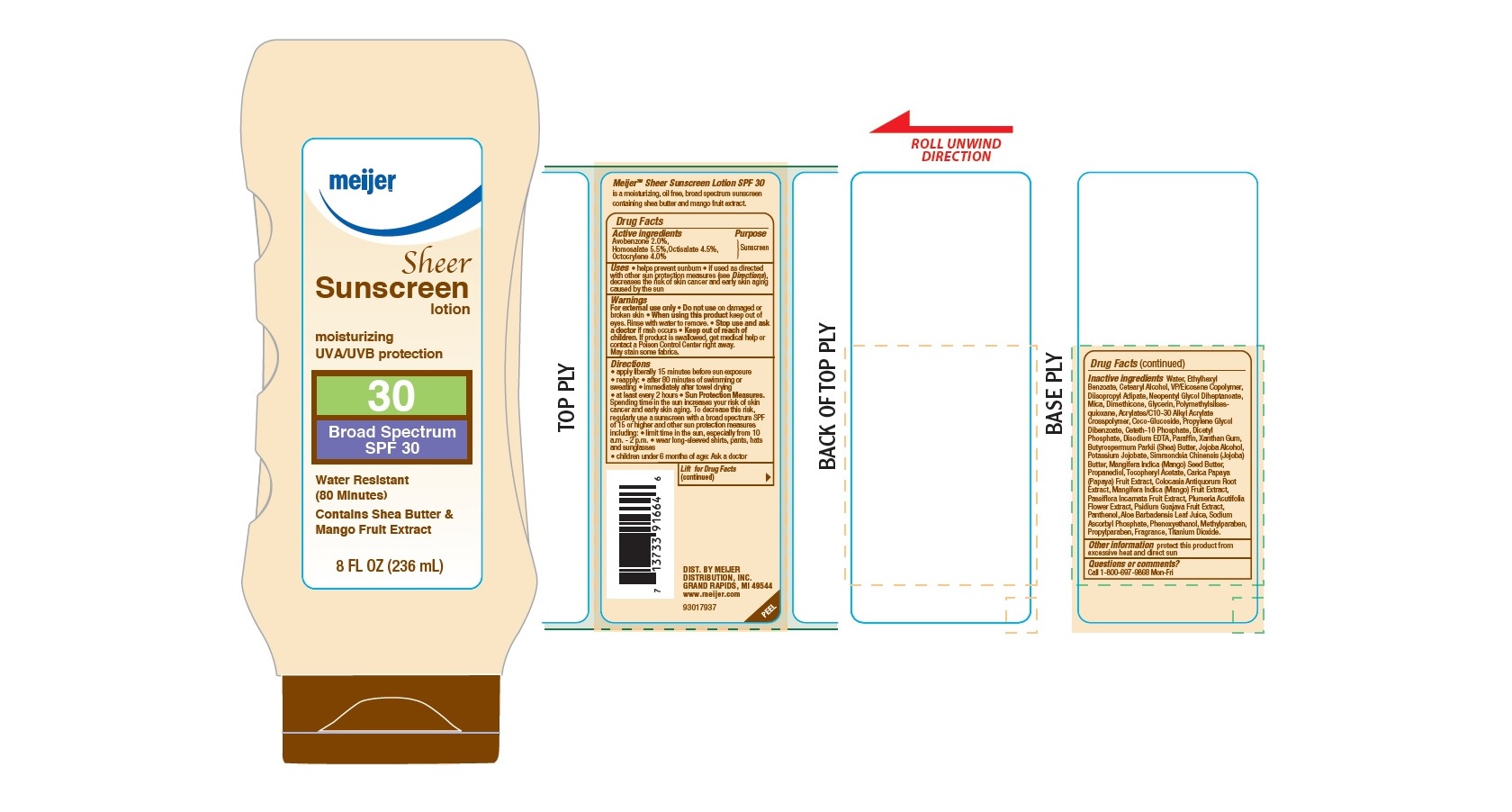
Meijer Sheer Moisturing SPF 30 Avobenzone, Homosalate, Octisalate, Octocrylene 2 g/100g; 5.5 g/100g; 4.5 g/100g; 4 g/100g Lotion, 236 g — NDC 41250-103-56 (Billing 41250-0103-56)
This is a package of 236 g of Meijer Sheer Moisturing SPF 30 Avobenzone, Homosalate, Octisalate, Octocrylene 2 g/100g; 5.5 g/100g; 4.5 g/100g; 4 g/100g Lotion from Meijer Distribution, Inc., marketed since Mar 2016 and currently FDA-listed. It is this product's only package size.
NDC database record
One package, one record: these facts belong to NDC 41250-103-56 alone.
- Record
- FDA NDC Directory package listing · Human OTC drug
- Code segments
- 41250 labeler · 103 product · 56 package
- Package marketed since
- May 20, 2016
- Sample package
- No — commercial package
- Listing certified through
- Dec 31, 2026
- Barcode (UPC-A, from the NDC)
- 3 4125010356 2
- FDA record last changed
- Jul 24, 2026
Identity & classification
Regulatory identifiers FDA, NLM and CMS codes for this package
Where does this data come from?
- FDA openFDA NDC Directory · synced Oct 8, 2026
- FDA label on DailyMed · label index refreshed Oct 6, 2026
- RxNorm (NLM RxNav) · catalog refreshed Oct 1, 2026
- Medi-Span GPI (licensed)
- First Databank (licensed) · refreshed Oct 8, 2026
Clinical
Meijer Sheer Moisturing SPF 30 is a topical lotion marketed as an over-the-counter sunscreen product under FDA's monograph rules for sunscreens. It contains four active ingredients: avobenzone, homosalate, octisalate, and octocrylene, which function as ultraviolet light filters. These ingredients are typically included in sunscreen products to help absorb or reflect UVA and UVB radiation from the sun.
Patient education
Supplement & herbal interactions
Where does this data come from?
- MedlinePlus (NLM) · refreshed Oct 1, 2026
- FDA label on DailyMed · label index refreshed Oct 6, 2026
Ask a licensed pharmacist directly — free, answered by our team.
Pricing
A drug doesn't have one price. Each row is a different public payment system, and none is what you'd pay at the counter — that depends on your insurance. The ⓘ on each row explains what it measures.
| Price system | Per g | Per package |
|---|---|---|
| Retail pharmacies payNADAC · weekly | Not in the retail survey — common for institutional, discontinued, or low-volume packs. | |
| Medicaid paysCMS SDUD · 12 mo | No recent Medicaid claims on file for this NDC — rare and low-volume NDCs are suppressed in the public data. | |
| Medicare drug plans payPart D · quarterly | No Part D plan price is available for this NDC in our data. | |
Where does this data come from?
- CMS NADAC weekly file
- CMS ASP pricing files · refreshed Sep 20, 2026
- CMS Medicaid State Drug Utilization Data · refreshed Oct 8, 2026
- CMS Part D plan pricing files · refreshed Sep 24, 2026
- VA National Acquisition Center price file
Packaging — all sizes for this product
| Package NDC | Description | Marketing start | Marketing end | Status |
|---|---|---|---|---|
| 41250-0103-56 You're viewing this Main listing | 236 g in 1 BOTTLE | 2016-05-20 | — | Active |
Therapeutic equivalents
| Product | Labeler | Pack | NADAC/unit | TE | Status | Price vs. this |
|---|---|---|---|---|---|---|
| Meijer Sheer Moisturing SPF 30 2 g/100g; 5.5 g/100g; 4.5 g/100g; 4 g/100gthis 41250-0103-56 | Meijer | 236 g | — | — | FDA listed | — |
Where does this data come from?
- FDA openFDA NDC Directory · synced Oct 8, 2026
- FDA Orange Book · refreshed Oct 3, 2026
- CMS NADAC weekly file
Availability & generic status
We did not find an FDA-approved generic match for this exact strength, form and route.
Where does this data come from?
- FDA Orange Book · refreshed Oct 3, 2026
Inactive Ingredients / Excipients
Inactive ingredients, also called excipients, are components of the drug product other than the active ingredient. They may include fillers, dyes, coatings, preservatives, flavors, or other formulation ingredients.
💡 Tap an ingredient (hover on desktop) to see what it is and why it’s used.
-
UNII 9E8X80D2L0
A synthetic form of vitamin E used as an antioxidant and preservative in medications. It helps prevent the active ingredients from degrading when exposed to oxygen or light.
-
UNII R63ZWW1A13
A clear liquid ester derived from benzoic acid and 2-ethylhexanol. It serves as a solvent and plasticizer in pharmaceutical coatings and formulations, helping dissolve other ingredients and improve flexibility of film coatings on tablets and capsules.
-
UNII ZY81Z83H0X
Aloe vera leaf is a plant extract derived from the aloe plant. It is used in medicines as a natural moisturizer and skin-soothing agent in topical formulations.
-
UNII 4E05O5N49G
Ceteth-10 phosphate is a synthetic ingredient made by combining a fatty alcohol with phosphate groups. It works as an emulsifier and surfactant to help mix oil and water in liquid formulations.
-
UNII 2DMT128M1S
A waxy solid derived from plant or animal sources. It acts as an emulsifier to blend oil and water components, and also thickens the medicine to give it the right texture and consistency.
-
UNII ICS790225B
A plant-derived cleaning agent made from coconut oil and glucose. It works as a surfactant and emulsifier to help mix oil and water-based ingredients together in the formulation.
-
UNII H7B71Q0G0D
A starch extracted from taro root, a tropical plant. Used as a binder and filler to hold tablet ingredients together and add bulk to the formulation.
-
UNII 2V6E5WN99N
A lipid compound made from fatty acids, used as an emulsifier and stabilizer in medicines to help mix oil and water-based ingredients and keep them from separating.
-
UNII P7E6YFV72X
Diisopropyl adipate is a clear, oily liquid derived from adipic acid. It acts as a plasticizer and solvent in medicines, helping soften coatings and improve how the drug dissolves or spreads in the body.
-
UNII 92RU3N3Y1O
Dimethicone is a silicone-based oil that acts as an anti-foaming agent and lubricant in medicines. It reduces gas bubbles in liquid formulations and helps coat and protect the stomach lining when ingested.
-
UNII 7FLD91C86K
Edetate disodium is a chemical compound that binds and removes certain metal ions. In medicines, it acts as a preservative and stabilizer by preventing metals like calcium from interfering with the product's shelf life and consistency.
-
UNII PDC6A3C0OX
Glycerin is a clear, thick liquid derived from plant oils or fats. It acts as a humectant to retain moisture, a sweetener, and a solvent in medications.
-
UNII 74O70D6VG0
Guava is a tropical fruit used as a flavoring agent and natural coloring source in medications. It adds fruity taste and may provide a mild sweetening effect to make medicines more palatable.
-
UNII XIA46H803R
Jojoba butter is a waxy plant oil derived from jojoba seeds. It's used in medicines as an emollient and texture agent to soften the product and improve how it feels on skin or in the mouth.
-
UNII 4OXD9M35X2
A natural fat extracted from mango seeds, used as an emollient and binder to soften the medicine and help hold ingredients together in creams, lotions, and solid formulations.
-
UNII I629I3NR86
A natural flavoring derived from mango fruit, used to add taste and aroma to medicines. It helps mask bitter or unpleasant flavors, making the medication more pleasant to take.
-
UNII A2I8C7HI9T
Methylparaben is a preservative derived from benzoic acid that prevents growth of bacteria, fungi, and mold in medicines. It extends the product's shelf life and maintains safety during storage.
-
UNII V8A1AW0880
Mica is a naturally occurring mineral that's ground into fine powder. It's used in medicines as a colorant and anti-caking agent to improve appearance and prevent clumping in tablets or powders.
-
UNII 5LKW3C543X
A synthetic oily liquid derived from neopentyl glycol and heptanoic acid. It serves as an emollient and solvent in formulations, helping to dissolve or suspend active ingredients and improve the texture and spreadability of topical products.
-
UNII WV9CM0O67Z
Panthenol is a humectant and skin-conditioning agent derived from pantothenic acid. It's added to medicines to help retain moisture and soothe skin irritation.
-
UNII KU94FIY6JB
A natural enzyme extract from papaya fruit that helps break down proteins. It's used in some medicines as a digestive aid ingredient and may help tablets dissolve or break apart in the stomach.
-
UNII I9O0E3H2ZE
Paraffin is a waxy, petroleum-derived substance used as a coating, lubricant, and hardening agent in tablets and capsules. It helps protect the medicine from moisture and gives pills a smooth finish.
-
UNII SF206I8G4P
A plant extract from passion fruit used in medicines as a natural flavoring agent and to add mild taste appeal to oral formulations.
-
UNII HIE492ZZ3T
Phenoxyethanol is a synthetic preservative and antimicrobial agent used to prevent bacterial and fungal growth in medicines and cosmetic products, extending shelf life and maintaining product safety.
-
UNII 8P7XXY759H
A natural extract from plumeria rubra flowers used in cosmetic and topical formulations. It typically functions as a fragrance, skin-conditioning agent, or botanical extract to add sensory appeal and traditional plant-based properties to the product.
-
UNII 5965N8W85T
Propanediol is a clear liquid organic compound derived from vegetable sources or synthesized chemically. It acts as a humectant to retain moisture, a solvent to dissolve active ingredients, and a preservative booster in liquid medications and supplements.
-
UNII EQY32Z1AN4
A synthetic compound derived from propylene glycol and benzoic acid. It serves as a plasticizer and solvent in medicines, helping dissolve active ingredients and improve the flexibility and texture of liquid formulations.
-
UNII Z8IX2SC1OH
Propylparaben is a chemical preservative used to prevent bacterial and fungal growth in medicines and personal care products. It helps extend shelf life and maintain product safety during storage.
-
UNII K49155WL9Y
Shea butter is a fat extracted from shea tree nuts. It's used in medicines as an emollient and lubricant to soften the product, improve texture, and help ingredients blend smoothly together.
-
UNII 836SJG51DR
Sodium ascorbyl phosphate is a derivative of vitamin C that acts as an antioxidant and preservative in medications. It helps protect the drug's active ingredients from degradation caused by air and light exposure.
-
UNII 15FIX9V2JP
Titanium dioxide is a bright white mineral powder commonly used as a colorant and opacifying agent. It makes pills and tablets white or lighter in color and helps make coatings non-transparent.
-
UNII 059QF0KO0R
Water is a liquid solvent that dissolves and mixes ingredients together in liquid medicines, syrups, and injections. It helps distribute the active drug evenly throughout the product.
-
UNII TTV12P4NEE
Xanthan gum is a thickening and stabilizing ingredient made from fermented corn or other sugars. It's added to medicines to improve texture, prevent separation of liquids and solids, and help the product stay consistent.
33 inactive ingredients listed in the exact product block matched to this NDC.
Label-section wording can be broader than the structured product block and may mention additional formulation ingredients.
Where does this data come from?
ingredient classCode="IACT" elements from the exact product block matched by this NDC. Label-section narrative from DailyMed / the openFDA label index is shown separately when available.- FDA label on DailyMed · label index refreshed Oct 6, 2026
- FDA openFDA NDC Directory · synced Oct 8, 2026
Inactive ingredient FAQ
Are inactive ingredients the same for every manufacturer?
Why might an inactive ingredient be missing?
Can inactive ingredients matter?
Manufacturer & labeler
More NDCs from Meijer Distribution, Inc. labeler code 41250
- Antiseptic Eucalyptol, Menthol, Methyl salicylate, Thymol .92 mg/mL; .42 mg/mL; .6 mg/mL; .64 mg/mL Mouthwash NDC 41250-072-12
- Antifungal Terbinafine Hydrochloride 1 g/100g Cream NDC 41250-080-02
- miconazole 3 Miconazole nitrate Kit NDC 41250-081-00
- Menthol Cough Drops 5.4 mg Lozenge NDC 41250-082-00
- Vitamin A D Lanolin, Petrolatum 155 mg/g; 534 mg/g Ointment NDC 41250-091-26
- Miconazole nitrate Antifungal Miconazole Liquid Continuous Spray 3 g/150g Aerosol, Spray NDC 41250-098-53
- Cherry Antacid Soft Chews Calcium Carbonate 1177 mg Tablet, Chewable NDC 41250-109-36
- Aspirin Regular Strength 325 mg Tablet, Coated NDC 41250-118-11
- Effervescent Orange Cold Relief Aspirin, Chlorpheniramine Maleate, Phenylephrine Bitartrate 7.8 mg; 325 mg; 2 mg Tablet, Effervescent NDC 41250-123-20
- Back and Body Extra Strength Aspirin, Caffeine 500 mg; 32.5 mg Tablet, Film Coated NDC 41250-143-12
- Aspirin 81mg Adult Low Dose 81 mg Tablet, Delayed Release NDC 41250-146-11
- Pain Relief Acetaminophen 500 mg Tablet NDC 41250-148-03
Where does this data come from?
- FDA openFDA NDC Directory · synced Oct 8, 2026
- Drugs@FDA
FDA label — Drug Facts FDA SPL
🎯 Indications and Usage ▾
Uses • helps prevent sunburn • if used as directed with other sun protection measures (see Directions) , decreases the risk of skin cancer and early skin aging caused by the sun
⏱️ Dosage and Administration ▾
Directions • apply liberally 15 minutes before sun exposure • reapply: • after 80 minutes of swimming or sweating • immediately after towel drying • at least every 2 hours • Sun Protection Measures: Spending time in the sun increases your risk of skin cancer and early skin aging. To decrease this risk, regularly use a sunscreen with a broad spectrum SPF of 15 or higher and other protection measures including: • limit time in the sun, especially from 10 a.m. to 2 p.m. • wear long-sleeved shirts, pants, hats, and sunglasses • children under 6 months: Ask a doctor
⚠️ Warnings ▾
Warnings For external use only Do not use on damaged or broken skin When using this product keep out of eyes. Rinse with water to remove. Stop use and ask a doctor if rash occurs Keep out of reach of children. If product is swallowed, get medical help or contact a Poison Control Center right away. • May stain some fabrics
🧪 Active Ingredient ▾
Active ingredients Avobenzone 2.0%, Homosalate 5.5%, Octisalate 4.5%, Octocrylene 4.0%
🧪 Inactive Ingredients ▾
Inactive ingredients Water, Ethylhexyl Benzoate, Cetearyl Alcohol, VP/Eicosene Copolymer, Diisopropyl Adipate, Neopentyl Glycol Diheptanoate, Mica, Dimethicone, Glycerin, Polymethylsilsesquioxane, Acrylates/C10-30 Alkyl Acrylate Crosspolymer, Coco-Glucoside, Propylene Glycol Dibenzoate, Ceteth-10 Phosphate, Dicetyl Phosphate, Disodium EDTA, Paraffin, Xanthan Gum, Butyrospermum Parkii (Shea) Butter, Jojoba Alcohol, Potassium Jojobate, Simmondsia Chinensis (Jojoba) Butter, Mangifera Indica (Mango) Seed Butter, Propanediol, Tocopheryl Acetate, Carica Papaya (Papaya) Fruit Extract, Colocasia Antiquorum Root Extract, Mangifera Indica (Mango) Fruit Extract, Passiflora Incarnata Fruit Extract, Plumeria Acutifolia Flower Extract, Psidium Guajava Fruit Extract, Panthenol, Aloe Barbadensis Leaf Juice, Sodium Ascorbyl Phosphate, Phenoxyethanol, Methylparaben, Propylparaben, Fragrance, Titanium Dioxide.
🎯 Purpose ▾
Purpose Sunscreen
📄 Do Not Use ▾
Do not use on damaged or broken skin
📄 Ask a Doctor Before Use If ▾
Stop use and ask a doctor if rash occurs
📄 When Using This Product ▾
When using this product keep out of eyes. Rinse with water to remove.
📄 Keep Out of Reach of Children ▾
Keep out of reach of children. If product is swallowed, get medical help or contact a Poison Control Center right away. • May stain some fabrics
📄 Questions or Comments ▾
Questions or comments? Call 1-800-697-9868 Mon-Fri
📄 Package Label / Principal Display Panel ▾
Principal Display Panel NDC 41250-103-56 meijer Sheer Sunscreen Lotion moisturizing UVA/UVB protection 30 Broad Spectrum SPF 30 Water Resistant (80 Minutes) Contains Shea Butter and Mango Fruit Extract 8 FL OZ (236 mL) Label
Reported adverse events (FAERS)
Top reported reactions
Age at onset
Reporter sex
Serious outcomes
Where does this data come from?
About this NDC listing & data coverage
What data is (and isn’t) available for this NDC — tap to expand
| NDC identity (package / product / labeler codes) | ✓ Available |
| Labeler | ✓ Available |
| Product & package description | ✓ Available |
| Marketing category & status | ✓ Available |
| Active ingredient / dosage form / route | ✓ Available |
| FDA label (SPL via DailyMed) | ✓ Available |
| Package photos | ✓ Available |
| Inactive ingredients (structured) | ✓ Available |
| NADAC pharmacy acquisition price (CMS) | — Not published for this NDC CMS publishes NADAC only for NDCs reported in its retail-pharmacy survey. |
| Orange Book / therapeutic-equivalence data | — Not published for this NDC Applies only to products approved under an NDA/ANDA; many listings are out of scope. |
| HCPCS J-code billing crosswalk | — Not published for this NDC Most self-administered / retail products have no J-code — that is normal. |
| Medicaid utilization (CMS SDUD) | — Not published for this NDC CMS reports utilization only for NDCs with Medicaid claims above its privacy threshold. |