
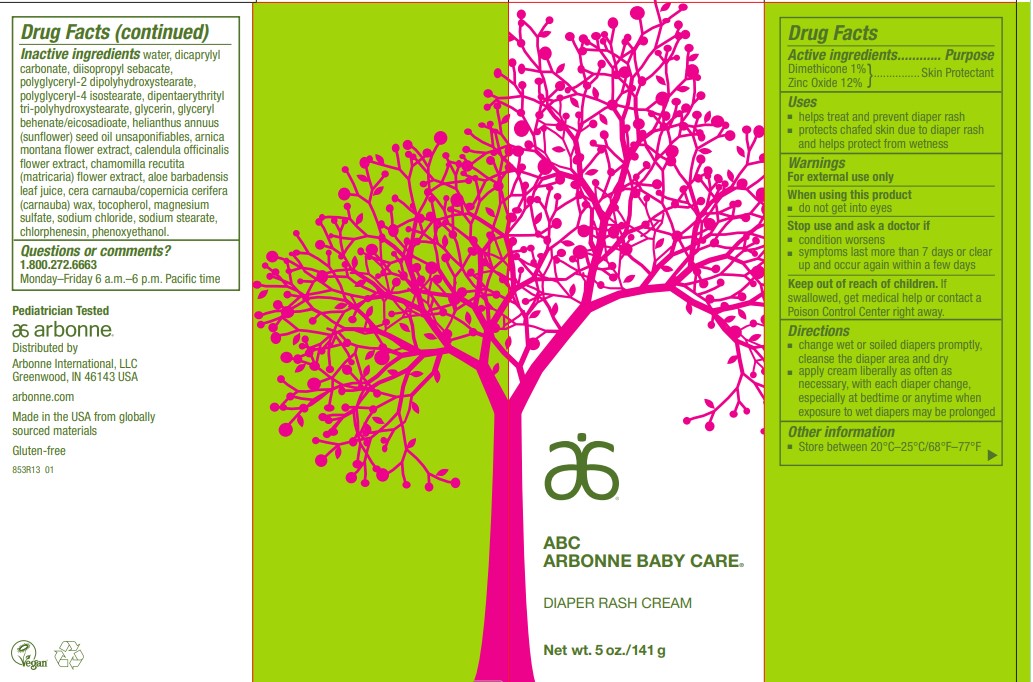
ABC Arbonne Baby Care Diaper Rash DIMETHICONE and ZINC OXIDE 10 mg/g; 120 mg/g Cream — NDC 42508-331-03 (Billing 42508-0331-03)
This is a package of ABC Arbonne Baby Care Diaper Rash DIMETHICONE and ZINC OXIDE 10 mg/g; 120 mg/g Cream from Arbonne International, LLC, no longer marketed (first marketed Jun 2023), no longer in the FDA NDC Directory, this package's marketing ended Nov 2026. It is this product's only package size.
NDC database record
One package, one record: these facts belong to NDC 42508-331-03 alone.
- Record
- FDA NDC Directory package listing · Human OTC drug
- Code segments
- 42508 labeler · 331 product · 03 package
- Package marketed since
- Jun 30, 2023
- Package marketing ended
- Nov 4, 2026
- Sample package
- No — commercial package
- Barcode (UPC-A, from the NDC)
- 3 4250833103 4
- FDA record last changed
- Jul 24, 2026
Identity & classification
Regulatory identifiers FDA, NLM and CMS codes for this package
- RxCUI (RxNorm): 637565
Where does this data come from?
- FDA openFDA NDC Directory · synced Nov 19, 2026
- FDA label on DailyMed · label index refreshed Nov 20, 2026
- RxNorm (NLM RxNav) · catalog refreshed Nov 19, 2026
- Medi-Span GPI (licensed)
- First Databank (licensed) · refreshed Nov 19, 2026
RxNorm drug class
This medicine belongs to the Other ectoparasiticides, incl. scabicides class.
Where does this data come from?
- RxClass (NLM) · catalog refreshed Nov 19, 2026
Clinical
This is a topical cream formulated with dimethicone and zinc oxide, sold as an over-the-counter monograph product for diaper rash care. Zinc oxide is commonly used in skin-barrier products to protect and soothe irritated skin, while dimethicone functions as a skin protectant that helps repel moisture. Together, these ingredients are typically used to help manage diaper rash discomfort and create a moisture barrier on the skin.
Patient education
Supplement & herbal interactions
Where does this data come from?
- MedlinePlus (NLM) · refreshed Nov 19, 2026
- FDA label on DailyMed · label index refreshed Nov 20, 2026
Ask a licensed pharmacist directly — free, answered by our team.
Pricing
A drug doesn't have one price. Each row is a different public payment system, and none is what you'd pay at the counter — that depends on your insurance. The ⓘ on each row explains what it measures.
| Price system | Per g | Per package |
|---|---|---|
| Retail pharmacies payNADAC · weekly | Not in the retail survey — common for institutional, discontinued, or low-volume packs. | |
| Medicaid paysCMS SDUD · 12 mo | No recent Medicaid claims on file for this NDC — rare and low-volume NDCs are suppressed in the public data. | |
| Medicare drug plans payPart D · quarterly | No Part D plan price is available for this NDC in our data. | |
Where does this data come from?
- CMS NADAC weekly file
- CMS ASP pricing files · refreshed Nov 20, 2026
- CMS Medicaid State Drug Utilization Data · refreshed Nov 19, 2026
- CMS Part D plan pricing files · refreshed Oct 24, 2026
- VA National Acquisition Center price file
Packaging — all sizes for this product
| Package NDC | Description | Marketing start | Marketing end | Status |
|---|---|---|---|---|
| 42508-0331-03 You're viewing this Main listing | 1 TUBE in 1 CARTON / 141 g in 1 TUBE | 2023-06-30 | Nov 4, 2026 | Discontinued by firm |
Therapeutic equivalents
| Product | Labeler | Pack | NADAC/unit | TE | Status | Price vs. this |
|---|---|---|---|---|---|---|
| Baza Protect 120 mg/g; 10 mg/g 11701-0046-14 | Coloplast | 142 g | — | — | FDA listed | — |
| Baza Protect 120 mg/g; 10 mg/g 11701-0082-03 | Coloplast | 57 g | — | — | FDA listed | — |
| ABC Arbonne Baby Care Diaper Rash 10 mg/g; 120 mg/gthis 42508-0331-03 | Arbonne | 1 tube | — | — | Discontinued | — |
Where does this data come from?
- FDA openFDA NDC Directory · synced Nov 19, 2026
- FDA Orange Book · refreshed Nov 6, 2026
- CMS NADAC weekly file
Availability & generic status
We did not find an FDA-approved generic match for this exact strength, form and route.
Where does this data come from?
- FDA Orange Book · refreshed Nov 6, 2026
Inactive Ingredients / Excipients
Inactive ingredients, also called excipients, are components of the drug product other than the active ingredient. They may include fillers, dyes, coatings, preservatives, flavors, or other formulation ingredients.
💡 Tap an ingredient (hover on desktop) to see what it is and why it’s used.
-
UNII 7QWA1RIO01
A synthetic form of vitamin E used as an antioxidant in medicines. It prevents oils and fats in the formulation from breaking down, helping the drug remain stable and effective during storage.
-
UNII ZY81Z83H0X
Aloe vera leaf is a plant extract derived from the aloe plant. It is used in medicines as a natural moisturizer and skin-soothing agent in topical formulations.
-
UNII OZ0E5Y15PZ
A plant extract from arnica flowers, used as a flavoring agent or fragrance component in medicines. It may also provide mild soothing properties to certain topical formulations.
-
UNII P0M7O4Y7YD
A plant extract from calendula flowers, traditionally used in formulations. It typically serves as a botanical ingredient that may provide color, fragrance, or skin-conditioning properties to topical products.
-
UNII R12CBM0EIZ
A natural wax derived from a Brazilian palm tree, used as a coating and polish on tablets and capsules. It creates a smooth, shiny finish that protects the medicine and improves appearance.
-
UNII FGL3685T2X
Chamomile is a plant extract used in medications as a flavoring agent and for its mild soothing properties in formulations. It helps improve taste and aroma of the medicine.
-
UNII I670DAL4SZ
A preservative that fights bacteria and fungi. It keeps medicines and topical products stable and safe from microbial contamination during storage and use.
-
UNII 609A3V1SUA
A silky liquid derived from caprylic acid that acts as an emollient and solvent in formulations. It helps dissolve active ingredients and improves the spreadability and feel of lotions, creams, and topical products.
-
UNII J8T3X564IH
A clear oily liquid derived from sebacic acid, used as a plasticizer and solvent in pharmaceutical coatings and films to improve flexibility and help active ingredients dissolve properly.
-
UNII D21K655H52
A waxy substance derived from stearic acid (a fat), used as an emulsifier and thickener in medications. It helps blend oily and water-based ingredients together and gives the product a stable, smooth texture.
-
UNII PDC6A3C0OX
Glycerin is a clear, thick liquid derived from plant oils or fats. It acts as a humectant to retain moisture, a sweetener, and a solvent in medications.
-
UNII 73CJJ317SR
A waxy substance derived from plant oils, used as a binder and lubricant to help hold tablet ingredients together and improve how the medicine flows during manufacturing.
-
UNII ML30MJ2U7I
A mineral salt form of magnesium and sulfate. It serves as a filler to add bulk to the tablet or capsule and may help the medicine dissolve or disintegrate properly in the body.
-
UNII HIE492ZZ3T
Phenoxyethanol is a synthetic preservative and antimicrobial agent used to prevent bacterial and fungal growth in medicines and cosmetic products, extending shelf life and maintaining product safety.
-
UNII 9229XJ4V12
A synthetic emulsifier made from glycerin and fatty acids. It helps blend oil and water-based ingredients in formulations, keeping them mixed and preventing separation.
-
UNII 820DPX33S7
A synthetic emulsifier derived from glycerin and fatty acids. It helps mix oil and water-based ingredients together and keeps them evenly blended throughout the product.
-
UNII 451W47IQ8X
Sodium chloride is common table salt. It's used in medicines as a buffer to maintain proper pH, as a filler to add bulk, or to adjust the osmotic balance in liquid formulations.
-
UNII QU7E2XA9TG
Sodium stearate is a salt derived from stearic acid, a natural fatty substance. It acts as a lubricant and binder in tablets and capsules, helping the medicine hold together and flow smoothly during manufacturing.
-
UNII T7ZE2WA4MB
A plant-derived oil component that doesn't break down with soap, used as an emollient and skin-conditioning agent in topical medicines and formulations. It helps soften and smooth the product's texture.
-
UNII 059QF0KO0R
Water is a liquid solvent that dissolves and mixes ingredients together in liquid medicines, syrups, and injections. It helps distribute the active drug evenly throughout the product.
20 inactive ingredients listed in the exact product block matched to this NDC.
Label-section wording can be broader than the structured product block and may mention additional formulation ingredients.
Where does this data come from?
ingredient classCode="IACT" elements from the exact product block matched by this NDC. Label-section narrative from DailyMed / the openFDA label index is shown separately when available.- FDA label on DailyMed · label index refreshed Nov 20, 2026
- FDA openFDA NDC Directory · synced Nov 19, 2026
Inactive ingredient FAQ
Are inactive ingredients the same for every manufacturer?
Why might an inactive ingredient be missing?
Can inactive ingredients matter?
Manufacturer & labeler
More NDCs from Arbonne International, LLC labeler code 42508
- Clear Future Intensive Spot Treatment SALICYLIC ACID 2 mg/15mL Lotion NDC 42508-210-09
- ABC Arbonne Baby Care Sunscreen Broad Spectrum SPF 30 Water-Resistant (40 Minutes) Zinc Oxide 144 mg/mL Lotion NDC 42508-332-02
- Arbonne FunSun Mineral Sunscreen Broad Spectrum SPF 30 Zinc Oxide 190 mg/mL Lotion NDC 42508-805-05
- Arbonne AgeWell Moisture Restoring Broad Spectrum SPF 15 Sunscreen Zinc Oxide 49 mg/g Cream NDC 42508-820-08
- GroomWell Weightless with Mineral Broad Spectrum SPF 15 Sunscreen Zinc oxide 49.5 mg/g Cream NDC 42508-827-23
- Arbonne Soft Focus Veil Broad Spectrum SPF 30 Sunscreen titanium dioxide and zinc oxide 26 mg/mL; 72 mg/mL Lotion NDC 42508-881-06
- Clear Future Deep Pore Cleanser SALICYLIC ACID .5 mg/118mL Gel NDC 42508-904-17
Where does this data come from?
- FDA openFDA NDC Directory · synced Nov 19, 2026
- Drugs@FDA
FDA label — Drug Facts FDA SPL
🎯 Indications and Usage ▾
Uses helps treat and prevent diaper rash protects chafed skin due to diaper rash and helps protect from wetness
⏱️ Dosage and Administration ▾
Directions change wet or soiled diapers promptly, cleanse the diaper area and dry apply cream liberally as often as necessary, with each diaper change, especially at bedtime or anytime when exposure to wet diapers may be prolonged
⚠️ Warnings ▾
Warnings For external use only When using this product do not get into eyes Stop use and ask a doctor if condition worsens symptoms last more than 7 days or clear up and occur again within a few days Keep out of reach of children. If swallowed, get medical help or contact a Poison Control Center right away.
📦 Storage and Handling ▾
Other information Store between 20°C–25°C/68°F–77°F
🧪 Active Ingredient ▾
Active ingredients Dimethicone 1% Zinc Oxide 12%
🧪 Inactive Ingredients ▾
Inactive ingredients water, dicaprylyl carbonate, diisopropyl sebacate, polyglyceryl-2 dipolyhydroxystearate, polyglyceryl-4 isostearate, dipentaerythrityl tri-polyhydroxystearate, glycerin, glyceryl behenate/eicosadioate, helianthus annuus (sunflower) seed oil unsaponifiables, arnica montana flower extract, calendula officinalis flower extract, chamomilla recutita (matricaria) flower extract, aloe barbadensis leaf juice, cera carnauba/copernicia cerifera (carnauba) wax, tocopherol, magnesium sulfate, sodium chloride, sodium stearate, chlorphenesin, phenoxyethanol.
🎯 Purpose ▾
Purpose Skin Protectant
📄 When Using This Product ▾
When using this product do not get into eyes
📄 Stop Use and Ask a Doctor If ▾
Stop use and ask a doctor if condition worsens symptoms last more than 7 days or clear up and occur again within a few days
📄 Keep Out of Reach of Children ▾
Keep out of reach of children. If swallowed, get medical help or contact a Poison Control Center right away.
📄 Questions or Comments ▾
Questions or comments? 1.800.272.6663 Monday–Friday 6 a.m.–6 p.m. Pacific time
📄 Package Label / Principal Display Panel ▾
PRINCIPAL DISPLAY PANEL - 141 g Tube Carton ABC ARBONNE BABY CARE ® DIAPER RASH CREAM Net wt. 5 oz./141 g ABC Diaper Rash Cream
Reported adverse events (FAERS)
Top reported reactions
Reporter sex
Serious outcomes
Where does this data come from?
About this NDC listing & data coverage
What data is (and isn’t) available for this NDC — tap to expand
| NDC identity (package / product / labeler codes) | ✓ Available |
| Labeler | ✓ Available |
| Product & package description | ✓ Available |
| Marketing category & status | ✓ Available |
| Active ingredient / dosage form / route | ✓ Available |
| FDA label (SPL via DailyMed) | ✓ Available |
| Package photos | ✓ Available |
| Inactive ingredients (structured) | ✓ Available |
| NADAC pharmacy acquisition price (CMS) | — Not published for this NDC CMS publishes NADAC only for NDCs reported in its retail-pharmacy survey. |
| Orange Book / therapeutic-equivalence data | — Not published for this NDC Applies only to products approved under an NDA/ANDA; many listings are out of scope. |
| HCPCS J-code billing crosswalk | — Not published for this NDC Most self-administered / retail products have no J-code — that is normal. |
| Medicaid utilization (CMS SDUD) | — Not published for this NDC CMS reports utilization only for NDCs with Medicaid claims above its privacy threshold. |