
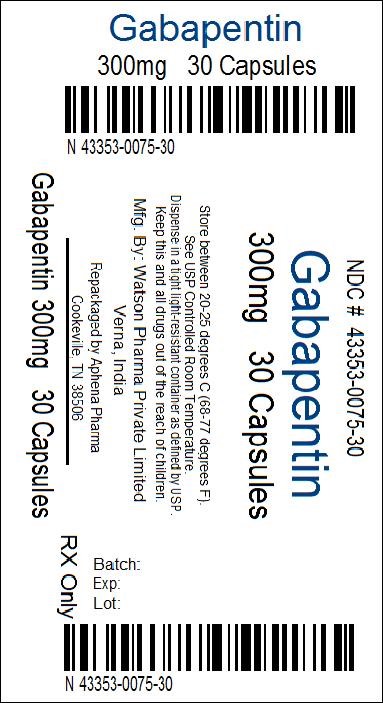
Gabapentin 300 mg Capsule, 90-count
Other active recalls for Gabapentin (different manufacturers) — 6 · tap to view
🆔 Identity & classification
Where does this data come from?
🏷️ RxNorm drug class
This medicine belongs to the Gabapentinoids class.
Where does this data come from?
🏭 Manufacturer & labeler
Where does this data come from?
🩺 Clinical
Gabapentin capsules, tablets, and oral solution are used along with other medications to help control certain types of seizures in people who have epilepsy. Gabapentin capsules, tablets, and oral solution are also used to relieve the pain of postherpetic neuralgia (PHN; the burning, stabbing pain or aches that may last for months or years after an attack of shingles). Gabapentin extended-release tablets (Horizant) are used to treat restless legs syndrome (RLS; a condition that causes discomfort in the legs and a strong urge to move the legs, especially at night and when sitting or lying down)....
Read the full MedlinePlus article ↗- Gabapentin is mainly used for two things: managing nerve pain that lingers after a shingles infection (called postherpetic neuralgia) in adults, and helping control partial onset s...
- This is a really important question. Taking gabapentin together with opioids like morphine, hydrocodone, or oxycodone significantly raises the risk of serious breathing problems —...
- Can I take gabapentin with my opioid pain medication?
- The most common ones — especially in the first few weeks — are dizziness, drowsiness, and sometimes loss of balance or coordination. Swelling in the feet or hands is also fairly co...
Patient education
Supplement & herbal interactions
Some supplements/herbs that may interact with Gabapentin — tap one for details:
Gabapentin may be associated with lower levels of 1 nutrient — worth a chat with your pharmacist, not a cause for alarm.
Where does this data come from?
Ask a licensed pharmacist directly — free, answered by our team.
💊 What it looks like
Where does this data come from?
🧪 Inactive Ingredients / Excipients
Inactive ingredients, also called excipients, are components of the drug product other than the active ingredient. They may include fillers, dyes, coatings, preservatives, flavors, or other formulation ingredients.
💡 Tap an ingredient (hover on desktop) to see what it is and why it’s used.
-
UNII 35SW5USQ3G
A synthetic yellow dye used to color medicines. It helps make tablets, capsules, and liquids visually distinct so patients can easily identify their medication.
-
UNII H3R47K3TBD
FD&C Blue No. 1 is a synthetic blue dye approved for use in foods and medicines. It serves as a colorant to give the medication its distinctive appearance and help with product identification.
-
UNII L06K8R7DQK
A synthetic blue dye approved by the FDA for use in medications and foods. It serves as a colorant to make pills and liquids visually distinct and easier to identify.
-
UNII WZB9127XOA
A synthetic red dye used to color medications and make them easier to identify. It serves as a colorant in tablets, capsules, and liquid formulations.
-
UNII 1K09F3G675
Ferric oxide red is an inorganic iron compound used as a colorant in medicines. It gives tablets, capsules, or other dosage forms a red or reddish tint for identification and appearance.
-
UNII EX438O2MRT
Ferric oxide yellow is a naturally occurring iron compound used as a colorant in medications. It gives tablets, capsules, and other forms a yellow or golden hue for identification and appearance.
-
UNII XM0M87F357
A dark iron oxide compound that gives medicines their black or dark color. It's used as a colorant in tablets and capsules to help identify the product and make it visually distinctive.
-
UNII 2G86QN327L
Gelatin is a protein derived from animal collagen, commonly used in medicines as a gelling agent and capsule material. It helps create soft or hard capsule shells that hold and release medication, and can also thicken liquid formulations.
-
UNII 3OWL53L36A
A natural sugar alcohol derived from seaweed or synthesized in the lab. It's used as a filler to add bulk, a sweetener in sugar-free formulas, and a disintegrant to help tablets break apart in the stomach.
-
UNII 6DC9Q167V3
Propylene glycol is a clear liquid derived from petroleum or vegetable sources. It acts as a solvent, humectant, and preservative in medicines, helping dissolve active ingredients and maintain product stability.
-
UNII 46N107B71O
Shellac is a natural resin secreted by the lac beetle. It's used as a coating on tablets and capsules to control how quickly the medicine dissolves and to improve appearance and stability.
-
UNII ETJ7Z6XBU4
Silicon dioxide is a naturally occurring mineral used as a glidant and anti-caking agent. It helps powder ingredients flow smoothly and prevents clumping during manufacturing and storage.
-
UNII 368GB5141J
A detergent and foaming agent derived from coconut or palm oil. In medications, it helps break down and mix oil and water-based ingredients, aids in tablet disintegration, and improves how the drug dissolves and spreads in the mouth or digestive system.
-
UNII O8232NY3SJ
A plant-based carbohydrate derived from corn kernels. It acts as a filler to add bulk, a binder to hold ingredients together, and a disintegrant to help the tablet break apart in your stomach for absorption.
-
UNII 7SEV7J4R1U
A powder made from a naturally occurring mineral. In medicines, talc works as a glidant and anti-caking agent, helping tablets and capsules flow smoothly during manufacturing and preventing clumping.
-
UNII 15FIX9V2JP
Titanium dioxide is a bright white mineral powder commonly used as a colorant and opacifying agent. It makes pills and tablets white or lighter in color and helps make coatings non-transparent.
16 inactive ingredients listed in the exact product block matched to this NDC.
Where does this data come from?
ingredient classCode="IACT" elements from the exact product block matched by this NDC. Label-section narrative from DailyMed / the openFDA label index is shown separately when available.Inactive ingredient FAQ
Are inactive ingredients the same for every manufacturer?
Why might an inactive ingredient be missing?
Can inactive ingredients matter?
💲 Pricing
A drug doesn't have one price. Each row is a different public payment system, and none is what you'd pay at the counter — that depends on your insurance. The ⓘ on each row explains what it measures.
| Price system | Per each | Per package |
|---|---|---|
| Retail pharmacies payNADAC · weekly | Not in the retail survey — common for institutional, discontinued, or low-volume packs. | |
| Medicaid paysCMS SDUD · 12 mo | No recent Medicaid claims on file for this NDC — rare and low-volume NDCs are suppressed in the public data. | |
| Medicare drug plans payPart D · Q2 2026 | $0.1402 | $12.62 / 90 capsules |
Where does this data come from?
🔁 Therapeutic equivalents
| Product | Labeler | Pack | NADAC/unit | TE | Status | Price vs. this |
|---|---|---|---|---|---|---|
| Gabapentin 300 mg 00480-3495-01 | Teva | 100 capsules | $0.030 | AB | Availability likely | — |
| Gabapentin 300 mg 00904-6666-61 | Major | 100 capsules | $0.030 | AB | Availability likely | — |
| gabapentin 300 mg 16571-0868-01 | Rising | 100 capsules | $0.030 | AB | Availability likely | — |
| Gabapentin 300 mg 16714-0662-01 | NorthStar | 100 capsules | $0.030 | AB | Availability likely | — |
| Gabapentin 300 mg 23155-0867-01 | Heritage | 100 capsules | $0.030 | AB | Availability likely | — |
| Gabapentin 300 mg 31722-0149-01 | Camber | 100 capsules | $0.030 | AB | Availability likely | — |
| Gabapentin 300 mg 42385-0973-01 | Laurus | 100 capsules | $0.030 | AB | Availability likely | — |
| Gabapentin 300 mg 45963-0556-11 | Actavis | 100 capsules | $0.030 | AB | Availability likely | — |
| Gabapentin 300 mg 49483-0606-01 | TIME | 100 capsules | $0.030 | AB | Availability likely | — |
| Gabapentin 300 mg 50228-0180-01 | ScieGen | 100 capsules | $0.030 | AB | Availability likely | — |
| Relgaabi 300 mg 58657-0233-01 | Method | 100 capsules | $0.030 | AB | Availability likely | — |
| Gabapentin 300 mg 60687-0591-01 | American | 100 capsules | $0.030 | AB | Availability likely | — |
| Gabapentin 300 mg 63739-0903-10 | McKesson | 100 capsules | $0.030 | AB | Availability likely | — |
| Gabapentin 300 mg 64380-0754-01 | Strides | 100 capsules | $0.030 | AB | Availability likely | — |
| Gabapentin 300 mg 65862-0199-01 | Aurobindo | 100 capsules | $0.030 | — | Availability likely | — |
| Gabapentin 300 mg 67877-0223-01 | Ascend | 100 capsules | $0.030 | AB | Availability likely | — |
| Gabapentin 300 mg 69292-0641-01 | Amici | 100 capsules | $0.030 | AB | Availability likely | — |
| Gabapentin 300 mg 69367-0132-06 | Westminster | 500 capsules | $0.030 | AB | Availability likely | — |
| Gabapentin 300 mg 69367-0344-05 | Westminster | 500 capsules | $0.030 | AB | Availability likely | — |
| Gabapentin 300 mg 70010-0927-01 | Granules | 100 capsules | $0.030 | AB | Availability likely | — |
| Gabapentin 300 mg 71093-0121-04 | ACI | 100 capsules | $0.030 | AB | Availability likely | — |
| Gabapentin 300 mg 83301-0004-01 | Mullan | 100 capsules | $0.030 | AB | Availability likely | — |
| Gabapentin 300 mg 70010-0109-01 | Granules | 100 capsules | $0.034 | AB | Discontinued | — |
| Gabapentin 300 mg 64380-0868-06 | Strides | 100 capsules | $0.041 | AB | FDA listed | — |
| Gabapentin 300 mg 69097-0943-07 | Cipla | 100 capsules | $0.041 | AB | FDA listed | — |
| Neurontin 300 mg 00071-0805-24 | Parke-Davis | 100 capsules | $7.387 | AB | Availability likely | — |
| Neurontin 300 mg 58151-0282-01 | Viatris | 100 capsules | $7.387 | AB | Availability likely | — |
| Gabapentin 300 mg 00904-7614-61 | Major | 100 capsules | — | AB | FDA listed | — |
| Gabapentin 300 mg 25000-0104-03 | MARKSANS | 30 capsules | — | AB | FDA listed | — |
| Gabapentin 300 mg 42582-0115-10 | Bi-Coastal | 100 capsules | — | AB | FDA listed | — |
| Gabapentin 300 mg 42806-0510-01 | Epic | 100 capsules | — | AB | FDA listed | — |
| Gabapentin 300 mg 43063-0673-30 | PD-Rx | 30 capsules | — | AB | FDA listed | — |
| Gabapentin 300 mgthis 43353-0075-60 | Aphena | 90 capsules | — | AB | FDA listed | — |
| Gabapentin 300 mg 43547-0480-10 | Solco | 100 capsules | — | AB | FDA listed | — |
| Gabapentin 300 mg 45865-0194-30 | Medsource | 30 capsules | — | AB | FDA listed | — |
| Gabapentin 300 mg 50090-0896-00 | A-S | 100 capsules | — | AB | FDA listed | — |
| Gabapentin 300 mg 50090-4893-00 | A-S | 90 capsules | — | AB | FDA listed | — |
| Gabapentin 300 mg 50090-6718-00 | A-S | 90 capsules | — | AB | FDA listed | — |
| Gabapentin 300 mg 50090-7420-00 | A-S | 100 capsules | — | AB | FDA listed | — |
| Gabapentin 300 mg 50090-7421-00 | A-S | 90 capsules | — | AB | FDA listed | — |
| Gabapentin 300 mg 50090-7674-00 | A-S | 100 capsules | — | AB | FDA listed | — |
| Gabapentin 300 mg 50090-7675-00 | A-S | 90 capsules | — | AB | FDA listed | — |
| Gabapentin 300 mg 51407-0048-10 | Golden | 1000 capsules | — | AB | Discontinued | — |
| Gabapentin 300 mg 53746-0102-01 | Amneal | 100 capsules | — | AB | FDA listed | — |
| Gabapentin 300 mg 55154-7992-00 | Cardinal | 10 capsules | — | AB | FDA listed | — |
| Gabapentin 300 mg 55154-8195-00 | Cardinal | 10 capsules | — | AB | FDA listed | — |
| Gabapentin 300 mg 55700-0949-01 | Quality | 120 capsules | — | AB | FDA listed | — |
| Gabapentin 300 mg 58118-1102-08 | Clinical | 30 capsules | — | AB | FDA listed | — |
| Gaba 300-EZS 59088-0725-00 | PureTek | 100 capsules | — | — | FDA listed | — |
| Gabapentin 300 mg 60760-0674-30 | St. | 30 capsules | — | AB | FDA listed | — |
| Gabapentin 300 mg 60760-0741-60 | St. | 60 capsules | — | AB | FDA listed | — |
| Gabapentin 300 mg 60760-0814-60 | St | 60 capsules | — | AB | FDA listed | — |
| Gabapentin 300 mg 61919-0640-30 | DIRECT | 30 capsules | — | AB | FDA listed | — |
| gabapentin 300 mg 62756-0138-01 | Sun | 50 capsules | — | — | FDA listed | — |
| Gabapentin 300 mg 63187-0810-00 | Proficient | 100 capsules | — | AB | FDA listed | — |
| Gabapentin 300 mg 63187-0988-00 | Proficient | 100 capsules | — | AB | FDA listed | — |
| Gabapentin 300 mg 63629-7306-01 | Bryant | 90 capsules | — | AB | FDA listed | — |
| Gabapentin 300 mg 63629-8486-01 | Bryant | 500 capsules | — | AB | FDA listed | — |
| Gabapentin 300 mg 63629-8487-01 | Bryant | 100 capsules | — | AB | FDA listed | — |
| Gabapentin 300 mg 65162-0102-03 | Amneal | 30 capsules | — | AB | FDA listed | — |
| Gabapentin 300 mg 67046-1284-03 | Coupler | 30 capsules | — | AB | FDA listed | — |
| Gabapentin 300 mg 67046-1429-03 | Coupler | 30 capsules | — | AB | FDA listed | — |
| Gabapentin 300 mg 68071-2366-01 | NuCare | 100 capsules | — | AB | FDA listed | — |
| Gabapentin 300 mg 68071-2876-09 | NuCare | 90 capsules | — | AB | FDA listed | — |
| Gabapentin 300 mg 68071-3527-03 | NuCare | 30 capsules | — | AB | FDA listed | — |
| Gabapentin 300 mg 68071-4784-01 | NuCare | 100 capsules | — | AB | FDA listed | — |
| Gabapentin 300 mg 68071-5193-03 | NuCare | 30 capsules | — | AB | FDA listed | — |
| Gabapentin 300 mg 68788-7024-01 | Preferred | 100 capsules | — | AB | FDA listed | — |
| Gabapentin 300 mg 68788-7848-00 | Preferred | 100 capsules | — | AB | FDA listed | — |
| Gabapentin 300 mg 68788-8712-00 | Preferred | 100 capsules | — | AB | FDA listed | — |
| Gabapentin 300 mg 69434-0043-03 | Zhejiang | 500 capsules | — | AB | FDA listed | — |
| Gabapentin 300 mg 70518-0293-00 | REMEDYREPACK | 90 capsules | — | AB | FDA listed | — |
| Gabapentin 300 mg 70518-1760-04 | REMEDYREPACK | 30 capsules | — | AB | FDA listed | — |
| Gabapentin 300 mg 70518-2970-00 | REMEDYREPACK | 30 capsules | — | AB | Discontinued | — |
| Gabapentin 300 mg 70518-3329-00 | REMEDYREPACK | 100 capsules | — | AB | FDA listed | — |
| Gabapentin 300 mg 70518-4411-00 | REMEDYREPACK | 90 capsules | — | AB | FDA listed | — |
| Gabapentin 300 mg 71205-0295-15 | Proficient | 15 capsules | — | AB | FDA listed | — |
| Gabapentin 300 mg 71205-0532-14 | Proficient | 14 capsules | — | AB | FDA listed | — |
| Gabapentin 300 mg 71205-0766-30 | Proficient | 30 capsules | — | AB | FDA listed | — |
| Gabapentin 300 mg 71205-0929-00 | Proficient | 100 capsules | — | AB | FDA listed | — |
| Gabapentin 300 mg 71335-0220-00 | Bryant | 20 capsules | — | AB | Discontinued | — |
| Gabapentin 300 mg 71335-0993-01 | Bryant | 90 capsules | — | AB | FDA listed | — |
| Gabapentin 300 mg 71335-1093-01 | Bryant | 90 capsules | — | AB | FDA listed | — |
| Gabapentin 300 mg 71335-1197-00 | Bryant | 20 capsules | — | AB | FDA listed | — |
| Gabapentin 300 mg 71335-1269-01 | Bryant | 90 capsules | — | AB | FDA listed | — |
| Gabapentin 300 mg 71335-1348-00 | Bryant | 20 capsules | — | AB | FDA listed | — |
| Gabapentin 300 mg 71335-1453-00 | Bryant | 20 capsules | — | AB | Discontinued | — |
| Gabapentin 300 mg 71335-1454-01 | Bryant | 90 capsules | — | AB | FDA listed | — |
| Gabapentin 300 mg 71335-1490-00 | Bryant | 20 capsules | — | AB | FDA listed | — |
| Gabapentin 300 mg 71335-1997-00 | Bryant | 20 capsules | — | AB | FDA listed | — |
| Gabapentin 300 mg 71335-2004-01 | Bryant | 90 capsules | — | AB | FDA listed | — |
| Gabapentin 300 mg 71335-2280-01 | Bryant | 1000 capsules | — | AB | FDA listed | — |
| Gabapentin 300 mg 71335-2521-00 | Bryant | 20 capsules | — | AB | FDA listed | — |
| Gabapentin 300 mg 71335-2699-00 | Bryant | 20 capsules | — | AB | FDA listed | — |
| Gabapentin 300 mg 71335-2748-01 | Bryant | 90 capsules | — | AB | FDA listed | — |
| Gabapentin 300 mg 71335-3109-01 | Bryant | 500 capsules | — | AB | FDA listed | — |
| Gabapentin 300 mg 71610-0088-53 | Aphena | 60 capsules | — | AB | FDA listed | — |
| Gabapentin 300 mg 71610-0143-60 | Aphena | 90 capsules | — | AB | FDA listed | — |
| Gabapentin 300 mg 71610-0146-30 | Aphena | 30 capsules | — | AB | FDA listed | — |
| Gabapentin 300 mg 71610-0185-30 | Aphena | 30 capsules | — | AB | FDA listed | — |
| Gabapentin 300 mg 71610-0188-30 | Aphena | 30 capsules | — | AB | FDA listed | — |
| Gabapentin 300 mg 71610-0211-60 | Aphena | 90 capsules | — | AB | FDA listed | — |
| Gabapentin 300 mg 71610-0753-70 | Aphena | 120 capsules | — | AB | FDA listed | — |
| Gabapentin 300 mg 72162-1533-01 | Bryant | 100 capsules | — | AB | FDA listed | — |
| Gabapentin 300 mg 72162-1813-01 | Bryant | 100 capsules | — | AB | FDA listed | — |
| Gabapentin 300 mg 72162-2139-01 | Bryant | 100 capsules | — | AB | FDA listed | — |
| Gabapentin 300 mg 72189-0392-30 | Direct_Rx | 30 capsules | — | AB | FDA listed | — |
| Gabapentin 300 mg 72189-0610-30 | Direct_Rx | 30 capsules | — | AB | FDA listed | — |
| Gabapentin 300 mg 72737-0006-01 | STALLION | 30 capsules | — | AB | FDA listed | — |
| Gabapentin 300 mg 72789-0055-30 | PD-Rx | 30 capsules | — | AB | FDA listed | — |
| Gabapentin 300 mg 72865-0253-05 | XLCare | 500 capsules | — | AB | FDA listed | — |
| Gabapentin 300 mg 76282-0627-01 | Exelan | 100 capsules | — | AB | FDA listed | — |
| Gabapentin 300 mg 76420-0015-24 | Asclemed | 240 capsules | — | AB | FDA listed | — |
| Gabapentin 300 mg 76420-0020-24 | Asclemed | 240 capsules | — | AB | FDA listed | — |
| Gabapentin 300 mg 76420-0047-12 | Asclemed | 120 capsules | — | AB | FDA listed | — |
| Gabapentin 300 mg 76420-0617-10 | Asclemed | 100 capsules | — | AB | FDA listed | — |
| Gabapentin 300 mg 76420-0789-01 | Asclemed | 100 capsules | — | AB | FDA listed | — |
| Gabapentin 300 mg 76420-0869-01 | Asclemed | 100 capsules | — | AB | FDA listed | — |
| Gabapentin 300 mg 80425-0031-01 | ADVANCED | 30 capsules | — | AB | FDA listed | — |
| Gabapentin 300 mg 80425-0032-01 | Advanced | 30 capsules | — | AB | FDA listed | — |
| Gabapentin 300 mg 80425-0033-01 | Advanced | 30 capsules | — | AB | FDA listed | — |
| Gabapentin 300 mg 80425-0079-01 | Advanced | 30 capsules | — | AB | FDA listed | — |
| Gabapentin 300 mg 80425-0182-01 | Advanced | 30 capsules | — | AB | FDA listed | — |
| Gabapentin 300 mg 80425-0196-01 | Advanced | 30 capsules | — | AB | FDA listed | — |
| Gabapentin 300 mg 82619-0143-01 | Creekwood | 100 capsules | — | AB | FDA listed | — |
| Gabapentin 300 mg 82804-0206-90 | Proficient | 90 capsules | — | AB | FDA listed | — |
| Gabapentin 300 mg 82804-0217-30 | Proficient | 30 capsules | — | AB | FDA listed | — |
| Gabapentin 300 mg 82868-0051-30 | Northwind | 30 capsules | — | AB | FDA listed | — |
| gabapentin 300 mg 82868-0073-30 | Northwind | 30 capsules | — | AB | FDA listed | — |
| Gabapentin 300 mg 85509-2180-01 | PHOENIX | 100 capsules | — | AB | FDA listed | — |
| Gabapentin 300 mg 87441-0035-01 | Unit | 30 capsules | — | AB | FDA listed | — |
| Gabapentin 300 mg 85534-0056-00 | HAWAII | 30 capsules | — | AB | FDA listed | — |
| Gabapentin 300 mg 85534-0007-00 | HAWAII | 30 capsules | — | AB | FDA listed | — |
| Gabapentin 300 mg 70518-2911-00 | REMEDYREPACK | 100 capsules | — | AB | Discontinued | — |
| Gabapentin 300 mg 60760-0940-60 | St. | 60 capsules | — | AB | FDA listed | — |
| gabapentin 300 mg 67046-1644-03 | Coupler | 30 capsules | — | AB | FDA listed | — |
| Gabapentin 300 mg 82868-0109-30 | Northwind | 30 capsules | — | AB | FDA listed | — |
| Gabapentin 300 mg 67296-2299-04 | Redpharm | 21 capsules | — | AB | FDA listed | — |
| gabapentin 300 mg 68071-5317-01 | NuCare | 100 capsules | — | AB | FDA listed | — |
| Gabapentin 300 mg 55154-0580-00 | Cardinal | 10 capsules | — | AB | FDA listed | — |
Where does this data come from?
⏳ Availability & generic status
This product is an FDA-approved generic. Other versions of the same drug are listed under Therapeutic equivalents, least expensive first.
Where does this data come from?
📊 Medicare Part D spend CMS · PART D · 2026 (Q1)
🔬 Reported adverse events (FAERS)
Top reported reactions
Reporter sex
Serious outcomes
Where does this data come from?
📦 Packaging — all sizes for this product
| Package NDC | Description | Marketing start | Status |
|---|---|---|---|
| 43353-0075-30 | 30 CAPSULE in 1 BOTTLE (43353-075-30) | 2015-09-15 | Active |
| 43353-0075-60 You're viewing this | 90 CAPSULE in 1 BOTTLE (43353-075-60) | 2015-07-12 | Active |
You're viewing the largest of 2 pack sizes for this product.
Pack size FAQ
What quantity is in NDC 43353-0075-60?
What is the difference between NDC 43353-0075-60 and NDC 43353-0075-30?
What NDC number is used to bill for this package of Gabapentin 300 mg Capsule?
🧭 About this NDC listing & data coverage
What data is (and isn’t) available for this NDC — tap to expand
| NDC identity (package / product / labeler codes) | ✓ Available |
| Labeler | ✓ Available |
| Product & package description | ✓ Available |
| Marketing category & status | ✓ Available |
| Active ingredient / dosage form / route | ✓ Available |
| FDA label (SPL via DailyMed) | ✓ Available |
| Package photos | ✓ Available |
| Inactive ingredients (structured) | ✓ Available |
| NADAC pharmacy acquisition price (CMS) | — Not published for this NDC CMS publishes NADAC only for NDCs reported in its retail-pharmacy survey. |
| Orange Book / therapeutic-equivalence data | ✓ Available |
| HCPCS J-code billing crosswalk | — Not published for this NDC Most self-administered / retail products have no J-code — that is normal. |
| Medicaid utilization (CMS SDUD) | — Not published for this NDC CMS reports utilization only for NDCs with Medicaid claims above its privacy threshold. |
Questions about this listing
Why is there no price listed?
Is the NDC printed on the package the same as the 11-digit billing NDC?
What do the three segments of this NDC mean?
Is this package still being marketed?
Does this product come in other package sizes?
Who lists this product with the FDA?
Do I need a prescription for this product?
Where does this data come from?
📄 Full prescribing information FDA SPL
🎯 Indications and Usage ▾
1 INDICATIONS AND USAGE Gabapentin capsules are indicated for: Management of postherpetic neuralgia in adults. Adjunctive therapy in the treatment of partial onset seizures, with and without secondary generalization, in adults and pediatric patients 3 years and older with epilepsy. Gabapentin capsules are indicated for: Postherpetic neuralgia in adults ( 1 ) Adjunctive therapy in the treatment of partial onset seizures, with and without secondary generalization, in adults and pediatric patients 3 years and older with epilepsy ( 1 )
⏱️ Dosage and Administration ▾
2 DOSAGE AND ADMINISTRATION Gabapentin capsules are given orally with or without food. Gabapentin capsules should be swallowed whole with plenty of water. If gabapentin dose is reduced, discontinued, or substituted with an alternative medication, this should be done gradually over a minimum of 1 week (a longer period may be needed at the discretion of the prescriber).
Postherpetic Neuralgia ( 2.1 ) Dose can be titrated up as needed to a dose of 1800 mg/day Day 1: Single 300 mg dose Day 2: 600 mg/day (i.e., 300 mg two times a day) Day 3: 900 mg/day (i.e., 300 mg three times a day) Epilepsy with Partial Onset Seizures ( 2.2 ) Patients 12 years of age and older: starting dose is 300 mg three times daily; may be titrated up to 600 mg three times daily Patients 3 to 11 years of age: starting dose range is 10 to 15 mg/kg/day, given in three divided doses; the effective dose in patients 3 to 4 years of age is 40 mg/kg/day, given in three divided doses; the effective dose in patients 5 to 11 years of age is 25 to 35 mg/kg/day, given in three divided doses.
The effective dose is reached by upward titration over a period of approximately 3 days Dose should be adjusted in patients with reduced renal function ( 2.3 )
2.1Postherpetic Neuralgia In adults with postherpetic neuralgia, gabapentin therapy may be initiated on Day 1 as a single 300 mg dose, on Day 2 as 600 mg/day (300 mg two times a day), and on Day 3 as 900 mg/day (300 mg three times a day). The dose can subsequently be titrated up as needed for pain relief to a dose of 1800 mg/day (600 mg three times a day). In clinical studies, efficacy was demonstrated over a range of doses from 1800 mg/day to 3600 mg/day with comparable effects across the dose range; however, in these clinical studies, the additional benefit of using doses greater than 1800 mg/day was not demonstrated.
2.2Epilepsy with Partial Onset Seizures Gabapentin is recommended for add-on therapy in patients 3 years of age and older. Effectiveness in pediatric patients below the age of 3 years has not been established. Patients 12 years of age and above: The starting dose is 300 mg three times a day.
The effective dose of gabapentin is 300 mg to 600 mg three times a day. Dosages up to 2400 mg/day have been well tolerated in long-term clinical studies. Doses of 3600 mg/day have also been administered to a small number of patients for a relatively short duration, and have been well tolerated.
Gabapentin should be administered three times a day using 300 mg or 400 mg capsules. The maximum time between doses should not exceed 12 hours. Pediatric Patients Age 3 to 11 years: The starting dose range is 10 mg/kg/day to 15 mg/kg/day, given in three divided doses, and the effective dose reached by upward titration over a period of approximately 3 days.
The effective dose of gabapentin in patients 3 to 4 years of age is 40 mg/kg/day, given in three divided doses. The effective dose of gabapentin in patients 5 to 11 years of age is 25 mg/kg/day to 35 mg/kg/day, given in three divided doses. Dosages up to 50 mg/kg/day have been well tolerated in a long-term clinical study.
The maximum time interval between doses should not exceed 12 hours. It is not necessary to monitor gabapentin plasma concentrations to optimize gabapentin therapy. Further, because there are no significant pharmacokinetic interactions among gabapentin and other commonly used antiepileptic drugs, the addition of gabapentin does not alter the plasma levels of these drugs appreciably.
If gabapentin is discontinued and/or an alternate anticonvulsant medication is added to the therapy, this should be done gradually over a minimum of 1 week.
2.3Patients with Renal Impairment Dosage adjustment in patients 12 years of age and older with compromised renal function or undergoing hemodialysis is recommended, as follows (see dosing recommendations above for effective doses in each indication): TABLE 1. Gabapentin Dosage Based on Renal Function Renal Function Total Daily D…
💊 Dosage Forms and Strengths ▾
3 DOSAGE FORMS AND STRENGTHS Capsules: 100 mg: white and light brown capsule printed with 665 on both cap and body in black ink 300 mg: yellow and light brown capsule printed with 2666 on both cap and body in black ink 400 mg: orange and light brown capsule printed with 667 on both cap and body in black ink Capsules: 100 mg, 300 mg, and 400 mg ( 3 ) 1 1 1
⛔ Contraindications ▾
4 CONTRAINDICATIONS Gabapentin capsules are contraindicated in patients who have demonstrated hypersensitivity to the drug or its ingredients. Known hypersensitivity to gabapentin or its ingredients ( 4 )
⚠️ Warnings and Cautions ▾
5 WARNINGS AND PRECAUTIONS Drug Reaction with Eosinophilia and Systemic Symptoms (Multiorgan hypersensitivity): discontinue gabapentin if an alternative etiology cannot be established ( 5.1 ) Driving impairment: warn patients not to drive until they have gained sufficient experience with gabapentin to assess whether it will impair their ability to drive ( 5.2 ) Somnolence/Sedation and Dizziness: gabapentin may impair the patient’s ability to operate complex machinery ( 5.3 ) Increased seizure frequency may occur in patients with seizure disorders if gabapentin is abruptly discontinued ( 5.4 ) Suicidal Behavior and Ideation: monitor for suicidal thoughts and behavior ( 5.5 ) Neuropsychiatric Adverse Reactions in Children 3 to 12 Years of Age: monitor for such events ( 5.6 )
5.1Drug Reaction with Eosinophilia and Systemic Symptoms (DRESS)/Multiorgan Hypersensitivity Drug Reaction with Eosinophilia and Systemic Symptoms (DRESS), also known as multiorgan hypersensitivity, has occurred with gabapentin. Some of these reactions have been fatal or life-threatening. DRESS typically, although not exclusively, presents with fever, rash, and/or lymphadenopathy, in association with other organ system involvement, such as hepatitis, nephritis, hematological abnormalities, myocarditis, or myositis sometimes resembling an acute viral infection.
Eosinophilia is often present. This disorder is variable in its expression, and other organ systems not noted here may be involved. It is important to note that early manifestations of hypersensitivity, such as fever or lymphadenopathy, may be present even though rash is not evident.
If such signs or symptoms are present, the patient should be evaluated immediately. Gabapentin should be discontinued if an alternative etiology for the signs or symptoms cannot be established.
5.2Effects on Driving and Operating Heavy Machinery Patients taking gabapentin should not drive until they have gained sufficient experience to assess whether gabapentin impairs their ability to drive. Driving performance studies conducted with a prodrug of gabapentin (gabapentin enacarbil tablet, extended release) indicate that gabapentin may cause significant driving impairment. Prescribers and patients should be aware that patients’ ability to assess their own driving competence, as well as their ability to assess the degree of somnolence caused by gabapentin, can be imperfect.
The duration of driving impairment after starting therapy with gabapentin is unknown. Whether the impairment is related to somnolence [see Warnings and Precautions (5.3) ] or other effects of gabapentin is unknown. Moreover, because gabapentin causes somnolence and dizziness [see Warnings and Precautions (5.3) ] , patients should be advised not to operate complex machinery until they have gained sufficient experience on gabapentin to assess whether gabapentin impairs their ability to perform such tasks.
5.3Somnolence/Sedation and Dizziness During the controlled epilepsy trials in patients older than 12 years of age receiving doses of gabapentin up to 1800 mg daily, somnolence, dizziness, and ataxia were reported at a greater rate in patients receiving gabapentin compared to placebo: i.e., 19% in drug versus 9% in placebo for somnolence, 17% in drug versus 7% in placebo for dizziness, and 13% in drug versus 6% in placebo for ataxia. In these trials somnolence, ataxia and fatigue were common adverse reactions leading to discontinuation of gabapentin in patients older than 12 years of age, with 1.2%, 0.8% and 0.6% discontinuing for these events, respectively.
During the controlled trials in patients with post-herpetic neuralgia, somnolence and dizziness were reported at a greater rate compared to placebo in patients receiving gabapentin, in dosages up to 3600 mg per day: i.e., 21% in gabapentin-treated patients versus 5% in placebo-treated patients for somnolence and 28% in gabapentin-treated patients versus 8% in placebo-treated patients for dizziness. D…
🤒 Adverse Reactions ▾
6 ADVERSE REACTIONS The following serious adverse reactions are discussed in greater detail in other sections: Drug Reaction with Eosinophilia and Systemic Symptoms (DRESS)/Multiorgan Hypersensitivity [see Warnings and Precautions (5.1) ] Somnolence/Sedation and Dizziness [see Warnings and Precautions (5.3) ] Withdrawal Precipitated Seizure, Status Epilepticus [see Warnings and Precautions (5.4) ] Suicidal Behavior and Ideation [see Warnings and Precautions (5.5) ] Neuropsychiatric Adverse Reactions (Pediatric Patients 3 to 12 Years of Age) [see Warnings and Precautions (5.5)] Sudden and Unexplained Death in Patients with Epilepsy [see Warnings and Precautions (5.8)] Most common adverse reactions (incidence greater than or equal to 8% and at least twice that for placebo) were: Postherpetic neuralgia: dizziness, somnolence, and peripheral edema ( 6.1 ) Epilepsy in patients greater than 12 years of age: somnolence, dizziness, ataxia, fatigue, and nystagmus ( 6.1 ) Epilepsy in patients 3 to 12 years of age: viral infection, fever, nausea and/or vomiting, somnolence, and hostility ( 6.1 ) To report SUSPECTED ADVERSE REACTIONS, contact Actavis at 1-800-432-8534 or FDA at 1-800-FDA-1088 or www.fda.gov/medwatch .
6.1Clinical Trials Experience Because clinical trials are conducted under widely varying conditions, adverse reaction rates observed in the clinical trials of a drug cannot be directly compared to rates in the clinical trials of another drug and may not reflect the rates observed in practice. Postherpetic Neuralgia The most commonly observed adverse reactions associated with the use of gabapentin in adults, not seen at an equivalent frequency among placebo-treated patients, were dizziness, somnolence, and peripheral edema.
In the 2 controlled studies in postherpetic neuralgia, 16% of the 336 patients who received gabapentin and 9% of the 227 patients who received placebo discontinued treatment because of an adverse reaction. The adverse reactions that most frequently led to withdrawal in gabapentin-treated patients were dizziness, somnolence, and nausea. Incidence in Controlled Clinical Trials Table 3 lists treatment-emergent signs and symptoms that occurred in at least 1% of gabapentin-treated patients with postherpetic neuralgia participating in placebo-controlled trials and that were numerically more frequent in the gabapentin group than in the placebo group.
Adverse reactions were usually mild to moderate in intensity. TABLE 3. Treatment-Emergent Adverse Reaction Incidence in Controlled Trials in Postherpetic Neuralgia (Reactions in at Least 1% of Gabapentin-Treated Patients and Numerically More Frequent Than in the Placebo Group) Body System/ Gabapentin Placebo Preferred Term N=336 N=227 % % Body as a Whole Asthenia 6 5 Infection 5 4 Accidental injury 3 1 Digestive System Diarrhea 6 3 Dry mouth 5 1 Constipation 4 2 Nausea 4 3 Vomiting 3 2 Metabolic and Nutritional Disorders Peripheral edema 8 2 Weight gain 2 0 Hyperglycemia 1 0 Nervous System Dizziness 28 8 Somnolence 21 5 Ataxia 3 0 Thinking abnormal 3 0 Abnormal gait 2 0 Incoordination 2 0 Respiratory System Pharyngitis 1 0 Special Senses Amblyopia a 3 1 Conjunctivitis 1 0 Diplopia 1 0 Otitis media 1 0 a Reported as blurred vision Other reactions in more than 1% of patients but equally or more frequent in the placebo group included pain, tremor, neuralgia, back pain, dyspepsia, dyspnea, and flu syndrome.
There were no clinically important differences between men and women in the types and incidence of adverse reactions. Because there were few patients whose race was reported as other than white, there are insufficient data to support a statement regarding the distribution of adverse reactions by race. Epilepsy The most commonly observed adverse reactions associated with the use of gabapentin in combination with other antiepileptic drugs in patients greater than 12 years of age, not seen at an equivalent frequency among placebo-treated patients, were somnolence, dizzi…
🔄 Drug Interactions ▾
7 DRUG INTERACTIONS
7.1Other Antiepileptic Drugs Gabapentin is not appreciably metabolized nor does it interfere with the metabolism of commonly coadministered antiepileptic drugs [see Clinical Pharmacology (12.3) ].
7.2Hydrocodone Coadministration of gabapentin (125 to 500 mg) decreases hydrocodone C max and AUC values in a dose-dependent manner. The C max and AUC values are 3% to 4% lower, respectively, after administration of 125 mg gabapentin and 21% to 22% lower, respectively, after administration of 500 mg gabapentin. Hydrocodone increases gabapentin AUC values by 14% [see Clinical Pharmacology (12.3) ] .
7.3Morphine A literature article reported that when a 60 mg controlled-release morphine capsule was administered 2 hours prior to a 600 mg gabapentin capsule (N=12), mean gabapentin AUC increased by 44% compared to gabapentin administered without morphine [see Patient Counseling Information (17) ] . Morphine pharmacokinetic parameter values were not affected by administration of gabapentin 2 hours after morphine. The magnitude of interaction at other doses is not known.
7.4Maalox® (aluminum hydroxide, magnesium hydroxide) The mean bioavailability of gabapentin was reduced by about 20% with concomitant use of an antacid (Maalox ® ) containing magnesium and aluminum hydroxides. It is recommended that gabapentin be taken at least 2 hours following Maalox administration [see Clinical Pharmacology (12.3) ] .
7.5Drug/Laboratory Test Interactions Because false positive readings were reported with the Ames N-Multistix SG ® dipstick test for urinary protein when gabapentin was added to other antiepileptic drugs, the more specific sulfosalicylic acid precipitation procedure is recommended to determine the presence of urine protein.
👥 Use in Specific Populations ▾
8 USE IN SPECIFIC POPULATIONS Pregnancy: based on animal data, may cause fetal harm ( 8.1 ) Pediatric Use: effectiveness as adjunctive therapy in treatment of partial seizures in pediatric patients below the age of 3 years has not been established ( 8.4 )
8.1Pregnancy Teratogenic Effects: Pregnancy Category C: There are no adequate and well-controlled studies in pregnant women. In nonclinical studies in mice, rats, and rabbits, gabapentin was developmentally toxic when administered to pregnant animals at doses similar to or lower than those used clinically. Gabapentin should be used during pregnancy only if the potential benefit justifies the potential risk to the fetus.
When pregnant mice received oral doses of gabapentin (500, 1000, or 3000 mg/kg/day) during the period of organogenesis, embryo-fetal toxicity (increased incidences of skeletal variations) was observed at the two highest doses. The no-effect dose for embryo-fetal developmental toxicity in mice was 500 mg/kg/day or approximately ½ of the maximum recommended human dose (MRHD) of 3600 mg/kg on a body surface area (mg/m 2 ) basis. In studies in which rats received oral doses of gabapentin (500 to 2000 mg/kg/day), during pregnancy, adverse effect on offspring development (increased incidences of hydroureter and/or hydronephrosis) were observed at all doses.
The lowest effect dose for developmental toxicity in rats is approximately equal to the MRHD on a mg/m 2 basis. When pregnant rabbits were treated with gabapentin during the period of organogenesis, an increase in embryo-fetal mortality was observed at all doses tested (60, 300, or 1500 mg/kg). The lowest effect dose for embryo-fetal developmental toxicity in rabbits is less than the MRHD on a mg/m 2 basis.
In a published study, gabapentin (400 mg/kg/day) was administered by intraperitoneal injection to neonatal mice during the first postnatal week, a period of synaptogenesis in rodents (corresponding to the last trimester of pregnancy in humans). Gabapentin caused a marked decrease in neuronal synapse formation in brains of intact mice and abnormal neuronal synapse formation in a mouse model of synaptic repair. Gabapentin has been shown in vitro to interfere with activity of the α2δ subunit of voltage-activated calcium channels, a receptor involved in neuronal synaptogenesis.
The clinical significance of these findings is unknown. To provide information regarding the effects of in utero exposure to gabapentin, physicians are advised to recommend that pregnant patients taking gabapentin enroll in the North American Antiepileptic Drug (NAAED) Pregnancy Registry. This can be done by calling the toll free number 1-888-233-2334, and must be done by patients themselves.
Information on the registry can also be found at the website http://www.aedpregnancyregistry.org/.
8.3Nursing Mothers Gabapentin is secreted into human milk following oral administration. A nursed infant could be exposed to a maximum dose of approximately 1 mg/kg/day of gabapentin. Because the effect on the nursing infant is unknown, gabapentin should be used in women who are nursing only if the benefits clearly outweigh the risks.
8.4Pediatric Use Safety and effectiveness of gabapentin in the management of postherpetic neuralgia in pediatric patients have not been established. Effectiveness as adjunctive therapy in the treatment of partial seizures in pediatric patients below the age of 3 years has not been established [see Clinical Studies (14.2)] .
8.5Geriatric Use The total number of patients treated with gabapentin in controlled clinical trials in patients with postherpetic neuralgia was 336, of which 102 (30%) were 65 to 74 years of age, and 168 (50%) were 75 years of age and older. There was a larger treatment effect in patients 75 years of age and older compared with younger patients who received the same dosage. Since gabapentin is almost exclusively eliminated by renal excretion, the larger treatment effect observed in patients greater th…
🤰 Pregnancy ▾
8.1Pregnancy Teratogenic Effects: Pregnancy Category C: There are no adequate and well-controlled studies in pregnant women. In nonclinical studies in mice, rats, and rabbits, gabapentin was developmentally toxic when administered to pregnant animals at doses similar to or lower than those used clinically. Gabapentin should be used during pregnancy only if the potential benefit justifies the potential risk to the fetus.
When pregnant mice received oral doses of gabapentin (500, 1000, or 3000 mg/kg/day) during the period of organogenesis, embryo-fetal toxicity (increased incidences of skeletal variations) was observed at the two highest doses. The no-effect dose for embryo-fetal developmental toxicity in mice was 500 mg/kg/day or approximately ½ of the maximum recommended human dose (MRHD) of 3600 mg/kg on a body surface area (mg/m 2 ) basis. In studies in which rats received oral doses of gabapentin (500 to 2000 mg/kg/day), during pregnancy, adverse effect on offspring development (increased incidences of hydroureter and/or hydronephrosis) were observed at all doses.
The lowest effect dose for developmental toxicity in rats is approximately equal to the MRHD on a mg/m 2 basis. When pregnant rabbits were treated with gabapentin during the period of organogenesis, an increase in embryo-fetal mortality was observed at all doses tested (60, 300, or 1500 mg/kg). The lowest effect dose for embryo-fetal developmental toxicity in rabbits is less than the MRHD on a mg/m 2 basis.
In a published study, gabapentin (400 mg/kg/day) was administered by intraperitoneal injection to neonatal mice during the first postnatal week, a period of synaptogenesis in rodents (corresponding to the last trimester of pregnancy in humans). Gabapentin caused a marked decrease in neuronal synapse formation in brains of intact mice and abnormal neuronal synapse formation in a mouse model of synaptic repair. Gabapentin has been shown in vitro to interfere with activity of the α2δ subunit of voltage-activated calcium channels, a receptor involved in neuronal synaptogenesis.
The clinical significance of these findings is unknown. To provide information regarding the effects of in utero exposure to gabapentin, physicians are advised to recommend that pregnant patients taking gabapentin enroll in the North American Antiepileptic Drug (NAAED) Pregnancy Registry. This can be done by calling the toll free number 1-888-233-2334, and must be done by patients themselves.
Information on the registry can also be found at the website http://www.aedpregnancyregistry.org/.
🧒 Pediatric Use ▾
8.4Pediatric Use Safety and effectiveness of gabapentin in the management of postherpetic neuralgia in pediatric patients have not been established. Effectiveness as adjunctive therapy in the treatment of partial seizures in pediatric patients below the age of 3 years has not been established [see Clinical Studies (14.2)] .
🧓 Geriatric Use ▾
8.5Geriatric Use The total number of patients treated with gabapentin in controlled clinical trials in patients with postherpetic neuralgia was 336, of which 102 (30%) were 65 to 74 years of age, and 168 (50%) were 75 years of age and older. There was a larger treatment effect in patients 75 years of age and older compared with younger patients who received the same dosage. Since gabapentin is almost exclusively eliminated by renal excretion, the larger treatment effect observed in patients greater than or equal to 75 years may be a consequence of increased gabapentin exposure for a given dose that results from an age-related decrease in renal function.
However, other factors cannot be excluded. The types and incidence of adverse reactions were similar across age groups except for peripheral edema and ataxia, which tended to increase in incidence with age. Clinical studies of gabapentin in epilepsy did not include sufficient numbers of subjects aged 65 and over to determine whether they responded differently from younger subjects.
Other reported clinical experience has not identified differences in responses between the elderly and younger patients. In general, dose selection for an elderly patient should be cautious, usually starting at the low end of the dosing range, reflecting the greater frequency of decreased hepatic, renal, or cardiac function, and of concomitant disease or other drug therapy. This drug is known to be substantially excreted by the kidney, and the risk of toxic reactions to this drug may be greater in patients with impaired renal function.
Because elderly patients are more likely to have decreased renal function, care should be taken in dose selection, and dose should be adjusted based on creatinine clearance values in these patients [see Dosage and Administration (2.4) , Adverse Reactions (6) , and Clinical Pharmacology (12.3) ] .
🆘 Overdosage ▾
10 OVERDOSAGE A lethal dose of gabapentin was not identified in mice and rats receiving single oral doses as high as 8000 mg/kg. Signs of acute toxicity in animals included ataxia, labored breathing, ptosis, sedation, hypoactivity, or excitation. Acute oral overdoses of gabapentin up to 49 grams have been reported.
In these cases, double vision, slurred speech, drowsiness, lethargy and diarrhea, were observed. All patients recovered with supportive care. Gabapentin can be removed by hemodialysis.
Although hemodialysis has not been performed in the few overdose cases reported, it may be indicated by the patient’s clinical state or in patients with significant renal impairment. If overexposure occurs, call your poison control center at 1-800-222-1222.
🧬 Clinical Pharmacology ▾
12 CLINICAL PHARMACOLOGY
12.1Mechanism of Action The precise mechanisms by which gabapentin produces its analgesic and antiepileptic actions are unknown. In animal models of analgesia, gabapentin prevents allodynia (pain-related behavior in response to a normally innocuous stimulus) and hyperalgesia (exaggerated response to painful stimuli). Gabapentin prevents pain-related responses in several models of neuropathic pain in rats and mice (e.g., spinal nerve ligation models, spinal cord injury model, acute herpes zoster infection model).
Gabapentin also decreases pain-related responses after peripheral inflammation (carrageenan footpad test, late phase of formalin test), but does not alter immediate pain-related behaviors (rat tail flick test, formalin footpad acute phase). The relevance of these models to human pain is not known. Gabapentin exhibits antiseizure activity in mice and rats in both the maximal electroshock and pentylenetetrazole seizure models and other preclinical models (e.g., strains with genetic epilepsy, etc.).
The relevance of these models to human epilepsy is not known. Gabapentin is structurally related to the neurotransmitter gamma-aminobutyric acid (GABA) but has no effect on GABA binding, uptake or degradation. Gabapentin did not exhibit affinity for a number of other common receptor ion channel, or transporter proteins.
In vitro studies have shown that gabapentin binds with high-affinity to the α2δ subunit of voltage-activated calcium channels; however, the relationship of this binding to the therapeutic effects of gabapentin is unknown.
12.3Pharmacokinetics All pharmacological actions following gabapentin administration are due to the activity of the parent compound; gabapentin is not appreciably metabolized in humans. Oral Bioavailability Gabapentin bioavailability is not dose proportional; i.e., as dose is increased, bioavailability decreases. Bioavailability of gabapentin is approximately 60%, 47%, 34%, 33%, and 27% following 900, 1200, 2400, 3600, and 4800 mg/day given in 3 divided doses, respectively.
Food has only a slight effect on the rate and extent of absorption of gabapentin (14% increase in AUC and C max ). Distribution Less than 3% of gabapentin circulates bound to plasma protein. The apparent volume of distribution of gabapentin after 150 mg intravenous administration is 58±6 L (mean ±SD).
In patients with epilepsy, steady-state predose (C min ) concentrations of gabapentin in cerebrospinal fluid were approximately 20% of the corresponding plasma concentrations. Elimination Gabapentin is eliminated from the systemic circulation by renal excretion as unchanged drug. Gabapentin is not appreciably metabolized in humans.
Gabapentin elimination half-life is 5 to 7 hours and is unaltered by dose or following multiple dosing. Gabapentin elimination rate constant, plasma clearance, and renal clearance are directly proportional to creatinine clearance. In elderly patients, and in patients with impaired renal function, gabapentin plasma clearance is reduced.
Gabapentin can be removed from plasma by hemodialysis. Special Populations Adult Patients With Renal Insufficiency Subjects (N=60) with renal insufficiency (mean creatinine clearance ranging from 13 to 114 mL/min) were administered single 400 mg oral doses of gabapentin. The mean gabapentin half-life ranged from about 6.5 hours (patients with creatinine clearance greater than 60 mL/min) to 52 hours (creatinine clearance less than 30 mL/min) and gabapentin renal clearance from about 90 mL/min (greater than 60 mL/min group) to about 10 mL/min (less than 30 mL/min).
Mean plasma clearance (CL/F) decreased from approximately 190 mL/min to 20 mL/min. Dosage adjustment in adult patients with compromised renal function is necessary [see Dosage and Administration (2.3) and Use in Specific Populations (8.6) ] . Pediatric patients with renal insufficiency have not been studied.
Hemodialysis In a study in anuric adult subjects (N=11), the apparent elimi…
🧬 Mechanism of Action ▾
12.1Mechanism of Action The precise mechanisms by which gabapentin produces its analgesic and antiepileptic actions are unknown. In animal models of analgesia, gabapentin prevents allodynia (pain-related behavior in response to a normally innocuous stimulus) and hyperalgesia (exaggerated response to painful stimuli). Gabapentin prevents pain-related responses in several models of neuropathic pain in rats and mice (e.g., spinal nerve ligation models, spinal cord injury model, acute herpes zoster infection model).
Gabapentin also decreases pain-related responses after peripheral inflammation (carrageenan footpad test, late phase of formalin test), but does not alter immediate pain-related behaviors (rat tail flick test, formalin footpad acute phase). The relevance of these models to human pain is not known. Gabapentin exhibits antiseizure activity in mice and rats in both the maximal electroshock and pentylenetetrazole seizure models and other preclinical models (e.g., strains with genetic epilepsy, etc.).
The relevance of these models to human epilepsy is not known. Gabapentin is structurally related to the neurotransmitter gamma-aminobutyric acid (GABA) but has no effect on GABA binding, uptake or degradation. Gabapentin did not exhibit affinity for a number of other common receptor ion channel, or transporter proteins.
In vitro studies have shown that gabapentin binds with high-affinity to the α2δ subunit of voltage-activated calcium channels; however, the relationship of this binding to the therapeutic effects of gabapentin is unknown.
📦 How Supplied / Storage and Handling ▾
16 HOW SUPPLIED/STORAGE AND HANDLING Gabapentin Capsules, USP are supplied as follows: 100 mg — Each white and light brown capsule printed with 665 on both cap and body in black ink contains 100 mg of gabapentin, USP. Capsules are supplied in bottles of 100 with a child-resistant closure (NDC 45963-555-11) and bottles of 500 (NDC 45963-555-50) without a child-resistant closure. 300 mg — Each yellow and light brown capsule printed with 2666 on both cap and body in black ink contains 300 mg of gabapentin, USP.
Capsules are supplied in bottles of 100 with a child-resistant closure (NDC 45963-556-11) and bottles of 500 (NDC 45963-556-50) without a child-resistant closure. 400 mg — Each orange and light brown capsule printed with 667 on both cap and body in black ink contains 400 mg of gabapentin, USP. Capsules are supplied in bottles of 100 with a child-resistant closure (NDC 45963-557-11) and bottles of 500 (NDC 45963-557-50) without a child-resistant closure.
Dispense in a tight, light-resistant container as defined in the USP. Store at 20° to 25°C (68° to 77°F) [see USP Controlled Room Temperature]. Brands listed are the trademarks of their respective owners.
1 1 1
📋 Description ▾
11 DESCRIPTION The active ingredient in gabapentin capsules, USP is gabapentin, which has the chemical name 1-(aminomethyl)cyclohexaneacetic acid. The molecular formula of gabapentin is C 9 H 17 NO 2 and the molecular weight is 171.24. The structural formula of gabapentin is: Gabapentin, USP is a white to off-white crystalline solid with a pK a1 of 3.7 and a pK a2 of 10.7.
It is freely soluble in water and both basic and acidic aqueous solutions. The log of the partition coefficient (n-octanol/0.05M phosphate buffer) at pH 7.4 is -1.25. Each gabapentin capsule contains 100 mg, 300 mg, or 400 mg of gabapentin, USP and the following inactive ingredients: black iron oxide, corn starch, D&C Yellow #10 aluminum lake, FD&C blue #1 aluminum lake, FD&C blue #2 aluminum lake, FD&C red #40 aluminum lake, gelatin, mannitol, pharmaceutical glaze, propylene glycol, red iron oxide T3469, silicon dioxide, sodium lauryl sulfate, synthetic black iron oxide, talc, titanium dioxide, and yellow iron oxide T3506.
1
💬 Information for Patients ▾
17 PATIENT COUNSELING INFORMATION See FDA-approved patient labeling ( Medication Guide )
17.1Medication Guide Inform patients of the availability of a Medication Guide, and instruct them to read the Medication Guide prior to taking gabapentin. Instruct patients to take gabapentin only as prescribed.
17.2Drug Reaction with Eosinophilia and Systemic Symptoms (DRESS)/Multiorgan Hypersensitivity Prior to initiation of treatment with gabapentin, instruct patients that a rash or other signs or symptoms of hypersensitivity (such as fever or lymphadenopathy) may herald a serious medical event and that the patient should report any such occurrence to a physician immediately [see Warnings and Precautions (5.1) ] .
17.3Effects on Driving and Operating Heavy Machinery Inform patients that gabapentin may cause a significant driving impairment. Accordingly, advise them not to drive a car until they have gained sufficient experience on gabapentin to assess whether gabapentin impairs their ability to drive, although patients’ ability to determine their level of impairment can be unreliable. Inform patients that it is not known how long this effect lasts.
They should be told the same thing regarding the operation of heavy machinery.
17.4Dizziness and Somnolence Advise patients that gabapentin may cause dizziness, somnolence, and other symptoms and signs of CNS depression. Accordingly, advise them neither to drive a car nor to operate other complex machinery until they have gained sufficient experience on gabapentin to gauge whether or not it affects their mental and/or motor performance adversely.
17.5Suicidal Thinking and Behavior Patients, their caregivers, and families should be counseled that AEDs, including gabapentin, may increase the risk of suicidal thoughts and behavior and should be advised of the need to be alert for the emergence or worsening of symptoms of depression, any unusual changes in mood or behavior, or the emergence of suicidal thoughts, behavior, or thoughts about self-harm. Report behaviors of concern immediately to healthcare providers [see Warnings and Precautions (5.3) ] .
17.6Use in Pregnancy Instruct patients to notify their physician if they become pregnant or intend to become pregnant during therapy, and to notify their physician if they are breast-feeding or intend to breast feed during therapy [see Use in Specific Populations (8.1) and (8.3) ] . Encourage patients to enroll in the NAAED Pregnancy Registry if they become pregnant. This registry is collecting information about the safety of antiepileptic drugs during pregnancy.
To enroll, patients can call the toll free number 1-888-233-2334 [see Use in Specific Populations (8.1) ] . Manufactured by: Watson Pharma Private Limited Verna, Salcette Goa 403 722 INDIA Distributed by: Actavis Pharma, Inc. Parsippany, NJ 07054 USA 40-9234 Revised — October 2014
💬 Medication Guide ▾
MEDICATION GUIDE Gabapentin (GAB-a-PEN-tin) Capsules, USP Rx Only Read the Medication Guide before you start taking gabapentin capsules and each time you get a refill. There may be new information. This information does not take the place of talking to your healthcare provider about your medical condition or treatment.
What is the most important information I should know about gabapentin capsules? Do not stop taking gabapentin capsules without first talking to your healthcare provider. Stopping gabapentin capsules suddenly can cause serious problems.
Gabapentin can cause serious side effects including: 1. Suicidal Thoughts. Like other antiepileptic drugs, gabapentin may cause suicidal thoughts or actions in a very small number of people, about 1 in 500.
Call a healthcare provider right away if you have any of these symptoms, especially if they are new, worse, or worry you: thoughts about suicide or dying attempts to commit suicide new or worse depression new or worse anxiety feeling agitated or restless panic attacks trouble sleeping (insomnia) new or worse irritability acting aggressive, being angry, or violent acting on dangerous impulses an extreme increase in activity and talking (mania) other unusual changes in behavior or mood How can I watch for early symptoms of suicidal thoughts and actions?
Pay attention to any changes, especially sudden changes, in mood, behaviors, thoughts, or feelings. Keep all follow-up visits with your healthcare provider as scheduled. Call your healthcare provider between visits as needed, especially if you are worried about symptoms.
Do not stop taking gabapentin capsules without first talking to a healthcare provider. Stopping gabapentin capsules suddenly can cause serious problems. Stopping a seizure medicine suddenly in a patient who has epilepsy can cause seizures that will not stop (status epilepticus).
Suicidal thoughts or actions can be caused by things other than medicines. If you have suicidal thoughts or actions, your healthcare provider may check for other causes. 2.
Changes in behavior and thinking - Using gabapentin capsules in children 3 to 12 years of age can cause emotional changes, aggressive behavior, problems with concentration, restlessness, changes in school performance, and hyperactivity. 3. Gabapentin may cause a serious or life-threatening allergic reaction that may affect your skin or other parts of your body such as your liver or blood cells.
You may or may not have a rash when you get this type of reaction. It may cause you to be hospitalized or to stop gabapentin. Call a healthcare provider right away if you have any of the following symptoms: skin rash hives fever swollen glands that do not go away swelling of your lip and tongue yellowing of your skin or of the whites of the eyes unusual bruising or bleeding severe fatigue or weakness unexpected muscle pain frequent infections These symptoms may be the first signs of a serious reaction.
A healthcare provider should examine you to decide if you should continue taking gabapentin capsules. What are gabapentin capsules? Gabapentin capsules are a prescription medicine used to treat: Pain from damaged nerves (postherpetic pain) that follows healing of shingles (a painful rash that comes after a herpes zoster infection) in adults.
Partial seizures when taken together with other medicines in adults and children 3 years of age and older with seizures. Who should not take gabapentin capsules? Do not take gabapentin capsules if you are allergic to gabapentin or any of the other ingredients in gabapentin capsules.
See the end of this Medication Guide for a complete list of ingredients in gabapentin capsules. What should I tell my healthcare provider before taking gabapentin capsules? Before taking gabapentin capsules, tell your healthcare provider if you: have or have had kidney problems or are on hemodialysis have or have had depression, mood problems, or suicidal thoughts or behavior are pregnant or plan to become pregnant.…