
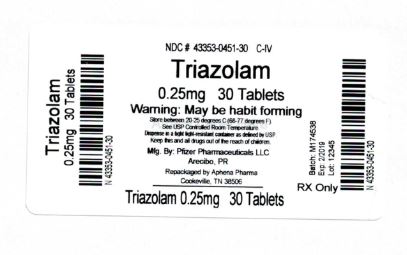
Triazolam .25 mg Tablet, 30-count — NDC 43353-451-30 (Billing 43353-0451-30)
This is a package of 30 tablets of Triazolam .25 mg Tablet from Aphena Pharma Solutions - Tennessee, LLC, marketed since Nov 1982 and currently FDA-listed. It is the main listing for this product, which comes in 2 package sizes.
NDC database record
One package, one record: these facts belong to NDC 43353-451-30 alone.
- Record
- FDA NDC Directory package listing · Human prescription drug
- Code segments
- 43353 labeler · 451 product · 30 package
- Package marketed since
- Nov 15, 1982
- Sample package
- No — commercial package
- Listing certified through
- Dec 31, 2026
- Billing quantity
- 30 EA per package
- Barcode (UPC-A, from the NDC)
- 3 4335345130 4
- FDA record last changed
- Jul 24, 2026
Identity & classification
Regulatory identifiers FDA, NLM and CMS codes for this package
Drug-database identifiers Medi-Span GPI and First Databank GCN / HICL / AHFS classification
- GSN (GCN sequence number): 003694
- GCN: 14280
- GPI-14 (Medi-Span): 60201040000310
- HICL (First Databank): 001594
- AHFS class code: 28:24.08.00
- RxCUI (RxNorm): 198318
Where does this data come from?
- FDA openFDA NDC Directory · synced Oct 8, 2026
- FDA label on DailyMed · label index refreshed Oct 6, 2026
- RxNorm (NLM RxNav) · catalog refreshed Oct 1, 2026
- Medi-Span GPI (licensed)
- First Databank (licensed) · refreshed Oct 8, 2026
RxNorm drug class
This medicine belongs to the Benzodiazepine class.
Where does this data come from?
- RxClass (NLM) · catalog refreshed Oct 1, 2026
Clinical
Triazolam is used on a short-term basis to treat insomnia (difficulty falling asleep or staying asleep). Triazolam is in a class of medications called benzodiazepines. It works by slowing activity in the brain to allow sleep.
Read the full MedlinePlus article ↗- Triazolam is used for short-term relief of insomnia — trouble falling or staying asleep. It's generally prescribed for just 7 to 10 days. It's not meant to be a long-term sleep sol...
- Take one tablet by mouth right before you get into bed — only when you have a full night ahead of you and don't need to be up and alert within several hours. Don't take it with alc...
- Yes, this is a real concern. Your body can become physically dependent on triazolam, especially if you take it regularly or at higher doses. If you stop suddenly, you can have with...
- The most common ones are drowsiness, dizziness, light-headedness, and headache — basically extensions of how the medicine makes you sleepy. Some people also notice coordination pro...
Patient education
Supplement & herbal interactions
Some supplements/herbs that may interact with Triazolam — tap one for details:
Where does this data come from?
- MedlinePlus (NLM) · refreshed Oct 1, 2026
- FDA label on DailyMed · label index refreshed Oct 6, 2026
Ask a licensed pharmacist directly — free, answered by our team.
Pricing
A drug doesn't have one price. Each row is a different public payment system, and none is what you'd pay at the counter — that depends on your insurance. The ⓘ on each row explains what it measures.
| Price system | Per each | Per package |
|---|---|---|
| Retail pharmacies payNADAC · weekly | Not in the retail survey — common for institutional, discontinued, or low-volume packs. | |
| Medicaid paysCMS SDUD · 12 mo | No recent Medicaid claims on file for this NDC — rare and low-volume NDCs are suppressed in the public data. | |
| Medicare drug plans payPart D · Q2 2026 | $1.02 | $30.68 / 30 tablets |
Where does this data come from?
- CMS NADAC weekly file
- CMS ASP pricing files · refreshed Sep 20, 2026
- CMS Medicaid State Drug Utilization Data · refreshed Oct 8, 2026
- CMS Part D plan pricing files · refreshed Sep 24, 2026
- VA National Acquisition Center price file
Packaging — all sizes for this product
| Package NDC | Description | Marketing start | Marketing end | Status |
|---|---|---|---|---|
| 43353-0451-30 You're viewing this Main listing | 30 TABLET in 1 BOTTLE | 1982-11-15 | — | Active |
| 43353-0451-53 43353-451-53 | 60 TABLET in 1 BOTTLE | 1982-11-15 | — | Active |
You're viewing the smallest of 2 pack sizes for this product.
Pack size FAQ
What quantity is in this package?
How does this package differ from NDC 43353-0451-53?
What NDC number is used to bill for this package of Triazolam .25 mg Tablet?
Therapeutic equivalents
| Product | Labeler | Pack | NADAC/unit | TE | Status | Price vs. this |
|---|---|---|---|---|---|---|
| Triazolam .25 mg 50742-0646-01 | Ingenus | 100 tablets | $0.308 | AB | Availability likely | — |
| Triazolam .25 mg 59762-3718-03 | Mylan | 500 tablets | $0.308 | AB | Availability likely | — |
| Triazolam .25 mg 70710-1289-01 | Zydus | 100 tablets | $0.308 | AB | Availability likely | — |
| Triazolam .25 mgthis 43353-0451-30 | Aphena | 30 tablets | — | AB | FDA listed | — |
| Triazolam .25 mg 50090-6471-00 | A-S | 30 tablets | — | AB | FDA listed | — |
| Triazolam .25 mg 50090-7787-00 | A-S | 30 tablets | — | AB | FDA listed | — |
| Triazolam .25 mg 70771-1162-01 | Zydus | 100 tablets | — | AB | FDA listed | — |
| Triazolam .25 mg 71335-1876-00 | Bryant | 3 tablets | — | AB | FDA listed | — |
| Triazolam .25 mg 72789-0349-30 | PD-Rx | 30 tablets | — | AB | FDA listed | — |
| Triazolam .25 mg 82804-0275-30 | Proficient | 30 tablets | — | AB | FDA listed | — |
| Halcion .25 mg 00009-0017-55 | Pharmacia | 100 tablets | — | AB | Discontinued | — |
Where does this data come from?
- FDA openFDA NDC Directory · synced Oct 8, 2026
- FDA Orange Book · refreshed Oct 3, 2026
- CMS NADAC weekly file
Availability & generic status
FDA-approved generic versions are listed, and recent pricing/market data suggests they may be available — see Therapeutic equivalents.
Where does this data come from?
- FDA Orange Book · refreshed Oct 3, 2026
Inactive Ingredients / Excipients
Inactive ingredients, also called excipients, are components of the drug product other than the active ingredient. They may include fillers, dyes, coatings, preservatives, flavors, or other formulation ingredients.
🧪 Avoiding an ingredient? See Triazolam inactive ingredients by manufacturer: every current product's list side by side, so you can ask your pharmacy for the version that does not list it.
💡 Tap an ingredient (hover on desktop) to see what it is and why it’s used.
-
UNII F05Q2T2JA0
Docusate sodium is a stool softener compound that helps medicines dissolve and move through the digestive tract. It acts as a surfactant, reducing surface tension in the intestines, and also serves as a wetting agent in tablet formulations.
-
UNII L06K8R7DQK
A synthetic blue dye approved by the FDA for use in medications and foods. It serves as a colorant to make pills and liquids visually distinct and easier to identify.
-
UNII J2B2A4N98G
Lactose is a natural sugar derived from milk. In medications, it serves as a filler and binder to add bulk and help hold tablet or capsule ingredients together during manufacturing.
-
UNII 70097M6I30
Magnesium stearate is a salt made from magnesium and stearic acid, a fatty substance. It's used in tablets and capsules as a lubricant and glidant to help ingredients flow smoothly during manufacturing and prevent sticking.
-
UNII SMD1X3XO9M
Powdered cellulose is a fine, plant-based powder made from purified wood fibers. In medicines, it acts as a filler to add bulk and volume, and helps tablets or capsules hold together during manufacturing and storage.
-
UNII ETJ7Z6XBU4
Silicon dioxide is a naturally occurring mineral used as a glidant and anti-caking agent. It helps powder ingredients flow smoothly and prevents clumping during manufacturing and storage.
-
UNII OJ245FE5EU
Sodium benzoate is a salt derived from benzoic acid, a preservative. It's added to medicines to prevent growth of bacteria, fungi, and other microorganisms that could spoil the product.
-
UNII O8232NY3SJ
A plant-based carbohydrate derived from corn kernels. It acts as a filler to add bulk, a binder to hold ingredients together, and a disintegrant to help the tablet break apart in your stomach for absorption.
8 inactive ingredients listed in the exact product block matched to this NDC.
Where does this data come from?
ingredient classCode="IACT" elements from the exact product block matched by this NDC. Label-section narrative from DailyMed / the openFDA label index is shown separately when available.- FDA label on DailyMed · label index refreshed Oct 6, 2026
- FDA openFDA NDC Directory · synced Oct 8, 2026
Inactive ingredient FAQ
Are inactive ingredients the same for every manufacturer?
Why might an inactive ingredient be missing?
Can inactive ingredients matter?
Manufacturer & labeler
More NDCs from Aphena Pharma Solutions - Tennessee, LLC labeler code 43353
- Doxepin Hydrochloride 10 mg Capsule NDC 43353-329-09
- Doxepin Hydrochloride 25 mg Capsule NDC 43353-331-09
- Minoxidil 2.5 mg Tablet NDC 43353-342-09
- Sildenafil 20 mg Tablet, Film Coated NDC 43353-345-10
- Mirtazapine 30 mg Tablet, Film Coated NDC 43353-378-15
- Sertraline Hydrochloride 100 mg Tablet, Film Coated NDC 43353-447-15
- Paroxetine 40 mg Tablet, Film Coated NDC 43353-544-15
- Paroxetine 20 mg Tablet, Film Coated NDC 43353-554-15
- Diphenoxylate Hydrochloride and Atropine Sulfate 2.5 mg; .025 mg Tablet NDC 43353-594-30
- Paroxetine 20 mg Tablet, Film Coated NDC 43353-713-15
- Hydrochlorothiazide 50 mg Tablet NDC 43353-717-09
- Hydrochlorothiazide 25 mg Tablet NDC 43353-719-15
Where does this data come from?
- FDA openFDA NDC Directory · synced Oct 8, 2026
- Drugs@FDA
Full prescribing information FDA SPL
🚨 Boxed Warning ▾
WARNING: RISKS FROM CONCOMITANT USE WITH OPIOIDS Concomitant use of benzodiazepines and opioids may result in profound sedation, respiratory depression, coma, and death [ see Warnings , Drug Interactions ] . Reserve concomitant prescribing of these drugs for use in patients for whom alternative treatment options are inadequate. Limit dosages and durations to the minimum required.
Follow patients for signs and symptoms of respiratory depression and sedation.
🎯 Indications and Usage ▾
INDICATIONS AND USAGE Triazolam is indicated for the short-term treatment of insomnia (generally 7–10 days). Use for more than 2–3 weeks requires complete reevaluation of the patient (see WARNINGS ). Prescriptions for triazolam should be written for short-term use (7–10 days) and it should not be prescribed in quantities exceeding a 1-month supply.
⏱️ Dosage and Administration ▾
DOSAGE AND ADMINISTRATION It is important to individualize the dosage of triazolam tablets for maximum beneficial effect and to help avoid significant adverse effects. The recommended dose for most adults is 0.25 mg before retiring. A dose of 0.125 mg may be found to be sufficient for some patients (e.g., low body weight).
A dose of 0.5 mg should be used only for exceptional patients who do not respond adequately to a trial of a lower dose since the risk of several adverse reactions increases with the size of the dose administered. A dose of 0.5 mg should not be exceeded. In geriatric and/or debilitated patients the recommended dosage range is 0.125 mg to 0.25 mg.
Therapy should be initiated at 0.125 mg in these groups and the 0.25 mg dose should be used only for exceptional patients who do not respond to a trial of the lower dose. A dose of 0.25 mg should not be exceeded in these patients. As with all medications, the lowest effective dose should be used.
⛔ Contraindications ▾
CONTRAINDICATIONS Triazolam tablets are contraindicated in patients with known hypersensitivity to this drug or other benzodiazepines. Benzodiazepines may cause fetal damage when administered during pregnancy. An increased risk of congenital malformations associated with the use of diazepam and chlordiazepoxide during the first trimester of pregnancy has been suggested in several studies.
Transplacental distribution has resulted in neonatal CNS depression following the ingestion of therapeutic doses of a benzodiazepine hypnotic during the last weeks of pregnancy. Triazolam is contraindicated in pregnant women. If there is a likelihood of the patient becoming pregnant while receiving triazolam, she should be warned of the potential risk to the fetus.
Patients should be instructed to discontinue the drug prior to becoming pregnant. The possibility that a woman of childbearing potential may be pregnant at the time of institution of therapy should be considered. Triazolam is contraindicated with medications that significantly impair the oxidative metabolism mediated by cytochrome P450 3A (CYP 3A) including ketoconazole, itraconazole, nefazodone, and several HIV protease inhibitors, (see WARNINGS and PRECAUTIONS–Drug Interactions ).
⚠️ Warnings ▾
WARNINGS Risks from Concomitant Use with Opioids Concomitant use of benzodiazepines, including triazolam, and opioids may result in profound sedation, respiratory depression, coma, and death. Because of these risks, reserve concomitant prescribing of these drugs for use in patients for whom alternative treatment options are inadequate. Observational studies have demonstrated that concomitant use of opioid analgesics and benzodiazepines increases the risk of drug-related mortality compared to use of opioids alone.
If a decision is made to prescribe triazolam concomitantly with opioids, prescribe the lowest effective dosages and minimum durations of concomitant use, and follow patients closely for signs and symptoms of respiratory depression and sedation. In patients already receiving an opioid analgesic, prescribe a lower initial dose of triazolam than indicated in the absence of an opioid and titrate based on clinical response. If an opioid is initiated in a patient already taking triazolam, prescribe a lower initial dose of the opioid and titrate based upon clinical response.
Advise both patients and caregivers about the risks of respiratory depression and sedation when triazolam is used with opioids. Advise patients not to drive or operate heavy machinery until the effects of concomitant use with the opioid have been determined [see Drug Interactions ]. Persistent or Worsening Insomnia Because sleep disturbances may be the presenting manifestation of a physical and/or psychiatric disorder, symptomatic treatment of insomnia should be initiated only after a careful evaluation of the patient.
The failure of insomnia to remit after 7 to 10 days of treatment may indicate the presence of a primary psychiatric and/or medical illness that should be evaluated. Worsening of insomnia or the emergence of new thinking or behavior abnormalities may be the consequence of an unrecognized psychiatric or physical disorder. Such findings have emerged during the course of treatment with sedative-hypnotic drugs.
Because some of the important adverse effects of sedative-hypnotics appear to be dose related (see Precautions and Dosage and Administration ), it is important to use the smallest possible effective dose, especially in the elderly. "Sleep-driving" and Other Complex Behaviors Complex behaviors such as "sleep-driving" (i.e., driving while not fully awake after ingestion of a sedative-hypnotic, with amnesia for the event) have been reported. These events can occur in sedative-hypnotic-naïve as well as in sedative-hypnotic-experienced persons.
Although behaviors such as sleep-driving may occur with sedative-hypnotics alone at therapeutic doses, the use of alcohol and other CNS depressants with sedative-hypnotics appears to increase the risk of such behaviors, as does the use of sedative-hypnotics at doses exceeding the maximum recommended dose. Due to the risk to the patient and the community, discontinuation of sedative-hypnotics should be strongly considered for patients who report a "sleep-driving" episode. Other complex behaviors (e.g., preparing and eating food, making phone calls, or having sex) have been reported in patients who are not fully awake after taking a sedative-hypnotic.
As with sleep-driving, patients usually do not remember these events. Severe anaphylactic and anaphylactoid reactions Rare cases of angioedema involving the tongue, glottis or larynx have been reported in patients after taking the first or subsequent doses of sedative-hypnotics, including triazolam. Some patients have had additional symptoms such as dyspnea, throat closing, or nausea and vomiting that suggest anaphylaxis.
Some patients have required medical therapy in the emergency department. If angioedema involves the tongue, glottis or larynx, airway obstruction may occur and be fatal. Patients who develop angioedema after treatment with triazolam should not be rechallenged with the drug.
Central nervous system manifestations An increase in daytime anxie… [Excerpted — this section continues on DailyMed.]
🤒 Adverse Reactions ▾
ADVERSE REACTIONS During placebo-controlled clinical studies in which 1,003 patients received triazolam tablets, the most troublesome side effects were extensions of the pharmacologic activity of triazolam, eg, drowsiness, dizziness, or light-headedness. The figures cited below are estimates of untoward clinical event incidence among subjects who participated in the relatively short duration (i.e., 1 to 42 days) placebo-controlled clinical trials of triazolam. The figures cannot be used to predict precisely the incidence of untoward events in the course of usual medical practice where patient characteristics and other factors often differ from those in clinical trials.
These figures cannot be compared with those obtained from other clinical studies involving related drug products and placebo, as each group of drug trials is conducted under a different set of conditions. Comparison of the cited figures, however, can provide the prescriber with some basis for estimating the relative contributions of drug and nondrug factors to the untoward event incidence rate in the population studied. Even this use must be approached cautiously, as a drug may relieve a symptom in one patient while inducing it in others.
(For example, an anticholinergic, anxiolytic drug may relieve dry mouth [a sign of anxiety] in some subjects but induce it [an untoward event] in others.) Triazolam PLACEBO Number of Patients 1003 997 % Patients Reporting: Central Nervous System Drowsiness 14.0
6.4Headache 9.7
8.4Dizziness 7.8
3.1Nervousness 5.2
4.5Light-headedness 4.9
0.9Coordination disorders/ataxia 4.6
0.8Gastrointestinal Nausea/vomiting 4.6
3.7In addition to the relatively common (i.e., 1% or greater) untoward events enumerated above, the following adverse events have been reported less frequently (i.e., 0.9% to0.5%): euphoria, tachycardia, tiredness, confusional states/memory impairment, cramps/pain, depression, visual disturbances. Rare (i.e., less than 0.5%) adverse reactions included constipation, taste alterations, diarrhea, dry mouth, dermatitis/allergy, dreaming/nightmares, insomnia, paresthesia, tinnitus, dysesthesia, weakness, congestion, death from hepatic failure in a patient also receiving diuretic drugs.
In addition to these untoward events for which estimates of incidence are available, the following adverse events have been reported in association with the use of triazolam and other benzodiazepines: amnestic symptoms (anterograde amnesia with appropriate or inappropriate behavior), confusional states (disorientation, derealization, depersonalization, and/or clouding of consciousness), dystonia, anorexia, fatigue, sedation, slurred speech, jaundice, pruritus, dysarthria, changes in libido, menstrual irregularities, incontinence, and urinary retention.
Other factors may contribute to some of these reactions, eg, concomitant intake of alcohol or other drugs, sleep deprivation, an abnormal premorbid state, etc. Other events reported include: paradoxical reactions such as stimulation, mania, an agitational state (restlessness, irritability, and excitation), increased muscle spasticity, sleep disturbances, hallucinations, delusions, aggressiveness, falling, somnambulism, syncope, inappropriate behavior and other adverse behavioral effects. Should these occur, use of the drug should be discontinued.
The following events have also been reported: chest pain, burning tongue/glossitis/stomatitis. Laboratory analyses were performed on all patients participating in the clinical program for triazolam. The following incidences of abnormalities were observed in patients receiving triazolam and the corresponding placebo group.
None of these changes were considered to be of physiological significance. Triazolam PLACEBO Number of Patients 380 361 % of Patients Reporting: Low High Low High Hematology Hematocrit Less than 1% Hemoglobin Total WBC count 1.7 2.1
1.3Neutrophil count 1.5 1.5 3.3
1.0Lymphocyte count 2.3 4.0 3.1
3.8Monocyte count 3.6 4.4
1.5E… [Excerpted — this section continues on DailyMed.]
🔄 Drug Interactions ▾
Drug interactions The concomitant use of benzodiazepines and opioids increases the risk of respiratory depression because of actions at different receptor sites in the CNS that control respiration. Benzodiazepines interact at GABA A sites and opioids interact primarily at mu receptors. When benzodiazepines and opioids are combined, the potential for benzodiazepines to significantly worsen opioid-related respiratory depression exists.
Limit dosage and duration of concomitant use of benzodiazepines and opioids, and monitor patients closely for respiratory depression and sedation. Both pharmacodynamic and pharmacokinetic interactions have been reported with benzodiazepines. In particular, triazolam produces additive CNS depressant effects when coadministered with other psychotropic medications, anticonvulsants, antihistamines, ethanol, and other drugs which themselves produce CNS depression.
Drugs that inhibit triazolam metabolism via cytochrome P450 3A The initial step in triazolam metabolism is hydroxylation catalyzed by cytochrome P450 3A (CYP 3A). Drugs which inhibit this metabolic pathway may have a profound effect on the clearance of triazolam (see CONTRAINDICATIONS and WARNINGS for additional drugs of this type). Triazolam is contraindicated with ketoconzaole, itraconazole, nefazodone, and several HIV protease inhibitors.
Drugs and other substances demonstrated to be CYP 3A inhibitors of possible clinical significance on the basis of clinical studies involving triazolam (caution is recommended during coadministration with triazolam) Isoniazid Coadministration of isoniazid increased the maximum plasma concentration of triazolam by 20%, decreased clearance by 42%, and increased half-life by 31%. Oral contraceptives Coadministration of oral contraceptives increased maximum plasma concentration by 6%, decreased clearance by 32%, and increased half-life by 16%.
Grapefruit juice Coadministration of grapefruit juice increased the maximum plasma concentration of triazolam by 25%, increased the area under the concentration curve by 48%, and increased half-life by 18%. Drugs demonstrated to be CYP 3A inhibitors on the basis of clinical studies involving benzodiazepines metabolized similarly to triazolam or on the basis of in vitro studies with triazolam or other benzodiazepines (caution is recommended during coadministration with triazolam) Available data from clinical studies of benzodiazepines other than triazolam suggest a possible drug interaction with triazolam for the following: fluvoxamine, diltiazem, and verapamil.
Data from in vitro studies of triazolam suggest a possible drug interaction with triazolam for the following: sertraline and paroxetine. Data from in vitro studies of benzodiazepines other than triazolam suggest a possible drug interaction with triazolam for the following: ergotamine, cyclosporine, amiodarone, nicardipine, and nifedipine. Caution is recommended during coadministration of any of these drugs with triazolam (see WARNINGS ).
Drugs that affect triazolam pharmacokinetics by other mechanisms Ranitidine Coadministration of ranitidine increased the maximum plasma concentration of triazolam by 30%, increased the area under the concentration curve by 27%, and increased half-life by 3.3%. Caution is recommended during coadministration with triazolam.
🤰 Pregnancy ▾
Pregnancy 1. Teratogenic effects Pregnancy category X (see CONTRAINDICATIONS ). 2. Non-teratogenic effects It is to be considered that the child born of a mother who is on benzodiazepines may be at some risk for withdrawal symptoms from the drug, during the postnatal period. Also, neonatal flaccidity has been reported in an infant born of a mother who had been receiving benzodiazepines.
🧒 Pediatric Use ▾
Pediatric use Safety and effectiveness of triazolam in individuals below 18 years of age have not been established.
🧓 Geriatric Use ▾
Geriatric use The elderly are especially susceptible to the dose related adverse effects of triazolam. They exhibit higher plasma triazolam concentrations due to reduced clearance of the drug as compared with younger subjects at the same dose. To minimize the possibility of development of oversedation, the smallest effective dose should be used (see CLINICAL PHARMACOLOGY , WARNINGS , PRECAUTIONS , and DOSAGE AND ADMINISTRATION ).
🆘 Overdosage ▾
OVERDOSAGE Because of the potency of triazolam, some manifestations of overdosage may occur at 2 mg, four times the maximum recommended therapeutic dose (0.5 mg). Manifestations of overdosage with triazolam tablets include somnolence, confusion, impaired coordination, slurred speech, and ultimately, coma. Respiratory depression and apnea have been reported with overdosages of triazolam.
Seizures have occasionally been reported after overdosages. Death has been reported in association with overdoses of triazolam by itself, as it has with other benzodiazepines. In addition, fatalities have been reported in patients who have overdosed with a combination of a single benzodiazepine, including triazolam, and alcohol; benzodiazepine and alcohol levels seen in some of these cases have been lower than those usually associated with reports of fatality with either substance alone.
As in all cases of drug overdosage, respiration, pulse, and blood pressure should be monitored and supported by general measures when necessary. Immediate gastric lavage should be performed. An adequate airway should be maintained.
Intravenous fluids may be administered. Flumazenil, a specific benzodiazepine receptor antagonist, is indicated for the complete or partial reversal of the sedative effects of benzodiazepines and may be used in situations when an overdose with a benzodiazepine is known or suspected. Prior to the administration of flumazenil, necessary measures should be instituted to secure airway, ventilation and intravenous access.
Flumazenil is intended as an adjunct to, not as a substitute for, proper management of benzodiazepine overdose. Patients treated with flumazenil should be monitored for resedation, respiratory depression, and other residual benzodiazepine effects for an appropriate period after treatment. The prescriber should be aware of a risk of seizure in association with flumazenil treatment, particularly in long-term benzodiazepine users and in cyclic antidepressant overdose.
The complete flumazenil package insert including CONTRAINDICATIONS, WARNINGS and PRECAUTIONS should be consulted prior to use. Experiments in animals have indicated that cardiopulmonary collapse can occur with massive intravenous doses of triazolam. This could be reversed with positive mechanical respiration and the intravenous infusion of norepinephrine bitartrate or metaraminol bitartrate.
Hemodialysis and forced diuresis are probably of little value. As with the management of intentional overdosage with any drug, the physician should bear in mind that multiple agents may have been ingested by the patient. The oral LD 50 in mice is greater than 1,000 mg/kg and in rats is greater than 5,000 mg/kg.
🧬 Clinical Pharmacology ▾
CLINICAL PHARMACOLOGY Triazolam is a hypnotic with a short mean plasma half-life reported to be in the range of 1.5 to 5.5 hours. In normal subjects treated for 7 days with four times the recommended dosage, there was no evidence of altered systemic bioavailability, rate of elimination, or accumulation. Peak plasma levels are reached within 2 hours following oral administration.
Following recommended doses of triazolam tablets, triazolam peak plasma levels in the range of 1 to 6 ng/mL are seen. The plasma levels achieved are proportional to the dose given. Triazolam and its metabolites, principally as conjugated glucuronides, which are presumably inactive, are excreted primarily in the urine.
Only small amounts of unmetabolized triazolam appear in the urine. The two primary metabolites accounted for 79.9% of urinary excretion. Urinary excretion appeared to be biphasic in its time course.
Triazolam tablets 0.5 mg, in two separate studies, did not affect the prothrombin times or plasma warfarin levels in male volunteers administered sodium warfarin orally. Extremely high concentrations of triazolam do not displace bilirubin bound to human serum albumin in vitro . Triazolam 14 C was administered orally to pregnant mice.
Drug-related material appeared uniformly distributed in the fetus with 14 C concentrations approximately the same as in the brain of the mother. In sleep laboratory studies, triazolam tablets significantly decreased sleep latency, increased the duration of sleep, and decreased the number of nocturnal awakenings. After 2 weeks of consecutive nightly administration, the drug's effect on total wake time is decreased, and the values recorded in the last third of the night approach baseline levels.
On the first and/or second night after drug discontinuance (first or second post-drug night), total time asleep, percentage of time spent sleeping, and rapidity of falling asleep frequently were significantly less than on baseline (predrug) nights. This effect is often called "rebound" insomnia. The type and duration of hypnotic effects and the profile of unwanted effects during administration of benzodiazepine drugs may be influenced by the biologic half-life of administered drug and any active metabolites formed.
When half-lives are long, the drug or metabolites may accumulate during periods of nightly administration and be associated with impairments of cognitive and motor performance during waking hours; the possibility of interaction with other psychoactive drugs or alcohol will be enhanced. In contrast, if half-lives are short, the drug and metabolites will be cleared before the next dose is ingested, and carry-over effects related to excessive sedation or CNS depression should be minimal or absent. However, during nightly use for an extended period pharmacodynamic tolerance or adaptation to some effects of benzodiazepine hypnotics may develop.
If the drug has a short half-life of elimination, it is possible that a relative deficiency of the drug or its active metabolites (ie, in relationship to the receptor site) may occur at some point in the interval between each night's use. This sequence of events may account for two clinical findings reported to occur after several weeks of nightly use of rapidly eliminated benzodiazepine hypnotics: 1) increased wakefulness during the last third of the night and 2) the appearance of increased daytime anxiety after 10 days of continuous treatment.
In a study of elderly (62–83 years old) versus younger subjects (21–41 years old) who received triazolam at the same dose levels (0.125 mg and 0.25 mg), the elderly experienced both greater sedation and impairment of psychomotor performance. These effects resulted largely from higher plasma concentrations of triazolam in the elderly.
📦 How Supplied / Storage and Handling ▾
HOW SUPPLIED Triazolam tablets are available in the following strengths and package sizes: 0.125 mg (white, imprinted G3717): Bottles of 10 NDC 59762-3717-4 Bottles of 100 NDC 59762-3717-9 0.25 mg (powder blue, scored, imprinted G3718): Bottles of 10 NDC 59762-3718-4 Bottles of 100 NDC 59762-3718-9 Bottles of 500 NDC 59762-3718-3 Store at controlled room temperature 20° to 25°C (68° to 77°F) [see USP].
📦 Storage and Handling ▾
Store at controlled room temperature 20° to 25°C (68° to 77°F) [see USP].
📋 Description ▾
DESCRIPTION Triazolam is a triazolobenzodiazepine hypnotic agent. Triazolam is a white crystalline powder, soluble in alcohol and poorly soluble in water. It has a molecular weight of 343.21.
The chemical name for triazolam is 8-chloro-6-(o-chlorophenyl)-1-methyl-4H-s-triazolo-[4,3-α] [1,4] benzodiazepine. The structural formula is represented below: Each triazolam tablet, for oral administration, contains 0.125 mg or 0.25 mg of triazolam. Inactive ingredients: 0.125 mg —cellulose, corn starch, docusate sodium, lactose, magnesium stearate, silicon dioxide, sodium benzoate; 0.25 mg —cellulose, corn starch, docusate sodium, FD&C Blue No.
2, lactose, magnesium stearate, silicon dioxide, sodium benzoate. Chemical Structure
💬 Information for Patients ▾
Information for patients The text of a Medication Guide for patients is included at the end of this insert. To assure safe and effective use of triazolam, the information and instructions provided in this Medication Guide should be discussed with patients.
💬 Medication Guide ▾
MEDICATION GUIDE TRIAZOLAM Tablets, C-IV Rx only What is the most important information I should know about triazolam? Triazolam is a benzodiazepine medicine. Taking benzodiazepines with opioid medicines, alcohol, or other central nervous system depressants (including street drugs) can cause severe drowsiness, breathing problems (respiratory depression), coma and death.
After taking triazolam, you may get up out of bed while not being fully awake and do an activity that you do not know you are doing. The next morning, you may not remember that you did anything during the night. You have a higher chance for doing these activities if you drink alcohol or take other medicines that make you sleepy with triazolam.
Reported activities include: driving a car ("sleep-driving") making and eating food talking on the phone having sex sleep-walking Call your healthcare provider right away if you find out that you have done any of the above activities after taking triazolam. Do not take triazolam unless you are able to stay in bed a full night (7 to 8 hours) before you must be active again. Do not take more triazolam than prescribed.
What is triazolam? Triazolam is a prescription medicine used to treat certain types of insomnia including difficulty falling asleep, waking up often during the night, or waking up early in the morning. Triazolam is a federal controlled substance (C-IV) because it can be abused or lead to dependence.
Keep triazolam in a safe place to prevent misuse and abuse. Selling or giving away triazolam may harm others, and is against the law. Tell your healthcare provider if you have ever abused or been dependent on alcohol, prescription medicines or street drugs.
It is not known if triazolam is safe and effective in children. Elderly patients are especially susceptible to dose related adverse effects when taking triazolam. It is not known if triazolam is safe and effective for use longer than 2 to 3 weeks.
Do not take triazolam if you : are allergic to triazolam, other benzodiazepines, or any of the ingredients in triazolam. See the end of this Medication Guide for a complete list of ingredients in triazolam. take antifungal medicines including ketoconazole and itraconazole take a medicine to treat depression called nefazodone take medicines to treat HIV infection called protease inhibitors, including ritonavir, indinavir, nelfinavir, saquinavir or lopinavir Before you take triazolam, tell your healthcare provider about all of your medical conditions, including if you: have a history of depression, mental illness or, suicidal thoughts have a history of drug or alcohol abuse or addiction have kidney or liver disease have lung disease, breathing problems, or sleep apnea are pregnant or plan to become pregnant.
Triazolam may harm your unborn baby. are breastfeeding or plan to breastfeed. It is not known if triazolam can pass through your breast milk. Talk to your healthcare provider about the best way to feed your baby if you take triazolam.
Tell your healthcare provider about all of the medicines you take, including prescription and over-the-counter medicines, vitamins, and herbal supplements. Do not take triazolam with other medicines that can make you sleepy. Taking triazolam with certain other medicines can cause side effects or affect how well triazolam or the other medicines work.
Do not start or stop other medicines without talking to your healthcare provider. How should I take triazolam? See " What is the most important information I should know about triazolam? " Take triazolam exactly as your healthcare provider tells you to take it.
Take triazolam right before you get into bed. Or you can take triazolam after you have been in bed and have trouble falling asleep. Do not take triazolam with or right after a meal.
Do not take triazolam unless you are able to get a full night's sleep before you must be active again. If you take too much triazolam, get emergency treatment right away What should I avoid while taking tr… [Excerpted — this section continues on DailyMed.]
⚠️ Precautions ▾
PRECAUTIONS General In elderly and/or debilitated patients it is recommended that treatment with triazolam tablets be initiated at 0.125 mg to decrease the possibility of development of oversedation, dizziness, or impaired coordination. Some side effects reported in association with the use of triazolam appear to be dose related. These include drowsiness, dizziness, light-headedness, and amnesia.
The relationship between dose and what may be more serious behavioral phenomena is less certain. Specifically, some evidence, based on spontaneous marketing reports, suggests that confusion, bizarre or abnormal behavior, agitation, and hallucinations may also be dose related, but this evidence is inconclusive. In accordance with good medical practice it is recommended that therapy be initiated at the lowest effective dose (see DOSAGE AND ADMINISTRATION ).
Cases of "traveler's amnesia" have been reported by individuals who have taken triazolam to induce sleep while traveling, such as during an airplane flight. In some of these cases, insufficient time was allowed for the sleep period prior to awakening and before beginning activity. Also, the concomitant use of alcohol may have been a factor in some cases.
Caution should be exercised if triazolam is prescribed to patients with signs or symptoms of depression that could be intensified by hypnotic drugs. Suicidal tendencies may be present in such patients and protective measures may be required. Intentional over-dosage is more common in these patients, and the least amount of drug that is feasible should be available to the patient at any one time.
The usual precautions should be observed in patients with impaired renal or hepatic function, chronic pulmonary insufficiency, and sleep apnea. In patients with compromised respiratory function, respiratory depression and apnea have been reported infrequently. Information for patients The text of a Medication Guide for patients is included at the end of this insert.
To assure safe and effective use of triazolam, the information and instructions provided in this Medication Guide should be discussed with patients. Risks from Concomitant Use with Opioids Advise both patients and caregivers about the risks of potentially fatal respiratory depression and sedation when triazolam is used with opioids and not to use such drugs concomitantly unless supervised by a healthcare provider. Advise patients not to drive or operate heavy machinery until the effects of concomitant use with the opioid have been determined [see Drug Interactions ]. "Sleep-driving" and other complex behaviors There have been reports of people getting out of bed after taking a sedative-hypnotic and driving their cars while not fully awake, often with no memory of the event.
If a patient experiences such an episode, it should be reported to his or her doctor immediately, since "sleep-driving" can be dangerous. This behavior is more likely to occur when sedative-hypnotics are taken with alcohol or other central nervous system depressants (see WARNINGS ). Other complex behaviors (e.g., preparing and eating food, making phone calls, or having sex) have been reported in patients who are not fully awake after taking a sedative hypnotic.
As with sleep-driving, patients usually do not remember these events. Laboratory tests Laboratory tests are not ordinarily required in otherwise healthy patients. Drug interactions The concomitant use of benzodiazepines and opioids increases the risk of respiratory depression because of actions at different receptor sites in the CNS that control respiration.
Benzodiazepines interact at GABA A sites and opioids interact primarily at mu receptors. When benzodiazepines and opioids are combined, the potential for benzodiazepines to significantly worsen opioid-related respiratory depression exists. Limit dosage and duration of concomitant use of benzodiazepines and opioids, and monitor patients closely for respiratory depression and sedation.
Both pharmacodyna… [Excerpted — this section continues on DailyMed.]
🍼 Nursing Mothers ▾
Nursing mothers Human studies have not been performed; however, studies in rats have indicated that triazolam and its metabolites are secreted in milk. Therefore, administration of triazolam to nursing mothers is not recommended.
🔒 Drug Abuse and Dependence ▾
DRUG ABUSE AND DEPENDENCE Abuse and addiction are separate and distinct from physical dependence and tolerance. Abuse is characterized by misuse of the drug for non-medical purposes, often in combination with other psychoactive substances. Physical dependence is a state of adaptation that is manifested by a specific withdrawal syndrome that can be produced by abrupt cessation, rapid dose reduction, decreasing blood level of the drug and/or administration of an antagonist.
Tolerance is a state of adaptation in which exposure to a drug induces changes that result in a diminution of one or more of the drug's effects over time. Tolerance may occur to both the desired and undesired effects of drugs and may develop at different rates for different effects. Addiction is a primary, chronic, neurobiological disease with genetic, psychosocial, and environmental factors influencing its development and manifestations.
It is characterized by behaviors that include one or more of the following: impaired control over drug use, compulsive use, continued use despite harm, and craving. Drug addiction is a treatable disease, utilizing a multidisciplinary approach, but relapse is common. Controlled Substance Triazolam is a controlled substance under the Controlled Substance Act, and triazolam tablets have been assigned to Schedule IV.
Abuse, Dependence and Withdrawal Withdrawal symptoms, similar in character to those noted with barbiturates and alcohol (convulsions, tremor, abdominal and muscle cramps, vomiting, sweating, dysphoria, perceptual disturbances and insomnia), have occurred following abrupt discontinuance of benzodiazepines, including triazolam. The more severe symptoms are usually associated with higher dosages and longer usage, although patients at therapeutic dosages given for as few as 1–2 weeks can also have withdrawal symptoms and in some patients there may be withdrawal symptoms (daytime anxiety, agitation) between nightly doses (see CLINICAL PHARMACOLOGY ).
Consequently, abrupt discontinuation should be avoided and a gradual dosage tapering schedule is recommended in any patient taking more than the lowest dose for more than a few weeks. The recommendation for tapering is particularly important in any patient with a history of seizure. The risk of dependence is increased in patients with a history of alcoholism, drug abuse, or in patients with marked personality disorders.
Such dependence-prone individuals should be under careful surveillance when receiving triazolam. As with all hypnotics, repeat prescriptions should be limited to those who are under medical supervision.
🔒 Controlled Substance ▾
Controlled Substance Triazolam is a controlled substance under the Controlled Substance Act, and triazolam tablets have been assigned to Schedule IV.
📄 Carcinogenesis, Mutagenesis, Impairment of Fertility ▾
Carcinogenesis, mutagenesis, impairment of fertility No evidence of carcinogenic potential was observed in mice during a 24-month study with triazolam in doses up to 4,000 times the human dose.
📄 Package Label / Principal Display Panel ▾
PRINCIPAL DISPLAY PANEL - 0.25 mg NDC 43353-451 - Triazolam 0.25 mg - Rx Only Bottle Label 0.25 mg
Medicare Part D spend CMS · PART D · 2026 (Q1)
About this NDC listing & data coverage
What data is (and isn’t) available for this NDC — tap to expand
| NDC identity (package / product / labeler codes) | ✓ Available |
| Labeler | ✓ Available |
| Product & package description | ✓ Available |
| Marketing category & status | ✓ Available |
| Active ingredient / dosage form / route | ✓ Available |
| FDA label (SPL via DailyMed) | ✓ Available |
| Package photos | ✓ Available |
| Inactive ingredients (structured) | ✓ Available |
| NADAC pharmacy acquisition price (CMS) | — Not published for this NDC CMS publishes NADAC only for NDCs reported in its retail-pharmacy survey. |
| Orange Book / therapeutic-equivalence data | ✓ Available |
| HCPCS J-code billing crosswalk | — Not published for this NDC Most self-administered / retail products have no J-code — that is normal. |
| Medicaid utilization (CMS SDUD) | — Not published for this NDC CMS reports utilization only for NDCs with Medicaid claims above its privacy threshold. |