
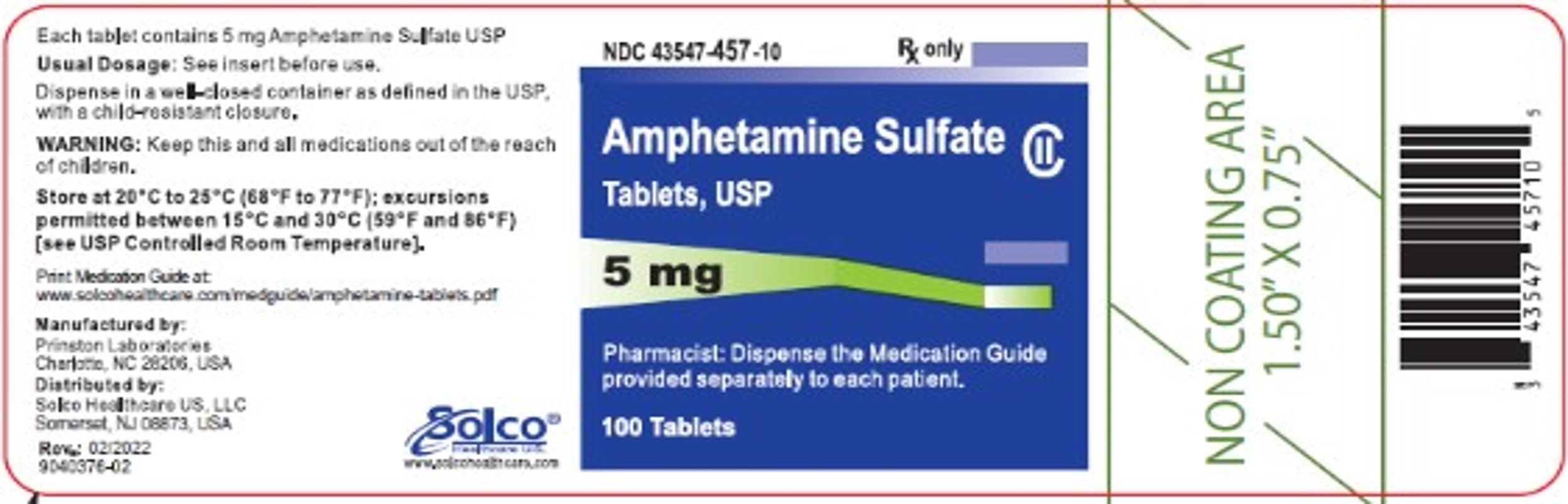
AMPHETAMINE SULFATE 10 mg Tablet, 100-count
🆔 Identity & classification
Where does this data come from?
🏷️ RxNorm drug class
This medicine belongs to the Central Nervous System Stimulant class.
Where does this data come from?
🏭 Manufacturer & labeler
Where does this data come from?
🩺 Clinical
Amphetamine (Adzenys® ER, Adzenys® XR, Dyanavel® XR, Evekeo®, Evekeo® ODT, others) is used as part of a treatment program to control symptoms of attention deficit hyperactivity disorder (ADHD; more difficulty focusing, controlling actions, and remaining still or quiet than other people who are the same age) in adults and children. Amphetamine (Evekeo®, others) is also used to treat narcolepsy (a sleep disorder that causes excessive daytime sleepiness and sudden attacks of sleep). Amphetamine (Evekeo®, others) is also used for a limited period of time (a few weeks) along with a reduced calorie...
Read the full MedlinePlus article ↗- It depends on the specific product. Most amphetamine products — including Adzenys XR-ODT, Dyanavel XR, and the extended-release orally disintegrating tablets — are approved to trea...
- What conditions is amphetamine actually approved to treat?
- You can take most amphetamine products with or without food — it won't meaningfully change how much you absorb. That said, eating (especially a high-fat meal) can delay when it kic...
- Is it okay to take this with food, or does it have to be on an empty stomach?
Patient education
Supplement & herbal interactions
Some supplements/herbs that may interact with Amphetamine Sulfate — tap one for details:
Where does this data come from?
Ask a licensed pharmacist directly — free, answered by our team.
💊 What it looks like
Where does this data come from?
🧪 Inactive Ingredients / Excipients
Inactive ingredients, also called excipients, are components of the drug product other than the active ingredient. They may include fillers, dyes, coatings, preservatives, flavors, or other formulation ingredients.
💡 Tap an ingredient (hover on desktop) to see what it is and why it’s used.
-
UNII 68401960MK
Crospovidone is a synthetic polymer made from polyvinylpyrrolidone. It acts as a disintegrant, helping tablets break apart quickly in the stomach so the medicine dissolves and absorbs into the body.
-
UNII 70097M6I30
Magnesium stearate is a salt made from magnesium and stearic acid, a fatty substance. It's used in tablets and capsules as a lubricant and glidant to help ingredients flow smoothly during manufacturing and prevent sticking.
-
UNII OP1R32D61U
Microcrystalline cellulose is a purified form of cellulose, a natural fiber from plant sources. It acts as a binder and filler in tablets and capsules, helping hold ingredients together and give the medicine its shape and size.
-
UNII 4ELV7Z65AP
Stearic acid is a fatty acid derived from plant or animal sources. It acts as a binder and lubricant in tablets and capsules, helping them hold together and flow smoothly during manufacturing.
4 inactive ingredients listed in the exact product block matched to this NDC.
Where does this data come from?
ingredient classCode="IACT" elements from the exact product block matched by this NDC. Label-section narrative from DailyMed / the openFDA label index is shown separately when available.Inactive ingredient FAQ
Are inactive ingredients the same for every manufacturer?
Why might an inactive ingredient be missing?
Can inactive ingredients matter?
💲 Pricing
A drug doesn't have one price. Each row is a different public payment system, and none is what you'd pay at the counter — that depends on your insurance. The ⓘ on each row explains what it measures.
| Price system | Per ea | Per package |
|---|---|---|
| Retail pharmacies payNADAC · weekly | $0.449 | $44.90 / 100 tablets |
| Medicaid paysCMS SDUD · 12 mo | No recent Medicaid claims on file for this NDC — rare and low-volume NDCs are suppressed in the public data. | |
| Medicare drug plans payPart D · Q2 2026 | $1.53 | $153.47 / 100 tablets |
Where does this data come from?
🔁 Therapeutic equivalents
| Product | Labeler | Pack | NADAC/unit | TE | Status | Price vs. this |
|---|---|---|---|---|---|---|
| Amphetamine Sulfate 10 mg 00406-1220-01 | SpecGx | 100 tablets | $0.409 | AA | FDA listed | save 9% |
| Amphetamine Sulfate 10 mg 00527-2525-37 | Lannett | 100 tablets | $0.449 | AA | Availability likely | — |
| Amphetamine Sulfate 10 mgthis 43547-0458-10 | Solco | 100 tablets | $0.449 | AA | Availability likely | — |
| Amphetamine sulfate 10 mg 43598-0898-01 | DR. | 100 tablets | $0.449 | AA | Availability likely | — |
| Amphetamine Sulfate 10 mg 52536-0059-03 | Wilshire | 30 tablets | $0.449 | AA | Availability likely | — |
| Amphetamine Sulfate 10 mg 69238-1564-01 | Amneal | 100 tablets | $0.449 | AA | Availability likely | — |
| Amphetamine Sulfate 10 mg 70010-0041-01 | Granules | 100 tablets | $0.449 | AA | Availability likely | — |
| Evekeo 10 mg 24338-0026-03 | Azurity | 30 tablets | $7.690 | AA | Availability likely | +1613% |
| Amphetamine Sulfate 10 mg 13107-0260-01 | Aurolife | 100 tablets | — | AA | FDA listed | — |
| Amphetamine Sulfate 10 mg 42806-0030-01 | Epic | 100 tablets | — | AA | FDA listed | — |
| Amphetamine Sulfate 10 mg 63629-1114-01 | Bryant | 100 tablets | — | AA | FDA listed | — |
| Amphetamine Sulfate 10 mg 63629-2078-01 | Bryant | 100 tablets | — | AA | FDA listed | — |
| Amphetamine Sulfate 10 mg 63629-2498-01 | Bryant | 100 tablets | — | AA | FDA listed | — |
| Amphetamine Sulfate 10 mg 71335-2990-01 | Bryant | 120 tablets | — | AA | FDA listed | — |
| Amphetamine Sulfate 10 mg 72162-1088-01 | Bryant | 100 tablets | — | AA | FDA listed | — |
| Amphetamine Sulfate 10 mg 72162-1369-01 | Bryant | 100 tablets | — | AA | FDA listed | — |
| Amphetamine Sulfate 10 mg 72162-1613-03 | Bryant | 30 tablets | — | AA | FDA listed | — |
Where does this data come from?
⏳ Availability & generic status
This product is an FDA-approved generic. Other versions of the same drug are listed under Therapeutic equivalents, least expensive first.
Where does this data come from?
📊 Medicare Part D spend CMS · PART D · 2026 (Q1)
🔬 Reported adverse events (FAERS)
Top reported reactions
Reporter sex
Serious outcomes
Where does this data come from?
📦 Packaging — all sizes for this product
| Package NDC | Description | Marketing start | Status |
|---|---|---|---|
| 43547-0458-10 You're viewing this | 100 TABLET in 1 BOTTLE (43547-458-10) | 2020-04-02 | Active |
📄 Full prescribing information FDA SPL
🚨 Boxed Warning ▾
WARNING: ABUSE, MISUSE, AND ADDICTION Amphetamine sulfate tablets have a high potential for abuse and misuse, which can lead to the development of a substance use disorder, including addiction. Misuse and abuse of CNS stimulants, including amphetamine sulfate, can result in overdose and death (see OVERDOSAGE ), and this risk is increased with higher doses or unapproved methods of administration, such as snorting or injection. Before prescribing amphetamine sulfate tablets, assess each patient’s risk for abuse, misuse, and addiction.
Educate patients and their families about these risks, proper storage of the drug, and proper disposal of any unused drug. Throughout amphetamine sulfate tablets treatment, reassess each patient’s risk of abuse, misuse, and addiction and frequently monitor for signs and symptoms of abuse, misuse, and addiction (see WARNINGS and DRUG ABUSE AND DEPENDENCE ).
🎯 Indications and Usage ▾
INDICATIONS AND USAGE Amphetamine sulfate tablets, USP, are indicated for: 1. Narcolepsy 2. Attention Deficit Disorder with Hyperactivity as an integral part of a total treatment program which typically includes other remedial measures (psychological, educational, social) for a stabilizing effect in children with behavioral syndrome characterized by the following group of developmentally inappropriate symptoms: moderate to severe distractibility, short attention span, hyperactivity, emotional lability, and impulsivity.
The diagnosis of the syndrome should not be made with finality when these symptoms are only of comparatively recent origin. Nonlocalizing (soft) neurological signs, learning disability, and abnormal EEG may or may not be present, and a diagnosis of central nervous system dysfunction may or not be warranted. 3.
Exogenous Obesity as a short term (a few weeks) adjunct in a regimen of weight reduction based on caloric restriction for patients refractory to alternative therapy, e.g., repeated diets, group programs, and other drugs. The limited usefulness of amphetamines (see CLINICAL PHARMACOLOGY ) should be weighed against possible risks inherent in use of the drug, such as those described below.
⏱️ Dosage and Administration ▾
OVERDOSAGE Clinical Effects of Overdose Overdose of CNS stimulants is characterized by the following sympathomimetic effects: • Cardiovascular effects including tachyarrhythmias, and hypertension or hypotension. Vasospasm, myocardial infarction, or aortic dissection may precipitate sudden cardiac death. Takotsubo cardiomyopathy may develop. • CNS effects including psychomotor agitation, confusion, and hallucinations.
Serotonin syndrome, seizures, cerebral vascular accidents, and coma may occur. • Life-threatening hyperthermia (temperatures greater than 104°F) and rhabdomyolysis may develop. Overdose Management Consider the possibility of multiple drug ingestion. D-amphetamine is not dialyzable.
Consider contacting the Poison Help line (1-800-222-1222) or a medical toxicologist for additional overdose management recommendations.
⛔ Contraindications ▾
CONTRAINDICATIONS • Known hypersensitivity to amphetamine products. • During or within 14 days following the administration of monoamine oxidase inhibitors (hypertensive crises may result) (see WARNINGS ).
⚠️ Warnings ▾
WARNINGS Abuse, Misuse, and Addiction Amphetamine sulfate tablets have a high potential for abuse and misuse. The use of amphetamine sulfate tablets expose individuals to the risks of abuse and misuse, which can lead to the development of a substance use disorder, including addiction. Amphetamine sulfate can be diverted for non-medical use into illicit channels or distribution (see DRUG ABUSE and DEPENDENCE ).
Misuse and abuse of CNS stimulants, including amphetamine sulfate tablets, can result in overdose and death (see OVERDOSAGE ), and this risk is increased with higher doses or unapproved methods of administration, such as snorting or injection. Before prescribing amphetamine sulfate tablets, assess each patient’s risk for abuse, misuse, and addiction. Educate patients and their families about these risks and proper disposal of any unused drug.
Advise patients to store amphetamine sulfate in a safe place, preferably locked, and instruct patients to not give amphetamine sulfate tablets to anyone else. Throughout amphetamine sulfate tablets treatment, reassess each patient’s risk of abuse, misuse, and addiction and frequently monitor for signs and symptoms of abuse, misuse, and addiction. Risks to Patients with Serious Cardiac Disease Sudden death has been reported in patients with structural cardiac abnormalities or other serious cardiac disease who are treated with CNS stimulants at the recommended ADHD dosages.
Avoid amphetamine sulfate tablets use in patients with known structural cardiac abnormalities, cardiomyopathy, serious cardiac arrhythmia, coronary artery disease, or other serious cardiac disease. Increased Blood Pressure and Heart Rate CNS stimulants cause an increase in blood pressure (mean increase about 2 to 4 mm Hg) and heart rate (mean increase about 3 to 6 bpm). Monitor all patients for potential tachycardia and hypertension.
Psychiatric Adverse Reactions Exacerbation of Pre-Existing Psychosis CNS stimulants may exacerbate symptoms of behavior disturbance and thought disorder in patients with a pre-existing psychotic disorder. Induction of a Manic Episode in Patients with Bipolar Disorder CNS stimulants may induce a manic or mixed episode in patients. Prior to initiating amphetamine sulfate tablets, screen patients for risk factors for developing a manic episode (e.g., comorbid or history of depressive symptoms or a family history of suicide, bipolar disorder, or depression).
New Psychotic or Manic Symptoms CNS stimulants, at recommended doses, may cause psychotic or manic symptoms (e.g., hallucinations, delusional thinking, or mania) in patients without a prior history of psychotic illness or mania. In a pooled analysis of multiple short-term, placebo-controlled studies of CNS stimulants, psychotic or manic symptoms occurred in approximately 0.1% of CNS stimulant-treated patients, compared with 0% of placebo-treated patients. If such symptoms occur, consider discontinuing amphetamine sulfate tablets.
Long-Term Suppression of Growth in Pediatric Patients CNS stimulants have been associated with weight loss and slowing of growth rate in pediatric patients. Closely monitor growth (weight and height) in amphetamine sulfate tablets-treated pediatric patients treated with CNS stimulants. Pediatric patients not growing or gaining height or weight as expected may need to have their treatment interrupted (see PRECAUTIONS , PEDIATRIC USE ).
Seizures There is some clinical evidence that stimulants may lower the convulsive threshold in patients with prior history of seizures, in patients with prior EEG abnormalities in absence of seizures, and, very rarely, in patients without a history of seizures and no prior EEG evidence of seizures. In the presence of seizures, the drug should be discontinued. Peripheral Vasculopathy, including Raynaud's phenomenon Stimulants, including amphetamine sulfate tablets, used to treat ADHD are associated with peripheral vasculopathy, including Raynaud's phenomenon.
Signs and symptoms ar…
🤒 Adverse Reactions ▾
ADVERSE REACTIONS Cardiovascular Palpitations, tachycardia, elevation of blood pressure. There have been isolated reports of cardiomyopathy associated with chronic amphetamine use. Central Nervous System Psychotic episodes at recommended doses (rare), overstimulation, restlessness, dizziness, insomnia, euphoria, dyskinesia, dysphoria, tremor, headache, exacerbation of motor and verbal tics and Tourette's syndrome.
Gastrointestinal Dryness of the mouth, unpleasant taste, diarrhea, constipation, intestinal ischemia and other gastrointestinal disturbances. Anorexia and weight loss may occur as undesirable effects when amphetamines are used for other than the anorectic effect. Allergic Urticaria Endocrine Impotence, changes in libido, and frequent or prolonged erections.
Musculoskeletal Rhabdomyolysis.
🆘 Overdosage ▾
DRUG ABUSE AND DEPENDENCE Controlled Substance Amphetamine sulfate tablets contain amphetamine, a Schedule II controlled substance. Abuse Amphetamine sulfate tablets have a high potential for abuse and misuse which can lead to the development of a substance use disorder, including addiction (see WARNINGS ). Amphetamine sulfate tablets can be diverted for non-medical use into illicit channels or distribution.
Abuse is the intentional non-therapeutic use of a drug, even once, to achieve a desired psychological or physiological effect. Misuse is the intentional use, for therapeutic purposes, of a drug by an individual in a way other than prescribed by a health care provider or for whom it was not prescribed. Drug addiction is a cluster of behavioral, cognitive, and physiological phenomena that may include a strong desire to take the drug, difficulties in controlling drug use (e.g., continuing drug use despite harmful consequences, giving a higher priority to drug use than other activities and obligations), and possible tolerance or physical dependence.
Misuse and abuse of amphetamines may cause increased heart rate, respiratory rate, or blood pressure; sweating; dilated pupils; hyperactivity; restlessness; insomnia; decreased appetite; loss of coordination; tremors; flushed skin; vomiting; and/or abdominal pain. Anxiety, psychosis, hostility, aggression, and suicidal or homicidal ideation have also been observed with CNS stimulants abuse and/or misuse. Misuse and abuse of CNS stimulants, including amphetamine sulfate, can result in overdose and death (see OVERDOSAGE ), and this risk is increased with higher doses or unapproved methods of administration, such as snorting or injection.
Dependence Physical Dependence Amphetamine sulfate tablets may produce physical dependence. Physical dependence is a state that develops as a result of physiological adaptation in response to repeated drug use, manifested by withdrawal signs and symptoms after abrupt discontinuation or a significant dose reduction of a drug. Withdrawal signs and symptoms after abrupt discontinuation or dose reduction following prolonged use of CNS stimulants including amphetamine sulfate tablets include dysphoric mood; depression; fatigue; vivid, unpleasant dreams; insomnia or hypersomnia; increased appetite; and psychomotor retardation or agitation.
Tolerance Amphetamine sulfate tablets may produce tolerance. Tolerance is a physiological state characterized by a reduced response to a drug after repeated administration (i.e., a higher dose of a drug is required to produce the same effect that was once obtained at a lower dose).
🧬 Clinical Pharmacology ▾
CLINICAL PHARMACOLOGY Amphetamines are non-catecholamine, sympathomimetic amines with CNS stimulant activity. Peripheral actions include elevations of systolic and diastolic blood pressures, and weak bronchodilator, and respiratory stimulant action. Amphetamine, as the racemic form, differs from dextroamphetamine in a number of ways.
The l-isomer is more potent than the d-isomer in cardiovascular activity, but much less potent in causing CNS excitatory effects. The racemic mixture also is less effective as an appetite suppressant when compared to dextroamphetamine. There is neither specific evidence which clearly establishes the mechanism whereby amphetamines produce mental and behavioral effects in children, nor conclusive evidence regarding how those effects relate to the condition of the central nervous system.
Drugs in this class used in obesity are commonly known as "anorectics" or "anorexigenics." It has not been established, however, that the action of such drugs in treating obesity is primarily one of appetite suppression. Other central nervous system actions or metabolic effects, may be involved, for example. Adult obese subjects instructed in dietary management and treated with "anorectic" drugs lose more weight on the average than these treated with placebo and diet, as determined in relatively short-term clinical trials.
The magnitude of increased weight loss of drug-treated patients over placebo-treated patients is only a fraction of a pound a week. The rate of weight loss is greatest in the first weeks of therapy for both drug and placebo subjects and tends to decrease in succeeding weeks. The origins of the increased weight loss due to the various possible drug effects are not established.
The amount of weight loss associated with the use of an "anorectic" drug varies from trial to trial, and the increased weight loss appears to be related in part to variables other than the drug prescribed, such as the physician-investigator, the population treated, and the diet prescribed. Studies do not permit conclusions as to the relative importance of the drug and nondrug factors on weight loss. The natural history of obesity is measured in years, whereas the studies cited are restricted to few weeks duration; thus, the total impact of drug-induced weight loss over that of diet alone must be considered clinically limited.
📦 How Supplied / Storage and Handling ▾
HOW SUPPLIED Amphetamine sulfate tablets, USP, are supplied as follows: 5 mg: White, round, convex tablet, uppers scored and debossed "5" on the left side, lowers debossed "S" in bottles of 100 tablets with child-resistant closure, NDC 43547-457-10. 10 mg: White, round, convex tablet, uppers are double crossed scored and debossed "1" on the lower left corner and "0" on the lower right corner, lowers debossed "S" in bottles of 100 tablets with child-resistant closure, NDC 43547-458-10. Store at 20° to 25°C (68° to 77°F); excursions permitted between 15 o C and 30 o C (59 o F and 86 o F). [see USP Controlled Room Temperature.] Dispense in a well-closed container, as defined in the USP.
Dispense with Medication Guide available at: www.solcohealthcare.com/medguide/amphetamine-tablets.pdf Manufactured by: Prinston Laboratories Charlotte, NC 28206, USA Distributed by: Solco Healthcare US, LLC Somerset, NJ 08873, USA Revised: 10/2023 9040380-06
📋 Description ▾
DESCRIPTION Amphetamine Sulfate is a sympathomimetic amino of the amphetamine group. It is a white, odorless crystalline powder. It has a slightly bitter taste.
Its solutions are acid to litmus, having a pH of 5.0 to 6.0. It is freely soluble in water and slightly soluble in alcohol. Each tablet, for oral administration contains 5 mg or 10 mg of amphetamine sulfate, USP.
Each tablet also contains the following inactive ingredients: crospovidone, magnesium stearate, silicified microcrystalline cellulose, and stearic acid. Structural Formula: CHemical Structure
💬 Medication Guide ▾
MEDICATION GUIDE Dispense with Medication Guide available at: www.solcohealthcare.com/medguide/amphetamine-tablets.pdf MEDICATION GUIDE Amphetamine Sulfate Tablets CII (am fet’ a meen sul’ fate) What is the most important information I should know about amphetamine sulfate tablets? Amphetamine sulfate tablets may cause serious side effects, including: • Abuse, misuse, and addiction. Amphetamine sulfate tablets have a high chance for abuse and misuse and may lead to substance use problems, including addiction.
Misuse and abuse of amphetamine sulfate tablets, other amphetamine-containing medicines, and methylphenidate, can lead to overdose and death. The risk of overdose and death is increased with higher doses of amphetamine sulfate tablets or when it is used in ways that are not approved, such as snorting or injection. o Your healthcare provider should check you or your child’s risk for abuse, misuse, and addiction before starting treatment with amphetamine sulfate tablets and will monitor you or your child during treatment. o Amphetamine sulfate tablets may lead to physical dependence after prolonged use, even if taken as directed by your healthcare provider. o Do not give amphetamine sulfate tablets to anyone else.
See “ What are amphetamine sulfate tablets? ” for more information. o Keep amphetamine sulfate tablets in a safe place and properly dispose of unused medicine. See “ How should I store amphetamine sulfate tablets? ” for more information. o Tell your healthcare provider if you or your child have ever abused or been dependent on alcohol, prescription medicines, or street drugs. • Risk for people with serious heart disease. • Sudden death has happened in people who have heart defects or other serious heart disease. Your healthcare provider should check you or your child carefully for heart problems before starting amphetamine sulfate tablets.
Tell your healthcare provider if you or your child have any heart problems, heart disease, or heart defects. Call your healthcare provider or go to the nearest hospital emergency room right away if you or your child have any signs of heart problems such as chest pain, shortness of breath, or fainting during treatment with amphetamine sulfate tablets. • Increased blood pressure and heart rate. Your healthcare provider should check you or your child’s blood pressure and heart rate regularly during treatment with amphetamine sulfate tablets. • Mental (psychiatric) problems, including: o new or worse behavior and thought problems o new or worse bipolar illness o new psychotic symptoms (such as hearing voices, or seeing or believing things that are not real) or new manic symptoms Tell your healthcare provider about any mental problems you or your child have, or about a family history of suicide, bipolar illness, or depression.
Call your healthcare provider right away if you or your child have any new or worsening mental symptoms or problems during treatment with amphetamine sulfate tablets, especially hearing voices, seeing or believing things that are not real, or new manic symptoms. What are amphetamine sulfate tablets? Amphetamine sulfate tablets are a central nervous system (CNS) stimulant prescription medicine used for the treatment of: • a sleep disorder called narcolepsy. • Attention-Deficit Hyperactivity Disorder (ADHD). • Amphetamine sulfate tablets may help increase attention and decrease impulsiveness and hyperactivity in people with ADHD. • exogenous obesity.
Amphetamine sulfate tablets may be used as part of a short-term (a few weeks) weight reduction program for obesity in people who have not responded to other treatment. Amphetamine sulfate tablets are not for use in children with ADHD under 3 years age. It is not known if amphetamine sulfate tablets are safe and effective in children with exogenous obesity under 12 years of age.
Amphetamine sulfate tablets are a federally controlled substance (CII) because it contains amphetamine that can be a target for people who ab…