
Fluticasone Propionate .5 mg/g Cream — NDC 45802-222-37 (Billing 45802-0222-37)
This is a package of Fluticasone Propionate .5 mg/g Cream from Padagis Israel Pharmaceuticals Ltd, marketed since Sep 2006 and currently FDA-listed; retail pharmacies pay about $0.2239 per g (NADAC).
NDC database record
One package, one record: these facts belong to NDC 45802-222-37 alone.
- Record
- FDA NDC Directory package listing · Human prescription drug
- Code segments
- 45802 labeler · 222 product · 37 package
- Package marketed since
- Sep 13, 2006
- Sample package
- No — commercial package
- Listing certified through
- Dec 31, 2026
- Barcode (UPC-A, from the NDC)
- 3 4580222237 4
- Medicaid fills, this package
- 8,289 prescriptions in the last four reported quarters
- FDA record last changed
- Jul 24, 2026
Other active recalls for Fluticasone Propionate (different manufacturers) — 1 · tap to view
Identity & classification
Regulatory identifiers FDA, NLM and CMS codes for this package
Drug-database identifiers Medi-Span GPI and First Databank GCN / HICL / AHFS classification
- GSN (GCN sequence number): 016015
- GCN: 43951
- GPI-14 (Medi-Span): 90550068103710
- HICL (First Databank): 007873
- AHFS class code: 84:06.08.00
- RxCUI (RxNorm): 895987
Where does this data come from?
- FDA openFDA NDC Directory · synced Oct 8, 2026
- FDA label on DailyMed · label index refreshed Oct 8, 2026
- RxNorm (NLM RxNav) · catalog refreshed Oct 1, 2026
- Medi-Span GPI (licensed)
- First Databank (licensed) · refreshed Oct 8, 2026
RxNorm drug class
This medicine belongs to the Corticosteroid class.
Where does this data come from?
- RxClass (NLM) · catalog refreshed Oct 1, 2026
Clinical
Fluticasone topical is used to reduce inflammation and relieve itching, redness, dryness, and scaling associated with various skin conditions, including psoriasis (a skin disease in which red, scaly patches form on some areas of the body and eczema (a skin disease that causes the skin to be dry and itchy and to sometimes develop red, scaly rashes). Fluticasone is in a class of medications called corticosteroids. It works by activating natural substances in the skin to reduce swelling, redness, and itching.
Read the full MedlinePlus article ↗- It depends on the product. Inhalers and powders are for long-term asthma control, nasal sprays are for allergy or nasal symptoms, and skin products calm inflamed, itchy skin. Check...
- No. It does not relieve sudden breathing trouble. Use your rescue medicine as directed and call your doctor if episodes do not respond to it.
- Can I use my fluticasone inhaler for an asthma attack?
- Inhaled steroids can cause thrush, a yeast infection in the mouth and throat. Rinsing with water and spitting it out after each dose helps lower that risk.
Patient education
Supplement & herbal interactions
Some supplements/herbs that may interact with Fluticasone Propionate — tap one for details:
Fluticasone may be associated with lower levels of 8 nutrients — worth a chat with your pharmacist, not a cause for alarm.
Where does this data come from?
- MedlinePlus (NLM) · refreshed Oct 8, 2026
- FDA label on DailyMed · label index refreshed Oct 8, 2026
Ask a licensed pharmacist directly — free, answered by our team.
Pricing
A drug doesn't have one price. Each row is a different public payment system, and none is what you'd pay at the counter — that depends on your insurance. The ⓘ on each row explains what it measures.
| Price system | Per g | Per package |
|---|---|---|
| Retail pharmacies payNADAC · weekly | $0.224 | $13.43 / 60 g |
| Medicaid paysCMS SDUD · 12 mo | $0.3743 | $22.46 / 60 g |
| Medicare drug plans payPart D · Q2 2026 | $0.3373 | $20.24 / 60 g |
Where does this data come from?
- CMS NADAC weekly file · file of Oct 7, 2026
- CMS ASP pricing files · refreshed Sep 20, 2026
- CMS Medicaid State Drug Utilization Data · through Q1 2026
- CMS Part D plan pricing files · refreshed Sep 24, 2026
- VA National Acquisition Center price file
Packaging — all sizes for this product
| Package NDC | Description | Per unit | Per pack | Marketing start | Marketing end | Status |
|---|---|---|---|---|---|---|
| 45802-0222-11 45802-222-11 Main listing | 1 TUBE in 1 CARTON / 30 g in 1 TUBE | $0.2435 / g | $7.30 | 2007-10-31 | — | Active |
| 45802-0222-35 45802-222-35 | 1 TUBE in 1 CARTON / 15 g in 1 TUBE | $0.3564 / g | $5.35 | 2007-12-17 | — | Active |
| 45802-0222-37 You're viewing this | 1 TUBE in 1 CARTON / 60 g in 1 TUBE | $0.2239 / g | $13.43 | 2006-09-13 | — | Active |
This pack has the lowest per-g cost of the 3 priced pack sizes ($0.2239 NADAC).
This pack accounts for about 29% of this product's recent Medicaid fills; the largest share goes to a different pack size. See all packs ↓
Pack size FAQ
What quantity is in this package?
What NDC number is used to bill for this package of Fluticasone Propionate .5 mg/g Cream?
Prices are the latest CMS NADAC pharmacy acquisition cost per NDC; per-pack figures are per-unit × pack quantity, shown only when the pack is denominated in the same measure NADAC prices.
Therapeutic equivalents
| Product | Labeler | Pack | NADAC/unit | TE | Status | Price vs. this |
|---|---|---|---|---|---|---|
| Fluticasone Propionate .5 mg/gthis 45802-0222-37 | Padagis | 1 tube | $0.224 | AB | Availability likely | — |
| Fluticasone Propionate .5 mg/g 00168-0332-15 | E. | 15 g | $0.355 | AB | FDA listed | +59% |
| Fluticasone Propionate .5 mg/g 00713-0631-15 | Cosette | 1 tube | $0.356 | AB | Availability likely | +59% |
| Fluticasone Propionate .5 mg/g 21922-0075-04 | Encube | 1 tube | $0.356 | AB | Availability likely | +59% |
| Fluticasone Propionate .5 mg/g 50090-1187-00 | A-S | 1 tube | — | AB | FDA listed | — |
| Fluticasone Propionate .5 mg/g 63187-0959-15 | Proficient | 15 g | — | AB | FDA listed | — |
| Fluticasone Propionate .5 mg/g 63629-8658-01 | Bryant | 1 tube | — | AB | FDA listed | — |
| Fluticasone Propionate .5 mg/g 63629-8659-01 | Bryant | 1 tube | — | AB | FDA listed | — |
| Fluticasone Propionate .5 mg/g 63629-8660-01 | Bryant | 1 tube | — | AB | FDA listed | — |
| Fluticasone Propionate .5 mg/g 72162-1402-03 | Bryant | 1 tube | — | AB | FDA listed | — |
Where does this data come from?
- FDA openFDA NDC Directory · synced Oct 8, 2026
- FDA Orange Book · refreshed Oct 3, 2026
- CMS NADAC weekly file · file of Oct 7, 2026
Availability & generic status
This product is an FDA-approved generic. Other versions of the same drug are listed under Therapeutic equivalents, least expensive first.
Where does this data come from?
- FDA Orange Book · refreshed Oct 3, 2026
Inactive Ingredients / Excipients
Inactive ingredients, also called excipients, are components of the drug product other than the active ingredient. They may include fillers, dyes, coatings, preservatives, flavors, or other formulation ingredients.
🧪 Avoiding an ingredient? See Fluticasone inactive ingredients by manufacturer: every current product's list side by side, so you can ask your pharmacy for the version that does not list it.
💡 Tap an ingredient (hover on desktop) to see what it is and why it’s used.
-
UNII I835H2IHHX
A waxy substance derived from plant oils, used as an emulsifier and solubilizer to help mix oil and water ingredients together and keep them blended throughout the product's shelf life.
-
UNII 2DMT128M1S
A waxy solid derived from plant or animal sources. It acts as an emulsifier to blend oil and water components, and also thickens the medicine to give it the right texture and consistency.
-
UNII 2968PHW8QP
A weak organic acid derived from citrus fruits or made through fermentation. It works as a buffer to control pH, a preservative to extend shelf life, and a flavoring agent in medications.
-
UNII M629807ATL
Imidazolidinyl urea is a synthetic preservative that prevents microbial growth in medicines. It's used in formulations to extend shelf life and maintain product safety during storage.
-
UNII 0RE8K4LNJS
Isopropyl myristate is an oily liquid made from coconut or palm oil. It's used in medicines as an emollient and penetration enhancer to help the medicine absorb through skin or improve spreadability in topical products.
-
UNII T5L8T28FGP
Mineral oil is a clear, odorless liquid derived from crude oil. It acts as a lubricant and emollient in medications, helping pills slide smoothly during manufacturing and aiding moisture retention in topical products.
-
UNII 6DC9Q167V3
Propylene glycol is a clear liquid derived from petroleum or vegetable sources. It acts as a solvent, humectant, and preservative in medicines, helping dissolve active ingredients and maintain product stability.
-
UNII GR686LBA74
Sodium phosphate, dibasic is a salt derived from phosphoric acid. It acts as a buffer to help maintain the medicine's pH balance and may serve as a binder or filler in tablets and capsules.
-
UNII 059QF0KO0R
Water is a liquid solvent that dissolves and mixes ingredients together in liquid medicines, syrups, and injections. It helps distribute the active drug evenly throughout the product.
9 inactive ingredients listed in the exact product block matched to this NDC.
Where does this data come from?
ingredient classCode="IACT" elements from the exact product block matched by this NDC. Label-section narrative from DailyMed / the openFDA label index is shown separately when available.- FDA label on DailyMed · label index refreshed Oct 8, 2026
- FDA openFDA NDC Directory · synced Oct 8, 2026
Inactive ingredient FAQ
Are inactive ingredients the same for every manufacturer?
Why might an inactive ingredient be missing?
Can inactive ingredients matter?
Manufacturer & labeler
More NDCs from Padagis Israel Pharmaceuticals Ltd labeler code 45802
- Childrens Acetaminophen 160 mg/5mL Suspension NDC 45802-201-26
- ESTRADIOL .5 mg/.5g Gel NDC 45802-202-30
- nitroglycerin lingual 400 ug Spray NDC 45802-210-01
- alogliptin and metformin hydrochloride 12.5 mg; 1000 mg Tablet, Film Coated NDC 45802-211-72
- benzoyl peroxide 5 g/100g Gel NDC 45802-216-01
- Fluticasone Propionate .05 mg/g Ointment NDC 45802-221-11
- nystatin and triamcinolone acetonide 100000 [USP'U]/g; 1 mg/g Ointment NDC 45802-244-14
- Mometasone Furoate 1 mg/g Cream NDC 45802-257-35
- Alogliptin and Pioglitazone 12.5 mg; 30 mg Tablet, Film Coated NDC 45802-260-65
- Clindamycin Phosphate 10 mg/mL Solution NDC 45802-263-37
- Permethrin 50 mg/g Cream NDC 45802-269-37
- hydrocortisone 1 g/100g Ointment NDC 45802-276-03
Where does this data come from?
- FDA openFDA NDC Directory · synced Oct 8, 2026
- Drugs@FDA
Full prescribing information FDA SPL
🎯 Indications and Usage ▾
INDICATIONS AND USAGE Fluticasone Propionate Cream, 0.05% is a medium potency corticosteroid indicated for the relief of the inflammatory and pruritic manifestations of corticosteroid-responsive dermatoses. Fluticasone Propionate Cream, 0.05% may be used with caution in pediatric patients 3 months of age or older. The safety and efficacy of drug use for longer than 4 weeks in this population have not been established.
The safety and efficacy of Fluticasone Propionate Cream, 0.05% in pediatric patients below 3 months of age have not been established.
⏱️ Dosage and Administration ▾
DOSAGE AND ADMINISTRATION Fluticasone Propionate Cream, 0.05% may be used in adult and pediatric patients 3 months of age or older. Safety and efficacy of Fluticasone Propionate Cream, 0.05% in pediatric patients for more than 4 weeks of use have not been established (see PRECAUTIONS - Pediatric Use ). The safety and efficacy of Fluticasone Propionate Cream, 0.05% in pediatric patients below 3 months of age have not been established.
Atopic Dermatitis - Apply a thin film of Fluticasone Propionate Cream, 0.05% to the affected skin areas once or twice daily. Rub in gently. Other Corticosteroid-Responsive Dermatoses - Apply a thin film of Fluticasone Propionate Cream, 0.05% to the affected skin areas twice daily.
Rub in gently. As with other corticosteroids, therapy should be discontinued when control is achieved. If no improvement is seen within 2 weeks, reassessment of diagnosis may be necessary.
Fluticasone Propionate Cream, 0.05% should not be used with occlusive dressings. Fluticasone Propionate Cream, 0.05% should not be applied in the diaper area, as diapers or plastic pants may constitute occlusive dressings. Geriatric Use - In studies where geriatric patients (65 years of age or older, see PRECAUTIONS ) have been treated with fluticasone propionate cream, 0.05%, safety did not differ from that in younger patients; therefore, no dosage adjustment is recommended.
⛔ Contraindications ▾
CONTRAINDICATIONS Fluticasone Propionate Cream, 0.05% is contraindicated in those patients with a history of hypersensitivity to any of the components in the preparation (see PRECAUTIONS ).
🤒 Adverse Reactions ▾
ADVERSE REACTIONS Clinical Trial Experience - In controlled clinical trials of twice-daily administration, the total incidence of adverse reactions associated with the use of fluticasone propionate cream, 0.05% was approximately 4%. These adverse reactions were usually mild; self-limiting; and consisted primarily of pruritus, dryness, numbness of fingers, and burning. These events occurred in 2.9%, 1.2%, 1.0%, and 0.6% of patients, respectively.
Two clinical studies compared once- to twice-daily administration of fluticasone propionate cream, 0.05% for the treatment of moderate to severe eczema. The local drug-related adverse events for the 491 patients enrolled in both studies are shown in Table 1. In the study enrolling both adult and pediatric patients, the incidence of local adverse events in the 119 pediatric patients ages 1 to 12 years was comparable to the 140 patients ages 13 to 62 years.
Fifty-one pediatric patients ages 3 months to 5 years, with moderate to severe eczema, were enrolled in an open-label HPA axis safety study. Fluticasone propionate cream, 0.05% was applied twice daily for 3 to 4 weeks over an arithmetic mean body surface area of 64% (range, 35% to 95%). The mean morning cortisol levels with standard deviations before treatment (prestimulation mean value = 13.76 ± 6.94 mcg/dL, poststimulation mean value = 30.53 ± 7.23 mcg/dL) and at end treatment (prestimulation mean value = 12.32 ± 6.92 mcg/dL, poststimulation mean value = 28.84 ± 7.16 mcg/dL) showed little change.
In 2 of 43 (4.7%) patients with end-treatment results, peak cortisol levels following cosyntropin stimulation testing were ≤18 μg/dL, indicating adrenal suppression. Follow-up testing after treatment discontinuation, available for 1 of the 2 subjects, demonstrated a normally responsive HPA axis. Local drug-related adverse events were transient burning, resolving the same day it was reported; transient urticaria, resolving the same day it was reported; erythematous rash; dusky erythema, resolving within 1 month after cessation of fluticasone propionate cream, 0.05%; and telangiectasia, resolving within 3 months after stopping fluticasone propionate cream, 0.05%.
Table 1: Drug-Related Adverse Events-Skin Adverse Events Fluticasone Once Daily (n = 210) Fluticasone Twice Daily (n = 203) Vehicle Twice Daily (n = 78) Skin infection Infected eczema Viral warts Herpes simplex Impetigo Atopic dermatitis Eczema Exacerbation of eczema Erythema Burning Stinging Skin irritation Pruritus Exacerbation of pruritus Folliculitis Blisters Dryness of skin 1 (0.5%) 1 (0.5%) 0 0 1 (0.5%) 1 (0.5%) 1 (0.5%) 4 (1.9%) 0 2 (1.0%) 0 6 (2.9%) 2 (1.0%) 4 (1.9%) 1 (0.5%) 0 3 (1.4%) 0 2 (1.0%) 1 (0.5%) 1 (0.5%) 0 0 0 1 (0.5%) 2 (1.0%) 2 (1.0%) 2 (1.0%) 2 (1.0%) 4.
(1.9%) 1 (0.5%) 1 (0.5%) 1 (0.5%) 1 (0.5%) 0 0 0 0 0 0 0 1 (1.3%) 0 2 (2.6%) 1 (1.3%) 0 4 (5.1%) 1 (1.3%) 0 0 0 Table 2: Adverse Events* From Pediatric Open-Label Trial (n=51) Adverse Events Fluticasone Twice Daily Burning Dusky erythema Erythematous rash Facial telangiectasia† Non-facial telangiectasia Urticaria 1 (2.0%) 1 (2.0%) 1 (2.0%) 2 (4.9%) 1 (2.0%) 1 (2.0%) * See text for additional detail. † n=41. Post Marketing Experience - Systemic adverse events with fluticasone propionate cream, 0.05% and fluticasone propionate ointment have included: immunosuppression/Pneumocystis carinii pneumonia/leukopenia/thrombocytopenia; hyperglycemia/glycosuria; Cushing’s syndrome; generalized body edema/blurred vision; and acute urticarial reaction (edema, urticaria, pruritus, and throat swelling).
The following localized adverse reactions have been reported during post approval use of fluticasone propionate cream, 0.05%: skin discoloration, erythema, irritation, edema/swelling, atrophy, contusion, dermatitis, pain, sepsis, hemorrhage, acneiform eruptions. Because these reactions are reported voluntarily from a population of uncertain size, it is not always possible to reliably estimate their frequency or establish a causa… [Excerpted — this section continues on DailyMed.]
🤰 Pregnancy ▾
Pregnancy: Teratogenic Effects: Pregnancy Category C - Corticosteroids have been shown to be teratogenic in laboratory animals when administered systemically at relatively low dosage levels. Some corticosteroids have been shown to be teratogenic after dermal application in laboratory animals. Teratology studies in the mouse demonstrated fluticasone propionate to be teratogenic (cleft palate) when administered subcutaneously in doses of 45 mcg/kg/day and 150 mcg/kg/day.
This dose is approximately 14 and 45 times, respectively, the human topical dose of fluticasone propionate cream, 0.05%. There are no adequate and well-controlled studies in pregnant women. Fluticasone Propionate Cream, 0.05%, should be used during pregnancy only if the potential benefit justifies the potential risk to the fetus.
🧒 Pediatric Use ▾
Pediatric Use - Fluticasone Propionate Cream, 0.05% contains the excipient imidurea which releases formaldehyde as a breakdown product. Formaldehyde may cause allergic sensitization or irritation upon contact with the skin. Fluticasone Propionate Cream, 0.05% should not be used in individuals with hypersensitivity to formaldehyde as it may prevent healing or worsen dermatitis.
Fluticasone Propionate Cream, 0.05% should be discontinued if control is achieved before 4 weeks. If no improvement is seen within 2 weeks, contact a physician. The safety and efficacy of drug use for longer than 4 weeks in this population have not been established.
The safety and efficacy of Fluticasone Propionate Cream, 0.05% in pediatric patients below 3 months of age have not been established. Parents of pediatric patients should be advised not to use this medication in the treatment of diaper dermatitis unless directed by the physician. Fluticasone Propionate Cream, 0.05% should not be applied in the diaper areas as diapers or plastic pants may constitute occlusive dressing.
Fluticasone propionate cream, 0.05% caused HPA axis suppression in 2 of 43 pediatric patients, ages 2 and 5 years old, who were treated for 4 weeks covering at least 35% of the body surface area. Follow-up testing 12 days after treatment discontinuation, available for 1 of the 2 subjects, demonstrated a normally responsive HPA axis (see ADVERSE REACTIONS ). Adverse effects including striae have been reported with use of topical corticosteroids in pediatric patients.
HPA axis suppression, Cushing's syndrome, linear growth retardation, delayed weight gain, and intracranial hypertension have been reported in pediatric patients receiving topical corticosteroids. Manifestations of adrenal suppression in pediatric patients include low plasma cortisol levels to an absence of response to ACTH stimulation. Manifestations of intracranial hypertension include bulging fontanelles, headaches, and bilateral papilledema.
Administration of topical corticosteroids to children should be limited to the least amount compatible with an effective therapeutic regimen. Chronic corticosteroid therapy may interfere with the growth and development of children.
🧓 Geriatric Use ▾
Geriatric Use - A limited number of patients above 65 years of age (n=126) have been treated with fluticasone propionate cream, 0.05% in US and non-US clinical trials. While the number of patients is too small to permit separate analysis of efficacy and safety, the adverse reactions reported in this population were similar to those reported by younger patients. Based on available data, no adjustment of dosage of Fluticasone Propionate Cream, 0.05% in geriatric patients is warranted.
🆘 Overdosage ▾
OVERDOSAGE Topically applied Fluticasone Propionate Cream, 0.05% can be absorbed in sufficient amounts to produce systemic effects (see PRECAUTIONS ).
🧬 Clinical Pharmacology ▾
CLINICAL PHARMACOLOGY Like other topical corticosteroids, fluticasone propionate has anti-inflammatory, antipruritic, and vasoconstrictive properties. The mechanism of the anti-inflammatory activity of the topical steroids, in general, is unclear. However, corticosteroids are thought to act by the induction of phospholipase A 2 inhibitory proteins, collectively called lipocortins.
It is postulated that these proteins control the biosynthesis of potent mediators of inflammation such as prostaglandins and leukotrienes by inhibiting the release of their common precursor, arachidonic acid. Arachidonic acid is released from membrane phospholipids by phospholipase A 2 . Fluticasone propionate is lipophilic and has a strong affinity for the glucocorticoid receptor.
It has weak affinity for the progesterone receptor, and virtually no affinity for the mineralocorticoid, estrogen, or androgen receptors. The therapeutic potency of glucocorticoids is related to the half-life of the glucocorticoid-receptor complex. The half-life of the fluticasone propionate-glucocorticoid receptor complex is approximately 10 hours.
Studies performed with fluticasone propionate cream, 0.05% indicate that it is in the medium range of potency as compared with other topical corticosteroids. Pharmacokinetics Absorption - The activity of Fluticasone Propionate Cream, 0.05% is due to the parent drug, fluticasone propionate. The extent of percutaneous absorption of topical corticosteroids is determined by many factors, including the vehicle and the integrity of the epidermal barrier.
Occlusive dressing enhances penetration. Topical corticosteroids can be absorbed from normal intact skin. Inflammation and/or other disease processes in the skin increase percutaneous absorption.
In a human study of 12 healthy males receiving 12.5 g of 0.05% fluticasone propionate cream twice daily for 3 weeks, plasma levels were generally below the level of quantification (0.05 ng/mL). In another study of 6 healthy males administered 25 g of 0.05% fluticasone propionate cream under occlusion for 5 days, plasma levels of fluticasone ranged from 0.07 to 0.39 ng/mL. In an animal study using radiolabeled 0.05% fluticasone propionate cream and ointment preparations, rats received a topical dose of 1 g/kg for a 24-hour period.
Total recovery of radioactivity was approximately 80% at the end of 7 days. The majority of the dose (73%) was recovered from the surface of the application site. Less than 1% of the dose was recovered in the skin at the application site.
Approximately 5% of the dose was absorbed systemically through the skin. Absorption from the skin continued for the duration of the study (7 days), indicating a long retention time at the application site. Distribution - Following intravenous administration of 1 mg fluticasone propionate in healthy volunteers, the initial disposition phase for fluticasone propionate was rapid and consistent with its high lipid solubility and tissue binding.
The apparent volume of distribution averaged
4.2L/kg (range, 2.3 to
16.7L/kg). The percentage of fluticasone propionate bound to human plasma proteins averaged 91%. Fluticasone propionate is weakly and reversibly bound to erythrocytes.
Fluticasone propionate is not significantly bound to human transcortin. Metabolism - No metabolites of fluticasone propionate were detected in an in vitro study of radiolabeled fluticasone propionate incubated in a human skin homogenate. The total blood clearance of systemically absorbed fluticasone propionate averages 1,093 mL/min (range, 618 to 1,702 mL/min) after a 1-mg intravenous dose, with renal clearance accounting for less than 0.02% of the total.
Fluticasone propionate is metabolized in the liver by cytochrome P450 3A4-mediated hydrolysis of the 5-fluoromethyl carbothioate grouping. This transformation occurs in 1 metabolic step to produce the inactive 17-β-carboxylic acid metabolite, the only known metabolite detected in man. This metabolite has approx… [Excerpted — this section continues on DailyMed.]
📦 How Supplied / Storage and Handling ▾
HOW SUPPLIED Fluticasone Propionate Cream, 0.05% is available as follows: 15 g tube (NDC 45802- 222 -35) 30 g tube (NDC 45802- 222 -11) 60 g tube (NDC 45802- 222 -37)
📦 Storage and Handling ▾
STORAGE Store at 20-25°C (68-77°F) [see USP Controlled Room Temperature].
📋 Description ▾
DESCRIPTION Fluticasone Propionate Cream, 0.05% contains fluticasone propionate [(6α,11β,16α,17α)-6,9,-difluoro-11-hydroxy-16-methyl-3-oxo-17-(1-oxopropoxy)androsta-1,4-diene-17-carbothioic acid, S-fluoromethyl ester], a synthetic fluorinated corticosteroid, for topical dermatologic use. The topical corticosteroids constitute a class of primarily synthetic steroids used as anti-inflammatory and antipruritic agents. Chemically, fluticasone propionate is C 25 H 31 F 3 O 5 S.
It has the following structural formula: Fluticasone propionate has a molecular weight of 500.6. It is a white to off-white powder and is insoluble in water. Each gram of Fluticasone Propionate Cream, 0.05% contains fluticasone propionate 0.5 mg in a base of ceteth-20, cetostearyl alcohol, citric acid, dibasic sodium phosphate, isopropyl myristate, mineral oil, propylene glycol, and purified water, with imidurea as a preservative.
Structural Formula
💬 Information for Patients ▾
Information for Patients - Patients using topical corticosteroids should receive the following information and instructions: 1. This medication is to be used as directed by the physician. It is for external use only.
Avoid contact with the eyes. 2. This medication should not be used for any disorder other than that for which it was prescribed.
3. The treated skin area should not be bandaged or otherwise covered or wrapped so as to be occlusive unless directed by the physician. 4.
Patients should report to their physician any signs of local adverse reactions as well as non-healing or worsening of skin condition. 5. Parents of pediatric patients should be advised not to use this medication in the treatment of diaper dermatitis.
Fluticasone Propionate Cream, 0.05% should not be applied in the diaper areas as diapers or plastic pants may constitute occlusive dressing (see DOSAGE AND ADMINISTRATION ). 6. This medication should not be used on the face, underarms, or groin areas unless directed by a physician.
7. As with other corticosteroids, therapy should be discontinued when control is achieved. If no improvement is seen within 2 weeks, contact the physician.
8. Patients should report to their physician if they are allergic to formaldehyde.
⚠️ Precautions ▾
PRECAUTIONS Fluticasone Propionate Cream, 0.05% contains the excipient imidurea which releases formaldehyde as a breakdown product. Formaldehyde may cause allergic sensitization or irritation upon contact with the skin. Fluticasone Propionate Cream, 0.05% should not be used in individuals with hypersensitivity to formaldehyde as it may prevent healing or worsen dermatitis.
General - Systemic absorption of topical corticosteroids can produce reversible hypothalamic-pituitary-adrenal (HPA) axis suppression with the potential for glucocorticosteroid insufficiency after withdrawal from treatment. Manifestations of Cushing's syndrome, hyperglycemia, and glucosuria can also be produced in some patients by systemic absorption of topical corticosteroids while on treatment. Patients applying a potent topical steroid to a large surface area or to areas under occlusion should be evaluated periodically for evidence of HPA axis suppression.
This may be done by using the ACTH stimulation, A.M. plasma cortisol, and urinary free cortisol tests. If HPA axis suppression is noted, an attempt should be made to withdraw the drug, to reduce the frequency of application, or to substitute a less potent steroid. Recovery of HPA axis function is generally prompt upon discontinuation of topical corticosteroids.
Infrequently, signs and symptoms of glucocorticosteroid insufficiency may occur requiring supplemental systemic corticosteroids. For information on systemic supplementation, see prescribing information for those products. Fluticasone propionate cream, 0.05% caused depression of A.M. plasma cortisol levels in 1 of 6 adult patients when used daily for 7 days in patients with psoriasis or eczema involving at least 30% of the body surface.
After 2 days of treatment, this patient developed a 60% decrease from pretreatment values in the A.M. plasma cortisol level. There was some evidence of corresponding decrease in the 24-hour urinary free cortisol levels. The A.M. plasma cortisol level remained slightly depressed for 48 hours but recovered by day 6 of treatment.
Fluticasone propionate cream, 0.05%, caused HPA axis suppression in 2 of 43 pediatric patients, ages 2 and 5 years old, who were treated for 4 weeks covering at least 35% of the body surface area. Follow-up testing 12 days after treatment discontinuation, available for 1 of the 2 subjects, demonstrated a normally responsive HPA axis (see PRECAUTIONS - Pediatric Use ). Pediatric patients may be more susceptible to systemic toxicity from equivalent doses due to their larger skin surface to body mass ratios (see PRECAUTIONS - Pediatric Use ).
The following local adverse reactions have been reported with topical corticosteroids, and they may occur more frequently with the use of occlusive dressings and higher potency corticosteroids. These reactions are listed in an approximately decreasing order of occurrence: irritation, folliculitis, acneiform eruptions, hypopigmentation, perioral dermatitis, allergic contact dermatitis, secondary infections, skin atrophy, striae, hypertrichosis, and miliaria. Fluticasone Propionate Cream, 0.05% may cause local cutaneous adverse reactions (see ADVERSE REACTIONS ).
If irritation develops, Fluticasone Propionate Cream, 0.05% should be discontinued and appropriate therapy instituted. Allergic contact dermatitis with corticosteroids is usually diagnosed by observing failure to heal rather than noting a clinical exacerbation as with most topical products not containing corticosteroids. Such an observation should be corroborated with appropriate diagnostic patch testing.
If concomitant skin infections are present or develop, an appropriate antifungal or antibacterial agent should be used. If a favorable response does not occur promptly, use of Fluticasone Propionate Cream, 0.05% should be discontinued until the infection has been adequately controlled. Fluticasone Propionate Cream, 0.05% should not be used in the presence of preexisting skin atrophy and should not b… [Excerpted — this section continues on DailyMed.]
🍼 Nursing Mothers ▾
Nursing Mothers - Systemically administered corticosteroids appear in human milk and could suppress growth, interfere with endogenous corticosteroid production, or cause other untoward effects. It is not known whether topical administration of corticosteroids could result in sufficient systemic absorption to produce detectable quantities in human milk. Because many drugs are excreted in human milk, caution should be exercised when Fluticasone Propionate Cream, 0.05% is administered to a nursing woman.
🧬 Pharmacokinetics ▾
Pharmacokinetics Absorption - The activity of Fluticasone Propionate Cream, 0.05% is due to the parent drug, fluticasone propionate. The extent of percutaneous absorption of topical corticosteroids is determined by many factors, including the vehicle and the integrity of the epidermal barrier. Occlusive dressing enhances penetration.
Topical corticosteroids can be absorbed from normal intact skin. Inflammation and/or other disease processes in the skin increase percutaneous absorption. In a human study of 12 healthy males receiving 12.5 g of 0.05% fluticasone propionate cream twice daily for 3 weeks, plasma levels were generally below the level of quantification (0.05 ng/mL).
In another study of 6 healthy males administered 25 g of 0.05% fluticasone propionate cream under occlusion for 5 days, plasma levels of fluticasone ranged from 0.07 to 0.39 ng/mL. In an animal study using radiolabeled 0.05% fluticasone propionate cream and ointment preparations, rats received a topical dose of 1 g/kg for a 24-hour period. Total recovery of radioactivity was approximately 80% at the end of 7 days.
The majority of the dose (73%) was recovered from the surface of the application site. Less than 1% of the dose was recovered in the skin at the application site. Approximately 5% of the dose was absorbed systemically through the skin.
Absorption from the skin continued for the duration of the study (7 days), indicating a long retention time at the application site. Distribution - Following intravenous administration of 1 mg fluticasone propionate in healthy volunteers, the initial disposition phase for fluticasone propionate was rapid and consistent with its high lipid solubility and tissue binding. The apparent volume of distribution averaged
4.2L/kg (range, 2.3 to
16.7L/kg). The percentage of fluticasone propionate bound to human plasma proteins averaged 91%. Fluticasone propionate is weakly and reversibly bound to erythrocytes.
Fluticasone propionate is not significantly bound to human transcortin. Metabolism - No metabolites of fluticasone propionate were detected in an in vitro study of radiolabeled fluticasone propionate incubated in a human skin homogenate. The total blood clearance of systemically absorbed fluticasone propionate averages 1,093 mL/min (range, 618 to 1,702 mL/min) after a 1-mg intravenous dose, with renal clearance accounting for less than 0.02% of the total.
Fluticasone propionate is metabolized in the liver by cytochrome P450 3A4-mediated hydrolysis of the 5-fluoromethyl carbothioate grouping. This transformation occurs in 1 metabolic step to produce the inactive 17-β-carboxylic acid metabolite, the only known metabolite detected in man. This metabolite has approximately 2,000 times less affinity than the parent drug for the glucocorticoid receptor of human lung cytosol in vitro and negligible pharmacological activity in animal studies.
Other metabolites detected in vitro using cultured human hepatoma cells have not been detected in man. Excretion - Following intravenous dose of 1 mg in healthy volunteers, fluticasone propionate showed polyexponential kinetics and had an average terminal half-life of 7.2 hours (range, 3.2 to 11.2 hours).
🔬 Clinical Studies ▾
CLINICAL STUDIES Psoriasis Studies - In 2 vehicle-controlled studies, fluticasone propionate cream, 0.05% applied twice daily was significantly more effective than the vehicle in the treatment of moderate to severe psoriasis. The investigator's global evaluation after 28 days of treatment is shown in Table 3. Table 3: Physician’s Assessment of Clinical Response Fluticasone propionate cream, 0.05% Vehicle Study 1 (n = 59) Study 2 (n = 74) Study 1 (n = 66) Study 2 (n = 75) Cleared Excellent Good Fair Poor Worse 8% 29% 27% 27% 7% 2% 1% 28% 34% 15% 22% 0 3% 11% 20% 33% 24% 9% 1% 17% 28% 25% 27% 1% The clinical signs of psoriasis were scored on a scale of 0=absent, 1=mild, 2=moderate, and 3=severe.
The mean improvements over baseline in the clinical signs at the end of treatment are shown in Table 4. Table 4: Clinical Signs: Mean Improvements Over Baseline Fluticasone propionate cream, 0.05% Vehicle Study 1 Study 2 Study 1 Study 2 Erythema Thickening Scaling 1.19 1.22 1.53 1.07 1.17 1.39 0.55 0.81 0.95 0.84 0.97
1.21Atopic Dermatitis Studies - In 2 controlled 28-day studies, fluticasone propionate cream, 0.05% once daily was equivalent to fluticasone propionate cream, 0.05% twice daily in the treatment of moderate to severe eczema. The investigator's global evaluation after 28 days of treatment is shown in Table 5. Table 5: Physician’s Assessment of Clinical Response Fluticasone propionate cream, 0.05%, Once Daily Fluticasone propionate cream, 0.05%, Twice Daily Study 1 (n = 64) Study 2 (n = 106) Study 1 (n = 65) Study 2 (n = 100) Cleared Excellent Good Fair Poor Worse 30% 42% 17% 3% 5% 3% 20% 32% 26% 14% 3% 6% 48% 32% 5% 6% 8% 2% 21% 50% 12% 10% 4% 3% The clinical signs and symptoms of atopic dermatitis were scored on a scale of 0=absent, 1=mild, 2=moderate, and 3=severe.
The mean improvements over baseline at the end of treatment are shown in Table 6. Table 6: Clinical Signs and Symptoms: Mean Improvements Over Baseline Fluticasone propionate cream, 0.05%, Once Daily Fluticasone propionate cream, 0.05%, Twice Daily Study 1 Study 2 Study 1 Study 2 Erythema Pruritus Thickening Lichenification Vesiculation Crusting 1.7 2.1 1.6 1.2 0.5 0.6 1.5 1.6 1.3 1.2 0.4 0.7 1.8 2.1 1.6 1.2 0.5 0.8 1.7 1.7 1.5 1.3 0.5 0.8
📄 Carcinogenesis, Mutagenesis, Impairment of Fertility ▾
Carcinogenesis, Mutagenesis, Impairment of Fertility - Two 18-month studies were performed in mice to evaluate the carcinogenic potential of fluticasone propionate when given topically (as an 0.05% ointment) and orally. No evidence of carcinogenicity was found in either study. Fluticasone propionate was not mutagenic in the standard Ames test, E. coli fluctuation test, S. cerevisiae gene conversion test, or Chinese Hamster ovarian cell assay.
It was not clastogenic in mouse micronucleus or cultured human lymphocyte tests. In a fertility and general reproductive performance study in rats, fluticasone propionate administered subcutaneously to females at up to 50 mcg/kg per day and to males at up to 100 mcg/kg per day (later reduced to 50 mcg/kg per day) had no effect upon mating performance or fertility. These doses are approximately 15 and 30 times, respectively, the human systemic exposure following use of the recommended human topical dose of fluticasone propionate cream, 0.05%, assuming human percutaneous absorption of approximately 3% and the use in a 70-kg person of 15 g/day.
📄 Package Label / Principal Display Panel ▾
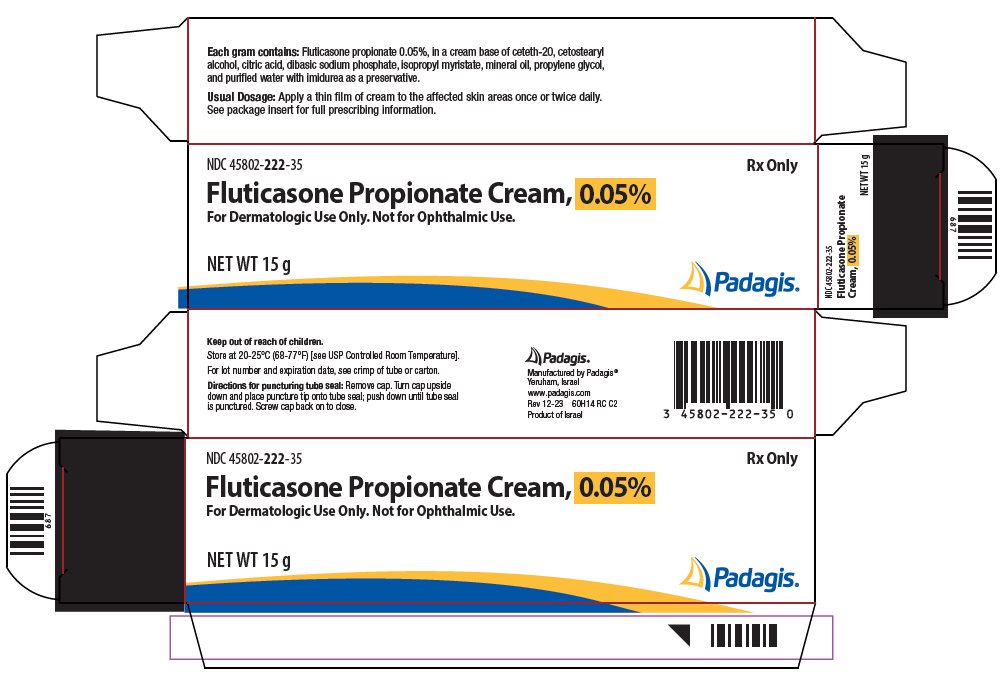
Principal Display Panel NDC 45802-222-35 Rx Only Fluticasone Propionate Cream, 0.05% For Dermatologic Use Only. Not for Ophthalmic Use. NET WT 15 g The following image is a placeholder representing the product identifier that is either affixed or imprinted on the drug package label during the packaging operation. carton-rev12-23 serialization-template.jpg