
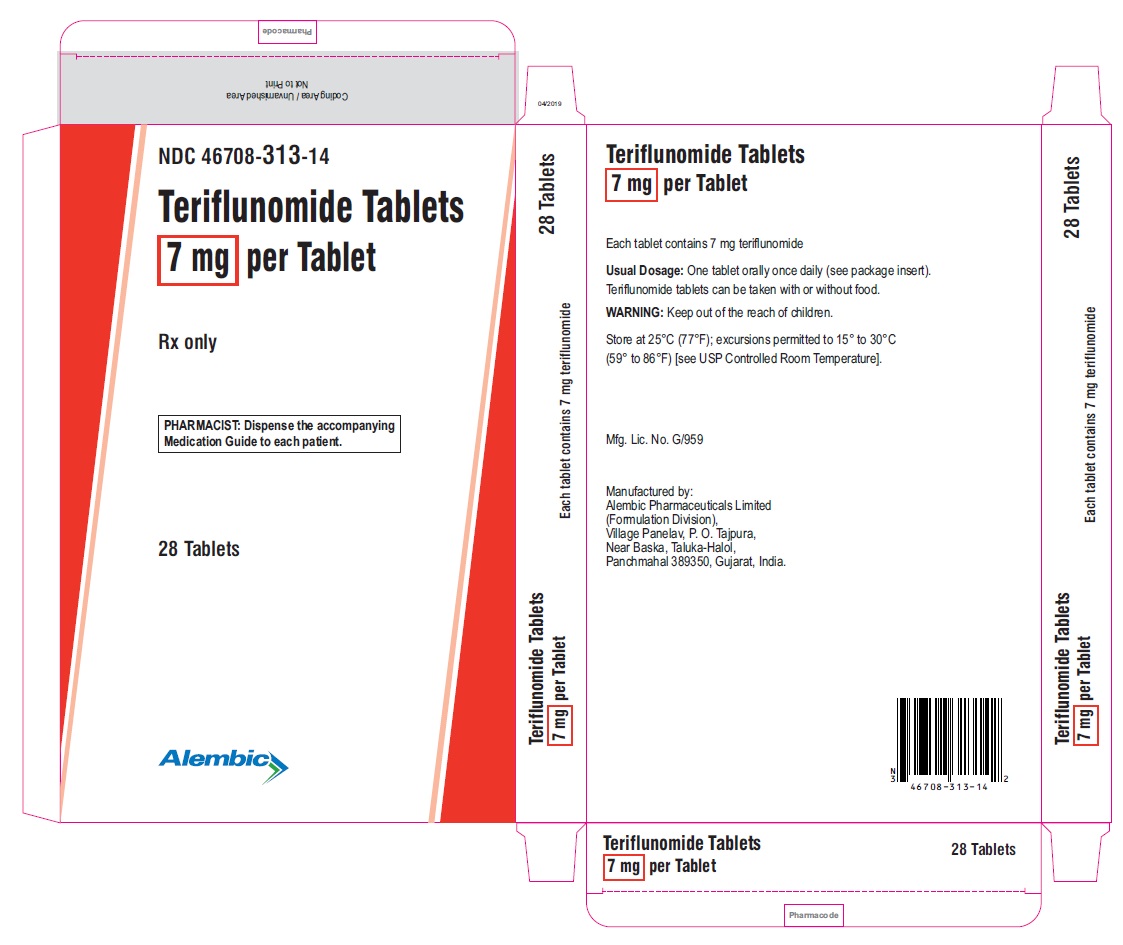
Teriflunomide 7 mg Tablet, Film Coated — NDC 46708-313-14 (Billing 46708-0313-14)
This is a package of Teriflunomide 7 mg Tablet, Film Coated from Alembic Pharmaceuticals Limited, marketed since Jan 2023 and currently FDA-listed. It is the main listing for this product, which comes in 2 package sizes.
Other active recalls for Teriflunomide (different manufacturers) — 1 · tap to view
Identity & classification
Regulatory identifiers FDA, NLM and CMS codes for this package
- RxCUI (RxNorm): 1310525
Where does this data come from?
- FDA openFDA NDC Directory · synced Oct 1, 2026
- FDA label on DailyMed · label index refreshed Oct 1, 2026
- RxNorm (NLM RxNav) · catalog refreshed Oct 1, 2026
- Medi-Span GPI (licensed)
- First Databank (licensed) · refreshed Oct 1, 2026
RxNorm drug class
This medicine belongs to the Pyrimidine Synthesis Inhibitor class.
Where does this data come from?
- RxClass (NLM) · catalog refreshed Oct 1, 2026
Clinical
Teriflunomide is used to treat certain types of multiple sclerosis (MS)(MS; a disease in which the nerves do not function properly). Teriflunomide is in a class of medications called immunomodulatory agents. It may work by decreasing inflammation and decreasing the action of immune cells that may cause nerve damage.
Read the full MedlinePlus article ↗- It treats relapsing forms of multiple sclerosis in adults. That includes a first episode of MS-like symptoms, relapsing-remitting MS, and active secondary progressive MS. It's sold...
- Take one tablet by mouth once a day. You can take it with or without food. Follow your prescriber's directions and your pharmacy label for the exact dose.
- The most common are headache, diarrhea, nausea, hair thinning, tingling or numbness, and joint pain. Your liver enzymes may also rise on blood tests. Call your doctor if you notice...
- Teriflunomide can injure the liver and lower your white blood cells. Your liver tests are checked before you start and at least monthly for six months. A blood count, tuberculosis...
Patient education
Supplement & herbal interactions
Some supplements/herbs that may interact with Teriflunomide — tap one for details:
Where does this data come from?
- MedlinePlus (NLM) · refreshed Oct 1, 2026
- FDA label on DailyMed · label index refreshed Oct 1, 2026
Ask a licensed pharmacist directly — free, answered by our team.
Pricing
A drug doesn't have one price. Each row is a different public payment system, and none is what you'd pay at the counter — that depends on your insurance. The ⓘ on each row explains what it measures.
| Price system | Per each | Per package |
|---|---|---|
| Retail pharmacies payNADAC · weekly | Not in the retail survey — common for institutional, discontinued, or low-volume packs. | |
| Medicaid paysCMS SDUD · 12 mo | No recent Medicaid claims on file for this NDC — rare and low-volume NDCs are suppressed in the public data. | |
| Medicare drug plans payPart D · Q2 2026 | $4.21 | $117.89 / 28 tablets |
Where does this data come from?
- CMS NADAC weekly file
- CMS ASP pricing files · refreshed Sep 20, 2026
- CMS Medicaid State Drug Utilization Data · refreshed Oct 3, 2026
- CMS Part D plan pricing files · refreshed Sep 24, 2026
- VA National Acquisition Center price file
Packaging — all sizes for this product
| Package NDC | Description | Marketing start | Marketing end | Status |
|---|---|---|---|---|
| 46708-0313-14 You're viewing this Main listing | 2 BLISTER PACK in 1 CARTON / 14 TABLET, FILM COATED in 1 BLISTER PACK | 2023-01-25 | — | Active |
| 46708-0313-30 46708-313-30 | 30 TABLET, FILM COATED in 1 BOTTLE | 2023-01-25 | — | Active |
Pack size FAQ
What quantity is in this package?
What NDC number is used to bill for this package of Teriflunomide 7 mg Tablet, Film Coated?
Therapeutic equivalents
| Product | Labeler | Pack | NADAC/unit | TE | Status | Price vs. this |
|---|---|---|---|---|---|---|
| Teriflunomide 7 mg 00480-3157-56 | Teva | 30 tablets | $0.292 | AB | Availability likely | — |
| Teriflunomide 7 mg 31722-0246-30 | Camber | 30 tablets | $0.292 | AB | Availability likely | — |
| Teriflunomide 7 mg 70377-0017-11 | Biocon | 30 tablets | $0.292 | AB | Availability likely | — |
| Teriflunomide 7 mg 70710-1114-03 | Zydus | 30 tablets | $0.292 | AB | Availability likely | — |
| Teriflunomide 7 mg 00378-0627-93 | Mylan | 30 tablets | — | — | FDA listed | — |
| Teriflunomide 7 mg 16729-0399-10 | Accord | 30 tablets | — | AB | FDA listed | — |
| Teriflunomide 7 mg 42291-0830-30 | AvKARE | 30 tablets | — | AB | FDA listed | — |
| Teriflunomide 7 mgthis 46708-0313-14 | Alembic | 14 tablets | — | AB | FDA listed | — |
| Aubagio 7 mg 58468-0211-02 | Genzyme | 5 tablets | — | AB | FDA listed | — |
| Teriflunomide 7 mg 59651-0054-28 | Aurobindo | 28 tablets | — | AB | FDA listed | — |
| Teriflunomide 7 mg 62332-0313-14 | Alembic | 14 tablets | — | AB | FDA listed | — |
| Teriflunomide 7 mg 68254-5009-01 | CONCORD | 30 tablets | — | AB | Discontinued | — |
| teriflunomide 7 mg 68462-0423-15 | Glenmark | 14 tablets | — | AB | FDA listed | — |
| Teriflunomide 7 mg 69339-0169-03 | Natco | 30 tablets | — | AB | FDA listed | — |
| Teriflunomide 7 mg 69539-0032-41 | MSN | 14 tablets | — | AB | FDA listed | — |
| Teriflunomide 7 mg 69539-0315-41 | MSN | 14 tablets | — | AB | FDA listed | — |
| Teriflunomide 7 mg 70771-1010-03 | Zydus | 30 tablets | — | AB | FDA listed | — |
| Teriflunomide 7 mg 68254-5013-01 | CONCORD | 30 tablets | — | AB | FDA listed | — |
Where does this data come from?
- FDA openFDA NDC Directory · synced Oct 1, 2026
- FDA Orange Book · refreshed Sep 3, 2026
- CMS NADAC weekly file
Availability & generic status
This product is an FDA-approved generic. Other versions of the same drug are listed under Therapeutic equivalents, least expensive first.
Where does this data come from?
- FDA Orange Book · refreshed Sep 3, 2026
What it looks like
Where does this data come from?
- FDA label on DailyMed · label index refreshed Oct 1, 2026
Inactive Ingredients / Excipients
Inactive ingredients, also called excipients, are components of the drug product other than the active ingredient. They may include fillers, dyes, coatings, preservatives, flavors, or other formulation ingredients.
💡 Tap an ingredient (hover on desktop) to see what it is and why it’s used.
-
UNII L06K8R7DQK
A synthetic blue dye approved by the FDA for use in medications and foods. It serves as a colorant to make pills and liquids visually distinct and easier to identify.
-
UNII EX438O2MRT
Ferric oxide yellow is a naturally occurring iron compound used as a colorant in medications. It gives tablets, capsules, and other forms a yellow or golden hue for identification and appearance.
-
UNII UKE75GEA7F
Hydroxypropyl cellulose is a plant-based polymer used as a binder and thickener. It helps hold tablet ingredients together, controls how fast the medicine dissolves, and improves the texture of liquid formulations.
-
UNII 3NXW29V3WO
Hypromellose is a plant-based thickener made from cellulose. It's used in medicines as a binder to hold ingredients together, a coating for tablets, and a thickener for liquids.
-
UNII EWQ57Q8I5X
Lactose monohydrate is a natural sugar derived from milk. It serves as a filler and binder in tablets and capsules, helping create the proper size, texture, and consistency of the medicine.
-
UNII 70097M6I30
Magnesium stearate is a salt made from magnesium and stearic acid, a fatty substance. It's used in tablets and capsules as a lubricant and glidant to help ingredients flow smoothly during manufacturing and prevent sticking.
-
UNII OP1R32D61U
Microcrystalline cellulose is a purified form of cellulose, a natural fiber from plant sources. It acts as a binder and filler in tablets and capsules, helping hold ingredients together and give the medicine its shape and size.
-
UNII Q662QK8M3B
Polyethylene glycol 8000 is a synthetic polymer made from ethylene oxide. It acts as a binder and filler in tablets and capsules, helping hold ingredients together and add bulk to the medicine.
-
UNII ETJ7Z6XBU4
Silicon dioxide is a naturally occurring mineral used as a glidant and anti-caking agent. It helps powder ingredients flow smoothly and prevents clumping during manufacturing and storage.
-
UNII 5856J3G2A2
A starch-based powder made from potatoes and processed with sodium. It acts as a disintegrant, helping the tablet or capsule break apart quickly in the stomach so the medicine can be absorbed.
-
UNII O8232NY3SJ
A plant-based carbohydrate derived from corn kernels. It acts as a filler to add bulk, a binder to hold ingredients together, and a disintegrant to help the tablet break apart in your stomach for absorption.
-
UNII 7SEV7J4R1U
A powder made from a naturally occurring mineral. In medicines, talc works as a glidant and anti-caking agent, helping tablets and capsules flow smoothly during manufacturing and preventing clumping.
-
UNII 15FIX9V2JP
Titanium dioxide is a bright white mineral powder commonly used as a colorant and opacifying agent. It makes pills and tablets white or lighter in color and helps make coatings non-transparent.
13 inactive ingredients listed in the exact product block matched to this NDC.
Where does this data come from?
ingredient classCode="IACT" elements from the exact product block matched by this NDC. Label-section narrative from DailyMed / the openFDA label index is shown separately when available.- FDA label on DailyMed · label index refreshed Oct 1, 2026
- FDA openFDA NDC Directory · synced Oct 1, 2026
Inactive ingredient FAQ
Are inactive ingredients the same for every manufacturer?
Why might an inactive ingredient be missing?
Can inactive ingredients matter?
Manufacturer & labeler
Where does this data come from?
- FDA openFDA NDC Directory · synced Oct 1, 2026
- Drugs@FDA
Full prescribing information FDA SPL
🚨 Boxed Warning ▾
WARNING: HEPATOTOXICITY and RISK OF TERATOGENICITY • Hepatotoxicity Severe liver injury including fatal liver failure has been reported in patients treated with leflunomide, which is indicated for rheumatoid arthritis. A similar risk would be expected for teriflunomide because recommended doses of teriflunomide and leflunomide result in a similar range of plasma concentrations of teriflunomide. Concomitant use of teriflunomide tablets with other potentially hepatotoxic drugs may increase the risk of severe liver injury.
Obtain transaminase and bilirubin levels within 6 months before initiation of teriflunomide tablets therapy. Monitor ALT levels at least monthly for six months after starting teriflunomide tablets [see Warnings and Precautions (5.1)]. If drug induced liver injury is suspected, discontinue teriflunomide tablets and start an accelerated elimination procedure with cholestyramine or charcoal [see Warnings and Precautions (5.3)].
Teriflunomide tablets are contraindicated in patients with severe hepatic impairment [see Contraindications (4)]. Patients with pre-existing liver disease may be at increased risk of developing elevated serum transaminases when taking teriflunomide tablets. • Risk of Teratogenicity Teriflunomide tablets are contraindicated for use in pregnant women and in women of reproductive potential who are not using effective contraception because of the potential for fetal harm. Teratogenicity and embryolethality occurred in animals at plasma teriflunomide exposures lower than that in humans.
Exclude pregnancy before the start of treatment with teriflunomide tablets in females of reproductive potential. Advise females of reproductive potential to use effective contraception during teriflunomide tablets treatment and during an accelerated drug elimination procedure after teriflunomide tablets treatment. Stop teriflunomide tablets and use an accelerated drug elimination procedure if the patient becomes pregnant [see Contraindications (4), Warnings and Precautions (5.2, 5.3), Use in Specific Populations (8.1), and Clinical Pharmacology (12.3)].
WARNING: HEPATOTOXICITY and RISK OF TERATOGENICITY See full prescribing information for complete boxed warning • Hepatotoxicity Severe liver injury including fatal liver failure has been reported in patients treated with leflunomide, which is indicated for rheumatoid arthritis. A similar risk would be expected for teriflunomide because recommended doses of teriflunomide and leflunomide result in a similar range of plasma concentrations of teriflunomide. Obtain transaminase and bilirubin levels within 6 months before initiation of teriflunomide tablets and monitor ALT levels at least monthly for six months (5.1).
If drug induced liver injury is suspected, discontinue teriflunomide tablets and start accelerated elimination procedure (5.3). • Risk of Teratogenicity Teratogenicity and embryolethality occurred in animals administered teriflunomide (5.2, 8.1). Exclude pregnancy prior to initiating teriflunomide tablets therapy (4, 5.2, 8.1). Advise use of effective contraception in females of reproductive potential during treatment and during an accelerated drug elimination procedure (4, 5.2, 5.3, 8.1).
Stop teriflunomide tablets and use an accelerated drug elimination procedure if the patient becomes pregnant (5.2, 5.3, 8.1).
🎯 Indications and Usage ▾
1 INDICATIONS AND USAGE Teriflunomide tablets are indicated for the treatment of patients with relapsing forms of multiple sclerosis. Teriflunomide tablet is a pyrimidine synthesis inhibitor indicated for the treatment of patients with relapsing forms of multiple sclerosis (1)
⏱️ Dosage and Administration ▾
2 DOSAGE AND ADMINISTRATION The recommended dose of teriflunomide tablet is 7 mg or 14 mg orally once daily. Teriflunomide tablets can be taken with or without food. Monitoring to assess safety • Obtain transaminase and bilirubin levels within 6 months before initiation of teriflunomide tablets therapy.
Monitor ALT levels at least monthly for six months after starting teriflunomide tablets [see Warnings and Precautions (5.1)]. • Obtain a complete blood cell count (CBC) within 6 months before the initiation of treatment with teriflunomide tablets. Further monitoring should be based on signs and symptoms of infection [see Warnings and Precautions (5.4)]. • Prior to initiating teriflunomide tablets, screen patients for latent tuberculosis infection with a tuberculin skin test or blood test for mycobacterium tuberculosis infection [see Warnings and Precautions (5.4)]. • Exclude pregnancy prior to initiation of treatment with teriflunomide tablets in females of reproductive potential [see Warnings and Precautions (5.2)]. • Check blood pressure before start of teriflunomide tablets treatment and periodically thereafter [see Warnings and Precautions (5.7)].
7 mg or 14 mg orally once daily, with or without food. (2)
💊 Dosage Forms and Strengths ▾
3 DOSAGE FORMS AND STRENGTHS Teriflunomide tablets are available as 7 mg and 14 mg tablets. The 7 mg tablet is very light greenish-bluish grey to pale greenish-blue, hexagonal film-coated tablet debossed with “L” on one side and “597” on other side. Each tablet contains 7 mg of teriflunomide.
The 14 mg tablet is pale blue to pastel blue, pentagonal film-coated tablet debossed with “L” on one side and “598” on other side. Each tablet contains 14 mg of teriflunomide. 7 mg and 14 mg film-coated tablets (3)
⛔ Contraindications ▾
4 CONTRAINDICATIONS Teriflunomide tablet is contraindicated in/with: · Patients with severe hepatic impairment [see Warnings and Precautions (5.1)] . · Pregnant women and females of reproductive potential not using effective contraception. Teriflunomide tablet may cause fetal harm [see Warnings and Precautions (5.2, and 5.3) and Use in Specific Populations (8.1)] . · Patients with a history of a hypersensitivity reaction to teriflunomide, leflunomide, or to any of the inactive ingredients in teriflunomide tablet. Reactions have included anaphylaxis, angioedema, and serious skin reactions [see Warnings and Precautions (5.5)]. · Coadministration with leflunomide [see Clinical Pharmacology (12.3)]. • Severe hepatic impairment (4, 5.1) • Pregnancy (4, 5.2, 8.1) • Hypersensitivity (4, 5.5) • Current leflunomide treatment (4)
⚠️ Warnings and Cautions ▾
5 WARNINGS AND PRECAUTIONS • Elimination of teriflunomide tablets can be accelerated by administration of cholestyramine or activated charcoal for 11 days (5.3) • Teriflunomide tablets may decrease WBC. A recent CBC should be available before starting teriflunomide tablets. Monitor for signs and symptoms of infection.
Consider suspending treatment with teriflunomide tablets in case of serious infection. Do not start teriflunomide tablets in patients with active infections (5.4) • Stop teriflunomide tablets if patient has anaphylaxis, angioedema, Stevens-Johnson syndrome, toxic epidermal necrolysis; initiate rapid elimination (5.3, 5.5) • If patient develops symptoms consistent with peripheral neuropathy, evaluate patient and consider discontinuing teriflunomide tablets (5.6) • Teriflunomide tablets may increase blood pressure. Measure blood pressure at treatment initiation and monitor blood pressure during treatment (5.7)
5.1Hepatotoxicity Severe liver injury including fatal liver failure and dysfunction has been reported in some patients treated with leflunomide, which is indicated for rheumatoid arthritis. A similar risk would be expected for teriflunomide because recommended doses of teriflunomide and leflunomide result in a similar range of plasma concentrations of teriflunomide. Patients with pre-existing liver disease may be at increased risk of developing elevated serum transaminases when taking teriflunomide tablets.
Patients with pre-existing acute or chronic liver disease, or those with serum alanine aminotransferase (ALT) greater than two times the upper limit of normal (ULN) before initiating treatment, should not normally be treated with teriflunomide tablets. Teriflunomide tablets are contraindicated in patients with severe hepatic impairment [see Contraindications (4)] . In placebo-controlled trials, ALT greater than three times the ULN occurred in 61/1,045 (5.8%) and 62/1,002 (6.2%) of patients receiving teriflunomide tablets 7 mg and 14 mg, respectively, and 38/997 (3.8%) of patients receiving placebo, during the treatment period.
These elevations occurred mostly within the first year of treatment. Half of the cases returned to normal without drug discontinuation. In clinical trials, if ALT elevation was greater than three times the ULN on two consecutive tests, teriflunomide tablet was discontinued and patients underwent an accelerated elimination procedure [see Warnings and Precautions (5.3)] .
Of the patients who underwent discontinuation and accelerated elimination in controlled trials, half returned to normal or near normal values within 2 months. One patient in the controlled trials developed ALT 32 times the ULN and jaundice 5 months after initiation of teriflunomide tablets 14 mg treatment. The patient was hospitalized for 5 weeks and recovered after plasmapheresis and cholestyramine accelerated elimination procedure.
Teriflunomide tablets-induced liver injury in this patient could not be ruled out. Obtain serum transaminase and bilirubin levels within 6 months before initiation of teriflunomide tablets therapy. Monitor ALT levels at least monthly for six months after starting teriflunomide tablets.
Consider additional monitoring when teriflunomide tablets are given with other potentially hepatotoxic drugs. Consider discontinuing teriflunomide tablets if serum transaminase increase (greater than three times the ULN) is confirmed. Monitor serum transaminase and bilirubin on teriflunomide tablets therapy, particularly in patients who develop symptoms suggestive of hepatic dysfunction, such as unexplained nausea, vomiting, abdominal pain, fatigue, anorexia, or jaundice and/or dark urine.
If liver injury is suspected to be teriflunomide tablets-induced, discontinue teriflunomide tablets and start an accelerated elimination procedure [see Warnings and Precautions (5.3)] and monitor liver tests weekly until normalized. If teriflunomide tablets-induced liver injury is unlikely because some other probable cau… [Excerpted — this section continues on DailyMed.]
🤒 Adverse Reactions ▾
6 ADVERSE REACTIONS The following serious adverse reactions are described elsewhere in the prescribing information: • Hepatotoxicity [see Contraindications (4) and Warnings and Precautions (5.1)] • Bone Marrow Effects/Immunosuppression Potential/Infections [see Warnings and Precautions (5.4)] • Hypersensitivity and Serious Skin Reactions [see Contraindications (4) and Warnings and Precautions (5.5)] • Peripheral Neuropathy [see Warnings and Precautions (5.6)] • Increased Blood Pressure [see Warnings and Precautions (5.7)] • Respiratory Effects [see Warnings and Precautions (5.8)] Most common adverse reactions (≥10% and ≥2% greater than placebo): headache, diarrhea, nausea, alopecia, increase in ALT (6) To report SUSPECTED ADVERSE REACTIONS, contact FDA at 1-800-FDA-1088 or www.fda.gov/medwatch.
6.1Clinical Trials Experience Because clinical trials are conducted under widely varying conditions, adverse reaction rates observed in the clinical trials of a drug cannot be directly compared to rates in the clinical trials of another drug and may not reflect the rates observed in clinical practice. A total of 2,047 patients receiving teriflunomide tablets (7 mg or 14 mg once daily) constituted the safety population in the pooled analysis of placebo controlled studies in patients with relapsing forms of multiple sclerosis; of these, 71% were female.
The average age was 37 years. Table 1 lists adverse reactions in placebo-controlled trials with rates that were at least 2% for teriflunomide tablets patients and also at least 2% above the rate in placebo patients. The most common were headache, an increase in ALT, diarrhea, alopecia, and nausea.
The adverse reaction most commonly associated with discontinuation was an increase in ALT (3.3%, 2.6%, and 2.3% of all patients in the teriflunomide tablets 7 mg, teriflunomide tablets 14 mg, and placebo treatment arms, respectively). Table 1. Adverse Reactions in Pooled Placebo-Controlled Studies in Patients with Relapsing Forms of Multiple Sclerosis Adverse Reaction Teriflunomide Tablets 7 mg (N=1,045) Teriflunomide Tablets 14 mg (N=1,002) Placebo (N=997) Headache 18% 16% 15% Increase in Alanine aminotransferase 13% 15% 9% Diarrhea 13% 14% 8% Alopecia 10% 13% 5% Nausea 8% 11% 7% Paresthesia 8% 9% 7% Arthralgia 8% 6% 5% Neutropenia 4% 6% 2% Hypertension 3% 4% 2% Cardiovascular Deaths Four cardiovascular deaths, including three sudden deaths, and one myocardial infarction in a patient with a history of hyperlipidemia and hypertension were reported among approximately 2,600 patients exposed to teriflunomide tablets in the premarketing database.
These cardiovascular deaths occurred during uncontrolled extension studies, one to nine years after initiation of treatment. A relationship between teriflunomide tablets and cardiovascular death has not been established. Acute Renal Failure In placebo-controlled studies, creatinine values increased more than 100% over baseline in 8/1,045 (0.8%) patients in the 7 mg teriflunomide tablets group and 6/1,002 (0.6%) patients in the 14 mg teriflunomide tablets group versus 4/997 (0.4%) patients in the placebo group.
These elevations were transient. Some elevations were accompanied by hyperkalemia. Teriflunomide tablets may cause acute uric acid nephropathy with transient acute renal failure because teriflunomide tablets increases renal uric acid clearance.
Hypophosphatemia In clinical trials, 18% of teriflunomide tablets-treated patients had hypophosphatemia with serum phosphorus levels of at least 0.6 mmol/L, compared to 7% of placebo-treated patients; 4% of teriflunomide tablets-treated patients had hypophosphatemia with serum phosphorus levels at least 0.3 mmol/L but less than 0.6 mmol/L, compared to 0.8% of placebo-treated patients. No patient in any treatment group had a serum phosphorus below 0.3 mmol/L.
6.2Postmarketing Experience The following adverse reactions have been identified during postapproval use of teriflunomide tablets. Because these reaction… [Excerpted — this section continues on DailyMed.]
🔄 Drug Interactions ▾
7 DRUG INTERACTIONS Effect of teriflunomide tablets on CYP2C8 substrates Teriflunomide is an inhibitor of CYP2C8 in vivo . In patients taking teriflunomide tablets, exposure of drugs metabolized by CYP2C8 (e.g., paclitaxel, pioglitazone, repaglinide, rosiglitazone) may be increased. Monitor these patients and adjust the dose of the concomitant drug(s) metabolized by CYP2C8 as required [see Clinical Pharmacology (12.3)] .
Effect of teriflunomide tablets on warfarin Coadministration of teriflunomide tablets with warfarin requires close monitoring of the international normalized ratio (INR) because teriflunomide tablets may decrease peak INR by approximately 25%. Effect of teriflunomide tablets on oral contraceptives Teriflunomide tablets may increase the systemic exposures of ethinylestradiol and levonorgestrel. Consideration should be given to the type or dose of contraceptives used in combination with teriflunomide tablets [see Clinical Pharmacology (12.3)] .
Effect of teriflunomide tablets on CYP1A2 substrates Teriflunomide may be a weak inducer of CYP1A2 in vivo . In patients taking teriflunomide tablets, exposure of drugs metabolized by CYP1A2 (e.g., alosetron, duloxetine, theophylline, tizanidine) may be reduced. Monitor these patients and adjust the dose of the concomitant drug(s) metabolized by CYP1A2 as required [see Clinical Pharmacology (12.3)] .
Effect of teriflunomide tablets on organic anion transporter 3 (OAT3) substrates Teriflunomide inhibits the activity of OAT3 in vivo . In patients taking teriflunomide tablets, exposure of drugs which are OAT3 substrates (e.g., cefaclor, cimetidine, ciprofloxacin, penicillin G, ketoprofen, furosemide, methotrexate, zidovudine) may be increased. Monitor these patients and adjust the dose of the concomitant drug(s) which are OAT3 substrates as required [see Clinical Pharmacology (12.3)] .
Effect of teriflunomide tablets on BCRP and organic anion transporting polypeptide B1 and B3 (OATP1B1/1B3) substrates Teriflunomide inhibits the activity of BCRP and OATP1B1/1B3 in vivo . For a patient taking teriflunomide tablets, the dose of rosuvastatin should not exceed 10 mg once daily. For other substrates of BCRP (e.g., mitoxantrone) and drugs in the OATP family (e.g., methotrexate, rifampin), especially HMG-Co reductase inhibitors (e.g., atorvastatin, nateglinide, pravastatin, repaglinide, and simvastatin), consider reducing the dose of these drugs and monitor patients closely for signs and symptoms of increased exposures to the drugs while patients are taking teriflunomide tablets [see Clinical Pharmacology (12.3)] . • Drugs metabolized by CYP2C8 and OAT3 transporters: Monitor patients because teriflunomide may increase exposure of these drugs (7) • Teriflunomide may increase exposure of ethinylestradiol and levonorgestrel.
Choose an appropriate oral contraceptive (7) • Drugs metabolized by CYP1A2: Monitor patients because teriflunomide may decrease exposure of these drugs (7) • Warfarin: Monitor INR as teriflunomide may decrease INR (7) • Drugs metabolized by BCRP and OATP1B1/B3 transporters: Monitor patients because teriflunomide may increase exposure of these drugs (7) • Rosuvastatin: The dose of rosuvastatin should not exceed 10 mg once daily in patients taking teriflunomide tablets (7)
👥 Use in Specific Populations ▾
8 USE IN SPECIFIC POPULATIONS
8.1Pregnancy Risk Summary Teriflunomide tablets are contraindicated for use in pregnant women and females of reproductive potential not using effective contraception because of the potential for fetal harm based on animal data. Human data are not available at this time to inform the presence or absence of drug-associated risk with the use of teriflunomide tablets during pregnancy. In animal reproduction studies in rat and rabbits, oral administration of teriflunomide during organogenesis caused teratogenicity and embryolethality at plasma exposures (AUC) lower than that at the maximum human recommended dose (MHRD) of 14 mg/day [see Data].
In the US general population, the estimated background risk of major birth defects and miscarriage in clinically recognized pregnancies is 2% to 4% and 15% to 20%, respectively. The background risk of major birth defects and miscarriage in the indicated population is unknown. Clinical Considerations Women who wish to become pregnant should discontinue use of teriflunomide tablets and undergo an accelerated elimination procedure to decrease the plasma concentration of teriflunomide to less than 0.02 mg/L (0.02 mcg/mL).
Effective contraception should be used until is it verified that plasma concentrations of teriflunomide are less than 0.02 mg/L (0.02 mcg/mL) [see Warnings and Precautions (5.3)] . Human plasma concentrations of teriflunomide less than 0.02 mg/L (0.02 mcg/mL) are expected to have minimal embryofetal risk [see Contraindications (4) and Warnings and Precautions (5.3)] . If the patient becomes pregnant while taking this drug, stop treatment with teriflunomide tablets, inform the patient of the potential risk to the fetus, and perform the accelerated drug elimination procedure to achieve plasma concentrations of less than 0.02 mg/L (0.02 mcg/mL) [see Warnings and Precautions (5.3) and Clinical Pharmacology (12.3)].
Refer the patient to an obstetrician/gynecologist, preferably experienced in reproductive toxicity, for further evaluation and counseling [see Warnings and Precautions (5.2, 5.3)]. Data Animal Data When teriflunomide (oral doses of 1, 3, or 10 mg/kg/day) was administered to pregnant rats throughout the period of organogenesis, high incidences of fetal malformation (primarily craniofacial, and axial and appendicular skeletal defects) and embryofetal death were observed at doses not associated with maternal toxicity. Adverse effects on embryofetal development were observed following dosing at various stages throughout organogenesis.
Maternal plasma exposure at the no-effect level (1 mg/kg/day) for embryofetal developmental toxicity in rats was less than that in humans at the maximum recommended human dose (MRHD, 14 mg/day). Administration of teriflunomide (oral doses of 1, 3.5, or 12 mg/kg/day) to pregnant rabbits throughout organogenesis resulted in high incidences of fetal malformation (primarily craniofacial, and axial and appendicular skeletal defects) and embryofetal death at doses associated with minimal maternal toxicity. Maternal plasma exposure at the no-effect dose (1 mg/kg/day) for embryofetal developmental toxicity in rabbits was less than that in humans at the MRHD.
In studies in which teriflunomide (oral doses of 0.05, 0.1, 0.3, 0.6, or 1 mg/kg/day) was administered to rats during gestation and lactation, decreased growth, eye and skin abnormalities, and high incidences of malformation (limb defects) and postnatal death were observed in the offspring at doses not associated with maternal toxicity. Maternal plasma exposure at the no-effect dose for pre-and postnatal developmental toxicity in rats (0.1 mg/kg/day) was less than that in humans at the MRHD. In animal reproduction studies of leflunomide, embryolethality and teratogenic effects were observed in pregnant rat and rabbit at or below clinically relevant plasma teriflunomide exposures (AUC).
In published reproduction studies in pregnant mice, leflunomide was embryolethal and… [Excerpted — this section continues on DailyMed.]
🤰 Pregnancy ▾
8.1Pregnancy Risk Summary Teriflunomide tablets are contraindicated for use in pregnant women and females of reproductive potential not using effective contraception because of the potential for fetal harm based on animal data. Human data are not available at this time to inform the presence or absence of drug-associated risk with the use of teriflunomide tablets during pregnancy. In animal reproduction studies in rat and rabbits, oral administration of teriflunomide during organogenesis caused teratogenicity and embryolethality at plasma exposures (AUC) lower than that at the maximum human recommended dose (MHRD) of 14 mg/day [see Data].
In the US general population, the estimated background risk of major birth defects and miscarriage in clinically recognized pregnancies is 2% to 4% and 15% to 20%, respectively. The background risk of major birth defects and miscarriage in the indicated population is unknown. Clinical Considerations Women who wish to become pregnant should discontinue use of teriflunomide tablets and undergo an accelerated elimination procedure to decrease the plasma concentration of teriflunomide to less than 0.02 mg/L (0.02 mcg/mL).
Effective contraception should be used until is it verified that plasma concentrations of teriflunomide are less than 0.02 mg/L (0.02 mcg/mL) [see Warnings and Precautions (5.3)] . Human plasma concentrations of teriflunomide less than 0.02 mg/L (0.02 mcg/mL) are expected to have minimal embryofetal risk [see Contraindications (4) and Warnings and Precautions (5.3)] . If the patient becomes pregnant while taking this drug, stop treatment with teriflunomide tablets, inform the patient of the potential risk to the fetus, and perform the accelerated drug elimination procedure to achieve plasma concentrations of less than 0.02 mg/L (0.02 mcg/mL) [see Warnings and Precautions (5.3) and Clinical Pharmacology (12.3)].
Refer the patient to an obstetrician/gynecologist, preferably experienced in reproductive toxicity, for further evaluation and counseling [see Warnings and Precautions (5.2, 5.3)]. Data Animal Data When teriflunomide (oral doses of 1, 3, or 10 mg/kg/day) was administered to pregnant rats throughout the period of organogenesis, high incidences of fetal malformation (primarily craniofacial, and axial and appendicular skeletal defects) and embryofetal death were observed at doses not associated with maternal toxicity. Adverse effects on embryofetal development were observed following dosing at various stages throughout organogenesis.
Maternal plasma exposure at the no-effect level (1 mg/kg/day) for embryofetal developmental toxicity in rats was less than that in humans at the maximum recommended human dose (MRHD, 14 mg/day). Administration of teriflunomide (oral doses of 1, 3.5, or 12 mg/kg/day) to pregnant rabbits throughout organogenesis resulted in high incidences of fetal malformation (primarily craniofacial, and axial and appendicular skeletal defects) and embryofetal death at doses associated with minimal maternal toxicity. Maternal plasma exposure at the no-effect dose (1 mg/kg/day) for embryofetal developmental toxicity in rabbits was less than that in humans at the MRHD.
In studies in which teriflunomide (oral doses of 0.05, 0.1, 0.3, 0.6, or 1 mg/kg/day) was administered to rats during gestation and lactation, decreased growth, eye and skin abnormalities, and high incidences of malformation (limb defects) and postnatal death were observed in the offspring at doses not associated with maternal toxicity. Maternal plasma exposure at the no-effect dose for pre-and postnatal developmental toxicity in rats (0.1 mg/kg/day) was less than that in humans at the MRHD. In animal reproduction studies of leflunomide, embryolethality and teratogenic effects were observed in pregnant rat and rabbit at or below clinically relevant plasma teriflunomide exposures (AUC).
In published reproduction studies in pregnant mice, leflunomide was embryolethal and increased the incidence of ma… [Excerpted — this section continues on DailyMed.]
🧒 Pediatric Use ▾
8.4Pediatric Use Safety and effectiveness in pediatric patients have not been established.
🧓 Geriatric Use ▾
8.5Geriatric Use Clinical studies of teriflunomide tablets did not include patients over 65 years old.
🆘 Overdosage ▾
10 OVERDOSAGE There is no experience regarding teriflunomide overdose or intoxication in humans. Teriflunomide 70 mg daily up to 14 days was well tolerated by healthy subjects. In the event of clinically significant overdose or toxicity, cholestyramine or activated charcoal is recommended to accelerate elimination [see Warnings and Precautions (5.3)] .
🧬 Clinical Pharmacology ▾
12 CLINICAL PHARMACOLOGY
12.1Mechanism of Action Teriflunomide, an immunomodulatory agent with anti-inflammatory properties, inhibits dihydroorotate dehydrogenase, a mitochondrial enzyme involved in de novo pyrimidine synthesis. The exact mechanism by which teriflunomide exerts its therapeutic effect in multiple sclerosis is unknown but may involve a reduction in the number of activated lymphocytes in CNS.
12.2Pharmacodynamics Potential to prolong the QT interval In a placebo controlled thorough QT study performed in healthy subjects, there was no evidence that teriflunomide caused QT interval prolongation of clinical significance (i.e., the upper bound of the 90% confidence interval for the largest placebo-adjusted, baseline-corrected QTc was below 10 ms).
12.3Pharmacokinetics Teriflunomide is the principal active metabolite of leflunomide and is responsible for leflunomide’s activity in vivo . At recommended doses, teriflunomide and leflunomide result in a similar range of plasma concentrations of teriflunomide. Based on a population analysis of teriflunomide in healthy volunteers and MS patients, median t 1/2 was approximately 18 and 19 days after repeated doses of 7 mg and 14 mg respectively.
It takes approximately 3 months respectively to reach steady-state concentrations. The estimated AUC accumulation ratio is approximately 30 after repeated doses of 7 or 14 mg. Absorption Median time to reach maximum plasma concentrations is between 1 to 4 hours post dose following oral administration of teriflunomide.
Food does not have a clinically relevant effect on teriflunomide pharmacokinetics. Distribution Teriflunomide is extensively bound to plasma protein (>99%) and is mainly distributed in plasma. The volume of distribution is 11 L after a single intravenous (IV) administration.
Metabolism Teriflunomide is the major circulating moiety detected in plasma. The primary biotransformation pathway to minor metabolites of teriflunomide is hydrolysis, with oxidation being a minor pathway. Secondary pathways involve oxidation, N-acetylation and sulfate conjugation.
Elimination Teriflunomide is eliminated mainly through direct biliary excretion of unchanged drug as well as renal excretion of metabolites. Over 21 days, 60.1% of the administered dose is excreted via feces (37.5%) and urine (22.6%). After an accelerated elimination procedure with cholestyramine, an additional 23.1% was recovered (mostly in feces).
After a single IV administration, the total body clearance of teriflunomide is 30.5 mL/h. Drug Interaction Studies Teriflunomide is not metabolized by Cytochrome P450 or flavin monoamine oxidase enzymes. The Potential Effect of Teriflunomide Tablets on Other Drugs · CYP2C8 Substrates There was an increase in mean repaglinide C max and AUC (1.7-and 2.4-fold, respectively) following repeated doses of teriflunomide and a single dose of 0.25 mg repaglinide, suggesting that teriflunomide is an inhibitor of CYP2C8 in vivo .
The magnitude of interaction could be higher at the recommended repaglinide dose [see Drug Interactions (7)] . · CYP1A2 Substrates Repeated doses of teriflunomide decreased mean C max and AUC of caffeine by 18% and 55%, respectively, suggesting that teriflunomide may be a weak inducer of CYP1A2 in vivo[see Drug Interactions (7)]. . · OAT3 Substrates There was an increase in mean cefaclor C max and AUC (1.43-and 1.54-fold, respectively), following repeated doses of teriflunomide, suggesting that teriflunomide is an inhibitor of organic anion transporter 3 (OAT3) in vivo [see Drug Interactions (7)] . • BCRP and OATP1B1/1B3 Substrates There was an increase in mean rosuvastatin C max and AUC (2.65-and 2.51-fold, respectively), following repeated doses of teriflunomide, suggesting that teriflunomide is an inhibitor of BCRP transporter and organic anion transporting polypeptide 1B1 and 1B3 (OATP1B1/1B3) [see Drug Interactions (7)]. · Oral Contraceptives There was an increase in mean ethinylestradiol C max and AUC 0-2… [Excerpted — this section continues on DailyMed.]
🧬 Mechanism of Action ▾
12.1Mechanism of Action Teriflunomide, an immunomodulatory agent with anti-inflammatory properties, inhibits dihydroorotate dehydrogenase, a mitochondrial enzyme involved in de novo pyrimidine synthesis. The exact mechanism by which teriflunomide exerts its therapeutic effect in multiple sclerosis is unknown but may involve a reduction in the number of activated lymphocytes in CNS.
📦 How Supplied / Storage and Handling ▾
16 HOW SUPPLIED/STORAGE AND HANDLING Teriflunomide tablets are available as 7 mg and 14 mg tablets. The 7 mg tablet is pale blue to pastel blue, hexagonal film-coated tablet debossed with “L” on one side and “597” on other side. Each tablet contains 7 mg of teriflunomide.
Teriflunomide tablets 7 mg are supplied as: NDC 46708-313-14 Carton of 28 tablets containing 1 wallet composed of 2 folded blister cards of 14 tablets per blister card NDC 46708-313-30 Bottle of 30 tablets with child-resistant closure The 14 mg tablet is pale blue to pastel blue, pentagonal film-coated tablet debossed with “L” on one side and “598” on other side. Each tablet contains 14 mg of teriflunomide. Teriflunomide tablets 14 mg are supplied as: NDC 46708-314-14 Carton of 28 tablets containing 1 wallet composed of 2 folded blister cards of 14 tablets per blister card NDC 46708-314-30 Bottle of 30 tablets with child-resistant closure NDC 46708-314-91 Bottle of 1,000 tablets Store at 25°C (77°F); excursions permitted to 15° to 30°C (59° to 86°F) [see USP Controlled Room Temperature].
📋 Description ▾
11 DESCRIPTION Teriflunomide is an oral de novo pyrimidine synthesis inhibitor of the DHO-DH enzyme, with the chemical name (Z)-2-Cyano-3-hydroxy-but-2-enoic acid-(4-trifluoromethylphenyl)-amide. Its molecular weight is 270.21, and the empirical formula is C 12 H 9 F 3 N 2 O 2 with the following chemical structure: Teriflunomide is a white to off-white powder that is soluble in N, N – Dimethyl formamide and practically insoluble in water. Teriflunomide is formulated as film-coated tablets for oral administration.
Teriflunomide tablets contain 7 mg or 14 mg of teriflunomide and the following inactive ingredients: lactose monohydrate, corn starch, sodium starch glycolate, hydroxypropyl cellulose, microcrystalline cellulose, colloidal silicon dioxide, and magnesium stearate. The film coating for the 14 mg tablet is made of hypromellose, titanium dioxide, talc, polyethylene glycol 8000, talc, and FD&C Blue#2 Aluminium Lake. In addition to these, the 7 mg tablet film coating includes iron oxide yellow.
Structure
💬 Information for Patients ▾
17 PATIENT COUNSELING INFORMATION Advise the patient to read the FDA-approved patient labeling (Medication Guide). A Medication Guide is required for distribution with teriflunomide tablets. Hepatotoxicity Inform patients that teriflunomide tablets may increase liver enzymes and that their liver enzymes will be checked before starting teriflunomide tablets and for at least 6 months while they are taking teriflunomide tablets.
Advise patients that they should contact their physician if they have any unexplained nausea, vomiting, abdominal pain, fatigue, anorexia, or jaundice and/or dark urine. Importance of Preventing Pregnancy · Inform patients that based on animal studies, teriflunomide tablets may cause fetal harm. · Advise females of reproductive potential of the need for effective contraception during teriflunomide tablets treatment and until completion of an accelerated elimination procedure. Advise them that an accelerated elimination procedure can be used at any time after the discontinuation of teriflunomide tablets. · Instruct the patient that if she suspects or confirms pregnancy, she should immediately inform her physician. · Instruct men taking teriflunomide tablets and not wishing to father a child to use effective contraception to minimize any possible risk to the fetus; their female partners should also use effective contraception. · Advise men wishing to father a child to discontinue use of teriflunomide tablets and undergo an accelerated elimination procedure.
Availability of an Accelerated Elimination Procedure Advise patients that teriflunomide tablets may stay in the blood for up to 2 years after the last dose and that an accelerated elimination procedure may be used if needed. Risk of Infections Inform patients that they may develop a lowering of their white blood cell counts and that their blood counts will be checked before starting teriflunomide tablets. Inform patients that they may be more likely to get infections when taking teriflunomide tablets and that they should contact their physician if they develop symptoms of infection, particularly in case of fever.
Advise patients that the use of some vaccines should be avoided during treatment with teriflunomide tablets and for at least 6 months after discontinuation. Serious Allergic Reactions Advise patients to discontinue teriflunomide tablets and seek immediate medical attention if any signs or symptoms of a hypersensitivity reaction occur [see Contraindications (4) and Warnings and Precautions (5.5)]. Signs and symptoms include dyspnea, urticaria, and angioedema including lips, eyes, throat, and tongue or skin rash.
Peripheral Neuropathy Inform patients that they may develop peripheral neuropathy. Advise patients that they should contact their physician if they develop symptoms of peripheral neuropathy, such as numbness or tingling of hands or feet. Increased Blood Pressure Inform patients that teriflunomide tablets may increase blood pressure.
Lactation Inform patients that it is not known whether this drug is present in human milk. Advise patients, if they are considering breastfeeding, to discuss this with their healthcare provider to decide if they will take teriflunomide tablets or breastfeed. Advise patients that they should not do both.
💬 Medication Guide ▾
Medication Guide Teriflunomide ( ter'' i floo' noe mide ) Tablets Read this Medication Guide before you start using teriflunomide tablets and each time you get a refill. There may be new information. This information does not take the place of talking with your doctor about your medical condition or your treatment.
What is the most important information I should know about teriflunomide tablets? Teriflunomide tablets may cause serious side effects, including: Liver problems: Teriflunomide tablets may cause serious liver problems that may lead to death . Your risk of liver problems may be higher if you take other medicines that also affect your liver.
Your doctor should do blood tests to check your liver: within 6 months before you start taking teriflunomide tablets 1 time a month for 6 months after you start taking teriflunomide tablets Call your doctor right away if you have any of the following symptoms of liver problems: nausea vomiting stomach pain loss of appetite tiredness your skin or the whites of your eyes turn yellow dark urine Harm to your unborn baby: Teriflunomide tablets may cause harm to your unborn baby. Do not take teriflunomide tablets if you are pregnant.
Do not take teriflunomide tablets unless you are using effective birth control. If you are a female, you should have a pregnancy test before you start taking teriflunomide tablets. Use effective birth control during your treatment with teriflunomide tablets.
After stopping teriflunomide tablets, continue using effective birth control until you have blood tests to make sure your blood levels of teriflunomide tablets are low enough. If you become pregnant while taking teriflunomide tablets or within 2 years after you stop taking it, tell your doctor right away. For men taking teriflunomide tablets: If your female partner plans to become pregnant, you should stop taking teriflunomide tablets and ask your doctor how to quickly lower the levels of teriflunomide tablets in your blood.
If your female partner does not plan to become pregnant, you and your female partner should use effective birth control during your treatment with teriflunomide tablets. Teriflunomide tablets remains in your blood after you stop taking it, so continue using effective birth control until Teriflunomide tablets blood levels have been checked and they are low enough. Teriflunomide tablets may stay in your blood for up to 2 years after you stop taking it.
Your doctor can prescribe a medicine to help lower your blood levels of teriflunomide tablets more quickly. Talk to your doctor if you want more information about this. What is teriflunomide tablet?
Teriflunomide tablet is a prescription medicine used to treat relapsing forms of multiple sclerosis (MS). Teriflunomide tablet can decrease the number of MS flare-ups (relapses). Teriflunomide tablet does not cure MS, but it can help slow down the physical problems that MS causes.
It is not known if teriflunomide tablets are safe and effective in children. Who should not take teriflunomide tablets? Do not take teriflunomide tablet if you: • you have had an allergic reaction to teriflunomide tablet or a medicine called leflunomide have severe liver problems are pregnant or are of childbearing age and not using effective birth control take a medicine called leflunomide What should I tell my doctor before taking teriflunomide tablets?
Before you take teriflunomide tablets, tell your doctor if you : have liver or kidney problems have a fever or infection, or you are unable to fight infections have numbness or tingling in your hands or feet that is different from your MS symptoms have diabetes have had serious skin problems when taking other medicines have breathing problems have high blood pressure are breastfeeding or plan to breastfeed. It is not known if teriflunomide passes into your breast milk. You and your doctor should decide if you will take teriflunomide tablets or breastfeed.
You should not do both. Tell your doctor about all the medi… [Excerpted — this section continues on DailyMed.]
🍼 Nursing Mothers ▾
8.3Females and Males of Reproductive Potential Pregnancy Testing Exclude pregnancy prior to initiation of treatment with teriflunomide tablets in females of reproductive potential. Advise females to notify their healthcare provider immediately if pregnancy occurs or is suspected during treatment [see Warnings and Precautions (5.2, 5.3) and Use in Specific Populations (8.1)]. Contraception Females Females of reproductive potential should use effective contraception while taking teriflunomide tablets.
If teriflunomide tablet is discontinued, use of contraception should be continued until is it verified that plasma concentrations of teriflunomide are less than 0.02 mg/L (0.02 mcg/mL). Females of reproductive potential who wish to become pregnant should undergo an accelerated elimination procedure. Effective contraception should be used until it is verified that plasma concentrations of teriflunomide are less than 0.02 mg/L (0.02 mcg/mL) [see Warnings and Precautions (5.3)] .
Males Teriflunomide is detected in human semen. Animal studies to specifically evaluate the risk of male-mediated fetal toxicity have not been conducted. To minimize any possible risk, men not wishing to father a child and their female partners should use effective contraception.
Men wishing to father a child should discontinue use of teriflunomide tablets and either undergo an accelerated elimination procedure or wait until verification that the plasma teriflunomide concentration is less than 0.02 mg/L (0.02 mcg/mL) [see Warnings and Precautions (5.3)]. Infertility Administration of teriflunomide to male rats resulted in no adverse effects on fertility. However, reduced epididymal sperm count was observed [see Nonclinical Toxicology (13.1)].
Effects of teriflunomide tablets on fertility in humans have not been evaluated.
🧬 Pharmacokinetics ▾
12.3Pharmacokinetics Teriflunomide is the principal active metabolite of leflunomide and is responsible for leflunomide’s activity in vivo . At recommended doses, teriflunomide and leflunomide result in a similar range of plasma concentrations of teriflunomide. Based on a population analysis of teriflunomide in healthy volunteers and MS patients, median t 1/2 was approximately 18 and 19 days after repeated doses of 7 mg and 14 mg respectively.
It takes approximately 3 months respectively to reach steady-state concentrations. The estimated AUC accumulation ratio is approximately 30 after repeated doses of 7 or 14 mg. Absorption Median time to reach maximum plasma concentrations is between 1 to 4 hours post dose following oral administration of teriflunomide.
Food does not have a clinically relevant effect on teriflunomide pharmacokinetics. Distribution Teriflunomide is extensively bound to plasma protein (>99%) and is mainly distributed in plasma. The volume of distribution is 11 L after a single intravenous (IV) administration.
Metabolism Teriflunomide is the major circulating moiety detected in plasma. The primary biotransformation pathway to minor metabolites of teriflunomide is hydrolysis, with oxidation being a minor pathway. Secondary pathways involve oxidation, N-acetylation and sulfate conjugation.
Elimination Teriflunomide is eliminated mainly through direct biliary excretion of unchanged drug as well as renal excretion of metabolites. Over 21 days, 60.1% of the administered dose is excreted via feces (37.5%) and urine (22.6%). After an accelerated elimination procedure with cholestyramine, an additional 23.1% was recovered (mostly in feces).
After a single IV administration, the total body clearance of teriflunomide is 30.5 mL/h. Drug Interaction Studies Teriflunomide is not metabolized by Cytochrome P450 or flavin monoamine oxidase enzymes. The Potential Effect of Teriflunomide Tablets on Other Drugs · CYP2C8 Substrates There was an increase in mean repaglinide C max and AUC (1.7-and 2.4-fold, respectively) following repeated doses of teriflunomide and a single dose of 0.25 mg repaglinide, suggesting that teriflunomide is an inhibitor of CYP2C8 in vivo .
The magnitude of interaction could be higher at the recommended repaglinide dose [see Drug Interactions (7)] . · CYP1A2 Substrates Repeated doses of teriflunomide decreased mean C max and AUC of caffeine by 18% and 55%, respectively, suggesting that teriflunomide may be a weak inducer of CYP1A2 in vivo[see Drug Interactions (7)]. . · OAT3 Substrates There was an increase in mean cefaclor C max and AUC (1.43-and 1.54-fold, respectively), following repeated doses of teriflunomide, suggesting that teriflunomide is an inhibitor of organic anion transporter 3 (OAT3) in vivo [see Drug Interactions (7)] . • BCRP and OATP1B1/1B3 Substrates There was an increase in mean rosuvastatin C max and AUC (2.65-and 2.51-fold, respectively), following repeated doses of teriflunomide, suggesting that teriflunomide is an inhibitor of BCRP transporter and organic anion transporting polypeptide 1B1 and 1B3 (OATP1B1/1B3) [see Drug Interactions (7)]. · Oral Contraceptives There was an increase in mean ethinylestradiol C max and AUC 0-24 (1.58-and 1.54-fold, respectively) and levonorgestrel C max and AUC 0-24 (1.33-and 1.41-fold, respectively) following repeated doses of teriflunomide [see Drug Interactions (7)] . · Teriflunomide did not affect the pharmacokinetics of bupropion (a CYP2B6 substrate), midazolam (a CYP3A4 substrate), S-warfarin (a CYP2C9 substrate), omeprazole (a CYP2C19 substrate), and metoprolol (a CYP2D6 substrate).
The Potential Effect of Other Drugs on Teriflunomide Tablets · Potent CYP and transporter inducers: Rifampin did not affect the pharmacokinetics of teriflunomide. Specific populations · Hepatic Impairment Mild and moderate hepatic impairment had no impact on the pharmacokinetics of teriflunomide. The pharmacokinetics of teriflunomide in severe hepatic impairment… [Excerpted — this section continues on DailyMed.]
🧬 Pharmacodynamics ▾
12.2Pharmacodynamics Potential to prolong the QT interval In a placebo controlled thorough QT study performed in healthy subjects, there was no evidence that teriflunomide caused QT interval prolongation of clinical significance (i.e., the upper bound of the 90% confidence interval for the largest placebo-adjusted, baseline-corrected QTc was below 10 ms).
🔬 Clinical Studies ▾
14 CLINICAL STUDIES Four randomized, controlled, double-blind clinical trials established the efficacy of teriflunomide tablets in patients with relapsing forms of multiple sclerosis. Study 1 was a double-blind, placebo-controlled clinical trial that evaluated once daily doses of teriflunomide tablets 7 mg and teriflunomide tablets 14 mg for up to 26 months in patients with relapsing forms of multiple sclerosis. Patients were required to have a diagnosis of multiple sclerosis exhibiting a relapsing clinical course, with or without progression, and to have experienced at least one relapse over the year preceding the trial or at least two relapses over the two years preceding the trial.
Patients were required not to have received interferon-beta for at least four months, or any other multiple sclerosis medication for at least six months before entering the study, nor were these medications permitted during the study. Neurological evaluations were to be performed at screening, every 12 weeks until week 108, and after suspected relapses. MRI was to be performed at screening, and at Week 24, 48, 72, and 108.
The primary endpoint was the annualized relapse rate (ARR). In Study 1, 1,088 patients were randomized to receive teriflunomide tablets 7 mg (n=366), teriflunomide tablets 14 mg (n=359), or placebo (n=363). At entry, patients had an Expanded Disability Status Scale (EDSS) score ≤5.5.
Patients had a mean age of 38 years, mean disease duration of 5 years, and mean EDSS at baseline of 2.7. A total of 91% of patients had relapsing remitting multiple sclerosis, and 9% had a progressive form of multiple sclerosis with relapses. The mean duration of treatment was 635, 627, and 631 days for teriflunomide tablets 7 mg, teriflunomide tablets 14 mg, and placebo, respectively.
The percentage of patients who completed the study treatment period was 75%, 73%, and 71% for teriflunomide tablets 7 mg, teriflunomide tablets 14 mg, and placebo, respectively. There was a statistically significant reduction in ARR for patients who received teriflunomide tablets 7 mg or teriflunomide tablets 14 mg, compared to patients who received placebo (see Table 2). There was a consistent reduction of the ARR noted in subgroups defined by sex, age group, prior multiple sclerosis therapy, and baseline disease activity.
There was a statistically significant reduction in the relative risk of disability progression at week 108 sustained for 12 weeks (as measured by at least a 1-point increase from baseline EDSS ≤ 5.5 or a 0.5 point increase for those with a baseline EDSS > 5.5) in the teriflunomide tablets 14 mg group compared to placebo (see Table 2 and Figure 1). The effect of teriflunomide tablets on several magnetic resonance imaging (MRI) variables, including the total lesion volume of T2 and hypointense T1 lesions, was assessed in Study 1.
The change in total lesion volume from baseline was significantly lower in the teriflunomide tablets 7 mg and teriflunomide tablets 14 mg groups than in the placebo group. Patients in both teriflunomide tablets groups had significantly fewer gadolinium-enhancing lesions per T1-weighted scan than those in the placebo group (see Table 2). Table 2.
Clinical and MRI Results of Study 1 Teriflunomide Tablets 7 mg N=365 Teriflunomide Tablets 14 mg N=358 Placebo N=363 Clinical Endpoints Annualized relapse rate 0.37 (p = 0.0002) 0.369 (p = 0.0005) 0.539 Relative risk reduction 31% 31% Percent of patients remaining relapse-free at week 108 53.7% 56.5% 45.6% Percent disability progression at week 108 21.7% (p = 0.084) 20.2% (p = 0.028) 27.3% Hazard ratio 0.76
0.7MRI Endpoints Median change from baseline in Total lesion volume 1 (mL) at week 108 0.755 (p= 0.0317) 2 0.345 (p = 0.0003) 2 1.127 Mean number of Gd-enhancing T1-lesions per scan 0.57 (p < 0.0001) 0.261 (p < 0.0001) 1.331 1 Total lesion volume: sum of T2 and hypointense T1 lesion volume in mL 2 p-values based on cubic root transformed data for total lesion volume Figure 1. Ka… [Excerpted — this section continues on DailyMed.]
🧪 Nonclinical Toxicology ▾
13 NONCLINICAL TOXICOLOGY
13.1Carcinogenesis, Mutagenesis, Impairment of Fertility Carcinogenesis No evidence of carcinogenicity was observed in lifetime carcinogenicity bioassays in mouse and rat. In mouse, teriflunomide was administered orally at doses up to 12 mg/kg/day for up to 95 to 104 weeks; plasma teriflunomide exposures (AUC) at the highest dose tested are approximately 3 times that in humans at the maximum recommended human dose (MRHD, 14 mg /day). In rat, teriflunomide was administered orally at doses up to 4 mg/kg/day for up to 97 to 104 weeks; plasma teriflunomide AUCs at the highest doses tested are less than that in humans at the MRHD.
Mutagenesis Teriflunomide was negative in the in vitro bacterial reverse mutation (Ames) assay, the in vitro HPRT assay, and in in vivo micronucleus and chromosomal aberration assays. Teriflunomide was positive in an in vitro chromosomal aberration assay in human lymphocytes, with and without metabolic activation. Addition of uridine (to supplement the pyrimidine pool) reduced the magnitude of the clastogenic effect; however, teriflunomide was positive in the in vitro chromosomal aberration assay, even in the presence of uridine.
4-Trifluoromethylaniline (4-TFMA), a minor metabolite of teriflunomide, was positive in the in vitro bacterial reverse mutation (Ames) assay, the in vitro HPRT assay, and the in vitro chromosomal aberration assay in mammalian cells. 4-TFMA was negative in in vivo micronucleus and chromosomal aberration assays. Impairment of Fertility Oral administration of teriflunomide (0, 1, 3, 10 mg/kg/day) to male rats prior to and during mating (to untreated females) resulted in no adverse effects on fertility; however, reduced epididymal sperm count was observed at the mid and high doses tested.
The no-effect dose for reproductive toxicity in male rats (1 mg/kg) is less than the MRHD on a mg/m 2 basis. Oral administration of teriflunomide (0, 0.84, 2.6, 8.6 mg/kg/day) to female rats, prior to and during mating (to untreated males) and continuing to gestation day 6, resulted in embryolethality, reduced fetal body weight, and/or malformations at all doses tested. Due to marked embryolethality at the highest dose tested, no fetuses were available for evaluation.
The lowest dose tested is less than the MRHD on a mg/m 2 basis.
📄 Carcinogenesis, Mutagenesis, Impairment of Fertility ▾
13.1Carcinogenesis, Mutagenesis, Impairment of Fertility Carcinogenesis No evidence of carcinogenicity was observed in lifetime carcinogenicity bioassays in mouse and rat. In mouse, teriflunomide was administered orally at doses up to 12 mg/kg/day for up to 95 to 104 weeks; plasma teriflunomide exposures (AUC) at the highest dose tested are approximately 3 times that in humans at the maximum recommended human dose (MRHD, 14 mg /day). In rat, teriflunomide was administered orally at doses up to 4 mg/kg/day for up to 97 to 104 weeks; plasma teriflunomide AUCs at the highest doses tested are less than that in humans at the MRHD.
Mutagenesis Teriflunomide was negative in the in vitro bacterial reverse mutation (Ames) assay, the in vitro HPRT assay, and in in vivo micronucleus and chromosomal aberration assays. Teriflunomide was positive in an in vitro chromosomal aberration assay in human lymphocytes, with and without metabolic activation. Addition of uridine (to supplement the pyrimidine pool) reduced the magnitude of the clastogenic effect; however, teriflunomide was positive in the in vitro chromosomal aberration assay, even in the presence of uridine.
4-Trifluoromethylaniline (4-TFMA), a minor metabolite of teriflunomide, was positive in the in vitro bacterial reverse mutation (Ames) assay, the in vitro HPRT assay, and the in vitro chromosomal aberration assay in mammalian cells. 4-TFMA was negative in in vivo micronucleus and chromosomal aberration assays. Impairment of Fertility Oral administration of teriflunomide (0, 1, 3, 10 mg/kg/day) to male rats prior to and during mating (to untreated females) resulted in no adverse effects on fertility; however, reduced epididymal sperm count was observed at the mid and high doses tested.
The no-effect dose for reproductive toxicity in male rats (1 mg/kg) is less than the MRHD on a mg/m 2 basis. Oral administration of teriflunomide (0, 0.84, 2.6, 8.6 mg/kg/day) to female rats, prior to and during mating (to untreated males) and continuing to gestation day 6, resulted in embryolethality, reduced fetal body weight, and/or malformations at all doses tested. Due to marked embryolethality at the highest dose tested, no fetuses were available for evaluation.
The lowest dose tested is less than the MRHD on a mg/m 2 basis.
📄 Recent Major Changes ▾
Boxed Warning, Risk of Teratogenicity 11/2016 Dosage and Administration (2) 11/2016 Contraindications, Hypersensitivity (4) 06/2016 Warnings and Precautions, Teratogenicity (5.2) 11/2016 Warnings and Precautions, Bone Marrow Effects/ Immunosuppression Potential/Infections (5.4) 06/2016 Warnings and Precautions, Hypersensitivity and Serious Skin Reactions (5.5) 06/2016 Warnings and Precautions, Respiratory Effects (5.8) 06/2016
📄 Package Label / Principal Display Panel ▾
PACKAGE LABEL.PRINCIPAL DISPLAY PANEL - 7 mg NDC 46708-313-14 Teriflunomide Tablets 7 mg per Tablet Rx only PHARMACIST: Dispense the accompanying Medication Guide to each patient. 28 Tablets Alembic 28 tablets
PACKAGE LABEL.PRINCIPAL DISPLAY PANEL - 7 mg NDC 46708-313-14 Teriflunomide Tablets 7 mg per Tablet Rx only PHARMACIST: Dispense the accompanying Medication Guide to each patient. 28 Tablets Alembic 28 tablets
PACKAGE LABEL.PRINCIPAL DISPLAY PANEL - 14 mg NDC 46708-314-14 Teriflunomide Tablets 14 mg per Tablet Rx only PHARMACIST: Dispense the accompanying Medication Guide to each patient. 28 Tablets Alembic 28 tablets
PACKAGE LABEL.PRINCIPAL DISPLAY PANEL - 14 mg NDC 46708-314-14 Teriflunomide Tablets 14 mg per Tablet Rx only PHARMACIST: Dispense the accompanying Medication Guide to each patient. 28 Tablets Alembic 28 tablets
Medicare Part D spend CMS · PART D · 2026 (Q1)
About this NDC listing & data coverage
What data is (and isn’t) available for this NDC — tap to expand
| NDC identity (package / product / labeler codes) | ✓ Available |
| Labeler | ✓ Available |
| Product & package description | ✓ Available |
| Marketing category & status | ✓ Available |
| Active ingredient / dosage form / route | ✓ Available |
| FDA label (SPL via DailyMed) | ✓ Available |
| Package photos | ✓ Available |
| Inactive ingredients (structured) | ✓ Available |
| NADAC pharmacy acquisition price (CMS) | — Not published for this NDC CMS publishes NADAC only for NDCs reported in its retail-pharmacy survey. |
| Orange Book / therapeutic-equivalence data | ✓ Available |
| HCPCS J-code billing crosswalk | — Not published for this NDC Most self-administered / retail products have no J-code — that is normal. |
| Medicaid utilization (CMS SDUD) | — Not published for this NDC CMS reports utilization only for NDCs with Medicaid claims above its privacy threshold. |