
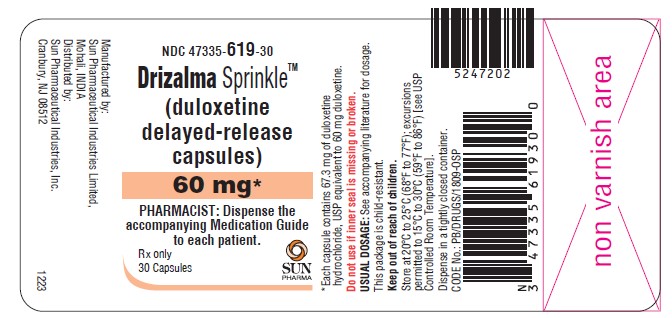
DRIZALMA SPRINKLE Duloxetine 60 mg Capsule, Delayed Release, 30-count
Other active recalls for Duloxetine (different manufacturers) — 4 · tap to view
🆔 Identity & classification
Where does this data come from?
🏷️ RxNorm drug class
This medicine belongs to the Serotonin and Norepinephrine Reuptake Inhibitor class.
Where does this data come from?
🏭 Manufacturer & labeler
Where does this data come from?
🩺 Clinical
Duloxetine is used to treat depression and generalized anxiety disorder (GAD; excessive worry and tension that disrupts daily life). Duloxetine is also used to pain associated with diabetic neuropathy (damage to nerves that can develop in people who have diabetes) and fibromyalgia (a long-lasting condition that may cause pain, muscle stiffness and tenderness, tiredness, and difficulty falling asleep or staying asleep). It is also used to treat ongoing bone or muscle pain. Duloxetine is in a class of medications called selective serotonin and norepinephrine reuptake inhibitors (SNRIs). It work...
Read the full MedlinePlus article ↗- You're right to ask — duloxetine does a lot more than treat depression. It's also approved for generalized anxiety disorder, diabetic nerve pain, fibromyalgia, and chronic musculos...
- What is duloxetine actually used for? My doctor prescribed it but I wasn't sure it was just for depression.
- It depends on which product you have. Most duloxetine delayed-release capsules — including Cymbalta — must be swallowed whole. Crushing, chewing, or opening them damages the specia...
- Can I open the capsule or crush it if I have trouble swallowing pills?
Patient education
Supplement & herbal interactions
Some supplements/herbs that may interact with Duloxetine — tap one for details:
Duloxetine may be associated with lower levels of 1 nutrient — worth a chat with your pharmacist, not a cause for alarm.
Where does this data come from?
Ask a licensed pharmacist directly — free, answered by our team.
💊 What it looks like
Where does this data come from?
🧪 Inactive Ingredients / Excipients
Inactive ingredients, also called excipients, are components of the drug product other than the active ingredient. They may include fillers, dyes, coatings, preservatives, flavors, or other formulation ingredients.
💡 Tap an ingredient (hover on desktop) to see what it is and why it’s used.
-
UNII 5138Q19F1X
Ammonia is a colorless gas made from nitrogen and hydrogen. It's used in medicines as a pH buffer to maintain the correct acidity level and help keep the product stable.
-
UNII PQ6CK8PD0R
Ascorbic acid, also known as vitamin C, is a white crystalline powder. It serves as an antioxidant to prevent degradation of other ingredients and may also function as a preservative in the formulation.
-
UNII 35SW5USQ3G
A synthetic yellow dye used to color medicines. It helps make tablets, capsules, and liquids visually distinct so patients can easily identify their medication.
-
UNII H3R47K3TBD
FD&C Blue No. 1 is a synthetic blue dye approved for use in foods and medicines. It serves as a colorant to give the medication its distinctive appearance and help with product identification.
-
UNII PN2ZH5LOQY
A synthetic red dye approved by the FDA for use in foods, medicines, and cosmetics. It serves as a colorant to make tablets, capsules, and liquids visually distinctive for product identification.
-
UNII WZB9127XOA
A synthetic red dye used to color medications and make them easier to identify. It serves as a colorant in tablets, capsules, and liquid formulations.
-
UNII XM0M87F357
A dark iron oxide compound that gives medicines their black or dark color. It's used as a colorant in tablets and capsules to help identify the product and make it visually distinctive.
-
UNII 2G86QN327L
Gelatin is a protein derived from animal collagen, commonly used in medicines as a gelling agent and capsule material. It helps create soft or hard capsule shells that hold and release medication, and can also thicken liquid formulations.
-
UNII 87Y6436BKR
Hypromellose phthalate is a plant-derived polymer that forms a protective coating around pills and capsules. It dissolves in the intestines rather than the stomach, helping deliver the medicine to the right place for absorption.
-
UNII 3NXW29V3WO
Hypromellose is a plant-based thickener made from cellulose. It's used in medicines as a binder to hold ingredients together, a coating for tablets, and a thickener for liquids.
-
UNII 3WJQ0SDW1A
Polyethylene glycol is a synthetic liquid or solid polymer used in medicines as a solvent, lubricant, and humectant. It helps dissolve active ingredients, reduces friction during manufacturing, and retains moisture in the final product.
-
UNII 6DC9Q167V3
Propylene glycol is a clear liquid derived from petroleum or vegetable sources. It acts as a solvent, humectant, and preservative in medicines, helping dissolve active ingredients and maintain product stability.
-
UNII 46N107B71O
Shellac is a natural resin secreted by the lac beetle. It's used as a coating on tablets and capsules to control how quickly the medicine dissolves and to improve appearance and stability.
-
UNII 368GB5141J
A detergent and foaming agent derived from coconut or palm oil. In medications, it helps break down and mix oil and water-based ingredients, aids in tablet disintegration, and improves how the drug dissolves and spreads in the mouth or digestive system.
-
UNII O8232NY3SJ
A plant-based carbohydrate derived from corn kernels. It acts as a filler to add bulk, a binder to hold ingredients together, and a disintegrant to help the tablet break apart in your stomach for absorption.
-
UNII C151H8M554
A natural sugar derived from sugar cane or sugar beets. It's used as a sweetener, filler, and binder to improve taste, add bulk, and help hold tablet or capsule ingredients together.
-
UNII 7SEV7J4R1U
A powder made from a naturally occurring mineral. In medicines, talc works as a glidant and anti-caking agent, helping tablets and capsules flow smoothly during manufacturing and preventing clumping.
-
UNII 15FIX9V2JP
Titanium dioxide is a bright white mineral powder commonly used as a colorant and opacifying agent. It makes pills and tablets white or lighter in color and helps make coatings non-transparent.
-
UNII 8Z96QXD6UM
Triethyl citrate is a clear liquid derived from citric acid. It acts as a plasticizer and solvent in tablet coatings and film formulations, helping the coating remain flexible and adhere properly to the medicine.
19 inactive ingredients listed in the exact product block matched to this NDC.
Where does this data come from?
ingredient classCode="IACT" elements from the exact product block matched by this NDC. Label-section narrative from DailyMed / the openFDA label index is shown separately when available.Inactive ingredient FAQ
Are inactive ingredients the same for every manufacturer?
Why might an inactive ingredient be missing?
Can inactive ingredients matter?
💲 Pricing
A drug doesn't have one price. Each row is a different public payment system, and none is what you'd pay at the counter — that depends on your insurance. The ⓘ on each row explains what it measures.
| Price system | Per ea | Per package |
|---|---|---|
| Retail pharmacies payNADAC · weekly | $7.182 | $215.46 / 30 capsules |
| Medicaid paysCMS SDUD · 12 mo | $7.35 | $220.47 / 30 capsules |
| Medicare drug plans payPart D · Q2 2026 | $7.39 | $221.61 / 30 capsules |
Where does this data come from?
🔁 Therapeutic equivalents
| Product | Labeler | Pack | NADAC/unit | TE | Status | Price vs. this |
|---|---|---|---|---|---|---|
| Duloxetine 60 mg 43547-0381-03 | Solco | 30 capsules | $0.129 | AB | Availability likely | save 98% |
| Duloxetine 60 mg 82009-0173-10 | Quallent | 1000 capsules | $0.129 | AB | Availability likely | save 98% |
| Duloxetine 60 mg 68001-0596-04 | BluePoint | 30 capsules | $0.129 | AB | Availability likely | save 98% |
| Duloxetine 60 mg 68180-0296-03 | Lupin | 1000 capsules | $0.129 | AB | Availability likely | save 98% |
| Duloxetine 60 mg 00228-2892-03 | Actavis | 30 capsules | $0.129 | AB | Availability likely | save 98% |
| Duloxetine 60 mg 27241-0099-03 | Ajanta | 30 capsules | $0.129 | AB | Availability likely | save 98% |
| Drizalma Sprinkle 60 mgthis 47335-0619-30 | SUN | 30 capsules | $7.182 | — | Availability likely | — |
| Duloxetine 60 mg 47335-0383-08 | Sun | 100 capsules | — | — | FDA listed | — |
| Duloxetine 60 mg 71205-0358-30 | Proficient | 30 capsules | — | AB | FDA listed | — |
| Duloxetine 60 mg 50090-5940-00 | A-S | 30 capsules | — | AB | FDA listed | — |
| duloxetine 60 mg 49252-0009-10 | Inventia | 30 capsules | — | AB | FDA listed | — |
| Duloxetine 60 mg 50090-6775-00 | A-S | 30 capsules | — | AB | FDA listed | — |
| Duloxetine 60 mg 67046-1598-03 | Coupler | 30 capsules | — | AB | FDA listed | — |
| Duloxetine 60 mg 31722-0170-01 | Camber | 100 capsules | — | AB | FDA listed | — |
| Duloxetine 60 mg 68071-3519-03 | NuCare | 30 capsules | — | AB | FDA listed | — |
| Duloxetine Hydrochloride 60 mg 62332-0280-30 | Alembic | 30 capsules | — | AB | FDA listed | — |
| Duloxetine 60 mg 68071-3775-09 | NuCare | 90 capsules | — | AB | FDA listed | — |
| Duloxetine 60 mg 00615-8496-05 | NCS | 15 capsules | — | AB | FDA listed | — |
| Duloxetine Hydrochloride 60 mg 46708-0280-10 | Alembic | 100 capsules | — | AB | FDA listed | — |
| Duloxetine 60 mg 72789-0338-90 | PD-Rx | 90 capsules | — | AB | FDA listed | — |
| Duloxetine 60 mg 51655-0237-25 | Northwind | 60 capsules | — | AB | FDA listed | — |
| Duloxetine 60 mg 68788-8623-03 | Preferred | 30 capsules | — | AB | FDA listed | — |
| Duloxetine 60 mg 71335-2567-01 | Bryant | 30 capsules | — | AB | FDA listed | — |
| Duloxetine 60 mg 76420-0623-01 | Asclemed | 100 capsules | — | AB | FDA listed | — |
| Duloxetine 60 mg 67877-0265-01 | Ascend | 100 capsules | — | AB | FDA listed | — |
| Duloxetine 60 mg 71335-2625-01 | Bryant | 30 capsules | — | AB | FDA listed | — |
| Duloxetine 60 mg 71610-0403-60 | Aphena | 90 capsules | — | AB | FDA listed | — |
| Duloxetine 60 mg 80425-0389-01 | Advanced | 30 capsules | — | AB | FDA listed | — |
| Duloxetine 60 mg 50090-7897-00 | A-S | 90 capsules | — | AB | FDA listed | — |
| Duloxetine 60 mg 65841-0801-06 | Zydus | 30 capsules | — | AB | FDA listed | — |
| Duloxetine 60 mg 68788-7672-00 | Preferred | 6 capsules | — | AB | FDA listed | — |
| Duloxetine 60 mg 70518-1011-00 | REMEDYREPACK | 30 capsules | — | AB | FDA listed | — |
| Duloxetine 60 mg 71335-1445-01 | Bryant | 30 capsules | — | AB | Discontinued | — |
| Duloxetine 60 mg 50090-6893-00 | A-S | 90 capsules | — | AB | FDA listed | — |
| Duloxetine 60 mg 68788-4026-03 | Preferred | 30 capsules | — | AB | FDA listed | — |
| Duloxetine 60 mg 63629-8748-01 | Bryant | 30 capsules | — | AB | FDA listed | — |
| Duloxetine 60 mg 70518-1244-00 | REMEDYREPACK | 30 capsules | — | AB | FDA listed | — |
| Duloxetine DR 60 mg 80425-0119-01 | Advanced | 30 capsules | — | AB | FDA listed | — |
| Duloxetine 60 mg 42708-0196-30 | QPharma, | 30 capsules | — | AB | FDA listed | — |
| Duloxetine 60 mg 60760-0462-30 | St. | 30 capsules | — | AB | Discontinued | — |
| duloxetine 60 mg 70247-0014-03 | Qingdao | 30 capsules | — | AB | FDA listed | — |
| Duloxetine 60 mg 70518-2630-01 | REMEDYREPACK | 30 capsules | — | AB | Discontinued | — |
| Duloxetine 60 mg 71335-0402-01 | Bryant | 30 capsules | — | AB | FDA listed | — |
| Duloxetine 60 mg 72162-1058-03 | Bryant | 30 capsules | — | AB | FDA listed | — |
| Duloxetine 60 mg 85534-0051-00 | HAWAII | 30 capsules | — | AB | FDA listed | — |
| Duloxetine 60 mg 85534-0018-00 | HAWAII | 30 capsules | — | AB | FDA listed | — |
| Duloxetine 60 mg 70954-0864-20 | ANI | 90 capsules | — | AB | FDA listed | — |
| Duloxetine 60 mg 51407-0810-10 | Golden | 1000 capsules | — | AB | FDA listed | — |
| Duloxetine 60 mg 71335-3163-01 | Bryant | 30 capsules | — | AB | FDA listed | — |
Where does this data come from?
⏳ Availability & generic status
FDA-approved generic versions are listed, and recent pricing/market data suggests they may be available — see Therapeutic equivalents.
Why the date isn’t exact: Generic timing can change because patents may be challenged, settled, licensed, added, removed, or worked around with a narrower label — and FDA approval does not always mean a pharmacy can get the generic today.
🛈 What do these terms mean?
- Patent
- Legal protection listed in the Orange Book that may delay generic approval or launch. Issued by the U.S. Patent & Trademark Office.
- Substance patent
- Covers the active drug molecule itself — the hardest to design around. A generic generally can’t launch until it expires.
- Formulation (product) patent
- Covers a specific formulation or dosage form. A generic can sometimes work around it with a different formulation.
- Method-of-use patent
- A patent covering one specific approved use of the drug — not necessarily the whole molecule. A generic can sometimes launch with a “skinny label” that carves out the protected use and keeps the others.
- Skinny label
- A generic label that omits a still-patented use when the FDA allows it — letting a generic reach the market for the unprotected uses.
- Exclusivity
- FDA-granted marketing protection, separate from patents — e.g. 5-yr new chemical entity, 7-yr orphan drug, or a +6-month pediatric extension.
- Paragraph IV
- A generic applicant’s formal challenge to a listed patent. It can potentially lead to earlier generic entry, but often involves litigation or a settlement.
- RLD / RS
- Reference Listed Drug — the brand product the FDA uses as the reference for generic applications. Reference Standard — the product the FDA expects generics to compare against in bioequivalence testing.
- TE / AB rating
- FDA therapeutic-equivalence rating. An AB rating generally means the FDA considers a generic therapeutically equivalent to — and substitutable for — the brand.
- LOE (loss of exclusivity)
- The latest patent or exclusivity currently listed — the loss-of-exclusivity / latest-listed-protection date shown on this page. Paragraph-IV challenges and settlements can move the real date earlier; FDA approval and a manufacturer’s decision to market can move it later.
Built from the FDA Orange Book. The bars above are scaled to each protection’s expiry; the red LOE marker is the last one to lapse.
| Patent | Type | Use code | Expires |
|---|---|---|---|
| US 10959982 ↗ | Drug product | — | Apr 13, 2037 |
| US 9839626 ↗ | Drug product | — | Apr 13, 2037 |
| US 11202772 ↗ | Drug product | — | Apr 13, 2037 |
| US 9839626 ↗ | Drug product | — | Apr 13, 2037 |
| US 11202772 ↗ | Drug product | — | Apr 13, 2037 |
| US 10413525 ↗ | Drug product | — | Apr 13, 2037 |
| US 10413525 ↗ | Drug product | — | Apr 13, 2037 |
| US 12171742 ↗ | Drug product | — | Apr 13, 2037 |
| US 9839626 ↗ | Drug product | — | Apr 13, 2037 |
| US 10959982 ↗ | Drug product | — | Apr 13, 2037 |
| US 9839626 ↗ | Drug product | — | Apr 13, 2037 |
| US 10413525 ↗ | Drug product | — | Apr 13, 2037 |
| US 11202772 ↗ | Drug product | — | Apr 13, 2037 |
| US 10413525 ↗ | Drug product | — | Apr 13, 2037 |
| US 10959982 ↗ | Drug product | — | Apr 13, 2037 |
| US 11202772 ↗ | Drug product | — | Apr 13, 2037 |
| US 12171742 ↗ | Drug product | — | Apr 13, 2037 |
| US 10959982 ↗ | Drug product | — | Apr 13, 2037 |
| US 12171742 ↗ | Drug product | — | Apr 13, 2037 |
| US 12171742 ↗ | Drug product | — | Apr 13, 2037 |
Is there a generic version of DRIZALMA SPRINKLE DR 60 MG CAP?
The FDA approved a generic — why can’t I get it at my pharmacy yet?
Why do different websites show different generic release dates?
What does “FDA listed” mean?
What does a patent or protection date mean here?
What does “current Orange Book estimate” mean?
Can a generic come out before the last patent expires?
Can a generic come out after the listed dates?
What is the difference between patents and exclusivity?
Why are there multiple patent dates?
Where does this data come from?
🗺️ Medicaid utilization & spend
💊 Medicaid utilization by pack size
📊 Medicare Part D spend CMS · PART D · 2026 (Q1)
📦 Packaging — all sizes for this product
| Package NDC | Description | Per unit | Per pack | Marketing start | Status |
|---|---|---|---|---|---|
| 47335-0619-10 | 1000 CAPSULE, DELAYED RELEASE in 1 BOTTLE (47335-619-10) | — | — | 2019-08-01 | Active |
| 47335-0619-30 You're viewing this | 30 CAPSULE, DELAYED RELEASE in 1 BOTTLE (47335-619-30) | $7.18 / ea | $215.46 | 2019-08-01 | Active |
| 47335-0619-60 | 60 CAPSULE, DELAYED RELEASE in 1 BOTTLE (47335-619-60) | — | — | 2019-08-01 | Active |
| 47335-0619-90 | 90 CAPSULE, DELAYED RELEASE in 1 BOTTLE (47335-619-90) | — | — | 2019-08-01 | Active |
You're viewing the smallest of 4 pack sizes for this product.
In Medicaid, this is the most-dispensed pack of this product — about 100% of fills over the last four reported quarters. See all packs ↓
Pack size FAQ
What quantity is in NDC 47335-0619-30?
What is the difference between NDC 47335-0619-30 and NDC 47335-0619-60?
What NDC number is used to bill for this package of DRIZALMA SPRINKLE Duloxetine 60 mg Capsule, Delayed Release?
Prices are the latest CMS NADAC pharmacy acquisition cost per NDC; per-pack figures are per-unit × pack quantity, shown only when the pack is denominated in the same measure NADAC prices.
📄 Full prescribing information FDA SPL
🚨 Boxed Warning ▾
WARNING: SUICIDAL THOUGHTS AND BEHAVIORS Antidepressants increased the risk of suicidal thoughts and behavior in pediatric and young adult patients in short-term studies. Closely monitor all antidepressant-treated patients for clinical worsening, and for emergence of suicidal thoughts and behaviors [see Warnings and Precautions (5.1)] . WARNING: SUICIDAL THOUGHTS AND BEHAVIORS See full prescribing information for complete boxed warning. • Increased risk of suicidal thinking and behavior in pediatric and young adult patients taking antidepressants (5.1) • Closely monitor all antidepressant-treated patients for clinical worsening and emergence of suicidal thoughts and behaviors (5.1)
🎯 Indications and Usage ▾
1 INDICATIONS AND USAGE DRIZALMA SPRINKLE is indicated for the treatment of: • Major Depressive Disorder in adults • Generalized Anxiety Disorder in adults and pediatric patients 7 years of age and older • Diabetic Peripheral Neuropathy in adults • Fibromyalgia in adults • Chronic Musculoskeletal Pain in adults Additional pediatric use information is approved for Eli Lilly and Company, Inc.’s CYMBALTA (duloxetine delayed-release capsules). However, due to Eli Lilly and Company Inc.’s marketing exclusivity rights, this drug product is not labeled with that pediatric information.
DRIZALMA SPRINKLE is a serotonin and norepinephrine reuptake inhibitor (SNRI) indicated for the treatment of following conditions: • Major Depressive Disorder (MDD) in adults (1) • Generalized Anxiety Disorder (GAD) in adults and pediatric patients ages 7 years of age and older (1) • Diabetic Peripheral Neuropathic Pain (DPNP) in adults (1) • Fibromyalgia (FM) in adults (1) • Chronic Musculoskeletal Pain in adults (1)
⏱️ Dosage and Administration ▾
2 DOSAGE AND ADMINISTRATION • Take DRIZALMA SPRINKLE with or without food (2.1) • DRIZALMA SPRINKLE may be: swallowed whole (do not crush or chew capsule); opened and sprinkled over applesauce; or administered via nasogastric tube (2.1) • Take a missed dose as soon as it is remembered. Do not take two doses of DRIZALMA SPRINKLE at the same time (2.1) Indication Starting Dose Target Dose Maximum Dose MDD (2.2) Adults 40 mg/day to 60 mg/day Acute Treatment: 40 mg/day (20 mg twice daily) to 60 mg/day (once daily or as 30 mg twice daily); Maintenance Treatment: 60 mg/day 120 mg/day GAD (2.3) Adults 60 mg/day 60 mg/day (once daily) 120 mg/day Geriatric 30 mg/day 60 mg/day (once daily) 120 mg/day Pediatrics (7 to 17 years of age) 30 mg/day 30 to 60 mg/day (once daily) 120 mg/day DPNP (2.4) 60 mg/day 60 mg/day (once daily) 60 mg/day FM (2.5) Adults 30 mg/day 60 mg/day (once daily) 60 mg/day Chronic Musculoskeletal Pain (2.6) Adults 30 mg/day 60 mg/day (once daily) 60 mg/day • There is no evidence that doses greater than 60 mg/day confers additional benefit, while some adverse reactions were observed to be dose-dependent (2) • Discontinuing DRIZALMA SPRINKLE: Gradually reduce dosage to avoid discontinuation symptoms (2.8, 5.7)
2.1Important Administration Instructions Administer DRIZALMA SPRINKLE with or without food. Swallow DRIZALMA SPRINKLE whole (do not chew or crush the capsule). For patients unable to swallow an intact capsule, refer to the alternative administration instructions below.
Directions for use with applesauce For patients with swallowing difficulty, DRIZALMA SPRINKLE can be opened and the contents sprinkled over applesauce. The contents of the capsules should be swallowed along with a small amount (tablespoonful) of applesauce. The drug/food mixture should be swallowed immediately and not stored for future use.
Nasogastric tube administration Open and add contents of capsule to an all plastic catheter tip syringe and add 50 mL of water. Gently shake the syringe for approximately 10 seconds. Promptly deliver through a 12 French or larger nasogastric tube.
Ensure no pellets are left in the syringe. Rinse with additional water (about 15 mL) if needed. If a dose of DRIZALMA SPRINKLE is missed, take the missed dose as soon as it is remembered.
If it is almost time for the next dose, skip the missed dose and take the next dose at the regular time. Do not take two doses of DRIZALMA SPRINKLE at the same time.
2.2Dosage for Treatment of Major Depressive Disorder in Adults The recommended starting dosage in adults with MDD is 40 mg per day (given as 20 mg twice daily) to 60 mg per day (given either once daily or as 30 mg twice daily). For some patients, it may be desirable to start at 30 mg once daily for 1 week, to allow patients to adjust to DRIZALMA SPRINKLE before increasing to 60 mg once daily. While a 120 mg per day dose was shown to be effective, there is no evidence that doses greater than 60 mg per day confer any additional benefits.
Periodically reassess to determine the need for maintenance treatment and the appropriate dosage for such treatment [see Clinical Studies (14.1)] .
2.3Dosage for Treatment of Generalized Anxiety Disorder Recommended Dosage in Adults Less than 65 Years of Age For most adults less than 65 years of age with GAD, initiate DRIZALMA SPRINKLE 60 mg once daily. For some patients, it may be desirable to start at 30 mg once daily for 1 week, to allow patients to adjust to DRIZALMA SPRINKLE before increasing to 60 mg once daily. While a 120 mg once daily dosage was shown to be effective, there is no evidence that doses greater than 60 mg per day confer additional benefit.
Nevertheless, if a decision is made to increase the dosage beyond 60 mg once daily, increase dosage in increments of 30 mg once daily. The safety of doses above 120 mg once daily has not been adequately evaluated. Periodically reassess to determine the continued need for maintenance treatment and the appropriate dosage for such t…
💊 Dosage Forms and Strengths ▾
3 DOSAGE FORMS AND STRENGTHS 20 mg: hard gelatin capsules with green cap imprinted with “ RG53 ” and green body imprinted with “ RG53 ” containing off-white to pale-yellow colored pellets. Each capsule contains 22.4 mg of duloxetine hydrochloride, USP equivalent to 20 mg duloxetine. 30 mg: hard gelatin capsules with blue cap imprinted with “ RG54 ” and white body imprinted with “ RG54 ” containing off-white to pale-yellow colored pellets.
Each capsule contains 33.6 mg of duloxetine hydrochloride, USP equivalent to 30 mg duloxetine. 40 mg: hard gelatin capsules with white cap imprinted with “ RL85 ” and white body imprinted with “ RL 85 ” containing off-white to pale-yellow colored pellets. Each capsule contains 44.9 mg of duloxetine hydrochloride, USP equivalent to 40 mg duloxetine.
60 mg: hard gelatin capsules with blue cap imprinted with “ RG55 ” and green body imprinted with “ RG55 ” containing off-white to pale-yellow colored pellets. Each capsule contains 67.3 mg of duloxetine hydrochloride, USP equivalent to 60 mg duloxetine. Delayed-release capsules: 20 mg, 30 mg, 40 mg, and 60 mg (3)
⛔ Contraindications ▾
4 CONTRAINDICATIONS The use of MAOIs intended to treat psychiatric disorders with DRIZALMA SPRINKLE, or within 5 days of stopping treatment with DRIZALMA SPRINKLE, are contraindicated because of an increased risk of serotonin syndrome. The use of DRIZALMA SPRINKLE within 14 days of stopping an MAOI intended to treat psychiatric disorders is contraindicated [see Dosage and Administration (2.10), Warnings and Precautions (5.4), Drug Interactions (7)] . Starting DRIZALMA SPRINKLE in a patient who is being treated with MAOIs such as linezolid or intravenous methylene blue is contraindicated because of an increased risk of serotonin syndrome [see Warnings and Precautions (5.4)] .
Serotonin Syndrome and MAOIs : Do not use MAOIs intended to treat psychiatric disorders with DRIZALMA SPRINKLE or within 5 days of stopping treatment with DRIZALMA SPRINKLE. Do not use DRIZALMA SPRINKLE within 14 days of stopping an MAOI intended to treat psychiatric disorders. In addition, do not start DRIZALMA SPRINKLE in a patient who is being treated with linezolid or intravenous methylene blue (4)
⚠️ Warnings and Cautions ▾
5 WARNINGS AND PRECAUTIONS Hepatotoxicity : Hepatic failure, sometimes fatal, has been reported. Discontinue DRIZALMA SPRINKLE in patients who develop jaundice or other evidence of clinically significant liver dysfunction and should not be resumed unless another cause can be established. Avoid use in patients with substantial alcohol use or evidence of chronic liver disease (5.2) Orthostatic Hypotension, Falls and Syncope : Consider dosage reduction or discontinuation if these events occur (5.3) S ero t on in Syndrome : Increased risk when co-administered with other serotonergic agents, but also when taken alone.
If it occurs, discontinue DRIZALMA SPRINKLE and serotonergic agents and initiate supportive treatment (5.4) Increased Risk of B leeding : May increase the risk of bleeding events. Concomitant use of antiplatelet drugs and anticoagulants may increase this risk (5.5, 7, 8.1) S ever e Skin Reactions : Severe skin reactions, including erythema multiforme and Stevens-Johnson Syndrome (SJS), can occur with duloxetine. Discontinue at the first appearance of blisters, peeling rash, mucosal erosions, or any other sign of hypersensitivity if no other etiology can be identified (5.6) D iscontinuation Syndrome : Taper dose when possible and monitor for discontinuation symptoms (5.7) Activation of Mania or Hypomania : Prior to initiating, screen patients for personal or family history of bipolar disorder, mania, or hypomania (5.8) A ng le-Closure Glaucoma : Has occurred in patients with untreated anatomically narrow angles treated with antidepressants (5.9) S e izures : Prescribe with care in patients with a history of seizure disorder (5.10) B lood Pressure Increases : Monitor blood pressure prior to initiating treatment and periodically throughout treatment (5.11) Inhibitors of CYP1A2 or Thioridazine : Avoid co-administration with DRIZALMA SPRINKLE (5.12) Hypona t r emia : Can occur in association with SIADH; consider discontinuation (5.13) Glucose Control in Diabetes : In DPNP patients, increase in fasting blood glucose, and HbA1c have been observed (5.14) Conditions that Slow Gastric Emptying : Use cautiously in these patients (5.14) Sexual Dysfunction : DRIZALMA SPRINKLE may cause symptoms of sexual dysfunction (5.16)
5.1Suicidal Thoughts and Behaviors in Adolescents and Young Adults In pooled analyses of placebo-controlled trials of antidepressant drugs (SSRIs and other antidepressant classes) that included approximately 77,000 adult patients and 4,500 pediatric patients, the incidence of suicidal thoughts and behaviors in the antidepressant-treated patients age 24 years and younger was greater than in placebo-treated patients. There was considerable variation in risk of suicidal thoughts and behaviors among drugs, but there was an increased risk identified in young patients for most drugs studied.
There were differences in absolute risk of suicidal thoughts and behaviors across the different indications, with the highest incidence in MDD. The drug-placebo differences in the number of cases of suicidal thoughts and behaviors per 1000 patients treated are provided in Table 1. Table 1: Risk Differences of the Number of Patients of Suicidal Thoughts and Behavior in the Pooled Placebo-Controlled Trials of Antidepressants in Pediatric and Adult Patients Age Range Drug-Placebo Difference in Number of Patients of Suicidal Thoughts or Behaviors per 1000 Patients Treated Increases Compared to Placebo <18 14 additional patients 18 to 24 5 additional patients Decreases Compared to Placebo 25 to 64 1 fewer patients ≥65 6 fewer patients It is unknown whether the risk of suicidal thoughts and behaviors in children, adolescents, and young adults extends to longer-term use, i.e., beyond four months.
However, there is substantial evidence from placebo-controlled maintenance trials in adults with MDD that antidepressants delay the recurrence of depression and that depression itself is a risk factor for suicidal thoughts and behaviors. Monito…
🤒 Adverse Reactions ▾
6 ADVERSE REACTIONS The following adverse reactions are discussed in more detail in other sections of the labeling: Suicidal Thoughts and Behaviors in Adolescents and Young Adults [see Boxed Warning and Warnings and Precautions (5.1)] Hepatotoxicity [see Warnings and Precautions (5.2)] Orthostatic Hypotension, Falls and Syncope [see Warnings and Precautions (5.3)] Serotonin Syndrome [see Warnings and Precautions (5.4)] Increased Risk of Bleeding [see Warnings and Precautions (5.5)] Severe Skin Reactions [see Warnings and Precautions (5.6)] Discontinuation Syndrome [see Warnings and Precautions (5.7)] Activation of Mania/Hypomania [see Warnings and Precautions (5.8)] Angle-Closure Glaucoma [see Warnings and Precautions (5.9)] Seizures [see Warnings and Precautions (5.10)] Increases in Blood Pressure [see Warnings and Precautions (5.11)] Clinically Important Drug Interactions [see Warnings and Precautions (5.12)] Hyponatremia [see Warnings and Precautions (5.13)] Urinary Hesitation and Retention [see Warnings and Precautions (5.15)] Sexual Dysfunction [see Warnings and Precautions (5.16)] Most common adverse reactions (≥5% and at least twice the incidence of placebo-treated patients): (6.1) Adults: nausea, dry mouth, somnolence, constipation, decreased appetite, and hyperhidrosis Pediatric Patients : nausea, diarrhea, decreased weight To report SUSPECTED ADVERSE REACTIONS, contact Sun Pharmaceutical Industries, Inc. at 1-800-818-4555 or FDA at 1-800-FDA-1088 or www.fda.gov/medwatch.
6.1Clinical Trials Experience Because clinical trials are conducted under widely varying conditions, adverse reaction rates observed in the clinical trials of a drug cannot be directly compared to rates in the clinical trials of another drug and may not reflect the rates observed in practice. The stated frequencies of adverse reactions represent the proportion of patients who experienced, at least once, a treatment-emergent adverse reaction of the type listed. Adverse Reactions in Adults The data described below reflect exposure to duloxetine delayed-release capsules in placebo-controlled trials for MDD (N = 3779), GAD (N = 1018), OA (N = 503), CLBP (N = 600), and DPNP (N = 906), and FM (N = 1294).
The population studied was 17 to 89 years of age; 65.7%, 60.8%, 60.6%, 42.9%, and 94.4% female; and 81.8%, 72.6%, 85.3%, 74.0%, and 85.7% Caucasian for MDD, GAD, OA and CLBP, DPNP, and FM, respectively. Most patients received doses of a total of 60 to 120 mg per day [see Clinical Studies (14)] . The data below do not include results of the trial examining the efficacy of duloxetine delayed-release in patients ≥ 65 years old for the treatment of generalized anxiety disorder; however, the adverse reactions observed in this geriatric sample were generally similar to adverse reactions in the overall adult population.
A dverse Reactions Reported as Reasons for Discontinuation of Treatment in Adult Placebo-Controlled Trials Major Depressive Disorder: Approximately 8.4% (319/3779) of the duloxetine delayed-release capsules-treated patients in placebo-controlled adult trials for MDD discontinued treatment due to an adverse reaction, compared with 4.6% (117/2536) of placebo-treated patients. Nausea (duloxetine delayed-release capsules 1.1%, placebo 0.4%) was the only adverse reaction reported as a reason for discontinuation and considered to be drug-related (i.e., discontinuation occurring in at least 1% of the duloxetine delayed-release capsules-treated patients and at a rate of at least twice that of placebo).
Generalized Anxiety Disorder: Approximately 13.7% (139/1018) of the duloxetine delayed-release capsules-treated patients in placebo-controlled adult trials for GAD discontinued treatment due to an adverse reaction, compared with 5.0% (38/767) of placebo-treated patients. Common adverse reactions reported as a reason for discontinuation and considered to be drug-related (as defined above) included nausea (duloxetine delayed-release capsules 3.3%, placebo 0.…
🔄 Drug Interactions ▾
7 DRUG INTERACTIONS • Potent CYP1A2 Inhibitors: Avoid concomitant use (2.6, 7) • CYP2D6 Substrates: Consider dose reduction with concomitant use (7)
7.1Drugs Having Clinically Important Interactions with DRIZALMA SPRINKLE Table 7: Clinically Important Drug Interactions Monoamine Oxidase Inhibitors (MAOIs) Clinical Impact Concomitant use of SSRIs and SNRIs including duloxetine with MAOIs increases the risk of serotonin syndrome. Intervention •The use of MAOIs intended to treat psychiatric disorders with duloxetine or within 5 days of stopping treatment with duloxetine is contraindicated [see Contraindications (4) and Warnings and Precautions (5.4)] .•The use of duloxetine delayed-release capsules within 14 days of stopping an MAOI intended to treat psychiatric disorders is also contraindicated [see Contraindications (4) and Warnings and Precautions (5.4)] .•Starting duloxetine in a patient who is being treated with MAOIs is also contraindicated [see Dosage and Administration (2.10), Contraindications (4), Warnings and Precautions (5.4)] .
Examples Selegiline, tranylcypromine, isocarboxazid, phenelzine, linezolid, intravenous methylene blue Other Serotonergic Drugs Clinical Impact Concomitant use of duloxetine with other serotonergic drugs increases the risk of serotonin syndrome. Intervention •Patients should be made aware of a potential increased risk for serotonin syndrome, particularly during treatment initiation and dose increases.•Monitor for symptoms of serotonin syndrome when duloxetine is used concomitantly with other drugs that may affect the serotonergic neurotransmitter systems.•Treatment with duloxetine delayed-release capsules and any concomitant serotonergic agents, should be discontinued immediately if the above events occur and supportive symptomatic treatment should be initiated [see Warnings and Precautions (5.4)] .
Examples Other SNRIs, SSRIs, triptans, tricyclic antidepressants, opioids, lithium, tryptophan, buspirone, amphetamines, and St. John’s Wort Inhibitors of CYP1A2 Clinical Impact Concomitant use of duloxetine with CYP1A2 inhibitors increases AUC, C max , t 1/2 of duloxetine. Intervention Avoid concomitant use of duloxetine delayed-release capsules with potent CYP1A2 inhibitors [see Warnings and Precautions (5.12), Clinical Pharmacology (12.3)].
Examples Fluvoxamine, cimetidine, ciprofloxacin, enoxacin Dual Inhibition of CYP1A2 and CYP2D6 Clinical Impact Concomitant administration of duloxetine with potent CYP1A2 inhibitors to CYP2D6 poor metabolizers results in increased AUC and C max of duloxetine. Intervention Avoid co-administration of duloxetine delayed-release capsules and potent CYP1A2 inhibitors to CYP2D6 poor metabolizers [see Clinical Pharmacology (12.3)] . Examples Fluvoxamine, cimetidine, ciprofloxacin, enoxacin Drugs that Interfere with Hemostasis Clinical Impact Concomitant use of duloxetine with an antiplatelet or anticoagulant drug may potentiate the risk of bleeding.
Intervention Closely monitor for bleeding for patients receiving an antiplatelet or anticoagulant drug when duloxetine is initiated or discontinued [Warnings and Precaution (5.5)] . Examples NSAIDs, aspirin, warfarin Inhibitors of CYP2D6 Clinical Impact Concomitant use of duloxetine with CYP2D6 inhibitors increase AUC of duloxetine. Greater degrees of inhibition are expected with higher doses of CYP2D6 inhibitors.
Intervention Exercise caution when co-administering duloxetine delayed-release capsules and potent CYP2D6 inhibitors [see Warnings and Precautions (5.12), Clinical Pharmacology (12.3)]. Examples Paroxetine, fluoxetine, quinidine Drugs Metabolized by CYP2D6 Clinical Impact Concomitant use of duloxetine increases AUC of a drug primarily metabolized by CYP2D6 which may increase the risk of toxicity of the CYP2D6 substrate drug. Intervention Monitor plasma concentrations of CYP2D6 substrate and reduce dosage of CYP2D6 substrate drug if necessary [see Warnings and Precautions (5.12), Clinical Pharmacology (12.3)] .…
👥 Use in Specific Populations ▾
8 USE IN SPECIFIC POPULATIONS • Pregnancy : Third trimester use may increase risk for symptoms of poor adaptation (respiratory distress, temperature instability, feeding difficulty, hypotonia, tremor, irritability) in the neonate (8.1) • Hepatic Impairment : Avoid use in patients with chronic liver disease or cirrhosis (5.14) • Renal Impairment : Avoid use in patients with severe renal impairment, GFR <30 mL/minute (5.14)
8.1Pregnancy Pregnancy Exposure Registry There is a pregnancy exposure registry that monitors pregnancy outcomes in women exposed to antidepressants during pregnancy. Healthcare providers are encouraged to register patients by calling the National Pregnancy Registry for Antidepressants at 1-844-405-6185 or visiting online at https://womensmentalhealth.org/clinical-and-research-programs/pregnancyregistry/antidepressants/ Risk Summary Based on data from published observational studies, exposure to SNRIs, particularly in the month before delivery, has been associated with a less than 2-fold increase in the risk of postpartum hemorrhage [see Warnings and Precautions (5.5) and Clinical Considerations] .
Data from a postmarketing retrospective cohort study indicate that use of duloxetine in the month before delivery may be associated with an increased risk of postpartum hemorrhage. Data from published literature and from a postmarketing retrospective cohort study have not identified a clear drug-associated risk of major birth defects or other adverse developmental outcomes ( see Data ). There are risks associated with untreated depression in pregnancy and with exposure to SNRIs and SSRIs, including DRIZALMA SPRINKLE, during pregnancy (see Clinical Considerations).
In rats and rabbits treated with duloxetine during the period of organogenesis, fetal weights were decreased but there was no evidence of developmental effects at doses up to 3 and 6 times, respectively, the maximum recommended human dose (MRHD) of 120 mg/day given to adolescents on a mg/m 2 basis. When duloxetine was administered orally to pregnant rats throughout gestation and lactation, pup weights at birth and pup survival to 1 day postpartum were decreased at a dose 2 times the MRHD given to adolescents on a mg/m 2 basis.
At this dose, pup behaviors consistent with increased reactivity, such as increased startle response to noise and decreased habituation of locomotor activity were observed. Post-weaning growth was not adversely affected. The estimated of background risk of major birth defects and miscarriage for the indicated population is unknown.
All pregnancies have a background risk of birth defect, loss, or other adverse outcomes. In the U.S. general population, the estimated background risk of major birth defects and miscarriage in clinically recognized pregnancies is 2% to 4% and 15% to 20%, respectively. Clinical Considerations Disease-associated Maternal and/or Embryo/Fetal Risk Women who discontinued antidepressants during pregnancy are more likely to experience a relapse of major depression than women who continued antidepressants.
This finding is from a prospective, longitudinal study that followed 201 pregnant women with a history of major depressive disorder who were euthymic and taking antidepressants at the beginning of pregnancy. Consider the risk of untreated depression when discontinuing or changing treatment with antidepressant medication during pregnancy and the postpartum. Pregnant women with fibromyalgia are at increased risk for adverse maternal and infant outcomes including preterm premature rupture of membranes, preterm birth, small for gestational age, intrauterine growth restriction, placental disruption, and venous thrombosis.
It is not known if these adverse maternal and fetal outcomes are a direct result of fibromyalgia or other comorbid factors. Maternal Adverse Reactions Use of DRIZALMA SPRINKLE in the month before delivery may be associated with an increased risk of postpartum hemorrhage [see Warnings and Precautio…
🤰 Pregnancy ▾
8.1Pregnancy Pregnancy Exposure Registry There is a pregnancy exposure registry that monitors pregnancy outcomes in women exposed to antidepressants during pregnancy. Healthcare providers are encouraged to register patients by calling the National Pregnancy Registry for Antidepressants at 1-844-405-6185 or visiting online at https://womensmentalhealth.org/clinical-and-research-programs/pregnancyregistry/antidepressants/ Risk Summary Based on data from published observational studies, exposure to SNRIs, particularly in the month before delivery, has been associated with a less than 2-fold increase in the risk of postpartum hemorrhage [see Warnings and Precautions (5.5) and Clinical Considerations] .
Data from a postmarketing retrospective cohort study indicate that use of duloxetine in the month before delivery may be associated with an increased risk of postpartum hemorrhage. Data from published literature and from a postmarketing retrospective cohort study have not identified a clear drug-associated risk of major birth defects or other adverse developmental outcomes ( see Data ). There are risks associated with untreated depression in pregnancy and with exposure to SNRIs and SSRIs, including DRIZALMA SPRINKLE, during pregnancy (see Clinical Considerations).
In rats and rabbits treated with duloxetine during the period of organogenesis, fetal weights were decreased but there was no evidence of developmental effects at doses up to 3 and 6 times, respectively, the maximum recommended human dose (MRHD) of 120 mg/day given to adolescents on a mg/m 2 basis. When duloxetine was administered orally to pregnant rats throughout gestation and lactation, pup weights at birth and pup survival to 1 day postpartum were decreased at a dose 2 times the MRHD given to adolescents on a mg/m 2 basis.
At this dose, pup behaviors consistent with increased reactivity, such as increased startle response to noise and decreased habituation of locomotor activity were observed. Post-weaning growth was not adversely affected. The estimated of background risk of major birth defects and miscarriage for the indicated population is unknown.
All pregnancies have a background risk of birth defect, loss, or other adverse outcomes. In the U.S. general population, the estimated background risk of major birth defects and miscarriage in clinically recognized pregnancies is 2% to 4% and 15% to 20%, respectively. Clinical Considerations Disease-associated Maternal and/or Embryo/Fetal Risk Women who discontinued antidepressants during pregnancy are more likely to experience a relapse of major depression than women who continued antidepressants.
This finding is from a prospective, longitudinal study that followed 201 pregnant women with a history of major depressive disorder who were euthymic and taking antidepressants at the beginning of pregnancy. Consider the risk of untreated depression when discontinuing or changing treatment with antidepressant medication during pregnancy and the postpartum. Pregnant women with fibromyalgia are at increased risk for adverse maternal and infant outcomes including preterm premature rupture of membranes, preterm birth, small for gestational age, intrauterine growth restriction, placental disruption, and venous thrombosis.
It is not known if these adverse maternal and fetal outcomes are a direct result of fibromyalgia or other comorbid factors. Maternal Adverse Reactions Use of DRIZALMA SPRINKLE in the month before delivery may be associated with an increased risk of postpartum hemorrhage [see Warnings and Precautions (5.5)] . Fetal/Neonatal Adverse Reaction Neonates exposed to duloxetine and other SNRIs or SSRIs late in the third trimester have developed complications requiring prolonged hospitalization, respiratory support, and tube feeding.
Such complications can arise immediately upon delivery. Reported clinical findings have included respiratory distress, cyanosis, apnea, seizures, temperature instability, feeding difficulty, vo…
🧒 Pediatric Use ▾
8.4Pediatric Use The safety and effectiveness of DRIZALMA SPRINKLE have been established for treatment of generalized anxiety disorder (GAD) in pediatric patients ages 7 to 17 years of age. The safety and effectiveness of DRIZALMA SPRINKLE have not been established in pediatric patients with major depressive disorder (MDD), diabetic peripheral neuropathic pain, or chronic musculoskeletal pain. Antidepressants increased the risk of suicidal thoughts and behavior in pediatric patients.
Monitor all pediatric patients being treated with antidepressants for clinical worsening and emergence of suicidal thoughts and behaviors, especially during the initial few months of treatment, or at times of dosage changes [see Warnings and Precautions (5.1)] . Perform regular monitoring of weight and growth in pediatric patients treated with DRIZALMA SPRINKLE [see Adverse Reactions (6.1)] . Generalized Anxiety Disorder Use of DRIZALMA SPRINKLE for the treatment of GAD in patients 7 to 17 years of age is supported by one 10-week, placebo- controlled trial (GAD-6).
The study included 272 pediatric patients with GAD of which 47% were 7 to 11 years of age (53% were 12 to 17 years of age). Duloxetine delayed-release capsules demonstrated superiority over placebo as measured by greater improvement in the Pediatric Anxiety Rating Scale (PARS) for GAD severity score [see Clinical Studies (14.3)] . The safety and effectiveness of DRIZALMA SPRINKLE for the treatment of GAD in pediatric patients less than 7 years of age have not been established.
Fibromyalgia The safety and effectiveness of DRIZALMA SPRINKLE for the treatment of fibromyalgia in patients less than 13 years of age have not been established. Additional pediatric use information is approved for Eli Lilly and Company, Inc.’s CYMBALTA (duloxetine delayed-release capsules). However, due to Eli Lilly and Company Inc.’s marketing exclusivity rights, this drug product is not labeled with that pediatric information.
Major Depressive Disorder The safety and effectiveness of DRIZALMA SPRINKLE have not been established in pediatric patients for the treatment of MDD. Efficacy of duloxetine delayed-release capsules was not demonstrated in two 10 week, placebo-controlled trials with 800 pediatric patients with MDD, aged 7 to 17 years old with MDD. Neither duloxetine delayed-release capsules nor an active control (approved for treatment of pediatric MDD) was superior to placebo.
The most frequently observed adverse reactions in the clinical trials included nausea, headache, decreased weight, and abdominal pain. Decreased appetite and weight loss have been observed in association with the use of SSRIs and SNRIs. Juvenile Animal Toxicology Data Duloxetine administration to young rats from post-natal day 21 (weaning) through post-natal day 90 (adult) resulted in decreased body weights that persisted into adulthood, but recovered when drug treatment was discontinued; slightly delayed (~1.5 days) sexual maturation in females, without any effect on fertility; and a delay in learning a complex task in adulthood, which was not observed after drug treatment was discontinued.
These effects were observed at the high dose of 45 mg/kg/day (2 times the MRHD, for a child); the no-effect-level was 20 mg/kg/day (≈1 times the MRHD, for a child).
🧓 Geriatric Use ▾
8.5Geriatric Use Geriatric Exposure in Premarketing Clinical Trials of duloxetine delayed-release capsules •Of the 2,418 patients in MDD trials, 6% (143) were 65 years of age or over.•Of the 1041 patients in CLBP trials, 21% (221) were 65 years of age or over.•Of the 487 patients in OA trials, 41% (197) were 65 years of age or over.•Of the 1,074 patients in the DPNP trials, 33% (357) were 65 years of age or over.•Of the 1,761 patients in FM trials, 8% (140) were 65 years of age or over. In the MDD, GAD, DPNP, FM, OA, and CLBP studies, no overall differences in safety or effectiveness were generally observed between these patients and younger adult patients, and other reported clinical experience has not identified differences in responses between these geriatric and younger adult patients, but greater sensitivity of some older patients cannot be ruled out.
SSRIs and SNRIs, including duloxetine delayed-release capsules have been associated with clinically significant hyponatremia in geriatric patients, who may be at greater risk for this adverse reaction [see Warnings and Precautions (5.13)] . In an analysis of data from all placebo-controlled-trials, patients treated with duloxetine delayed-release capsules reported a higher rate of falls compared to patients treated with placebo. The increased risk appears to be proportional to a patient’s underlying risk for falls.
Underlying risk appears to increase steadily with age. As geriatric patients tend to have a higher prevalence of risk factors for falls such as medications, medical comorbidities and gait disturbances, the impact of increasing age by itself on falls during treatment with duloxetine delayed-release capsules is unclear. Falls with serious consequences including bone fractures and hospitalizations have been reported with duloxetine delayed-release capsules use [see Warnings and Precautions (5.3) and Adverse Reactions (6.1)] .
The pharmacokinetics of duloxetine after a single dose of 40 mg were compared in healthy elderly females (65 to 77 years) and healthy middle-age females (32 to 50 years). There was no difference in the C max , but the AUC of duloxetine was somewhat (about 25%) higher and the half-life about 4 hours longer in the elderly females. Population pharmacokinetic analyses suggest that the typical values for clearance decrease by approximately 1% for each year of age between 25 to 75 years of age; but age as a predictive factor only accounts for a small percentage of between-patient variability.
Dosage adjustment based on the age of the adult patient is not necessary.
🆘 Overdosage ▾
10 OVERDOSAGE
10.1Signs and Symptoms In postmarketing experience, fatal outcomes have been reported for acute overdoses, primarily with mixed overdoses, but also with duloxetine only, at doses as low as 1000 mg. Signs and symptoms of overdose (duloxetine alone or with mixed drugs) included somnolence, coma, serotonin syndrome, seizures, syncope, tachycardia, hypotension, hypertension, and vomiting.
10.2Management of Overdose There is no specific antidote to a duloxetine overdosage, but if serotonin syndrome ensues, specific treatment (such as with cyproheptadine and/or temperature control) may be considered. In case of acute overdose, treatment should consist of those general measures employed in the management of overdose with any drug, such as assuring an an adequate airway, oxygenation, and ventilation and monitoring cardiac rhythm and vital signs. Gastric lavage with a large-bore orogastric tube with appropriate airway protection, if needed, may be indicated if performed soon after ingestion or in symptomatic patients.
Induction of emesis is not recommended. Activated charcoal may be useful in limiting absorption of duloxetine from the gastrointestinal tract. Administration of activated charcoal has been shown to decrease AUC and C max by an average of one-third, although some patients had a limited effect of activated charcoal.
Due to the large volume of distribution of duloxetine, forced diuresis, dialysis, hemoperfusion, and exchange transfusion are unlikely to be beneficial. In managing overdose, the possibility of multiple drug involvement should be considered. A specific caution involves patients who overdose with duloxetine delayed-release capsules and tricyclic antidepressants.
In such a case, decreased clearance of the parent tricyclic and/or its active metabolite may increase the possibility of clinically significant sequelae and extend the time needed for close medical observation [see Warnings and Precautions (5.4) and Drug Interactions (7)] . In case of an overdose, consult a Certified Poison Control Center (1-800-222-1222 or www.poison.org) for up-to-date guidance and advice.
🧬 Clinical Pharmacology ▾
12 CLINICAL PHARMACOLOGY
12.1Mechanism of Action Although the exact mechanisms of the antidepressant, central pain inhibitory and anxiolytic actions of duloxetine in humans are unknown, these actions are believed to be related to its potentiation of serotonergic and noradrenergic activity in the CNS.
12.2Pharmacodynamics Preclinical studies have shown that duloxetine is a potent inhibitor of neuronal serotonin and norepinephrine reuptake and a less potent inhibitor of dopamine reuptake. Duloxetine has no significant affinity for dopaminergic, adrenergic, cholinergic, histaminergic, opioid, glutamate, and GABA receptors in vitro . Duloxetine does not inhibit monoamine oxidase (MAO).
Duloxetine is in a class of drugs known to affect urethral resistance [see Warnings and Precautions (5.15)] . Cardiac Electrophysiology The effect of duloxetine delayed-release capsules 160 mg and 200 mg administered twice daily (2.7 and 3.3 times the maximum recommended dosage, respectively) to steady state was evaluated in a randomized, double-blinded, two-way crossover study in 117 healthy female adult subjects. No QT interval prolongation was detected.
Duloxetine delayed-release capsules appears to be associated with concentration-dependent but not clinically meaningful QT shortening.
12.3Pharmacokinetics Duloxetine hydrochloride pharmacokinetics are dose proportional over the therapeutic range. Steady-state plasma concentrations are typically achieved after 3 days of dosing. Absorption After oral duloxetine delayed-release capsules administration, duloxetine hydrochloride is well absorbed.
Peak plasma concentration of duloxetine is attained at 5 hours following administration of duloxetine delayed-release capsules. There is a 3 hour delay in absorption and a one- third increase in apparent clearance of duloxetine after an evening dose as compared to a morning dose. Effect of food Compared to fasted state administration, high-fat, high-calorie meal (containing approximately 150 kcal from protein, 250 kcal from carbohydrates and 500 kcal from fat) did not have a significant effect on C max and AUC of duloxetine hydrochloride.
However, T max of duloxetine hydrochloride delayed by approximately 1.7 hours with the administration of high-fat, high-calorie meal. Duloxetine delayed-release capsules administered under fasting conditions to healthy adults by sprinkling the entire contents on one-tablespoon (15 mL) of applesauce did not significantly affect T max , C max , and AUC of duloxetine. Distribution The apparent volume of distribution averages about 1640 L.
Duloxetine is highly bound (>90%) to proteins in human plasma, binding primarily to albumin and α 1 -acid glycoprotein. The interaction between duloxetine and other highly protein bound drugs has not been fully evaluated. Plasma protein binding of duloxetine is not affected by renal or hepatic impairment.
Elimination Metabolism Biotransformation and disposition of duloxetine in humans have been determined following oral administration of 14 C-labeled duloxetine. Duloxetine comprises about 3% of the total radiolabeled material in the plasma, indicating that it undergoes extensive metabolism to numerous metabolites. The major biotransformation pathways for duloxetine involve oxidation of the naphthyl ring followed by conjugation and further oxidation.
Both CYP1A2 and CYP2D6 catalyze the oxidation of the naphthyl ring in vitro. Metabolites found in plasma include 4-hydroxy duloxetine glucuronide and 5-hydroxy, 6-methoxy duloxetine sulfate. Duloxetine undergoes extensive metabolism, but the major circulating metabolites have not been shown to contribute significantly to the pharmacologic activity of duloxetine.
Excretion Only trace (<1% of the dose) amounts of unchanged duloxetine are present in the urine. Most (about 70%) of the duloxetine dose appears in the urine as metabolites of duloxetine; about 20% is excreted in the feces. Mean terminal half-life was 12.4 hours (range 7.8 to 22.2 hour)…
🧬 Mechanism of Action ▾
12.1Mechanism of Action Although the exact mechanisms of the antidepressant, central pain inhibitory and anxiolytic actions of duloxetine in humans are unknown, these actions are believed to be related to its potentiation of serotonergic and noradrenergic activity in the CNS.
📦 How Supplied / Storage and Handling ▾
16 HOW SUPPLIED/STORAGE AND HANDLING
16.1How Supplied DRIZALMA SPRINKLE (duloxetine delayed-release capsules) are available as follows: Features Strengths 20 mg a 30 mg a 40 mg a 60 mg a Body color Green White White Green Cap color Green Blue White Blue Cap imprint RG53 RG54 RL85 RG55 Body imprint RG53 RG54 RL85 RG55 Presentations and NDC Codes Bottles of 30 47335-616-30 47335-617-30 47335-618-30 47335-619-30 Bottles of 60 47335-616-60 47335-617-60 47335-618-60 47335-619-60 Bottles of 90 47335-616-90 47335-617-90 47335-618-90 47335-619-90 Bottles of 1000 47335-616-10 47335-617-10 47335-618-10 47335-619-10 Each DRIZALMA SPRINKLE (duloxetine delayed-release capsule) contains enteric-coated pellets containing a total of 22.4 mg, 33.6 mg, 44.9 mg or 67.3 mg of duloxetine hydrochloride, USP equivalent to 20 mg, 30 mg, 40 mg or 60 mg of duloxetine, respectively. undefined Store at 20°C to 25°C (68°F to 77°F); excursions permitted to 15°C to 30°C (59°F to 86°F) [see USP Controlled Room Temperature].
Dispense in a tightly closed container. For 30, 60, and 90 count bottles only: This package is child-resistant.
📋 Description ▾
11 DESCRIPTION Duloxetine hydrochloride is a selective serotonin and norepinephrine reuptake inhibitor (SNRI). The chemical name of duloxetine hydrochloride is (+)-( S )- N -methyl-γ-(1-naphthyloxy)-2-thiophenepropylamine hydrochloride. The molecular formula is C 18 H 19 NOS•HCl, which corresponds to a molecular weight of 333.88.
The structural formula is: Duloxetine hydrochloride, USP is a white to off-white powder, which is freely soluble in methanol, soluble in dichloromethane, and slightly soluble in water. The molecular formula of duloxetine free base is C 18 H 19 NOS and its molecular weight is 297.38. Each DRIZALMA SPRINKLE (duloxetine delayed-release capsule) for oral administration contains enteric-coated pellets containing a total of 22.4 mg, 33.6 mg, 44.9 mg or 67.3 mg of duloxetine hydrochloride, equivalent to 20 mg, 30 mg, 40 mg or 60 mg of duloxetine free base, respectively.
These enteric-coated pellets are designed to prevent degradation of the drug in the acidic environment of the stomach. Inactive ingredients of the pellets include ascorbic acid, hypromellose, hypromellose phthalate, polyethylene glycol, starch, sucrose, sugar spheres, talc, titanium dioxide, and triethyl citrate. The capsule shell ingredients for 20 mg strength are D&C Yellow 10, FD &C Blue 1, FD &C Red 40, gelatin, sodium lauryl sulfate and titanium dioxide.
The capsule shell ingredients for 30 mg strength are FD &C Blue 1, FD &C Red 40 and FD &C Red 3 (present in cap), gelatin, sodium lauryl sulfate and titanium dioxide. The capsule shell ingredients for 40 mg strength are gelatin, sodium lauryl sulfate and titanium dioxide. The capsule shell ingredients for 60 mg strength are D&C Yellow 10 (present in body), FD &C Blue 1, FD &C Red 40, FD &C Red 3 (present in cap), gelatin, sodium lauryl sulfate and titanium dioxide.
The imprinting ink for 20 mg, 30 mg, 40 mg, and 60 mg strength capsules was made of ammonia solution, black iron oxide, butyl alcohol, dehydrated alcohol, isopropyl alcohol, potassium hydroxide, propylene glycol and shellac. DRIZALMA SPRINKLE does not comply with the USP dissolution test. structure-formula
💬 Information for Patients ▾
17 PATIENT COUNSELING INFORMATION Advise the patient to read the FDA-approved patient labeling (Medication Guide and Instructions for Use). Advise the patient to read the FDA-approved patient labeling (Medication Guide and Instructions for Use). Suicidal Thoughts and Behaviors - Advise patients, their families and their caregivers to look for the emergence of suicidal ideation and behavior, especially during treatment and when the dose is adjusted up or down, and instruct them to report such symptoms to their healthcare provider [see Boxed Warning, and Warnings and Precautions (5.1)].
Hepatotoxicity - Inform patients that severe liver problems, sometimes fatal, have been reported in patients treated with duloxetine delayed-release capsules. Instruct patients to talk to their healthcare provider if they develop itching, right upper belly pain, dark urine, or yellow skin/eyes while taking DRIZALMA SPRINKLE which may be signs of liver problems. Instruct patients to talk to their healthcare provider about their alcohol consumption.
Use of DRIZALMA SPRINKLE with heavy alcohol intake may be associated with severe liver injury [see Warnings and Precautions (5.2)]. Alcohol - Although duloxetine delayed-release capsules does not increase the impairment of mental and motor skills caused by alcohol, use of DRIZALMA SPRINKLE concomitantly with heavy alcohol intake may be associated with severe liver injury. For this reason, DRIZALMA SPRINKLE should not be prescribed for patients with substantial alcohol use [see Warnings and Precautions (5.2) and Drug Interactions (7.1)].
Orthostatic Hypotension, Falls and Syncope - Advise patients of the risk of orthostatic hypotension, falls and syncope, especially during the period of initial use and subsequent dose escalation, and in association with the use of concomitant drugs that might potentiate the orthostatic effect of DRIZALMA SPRINKLE [see Warnings and Precautions (5.3)]. Serotonin Syndrome - Caution patients about the risk of serotonin syndrome with the concomitant use of DRIZALMA SPRINKLE and other serotonergic agents including triptans, tricyclic antidepressants, opioids, lithium, buspirone, tryptophan, amphetamines, and St.
John’s Wort [see Contraindications (4), Warnings and Precautions (5.4), and Drug Interactions (7)]. Advise patients of the signs and symptoms associated with serotonin syndrome that may include mental status changes (e.g., agitation, hallucinations, delirium, and coma), autonomic instability (e.g., tachycardia, labile blood pressure, dizziness, diaphoresis, flushing, hyperthermia), neuromuscular changes (e.g., tremor, rigidity, myoclonus, hyperreflexia, incoordination), seizures, and/or gastrointestinal symptoms (e.g., nausea, vomiting, diarrhea).
Caution patients to seek medical care immediately if they experience these symptoms. Increased Risk of Bleeding - Caution patients about the concomitant use of DRIZALMA SPRINKLE and NSAIDs, aspirin, warfarin, or other drugs that affect coagulation since combined use of psychotropic drugs that interfere with serotonin reuptake and these agents has been associated with an increased risk of bleeding [see Warnings and Precautions (5.5)]. Severe Skin Reactions - Caution patients that DRIZALMA SPRINKLE may cause serious skin reactions.
This may need to be treated in a hospital and may be life-threatening. Counsel patients to call their doctor right away or get emergency help if they have skin blisters, peeling rash, sores in their mouth, hives, or any other allergic reactions [see Warnings and Precautions (5.6)]. Discontinuation of Treatment - Instruct patients that discontinuation of DRIZALMA SPRINKLE may be associated with symptoms such as dizziness, headache, nausea, diarrhea, paresthesia, irritability, vomiting, insomnia, anxiety, hyperhidrosis, and fatigue, and should be advised not to alter their dosing regimen, or stop taking DRIZALMA SPRINKLE without consulting their healthcare provider [see Warnings and Precautions (5.7)].…
💬 Medication Guide ▾
Medication Guide DRIZALMA SPRINKLE™ (dri zal' mah) (duloxetine delayed - release capsules) What is the most important information I should know about DRIZALMA SPRINKLE? DRIZALMA SPRINKLE may cause serious side effects, including: • Increased risk of suicidal thoughts or actions. DRIZALMA SPRINKLE and other antidepressant medicines may increase suicidal thoughts and actions in some people 24 years of age and younger, especially within the first few months of treatment or when the dose is changed. •Depression and other serious mental illnesses are the most important causes of suicidal thoughts or actions.
How can I watch for and try to prevent suicidal thoughts and actions? oPay close attention to any changes in mood, behavior, actions, thoughts, or feelings, especially sudden changes. This is very important when an antidepressant medicine is started or when the dose is changed.oCall your healthcare provider right away to report new or sudden changes in mood, behavior, thoughts, or feelings.oKeep all follow-up visits with your healthcare provider as scheduled. Call your healthcare provider between visits as needed, especially if you have concerns about symptoms.
Call your healthcare provider or get emergency help right away if you or your family member have any of the following symptoms, especially if they are new, worse, or worry you: •attempts to commit suicide •acting on dangerous impulses •acting aggressive, being angry, or violent •thoughts about suicide or dying •new or worse depression •new or worse anxiety •panic attacks •feeling very agitated or restless •new or worse irritability •trouble sleeping •an extreme increase in activity or talking (mania) •other unusual changes in behavior or mood What is DRIZALMA SPRINKLE?
DRIZALMA SPRINKLE is prescription medicine used to treat: •A certain type of depression called Major Depressive Disorder (MDD) in adults•Generalized Anxiety Disorder (GAD) in adults and children 7 years of age and older•Diabetic Peripheral Neuropathic Pain (DPNP) in adults•Fibromyalgia (FM) in adults•Chronic Musculoskeletal Pain in adultsIt is not known if DRIZALMA SPRINKLE is safe and effective for use to treat GAD in children less than 7 years of age. It is not known if DRIZALMA SPRINKLE is safe and effective for use to treat MDD, DPNP, and Chronic Musculoskeletal Pain in children.
Do not take DRIZALMA SPRINKLE if you: •take a Monoamine Oxidase Inhibitor (MAOI)•have stopped taking an MAOI in the last 14 days•are being treated with the antibiotic linezolid or intravenous methylene blue Ask your healthcare provider or pharmacist if you are not sure if you take an MAOI, including the antibiotic linezolid or intravenous methylene blue. Do not start taking an MAOI for a least 5 days after you stop treatment with DRIZALMA SPRINKLE. Before taking DRIZALMA SPRINKLE, tell your healthcare provider about all your medical conditions, including if you: •have or have a family history of suicide, bipolar disorder, depression, mania or hypomania•have liver or kidney problems•drink alcohol•have or had had bleeding problems•have glaucoma (high pressure in the eye)•have or have had seizures (convulsions)•have high or low blood pressure•have diabetes or high blood sugar•have or have had heart problems or stroke•have low sodium levels in your blood•have problems urinating (hesitation) or emptying your bladder (urinary retention)•are pregnant or plan to become pregnant.
DRIZALMA SPRINKLE may harm your unborn baby. Talk to your healthcare provider about the risks to you and your unborn baby if you take DRIZALMA SPRINKLE during pregnancy.•Tell your healthcare provider right away if you become pregnant or think you are pregnant during treatment with DRIZALMA SPRINKLE.•If you become pregnant during treatment with DRIZALMA SPRINKLE, talk to your healthcare provider about registering with the National Pregnancy Registry for Antidepressants. You can register by calling 1-844-405-6185 or by visiting online at https://womensmentalheal…