
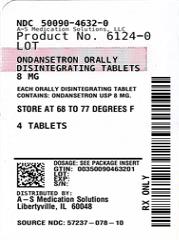
Ondansetron 8 mg Tablet, Orally Disintegrating, 4-count — NDC 50090-4632-0 (Billing 50090-4632-00)
This is a package of 4 tablets of Ondansetron 8 mg Tablet, Orally Disintegrating from A-S Medication Solutions, marketed since Apr 2010 and currently FDA-listed. It is the main listing for this product, which comes in 4 package sizes.
NDC database record
One package, one record: these facts belong to NDC 50090-4632-0 alone.
- Record
- FDA NDC Directory package listing · Human prescription drug
- Code segments
- 50090 labeler · 4632 product · 0 package
- Package marketed since
- Oct 21, 2019
- Sample package
- No — commercial package
- Listing certified through
- Dec 31, 2026
- Billing quantity
- 4 EA per package
- Barcode (UPC-A, from the NDC)
- 3 5009046320 0
- FDA record last changed
- Jul 24, 2026
Other active recalls for Ondansetron (different manufacturers) — 1 · tap to view
Identity & classification
Regulatory identifiers FDA, NLM and CMS codes for this package
Drug-database identifiers Medi-Span GPI and First Databank GCN / HICL / AHFS classification
- GSN (GCN sequence number): 041563
- GCN: 20046
- GPI-14 (Medi-Span): 50250065007240
- HICL (First Databank): 019058
- AHFS class code: 56:22.20.00
- RxCUI (RxNorm): 312087
Where does this data come from?
- FDA openFDA NDC Directory · synced Oct 1, 2026
- FDA label on DailyMed · label index refreshed Oct 5, 2026
- RxNorm (NLM RxNav) · catalog refreshed Oct 1, 2026
- Medi-Span GPI (licensed)
- First Databank (licensed) · refreshed Oct 1, 2026
RxNorm drug class
This medicine belongs to the Serotonin-3 Receptor Antagonist class.
Where does this data come from?
- RxClass (NLM) · catalog refreshed Oct 1, 2026
Clinical
Ondansetron is used to prevent nausea and vomiting caused by cancer chemotherapy, radiation therapy, and surgery. Ondansetron is in a class of medications called serotonin 5-HT3 receptor antagonists. It works by blocking the action of serotonin, a natural substance that may cause nausea and vomiting.
Read the full MedlinePlus article ↗- Not at all. Ondansetron is approved to prevent nausea and vomiting from cancer chemotherapy, radiation therapy to the abdomen or whole body, and surgery. So you might receive it be...
- What exactly is ondansetron used for — is it just for chemo patients?
- The regular tablet is swallowed like any other pill. The orally disintegrating tablet (ODT) is placed on your tongue and allowed to dissolve — don't chew or swallow it whole. For c...
- How do I take the tablet or the dissolving tablet correctly?
Patient education
Supplement & herbal interactions
Some supplements/herbs that may interact with Ondansetron — tap one for details:
Where does this data come from?
- MedlinePlus (NLM) · refreshed Oct 1, 2026
- FDA label on DailyMed · label index refreshed Oct 5, 2026
Ask a licensed pharmacist directly — free, answered by our team.
Pricing
A drug doesn't have one price. Each row is a different public payment system, and none is what you'd pay at the counter — that depends on your insurance. The ⓘ on each row explains what it measures.
| Price system | Per each | Per package |
|---|---|---|
| Retail pharmacies payNADAC · weekly | Not in the retail survey — common for institutional, discontinued, or low-volume packs. | |
| Medicaid paysCMS SDUD · 12 mo | No recent Medicaid claims on file for this NDC — rare and low-volume NDCs are suppressed in the public data. | |
| Medicare drug plans payPart D · Q2 2026 | $0.3970 | $1.59 / 4 tablets |
| Medicare Part B allowsASP · Q0162 | $0.016 / Q0162 unit | — |
Where does this data come from?
- CMS NADAC weekly file
- CMS ASP pricing files · refreshed Sep 20, 2026
- CMS Medicaid State Drug Utilization Data · refreshed Oct 5, 2026
- CMS Part D plan pricing files · refreshed Sep 24, 2026
- VA National Acquisition Center price file
Billing & reimbursement
Where does this data come from?
- CMS ASP NDC-HCPCS crosswalk · refreshed Sep 22, 2026
- DMEPDAC NDC-HCPCS crosswalk
- openFDA NSDE billing units · refreshed Sep 7, 2026
Packaging — all sizes for this product
| Package NDC | Description | Marketing start | Marketing end | Status |
|---|---|---|---|---|
| 50090-4632-00 You're viewing this Main listing | 4 TABLET, ORALLY DISINTEGRATING in 1 BLISTER PACK | 2019-10-21 | — | Active |
| 50090-4632-01 50090-4632-1 | 3 BLISTER PACK in 1 CARTON / 10 TABLET, ORALLY DISINTEGRATING in 1 BLISTER PACK | 2019-10-21 | — | Active |
| 50090-4632-02 50090-4632-2 | 1 BLISTER PACK in 1 CARTON / 10 TABLET, ORALLY DISINTEGRATING in 1 BLISTER PACK | 2019-10-21 | — | Active |
| 50090-4632-03 50090-4632-3 | 2 BLISTER PACK in 1 CARTON / 10 TABLET, ORALLY DISINTEGRATING in 1 BLISTER PACK | 2020-12-11 | — | Active |
Pack size FAQ
What quantity is in this package?
How does this package differ from NDC 50090-4632-02?
What NDC number is used to bill for this package of Ondansetron 8 mg Tablet, Orally Disintegrating?
Therapeutic equivalents
| Product | Labeler | Pack | NADAC/unit | TE | Status | Price vs. this |
|---|---|---|---|---|---|---|
| ondansetron 8 mg 62756-0356-64 | Sun | 10 tablets | $0.168 | AB | Discontinued | — |
| Ondansetron 8 mg 16714-0201-10 | NorthStar | 10 tablets | $0.169 | AB | Availability likely | — |
| Ondansetron 8 mg 57237-0078-10 | Rising | 10 tablets | $0.169 | AB | Availability likely | — |
| Ondansetron 8 mg 62135-0122-30 | Chartwell | 30 tablets | $0.169 | AB | Availability likely | — |
| Ondansetron 8 mg 68001-0247-04 | BluePoint | 30 tablets | $0.169 | AB | Availability likely | — |
| Ondansetron 8 mg 68462-0158-11 | Glenmark | 10 tablets | $0.169 | AB | Availability likely | — |
| Ondansetron 8 mg 42291-0458-30 | AvKARE | 30 tablets | — | AB | FDA listed | — |
| Ondansetron 8 mg 43063-0273-04 | PD-Rx | 4 tablets | — | AB | FDA listed | — |
| Ondansetron 8 mg 43063-0870-02 | PD-Rx | 2 tablets | — | AB | FDA listed | — |
| Ondansetron 8 mg 50090-1128-00 | A-S | 4 tablets | — | AB | FDA listed | — |
| Ondansetron 8 mgthis 50090-4632-00 | A-S | 4 tablets | — | AB | FDA listed | — |
| Ondansetron 8 mg 51655-0196-04 | Northwind | 4 tablets | — | AB | FDA listed | — |
| Ondansetron 8 mg 51655-0809-53 | Northwind | 10 tablets | — | AB | FDA listed | — |
| Ondansetron 8 mg 55154-8339-00 | Cardinal | 1 tablet | — | AB | FDA listed | — |
| Ondansetron 8 mg 60760-0306-10 | St. | 10 tablets | — | AB | FDA listed | — |
| Ondansetron 8 mg 60760-0567-10 | ST. | 10 tablets | — | AB | Discontinued | — |
| Ondansetron 8 mg 60760-0936-10 | St. | 10 tablets | — | AB | FDA listed | — |
| Ondansetron 8 mg 61919-0986-10 | Direct | 10 tablets | — | AB | FDA listed | — |
| Ondansetron 8 mg 63187-0199-10 | Proficient | 10 tablets | — | AB | FDA listed | — |
| Ondansetron 8 mg 63187-0266-10 | Proficient | 10 tablets | — | AB | FDA listed | — |
| Ondansetron 8 mg 63187-0693-10 | Proficient | 10 tablets | — | AB | FDA listed | — |
| Ondansetron 8 mg 63629-4306-00 | Bryant | 3 tablets | — | AB | FDA listed | — |
| Ondansetron 8 mg 65862-0391-01 | Aurobindo | 10 tablets | — | AB | FDA listed | — |
| Ondansetron 8 mg 68071-1730-03 | NuCare | 30 tablets | — | AB | FDA listed | — |
| ondansetron 8 mg 68071-2284-03 | NuCare | 10 tablets | — | AB | FDA listed | — |
| Ondansetron 8 mg 68071-2718-01 | NuCare | 10 tablets | — | AB | FDA listed | — |
| Ondansetron 8 mg 68071-2763-03 | NuCare | 10 tablets | — | AB | FDA listed | — |
| Ondansetron 8 mg 68071-3926-03 | NuCare | 30 tablets | — | AB | FDA listed | — |
| Ondansetron 8 mg 68071-4570-03 | NuCare | 30 tablets | — | AB | FDA listed | — |
| Ondansetron 8 mg 68071-5167-04 | NuCare | 4 tablets | — | AB | FDA listed | — |
| ondansetron 8 mg 68071-5230-01 | NuCare | 10 tablets | — | AB | FDA listed | — |
| Ondansetron 8 mg 68788-4133-01 | Preferred | 10 tablets | — | AB | FDA listed | — |
| Ondansetron 8 mg 68788-7565-01 | Preferred | 10 tablets | — | AB | FDA listed | — |
| Ondansetron 8 mg 68788-9559-01 | Preferred | 10 tablets | — | AB | FDA listed | — |
| Ondansetron 8 mg 70518-1551-00 | REMEDYREPACK | 6 tablets | — | AB | FDA listed | — |
| Ondansetron 8 mg 71205-0713-10 | Proficient | 10 tablets | — | AB | FDA listed | — |
| Ondansetron 8 mg 71335-1071-00 | Bryant | 3 tablets | — | AB | Discontinued | — |
| Ondansetron 8 mg 71335-1731-00 | Bryant | 3 tablets | — | AB | FDA listed | — |
| Ondansetron 8 mg 71335-2635-00 | Bryant | 3 tablets | — | AB | FDA listed | — |
| Ondansetron 8 mg 71335-2973-01 | Bryant | 90 tablets | — | AB | FDA listed | — |
| Ondansetron 8 mg 71335-2974-00 | Bryant | 14 tablets | — | AB | FDA listed | — |
| Ondansetron 8 mg 71335-3073-01 | Bryant | 30 tablets | — | AB | FDA listed | — |
| Ondansetron 8 mg 76420-0251-04 | Asclemed | 4 tablets | — | AB | FDA listed | — |
| Ondansetron 8 mg 80425-0222-01 | Advanced | 30 tablets | — | AB | FDA listed | — |
| Ondansetron 8 mg 80425-0227-01 | Advanced | 10 tablets | — | AB | FDA listed | — |
| Ondansetron 8 mg 83980-0013-01 | Ipca | 100 tablets | — | AB | FDA listed | — |
| Ondansetron 8 mg 85766-0038-04 | Sportpharm | 4 tablets | — | AB | FDA listed | — |
| Ondansetron 8 mg 70518-4685-00 | REMEDYREPACK | 6 tablets | — | AB | FDA listed | — |
| Ondansetron 8 mg 85534-0063-00 | HAWAII | 10 tablets | — | AB | FDA listed | — |
Where does this data come from?
- FDA openFDA NDC Directory · synced Oct 1, 2026
- FDA Orange Book · refreshed Oct 3, 2026
- CMS NADAC weekly file
Availability & generic status
This product is an FDA-approved generic. Other versions of the same drug are listed under Therapeutic equivalents, least expensive first.
Where does this data come from?
- FDA Orange Book · refreshed Oct 3, 2026
What it looks like
Where does this data come from?
- FDA label on DailyMed · label index refreshed Oct 5, 2026
Inactive Ingredients / Excipients
Inactive ingredients, also called excipients, are components of the drug product other than the active ingredient. They may include fillers, dyes, coatings, preservatives, flavors, or other formulation ingredients.
🧪 Avoiding an ingredient? See Ondansetron inactive ingredients by manufacturer: every current product's list side by side, so you can ask your pharmacy for the version that does not list it.
💡 Tap an ingredient (hover on desktop) to see what it is and why it’s used.
-
UNII Z0H242BBR1
Aspartame is an artificial sweetener made from amino acids. It's added to medicines to improve taste, making bitter or unpleasant-tasting drugs easier to take.
-
UNII 68401960MK
Crospovidone is a synthetic polymer made from polyvinylpyrrolidone. It acts as a disintegrant, helping tablets break apart quickly in the stomach so the medicine dissolves and absorbs into the body.
-
UNII EWQ57Q8I5X
Lactose monohydrate is a natural sugar derived from milk. It serves as a filler and binder in tablets and capsules, helping create the proper size, texture, and consistency of the medicine.
-
UNII 70097M6I30
Magnesium stearate is a salt made from magnesium and stearic acid, a fatty substance. It's used in tablets and capsules as a lubricant and glidant to help ingredients flow smoothly during manufacturing and prevent sticking.
-
UNII 3OWL53L36A
A natural sugar alcohol derived from seaweed or synthesized in the lab. It's used as a filler to add bulk, a sweetener in sugar-free formulas, and a disintegrant to help tablets break apart in the stomach.
-
UNII OP1R32D61U
Microcrystalline cellulose is a purified form of cellulose, a natural fiber from plant sources. It acts as a binder and filler in tablets and capsules, helping hold ingredients together and give the medicine its shape and size.
-
UNII ETJ7Z6XBU4
Silicon dioxide is a naturally occurring mineral used as a glidant and anti-caking agent. It helps powder ingredients flow smoothly and prevents clumping during manufacturing and storage.
7 inactive ingredients listed in the exact product block matched to this NDC.
Where does this data come from?
ingredient classCode="IACT" elements from the exact product block matched by this NDC. Label-section narrative from DailyMed / the openFDA label index is shown separately when available.- FDA label on DailyMed · label index refreshed Oct 5, 2026
- FDA openFDA NDC Directory · synced Oct 1, 2026
Inactive ingredient FAQ
Are inactive ingredients the same for every manufacturer?
Why might an inactive ingredient be missing?
Can inactive ingredients matter?
Manufacturer & labeler
More NDCs from A-S Medication Solutions labeler code 50090
- Acetaminophen and Codeine Phosphate 300 mg; 30 mg Tablet NDC 50090-4610-0
- Acetaminophen and Codeine Phosphate 300 mg; 30 mg Tablet NDC 50090-4611-1
- Oseltamivir Phosphate 6 mg/mL Powder, For Suspension NDC 50090-4613-0
- Topiramate 25 mg Tablet NDC 50090-4614-0
- Oxybutynin Chloride 5 mg Tablet NDC 50090-4622-0
- Sudafed Sinus Congestion 12 Hour Pseudoephedrine Hydrochloride 120 mg Tablet, Film Coated, Extended Release NDC 50090-4629-0
- Naproxen 375 mg Tablet NDC 50090-4636-0
- Naproxen 375 mg Tablet NDC 50090-4637-1
- Naproxen 375 mg Tablet NDC 50090-4638-0
- Losartan Potassium 25 mg Tablet, Film Coated NDC 50090-4645-0
- Finasteride 1 mg Tablet, Coated NDC 50090-4648-0
- Penicillin V Potassium 500 mg Tablet, Film Coated NDC 50090-4651-0
Where does this data come from?
- FDA openFDA NDC Directory · synced Oct 1, 2026
- Drugs@FDA
Full prescribing information FDA SPL
🎯 Indications and Usage ▾
1 INDICATIONS AND USAGE Ondansetron orally disintegrating tablets are indicated for the prevention of nausea and vomiting associated with: highly emetogenic cancer chemotherapy, including cisplatin greater than or equal to 50 mg/m 2 initial and repeat courses of moderately emetogenic cancer chemotherapy radiotherapy in patients receiving either total body irradiation, single high-dose fraction to the abdomen, or daily fractions to the abdomen Ondansetron orally disintegrating tablets also indicated for the prevention of postoperative nausea and/or vomiting.
Ondansetron orally disintegrating tablets are a 5-HT 3 receptor antagonist indicated for the prevention of: nausea and vomiting associated with highly emetogenic cancer chemotherapy, including cisplatin greater than or equal to 50 mg/m 2 . (1) nausea and vomiting associated with initial and repeat courses of moderately emetogenic cancer chemotherapy. (1) nausea and vomiting associated with radiotherapy in patients receiving either total body irradiation, single high-dose fraction to the abdomen, or daily fractions to the abdomen.
(1) postoperative nausea and/or vomiting. (1)
⏱️ Dosage and Administration ▾
2 DOSAGE AND ADMINISTRATION See full prescribing information for the recommended dosage in adults and pediatrics. (2) Patients with severe hepatic impairment: do not exceed a total daily dose of 8 mg. ( 2.2 , 8.6 )
2.1Dosage The recommended dosage regimens for adult and pediatric patients are described in Table 1 and Table 2, respectively. Corresponding doses of ondansetron tablets, ondansetron orally disintegrating tablets and ondansetron oral solution may be used interchangeably. Table 1: Adult Recommended Dosage Regimen for Prevention of Nausea and Vomiting Indication Dosage Regimen Highly Emetogenic Cancer Chemotherapy A single 24 mg dose administered 30 minutes before the start of single-day highly emetogenic chemotherapy, including cisplatin greater than or equal to 50 mg/m 2 .
Moderately Emetogenic Cancer Chemotherapy 8 mg administered 30 minutes before the start of chemotherapy, with a subsequent 8 mg dose 8 hours after the first dose. Then administer 8 mg twice a day (every 12 hours) for 1 to 2 days after completion of chemotherapy. Radiotherapy For total body irradiation: 8 mg administered 1 to 2 hours before each fraction of radiotherapy each day.
For single high-dose fraction radiotherapy to the abdomen: 8 mg administered 1 to 2 hours before radiotherapy, with subsequent 8 mg doses every 8 hours after the first dose for 1 to 2 days after completion of radiotherapy. For daily fractionated radiotherapy to the abdomen: 8 mg administered 1 to 2 hours before radiotherapy, with subsequent 8 mg doses every 8 hours after the first dose for each day radiotherapy is given. Postoperative 16 mg administered 1 hour before induction of anesthesia.
Table 2: Pediatric Recommended Dosage Regimen for Prevention of Nausea and Vomiting Indication Dosage Regimen Moderately Emetogenic Cancer Chemotherapy 12 to 17 years of age: 8 mg administered 30 minutes before the start of chemotherapy, with a subsequent 8 mg dose 8 hours after the first dose. Then administer 8 mg twice a day (every 12 hours) for 1 to 2 days after completion of chemotherapy. 4 to 11 years of age: 4 mg administered 30 minutes before the start of chemotherapy, with a subsequent 4 mg dose 4 and 8 hours after the first dose.
Then administer 4 mg three times a day for 1 to 2 days after completion of chemotherapy.
2.2Dosage in Hepatic Impairment In patients with severe hepatic impairment (Child-Pugh score of 10 or greater), do not exceed a total daily dose of 8 mg [see Use in Specific Populations (8.6) , Clinical Pharmacology (12.3) ] .
2.3Administration Instructions for Ondansetron Orally Disintegrating Tablets Do not attempt to push ondansetron orally disintegrating tablets through the foil backing. With dry hands, remove the tablet from the bottle or PEEL BACK the foil backing of 1 blister and GENTLY remove the tablet. IMMEDIATELY place the ondansetron orally disintegrating tablet on top of the tongue where it will dissolve in seconds, then swallow with saliva.
Administration with liquid is not necessary.
💊 Dosage Forms and Strengths ▾
3 DOSAGE FORMS AND STRENGTHS Ondansetron Orally Disintegrating Tablets USP, 4 mg are white to off-white, round tablets debossed with ‘5’ on one side and ‘E’ on the other side with an embossed circular edge. Ondansetron Orally Disintegrating Tablets USP, 8 mg are white to off-white, round tablets debossed with ‘7’ on one side and ‘E’ on the other side with an embossed circular edge. Orally Disintegrating Tablets: 4 mg and 8 mg. ( 3 )
⛔ Contraindications ▾
4 CONTRAINDICATIONS Ondansetron orally disintegrating tablets are contraindicated in patients: known to have hypersensitivity (e.g., anaphylaxis) to ondansetron or any of the components of the formulation [see Adverse Reactions (6.2) ] receiving concomitant apomorphine due to the risk of profound hypotension and loss of consciousness Patients known to have hypersensitivity (e.g., anaphylaxis) to ondansetron or any components of the formulation. ( 4 ) Concomitant use of apomorphine. ( 4 )
⚠️ Warnings and Cautions ▾
5 WARNINGS AND PRECAUTIONS Hypersensitivity Reactions, Including Anaphylaxis and Bronchospasm : Discontinue ondansetron if suspected. Monitor and treat promptly per standard of care until signs and symptoms resolve. ( 5.1 ) QT Interval Prolongation and Torsade de Pointes : Avoid ondansetron in patients with congenital long QT syndrome; monitor with electrocardiograms (ECGs) if concomitant electrolyte abnormalities, cardiac failure or arrhythmias, or use of other QT prolonging drugs.
( 5.2 ) Serotonin Syndrome : Reported with 5-HT 3 receptor antagonists alone but particularly with concomitant use of serotonergic drugs. If such symptoms occur, discontinue ondansetron and initiate supportive treatment. If concomitant use of ondansetron with other serotonergic drugs is clinically warranted, patients should be made aware of a potential increased risk for serotonin syndrome.
( 5.3 ) Myocardial Ischemia : Monitor or advise patients for signs and symptoms of myocardial ischemia after oral administration. ( 5.4 ) Masking of Progressive Ileus and/or Gastric Distension Following Abdominal Surgery or Chemotherapy-Induced Nausea and Vomiting : Monitor for decreased bowel activity, particularly in patients with risk factors for gastrointestinal obstruction. ( 5.5 ) Phenylketonuria: Patients should be informed that ondansetron orally disintegrating tablets contain phenylalanine (a component of aspartame).
Each 4 mg orally disintegrating tablet contains 1.68 mg phenylalanine and 8 mg orally disintegrating tablet contains 3.37 mg phenylalanine. ( 5.6 )
5.1Hypersensitivity Reactions Hypersensitivity reactions, including anaphylaxis and bronchospasm, have been reported in patients who have exhibited hypersensitivity to other selective 5-HT 3 receptor antagonists. If hypersensitivity reactions occur, discontinue use of ondansetron; treat promptly per standard of care and monitor until signs and symptoms resolve [see Contraindications (4) ] .
5.2QT Prolongation Electrocardiogram (ECG) changes, including QT interval prolongation have been seen in patients receiving ondansetron. In addition, postmarketing cases of Torsade de Pointes have been reported in patients using ondansetron. Avoid ondansetron in patients with congenital long QT syndrome.
ECG monitoring is recommended in patients with electrolyte abnormalities (e.g., hypokalemia or hypomagnesemia), congestive heart failure, bradyarrhythmias, or patients taking other medicinal products that lead to QT prolongation [see Clinical Pharmacology (12.2) ] .
5.3Serotonin Syndrome The development of serotonin syndrome has been reported with 5-HT 3 receptor antagonists alone. Most reports have been associated with concomitant use of serotonergic drugs (e.g., selective serotonin reuptake inhibitors (SSRIs), serotonin and norepinephrine reuptake inhibitors (SNRIs), monoamine oxidase inhibitors, mirtazapine, fentanyl, lithium, tramadol, and intravenous methylene blue). Some of the reported cases were fatal.
Serotonin syndrome occurring with overdose of ondansetron alone has also been reported. The majority of reports of serotonin syndrome related to 5-HT 3 receptor antagonist use occurred in a post-anesthesia care unit or an infusion center. Symptoms associated with serotonin syndrome may include the following combination of signs and symptoms: mental status changes (e.g., agitation, hallucinations, delirium, and coma), autonomic instability (e.g., tachycardia, labile blood pressure, dizziness, diaphoresis, flushing, hyperthermia), neuromuscular symptoms (e.g., tremor, rigidity, myoclonus, hyperreflexia, incoordination), seizures, with or without gastrointestinal symptoms (e.g., nausea, vomiting, diarrhea).
Patients should be monitored for the emergence of serotonin syndrome, especially with concomitant use of ondansetron and other serotonergic drugs. If symptoms of serotonin syndrome occur, discontinue ondansetron and initiate supportive treatment. Patients should be informed of the increased risk of s… [Excerpted — this section continues on DailyMed.]
🤒 Adverse Reactions ▾
6 ADVERSE REACTIONS The following clinically significant adverse reactions are described elsewhere in the labeling: Hypersensitivity Reactions [see Warnings and Precautions (5.1) ] QT Prolongation [see Warnings and Precautions (5.2) ] Serotonin Syndrome [see Warnings and Precautions (5.3) ] Myocardial Ischemia [see Warnings and Precautions (5.4) ] Masking of Progressive Ileus and Gastric Distension [see Warnings and Precautions (5.5) ] The most common adverse reactions in adults for the: prevention of chemotherapy-induced (≥ 5%) are: headache, malaise/fatigue, constipation, diarrhea.
( 6.1 ) prevention of radiation-induced nausea and vomiting (≥ 2%) are: headache, constipation, and diarrhea. ( 6.1 ) prevention of postoperative nausea and vomiting (≥ 9%) are: headache and hypoxia. ( 6.1 ) To report SUSPECTED ADVERSE REACTIONS, contact Rising Health, LLC at 1-833-395-6928 or FDA at 1-800-FDA-1088 or www.fda.gov/medwatch.
6.1Clinical Trials Experience Because clinical trials are conducted under widely varying conditions, adverse reaction rates observed in the clinical trials of a drug cannot be directly compared with rates in the clinical trials of another drug and may not reflect the rates observed in practice. The following adverse reactions have been reported in clinical trials of patients treated with ondansetron, the active ingredient of ondansetron orally disintegrating tablets. A causal relationship to therapy with ondansetron was unclear in many cases.
Prevention of Chemotherapy-Induced Nausea and Vomiting The most common adverse reactions reported in greater than or equal to 4% of 300 adults receiving a single 24 mg dose of ondansetron orally in 2 trials for the prevention of nausea and vomiting associated with highly emetogenic chemotherapy (cisplatin greater than or equal to 50 mg/m 2 ) were: headache (11%) and diarrhea (4%). The most common adverse reactions reported in 4 trials in adults for the prevention of nausea and vomiting associated with moderately emetogenic chemotherapy (primarily cyclophosphamide-based regimens) are shown in Table 3.
Table 3: Most Common Adverse Reactions in Adults a for the Prevention of Nausea and Vomiting Associated With Moderately Emetogenic Chemotherapy [Primarily Cyclophosphamide-based Regimens] a Reported in greater than or equal to 5% of patients treated with ondansetron orally disintegrating tablets and at a rate that exceeded placebo. Adverse Reaction Ondansetron Orally Disintegrating Tablets 8 mg Twice Daily (n = 242) Placebo (n = 262) Headache 58 (24%) 34 (13%) Malaise/Fatigue 32 (13%) 6 (2%) Constipation 22 (9%) 1 (< 1%) Diarrhea 15 (6%) 10 (4%) Less Common Adverse Reactions Central Nervous System: Extrapyramidal reactions (less than 1% of patients).
Hepatic: Aspartate transaminase (AST) and/or alanine transaminase (ALT) values exceeded twice the upper limit of normal in approximately 1% to 2% of 723 patients receiving ondansetron and cyclophosphamide-based chemotherapy in U.S. clinical trials. The increases were transient and did not appear to be related to dose or duration of therapy. On repeat exposure, similar transient elevations in transaminase values occurred in some courses, but symptomatic hepatic disease did not occur.
The role of cancer chemotherapy in these biochemical changes is unclear. Liver failure and death has been reported in cancer patients receiving concurrent medications, including potentially hepatotoxic cytotoxic chemotherapy and antibiotics. The etiology of the liver failure is unclear.
Integumentary: Rash (approximately 1% of patients). Other (less than 2%): Anaphylaxis, bronchospasm, tachycardia, angina, hypokalemia, electrocardiographic alterations, vascular occlusive events, and grand mal seizures. Except for bronchospasm and anaphylaxis, the relationship to ondansetron is unclear.
Prevention of Radiation-Induced Nausea and Vomiting The most common adverse reactions (greater than or equal to 2%) reported in patients receiving ondansetron and concur… [Excerpted — this section continues on DailyMed.]
🔄 Drug Interactions ▾
7 DRUG INTERACTIONS
7.1Serotonergic Drugs Serotonin syndrome (including altered mental status, autonomic instability, and neuromuscular symptoms) has been described following the concomitant use of 5-HT 3 receptor antagonists and other serotonergic drugs, including SSRIs and SNRIs. Monitor for the emergence of serotonin syndrome. If symptoms occur, discontinue ondansetron and initiate supportive treatment [see Warnings and Precautions (5.3) ] .
7.2Drugs Affecting Cytochrome P-450 Enzymes Ondansetron does not itself appear to induce or inhibit the cytochrome P-450 drug-metabolizing enzyme system of the liver [see Clinical Pharmacology (12.3) ] . Because ondansetron is metabolized by hepatic cytochrome P-450 drug-metabolizing enzymes (CYP3A4, CYP2D6, CYP1A2), inducers or inhibitors of these enzymes may change the clearance and, hence, the half-life of ondansetron. In patients treated with potent inducers of CYP3A4 (i.e., phenytoin, carbamazepine, and rifampin), the clearance of ondansetron was significantly increased and ondansetron blood concentrations were decreased.
However, on the basis of available data, no dosage adjustment for ondansetron is recommended for patients on these drugs [see Clinical Pharmacology (12.3) ] .
7.3Tramadol Although no pharmacokinetic drug interaction between ondansetron and tramadol has been observed, data from 2 small trials indicate that when used together, ondansetron may increase patient-controlled administration of tramadol. Monitor patients to ensure adequate pain control when ondansetron is administered with tramadol.
7.4Chemotherapy Carmustine, etoposide, and cisplatin do not affect the pharmacokinetics of ondansetron. In a crossover trial in 76 pediatric patients, intravenous ondansetron did not increase systemic concentrations of high-dose methotrexate.
7.5Alfentanil and Atracurium Ondansetron does not alter the respiratory depressant effects produced by alfentanil or the degree of neuromuscular blockade produced by atracurium. Interactions with general or local anesthetics have not been studied.
👥 Use in Specific Populations ▾
8 USE IN SPECIFIC POPULATIONS
8.1Pregnancy Risk Summary Published epidemiological studies on the association between ondansetron use and major birth defects have reported inconsistent findings and have important methodological limitations that preclude conclusions about the safety of ondansetron use in pregnancy (see Data) . Available postmarketing data have not identified a drug-associated risk of miscarriage or adverse maternal outcomes. Reproductive studies in rats and rabbits did not show evidence of harm to the fetus when ondansetron was administered during organogenesis at approximately 6 and 24 times the maximum recommended human oral dose of 24 mg/day, based on body surface area (BSA), respectively (see Data) .
The background risk of major birth defects and miscarriage for the indicated population is unknown. All pregnancies have a background risk of birth defect, miscarriages, or other adverse outcomes. In the U.S. general population, the estimated background risk of major birth defects and miscarriages in clinically recognized pregnancies is 2% to 4% and 15% to 20%, respectively.
Data Human Data Available data on ondansetron use in pregnant women from several published epidemiological studies preclude an assessment of a drug-associated risk of adverse fetal outcomes due to important methodological limitations, including the uncertainty of whether women who filled a prescription actually took the medication, the concomitant use of other medications or treatments, recall bias, and other unadjusted confounders. Ondansetron exposure in utero has not been associated with overall major congenital malformations in aggregate analyses.
One large retrospective cohort study examined 1970 women who received a prescription for ondansetron during pregnancy and reported no association between ondansetron exposure and major congenital malformations, miscarriage, stillbirth, preterm delivery, infants of low birth weight, or infants small for gestational age. Two large retrospective cohort studies and one case-control study have assessed ondansetron exposure in the first trimester and risk of cardiovascular defects with inconsistent findings. Relative risks (RR) ranged from 0.97 (95% CI 0.86 to 1.10) to 1.62 (95% CI 1.04, 2.54).
A subset analysis in one of the cohort studies observed that ondansetron was specifically associated with cardiac septal defects (RR 2.05, 95% CI 1.19, 3.28); however, this association was not confirmed in other studies. Several studies have assessed ondansetron and the risk of oral clefts with inconsistent findings. A retrospective cohort study of 1.8 million pregnancies in the U.S.
Medicaid Database showed an increased risk of oral clefts among 88,467 pregnancies in which oral ondansetron was prescribed in the first trimester (RR 1.24, 95% CI 1.03, 1.48), but no such association was reported with intravenous ondansetron in 23,866 pregnancies (RR 0.95, 95% CI 0.63, 1.43). In the subgroup of women who received both forms of administration, the RR was 1.07 (95% CI 0.59, 1.93). Two case-control studies, using data from birth defects surveillance programs, reported conflicting associations between maternal use of ondansetron and isolated cleft palate (OR 1.6 [95% CI 1.1, 2.3] and 0.5 [95% CI 0.3, 1.0]).
It is unknown whether ondansetron exposure in utero in the cases of cleft palate occurred during the time of palate formation (the palate is formed between the 6th and 9th weeks of pregnancy). Animal Data In embryo-fetal development studies in rats and rabbits, pregnant animals received oral doses of ondansetron up to 15 mg/kg/day and 30 mg/kg/day, respectively, during the period of organogenesis. With the exception of a slight decrease in maternal body weight gain in the rabbits, there were no significant effects of ondansetron on the maternal animals or the development of the offspring.
At doses of 15 mg/kg/day in rats and 30 mg/kg/day in rabbits, the maternal exposure margin was approximately 6 and 24 times th… [Excerpted — this section continues on DailyMed.]
🤰 Pregnancy ▾
8.1Pregnancy Risk Summary Published epidemiological studies on the association between ondansetron use and major birth defects have reported inconsistent findings and have important methodological limitations that preclude conclusions about the safety of ondansetron use in pregnancy (see Data) . Available postmarketing data have not identified a drug-associated risk of miscarriage or adverse maternal outcomes. Reproductive studies in rats and rabbits did not show evidence of harm to the fetus when ondansetron was administered during organogenesis at approximately 6 and 24 times the maximum recommended human oral dose of 24 mg/day, based on body surface area (BSA), respectively (see Data) .
The background risk of major birth defects and miscarriage for the indicated population is unknown. All pregnancies have a background risk of birth defect, miscarriages, or other adverse outcomes. In the U.S. general population, the estimated background risk of major birth defects and miscarriages in clinically recognized pregnancies is 2% to 4% and 15% to 20%, respectively.
Data Human Data Available data on ondansetron use in pregnant women from several published epidemiological studies preclude an assessment of a drug-associated risk of adverse fetal outcomes due to important methodological limitations, including the uncertainty of whether women who filled a prescription actually took the medication, the concomitant use of other medications or treatments, recall bias, and other unadjusted confounders. Ondansetron exposure in utero has not been associated with overall major congenital malformations in aggregate analyses.
One large retrospective cohort study examined 1970 women who received a prescription for ondansetron during pregnancy and reported no association between ondansetron exposure and major congenital malformations, miscarriage, stillbirth, preterm delivery, infants of low birth weight, or infants small for gestational age. Two large retrospective cohort studies and one case-control study have assessed ondansetron exposure in the first trimester and risk of cardiovascular defects with inconsistent findings. Relative risks (RR) ranged from 0.97 (95% CI 0.86 to 1.10) to 1.62 (95% CI 1.04, 2.54).
A subset analysis in one of the cohort studies observed that ondansetron was specifically associated with cardiac septal defects (RR 2.05, 95% CI 1.19, 3.28); however, this association was not confirmed in other studies. Several studies have assessed ondansetron and the risk of oral clefts with inconsistent findings. A retrospective cohort study of 1.8 million pregnancies in the U.S.
Medicaid Database showed an increased risk of oral clefts among 88,467 pregnancies in which oral ondansetron was prescribed in the first trimester (RR 1.24, 95% CI 1.03, 1.48), but no such association was reported with intravenous ondansetron in 23,866 pregnancies (RR 0.95, 95% CI 0.63, 1.43). In the subgroup of women who received both forms of administration, the RR was 1.07 (95% CI 0.59, 1.93). Two case-control studies, using data from birth defects surveillance programs, reported conflicting associations between maternal use of ondansetron and isolated cleft palate (OR 1.6 [95% CI 1.1, 2.3] and 0.5 [95% CI 0.3, 1.0]).
It is unknown whether ondansetron exposure in utero in the cases of cleft palate occurred during the time of palate formation (the palate is formed between the 6th and 9th weeks of pregnancy). Animal Data In embryo-fetal development studies in rats and rabbits, pregnant animals received oral doses of ondansetron up to 15 mg/kg/day and 30 mg/kg/day, respectively, during the period of organogenesis. With the exception of a slight decrease in maternal body weight gain in the rabbits, there were no significant effects of ondansetron on the maternal animals or the development of the offspring.
At doses of 15 mg/kg/day in rats and 30 mg/kg/day in rabbits, the maternal exposure margin was approximately 6 and 24 times the maximum recommended human or… [Excerpted — this section continues on DailyMed.]
🧒 Pediatric Use ▾
8.4Pediatric Use The safety and effectiveness of orally administered ondansetron have been established in pediatric patients 4 years and older for the prevention of nausea and vomiting associated with moderately emetogenic cancer chemotherapy. Use of ondansetron in these age-groups is supported by evidence from adequate and well- controlled studies of ondansetron in adults with additional data from 3 open-label, uncontrolled, non-U.S. trials in 182 pediatric patients aged 4 to 18 years with cancer who were given a variety of cisplatin or noncisplatin regimens [see Dosage and Administration (2.2) , Clinical Studies (14.1) ] .
Additional information on the use of ondansetron in pediatric patients may be found in ondansetron Injection prescribing information. The safety and effectiveness of orally administered ondansetron have not been established in pediatric patients for: prevention of nausea and vomiting associated with highly emetogenic cancer chemotherapy prevention of nausea and vomiting associated with radiotherapy prevention of postoperative nausea and/or vomiting
🧓 Geriatric Use ▾
8.5Geriatric Use Of the total number of subjects enrolled in cancer chemotherapy-induced and postoperative nausea and vomiting in U.S.- and foreign-controlled clinical trials, for which there were subgroup analyses, 938 (19%) were aged 65 years and older. No overall differences in safety or effectiveness were observed between subjects 65 years of age and older and younger subjects. A reduction in clearance and increase in elimination half-life were seen in patients older than 75 years compared with younger subjects [see Clinical Pharmacology (12.3) ] .
There were an insufficient number of patients older than 75 years of age and older in the clinical trials to permit safety or efficacy conclusions in this age group. Other reported clinical experience has not identified differences in responses between the elderly and younger patients, but greater sensitivity of some older individuals cannot be ruled out. No dosage adjustment is needed in elderly patients.
🆘 Overdosage ▾
10 OVERDOSAGE There is no specific antidote for ondansetron overdose. Patients should be managed with appropriate supportive therapy. In addition to the adverse reactions listed above, the following adverse reactions have been described in the setting of ondansetron overdose: “Sudden blindness” (amaurosis) of 2 to 3 minutes’ duration plus severe constipation occurred in one patient that was administered 72 mg of ondansetron intravenously as a single dose.
Hypotension (and faintness) occurred in a patient that took 48 mg of ondansetron tablets. Following infusion of 32 mg over only a 4-minute period, a vasovagal episode with transient second-degree heart block was observed. In all instances, the adverse reactions resolved completely.
Pediatric cases consistent with serotonin syndrome have been reported after inadvertent oral overdoses of ondansetron (exceeding estimated ingestion of 5 mg per kg) in young children. Reported symptoms included somnolence, agitation, tachycardia, tachypnea, hypertension, flushing, mydriasis, diaphoresis, myoclonic movements, horizontal nystagmus, hyperreflexia, and seizure. Patients required supportive care, including intubation in some cases, with complete recovery without sequelae within 1 to 2 days.
🧬 Clinical Pharmacology ▾
12 CLINICAL PHARMACOLOGY
12.1Mechanism of Action Ondansetron is a selective 5-HT 3 receptor antagonist. While its mechanism of action has not been fully characterized, ondansetron is not a dopamine-receptor antagonist. Serotonin receptors of the 5-HT 3 type are present both peripherally on vagal nerve terminals and centrally in the chemoreceptor trigger zone of the area postrema.
It is not certain whether ondansetron’s antiemetic action is mediated centrally, peripherally, or in both sites. However, cytotoxic chemotherapy appears to be associated with release of serotonin from the enterochromaffin cells of the small intestine. In humans, urinary 5-hydroxyindoleacetic acid (5-HIAA) excretion increases after cisplatin administration in parallel with the onset of emesis.
The released serotonin may stimulate the vagal afferents through the 5-HT 3 receptors and initiate the vomiting reflex.
12.2Pharmacodynamics In healthy subjects, single intravenous doses of 0.15 mg/kg of ondansetron had no effect on esophageal motility, gastric motility, lower esophageal sphincter pressure, or small intestinal transit time. Multiday administration of ondansetron has been shown to slow colonic transit in healthy subjects. Ondansetron has no effect on plasma-prolactin concentrations.
Cardiac Electrophysiology QTc interval prolongation was studied in a double-blind, single-intravenous dose, placebo- and positive- controlled, crossover trial in 58 healthy subjects. The maximum mean (95% upper confidence bound) difference in QTcF from placebo after baseline correction was 19.5 (21.8) milliseconds and 5.6 (7.4) milliseconds after 15-minute intravenous infusions of 32 mg and 8 mg of ondansetron injection, respectively. A significant exposure- response relationship was identified between ondansetron concentration and ΔΔQTcF.
Using the established exposure-response relationship, 24 mg infused intravenously over 15 minutes had a mean predicted (95% upper prediction interval) ΔΔQTcF of 14.0 (16.3) milliseconds. In contrast, 16 mg infused intravenously over 15 minutes using the same model had a mean predicted (95% upper prediction interval) ΔΔQTcF of 9.1 (11.2) milliseconds. In this study, the 8 mg dose infused over 15 minutes did not prolong the QT interval to any clinically relevant extent.
12.3Pharmacokinetics Absorption Ondansetron is absorbed from the gastrointestinal tract and undergoes some first-pass metabolism. Mean bioavailability in healthy subjects, following administration of a single 8 mg tablet, is approximately 56%. Ondansetron systemic exposure does not increase proportionately to dose.
The area under curve (AUC) from a 16 mg tablet was 24% greater than predicted from an 8 mg tablet dose. This may reflect some reduction of first-pass metabolism at higher oral doses. Food Effects: Bioavailability is also slightly enhanced by the presence of food.
Distribution Plasma protein binding of ondansetron as measured in vitro was 70% to 76% over the concentration range of 10 to 500 ng/mL. Circulating drug also distributes into erythrocytes. Elimination Metabolism and Excretion: Ondansetron is extensively metabolized in humans, with approximately 5% of a radiolabeled dose recovered as the parent compound from the urine.
The metabolites are observed in the urine. The primary metabolic pathway is hydroxylation on the indole ring followed by subsequent glucuronide or sulfate conjugation. In vitro metabolism studies have shown that ondansetron is a substrate for human hepatic cytochrome P-450 enzymes, including CYP1A2, CYP2D6, and CYP3A4.
In terms of overall ondansetron turnover, CYP3A4 played the predominant role. Because of the multiplicity of metabolic enzymes capable of metabolizing ondansetron, it is likely that inhibition or loss of one enzyme (e.g., CYP2D6 genetic deficiency) will be compensated by others and may result in little change in overall rates of ondansetron elimination. Although some nonconjugated metabolites have pharmacologic activi… [Excerpted — this section continues on DailyMed.]
🧬 Mechanism of Action ▾
12.1Mechanism of Action Ondansetron is a selective 5-HT 3 receptor antagonist. While its mechanism of action has not been fully characterized, ondansetron is not a dopamine-receptor antagonist. Serotonin receptors of the 5-HT 3 type are present both peripherally on vagal nerve terminals and centrally in the chemoreceptor trigger zone of the area postrema.
It is not certain whether ondansetron’s antiemetic action is mediated centrally, peripherally, or in both sites. However, cytotoxic chemotherapy appears to be associated with release of serotonin from the enterochromaffin cells of the small intestine. In humans, urinary 5-hydroxyindoleacetic acid (5-HIAA) excretion increases after cisplatin administration in parallel with the onset of emesis.
The released serotonin may stimulate the vagal afferents through the 5-HT 3 receptors and initiate the vomiting reflex.
📦 How Supplied / Storage and Handling ▾
16 HOW SUPPLIED/STORAGE AND HANDLING Product: 50090-4632 NDC: 50090-4632-0 4 TABLET, ORALLY DISINTEGRATING in a BLISTER PACK NDC: 50090-4632-1 10 TABLET, ORALLY DISINTEGRATING in a BLISTER PACK / 3 in a CARTON NDC: 50090-4632-2 10 TABLET, ORALLY DISINTEGRATING in a BLISTER PACK / 1 in a CARTON NDC: 50090-4632-3 10 TABLET, ORALLY DISINTEGRATING in a BLISTER PACK / 2 in a CARTON
📦 Storage and Handling ▾
Storage Store at 20° to 25°C (68° to 77°F); excursions permitted to 15° to 30°C (59° to 86°F) [see USP Controlled Room Temperature]. Dispense in a tight, light-resistant container as defined in the USP.
📋 Description ▾
11 DESCRIPTION The active ingredient in ondansetron orally disintegrating tablets, USP is ondansetron base, the racemic form of ondansetron and a selective blocking agent of the serotonin 5-HT 3 receptor type. Chemically it is (±) 1, 2, 3, 9-tetrahydro-9-methyl-3-[(2-methyl-1H-imidazol-1-yl)methyl]-4H-carbazol-4-one. It has the following structural formula: The molecular formula is C 18 H 19 N 3 O representing a molecular weight of 293.4 g/mol.
Ondansetron is a white to off-white powder. Each 4 mg ondansetron orally disintegrating tablet, USP for oral administration contains 4 mg ondansetron base. Each 8 mg ondansetron orally disintegrating tablet, USP for oral administration contains 8 mg ondansetron base.
Each ondansetron orally disintegrating tablet, USP also contains the inactive ingredients mannitol, crospovidone, lactose monohydrate, microcrystalline cellulose, aspartame, strawberry guarana flavor, colloidal silicon dioxide, and magnesium stearate. The strawberry guarana flavor contains maltodextrin, propylene glycol, artificial flavors, and acetic acid. Ondansetron orally disintegrating tablets, USP are orally administered formulation of ondansetron which disintegrates on the tongue and does not require water to aid dissolution or swallowing.
Meets USP Disintegration Test 2. Chemical Structure
💬 Information for Patients ▾
17 PATIENT COUNSELING INFORMATION Hypersensitivity Reactions Inform patients that ondansetron may cause hypersensitivity reactions, some as severe as anaphylaxis and bronchospasm. Instruct patients to immediately report any signs and symptoms of hypersensitivity reactions, including fever, chills, rash, or breathing problems to their healthcare provider [see Warnings and Precautions (5.1) ]. QT Prolongation Inform patients that ondansetron may cause serious cardiac arrhythmias, such as QT prolongation.
Instruct patients to tell their healthcare provider right away if they perceive a change in their heart rate, if they feel lightheaded, or if they have a syncopal episode [see Warnings and Precautions (5.2) ]. Drug Interactions Instruct the patient to report the use of all medications, especially apomorphine, to their healthcare provider. Concomitant use of apomorphine and ondansetron may cause a significant drop in blood pressure and loss of consciousness.
Advise patients of the possibility of serotonin syndrome with concomitant use of ondansetron and another serotonergic agent, such as medications to treat depression and migraines. Advise patients to seek immediate medical attention if the following symptoms occur: changes in mental status, autonomic instability, neuromuscular symptoms with or without gastrointestinal symptoms [see Warnings and Precautions (5.3) ]. Myocardial Ischemia Inform patients that ondansetron may cause myocardial ischemia.
Advise patients to seek immediate medical help if any symptoms suggestive of a myocardial ischemia occur, such as sudden chest pain or chest tightness [see Warnings and Precautions (5.4) ]. Masking of Progressive Ileus and Gastric Distension Inform patients following abdominal surgery or those with chemotherapy-induced nausea and vomiting that ondansetron may mask signs and symptoms of bowel obstruction. Instruct patients to immediately report any signs or symptoms consistent with a potential bowel obstruction to their healthcare provider [see Warnings and Precautions (5.5) ].
Administration of Ondansetron Orally Disintegrating Tablets Instruct patients not to remove ondansetron orally disintegrating tablets from the blister until just prior to dosing. Do not attempt to push ondansetron orally disintegrating tablets through the foil backing. With dry hands, remove the tablet from the bottle or peel back the foil backing of 1 blister and gently remove the tablet.
Immediately place the ondansetron orally disintegrating tablet on top of the tongue where it will dissolve in seconds, then swallow with saliva. Administration with liquid is not necessary. Peelable illustrated stickers are affixed to the product carton that can be provided with the prescription to ensure proper use and handling of the product.
Distributed by: Rising Health, LLC Saddle Brook, NJ 07663 Made in India Code: TS/DRUGS/19/1993 Revised: 12/2021
🧬 Pharmacokinetics ▾
12.3Pharmacokinetics Absorption Ondansetron is absorbed from the gastrointestinal tract and undergoes some first-pass metabolism. Mean bioavailability in healthy subjects, following administration of a single 8 mg tablet, is approximately 56%. Ondansetron systemic exposure does not increase proportionately to dose.
The area under curve (AUC) from a 16 mg tablet was 24% greater than predicted from an 8 mg tablet dose. This may reflect some reduction of first-pass metabolism at higher oral doses. Food Effects: Bioavailability is also slightly enhanced by the presence of food.
Distribution Plasma protein binding of ondansetron as measured in vitro was 70% to 76% over the concentration range of 10 to 500 ng/mL. Circulating drug also distributes into erythrocytes. Elimination Metabolism and Excretion: Ondansetron is extensively metabolized in humans, with approximately 5% of a radiolabeled dose recovered as the parent compound from the urine.
The metabolites are observed in the urine. The primary metabolic pathway is hydroxylation on the indole ring followed by subsequent glucuronide or sulfate conjugation. In vitro metabolism studies have shown that ondansetron is a substrate for human hepatic cytochrome P-450 enzymes, including CYP1A2, CYP2D6, and CYP3A4.
In terms of overall ondansetron turnover, CYP3A4 played the predominant role. Because of the multiplicity of metabolic enzymes capable of metabolizing ondansetron, it is likely that inhibition or loss of one enzyme (e.g., CYP2D6 genetic deficiency) will be compensated by others and may result in little change in overall rates of ondansetron elimination. Although some nonconjugated metabolites have pharmacologic activity, these are not found in plasma at concentrations likely to significantly contribute to the biological activity of ondansetron.
Specific Populations Age: Geriatric Population: A reduction in clearance and increase in elimination half-life are seen in patients older than 75 years compared to younger subjects [see Use in Specific Populations (8.5) ] . Sex: Gender differences were shown in the disposition of ondansetron given as a single dose. The extent and rate of absorption are greater in women than men.
Slower clearance in women, a smaller apparent volume of distribution (adjusted for weight), and higher absolute bioavailability resulted in higher plasma ondansetron concentrations. These higher plasma concentrations may in part be explained by differences in body weight between men and women. It is not known whether these sex-related differences were clinically important.
More detailed pharmacokinetic information is contained in Tables 5 and 6. Table 5: Pharmacokinetics in Male and Female Healthy Subjects After a Single Dose of a Ondansetron 8 mg Tablet Age-group (years) Sex (M/F) Mean Weight (kg) N Peak Plasma Concentration (ng/mL) Time of Peak Plasma Concentration (h) Mean Elimination Half-life (h) Systemic Plasma Clearance L/h/kg Absolute Bioavailability 18 to 40 M F 69.0 62.7 6 5 26.2 42.7 2.0 1.7 3.1 3.5 0.403 0.354 0.483 0.663 61 to 74 M F 77.5 60.2 6 6 24.1 52.4 2.1 1.9 4.1 4.9 0.384 0.255 0.585 0.643 ≥ 75 M F 78.0 67.6 5 6 37.0 46.1 2.2 2.1 4.5 6.2 0.277 0.249 0.619 0.747 Table 6: Pharmacokinetics in Male and Female Healthy Subjects After a Single Dose of a Ondansetron 24 mg Tablet Age-group (years) Sex (M/F) Mean Weight (kg) N Peak Plasma Concentration (ng/mL) Time of Peak Plasma Concentration (h) Mean Elimination Half-life (h) 18 to 43 M F 84.1 71.8 8 8 125.8 194.4 1.9 1.6 4.7
5.8Renal Impairment: Renal impairment is not expected to significantly influence the total clearance of ondansetron as renal clearance represents only 5% of the overall clearance. However, the mean plasma clearance of ondansetron was reduced by about 50% in patients with severe renal impairment (creatinine clearance less than 30 mL/min). The reduction in clearance was variable and not consistent with an increase in half-life [see Use in Specific Populations (8.7) ] .
Hepatic Imp… [Excerpted — this section continues on DailyMed.]
🧬 Pharmacodynamics ▾
12.2Pharmacodynamics In healthy subjects, single intravenous doses of 0.15 mg/kg of ondansetron had no effect on esophageal motility, gastric motility, lower esophageal sphincter pressure, or small intestinal transit time. Multiday administration of ondansetron has been shown to slow colonic transit in healthy subjects. Ondansetron has no effect on plasma-prolactin concentrations.
Cardiac Electrophysiology QTc interval prolongation was studied in a double-blind, single-intravenous dose, placebo- and positive- controlled, crossover trial in 58 healthy subjects. The maximum mean (95% upper confidence bound) difference in QTcF from placebo after baseline correction was 19.5 (21.8) milliseconds and 5.6 (7.4) milliseconds after 15-minute intravenous infusions of 32 mg and 8 mg of ondansetron injection, respectively. A significant exposure- response relationship was identified between ondansetron concentration and ΔΔQTcF.
Using the established exposure-response relationship, 24 mg infused intravenously over 15 minutes had a mean predicted (95% upper prediction interval) ΔΔQTcF of 14.0 (16.3) milliseconds. In contrast, 16 mg infused intravenously over 15 minutes using the same model had a mean predicted (95% upper prediction interval) ΔΔQTcF of 9.1 (11.2) milliseconds. In this study, the 8 mg dose infused over 15 minutes did not prolong the QT interval to any clinically relevant extent.
🔬 Clinical Studies ▾
14 CLINICAL STUDIES
14.1Prevention of Chemotherapy-Induced Nausea and Vomiting Highly Emetogenic Chemotherapy In 2 randomized, double-blind, monotherapy trials, a single 24 mg oral dose of ondansetron was superior to a relevant historical placebo control in the prevention of nausea and vomiting associated with highly emetogenic cancer chemotherapy, including cisplatin greater than or equal to 50 mg/m 2 . Steroid administration was excluded from these clinical trials. More than 90% of patients receiving a cisplatin dose greater than or equal to 50 mg/m 2 in the historical-placebo comparator, experienced vomiting in the absence of antiemetic therapy.
The first trial compared oral doses of ondansetron 24 mg as a single dose, 8 mg every 8 hours for 2 doses, and 32 mg as a single dose in 357 adult cancer patients receiving chemotherapy regimens containing cisplatin greater than or equal to 50 mg/m 2 . The first or single dose was administered 30 minutes prior to chemotherapy. A total of 66% of patients in the ondansetron 24 mg once-a-day group, 55% in the ondansetron 8 mg twice-a-day group, and 55% in the ondansetron 32 mg once-a-day group, completed the 24-hour trial period with 0 emetic episodes and no rescue antiemetic medications, the primary endpoint of efficacy.
Each of the 3 treatment groups was shown to be statistically significantly superior to a historical placebo control. In the same trial, 56% of patients receiving a single 24 mg oral dose of ondansetron experienced no nausea during the 24-hour trial period, compared with 36% of patients in the oral ondansetron 8 mg twice-a-day group ( P = 0.001) and 50% in the oral ondansetron 32 mg once-a-day group. Dosage regimens of ondansetron 8 mg twice daily and 32 mg once daily are not recommended for the prevention of nausea and vomiting associated with highly emetogenic chemotherapy [see Dosage and Administration (2.1) ] .
In a second trial, efficacy of a single 24 mg oral dose of ondansetron for the prevention of nausea and vomiting associated with highly emetogenic cancer chemotherapy, including cisplatin greater than or equal to 50 mg/m 2 , was confirmed. Moderately Emetogenic Chemotherapy A randomized, placebo-controlled, double-blind trial was conducted in the U.S. in 67 patients receiving a cyclophosphamide-based chemotherapy regimen containing doxorubicin. The first 8 mg dose of ondansetron was administered 30 minutes before the start of chemotherapy, with a subsequent dose 8 hours after the first dose, followed by 8 mg of ondansetron twice a day for 2 days after the completion of chemotherapy.
Ondansetron orally disintegrating tablets was significantly more effective than placebo in preventing vomiting. Treatment response was based on the total number of emetic episodes over the 3-day trial period. The results of this trial are summarized in Table 7.
Table 7: Emetic Episodes-Treatment Response in Patients Receiving Moderately Emetogenic Chemotherapy (Cyclophosphamide-based Regimen Containing Doxorubicin) a Median undefined since at least 50% of the patients were withdrawn or had more than 2 emetic episodes. b Median undefined since at least 50% of patients did not have any emetic episodes. Ondansetron Orally Disintegrating Tablets (n = 33) Placebo (n = 34) P -v alue Treatment response 0 Emetic episodes 1 to 2 Emetic episodes More than 2 emetic episodes/withdrawn 20 (61%) 6 (18%) 7 (21%) 2 (6%) 8 (24%) 24 (71%) < 0.001 < 0.001 Median number of emetic episodes
0.0 Undefined a Median time to first emetic episode (hours) Undefined b
6.5In a double-blind, U.S. trial in 336 patients receiving a cyclophosphamide-based chemotherapy regimen containing either methotrexate or doxorubicin, ondansetron 8 mg administered twice a day, was as effective as ondansetron 8 mg administered 3 times a day in preventing nausea and vomiting. Ondansetron 8 mg three times daily is not a recommended regimen for the treatment of moderately emetogenic chemotherapy [see Dosage and Administration (… [Excerpted — this section continues on DailyMed.]
🔒 Drug Abuse and Dependence ▾
9 DRUG ABUSE AND DEPENDENCE Animal studies have shown that ondansetron is not discriminated as a benzodiazepine nor does it substitute for benzodiazepines in direct addiction studies.
🧪 Nonclinical Toxicology ▾
13 NONCLINICAL TOXICOLOGY
13.1Carcinogenesis, Mutagenesis, Impairment of Fertility Carcinogenic effects were not seen in 2-year studies in rats and mice with oral ondansetron doses up to 10 mg/kg per day and 30 mg/kg per day, respectively (approximately 4 and 6 times the maximum recommended human oral dose of 24 mg per day, based on BSA). Ondansetron was not mutagenic in standard tests for mutagenicity. Oral administration of ondansetron up to 15 mg/kg per day (approximately 6 times the maximum recommended human oral dose of 24 mg per day, based on BSA) did not affect fertility or general reproductive performance of male and female rats.
📄 Carcinogenesis, Mutagenesis, Impairment of Fertility ▾
13.1Carcinogenesis, Mutagenesis, Impairment of Fertility Carcinogenic effects were not seen in 2-year studies in rats and mice with oral ondansetron doses up to 10 mg/kg per day and 30 mg/kg per day, respectively (approximately 4 and 6 times the maximum recommended human oral dose of 24 mg per day, based on BSA). Ondansetron was not mutagenic in standard tests for mutagenicity. Oral administration of ondansetron up to 15 mg/kg per day (approximately 6 times the maximum recommended human oral dose of 24 mg per day, based on BSA) did not affect fertility or general reproductive performance of male and female rats.
📄 Recent Major Changes ▾
Warnings and Precautions, Myocardial Ischemia ( 5.4 ) 10/2021
📄 Package Label / Principal Display Panel ▾
Ondansetron Label Image
Medicare Part D spend CMS · PART D · 2026 (Q1)
About this NDC listing & data coverage
What data is (and isn’t) available for this NDC — tap to expand
| NDC identity (package / product / labeler codes) | ✓ Available |
| Labeler | ✓ Available |
| Product & package description | ✓ Available |
| Marketing category & status | ✓ Available |
| Active ingredient / dosage form / route | ✓ Available |
| FDA label (SPL via DailyMed) | ✓ Available |
| Package photos | ✓ Available |
| Inactive ingredients (structured) | ✓ Available |
| NADAC pharmacy acquisition price (CMS) | — Not published for this NDC CMS publishes NADAC only for NDCs reported in its retail-pharmacy survey. |
| Orange Book / therapeutic-equivalence data | ✓ Available |
| HCPCS J-code billing crosswalk | ✓ Available |
| Medicaid utilization (CMS SDUD) | — Not published for this NDC CMS reports utilization only for NDCs with Medicaid claims above its privacy threshold. |