
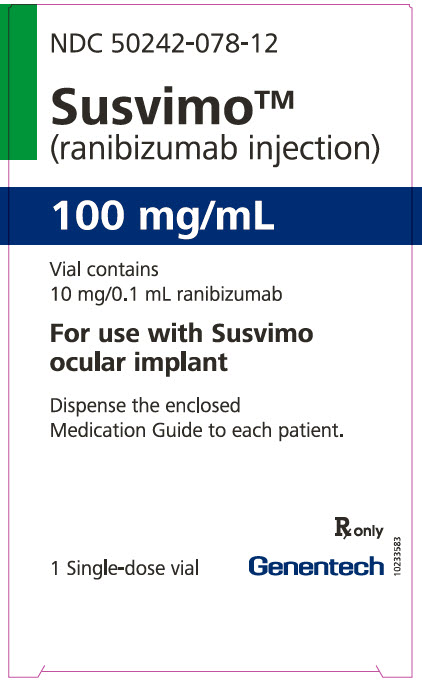
Susvimo Ranibizumab 100 mg/mL Injection, Solution, 1 vial
Past resolved recalls for this product (1)
🆔 Identity & classification
Where does this data come from?
🏷️ RxNorm drug class
This medicine belongs to the Vascular Endothelial Growth Factor Inhibitor class.
Where does this data come from?
🏭 Manufacturer & labeler
Where does this data come from?
🩺 Clinical
- It's blocking a protein called VEGF-A that tells blood vessels in your eye to grow in abnormal ways and leak fluid — both of which can damage your retina and blur your vision. By b...
- What exactly is ranibizumab doing inside my eye?
- Both contain ranibizumab, but they're delivered differently. Lucentis is given as a direct injection into the eye on a schedule your doctor sets. Susvimo is a small implant surgica...
- What's the difference between Lucentis and Susvimo?
Patient education
Supplement & herbal interactions
Where does this data come from?
Ask a licensed pharmacist directly — free, answered by our team.
🧪 Inactive Ingredients / Excipients
Inactive ingredients, also called excipients, are components of the drug product other than the active ingredient. They may include fillers, dyes, coatings, preservatives, flavors, or other formulation ingredients.
Where does this data come from?
IACT rows and label-wide narrative are kept separate; availability and product-level specificity depend on the submitted label.Inactive ingredient FAQ
Are inactive ingredients the same for every manufacturer?
Why might an inactive ingredient be missing?
Can inactive ingredients matter?
💲 Pricing
A drug doesn't have one price. Each row is a different public payment system, and none is what you'd pay at the counter — that depends on your insurance. The ⓘ on each row explains what it measures.
| Price system | Per mL | Per package |
|---|---|---|
| Retail pharmacies payNADAC · weekly | Not in the retail survey — common for institutional, discontinued, or low-volume packs. | |
| Medicaid paysCMS SDUD · 12 mo | No recent Medicaid claims on file for this NDC — rare and low-volume NDCs are suppressed in the public data. | |
| Medicare drug plans payPart D · quarterly | No Part D plan price is available for this NDC in our data. | |
| Medicare Part B allowsASP · J2779 | $74.795 / J2779 unit | — |
Where does this data come from?
🧾 Billing & reimbursement
Where does this data come from?
🔁 Therapeutic equivalents
| Product | Labeler | Pack | NADAC/unit | TE | Status | Price vs. this |
|---|---|---|---|---|---|---|
| Susvimo 100 mg/mLthis 50242-0078-12 | Genentech, | 1 vial | — | — | FDA listed | — |
Where does this data come from?
⏳ Availability & biosimilar status
3 interchangeables are FDA-licensed for this reference biologic — see the list below. (Biologics have no small-molecule generics.)
Why the date isn’t exact: Biosimilar timing can change because patents may be challenged, settled, licensed, added or removed, and litigation can move the real date earlier or later.
🛈 What do these terms mean?
- Biologic patent
- A patent the reference product’s maker has publicly listed. A biosimilar generally can’t launch until these expire — unless they’re invalidated or resolved in a settlement.
- Reference-product exclusivity
- A flat 12 years of FDA market protection from the biologic’s first licensure (the BPCIA). No biosimilar can be licensed before it ends, regardless of patents.
- Interchangeable exclusivity
- The first interchangeable biosimilar can earn a period as the only interchangeable version (pharmacists can substitute it without the prescriber).
- Earliest biosimilar (LOE)
- The latest of all the dates above — the soonest a biosimilar can realistically reach the market. Litigation and settlements can move it earlier.
Biologics have no small-molecule “generics” — competition comes from FDA-licensed biosimilars, tracked in the FDA Purple Book.
| Patent | Type | Use code | Expires |
|---|---|---|---|
| US 6,716,602 ↗ | Biologic patent | — | Nov 1, 2021 |
| US 10,829,732 ↗ | Biologic patent | — | Mar 14, 2034 |
| US 6,828,121 ↗ | Biologic patent | — | Jul 8, 2022 |
| US 6,921,659 ↗ | Biologic patent | — | Oct 17, 2023 |
| US 8,383,773 ↗ | Biologic patent | — | Dec 13, 2023 |
| US 8,574,869 ↗ | Biologic patent | — | Jul 8, 2028 |
| US 9,688,775 ↗ | Biologic patent | — | Dec 31, 2022 |
| US 9,765,379 ↗ | Biologic patent | — | Mar 10, 2034 |
| US 10,017,732 ↗ | Biologic patent | — | Mar 14, 2034 |
| US 10,112,994 ↗ | Biologic patent | — | Nov 5, 2035 |
| US 10,421,984 ↗ | Biologic patent | — | Sep 19, 2033 |
| Code | What it grants | Expires |
|---|---|---|
| RefProduct | Reference-product exclusivity (12-year, BPCIA) — no biosimilar can be licensed before this date | Oct 22, 2033 |
Is there a biosimilar for SUSVIMO 10 MG/0.1 ML VIAL?
Why do different websites show different biosimilar dates?
Can a biosimilar launch before the last patent expires?
What does “current Purple Book estimate” mean?
What does “FDA listed” mean?
What does a patent or protection date mean here?
Where does this data come from?
📊 Medicare Part D spend CMS · PART D · 2026 (Q1)
📦 Packaging — all sizes for this product
| Package NDC | Description | Marketing start | Status |
|---|---|---|---|
| 50242-0078-12 You're viewing this | 1 VIAL in 1 CARTON (50242-078-12) / 1 mL in 1 VIAL | 2021-10-22 | Active |
| 50242-0078-55 | 1 VIAL in 1 CARTON (50242-078-55) / 1 mL in 1 VIAL | 2021-10-22 | Active |
Pack size FAQ
What quantity is in NDC 50242-0078-12?
What is the difference between NDC 50242-0078-12 and NDC 50242-0078-55?
What NDC number is used to bill for this package of Susvimo Ranibizumab 100 mg/mL Injection, Solution?
🧭 About this NDC listing & data coverage
What data is (and isn’t) available for this NDC — tap to expand
| NDC identity (package / product / labeler codes) | ✓ Available |
| Labeler | ✓ Available |
| Product & package description | ✓ Available |
| Marketing category & status | ✓ Available |
| Active ingredient / dosage form / route | ✓ Available |
| FDA label (SPL via DailyMed) | ✓ Available |
| Package photos | ✓ Available |
| Inactive ingredients (structured) | — Not published for this NDC The labeler did not submit a structured excipient list, or no SPL is available. |
| NADAC pharmacy acquisition price (CMS) | — Not published for this NDC CMS publishes NADAC only for NDCs reported in its retail-pharmacy survey. |
| Orange Book / therapeutic-equivalence data | ✓ Available |
| HCPCS J-code billing crosswalk | ✓ Available |
| Medicaid utilization (CMS SDUD) | — Not published for this NDC CMS reports utilization only for NDCs with Medicaid claims above its privacy threshold. |
Questions about this listing
Why is there no price listed?
Is the NDC printed on the package the same as the 11-digit billing NDC?
What do the three segments of this NDC mean?
Is this package still being marketed?
Does this product come in other package sizes?
Who lists this product with the FDA?
Do I need a prescription for this product?
Does this product have a billing J-code?
Where does this data come from?
📄 Full prescribing information FDA SPL
🚨 Boxed Warning ▾
WARNING: ENDOPHTHALMITIS The SUSVIMO implant has been associated with an up to 3-fold higher rate of endophthalmitis than monthly intravitreal injections of ranibizumab. Many of these events were associated with conjunctival retractions or erosions. Appropriate conjunctiva management and early detection with surgical repair of conjunctival retractions or erosions may reduce the risk of endophthalmitis. [see Contraindications (4.1) , Warnings and Precautions (5.1) ] .
WARNING: ENDOPHTHALMITIS See full prescribing information for complete boxed warning. The SUSVIMO implant has been associated with an up to 3-fold higher rate of endophthalmitis than monthly intravitreal injections of ranibizumab.
🎯 Indications and Usage ▾
1 INDICATIONS AND USAGE SUSVIMO (ranibizumab injection) is a vascular endothelial growth factor (VEGF) inhibitor indicated for the treatment of patients with: Neovascular (wet) Age-related Macular Degeneration (AMD) who have previously responded to at least two intravitreal injections of a VEGF inhibitor ( 1.1 ). Diabetic Macular Edema (DME) who have previously responded to at least two intravitreal injections of a VEGF inhibitor ( 1.2 ). Diabetic Retinopathy (DR) who have previously responded to at least two intravitreal injections of a VEGF inhibitor ( 1.3 ).
1.1Neovascular (wet) Age-related Macular Degeneration (AMD) SUSVIMO (ranibizumab injection) is indicated for the treatment of patients with Neovascular (wet) Age-related Macular Degeneration (AMD) who have previously responded to at least two intravitreal injections of a Vascular Endothelial Growth Factor (VEGF) inhibitor medication.
1.2Diabetic Macular Edema (DME) SUSVIMO (ranibizumab injection) is indicated for the treatment of patients with Diabetic Macular Edema (DME) who have previously responded to at least two intravitreal injections of a Vascular Endothelial Growth Factor (VEGF) inhibitor medication.
1.3Diabetic Retinopathy (DR) SUSVIMO (ranibizumab injection) is indicated for the treatment of patients with Diabetic Retinopathy (DR) who have previously responded to at least two intravitreal injections of a Vascular Endothelial Growth Factor (VEGF) inhibitor medication.
⏱️ Dosage and Administration ▾
2 DOSAGE AND ADMINISTRATION For intravitreal use via SUSVIMO ocular implant. ( 2.1 ) Neovascular (wet) Age-related Macular Degeneration (AMD) and Diabetic Macular Edema (DME) The recommended dose of SUSVIMO (ranibizumab injection) is 2 mg (0.02 mL of 100 mg/mL solution) continuously delivered via the SUSVIMO implant with refills every 24 weeks (approximately 6 months). ( 2.2 ) Diabetic Retinopathy (DR) The recommended dose of SUSVIMO (ranibizumab injection) is 2 mg (0.02 mL of 100 mg/mL solution) continuously delivered via the SUSVIMO implant with refills every 36 weeks (approximately 9 months).
( 2.3 ) Supplemental treatment with 0.5 mg intravitreal ranibizumab injection may be administered in the affected eye if clinically necessary. ( 2.4 ) Perform the initial implantation, refill-exchange, and implant removal (if necessary) procedures under strict aseptic conditions. ( 2.5 , 2.6 , 2.7 , 2.8 )
2.1General Information For Intravitreal Use via SUSVIMO ocular implant. The SUSVIMO initial fill and ocular implant insertion and implant removal procedures must be performed under aseptic conditions by a physician experienced in vitreoretinal surgery. The SUSVIMO ocular implant must be surgically implanted in the eye or removed from the eye (if medically necessary) in an operating room using aseptic technique.
See SUSVIMO Instructions for Use and the standardized steps to optimize surgical outcomes. SUSVIMO refill-exchange procedures must be performed under aseptic conditions by a physician experienced in ophthalmic surgery [see Dosage and Administration (2.7) ] . Do not administer SUSVIMO (ranibizumab injection) as a bolus intravitreal injection.
Do not substitute SUSVIMO (ranibizumab injection) with other ranibizumab products. Initial Fill : One SUSVIMO initial fill needle (34-gauge, with integrated 5 μm filter and blue cap) is included. A 5-micron sterile filter needle (19-gauge × 1½ inch), and a 1 mL Luer lock syringe are needed but not included .
Refill-Exchange : One SUSVIMO refill needle (34-gauge with integrated 5 μm filter and clear cap) is included. A 5-micron sterile filter needle (19-gauge × 1½ inch), and a 1 mL Luer lock syringe are needed but not included .
2.2Neovascular (Wet) Age-Related Macular Degeneration (AMD) and Diabetic Macular Edema (DME) The recommended dose of SUSVIMO (ranibizumab injection) is 2 mg (0.02 mL of 100 mg/mL solution) continuously delivered via the SUSVIMO ocular implant with refills administered every 24 weeks (approximately 6 months).
2.3Diabetic Retinopathy (DR) The recommended dose of SUSVIMO (ranibizumab injection) is 2 mg (0.02 mL of 100 mg/mL solution) continuously delivered via the SUSVIMO ocular implant with refills administered every 36 weeks (approximately 9 months).
2.4Supplemental Treatment with Intravitreal Ranibizumab Injection Supplemental treatment with 0.5 mg (0.05 mL of 10 mg/mL) intravitreal ranibizumab injection may be administered in the affected eye while the SUSVIMO implant is in place and if clinically necessary [see Clinical Studies (14) ] .
2.5Ocular Implant Initial Fill The implant initial fill procedure must be performed by a physician experienced in vitreoretinal surgery [ see Dosage and Administration (2.1) ]. The implant will be filled using aseptic technique with 0.02 mL of SUSVIMO (ranibizumab injection) prior to insertion of the implant into the patient's eye [see Dosage and Administration (2.6) ]. Refer to the complete SUSVIMO Instructions for Use for the initial fill and implant procedure included in the insertion tool assembly carton for further details.
Use aseptic technique to carry out the following preparation steps prior to insertion of the ocular implant into the patient's eye: Step 1: Gather the supplies needed. One SUSVIMO ocular implant with insertion tool assembly (included) One SUSVIMO initial fill needle (34-gauge with integrated 5 μm filter) with blue cap (included) One SUSVIMO (ranibizumab injection) 100 mg/mL vial (included) One sterile 5…
💊 Dosage Forms and Strengths ▾
3 DOSAGE FORMS AND STRENGTHS Injection: 100 mg/mL, clear to slightly opalescent, colorless to slightly brownish solution in a single-dose vial Injection: 100 mg/mL solution in a single-dose vial ( 3 )
⛔ Contraindications ▾
4 CONTRAINDICATIONS Ocular or periocular infections ( 4.1 ) Active intraocular inflammation ( 4.2 ) Hypersensitivity ( 4.3 )
4.1Ocular or Periocular Infections SUSVIMO (ranibizumab injection) is contraindicated in patients with ocular or periocular infections.
4.2Active Intraocular Inflammation SUSVIMO (ranibizumab injection) is contraindicated in patients with active intraocular inflammation.
4.3Hypersensitivity SUSVIMO (ranibizumab injection) is contraindicated in patients with known hypersensitivity to ranibizumab products or any of the excipients in SUSVIMO (ranibizumab injection).
⚠️ Warnings and Cautions ▾
5 WARNINGS AND PRECAUTIONS The SUSVIMO implant and/or implant-related procedures have been associated with endophthalmitis, rhegmatogenous retinal detachment, implant dislocation, septum dislodgement, vitreous hemorrhage, conjunctival erosion, conjunctival retraction, and conjunctival blebs. Patients should be instructed to report any signs or symptoms that could be associated with these events without delay. In some cases, these events can present asymptomatically.
The implant and the tissue overlying the implant flange should be monitored routinely following the implant insertion, and refill-exchange procedures to permit early medical or surgical intervention as necessary. Special precautions need to be taken when handling SUSVIMO components [see How Supplied/Storage and Handling (16.3) ]. The SUSVIMO implant and/or implant-related procedures have been associated with endophthalmitis, rhegmatogenous retinal detachment, implant dislocation, septum dislodgement, vitreous hemorrhage, conjunctival retraction, conjunctival erosion, and conjunctival bleb.
Patients should be instructed to report signs or symptoms that could be associated with these events without delay. Additional surgical and/or medical management may be required. ( 5.1 , 5.2 , 5.3 , 5.4 , 5.5 , 5.6 , 5.7 ) Vitreous Hemorrhage : Temporarily discontinue antithrombotic medication prior to the implant insertion procedure to reduce the risk of vitreous hemorrhage.
Vitrectomy may be needed. ( 5.5 ) Postoperative Decrease in Visual Acuity : A decrease in visual acuity usually occurs over the first two postoperative months. ( 5.8 )
5.1Endophthalmitis In the active comparator period of controlled clinical trials in AMD, the ranibizumab implant has been associated with a 3-fold higher rate of endophthalmitis than monthly intravitreal injections of ranibizumab (1.7% in the SUSVIMO arm vs 0.5% in the intravitreal arm). When including extension phases of clinical trials, 2% (11/555) of patients receiving the ranibizumab implant experienced an episode of endophthalmitis. Reports occurred between days 5 and 853, with a median of 173 days.
Many, but not all, of the cases of endophthalmitis reported a preceding or concurrent conjunctival retraction or erosion event. In the active comparator period of the controlled clinical trial in DME, 0% of patients in the SUSVIMO arm compared to 0.3% in the intravitreal arm experienced an episode of endophthalmitis. When including the extension phase of the clinical trial, 0.7% (4/556) of patients receiving the ranibizumab implant experienced an episode of endophthalmitis.
Reports occurred between days 625 and 1016, with a median of 824 days. In the period with an observational comparator arm of the clinical trial in DR, there were no patients (0/105) in the SUSVIMO arm who experienced an episode of endophthalmitis [see Clinical Studies (14.3) ] . When including the extension phase of the clinical trial 0.8% (1/128) patients receiving the ranibizumab implant experienced an episode of endophthalmitis, with the event reported on day 695.
Endophthalmitis should be treated promptly in an effort to reduce the risk of vision loss and maximize recovery. The SUSVIMO (ranibizumab injection) dose (refill-exchange) should be delayed until resolution of endophthalmitis [see Dosage and Administration (2.10) and Adverse Reactions (6.1) ] . Patients should not have an active or suspected ocular or periocular infection or severe systemic infection at the time of any SUSVIMO implant or refill procedure.
Appropriate intraoperative handling followed by secure closure of the conjunctiva and Tenon's capsule, and early detection and surgical repair of conjunctival erosions or retractions and strict/controlled aseptic technique conditions throughout refill-exchange procedures may reduce the risk of endophthalmitis [see Dosage and Administration (2.1) and Warnings and Precautions (5.5) ] .
5.2 Rhegmatogenous Retinal Detachment Rhegmatogenous retinal detachments hav…
🤒 Adverse Reactions ▾
6 ADVERSE REACTIONS The following adverse reactions are discussed in greater detail in other sections of the label: Endophthalmitis [see Warnings and Precautions (5.1) ] Rhegmatogenous Retinal Detachment [see Warnings and Precautions (5.2) ] Implant Dislocation [see Warnings and Precautions (5.3) ] Septum Dislodgement [see Warnings and Precautions (5.4) ] Vitreous Hemorrhage [see Warnings and Precautions (5.5) ] Conjunctival Erosion or Retraction [see Warnings and Precautions (5.6) ] Conjunctival Bleb [see Warnings and Precautions (5.7) ] Postoperative Decrease in Visual Acuity [see Warnings and Precautions (5.8) ] The most common adverse reactions (≥ 10%) were conjunctival hemorrhage, conjunctival hyperemia, iritis, eye pain, conjunctival disorder, cataract and vitreous hemorrhage.
( 6.1 ) To report SUSPECTED ADVERSE REACTIONS, contact Genentech at 1-888-835-2555 or FDA at 1-800-FDA-1088 or www.fda.gov/medwatch.
6.1Clinical Trials Experience Because clinical trials are conducted under widely varying conditions, adverse reaction rates observed in one clinical trial of a drug cannot be directly compared with rates in the clinical trials of the same or another drug and may not reflect the rates observed in practice. The data below ( Table 2 ) reflect exposure of 248 patients with AMD in the Archway study through Week 40, 320 patients with DME in the Pagoda study up to Week 64, and 105 patients with DR in the Pavillion study through Week 52 following the SUSVIMO initial fill and implant insertion, refill, and implant removal (if necessary) procedures.
In clinical trials of SUSVIMO in AMD patients, the most common (≥ 10%) adverse reactions up to Week 40 were conjunctival hemorrhage (72%), conjunctival hyperemia (26%), iritis (23%), and eye pain (10%). Septum dislodgement was reported in 0.4% of the AMD patient population. In clinical trials of SUSVIMO in DME patients, patient population the most common (≥ 10%) adverse reactions up to Week 64 were conjunctival hemorrhage (62%), conjunctival hyperemia (15%), iritis (14%), eye pain (13%), cataract (11%), conjunctival disorder (10%) and vitreous hemorrhage (10%).
In clinical trials of SUSVIMO in DR patients, the most common (≥ 10%) adverse reactions up to Week 52 were conjunctival hemorrhage (73%), conjunctival disorder (14%), iritis (12%) and conjunctival hyperemia (11%). Table 2 Adverse Reactions occurring in ≥ 4% of patients in the SUSVIMO arm Adverse Reactions AMD Week 40 DME Week 64 DR Week 52 SUSVIMO n = 248 Intravitreal ranibizumab n = 167 SUSVIMO n = 320 Intravitreal ranibizumab 0.5 mg n = 314 SUSVIMO n = 105 Conjunctival hemorrhage 72% 6% 62% 18% 73% Conjunctival hyperemia 26% 2% 15% 0 11% Iritis Iritis includes: iritis, anterior chamber flare, anterior chamber inflammation, and anterior chamber cell.
23% 0.6% 14% 2% 12% Eye pain 10% 5% 13% 6% 9% Conjunctival disorder Conjunctival disorder includes: conjunctival adhesion, conjunctival disorder, conjunctival edema, conjunctival erosion, conjunctival retraction, and subconjunctival fibrosis. 9% 0 10% 0.3% 14% Vitreous floaters 9% 2% 4% 5% 2% Conjunctival bleb/ filtering bleb leak Conjunctival bleb/filtering bleb leak includes: conjunctival bleb, conjunctival filtering bleb leak, conjunctival cyst, subconjunctival cyst, and implant site cyst. 8% 0 8% 0 2% Foreign body sensation in eyes 7% 1% 3% 2% 9% Headache Headache includes: headache and procedural headache.
6% 2% 6% 4% 9% Hypotony of eye 6% 0 3% 0 0 Vitreous detachment 6% 5% 8% 5% 9% Vitreous hemorrhage 5% 2% 10% 2% 6% Cataract Cataract includes: cataract, cortical cataract, nuclear cataract, and subcapsular cataract. 4% 4% 11% 7% 7% Corneal disorder 4% 0 1% 0 1% Corneal abrasion Corneal abrasion includes: corneal abrasion and vital dye staining cornea present. 4% 0.6% 4% 1% 4% Corneal edema 4% 0 4% 0.3% 4% In clinical trials of SUSVIMO, hyphema was reported in 0.4% of AMD patients, 1.9% of DME patients, and 1.9% of DR patients.
👥 Use in Specific Populations ▾
8 USE IN SPECIFIC POPULATIONS
8.1Pregnancy Risk Summary There are no adequate and well-controlled studies of SUSVIMO (ranibizumab injection) administration in pregnant women. Administration of ranibizumab to pregnant monkeys throughout the period of organogenesis resulted in a low incidence of skeletal abnormalities at intravitreal doses up to 41 times the human exposure (based on serum levels following the recommended clinical dose). No skeletal abnormalities were observed at serum trough levels similar to the human exposure after a single eye treatment at the recommended clinical dose ( see Data ) .
Animal reproduction studies are not always predictive of human response, and it is not known whether ranibizumab can cause fetal harm when administered to a pregnant woman. Based on the anti-VEGF mechanism of action for ranibizumab [see Clinical Pharmacology (12.1) ] , treatment with SUSVIMO (ranibizumab injection) may pose a risk to human embryofetal development. All pregnancies have a background risk of birth defects, loss, and other adverse outcomes.
The background risk of major birth defects and miscarriage for the indicated population is unknown. In the U.S. general population, the estimated background risk of major birth defects is 2% – 4% and of miscarriage is 15% – 20% of clinically recognized pregnancies. Data Animal Data An embryo-fetal developmental toxicity study was performed on pregnant cynomolgus monkeys.
Pregnant animals received intravitreal injections of ranibizumab every 14 days starting on Day 20 of gestation, until Day 62 at doses of 0, 0.125, and 1 mg/eye. Skeletal abnormalities including incomplete and/or irregular ossification of bones in the skull, vertebral column, and hindlimbs and shortened supernumerary ribs were seen at a low incidence in fetuses from animals treated with 1 mg/eye of ranibizumab. The 1 mg/eye dose resulted in trough serum ranibizumab levels up to 41 times higher than observed human C max levels of SUSVIMO (ranibizumab injection) after treatment of a single eye.
No skeletal abnormalities were seen at the lower dose of 0.125 mg/eye, a dose which resulted in trough exposures similar to single eye treatment with SUSVIMO (ranibizumab injection) in humans. No effect on the weight or structure of the placenta, maternal toxicity, or embryotoxicity was observed.
8.2Lactation Risk Summary There are no data available on the presence of ranibizumab in human milk, the effects of ranibizumab on the breastfed infant or the effects of ranibizumab on milk production/excretion. Because many drugs are excreted in human milk, and because the potential for absorption and harm to infant growth and development exists, caution should be exercised when SUSVIMO is administered to a nursing woman. The developmental and health benefits of breastfeeding should be considered along with the mother's clinical need for SUSVIMO (ranibizumab injection) and any potential adverse effects on the breastfed child from ranibizumab.
8.3Females and Males of Reproductive Potential Contraception Females of reproductive potential should use effective contraception during treatment with SUSVIMO (ranibizumab injection) and for at least 12 months after the last dose of SUSVIMO (ranibizumab injection). Infertility No studies on the effects of ranibizumab on fertility have been conducted and it is not known whether ranibizumab can affect reproduction capacity. Based on the anti-VEGF mechanism of action for ranibizumab, treatment with SUSVIMO (ranibizumab injection) may pose a risk to reproductive capacity.
8.4Pediatric Use The safety and efficacy of SUSVIMO (ranibizumab injection) in pediatric patients have not been established.
8.5Geriatric Use In the Archway study, 90% (222 of 248) of the patients randomized to treatment with SUSVIMO were ≥ 65 years old and approximately 57% (141 of 248) were ≥ 75 years old. No notable difference in treatment effect or safety was seen with increasing age.
🤰 Pregnancy ▾
8.1Pregnancy Risk Summary There are no adequate and well-controlled studies of SUSVIMO (ranibizumab injection) administration in pregnant women. Administration of ranibizumab to pregnant monkeys throughout the period of organogenesis resulted in a low incidence of skeletal abnormalities at intravitreal doses up to 41 times the human exposure (based on serum levels following the recommended clinical dose). No skeletal abnormalities were observed at serum trough levels similar to the human exposure after a single eye treatment at the recommended clinical dose ( see Data ) .
Animal reproduction studies are not always predictive of human response, and it is not known whether ranibizumab can cause fetal harm when administered to a pregnant woman. Based on the anti-VEGF mechanism of action for ranibizumab [see Clinical Pharmacology (12.1) ] , treatment with SUSVIMO (ranibizumab injection) may pose a risk to human embryofetal development. All pregnancies have a background risk of birth defects, loss, and other adverse outcomes.
The background risk of major birth defects and miscarriage for the indicated population is unknown. In the U.S. general population, the estimated background risk of major birth defects is 2% – 4% and of miscarriage is 15% – 20% of clinically recognized pregnancies. Data Animal Data An embryo-fetal developmental toxicity study was performed on pregnant cynomolgus monkeys.
Pregnant animals received intravitreal injections of ranibizumab every 14 days starting on Day 20 of gestation, until Day 62 at doses of 0, 0.125, and 1 mg/eye. Skeletal abnormalities including incomplete and/or irregular ossification of bones in the skull, vertebral column, and hindlimbs and shortened supernumerary ribs were seen at a low incidence in fetuses from animals treated with 1 mg/eye of ranibizumab. The 1 mg/eye dose resulted in trough serum ranibizumab levels up to 41 times higher than observed human C max levels of SUSVIMO (ranibizumab injection) after treatment of a single eye.
No skeletal abnormalities were seen at the lower dose of 0.125 mg/eye, a dose which resulted in trough exposures similar to single eye treatment with SUSVIMO (ranibizumab injection) in humans. No effect on the weight or structure of the placenta, maternal toxicity, or embryotoxicity was observed.
🧒 Pediatric Use ▾
8.4Pediatric Use The safety and efficacy of SUSVIMO (ranibizumab injection) in pediatric patients have not been established.
🧓 Geriatric Use ▾
8.5Geriatric Use In the Archway study, 90% (222 of 248) of the patients randomized to treatment with SUSVIMO were ≥ 65 years old and approximately 57% (141 of 248) were ≥ 75 years old. No notable difference in treatment effect or safety was seen with increasing age.
🧬 Clinical Pharmacology ▾
12 CLINICAL PHARMACOLOGY
12.1Mechanism of Action Ranibizumab binds to the receptor binding site of multiple biologically active forms of VEGF-A, including VEGF 110 . VEGF-A has been shown to cause neovascularization and leakage in models of ocular angiogenesis and vascular occlusion and is thought to contribute to pathophysiology of neovascular AMD. The binding of ranibizumab to VEGF-A prevents the interaction of VEGF-A with its receptors (VEGFR1 and VEGFR2) on the surface of endothelial cells, reducing endothelial cell proliferation, vascular leakage, and new blood vessel formation.
12.3Pharmacokinetics The SUSVIMO implant provides a continuous release of ranibizumab where the release of ranibizumab into the vitreous decreases over time as the concentration in the implant decreases. The ranibizumab serum and aqueous humor concentrations with a SUSVIMO 24-week and 36-week treatment interval are maintained below the maximum and above the minimum concentrations experienced with monthly 0.5 mg intravitreal ranibizumab. Distribution Ranibizumab did not accumulate in serum when administered with refills every 24 weeks or every 36 weeks.
Following implant insertion of SUSVIMO in patients with AMD, the mean (±SD) maximum ranibizumab serum concentration (C max ) was 0.48 (±0.17) ng/mL and median (range) time to maximum serum concentration (T max ) was 26 (1 – 89) days. Following the initial fill and refill of SUSVIMO in patients, maximum serum concentrations of ranibizumab were below the ranibizumab concentration necessary to inhibit the biological activity of VEGF by 50%. Elimination Metabolism The metabolism of SUSVIMO (ranibizumab injection) has not been studied.
SUSVIMO (ranibizumab injection) is a monoclonal antibody fragment and antibodies are cleared principally by catabolism. Excretion The full excretion profile for ranibizumab following administration of SUSVIMO is unknown. Specific Populations Patients with renal impairment were included in the population pharmacokinetic analysis of SUSVIMO (ranibizumab injection).
Across all indications, systemic clearance of ranibizumab was slightly lower in renally impaired patients but was not clinically significant. No clinically significant differences in the pharmacokinetics of ranibizumab were observed based on age in the patient population.
12.6Immunogenicity As with all therapeutic proteins, there is potential for immune response in patients treated with ranibizumab including SUSVIMO. The detection of an immune response is highly dependent on the sensitivity, specificity, and drug tolerance level of the assay. Additionally, the observed incidence of antibody positivity in an assay may be influenced by several factors including assay methodology, sample handling, timing of sample collection, concomitant medications, and underlying disease.
For these reasons, comparison of the incidence of antibodies in the study described below with the incidence of antibodies in other studies or to other products may be misleading. Prior to treatment with SUSVIMO, 2.1-3.6% of patients with AMD, DME, or DR tested positive for anti-ranibizumab antibodies. In patients with AMD, after the SUSVIMO implant insertion and treatment, 12% (29 of 247) patients tested positive for anti-ranibizumab antibodies.
In patients with DME, after 4 doses of intravitreal ranibizumab, and SUSVIMO implant insertion and treatment, 13% (41 of 320) patients tested positive for anti-ranibizumab antibodies. In patients with DR, after 2 doses of intravitreal ranibizumab, and SUSVIMO implant insertion and treatment, 17% (17 of 99) patients tested positive for anti-ranibizumab antibodies. No clinically meaningful differences in the pharmacokinetics, efficacy, or safety in patients testing positive for anti-ranibizumab antibodies were observed.
🧬 Mechanism of Action ▾
12.1Mechanism of Action Ranibizumab binds to the receptor binding site of multiple biologically active forms of VEGF-A, including VEGF 110 . VEGF-A has been shown to cause neovascularization and leakage in models of ocular angiogenesis and vascular occlusion and is thought to contribute to pathophysiology of neovascular AMD. The binding of ranibizumab to VEGF-A prevents the interaction of VEGF-A with its receptors (VEGFR1 and VEGFR2) on the surface of endothelial cells, reducing endothelial cell proliferation, vascular leakage, and new blood vessel formation.
📦 How Supplied / Storage and Handling ▾
16 HOW SUPPLIED/STORAGE AND HANDLING
16.1How Supplied Each SUSVIMO initial fill needle kit (NDC 50242-078-55) contains: One SUSVIMO 100 mg/mL single-dose glass vial One SUSVIMO initial fill needle (34-gauge needle with a 5 μm integrated filter) with a blue cap Each SUSVIMO (ranibizumab injection) carton (NDC 50242-078-12) contains one SUSVIMO (ranibizumab injection) 100 mg/mL that is clear to slightly opalescent, colorless to slightly brownish solution in a single-dose glass vial. Each SUSVIMO initial fill needle carton contains a SUSVIMO initial fill needle (34-gauge needle with a 5 μm integrated filter) with a blue cap.
Each SUSVIMO refill needle carton contains a SUSVIMO refill needle (34-gauge vented needle with a 5 μm integrated filter) with a clear cap. Device and Materials Description Components Figure 32 SUSVIMO implant SUSVIMO implant ( Figure 33 ) is capable of holding 0.02 mL of drug, and is secured within the sclera, by the extrascleral flange that remains visible through the conjunctiva following insertion. The septum is a self-sealing interface through which ranibizumab is administered to fill the implant.
Figure 33 SUSVIMO (ranibizumab injection) 100 mg/mL vial SUSVIMO (ranibizumab injection) ( Figure 34 ) is used to fill the implant with ranibizumab prior to insertion or during subsequent refill-exchange in an office-based setting. Figure 34 SUSVIMO refill needle SUSVIMO refill needle ( Figure 35 ) consists of a 34 G vented needle assembly, silicone soft stop, and a 5 μm integrated filter within the needle hub. It is designed to simultaneously exchange the contents of the implant reservoir with replacement ranibizumab in an office-based setting.
As replacement ranibizumab is administered into the implant through the stainless-steel cannula, fluid remaining in the implant flows through openings in the vented needle and is collected in the fluid collection reservoir. SUSVIMO refill needle is distinguished by its clear cap. Figure 35 Materials List Materials that are required and supplied to perform the procedure are: SUSVIMO refill needle, 34 G, with clear cap SUSVIMO (ranibizumab injection) 100 mg/mL Additional materials required to perform the procedure but are not provided are: One sterile 1 mL Luer Lock syringe (not included) One sterile 5-micron filter needle (19-gauge × 1½ inch) (not included ) Anesthetic ophthalmic solutions Ophthalmic broad-spectrum microbicide solution Cotton tips and gauze Sterile powder free gloves Face masks Lid speculum Magnification such as visor or loupes Task lighting Indirect ophthalmoscope and lens Sterile drape (optional for refill-exchange procedure) Figure 31 Figure 32 Figure 33 Figure 34 Figure 35
16.2Storage Store SUSVIMO initial fill needle kit at 2°C to 8°C (36°F to 46°F). Do not freeze. Protect from light.
Do not shake. The SUSVIMO initial fill needle has been sterilized with electron beam processing. Store SUSVIMO (ranibizumab injection) 100 mg/ mL vial at 2°C to 8°C (36°F to 46°F).
Do not freeze. Protect from light. Do not shake.
Prior to use, the unopened vial may be kept at 9°C to 30°C (48°F to 86°F) for up to 24 hours provided it is protected from light. Store the SUSVIMO implant and insertion tool assembly, refill needle and explant tool at room temperature 15°C to 25°C (59°F to 77°F). The SUSVIMO implant and insertion tool assembly has been sterilized with ethylene oxide gas.
The SUSVIMO refill needle and explant tool has been sterilized with electron beam processing. Store the SUSVIMO initial fill needle at 2°C to 25°C (36°F to 77°F). The SUSVIMO initial fill needle has been sterilized with electron beam processing.
16.3Handling SUSVIMO components are supplied sterile and are for single-use only. Do not reprocess, re-sterilize, or reuse SUSVIMO components. Do not use if the sterility has been compromised or the contents have been dropped, damaged or tampered with. Do not use past the expiration date printed on the label. Do not open sealed tray until time of u…
📦 Storage and Handling ▾
16.2Storage Store SUSVIMO initial fill needle kit at 2°C to 8°C (36°F to 46°F). Do not freeze. Protect from light.
Do not shake. The SUSVIMO initial fill needle has been sterilized with electron beam processing. Store SUSVIMO (ranibizumab injection) 100 mg/ mL vial at 2°C to 8°C (36°F to 46°F).
Do not freeze. Protect from light. Do not shake.
Prior to use, the unopened vial may be kept at 9°C to 30°C (48°F to 86°F) for up to 24 hours provided it is protected from light. Store the SUSVIMO implant and insertion tool assembly, refill needle and explant tool at room temperature 15°C to 25°C (59°F to 77°F). The SUSVIMO implant and insertion tool assembly has been sterilized with ethylene oxide gas.
The SUSVIMO refill needle and explant tool has been sterilized with electron beam processing. Store the SUSVIMO initial fill needle at 2°C to 25°C (36°F to 77°F). The SUSVIMO initial fill needle has been sterilized with electron beam processing.
📋 Description ▾
11 DESCRIPTION Ranibizumab is a recombinant humanized IgG1 kappa isotype monoclonal antibody fragment for intraocular use. Ranibizumab binds to and inhibits the biologic activity of human vascular endothelial growth factor-A (VEGF-A). Ranibizumab, which lacks an Fc region, has a molecular weight of approximately 48 kilodaltons and is produced by an E. coli expression system in a nutrient medium containing the antibiotic tetracycline.
Tetracycline is not detectable in the final product. SUSVIMO (ranibizumab injection) is supplied as a sterile, clear to slightly opalescent, colorless to slightly brownish solution for intravitreal use via the SUSVIMO implant. Each single-dose vial contains 10 mg of ranibizumab, histidine HCl (0.1 mg), polysorbate 20 (0.01 mg), sucrose (8.2 mg), and Water for Injection, in 0.1 mL of solution with a pH of 5.5.
The SUSVIMO implant is designed to contain approximately 0.02 mL (2 mg) of ranibizumab solution when filled. SUSVIMO does not contain an antimicrobial preservative.
💬 Information for Patients ▾
17 PATIENT COUNSELING INFORMATION Advise the patient to read the FDA-approved patient labeling ( Medication Guide ). Advise patients on the following after the implant insertion procedure: Positioning: Keep head above shoulder level for the rest of the day. Sleep with head on 3 or more pillows during the day and the night after surgery.
How to care for the treated eye after the procedure: Do not remove the eye shield until they are instructed to do so by their healthcare provider. At bedtime, continue to wear the eye shield for at least 7 nights following the implant surgery. Administer all post-operative eye medications as directed by their healthcare provider.
Do not push on the eye, rub the eye, or touch the area of the eye where the implant is located (underneath the eyelid in the upper and outer part of the eye) for 30 days following the implant insertion. Do not participate in strenuous activities until 1-month after the implant insertion or after discussion with their healthcare provider. Magnetic Resonance (MR) Conditional information: The SUSVIMO implant is MR conditional.
Inform their healthcare provider that they have SUSVIMO implanted in their eye and show their healthcare provider the SUSVIMO implant card should they require Magnetic resonance imaging (MRI). Advise patients on the following after the Refill-Exchange procedure: Refrain from pushing on the treated eye, rubbing the eye, or touching the eye in the area of the implant (located underneath the eyelid in the upper and outer part of your eye) for 7 days following the refill-exchange procedure. Administer eye drops as directed by their healthcare provider.
Advise patients on the following after the implant removal procedure (if it is deemed medically necessary): Keep your head above shoulder level for the rest of the day. Sleep with your head on 3 or more pillows if lying down during the day and night after the implant removal. Wear an eye shield for at least 7 nights following the implant removal.
Do not participate in strenuous activities until 14 days following the implant removal. Administer all post-operative anti-inflammatory and antimicrobial drops, as directed by your healthcare provider. Advise patients on the following throughout SUSVIMO treatment: Do not drive or use machinery until the eye shield can be removed and visual function has recovered sufficiently [see Adverse Reactions (6.1) ] .
The SUSVIMO implant and/or implant related procedures have been associated with conjunctival reactions (bleb, erosion, retraction), vitreous hemorrhage, endophthalmitis, rhegmatogenous retinal detachment, the dislocation of the implant, septum dislodgement, and a temporary decrease in vision. While the implant is in the eye, avoid rubbing the eye or touching the area as much as possible. However, if necessary to do so, make sure hands are cleaned prior to touching the eye.
Seek immediate care from an ophthalmologist if there are sudden changes in their vision (an increase in moving spots, the appearance of "spider webs", flashing lights, or a loss in vision), increasing eye pain, progressive vision loss, sensitivity to light, redness in the white of the eye, a sudden sensation that something is in their eye, or eye discharge or watering [see Warnings and Precautions (5) ] .
💬 Medication Guide ▾
This Medication Guide has been approved by the U.S. Food and Drug Administration Revised: 5/2025 MEDICATION GUIDE SUSVIMO ® (suss-VIH-moh) (ranibizumab injection) for intravitreal use via SUSVIMO ocular implant What is the most important information I should know about SUSVIMO? SUSVIMO (ranibizumab injection) is delivered into the eye using the SUSVIMO implant.
The SUSVIMO implant and the procedures to insert, fill, refill and remove the eye (ocular) implant can cause serious side effects including: an eye infection (endophthalmitis). Endophthalmitis is an infection of the eyeball that can cause permanent damage to your eye including blindness. Call your healthcare provider right away if you have increasing eye pain, vision loss, sensitivity to light, or redness in the white of the eye.
Endophthalmitis requires urgent (same day) medical or surgical treatment. a missing layer on top of the white part of the eye (conjunctival erosion). Conjunctival erosion is an area that becomes missing (defect) in the layer (conjunctiva) that covers the white part of the eye which may result in exposure of the implant. Call your healthcare provider right away if you have a sudden feeling that something is in your eye, if you have eye discharge, or watering of the eye.
Conjunctival erosion may require surgical treatment. an opening of the layer that covers the white part of the eye (conjunctival retraction). Conjunctival retraction is an opening or gaping in the layer (conjunctiva) that covers the white part of the eye which may cause the implant to be exposed. Call your healthcare provider right away if you have a sudden feeling that something is in your eye, if you have eye discharge, or watering of the eye.
Conjunctival retraction may require surgical treatment. See " What are the possible side effects of SUSVIMO? " for other serious side effects that may happen while in treatment with SUSVIMO. To help prevent or keep these side effects from becoming more serious follow all post-procedure instructions your healthcare provider gives you.
See " How will I receive SUSVIMO? ". What is SUSVIMO? SUSVIMO (ranibizumab injection) is a prescription medicine used to treat adults with: Neovascular (wet) Age-related Macular Degeneration (AMD) who have responded to at least two injections of a Vascular Endothelial Growth Factor (VEGF) inhibitor in the gel-like part of the eye (intravitreal).
Diabetic Macular Edema (DME) who have responded to at least two injections of a Vascular Endothelial Growth Factor (VEGF) inhibitor in the gel-like part of the eye (intravitreal). Diabetic Retinopathy (DR) who have responded to at least two injections of a Vascular Endothelial Growth Factor (VEGF) inhibitor in the gel-like part of the eye (intravitreal). It is not known if SUSVIMO is safe and effective in children.
Do not receive SUSVIMO if you: have an infection in or around your eye. have active swelling around your eye that may include pain and redness. are allergic to ranibizumab or any of the ingredients in SUSVIMO. See the end of this Medication Guide for a complete list of ingredients in SUSVIMO. Talk to your healthcare provider before receiving this SUSVIMO if you have any of these conditions.
Before receiving SUSVIMO, tell your healthcare provider about all of your medical conditions, including if you: are currently taking or have recently taken medicines that lower the chance of blood clots forming in the body such as warfarin, low or regular doses of aspirin, or nonsteroidal anti-inflammatory drugs (NSAID). are pregnant or plan to become pregnant. It is not known if SUSVIMO will harm your unborn baby. You should use birth control during your treatment with SUSVIMO and for 12 months after your last dose of SUSVIMO. are breastfeeding or plan to breastfeed.
It is not known if SUSVIMO passes into your breast milk. Talk to your healthcare provider about the best way to feed your baby if you receive SUSVIMO. Tell your healthcare provider about all the medicines y…