
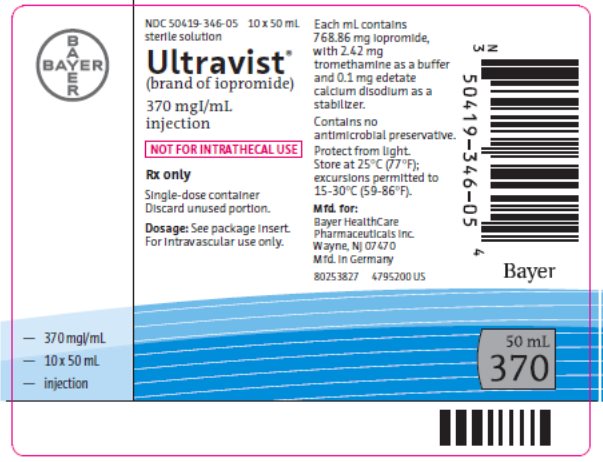
Ultravist iopromide 370 mg/mL Injection — NDC 50419-346-07 (Billing 50419-0346-07)
This is a package of Ultravist iopromide 370 mg/mL Injection from Bayer HealthCare Pharmaceuticals Inc., no longer marketed (first marketed Dec 2009), no longer in the FDA NDC Directory.
NDC database record
One package, one record: these facts belong to NDC 50419-346-07 alone.
- Record
- FDA NDC Directory package listing · Human prescription drug
- Code segments
- 50419 labeler · 346 product · 07 package
- Listing certified through
- Dec 31, 2027
- Barcode (UPC)
- 0350419344654
- FDA record last changed
- Jul 24, 2026
Identity & classification
Regulatory identifiers FDA, NLM and CMS codes for this package
Drug-database identifiers Medi-Span GPI and First Databank GCN / HICL / AHFS classification
- GSN (GCN sequence number): 023254
- GCN: 20992
- GPI-14 (Medi-Span): 94402049002040
- HICL (First Databank): 009804
- AHFS class code: 36:68.00.00
Where does this data come from?
- FDA openFDA NDC Directory · synced Oct 1, 2026
- FDA label on DailyMed · label index refreshed Oct 5, 2026
- RxNorm (NLM RxNav) · catalog refreshed Oct 1, 2026
- Medi-Span GPI (licensed)
- First Databank (licensed) · refreshed Oct 1, 2026
Clinical
Patient education
Supplement & herbal interactions
Some supplements/herbs that may interact with Iopromide — tap one for details:
Where does this data come from?
- MedlinePlus (NLM) · refreshed Oct 1, 2026
- FDA label on DailyMed · label index refreshed Oct 5, 2026
Ask a licensed pharmacist directly — free, answered by our team.
Pricing
A drug doesn't have one price. Each row is a different public payment system, and none is what you'd pay at the counter — that depends on your insurance. The ⓘ on each row explains what it measures.
| Price system | Per each | Per package |
|---|---|---|
| Retail pharmacies payNADAC · weekly | Not in the retail survey — common for institutional, discontinued, or low-volume packs. | |
| Medicaid paysCMS SDUD · 12 mo | No recent Medicaid claims on file for this NDC — rare and low-volume NDCs are suppressed in the public data. | |
| Medicare drug plans payPart D · quarterly | No Part D plan price is available for this NDC in our data. | |
Where does this data come from?
- CMS NADAC weekly file
- CMS ASP pricing files · refreshed Sep 20, 2026
- CMS Medicaid State Drug Utilization Data · refreshed Oct 5, 2026
- CMS Part D plan pricing files · refreshed Sep 24, 2026
- VA National Acquisition Center price file
Packaging — all sizes for this product
| Package NDC | Description | Marketing start | Marketing end | Status |
|---|---|---|---|---|
| 50419-0346-28 50419-346-28 | 10 BOTTLE in 1 PACKAGE / 200 mL in 1 BOTTLE | 2018-05-04 | — | Active |
| 50419-0346-65 50419-346-65 | 8 BOTTLE in 1 PACKAGE / 500 mL in 1 BOTTLE | 2018-05-04 | — | Active |
| 50419-0346-26 50419-346-26 | 10 BOTTLE in 1 PACKAGE / 200 mL in 1 BOTTLE | 2009-12-30 | — | Active |
| 50419-0346-58 50419-346-58 | 8 BOTTLE in 1 PACKAGE / 500 mL in 1 BOTTLE | 2009-12-30 | — | Active |
| 50419-0346-97 50419-346-97 | 8 BOTTLE in 1 PACKAGE / 500 mL in 1 BOTTLE | 2009-12-30 | — | Active |
| 50419-0346-05 50419-346-05 | 10 VIAL, GLASS in 1 CARTON / 50 mL in 1 VIAL, GLASS | 2009-12-30 | — | Active |
| 50419-0346-07 You're viewing this | 10 VIAL, GLASS in 1 CARTON / 75 mL in 1 VIAL, GLASS | 2009-12-30 | — | Discontinued by firm |
| 50419-0346-10 50419-346-10 Main listing | 10 VIAL, GLASS in 1 CARTON / 100 mL in 1 VIAL, GLASS | 2009-12-30 | — | Active |
| 50419-0346-15 50419-346-15 | 10 VIAL, GLASS in 1 CARTON / 150 mL in 1 VIAL, GLASS | 2009-12-30 | — | Active |
| 50419-0346-20 50419-346-20 | 10 VIAL, GLASS in 1 CARTON / 200 mL in 1 VIAL, GLASS | 2009-12-30 | — | Active |
| 50419-0346-41 50419-346-41 | 10 VIAL, GLASS in 1 CARTON / 50 mL in 1 VIAL, GLASS | 2009-12-30 | — | Discontinued by firm |
| 50419-0346-43 50419-346-43 | 10 VIAL, GLASS in 1 CARTON / 100 mL in 1 VIAL, GLASS | 2009-12-30 | — | Discontinued by firm |
| 50419-0346-91 50419-346-91 | 10 VIAL, GLASS in 1 CARTON / 100 mL in 1 VIAL, GLASS | 2016-10-11 | — | Active |
This pack shows little to no recent Medicaid volume — a different pack size carries most fills. See all packs ↓
Pack size FAQ
What quantity is in this package?
What NDC number is used to bill for this package of Ultravist iopromide 370 mg/mL Injection?
Therapeutic equivalents
| Product | Labeler | Pack | NADAC/unit | TE | Status | Price vs. this |
|---|---|---|---|---|---|---|
| Ultravist 370 mg/mL 50419-0348-05 | Bayer | 10 vials | — | — | FDA listed | — |
| Ultravist 370 mg/mLthis 50419-0346-07 | Bayer | 10 vials | — | — | Discontinued | — |
Where does this data come from?
- FDA openFDA NDC Directory · synced Oct 1, 2026
- FDA Orange Book · refreshed Oct 3, 2026
- CMS NADAC weekly file
Availability & generic status
We did not find an FDA-approved generic match for this exact strength, form and route.
Where does this data come from?
- FDA Orange Book · refreshed Oct 3, 2026
Inactive Ingredients / Excipients
Inactive ingredients, also called excipients, are components of the drug product other than the active ingredient. They may include fillers, dyes, coatings, preservatives, flavors, or other formulation ingredients.
💡 Tap an ingredient (hover on desktop) to see what it is and why it’s used.
-
UNII 25IH6R4SGF
Edetate calcium disodium is a chelating agent, a chemical that binds to metal ions. It's used in some medications to prevent unwanted metals from interfering with the drug's stability and effectiveness.
-
UNII QTT17582CB
A strong acid used to adjust and maintain the proper pH level in liquid medicines, ensuring stability and preventing breakdown of active ingredients.
-
UNII 55X04QC32I
A strong alkaline chemical used to adjust and maintain the pH balance of liquid medicines. It helps keep the medicine stable and ensures it stays effective during storage.
-
UNII 023C2WHX2V
Tromethamine is a chemical buffer that helps maintain the proper acidity level in liquid medicines. It neutralizes acids and stabilizes the solution so the medication remains effective and safe throughout its shelf life.
4 inactive ingredients listed in the exact product block matched to this NDC.
Where does this data come from?
ingredient classCode="IACT" elements from the exact product block matched by this NDC. Label-section narrative from DailyMed / the openFDA label index is shown separately when available.- FDA label on DailyMed · label index refreshed Oct 5, 2026
- FDA openFDA NDC Directory · synced Oct 1, 2026
Inactive ingredient FAQ
Are inactive ingredients the same for every manufacturer?
Why might an inactive ingredient be missing?
Can inactive ingredients matter?
Manufacturer & labeler
More NDCs from Bayer HealthCare Pharmaceuticals Inc. labeler code 50419
- Ambelvist Gadoquatrane 257.9 mg/mL Injection NDC 50419-328-11
- Ambelvist Gadoquatrane 257.9 mg/mL Injection NDC 50419-329-11
- Ambelvist Gadoquatrane 257.9 mg/mL Injection NDC 50419-330-11
- Ambelvist Gadoquatrane 257.9 mg/mL Injection NDC 50419-331-11
- Ambelvist Gadoquatrane 257.9 mg/mL Injection NDC 50419-332-11
- Ultravist iopromide 300 mg/mL Injection NDC 50419-344-05
- Ultravist iopromide 300 mg/mL Injection NDC 50419-347-05
- Ultravist iopromide 370 mg/mL Injection NDC 50419-348-05
- Vitrakvi Larotrectinib 25 mg Capsule NDC 50419-390-01
- Vitrakvi Larotrectinib 100 mg Capsule NDC 50419-391-01
- VITRAKVI LAROTRECTINIB 20 mg/mL Solution, Concentrate NDC 50419-392-01
- VITRAKVI LAROTRECTINIB 20 mg/mL Solution, Concentrate NDC 50419-393-03
Where does this data come from?
- FDA openFDA NDC Directory · synced Oct 1, 2026
- Drugs@FDA
Full prescribing information FDA SPL
🚨 Boxed Warning ▾
WARNING: NOT FOR INTRATHECAL USE WARNING: NOT FOR INTRATHECAL USE See full prescribing information for complete boxed warning. Intrathecal administration, even if inadvertent, may cause death, convulsions, cerebral hemorrhage, coma, paralysis, arachnoiditis, acute renal failure, cardiac arrest, seizures, rhabdomyolysis, hyperthermia, and brain edema. ULTRAVIST is not approved for intrathecal use. (5.1)
🎯 Indications and Usage ▾
1 INDICATIONS AND USAGE ULTRAVIST ® Injection is an iodinated contrast agent indicated for: ULTRAVIST is a radiographic contrast agent indicated for: Intra-Arterial Procedures † • Cerebral arteriography and peripheral arteriography in adults ( 1.1 ) • Coronary arteriography and left ventriculography, visceral angiography, and aortography in adults ( 1.1 ) • Radiographic evaluation of cardiac chambers and related arteries in pediatric patients aged 2 years and older ( 1.1 ) Intravenous Procedures † • Excretory urography in adults and pediatric patients aged 2 years and older ( 1.2 ) • Contrast computed tomography (CT) of head and body in adults and pediatric patients aged 2 years and older ( 1.2 ) • Contrast mammography in adults as an adjunct following mammography and/or ultrasound ( 1.2 ) † Specific concentrations and presentations are recommended for each type of imaging procedure.
( 2.2 , 2.3 , 2.4 )
1.1Intra-Arterial Procedures* ULTRAVIST is indicated for: • Cerebral arteriography and peripheral arteriography in adults • Coronary arteriography and left ventriculography, visceral angiography, and aortography in adults • Radiographic evaluation of cardiac chambers and related arteries in pediatric patients aged 2 years and older
1.2Intravenous Procedures* ULTRAVIST is indicated for: • Excretory urography in adults and pediatric patients aged 2 years and older • Contrast Computed Tomography (CT) of the head and body (intrathoracic, intra-abdominal, and retroperitoneal regions) for the evaluation of neoplastic and non-neoplastic lesions in adults and pediatric patients aged 2 years and older • Contrast mammography to visualize known or suspected lesions of the breast in adults, as an adjunct following mammography and/or ultrasound † Specific concentrations and presentations of ULTRAVIST are recommended for each type of imaging procedure [see Dosage and Administration ( 2.2 , 2.3 , 2.4 )].
⏱️ Dosage and Administration ▾
2 DOSAGE AND ADMINISTRATION • Individualize the volume and concentration according to the specific dosing tables accounting for factors such as age, body weight, size of the vessel, and the rate of blood flow within the vessel. ( 2.2 , 2.3 , 2.4 ) • For contrast mammography, use ULTRAVIST with a device that is cleared for dual-energy full field digital mammography. ( 2.5 ) • See full prescribing information for important dosage and administration instructions and directions for use of pharmacy bulk packages and imaging bulk packages.
( 2.1 , 2.6 , 2.7 )
2.1Important Dosage and Administration Information • ULTRAVIST is for intra-arterial or intravenous use only and must not be administered intrathecally [see Warnings and Precautions ( 5.1 )] . • Specific concentrations and presentations of ULTRAVIST are recommended for each type of imaging procedure [see Dosage and Administrations ( 2.2 , 2.3 , 2.4 )] . • Hydrate patients, as appropriate, prior to and following the administration of ULTRAVIST [see Warnings and Precautions ( 5.3 )] . • Individualize the volume, concentration, and injection rate of ULTRAVIST according to the specific dosing tables [see Dosage and Administration ( 2.2 , 2.3 , 2.4 )] .
Consider factors such as age, body weight, size of the vessel, and the rate of blood flow within the vessel; also consider extent of opacification required, structure(s) or area to be examined, disease processes affecting the patient, and equipment and technique to be employed. • Visually inspect ULTRAVIST for particulate matter and/or discoloration, whenever solution and container permit. Do not administer ULTRAVIST if particulate matter (including crystals) and/or discoloration is observed or if containers are defective. • Use aseptic technique for all handling and administration of ULTRAVIST. • Warm ULTRAVIST to body temperature before administration. • ULTRAVIST can be used with 0.9% Sodium Chloride Injection in a power injector suitable for simultaneous injection of contrast [see Dosage and Administration ( 2.3 )] .
However, do not mix or inject ULTRAVIST in intravenous administration lines containing other drugs or total nutritional admixtures. • Discard any unused portion remaining in the single-dose container following initial use.
2.2Recommended Dosage for Intra-Arterial Procedures in Adults • The recommended doses for intra-arterial procedures in adults are shown in Table 1. • Inject at rates approximately equal to the flow rate in the vessel being injected. Table 1: Recommended Concentrations and Volume of ULTRAVIST to Administer per Single Injection for Selected Injection Sites of Intra-Arterial Procedures in Adults Imaging Procedure Cerebral Arteriography Peripheral Arteriography Coronary Arteriography and Left Ventriculography Visceral Angiography and Aortography Concentration (mg Iodine per mL) 300 * 300 * 370 * 370 * Intra-Arterial Injection Sites Carotid Arteries 3 mL to 12 mL - - - Vertebral Arteries 4 mL to 12 mL Aortic Arch Injection (four vessel study) 20 mL to 50 mL Subclavian or Femoral Artery - 5 mL to 40 mL - - Aortic Bifurcation (distal runoff) 25 mL to 50 mL Right Coronary Artery - - 3 mL to 14 mL - Left Coronary Artery 3 mL to 14 mL Left Ventricle 30 mL to 60 mL Aorta and Major Abdominal Branches - - - Individualize a volume approximately equal to the blood flow and related to the vascular and pathological characteristics of the specific vessels being studied.
Maximum Total Dose 150 mL 250 mL 225 mL 225 mL *Use single-dose vials or pharmacy bulk package.
2.3Recommended Dosage for Intravenous Procedures in Adults Recommended doses for intravenous procedures in adults are shown in Table 2. Table 2: Recommended Concentrations and Volume of ULTRAVIST for Intravenous Procedures in Adults Imaging Procedure Excretory Urography Contrast Computed Tomography Contrast Mammography Concentration (mg Iodine per mL) 300 * 300 ‡ 370 ‡ 300 ‡ or 370 ‡ Excretory Urography 1 mL/kg body weight - - - CT of Head - 50 mL to 20… [Excerpted — this section continues on DailyMed.]
💊 Dosage Forms and Strengths ▾
3 DOSAGE FORMS AND STRENGTHS ULTRAVIST injection is a clear, colorless to slightly yellow, odorless solution available in two concentrations: 300 mg Iodine per mL available as • 50 mL, 100 mL, 125 mL, and 150 mL in single-dose vials • 200 mL and 500 mL in pharmacy bulk packages • 200 mL and 500 mL in imaging bulk packages 370 mg Iodine per mL available as • 50 mL, 100 mL, 125 mL, and 150 mL in single-dose vials • 200 mL and 500 mL in pharmacy bulk packages • 200 mL and 500 mL in imaging bulk packages Injection: 300 mg Iodine per mL and 370 mg Iodine per mL in single-dose vials, pharmacy bulk packages, and imaging bulk packages.
( 3 )
⛔ Contraindications ▾
4 CONTRAINDICATIONS None None
⚠️ Warnings and Cautions ▾
5 WARNINGS AND PRECAUTIONS • Hypersensitivity Reactions: Life-threatening or fatal reactions can occur. Always have emergency equipment and trained personnel available. ( 5.2 ) • Acute Kidney Injury : Acute injury including renal failure can occur.
Dose minimization and hydration may decrease risk. ( 5.3 ) • Cardiovascular Reactions : Hemodynamic disturbances including shock and cardiac arrest may occur during or after administration. ( 5.4 ) • Thyroid Dysfunction in Pediatric Patients 0 to 3 Years of Age : Individualize thyroid function monitoring based on risk factors such as prematurity ( 5.8 )
5.1Risks Associated with Intrathecal Use Intrathecal administration, even if inadvertent, can cause death, convulsions, cerebral hemorrhage, coma, paralysis, arachnoiditis, acute renal failure, cardiac arrest, seizures, rhabdomyolysis, hyperthermia, and brain edema. ULTRAVIST is for intra-arterial or intravenous use only [see Dosage and Administration ( 2.2 , 2.3 , 2.4 )]. ULTRAVIST is not approved for intrathecal use.
5.2Hypersensitivity Reactions ULTRAVIST can cause life-threatening or fatal hypersensitivity reactions including anaphylaxis. Manifestations include respiratory arrest, laryngospasm, bronchospasm, angioedema, and shock [see Adverse Reactions ( 6.2 )] . Most severe reactions develop shortly after the start of injection (e.g., within 1 to 3 minutes), but delayed reactions can also occur.
There is increased risk of hypersensitivity reactions in patients with a history of previous reaction to a contrast agent and known allergic disorders (that is, bronchial asthma, allergic rhinitis, and food allergies), or other hypersensitivities . Premedication with antihistamines or corticosteroids does not prevent serious life-threatening reactions but may reduce both their incidence and severity. Obtain a history of allergy, hypersensitivity, or hypersensitivity reactions to iodinated contrast agents and have emergency resuscitation equipment and trained personnel available prior to ULTRAVIST administration.
Monitor all patients for hypersensitivity reactions.
5.3Acute Kidney Injury Acute kidney injury, including renal failure, may occur after administration of ULTRAVIST. Risk factors include: pre-existing renal insufficiency, dehydration, diabetes mellitus, congestive heart failure, advanced vascular disease, elderly age, concomitant use of nephrotoxic or diuretic medications, multiple myeloma or other paraproteinemia, and repetitive and/or large doses of ULTRAVIST. Use the lowest necessary dose of ULTRAVIST in patients with renal impairment.
Hydrate patients prior to and following ULTRAVIST administration. Do not use laxatives, diuretics, or preparatory dehydration prior to ULTRAVIST administration.
5.4Cardiovascular Adverse Reactions ULTRAVIST increases the circulatory osmotic load and may induce acute or delayed hemodynamic disturbances in patients with congestive heart failure, severely impaired renal function, combined renal and hepatic disease, or combined renal and cardiac disease, particularly when repetitive and/or large doses are administered . Fatal cardiovascular reactions have occurred mostly within 10 minutes of ULTRAVIST injection; the main feature was cardiac arrest with cardiovascular disease as the main underlying factor.
Hypotensive collapse and shock have occurred. Cardiac decompensation, serious arrhythmias, and myocardial ischemia or infarction can occur during coronary arteriography and ventriculography. The administration of ULTRAVIST may cause pulmonary edema in patients with heart failure.
Based upon published reports, deaths from the administration of iodinated contrast agents range from 6.6 per 1 million (0.00066 percent) to 1 in 10,000 patients (0.01 percent). Use the lowest necessary dose of ULTRAVIST in patients with congestive heart failure and always have emergency resuscitation equipment and trained personnel available. Monitor all patients for severe cardiovascular reactions.
5.5Thromboembolic… [Excerpted — this section continues on DailyMed.]
🤒 Adverse Reactions ▾
6 ADVERSE REACTIONS The following adverse reactions are described elsewhere in the labeling: • Risks Associated with Intrathecal Use [see Warnings and Precautions ( 5.1 )] • Hypersensitivity Reactions [see Warnings and Precautions ( 5.2 )] • Acute Kidney Injury [see Warnings and Precautions ( 5.3 )] • Cardiovascular Adverse Reactions [see Warnings and Precautions ( 5.4 )] • Thromboembolic Events [see Warnings and Precautions ( 5.5 )] • Extravasation and Injection Site Reactions [see Warnings and Precautions ( 5.6 )] • Thyroid Dysfunction in Pediatric Patients 0 to 3 Years of Age [see Warnings and Precautions ( 5.8 )] • Severe Cutaneous Adverse Reactions [see Warnings and Precautions ( 5.11 )] Common adverse reactions (>1%) are headache, nausea, injection site and infusion site reactions, vasodilatation, vomiting, back pain, urinary urgency, chest pain, pain, dysgeusia, and abnormal vision.
( 6 ) To report SUSPECTED ADVERSE REACTIONS, contact Bayer HealthCare Pharmaceuticals Inc. at 1-888-842-2937 or FDA at 1-800-FDA-1088 or www.fda.gov/medwatch.
6.1Clinical Trials Experience Because clinical trials are conducted under widely varying conditions, adverse reaction rates observed in the clinical trials of a drug cannot be directly compared to rates in the clinical trials of another drug and may not reflect or predict the rates observed in practice. The common adverse reactions reported in >1% of patients in clinical studies with ULTRAVIST are shown in Table 4. Table 4: Adverse Reactions Reported in >1% of Patients Receiving ULTRAVIST in Clinical Trials System Organ Class Adverse Reaction ULTRAVIST N=1,142 (%) Nervous system disorders Headache 46 (4) Dysgeusia 15 (1.3) Eye disorders Abnormal Vision 12 (1.1) Cardiac disorders Chest pain 18 (1.6) Vascular disorders Vasodilatation 30 (2.6) Gastrointestinal disorders Nausea 42 (3.7) Vomiting 22 (1.9) Musculoskeletal and connective tissue disorders Back pain 22 (1.9) Renal and urinary disorders Urinary urgency 21 (1.8) General disorders and administration site conditions Injection site and infusion site reactions (hemorrhage, hematoma, pain, edema, erythema, rash) 41 (3.7) Pain 13 (1.4) One or more adverse reactions were recorded in 273 of 1,142 (24%) patients during the clinical trials, coincident with the administration of ULTRAVIST or within the defined duration of the study follow-up period (24–72 hours).
ULTRAVIST is often associated with sensations of warmth and/or pain. Serious, life-threatening, and fatal reactions have been associated with the administration of iodine-containing contrast media, including ULTRAVIST. In clinical trials 7 of 1,142 patients given ULTRAVIST died 5 days or later after drug administration.
Also, 10 of 1,142 patients given ULTRAVIST had serious adverse events. The following adverse reactions were observed in ≤1% of the patients receiving ULTRAVIST: Cardiac disorders: atrioventricular block (complete), bradycardia, ventricular extrasystole Gastrointestinal disorders: abdominal discomfort, abdominal pain, abdominal pain upper, constipation, diarrhea, dry mouth, dyspepsia, gastrointestinal disorder, gastrointestinal pain, salivation increased, stomach discomfort, rectal tenesmus General disorders and administration site conditions: asthenia, chest discomfort, chills, excessive thirst, extravasation, feeling hot, hyperhidrosis, malaise, edema peripheral, pyrexia Immune system disorders: asthma, face edema Investigations: blood lactate dehydrogenase increased, blood urea increased, hemoglobin increased, white blood cell count increased Musculoskeletal and connective tissue disorders: arthralgia, musculoskeletal pain, myasthenia, neck pain, pain in extremity Nervous system disorders: agitation, confusion, convulsion, dizziness, hypertonia, hypesthesia, incoordination, neuropathy, somnolence, speech disorder, tremor, paresthesia, visual field defect Psychiatric disorders: anxiety Renal and urinary disorders: dysuria, renal pain, urinary retention Respiratory… [Excerpted — this section continues on DailyMed.]
🔄 Drug Interactions ▾
7 DRUG INTERACTIONS
7.1Drug-Drug Interactions Metformin In patients with renal impairment, biguanides can cause lactic acidosis. Iodinated contrast agents appear to increase the risk of metformin-induced lactic acidosis, possibly as a result of worsening renal function. Stop metformin at the time of, or prior to, ULTRAVIST administration in patients with an eGFR between 30 and 60 mL/min/1.73 m2; in patients with a history of hepatic impairment, alcoholism, or heart failure; or in patients who will be administered intra-arterial iodinated contrast agents.
Re-evaluate eGFR 48 hours after the imaging procedure and reinstitute only after renal function is stable. Radioactive Iodine ULTRAVIST may interfere with thyroid uptake of radioactive iodine (I-131 and I-123) and decrease therapeutic and diagnostic efficacy. Avoid thyroid therapy or testing for up to 6 weeks post ULTRAVIST.
7.2Drug-Laboratory Test Interactions Protein-Bound Iodine Test Iodinated contrast agents, including ULTRAVIST, will temporarily increase protein-bound iodine in blood. Do not perform protein-bound iodine test for at least 16 days following administration of ULTRAVIST. However, thyroid function tests which do not depend on iodine estimations, for example, T 3 resin uptake and total or free thyroxine (T 4 ) assays are not affected.
👥 Use in Specific Populations ▾
8 USE IN SPECIFIC POPULATIONS
8.1Pregnancy Risk Summary There are no data on ULTRAVIST use in pregnant women to evaluate for a drug-associated risk of major birth defects, miscarriage, or adverse maternal or fetal outcomes. Iopromide crosses the placenta and reaches fetal tissues in small amounts (see Data) . In animal reproduction studies, intravenous administration of iopromide to pregnant rats and rabbits during organogenesis at doses up to0.35 and 0.7 times, respectively, the maximum recommended human dose based on body surface area resulted in no relevant adverse developmental effects (see Data) .
The estimated background risk of major birth defects and miscarriage for the indicated population is unknown. All pregnancies have a background risk of birth defects, loss, or other adverse outcomes. In the U.S. general population, the estimated background risk of major birth defects and miscarriage in clinically recognized pregnancies is 2% to 4% and 15% to 20%, respectively.
Data Human Data Limited case reports demonstrate that intravenously administered iodinated contrast agents, including iopromide, cross the placenta and are visualized in the digestive tract of exposed infants after birth. Animal Data Reproduction studies were performed with intravenous iopromide in rats (day 6 to 15 of gestation) and rabbits (day 6 to 18 of gestation) at dose levels of 0, 0.37, 1.11, and 3.7 g iodine per kg, corresponding to doses up to 0.35 times (rats) and 0.7 times (rabbits) the maximum human recommended dose based on body surface area.
Iopromide was not teratogenic at any dose level in rats and rabbits and embryolethality was observed in rabbits that received 3.7 g iodine per kg, but this was considered to have been secondary to maternal toxicity.
8.2Lactation Risk Summary There are no data on the presence of iopromide in human milk, the effects on the breastfed infant, or the effects on milk production. Iodinated contrast agents are poorly excreted into human milk and are poorly absorbed by the gastrointestinal tract of a breastfed infant. The developmental and health benefits of breastfeeding should be considered along with the mother's clinical need for ULTRAVIST and any potential adverse effects on the breastfed infant from ULTRAVIST or from the underlying maternal condition (see Clinical Considerations) .
Clinical Considerations Interruption of breastfeeding after exposure to iodinated contrast agents is not necessary because the potential exposure of the breastfed infant to iodine is small. However, a lactating woman may consider interrupting breastfeeding and pumping and discarding breast milk for 12 to 24 hours (approximately 5 elimination half-lives) after ULTRAVIST administration in order to minimize drug exposure to a breast fed infant.
8.4Pediatric Use The safety and efficacy of ULTRAVIST have been established in pediatric patients aged 2 years and older for radiographic evaluation of cardiac chambers and related arteries, excretory urography, and contrast computed tomography of head and body. Use of ULTRAVIST in these age groups for these indications is supported by evidence from adequate and well-controlled studies in adults and additional safety data in pediatric patients aged 2 years and older, including data from published studies [see Adverse Reactions ( 6.1 , 6.2 ) and Clinical Studies ( 14.1 , 14.2 )].
Pediatric patients at higher risk of experiencing an adverse reaction during and after administration of any contrast agent include those with asthma, sensitivity to medication and/or allergens, cyanotic and acyanotic heart disease, congestive heart failure, or serum creatinine greater than 1.5 mg/dL. Thyroid function tests indicative of thyroid dysfunction, characterized by hypothyroidism or transient thyroid suppression have been reported following iodinated contrast media administration in pediatric patients, including term and preterm neonates; Some patients were treated for hypothyroidism.
After exposure to io… [Excerpted — this section continues on DailyMed.]
🤰 Pregnancy ▾
8.1Pregnancy Risk Summary There are no data on ULTRAVIST use in pregnant women to evaluate for a drug-associated risk of major birth defects, miscarriage, or adverse maternal or fetal outcomes. Iopromide crosses the placenta and reaches fetal tissues in small amounts (see Data) . In animal reproduction studies, intravenous administration of iopromide to pregnant rats and rabbits during organogenesis at doses up to0.35 and 0.7 times, respectively, the maximum recommended human dose based on body surface area resulted in no relevant adverse developmental effects (see Data) .
The estimated background risk of major birth defects and miscarriage for the indicated population is unknown. All pregnancies have a background risk of birth defects, loss, or other adverse outcomes. In the U.S. general population, the estimated background risk of major birth defects and miscarriage in clinically recognized pregnancies is 2% to 4% and 15% to 20%, respectively.
Data Human Data Limited case reports demonstrate that intravenously administered iodinated contrast agents, including iopromide, cross the placenta and are visualized in the digestive tract of exposed infants after birth. Animal Data Reproduction studies were performed with intravenous iopromide in rats (day 6 to 15 of gestation) and rabbits (day 6 to 18 of gestation) at dose levels of 0, 0.37, 1.11, and 3.7 g iodine per kg, corresponding to doses up to 0.35 times (rats) and 0.7 times (rabbits) the maximum human recommended dose based on body surface area.
Iopromide was not teratogenic at any dose level in rats and rabbits and embryolethality was observed in rabbits that received 3.7 g iodine per kg, but this was considered to have been secondary to maternal toxicity.
🧒 Pediatric Use ▾
8.4Pediatric Use The safety and efficacy of ULTRAVIST have been established in pediatric patients aged 2 years and older for radiographic evaluation of cardiac chambers and related arteries, excretory urography, and contrast computed tomography of head and body. Use of ULTRAVIST in these age groups for these indications is supported by evidence from adequate and well-controlled studies in adults and additional safety data in pediatric patients aged 2 years and older, including data from published studies [see Adverse Reactions ( 6.1 , 6.2 ) and Clinical Studies ( 14.1 , 14.2 )].
Pediatric patients at higher risk of experiencing an adverse reaction during and after administration of any contrast agent include those with asthma, sensitivity to medication and/or allergens, cyanotic and acyanotic heart disease, congestive heart failure, or serum creatinine greater than 1.5 mg/dL. Thyroid function tests indicative of thyroid dysfunction, characterized by hypothyroidism or transient thyroid suppression have been reported following iodinated contrast media administration in pediatric patients, including term and preterm neonates; Some patients were treated for hypothyroidism.
After exposure to iodinated contrast media, individualize thyroid function monitoring in pediatric patients 0 to 3 years of age based on underlying risk factors, especially in term and preterm neonates [see Warnings and Precautions ( 5.8 ) and Adverse Reactions ( 6.2 )]. Safety and effectiveness of ULTRAVIST have not been established in pediatric patients younger than 2 years for radiographic evaluation of cardiac chambers and related arteries, excretory urography, and contrast computed tomography of head and body. Safety and effectiveness of ULTRAVIST for cerebral arteriography, peripheral arteriography, coronary arteriography and left ventriculography, visceral angiography, aortography, and contrast mammography have not been established in pediatric patients.
🧓 Geriatric Use ▾
8.5Geriatric Use In a clinical study of ULTRAVIST for CT, 96/434 (22.1%) of patients were 65 and over. No overall differences in safety were observed between these patients and younger patients. Other reported clinical experience has not identified differences in response between the elderly and younger patients.
Iopromide is known to be substantially excreted by the kidney, and the risk of adverse reactions to iopromide may be greater in patients with impaired renal function. Because elderly patients are more likely to have decreased renal function, care should be taken in dose selection, and it may be useful to monitor renal function.
🆘 Overdosage ▾
10 OVERDOSAGE The manifestations of overdosage are life-threatening and affect mainly the pulmonary and cardiovascular systems. Treatment of an overdosage is directed toward the support of all vital functions, and prompt institution of symptomatic therapy. Iopromide can be removed by dialysis.
🧬 Clinical Pharmacology ▾
12 CLINICAL PHARMACOLOGY
12.1Mechanism of Action Intravascular injection of iopromide opacifies those vessels where the contrast agent is present, permitting radiographic visualization of the internal structures through attenuation of photons. In imaging of the body, iodinated contrast agents diffuse from the vessels into the extravascular space. In normal brain with an intact blood-brain barrier, contrast does not diffuse into the extravascular space.
In patients with a disrupted blood-brain barrier, contrast agent accumulates in the extravascular space in the region of disruption.
12.2Pharmacodynamics Following ULTRAVIST administration, the degree of contrast enhancement is related to the iodine concentration in the tissue of interest.
12.3Pharmacokinetics Distribution After intravenous administration to healthy adult subjects, plasma iopromide concentration time profile shows an initial distribution phase with a half-life of 0.24 hour; a main elimination phase with a half-life of 2 hours; and a terminal elimination phase with a half-life of 6.2 hours. The total volume of distribution at steady state is about 16 L suggesting distribution into extracellular space. Plasma protein binding of iopromide is 1%.
Iodinated contrast agents cross a disrupted blood-brain barrier. Elimination Metabolism Iopromide does not undergo significant metabolism, deiodination, or biotransformation Excretion The amounts excreted unchanged in urine represent 97% of the dose in adult healthy subjects. Only 2% of the dose is recovered in the feces.
Similar recoveries in urine and feces are observed in middle-aged and elderly patients. This finding suggests that, compared to the renal route, biliary and/or gastrointestinal excretion is not important for iopromide. During the slower terminal phase, only 3% of the dose is eliminated; 97% of the dose is disposed of during the earlier phases, the largest part of which occurs during the main elimination phase.
The ratio of the renal clearance of iopromide to the creatinine clearance is 0.82 suggesting that iopromide is mainly excreted by glomerular filtration. Additional tubular reabsorption is possible. Pharmacokinetics of iopromide at intravenous doses up to 80 g iodine are dose proportionate and first order.
The mean total and renal clearances are 107 mL/min and 104 mL/min, respectively. Specific Populations Age Middle-aged (49 to 64 years) and elderly patients (65 to 70 years), without significantly impaired renal function, who received ULTRAVIST in doses corresponding to 9–30 g iodine, had mean steady-state volumes of distribution that ranged between 30–40 L. Mean total and renal clearances were between 81–125 mL/min and 70–115 mL/min, respectively, in these patients, and were similar to the values found in the young subjects.
The distribution phase half-life in this patient population was 0.1 hour, the main elimination phase half-life was 2.3 hours, and the terminal elimination phase half-life was 40 hours. The urinary excretion (97% of the dose) and fecal excretion (2%) were comparable to that observed in young healthy subjects, suggesting that, compared to the renal route, biliary and/or gastrointestinal excretion is not significant for iopromide. Patients with Renal Impairment A pharmacokinetic study in patients with mild (n=2), moderate (n=6), and severe (n=3) renal impairment was conducted.
Mild and moderate patients had a CL CR between 30 to 80 mL/min/1.73 m 2 . Severe patients had a CL CR between 10 to 30 mL/min/1.73 m 2 . ULTRAVIST 300 mg Iodine per mL was administered intravenously using a single-dose bolus injection.
The total clearance of iopromide was decreased proportionately to the baseline decrease in creatinine clearance. The plasma AUC increased about 2-fold in patients with moderate renal impairment and 6-fold in patients with severe renal impairment compared to subjects with normal renal function. The terminal half-life increased from 2.2 hours for subjects with normal renal fun… [Excerpted — this section continues on DailyMed.]
🧬 Mechanism of Action ▾
12.1Mechanism of Action Intravascular injection of iopromide opacifies those vessels where the contrast agent is present, permitting radiographic visualization of the internal structures through attenuation of photons. In imaging of the body, iodinated contrast agents diffuse from the vessels into the extravascular space. In normal brain with an intact blood-brain barrier, contrast does not diffuse into the extravascular space.
In patients with a disrupted blood-brain barrier, contrast agent accumulates in the extravascular space in the region of disruption.
📦 How Supplied / Storage and Handling ▾
16 HOW SUPPLIED/STORAGE AND HANDLING How Supplied ULTRAVIST injection is a sterile, clear, colorless to slightly yellow, odorless, pyrogen-free aqueous solution available in the following presentations: ULTRAVIST 300 mg Iodine per mL Package Type Volume Sale Unit NDC Single-Dose Vials 50 mL Carton of 10 50419-344-05 100 mL Carton of 10 50419-344-10 125 mL Carton of 10 50419-344-12 150 mL Carton of 10 50419-344-15 Pharmacy Bulk Package 200 mL Carton of 10 50419-344-21 500 mL Carton of 8 50419-344-58 Imaging Bulk Package 200 mL Carton of 10 50419-344-23 500 mL Carton of 8 50419-344-65 ULTRAVIST 370 mg Iodine per mL Package Type Volume Sale Unit NDC Single-Dose Vials 50 mL Carton of 10 50419-346-05 100 mL Carton of 10 50419-346-10 150 mL Carton of 10 50419-346-15 200 mL Carton of 10 50419-346-20 Pharmacy Bulk Package 200 mL Carton of 10 50419-346-26 500 mL Carton of 8 50419-346-58 Imaging Bulk Package 200 mL Carton of 10 50419-346-28 500 mL Carton of 8 50419-346-65 Storage and Handling Store at 25°C (77°F); excursions permitted to 15°C to 30°C (59°F to 86°F) [see USP Controlled Room Temperature] .
Protect from light.
📋 Description ▾
11 DESCRIPTION ULTRAVIST (iopromide) injection is a nonionic radiographic contrast agent for intra-arterial or intravenous administration. The chemical name for iopromide is N,N' -Bis(2,3-dihydroxypropyl)-2,4,6-triiodo-5-[(methoxyacetyl)amino]- N -methyl- 1,3- benzenedicarboxamide. Iopromide has a molecular weight of 791.12 (iodine content 48.12%).
Iopromide has the following structural formula: Each mL contains 623.4 mg or 768.86 mg iopromide (300 mg or 370 mg iodine, respectively) and the following inactive ingredients: 0.1 mg edetate calcium disodium as a stabilizer and 2.42 mg tromethamine as a buffer. It may also contain sodium hydroxide or hydrochloric acid to adjust pH to 7.4 (6.5–8) at 25± 2°C and contains no preservatives. ULTRAVIST is a sterile (sterilized by autoclaving), clear, colorless to slightly yellow, odorless, pyrogen-free aqueous solution and has the following physicochemical properties: Property Concentration of ULTRAVIST (mg Iodine/mL) 300 370 Osmolality*(mOsmol/kg water) @ 37°C 607 774 Osmolarity*(mOsmol/L) @ 37°C 428 496 Viscosity (cP) @ 20°C @ 37°C 9.2 4.9 22 10 Density (g/mL) @ 20°C @ 37°C 1.330 1.322 1.409 1.399 *Osmolality was measured by vapor-pressure osmometry.
Osmolarity was calculated from the measured osmolal concentrations. ULTRAVIST 300 mg Iodine per mL and 370 mg Iodine per mL have osmolalities respectively 2.1 and 2.7 times that of plasma (285 mOsmol/kg water). Chemical diagram
💬 Information for Patients ▾
17 PATIENT COUNSELING INFORMATION Hypersensitivity Reactions Advise the patient concerning the risk of hypersensitivity reactions that can occur both during and after ULTRAVIST administration. Advise the patient to report any signs or symptoms of hypersensitivity reactions during the procedure and to seek immediate medical attention for any signs or symptoms experienced after discharge [see Warnings and Precautions ( 5.2 )] . Advise patients to inform their physician if they develop a rash after receiving ULTRAVIST [see Warnings and Precautions ( 5.11 )] Acute Kidney Injury Advise the patient concerning appropriate hydration to decrease the risk of contrast induced kidney injury [see Warnings and Precautions ( 5.3 )].
Extravasation If extravasation occurs during injection, advise patients to seek medical care for progression of symptoms [see Warnings and Precautions ( 5.6 )]. Thyroid Dysfunction Advise parents/caregivers about the risk of developing thyroid dysfunction after ULTRAVIST administration. Advise parents/caregivers about when to seek medical care for their child to monitor for thyroid function [see Warnings and Precautions ( 5.8 )].
Lactation Advise lactating women that interruption of breast feeding is not necessary, however, to avoid any exposure a lactating woman may consider pumping and discarding breast milk for 12 to 24 hours after ULTRAVIST administration [see Use in Specific Populations ( 8.2 )] . Manufactured for: Bayer HealthCare Pharmaceuticals Inc. Whippany, NJ 07981 Manufactured in Germany ©1995, Bayer HealthCare Pharmaceuticals Inc.
All rights reserved. The following are representative examples of ULTRAVIST labeling. See the "How Supplied" section for a complete listing of all components.
🧬 Pharmacokinetics ▾
12.3Pharmacokinetics Distribution After intravenous administration to healthy adult subjects, plasma iopromide concentration time profile shows an initial distribution phase with a half-life of 0.24 hour; a main elimination phase with a half-life of 2 hours; and a terminal elimination phase with a half-life of 6.2 hours. The total volume of distribution at steady state is about 16 L suggesting distribution into extracellular space. Plasma protein binding of iopromide is 1%.
Iodinated contrast agents cross a disrupted blood-brain barrier. Elimination Metabolism Iopromide does not undergo significant metabolism, deiodination, or biotransformation Excretion The amounts excreted unchanged in urine represent 97% of the dose in adult healthy subjects. Only 2% of the dose is recovered in the feces.
Similar recoveries in urine and feces are observed in middle-aged and elderly patients. This finding suggests that, compared to the renal route, biliary and/or gastrointestinal excretion is not important for iopromide. During the slower terminal phase, only 3% of the dose is eliminated; 97% of the dose is disposed of during the earlier phases, the largest part of which occurs during the main elimination phase.
The ratio of the renal clearance of iopromide to the creatinine clearance is 0.82 suggesting that iopromide is mainly excreted by glomerular filtration. Additional tubular reabsorption is possible. Pharmacokinetics of iopromide at intravenous doses up to 80 g iodine are dose proportionate and first order.
The mean total and renal clearances are 107 mL/min and 104 mL/min, respectively. Specific Populations Age Middle-aged (49 to 64 years) and elderly patients (65 to 70 years), without significantly impaired renal function, who received ULTRAVIST in doses corresponding to 9–30 g iodine, had mean steady-state volumes of distribution that ranged between 30–40 L. Mean total and renal clearances were between 81–125 mL/min and 70–115 mL/min, respectively, in these patients, and were similar to the values found in the young subjects.
The distribution phase half-life in this patient population was 0.1 hour, the main elimination phase half-life was 2.3 hours, and the terminal elimination phase half-life was 40 hours. The urinary excretion (97% of the dose) and fecal excretion (2%) were comparable to that observed in young healthy subjects, suggesting that, compared to the renal route, biliary and/or gastrointestinal excretion is not significant for iopromide. Patients with Renal Impairment A pharmacokinetic study in patients with mild (n=2), moderate (n=6), and severe (n=3) renal impairment was conducted.
Mild and moderate patients had a CL CR between 30 to 80 mL/min/1.73 m 2 . Severe patients had a CL CR between 10 to 30 mL/min/1.73 m 2 . ULTRAVIST 300 mg Iodine per mL was administered intravenously using a single-dose bolus injection.
The total clearance of iopromide was decreased proportionately to the baseline decrease in creatinine clearance. The plasma AUC increased about 2-fold in patients with moderate renal impairment and 6-fold in patients with severe renal impairment compared to subjects with normal renal function. The terminal half-life increased from 2.2 hours for subjects with normal renal function to 11.6 hours in patients with severe renal impairment.
The peak plasma concentration of iopromide was not influenced by the extent of renal impairment [see Use in Specific Populations ( 8.6 )] .
🧬 Pharmacodynamics ▾
12.2Pharmacodynamics Following ULTRAVIST administration, the degree of contrast enhancement is related to the iodine concentration in the tissue of interest.
🔬 Clinical Studies ▾
14 CLINICAL STUDIES
14.1Overview of Clinical Studies The following intra-arterial and intravenous procedures were studied with one of two concentrations of ULTRAVIST (300 mg Iodine per mL and 370 mg Iodine per mL): aortography/visceral angiography, coronary arteriography and left ventriculography, cerebral arteriography, peripheral arteriography, contrast computed tomography (CT) of head and body, excretory urography, and contrast mammography. Efficacy assessment for most indications was based on the global evaluation of the quality of the images by rating visualization as either excellent, good, poor, or no image, and on the ability to make a diagnosis.
For contrast mammography, efficacy assessment was based on rating visualized contrast uptake as negative, none, moderate, or intense.
14.2Intra-Arterial Studies Cerebral arteriography was evaluated in two randomized, double-blind clinical trials of ULTRAVIST 300 mg Iodine per mL in 80 patients with conditions such as altered cerebrovascular perfusion and/or permeability occurring in central nervous system diseases due to various CNS disorders. Visualization ratings were good or excellent in 99% of the patients with ULTRAVIST; a radiologic diagnosis was made in the majority of the patients. Confirmation of the radiologic findings by other diagnostic methods was not obtained.
Coronary arteriography/left ventriculography was evaluated in two randomized, double-blind clinical trials and one unblinded, unrandomized clinical trial of ULTRAVIST 370 mg Iodine per mL in 106 patients with conditions such as altered coronary artery perfusion due to metabolic causes and in patients with conditions such as altered ventricular function. Visualization ratings were good or excellent in 99% or more of the patients with ULTRAVIST; a radiologic diagnosis was made in the majority of the patients. Confirmation of the radiologic findings by other diagnostic methods was not obtained.
Aortography/visceral angiography was evaluated in two randomized, double-blind clinical trials of ULTRAVIST 370 mg Iodine per mL in 78 patients with conditions such as altered aortic blood flow and/or visceral vascular disorders. Visualization ratings were good or excellent in the majority of the patients with ULTRAVIST; a radiologic diagnosis was made in 99% of the patients. Confirmation of radiologic findings by other diagnostic methods was not obtained.
The risks of renal arteriography could not be analyzed. Similar studies were completed with comparable findings noted in peripheral arteriography.
14.3Intravenous Studies Contrast CT of head and body was evaluated in three randomized, double-blind clinical trials of ULTRAVIST 300 mg Iodine per mL in 95 patients with vascular disorders. Visualization ratings were good or excellent in 99% of the patients with ULTRAVIST; a radiologic diagnosis was made in the majority of the patients. Confirmation of contrast CT findings by other diagnostic methods was not obtained.
ULTRAVIST was evaluated in a blinded reader trial for CT of the head and body. Among the 382 patients who were evaluated with ULTRAVIST 370 mg Iodine per mL, visualization ratings were good or excellent in approximately 97% of patients. Similar studies were completed with comparable findings noted in excretory urography.
Contrast mammography was evaluated in a published prospective study of 216 women (age range 26–85 years; mean age 54.6 years) who had BI-RADS 3, 4, or 5 findings on mammography and were evaluated using ULTRAVIST 300 mg Iodine per mL. Patients with breast implants, pregnancy or possible pregnancy, history of hypersensitivity reaction to iodinated contrast agents, and renal insufficiency were excluded from study. All breast lesions were evaluated in a blinded manner.
A total of 226 lesions was evaluated, including 98 (43%) malignant lesions. Visualization of lesion contrast was scored on a 4-point scale, with 4 (2%) lesions rated as below background (negative), 93 (41%) as none, 46 (20%) as… [Excerpted — this section continues on DailyMed.]
🧪 Nonclinical Toxicology ▾
13 NONCLINICAL TOXICOLOGY
13.1Carcinogenesis, Mutagenesis, Impairment of Fertility Long-term animal studies have not been performed with iopromide to evaluate carcinogenic potential or effects on fertility. Iopromide was not genotoxic in a series of studies including the Ames test, an in vitro human lymphocytes analysis of chromosomal aberrations, an in vivo mouse micro-nucleus assay, and in an in vivo mouse dominant lethal assay.
📄 Carcinogenesis, Mutagenesis, Impairment of Fertility ▾
13.1Carcinogenesis, Mutagenesis, Impairment of Fertility Long-term animal studies have not been performed with iopromide to evaluate carcinogenic potential or effects on fertility. Iopromide was not genotoxic in a series of studies including the Ames test, an in vitro human lymphocytes analysis of chromosomal aberrations, an in vivo mouse micro-nucleus assay, and in an in vivo mouse dominant lethal assay.
📄 Recent Major Changes ▾
Indications and Usage ( 1.2 ) 5/2023 Dosage and Administration ( 2.3 , 2.5 ) 5/2023 Warning and Precautions ( 5.8 ) 4/2023
📄 Package Label / Principal Display Panel ▾
Package/Label Display Panel 240mg Iodine per 50mL NDC 50419-342-05 50 mL sterile solution Ultravist® (brand of iopromide) 240 mgI/mL injection Rx only Single-dose container Discard unused portion. NOT FOR INTRATHECAL USE Dose: See package insert. For intravascular use only.
Each mL contains 498.72 mg iopromide with 2.42 mg tromethamine as a buffer and 0.1 mg edetate calcium disodium as a stabilizer. Contains no antimicrobial preservative. Protect from light.
Store at 25°C (77°F); excursions permitted to 15-30°C (59-86°F). Mfd. for: Bayer HealthCare Pharmaceuticals Inc. Wayne, NJ 07470 Mfd in Germany 50 mL 240 240mgI/50mL
Package/Label Display Panel 300 mg Iodine per 50mL NDC 50419-344-05 50 mL sterile solution Ultravist® (brand of iopromide) 300 mgI/mL injection Rx only Single-dose container Discard unused portion. NOT FOR INTRATHECAL USE Dose: See package insert. For intravascular use only.
Each mL contains 623.4 mg iopromide with 2.42 mg tromethamine as a buffer and 0.1 mg edetate calcium disodium as a stabilizer. Contains no antimicrobial preservative. Protect from light.
Store at 25°C (77°F); excursions permitted to 15-30°C (59-86°F). Mfd. for: Bayer HealthCare Pharmaceuticals Inc. Wayne, NJ 07470 Mfd in Germany 50 mL 300 300mgI/50mL
Package/Label Display Panel 370 mg Iodine per 50mL NDC 50419-346-05 50 mL sterile solution Ultravist® (brand of iopromide) 370 mgI/mL injection Rx only Single-dose container Discard unused portion. NOT FOR INTRATHECAL USE Dose: See package insert. For intravascular use only.
Each mL contains 768.86 mg iopromide with 2.42 mg tromethamine as a buffer and 0.1 mg edetate calcium disodium as a stabilizer. Contains no antimicrobial preservative. Protect from light.
Store at 25°C (77°F); excursions permitted to 15-30°C (59-86°F). Mfd. for: Bayer HealthCare Pharmaceuticals Inc. Wayne, NJ 07470 Mfd in Germany Bayer 50 mL 370 370mgI/50mL
PACKAGE/LABEL PRINCIPAL DISPLAY PANEL NDC 50419-342-21 200 mL sterile solution pharmacy bulk package not for direct infusion Ultravist® (brand of iopromide)s 240 mg Iodine per mL injection Rx only NOT FOR INTRATHECAL USE Discard unused portion 10 hours after initial puncture of the container. Dose: See package insert. For intravascular use only.
Each mL contains 498.72 mg iopromide with 2.42 mg tromethamine as a buffer and 0.1 mg edetate calcium disodium as a stabilizer. Contains no antimicrobial preservative. Protect from light.
Store at 25°C (77°F); excursions permitted to 15-30°C (59-86°F). Mfd. for: Bayer HealthCare Pharmaceuticals Inc. Wayne, NJ 07470 Mfd in Germany 200 mL 240 240 mg/200 mL Pharmacy Bulk Pack
PRINCIPAL DISPLAY PANEL - 500 mL Bottle Package Label BAYER — 300 mg Iodine per mL injection — 8 x 500 mL each — injection NDC 50419-344-65 sterile solution imaging bulk package not for direct infusion Ultravist ® (Iopromide) injection 300 mg Iodine per mL For Intravenous Use Only For use only with an automated contrast injection system, contrast management system, or contrast media transfer set approved or cleared for use with this contrast agent in this Imaging Bulk Package Discard 10 hours after initial puncture.
Recommended Dosage: See Prescribing Information. Not For Intrathecal Use See drug and device labeling for information on devices indicated for use with this Imaging Bulk Package and techniques to help assure safe use Each mL contains 623.4 mg iopromide, with 2.42 mg tromethamine as a buffer, 0.1 mg edetate calcium disodium as a stabilizer, and sodium hydroxide and hydrochloric acid for pH adjustment. Contains no antimicrobial preservative.
Store at 25°C (77°F); excursions permitted to 15° to 30°C (59° to 86°F) [see USP Controlled Room Temperature]. Protect from light. Rx only 500 mL 300 LOT EXP 89535379 Mfd. for: Bayer HealthCare Pharmaceuticals Inc.
Whippany, NJ 07981 Mfd. in Germany Bayer PRINCIPAL DISPLAY PANEL - 500 mL Bottle Package Label
PACKAGE/LABEL PRINCIPAL DISPLAY PANEL NDC 50419-346-58 8 x 500 mL sterile solution Pharmacy bulk pack… [Excerpted — this section continues on DailyMed.]
Medicaid utilization by pack size
About this NDC listing & data coverage
What data is (and isn’t) available for this NDC — tap to expand
| NDC identity (package / product / labeler codes) | ✓ Available |
| Labeler | ✓ Available |
| Product & package description | ✓ Available |
| Marketing category & status | ✓ Available |
| Active ingredient / dosage form / route | ✓ Available |
| FDA label (SPL via DailyMed) | ✓ Available |
| Package photos | ✓ Available |
| Inactive ingredients (structured) | ✓ Available |
| NADAC pharmacy acquisition price (CMS) | — Not published for this NDC CMS publishes NADAC only for NDCs reported in its retail-pharmacy survey. |
| Orange Book / therapeutic-equivalence data | — Not published for this NDC Applies only to products approved under an NDA/ANDA; many listings are out of scope. |
| HCPCS J-code billing crosswalk | — Not published for this NDC Most self-administered / retail products have no J-code — that is normal. |
| Medicaid utilization (CMS SDUD) | — Not published for this NDC CMS reports utilization only for NDCs with Medicaid claims above its privacy threshold. |