
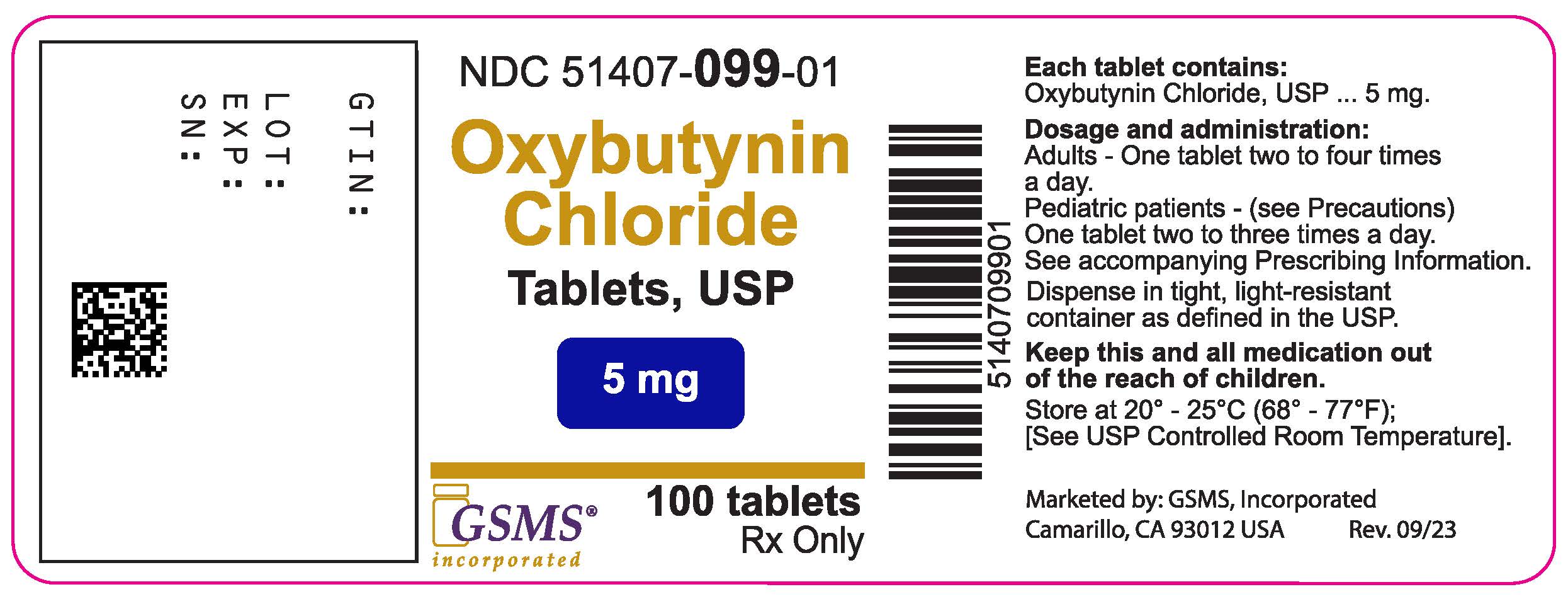
Oxybutynin Chloride 5 mg Tablet, 100-count — NDC 51407-099-01 (Billing 51407-0099-01)
This is a package of 100 tablets of Oxybutynin Chloride 5 mg Tablet from Golden State Medical Supply, Inc., marketed since Oct 2017 and currently FDA-listed. It is the main listing for this product, which comes in 2 package sizes.
NDC database record
One package, one record: these facts belong to NDC 51407-099-01 alone.
- Record
- FDA NDC Directory package listing · Human prescription drug
- Code segments
- 51407 labeler · 099 product · 01 package
- Package marketed since
- Jun 7, 2018
- Sample package
- No — commercial package
- Listing certified through
- Dec 31, 2026
- Billing quantity
- 100 EA per package
- Barcode (UPC-A, from the NDC)
- 3 5140709901 3
- FDA record last changed
- Jul 24, 2026
Identity & classification
Regulatory identifiers FDA, NLM and CMS codes for this package
Drug-database identifiers Medi-Span GPI and First Databank GCN / HICL / AHFS classification
- GSN (GCN sequence number): 004929
- GCN: 19380
- GPI-14 (Medi-Span): 54100045200330
- HICL (First Databank): 002048
- AHFS class code: 86:12.04.00
- RxCUI (RxNorm): 863664
Where does this data come from?
- FDA openFDA NDC Directory · synced Oct 8, 2026
- FDA label on DailyMed · label index refreshed Oct 8, 2026
- RxNorm (NLM RxNav) · catalog refreshed Oct 1, 2026
- Medi-Span GPI (licensed)
- First Databank (licensed) · refreshed Oct 8, 2026
RxNorm drug class
This medicine belongs to the Cholinergic Muscarinic Antagonist class.
Where does this data come from?
- RxClass (NLM) · catalog refreshed Oct 1, 2026
Clinical
Oxybutynin is used to treat overactive bladder (a bladder condition that causes sudden urges to urinate that may be hard to control) and to control bladder muscles weakened in certain nerve conditions. Oxybutynin is in a class of medications called anticholinergics/antimuscarinics. It works by relaxing the bladder muscles.
Read the full MedlinePlus article ↗- Oxybutynin calms down an overactive bladder by relaxing the bladder muscle and reducing those sudden, hard-to-ignore urges to go. Over time, most people find they have fewer urgent...
- What exactly is oxybutynin supposed to do for me?
- Yes, dry mouth is the most common side effect of oxybutynin — and it's more noticeable with the immediate-release tablets than the extended-release form. Sipping water throughout t...
- My mouth is incredibly dry since starting this — is that normal?
Patient education
Supplement & herbal interactions
Where does this data come from?
- MedlinePlus (NLM) · refreshed Oct 8, 2026
- FDA label on DailyMed · label index refreshed Oct 8, 2026
Ask a licensed pharmacist directly — free, answered by our team.
Pricing
A drug doesn't have one price. Each row is a different public payment system, and none is what you'd pay at the counter — that depends on your insurance. The ⓘ on each row explains what it measures.
| Price system | Per each | Per package |
|---|---|---|
| Retail pharmacies payNADAC · weekly | Not in the retail survey — common for institutional, discontinued, or low-volume packs. | |
| Medicaid paysCMS SDUD · 12 mo | No recent Medicaid claims on file for this NDC — rare and low-volume NDCs are suppressed in the public data. | |
| Medicare drug plans payPart D · Q2 2026 | $0.1412 | $14.12 / 100 tablets |
Where does this data come from?
- CMS NADAC weekly file
- CMS ASP pricing files · refreshed Sep 20, 2026
- CMS Medicaid State Drug Utilization Data · refreshed Oct 8, 2026
- CMS Part D plan pricing files · refreshed Sep 24, 2026
- VA National Acquisition Center price file
Packaging — all sizes for this product
| Package NDC | Description | Marketing start | Marketing end | Status |
|---|---|---|---|---|
| 51407-0099-01 You're viewing this Main listing | 100 TABLET in 1 BOTTLE | 2018-06-07 | — | Active |
| 51407-0099-05 51407-099-05 | 500 TABLET in 1 BOTTLE | 2018-06-07 | — | Active |
You're viewing the smallest of 2 pack sizes for this product.
Pack size FAQ
What quantity is in this package?
How does this package differ from NDC 51407-0099-05?
What NDC number is used to bill for this package of Oxybutynin Chloride 5 mg Tablet?
Therapeutic equivalents
| Product | Labeler | Pack | NADAC/unit | TE | Status | Price vs. this |
|---|---|---|---|---|---|---|
| Oxybutynin Chloride 5 mg 00832-0038-00 | Upsher-Smith | 100 tablets | $0.048 | AB | Availability likely | — |
| Oxybutynin Chloride 5 mg 00904-7027-61 | Major | 100 tablets | $0.048 | AB | Availability likely | — |
| Oxybutynin Chloride 5 mg 10702-0201-01 | KVK-Tech, | 100 tablets | $0.048 | AB | Availability likely | — |
| Oxybutynin Chloride 5 mg 23155-0810-01 | Heritage | 100 tablets | $0.048 | AB | Availability likely | — |
| Oxybutynin Chloride 5 mg 23155-0913-01 | Heritage | 100 tablets | $0.048 | AB | Availability likely | — |
| Oxybutynin Chloride 5 mg 50111-0456-01 | Teva | 100 tablets | $0.048 | AB | Availability likely | — |
| Oxybutynin Chloride 5 mg 52817-0260-10 | TruPharma | 100 tablets | $0.048 | AB | Availability likely | — |
| Oxybutynin Chloride 5 mg 60687-0899-01 | American | 100 tablets | $0.048 | AB | Availability likely | — |
| Oxybutynin Chloride 5 mg 64380-0162-01 | Strides | 100 tablets | $0.048 | AB | Availability likely | — |
| Oxybutynin Chloride 5 mg 64980-0431-01 | RISING | 100 tablets | $0.048 | AB | Availability likely | — |
| Oxybutynin Chloride 5 mg 69315-0182-01 | Leading | 100 tablets | $0.048 | AB | Availability likely | — |
| Oxybutynin Chloride 5 mg 70954-0005-10 | ANI | 100 tablets | $0.048 | AB | Availability likely | — |
| Oxybutynin Chloride 5 mg 00615-8492-05 | NCS | 15 tablets | — | AB | FDA listed | — |
| Oxybutynin Chloride 5 mg 42291-0456-50 | AvKARE | 500 tablets | — | AB | FDA listed | — |
| Oxybutynin Chloride 5 mg 43063-0851-01 | PD-Rx | 100 tablets | — | AB | FDA listed | — |
| Oxybutynin Chloride 5 mg 43063-0931-30 | PD-Rx | 30 tablets | — | AB | FDA listed | — |
| Oxybutynin Chloride 5 mg 43353-0978-92 | Aphena | 270 tablets | — | AB | FDA listed | — |
| Oxybutynin Chloride 5 mg 50090-4622-00 | A-S | 30 tablets | — | AB | FDA listed | — |
| Oxybutynin Chloride 5 mg 50090-6199-00 | A-S | 30 tablets | — | AB | FDA listed | — |
| Oxybutynin Chloride 5 mg 50090-6638-00 | A-S | 30 tablets | — | AB | FDA listed | — |
| Oxybutynin Chloride 5 mg 50090-6966-00 | A-S | 30 tablets | — | AB | FDA listed | — |
| Oxybutynin Chloride 5 mg 50090-6967-00 | A-S | 90 tablets | — | AB | FDA listed | — |
| Oxybutynin Chloride 5 mg 50090-7766-00 | A-S | 90 tablets | — | AB | FDA listed | — |
| Oxybutynin Chloride 5 mgthis 51407-0099-01 | Golden | 100 tablets | — | AB | FDA listed | — |
| Oxybutynin Chloride 5 mg 51655-0665-25 | Northwind | 60 tablets | — | AB | FDA listed | — |
| Oxybutynin Chloride 5 mg 55154-2632-00 | Cardinal | 10 tablets | — | AB | FDA listed | — |
| Oxybutynin Chloride 5 mg 63187-0749-30 | Proficient | 30 tablets | — | AB | FDA listed | — |
| Oxybutynin Chloride 5 mg 64380-0781-03 | Strides | 60 tablets | — | AB | FDA listed | — |
| Oxybutynin Chloride 5 mg 64980-0679-01 | RISING | 100 tablets | — | AB | FDA listed | — |
| Oxybutynin Chloride 5 mg 66267-0642-30 | NuCare | 30 tablets | — | AB | FDA listed | — |
| Oxybutynin Chloride 5 mg 67296-2045-03 | Redpharm | 30 tablets | — | AB | FDA listed | — |
| Oxybutynin Chloride 5 mg 68788-8141-09 | Preferred | 90 tablets | — | AB | FDA listed | — |
| Oxybutynin Chloride 5 mg 70518-2640-00 | REMEDYREPACK | 30 tablets | — | AB | FDA listed | — |
| Oxybutynin Chloride 5 mg 71335-0519-01 | Bryant | 30 tablets | — | AB | FDA listed | — |
| Oxybutynin Chloride 5 mg 71335-1014-01 | Bryant | 30 tablets | — | AB | FDA listed | — |
| Oxybutynin Chloride 5 mg 71335-1494-01 | Bryant | 30 tablets | — | AB | FDA listed | — |
| Oxybutynin Chloride 5 mg 71610-0277-53 | Aphena | 60 tablets | — | AB | FDA listed | — |
| Oxybutynin Chloride 5 mg 71610-0394-53 | Aphena | 60 tablets | — | AB | FDA listed | — |
| Oxybutynin Chloride 5 mg 71610-0860-30 | Aphena | 30 tablets | — | AB | FDA listed | — |
| Oxybutynin Chloride 5 mg 72189-0130-30 | direct | 30 tablets | — | AB | FDA listed | — |
| Oxybutynin Chloride 5 mg 72789-0417-30 | PD-Rx | 30 tablets | — | AB | FDA listed | — |
| Oxybutynin Chloride 5 mg 72789-0490-60 | PD-Rx | 60 tablets | — | AB | FDA listed | — |
| Oxybutynin Chloride 5 mg 82868-0047-30 | Northwind | 30 tablets | — | AB | FDA listed | — |
| Oxybutynin Chloride 5 mg 83939-0022-01 | VERITYRX, | 1 tablet | — | AB | FDA listed | — |
| Oxybutynin Chloride 5 mg 67046-1381-03 | Coupler | 30 tablets | — | AB | FDA listed | — |
| Oxybutynin Chloride 5 mg 50090-8078-00 | A-S | 30 tablets | — | AB | FDA listed | — |
Where does this data come from?
- FDA openFDA NDC Directory · synced Oct 8, 2026
- FDA Orange Book · refreshed Oct 3, 2026
- CMS NADAC weekly file
Availability & generic status
This product is an FDA-approved generic. Other versions of the same drug are listed under Therapeutic equivalents, least expensive first.
Where does this data come from?
- FDA Orange Book · refreshed Oct 3, 2026
Inactive Ingredients / Excipients
Inactive ingredients, also called excipients, are components of the drug product other than the active ingredient. They may include fillers, dyes, coatings, preservatives, flavors, or other formulation ingredients.
🧪 Avoiding an ingredient? See Oxybutynin inactive ingredients by manufacturer: every current product's list side by side, so you can ask your pharmacy for the version that does not list it.
💡 Tap an ingredient (hover on desktop) to see what it is and why it’s used.
-
UNII 3SY5LH9PMK
Anhydrous lactose is a milk sugar with no water content. It acts as a filler and binder in tablets and capsules, adding bulk and helping ingredients stick together.
-
UNII OP1R32D61U
Microcrystalline cellulose is a purified form of cellulose, a natural fiber from plant sources. It acts as a binder and filler in tablets and capsules, helping hold ingredients together and give the medicine its shape and size.
-
UNII M28OL1HH48
Croscarmellose sodium is a plant-based substance derived from cellulose. It acts as a disintegrant, helping tablets and capsules break down quickly in the digestive system so the medicine can be absorbed.
-
UNII 70097M6I30
Magnesium stearate is a salt made from magnesium and stearic acid, a fatty substance. It's used in tablets and capsules as a lubricant and glidant to help ingredients flow smoothly during manufacturing and prevent sticking.
4 inactive ingredients listed in the exact product block matched to this NDC.
Where does this data come from?
ingredient classCode="IACT" elements from the exact product block matched by this NDC. Label-section narrative from DailyMed / the openFDA label index is shown separately when available.- FDA label on DailyMed · label index refreshed Oct 8, 2026
- FDA openFDA NDC Directory · synced Oct 8, 2026
Inactive ingredient FAQ
Are inactive ingredients the same for every manufacturer?
Why might an inactive ingredient be missing?
Can inactive ingredients matter?
Manufacturer & labeler
More NDCs from Golden State Medical Supply, Inc. labeler code 51407
- Colchicine .6 mg Tablet, Film Coated NDC 51407-082-01
- Cefpodoxime Proxetil 100 mg Tablet, Film Coated NDC 51407-083-20
- Cefpodoxime Proxetil 200 mg Tablet, Film Coated NDC 51407-084-20
- Felodipine 5 mg Tablet, Film Coated NDC 51407-088-01
- Felodipine 10 mg Tablet, Film Coated NDC 51407-089-01
- Fenofibrate 54 mg Tablet, Film Coated NDC 51407-093-90
- Atomoxetine Hydrochloride 10 mg Capsule NDC 51407-100-30
- Atomoxetine Hydrochloride 18 mg Capsule NDC 51407-101-30
- Atomoxetine Hydrochloride 25 mg Capsule NDC 51407-102-30
- Atomoxetine Hydrochloride 40 mg Capsule NDC 51407-103-30
- Atomoxetine Hydrochloride 60 mg Capsule NDC 51407-104-30
- Atomoxetine Hydrochloride 80 mg Capsule NDC 51407-105-30
Where does this data come from?
- FDA openFDA NDC Directory · synced Oct 8, 2026
- Drugs@FDA
Full prescribing information FDA SPL
🎯 Indications and Usage ▾
INDICATIONS & USAGE Oxybutynin chloride tablets, USP are indicated for the relief of symptoms of bladder instability associated with voiding in patients with uninhibited neurogenic or reflex neurogenic bladder (i.e., urgency, frequency, urinary leakage, urge incontinence, dysuria).
⏱️ Dosage and Administration ▾
DOSAGE & ADMINISTRATION Adults The usual dose is one 5-mg tablet two to three times a day. The maximum recommended dose is one 5-mg tablet four times a day. A lower starting dose of 2.5 mg two or three times a day is recommended for the frail elderly. Pediatric patients over 5 years of age The usual dose is one 5-mg tablet two times a day. The maximum recommended dose is one 5-mg tablet three times a day.
⛔ Contraindications ▾
CONTRAINDICATIONS Oxybutynin chloride tablets are contraindicated in patients with urinary retention, gastric retention and other severe decreased gastrointestinal motility conditions, uncontrolled narrow-angle glaucoma and in patients who are at risk for these conditions. Oxybutynin chloride tablets are also contraindicated in patients who have demonstrated hypersensitivity to the drug substance or other components of the product.
⚠️ Warnings ▾
WARNINGS Angioedema of the face, lips, tongue and/or larynx has been reported with oxybutynin. In some cases, angioedema occurred after the first dose. Angioedema associated with upper airway swelling may be life-threatening. If involvement of the tongue, hypopharynx, or larynx occurs, oxybutynin should be promptly discontinued and appropriate therapy and/or measures necessary to ensure a patent airway should be promptly provided.
🤒 Adverse Reactions ▾
ADVERSE REACTIONS The safety and efficacy of oxybutynin chloride was evaluated in a total of 199 patients in three clinical trials. These participants were treated with oxybutynin chloride 5 to 20 mg/day for up to 6 weeks. Table 3 shows the incidence of adverse events judged by investigators to be at least possibly related to treatment and reported by at least 5% of patients.
Table 3 Incidence (%) of Adverse Events Reported by ≥ 5% of Patients Using Oxybutynin Chloride (5 to 20 mg/day) Body System Adverse Event Oxybutynin Chloride (5 to 20 mg/day) (n=199) Infections and Infestations Urinary tract infection 6.5% Psychiatric Disorders Insomnia 5.5% Nervousness 6.5% Nervous System Disorders Dizziness 16.6% Somnolence 14.0% Headache 7.5% Eye Disorders Blurred vision 9.6% Gastrointestinal Disorders Dry mouth 71.4% Constipation 15.1% Nausea 11.6% Dyspepsia 6.0% Renal and Urinary Disorders Urinary Hesitation 8.5% Urinary Retention 6.0% The most common adverse events reported by patients receiving oxybutynin chloride 5 to 20 mg/day were the expected side effects of anticholinergic agents.
The incidence of dry mouth was dose-related. In addition, the following adverse events were reported by 1 to <5% of patients using oxybutynin chloride (5 to 20 mg/day) in all studies. Infections and Infestations : nasopharyngitis, upper respiratory tract infection, bronchitis, cystitis, fungal infection; Metabolism and Nutrition Disorders : fluid retention; Psychiatric Disorders : confusional state; Nervous System Disorders : dysgeusia, sinus headache; Eye Disorders : kerato conjunctivitis sicca, eye irritation; Cardiac Disorders : palpitations, sinus arrhythmia; Vascular Disorders : flushing; Respiratory, thoracic and Mediastinal Disorders : nasal dryness, cough, pharyngolaryngeal pain, dry throat, sinus congestion, hoarseness, asthma, nasal congestion; Gastrointestinal Disorders : diarrhea, abdominal pain, loose stools, flatulence, vomiting, abdominal pain upper, dysphagia, aptyalism, eructation, tongue coated; Skin and Subcutaneous Tissue Disorders : dry skin, pruritis; Musculoskeletal and Connective Tissue Disorders : back pain, arthralgia, pain in extremity, flank pain; Renal and Urinary Disorders : dysuria, pollakiuria; General Disorders and Administration Site Conditions : fatigue, edema peripheral, asthenia, pain, thirst, edema; Investigations : blood pressure increased, blood glucose increased, blood pressure decreased; Injury, Poisoning, and Procedural Complications : fall.
Postmarketing Surveillance Because postmarketing adverse events are reported voluntarily from a population of uncertain size, it is not always possible to reliably estimate their frequency or establish a causal relationship to drug exposure. The following additional adverse events have been reported from worldwide postmarketing experience with oral oxybutynin chloride: Psychiatric Disorders : psychotic disorder, agitation, hallucinations, memory impairment; Nervous System Disorders : convulsions; Eye Disorders : cycloplegia, mydriasis, glaucoma; Cardiac Disorders : tachycardia, QT interval prolongation, chest discomfort; Gastrointestinal Disorders : decreased gastrointestinal motility, frequent bowel movements; Skin and Subcutaneous Tissue Disorders : rash, decreased sweating; Renal and Urinary Disorders : impotence; Reproductive System and Breast Disorders : Suppression of lactation; General Disorders and Administration Site Conditions: hypersensitivity reactions, including angioedema with airway obstruction, urticaria, and face edema; rare anaphylactic reactions requiring hospitalization for emergency treatment; Metabolism and Nutrition Disorders : anorexia; Respiratory, Thoracic and Mediastinal Disorders : dysphonia.
🔄 Drug Interactions ▾
Drug Interactions The concomitant use of oxybutynin with other anticholinergic drugs or with other agents which produce dry mouth, constipation, somnolence (drowsiness), and/or other anticholinergic-like effects may increase the frequency and/or severity of such effects. Anticholinergic agents may potentially alter the absorption of some concomitantly administered drugs due to anticholinergic effects on gastrointestinal motility. This may be of concern for drugs with a narrow therapeutic index.
Anticholinergic agents may also antagonize the effects of prokinetic agents, such as metoclopramide. Mean oxybutynin chloride plasma concentrations were approximately 3 to 4 fold higher when oxybutynin was administered with ketoconazole, a potent CYP3A4 inhibitor. Other inhibitors of the cytochrome P450 3A4 enzyme system, such as antimycotic agents (e.g., itraconazole and miconazole) or macrolide antibiotics (e.g., erythromycin and clarithromycin), may alter oxybutynin mean pharmacokinetic parameters (i.e., C max and AUC).
The clinical relevance of such potential interactions is not known. Caution should be used when such drugs are co-administered.
🤰 Pregnancy ▾
Pregnancy Teratogenic Effects Category B. Reproduction studies using oxybutynin chloride in the hamster, rabbit, rat, and mouse have shown no definite evidence of impaired fertility or harm to the animal fetus. The safety of oxybutynin chloride administered to women who are or who may become pregnant has not been established.
Therefore, oxybutynin chloride should not be given to pregnant women unless, in the judgment of the physician, the probable clinical benefits outweigh the possible hazards.
🧒 Pediatric Use ▾
Pediatric Use The safety and efficacy of oxybutynin chloride administration have been demonstrated for pediatric patients 5 years of age and older (see DOSAGE AND ADMINISTRATION ). The safety and efficacy of oxybutynin chloride tablets were studied in 30 children in a 24 week, open-label trial. Patients were aged 5 to 15 years, all had symptoms of detrusor overactivity in association with a neurological condition (e.g., spina bifida), all used clean intermittent catheterization, and all were current users of oxybutynin chloride.
Study results demonstrated that the administration of oxybutynin chloride was associated with improvement in clinical and urodynamic parameters. At total daily doses ranging from 5 mg to 15 mg, treatment with oxybutynin chloride tablets was associated with an increase from baseline in mean urine volume per catheterization from 122 mL to 145 mL, an increase from baseline in mean urine volume after morning awakening from 148 mL to 168 mL, and an increase from baseline in the mean percentage of catheterizations without a leaking episode from 43% to 61%.
Urodynamic results in these patients were consistent with the clinical results. Treatment with oxybutynin chloride tablets was associated with an increase from baseline in maximum cystometric capacity from 230 mL to 279 mL, a decrease from baseline in mean detrusor pressure at maximum cystometric capacity from 36 cm H 2 O to 33 cm H 2 O, and a reduction in the percentage of patients demonstrating uninhibited detrusor contractions (of at least 15 cm H 2 O) from 39% to 20%. As there is insufficient clinical data for pediatric populations under age 5, oxybutynin chloride is not recommended for this age group.
🧓 Geriatric Use ▾
Geriatric Use Clinical studies of oxybutynin chloride did not include sufficient numbers of subjects age 65 and over to determine whether they respond differently from younger patients. Other reported clinical experience has not identified differences in responses between healthy elderly and younger patients; however, a lower initial starting dose of 2.5 mg given 2 or 3 times a day has been recommended for the frail elderly due to a prolongation of the elimination half-life from 2 to 3 hours to 5 hours . 2,3,4 In general, dose selection for an elderly patient should be cautious, usually starting at the low end of the dosing range, reflecting the greater frequency of decreased hepatic, renal, or cardiac function, and of concomitant disease or other drug therapy.
🆘 Overdosage ▾
OVERDOSAGE Treatment should be symptomatic and supportive. Activated charcoal as well as a cathartic may be administered. Overdosage with oxybutynin chloride has been associated with anticholinergic effects including central nervous system excitation (e.g., restlessness, tremor, irritability, convulsions, delirium, hallucinations), flushing, fever, dehydration, cardiac arrhythmia, vomiting, and urinary retention.
Other symptoms may include hypotension or hypertension, respiratory failure, paralysis, and coma. Ingestion of 100 mg oxybutynin chloride in association with alcohol has been reported in a 13-year-old boy who experienced memory loss, and a 34-year-old woman who developed stupor, followed by disorientation and agitation on awakening, dilated pupils, dry skin, cardiac arrhythmia, and retention of urine. Both patients fully recovered with symptomatic treatment.
🧬 Clinical Pharmacology ▾
CLINICAL PHARMACOLOGY Oxybutynin chloride exerts a direct antispasmodic effect on smooth muscle and inhibits the muscarinic action of acetylcholine on smooth muscle. Oxybutynin chloride exhibits only one fifth of the anticholinergic activity of atropine on the rabbit detrusor muscle, but four to ten times the antispasmodic activity. No blocking effects occur at skeletal neuromuscular junctions or autonomic ganglia (antinicotinic effects).
Oxybutynin chloride relaxes bladder smooth muscle. In patients with conditions characterized by involuntary bladder contractions, cystometric studies have demonstrated that oxybutynin chloride increases bladder (vesical) capacity, diminishes the frequency of uninhibited contractions of the detrusor muscle, and delays the initial desire to void. Oxybutynin chloride thus decreases urgency and the frequency of both incontinent episodes and voluntary urination.
Antimuscarinic activity resides predominately in the R-isomer. A metabolite, desethyloxybutynin, has pharmacological activity similar to that of oxybutynin in in vitro studies. Pharmacokinetics Absorption Following oral administration of oxybutynin chloride tablets, oxybutynin is rapidly absorbed achieving C max within an hour, following which plasma concentration decreases with an effective half-life of approximately 2 to 3 hours.
The absolute bioavailability of oxybutynin is reported to be about 6% (range 1.6 to 10.9%) for the tablets. Wide interindividual variation in pharmacokinetic parameters is evident following oral administration of oxybutynin. The mean pharmacokinetic parameters for R- and S-oxybutynin are summarized in Table 1 .
The plasma concentration-time profiles for R- and S-oxybutynin are similar in shape; Figure 1 shows the profile for R-oxybutynin. Table 1 Mean (SD) R-and S-Oxybutynin Pharmacokinetic Parameters Following Three Doses of Oxybutynin Chloride 5 mg Administered every 8 Hours (n=23) Parameters (units) R-Oxybutynin S-Oxybutynin C max (ng/mL) 3.6 (2.2) 7.8 (4.1) T max (h) 0.89 (0.34) 0.65 (0.32) AUC t (ng•h/mL) 22.6 (11.3) 35.0 (17.3) AUC inf (ng•h/mL) 24.3 (12.3) 37.3 (18.7) Figure 1 . Mean R-Oxybutynin Plasma Concentrations Following Three Doses of Oxybutynin Chloride 5 mg Administered Every 8 Hours for 1 Day in 23 Healthy Adult Volunteers.
Oxybutynin chloride steady-state pharmacokinetics were also studied in 11 pediatric patients with detrusor overactivity associated with a neurological condition (e.g., spina bifida). These pediatric patients were on oxybutynin chloride tablets with total daily dose ranging from 7.5 mg to 15 mg (0.22 to 0.53 mg/kg). Overall, most patients (86.9%) were taking a total daily oxybutynin chloride dose between 10 mg and 15 mg.
Sparse sampling technique was used to obtain serum samples. When all available data are normalized to an equivalent of 5 mg twice daily oxybutynin chloride, the mean pharmacokinetic parameters derived for R- and S-oxybutynin and R- and S-desethyloxybutynin are summarized in Table 2 . The plasma-time concentration profiles for R- and S-oxybutynin are similar in shape; Figure 2 shows the profile for R-oxybutynin when all available data are normalized to an equivalent of 5 mg twice daily.
Table 2 Mean ± SD R- and S-Oxybutynin and R- and S-Desethyloxybutynin Pharmacokinetic Parameters in Children Aged 5 to 15 Following Administration of 7.5 mg to 15 mg Total Daily Dose of Oxybutynin Chloride Tablets (N=11) All Available Data Normalized to an Equivalent of Oxybutynin Chloride Tablets 5 mg BID or TID at Steady State R-Oxybutynin S-Oxybutynin R-Desethyloxybutynin S-Desethyloxybutynin C max * (ng/mL) 6.1 ± 3.2 10.1 ± 7.5 55.4 ± 17.9 28.2 ±
10.0T max (hr) 1.0 1.0 2.0
2.0AUC † (ng•hr/mL) 19.8 ± 7.4 28.4 ± 12.7 238.8 ± 77.6 119.5 ± 50.7 *Reflects C max for pooled data † AUC 0-end of dosing interval Figure 2 . Mean steady-state (±SD) R-oxybutynin plasma concentrations following administration of total daily Oxybutynin Chloride Tablet dose of 7.5 mg to 15 mg (0.22 mg/kg… [Excerpted — this section continues on DailyMed.]
📦 How Supplied / Storage and Handling ▾
HOW SUPPLIED Oxybutynin Chloride Tablets, USP 5 mg are white, round, biconvex tablets debossed with “n005” on one side and bisect on the other side. They are supplied as follows: NDC 51407- 099 -01 Bottles of 100 Tablets NDC 51407- 099 -05 Bottles of 500 Tablets Pharmacist: Dispense in tight, light-resistant container as defined in the USP. Store at 20° to 25°C (68° to 77°F) [see USP Controlled Room Temperature].
📋 Description ▾
DESCRIPTION Each scored oxybutynin chloride tablet, USP contains 5 mg of oxybutynin chloride. Chemically, oxybutynin chloride is d, l (racemic) 4-diethylamino-2-butynyl phenylcyclohexylglycolate hydrochloride. The molecular formula of oxybutynin chloride is C 22 H 31 NO 3 •HCl.
The structural formula appears below: Oxybutynin chloride, USP is a white crystalline solid with a molecular weight of 393.95. It is readily soluble in water and acids, but relatively insoluble in alkalis. Oxybutynin chloride Tablets, USP also contains anhydrous lactose, croscarmellose sodium, magnesium stearate, microcrystalline cellulose.
Oxybutynin chloride tablets, USP are for oral administration. Therapeutic Category: Antispasmodic, anticholinergic. Meets USP Dissolution Test 2.
STRUCTURE
💬 Information for Patients ▾
Information for Patients Patients should be informed that oxybutynin may produce angioedema that could result in life-threatening airway obstruction. Patients should be advised to promptly discontinue oxybutynin therapy and seek immediate medical attention if they experience edema of the tongue, edema of the laryngopharynx, or difficulty breathing. Patients should be informed that heat prostration (fever and heat stroke due to decreased sweating) can occur when anticholinergics such as oxybutynin chloride are administered in the presence of high environmental temperature.
Because anticholinergic agents such as oxybutynin may produce drowsiness (somnolence), or blurred vision, patients should be advised to exercise caution. Patients should be informed that alcohol may enhance the drowsiness caused by anticholinergic agents such as oxybutynin.
⚠️ Precautions ▾
PRECAUTIONS Central Nervous System Effects Oxybutynin is associated with anticholinergic central nervous system (CNS) effects (See ADVERSE REACTIONS ). A variety of CNS anticholinergic effects have been reported, including hallucinations, agitation, confusion and somnolence. Patients should be monitored for signs of anticholinergic CNS effects, particularly in the first few months after beginning treatment or increasing the dose.
If a patient experiences anticholinergic CNS effects, dose reduction or drug discontinuation should be considered. Oxybutynin chloride should be used with caution in patients with preexisting dementia treated with cholinesterase inhibitors due to the risk of aggravation of symptoms. Oxybutynin chloride should be used with caution in patients with Parkinson’s disease due to the risk of aggravation of symptoms.
General Oxybutynin chloride should be used with caution in the frail elderly, in patients with hepatic or renal impairment, and in patients with myasthenia gravis. Oxybutynin chloride may aggravate the symptoms of hyperthyroidism, coronary heart disease, congestive heart failure, cardiac arrhythmias, hiatal hernia, tachycardia, hypertension, myasthenia gravis, and prostatic hypertrophy. Urinary Retention Oxybutynin chloride should be administered with caution to patients with clinically significant bladder outflow obstruction because of the risk of urinary retention (see CONTRAINDICATIONS ).
Gastrointestinal Disorders Oxybutynin chloride should be used with caution in patients with autonomic neuropathy due to the risk of aggravation of symptoms of decreased gastrointestinal motility. Oxybutynin chloride should be administered with caution to patients with gastrointestinal obstructive disorders because of the risk of gastric retention (see CONTRAINDICATIONS ). Administration of oxybutynin chloride to patients with ulcerative colitis may suppress intestinal motility to the point of producing a paralytic ileus and precipitate or aggravate toxic megacolon, a serious complication of the disease.
Oxybutynin chloride, like other anticholinergic drugs, may decrease gastrointestinal motility and should be used with caution in patients with conditions such as ulcerative colitis, and intestinal atony. Oxybutynin chloride should be used with caution in patients who have gastroesophageal reflux and/or who are concurrently taking drugs (such as bisphosphonates) that can cause or exacerbate esophagitis. Information for Patients Patients should be informed that oxybutynin may produce angioedema that could result in life-threatening airway obstruction.
Patients should be advised to promptly discontinue oxybutynin therapy and seek immediate medical attention if they experience edema of the tongue, edema of the laryngopharynx, or difficulty breathing. Patients should be informed that heat prostration (fever and heat stroke due to decreased sweating) can occur when anticholinergics such as oxybutynin chloride are administered in the presence of high environmental temperature. Because anticholinergic agents such as oxybutynin may produce drowsiness (somnolence), or blurred vision, patients should be advised to exercise caution.
Patients should be informed that alcohol may enhance the drowsiness caused by anticholinergic agents such as oxybutynin. Drug Interactions The concomitant use of oxybutynin with other anticholinergic drugs or with other agents which produce dry mouth, constipation, somnolence (drowsiness), and/or other anticholinergic-like effects may increase the frequency and/or severity of such effects. Anticholinergic agents may potentially alter the absorption of some concomitantly administered drugs due to anticholinergic effects on gastrointestinal motility.
This may be of concern for drugs with a narrow therapeutic index. Anticholinergic agents may also antagonize the effects of prokinetic agents, such as metoclopramide. Mean oxybutynin chloride plasma concentrations were approximately 3 to 4 fold high… [Excerpted — this section continues on DailyMed.]
🍼 Nursing Mothers ▾
Nursing Mothers It is not known whether this drug is excreted in human milk. Because many drugs are excreted in human milk, caution should be exercised when oxybutynin chloride is administered to a nursing woman.
📚 References ▾
REFERENCES 1. Yong C et al. Effect of Food on the Pharmacokinetics of Oxybutynin in normal subjects.
Pharm Res. 1991; 8 (Suppl.): S-320. 2.
Hughes KM et al. Measurement of oxybutynin and its N-desethyl metabolite in plasma, and its application to pharmacokinetic studies in young, elderly and frail elderly volunteers. Xenobiotica .
1992; 22 (7): 859-869. 3. Ouslander J et al.
Pharmacokinetics and Clinical Effects of Oxybutynin in Geriatric Patients. J. Urol.
1988; 140: 47-50. 4. Yarker Y et al.
Oxybutynin: A review of its Pharmacodynamic and Pharmacokinetic Properties, and its Therapeutic Use in Detrusor Instability. Drugs & Aging. 1995; 6(3): 243-262.
Manufactured by: Novitium Pharma LLC 70 Lake Drive, East Windsor New Jersey 08520 Issued: 11/2024 LB4461-01 Marketed by: GSMS, Inc. Camarillo, CA 93012 USA
📄 Package Label / Principal Display Panel ▾
PACKAGE LABEL.PRINCIPAL DISPLAY PANEL PRINCIPAL DISPLAY PANEL - 5 MG CONTAINER LABEL - 100'S COUNT NDC 51407- 099 -01 100 Tablets Oxybutynin Chloride Tablets, USP 5 mg Rx only 51407-099-01LB - Oxybutynin Chloride Tablets - Rev. 0923.jpg
Medicare Part D spend CMS · PART D · 2026 (Q1)
About this NDC listing & data coverage
What data is (and isn’t) available for this NDC — tap to expand
| NDC identity (package / product / labeler codes) | ✓ Available |
| Labeler | ✓ Available |
| Product & package description | ✓ Available |
| Marketing category & status | ✓ Available |
| Active ingredient / dosage form / route | ✓ Available |
| FDA label (SPL via DailyMed) | ✓ Available |
| Package photos | ✓ Available |
| Inactive ingredients (structured) | ✓ Available |
| NADAC pharmacy acquisition price (CMS) | — Not published for this NDC CMS publishes NADAC only for NDCs reported in its retail-pharmacy survey. |
| Orange Book / therapeutic-equivalence data | ✓ Available |
| HCPCS J-code billing crosswalk | — Not published for this NDC Most self-administered / retail products have no J-code — that is normal. |
| Medicaid utilization (CMS SDUD) | — Not published for this NDC CMS reports utilization only for NDCs with Medicaid claims above its privacy threshold. |