
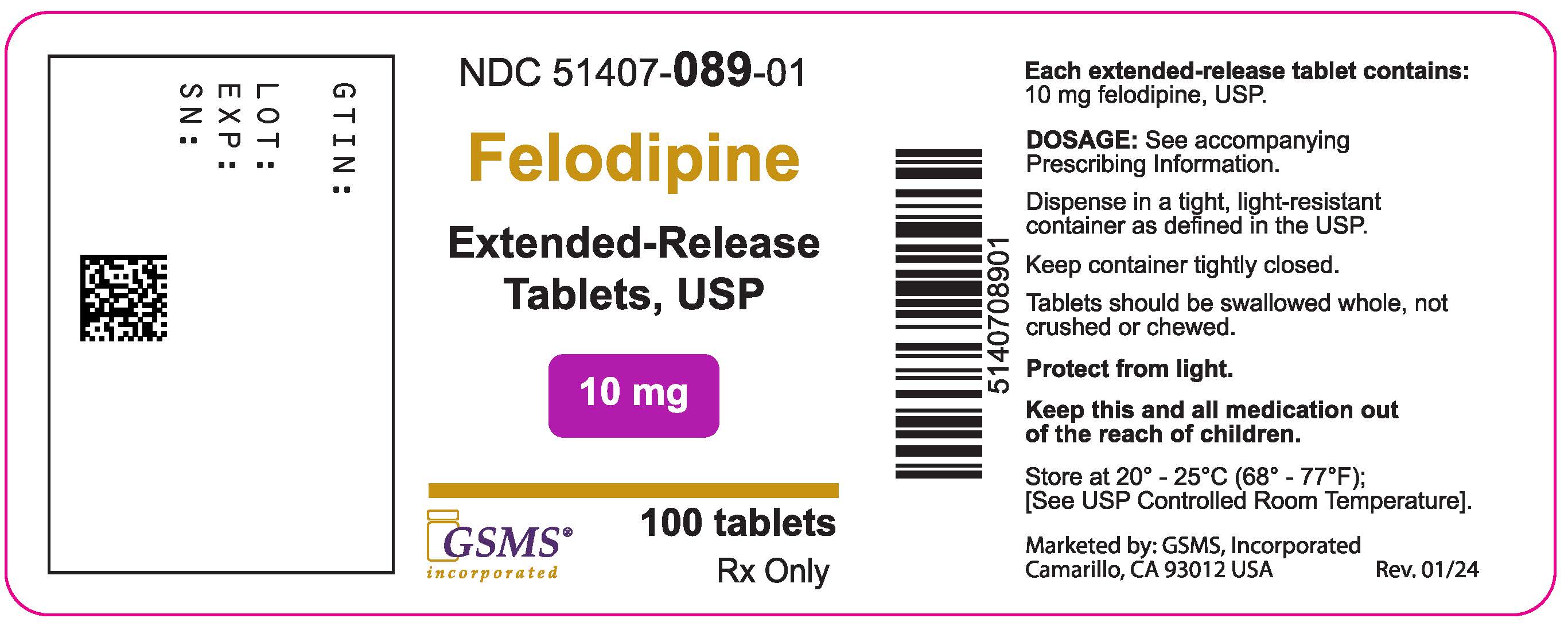
Felodipine 10 mg Tablet, Film Coated, 100-count — NDC 51407-089-01 (Billing 51407-0089-01)
This is a package of 100 tablets of Felodipine 10 mg Tablet, Film Coated from Golden State Medical Supply, Inc., marketed since Apr 2019 and currently FDA-listed. It is the main listing for this product, which comes in 2 package sizes.
NDC database record
One package, one record: these facts belong to NDC 51407-089-01 alone.
- Record
- FDA NDC Directory package listing · Human prescription drug
- Code segments
- 51407 labeler · 089 product · 01 package
- Package marketed since
- Mar 13, 2020
- Sample package
- No — commercial package
- Listing certified through
- Dec 31, 2026
- Billing quantity
- 100 EA per package
- Barcode (UPC-A, from the NDC)
- 3 5140708901 4
- FDA record last changed
- Jul 24, 2026
Identity & classification
Regulatory identifiers FDA, NLM and CMS codes for this package
Drug-database identifiers Medi-Span GPI and First Databank GCN / HICL / AHFS classification
- GSN (GCN sequence number): 016296
- GCN: 02622
- GPI-14 (Medi-Span): 34000013007520
- HICL (First Databank): 006205
- AHFS class code: 24:28.08.00
- RxCUI (RxNorm): 402695
Where does this data come from?
- FDA openFDA NDC Directory · synced Oct 8, 2026
- FDA label on DailyMed · label index refreshed Oct 8, 2026
- RxNorm (NLM RxNav) · catalog refreshed Oct 8, 2026
- Medi-Span GPI (licensed)
- First Databank (licensed) · refreshed Oct 8, 2026
RxNorm drug class
This medicine belongs to the Dihydropyridine Calcium Channel Blocker class.
Where does this data come from?
- RxClass (NLM) · catalog refreshed Oct 8, 2026
Clinical
Felodipine is used to treat high blood pressure. Felodipine is in a class of medications called calcium channel blockers. It works by relaxing the blood vessels so your heart does not have to pump as hard. High blood pressure is a common condition and when not treated, can cause damage to the brain, heart, blood vessels, kidneys and other parts of the body. Damage to these organs may cause heart disease, a heart attack, heart failure, stroke, kidney failure, loss of vision, and other problems. In addition to taking medication, making lifestyle changes will also help to control your blood press...
Read the full MedlinePlus article ↗- It treats high blood pressure. Keeping your blood pressure down lowers your risk of stroke and heart attack. Many people take it with other blood pressure medicines.
- Take it once a day, either without food or with a light meal. Swallow the tablet whole and never crush or chew it. Follow your prescriber's directions.
- No, avoid it. Grapefruit juice can more than double the amount of felodipine in your body. That can drop your blood pressure too much.
- The most common are swelling in the legs or feet, headache, flushing and dizziness. Tell me or your doctor if the swelling bothers you. Call right away for chest pain, fainting or...
Patient education
Supplement & herbal interactions
Some supplements/herbs that may interact with Felodipine — tap one for details:
Felodipine may be associated with lower levels of 2 nutrients — worth a chat with your pharmacist, not a cause for alarm.
Where does this data come from?
- MedlinePlus (NLM) · refreshed Oct 8, 2026
- FDA label on DailyMed · label index refreshed Oct 8, 2026
Ask a licensed pharmacist directly — free, answered by our team.
Pricing
A drug doesn't have one price. Each row is a different public payment system, and none is what you'd pay at the counter — that depends on your insurance. The ⓘ on each row explains what it measures.
| Price system | Per each | Per package |
|---|---|---|
| Retail pharmacies payNADAC · weekly | Not in the retail survey — common for institutional, discontinued, or low-volume packs. | |
| Medicaid paysCMS SDUD · 12 mo | No recent Medicaid claims on file for this NDC — rare and low-volume NDCs are suppressed in the public data. | |
| Medicare drug plans payPart D · Q2 2026 | $0.3632 | $36.32 / 100 tablets |
Where does this data come from?
- CMS NADAC weekly file
- CMS ASP pricing files · refreshed Sep 20, 2026
- CMS Medicaid State Drug Utilization Data · refreshed Oct 9, 2026
- CMS Part D plan pricing files · refreshed Sep 24, 2026
- VA National Acquisition Center price file
Packaging — all sizes for this product
| Package NDC | Description | Marketing start | Marketing end | Status |
|---|---|---|---|---|
| 51407-0089-01 You're viewing this Main listing | 100 TABLET, FILM COATED in 1 BOTTLE | 2020-03-13 | — | Active |
| 51407-0089-05 51407-089-05 | 500 TABLET, FILM COATED in 1 BOTTLE | 2020-03-13 | — | Active |
You're viewing the smallest of 2 pack sizes for this product.
Pack size FAQ
What quantity is in this package?
How does this package differ from NDC 51407-0089-05?
What NDC number is used to bill for this package of Felodipine 10 mg Tablet, Film Coated?
Therapeutic equivalents
| Product | Labeler | Pack | NADAC/unit | TE | Status | Price vs. this |
|---|---|---|---|---|---|---|
| Felodipine 10 mg 00603-3583-21 | Endo | 100 tablets | $0.135 | AB | Availability likely | — |
| Felodipine 10 mg 13668-0134-01 | Torrent | 100 tablets | $0.135 | AB | Availability likely | — |
| Felodipine 10 mg 23155-0050-01 | Heritage | 100 tablets | $0.135 | AB | Availability likely | — |
| Felodipine 10 mg 57237-0110-01 | Rising | 100 tablets | $0.135 | AB | Availability likely | — |
| Felodipine 10 mg 62135-0648-90 | Chartwell | 90 tablets | $0.135 | AB | Availability likely | — |
| Felodipine 10 mg 68462-0235-01 | Glenmark | 100 tablets | $0.135 | AB | Availability likely | — |
| Felopdipine 10 mg 69367-0266-01 | Westminster | 100 tablets | $0.135 | AB | Availability likely | — |
| Felodipine 10 mg 50090-1124-00 | A-S | 30 tablets | — | AB | FDA listed | — |
| Felodipine 10 mg 50090-5870-00 | A-S | 30 tablets | — | AB | FDA listed | — |
| Felopdipine 10 mg 50090-7206-00 | A-S | 30 tablets | — | AB | FDA listed | — |
| Felodipine 10 mgthis 51407-0089-01 | Golden | 100 tablets | — | AB | FDA listed | — |
| Felodipine 10 mg 61442-0433-01 | Carlsbad | 100 tablets | — | AB | FDA listed | — |
| Felodipine 10 mg 63629-2016-01 | Bryant | 500 tablets | — | AB | FDA listed | — |
| Felodipine 10 mg 63629-2191-01 | Bryant | 100 tablets | — | AB | FDA listed | — |
| Felodipine 10 mg 63629-2192-01 | Bryant | 500 tablets | — | AB | Discontinued | — |
| Felodipine 10 mg 65862-0675-01 | Aurobindo | 100 tablets | — | — | FDA listed | — |
| Felodipine 10 mg 69117-0030-01 | Yiling | 100 tablets | — | AB | FDA listed | — |
| Felodipine 10 mg 71205-0922-00 | Proficient | 100 tablets | — | AB | FDA listed | — |
| Felodipine 10 mg 72162-1160-01 | Bryant | 100 tablets | — | AB | FDA listed | — |
| Felodipine 10 mg 72162-1744-05 | Bryant | 500 tablets | — | AB | FDA listed | — |
Where does this data come from?
- FDA openFDA NDC Directory · synced Oct 8, 2026
- FDA Orange Book · refreshed Oct 3, 2026
- CMS NADAC weekly file
Availability & generic status
This product is an FDA-approved generic. Other versions of the same drug are listed under Therapeutic equivalents, least expensive first.
Where does this data come from?
- FDA Orange Book · refreshed Oct 3, 2026
What it looks like
Where does this data come from?
- FDA label on DailyMed · label index refreshed Oct 8, 2026
Inactive Ingredients / Excipients
Inactive ingredients, also called excipients, are components of the drug product other than the active ingredient. They may include fillers, dyes, coatings, preservatives, flavors, or other formulation ingredients.
🧪 Avoiding an ingredient? See Felodipine inactive ingredients by manufacturer: every current product's list side by side, so you can ask your pharmacy for the version that does not list it.
💡 Tap an ingredient (hover on desktop) to see what it is and why it’s used.
-
UNII REK4960K2U
Butylated hydroxyanisole is a synthetic preservative that prevents oils and fats in medicines from spoiling or becoming rancid. It keeps the medicine stable and extends its shelf life.
-
UNII L11K75P92J
A mineral salt made from calcium and phosphate. It acts as a filler and binder in tablets to add bulk and help hold the medicine together in solid form.
-
UNII 5Y0974F5PW
Hydroxypropyl cellulose is a plant-derived thickener and binder made by chemically treating cellulose. In medicines, it helps hold tablets together, thickens liquids, and can form a protective coating on capsules.
-
UNII B1QE5P712K
Hypromellose 2208 is a plant-derived thickening agent that dissolves in water. It's used as a binder to help hold tablet ingredients together and as a coating on pills to control how quickly the medicine releases in your body.
-
UNII EWQ57Q8I5X
Lactose monohydrate is a natural sugar derived from milk. It serves as a filler and binder in tablets and capsules, helping create the proper size, texture, and consistency of the medicine.
-
UNII 70097M6I30
Magnesium stearate is a salt made from magnesium and stearic acid, a fatty substance. It's used in tablets and capsules as a lubricant and glidant to help ingredients flow smoothly during manufacturing and prevent sticking.
-
UNII U076Q6Q621
Polyethylene glycol 1000 is a synthetic compound made from ethylene oxide. It serves as a solvent, lubricant, and humectant in medicines, helping dissolve active ingredients and improve how the product flows and feels.
-
UNII ETJ7Z6XBU4
Silicon dioxide is a naturally occurring mineral used as a glidant and anti-caking agent. It helps powder ingredients flow smoothly and prevents clumping during manufacturing and storage.
-
UNII 15FIX9V2JP
Titanium dioxide is a bright white mineral powder commonly used as a colorant and opacifying agent. It makes pills and tablets white or lighter in color and helps make coatings non-transparent.
9 inactive ingredients listed in the exact product block matched to this NDC.
Where does this data come from?
ingredient classCode="IACT" elements from the exact product block matched by this NDC. Label-section narrative from DailyMed / the openFDA label index is shown separately when available.- FDA label on DailyMed · label index refreshed Oct 8, 2026
- FDA openFDA NDC Directory · synced Oct 8, 2026
Inactive ingredient FAQ
Are inactive ingredients the same for every manufacturer?
Why might an inactive ingredient be missing?
Can inactive ingredients matter?
Manufacturer & labeler
More NDCs from Golden State Medical Supply, Inc. labeler code 51407
- Quetiapine Fumarate 300 mg Tablet NDC 51407-070-05
- Quetiapine Fumarate 400 mg Tablet NDC 51407-071-01
- Colchicine .6 mg Tablet, Film Coated NDC 51407-082-01
- Cefpodoxime Proxetil 100 mg Tablet, Film Coated NDC 51407-083-20
- Cefpodoxime Proxetil 200 mg Tablet, Film Coated NDC 51407-084-20
- Felodipine 5 mg Tablet, Film Coated NDC 51407-088-01
- Fenofibrate 54 mg Tablet, Film Coated NDC 51407-093-90
- Oxybutynin Chloride 5 mg Tablet NDC 51407-099-01
- Atomoxetine Hydrochloride 10 mg Capsule NDC 51407-100-30
- Atomoxetine Hydrochloride 18 mg Capsule NDC 51407-101-30
- Atomoxetine Hydrochloride 25 mg Capsule NDC 51407-102-30
- Atomoxetine Hydrochloride 40 mg Capsule NDC 51407-103-30
Where does this data come from?
- FDA openFDA NDC Directory · synced Oct 8, 2026
- Drugs@FDA
Full prescribing information FDA SPL
🎯 Indications and Usage ▾
INDICATIONS AND USAGE Felodipine extended-release tablets, USP are indicated for the treatment of hypertension, to lower blood pressure. Lowering blood pressure lowers the risk of fatal and nonfatal cardiovascular events, primarily strokes and myocardial infarctions. These benefits have been seen in controlled trials of antihypertensive drugs from a wide variety of pharmacologic classes including felodipine.
Control of high blood pressure should be part of comprehensive cardiovascular risk management, including, as appropriate, lipid control, diabetes management, antithrombotic therapy, smoking cessation, exercise and limited sodium intake. Many patients will require more than one drug to achieve blood pressure goals. For specific advice on goals and management, see published guidelines, such as those of the National High Blood Pressure Education Program’s Joint National Committee on Prevention, Detection, Evaluation, and Treatment of High Blood Pressure (JNC).
Numerous antihypertensive drugs, from a variety of pharmacologic classes and with different mechanisms of action, have been shown in randomized controlled trials to reduce cardiovascular morbidity and mortality, and it can be concluded that it is blood pressure reduction, and not some other pharmacologic property of the drugs, that is largely responsible for those benefits. The largest and most consistent cardiovascular outcome benefit has been a reduction in the risk of stroke, but reductions in myocardial infarction and cardiovascular mortality also have been seen regularly.
Elevated systolic or diastolic pressure causes increased cardiovascular risk, and the absolute risk increase per mmHg is greater at higher blood pressures, so that even modest reductions of severe hypertension can provide substantial benefit. Relative risk reduction from blood pressure reduction is similar across populations with varying absolute risk, so the absolute benefit is greater in patients who are at higher risk independent of their hypertension (for example, patients with diabetes or hyperlipidemia), and such patients would be expected to benefit from more aggressive treatment to a lower blood pressure goal.
Some antihypertensive drugs have smaller blood pressure effects (as monotherapy) in black patients, and many antihypertensive drugs have additional approved indications and effects (e.g., on angina, heart failure or diabetic kidney disease). These considerations may guide selection of therapy. Felodipine extended-release tablets, USP may be administered with other antihypertensive agents.
⏱️ Dosage and Administration ▾
DOSAGE AND ADMINISTRATION The recommended starting dose is 5 mg once a day. Depending on the patient's response, the dosage can be decreased to 2.5 mg or increased to 10 mg once a day. These adjustments should occur generally at intervals of not less than 2 weeks.
The recommended dosage range is 2.5 mg to 10 mg once daily. In clinical trials, doses above 10 mg daily showed an increased blood pressure response but a large increase in the rate of peripheral edema and other vasodilatory adverse events (see ADVERSE REACTIONS ). Modification of the recommended dosage is usually not required in patients with renal impairment.
Felodipine extended-release tablets should regularly be taken either without food or with a light meal (see CLINICAL PHARMACOLOGY, Pharmacokinetics and Metabolism ). Felodipine extended-release tablets should be swallowed whole and not crushed or chewed. Geriatric Use Patients over 65 years of age are likely to develop higher plasma concentrations of felodipine (see CLINICAL PHARMACOLOGY ).
In general, dose selection for an elderly patient should be cautious, usually starting at the low end of the dosing range (2.5 mg daily). Elderly patients should have their blood pressure closely monitored during any dosage adjustment. Patients with Impaired Liver Function Patients with impaired liver function may have elevated plasma concentrations of felodipine and may respond to lower doses of felodipine extended-release tablets; therefore, patients should have their blood pressure monitored closely during dosage adjustment of felodipine extended-release tablets (see CLINICAL PHARMACOLOGY ).
⛔ Contraindications ▾
CONTRAINDICATIONS Felodipine extended-release tablets are contraindicated in patients who are hypersensitive to this product.
🤒 Adverse Reactions ▾
ADVERSE REACTIONS In controlled studies in the United States and overseas, approximately 3,000 patients were treated with felodipine as either the extended-release or the immediate-release formulation. The most common clinical adverse events reported with felodipine extended-release tablets administered as monotherapy at the recommended dosage range of 2.5 mg to 10 mg once a day were peripheral edema and headache. Peripheral edema was generally mild, but it was age and dose related and resulted in discontinuation of therapy in about 3% of the enrolled patients.
Discontinuation of therapy due to any clinical adverse event occurred in about 6% of the patients receiving felodipine extended-release tablets, principally for peripheral edema, headache, or flushing. Adverse events that occurred with an incidence of 1.5% or greater at any of the recommended doses of 2.5 mg to 10 mg once a day (felodipine extended-release tablets, N = 861; Placebo, N = 334), without regard to causality, are compared to placebo and are listed by dose in the table below. These events are reported from controlled clinical trials with patients who were randomized to a fixed dose of felodipine extended-release tablets or titrated from an initial dose of 2.5 mg or 5 mg once a day.
A dose of 20 mg once a day has been evaluated in some clinical studies. Although the antihypertensive effect of felodipine extended-release tablets is increased at 20 mg once a day, there is a disproportionate increase in adverse events, especially those associated with vasodilatory effects (see DOSAGE AND ADMINISTRATION ). Adverse events that occurred in 0.5% up to 1.5% of patients who received felodipine extended-release tablets in all controlled clinical trials at the recommended dosage range of 2.5 mg to 10 mg once a day, and serious adverse events that occurred at a lower rate, or events reported during marketing experience (those lower rate events are in italics) are listed below.
These events are listed in order of decreasing severity within each category, and the relationship of these events to administration of felodipine extended-release tablets is uncertain: Body as a Whole: Chest pain, facial edema, flu-like illness Cardiovascular: Myocardial infarction, hypotension, syncope, angina pectoris, arrhythmia, tachycardia, premature beats Digestive: Abdominal pain, diarrhea, vomiting, dry mouth, flatulence, acid regurgitation Endocrine: Gynecomastia Hematologic: Anemia Metabolic: ALT (SGPT) increased Musculoskeletal: Arthralgia, back pain, leg pain, foot pain, muscle cramps, myalgia, arm pain, knee pain, hip pain Nervous/Psychiatric: Insomnia, depression, anxiety disorders, irritability, nervousness, somnolence, decreased libido Respiratory: Dyspnea, pharyngitis, bronchitis, influenza, sinusitis, epistaxis, respiratory infection Skin: Angioedema , contusion, erythema, urticaria, leukocytoclastic vasculitis Special Senses: Visual disturbances Urogenital: Impotence, urinary frequency, urinary urgency, dysuria, polyuria.
Gingival Hyperplasia: Gingival hyperplasia, usually mild, occurred in < 0.5% of patients in controlled studies. This condition may be avoided or may regress with improved dental hygiene. (See PRECAUTIONS: Information for Patients .) Clinical Laboratory Test Findings Serum Electrolytes No significant effects on serum electrolytes were observed during short- and long-term therapy (see CLINICAL PHARMACOLOGY: Renal/Endocrine Effects ).
Serum Glucose No significant effects on fasting serum glucose were observed in patients treated with felodipine extended-release tablets in the U.S. controlled study. Liver Enzymes One of two episodes of elevated serum transaminases decreased once drug was discontinued in clinical studies; no follow-up was available for the other patient. table 2
🔄 Drug Interactions ▾
Drug Interactions CYP3A4 Inhibitors Felodipine is metabolized by CYP3A4. Coadministration of CYP3A4 inhibitors (e.g., ketoconazole, itraconazole, erythromycin, grapefruit juice, cimetidine) with felodipine may lead to several-fold increases in the plasma levels of felodipine, either due to an increase in bioavailability or due to a decrease in metabolism. These increases in concentration may lead to increased effects (lower blood pressure and increased heart rate).
These effects have been observed with coadministration of itraconazole (a potent CYP3A4 inhibitor). Caution should be used when CYP3A4 inhibitors are coadministered with felodipine. A conservative approach to dosing felodipine should be taken.
The following specific interactions have been reported: Itraconazole Coadministration of another extended-release formulation of felodipine with itraconazole resulted in approximately 8-fold increase in the AUC, more than 6-fold increase in the C max , and 2-fold prolongation in the half-life of felodipine. Erythromycin Coadministration of felodipine extended-release tablets with erythromycin resulted in approximately 2.5-fold increase in the AUC and C max , and about 2-fold prolongation in the half-life of felodipine.
Grapefruit Juice Coadministration of felodipine extended-release tablets with grapefruit juice resulted in more than 2-fold increase in the AUC and Cmax, but no prolongation in the half-life of felodipine. Cimetidine Coadministration of felodipine with cimetidine (a non-specific CYP-450 inhibitor) resulted in an increase of approximately 50% in the AUC and the C max , of felodipine. Beta-Blocking Agents A pharmacokinetic study of felodipine in conjunction with metoprolol demonstrated no significant effects on the pharmacokinetics of felodipine.
The AUC and C max of metoprolol, however, were increased approximately 31 and 38%, respectively. In controlled clinical trials, however, beta-blockers including metoprolol were concurrently administered with felodipine and were well tolerated. Digoxin When given concomitantly with felodipine extended-release tablets the pharmacokinetics of digoxin in patients with heart failure were not significantly altered.
Anticonvulsants In a pharmacokinetic study, maximum plasma concentrations of felodipine were considerably lower in epileptic patients on long-term anticonvulsant therapy (e.g. phenytoin, carbamazepine, or phenobarbital) than in healthy volunteers. In such patients, the mean area under the felodipine plasma concentration-time curve was also reduced to approximately 6% of that observed in healthy volunteers. Since a clinically significant interaction may be anticipated, alternative antihypertensive therapy should be considered in these patients.
Tacrolimus Felodipine may increase the blood concentration of tacrolimus. When given concomitantly with felodipine, the tacrolimus blood concentration should be followed and the tacrolimus dose may need to be adjusted. Other Concomitant Therapy In healthy subjects there were no clinically significant interactions when felodipine was given concomitantly with indomethacin or spironolactone.
Interaction with Food See CLINICAL PHARMACOLOGY: Pharmacokinetics and Metabolism .
🤰 Pregnancy ▾
Pregnancy Pregnancy Category C Teratogenic Effects. Studies in pregnant rabbits administered doses of 0.46, 1.2, 2.3 and 4.6 mg/kg/day (from 0.8 to 8 times** the maximum recommended human dose on a mg/m 2 basis) showed digital anomalies consisting of reduction in size and degree of ossification of the terminal phalanges in the fetuses. The frequency and severity of the changes appeared dose related and were noted even at the lowest dose.
These changes have been shown to occur with other members of the dihydropyridine class and are possibly a result of compromised uterine blood flow. Similar fetal anomalies were not observed in rats given felodipine. In a teratology study in cynomolgus monkeys, no reduction in the size of the terminal phalanges was observed, but an abnormal position of the distal phalanges was noted in about 40% of the fetuses.
Nonteratogenic Effects A prolongation of parturition with difficult labor and an increased frequency of fetal and early postnatal deaths were observed in rats administered doses of 9.6 mg/kg/day (8 times** the maximum human dose on a mg/m 2 basis) and above. **Based on patient weight of 50 kg Significant enlargement of the mammary glands, in excess of the normal enlargement for pregnant rabbits, was found with doses greater than or equal to 1.2 mg/kg/day (2.1 times the maximum human dose on a mg/m 2 basis). This effect occurred only in pregnant rabbits and regressed during lactation.
Similar changes in the mammary glands were not observed in rats or monkeys. There are no adequate and well controlled studies in pregnant women. If felodipine extended-release tablet is used during pregnancy, or if the patient becomes pregnant while taking this drug, she should be apprised of the potential hazard to the fetus, possible digital anomalies of the infant, and the potential effects of felodipine on labor and delivery and on the mammary glands of pregnant females.
🧒 Pediatric Use ▾
Pediatric Use Safety and effectiveness in pediatric patients have not been established.
🧓 Geriatric Use ▾
Geriatric Use Plasma concentrations of felodipine, after a single dose and at steady-state, increase with age. Mean clearance of felodipine in elderly hypertensives (mean age 74) was only 45% of that of young volunteers (mean age 26). At steady-state mean AUC for young patients was 39% of that for the elderly. Data for intermediate age ranges suggest that the AUCs fall between the extremes of the young and the elderly.
Geriatric Use Clinical studies of felodipine did not include sufficient numbers of subjects aged 65 and over to determine whether they respond differently from younger subjects. Other reported clinical experience has not identified differences in responses between the elderly and younger patients. Pharmacokinetics, however, indicate that the availability of felodipine is increased in older patients (see CLINICAL PHARMACOLOGY: Geriatric Use ).
In general, dose selection for an elderly patient should be cautious, usually starting at the low end of the dosing range, reflecting the greater frequency of decreased hepatic, renal, or cardiac function, and of concomitant disease or other drug therapy.
Geriatric Use Patients over 65 years of age are likely to develop higher plasma concentrations of felodipine (see CLINICAL PHARMACOLOGY ). In general, dose selection for an elderly patient should be cautious, usually starting at the low end of the dosing range (2.5 mg daily). Elderly patients should have their blood pressure closely monitored during any dosage adjustment.
🆘 Overdosage ▾
OVERDOSAGE Oral doses of 240 mg/kg and 264 mg/kg in male and female mice, respectively, and 2390 mg/kg and 2250 mg/kg in male and female rats, respectively, caused significant lethality. In a suicide attempt, one patient took 150 mg felodipine together with 15 tablets each of atenolol and spironolactone and 20 tablets of nitrazepam. The patient's blood pressure and heart rate were normal on admission to hospital; he subsequently recovered without significant sequelae.
Overdosage might be expected to cause excessive peripheral vasodilation with marked hypotension and possibly bradycardia. If severe hypotension occurs, symptomatic treatment should be instituted. The patient should be placed supine with the legs elevated.
The administration of intravenous fluids may be useful to treat hypotension due to overdosage with calcium antagonists. In case of accompanying bradycardia, atropine (0.5 mg to 1 mg) should be administered intravenously. Sympathomimetic drugs may also be given if the physician feels they are warranted.
It has not been established whether felodipine can be removed from the circulation by hemodialysis. To obtain up-to-date information about the treatment of overdose, consult your Regional Poison-Control Center. Telephone numbers of certified poison-control centers are listed in the Physicians' Desk Reference (PDR) .
In managing overdose, consider the possibilities of multiple-drug overdoses, drug-drug interactions, and unusual drug kinetics in your patient.
🧬 Clinical Pharmacology ▾
CLINICAL PHARMACOLOGY Mechanism of Action Felodipine is a member of the dihydropyridine class of calcium channel antagonists (calcium channel blockers). It reversibly competes with nitrendipine and/or other calcium channel blockers for dihydropyridine binding sites, blocks voltage-dependent Ca++ currents in vascular smooth muscle and cultured rabbit atrial cells, and blocks potassium-induced contracture of the rat portal vein. In vitro studies show that the effects of felodipine on contractile processes are selective, with greater effects on vascular smooth muscle than cardiac muscle.
Negative inotropic effects can be detected in vitro , but such effects have not been seen in intact animals. The effect of felodipine on blood pressure is principally a consequence of a dose related decrease of peripheral vascular resistance in man, with a modest reflex increase in heart rate (see Cardiovascular Effects ). With the exception of a mild diuretic effect seen in several animal species and man, the effects of felodipine are accounted for by its effects on peripheral vascular resistance.
Pharmacokinetics and Metabolism Following oral administration, felodipine is almost completely absorbed and undergoes extensive first-pass metabolism. The systemic bioavailability of felodipine extended-release tablets is approximately 20%. Mean peak concentrations following the administration of felodipine extended-release tablets are reached in 2.5 to 5 hours.
Both peak plasma concentration and the area under the plasma concentration time curve (AUC) increase linearly with doses up to 20 mg. Felodipine is greater than 99% bound to plasma proteins. Following intravenous administration, the plasma concentration of felodipine declined triexponentially with mean disposition half-lives of 4.8 minutes, 1.5 hours, and 9.1 hours.
The mean contributions of the three individual phases to the overall AUC were 15%, 40% and 45%, respectively, in the order of increasing t 1/2 . Following oral administration of the immediate-release formulation, the plasma level of felodipine also declined polyexponentially with a mean terminal t 1/2 of 11 to 16 hours. The mean peak and trough steady-state plasma concentrations achieved after 10 mg of the immediate-release formulation given once a day to normal volunteers, were 20 and 0.5 nmol/L, respectively.
The trough plasma concentration of felodipine in most individuals was substantially below the concentration needed to effect a half-maximal decline in blood pressure (EC 50 ) [4 to 6 nmol/L for felodipine], thus precluding once a day dosing with the immediate-release formulation. Following administration of a 10 mg dose of felodipine, the extended-release formulation, to young, healthy volunteers, mean peak and trough steady-state plasma concentrations of felodipine were 7 and 2 nmol/L, respectively. Corresponding values in hypertensive patients (mean age 64) after a 20 mg dose of felodipine extended-release tablets were 23 and 7 nmol/L.
Since the EC 50 for felodipine is 4 to 6 nmol/L, a 5 mg to 10 mg dose of felodipine extended-release tablets in some patients, and a 20 mg dose in others, would be expected to provide an antihypertensive effect that persists for 24 hours (see Cardiovascular Effects and DOSAGE AND AMNINISTRATION ). The systemic plasma clearance of felodipine in young healthy subjects is about
0.8L/min, and the apparent volume of distribution is about 10 L/kg. Following an oral or intravenous dose of 14 C-labeled felodipine in man, about 70% of the dose of radioactivity was recovered in urine and 10% in the feces. A negligible amount of intact felodipine is recovered in the urine and feces (< 0.5%).
Six metabolites, which account for 23% of the oral dose, have been identified; none has significant vasodilating activity. Following administration of felodipine extended-release tablets to hypertensive patients, mean peak plasma concentrations at steady-state are about 20% higher than after a single dose. Blood pr… [Excerpted — this section continues on DailyMed.]
🧬 Mechanism of Action ▾
Mechanism of Action Felodipine is a member of the dihydropyridine class of calcium channel antagonists (calcium channel blockers). It reversibly competes with nitrendipine and/or other calcium channel blockers for dihydropyridine binding sites, blocks voltage-dependent Ca++ currents in vascular smooth muscle and cultured rabbit atrial cells, and blocks potassium-induced contracture of the rat portal vein. In vitro studies show that the effects of felodipine on contractile processes are selective, with greater effects on vascular smooth muscle than cardiac muscle.
Negative inotropic effects can be detected in vitro , but such effects have not been seen in intact animals. The effect of felodipine on blood pressure is principally a consequence of a dose related decrease of peripheral vascular resistance in man, with a modest reflex increase in heart rate (see Cardiovascular Effects ). With the exception of a mild diuretic effect seen in several animal species and man, the effects of felodipine are accounted for by its effects on peripheral vascular resistance.
📦 How Supplied / Storage and Handling ▾
HOW SUPPLIED Felodipine Extended-release Tablets, USP are available containing 2.5 mg, 5 mg or 10 mg of felodipine, USP. The 2.5 mg tablets are white film-coated, round, unscored tablets debossed with “YSP 211 ”on one side of the tablets. They are available as follows: NDC 51407-087-01 bottles of 100 tablets NDC 51407-087-05 bottles of 500 tablets The 5 mg tablets are orange film-coated, round, unscored tablets debossed with “YSP 210” on one side of the tablets.
They are available as follows: NDC 51407-088-01 bottles of 100 tablets NDC 51407-088-05 bottles of 500 tablets The 10 mg tablets are red film-coated, round, unscored tablets debossed with “YSP 051” on one side of the tablets. They are available as follows: NDC 51407-089-01 bottles of 100 tablets NDC 51407-089-05 bottles of 500 tablets Store at 20° to 25°C (68° to 77°F). [See USP Controlled Room Temperature.] Protect from light. Dispense in a tight, light-resistant container as defined in the USP using a child-resistant closure.
Manufactured by: Yung Shin Pharmaceutical Ind. Co., Ltd. Tachia, Taichung 43769, TAIWAN Distributed by: Carlsbad Technology, Inc.
5922 Farnsworth Court, Carlsbad, CA 92008, USA Revised: 04/2020 Marketed by: GSMS, Inc. Camarillo, CA 93012 USA
📋 Description ▾
DESCRIPTION Felodipine is a calcium antagonist (calcium channel blocker). Felodipine is a dihydropyridine derivative that is chemically described as ± ethyl methyl 4-(2,3-dichlorophenyl)-1,4-dihydro-2,6-dimethyl-3,5-pyridinedicarboxylate. Its molecular formula is C 18 H 19 Cl 2 NO 4 and its structural formula is: Felodipine, USP is a light yellow to yellow crystalline powder with a molecular weight of 384.26.
It is insoluble in water and is freely soluble in acetone and in methanol; very slightly soluble in heptane. Felodipine is a racemic mixture. Felodipine extended-release tablets, USP provide extended release of felodipine.
They are available as tablets containing 2.5 mg, 5 mg or 10 mg of felodipine, USP for oral administration. Inactive ingredients are: lactose monohydrate, hydroxypropyl cellulose, silicon dioxide colloidal, hypromellose, magnesium stearate, calcium phosphate dibasic, butylated hydroxyanisole, polyethylene glycol, titanuium dioxide. In addition, the 5 mg and the 10 mg tablet strength contain FD&C Red No.
40 powder, FD&C Yellow No. 6 Aluminum Lake. Meets USP Dissolution Test 3. image description
💬 Information for Patients ▾
Information for Patients Patients should be instructed to take felodipine extended-release tablets whole and not to crush or chew the tablets. They should be told that mild gingival hyperplasia (gum swelling) has been reported. Good dental hygiene decreases its incidence and severity.
NOTE: As with many other drugs, certain advice to patients being treated with felodipine extended-release tablets is warranted. This information is intended to aid in the safe and effective use of this medication. It is not a disclosure of all possible adverse or intended effects.
⚠️ Precautions ▾
PRECAUTIONS General Hypotension Felodipine, like other calcium antagonists, may occasionally precipitate significant hypotension and, rarely, syncope. It may lead to reflex tachycardia which in susceptible individuals may precipitate angina pectoris. (See ADVERSE REACTIONS .) Heart Failure Although acute hemodynamic studies in a small number of patients with NYHA Class II or III heart failure treated with felodipine have not demonstrated negative inotropic effects, safety in patients with heart failure has not been established.
Caution, therefore, should be exercised when using felodipine extended-release tablets in patients with heart failure or compromised ventricular function, particularly in combination with a beta-blocker. Patients with Impaired Liver Function Patients with impaired liver function may have elevated plasma concentrations of felodipine and may respond to lower doses of felodipine extended-release tablets; therefore, a starting dose of 2.5 mg once a day is recommended. These patients should have their blood pressure monitored closely during dosage adjustment of felodipine extended-release tablets.
(See CLINICAL PHARMACOLOGY and DOSAGE AND ADMINISTRATION .) Peripheral Edema Peripheral edema, generally mild and not associated with generalized fluid retention, was the most common adverse event in the clinical trials. The incidence of peripheral edema was both dose and age dependent. Frequency of peripheral edema ranged from about 10% in patients under 50 years of age taking 5 mg daily to about 30% in those over 60 years of age taking 20 mg daily.
This adverse effect generally occurs within 2 to 3 weeks of the initiation of treatment. Information for Patients Patients should be instructed to take felodipine extended-release tablets whole and not to crush or chew the tablets. They should be told that mild gingival hyperplasia (gum swelling) has been reported.
Good dental hygiene decreases its incidence and severity. NOTE: As with many other drugs, certain advice to patients being treated with felodipine extended-release tablets is warranted. This information is intended to aid in the safe and effective use of this medication.
It is not a disclosure of all possible adverse or intended effects. Drug Interactions CYP3A4 Inhibitors Felodipine is metabolized by CYP3A4. Coadministration of CYP3A4 inhibitors (e.g., ketoconazole, itraconazole, erythromycin, grapefruit juice, cimetidine) with felodipine may lead to several-fold increases in the plasma levels of felodipine, either due to an increase in bioavailability or due to a decrease in metabolism.
These increases in concentration may lead to increased effects (lower blood pressure and increased heart rate). These effects have been observed with coadministration of itraconazole (a potent CYP3A4 inhibitor). Caution should be used when CYP3A4 inhibitors are coadministered with felodipine.
A conservative approach to dosing felodipine should be taken. The following specific interactions have been reported: Itraconazole Coadministration of another extended-release formulation of felodipine with itraconazole resulted in approximately 8-fold increase in the AUC, more than 6-fold increase in the C max , and 2-fold prolongation in the half-life of felodipine. Erythromycin Coadministration of felodipine extended-release tablets with erythromycin resulted in approximately 2.5-fold increase in the AUC and C max , and about 2-fold prolongation in the half-life of felodipine.
Grapefruit Juice Coadministration of felodipine extended-release tablets with grapefruit juice resulted in more than 2-fold increase in the AUC and Cmax, but no prolongation in the half-life of felodipine. Cimetidine Coadministration of felodipine with cimetidine (a non-specific CYP-450 inhibitor) resulted in an increase of approximately 50% in the AUC and the C max , of felodipine. Beta-Blocking Agents A pharmacokinetic study of felodipine in conjunction with metoprolol demonstrated no significant effects on… [Excerpted — this section continues on DailyMed.]
🍼 Nursing Mothers ▾
Nursing Mothers It is not known whether this drug is secreted in human milk and because of the potential for serious adverse reactions from felodipine in the infant, a decision should be made whether to discontinue nursing or to discontinue the drug, taking into account the importance of the drug to the mother.
🔬 Clinical Studies ▾
Clinical Studies Felodipine produces dose related decreases in systolic and diastolic blood pressure as demonstrated in six placebo-controlled, dose response studies using either immediate-release or extended-release dosage forms. These studies enrolled over 800 patients on active treatment, at total daily doses ranging from 2.5 mg to 20 mg. In those studies felodipine was administered either as monotherapy or was added to beta-blockers.
The results of the two studies with felodipine extended-release tablets given once daily as monotherapy are shown in the table below: table 1
📄 Carcinogenesis, Mutagenesis, Impairment of Fertility ▾
Carcinogenesis, Mutagenesis, Impairment of Fertility In a 2 year carcinogenicity study in rats fed felodipine at doses of 7.7, 23.1 or 69.3 mg/kg/day (up to 61 times** the maximum recommended human dose on a mg/m 2 basis), a dose related increase in the incidence of benign interstitial cell tumors of the testes (Leydig cell tumors) was observed in treated male rats. These tumors were not observed in a similar study in mice at doses up to 138.6 mg/kg/day (61 times** the maximum recommended human dose on a mg/m 2 basis).
Felodipine, at the doses employed in the 2 year rat study, has been shown to lower testicular testosterone and to produce a corresponding increase in serum luteinizing hormone in rats. The Leydig cell tumor development is possibly secondary to these hormonal effects which have not been observed in man. In this same rat study a dose related increase in the incidence of focal squamous cell hyperplasia compared to control was observed in the esophageal groove of male and female rats in all dose groups.
No other drug-related esophageal or gastric pathology was observed in the rats or with chronic administration in mice and dogs. The latter species, like man, has no anatomical structure comparable to the esophageal groove. Felodipine was not carcinogenic when fed to mice at doses up to 138.6 mg/kg/day (61 times** the maximum recommended human dose on a mg/m 2 basis) for periods of up to 80 weeks in males and 99 weeks in females.
Felodipine did not display any mutagenic activity in vitro in the Ames microbial mutagenicity test or in the mouse lymphoma forward mutation assay. No clastogenic potential was seen in vivo in the mouse micronucleus test at oral doses up to 2500 mg/kg (1,100 times** the maximum recommended human dose on a mg/m 2 basis) or in vitro in a human lymphocyte chromosome aberration assay. A fertility study in which male and female rats were administered doses of 3.8, 9.6 or 26.9 mg/kg/day (up to 24 times** the maximum recommended human dose on a mg/m 2 basis) showed no significant effect of felodipine on reproductive performance. **Based on patient weight of 50 kg
📄 Package Label / Principal Display Panel ▾
Principal Display Panel – Bottle Label NDC 51407-087-01 Felodipine Tablets Rx Only 100 Tablets 51407-087-01LB.jpg
Principal Display Panel – Bottle Label NDC 51407-088-01 Felodipine Tablets Rx Only 100 Tablets 51407-088-01LB - Felodipine ER 5 mg - Rev. 0124.jpg
Principal Display Panel – Bottle Label NDC 51407-089-01 Felodipine Tablets Rx Only 100 Tablets 51407-089-01LB - Felodipine ER 5 mg - Rev. 0124.jpg
Medicare Part D spend CMS · PART D · 2026 (Q1)
About this NDC listing & data coverage
What data is (and isn’t) available for this NDC — tap to expand
| NDC identity (package / product / labeler codes) | ✓ Available |
| Labeler | ✓ Available |
| Product & package description | ✓ Available |
| Marketing category & status | ✓ Available |
| Active ingredient / dosage form / route | ✓ Available |
| FDA label (SPL via DailyMed) | ✓ Available |
| Package photos | ✓ Available |
| Inactive ingredients (structured) | ✓ Available |
| NADAC pharmacy acquisition price (CMS) | — Not published for this NDC CMS publishes NADAC only for NDCs reported in its retail-pharmacy survey. |
| Orange Book / therapeutic-equivalence data | ✓ Available |
| HCPCS J-code billing crosswalk | — Not published for this NDC Most self-administered / retail products have no J-code — that is normal. |
| Medicaid utilization (CMS SDUD) | — Not published for this NDC CMS reports utilization only for NDCs with Medicaid claims above its privacy threshold. |