
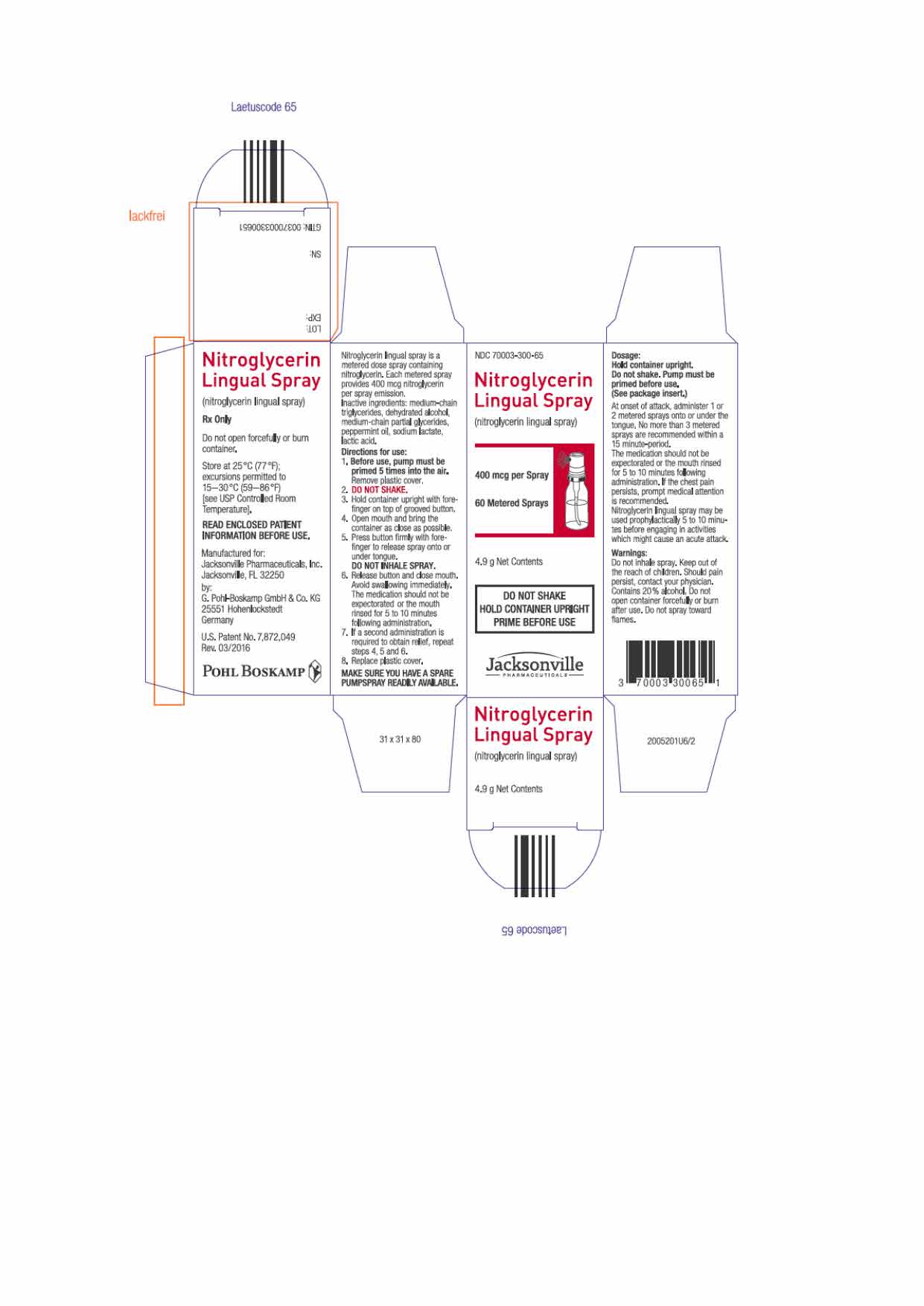
NITROGLYCERIN 400 ug Spray, 1 spray
Other active recalls for Nitroglycerin (different manufacturers) — 3 · tap to view
🆔 Identity & classification
Where does this data come from?
🏭 Manufacturer & labeler
Where does this data come from?
🩺 Clinical
- Great question — it's actually the same active ingredient, just in very different forms for very different places. The tablets, sprays, patches, and capsules all work by widening b...
- What's the difference between nitroglycerin for chest pain and the kind used for anal fissure pain?
- No — this is one of the most important safety warnings with nitroglycerin. Both drugs work on the same pathway, and combining them can cause a sudden, severe drop in blood pressure...
- Can I use nitroglycerin if I take sildenafil (Viagra) or tadalafil (Cialis)?
Patient education
Supplement & herbal interactions
Some supplements/herbs that may interact with Nitroglycerin — tap one for details:
Where does this data come from?
Ask a licensed pharmacist directly — free, answered by our team.
🧪 Inactive Ingredients / Excipients
Inactive ingredients, also called excipients, are components of the drug product other than the active ingredient. They may include fillers, dyes, coatings, preservatives, flavors, or other formulation ingredients.
💡 Tap an ingredient (hover on desktop) to see what it is and why it’s used.
-
UNII 3K9958V90M
A liquid solvent derived from fermentation or chemical synthesis. In medicines, alcohol dissolves active ingredients, helps preserve the product, and improves how the body absorbs certain drugs.
-
UNII 33X04XA5AT
Lactic acid is a naturally occurring organic acid derived from milk or plant sources. It lowers and maintains pH in formulations, helps preserve the product, and can enhance ingredient stability and absorption.
-
UNII C9H2L21V7U
A fat derived from coconut or palm oil containing shorter fatty acid chains. It serves as a solvent and carrier to help dissolve or suspend active ingredients, improving absorption and stability in liquid formulations.
-
UNII AV092KU4JH
A natural oil extracted from peppermint plants. It's used as a flavoring agent to mask bitter tastes and add a refreshing mint flavor to medicines, making them easier to take.
-
UNII TU7HW0W0QT
A salt derived from lactic acid, sodium lactate acts as a buffer and pH stabilizer in medicines. It helps maintain the product's acidity level and can also serve as a humectant to retain moisture.
5 inactive ingredients listed in the exact product block matched to this NDC.
Where does this data come from?
ingredient classCode="IACT" elements from the exact product block matched by this NDC. Label-section narrative from DailyMed / the openFDA label index is shown separately when available.Inactive ingredient FAQ
Are inactive ingredients the same for every manufacturer?
Why might an inactive ingredient be missing?
Can inactive ingredients matter?
💲 Pricing
A drug doesn't have one price. Each row is a different public payment system, and none is what you'd pay at the counter — that depends on your insurance. The ⓘ on each row explains what it measures.
| Price system | Per mL | Per package |
|---|---|---|
| Retail pharmacies payNADAC · weekly | Not in the retail survey — common for institutional, discontinued, or low-volume packs. | |
| Medicaid paysCMS SDUD · 12 mo | No recent Medicaid claims on file for this NDC — rare and low-volume NDCs are suppressed in the public data. | |
| Medicare drug plans payPart D · quarterly | No Part D plan price is available for this NDC in our data. | |
Where does this data come from?
🔁 Therapeutic equivalents
| Product | Labeler | Pack | NADAC/unit | TE | Status | Price vs. this |
|---|---|---|---|---|---|---|
| Nitroglycerin 400 ugthis 51662-1244-01 | HF | 1 spray | — | AB | Discontinued | — |
Where does this data come from?
⏳ Availability & generic status
FDA-approved generic versions are listed, and recent pricing/market data suggests they may be available — see Therapeutic equivalents.
Why the date isn’t exact: Generic timing can change because patents may be challenged, settled, licensed, added, removed, or worked around with a narrower label — and FDA approval does not always mean a pharmacy can get the generic today.
🛈 What do these terms mean?
- Patent
- Legal protection listed in the Orange Book that may delay generic approval or launch. Issued by the U.S. Patent & Trademark Office.
- Substance patent
- Covers the active drug molecule itself — the hardest to design around. A generic generally can’t launch until it expires.
- Formulation (product) patent
- Covers a specific formulation or dosage form. A generic can sometimes work around it with a different formulation.
- Method-of-use patent
- A patent covering one specific approved use of the drug — not necessarily the whole molecule. A generic can sometimes launch with a “skinny label” that carves out the protected use and keeps the others.
- Skinny label
- A generic label that omits a still-patented use when the FDA allows it — letting a generic reach the market for the unprotected uses.
- Exclusivity
- FDA-granted marketing protection, separate from patents — e.g. 5-yr new chemical entity, 7-yr orphan drug, or a +6-month pediatric extension.
- Paragraph IV
- A generic applicant’s formal challenge to a listed patent. It can potentially lead to earlier generic entry, but often involves litigation or a settlement.
- RLD / RS
- Reference Listed Drug — the brand product the FDA uses as the reference for generic applications. Reference Standard — the product the FDA expects generics to compare against in bioequivalence testing.
- TE / AB rating
- FDA therapeutic-equivalence rating. An AB rating generally means the FDA considers a generic therapeutically equivalent to — and substitutable for — the brand.
- LOE (loss of exclusivity)
- The latest patent or exclusivity currently listed — the loss-of-exclusivity / latest-listed-protection date shown on this page. Paragraph-IV challenges and settlements can move the real date earlier; FDA approval and a manufacturer’s decision to market can move it later.
Built from the FDA Orange Book. The bars above are scaled to each protection’s expiry; the red LOE marker is the last one to lapse.
| Patent | Type | Use code | Expires |
|---|---|---|---|
| US 7872049 ↗ | Method of use | U-2223 | Mar 12, 2029 |
Is there a generic version of this drug?
The FDA approved a generic — why can’t I get it at my pharmacy yet?
Why do different websites show different generic release dates?
What does “FDA listed” mean?
What does a patent or protection date mean here?
What does “current Orange Book estimate” mean?
Can a generic come out before the last patent expires?
Can a generic come out after the listed dates?
What is the difference between patents and exclusivity?
Why are there multiple patent dates?
Where does this data come from?
📊 Medicare Part D spend CMS · PART D · 2026 (Q1)
📦 Packaging — all sizes for this product
| Package NDC | Description | Marketing start | Status |
|---|---|---|---|
| 51662-1244-01 You're viewing this | 1 SPRAY in 1 CARTON (51662-1244-1) | 2018-08-18 | Inactivated by FDA |
🧭 About this NDC listing & data coverage
What data is (and isn’t) available for this NDC — tap to expand
| NDC identity (package / product / labeler codes) | ✓ Available |
| Labeler | ✓ Available |
| Product & package description | ✓ Available |
| Marketing category & status | ✓ Available |
| Active ingredient / dosage form / route | ✓ Available |
| FDA label (SPL via DailyMed) | ✓ Available |
| Package photos | ✓ Available |
| Inactive ingredients (structured) | ✓ Available |
| NADAC pharmacy acquisition price (CMS) | — Not published for this NDC CMS publishes NADAC only for NDCs reported in its retail-pharmacy survey. |
| Orange Book / therapeutic-equivalence data | ✓ Available |
| HCPCS J-code billing crosswalk | — Not published for this NDC Most self-administered / retail products have no J-code — that is normal. |
| Medicaid utilization (CMS SDUD) | — Not published for this NDC CMS reports utilization only for NDCs with Medicaid claims above its privacy threshold. |
Questions about this listing
Why is there no price listed?
What does the discontinued status mean for this NDC?
Is the NDC printed on the package the same as the 11-digit billing NDC?
What do the three segments of this NDC mean?
Who lists this product with the FDA?
Do I need a prescription for this product?
Where does this data come from?
📄 Full prescribing information FDA SPL
🎯 Indications and Usage ▾
1. Indications & Usage Nitroglycerin Lingual Spray is indicated for acute relief of an attack or prophylaxis of angina pectoris due to coronary artery disease.
⏱️ Dosage and Administration ▾
2. Dosage & Administration
2.1Recommended Dosage Instruct the patient to administer one or two metered sprays (400 mcg of nitroglycerin per spray) at the onset of an attack onto or under the tongue. A spray may be repeated approximately every five minutes as needed. No more than three metered sprays are recommended within a 15-minute period.
If the chest pain persists after a total of three sprays, advise prompt medical attention. Nitroglycerin Lingual Spray may be used prophylactically 5 to 10 minutes prior to engaging in activities that might precipitate an acute attack.
2.2Priming The pump must be primed prior to the first use. Each metered spray of Nitroglycerin Lingual Spray delivers 48 mg of solution containing 400 mcg of nitroglycerin after an initial priming of five sprays. It will remain adequately primed for 6 weeks.
If the product is not used within 6 weeks it can be adequately re-primed with one spray. If the product is not used within 3 months it can be adequately re-primed with up to five sprays. There are 60 or 200 metered sprays per bottle.
The total number of available doses is dependent, however, on the number of sprays per use (1 or 2 sprays), and the frequency of priming.
2.3Administration Instruct patients that during administration, the patient should rest, ideally in the sitting position. Hold the container vertically with the valve head uppermost and the spray orifice as close to the mouth as possible. Spray the dose preferably onto or under the tongue by pressing the grooved-button firmly and the mouth closed immediately after each dose.
THE SPRAY SHOULD NOT BE INHALED. The medication should not be expectorated or the mouth rinsed for 5 to 10 minutes following administration. Instruct patients to familiarize themselves with the position of the spray orifice, which can be identified by the finger rest on top of the valve, in order to facilitate orientation for administration at night [see Patient Information (17)].
The amount of liquid remaining in the container should be checked periodically. The transparent container can be used for continuous monitoring of the consumption. With the container upright and level, check to be sure the end of the center tube extends below the level of the liquid.
Once fluid falls below the level of the center tube, remaining sprays will not deliver intended dose.
💊 Dosage Forms and Strengths ▾
3. Dosage Forms & Strengths Lingual spray, 400 mcg per spray available in either 60 or 200 metered sprays per container.
⛔ Contraindications ▾
4. Contraindications
4.1PDE-5-Inhibitors and sGC-Stimulators Do not use Nitroglycerin Lingual Spray in patients who are taking PDE-5-Inhibitors, such as avanafil, sildenafil, tadalafil, or vardenafil. Concomitant use can cause severe hypotension, syncope, or myocardial ischemia [see Drug Interactions (7.1)]. Do not use Nitroglycerin Lingual Spray in patients who are taking soluble guanylate cyclase (sGC) stimulators, such as riociguat. Concomitant use can cause hypotension.
4.2Severe Anemia Nitroglycerin Lingual Spray is contraindicated in patients with severe anemia (large doses of nitroglycerin may cause oxidation of hemoglobin to methemoglobin and could exacerbate anemia).
4.3Increased Intracranial Pressure Nitroglycerin Lingual Spray may precipitate or aggravate increased intracranial pressure and thus should not be used in patients with possible increased intracranial pressure (e. g. cerebral hemorrhage or traumatic brain injury).
4.4Hypersensitivity Nitroglycerin Lingual Spray is contraindicated in patients who are allergic to nitroglycerin, other nitrates or nitrites or any excipient.
4.5Circulatory Failure and Shock Nitroglycerin Lingual Spray is contraindicated in patients with acute circulatory failure or shock.
⚠️ Warnings and Cautions ▾
5. Warnings and Precautions
5.1Tolerance Excessive use may lead to the development of tolerance. Only the smallest number of doses required for effective relief of the acute angina attack should be used [see Dosage and Administration (2.1)].
5.2Hypotension Severe hypotension, particularly with upright posture, may occur even with small doses of nitroglycerin particularly in patients with constrictive pericarditis, aortic or mitral stenosis, patients who may be volume-depleted, or are already hypotensive. Hypotension induced by nitroglycerin may be accompanied by paradoxical bradycardia and increased angina pectoris. Symptoms of severe hypotension (nausea, vomiting, weakness, pallor, perspiration and collapse/syncope) may occur even with therapeutic doses.
5.3Hypertrophic Obstructive Cardiomyopathy Nitrate therapy may aggravate the angina caused by hypertrophic obstructive cardiomyopathy.
5.4Headache Nitroglycerin produces dose-related headaches, especially at the start of nitroglycerin therapy, which may be severe and persistent but usually subside with continued use.
🤒 Adverse Reactions ▾
6. Adverse Reactions
6.1Clinical Trials Experience Because clinical trials are conducted under widely varying conditions, adverse reaction rates observed in the clinical trials of a drug cannot be directly compared to rates in the clinical trials of another drug and may not reflect the rates observed in clinical practice. Adverse reactions occurring at a frequency greater than 2 % and greater than placebo included: headache, dizziness, and paresthesia.
6.2Postmarketing Experience The following adverse reactions have been identified during post-approval use of Nitroglycerin Lingual Spray and other nitroglycerin drugs. Because these reactions are reported voluntarily from a population of uncertain size, it is not always possible to estimate their frequency reliably or establish a causal relationship to drug exposure. Neurologic: weakness, drowsiness Dermatologic: cutaneous vasodilation, flushing, drug rash, exfoliative dermatitits Gastrointestinal: nausea, vomiting Respiratory: transient hypoxemia Cardiovascular: tachycardia To report SUSPECTED ADVERSE REACTIONS, contact Jacksonville Pharmaceuticals, Inc. at 1-800-235-6203 or FDA at 1-800-332-1088 or www.fda.gov/medwatch.
🔄 Drug Interactions ▾
7. Drug Interactions
7.1PDE-5-Inhibitors and sGC-Stimulators Nitroglycerin Lingual Spray is contraindicated in patients who are using a selective inhibitor of cyclic guanosine monophosphate (cGMP)-specific phosphodiesterase type 5 (PDE-5). PDE-5-Inhibitors such as avanafil, sildenafil, vardenafil, and tadalafil have been shown to potentiate the hypotensive effects of organic nitrates. Nitroglycerin Lingual Spray is contraindicated in patients who are taking soluble guanylate cyclase (sGC) stimulators.
Concomitant use can cause hypotension. The time course and dose dependence of these interactions have not been studied, and use within a few days of one another is not recommended. Appropriate supportive care for the severe hypotension has not been studied, but it seems reasonable to treat this as a nitrate overdose, with elevation of the extremities and with central volume expansion.
7.2Antihypertensives Patients receiving antihypertensive drugs, beta-adrenergic blockers, and nitrates should be observed for possible additive hypotensive effects. Marked orthostatic hypotension has been reported when calcium channel blockers and organic nitrates were used concomitantly. Beta-adrenergic blockers blunt the reflex tachycardia produced by nitroglycerin without preventing its hypotensive effects.
If beta-blockers are used with nitroglycerin in patients with angina pectoris, additional hypotensive effects may occur.
7.3Ergotamine Oral administration of nitroglycerin markedly decreases the first-pass metabolism of dihydroergotamine and subsequently increases its oral bioavailability. Ergotamine is known to precipitate angina pectoris. Therefore, patients receiving sublingual nitroglycerin should avoid ergotamine and related drugs or be monitored for symptoms of ergotism if this is not possible.
See 17 for PATIENT COUNSELING INFORMATION and FDA-approved patient labeling. Revised: 8/2018
👥 Use in Specific Populations ▾
8. Use in Specific Populations
8.1Pregnancy Risk summary Limited published data on the use of nitroglycerin are insufficient to determine a drug associated risk of major birth defects or miscarriage. In animal reproduction studies, there were no adverse developmental effects when nitroglycerin was administered intravenously to rabbits or intraperitoneally to rats during organogenesis at doses greater than 64-times the human dose [see Data]. The estimated background risk of major birth defects and miscarriage for the indicated population is unknown.
In the U.S. general population, the estimated background risk of major birth defects and miscarriage in clinically recognized pregnancies is 2 – 4% and 15 – 20%, respectively. Data Animal Data No embryotoxic or postnatal development effects were observed with transdermal application in pregnant rabbits and rats at doses up to 240 mg/kg/day for 13 days, at intraperitoneal doses in pregnant rats up to 20 mg/kg/day for 11 days, and at intravenous doses in pregnant rabbits up to 4 mg/kg/day for 13 days.
8.2Lactation Risk summary Sublingual nitroglycerin has not been studied in lactating women. It is not known if nitroglycerin is present in human milk or if nitroglycerin has effects on milk production. The developmental and health benefits of breastfeeding should be considered along with the mother’s clinical need for nitroglycerin and any potential adverse effects on the breastfed child from nitroglycerin or from the underlying maternal condition.
8.4Pediatric use Safety and effectiveness of nitroglycerin in pediatric patients have not been established.
8.5Geriatric use Clinical studies did not include sufficient numbers of subjects aged 65 and over to determine whether they respond differently from younger subjects. Other reported clinical experience has not identified differences in responses between elderly (greater than or equal to 65 years) and younger (less than 65 years) patients. In general, dose selection for an elderly patient should start at the low end of the dosing range, reflecting the greater frequency of decreased hepatic, renal, or cardiac function, and of concomitant disease or other drug therapy.
🆘 Overdosage ▾
10. Overdosage
10.1Signs and Symptoms, Methemoglobinemia Nitrate overdosage may result in: severe hypotension, persistent throbbing headache, vertigo, palpitation, visual disturbance, flushing and perspiring skin (later becoming cold and cyanotic), nausea and vomiting (possibly with colic and even bloody diarrhea), syncope (especially in the upright posture), methemoglobinemia with cyanosis and anorexia, initial hyperpnea, dyspnea and slow breathing, slow pulse (dicrotic and intermittent), heart block, increased intracranial pressure with cerebral symptoms of confusion and moderate fever, paralysis and coma followed by clonic convulsions, and possibly death due to circulatory collapse.
Case reports of clinically significant methemoglobinemia are rare at conventional doses of organic nitrates. The formation of methemoglobin is dose-related and in the case of genetic abnormalities of hemoglobin that favor methemoglobin formation, even conventional doses of organic nitrates could produce harmful concentrations of methemoglobin.
10.2Treatment of Overdosage As hypotension associated with nitroglycerin overdose is the result of venodilatation and arterial hypovolemia, prudent therapy in this situation should be directed toward increase in central fluid volume. No specific antagonist to the vasodilator effects of nitroglycerin is known. Keep the patient recumbent in a shock position and comfortably warm.
Passive movement of the extremities may aid venous return. Intravenous infusion of normal saline or similar fluid may also be necessary. Administer oxygen and artificial ventilation, if necessary.
If methemoglobinemia is present, administration of methylene blue (1 % solution), 1 – 2 mg per kilogram of body weight intravenously, may be required unless the patient is known to have G-6-PD deficiency. If an excessive quantity of Nitroglycerin Lingual Spray has been recently swallowed gastric lavage may be of use. As epinephrine is ineffective in reversing the severe hypotensive events associated with overdosage, it is not recommended for resuscitation.
🧬 Clinical Pharmacology ▾
12. Clinical Pharmacology
12.1Mechanism of Action Nitroglycerin forms free radical nitric oxide (NO), which activates guanylate cyclase, resulting in an increase of guanosine 3',5'-monophosphate (cyclic GMP) in smooth muscle and other tissues. This eventually leads to dephosphorylation of myosin light chains, which regulates the contractile state in smooth muscle and results in vasodilatation.
12.2Pharmacodynamics The principal pharmacological action of nitroglycerin is relaxation of vascular smooth muscle. Although venous effects predominate, nitroglycerin produces, in a dose-related manner, dilation of both arterial and venous beds. Dilation of the postcapillary vessels, including large veins, promotes peripheral pooling of blood, decreases venous return to the heart, and reduces left ventricular end-diastolic pressure (preload).
Nitroglycerin also produces arteriolar relaxation, thereby reducing peripheral vascular resistance and arterial pressure (after load), and dilates large epicardial coronary arteries; however, the extent to which this latter effect contributes to the relief of exertional angina is unclear. Therapeutic doses of nitroglycerin may reduce systolic, diastolic and mean arterial blood pressure. Effective coronary perfusion pressure is usually maintained, but can be compromised if blood pressure falls excessively or increased heart rate decreases diastolic filling time.
Elevated central venous and pulmonary capillary wedge pressures, and pulmonary and systemic vascular resistance are also reduced by nitroglycerin therapy. Heart rate is usually slightly increased, presumably a reflex response to the fall in blood pressure. Cardiac index may be increased, decreased, or unchanged.
Myocardial oxygen consumption or demand (as measured by the pressure-rate product, tension-time index, and stroke-work index) is decreased and a more favorable supply-demand ratio can be achieved. Patients with elevated left ventricular filling pressure and increased systemic vascular resistance in association with a depressed cardiac index are likely to experience an improvement in cardiac index. In contrast, when filling pressures and cardiac index are normal, cardiac index may be slightly reduced following nitroglycerin administration.
12.3Pharmacokinetics A liver reductase enzyme is of primary importance in the metabolism of nitroglycerin to glycerol di- and mononitrate metabolites and ultimately to glycerol and organic nitrate. Known sites of extrahepatic metabolism include red blood cells and vascular walls. In addition to nitroglycerin, 2 major metabolites, 1,2- and 1,3-dinitroglycerin are found in plasma.
The mean elimination half-life of both 1,2- and 1,3-dinitroglycerin is about 40 minutes. The 1,2- and 1,3-dinitroglycerin metabolites have been reported to possess some pharmacological activity, whereas the glycerol mononitrate metabolites of nitroglycerin are essentially inactive. Higher plasma concentrations of the dinitro metabolites, with their nearly 8-fold longer elimination half-lives, may contribute significantly to the duration of pharmacologic effect.
In a pharmacokinetic study when a single 0.8 mg dose of Nitroglycerin Lingual Spray was administered to healthy volunteers (n = 24), the mean Cmax and tmax were 1,041 pg/ml and 7.5 minutes, respectively. Additionally, in these subjects the mean area under the curve (AUC) was 12,769 pg/ml * min. The volume of distribution of nitroglycerin following intravenous administration is
3.3L/kg. Drug interactions Aspirin: Coadministration of nitroglycerin with high dose aspirin (1000 mg) results in increased exposure to nitroglycerin. The vasodilatory and hemodynamic effects of nitroglycerin may be enhanced by concomitant administration of nitroglycerin with high dose aspirin.
Tissue-type plasminogen activator (t-PA): Concomitant administration of t-PA and intravenous nitroglycerin has been shown to reduce plasma levels of t-PA and its thrombolytic effect.
📦 How Supplied / Storage and Handling ▾
16. How Supplied/Storage and Handling NITROGLYCERIN LINGUAL SPRAY is supplied in the following dosage forms. NDC 51662-1244-1 NITROGLYCERIN LINGUAL SPRAY 400mcg PER SPRAY 60 METERED SPRAYS HF Acquisition Co LLC, DBA HealthFirst Mukilteo, WA 98275 Also supplied in the following manufacture supplied dosage forms Each box of Nitroglycerin Lingual Spray contains one glass bottle coated with red transparent plastic which assists in containing the glass and medication should the bottle be shattered.
Each bottle contains 4.9 g or 14.1 g (Net Contents) of nitroglycerin lingual spray which will deliver 60 or 200 metered sprays containing 400 mcg of nitroglycerin per spray after priming. Nitroglycerin Lingual Spray is available as: 60-dose (4.9 g) single bottle NDC 70003-300-65 200-dose (14.1 g) single bottle NDC 70003-300-20 Store at 20°C – 25°C (68°F – 77°F); excursions permitted to 15 – 30°C (59 – 86°F) [see USP Controlled Room Temperature]. Note: Nitroglycerin Lingual Spray contains 20 % alcohol.
Do not forcefully open or burn container after use. Do not spray toward flames. Rx Only.
📋 Description ▾
11. Description Nitroglycerin, an organic nitrate, is a vasodilator which has effects on both arteries and veins. The chemical name for nitroglycerin is 1,2,3-propanetriol trinitrate (C3H5N3O9).
The compound has a molecular weight of 227.09. The chemical structure is: CH2–ONO2 | CH–ONO2 | CH2–ONO2 Nitroglycerin Lingual Spray (nitroglycerin lingual spray 400 mcg) is a metered dose spray containing nitroglycerin. This product delivers nitroglycerin (400 mcg per spray, 60 or 200 metered sprays) in the form of spray droplets onto or under the tongue.
Inactive ingredients: medium-chain triglycerides, dehydrated alcohol, medium-chain partial glycerides, peppermint oil, sodium lactate, lactic acid.