
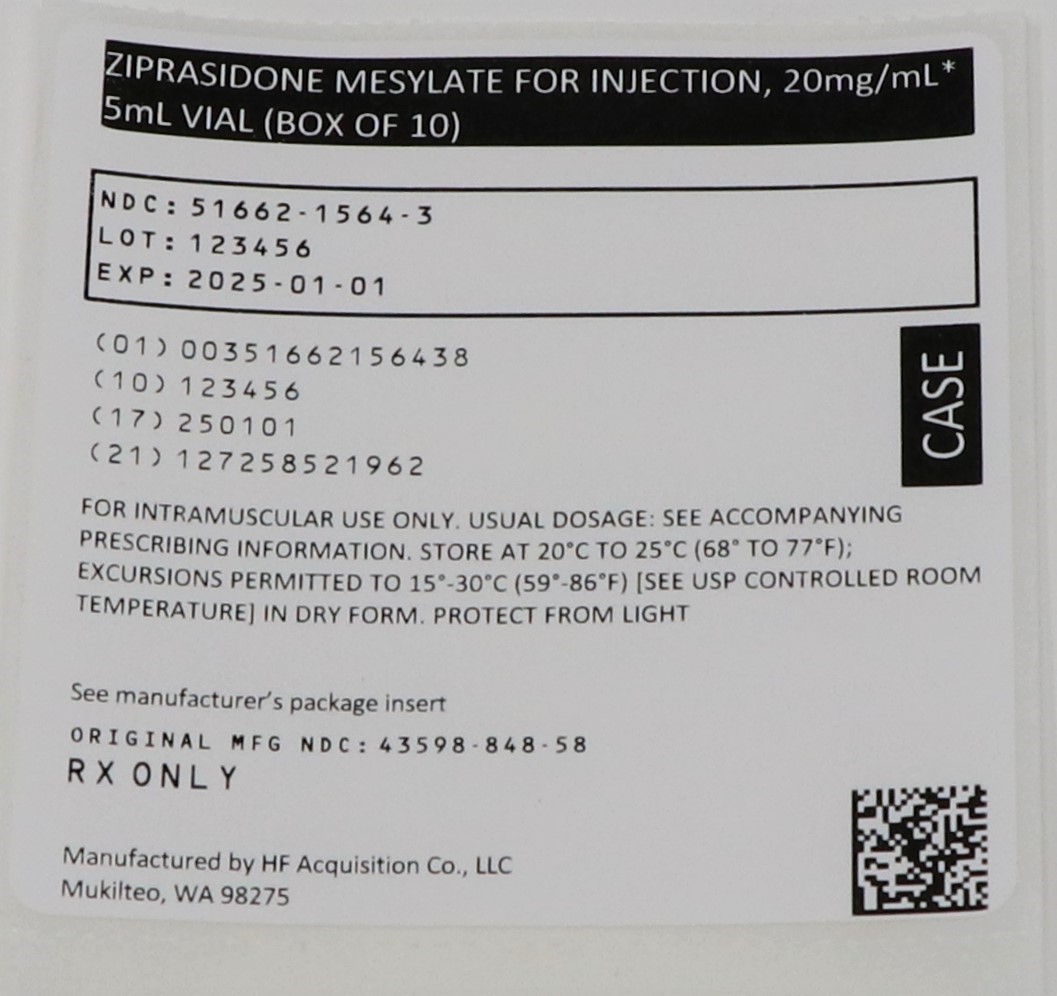
ZIPRASIDONE MESYLATE 20 mg/mL Injection, Powder, Lyophilized, For Solution — NDC 51662-1564-3 (Billing 51662-1564-03)
This is a package of ZIPRASIDONE MESYLATE 20 mg/mL Injection, Powder, Lyophilized, For Solution from HF Acquisition Co LLC, DBA HealthFirst, marketed since Jul 2021 and currently FDA-listed. It is this product's only package size.
NDC database record
One package, one record: these facts belong to NDC 51662-1564-3 alone.
- Record
- FDA NDC Directory package listing · Human prescription drug
- Code segments
- 51662 labeler · 1564 product · 3 package
- Package marketed since
- Jul 17, 2021
- Sample package
- No — commercial package
- Listing certified through
- Dec 31, 2026
- Barcode (UPC-A, from the NDC)
- 3 5166215643 8
- FDA record last changed
- Jul 24, 2026
Identity & classification
Regulatory identifiers FDA, NLM and CMS codes for this package
- RxCUI (RxNorm): 351223
Where does this data come from?
- FDA openFDA NDC Directory · synced Oct 1, 2026
- FDA label on DailyMed · label index refreshed Oct 3, 2026
- RxNorm (NLM RxNav) · catalog refreshed Oct 1, 2026
- Medi-Span GPI (licensed)
- First Databank (licensed) · refreshed Oct 1, 2026
RxNorm drug class
This medicine belongs to the Atypical Antipsychotic class.
Where does this data come from?
- RxClass (NLM) · catalog refreshed Oct 1, 2026
Clinical
Ziprasidone injection is used to treat episodes of agitation in people who have schizophrenia (a mental illness that causes disturbed or unusual thinking, loss of interest in life, and strong or inappropriate emotions). Ziprasidone is in a class of medications called atypical antipsychotics. It works by changing the activity of certain natural substances in the brain.
Read the full MedlinePlus article ↗- It treats schizophrenia and bipolar I disorder in adults. The capsules are used for ongoing treatment, and the injection is used for sudden agitation in schizophrenia. Your prescri...
- Take them by mouth with food, since a meal helps your body absorb the medicine. Swallow them whole. Do not open, crush or chew them. Follow your prescriber's schedule.
- Sleepiness, dizziness, restlessness, tremor or stiffness, nausea and vomiting are common. Be careful with driving or machinery until you know how it affects you. Tell your prescrib...
- Seek help for fainting, a racing or irregular heartbeat, high fever with stiffness, a new rash, uncontrolled movements, or thoughts of suicide. These can be signs of serious reacti...
Patient education
Supplement & herbal interactions
Where does this data come from?
- MedlinePlus (NLM) · refreshed Oct 1, 2026
- FDA label on DailyMed · label index refreshed Oct 3, 2026
Ask a licensed pharmacist directly — free, answered by our team.
Pricing
A drug doesn't have one price. Each row is a different public payment system, and none is what you'd pay at the counter — that depends on your insurance. The ⓘ on each row explains what it measures.
| Price system | Per mL | Per package |
|---|---|---|
| Retail pharmacies payNADAC · weekly | Not in the retail survey — common for institutional, discontinued, or low-volume packs. | |
| Medicaid paysCMS SDUD · 12 mo | No recent Medicaid claims on file for this NDC — rare and low-volume NDCs are suppressed in the public data. | |
| Medicare drug plans payPart D · Q2 2026 | $31.07 | $1,553.41 / 50 ml |
| Medicare Part B allowsASP · J3486 | $5.602 / J3486 unit | — |
Where does this data come from?
- CMS NADAC weekly file
- CMS ASP pricing files · refreshed Sep 20, 2026
- CMS Medicaid State Drug Utilization Data · refreshed Oct 4, 2026
- CMS Part D plan pricing files · refreshed Sep 24, 2026
- VA National Acquisition Center price file
Billing & reimbursement
Where does this data come from?
- CMS ASP NDC-HCPCS crosswalk · refreshed Sep 22, 2026
- DMEPDAC NDC-HCPCS crosswalk
- openFDA NSDE billing units · refreshed Sep 7, 2026
Packaging — all sizes for this product
| Package NDC | Description | Marketing start | Marketing end | Status |
|---|---|---|---|---|
| 51662-1564-03 You're viewing this Main listing | 10 POUCH in 1 CASE / 1 VIAL, SINGLE-DOSE in 1 POUCH / 5 mL in 1 VIAL, SINGLE-DOSE | 2021-07-17 | — | Active |
Therapeutic equivalents
| Product | Labeler | Pack | NADAC/unit | TE | Status | Price vs. this |
|---|---|---|---|---|---|---|
| ziprasidone mesylate 20 mg/mL 43598-0061-58 | Dr.Reddy's | 1 vial | $21.807 | AP | Availability likely | — |
| ziprasidone mesylate 20 mg/mL 43598-0848-58 | Dr.Reddy's | 1 vial | $21.807 | AP | Availability likely | — |
| ziprasidone mesylate 20 mg/mL 72205-0205-07 | Novadoz | 10 vials | $21.807 | AP | Availability likely | — |
| Ziprasidone Mesylate 20 mg/mL 72266-0160-10 | Fosun | 10 vials | $21.807 | AP | Availability likely | — |
| Geodon 20 mg/mL 00049-3920-83 | ROERIG | 10 vials | — | AP | Discontinued | — |
| Ziprasidone Mesylate 20 mg/mLthis 51662-1564-03 | HF | 10 pouches | — | AP | FDA listed | — |
| Geodon 20 mg/mL 58151-0137-81 | Viatris | 10 vials | — | AP | FDA listed | — |
| ziprasidone mesylate 20 mg/mL 68083-0340-01 | Gland | 1 vial | — | AP | FDA listed | — |
| Ziprasidone Mesylate 20 mg/mL 82449-0004-01 | STERISCIENCE | 1 vial | — | AP | FDA listed | — |
| ziprasidone mesylate 20 mg/mL 70518-4755-00 | REMEDYREPACK | 10 vials | — | AP | FDA listed | — |
| Ziprasidone Mesylate 20 mg/mL 72485-0430-10 | Armas | 10 vials | — | AP | FDA listed | — |
Where does this data come from?
- FDA openFDA NDC Directory · synced Oct 1, 2026
- FDA Orange Book · refreshed Oct 3, 2026
- CMS NADAC weekly file
Availability & generic status
This product is an FDA-approved generic. Other versions of the same drug are listed under Therapeutic equivalents, least expensive first.
Where does this data come from?
- FDA Orange Book · refreshed Oct 3, 2026
Inactive Ingredients / Excipients
Inactive ingredients, also called excipients, are components of the drug product other than the active ingredient. They may include fillers, dyes, coatings, preservatives, flavors, or other formulation ingredients.
💡 Tap an ingredient (hover on desktop) to see what it is and why it’s used.
-
294 mg / 1 mL
UNII 2PP9364507
A modified form of beta-cyclodextrin, a natural sugar-like molecule. It helps dissolve and stabilize drugs in liquid medicines and improves how well the body absorbs certain medications.
-
4.7 mg / 1 mL
UNII 12EH9M7279
Methanesulfonic acid is a strong organic acid used in medicines as a pH buffer and stabilizer. It helps maintain the correct acidity level and keeps active ingredients stable during storage.
2 inactive ingredients listed in the exact product block matched to this NDC.
Where does this data come from?
ingredient classCode="IACT" elements from the exact product block matched by this NDC. Label-section narrative from DailyMed / the openFDA label index is shown separately when available.- FDA label on DailyMed · label index refreshed Oct 3, 2026
- FDA openFDA NDC Directory · synced Oct 1, 2026
Inactive ingredient FAQ
Are inactive ingredients the same for every manufacturer?
Why might an inactive ingredient be missing?
Can inactive ingredients matter?
Manufacturer & labeler
More NDCs from HF Acquisition Co LLC, DBA HealthFirst labeler code 51662
- NEOSTIGMINE METHYLSULFATE 1 mg/mL Injection NDC 51662-1557-3
- PROCHLORPERAZINE EDISYLATE 5 mg/mL Injection NDC 51662-1558-3
- DICYCLOMINE HYDROCHLORIDE 10 mg/mL Injection, Solution NDC 51662-1559-3
- Ampicillin 2 g Injection, Powder, For Solution NDC 51662-1560-3
- SODIUM TETRADECYL SULFATE 10 mg/mL Injection, Solution NDC 51662-1562-1
- (SOTRADECOL) SODIUM TETRADECYL SULFATE 30 mg/mL Injection, Solution NDC 51662-1563-1
- LIDOCAINE HCI AND DEXTROSE 5 g/100mL; .8 g/100mL Injection, Solution NDC 51662-1565-1
- DOBUTAMINE HYDROCHLORIDE 100 mg/100mL Injection NDC 51662-1566-1
- COSYNTROPIN .25 mg/mL Injection, Powder, Lyophilized, For Solution NDC 51662-1567-1
- VENOFER (IRON SUCROSE) 20 mg/mL Injection, Solution NDC 51662-1568-1
- FUROSEMIDE 10 mg/mL Injection, Solution NDC 51662-1572-1
- SODIUM BICARBONATE 84 mg/mL Injection, Solution NDC 51662-1573-1
Where does this data come from?
- FDA openFDA NDC Directory · synced Oct 1, 2026
- Drugs@FDA
Full prescribing information FDA SPL
🚨 Boxed Warning ▾
BOXED WARNING SEE WARNINGS AND PRECAUTIONS (5.1) BOX WARNING
🎯 Indications and Usage ▾
1 INDICATIONS & USAGE Ziprasidone mesylate for injection, intramuscular is indicated for acute agitation in schizophrenic patients. When deciding among the alternative treatments available for the condition needing treatment, the prescriber should consider the finding of ziprasidone’s greater capacity to prolong the QT/QTc interval compared to several other antipsychotic drugs [see WARNINGS AND PRECAUTIONS (5.3 )]. Prolongation of the QTc interval is associated in some other drugs with the ability to cause torsade de pointes-type arrhythmia, a potentially fatal polymorphic ventricular tachycardia, and sudden death.
In many cases this would lead to the conclusion that other drugs should be tried first. Whether ziprasidone will cause torsade de pointes or increase the rate of sudden death is not yet known [see WARNINGS AND PRECAUTIONS ( 5.3 )] Acute Treatment of Agitation in Schizophrenia Ziprasidone mesylate for injection intramuscular is indicated for the treatment of acute agitation in schizophrenic adult patients for whom treatment with ziprasidone is appropriate and who need intramuscular antipsychotic medication for rapid control of agitation. [see Clinical Trials (14.1)].
Since there is no experience regarding the safety of administering ziprasidone intramuscular to schizophrenic patients already taking oral ziprasidone, the practice of co-administration is not recommended.
⏱️ Dosage and Administration ▾
2 DOSAGE & ADMINISTRATION
2.3Acute Treatment of Agitation in Schizophrenia Intramuscular Dosing The recommended dose is 10 mg to 20 mg administered as required up to a maximum dose of 40 mg per day. Doses of 10 mg may be administered every two hours; doses of 20 mg may be administered every four hours up to a maximum of 40 mg/day. Intramuscular administration of ziprasidone for more than three consecutive days has not been studied.
If long-term therapy is indicated, oral ziprasidone hydrochloride capsules should replace the intramuscular administration as soon as possible. Since there is no experience regarding the safety of administering ziprasidone intramuscular to schizophrenic patients already taking oral ziprasidone, the practice of co-administration is not recommended. Ziprasidone intramuscular is intended for intramuscular use only and should not be administered intravenously.
Intramuscular Preparation for Administration Ziprasidone mesylate for injection should only be administered by intramuscular injection and should not be administered intravenously. Single-dose vials require reconstitution prior to administration. Add 1.2 mL of Sterile Water for Injection to the vial and shake vigorously until all the drug is dissolved.
Each mL of reconstituted solution contains 20 mg ziprasidone. To administer a 10 mg dose, draw up 0.5 mL of the reconstituted solution. To administer a 20 mg dose, draw up 1.0 mL of the reconstituted solution.
Any unused portion should be discarded. Since no preservative or bacteriostatic agent is present in this product, aseptic technique must be used in preparation of the final solution. This medicinal product must not be mixed with other medicinal products or solvents other than Sterile Water for Injection.
Parenteral drug products should be inspected visually for particulate matter and discoloration prior to administration, whenever solution and container permit.
💊 Dosage Forms and Strengths ▾
3 DOSAGE FORMS & STRENGTH Ziprasidone mesylate for injection is available in a single-dose vial as ziprasidone mesylate (20 mg ziprasidone/mL when reconstituted according to label instructions) [see DOSAGE AND ADMINISTRATION ( 2.3 )]. Each mL of ziprasidone mesylate for injection (when reconstituted) affords a colorless to pale pink solution that contains 20 mg of ziprasidone and 4.7 mg of methanesulfonic acid solubilized by 294 mg of sulfobutylether β-cyclodextrin sodium (SBECD).
⛔ Contraindications ▾
4 CONTRAINDICATIONS
4.1QT Prolongation Because of ziprasidone’s dose-related prolongation of the QT interval and the known association of fatal arrhythmias with QT prolongation by some other drugs, ziprasidone is contraindicated: in patients with a known history of QT prolongation (including congenital long QT syndrome) in patients with recent acute myocardial infarction in patients with uncompensated heart failure Pharmacokinetic/pharmacodynamic studies between ziprasidone and other drugs that prolong the QT interval have not been performed.
An additive effect of ziprasidone and other drugs that prolong the QT interval cannot be excluded. Therefore, ziprasidone should not be given with: dofetilide, sotalol, quinidine, other Class Ia and III anti-arrhythmics, mesoridazine, thioridazine, chlorpromazine, droperidol, pimozide, sparfloxacin, gatifloxacin, moxifloxacin, halofantrine, mefloquine, pentamidine, arsenic trioxide, levomethadyl acetate, dolasetron mesylate, probucol or tacrolimus. other drugs that have demonstrated QT prolongation as one of their pharmacodynamic effects and have this effect described in the full prescribing information as a contraindication or a boxed or bolded warning [see WARNINGS AND PRECAUTIONS ( 5.3) ].
4.2Hypersensitivity Ziprasidone is contraindicated in individuals with a known hypersensitivity to the product.
⚠️ Warnings and Cautions ▾
5 WARNINGS AND PRECAUTIONS
5.1Increased Mortality in Elderly Patients with Dementia-Related Psychosis Elderly patients with dementia-related psychosis treated with antipsychotic drugs are at an increased risk of death. Analyses of 17 placebo-controlled trials (modal duration of 10 weeks), largely in patients taking atypical antipsychotic drugs, revealed a risk of death in drug-treated patients of between 1.6 to 1.7 times the risk of death in placebo-treated patients. Over the course of a typical 10-week controlled trial, the rate of death in drug-treated patients was about 4.5%, compared to a rate of about 2.6% in the placebo group.
Although the causes of death were varied, most of the deaths appeared to be either cardiovascular (e.g., heart failure, sudden death) or infectious (e.g., pneumonia) in nature. Ziprasidone mesylate for injection is not approved for the treatment of dementia-related psychosis. [see BOXED WARNING , WARNINGS AND PRECAUTIONS (5.2)].
5.2Cerebrovascular Adverse Reactions, Including Stroke, in Elderly Patients with Dementia-Related Psychosis In placebo-controlled trials in elderly subjects with dementia, patients randomized to risperidone, aripiprazole, and olanzapine had a higher incidence of stroke and transient ischemic attack, including fatal stroke. Ziprasidone mesylate for injection is not approved for the treatment of patients with dementia-related psychosis [see BOXED WARNING and WARNINGS AND PRECAUTIONS (5.1)].
5.3QT Prolongation and Risk of Sudden Death Ziprasidone use should be avoided in combination with other drugs that are known to prolong the QTc interval [see CONTRAINDICATIONS (4.1), DRUG INTERACTIONS (7.4)]. Additionally, clinicians should be alert to the identification of other drugs that have been consistently observed to prolong the QTc interval. Such drugs should not be prescribed with ziprasidone.
Ziprasidone should also be avoided in patients with congenital long QT syndrome and in patients with a history of cardiac arrhythmias [see CONTRAINDICATIONS (4)]. A study directly comparing the QT/QTc prolonging effect of oral ziprasidone with several other drugs effective in the treatment of schizophrenia was conducted in patient volunteers. In the first phase of the trial, ECGs were obtained at the time of maximum plasma concentration when the drug was administered alone.
In the second phase of the trial, ECGs were obtained at the time of maximum plasma concentration while the drug was co-administered with an inhibitor of the CYP4503A4 metabolism of the drug. In the first phase of the study, the mean change in QTc from baseline was calculated for each drug, using a sample-based correction that removes the effect of heart rate on the QT interval. The mean increase in QTc from baseline for ziprasidone ranged from approximately 9 to 14 msec greater than for four of the comparator drugs (risperidone, olanzapine, quetiapine, and haloperidol), but was approximately 14 msec less than the prolongation observed for thioridazine.
In the second phase of the study, the effect of ziprasidone on QTc length was not augmented by the presence of a metabolic inhibitor (ketoconazole 200 mg twice daily). In placebo-controlled trials, oral ziprasidone increased the QTc interval compared to placebo by approximately 10 msec at the highest recommended daily dose of 160 mg. In clinical trials with oral ziprasidone, the electrocardiograms of 2/2988 (0.06%) patients who received ziprasidone mesylate for injection and 1/440 (0.23%) patients who received placebo revealed QTc intervals exceeding the potentially clinically relevant threshold of 500 msec.
In the ziprasidone-treated patients, neither case suggested a role of ziprasidone. One patient had a history of prolonged QTc and a screening measurement of 489 msec; QTc was 503 msec during ziprasidone treatment. The other patient had a QTc of 391 msec at the end of treatment with ziprasidone and upon switching to thioridazine experienced QTc measurements of 518 an… [Excerpted — this section continues on DailyMed.]
🤒 Adverse Reactions ▾
6 ADVERSE REACTIONS
6.1Clinical Trials Experience Because clinical trials are conducted under widely varying conditions, adverse reaction rates observed in the clinical trials of a drug cannot be directly compared to rates in the clinical trials of another drug and may not reflect the rates observed in practice. Clinical trials for oral ziprasidone included approximately 5700 patients and/or normal subjects exposed to one or more doses of ziprasidone. Of these 5700, over 4800 were patients who participated in multiple-dose effectiveness trials, and their experience corresponded to approximately 1831 patient-years.
These patients include: (1) 4331 patients who participated in multiple-dose trials, predominantly in schizophrenia, representing approximately 1698 patient-years of exposure as of February 5, 2000; and (2) 472 patients who participated in bipolar mania trials representing approximately 133 patient-years of exposure. An additional 127 patients with bipolar disorder participated in a long-term maintenance treatment study representing approximately 74.7 patient-years of exposure to ziprasidone. The conditions and duration of treatment with ziprasidone included open-label and double-blind studies, inpatient and outpatient studies, and short-term and longer-term exposure.
Clinical trials for intramuscular ziprasidone included 570 patients and/or normal subjects who received one or more injections of ziprasidone. Over 325 of these subjects participated in trials involving the administration of multiple doses. Adverse reactions during exposure were obtained by collecting voluntarily reported adverse experiences, as well as results of physical examinations, vital signs, weights, laboratory analyses, ECGs, and results of ophthalmologic examinations.
The stated frequencies of adverse reactions represent the proportion of individuals who experienced, at least once, a treatment-emergent adverse reaction of the type listed. A reaction was considered treatment emergent if it occurred for the first time or worsened while receiving therapy following baseline evaluation. Adverse Findings Observed in Short-Term, Placebo-Controlled Trials with Oral Ziprasidone The following findings are based on the short-term placebo-controlled premarketing trials for schizophrenia (a pool of two 6-week, and two 4-week fixed-dose trials) and bipolar mania (a pool of two 3-week flexible-dose trials) in which ziprasidone was administered in doses ranging from 10 to 200 mg/day.
Commonly Observed Adverse Reactions in Short Term Placebo-Controlled Trials The following adverse reactions were the most commonly observed adverse reactions associated with the use of ziprasidone (incidence of 5% or greater) and not observed at an equivalent incidence among placebo-treated patients (ziprasidone incidence at least twice that for placebo): Schizophrenia trials (see Table 11) • Somnolence • Respiratory Tract Infection Bipolar trials (see Table 12) Somnolence Extrapyramidal Symptoms which includes the following adverse reaction terms: extrapyramidal syndrome, hypertonia, dystonia, dyskinesia, hypokinesia, tremor, paralysis and twitching.
None of these adverse reactions occurred individually at an incidence greater than 10% in bipolar mania trials. Dizziness which includes the adverse reaction terms dizziness and lightheadedness. Akathisia Abnormal Vision Asthenia Vomiting SCHIZOPHRENIA Adverse Reactions Associated with Discontinuation of Treatment in Short-Term, Placebo-Controlled Trials of Oral Ziprasidone Approximately 4.1% (29/702) of ziprasidone-treated patients in short-term, placebo-controlled studies discontinued treatment due to an adverse reaction, compared with about 2.2% (6/273) on placebo.
The most common reaction associated with dropout was rash, including 7 dropouts for rash among ziprasidone patients (1%) compared to no placebo patients [see WARNINGS AND PRECAUTIONS (5.8)]. Adverse Reactions Occurring at an Incidence of 2% or More Among Ziprasidone-Tr… [Excerpted — this section continues on DailyMed.]
🔄 Drug Interactions ▾
7 DRUG INTERACTIONS Drug-drug interactions can be pharmacodynamic (combined pharmacologic effects) or pharmacokinetic (alteration of plasma levels). The risks of using ziprasidone in combination with other drugs have been evaluated as described below. All interactions studies have been conducted with oral ziprasidone. Based upon the pharmacodynamic and pharmacokinetic profile of ziprasidone, possible interactions could be anticipated:
7.1Metabolic Pathway Approximately two-thirds of ziprasidone is metabolized via a combination of chemical reduction by glutathione and enzymatic reduction by aldehyde oxidase. There are no known clinically relevant inhibitors or inducers of aldehyde oxidase. Less than one-third of ziprasidone metabolic clearance is mediated by cytochrome P450 catalyzed oxidation.
7.2In Vitro Studies An in vitro enzyme inhibition study utilizing human liver microsomes showed that ziprasidone had little inhibitory effect on CYP1A2, CYP2C9, CYP2C19, CYP2D6 and CYP3A4, and thus would not likely interfere with the metabolism of drugs primarily metabolized by these enzymes. There is little potential for drug interactions with ziprasidone due to displacement [see CLINICAL PHARMACOLOGY (12.3)].
7.3Pharmacodynamic Interactions Ziprasidone should not be used with any drug that prolongs the QT interval [see CONTRAINDICATIONS ( 4.1)]. Given the primary CNS effects of ziprasidone, caution should be used when it is taken in combination with other centrally acting drugs. Because of its potential for inducing hypotension, ziprasidone may enhance the effects of certain antihypertensive agents.
Ziprasidone may antagonize the effects of levodopa and dopamine agonists.
7.4Pharmacokinetic Interactions Carbamazepine Carbamazepine is an inducer of CYP3A4; administration of 200 mg twice daily for 21 days resulted in a decrease of approximately 35% in the AUC of ziprasidone. This effect may be greater when higher doses of carbamazepine are administered. Ketoconazole Ketoconazole, a potent inhibitor of CYP3A4, at a dose of 400 mg QD for 5 days, increased the AUC and Cmax of ziprasidone by about 35-40%.
Other inhibitors of CYP3A4 would be expected to have similar effects. Cimetidine Cimetidine at a dose of 800 mg QD for 2 days did not affect ziprasidone pharmacokinetics. Antacid The co-administration of 30 mL of Maalox® with ziprasidone did not affect the pharmacokinetics of ziprasidone.
7.5Lithium Ziprasidone at a dose of 40 mg twice daily administered concomitantly with lithium at a dose of 450 mg twice daily for 7 days did not affect the steady-state level or renal clearance of lithium. Ziprasidone dosed adjunctively to lithium in a maintenance trial of bipolar patients did not affect mean therapeutic lithium levels.
7.6Oral Contraceptives In vivo studies have revealed no effect of ziprasidone on the pharmacokinetics of estrogen or progesterone components. Ziprasidone at a dose of 20 mg twice daily did not affect the pharmacokinetics of concomitantly administered oral contraceptives, ethinyl estradiol (0.03 mg) and levonorgestrel (0.15 mg).
7.7Dextromethorphan Consistent with in vitro results, a study in normal healthy volunteers showed that ziprasidone did not alter the metabolism of dextromethorphan, a CYP2D6 model substrate, to its major metabolite, dextrorphan. There was no statistically significant change in the urinary dextromethorphan/dextrorphan ratio.
7.8Valproate A pharmacokinetic interaction of ziprasidone with valproate is unlikely due to the lack of common metabolic pathways for the two drugs. Ziprasidone dosed adjunctively to valproate in a maintenance trial of bipolar patients did not affect mean therapeutic valproate levels.
7.9Other Concomitant Drug Therapy Population pharmacokinetic analysis of schizophrenic patients enrolled in controlled clinical trials has not revealed evidence of any clinically significant pharmacokinetic interactions with benztropine, propranolol, or lorazepam.
👥 Use in Specific Populations ▾
8 USE IN SPECIFIC POPULATIONS
8.1Pregnancy Pregnancy Category C In animal studies ziprasidone demonstrated developmental toxicity, including possible teratogenic effects at doses similar to human therapeutic doses. When ziprasidone was administered to pregnant rabbits during the period of organogenesis, an increased incidence of fetal structural abnormalities (ventricular septal defects and other cardiovascular malformations and kidney alterations) was observed at a dose of 30 mg/kg/day (3 times the MRHD of 200 mg/day on a mg/m2 basis). There was no evidence to suggest that these developmental effects were secondary to maternal toxicity.
The developmental no-effect dose was 10 mg/kg/day (equivalent to the MRHD on a mg/m2 basis). In rats, embryofetal toxicity (decreased fetal weights, delayed skeletal ossification) was observed following administration of 10 to 160 mg/kg/day (0.5 to 8 times the MRHD on a mg/m2 basis) during organogenesis or throughout gestation, but there was no evidence of teratogenicity. Doses of 40 and 160 mg/kg/day (2 and 8 times the MRHD on a mg/m2 basis) were associated with maternal toxicity.
The developmental no-effect dose was 5 mg/kg/day (0.2 times the MRHD on a mg/m2 basis). There was an increase in the number of pups born dead and a decrease in postnatal survival through the first 4 days of lactation among the offspring of female rats treated during gestation and lactation with doses of 10 mg/kg/day (0.5 times the MRHD on a mg/m2 basis) or greater. Offspring developmental delays and neurobehavioral functional impairment were observed at doses of 5 mg/kg/day (0.2 times the MRHD on a mg/m2 basis) or greater.
A no-effect level was not established for these effects. There are no adequate and well-controlled studies in pregnant women. Ziprasidone should be used during pregnancy only if the potential benefit justifies the potential risk to the fetus.
Non-teratogenic Effects Neonates exposed to antipsychotic drugs, during the third trimester of pregnancy are at risk for extrapyramidal and/or withdrawal symptoms following delivery. There have been reports of agitation, hypertonia, hypotonia, tremor, somnolence, respiratory distress and feeding disorder in these neonates. These complications have varied in severity; while in some cases symptoms have been self-limited, in other cases neonates have required intensive care unit support and prolonged hospitalization.
Ziprasidone mesylate for injection should be used during pregnancy only if the potential benefit justifies the potential risk to the fetus.
8.2Labor and Delivery The effect of ziprasidone on labor and delivery in humans is unknown.
8.3Nursing Mothers It is not known whether ziprasidone or its metabolites are excreted in human milk. It is recommended that women receiving ziprasidone should not breastfeed.
8.4Pediatric Use The safety and effectiveness of ziprasidone in pediatric patients have not been established.
8.5Geriatric Use Of the total number of subjects in clinical studies of ziprasidone, 2.4 percent were 65 and over. No overall differences in safety or effectiveness were observed between these subjects and younger subjects, and other reported clinical experience has not identified differences in responses between the elderly and younger patients, but greater sensitivity of some older individuals cannot be ruled out. Nevertheless, the presence of multiple factors that might increase the pharmacodynamic response to ziprasidone, or cause poorer tolerance or orthostasis, should lead to consideration of a lower starting dose, slower titration, and careful monitoring during the initial dosing period for some elderly patients.
Ziprasidone intramuscular has not been systematically evaluated in elderly patients (65 years and over).
8.6Renal Impairment Because ziprasidone is highly metabolized, with less than 1% of the drug excreted unchanged, renal impairment alone is unlikely to have a major impact on the pharmacokinetics of ziprasidone. The p… [Excerpted — this section continues on DailyMed.]
🆘 Overdosage ▾
10 OVERDOSAGE
10.1Human Experience In premarketing trials involving more than 5400 patients and/or normal subjects, accidental or intentional overdosage of oral ziprasidone was documented in 10 patients. All of these patients survived without sequelae. In the patient taking the largest confirmed amount, 3,240 mg, the only symptoms reported were minimal sedation, slurring of speech, and transitory hypertension (200/95).
Adverse reactions reported with ziprasidone overdose included extrapyramidal symptoms, somnolence, tremor, and anxiety. [see ADVERSE REACTIONS (6.2)]
10.2Management of Overdosage In case of acute overdosage, establish and maintain an airway and ensure adequate oxygenation and ventilation. Intravenous access should be established, and gastric lavage (after intubation, if patient is unconscious) and administration of activated charcoal together with a laxative should be considered. The possibility of obtundation, seizure, or dystonic reaction of the head and neck following overdose may create a risk of aspiration with induced emesis.
Cardiovascular monitoring should commence immediately and should include continuous electrocardiographic monitoring to detect possible arrhythmias. If antiarrhythmic therapy is administered, disopyramide, procainamide, and quinidine carry a theoretical hazard of additive QT-prolonging effects that might be additive to those of ziprasidone. Hypotension and circulatory collapse should be treated with appropriate measures such as intravenous fluids.
If sympathomimetic agents are used for vascular support, epinephrine and dopamine should not be used, since beta stimulation combined with α1 antagonism associated with ziprasidone may worsen hypotension. Similarly, it is reasonable to expect that the alpha-adrenergic-blocking properties of bretylium might be additive to those of ziprasidone, resulting in problematic hypotension. In cases of severe extrapyramidal symptoms, anticholinergic medication should be administered.
There is no specific antidote to ziprasidone, and it is not dialyzable. The possibility of multiple drug involvement should be considered. Close medical supervision and monitoring should continue until the patient recovers.
🧬 Clinical Pharmacology ▾
12 CLINICAL PHARMACOLOGY
12.1Mechanism of Action The mechanism of action of ziprasidone, as with other drugs having efficacy in schizophrenia, is unknown. However, it has been proposed that this drug’s efficacy in schizophrenia is mediated through a combination of dopamine type 2 (D2) and serotonin type 2 (5HT2) antagonism. As with other drugs having efficacy in bipolar disorder, the mechanism of action of ziprasidone in bipolar disorder is unknown.
12.2Pharmacodynamics Ziprasidone exhibited high in vitro binding affinity for the dopamine D2 and D3, the serotonin 5HT2A, 5HT2C, 5HT1A, 5HT1D, and α1-adrenergic receptors (Ki s of 4.8, 7.2, 0.4, 1.3, 3.4, 2, and 10 nM, respectively), and moderate affinity for the histamine H1 receptor (Ki=47 nM). Ziprasidone functioned as an antagonist at the D2, 5HT2A, and 5HT1D receptors, and as an agonist at the 5HT1A receptor. Ziprasidone inhibited synaptic reuptake of serotonin and norepinephrine.
No appreciable affinity was exhibited for other receptor/binding sites tested, including the cholinergic muscarinic receptor (IC50 >1 μM). Antagonism at receptors other than dopamine and 5HT2 with similar receptor affinities may explain some of the other therapeutic and side effects of ziprasidone. Ziprasidone’s antagonism of histamine H1 receptors may explain the somnolence observed with this drug.
Ziprasidone’s antagonism of α1-adrenergic receptors may explain the orthostatic hypotension observed with this drug.
12.3Pharmacokinetics Oral Pharmacokinetics Ziprasidone's activity is primarily due to the parent drug. The multiple-dose pharmacokinetics of ziprasidone are dose-proportional within the proposed clinical dose range, and ziprasidone accumulation is predictable with multiple dosing. Elimination of ziprasidone is mainly via hepatic metabolism with a mean terminal half-life of about 7 hours within the proposed clinical dose range.
Steady-state concentrations are achieved within one to three days of dosing. The mean apparent systemic clearance is 7.5 mL/min/kg. Ziprasidone is unlikely to interfere with the metabolism of drugs metabolized by cytochrome P450 enzymes.
Absorption: Ziprasidone is well absorbed after oral administration, reaching peak plasma concentrations in 6 to 8 hours. The absolute bioavailability of a 20 mg dose under fed conditions is approximately 60%. The absorption of ziprasidone is increased up to two-fold in the presence of food.
Distribution: Ziprasidone has a mean apparent volume of distribution of
1.5L/kg. It is greater than 99% bound to plasma proteins, binding primarily to albumin and α1-acid glycoprotein. The in vitro plasma protein binding of ziprasidone was not altered by warfarin or propranolol, two highly protein-bound drugs, nor did ziprasidone alter the binding of these drugs in human plasma.
Thus, the potential for drug interactions with ziprasidone due to displacement is minimal. Metabolism and Elimination: Ziprasidone is extensively metabolized after oral administration with only a small amount excreted in the urine (<1%) or feces (<4%) as unchanged drug. Ziprasidone is primarily cleared via three metabolic routes to yield four major circulating metabolites, benzisothiazole (BITP) sulphoxide, BITP-sulphone, ziprasidone sulphoxide, and S-methyldihydroziprasidone.
Approximately 20% of the dose is excreted in the urine, with approximately 66% being eliminated in the feces. Unchanged ziprasidone represents about 44% of total drug-related material in serum. In vitro studies using human liver subcellular fractions indicate that S-methyldihydroziprasidone is generated in two steps.
These studies indicate that the reduction reaction is mediated primarily by chemical reduction by glutathione as well as by enzymatic reduction by aldehyde oxidase and the subsequent methylation is mediated by thiol methyltransferase. In vitro studies using human liver microsomes and recombinant enzymes indicate that CYP3A4 is the major CYP contributing to the oxidative metabolism of… [Excerpted — this section continues on DailyMed.]
📦 How Supplied / Storage and Handling ▾
16 HOW SUPPLIED/STORAGE AND HANDLING Ziprasidone mesylate for injection is available in a single-dose vial as ziprasidone mesylate (20 mg ziprasidone/mL when reconstituted according to label instructions) [see DOSAGE AND ADMINISTRATION (2.3)]. Each mL of ziprasidone mesylate for injection (when reconstituted) affords a colorless to pale pink solution that contains 20 mg of ziprasidone and 4.7 mg of methanesulfonic acid solubilized by 294 mg of sulfobutylether β-cyclodextrin sodium (SBECD). Ziprasidone mesylate for injection should be stored at 20° to 25°C (68° to 77°F); excursions permitted to 15°C to 30°C (59°F to 86°F) [see USP Controlled Room Temperature] in dry form.
Protect from light. Following reconstitution, Ziprasidone mesylate for injection can be stored, when protected from light, for up to 24 hours at 15°C to 30°C (59°F to 86°F) or up to 7 days refrigerated, 2°C to 8°C (36°F to 46°F). HS
📋 Description ▾
11 DESCRIPTION Ziprasidone mesylate for injection is available as an injection (ziprasidone mesylate) for intramuscular use only. Ziprasidone is a psychotropic agent that is chemically unrelated to phenothiazine or butyrophenone antipsychotic agents. It has a molecular weight of 412.94 (free base), with the following chemical name: 5-[2-[4-(1,2-benzisothiazol-3-yl)-1-piperazinyl]ethyl]-6-chloro-1,3-dihydro-2H-indol-2-one.
The empirical formula of C21H21ClN4OS (free base of ziprasidone) represents the following structural formula: Ziprasidone mesylate for injection contains a lyophilized form of ziprasidone mesylate trihydrate. Chemically, ziprasidone mesylate trihydrate is 5-[2-[4-(1,2 benzisothiazol-3-yl)-1-piperazinyl]ethyl]-6-chloro-1,3-dihydro-2H-indol-2-one, methanesulfonate, trihydrate. The empirical formula is C21H21ClN4OS • CH3SO3H • 3H2O and its molecular weight is 563.09.
Ziprasidone mesylate for injection is available in a single-dose vial as ziprasidone mesylate (20 mg ziprasidone/mL when reconstituted according to label instructions) [see DOSAGE AND ADMINISTRATION (2.3)]. Each mL of ziprasidone mesylate for injection (when reconstituted) contains 20 mg of ziprasidone and 4.7 mg of methanesulfonic acid solubilized by 294 mg of sulfobutylether β-cyclodextrin sodium (SBECD). STRUCTURE
🔬 Clinical Studies ▾
14 CLINICAL STUDIES
14.3Acute Treatment of Agitation in Schizophrenia The efficacy of intramuscular ziprasidone in the management of agitated schizophrenic patients was established in two short-term, double-blind trials of schizophrenic subjects who were considered by the investigators to be “acutely agitated” and in need of IM antipsychotic medication. In addition, patients were required to have a score of 3 or more on at least 3 of the following items of the PANSS: anxiety, tension, hostility and excitement. Efficacy was evaluated by analysis of the area under the curve (AUC) of the Behavioural Activity Rating Scale (BARS) and Clinical Global Impression (CGI) severity rating.
The BARS is a seven point scale with scores ranging from 1 (difficult or unable to rouse) to 7 (violent, requires restraint). Patients' scores on the BARS at baseline were mostly 5 (signs of overt activity [physical or verbal], calms down with instructions) and as determined by investigators, exhibited a degree of agitation that warranted intramuscular therapy. There were few patients with a rating higher than 5 on the BARS, as the most severely agitated patients were generally unable to provide informed consent for participation in premarketing clinical trials.
Both studies compared higher doses of ziprasidone intramuscular with a 2 mg control dose. In one study, the higher dose was 20 mg, which could be given up to 4 times in the 24 hours of the study, at interdose intervals of no less than 4 hours. In the other study, the higher dose was 10 mg, which could be given up to 4 times in the 24 hours of the study, at interdose intervals of no less than 2 hours.
The results of the intramuscular ziprasidone trials follow: (1) In a one-day, double-blind, randomized trial (n=79) involving doses of ziprasidone intramuscular of 20 mg or 2 mg, up to QID, ziprasidone intramuscular 20 mg was statistically superior to ziprasidone intramuscular 2 mg, as assessed by AUC of the BARS at 0 to 4 hours, and by CGI severity at 4 hours and study endpoint. (2) In another one-day, double-blind, randomized trial (n=117) involving doses of ziprasidone intramuscular of 10 mg or 2 mg, up to QID, ziprasidone intramuscular 10 mg was statistically superior to ziprasidone intramuscular 2 mg, as assessed by AUC of the BARS at 0 to 2 hours, but not by CGI severity.
🔒 Drug Abuse and Dependence ▾
9 DRUG ABUSE AND DEPENDENCE
9.3Dependence Ziprasidone has not been systematically studied, in animals or humans, for its potential for abuse, tolerance, or physical dependence. While the clinical trials did not reveal any tendency for drug-seeking behavior, these observations were not systematic and it is not possible to predict on the basis of this limited experience the extent to which ziprasidone will be misused, diverted, and/or abused once marketed. Consequently, patients should be evaluated carefully for a history of drug abuse, and such patients should be observed closely for signs of ziprasidone misuse or abuse (e.g., development of tolerance, increases in dose, drug-seeking behavior).
🧪 Nonclinical Toxicology ▾
13 NONCLINICAL TOXICOLOGY
13.1Carcinogenesis, Mutagenesis, Impairment of Fertility Carcinogenesis Lifetime carcinogenicity studies were conducted with ziprasidone in Long Evans rats and CD-1 mice. Ziprasidone was administered for 24 months in the diet at doses of 2, 6, or 12 mg/kg/day to rats, and 50, 100, or 200 mg/kg/day to mice (0.1 to 0.6 and 1 to 5 times the maximum recommended human dose [MRHD] of 200 mg/day on a mg/m2 basis, respectively). In the rat study, there was no evidence of an increased incidence of tumors compared to controls.
In male mice, there was no increase in incidence of tumors relative to controls. In female mice, there were dose-related increases in the incidences of pituitary gland adenoma and carcinoma, and mammary gland adenocarcinoma at all doses tested (50 to 200 mg/kg/day or 1 to 5 times the MRHD on a mg/m2 basis). Proliferative changes in the pituitary and mammary glands of rodents have been observed following chronic administration of other antipsychotic agents and are considered to be prolactin-mediated.
Increases in serum prolactin were observed in a 1-month dietary study in female, but not male, mice at 100 and 200 mg/kg/day (or 2.5 and 5 times the MRHD on a mg/m2 basis). Ziprasidone had no effect on serum prolactin in rats in a 5-week dietary study at the doses that were used in the carcinogenicity study. The relevance for human risk of the findings of prolactin-mediated endocrine tumors in rodents is unknown [see WARNINGS AND PRECAUTIONS (5.14)].
Mutagenesis Ziprasidone was tested in the Ames bacterial mutation assay, the in vitro mammalian cell gene mutation mouse lymphoma assay, the in vitro chromosomal aberration assay in human lymphocytes, and the in vivo chromosomal aberration assay in mouse bone marrow. There was a reproducible mutagenic response in the Ames assay in one strain of S. typhimurium in the absence of metabolic activation. Positive results were obtained in both the in vitro mammalian cell gene mutation assay and the in vitro chromosomal aberration assay in human lymphocytes.
Impairment of Fertility Ziprasidone was shown to increase time to copulation in Sprague-Dawley rats in two fertility and early embryonic development studies at doses of 10 to 160 mg/kg/day (0.5 to 8 times the MRHD of 200 mg/day on a mg/m2 basis). Fertility rate was reduced at 160 mg/kg/day (8 times the MRHD on a mg/m2 basis). There was no effect on fertility at 40 mg/kg/day (2 times the MRHD on a mg/m2 basis).
The effect on fertility appeared to be in the female since fertility was not impaired when males given 160 mg/kg/day (8 times the MRHD on a mg/m2 basis) were mated with untreated females. In a 6-month study in male rats given 200 mg/kg/day (10 times the MRHD on a mg/m2 basis) there were no treatment-related findings observed in the testes.
📄 Package Label / Principal Display Panel ▾
PRINCIPAL DISPLAY PANEL - 51662-1564-2 VIAL AND POUCH LABELING VIAL POUCH
PRINCIPAL DISPLAY PANEL - 51662-1564-3 CASE AND SERIALIZATION LABELING CASE RFID Label
Medicare Part D spend CMS · PART D · 2026 (Q1)
About this NDC listing & data coverage
What data is (and isn’t) available for this NDC — tap to expand
| NDC identity (package / product / labeler codes) | ✓ Available |
| Labeler | ✓ Available |
| Product & package description | ✓ Available |
| Marketing category & status | ✓ Available |
| Active ingredient / dosage form / route | ✓ Available |
| FDA label (SPL via DailyMed) | ✓ Available |
| Package photos | ✓ Available |
| Inactive ingredients (structured) | ✓ Available |
| NADAC pharmacy acquisition price (CMS) | — Not published for this NDC CMS publishes NADAC only for NDCs reported in its retail-pharmacy survey. |
| Orange Book / therapeutic-equivalence data | ✓ Available |
| HCPCS J-code billing crosswalk | ✓ Available |
| Medicaid utilization (CMS SDUD) | — Not published for this NDC CMS reports utilization only for NDCs with Medicaid claims above its privacy threshold. |